EP1110399B1 - System und verfahren zum schützen übertragener infiormationen gegen kopieren - Google Patents
System und verfahren zum schützen übertragener infiormationen gegen kopieren Download PDFInfo
- Publication number
- EP1110399B1 EP1110399B1 EP00949261.2A EP00949261A EP1110399B1 EP 1110399 B1 EP1110399 B1 EP 1110399B1 EP 00949261 A EP00949261 A EP 00949261A EP 1110399 B1 EP1110399 B1 EP 1110399B1
- Authority
- EP
- European Patent Office
- Prior art keywords
- host device
- information
- deployment module
- stream
- control information
- Prior art date
- Legal status (The legal status is an assumption and is not a legal conclusion. Google has not performed a legal analysis and makes no representation as to the accuracy of the status listed.)
- Expired - Lifetime
Links
Images


Classifications
-
- H—ELECTRICITY
- H04—ELECTRIC COMMUNICATION TECHNIQUE
- H04L—TRANSMISSION OF DIGITAL INFORMATION, e.g. TELEGRAPHIC COMMUNICATION
- H04L9/00—Cryptographic mechanisms or cryptographic arrangements for secret or secure communications; Network security protocols
- H04L9/06—Cryptographic mechanisms or cryptographic arrangements for secret or secure communications; Network security protocols the encryption apparatus using shift registers or memories for block-wise or stream coding, e.g. DES systems or RC4; Hash functions; Pseudorandom sequence generators
- H04L9/065—Encryption by serially and continuously modifying data stream elements, e.g. stream cipher systems, RC4, SEAL or A5/3
-
- H—ELECTRICITY
- H04—ELECTRIC COMMUNICATION TECHNIQUE
- H04N—PICTORIAL COMMUNICATION, e.g. TELEVISION
- H04N21/00—Selective content distribution, e.g. interactive television or video on demand [VOD]
- H04N21/20—Servers specifically adapted for the distribution of content, e.g. VOD servers; Operations thereof
- H04N21/25—Management operations performed by the server for facilitating the content distribution or administrating data related to end-users or client devices, e.g. end-user or client device authentication, learning user preferences for recommending movies
- H04N21/254—Management at additional data server, e.g. shopping server, rights management server
- H04N21/2541—Rights Management
-
- H—ELECTRICITY
- H04—ELECTRIC COMMUNICATION TECHNIQUE
- H04N—PICTORIAL COMMUNICATION, e.g. TELEVISION
- H04N21/00—Selective content distribution, e.g. interactive television or video on demand [VOD]
- H04N21/40—Client devices specifically adapted for the reception of or interaction with content, e.g. set-top-box [STB]; Operations thereof
- H04N21/41—Structure of client; Structure of client peripherals
- H04N21/418—External card to be used in combination with the client device, e.g. for conditional access
- H04N21/4181—External card to be used in combination with the client device, e.g. for conditional access for conditional access
-
- H—ELECTRICITY
- H04—ELECTRIC COMMUNICATION TECHNIQUE
- H04N—PICTORIAL COMMUNICATION, e.g. TELEVISION
- H04N21/00—Selective content distribution, e.g. interactive television or video on demand [VOD]
- H04N21/40—Client devices specifically adapted for the reception of or interaction with content, e.g. set-top-box [STB]; Operations thereof
- H04N21/45—Management operations performed by the client for facilitating the reception of or the interaction with the content or administrating data related to the end-user or to the client device itself, e.g. learning user preferences for recommending movies, resolving scheduling conflicts
- H04N21/462—Content or additional data management e.g. creating a master electronic programme guide from data received from the Internet and a Head-end or controlling the complexity of a video stream by scaling the resolution or bit-rate based on the client capabilities
- H04N21/4627—Rights management associated to the content
-
- H—ELECTRICITY
- H04—ELECTRIC COMMUNICATION TECHNIQUE
- H04N—PICTORIAL COMMUNICATION, e.g. TELEVISION
- H04N21/00—Selective content distribution, e.g. interactive television or video on demand [VOD]
- H04N21/80—Generation or processing of content or additional data by content creator independently of the distribution process; Content per se
- H04N21/83—Generation or processing of protective or descriptive data associated with content; Content structuring
- H04N21/835—Generation of protective data, e.g. certificates
- H04N21/8355—Generation of protective data, e.g. certificates involving usage data, e.g. number of copies or viewings allowed
-
- H—ELECTRICITY
- H04—ELECTRIC COMMUNICATION TECHNIQUE
- H04N—PICTORIAL COMMUNICATION, e.g. TELEVISION
- H04N5/00—Details of television systems
- H04N5/76—Television signal recording
- H04N5/91—Television signal processing therefor
- H04N5/913—Television signal processing therefor for scrambling ; for copy protection
-
- H—ELECTRICITY
- H04—ELECTRIC COMMUNICATION TECHNIQUE
- H04N—PICTORIAL COMMUNICATION, e.g. TELEVISION
- H04N7/00—Television systems
- H04N7/16—Analogue secrecy systems; Analogue subscription systems
- H04N7/162—Authorising the user terminal, e.g. by paying; Registering the use of a subscription channel, e.g. billing
- H04N7/163—Authorising the user terminal, e.g. by paying; Registering the use of a subscription channel, e.g. billing by receiver means only
-
- H—ELECTRICITY
- H04—ELECTRIC COMMUNICATION TECHNIQUE
- H04L—TRANSMISSION OF DIGITAL INFORMATION, e.g. TELEGRAPHIC COMMUNICATION
- H04L2209/00—Additional information or applications relating to cryptographic mechanisms or cryptographic arrangements for secret or secure communication H04L9/00
- H04L2209/60—Digital content management, e.g. content distribution
- H04L2209/605—Copy protection
-
- H—ELECTRICITY
- H04—ELECTRIC COMMUNICATION TECHNIQUE
- H04L—TRANSMISSION OF DIGITAL INFORMATION, e.g. TELEGRAPHIC COMMUNICATION
- H04L2209/00—Additional information or applications relating to cryptographic mechanisms or cryptographic arrangements for secret or secure communication H04L9/00
- H04L2209/80—Wireless
-
- H—ELECTRICITY
- H04—ELECTRIC COMMUNICATION TECHNIQUE
- H04N—PICTORIAL COMMUNICATION, e.g. TELEVISION
- H04N5/00—Details of television systems
- H04N5/76—Television signal recording
- H04N5/91—Television signal processing therefor
- H04N5/913—Television signal processing therefor for scrambling ; for copy protection
- H04N2005/91307—Television signal processing therefor for scrambling ; for copy protection by adding a copy protection signal to the video signal
- H04N2005/91321—Television signal processing therefor for scrambling ; for copy protection by adding a copy protection signal to the video signal the copy protection signal being a copy protection control signal, e.g. a record inhibit signal
-
- H—ELECTRICITY
- H04—ELECTRIC COMMUNICATION TECHNIQUE
- H04N—PICTORIAL COMMUNICATION, e.g. TELEVISION
- H04N5/00—Details of television systems
- H04N5/76—Television signal recording
- H04N5/91—Television signal processing therefor
- H04N5/913—Television signal processing therefor for scrambling ; for copy protection
- H04N2005/91307—Television signal processing therefor for scrambling ; for copy protection by adding a copy protection signal to the video signal
- H04N2005/91328—Television signal processing therefor for scrambling ; for copy protection by adding a copy protection signal to the video signal the copy protection signal being a copy management signal, e.g. a copy generation management signal [CGMS]
-
- H—ELECTRICITY
- H04—ELECTRIC COMMUNICATION TECHNIQUE
- H04N—PICTORIAL COMMUNICATION, e.g. TELEVISION
- H04N5/00—Details of television systems
- H04N5/76—Television signal recording
- H04N5/91—Television signal processing therefor
- H04N5/913—Television signal processing therefor for scrambling ; for copy protection
- H04N2005/91357—Television signal processing therefor for scrambling ; for copy protection by modifying the video signal
- H04N2005/91364—Television signal processing therefor for scrambling ; for copy protection by modifying the video signal the video signal being scrambled
Definitions
- This invention relates to a communication system and, more particularly, to a copy protection system for information transmitted between a deployment module, such as a point of deployment (POD) module, and a host device, such as a set-top box.
- a deployment module such as a point of deployment (POD) module
- POD point of deployment
- Digital video and audio consumer electronics/devices are used by consumers to receive and conduct numerous services and transactions, for example, to receive video, audio and data streams from a (cable television) service provider, such as Emergency Alerting, Interactive Program Guides, Impulse Pay-Per-View (IPPV), Video On Demand (VOD), General Messaging, and Interactive Services.
- a service provider such as Emergency Alerting, Interactive Program Guides, Impulse Pay-Per-View (IPPV), Video On Demand (VOD), General Messaging, and Interactive Services.
- a POD module is a removable card inserted into a host device, such as a set-top box.
- a POD module provides several functions including security that is physically separate from a set-top box's navigation function and processing out-of-band cable signals.
- SCTE SOCIETY OF CABLE TELECOMMUNICATIONS ENGINEERS, INC.
- the POD module also decrypts content information encrypted by service providers. It may be part of a so-called “conditional access” (CA) system that spans the head-end of a service provider network and the POD module itself.
- CA conditional access
- a POD module that contains an algorithm related to a particular proprietary CA system, which is associated with a particular service provider, must be inserted to a host device. After content information is selected by the host device/viewer and received in the POD module from a service provider, it is decrypted in the POD module. The (decrypted) content information is again encrypted in the POD module with a new set of keys to protect it when transmitted across the POD/host interface.
- the content information is transmitted in a so-called transport stream, which contains several elementary streams.
- An elementary stream may contain a video feed, a sound track or a data file. Copy protection is provided on the basis of elementary streams.
- CCI Copy Control Information
- the CCI is passed from the POD module to the host device to indicate how the corresponding elementary stream of the content should be treated. To prevent an "intruder" from tampering with the CCI, it must be protected when transmitted to the host device.
- Standard cryptographic methods exist for the general encryption/decryption within such a system, however, these methods each have significant limitations.
- a proprietary CA system as well as its associated algorithms for encryption/decryption, is used. Instead of transmitting every CCI associated with an elementary stream in the content, this method transmits the most restrictive CCI to the host.
- the CCI is not encrypted when transmitted between the POD module and the host device, it is afforded some degree of protection.
- the CCI is typically embedded in shared keys that are used to encrypt the content information at the POD module and decrypt the content information when received by the host device.
- each elementary stream may have a different CCI. Since the host device uses the most restrictive CCI for its copy protection processing, content information may be prevented from being properly copied. For example, if there are two elementary streams, and the CCI associated with the first one indicates "copy once", while the CCI associated with the second one indicates “never copy", then neither of the elementary streams can be copied. This prevents a stream from being legally copied when another (possibly unrelated) stream has a more restrictive CCI.
- control information pair includes, in addition to copy control information (CCI), a stream identifier.
- CCI copy control information
- the stream identifier uniquely identifies the transmitted copy protected information (or portion thereof e.g. an elementary stream).
- CCI copy control information
- a Packet Identifier (PID) associated with each elementary stream of the transmitted copy protected information is used as the stream identifier for the respective elementary stream.
- a PID indicates the type of data stored in the packet payload.
- the stream identifier is incorporated with the Packetized Elementary Stream (PES) header of the elementary stream. Since the PES header for copy protected information is encrypted during transmission between the deployment module and host device, the stream-identifier is in turn protected.
- PES Packetized Elementary Stream
- control information pair(s) is incorporated into shared (session) keys, which are generated respectively, on both the deployment module and the host device. Accordingly, if the control information pair(s) is tampered with, then the respective shared key(s) in the host and deployment module will not match. As a result, the host device will not be able to correctly decrypt the copy protected information encrypted by the deployment module with its shared key(s), thereby thwarting an intruder's attempt at illegally manipulating the copy protected information.
- Fig. 1 is an exemplary system according to the principles of the present invention in which copy protection for information transmitted from a deployment module to a host device is implemented. It will be recognized that Fig. 1 is simplified for explanation purposes and that the full system environment for the invention will comprise, for example, a cable, fiber or satellite service provider network or provisions for network reliability through redundancy, all of which need not be shown here.
- the system illustratively includes a host device 10, such as a set-top box, and a deployment module 12, such as a point of deployment (POD) module, which communicate with each other through a communication medium 14, for example, wireless communication, electromagnetic card interface, optical communication, and the like.
- a host device 10 such as a set-top box
- a deployment module 12 such as a point of deployment (POD) module
- POD point of deployment
- Deployment module 12 includes a host interface 16 and a processor 18.
- Host interface 16 is used to communicate with host device 10 via medium 14.
- Host interface 16 may be any conventional system for allowing the transmission of information between the host device and the deployment module.
- medium 14 may include a standardized bi-directional access to Out-Of-Band RF and in-band MPEG-2 Transport Stream input and output device.
- processor 18 which also includes programs for the operations functionally described in FIG. 2 . As described in detail below, execution of these program implements the functionality necessary to copy protect information.
- Processor 18 can be any of a number of commercially available processors, for example that may include dedicated digital signal processors (DSPs), a central processing unit (CPU) and memory chips.
- DSPs digital signal processors
- CPU central processing unit
- deployment module 12 is described as a POD module, this arrangement is merely for convenience and it is to be understood that deployment modules are not limited to POD modules, per se.
- deployment module refers to any type of (1) point of deployment module, (2) wireless, cellular or radio data interface appliance, (3) smartcard (4) personal computer, and (5) internet interface appliance, which facilitates the transfer of data, access remote services or engage in transactions and in which privacy and/or security is desired.
- Host 10 communicates with deployment module 12 through communication medium 14.
- Host 10 includes a deployment module interface 24, which is arranged to operate with host interface 16, a server provider interface 20 and a processor 22.
- processor 22 Similar to the deployment module, the majority of logic, control, supervisory, translation functions required for the operation of host 10 are performed by processor 22 which also includes programs for the operations functionally described in Fig. 2 . As described in detail below, execution of these programs implements the functionality necessary to copy protect information transmitted between a deployment module and a host.
- Processor 22 can be any of a number of commercially available processors, for example that may include dedicated digital signal processors (DSPs), a central processing unit (CPU) and memory chips.
- DSPs digital signal processors
- CPU central processing unit
- the principles of the present invention are particularly useful for the copy protection of information or data transmitted between a POD module and a host device in a service provider communications network, such as a cable television network.
- a service provider communications network such as a cable television network.
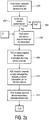
- Fig. 2 is a flow chart showing the steps carried out within the system of Fig. 1 to implement copy protection of information transmitted between a deployment module and a host device according to the principles of the present invention.
- the operation of copy protection in such communications networks is started by authenticating the host device using the deployment module.
- step 200 of Fig. 2 when a host device, for example host device 10 of Fig. 1 , transmits a certificate to a service provider (not shown) for host device authentication.
- the certificate for example, includes a host ID.
- this step is carried out during a deployment module initialization, for example, when deployment module 12 of Fig. 1 , is inserted into a card interface of host device 10 or host device 10 is powered up. If the certificate is not identified or is inconsistent with information at the service provider, then the host device is invalidated and the transaction is terminated. If the host device is authenticated in step 202, the process proceeds to step 206.
- step 206 when particular (content) information is selected, the host device notifies the deployment module via a request message.
- the particular information is selected, for example, by a user selecting a channel on cable television network.
- the host device determines which video, audio and/or data streams are contained in the selected information, for example, channel or programs.
- the request message also contains the PIDs of the elementary streams associated with the selected information.
- the deployment module After receiving the selected PIDs from the request message, prepares to decrypt the elementary streams identified by the PIDs and then re-encrypt them for copy protection. Preparing the elementary stream decryption involves deriving session keys from a conditional access (CA) system, so that the deployment module can decrypt the selected information from the service provider.
- CA conditional access
- a reply message is sent from the deployment module to the host device to indicate that the deployment module is ready to decrypt the associated streams from the service provider. Included in the reply message is at least one control information pair associated with the selected information, and each pair having a stream identifier and a CCI.
- shared keys are calculated by the deployment module and host device, incorporating the control information pair(s), unlike the prior art that used only a CCI.
- the shared keys are a pair of keys (for example even and odd keys) shared by both the deployment module and the host device. Both the deployment module and the host device use the shared keys, respectively, to encrypt and decrypt information crossing the deployment module/host device interface.
- the shared key calculation any of a number of methods can be used.
- the shared key pair is a function of a number of factors, including random numbers, public keys exchanged between the deployment module and host device, and the Host ID.
- the host device computes an ODD/EVEN key pair using a conventional hash function, for example, SHA-1 Secure Hash Algorithm, where the control information pair(s) is represented by "streamer identifier-cci":
- ODD Host SHA ⁇ 1 N Host
- EVEN Host SHA ⁇ 1 N Host
- the deployment module's CA module computes an ODD/EVEN key pair using the SHA-1 has function:
- ODD CA _ Module SHA ⁇ 1 N Host
- CA _ Module SHA ⁇ 1 N Host
- the stream identifier uniquely identifies an elementary stream and is inserted into the PES header associated with the elementary stream at the time a PID is assigned to the elementary stream. Preferably, this takes place in the head-end of the service provider network at the time a transport stream is generated from elementary streams.
- a 7-bit field in the PES header called "additional copy info" is available for copy protection, see International Telecommunication Union (ITU-T) Recommendation H.222.0 / ISO/IEC 13818-1 (1996-04), entitled “Information Technology - Generic Coding of Moving Pictures and Associated Audio Information: Systems ,” which is incorporated by reference herein.
- the additional copy info field is used to store the stream identifier.
- a 7-bit number can support up to 128 different stream identifiers, which is typically enough for the number of copy protected elementary streams in one transport stream. After the host device has decrypted the encrypted PES, the stream identifier is retrieved.
- the deployment module After the deployment module finishes its calculation of the shared session key(s), it sends a synchronization message to the host device to indicate that it is ready to send the encrypted information to the host device, represented by step 214.
- the host device After the host device finishes its calculation of the shared session key(s), it synchronizes with the deployment module, and the deployment module transmits the encrypted information, represented by step 216.
- the host device then begins to decrypt the encrypted information (e.g. the selected copy protected content information that has been encrypted with the shared key(s)). Accordingly, host device 10 is allowed to complete a transaction or receive the selected services. For example, the host device changes to a selected program channel of a cable service provider. However, if the shared key(s) do not match (for example, due to an attempt to temper with the control information pairs), the decryption of the copy protected content fails, for example, viewers will only receive scrambled information, such as scrambled pictures. These steps are represented by steps 218-222. Thereafter, the user can select new information by returning to step 206.
- the shared key(s) do not match (for example, due to an attempt to temper with the control information pairs)
- the decryption of the copy protected content fails, for example, viewers will only receive scrambled information, such as scrambled pictures.
- an interloper even if an interloper intercepts a transmission between the host device and deployment module, he or she can not directly detect the stream identifier, since it is encrypted in the PES header. Thus, even if a CCI is detected, an interloper can not tamper with the selected information, for example, swap the PID fields associated with two streams. The possibility of such remapping is substantially reduced, since the stream identifiers are bound to their associated elementary streams and this binding is protected by encryption.
Landscapes
- Engineering & Computer Science (AREA)
- Signal Processing (AREA)
- Multimedia (AREA)
- Computer Security & Cryptography (AREA)
- Databases & Information Systems (AREA)
- Computer Networks & Wireless Communication (AREA)
- Storage Device Security (AREA)
- Two-Way Televisions, Distribution Of Moving Picture Or The Like (AREA)
- Television Signal Processing For Recording (AREA)
Claims (16)
- Verfahren zum Kopierschützen von Informationen, die zwischen einem Verteilungsmodul (12) und einer Host-Vorrichtung (10) übertragen werden, wobei das Verteilungsmodul (12) dazu eingerichtet ist, Informationen zur Übertragung an die Host-Vorrichtung (10) zu verschlüsseln, wobei die Informationen mehrere elementare Ströme enthalten, wobei das Verfahren die Schritte umfasst des:(a) Übertragens einer Anforderungsnachricht bezüglich der Informationen von der Host-Vorrichtung (10) an das Verteilungsmodul (12);(b) Übertragens einer Antwortnachricht vom Verteilungsmodul (12) an die Host-Vorrichtung (10), wobei die Antwortnachricht mehrere Steuerinformationenpaare einschließt, die mit den in den Informationen enthaltenen elementaren Strömen verknüpft sind, wobei jedes Steuerinformationenpaar eine Kopiersteuerinformation und eine Stromkennung aufweist, wobei sich die Kopiersteuerinformation auf die Bedingungen bezieht, unter denen ein elementarer Strom kopiert werden darf, und die Stromkennung den entsprechenden elementaren Strom eindeutig identifiziert;(c) Erzeugens jeweils eines ersten gemeinsam genutzten Schlüssels am Verteilungsmodul (12) und eines zweiten gemeinsam genutzten Schlüssels an der Host-Vorrichtung (10) unter Verwendung der Kopiersteuerinformation und der Stromkennung der mehreren Steuerinformationenpaare, und eines Verschlüsselungsmittels (22, 18);(d) Verschlüsselns, im Verteilungsmodul (12), der Informationen unter Verwendung des ersten gemeinsam genutzten Schlüssels;(e) Übertragens der verschlüsselten Informationen vom Verteilungsmodul (12) an die Host-Vorrichtung (10); und(f) Entschlüsselns, an der Host-Vorrichtung (10) unter Verwendung des zweiten gemeinsam genutzten Schlüssels, der verschlüsselten Informationen derart, dass die verschlüsselten Informationen nur dann an der Host-Vorrichtung (10) korrekt entschlüsselt werden, wenn der erste und zweite gemeinsam genutzte Schlüssel übereinstimmen(g) Bereitstellens von Kopierschutz für einen elementaren Strom unter Verwendung der mit der Stromkennung des elementaren Stroms gepaarten Kopiersteuerinformation.
- Verfahren nach Anspruch 1, wobei das Verteilungsmodul (12) ein Verteilungspunktmodul ist.
- Verfahren nach Anspruch 1, wobei die Host-Vorrichtung (10) eine Set-Top-Box ist.
- Verfahren nach Anspruch 1, wobei das Verschlüsselungsmittel eine Hash-Funktion einschließt.
- Verfahren nach Anspruch 1, wobei die Stromkennung, die an die Host-Vorrichtung (10) übertragen wird, im Packetized Elementary Stream- (PES) Header des elementaren Stroms integriert ist.
- Verfahren nach Anspruch 1, wobei- die Anforderungsnachricht die Stromkennung ausgewählter elementarer Ströme aus den mehreren elementaren Strömen enthält,- das Verschlüsseln im Verteilungsmodul (12) das Verschlüsseln von durch die empfangenen Stromkennungen identifizierten elementaren Strömen umfasst.
- Verteilungsmodul (12), das dazu eingerichtet ist, Informationen zur Übertragung an eine Host-Vorrichtung (10) zu verschlüsseln, wobei die Informationen mehrere elementare Ströme enthalten, wobei das Verteilungsmodul umfasst:- Mittel, die dafür eingerichtet sind, mit der Host-Vorrichtung (10) zu kommunizieren (18, 16); und- einen Prozessor (18), der dafür eingerichtet ist, in Reaktion auf eine Anforderungsnachricht bezüglich Informationen von der Host-Vorrichtung (10) eine Antwortnachricht an die Host-Vorrichtung (10) zu erzeugen, wobei die Antwortnachricht mehrere Steuerinformationenpaare einschließt, die mit den in den Informationen enthaltenen elementaren Strömen verknüpft sind, wobei jedes Steuerinformationenpaar Kopiersteuerinformationen und eine Stromkennung aufweist, wobei sich die Kopiersteuerinformationen auf die Bedingungen beziehen, unter denen ein elementarer Strom kopiert werden darf, und die Stromkennung den entsprechenden elementaren Strom eindeutig identifiziert, wobei der Prozessor (18) weiter dafür eingerichtet ist, unter Verwendung der Kopiersteuerinformationen und der Stromkennung der mehreren Steuerinformationenpaare einen ersten gemeinsam genutzten Schlüssel zu erzeugen, dafür, die Informationen mit dem ersten gemeinsam genutzten Schlüssel zu verschlüsseln und dafür, die verschlüsselten Informationen an die Host-Vorrichtung zu übertragen, wobei die verschlüsselten Informationen nur dann an der Host-Vorrichtung (10) korrekt entschlüsselbar sind, wenn der erste gemeinsam genutzte Schlüssel mit einem zweiten gemeinsam genutzten Schlüssel, der in der Host-Vorrichtung (10) erzeugt wurde, übereinstimmt.
- Verteilungsmodul (12) nach Anspruch 7, wobei das Verteilungsmodul (12) ausgewählt ist aus der Gruppe bestehend aus einem Verteilungspunktmodul, einem drahtlosen Datenschnittstellengerät, einer Smartcard, einem Personalcomputer oder einem Internetschnittstellengerät.
- Verteilungsmodul (12) nach Anspruch 7, wobei die Host-Vorrichtung eine Set-Top-Box ist.
- Verteilungsmodul (12) nach Anspruch 7 oder 9, wobei die verschlüsselten Informationen unter Verwendung eines Transportstroms an die Host-Vorrichtung übertragen werden, wobei der Transportstrom die mehreren elementaren Ströme einschließt.
- Host-Vorrichtung (10) zur Verwendung mit einem Verteilungsmodul (12), wobei das Verteilungsmodul (12) dazu eingerichtet ist, die Informationen zur Übertragung an die Host-Vorrichtung (10) zu verschlüsseln, wobei die Informationen mehrere elementare Ströme enthalten, wobei die Host-Vorrichtung (10) umfasst:- Mittel zum Kommunizieren (20, 24) mit dem Verteilungsmodul; und- einen Prozessor (22), der dafür eingerichtet ist, eine Anforderungsnachricht bezüglich Informationen an das Verteilungsmodul (12) zu erzeugen, und in Reaktion eine Antwortnachricht vom Verteilungsmodul (12) zu empfangen, wobei die Antwortnachricht mehrere Steuerinformationenpaare einschließt, die mit den in den Informationen enthaltenen elementaren Strömen verknüpft sind, wobei jedes Steuerinformationenpaar Kopiersteuerinformationen und eine Stromkennung aufweist, wobei sich die Kopiersteuerinformationen auf die Bedingungen beziehen, unter denen ein elementarer Strom kopiert werden darf, und die Stromkennung den entsprechenden elementaren Strom eindeutig identifiziert, wobei der Prozessor (22) weiter dafür eingerichtet ist, unter Verwendung der Kopiersteuerinformationen und der Stromkennung der mehreren Steuerinformationenpaare einen zweiten gemeinsam genutzten Schlüssel zu erzeugen, die vom Verteilungsmodul (12) empfangenen verschlüsselten Informationen mit dem zweiten gemeinsam genutzten Schlüssel zu entschlüsseln, derart, dass die verschlüsselten Informationen nur dann an der Host-Vorrichtung korrekt entschlüsselt werden, wenn der zweite gemeinsam genutzte Schlüssel mit einem ersten gemeinsam genutzten Schlüssel übereinstimmt, der im Verteilungsmodul (12) erzeugt wurde, und Kopierschutz für einen elementaren Strom unter Verwendung der mit der Stromkennung des elementaren Stroms gepaarten Kopiersteuerinformationen bereitzustellen.
- Host-Vorrichtung (10) nach Anspruch 11, wobei das Verteilungsmodul (12) ausgewählt ist aus der Gruppe bestehend aus einem Verteilungspunktmodul, einem drahtlosen Datenschnittstellengerät, einer Smartcard, einem Personalcomputer oder einem Internetschnittstellengerät.
- Host-Vorrichtung (10) nach Anspruch 11, wobei die Host-Vorrichtung (10) eine Set-Top-Box ist.
- Host-Vorrichtung (10) nach Anspruch 13 oder 11, wobei die empfangenen verschlüsselten Informationen in einem Transportstrom eingeschlossen sind, wobei der Transportstrom die mehreren elementaren Ströme einschließt.
- Host-Vorrichtung (10) nach Anspruch 14, wobei jeweilige aus den mehreren Steuerinformationenpaaren mit jeweiligen aus den mehreren elementaren Strömen verknüpft sind.
- System zum Kopierschützen von Informationen, wobei das System ein Verteilungsmodul nach Anspruch 7 und eine Host-Vorrichtung nach Anspruch 11 umfasst.
Applications Claiming Priority (5)
| Application Number | Priority Date | Filing Date | Title |
|---|---|---|---|
| US14350199P | 1999-07-09 | 1999-07-09 | |
| US143501P | 1999-07-09 | ||
| US09/461,984 US7336785B1 (en) | 1999-07-09 | 1999-12-15 | System and method for copy protecting transmitted information |
| US461984 | 1999-12-15 | ||
| PCT/EP2000/006330 WO2001005150A1 (en) | 1999-07-09 | 2000-07-04 | System and method for copy protecting transmitted information |
Publications (2)
| Publication Number | Publication Date |
|---|---|
| EP1110399A1 EP1110399A1 (de) | 2001-06-27 |
| EP1110399B1 true EP1110399B1 (de) | 2018-09-12 |
Family
ID=26841091
Family Applications (1)
| Application Number | Title | Priority Date | Filing Date |
|---|---|---|---|
| EP00949261.2A Expired - Lifetime EP1110399B1 (de) | 1999-07-09 | 2000-07-04 | System und verfahren zum schützen übertragener infiormationen gegen kopieren |
Country Status (4)
| Country | Link |
|---|---|
| US (1) | US7336785B1 (de) |
| EP (1) | EP1110399B1 (de) |
| JP (1) | JP4698106B2 (de) |
| WO (1) | WO2001005150A1 (de) |
Families Citing this family (36)
| Publication number | Priority date | Publication date | Assignee | Title |
|---|---|---|---|---|
| JP2003504949A (ja) * | 1999-07-09 | 2003-02-04 | コーニンクレッカ フィリップス エレクトロニクス エヌ ヴィ | 配備モジュールベースのコピープロテクションシステムのための一般化された証明書の処理 |
| KR100758077B1 (ko) * | 1999-12-28 | 2007-09-11 | 마츠시타 덴끼 산교 가부시키가이샤 | 기록장치, 재생장치, 데이터처리장치, 기록재생장치, 데이터송신장치, lsi |
| US7912220B2 (en) * | 2001-02-05 | 2011-03-22 | Broadcom Corporation | Packetization of non-MPEG stream data in systems using advanced multi-stream POD interface |
| EP1241873A1 (de) * | 2001-03-15 | 2002-09-18 | STMicroelectronics Ltd. | Speicherung von digitaler Information |
| US7895616B2 (en) * | 2001-06-06 | 2011-02-22 | Sony Corporation | Reconstitution of program streams split across multiple packet identifiers |
| US7336787B2 (en) * | 2001-06-06 | 2008-02-26 | Sony Corporation | Critical packet partial encryption |
| US7298849B2 (en) * | 2001-06-29 | 2007-11-20 | Intel Corporation | Method and apparatus for simultaneous encryption and decryption of publicly distributed media |
| US8068610B2 (en) * | 2001-11-21 | 2011-11-29 | General Instrument Corporation | Method and system for providing security within multiple set-top boxes assigned for a single customer |
| US7292690B2 (en) | 2002-01-02 | 2007-11-06 | Sony Corporation | Video scene change detection |
| US8051443B2 (en) * | 2002-01-02 | 2011-11-01 | Sony Corporation | Content replacement by PID mapping |
| US7215770B2 (en) | 2002-01-02 | 2007-05-08 | Sony Corporation | System and method for partially encrypted multimedia stream |
| US7302059B2 (en) * | 2002-01-02 | 2007-11-27 | Sony Corporation | Star pattern partial encryption |
| US8027470B2 (en) * | 2002-01-02 | 2011-09-27 | Sony Corporation | Video slice and active region based multiple partial encryption |
| US7765567B2 (en) * | 2002-01-02 | 2010-07-27 | Sony Corporation | Content replacement by PID mapping |
| US7376233B2 (en) * | 2002-01-02 | 2008-05-20 | Sony Corporation | Video slice and active region based multiple partial encryption |
| US7155012B2 (en) | 2002-01-02 | 2006-12-26 | Sony Corporation | Slice mask and moat pattern partial encryption |
| US7823174B2 (en) * | 2002-01-02 | 2010-10-26 | Sony Corporation | Macro-block based content replacement by PID mapping |
| US8818896B2 (en) * | 2002-09-09 | 2014-08-26 | Sony Corporation | Selective encryption with coverage encryption |
| DE602004007116T2 (de) * | 2003-03-14 | 2008-02-28 | Koninklijke Philips Electronics N.V. | Geschützter rückkanal vom digitalen rechte verwaltenden dongle |
| US7292692B2 (en) | 2003-03-25 | 2007-11-06 | Sony Corporation | Content scrambling with minimal impact on legacy devices |
| US7286667B1 (en) | 2003-09-15 | 2007-10-23 | Sony Corporation | Decryption system |
| US7620180B2 (en) * | 2003-11-03 | 2009-11-17 | Sony Corporation | Preparation of content for multiple conditional access methods in video on demand |
| US7853980B2 (en) * | 2003-10-31 | 2010-12-14 | Sony Corporation | Bi-directional indices for trick mode video-on-demand |
| US20050102702A1 (en) * | 2003-11-12 | 2005-05-12 | Candelore Brant L. | Cablecard with content manipulation |
| US20050169473A1 (en) * | 2004-02-03 | 2005-08-04 | Candelore Brant L. | Multiple selective encryption with DRM |
| KR101053596B1 (ko) * | 2004-07-15 | 2011-08-03 | 엘지전자 주식회사 | 디지털 케이블 방송 수신기 및 긴급 경고 메시지 처리 방법 |
| US7895617B2 (en) * | 2004-12-15 | 2011-02-22 | Sony Corporation | Content substitution editor |
| US8041190B2 (en) | 2004-12-15 | 2011-10-18 | Sony Corporation | System and method for the creation, synchronization and delivery of alternate content |
| JP2006180361A (ja) * | 2004-12-24 | 2006-07-06 | Toshiba Corp | 家庭内端末装置、家庭内端末装置の更新方法及びプログラム |
| US8442223B2 (en) * | 2005-04-15 | 2013-05-14 | Samsung Electronics Co., Ltd. | Video device and control method thereof |
| US7804957B2 (en) | 2005-04-23 | 2010-09-28 | Samsung Electronics Co., Ltd. | Copy protection method, cablecard module, and video system of digital cable broadcasting channel according to predetermined digital cable broadcasting standard |
| US8185921B2 (en) | 2006-02-28 | 2012-05-22 | Sony Corporation | Parental control of displayed content using closed captioning |
| US7555464B2 (en) * | 2006-03-01 | 2009-06-30 | Sony Corporation | Multiple DRM management |
| KR101405937B1 (ko) * | 2007-09-20 | 2014-06-27 | 엘지전자 주식회사 | 저장 장치의 상태 정보 처리 방법 및 방송 수신 장치 |
| EP2219374A1 (de) * | 2009-02-13 | 2010-08-18 | Irdeto Access B.V. | Sichere Bereitstellung eines Kontrollworts aus einer Chipkarte an ein Modul mit bedingtem Zugang |
| US11418364B2 (en) | 2017-06-07 | 2022-08-16 | Combined Conditional Access Development And Support, Llc | Determining a session key using session data |
Citations (3)
| Publication number | Priority date | Publication date | Assignee | Title |
|---|---|---|---|---|
| WO1998024237A1 (en) * | 1996-11-27 | 1998-06-04 | Thomson Consumer Electronics, Inc. | A decoding apparatus/method and data format for processing and storing encrypted video data |
| WO1999018729A1 (en) * | 1997-10-02 | 1999-04-15 | Canal+ Societe Anonyme | Method and apparatus for encrypted data stream transmission |
| WO2001004727A1 (en) * | 1999-07-09 | 2001-01-18 | Koninklijke Philips Electronics N.V. | Generalized certificate processing for deployment module based copy protection systems |
Family Cites Families (12)
| Publication number | Priority date | Publication date | Assignee | Title |
|---|---|---|---|---|
| KR100332743B1 (ko) * | 1994-11-26 | 2002-11-07 | 엘지전자주식회사 | 디지탈영상시스템의불법시청및복사방지방법및장치 |
| KR0166923B1 (ko) * | 1995-09-18 | 1999-03-20 | 구자홍 | 디지탈 방송 시스템의 불법 시청 및 복사 방지방법 및 장치 |
| US6055314A (en) * | 1996-03-22 | 2000-04-25 | Microsoft Corporation | System and method for secure purchase and delivery of video content programs |
| CA2250791C (en) * | 1996-04-01 | 2005-06-07 | Macrovision Corporation | A method for controlling copy protection in digital video networks |
| HRP970160A2 (en) * | 1996-04-03 | 1998-02-28 | Digco B V | Method for providing a secure communication between two devices and application of this method |
| EP0860823A4 (de) * | 1996-07-15 | 2001-05-02 | Toshiba Kk | Gerat mit digitalem interface, netzwerksystem mit diesem gerat sowie kopierschutzverfahren |
| JP2002503354A (ja) * | 1997-06-06 | 2002-01-29 | トムソン コンシユーマ エレクトロニクス インコーポレイテツド | 装置へのアクセスを管理する方法 |
| JP3880701B2 (ja) | 1997-09-09 | 2007-02-14 | 株式会社東芝 | コピープロテクト方法及び記録再生装置 |
| JP3885324B2 (ja) | 1997-12-10 | 2007-02-21 | ソニー株式会社 | データ再生方法、データ再生システム、及びドライブ装置 |
| JPH11176091A (ja) | 1997-12-15 | 1999-07-02 | Hitachi Ltd | ディジタル情報入出力装置、受信装置、記録装置、および再生装置 |
| JP3318535B2 (ja) * | 1998-11-26 | 2002-08-26 | パイオニア株式会社 | 情報記録媒体、情報記録装置及び情報再生装置 |
| US6550008B1 (en) * | 1999-02-26 | 2003-04-15 | Intel Corporation | Protection of information transmitted over communications channels |
-
1999
- 1999-12-15 US US09/461,984 patent/US7336785B1/en not_active Expired - Fee Related
-
2000
- 2000-07-04 JP JP2001510238A patent/JP4698106B2/ja not_active Expired - Fee Related
- 2000-07-04 EP EP00949261.2A patent/EP1110399B1/de not_active Expired - Lifetime
- 2000-07-04 WO PCT/EP2000/006330 patent/WO2001005150A1/en not_active Ceased
Patent Citations (3)
| Publication number | Priority date | Publication date | Assignee | Title |
|---|---|---|---|---|
| WO1998024237A1 (en) * | 1996-11-27 | 1998-06-04 | Thomson Consumer Electronics, Inc. | A decoding apparatus/method and data format for processing and storing encrypted video data |
| WO1999018729A1 (en) * | 1997-10-02 | 1999-04-15 | Canal+ Societe Anonyme | Method and apparatus for encrypted data stream transmission |
| WO2001004727A1 (en) * | 1999-07-09 | 2001-01-18 | Koninklijke Philips Electronics N.V. | Generalized certificate processing for deployment module based copy protection systems |
Non-Patent Citations (2)
| Title |
|---|
| DVB, 17A ANCIENNE ROUTE 1218 GRAND SACONNEX, GENEVA SWITZERLAND, 5 February 1999 (1999-02-05), XP040400335 * |
| TSB: "INFORME DE LA REUNIÃ N DEL GRUPO DE TRABAJO 1/9 (BOSTON, 26 A 30 DE ABRIL DE 1999) PARTE II.3 - PROYECTO DE NUEVA RECOMENDACIÃ N J.117 (J.hdni);R 21", ITU-T DRAFTS ; STUDY PERIOD 1997-2000, INTERNATIONAL TELECOMMUNICATION UNION, GENEVA ; CH, vol. Study Group 9, 1 May 1999 (1999-05-01), pages 1 - 141, XP017479023 * |
Also Published As
| Publication number | Publication date |
|---|---|
| JP4698106B2 (ja) | 2011-06-08 |
| JP2003504974A (ja) | 2003-02-04 |
| EP1110399A1 (de) | 2001-06-27 |
| US7336785B1 (en) | 2008-02-26 |
| WO2001005150A1 (en) | 2001-01-18 |
Similar Documents
| Publication | Publication Date | Title |
|---|---|---|
| US7336785B1 (en) | System and method for copy protecting transmitted information | |
| KR100408225B1 (ko) | 개선된 조건부 액세스 및 컨텐트 보안 방법 | |
| KR100917720B1 (ko) | 디지털 멀티미디어 콘텐트 데이터를 안전하게 배포하는 방법 | |
| EP1370084B1 (de) | System und Verfahren zum Schützen von Sicherheitsregistern | |
| US8130965B2 (en) | Retrieval and transfer of encrypted hard drive content from DVR set-top boxes to a content transcription device | |
| CN1134161C (zh) | 在两个设备之间提供安全通信的方法及使用该方法的设备 | |
| EP0787391B1 (de) | System mit bedingtem zugang | |
| TW296526B (de) | ||
| US7769171B2 (en) | Method for transmitting digital data in a local network | |
| CN101040526B (zh) | 数字装置的数字版权管理方法和设备 | |
| US20040126093A1 (en) | Conditional access system and method prevention of replay attacks | |
| CN100592787C (zh) | 用于内容保护的方法和条件存取系统 | |
| EP1789966B1 (de) | Abruf und transfer von verschlüsseltem festplatteninhalt von einem dvr-digitalreceiver unter verwendung eines zweiten dvr-digitalreceivers | |
| KR20050118176A (ko) | 데이터 전송을 보호하기 위한 방법 및 장치 | |
| US20070116294A1 (en) | Cryptographic key distribution system and method for digital video systems | |
| US20040075773A1 (en) | Scrambler, descrambler and the program for scrambling or descrambling | |
| TWI387293B (zh) | 接收多媒體訊號之方法及系統、用於該接收方法及系統之密碼實體以及產生該密碼實體之方法及黑盒子 | |
| EP1389750A1 (de) | Sicherheit einer Festplatte | |
| KR100977969B1 (ko) | 네트워크에서의 데이터 전송 및 수신 방법 | |
| JPH0946672A (ja) | デスクランブル装置および方法 | |
| KR101217225B1 (ko) | 방송처리장치 및 방송처리방법 | |
| JP2001251290A (ja) | データ放送システムとコンテンツの配信、蓄積、再生方法 | |
| JP4150275B2 (ja) | セキュリティモジュール、セキュリティモジュールプログラムおよびコンテンツ受信装置、コンテンツ受信方法 | |
| KR20080016038A (ko) | 메세지 교환 방법 및 메세지 교환 장치 | |
| CA2250833C (en) | Method for providing a secure communication between two devices and application of this method |
Legal Events
| Date | Code | Title | Description |
|---|---|---|---|
| PUAI | Public reference made under article 153(3) epc to a published international application that has entered the european phase |
Free format text: ORIGINAL CODE: 0009012 |
|
| AK | Designated contracting states |
Kind code of ref document: A1 Designated state(s): AT BE CH CY DE DK ES FI FR GB GR IE IT LI LU MC NL PT SE |
|
| AX | Request for extension of the european patent |
Free format text: AL;LT;LV;MK;RO;SI |
|
| 17P | Request for examination filed |
Effective date: 20010718 |
|
| RBV | Designated contracting states (corrected) |
Designated state(s): DE FR GB |
|
| 17Q | First examination report despatched |
Effective date: 20070612 |
|
| RAP1 | Party data changed (applicant data changed or rights of an application transferred) |
Owner name: KONINKLIJKE PHILIPS N.V. |
|
| REG | Reference to a national code |
Ref country code: DE Ref legal event code: R079 Ref document number: 60049856 Country of ref document: DE Free format text: PREVIOUS MAIN CLASS: H04N0007160000 Ipc: H04L0009060000 |
|
| GRAP | Despatch of communication of intention to grant a patent |
Free format text: ORIGINAL CODE: EPIDOSNIGR1 |
|
| INTG | Intention to grant announced |
Effective date: 20180315 |
|
| RIC1 | Information provided on ipc code assigned before grant |
Ipc: H04L 9/06 19900101AFI20180302BHEP Ipc: H04N 5/913 19950101ALI20180302BHEP Ipc: H04N 21/4627 20110101ALI20180302BHEP Ipc: H04N 21/254 20110101ALI20180302BHEP Ipc: H04N 21/418 20110101ALI20180302BHEP Ipc: H04N 21/8355 20110101ALI20180302BHEP |
|
| GRAS | Grant fee paid |
Free format text: ORIGINAL CODE: EPIDOSNIGR3 |
|
| GRAA | (expected) grant |
Free format text: ORIGINAL CODE: 0009210 |
|
| AK | Designated contracting states |
Kind code of ref document: B1 Designated state(s): DE FR GB |
|
| REG | Reference to a national code |
Ref country code: GB Ref legal event code: FG4D |
|
| REG | Reference to a national code |
Ref country code: DE Ref legal event code: R096 Ref document number: 60049856 Country of ref document: DE |
|
| REG | Reference to a national code |
Ref country code: DE Ref legal event code: R097 Ref document number: 60049856 Country of ref document: DE |
|
| PLBE | No opposition filed within time limit |
Free format text: ORIGINAL CODE: 0009261 |
|
| STAA | Information on the status of an ep patent application or granted ep patent |
Free format text: STATUS: NO OPPOSITION FILED WITHIN TIME LIMIT |
|
| 26N | No opposition filed |
Effective date: 20190613 |
|
| REG | Reference to a national code |
Ref country code: DE Ref legal event code: R119 Ref document number: 60049856 Country of ref document: DE |
|
| GBPC | Gb: european patent ceased through non-payment of renewal fee |
Effective date: 20190704 |
|
| PG25 | Lapsed in a contracting state [announced via postgrant information from national office to epo] |
Ref country code: GB Free format text: LAPSE BECAUSE OF NON-PAYMENT OF DUE FEES Effective date: 20190704 Ref country code: DE Free format text: LAPSE BECAUSE OF NON-PAYMENT OF DUE FEES Effective date: 20200201 |
|
| PG25 | Lapsed in a contracting state [announced via postgrant information from national office to epo] |
Ref country code: FR Free format text: LAPSE BECAUSE OF NON-PAYMENT OF DUE FEES Effective date: 20190731 |