EP1111043A1 - Nouveaux QTL sur les chromosomes X, 2, 6 et 7 de cochons - Google Patents
Nouveaux QTL sur les chromosomes X, 2, 6 et 7 de cochons Download PDFInfo
- Publication number
- EP1111043A1 EP1111043A1 EP99204461A EP99204461A EP1111043A1 EP 1111043 A1 EP1111043 A1 EP 1111043A1 EP 99204461 A EP99204461 A EP 99204461A EP 99204461 A EP99204461 A EP 99204461A EP 1111043 A1 EP1111043 A1 EP 1111043A1
- Authority
- EP
- European Patent Office
- Prior art keywords
- nucleic acid
- sequence
- quantitative trait
- isolated
- recombinant nucleic
- Prior art date
- Legal status (The legal status is an assumption and is not a legal conclusion. Google has not performed a legal analysis and makes no representation as to the accuracy of the status listed.)
- Withdrawn
Links
- 241000282887 Suidae Species 0.000 title claims abstract description 29
- 210000000349 chromosome Anatomy 0.000 title description 13
- 108020004707 nucleic acids Proteins 0.000 claims abstract description 39
- 150000007523 nucleic acids Chemical class 0.000 claims abstract description 39
- 102000039446 nucleic acids Human genes 0.000 claims abstract description 39
- 241001465754 Metazoa Species 0.000 claims abstract description 35
- 238000009395 breeding Methods 0.000 claims abstract description 21
- 230000001488 breeding effect Effects 0.000 claims abstract description 20
- 241000124008 Mammalia Species 0.000 claims abstract description 18
- 210000003205 muscle Anatomy 0.000 claims abstract description 12
- 101001076292 Homo sapiens Insulin-like growth factor II Proteins 0.000 claims abstract description 6
- 102100025947 Insulin-like growth factor II Human genes 0.000 claims abstract description 6
- 238000012360 testing method Methods 0.000 claims description 18
- 230000002068 genetic effect Effects 0.000 claims description 16
- 238000003307 slaughter Methods 0.000 claims description 12
- 108700028369 Alleles Proteins 0.000 claims description 9
- 238000000034 method Methods 0.000 claims description 9
- 210000001766 X chromosome Anatomy 0.000 claims description 8
- 108091092878 Microsatellite Proteins 0.000 claims description 5
- 238000009396 hybridization Methods 0.000 claims description 5
- 239000003550 marker Substances 0.000 claims description 5
- 239000000523 sample Substances 0.000 claims description 5
- 210000004027 cell Anatomy 0.000 claims description 3
- 230000009261 transgenic effect Effects 0.000 claims description 3
- 210000004962 mammalian cell Anatomy 0.000 claims description 2
- 108090000623 proteins and genes Proteins 0.000 description 20
- 241000282898 Sus scrofa Species 0.000 description 12
- 230000000694 effects Effects 0.000 description 12
- 238000007918 intramuscular administration Methods 0.000 description 9
- 238000004458 analytical method Methods 0.000 description 8
- 230000008774 maternal effect Effects 0.000 description 8
- 241000282412 Homo Species 0.000 description 7
- 230000008775 paternal effect Effects 0.000 description 7
- 239000000654 additive Substances 0.000 description 5
- 230000000996 additive effect Effects 0.000 description 5
- 238000009402 cross-breeding Methods 0.000 description 5
- 230000035558 fertility Effects 0.000 description 5
- 241000699670 Mus sp. Species 0.000 description 4
- 238000004519 manufacturing process Methods 0.000 description 4
- 238000013507 mapping Methods 0.000 description 4
- 230000000052 comparative effect Effects 0.000 description 3
- 208000008589 Obesity Diseases 0.000 description 2
- 208000008383 Wilms tumor Diseases 0.000 description 2
- 208000026448 Wilms tumor 1 Diseases 0.000 description 2
- 102100022748 Wilms tumor protein Human genes 0.000 description 2
- 101710127857 Wilms tumor protein Proteins 0.000 description 2
- 230000002759 chromosomal effect Effects 0.000 description 2
- 238000011161 development Methods 0.000 description 2
- 230000004807 localization Effects 0.000 description 2
- 235000020824 obesity Nutrition 0.000 description 2
- 238000011160 research Methods 0.000 description 2
- 230000005477 standard model Effects 0.000 description 2
- KXSKAZFMTGADIV-UHFFFAOYSA-N 2-[3-(2-hydroxyethoxy)propoxy]ethanol Chemical compound OCCOCCCOCCO KXSKAZFMTGADIV-UHFFFAOYSA-N 0.000 description 1
- 102100032050 Elongation of very long chain fatty acids protein 2 Human genes 0.000 description 1
- 102100037738 Fatty acid-binding protein, heart Human genes 0.000 description 1
- 101000921368 Homo sapiens Elongation of very long chain fatty acids protein 2 Proteins 0.000 description 1
- 101001027663 Homo sapiens Fatty acid-binding protein, heart Proteins 0.000 description 1
- 101000693243 Homo sapiens Paternally-expressed gene 3 protein Proteins 0.000 description 1
- 108700018351 Major Histocompatibility Complex Proteins 0.000 description 1
- 108010088565 Melanocortin 5 receptor Proteins 0.000 description 1
- 102100025757 Paternally-expressed gene 3 protein Human genes 0.000 description 1
- 241000255969 Pieris brassicae Species 0.000 description 1
- 201000010769 Prader-Willi syndrome Diseases 0.000 description 1
- 230000003321 amplification Effects 0.000 description 1
- 238000003975 animal breeding Methods 0.000 description 1
- 230000003466 anti-cipated effect Effects 0.000 description 1
- 238000006243 chemical reaction Methods 0.000 description 1
- 230000002559 cytogenic effect Effects 0.000 description 1
- 238000013461 design Methods 0.000 description 1
- 238000001514 detection method Methods 0.000 description 1
- 230000004069 differentiation Effects 0.000 description 1
- 238000011156 evaluation Methods 0.000 description 1
- 230000002349 favourable effect Effects 0.000 description 1
- 238000011065 in-situ storage Methods 0.000 description 1
- 208000021005 inheritance pattern Diseases 0.000 description 1
- 235000013372 meat Nutrition 0.000 description 1
- 230000007246 mechanism Effects 0.000 description 1
- 238000003199 nucleic acid amplification method Methods 0.000 description 1
- 230000004983 pleiotropic effect Effects 0.000 description 1
- 235000015277 pork Nutrition 0.000 description 1
- 230000005855 radiation Effects 0.000 description 1
- 230000006798 recombination Effects 0.000 description 1
- 238000005215 recombination Methods 0.000 description 1
- 230000001850 reproductive effect Effects 0.000 description 1
- 238000010187 selection method Methods 0.000 description 1
- 238000010206 sensitivity analysis Methods 0.000 description 1
- 238000010561 standard procedure Methods 0.000 description 1
- 238000013179 statistical model Methods 0.000 description 1
- 230000020382 suppression by virus of host antigen processing and presentation of peptide antigen via MHC class I Effects 0.000 description 1
- 210000001519 tissue Anatomy 0.000 description 1
Images




Classifications
-
- C—CHEMISTRY; METALLURGY
- C07—ORGANIC CHEMISTRY
- C07K—PEPTIDES
- C07K14/00—Peptides having more than 20 amino acids; Gastrins; Somatostatins; Melanotropins; Derivatives thereof
- C07K14/435—Peptides having more than 20 amino acids; Gastrins; Somatostatins; Melanotropins; Derivatives thereof from animals; from humans
- C07K14/46—Peptides having more than 20 amino acids; Gastrins; Somatostatins; Melanotropins; Derivatives thereof from animals; from humans from vertebrates
- C07K14/47—Peptides having more than 20 amino acids; Gastrins; Somatostatins; Melanotropins; Derivatives thereof from animals; from humans from vertebrates from mammals
-
- A—HUMAN NECESSITIES
- A01—AGRICULTURE; FORESTRY; ANIMAL HUSBANDRY; HUNTING; TRAPPING; FISHING
- A01K—ANIMAL HUSBANDRY; AVICULTURE; APICULTURE; PISCICULTURE; FISHING; REARING OR BREEDING ANIMALS, NOT OTHERWISE PROVIDED FOR; NEW BREEDS OF ANIMALS
- A01K67/00—Rearing or breeding animals, not otherwise provided for; New or modified breeds of animals
- A01K67/027—New or modified breeds of vertebrates
-
- A—HUMAN NECESSITIES
- A01—AGRICULTURE; FORESTRY; ANIMAL HUSBANDRY; HUNTING; TRAPPING; FISHING
- A01K—ANIMAL HUSBANDRY; AVICULTURE; APICULTURE; PISCICULTURE; FISHING; REARING OR BREEDING ANIMALS, NOT OTHERWISE PROVIDED FOR; NEW BREEDS OF ANIMALS
- A01K2217/00—Genetically modified animals
- A01K2217/05—Animals comprising random inserted nucleic acids (transgenic)
Definitions
- the present invention relates to the field of breeding domestic animals, in particular pigs.
- genotypic and/or phenotypic traits which need to be selected for in breeding animals or animals intended for slaughter.
- Traits having to do with desired phenotypic properties in domestic animals, such as backfat, muscle depth, growth rate and feed conversion are often referred to as quantitative traits.
- QTL quantitative trait loci
- Identifying quantitative trait loci is an important part of arriving at means for selecting suitable breeding animals having desired genotypic and/or phenotypic properties, but also very important is determining the way of inheritance of such traits into offspring.
- the present invention provides a number of new quantitative trait loci and also provides information on their inheritance pattern, thereby providing new methods and means for selecting animals for breeding purposes and/or slaughtering and for implementing marker assisted breeding methods and the like.
- the present invention provides an isolated and/or recombinant nucleic acid comprising a sequence affecting the quantitative trait muscle depth in mammals, said sequence being derived from a locus corresponding to region HSA6p21.3-p.22 in humans and corresponding to the homologous region on ssc7 in pigs, wherein said quantitative trait locus is maternally expressed.
- the invention further provides an isolated and/or recombinant nucleic acid comprising a sequence affecting the quantitative trait back fat thickness in mammals, said sequence being derived from a locus corresponding to a region on ssc7 in pigs, which region overlaps with the region identified in claim 1 affecting the quantitative trait muscle depth on ssc7 in pigs.
- This QTL inherits in a Mendelian fashion.
- the invention provides an isolated and/or recombinant nucleic acid comprising a sequence affecting the quantitative trait back fat thickness in mammals, said sequence being derived from a locus corresponding to a region on ssc2 of pigs which maps about 35 cM away from the IGF2 region, wherein said quantitative trait locus is paternally expressed.
- the invention provides an isolated and/or recombinant nucleic acid comprising the sequence of a maternally expressed quantitative trait locus affecting intramuscular fat in mammals, said sequence being derived from a locus corresponding to a region on the long arm of ssc6 of pigs.
- the invention provides an isolated and/or recombinant nucleic acid comprising a sequence of the paternally expressed quantitative trait locus affecting intramuscular fat in mammals, said sequence being derived from a region HSA6q22-ter in humans and corresponding to the homologous on the short arm of ssc6 of pigs. This trait is inherited in a Mendelian fashion.
- the recombinant nucleic acids according to the invention can be used in breeding programs in the same manner, QTL's have been used in selection methods so far. Care should be taken however of the fashion in which the traits inherit. Combining Mendelian traits and imprinted traits will give rise to different selections and breeding programmes than relying on either one of these. It provides tools to arrive at improved properties in an easier, more reproducible way.
- the QTL's according to the invention affect a number of similar traits and can thus be ideally combined for just such a purpose.
- the nucleic acids according to the invention can of course also be applied in the production of transgenic animals if such is desired.
- isolated nucleic acids can be (synthetically or recombinantly) prepared to be used to detect these traits in animals or samples from animals, in particular mammals, especially pigs.
- isolated nucleic acids can be used for detecting such traits using any hybridisation technique, including amplification, in situ hybridisation and the like. They may be labelled for such a purpose, during, before or after the hybridisation step, in order to allow for easy detection.
- the invention also provides an isolated and/or recombinant nucleic acid according to the invention which is a specific probe or primer for a quantitative trait and/or an isolated and/or recombinant nucleic acid comprising a sequence capable of identifying a quantitative trait as identified herein before.
- nucleic acid may be based on, or derived from a microsatellite marker, that is located near the actual QTL.
- the invention of course also provides the use of an isolated and/or recombinant nucleic acid according to the invention in identifying a quantitative trait locus in a mammal, in particular also when said quantitative trait locus is parentally imprinted.
- the invention also provides the use of an isolated and/or recombinant nucleic acid acoording to the invention for selection of a domestic animal having desired genetic properties. Taking a sample from an animal and testing it with a nucleic acid according to the invention is well within the skill of the art and needs no further explanation here. Selection of the desired allele is also within the art, e.g. using mismatch PCR and other techniques for distinguishing alleles.
- the invention also includes these uses wherein said domestic animal is a breeding animal or an animal for slaughter. Of course the results of testing in particular breeding animals for desired properties will be put to, good use in breeding programmes.
- the invention also includes methods for breeding a population of domestic animals having desired genetic properties, comprising testing animals to be cross-bred with at least one nucleic acid according to the invention, for the presence of a desired allele of a quantitative trait, in particular where such a method comprises a method wherein said testing comprises contacting a sample from an animal to be cross-bred with a nucleic acid according the invention and detecting the presence or absence of hybridisation.
- Cells and animals provided with a nucleic acid according to the invention are also provided by the present invention.
- the invention provides a mammalian cell comprising a recombinant nucleic acid corresponding to a QTL as defined according to the invention, as well as a transgenic animal comprising at least one cell as disclosed above.
- a whole genome scan using 132 microsatellite markers was used to map autosomal QTLs on the F 2 population, including a test for imprinting.
- the statistical model for imprinting 5 was reparameterized to separate the contribution of the paternally and maternally inherited effect. Mode of inheritance for a putative QTL was inferred from the variance explained by the components in the model.
- Our genome scan resulted in five significant QTLs affecting body composition traits, of which four were imprinted.
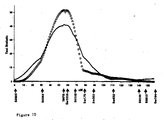
- Fig 1 A graphical comparison of results obtained under the imprinting and Mendelian models is given in Fig 1.
- the imprinted QTL on chromosome 2 maps at about 35 cM away from the IGF2 region, for which there is an imprinted QTL for body composition 1
- the QTL for MD on SSC7 can be narrowed to a region homologous with HSA6p21.3-p22.
- This region contains the major histocompatibility complex including LTA and shows extensive conservation in gene order 10 .
- Imprinted genes have not been reported for this region in humans and mice 11 (http://www.mgc.har.mrc.ac.uk/imprinting/imptables.html).
- HSA 16q22-ter genes that map to the area of the maternally expressed QTL on SSC6p are located on HSA 16q22-ter, where imprinting has not been reported either.
- the area within the confidence interval of the paternally expressed QTL for IMF on SSC6q extends on both sides to homologous regions in humans, where imprinted genes have been reported ( PEG3 on HSA 19q13.4 is imprinted in mice and p73 on HSA 1p36 is maternally expressed).
- Genes MC5R , FABP3 12 and UOX 9 within the interval SW316 - S0003 covering the peak of the QTL, are located on HSA18p11.2, 1p33-p32, and 1p22, respectively. Imprinting has not been found for these candidate regions in humans.
- the X chromosome harbors quantitative trait loci for backfat thickness and intramuscular fat content in pigs
- interval mapping by regression was carried out as a line cross analysis as described previously 4 where the founder lines were assumed to be fixed for different QTL alleles.
- the model was modified to account for differences between sexes.
- male F2 offspring carry only a maternal copy of the X chromosome originating from the Meishan or from the White grandparents, whereas all female offspring inherited in addition the paternal copy of the X chromosome originating from the White lines. Therefore, the contrast between the Meishan and the White allele for the estimation of the QTL effect was estimated within male and female F2 offspring separately.
- the female genetic map calculated from our data shows the same marker order but differences in distances between markers compared to the map of Rohrer et al. (1996).
- An increase in length of roughly 10cM (Kosambi) is observed between markers SW2534 and SW2456 (37.8cM versus 27.6cM) as well as between SW2476 and SW1943 (21.5cM versus 9.8cM).
- a smaller distance is observed on our map in the interval between SW2456 and SW2476 (9.4cM versus 19.8cM).
- Sensitivity analysis did not point towards specific families causing these differences (data not shown).
- the mapping population of Rohrer et al. (1996) consisted of 94 F2 animals and only female parents contribute mapping information, the recombination frequencies are expected to be rather rough estimates and might explain the differences observed.
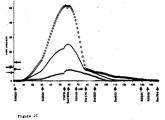
- Figure 2 shows the test statistics of the QTL analysis for IMF and BFT and the threshold levels along the genetic map of the X chromosome.
- a genomewise significant (p ⁇ 5%) QTL is detected.
- the estimated best position of the QTLs is in different but neighbouring marker intervals at 60cM for BFT and 69 cM for IMF (Table 2).
- the alleles from the obese Meishan breed increase the amount of intramuscular fat as well as back fat.
- the estimated size of the QTL effect is smaller in females than in males for both traits (Table 2).
- this research reveals a number of Mendelian inheriting traits and at least two chromosomal areas to which imprinted genes had so far not been mapped in pigs, and the known homologies to humans and mice do not reveal obvious positional imprinted candidates. Results indicate new areas subject to imprinting that affect body composition. Although obesity genes reported in humans and mice map to homologous regions of the imprinted QTLs found in this study 13 , imprinting has only been reported for the Prader-Willi Syndrome (HSA15q11.2-q12). According to our study, imprinting might be more common in development of obesity than currently anticipated.
- the invention is in general applicable to purebred sire lines selection on paternally expressed genes/markers which need to be expressed in the slaughter pig and to purebred dam lines selection on maternal expressed genes/markers which need to be expressed in the slaughter pig.
Landscapes
- Life Sciences & Earth Sciences (AREA)
- Health & Medical Sciences (AREA)
- Chemical & Material Sciences (AREA)
- Environmental Sciences (AREA)
- Zoology (AREA)
- Organic Chemistry (AREA)
- Medicinal Chemistry (AREA)
- Gastroenterology & Hepatology (AREA)
- General Health & Medical Sciences (AREA)
- Genetics & Genomics (AREA)
- Biochemistry (AREA)
- Molecular Biology (AREA)
- Proteomics, Peptides & Aminoacids (AREA)
- Biophysics (AREA)
- Animal Behavior & Ethology (AREA)
- Animal Husbandry (AREA)
- Biodiversity & Conservation Biology (AREA)
- Toxicology (AREA)
- Measuring Or Testing Involving Enzymes Or Micro-Organisms (AREA)
- Investigating Or Analysing Biological Materials (AREA)
Priority Applications (5)
| Application Number | Priority Date | Filing Date | Title |
|---|---|---|---|
| EP99204461A EP1111043A1 (fr) | 1999-12-21 | 1999-12-21 | Nouveaux QTL sur les chromosomes X, 2, 6 et 7 de cochons |
| EP00991338A EP1263946A2 (fr) | 1999-12-21 | 2000-12-20 | Nouveaux loci de caract res quantitatifs (qtl) sur des chromosomes x, 2, 6 et 7 du cochon |
| AU32441/01A AU3244101A (en) | 1999-12-21 | 2000-12-20 | New qtl's on chromosomes x, 2, 6 and 7 of pigs |
| PCT/NL2000/000935 WO2001046406A2 (fr) | 1999-12-21 | 2000-12-20 | Nouveaux loci de caractères quantitatifs (qtl) sur des chromosomes x, 2, 6 et 7 du cochon |
| US10/177,252 US20030129610A1 (en) | 1999-12-21 | 2002-06-21 | New QTL's on chromosomes X, 2, 6 and 7 of pigs |
Applications Claiming Priority (1)
| Application Number | Priority Date | Filing Date | Title |
|---|---|---|---|
| EP99204461A EP1111043A1 (fr) | 1999-12-21 | 1999-12-21 | Nouveaux QTL sur les chromosomes X, 2, 6 et 7 de cochons |
Publications (1)
| Publication Number | Publication Date |
|---|---|
| EP1111043A1 true EP1111043A1 (fr) | 2001-06-27 |
Family
ID=8241047
Family Applications (2)
| Application Number | Title | Priority Date | Filing Date |
|---|---|---|---|
| EP99204461A Withdrawn EP1111043A1 (fr) | 1999-12-21 | 1999-12-21 | Nouveaux QTL sur les chromosomes X, 2, 6 et 7 de cochons |
| EP00991338A Withdrawn EP1263946A2 (fr) | 1999-12-21 | 2000-12-20 | Nouveaux loci de caract res quantitatifs (qtl) sur des chromosomes x, 2, 6 et 7 du cochon |
Family Applications After (1)
| Application Number | Title | Priority Date | Filing Date |
|---|---|---|---|
| EP00991338A Withdrawn EP1263946A2 (fr) | 1999-12-21 | 2000-12-20 | Nouveaux loci de caract res quantitatifs (qtl) sur des chromosomes x, 2, 6 et 7 du cochon |
Country Status (4)
| Country | Link |
|---|---|
| US (1) | US20030129610A1 (fr) |
| EP (2) | EP1111043A1 (fr) |
| AU (1) | AU3244101A (fr) |
| WO (1) | WO2001046406A2 (fr) |
Families Citing this family (5)
| Publication number | Priority date | Publication date | Assignee | Title |
|---|---|---|---|---|
| KR100615803B1 (ko) | 2004-08-13 | 2006-08-25 | 전진태 | 돼지 acadm 유전자 전사조절 부위의 dna 돌연변이 탐지와이들의 높은 근내지방도를 갖는 돼지의 조기선발을 위한dna 마커로써의 활용 |
| KR100794881B1 (ko) | 2005-02-03 | 2008-01-14 | 전진태 | 돼지 등지방 및 도체지방 선발에 활용 가능한 PIK3C3 유전자 유래 DNA marker의 개발 |
| CN101877973A (zh) | 2007-11-29 | 2010-11-03 | 孟山都技术有限公司 | 含有提高水平的有益脂肪酸的肉制品 |
| US20110054246A1 (en) * | 2009-08-28 | 2011-03-03 | Clutter Archie C | Whole genome scan to discover quantitative trai loci (qtl) affecting growth, body composition, and reproduction in maternal pig lines |
| CN107267627B (zh) * | 2017-07-12 | 2021-04-20 | 南京农业大学 | 与猪生产性状相关的Six1基因分子标记的制备与应用 |
Citations (1)
| Publication number | Priority date | Publication date | Assignee | Title |
|---|---|---|---|---|
| WO1999014365A1 (fr) * | 1997-09-18 | 1999-03-25 | Pig Genes B.V. | Gene codant la proteine se liant a l'acide gras des adipocytes du porc, et procedes de localisation, d'identification ou marquage des genes ou alleles ou loci de caractere quantitatif des animaux de ferme |
-
1999
- 1999-12-21 EP EP99204461A patent/EP1111043A1/fr not_active Withdrawn
-
2000
- 2000-12-20 WO PCT/NL2000/000935 patent/WO2001046406A2/fr not_active Ceased
- 2000-12-20 AU AU32441/01A patent/AU3244101A/en not_active Abandoned
- 2000-12-20 EP EP00991338A patent/EP1263946A2/fr not_active Withdrawn
-
2002
- 2002-06-21 US US10/177,252 patent/US20030129610A1/en not_active Abandoned
Patent Citations (1)
| Publication number | Priority date | Publication date | Assignee | Title |
|---|---|---|---|---|
| WO1999014365A1 (fr) * | 1997-09-18 | 1999-03-25 | Pig Genes B.V. | Gene codant la proteine se liant a l'acide gras des adipocytes du porc, et procedes de localisation, d'identification ou marquage des genes ou alleles ou loci de caractere quantitatif des animaux de ferme |
Non-Patent Citations (7)
| Title |
|---|
| DE KONING D ET AL: "Detection of quantitative trait loci for backfat thickness and intramuscular fat content in pigs (Sus scrofa)", GENETICS, vol. 152, no. 4, August 1999 (1999-08-01), pages 1679 - 1690, XP000920971 * |
| JEON ET AL: "A PATERNALLY EXPRESSED QTL AFFECTING SKELETAL AND CARDIAC MUSCLE MASS IN PIGS MAPS TO THE IGF2 LOCUS", NATURE GENETICS,US,NEW YORK, NY, vol. 21, no. 21, February 1999 (1999-02-01), pages 157 - 158-158, XP002104411, ISSN: 1061-4036 * |
| NEZER ET AL: "AN IMPRINTED QTL WITH MAJOR EFFECT ON MUSCLE MASS AND FAT DEPOSITION MAPS TO THE IGF2 LOCUS IN PIGS", NATURE GENETICS,US,NEW YORK, NY, vol. 21, no. 21, February 1999 (1999-02-01), pages 155 - 156-156, XP002104412, ISSN: 1061-4036 * |
| ROHRER G AND KEELE J: "Identification of quantitative trait loci affecting carcass composition in swine: I. Fat deposition traits", J. ANIM. SCI., vol. 76, no. 9, September 1998 (1998-09-01), pages 2247 - 2254, XP000920823 * |
| ROHRER G AND KEELE J: "Identification of quantitative trait loci affecting carcass composition in swine: II. Muscling and wholesale product yield traits", J. ANIM. SCI., vol. 76, no. 9, September 1998 (1998-09-01), pages 2255 - 2262, XP000920824 * |
| ROTHSCHILD M ET AL: "Analysis of pig chromosome 7 genetic markers for growth and carcass performance traits", JOURNAL OF ANIMAL BREEDING AND GENETICS, vol. 112, no. 5-6, 1995, pages 341 - 348, XP000920822 * |
| WANG L ET AL: "A directed search for quantitative trait loci on chromosomes 4 and 7 in pigs", J. ANIM. SCI., vol. 76, no. 10, October 1998 (1998-10-01), pages 2560 - 2567, XP000921238 * |
Also Published As
| Publication number | Publication date |
|---|---|
| WO2001046406A9 (fr) | 2002-11-07 |
| EP1263946A2 (fr) | 2002-12-11 |
| WO2001046406A2 (fr) | 2001-06-28 |
| US20030129610A1 (en) | 2003-07-10 |
| WO2001046406A3 (fr) | 2002-09-19 |
| AU3244101A (en) | 2001-07-03 |
Similar Documents
| Publication | Publication Date | Title |
|---|---|---|
| Rattink et al. | Fine mapping and imprinting analysis for fatness trait QTLs in pigs | |
| Gerbens et al. | The effect of adipocyte and heart fatty acid-binding protein genes on intramuscular fat and backfat content in Meishan crossbred pigs | |
| Rothschild et al. | The estrogen receptor locus is associated with a major gene influencing litter size in pigs. | |
| Malek et al. | A molecular genome scan analysis to identify chromosomal regions influencing economic traits in the pig. I. Growth and body composition | |
| de Koning et al. | Detection and characterization of quantitative trait loci for growth and reproduction traits in pigs | |
| US20100275279A1 (en) | Selecting animals for parentally imprinted traits | |
| Jungerius et al. | The IGF2-intron3-G3072A substitution explains a major imprinted QTL effect on backfat thickness in a Meishan× European white pig intercross | |
| Corva et al. | Quantitative trait loci affecting growth in high growth (hg) mice | |
| CN115094149B (zh) | 一种与猪背膘厚度相关的snp标记及其检测方法和应用 | |
| Wimmers et al. | Detection of quantitative trait loci for carcass traits in the pig by using AFLP | |
| US7732137B2 (en) | Selecting animals for desired genotypic or potential phenotypic properties | |
| Sternstein et al. | A comprehensive linkage map and QTL map for carcass traits in a cross between Giant Grey and New Zealand White rabbits | |
| EP1111043A1 (fr) | Nouveaux QTL sur les chromosomes X, 2, 6 et 7 de cochons | |
| Velten et al. | A first map of the porcine major histocompatibility complex class I region | |
| Braunschweig et al. | Generation and exploration of a dense genetic map in a region of a QTL affecting corpora lutea in a Meishan× Yorkshire cross | |
| Georges | Case history in animal improvement: mapping complex traits in ruminants | |
| Kim et al. | Detection of Mendelian and parent-of-origin quantitative trait loci in a cross between Korean native pig and Landrace I. growth and body composition traits | |
| US20050136440A1 (en) | Method for identifying animals for milk production qualities by analysing the polymorphism of the Pit-1 and kappa-casein genes | |
| Georges et al. | Positional identification of structural and regulatory quantitative trait nucleotides in domestic animal species | |
| Weller | Current and future developments in patents for quantitative trait loci in dairy cattle | |
| Andersson et al. | Case history in animal improvement: genetic mapping of QTLs for growth and fatness in the pig | |
| Kim et al. | Current status of quantitative trait locus mapping in livestock species-Review | |
| AU2003226666B2 (en) | Method for identifying animals for milk production qualities by analyzing the polymorphism of the PIT-1 and kappa-casein genes | |
| Brascamp et al. | PiGMaP: gene mapping and its contribution to meat production and meat quality parameters. | |
| Leeb et al. | Characterization and linkage mapping of four gene-associated porcine microsatellites. |
Legal Events
| Date | Code | Title | Description |
|---|---|---|---|
| PUAI | Public reference made under article 153(3) epc to a published international application that has entered the european phase |
Free format text: ORIGINAL CODE: 0009012 |
|
| AK | Designated contracting states |
Kind code of ref document: A1 Designated state(s): DE |
|
| AX | Request for extension of the european patent |
Free format text: AL;LT;LV;MK;RO;SI |
|
| AKX | Designation fees paid |
Free format text: DE |
|
| STAA | Information on the status of an ep patent application or granted ep patent |
Free format text: STATUS: THE APPLICATION IS DEEMED TO BE WITHDRAWN |
|
| 18D | Application deemed to be withdrawn |
Effective date: 20011228 |