EP1111509B1 - Dispositif permettant l'accès indépendant à des données répliquées - Google Patents
Dispositif permettant l'accès indépendant à des données répliquées Download PDFInfo
- Publication number
- EP1111509B1 EP1111509B1 EP00311601A EP00311601A EP1111509B1 EP 1111509 B1 EP1111509 B1 EP 1111509B1 EP 00311601 A EP00311601 A EP 00311601A EP 00311601 A EP00311601 A EP 00311601A EP 1111509 B1 EP1111509 B1 EP 1111509B1
- Authority
- EP
- European Patent Office
- Prior art keywords
- storage device
- data
- entries
- marking
- session
- Prior art date
- Legal status (The legal status is an assumption and is not a legal conclusion. Google has not performed a legal analysis and makes no representation as to the accuracy of the status listed.)
- Expired - Lifetime
Links
Images




Classifications
-
- G—PHYSICS
- G06—COMPUTING OR CALCULATING; COUNTING
- G06F—ELECTRIC DIGITAL DATA PROCESSING
- G06F11/00—Error detection; Error correction; Monitoring
- G06F11/07—Responding to the occurrence of a fault, e.g. fault tolerance
- G06F11/14—Error detection or correction of the data by redundancy in operations
- G06F11/1446—Point-in-time backing up or restoration of persistent data
- G06F11/1448—Management of the data involved in backup or backup restore
- G06F11/1451—Management of the data involved in backup or backup restore by selection of backup contents
-
- G—PHYSICS
- G06—COMPUTING OR CALCULATING; COUNTING
- G06F—ELECTRIC DIGITAL DATA PROCESSING
- G06F11/00—Error detection; Error correction; Monitoring
- G06F11/07—Responding to the occurrence of a fault, e.g. fault tolerance
- G06F11/14—Error detection or correction of the data by redundancy in operations
- G06F11/1446—Point-in-time backing up or restoration of persistent data
- G06F11/1458—Management of the backup or restore process
- G06F11/1469—Backup restoration techniques
Definitions
- This invention generally relates to data processing systems and more specifically to a data storage facility for use with in such data processing systems that has the capacity for replicating data for independent access and for periodically updating the data from a standard.
- a data storage facility uses a business continuation volume (BCV) concept.
- BCV business continuation volume
- an ESTABLISH command from a host to a disk storage facility with a BCV capability effects a relationship between a first logical volume (hereinafter a "standard volume") and a second logical volume (hereinafter a "BCV volume").
- the storage facility copies data from the standard volume to the BCV volume in a orderly fashion and transparently to any host applications. That is, a host application or program can continue to communicate normally with the standard volume using conventional I/O requests even as data is being copied from the standard volume to a BCV volume.
- the BCV volume When the BCV volume has an exact copy of the data from the standard volume, the BCV volume is "synchronized" and the data has been replicated. Once synchronized, a SPLIT command can separate the BCV volume for other uses independently of the activity between the standard volume and its host applications. Specifically, the BCV volume can interact with an other application program, such as a development program under test or a backup program, without any danger of corrupting any data on the standard volume. During these independent operations the application associated with the standard volume can alter that data while the other application can alter the replicated data on the BCV volume. Each change occurs with respect to a track or other data block. During these operations, the location, or track, of each change is also identified.
- an other application program such as a development program under test or a backup program
- the ESTABLISH command causes all the data in the standard device to be copied to the BCV volume.
- the second method is more efficient.
- a RE-ESTABLISH command identifies all the locations or tracks on which data was changed in the standard and BCV volumes since a previous SPLIT operation.
- the RE-ESTABLISH command then causes only that data to be transferred from the standard device to the BCV device that has been changed on either the standard or BCV volume.
- the RE-ESTABLISH method reduces the time for bringing the BCV volume into synchronism with the standard volume.
- BCV volumes with various commands as disclosed in the above-identified application has proved to be a very powerful tool for data processing. It provides individuals with flexibility in the handling of data and, by virtue of the ability to replicate data with minimum interference to normal operations, increases the reliability of the overall data processing system. Recently, however, new requirements have emerged that make it highly desirable to replicate data onto multiple BCV volumes with repeated updates of the replicated data.
- the presently available system is constrained. If two BCV volumes are established and split, the RE-ESTABLISH command can only be used to connection with the most recently defined STANDARD-BCV device pair. This constraint is imposed because changes in the standard device are not maintained separately for each BCV device. Otherwise the REESTABLISH command is rejected. Assume for example it was desired to establish a STANDARD-BCV pair for a first BCV volume (i.e., a standard STD-BCV(1) pair), to split that pair, establish an STD-BCV(2) pair, split that pair, and then update the BCV(1) volume. With the prior system it was necessary to process the ESTABLISH command to update the BCV(1) volume.
- a first BCV volume i.e., a standard STD-BCV(1) pair
- US-A-5,845,295 discloses a data processing system with a data storage facility and a method for providing an independent copy or "snapshot" of data that can interact with a data analysis program while an on-line transaction processing program continues to operate with an original copy of the data.
- the system include a media controller and a plurality of storage devices that mirror one another.
- Each write operation from the on-line transaction processing system is conveyed to each of the mirrors.
- the media controller processes a snapshot request command and releases one of the mirrors for interaction with the data analysis program. During this interval no changes from the on-line transaction processing update transfer to the snapshot.
- the data analysis program has completed its operations, any data in the original copy that was changed by the on-line transaction processing programs is written to the released snapshot copy to synchronize the data to the data in the original data copy. Thereafter the media controller continues to operate with the released device now as a mirror device.
- the present invention relates to a method for enabling a first application program in a data processing system to interact with data in a first storage device located on a first physical disk storage unit, generally of the type disclosed in US-A-5,845,295 and as defined in the preamble of claim 1.
- the invention also relates to a data storage facility for connection in a data processing system wherein the data processing system interacts with data on a first storage device located on a first physical disk storage unit in the data storage facility, generally of the type disclosed in US-A-5,845,295 and as defined in the preamble of claim 11.
- Another object of this invention is to provide a data storage facility that allows data on a standard device to be replicated to multiple storage devices and that enables copies to be updated by transferring from the standard device only that data necessary to reflect the changes that occurred to the data in the standard and copied other storage device.
- Yet another object of this invention is to provide a data storage facility that allows multiple copying of data from a standard device and the updating of those copies efficiently and transparently to any interaction between a host device and the data in the standard device.
- a data storage facility embodying the invention comprises first, second and third data stores that interact individually with first, second and third programs respectively.
- Each of the second and third data stores can be selectively connected as mirrors for the first data store at different times.
- Each of the second and third data stores can also be detached or split from the first data store at different times whereupon they are enabled to interact with the second and third programs respectively.
- a data processing system has a first application program adapted to interact with data in a first storage device located on the first physical disk storage unit. At least two additional programs can be enabled to interact concurrently and independently with copies of that same data. Specifically, the system identifies additional storage devices on different physical disk storage units for each of the additional programs. A session reference for each of the additional storage devices has entries for recording each change made to a corresponding portion of the data on the first storage device. A device reference is also established for the first and each additional storage device with entries for recording each change a respective program makes to a data portion on the corresponding storage device. Independent copies are generated for transfer to the other storage devices and for use by their respective additional programs.
- a multiprocessor data processing system includes a data storage facility wherein one program operates with data in one data storage device and a plurality of other programs wherein each other program interacts with another data storage device. Multiple copies of the data from the one storage device are made on each of the additional data storage devices for operation with their corresponding programs.
- the interaction between these devices includes defining a first buffer for each additional storage device on which a copy is to be made and a second buffer for each additional storage device and the one storage device.
- Data from the one storage device is copied to one of the additional data storage devices thereby to enable another program to interact with the data copy on the additional data storage device independently of the data and of the program being utilized with the one data storage device.
- Each change made by the one program to data on the one storage device and by the other program to the corresponding additional storage device is recorded in the first and second buffers respectively.
- the information in the corresponding first and second buffers can be combined to identify data to be copied from the one data storage device to one additional storage device thereby to enable the data to be copied so the data in the additional storage device replicates the data in the one data storage device.
- FIG. 1 depicts a data processing system 20 in which a multiprocessor host array 21 with one or more host devices controls operations. Each host device processes a program and in the following discussion "host application” means a particular application program, procedure, process, module or the like being processed on a host.
- FIG. 1 depicts three such applications, namely: a HOST APP A application 22, a HOST APP B application 23 and a HOST APP C application 24.
- Each host application accesses and processes data stored in a data storage facility 25 over a system bus 26 that can take any of several known forms including single and parallel bus structures.
- the data storage facility 25 can be considered to store all the data that will be processed by any of the HOST APP A, HOST APP B or HOST APP C applications 22; 23 and 24.
- This invention can be implemented in a number of disk storage facilities of different types and configurations.
- the following description is made in the context of a specific data storage facility 25, namely a Symmetrix disk array storage device (DASD).
- DASD Symmetrix disk array storage device
- a Symmetrix disk array storage device as a data storage facility 25 includes a host adapter 27 and a cache memory 28 that communicate with each other and with a series of disk adapters and physical disk drives.
- FIG. 1 depicts, for example, a first disk adapter (DA) 30 with an array of physical disks that store one or more logical volumes including a logical volume 31; a disk adapter 32, a logical volume 33; and a disk adapter 34, a logical volume 35.
- DA disk adapter
- FIG. 1 depicts only a single storage device attached to each disk adapter, it will be apparent that each disk adapter can control the operation of multiple physical disk storage units and access to multiple logical volumes.
- a logical volume may comprise a portion of a single physical device, a complete physical device, portions of multiple physical devices or even multiple complete physical devices.
- a "standard device” refers a first storage device namely to the logical volume 31 while "BCV(1) device” and “BCV(2) device” refer to additional second and third storage devices namely the logical volumes 33 and 35 respectively.
- a bus 36 interconnects the host adapter 27, the cache memory 28 and disk adapters including the disk adapters 30, 32 and 34.
- Each of the adapters 27, 30 32, and 34 includes a programmable control for performing various operations in response to commands.
- each disk adapter includes a copy program, such as copy programs 37, 38 and 39 in the disk adapters 30, 32 and 34, respectively.
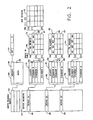
- FIG. 2 depicts in detail those portions of the cache memory 28 that are relevant to this invention, particularly with respect to write pending slots 42 and device headers 43, also shown in FIG. 1 .
- An individual write pending slot such as a write pending slot 44 in FIG. 2 , includes a header 45 followed by the data in a data block 46. Normally this data block will contain the data for one physical track.
- Each header 45 includes a WP flag 47 that indicates a need for write operations or destaging of data from one of the write pending slots 42 to some location in a physical disk device. Once the data is transferred from the cache memory 28 to a corresponding data storage device, the system clears the WP bit 47 for that slot.
- Each header includes other information that is not relevant to this invention and, accordingly, is not shown.
- the device headers 43 include one entry for each storage device in the Symmetrix DASD. Three such entries are shown, namely: entry 48 for the standard device 31; entry 49 for the BCV(1) device 33; and entry 50 for the BCV(2) device 35. Each of these entries has the same organization. That is, the device entry 48 includes a header 51 and a plurality of entries for each cylinder in the device 31. Three specific entries are shown, namely: a Cylinder 0 entry 52, a Cylinder 1 entry 53 and a Cylinder n entry 54.
- Each of the cylinder entries such as Cylinder 0 entry 52, points to a block of locations that define a Track ID table, such as Track ID Table 55, with each location being assigned to a particular track in the cylinder.
- Two track entries are shown in the Track ID table 55, namely: a Track 0 entry 56 and a Track E entry 57 for individual physical devices in which each cylinder comprises fifteen data tracks.
- the device entry 49 comprises a block 60 that includes a header 61 and cylinder entries.
- FIG. 2 depicts three particular cylinder entries including a Cylinder 0 entry 62 identifying a Track ID Table 63.
- the Track ID Table 63 includes, in this particular embodiment, three entries, namely: a Track 0 entry 64 and a Track E entry 66. Additional cylinder entries in the block 60 will be included.
- FIG. 2 depicts two such entries, namely: a Cylinder 1 entry 67 and a Cylinder m entry 68.
- the device entry 50 will have an analogous data structure including a block 70 with a header and cylinder entries. Each cylinder entry will point to a track table 71.
- PB table 72 there is associated with each Track ID Table a data block or table containing "protection bits", also called a PB table.
- One such PB table 72 is associated with Track ID table 55 by a PB header 73.
- This PB table 72 can be considered as a two-dimensional array with one row for each track in a cylinder and one column for each session.
- PB table 72 refers to either the individual table shown in FIG. 2 or the collection of such specific tables for all cylinders in the standard device.
- each row is 2 bytes wide to define up to 16 sessions.
- a particular PB bit position will be identified in the form PB(x,y) where x indicates a track in a cylinder and y indicates a session number.
- FIG. 2 depicts such sessions as DDF(1) and DDF(2) sessions where DDF(n) is a designation for a session that incorporates the processes of this invention.
- DDF(1) and DDF(2) sessions where DDF(n) is a designation for a session that incorporates the processes of this invention.
- DDF(n) is a designation for a session that incorporates the processes of this invention.
- With a sixteen-bit wide table it is possible to define 16 sessions.
- the number of DDF sessions may be limited. More specifically, during a DDF session creation, like the creation of other sessions, a controller associated with a standard device determines whether any "y" column is available. If one is available, the controller establishes a session identification correlated to the selected PB bit column.
- an I/O request to write data to a track alters the various Track ID tables represented by the M1 through M4 bit positions in these Track ID tables.
- This invention uses a combination of PB tables associated with standard devices and track tables associated with standard and BCV devices to enable multiple BCV sessions with respect to a single standard device. Referring to FIG. 1 , this allows data on the standard device 31 to be replicated at different times to the BCV(1) device 33 and the BCV(2) device 35.
- the HOST APP A application 22 continues to operate with the standard device 31.
- the HOST APP B application 23 can operate with the BCV(1) device 33; and the HOST APP C application 24, with the BCV(2) device 35.
- the combination of the PB and TRACK tables enables either of the BCV devices 33 or 35 to be updated from the standard device 31 in any order.
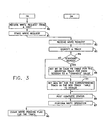
- FIG. 3 depicts a modification to the operation of the data storage facility 25 in response to a WRITE request.
- step 80 represents the receipt of a WRITE REQUEST from one of the host applications in a host adapter (HA).
- Step 81 stages this request.
- a disk adapter (DA) receives the WRITE request in step 82 and identifies the track to be altered.
- step 84 determines the WRITE request is to a standard device
- step 84 transfers control to step 85.
- Step 85 sets a bit in the PB table for the identified track to a changed value for each session. That is, if these are two DDF sessions, DDF(1) and DDF(2), and a WRITE request identifies track 1 of the standard device 31, the track 1 bit in DDF(1) and DDF(2) columns of the PB table 72 (i. e., the PB (DDF(1),1) and PB (DDF(2),1) bits) will assume a "changed" value.
- Step 85 transfers control to steps 86 and 87 that post a complete status and perform a WRITE operation before returning an acknowledgement that enables a WRITE PENDING flag for the track (not shown) to be cleared in step 90.
- step 84 transfers control to step 91.
- Step 91 sets to invalid the "M4" bit in the corresponding BCV track table. In a BCV operation, this bit is designated as an "M4b" bit.
- M4b the state of the M4b in row 64 of the Track ID table 63 to indicate an invalid state.
- V and "I” indicate the valid and invalid states respectively. In the Symmetrix implementations the V and I values are "0" and "1", respectively.
- Any such session begins when a host application or other source issues an ESTABLISH command.
- the ESTABLISH command identifies a standard device, such as the standard device 31, and a BCV device, such as one of the BCV devices 33 or 35.
- a host adapter such as the host adapter 27 in FIG. 1
- receives the command in step 100 it tests for an error in step 101 to abort if any error should exist. If not, the host adapter issues an ESTABLISH request in step 102.
- step 104 transfers control to step 105 that performs a number of tests and functions to include assigning a DDF session number and selecting a corresponding bit position in the PB table associated with the standard device. In addition, other functions could also be performed. Step 105 also assures that necessary resources are available. In the context of the system in FIGS. 1 and 2 , step 105 could establish a DDF(1) session pairing the standard device 31 and the device 33 BCV(1). If any conditions are not met, an error message is sent.
- step 105 transfers control to step 106 and the establish function continues in the same way as disclosed in PCT-WO97/45790 . If a session has been defined for an ESTABLISH request, step 104 bypasses step 105 and transfers control to step 106.
- the next sequence of steps effectively isolates the selected BCV volume from any corresponding application and connects the selected BCV device as a mirror to the standard device 31.
- a specific column of a track table or mirror position is designated as representing the status of tracks in the other mirror device. This is always selected as an unused mirror position. When this occurs the exact position may change and is called a moving mirror using the designation "MM".
- the ESTABLISH command sets to an invalid state all the moving mirror bits associated with the standard device. This enables the copy program on the standard device to copy data to the selected BCV device.
- the BCV device synchronizes with the standard device, normal mirroring operations continue.
- step 106 selects and adds the corresponding BCV device as a BCV mirror with the next available standard device mirror as previously described.
- Various bookkeeping operations that do not form part of this invention, but are well known in the art, are also performed. Further communications between the BCV device and the program operating with it are no longer possible so step 107 discards all WRITE PENDING operations to the selected BCV device.
- Step 108 completes the isolation by setting to a NOT READY (NR) the selected BCV device in its function as a storage facility for a corresponding application.
- NR NOT READY
- Step 110 sets all moving mirror (MM) track status bits in the standard device Track ID table to an invalid state. Any one of the unassigned M1 through M4 bit positions in the standard device can be assigned to represent the state of the mirror device. The assigned bit position is called the MM bit position. Marking as invalid all the MM bits assures that all the data from the standard device will be copied to the selected BCV device. If a conventional ESTABLISH command were issued, step 111 would transfer control to step 112 to post a COMPLETE status for transfer back to the host adapter in step 113 and for further transfer to the application issuing the ESTABLISH command. However, if, in accordance with this invention, a session is involved, step 111 interposes step 114 in the process.
- Step 114 marks as "changed” sets all the track entries associated with the session in the corresponding PB table.
- the ESTABLISH command is generated as the DDF(0) session, all the PB bits in all the PB tables, including the PB table 72, would reflect a "changed" value.
- the COMPLETE status would be posted in step 112 and transferred in step 113.
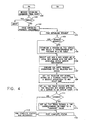
- a SPLIT command can effect a path between the BCV device and its corresponding application. For example, in FIG. 1 if the ESTABLISH command produces a BCV relationship between the standard device 31 and the BCV(1) device 33, the SPLIT command will isolate the standard and BCV devices 31 and 33 and reconnect the device 33 with the replicated data set to the HOST APP B application 23.
- the procedure begins when a host adapter (HA) receives the SPLIT command in step 121.
- the host adapter tests various conditions in step 122.
- step 122 determines whether the BCV device is actually in synchronism with the standard device. If an error condition exists, step 122 diverts to step 123 to abort the response. Otherwise step 124 issues a SPLIT request to the device adapters, such as disk adapter (DA) represented in Fig. 5 , and blocks any further communications to the device adapters from other hosts.
- DA disk adapter
- step 125 the device controller for the selected BCV device receives the SPLIT command or request. Any mirror devices are locked in step 126 to prevent any activity during the response to the SPLIT command. This prevents any new WRITE requests from being posted from other hosts to the device while the response to the SPLIT command is in process.
- step 127 the device controller associated with the selected BCV device removes the BCV mirror from the standard device and reassigns it to its original BCV application, such as the HOST APP B application 23 for the BCV(1) device 33. Various bookkeeping procedures such as updating certain device records to reflect a configuration changes are accomplished.
- the status of the BCV device in the context of its mirror operation is discontinued by setting the device acting as a mirror to a NOT READY (NR) state.
- NR NOT READY
- Step 130 manages any WRITE PENDING operations to the selected BCV device in a manner that is known in the art. Control then transfers to step 131 to copy identification tables from the standard device to the selected BCV device.
- Step 132 controls the subsequent operations depending upon whether the SPLIT command is a FULL SPLIT command as disclosed in PCT-WO97/45790 or a DIFFERENTIAL (DIFF) SPLIT command as disclosed in PCT-WO 00/49500 . If a FULL SPLIT command is involved, step 132 transfers control to step 133 to mark as valid all M4b bits i.e., the M4 bits in the selected BCV device Track ID table. Thus if the BCV device is device 33, all the M4 bits in the Track ID table 63 are marked as "valid". This indicates to the selected BCV device that its corresponding application has made no changes to the data.
- DIFF DIFFERENTIAL
- Step 132 transfers control to step 135 that begins a loop by selecting a track.
- Step 136 determines whether any intervening WRITE request has altered the data in the standard device by determining whether a corresponding bit is marked as "changed”. If a DDF(n) bit is marked as "changed”, step 136 transfers control to step 137.
- Step 137 marks as INVALID any corresponding BFM bit.
- a BCV volume may operate independently or in conjunction with other mirrors after it is split. If such mirrors exist, they are identified in the Track ID table for the BCV device. For example if the BCV device 33 operates with an M2 mirror, the M2 bit positions in the Track ID table would be designated as the BFM bits, with one bit being assigned to each track. If no such mirror device exists, step 136 does not change any bit values.
- Step 138 then ends the loop by testing for more tracks. If more tracks exist step 138 transfers control back to step 136 after selecting a track in step 139. Otherwise step 137 transfers control to step 133 to mark as valid all the M4b bits in the Track ID table for the selected BCV device.
- step 133 After step 133 completes its function, control transfers to step 134 whereupon all DDF(n) bits for the session are marked as "unchanged". That is, if the SPLIT command identifies the session relating the standard device 31 with the BCV device 33, with a session identifier DDF(1) all the bits in the DDF(1) column of the PB table 72 shown in FIG. 2 would be marked as "changed”. This assures that the PB table accurately reflects the replicated data on the selected BCV device.
- Step 140 sets the selected BCV device to a READY state with respect to its corresponding application.
- Step 141 posts a COMPLETE status for transfer back to the host adapter in step 142.
- the application corresponding to the selected BCV device such as the HOST APP B application 23, for the BCV device 33, can interact with the replicated data in context that existed at the instant of the SPLIT command. Processing of this data then occurs in parallel with or concurrently with the processing of the application interacting with the standard device and any other application for processing data on any other BCV device, such as the HOST C APP application 24 with the BCV device 35.
- the HOST APP B application 23 alters data on the BCV device 33. This marks as valid the M1 bit position for the changed track and marks as invalid the M4b bit position to indicate that the track is no longer in synchronism with the corresponding track on the standard device.
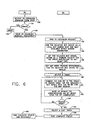
- FIG. 6 depicts the procedure followed by the host adapter and a selected device adapter in response to a REESTABLISH command.
- the host adapter receives the REESTABLISH command from the host in step 150 and tests for errors in step 151. If an error is found, step 152 aborts the process and issues an appropriate error code. In the prior system one such error occurred if the designated BCV device was not the device that initiated the ESTABLISH command. In accordance with this invention, that error no longer occurs because it is possible for the REESTABLISH command to identify any BCV device in a session. Assuming no errors exist, step 153 issues a REESTABLISH request to the disk adapter and then disconnects in a manner analogous to the disconnection accomplished in response to other commands.
- step 154 the device adapter receives the REESTABLISH request.
- step 155 adds the selected BCV device as a local BCV mirror with the next available device mirror designation.
- step 156 the BCV device is set to be NOT READY (NR) to the corresponding application, such as the HOST APP B application 23 with the BCV device 33 in FIG. 1 . All WRITE PENDINGS to the BCV device are set to be invalid in step 157.
- Step 160 selects a track as a first step in a loop by which the storage device is analyzed on a track-by-track basis.
- Step 161 combines the track M4b bit for the selected track from the Track ID status table for the selected BCV device with the PB bit for the selected.track for the DDF session. For example, if a DDF(1) session establishes a relationship between the standard device 31 and the BCV(1) device 33, step 161 combines the M4 bit from the Track ID table 63 in FIG. 2 with the corresponding PB bit from the DDF(1) column of the PB table 72 in a logical OR operation. The result identifies whether the specific track has been changed in either the standard device 31 or the BCV device 33.
- Step 162 marks the corresponding MM bit based upon that bit combination.
- the combination is typically a logical OR operation.
- Step 163 determines whether all the tracks have been analyzed. If not, step 164 selects a next track and transfers control back to step 160. Otherwise the analysis is complete and the system uses step 165 to post a complete status and transfer that status back through the host adapter to the source of the REESTABLISH command in step 166.
- the MM bits in the standard device identify each track that needs to be transferred from the standard device to the selected BCV device. Then a copy program, typically the copy program associated with the standard device, uses the MM bits to control the transfers.
- step 160 If the HOST APP A application 22 generates a WRITE request to the standard device 31 during this process, it will change the corresponding PB bit. However, the loop starting with step 160 operates so long as the RE-ESTABLISH command is active, so new data will be transferred to the selected BCV device on a subsequent split.
- FIG. 7 depicts a RESTORE command that restores all the data of the standard device from a selected BCV device. This procedure is useful if failure occurs in the standard device while the BCV device has a valid copy. For example, if one of the BCV devices were being used in a backup operation, no data would change after a SPLIT command. If a disk failure or file corruption event were to occur, the RESTORE command would restore data in the standard device in the version that existed at the time of the prior SPLIT command for the specific DDF session.
- the host adapter receives a RESTORE command in step 170 and tests for error conditions in step 171.
- An error condition unique to the restore command, exists if the BCV device has invalid tracks, if there are WRITE PENDING operations to the standard device or if the standard device is characterized by a NOT READY (NR) status.
- Step 172 aborts any processing of the RESTORE command if any such error conditions exist.
- step 173 issues the RESTORE request and then disconnects.
- the device adapter (DA) encounters the RESTORE request in step 174, it selects a next available standard mirror device designation for the selected BCV device in step 175.
- Step 176 isolates the BCV device from its application by indicating the device is no longer ready or available to the corresponding application.
- Various pending WRITE operations are managed in step 177. If a WRITE PENDING operation to the selected BCV exists, the same WRITE pending cache slot is maintained, but its attributes are altered to reflect the device number of the standard device instead of the BCV device and to reflect that the mirror is now associated with the standard device as a mirror instead of the first available local mirror on the BCV device. Various write pending and in-cache flags are then set as known in the prior art.
- the device controller uses step 180 to mark as invalid all the entries in the Track ID table for the standard device and any local mirrors.
- the controller marks as valid all the tracks in the standard device table for the selected BCV device as valid. This is the MM bit that is resident in the Track ID tables 55 for the standard device.
- all the track entries for the current DDF session are marked as "unchanged”. That is, if the session involved is the DDF(1) session, all the tracks in the DDF(1) PB table 72 in FIG. 2 are set to an "unchanged" value.
- the PB bits for all the other DDF sessions, such as the DDF(2) session are marked as "changed".
- Step 184 posts a complete status and step 185 returns that status through the host adapter to the requesting application.
- the copy program associated with the standard device uses the state of the signals in the MM bits of the track tables, such as the Track ID table 55, to copy data from the selected BCV device and restore all the data to the standard device.
- FIG. 8 depicts the process whereby the host adapter (HA) receives the incremental restore command in step 190 and tests for an error 191, aborting in step 192 if an error exists. Otherwise control passes to step 193 that sends the incremental restore command onto the system bus to device adapters.
- HA host adapter
- Step 194 represents the receipt of an incremental restore request in a device adapter (DA).
- Steps 195 and 196 operate the same way as steps 175 and 176 in FIG. 7 .
- Step 197 handles any WRITE PENDING operations to the standard device by making them invalid.
- Step 200 marks as valid all the MM bits in the standard device table.
- Step 201 initiates a loop for a track-by-track analysis.
- step 202 determines whether the M4b bit for the selected BCV device is valid.
- Step 203 determines whether the PB bit for the DDF(n) session is changed. In either case control transfers to step 204 to mark as invalid the MM bit in the standard device for the selected track.
- step 205 marks as "unchanged” the corresponding PB bit for the DDF(n) session for the selected track.
- step 206 marks as "changed” all the PB bits for all other DDF sessions for that track.
- Step 207 acts as a loop control to identify a next track in step 210 and transfer control back to step 202.
- step 207 transfers control to step 211 that posts a complete status and allows step 212 to transfer this status through the host adapter to the application that issues the INCREMENTAL RESTORE command.
- FIG. 9 depicts a data storage facility 220 with a standard device 31 that operates with a main application and with two mirrors. As there is no requirement for identifying specific mirror locations in any particular order, in FIG. 9 the standard device 31 assigns mirror 222 to be an M2 mirror and mirror 223, an M4 mirror. This leaves the M1 and M3 bit positions in a Track ID table unused.
- a first BCV device designated as BCV(1) device 33 is configured to provide data for backup operations. In this case a backup application 23 copies data from the BCV(1) device 33 to a tape backup or backup facility of other media on a periodic basis.
- the second BCV device namely BCV(2) device 35 includes an M2 mirror 224 and an M3/RDF (remote data facility) mirror 225 designated as an M3/RI mirror. RDF mirrors are known in the art.
- the standard device 31 occupies the M2 and M4 bit positions.
- a next available position is assigned to that BCV device.
- the next available position is the M1 position and that becomes the MM bit position when the standard device connects to either of the BCV devices 33 or 35 during an ESTABLISH or REESTABLISH operation.
- the BCV(1) device 33 is defined as the M1 mirror and the M4 bit position is the M4b bit position.
- the M1 bit position is the MM bit position when the BCV device 33 is operating with its program.
- the BCV device 35 includes the BCV(2) device as an M2 mirror while its remote device is the M3/RI mirror.
- the M2 bit position is the MM bit position for the BCV device 35; and the M4 bit position becomes the M4b bit position.
- the RDF device 225 constitutes a fixed mirror, so the M3 bit position is also called a BFM (or BCV Fixed Mirror) bit position.
- FIG. 10 depicts a sequence of events that could occur in the configuration shown in FIG. 9 .
- the HOST APP A application 22 writes to a specified track in the standard device 31.
- both the DDF(1) and DDF(2) bits for that track are marked as "changed” because the request is to a standard device and the operation of FIG. 3 continues even when no sessions are active.
- the M1 bit in the Track ID table for that track is marked as "invalid” while the M2 and M4 bits are marked as "valid”.
- the M3 bit is not used, its value is assigned according to a general rule that requires any unused bits to always be marked as "invalid”. No changes are made to any other track.
- Event 231 depicts an operation whereby the HOST APP B application 23 writes to a track in the BCV(1) device 33.
- the HOST APP B application 23 writes to a track in the BCV(1) device 33.
- no change occurs in the DDF(1) or DDF(2) values or the Track ID tables 55 or 71.
- Track ID table 63 does change.
- the M1 bit will be marked as "valid” and the M4, or M4b, bit will be marked as "invalid”.
- Event 232 depicts a similar operation when a WRITE request from the application 24 identifies a track on the BCV(2) device 35.
- the M2 and M3 bits in Track ID table 71 for the corresponding track are marked as "valid" while the M4, or M4b, bit is marked invalid.
- Event 234 represents the response to a FULL SPLIT command for the DDF(1) session. As shown by steps 133 and 134 in FIG. 5 , all the M4b bits in the Track ID table 63 are marked as "valid" and all the PB bits for the DDF(1) session are marked as "unchanged”.
- Event 235 represents a situation in which the HOST APP A application 22 writes data to a track in the standard device 31. As shown in FIG. 3 , this write request will mark as "changed" both the DDF(1) and DDF(2) sessions for the corresponding track. Other PB bits for other tracks are not altered.
- Step 236 represents the establishment of the DDF(2) session between the standard device 31 and the BCV(2) device 35. Now all the values in the DDF(2) portion for the Track ID table 72 are marked as "changed”. With this relationship, each M1 bit in the standard device Track ID table 55, as an MM bit, points to a track in the BCV(2) device 35 so the values of all the M1 bits are marked as "invalid”. When synchronism is achieved, the M2 and M3 bit positions in the Track ID table 71 for the BCV(2) device 35 are marked as "valid". Also the M4 bit, as the M4b bit for this session, is marked as "valid". No change occurs to the Track ID table 63.
- the M1 bits in the Track ID table 55 for the standard device 31 are marked as "valid”.
- all the M4b bits in the BCV(2) device Track ID table 71 are marked as "valid”.
- the DDF(2) PB bit position for each track is marked as "unchanged”.
- event 241 processes the REESTABLISH command.
- the system will combine the M4 bit for the Track ID status table for the selected BCV device and the PB bit for the DDF session and the MM bit in the Track ID table 55 is set to "invalid".
- the M4b bit in the Track ID table 63 would be marked as "invalid” and would also have to produce a change in the M1 bit of the Track ID table 55 whether the corresponding PB bit for the DDF session were marked as "changed” or not.
- a copy program transfers the data in each marked track, the corresponding DDF(1) bit will be marked as "unchanged” and each corresponding M4b bit will be marked as "valid” in the Track ID table 63.
- Event 242 represents a decision to restore data incrementally from the BCV device 35.
- the BCV device might, for example, have an updated version of the information on the standard device 31.
- all the M1 bits in the Track ID table 55 for the standard device are marked as "valid”.
- the DDF(2) bits in the PB table 72 are marked as "unchanged” while the DDF(1) bits are marked as "changed”. This signifies that the data in the other BCV devices, such as the BCV device 33, no longer contain replicas of the data in the standard device 31.
- marking the DDF(1) bits as changed assures the transfer of that correct data in response to a next REESTABLISH or ESTABLISH command procedure involving another BCV device, such as the BCV(1) device 33 in this example.
- Event 243 represents another write operation to the standard device 31.
- the standard device 31 responds by marking as "changed" all the PB positions for the altered track or tracks in all the DDF sessions.
- Event 244 represents the receipt of a DIFF SPLIT command to detach the BCV(2) device 35 from the standard device 31.
- step 137 in FIG. 5 will mark as "invalid" the bit position in the Track ID table 71 corresponding to the BFM bit for the M3/R1 mirror 225 in FIG. 9 .
- the BFM bit will be the M2 bit in the Track ID table 71. This assures that the change propagates the M3/R1 mirror 225.
- FIGS. 9 and 10 demonstrate the ability to establish multiple session involving a single standard device and different BCV devices. This provides a powerful tool because the transfers in response to the various commands all occur independently of and transparently to the interaction between the primary host application and a standard device, such as the HOST APP A application 22 and the standard device 31. The transfers that are produced during the DIFFERENTIAL SPLIT and REESTABLISH and INCREMENTAL restores are limited to only those changes that need to be made. Also, data is replicated and used without danger of corrupting any of the data on the standard device 31.
- This invention has been described in terms of a specific embodiment involving a particular data storage facility utilizing tracks as a basic storage unit and maintaining a track-by-track analysis and status.
- the invention is readily adapted to other levels of granularity including files, records or sectors. Specific commands and sequences have been disclosed. It will be apparent that many of those sequences could be altered and different steps might be incorporated to achieve the similar results.
- this invention has been described in terms of an embodiment of an integrated data storage facility in which all the elements that constitute the invention are collocated. As the capabilities of digital data networks increase, it is expected that in some situations it may be advantageous to distribute the various elements and the functions they perform throughout a network. For example, each of the standard and BCV devices could be located at different nodes on a network. In such a configuration each function described in this specification will still be performed with, at most, minor and apparent variations to accommodate the operations to a distributed network environment.
Landscapes
- Engineering & Computer Science (AREA)
- Theoretical Computer Science (AREA)
- Quality & Reliability (AREA)
- Physics & Mathematics (AREA)
- General Engineering & Computer Science (AREA)
- General Physics & Mathematics (AREA)
- Information Retrieval, Db Structures And Fs Structures Therefor (AREA)
- Techniques For Improving Reliability Of Storages (AREA)
- Hardware Redundancy (AREA)
Claims (20)
- Procédé pour permettre la duplication de données situées sur un premier dispositif de stockage (31) situé sur une première unité de stockage physique à disque, et qui interagit avec un premier programme d'application (22), vers au moins deux dispositifs de stockage supplémentaires (33, 35) situés sur différentes unités de stockage physiques à disque, pour générer une copie des données du premier dispositif de stockage stockée sur chacun desdits au moins deux dispositifs de stockage supplémentaires (33, 35) pour une interaction avec un programme respectif parmi au moins deux programmes supplémentaires (23, 24) pour permettre une interaction de chaque copie avec son programme supplémentaire respectif, indépendamment de et simultanément avec l'interaction de la ou de chaque autre copie avec son programme supplémentaire respectif, et indépendamment de et simultanément avec l'interaction des données sur le premier dispositif de stockage avec la première application, ledit procédé étant caractérisé par les étapes consistant à :A. définir des références de sessions (105) dans une table de session (PB/72), chaque référence de session (105) identifiant un des dispositifs de stockage supplémentaires (33, 35) et correspondant à une session (DDF) pour ce dispositif de stockage supplémentaire pendant laquelle des données sont dupliquées du premier dispositif de stockage de données (31) vers ce dispositif de stockage supplémentaire (33, 35), chaque référence de session comportant des entrées correspondant à des parties des données sur le premier dispositif de stockage pour enregistrer chaque modification apportée à une partie correspondante des données sur le premier dispositif de stockage,B. enregistrer (85) chaque modification que le premier programme (22) apporte à une partie de données sur le premier dispositif de stockage (31) dans l'entrée correspondante de chacune des références de sessions (105) définies,C. définir dans une table de pistes (55) une référence de modification de dispositif (63, 71) pour chacun du premier dispositif de stockage (31) et des dispositifs de stockage supplémentaires (33, 35), chaque référence de modification de dispositif comportant des entrées pour enregistrer chaque modification qu'un programme (22, 23, 24) respectif apporte à une partie de données sur le premier dispositif de stockage et les dispositifs de stockage supplémentaires,D. générer (ETABLIR) des copies des données du premier dispositif de stockage sur les dispositifs de stockage supplémentaires, chaque copie étant générée en :(i) établissant une session (DDF) qui identifie le premier dispositif de stockage et un des dispositifs de stockage supplémentaires en tant que dispositif de stockage sélectionné, le ou chaque autre dispositif de stockage supplémentaire étant un dispositif de stockage non sélectionné, et(ii) synchronisant les données sur le dispositif de stockage sélectionné avec les données sur le premier dispositif de stockage, sur quoi, après avoir terminé la synchronisation, le dispositif de stockage sélectionné peut être séparé du premier dispositif de stockage pour permettre ainsi une interaction entre le dispositif de stockage sélectionné et son programme respectif,E. enregistrer (91) dans la référence de modification de dispositif chaque modification que chaque programme supplémentaire apporte à une partie de données stockée dans son dispositif de stockage respectif,F. mise à jour sur demande (RE-ETABLIR) des parties de données (166, 162) sur un dispositif sélectionné parmi les dispositifs de stockage supplémentaires en :(i) sélectionnant une session (DDF) qui identifie le premier dispositif de stockage et le dispositif de stockage supplémentaire sélectionné,(ii) combinant les entrées dans les références de sessions et de modification de dispositif correspondantes pour identifier les parties de données modifiées sur le premier dispositif de stockage et les dispositifs de stockage supplémentaires sélectionnés, et(iii) copiant (37) les parties de données modifiées du premier dispositif de stockage vers le dispositif de stockage sélectionné pour synchroniser les données sur le dispositif de stockage sélectionné avec les données sur le premier dispositif de stockage, sur quoi, après avoir achevé la synchronisation, le dispositif de stockage sélectionné peut de nouveau être séparé du premier dispositif de stockage, pour permettre de nouveau, ainsi, une interaction entre le dispositif de stockage sélectionné et son programme supplémentaire respectif.
- Procédé selon la revendication 1, dans lequel l'étape de séparation de l'étape D et / ou de l'étape F produit une opération de séparation totale en marquant (134) comme non modifiée chaque entrée dans la référence de session (105) pour le dispositif de stockage supplémentaire sélectionné et en marquant (133) comme valide chaque entrée dans la référence de modification de dispositif (63, 71) correspondante.
- Procédé selon la revendication 1, dans lequel chacune des références de modification de dispositif a de multiples ensembles d'entrées pour chaque dispositif de stockage, et l'étape de séparation de l'étape D et / ou de l'étape F produit une opération de séparation différentielle en :i. marquant comme non valides (137) les entrées dans un ensemble d'entrées de la référence de modification de dispositif correspondante qui correspondent à un autre dispositif de stockage qui est un miroir pour le dispositif de stockage sélectionné si une entrée correspondante dans la référence de session est marquée comme étant modifiée (136),ii. marquant comme valides (133) les entrées dans un ensemble d'entrées pour le dispositif de stockage sélectionné correspondant au premier dispositif de stockage, etiii. marquant comme non modifiées (134) toutes les entrées dans la référence de session.
- Procédé selon la revendication 3, dans lequel les données dans le premier dispositif de stockage peuvent être rétablies de manière incrémentale à partir d'un dispositif sélectionné parmi les dispositifs de stockage supplémentaires après une opération de séparation différentielle, ledit procédé de rétablissement comprenant les étapes consistant à :i. marquer comme valides (200) toutes les entrées dans un ensemble d'entrées dans le premier dispositif de stockage correspondant au premier dispositif de stockage,ii. marquer comme non valides (204) toutes les entrées dans un ensemble d'entrées dans la référence de modification de dispositif pour le premier dispositif de stockage correspondant au dispositif de stockage sélectionné,iii. marquer comme non modifiées (205) toutes les entrées dans la référence de session pour le dispositif de stockage sélectionné, etiv. marquer comme modifiées (206) toutes les entrées dans les références de sessions pour le ou chaque dispositif de stockage supplémentaire non sélectionné, moyennant quoi les données dans le dispositif de stockage sélectionné rétablissent les données dans le premier dispositif de stockage et permettent le transfert subséquent de données vers le dispositif de stockage supplémentaire non sélectionné ou vers l'un quelconque des dispositifs de stockage non sélectionnés.
- Procédé selon la revendication 4, dans lequel les données à rétablir du premier dispositif de stockage sont limitées aux modifications de données dans le premier dispositif de stockage qui ont été effectuées depuis une séparation antérieure du premier dispositif de stockage et des dispositifs de stockage supplémentaires sélectionnés, ledit procédé de rétablissement comprenant les étapes consistant à :i. marquer comme valides (200) toutes les entrées dans un ensemble d'entrées dans la référence de modification de dispositif pour le premier dispositif de stockage correspondant au dispositif de stockage sélectionné,ii. marquer comme non valides (204) toutes les entrées dans un ensemble d'entrées dans le premier dispositif de stockage correspondant au premier dispositif de stockage si l'entrée correspondante dans la référence de modification de dispositif pour le dispositif de stockage sélectionné est valide ou si l'entrée dans la référence de session pour le dispositif de stockage sélectionné est modifiée,iii. marquer comme non modifiées (205) toutes les entrées dans la référence de session pour le dispositif de stockage sélectionné, etiv. marquer comme modifiées (206) toutes les entrées dans les références de sessions pour le ou chaque dispositif de stockage supplémentaire non sélectionné, moyennant quoi seules les parties de données correspondant à des entrées modifiées dans le premier dispositif de stockage et les dispositifs de stockage sélectionnés sont transférées vers le premier dispositif de stockage, et moyennant quoi le transfert des données rétablies vers le dispositif de stockage supplémentaire non sélectionné ou vers l'un quelconque des dispositifs de stockage non sélectionnés est autorisé.
- Procédé selon la revendication 1, dans lequel l'étape de définition d'une référence de session identifie le premier dispositif de stockage (31) et un dispositif de stockage supplémentaire sélectionné (par exemple, 33), et dans lequel chacun du premier dispositif de stockage et des dispositifs de stockage supplémentaires sélectionnés mémorise chaque partie de données dans une piste de données :i. ladite étape de définition de référence de modification de dispositif comprend l'étape de définition d'un premier ensemble d'entrées (56, 57) correspondant au premier dispositif de stockage et d'un deuxième ensemble d'entrées correspondant à un dispositif sélectionné parmi les dispositifs de stockage supplémentaires, définissant ainsi le ou chaque autre dispositif de stockage supplémentaire en tant que dispositif de stockage non sélectionné, etii. chacune desdites étapes de définition de référence de session et de référence de modification de dispositif établit une correspondance entre des entrées correspondantes et une piste.
- Procédé selon la revendication 6, dans lequel l'étape de séparation de l'étape D et / ou de l'étape F comprend l'étape consistant à marquer comme non modifiée (134) chaque entrée de piste dans la référence de session (105) pour le dispositif de stockage supplémentaire sélectionné et à marquer (133) comme valide chaque entrée de piste dans la référence de modification de dispositif (63, 71) correspondante.
- Procédé selon la revendication 6, dans lequel l'étape de séparation de l'étape D ou de l'étape F comprend les étapes consistant à :i. marquer comme non valides (137), dans la référence de modification de dispositif pour le dispositif de stockage supplémentaire sélectionné, les entrées de piste de l'ensemble d'entrées pour tout dispositif de stockage miroir si l'entrée de piste correspondante dans la référence de session pour le dispositif de stockage sélectionné est modifiée,ii. marquer comme valides (133), dans la référence de modification de dispositif pour le dispositif de stockage sélectionné, les entrées de piste de l'ensemble d'entrées pour le premier dispositif de stockage, etiii. marquer comme non modifiées (134) toutes les entrées de piste dans la référence de session pour le dispositif de stockage sélectionné.
- Procédé selon la revendication 6, dans lequel les données dans le premier dispositif de stockage peuvent être rétablies à partir d'un dispositif sélectionné parmi les dispositifs de stockage supplémentaires, ledit procédé de rétablissement comprenant les étapes consistant à :i. marquer comme non valides (180) toutes les entrées de piste dans l'ensemble d'entrées dans le premier dispositif de stockage qui correspondent au premier dispositif de stockage,ii. marquer comme valides (181) toutes les entrées de l'ensemble d'entrées dans la référence de modification de dispositif pour le premier dispositif de stockage correspondant à l'autre dispositif de stockage sélectionné,iii. marquer comme non modifiées (182) toutes les entrées de piste dans la référence de session pour le dispositif de stockage sélectionné, etiv. marquer comme modifiées (183) toutes les entrées de piste dans les autres références de sessions, moyennant quoi les données dans le dispositif sélectionné parmi les dispositifs de stockage supplémentaires rétablissent les données dans le premier dispositif de stockage.
- Procédé selon la revendication 6, dans lequel les données dans le premier dispositif de stockage peuvent être rétablies à partir d'un dispositif sélectionné parmi les dispositifs de stockage supplémentaires, et dans lequel les données à rétablir du premier dispositif de stockage sont limitées aux données des pistes du premier dispositif de stockage et des dispositifs de stockage supplémentaires sélectionnés qui sont apparues depuis une séparation antérieure du premier dispositif de stockage et des dispositifs de stockage sélectionnés, ledit procédé de rétablissement comprenant les étapes consistant à :i. marquer comme valides (200) toutes les entrées de piste dans l'ensemble d'entrées pour la référence de modification de dispositif pour le premier dispositif de stockage correspondant au dispositif de stockage sélectionné,ii. marquer comme non valides (204) toutes les entrées de piste dans l'ensemble d'entrées dans le premier dispositif de stockage correspondant à lui-même si l'entrée de piste correspondante dans la référence de modification de dispositif pour le dispositif de stockage sélectionné est valide ou si l'entrée de piste dans la référence de session pour le dispositif de stockage sélectionné est modifiée,iii. marquer comme non modifiées (205) toutes les entrées de piste dans la référence de session pour le dispositif de stockage sélectionné, etiv. marquer comme modifiées (206) toutes les entrées de piste dans les autres références de sessions, moyennant quoi seules les parties de données correspondant à des entrées modifiées dans le premier dispositif de stockage et les dispositifs de stockage sélectionnés rétablissent les données dans le premier dispositif de stockage.
- Installation de stockage de données (25) comprenant un premier dispositif de stockage (31) situé sur une première unité de stockage physique à disque et accessible par un premier programme d'application (22), et au moins deux dispositifs de stockage supplémentaires (33, 35) situés sur différentes unités de stockage physiques à disque et accessibles chacun par un programme respectif parmi au moins deux programmes supplémentaires (23, 24), l'installation de stockage de données (25) pouvant être utilisée pour générer une copie des données sur le premier dispositif de stockage stockée sur lesdits au moins deux dispositifs de stockage supplémentaires (33, 35) et permettant à chaque copie d'interagir avec son programme supplémentaire respectif, indépendamment de et simultanément avec l'interaction de la ou de chaque autre copie avec son programme supplémentaire respectif, et indépendamment de et simultanément avec l'interaction des données sur le premier dispositif de stockage avec la première application, ladite installation de stockage de données étant caractérisée en ce qu'elle comprend :A. une table de session (PB/72) comprenant des références de sessions (105), chaque référence de session (105) identifiant un des dispositifs de stockage supplémentaires (33, 35) et correspondant à une session (DDF) pour le dispositif de stockage supplémentaire pendant laquelle des données sont dupliquées du premier dispositif de stockage de données (31) vers ce dispositif de stockage supplémentaire (33, 35), chaque référence de session ayant des entrées correspondant à des parties des données sur le premier dispositif de stockage pour enregistrer chaque modification apportée à une partie correspondante des données sur le premier dispositif de stockage, chaque modification apportée par le premier programme (22) à une partie de données sur le premier dispositif de stockage (31) étant enregistrée dans l'entrée correspondante de chacune des références de sessions (105) définies,B. une table de pistes (55) comprenant une référence de modification de dispositif (63, 71) pour chacun du premier dispositif de stockage (31) et des dispositifs de stockage supplémentaires (33, 35), chaque référence de modification de dispositif ayant des entrées pour enregistrer chaque modification qu'un programme (22, 23, 24) respectif apporte à une partie de données sur le premier dispositif de stockage et les dispositifs de stockage supplémentaires,C. un module de copie (37) pour générer (ETABLIR) des copies des données du premier dispositif de stockage sur les dispositifs de stockage supplémentaires, pouvant être utilisé pour générer chaque copie en :(i) établissant une session (DDF) qui identifie le premier dispositif de stockage et un des dispositifs de stockage supplémentaires en tant que dispositif de stockage sélectionné, le ou chaque autre dispositif de stockage supplémentaire étant un dispositif de stockage non sélectionné, et(ii) synchronisant les données sur le dispositif de stockage sélectionné avec les données sur le premier dispositif de stockage, sur quoi, après avoir effectué la synchronisation, le dispositif de stockage sélectionné peut être séparé du premier dispositif de stockage pour permettre ainsi une interaction entre le dispositif de stockage sélectionné et son programme respectif,D. des moyens de modification de dispositif (91) pour enregistrer dans la référence de modification de dispositif chaque modification que chaque programme supplémentaire apporte à une partie de données stockée sur son dispositif de stockage respectif,E. des moyens répondant à une demande (RE-ETABLIR) pour mettre à jour des parties de données (166, 162) sur un dispositif sélectionné parmi les dispositifs de stockage supplémentaires en :(i) sélectionnant une session (DDF) qui identifie le premier dispositif de stockage et le dispositif de stockage supplémentaire sélectionné,(ii) combinant les entrées dans les références de sessions et de modification de dispositif correspondantes pour identifier les parties de données modifiées dans le premier dispositif de stockage et les dispositifs de stockage supplémentaires sélectionnés, et(iii) copiant (37) les parties de données modifiées du premier dispositif de stockage vers le dispositif de stockage sélectionné pour synchroniser les données sur le dispositif de stockage sélectionné avec les données sur le premier dispositif de stockage, sur quoi, après avoir achevé la synchronisation, le dispositif de stockage sélectionné peut de nouveau être séparé du premier dispositif de stockage, pour permettre ainsi une interaction entre le dispositif de stockage sélectionné et son programme supplémentaire respectif.
- Installation de stockage de données selon la revendication 11, dans laquelle le module de copie de C (ii) et / ou les moyens de E (iii) comprennent des moyens de séparation pouvant être utilisés pour effectuer une opération de séparation totale et comprennent des moyens (134) pour marquer comme non modifiée chaque entrée dans ladite table de session pour le dispositif de stockage supplémentaire sélectionné et des moyens (133) pour marquer comme valide chaque entrée dans la référence de modification de dispositif correspondante.
- Installation de stockage de données selon la revendication 11, dans laquelle chacune des tables de modification de dispositif a de multiples ensembles d'entrées pour chaque dispositif de stockage et le module de copie de C (ii) et / ou les moyens de E (iii) comprennent des moyens de séparation pouvant être utilisés pour effectuer une opération de séparation différentielle et comprennent :i. des moyens (137) pour marquer comme non valides les entrées dans un ensemble d'entrées de la table de modification de dispositif correspondant à un autre dispositif de stockage qui est un miroir pour le dispositif de stockage supplémentaire sélectionné si une entrée correspondante dans la référence de session est marquée comme étant modifiée (136),ii. des moyens (133) pour marquer comme valides les entrées dans un ensemble d'entrées pour le dispositif de stockage sélectionné correspondant au premier dispositif de stockage, etiii. des moyens (134) pour marquer comme non modifiées toutes les entrées dans la table de session pour le dispositif de stockage sélectionné.
- Installation de stockage de données selon la revendication 13, dans laquelle les données dans le premier dispositif de stockage peuvent être rétablies de manière incrémentale à partir d'un dispositif sélectionné parmi les dispositifs de stockage supplémentaires après une opération de séparation différentielle par des moyens de rétablissement comprenant :i. des moyens (200) pour marquer comme valides toutes les entrées dans un ensemble d'entrées dans le premier dispositif de stockage correspondant au premier dispositif de stockage,ii. des moyens (204) pour marquer comme non valides toutes les entrées dans un ensemble d'entrées dans la table de modification de dispositif pour le premier dispositif de stockage correspondant au dispositif de stockage sélectionné,iii. des moyens (205) pour marquer comme non modifiées toutes les entrées dans la table de session pour le dispositif de stockage sélectionné, etiv. des moyens (206) pour marquer comme modifiées toutes les entrées dans les tables de sessions non sélectionnées, moyennant quoi les données dans le dispositif de stockage sélectionné rétablissent les données dans le premier dispositif de stockage et permettent le transfert subséquent de données vers le dispositif de stockage supplémentaire non sélectionné ou vers l'un quelconque des dispositifs de stockage non sélectionnés.
- Installation de stockage de données selon la revendication 14, dans laquelle les données à rétablir du premier dispositif de stockage sont limitées aux modifications de données dans le premier dispositif de stockage qui se sont produites depuis une séparation antérieure du premier dispositif de stockage et des dispositifs de stockage supplémentaires sélectionnés, lesdits moyens de rétablissement comprenant :i. des moyens (200) pour marquer comme valides toutes les entrées dans un ensemble d'entrées dans la table de modification de dispositif pour le premier dispositif de stockage correspondant au dispositif de stockage sélectionné,ii. des moyens (204) pour marquer comme non valides toutes les entrées dans un ensemble d'entrées dans le premier dispositif de stockage correspondant au premier dispositif de stockage si l'entrée correspondante dans la table de modification de dispositif pour le dispositif de stockage sélectionné est valide ou si l'entrée dans la table de session pour le dispositif de stockage sélectionné est modifiéeiii. des moyens (205) pour marquer comme non modifiées toutes les entrées dans la table de session pour le dispositif de stockage sélectionné, etiv. des moyens (206) pour marquer comme modifiées toutes les entrées dans les tables de sessions pour le ou chaque dispositif de stockage non sélectionné, moyennant quoi seules les parties de données correspondant aux entrées modifiées dans le premier dispositif de stockage et les dispositifs de stockage sélectionnés sont transférées vers le premier dispositif de stockage, et moyennant quoi le transfert des données rétablies vers le dispositif de stockage supplémentaire non sélectionné ou vers l'un quelconque des dispositifs de stockage non sélectionnés est autorisé.
- Installation de stockage de données selon la revendication 11, dans laquelle chacun du premier dispositif de stockage et des dispositifs de stockage supplémentaires mémorise chaque partie de données dans une piste de données, ladite installation comprenant des moyens pour former une table de session qui identifie le premier dispositif de stockage et un dispositif de stockage supplémentaire sélectionné (par exemple, 33) comprenant :i. des moyens pour définir un premier ensemble d'entrées (56, 57) correspondant au premier dispositif de stockage et un deuxième ensemble d'entrées correspondant à un dispositif sélectionné parmi les dispositifs de stockage supplémentaires, définissant ainsi le ou chaque autre dispositif de stockage supplémentaire en tant que dispositif de stockage non sélectionné, etii. des moyens pour établir une correspondance entre des entrées et une piste pour chacune desdites tables de sessions et table de modification de dispositif pour le dispositif de stockage sélectionné.
- Installation de stockage de données selon la revendication 16, dans laquelle le module de copie de C (ii) et / ou les moyens de E (iii) comprennent des moyens de séparation comprenant des moyens (134) pour marquer comme non modifiée chaque entrée de piste dans la table de session pour le dispositif de stockage supplémentaire sélectionné et des moyens (133) pour marquer comme valide chaque entrée de piste dans la table de modification de dispositif correspondante.
- Installation de stockage de données selon la revendication 16, dans laquelle le module de copie de C (ii) et / ou les moyens de E (iii) comprennent des moyens de division comprenant :i. des moyens (137) pour marquer comme non valides dans la table de modification de dispositif pour le dispositif de stockage supplémentaire sélectionné les entrées de piste dans l'ensemble d'entrées pour tout dispositif de stockage miroir si l'entrée de piste correspondante dans la table de session pour le dispositif de stockage sélectionné est modifiée,ii. des moyens (133) pour marquer comme valides dans la table de modification de dispositif pour le dispositif de stockage sélectionné les entrées de piste dans l'ensemble d'entrées pour le premier dispositif de stockage, etiii. des moyens (134) pour marquer comme non modifiées toutes les entrées de piste dans la table de session pour le dispositif de stockage sélectionné.
- Installation de stockage de données selon la revendication 16, comprenant des moyens pour rétablir les données dans le premier dispositif de stockage à partir du dispositif de stockage supplémentaire sélectionné, lesdits moyens de rétablissement comprenant :i. des moyens (180) pour marquer comme non valides toutes les entrées de piste dans l'ensemble d'entrées dans le premier dispositif de stockage qui correspondent au premier dispositif de stockage,ii. des moyens (181) pour marquer comme valides toutes les entrées dans l'ensemble d'entrées dans la table de modification de dispositif pour le premier dispositif de stockage correspondant au ou à chaque dispositif de stockage supplémentaire non sélectionné,iii. des moyens (182) pour marquer comme non modifiées toutes les entrées de piste dans la table de session pour le dispositif de stockage sélectionné, etiv. des moyens (183) pour marquer comme modifiées toutes les entrées de piste dans les tables de session pour le ou chaque dispositif de stockage non sélectionné, moyennant quoi les données dans le dispositif de stockage sélectionné rétablissent les données dans le premier dispositif de stockage.
- Installation de stockage de données selon la revendication 16, dans laquelle les données dans le premier dispositif de stockage peuvent être rétablies à partir d'un dispositif sélectionné parmi les dispositifs de stockage supplémentaires, et dans laquelle les données à rétablir du premier dispositif de stockage sont limitées aux données dans les pistes du premier dispositif de stockage et des dispositifs de stockage supplémentaires sélectionnés qui sont apparues depuis la séparation antérieure du premier dispositif de stockage et des dispositifs de stockage sélectionnés, lesdits moyens de rétablissement comprenant :i. des moyens (200) pour marquer comme valides toutes les entrées de piste dans l'ensemble d'entrées pour la table de modification de dispositif pour le premier dispositif de stockage correspondant au dispositif de stockage sélectionné,ii. des moyens (204) pour marquer comme non valides toutes les entrées de piste dans l'ensemble d'entrées dans le premier dispositif de stockage correspondant à lui-même si l'entrée de piste correspondante dans la référence de modification de dispositif pour le dispositif de stockage sélectionné est valide ou si l'entrée de piste dans la référence de session pour le dispositif de stockage sélectionné est modifiée,iii. des moyens (205) pour marquer comme non modifiées toutes les entrées de piste dans la table de session pour le dispositif de stockage sélectionné, etiv. des moyens (206) pour marquer comme modifiées toutes les entrées de piste dans les tables de session pour le ou chaque dispositif de stockage supplémentaire non sélectionné, moyennant quoi seules les parties de données correspondant à des entrées modifiées dans le premier dispositif de stockage et les dispositifs de stockage sélectionnés rétablissent les données dans le premier dispositif de stockage à partir du dispositif de stockage sélectionné.
Applications Claiming Priority (2)
| Application Number | Priority Date | Filing Date | Title |
|---|---|---|---|
| US471848 | 1999-12-23 | ||
| US09/471,848 US6401178B1 (en) | 1999-12-23 | 1999-12-23 | Data processing method and apparatus for enabling independent access to replicated data |
Publications (3)
| Publication Number | Publication Date |
|---|---|
| EP1111509A2 EP1111509A2 (fr) | 2001-06-27 |
| EP1111509A3 EP1111509A3 (fr) | 2003-08-06 |
| EP1111509B1 true EP1111509B1 (fr) | 2009-04-22 |
Family
ID=23873218
Family Applications (1)
| Application Number | Title | Priority Date | Filing Date |
|---|---|---|---|
| EP00311601A Expired - Lifetime EP1111509B1 (fr) | 1999-12-23 | 2000-12-21 | Dispositif permettant l'accès indépendant à des données répliquées |
Country Status (4)
| Country | Link |
|---|---|
| US (2) | US6401178B1 (fr) |
| EP (1) | EP1111509B1 (fr) |
| JP (1) | JP3741609B2 (fr) |
| DE (1) | DE60042055D1 (fr) |
Families Citing this family (127)
| Publication number | Priority date | Publication date | Assignee | Title |
|---|---|---|---|---|
| US7581077B2 (en) | 1997-10-30 | 2009-08-25 | Commvault Systems, Inc. | Method and system for transferring data in a storage operation |
| US6418478B1 (en) * | 1997-10-30 | 2002-07-09 | Commvault Systems, Inc. | Pipelined high speed data transfer mechanism |
| US7756986B2 (en) * | 1998-06-30 | 2010-07-13 | Emc Corporation | Method and apparatus for providing data management for a storage system coupled to a network |
| US8234477B2 (en) | 1998-07-31 | 2012-07-31 | Kom Networks, Inc. | Method and system for providing restricted access to a storage medium |
| US9361243B2 (en) | 1998-07-31 | 2016-06-07 | Kom Networks Inc. | Method and system for providing restricted access to a storage medium |
| US7035880B1 (en) | 1999-07-14 | 2006-04-25 | Commvault Systems, Inc. | Modular backup and retrieval system used in conjunction with a storage area network |
| US7395282B1 (en) | 1999-07-15 | 2008-07-01 | Commvault Systems, Inc. | Hierarchical backup and retrieval system |
| US7389311B1 (en) | 1999-07-15 | 2008-06-17 | Commvault Systems, Inc. | Modular backup and retrieval system |
| US6725238B1 (en) * | 2000-01-06 | 2004-04-20 | International Business Machines Corporation | Method, system, and program for using a remotely accessed desktop interface and network drive to access a shared file system |
| US6658436B2 (en) * | 2000-01-31 | 2003-12-02 | Commvault Systems, Inc. | Logical view and access to data managed by a modular data and storage management system |
| US7155481B2 (en) | 2000-01-31 | 2006-12-26 | Commvault Systems, Inc. | Email attachment management in a computer system |
| US7003641B2 (en) | 2000-01-31 | 2006-02-21 | Commvault Systems, Inc. | Logical view with granular access to exchange data managed by a modular data and storage management system |
| JP3951547B2 (ja) * | 2000-03-24 | 2007-08-01 | 株式会社日立製作所 | レプリケーションによるホスト間データ共有方式 |
| US6950871B1 (en) * | 2000-06-29 | 2005-09-27 | Hitachi, Ltd. | Computer system having a storage area network and method of handling data in the computer system |
| US6505200B1 (en) * | 2000-07-06 | 2003-01-07 | International Business Machines Corporation | Application-independent data synchronization technique |
| US7010579B1 (en) * | 2000-09-26 | 2006-03-07 | Cisco Technology, Inc. | Direct data routing system |
| US7007151B1 (en) * | 2000-10-04 | 2006-02-28 | Nortel Networks Limited | System, device, and method for controlling access to a memory |
| JP2002189570A (ja) * | 2000-12-20 | 2002-07-05 | Hitachi Ltd | 記憶システムの二重化方法および記憶システム |
| US7260636B2 (en) | 2000-12-22 | 2007-08-21 | Emc Corporation | Method and apparatus for preventing unauthorized access by a network device |
| US6862632B1 (en) | 2001-11-14 | 2005-03-01 | Emc Corporation | Dynamic RDF system for transferring initial data between source and destination volume wherein data maybe restored to either volume at same time other data is written |
| US6976139B2 (en) | 2001-11-14 | 2005-12-13 | Emc Corporation | Reversing a communication path between storage devices |
| US7152078B2 (en) * | 2001-12-27 | 2006-12-19 | Hitachi, Ltd. | Systems, methods and computer program products for backup and restoring storage volumes in a storage area network |
| US6728791B1 (en) * | 2002-01-16 | 2004-04-27 | Adaptec, Inc. | RAID 1 read mirroring method for host adapters |
| US6701385B1 (en) | 2002-01-16 | 2004-03-02 | Adaptec, Inc. | Raid 1 write mirroring method for host adapters |
| US6816950B2 (en) * | 2002-05-08 | 2004-11-09 | Lsi Logic Corporation | Method and apparatus for upgrading disk drive firmware in a RAID storage system |
| US7103727B2 (en) * | 2002-07-30 | 2006-09-05 | Hitachi, Ltd. | Storage system for multi-site remote copy |
| WO2004023317A1 (fr) | 2002-09-09 | 2004-03-18 | Commvault Systems, Inc. | Mise en commun d'une memoire dynamique dans un systeme informatique |
| US8370542B2 (en) | 2002-09-16 | 2013-02-05 | Commvault Systems, Inc. | Combined stream auxiliary copy system and method |
| JP4136615B2 (ja) * | 2002-11-14 | 2008-08-20 | 株式会社日立製作所 | データベースシステム及びデータベースのアクセス方法 |
| US7080225B1 (en) * | 2002-12-10 | 2006-07-18 | Emc Corporation | Method and apparatus for managing migration of data in a computer system |
| US7370025B1 (en) | 2002-12-17 | 2008-05-06 | Symantec Operating Corporation | System and method for providing access to replicated data |
| JP4704660B2 (ja) * | 2002-12-18 | 2011-06-15 | 株式会社日立製作所 | 記憶デバイス制御装置の制御方法、記憶デバイス制御装置、及びプログラム |
| JP4305007B2 (ja) * | 2003-03-05 | 2009-07-29 | 株式会社日立製作所 | 系切り替えシステムおよびその処理方法並びにその処理プログラム |
| WO2004090742A1 (fr) * | 2003-04-03 | 2004-10-21 | Commvault Systems, Inc. | Systeme et procede de partage dynamique de volumes de stockage dans un reseau informatique |
| US7363531B2 (en) * | 2003-05-30 | 2008-04-22 | Sun Microsystems, Inc. | Data synchronization for system controllers |
| US7454569B2 (en) | 2003-06-25 | 2008-11-18 | Commvault Systems, Inc. | Hierarchical system and method for performing storage operations in a computer network |
| US7219257B1 (en) * | 2003-06-27 | 2007-05-15 | Adaptec, Inc. | Method for boot recovery |
| JP4415610B2 (ja) * | 2003-08-26 | 2010-02-17 | 株式会社日立製作所 | 系切替方法、レプリカ作成方法、及びディスク装置 |
| US7089357B1 (en) * | 2003-09-22 | 2006-08-08 | Emc Corporation | Locally buffered cache extensions having associated control parameters to determine use for cache allocation on subsequent requests |
| GB2425198B (en) | 2003-11-13 | 2008-04-09 | Commvault Systems Inc | System and method for performing a snapshot |
| US7546324B2 (en) | 2003-11-13 | 2009-06-09 | Commvault Systems, Inc. | Systems and methods for performing storage operations using network attached storage |
| US7613748B2 (en) | 2003-11-13 | 2009-11-03 | Commvault Systems, Inc. | Stored data reverification management system and method |
| WO2005065084A2 (fr) | 2003-11-13 | 2005-07-21 | Commvault Systems, Inc. | Systeme et procede pour effectuer le chiffrage lors des operations de stockage en pipeline dans un reseau de stockage |
| US7440982B2 (en) * | 2003-11-13 | 2008-10-21 | Commvault Systems, Inc. | System and method for stored data archive verification |
| US7085788B2 (en) | 2003-12-03 | 2006-08-01 | Hitachi, Ltd. | Remote copy system configured to receive both a write request including a write time and a write request not including a write time. |
| US7437389B2 (en) * | 2004-03-10 | 2008-10-14 | Hitachi, Ltd. | Remote copy system |
| US7724599B2 (en) * | 2003-12-03 | 2010-05-25 | Hitachi, Ltd. | Remote copy system |
| US20050131965A1 (en) * | 2003-12-11 | 2005-06-16 | Lam Wai T. | System and method for replicating data |
| US7266656B2 (en) * | 2004-04-28 | 2007-09-04 | International Business Machines Corporation | Minimizing system downtime through intelligent data caching in an appliance-based business continuance architecture |
| US7246258B2 (en) * | 2004-04-28 | 2007-07-17 | Lenovo (Singapore) Pte. Ltd. | Minimizing resynchronization time after backup system failures in an appliance-based business continuance architecture |
| JP4477950B2 (ja) * | 2004-07-07 | 2010-06-09 | 株式会社日立製作所 | リモートコピーシステム及び記憶装置システム |
| JP4575059B2 (ja) | 2004-07-21 | 2010-11-04 | 株式会社日立製作所 | ストレージ装置 |
| US7330861B2 (en) | 2004-09-10 | 2008-02-12 | Hitachi, Ltd. | Remote copying system and method of controlling remote copying |
| JP4915775B2 (ja) * | 2006-03-28 | 2012-04-11 | 株式会社日立製作所 | ストレージシステム及びストレージシステムのリモートコピー制御方法 |
| US7500053B1 (en) | 2004-11-05 | 2009-03-03 | Commvvault Systems, Inc. | Method and system for grouping storage system components |
| US7490207B2 (en) * | 2004-11-08 | 2009-02-10 | Commvault Systems, Inc. | System and method for performing auxillary storage operations |
| US7849059B2 (en) * | 2005-11-28 | 2010-12-07 | Commvault Systems, Inc. | Data classification systems and methods for organizing a metabase |
| US20070185926A1 (en) * | 2005-11-28 | 2007-08-09 | Anand Prahlad | Systems and methods for classifying and transferring information in a storage network |
| US7617253B2 (en) * | 2005-12-19 | 2009-11-10 | Commvault Systems, Inc. | Destination systems and methods for performing data replication |
| US7543125B2 (en) * | 2005-12-19 | 2009-06-02 | Commvault Systems, Inc. | System and method for performing time-flexible calendric storage operations |
| US20200257596A1 (en) | 2005-12-19 | 2020-08-13 | Commvault Systems, Inc. | Systems and methods of unified reconstruction in storage systems |
| US8930496B2 (en) | 2005-12-19 | 2015-01-06 | Commvault Systems, Inc. | Systems and methods of unified reconstruction in storage systems |
| US8655850B2 (en) | 2005-12-19 | 2014-02-18 | Commvault Systems, Inc. | Systems and methods for resynchronizing information |
| US7636743B2 (en) | 2005-12-19 | 2009-12-22 | Commvault Systems, Inc. | Pathname translation in a data replication system |
| US7962709B2 (en) | 2005-12-19 | 2011-06-14 | Commvault Systems, Inc. | Network redirector systems and methods for performing data replication |
| US7617262B2 (en) * | 2005-12-19 | 2009-11-10 | Commvault Systems, Inc. | Systems and methods for monitoring application data in a data replication system |
| US7620710B2 (en) | 2005-12-19 | 2009-11-17 | Commvault Systems, Inc. | System and method for performing multi-path storage operations |
| WO2007075587A2 (fr) | 2005-12-19 | 2007-07-05 | Commvault Systems, Inc. | Systemes et procedes de replication de donnees |
| US7606844B2 (en) | 2005-12-19 | 2009-10-20 | Commvault Systems, Inc. | System and method for performing replication copy storage operations |
| US7651593B2 (en) * | 2005-12-19 | 2010-01-26 | Commvault Systems, Inc. | Systems and methods for performing data replication |
| JP4839133B2 (ja) * | 2006-05-22 | 2011-12-21 | 株式会社日立製作所 | ストレージ装置のデータ管理方法及び計算機システム |
| US8726242B2 (en) | 2006-07-27 | 2014-05-13 | Commvault Systems, Inc. | Systems and methods for continuous data replication |
| US7882077B2 (en) * | 2006-10-17 | 2011-02-01 | Commvault Systems, Inc. | Method and system for offline indexing of content and classifying stored data |
| US8370442B2 (en) | 2008-08-29 | 2013-02-05 | Commvault Systems, Inc. | Method and system for leveraging identified changes to a mail server |
| US20080228771A1 (en) | 2006-12-22 | 2008-09-18 | Commvault Systems, Inc. | Method and system for searching stored data |
| US8312323B2 (en) | 2006-12-22 | 2012-11-13 | Commvault Systems, Inc. | Systems and methods for remote monitoring in a computer network and reporting a failed migration operation without accessing the data being moved |
| US8290808B2 (en) | 2007-03-09 | 2012-10-16 | Commvault Systems, Inc. | System and method for automating customer-validated statement of work for a data storage environment |
| JP4620134B2 (ja) * | 2008-01-30 | 2011-01-26 | 株式会社日立製作所 | 記憶デバイス制御装置の制御方法及び記憶デバイス制御装置 |
| US7836174B2 (en) | 2008-01-30 | 2010-11-16 | Commvault Systems, Inc. | Systems and methods for grid-based data scanning |
| US8296301B2 (en) | 2008-01-30 | 2012-10-23 | Commvault Systems, Inc. | Systems and methods for probabilistic data classification |
| US8122203B2 (en) * | 2008-04-10 | 2012-02-21 | International Business Machines Corporation | Serviceability level indicator processing for storage alteration |
| US9495382B2 (en) | 2008-12-10 | 2016-11-15 | Commvault Systems, Inc. | Systems and methods for performing discrete data replication |
| US8204859B2 (en) | 2008-12-10 | 2012-06-19 | Commvault Systems, Inc. | Systems and methods for managing replicated database data |
| US8788751B2 (en) * | 2009-05-01 | 2014-07-22 | Ca, Inc. | Restoring spanned volumes of data |
| US8230187B1 (en) * | 2009-07-06 | 2012-07-24 | Symantec Corporation | Techniques for integrating backup modules with virtualized storage |
| WO2011082113A1 (fr) | 2009-12-31 | 2011-07-07 | Commvault Systems, Inc. | Procédés asynchrones de classification de données à l'aide de journaux de modifications et d'autres structures de données |
| US8504517B2 (en) | 2010-03-29 | 2013-08-06 | Commvault Systems, Inc. | Systems and methods for selective data replication |
| US8504515B2 (en) | 2010-03-30 | 2013-08-06 | Commvault Systems, Inc. | Stubbing systems and methods in a data replication environment |
| US8725698B2 (en) | 2010-03-30 | 2014-05-13 | Commvault Systems, Inc. | Stub file prioritization in a data replication system |
| US8352422B2 (en) | 2010-03-30 | 2013-01-08 | Commvault Systems, Inc. | Data restore systems and methods in a replication environment |
| US8589347B2 (en) | 2010-05-28 | 2013-11-19 | Commvault Systems, Inc. | Systems and methods for performing data replication |
| US9021198B1 (en) | 2011-01-20 | 2015-04-28 | Commvault Systems, Inc. | System and method for sharing SAN storage |
| US8719264B2 (en) | 2011-03-31 | 2014-05-06 | Commvault Systems, Inc. | Creating secondary copies of data based on searches for content |
| US9471578B2 (en) | 2012-03-07 | 2016-10-18 | Commvault Systems, Inc. | Data storage system utilizing proxy device for storage operations |
| US9298715B2 (en) | 2012-03-07 | 2016-03-29 | Commvault Systems, Inc. | Data storage system utilizing proxy device for storage operations |
| US9342537B2 (en) | 2012-04-23 | 2016-05-17 | Commvault Systems, Inc. | Integrated snapshot interface for a data storage system |
| US9237195B2 (en) | 2012-04-27 | 2016-01-12 | Netapp, Inc. | Virtual storage appliance gateway |
| US8892523B2 (en) | 2012-06-08 | 2014-11-18 | Commvault Systems, Inc. | Auto summarization of content |
| US10379988B2 (en) | 2012-12-21 | 2019-08-13 | Commvault Systems, Inc. | Systems and methods for performance monitoring |
| US9262435B2 (en) | 2013-01-11 | 2016-02-16 | Commvault Systems, Inc. | Location-based data synchronization management |
| US9886346B2 (en) | 2013-01-11 | 2018-02-06 | Commvault Systems, Inc. | Single snapshot for multiple agents |
| US9495251B2 (en) | 2014-01-24 | 2016-11-15 | Commvault Systems, Inc. | Snapshot readiness checking and reporting |
| US9639426B2 (en) | 2014-01-24 | 2017-05-02 | Commvault Systems, Inc. | Single snapshot for multiple applications |
| US9753812B2 (en) | 2014-01-24 | 2017-09-05 | Commvault Systems, Inc. | Generating mapping information for single snapshot for multiple applications |
| US9632874B2 (en) | 2014-01-24 | 2017-04-25 | Commvault Systems, Inc. | Database application backup in single snapshot for multiple applications |
| US9774672B2 (en) | 2014-09-03 | 2017-09-26 | Commvault Systems, Inc. | Consolidated processing of storage-array commands by a snapshot-control media agent |
| US10042716B2 (en) | 2014-09-03 | 2018-08-07 | Commvault Systems, Inc. | Consolidated processing of storage-array commands using a forwarder media agent in conjunction with a snapshot-control media agent |
| US9648105B2 (en) | 2014-11-14 | 2017-05-09 | Commvault Systems, Inc. | Unified snapshot storage management, using an enhanced storage manager and enhanced media agents |
| US9448731B2 (en) | 2014-11-14 | 2016-09-20 | Commvault Systems, Inc. | Unified snapshot storage management |
| US9904481B2 (en) | 2015-01-23 | 2018-02-27 | Commvault Systems, Inc. | Scalable auxiliary copy processing in a storage management system using media agent resources |
| US9898213B2 (en) | 2015-01-23 | 2018-02-20 | Commvault Systems, Inc. | Scalable auxiliary copy processing using media agent resources |
| US9996262B1 (en) * | 2015-11-09 | 2018-06-12 | Seagate Technology Llc | Method and apparatus to abort a command |
| US10503753B2 (en) | 2016-03-10 | 2019-12-10 | Commvault Systems, Inc. | Snapshot replication operations based on incremental block change tracking |
| US10540516B2 (en) | 2016-10-13 | 2020-01-21 | Commvault Systems, Inc. | Data protection within an unsecured storage environment |
| US10389810B2 (en) | 2016-11-02 | 2019-08-20 | Commvault Systems, Inc. | Multi-threaded scanning of distributed file systems |
| US10922189B2 (en) | 2016-11-02 | 2021-02-16 | Commvault Systems, Inc. | Historical network data-based scanning thread generation |
| US11010261B2 (en) | 2017-03-31 | 2021-05-18 | Commvault Systems, Inc. | Dynamically allocating streams during restoration of data |
| US10984041B2 (en) | 2017-05-11 | 2021-04-20 | Commvault Systems, Inc. | Natural language processing integrated with database and data storage management |
| US20190251204A1 (en) | 2018-02-14 | 2019-08-15 | Commvault Systems, Inc. | Targeted search of backup data using calendar event data |
| US10642886B2 (en) | 2018-02-14 | 2020-05-05 | Commvault Systems, Inc. | Targeted search of backup data using facial recognition |
| US10740022B2 (en) | 2018-02-14 | 2020-08-11 | Commvault Systems, Inc. | Block-level live browsing and private writable backup copies using an ISCSI server |
| US11159469B2 (en) | 2018-09-12 | 2021-10-26 | Commvault Systems, Inc. | Using machine learning to modify presentation of mailbox objects |
| US11042318B2 (en) | 2019-07-29 | 2021-06-22 | Commvault Systems, Inc. | Block-level data replication |
| US11494417B2 (en) | 2020-08-07 | 2022-11-08 | Commvault Systems, Inc. | Automated email classification in an information management system |
| US11593223B1 (en) | 2021-09-02 | 2023-02-28 | Commvault Systems, Inc. | Using resource pool administrative entities in a data storage management system to provide shared infrastructure to tenants |
| US11809285B2 (en) | 2022-02-09 | 2023-11-07 | Commvault Systems, Inc. | Protecting a management database of a data storage management system to meet a recovery point objective (RPO) |
| US12056018B2 (en) | 2022-06-17 | 2024-08-06 | Commvault Systems, Inc. | Systems and methods for enforcing a recovery point objective (RPO) for a production database without generating secondary copies of the production database |
Family Cites Families (19)
| Publication number | Priority date | Publication date | Assignee | Title |
|---|---|---|---|---|
| US5544347A (en) * | 1990-09-24 | 1996-08-06 | Emc Corporation | Data storage system controlled remote data mirroring with respectively maintained data indices |
| US5592660A (en) * | 1991-03-04 | 1997-01-07 | Fujitsu Limited | Database management system to alternately perform retrieval process and updating process |
| US5511177A (en) * | 1991-11-21 | 1996-04-23 | Hitachi, Ltd. | File data multiplexing method and data processing system |
| US5596745A (en) * | 1994-05-16 | 1997-01-21 | International Business Machines Corporation | System and procedure for concurrent database access by multiple user applications through shared connection processes |
| US5799147A (en) * | 1994-10-19 | 1998-08-25 | Shannon; John P. | Computer recovery backup method |
| US5649089A (en) * | 1994-11-30 | 1997-07-15 | Motorola, Inc. | Method and apparatus for maintaining a redundant database system |
| US5793867A (en) * | 1995-12-19 | 1998-08-11 | Pitney Bowes Inc. | System and method for disaster recovery in an open metering system |
| US5819310A (en) * | 1996-05-24 | 1998-10-06 | Emc Corporation | Method and apparatus for reading data from mirrored logical volumes on physical disk drives |
| US6044444A (en) * | 1996-05-28 | 2000-03-28 | Emc Corporation | Remote data mirroring having preselection of automatic recovery or intervention required when a disruption is detected |
| US6101497A (en) * | 1996-05-31 | 2000-08-08 | Emc Corporation | Method and apparatus for independent and simultaneous access to a common data set |
| US5822434A (en) * | 1996-06-19 | 1998-10-13 | Sun Microsystems, Inc. | Scheme to allow two computers on a network to upgrade from a non-secured to a secured session |
| US5845295A (en) * | 1996-08-27 | 1998-12-01 | Unisys Corporation | System for providing instantaneous access to a snapshot Op data stored on a storage medium for offline analysis |
| GB2325380B (en) * | 1997-05-14 | 2002-01-30 | Int Computers Ltd | Information delivery systems |
| US6112257A (en) * | 1997-09-24 | 2000-08-29 | Emc Corporation | Dynamic adjustment of mirror service policy for logical volumes in a disk drive system based on collected statistics |
| US6131148A (en) * | 1998-01-26 | 2000-10-10 | International Business Machines Corporation | Snapshot copy of a secondary volume of a PPRC pair |
| US6253295B1 (en) * | 1998-07-20 | 2001-06-26 | International Business Machines Corporation | System and method for enabling pair-pair remote copy storage volumes to mirror data in another pair of storage volumes |
| US6237008B1 (en) * | 1998-07-20 | 2001-05-22 | International Business Machines Corporation | System and method for enabling pair-pair remote copy storage volumes to mirror data in another storage volume |
| US6209002B1 (en) * | 1999-02-17 | 2001-03-27 | Emc Corporation | Method and apparatus for cascading data through redundant data storage units |
| US7203732B2 (en) * | 1999-11-11 | 2007-04-10 | Miralink Corporation | Flexible remote data mirroring |
-
1999
- 1999-12-23 US US09/471,848 patent/US6401178B1/en not_active Expired - Lifetime
-
2000
- 2000-12-21 EP EP00311601A patent/EP1111509B1/fr not_active Expired - Lifetime
- 2000-12-21 DE DE60042055T patent/DE60042055D1/de not_active Expired - Lifetime
- 2000-12-25 JP JP2000404617A patent/JP3741609B2/ja not_active Expired - Lifetime
-
2002
- 2002-05-09 US US10/142,164 patent/US6581143B2/en not_active Expired - Lifetime
Also Published As
| Publication number | Publication date |
|---|---|
| US6581143B2 (en) | 2003-06-17 |
| EP1111509A2 (fr) | 2001-06-27 |
| JP3741609B2 (ja) | 2006-02-01 |
| US6401178B1 (en) | 2002-06-04 |
| DE60042055D1 (de) | 2009-06-04 |
| JP2002041368A (ja) | 2002-02-08 |
| US20020129203A1 (en) | 2002-09-12 |
| EP1111509A3 (fr) | 2003-08-06 |
Similar Documents
| Publication | Publication Date | Title |
|---|---|---|
| US6581143B2 (en) | Data processing method and apparatus for enabling independent access to replicated data | |
| US7496718B2 (en) | Data transfer and access control between disk array systems | |
| US7139885B2 (en) | Method and apparatus for managing storage based replication | |
| US6035412A (en) | RDF-based and MMF-based backups | |
| US7139851B2 (en) | Method and apparatus for re-synchronizing mirroring pair with data consistency | |
| US7149787B1 (en) | Apparatus and method for mirroring and restoring data | |
| US5657440A (en) | Asynchronous remote data copying using subsystem to subsystem communication | |
| JP4256153B2 (ja) | バックアップと回復処理システムの方法と手段 | |
| CN100470490C (zh) | 用于存储卷的一致拷贝的方法、系统和制造品 | |
| US6687718B2 (en) | Method and apparatus for cascading data through redundant data storage units | |
| US5682513A (en) | Cache queue entry linking for DASD record updates | |
| US7610318B2 (en) | Autonomic infrastructure enablement for point in time copy consistency | |
| US7191299B1 (en) | Method and system of providing periodic replication | |
| US7194487B1 (en) | System and method for recording the order of a change caused by restoring a primary volume during ongoing replication of the primary volume | |
| JP3968207B2 (ja) | データ多重化方法およびデータ多重化システム | |
| US6701455B1 (en) | Remote copy system with data integrity | |
| JP2004252686A (ja) | 情報処理システム | |
| JP2006209775A (ja) | データ追跡を有するストレージ複製システム | |
| US7647357B2 (en) | Data transfer management in consistency group formation | |
| JPH11338647A (ja) | 二重化データの形成方法 | |
| US7979396B1 (en) | System and method for performing consistent resynchronization between synchronized copies |
Legal Events
| Date | Code | Title | Description |
|---|---|---|---|
| PUAI | Public reference made under article 153(3) epc to a published international application that has entered the european phase |
Free format text: ORIGINAL CODE: 0009012 |
|
| AK | Designated contracting states |
Kind code of ref document: A2 Designated state(s): AT BE CH CY DE DK ES FI FR GB GR IE IT LI LU MC NL PT SE TR |
|
| AX | Request for extension of the european patent |
Free format text: AL;LT;LV;MK;RO;SI |
|
| PUAL | Search report despatched |
Free format text: ORIGINAL CODE: 0009013 |
|
| AK | Designated contracting states |
Designated state(s): AT BE CH CY DE DK ES FI FR GB GR IE IT LI LU MC NL PT SE TR |
|
| AX | Request for extension of the european patent |
Extension state: AL LT LV MK RO SI |
|
| RIC1 | Information provided on ipc code assigned before grant |
Ipc: 7G 06F 11/14 A Ipc: 7G 06F 11/20 B |
|
| 17P | Request for examination filed |
Effective date: 20040109 |
|
| 17Q | First examination report despatched |
Effective date: 20040302 |
|
| AKX | Designation fees paid |
Designated state(s): DE GB |
|
| GRAP | Despatch of communication of intention to grant a patent |
Free format text: ORIGINAL CODE: EPIDOSNIGR1 |
|
| GRAP | Despatch of communication of intention to grant a patent |
Free format text: ORIGINAL CODE: EPIDOSNIGR1 |
|
| GRAS | Grant fee paid |
Free format text: ORIGINAL CODE: EPIDOSNIGR3 |
|
| GRAA | (expected) grant |
Free format text: ORIGINAL CODE: 0009210 |
|
| AK | Designated contracting states |
Kind code of ref document: B1 Designated state(s): DE GB |
|
| REG | Reference to a national code |
Ref country code: GB Ref legal event code: FG4D |
|
| REF | Corresponds to: |
Ref document number: 60042055 Country of ref document: DE Date of ref document: 20090604 Kind code of ref document: P |
|
| PLBE | No opposition filed within time limit |
Free format text: ORIGINAL CODE: 0009261 |
|
| STAA | Information on the status of an ep patent application or granted ep patent |
Free format text: STATUS: NO OPPOSITION FILED WITHIN TIME LIMIT |
|
| 26N | No opposition filed |
Effective date: 20100125 |
|
| PGFP | Annual fee paid to national office [announced via postgrant information from national office to epo] |
Ref country code: DE Payment date: 20191119 Year of fee payment: 20 |
|
| PGFP | Annual fee paid to national office [announced via postgrant information from national office to epo] |
Ref country code: GB Payment date: 20191122 Year of fee payment: 20 |
|
| REG | Reference to a national code |
Ref country code: DE Ref legal event code: R071 Ref document number: 60042055 Country of ref document: DE |
|
| REG | Reference to a national code |
Ref country code: GB Ref legal event code: PE20 Expiry date: 20201220 |
|
| PG25 | Lapsed in a contracting state [announced via postgrant information from national office to epo] |
Ref country code: GB Free format text: LAPSE BECAUSE OF EXPIRATION OF PROTECTION Effective date: 20201220 |