EP1117204A2 - Auf öffentlichem Schlüssel basierte Berechtigungsinfrastruktur - Google Patents
Auf öffentlichem Schlüssel basierte Berechtigungsinfrastruktur Download PDFInfo
- Publication number
- EP1117204A2 EP1117204A2 EP00127693A EP00127693A EP1117204A2 EP 1117204 A2 EP1117204 A2 EP 1117204A2 EP 00127693 A EP00127693 A EP 00127693A EP 00127693 A EP00127693 A EP 00127693A EP 1117204 A2 EP1117204 A2 EP 1117204A2
- Authority
- EP
- European Patent Office
- Prior art keywords
- term
- short
- certificate
- public key
- user
- Prior art date
- Legal status (The legal status is an assumption and is not a legal conclusion. Google has not performed a legal analysis and makes no representation as to the accuracy of the status listed.)
- Withdrawn
Links
Images



Classifications
-
- H—ELECTRICITY
- H04—ELECTRIC COMMUNICATION TECHNIQUE
- H04L—TRANSMISSION OF DIGITAL INFORMATION, e.g. TELEGRAPHIC COMMUNICATION
- H04L63/00—Network architectures or network communication protocols for network security
- H04L63/08—Network architectures or network communication protocols for network security for authentication of entities
- H04L63/0823—Network architectures or network communication protocols for network security for authentication of entities using certificates
-
- H—ELECTRICITY
- H04—ELECTRIC COMMUNICATION TECHNIQUE
- H04L—TRANSMISSION OF DIGITAL INFORMATION, e.g. TELEGRAPHIC COMMUNICATION
- H04L63/00—Network architectures or network communication protocols for network security
- H04L63/10—Network architectures or network communication protocols for network security for controlling access to devices or network resources
-
- H—ELECTRICITY
- H04—ELECTRIC COMMUNICATION TECHNIQUE
- H04L—TRANSMISSION OF DIGITAL INFORMATION, e.g. TELEGRAPHIC COMMUNICATION
- H04L9/00—Cryptographic mechanisms or cryptographic arrangements for secret or secure communications; Network security protocols
- H04L9/32—Cryptographic mechanisms or cryptographic arrangements for secret or secure communications; Network security protocols including means for verifying the identity or authority of a user of the system or for message authentication, e.g. authorization, entity authentication, data integrity or data verification, non-repudiation, key authentication or verification of credentials
- H04L9/3263—Cryptographic mechanisms or cryptographic arrangements for secret or secure communications; Network security protocols including means for verifying the identity or authority of a user of the system or for message authentication, e.g. authorization, entity authentication, data integrity or data verification, non-repudiation, key authentication or verification of credentials involving certificates, e.g. public key certificate [PKC] or attribute certificate [AC]; Public key infrastructure [PKI] arrangements
- H04L9/3268—Cryptographic mechanisms or cryptographic arrangements for secret or secure communications; Network security protocols including means for verifying the identity or authority of a user of the system or for message authentication, e.g. authorization, entity authentication, data integrity or data verification, non-repudiation, key authentication or verification of credentials involving certificates, e.g. public key certificate [PKC] or attribute certificate [AC]; Public key infrastructure [PKI] arrangements using certificate validation, registration, distribution or revocation, e.g. certificate revocation list [CRL]
-
- H—ELECTRICITY
- H04—ELECTRIC COMMUNICATION TECHNIQUE
- H04L—TRANSMISSION OF DIGITAL INFORMATION, e.g. TELEGRAPHIC COMMUNICATION
- H04L2209/00—Additional information or applications relating to cryptographic mechanisms or cryptographic arrangements for secret or secure communication H04L9/00
- H04L2209/56—Financial cryptography, e.g. electronic payment or e-cash
-
- H—ELECTRICITY
- H04—ELECTRIC COMMUNICATION TECHNIQUE
- H04L—TRANSMISSION OF DIGITAL INFORMATION, e.g. TELEGRAPHIC COMMUNICATION
- H04L2209/00—Additional information or applications relating to cryptographic mechanisms or cryptographic arrangements for secret or secure communication H04L9/00
- H04L2209/60—Digital content management, e.g. content distribution
Definitions
- the present invention relates to public key cryptosystems, and more particularly, to an authorization infrastructure based on public key cryptography that provides centralized authorization in a distributed system, such as an enterprise network.
- Public key cryptosystems are globally deployed on the World Wide Web, as well as on a growing number of enterprise networks, for establishment of secure communication channels. Every user in a public key cryptosystem has a pair of keys including a public key and a private key. The public key is disclosed to other users while the private key is kept secret.
- a public key cryptosystem typically has a primary designed use, such as for encryption, digital signature, or key agreement.
- Public key cryptosystems are also used for user authentication. For example, a user can authenticate itself to other users by demonstrating knowledge of its private key, which other users can verify using the corresponding public key.
- Public key certificates are typically employed to authenticate the public key.
- a public key certificate is a digital document, signed by a certificate authority, that binds a public key with one or more attributes that uniquely identify the owner of the public key.
- the public key certificate can be verified using the certificate authority's public key, which is assumed to be well known or is recursively certified by a higher authority. For example, in a corporation, a public key certificate can bind a public key to an employee number.
- a public key infrastructure refers to the collection of entities, data structures, and procedures used to authenticate public keys.
- a traditional PKI comprises a certificate authority, public key certificates, and procedures for managing and using the public key certificates.
- One type of a user of a PKI owns the public key contained in a public key certificate and uses the certificate to demonstrate the users identity. This type of user is referred to as the subject of the certificate or more generally as the subject. Another type of user relies on a public key certificate presented by another user to verify that the other user is the subject of the certificate and that the attributes contained in the certificate apply to the other user. This type of user that relies on the certificate is referred to as a verifier or relying party.
- a PKI typically employs two complementary techniques for dissociating a public key from an identity.
- each public key certificate has a validity period defined by an expiration date, which is a substantial period from the issue date, such as one year from the issue date.
- the certificate authority revokes a public key certificate if the public key certificate's binding becomes invalid before the expiration date.
- One way of revoking a public key certificate is by including a serial number of the public key certificate in a certificate revocation list (CRL), which is signed and issued by the certificate authority at known periodic intervals, such as every few hours or once a day.
- An entity that relies on a certificate is responsible for obtaining the latest version of the CRL and verifying that the serial number of the public key certificate is not on the list.
- CRLs typically become quite long very quickly. When the CRLs become long, performance is severely impacted. First, CRL retrieval consumes large amounts of network bandwidth. Second, each application has to retrieve the CRL periodically, parse the CRL, and allocate storage for the CRL. Then, the application needs to carry out a linear search of the CRL for the public key certificate serial number when the application verifies each public key certificate.
- An on-line certificate status protocol operates by permitting the verifier of the public key certificate to ask the certificate authority if the certificate is currently valid.
- the certificate authority responds with a signed statement.
- the OCSP allows CRLs to be avoided, but requires the verifier to query the certificate authority as part of the transaction that employs the public key certificates.
- the verifier querying the certificate authority increases the time it takes to perform the transaction.
- the OCSP scheme is highly vulnerable to a denial-of-service attack, where the attacker floods the certificate authority with queries. Responding to each query is computationally expensive, because each response requires a digital signature.
- TLS Transport Layer Security
- the security architecture of Microsoft's Windows 2000 addresses authentication and authorization at the scale of an enterprise network.
- the Windows 2000 security architecture is based on the symmetric-key Kerberos protcol, with public-key enhancements that accommodate smart card authentication. Consequently, the Windows 2000 security architecture is inherently harder to manage, less scalable, and more vulnerable to attack than could be possible if the security architecture was entirely based on public-key cryptography.
- the Windows 2000 security architecture's inter-operability with other Kerberos implementations is limited.
- Kerberos authorization infrastructure is based on symmetric key cryptography not public key cryptography.
- symmetric keys must be shared between a Kerberos Key Distribution Center, the clients, and the applications.
- the shared symmetric keys must be set up by hand at great administrative expense, or the shared symmetric keys must be set up using secured channels that are not part of the Kerberos infrastructure, which increases system complexity and vulnerability.
- the key set up process provides an opportunity for attack.
- PKINIT Public Key Cryptography for Initial Authentication in Kerberos
- PKINIT allows public key cryptography to be used for user authentication.
- PKINIT makes it possible to use smart cards for authentication.
- the Windows Domain Controller which serves the role of the Kerberos Key Distribution Center in the Windows 2000 security architecture, must still share symmetric keys with other computers on the network.
- these computers are Windows based machines, the shared symmetric keys are distributed automatically. As in the case of the Kerberos infrastructure itself, this adds complexity and vulnerability to the protocol.
- these computers are non-Windows based machines, the shared symmetric keys have to be installed by hand by the user administrator, which is quite costly and limits scalability.
- the Windows 2000 security architecture does not scale well beyond a single domain. Access to machines in other domains relies on trust relationships along a hierarchy or a web of domain controllers, which is difficult to administer and introduces delays.
- Kerberos tickets used in the Windows 2000 security architecture carry proprietary security identifiers (SIDs), which are used to obtain access to objects or properties of objects. Since, non-Windows based machines and applications do not understand SIDs, inter-operability in a heterogeneous environment is limited.
- SIDs security identifiers
- the present invention provides a public key authorization infrastructure including a client program accessible by a user and an application program.
- a certificate authority of the public key authorization infrastructure issues a long-term public key identity certificate (long-term certificate).
- the long-term certificate binds a public key of the user to long-term identification information related to the user.
- a directory in the public key authorization infrastructure stores the issued long-term certificate.
- a credentials server of the public key authorization infrastructure issues a short-term public key credential certificate (short-term certificate) to the client.
- the short-term certificate binds the public key of the user to the long-term identification information related to the user from the long term certificate and to the short-term authorization information related to the user from the directory.
- the client presents the short-term certificate to the application program for authorization and demonstrates that the user has knowledge of a private key corresponding to the public key in the short-term certificate.
- the short-term certificate includes an expiration date/time, and is not subject to revocation.
- a validity period from when the credentials server issues the short-term certificate to the expiration date/time is sufficiently short such that the short-term certificate does not need to be subject to revocation.
- the public key authorization infrastructure includes a revocation mechanism, such as a certificate revocation list (CRL) or an on-line certificate status protocol (OCSP), for revoking the issued long-term certificate. If a CRL is employed, the expiration date/time is before a date/time at which the next new CRL is due.
- CRL certificate revocation list
- OCSP on-line certificate status protocol
- the directory also stores the issued long-term certificate.
- the certificate authority gives the issued long-term certificate directly to the client program.
- the short-term certificate is a non-structured short-term certificate.
- the public key authorization infrastructure includes a second application program and the short-term certificate is a structured short-term certificate having a first folder and a second folder.
- the first folder corresponds to the first application program and contains long-term information and short-term information as required by the first application program.
- the second folder corresponds to the second application program and contains long-term information and short-term information as required by the second application.
- the first folder is open and the second folder is closed when the client presents the short-term certificate to the first application program for authorization.
- the first folder is closed and the second folder is open when the client presents the short-term certificate to the second application program for authorization.
- the private key is stored in a secure storage medium, such as a smartcard or secure software wallet, which is accessible by the client program.
- the public key authorization infrastructure according to the present invention provides an efficient authorization infrastructure based on public key cryptography which can provide centralized authorization in a distributed system, such as an enterprise network.
- the public key authorization infrastructure according to the present invention utilizes short-term certificates, where all necessary authorization information is contained in the short-term certificate.
- the short-term certificates each have an expiration date and are not subject to revocation.
- the requested application does not need to use CRLs or other revocation mechanisms, such as OCSP.
- structured short-term certificates can be used to allow one short-term certificate to be used for more than one application.
- Figure 1 is a block diagram of a public key authorization infrastructure having a credentials server according to the present invention.
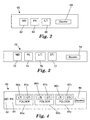
- Figure 2 is a diagram of a long-term certificate as issued from a certificate authority.
- Figure 3 is a diagram of a non-structured short-term certificate as issued by a credentials server according to the present invention.
- Figure 4 is a diagram of a structured short-term certificate as issued from a credentials server according to the present invention.
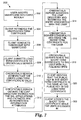
- Figure 5 is a flow diagram illustrating a generalized authorization protocol for the public key authorization infrastructure of Figure 1.
- Figure 6 is a flow diagram illustrating a more detailed authorization protocol for the public key authorization infrastructure of Figure 1.
- Figure 7 is a flow diagram illustrating a network login phase of the authorization protocol of Figure 6.
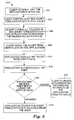
- Figure 8 is a flow diagram illustrating an application access phase of the authorization protocol of Figure 6.
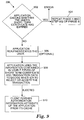
- Figure 9 is a flow diagram illustrating a transaction authorization phase of the authorization protocol of Figure 6.
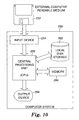
- Figure 10 is a block diagram of a computer system and a corresponding computer readable medium incorporating one or more main software program components of the public key authorization infrastructure of Figure 1.
- Public key authorization infrastructure 30 includes several main components which are each a software program.
- the main software program components of public key authorization infrastructure 30 run on one or more computer systems.
- each of the main software program components runs on its own computer system.
- a certificate authority 32 issues long-term public key identity certificates (long-term certificates) to users via the user's client program, such as client 34.
- a long-term certificate is herein defined as a public key certificate that binds a public key to one or more names or identifiers (i.e., long-term identification information). Examples of long-term identification information include name, social-security number, and employee number.
- Certificate authority 32 optionally issues long-term certificates to application programs, such as application 36, application 38, and application 40.
- certificate authority 32 For clarity, only a single certificate authority 32 is illustrated in Figure 1. However, a typical public key authorization infrastructure according to the present invention includes a hierarchy or web of certificate authorities. In addition, only one client 34 is illustrated in Figure 1, but each certificate authority in the public key authorization infrastructure 30 according to the present invention typically issues long-term certificates to numerous client programs.
- Certificate authority 32 distributes issued long-term certificates to client 34 and/or to a lightweight directory access protocol (LDAP) directory 42 for storage.
- Long-term certificates typically have a validity period defined by an expiration date, which is a substantial period from the issue date, such as one year from the issue date.
- certificate authority 32 revokes a long-term certificate if the public key certificate binding becomes invalid before the expiration date.
- One way of revoking a public key certificate is by including a serial number of the long-term certificate in a certificate revocation list (CRL), which is signed and issued by certificate authority 32 at known periodic intervals, such as every few hours or once a day. Certificate authority 32 can provide the CRLs to LDAP directory 42 for publication in LDAP directory 42.
- CTL certificate revocation list
- the validity of a long-term certificate is verified on-line by sending a certificate status inquiry to certificate authority 32 using an on-line certificate status protocol (OCSP).
- OCSP on-line certificate status protocol
- the verifier of the long-term certificate sends the certificate status inquiry to certificate authority 32 and certificate authority 32 responds thereto with a signed statement.
- a credential server 44 issues short-term public key credential certificates (short-term certificates) to users via the user's client program, such as client 34.
- Credential server 44 optionally issues short-term certificates to applications, such as applications 36, 38, and 40.
- Client 34 presents the short-term certificates to applications for authorization.
- Applications 36, 38, and 40 use trusted information about users which are contained in the short-term certificates to make authorization decisions about the users.
- Credentials server 44 automatically issues short-term certificates for submittal to applications 36, 38, and 40 by client 34. Credentials server 44 automatically issues the short-term certificates based on long-term identification information contained in the long-term certificate and short-term information.
- credentials server 44 obtains the short-term information data needed to issue the short-term certificates from LDAP directory 42. In this embodiment, since credentials server 44 does not contain this short-term information data, credentials server 44 is easily replicated within public key authorization infrastructure 30 for increased performance.
- the short-term information data contained in LDAP directory 42 relates to attribute or authorization information about the user (i.e., subject).
- Example short-term authorization information includes expense authorization limit for an enterprise application, co-payment amount for an insurance application, disk storage quota for an Information Technology (IT) application, and user ID plus group ID for Unix access application.
- IT Information Technology
- Credentials server 44 includes a private key indicated at 46, which the credential server uses to sign short-term certificates.
- the public key corresponding to private key 46 is typically well-known.
- the public key is configured into the entities that accept short-term certificates.
- public key authorization infrastructure 30 typically contains numerous credentials servers 44 having multiple private keys 46.
- certificate authority 32 issues separate certificates to authenticate the corresponding public keys. For clarity, the following discussion assumes that the public key of credentials server 44 corresponding to private key 46 is well-known.
- Client 34 has a private key 48 stored in a secure storage medium 50, such as a smartcard or secure software wallet. Client 34 also has a public key mathematically associated with private key 48.
- Long-term certificate 60 includes a meta-data (MD) field 62 containing data about long-term certificate 60 itself rather than data related to the user.
- Long-term certificate 60 includes a user's public key (PK) 64.
- Long-term certificate 60 includes long-term information (LTI) 66 containing long-term information related to the user, such as the user's name, the user's social security number, or the user's employee number.
- LTI long-term information
- Short-term certificate 70 is a non-structured certificate associated with one of applications 36, 38, or 40.
- Short-term certificate 70 includes a meta-data (MD) field 72 containing data about short-term certificate 70 rather than the user of short-term certificate 70.
- Short-term certificate 70 includes a public key (PK) 74 which is the same public key as public key 64 of long-term certificate 60.
- PK public key
- the user of long-term certificate 60 and short-term certificate 70 has only one private-public key pair associated with private key 48 of smartcard or secure software wallet 50.
- Short-term certificate 70 includes long-term information 76 which is identical to long-term information 66 of long-term certificate 60.
- Short-term certificate 70 also includes short-term information 77, which contains attribute or authorization information, such as expense authorization limit for an enterprise application, co-payment amount for an insurance application, disk storage quota for an IT application, or user ID plus group ID for Unix access application.
- Short-term certificate 70 as issued from credential server 44 contains a credentials server's 44 signature 78.
- non-structured short-term certificate 70 is implemented with a X.509v3 certificate.
- Short-term certificate 80 is a structured certificate, such as the structured certificates defined and described in co-pending application entitled "METHOD AND APPARATUS FOR PROVIDING FIELD CONFIDENTIALITY IN DIGITAL CERTIFICATES," which is incorporated by reference above.
- Structured short-term certificate 80 includes a meta-data field (MD) field 82, a users public key (PK) 84, and a credentials server's signature 88, which are substantially similar to meta-data field 72, public key 74, and signature 78 of non-structured short-term certificate 70 of Figure 3.
- MD meta-data field
- PK users public key
- signature 88 a credentials server's signature 88
- Structured short-term certificate 80 includes folders 85a, 85b, and 85c, which respectively correspond to application 36, application 38, and application 40.
- Folder 85a contains long-term information 86a and short-term information 87a as required by application 36 to make authorization decisions about the user of client 34.
- folder 85b includes long-term information 86b and short-term information 87b as required by application 38 to make authorization decisions about the user of client 34.
- folder 85c includes long-term information 86c and short-term information 87c as required by application 40 to make authorization decisions about the user of client 34.
- structured short-term certificate 80 is implemented by adding a folder extension to a X.509v3 certificate.
- the validity period of non-structured short-term certificate 70 or structured short-term certificate 80 is indicated by an expiration date/time sub-field in meta-data field 72/82.
- credentials server 44 itself determines the duration of the validity period of short-term certificate 70/80 for setting the expiration date/time sub-field.
- credentials server 44 obtains the duration of the validity period of short-term certificate 70/80 from meta-data field 62 in long-term certificate 60 for setting the expiration date/time sub-field.
- the validity period of short-term certificate 70/80 is substantially equivalent, from the point of view of security, to the update period of the CRL stored in LDAP directory 42.
- the validity period of short-term certificate 70/80 in some embodiments of the invention is much shorter than the update period of the CRL.
- the validity period of short-term certificate 70/80 can be a few hours or even as short as a few minutes.
- Client 34 of public key authorization infrastructure 30 of Figure 1 is a program or process running on behalf of the user of the public key.
- Example client 34 programs include an operating system of a single-user personal computer and a login shell of a Unix workstation. Client 34 has access to the user's private key 48 stored in smartcard or secure software wallet 50.
- LDAP directory 42 is suitably a standard LDAP directory.
- a primary directory entry in LDAP directory 42 specifies a set of attributes of a user entry in the LDAP directory that are relevant to authorization decisions made by the corresponding application.
- authorization information attributes are a set of relevant attributes provided as the set of values of a multi-valued attribute in the application entry in LDAP directory 42.
- the primary directory entry in LDAP directory 42 specifies which attributes in a user entry in the LDAP directory must be included in the folder for the application.
- Dependent application entries in LDAP directory 42 reside below a user entry and refer to entries for applications that are accessible by the user.
- client 34 When client 34 requests credentials server 44 to issue a structured short-term certificate, such as structured short-term certificate 80 of Figure 4, client 34 can specify the list of applications for which folders are to be created. In one embodiment, a user profile is employed to generate the list of applications for which folders are to be created. If at some point an additional folder is required for a structured short-term certificate, the additional folder is added by issuing a new structured short-term certificate.
- a structured short-term certificate such as structured short-term certificate 80 of Figure 4
- a generalized authorization protocol for public key authorization infrastructure 30 is illustrated generally at 100 in Figure 5.
- certificate authority 32 issues a long-term certificate to client 34 for the user's public key.
- Step 102 for issuing the long-term certificate is performed only once.
- step 104 client 34 submits the issued long-term certificate to credentials server 44.
- credentials server 44 verifies the validity of the long-term certificate.
- steps 104 and 106 are performed when the user logs into the network.
- step 108 is required only if the short-term certificate contains confidential information.
- client 34 demonstrates to credentials server 44 that client 34 has access to the user's private key 48.
- step 108 is performed as part of a Secure Sockets Layer (SSL) handshake by using client 34's certificate option.
- SSL Secure Sockets Layer
- step 108 is performed when the user logs into the network.
- credentials server 44 obtains short-term information from LDAP directory 42. If credentials server 44 and LDAP directory 42 are on different computer systems, a communication channel between the computer systems is preferably protected, such as by SSL or host-to-host Internet Protocol Security (IPSEC). In an enterprise environment, step 110 is performed when the user logs into the network.
- SSL host-to-host Internet Protocol Security
- credentials server 44 issues a short-term certificate to client 34.
- the short-term certificate is a structured short-term certificate, such as structured short-term certificate 80 illustrated in Figure 4, having one folder (e.g., 85a, 85b, and 85c) for each application (e.g., 36, 38, and 40).
- all folders 85 are open. Thus, if any of folders 85 contain confidential information and a communication channel between credentials server 44 and client 34 is not deemed secure, transmission between credentials server 44 and client 34 must be encrypted, such as by SSL or host-to-host IPSEC.
- step 112 is performed when the user logs into the network.
- client 34 submits the short-term certificate to an application, such as application 38.
- folders 85a and 85c are closed and a hash of the contents of folders 85a and 85c replace the contents of folders 85a and 85c.
- folder 85b corresponding to application 38 remains open. Thus, if folder 85b contains confidential information and a communication channel between client 34 and application 38 is not deemed secure, transmission between client 34 and application 38 must be encrypted, such as by SSL or host-to-host IPSEC.
- step 116 client 34 demonstrates to application 38 that client 34 has access to the user's private key 48.
- step 116 is performed as part of a SSL handshake using the client 34's certificate option.
- client 34 interacts with the selected application, such as application 38.
- data integrity protection must be provided to prevent connection hi-jacking or other man-in-the-middle attacks. Suitable data integrity protection is accomplished with SSL or host-to-host IPSEC.
- Authorization protocol 200 includes three phases. As indicated at 202, a phase I occurs when a user logs into the network via client 34. As indicated at 204, phase II occurs when the user of client 34 attempts to access an application, such as application 36, 38, or 40. As indicated at 206, phase III occurs when the user, while using an application, issues a transaction that requires specific authorization.
- public key authorization infrastructure 30 only implement phase I of authorization protocol 200. More typically, however, embodiments of public key authorization infrastructure 30 implement phase I and phase II of authorization protocol 200. Some embodiments of public key authorization infrastructure 30 implement all three phases of authorization protocol 200. Currently, few authorization infrastructures implement authorization on a per-transaction basis. The Praesidium line of authorization products, however, performs authorization on a per-transaction basis.
- the network login phase I of authorization protocol 200 is generally illustrated at 202 in Figure 7.
- the network login phase I occurs when the user logs into client 34 with an intention of accessing the network.
- the user may be able to locally login to client 34 as a stand-alone resource, but such a local login is not addressed herein.
- Smartcard 50 contains the user's name and private key 48.
- two-factor authentication is employed, and the user also enters a PIN number on the card reader or a password at the terminal of client 34.
- client 34 retrieves the user's long-term certificate, such as long-term certificate 60.
- the long-term certificate binds the user's name to the user's public key and has a relatively long validity period, such as one year.
- the long-term certificate is stored in LDAP directory 42 but is cached in client 34, so that client 34 typically retrieves the long-term certificate from its cache rather than having to access the LDAP directory.
- Client 34 does not verify the validity of the long-term certificate after the long-term certificate is issued by certificate authority 32. Instead, credentials server 44 verifies the validity of the long-term certificate as described below with reference to step 310.
- step 306 client 34 conducts a hand-shake with smartcard 50 to verify that private key 48 corresponds to the public key contained in the long-term certificate.
- step 306 is performed by client 34 issuing a random challenge to smartcard 50.
- Smartcard 50 combines the challenge with a fresh random value, signs the result, and returns the signature together with the random value.
- Client 34 then verifies the signature using the public key contained in the long-term certificate.
- client 34 submits the long-term certificate to credentials server 44 as follows.
- client 34 contacts credentials server 44 and sends the user's long-term certificate and a list of frequently used secure applications.
- Secure applications are herein defined as applications requiring authorization.
- the list of frequently used secure applications is herein referred to as the secure applications list (SAL).
- SAL secure applications list
- the SAL is obtained from a user's profile.
- the user's profile is stored in client 34.
- the user profile is stored in LDAP directory 42.
- GUI graphical user interface
- the user can designate the SAL applications, for example, by grouping the applications in a special desktop folder.
- Each application is specified by name in the SAL.
- the specified application name is the LDAP distinguished name of its primary directory entry.
- the specified application name is a Uniform Resource Locator (URL).
- URL Uniform Resource Locator
- credentials server 44 verifies that the user's long-term certificate is valid.
- Step 310 includes the step of verifying certificate authority 32's signature on the long-term certificate and checking that the long-term certificate has not expired.
- credentials server 44 is required to check that the long-term certificate has not been revoked.
- certificates server 44 checks whether the credentials server has the CRL currently in force. If credentials server 44 does not have the current CRL, the credentials server retrieves the current CRL from LDAP directory 42. Credentials server 44 then verifies that the long-term certificate's serial number is not on the current CRL.
- credentials server 44 obtains the directory entries of LDAP directory 42 for the SAL applications. Credentials server 44 further extracts the authorization information attributes from these entries. Credentials server 44 typically caches application entries, so that no actual LDAP directory access is required to carry out step 312.
- credentials server 44 accesses LDAP directory 42 and retrieves the entry associated with the user. Credentials server 44 also retrieves any dependent application entries below the user entry of LDAP directory 42.
- credentials server 44 constructs and signs the short-term certificate for the user.
- this is a structured short-term certificate, such as structured short-term certificate 80 illustrated in Figure 4.
- the short-term certificate has a short validity period, such as a few hours, and is not subject to revocation.
- the short-term certificate binds the following information together. First, the user's public key, which is a field copied from the long-term certificate. Second, one or more fields copied from the long-term certificate and containing the user's name or other identifiers.
- a folder containing: the name of the application; the (attribute, set-of-values) pairs contained in the user entry for attributes specified by the authorization information attribute of the primary directory entry for the application; and if there is a dependent entry for the application below the user entry, the (attribute, set-of-values) pairs in that entry. If the application has no primary entry, or the primary entry has no authorization information attribute, and the application has no dependent entry below the user entry, then the folder is omitted.
- credentials server 44 sends the short-term certificate to the user, with all folders open. Since all folders are open, protection from potential eavesdropping is possibly required. If such protection is required, credentials server 44 authenticates the user and encrypts the transmission. In one embodiment, user authentication is performed by a challenge-response handshake between credentials server 44 and smartcard 50, substantially similar to the handshake performed in step 306 between client 34 and smartcard 50.
- client 34 verifies that the public key in the short-term certificate is the same as the public key in the long-term certificate that was used in step 306 to authenticate smartcard 50. Client 34 then uses the short-term certificate to decide whether the user is allowed to login the network.
- client 34 stores the short-term certificate while the user is logged in the network.
- Client 34 schedules a short-term certificate renewal operation, which is scheduled for a time before the short-term certificate expires.
- a short-term certificate renewal operation includes repeating steps 308 through 320 of phase I of authorization protocol 200.
- a security policy requires that steps 302 through 306 of Phase I of authorization protocol 200 be repeated after a defined period of inactivity, or at regular intervals, to verify that it is actually the user who is interacting with client 34.
- the application access Phase II of authorization protocol 200 of public key authorization infrastructure 30 is illustrated generally at 204 in Figure 8.
- the application access phase II occurs when the user attempts to access a secure application.
- client 34 verifies that the application (e.g., application 36, 38, or 40) is in the SAL. If the application is not in the SAL, client 34 adds the application to the SAL, and the application remains in the SAL for the remaining time of the current login session. In step 402, if the application is added to the SAL, a certificate renewal operation is executed using the new SAL by implementing phase I network login steps 308 through 320 of authorization protocol 200 as described above in reference to Figure 7.
- the application e.g., application 36, 38, or 40
- client 34 verifies that the short-term certificate is still valid.
- the short-term certificate will be valid unless client 34 is prevented from performing a scheduled certificate renewal operation due to a network failure, a credentials server 44 failure, or some other failure or error.
- client 34 closes all folders in the short-term certificate for applications other than the requested application. In the case where there is no folder for the application in the short-term certificate, all folders in the short-term certificate are closed. Nevertheless, the short-term certificate includes fields outside the folders including the user's public key and the user's identification information copied from the long-term certificate. The fields outside the folders remain visible after all of the folders are closed.
- client 34 sends the short-term certificate to the requested application.
- the requested application verifies the short-term certificate.
- the requested application verifies the signature of credentials server 44 contained in the short-term certificate.
- the requested application also checks that the short-term certificate has not expired. The requested application does not have to check whether the short-term certificate has been revoked, because short-term certificates are not subject to revocation.
- the requested application authenticates the user.
- the application authenticates the user by issuing a random challenge, which client 34 forwards to smartcard 50 that contains the user's private key 48. Smartcard 50 combines the challenge with a fresh random value and signs the result.
- Client 34 forwards the signature and the client's random value to the application, which verifies the signature using the public key contained in the short-term certificate.
- the requested application decides whether to grant or deny access to the user.
- the application employs the information in the visible fields of the short-term certificate.
- Step 416 is performed if access is denied to the user in decision step 414.
- client 34 flushes the authorization information attribute of the application from client 34's cache because the authorization information attribute of the application may be out of date.
- the phase I network login steps 308 through 320 of authorization protocol 200 and the phase II application access steps 402 through 414 of authorization protocol 200 are repeated. If the user's smartcard 50 is in the card reader, the step repetition is transparent to the user, unless one of the security checks involved in the repeated steps fails. If the user is denied access once again in step 414 of phase II of authorization protocol 200, the denied access is reported to the user.
- Step 418 is performed if access is granted in decision step 414 and if the requested application possibly requires later authorization for a specific transaction.
- the application stores the short-term certificate received from the user.
- the user authenticates the application.
- the application In order for the user to be able to authenticate the application, the application must have a private key and a corresponding public key authenticated by a certificate.
- the certificate is a long-term certificate issued by certificate authority 32.
- the certificate is a short-term certificate issued by credentials server 44.
- the user then authenticates the application by using a challenge-response protocol substantially similar to the phase II steps 408, 410, and 412, except that the application and client 34 swap roles.
- the transaction authorization phase III of authorization protocol 200 is generally illustrated at 206 in Figure 9.
- the transaction authorization phase III occurs when the user initiates a transaction that requires specific authorization by the application.
- the application checks whether the user's short-term certificate, which was stored by the application at step 418 of phase II of authorization protocol 200, has expired. If the short-term certificate has expired, the application rejects the transaction with an error message indicating that the short-term certificate has expired.
- step 504 when the application rejects the transaction in step 502, client 34 has a valid short-term certificate, unless a network failure or some other failure has occurred. Thus, all steps 402 through 418 of the application access phase II of authorization protocol 200 and step 502 of the transaction authorization phase III of authorization protocol 200 are repeated. At this point, step 502 should succeed in determining that the user's short-term certificate has not expired. If the user's smartcard 50 is in the card reader, the repeated steps are transparent to the user, unless one of the security checks in the repeated steps fails.
- Step 506 is optionally performed if at step 502 the application determines that the user's short-term certificate has not expired.
- Step 506 is an optional step where the application reauthenticates the user using substantially the same procedure as in step 412 of phase II of authorization protocol 200. If the user's private key 48 is contained in smartcard 50, stèp 506 ensures that smartcard 50 is still in the card reader.
- Step 506 is an optional step which only needs to be performed when reauthentication is absolutely necessary for extremely sensitive transactions. If reauthentication fails, the transaction is rejected. Client 34 can request the user to reinsert smartcard 50 into the card reader and the transaction can be retried.
- the application uses the information contained in the visible fields of the short-term certificate, as well as transaction data, to decide whether to reject or accept the transaction.
- step 510 if the transaction is rejected in step 508, client 34 flushes the authorization information attribute of the application from client 34's cache, because the authorization information attribute may be out of date. Then, the phase I network login steps 308 through 320, the application access phase II steps 402 through 418, and the phase III transaction authorization steps 502 through 508 of authorization protocol 200 are repeated. If the user's smartcard 50 is in the card reader, the repetition of steps is transparent to the user, unless one of the security checks involved in the repeated steps fails. If the transaction is rejected again in step 508 of phase III of authorization protocol 200, the rejection is reported to the user.
- the above-described authorization protocol 200 employs digital signatures from any suitable digital signature cryptosystem, such as RSA, which is a public-key cryptosystem for encryption and digital signature developed by RSA Data Security, Inc.
- suitable digital signature cryptosystems are Digital Signature Algorithm (DSA), which is adopted as a standard by the National Institute of Standards and Technology (NIST), and Elliptic Curve Digital Signature Algorithm (ECDSA).
- the security of authorization protocol 200 does not rely on the security of the communication channel between client 34 and credentials server 44. Therefore, the network login phase I of authorization protocol 200 can be implemented using a simple Transmission Control Protocol (TCP) connection, or even an exchange of User Datagram Protocol (UDP) datagrams between client 34 and credentials server 44.
- TCP Transmission Control Protocol
- UDP User Datagram Protocol
- a secure Transport Layer Security (TLS) or SSL connection between client 34 and credentials server 44 is used.
- client 34 may authenticate credentials server 44, and if so step 306 of phase I of authorization protocol 200 may be omitted.
- authorization protocol 200 does not need to rely on the security of the communication channel between client 34 and the application. Nevertheless, phase II of authorization protocol 200 specifies authentication of the user by the application and optional authentication of the application by the user. If client 34 and the application run on different computer systems, then client 34 and the application use a protocol such as File Transfer Protocol (FTP), Telnet, or Hyper Text Transfer Protocol (HTTP) to communicate.
- FTP File Transfer Protocol
- Telnet Telnet
- HTTP Hyper Text Transfer Protocol
- One approach to providing authentication in conjunction with the selected communication protocol from communicating between client 34 and the application is to extend the existing communication protocol to add authentication. Methods have been proposed for extending the FTP and Telnet communication protocols. If structured short-term certificates are implemented as extensions of X.509v3 certificates, these methods could be used to implement the application access phase II of authorization protocol 200.
- a second approach to providing authentication in conjunction with the selected communication protocol for communicating between client 34 and the application is to use TLS to secure the existing communication protocol.
- TLS can be inserted in the protocol stack between TCP and FTP and between TCP and Telnet.
- HTTP over SSL which is the predecessor to TLS, is widely used to provide access to secure documents on the World Wide Web.
- TLS can accomplish, without modification, the user authentication and the optional application authentication required by phase II of authentication protocol 200, provided that the structured short-term certificates are implemented as extensions of X.509v3 certificates.
- the second approach has an advantage that it provides confidentiality and integrity protection for the data exchanged between client 34 and the application.
- Figure 10 illustrates one embodiment of a computer system 250 and an external computer readable medium 252 which can be employed according to the present invention to implement one or more of the main software program components of public key authorization infrastructure 30.
- Embodiments of external computer readable medium 252 include, but are not limited to: a CD-ROM, a floppy disk, and a disk cartridge. Any one of the main software program components of public key authorization infrastructure 30 can be implemented in a variety of compiled and interpreted computer languages.
- External computer readable medium 252 stores source code, object code, executable code, shell scripts and/or dynamic link libraries for any one of the main software program components of public key authorization infrastructure 30.
- An input device 254 reads external computer readable medium 252 and provides this data to computer system 250.
- Embodiments of input device 254 include but are not limited to: a CD-ROM reader, a floppy disk drive, and a data cartridge reader.
- Computer system 250 includes a central processing unit 256 for executing any one of the main software program components of public key authorization infrastructure 30.
- Computer system 250 also includes local disk storage 262 for locally storing any one of the main software program components of public key authorization infrastructure 30 before, during, and after execution. Any one of the main software program components of public key authorization infrastructure 30 also utilizes memory 260 within the computer system during execution.
- output data is produced and directed to an output device 258.
- output device 258 include, but are not limited to: a computer display device, a printer, and/or a disk storage device.
- the public key authorization infrastructure 30 utilizes short-term certificates, such as non-structured short-term certificate 70 or structured short-term certificate 80, which are not subject to revocation. Thus, the requested application does not need to use CRLs or other revocation methods such as OCSP.
- the structured short-term certificates, such as structured short-term certificate 80 allow one short-term certificate to be used for more than one application. Moreover, all necessary authorization information is contained in the short-term certificate. Thus, the application does not need to access the LDAP directory 42. Overall, public key authorization infrastructure 30 permits the application to be greatly simplified.
Landscapes
- Engineering & Computer Science (AREA)
- Computer Security & Cryptography (AREA)
- Computer Networks & Wireless Communication (AREA)
- Signal Processing (AREA)
- Computer Hardware Design (AREA)
- Computing Systems (AREA)
- General Engineering & Computer Science (AREA)
- Storage Device Security (AREA)
- Financial Or Insurance-Related Operations Such As Payment And Settlement (AREA)
Applications Claiming Priority (2)
| Application Number | Priority Date | Filing Date | Title |
|---|---|---|---|
| US09/483,185 US7340600B1 (en) | 2000-01-14 | 2000-01-14 | Authorization infrastructure based on public key cryptography |
| US483185 | 2000-01-14 |
Publications (2)
| Publication Number | Publication Date |
|---|---|
| EP1117204A2 true EP1117204A2 (de) | 2001-07-18 |
| EP1117204A3 EP1117204A3 (de) | 2003-10-01 |
Family
ID=23919013
Family Applications (1)
| Application Number | Title | Priority Date | Filing Date |
|---|---|---|---|
| EP00127693A Withdrawn EP1117204A3 (de) | 2000-01-14 | 2000-12-18 | Auf öffentlichem Schlüssel basierte Berechtigungsinfrastruktur |
Country Status (3)
| Country | Link |
|---|---|
| US (1) | US7340600B1 (de) |
| EP (1) | EP1117204A3 (de) |
| JP (1) | JP2001229078A (de) |
Cited By (19)
| Publication number | Priority date | Publication date | Assignee | Title |
|---|---|---|---|---|
| GB2376312A (en) * | 2001-06-04 | 2002-12-11 | Hewlett Packard Co | Digital certificate expiry notification |
| WO2003034682A1 (en) * | 2001-10-17 | 2003-04-24 | Certicom Corp. | Url-based certificate in a pki |
| EP1422585A3 (de) * | 2002-11-19 | 2004-10-13 | Rockwell Software Inc. | System und Verfahren zur Kontrollaufzeichnung und Verfolgung einer Betriebsreglerumgebung in Realzeit |
| JP2005333596A (ja) * | 2004-05-21 | 2005-12-02 | Toshiba Corp | 電子申請システム、電子申請装置 |
| WO2007062672A1 (en) * | 2005-11-30 | 2007-06-07 | Telecom Italia S.P.A. | Method and system for automated and secure provisioning of service access credentials for on-line services to users of mobile communication terminals |
| JP2007159134A (ja) * | 2005-12-02 | 2007-06-21 | Palo Alto Research Center Inc | 安全なオンライン商取引のための臨時および恒久的な信用証明書を設定するためのシステムおよび方法 |
| EP1521426B1 (de) * | 2003-09-30 | 2008-03-19 | Ricoh Company, Ltd. | Kommunikationsgerät, Kommunikationssystem, Verfahren und Programm zur Zertifikatsübertragung |
| WO2009050324A1 (en) * | 2007-10-16 | 2009-04-23 | Nokia Corporation | Credential provisioning |
| WO2009076652A1 (en) | 2007-12-13 | 2009-06-18 | Pgp Corporation | Apparatus and method for facilitating cryptographic key management services |
| US7647494B2 (en) | 2005-06-08 | 2010-01-12 | International Business Machines Corporation | Name transformation for a public key infrastructure (PKI) |
| WO2011006791A1 (de) | 2009-07-15 | 2011-01-20 | Bundesdruckerei Gmbh | Verfahren zum lesen von attributen aus einem id-token |
| WO2011006790A1 (de) * | 2009-07-14 | 2011-01-20 | Bundesdruckerei Gmbh | Verfahren zur erzeugung eines soft-tokens |
| US8098818B2 (en) | 2003-07-07 | 2012-01-17 | Qualcomm Incorporated | Secure registration for a multicast-broadcast-multimedia system (MBMS) |
| US8121296B2 (en) | 2001-03-28 | 2012-02-21 | Qualcomm Incorporated | Method and apparatus for security in a data processing system |
| US8713400B2 (en) | 2001-10-12 | 2014-04-29 | Qualcomm Incorporated | Method and system for reduction of decoding complexity in a communication system |
| US8718279B2 (en) | 2003-07-08 | 2014-05-06 | Qualcomm Incorporated | Apparatus and method for a secure broadcast system |
| US8724803B2 (en) | 2003-09-02 | 2014-05-13 | Qualcomm Incorporated | Method and apparatus for providing authenticated challenges for broadcast-multicast communications in a communication system |
| RU2520380C2 (ru) * | 2009-08-17 | 2014-06-27 | Интел Корпорейшн | Способ и система для динамического согласования обслуживания с однородной защитной плоскостью контроля в беспроводной сети |
| US8971790B2 (en) | 2003-01-02 | 2015-03-03 | Qualcomm Incorporated | Method and apparatus for broadcast services in a communication system |
Families Citing this family (97)
| Publication number | Priority date | Publication date | Assignee | Title |
|---|---|---|---|---|
| US8209191B2 (en) * | 2000-03-17 | 2012-06-26 | United States Postal Service | Methods and systems for linking an electronic address to a physical address of a customer |
| US9100457B2 (en) | 2001-03-28 | 2015-08-04 | Qualcomm Incorporated | Method and apparatus for transmission framing in a wireless communication system |
| US7693508B2 (en) | 2001-03-28 | 2010-04-06 | Qualcomm Incorporated | Method and apparatus for broadcast signaling in a wireless communication system |
| US8077679B2 (en) | 2001-03-28 | 2011-12-13 | Qualcomm Incorporated | Method and apparatus for providing protocol options in a wireless communication system |
| US7237257B1 (en) * | 2001-04-11 | 2007-06-26 | Aol Llc | Leveraging a persistent connection to access a secured service |
| US8209753B2 (en) * | 2001-06-15 | 2012-06-26 | Activcard, Inc. | Universal secure messaging for remote security tokens |
| US20040218762A1 (en) | 2003-04-29 | 2004-11-04 | Eric Le Saint | Universal secure messaging for cryptographic modules |
| US8255235B2 (en) | 2001-09-07 | 2012-08-28 | United States Postal Service | Item tracking and anticipated delivery confirmation system method |
| US7352868B2 (en) | 2001-10-09 | 2008-04-01 | Philip Hawkes | Method and apparatus for security in a data processing system |
| US7562232B2 (en) * | 2001-12-12 | 2009-07-14 | Patrick Zuili | System and method for providing manageability to security information for secured items |
| USRE41546E1 (en) | 2001-12-12 | 2010-08-17 | Klimenty Vainstein | Method and system for managing security tiers |
| US7921288B1 (en) | 2001-12-12 | 2011-04-05 | Hildebrand Hal S | System and method for providing different levels of key security for controlling access to secured items |
| US7631184B2 (en) * | 2002-05-14 | 2009-12-08 | Nicholas Ryan | System and method for imposing security on copies of secured items |
| US7380120B1 (en) | 2001-12-12 | 2008-05-27 | Guardian Data Storage, Llc | Secured data format for access control |
| US7565683B1 (en) | 2001-12-12 | 2009-07-21 | Weiqing Huang | Method and system for implementing changes to security policies in a distributed security system |
| US10360545B2 (en) | 2001-12-12 | 2019-07-23 | Guardian Data Storage, Llc | Method and apparatus for accessing secured electronic data off-line |
| US8006280B1 (en) | 2001-12-12 | 2011-08-23 | Hildebrand Hal S | Security system for generating keys from access rules in a decentralized manner and methods therefor |
| US10033700B2 (en) | 2001-12-12 | 2018-07-24 | Intellectual Ventures I Llc | Dynamic evaluation of access rights |
| US7921450B1 (en) | 2001-12-12 | 2011-04-05 | Klimenty Vainstein | Security system using indirect key generation from access rules and methods therefor |
| US8065713B1 (en) | 2001-12-12 | 2011-11-22 | Klimenty Vainstein | System and method for providing multi-location access management to secured items |
| US7783765B2 (en) * | 2001-12-12 | 2010-08-24 | Hildebrand Hal S | System and method for providing distributed access control to secured documents |
| US7260555B2 (en) | 2001-12-12 | 2007-08-21 | Guardian Data Storage, Llc | Method and architecture for providing pervasive security to digital assets |
| US7930756B1 (en) | 2001-12-12 | 2011-04-19 | Crocker Steven Toye | Multi-level cryptographic transformations for securing digital assets |
| US7178033B1 (en) | 2001-12-12 | 2007-02-13 | Pss Systems, Inc. | Method and apparatus for securing digital assets |
| US7921284B1 (en) | 2001-12-12 | 2011-04-05 | Gary Mark Kinghorn | Method and system for protecting electronic data in enterprise environment |
| US7950066B1 (en) | 2001-12-21 | 2011-05-24 | Guardian Data Storage, Llc | Method and system for restricting use of a clipboard application |
| US7231663B2 (en) * | 2002-02-04 | 2007-06-12 | General Instrument Corporation | System and method for providing key management protocol with client verification of authorization |
| US8176334B2 (en) | 2002-09-30 | 2012-05-08 | Guardian Data Storage, Llc | Document security system that permits external users to gain access to secured files |
| US20050071657A1 (en) * | 2003-09-30 | 2005-03-31 | Pss Systems, Inc. | Method and system for securing digital assets using time-based security criteria |
| US7748045B2 (en) * | 2004-03-30 | 2010-06-29 | Michael Frederick Kenrich | Method and system for providing cryptographic document retention with off-line access |
| US7836310B1 (en) * | 2002-11-01 | 2010-11-16 | Yevgeniy Gutnik | Security system that uses indirect password-based encryption |
| US7577838B1 (en) | 2002-12-20 | 2009-08-18 | Alain Rossmann | Hybrid systems for securing digital assets |
| US7571472B2 (en) * | 2002-12-30 | 2009-08-04 | American Express Travel Related Services Company, Inc. | Methods and apparatus for credential validation |
| US8707034B1 (en) | 2003-05-30 | 2014-04-22 | Intellectual Ventures I Llc | Method and system for using remote headers to secure electronic files |
| EP1635502B1 (de) * | 2003-06-19 | 2019-05-22 | Nippon Telegraph And Telephone Corporation | Sitzungssteuerserver und kommunikationssystem |
| JP4712326B2 (ja) * | 2003-07-25 | 2011-06-29 | 株式会社リコー | 通信装置、通信システム、通信方法及びプログラム |
| JP5348148B2 (ja) * | 2003-07-25 | 2013-11-20 | 株式会社リコー | 通信装置、通信システム、通信方法及びプログラム |
| DE602004008667T2 (de) * | 2003-07-25 | 2008-06-05 | Ricoh Co., Ltd. | Authentifizierungs-System- und Verfahren unter Verwendung von individualisierten und nicht-individualisierten Zertifikaten |
| JP4611680B2 (ja) * | 2003-07-25 | 2011-01-12 | 株式会社リコー | 通信装置、通信システム、通信方法及びプログラム |
| JP4570919B2 (ja) * | 2003-07-25 | 2010-10-27 | 株式会社リコー | 通信装置、通信システム、通信装置の制御方法及びプログラム |
| JP4611678B2 (ja) * | 2003-07-25 | 2011-01-12 | 株式会社リコー | 通信装置、通信システム、通信方法及びプログラム |
| JP4611681B2 (ja) * | 2003-07-25 | 2011-01-12 | 株式会社リコー | 通信装置、通信システム、通信方法及びプログラム |
| JP4712325B2 (ja) * | 2003-09-12 | 2011-06-29 | 株式会社リコー | 通信装置、通信システム、通信方法及びプログラム |
| JP2011072046A (ja) * | 2003-09-12 | 2011-04-07 | Ricoh Co Ltd | 証明書設定方法 |
| JP4712330B2 (ja) * | 2003-09-12 | 2011-06-29 | 株式会社リコー | 通信装置、通信システム、通信方法及びプログラム |
| US8127366B2 (en) | 2003-09-30 | 2012-02-28 | Guardian Data Storage, Llc | Method and apparatus for transitioning between states of security policies used to secure electronic documents |
| US7703140B2 (en) | 2003-09-30 | 2010-04-20 | Guardian Data Storage, Llc | Method and system for securing digital assets using process-driven security policies |
| US7290278B2 (en) | 2003-10-02 | 2007-10-30 | Aol Llc, A Delaware Limited Liability Company | Identity based service system |
| CN104732379A (zh) * | 2003-11-26 | 2015-06-24 | 支付点公司 | 安全支付系统 |
| WO2005070116A2 (en) * | 2004-01-09 | 2005-08-04 | Corestreet, Ltd. | Communication-efficient real time credentials for ocsp and distributed ocsp |
| US7707427B1 (en) | 2004-07-19 | 2010-04-27 | Michael Frederick Kenrich | Multi-level file digests |
| JP2006154125A (ja) * | 2004-11-26 | 2006-06-15 | Ntt Docomo Inc | ローカル認証システム、ローカル認証装置、ローカル認証方法 |
| CN100337175C (zh) * | 2005-08-12 | 2007-09-12 | 华为技术有限公司 | 移动终端加入域和获取版权对象的方法、系统和相关设备 |
| US8874477B2 (en) | 2005-10-04 | 2014-10-28 | Steven Mark Hoffberg | Multifactorial optimization system and method |
| US7853995B2 (en) * | 2005-11-18 | 2010-12-14 | Microsoft Corporation | Short-lived certificate authority service |
| JP5464794B2 (ja) * | 2006-07-24 | 2014-04-09 | コニカミノルタ株式会社 | ネットワーク管理方法およびネットワーク管理システム |
| US8788829B2 (en) | 2006-08-17 | 2014-07-22 | Aol Inc. | System and method for interapplication communications |
| TWI426762B (zh) * | 2008-08-04 | 2014-02-11 | Ind Tech Res Inst | 網路身分管理方法與系統 |
| CA2746830C (en) * | 2008-12-16 | 2016-06-07 | Blackberry Limited | Acceleration of key agreement protocols |
| US9449195B2 (en) * | 2009-01-23 | 2016-09-20 | Avow Networks Incorporated | Method and apparatus to perform online credential reporting |
| US8707031B2 (en) * | 2009-04-07 | 2014-04-22 | Secureauth Corporation | Identity-based certificate management |
| TWM384453U (en) * | 2010-03-02 | 2010-07-11 | Winharbor Technology Co Ltd | Pull-resistant illuminating/heat generating structure capable of being charged in wireless manner |
| US9544143B2 (en) | 2010-03-03 | 2017-01-10 | Duo Security, Inc. | System and method of notifying mobile devices to complete transactions |
| US9532222B2 (en) | 2010-03-03 | 2016-12-27 | Duo Security, Inc. | System and method of notifying mobile devices to complete transactions after additional agent verification |
| WO2012174521A1 (en) * | 2011-06-17 | 2012-12-20 | Activldentity, Inc. | Revocation status using other credentials |
| US9467463B2 (en) | 2011-09-02 | 2016-10-11 | Duo Security, Inc. | System and method for assessing vulnerability of a mobile device |
| US9524388B2 (en) | 2011-10-07 | 2016-12-20 | Duo Security, Inc. | System and method for enforcing a policy for an authenticator device |
| US8964973B2 (en) | 2012-04-30 | 2015-02-24 | General Electric Company | Systems and methods for controlling file execution for industrial control systems |
| US9046886B2 (en) | 2012-04-30 | 2015-06-02 | General Electric Company | System and method for logging security events for an industrial control system |
| US8973124B2 (en) | 2012-04-30 | 2015-03-03 | General Electric Company | Systems and methods for secure operation of an industrial controller |
| US8744078B2 (en) | 2012-06-05 | 2014-06-03 | Secure Channels Sa | System and method for securing multiple data segments having different lengths using pattern keys having multiple different strengths |
| CN102833593B (zh) * | 2012-07-17 | 2015-12-16 | 晨星软件研发(深圳)有限公司 | 一种智能电视应用的授权方法、系统及智能电视 |
| US9172544B2 (en) * | 2012-10-05 | 2015-10-27 | General Electric Company | Systems and methods for authentication between networked devices |
| US9607156B2 (en) | 2013-02-22 | 2017-03-28 | Duo Security, Inc. | System and method for patching a device through exploitation |
| US9338156B2 (en) | 2013-02-22 | 2016-05-10 | Duo Security, Inc. | System and method for integrating two-factor authentication in a device |
| US9608814B2 (en) * | 2013-09-10 | 2017-03-28 | Duo Security, Inc. | System and method for centralized key distribution |
| US9092302B2 (en) | 2013-09-10 | 2015-07-28 | Duo Security, Inc. | System and method for determining component version compatibility across a device ecosystem |
| US9774448B2 (en) | 2013-10-30 | 2017-09-26 | Duo Security, Inc. | System and methods for opportunistic cryptographic key management on an electronic device |
| US9762590B2 (en) | 2014-04-17 | 2017-09-12 | Duo Security, Inc. | System and method for an integrity focused authentication service |
| US9843452B2 (en) | 2014-12-15 | 2017-12-12 | Amazon Technologies, Inc. | Short-duration digital certificate issuance based on long-duration digital certificate validation |
| US9979719B2 (en) | 2015-01-06 | 2018-05-22 | Duo Security, Inc. | System and method for converting one-time passcodes to app-based authentication |
| US10454899B1 (en) * | 2015-03-16 | 2019-10-22 | Amazon Technologies, Inc. | Controlling firewall ports in virtualized environments through public key cryptography |
| US9641341B2 (en) | 2015-03-31 | 2017-05-02 | Duo Security, Inc. | Method for distributed trust authentication |
| ES2758755T3 (es) | 2015-06-01 | 2020-05-06 | Duo Security Inc | Método para aplicar normas de salud de punto final |
| US9774579B2 (en) | 2015-07-27 | 2017-09-26 | Duo Security, Inc. | Method for key rotation |
| US20170033935A1 (en) * | 2015-07-31 | 2017-02-02 | Hewlett-Packard Development Company, L.P. | Short-term security certificates |
| GB201617620D0 (en) * | 2016-10-18 | 2016-11-30 | Cybernetica As | Composite digital signatures |
| US10719531B2 (en) * | 2016-12-20 | 2020-07-21 | Sap Se | System configuration for data replication system |
| US10412113B2 (en) | 2017-12-08 | 2019-09-10 | Duo Security, Inc. | Systems and methods for intelligently configuring computer security |
| JP6952661B2 (ja) * | 2018-08-30 | 2021-10-20 | 株式会社東芝 | 情報処理装置、通信機器、情報処理システム、情報処理方法、および情報処理プログラム |
| RU2702275C1 (ru) * | 2018-10-03 | 2019-10-07 | Публичное Акционерное Общество "Сбербанк России" (Пао Сбербанк) | Способ и система маркировки действий пользователя для последующего анализа и накопления |
| US11658962B2 (en) | 2018-12-07 | 2023-05-23 | Cisco Technology, Inc. | Systems and methods of push-based verification of a transaction |
| RU2706873C1 (ru) * | 2018-12-28 | 2019-11-21 | Акционерное общество "Лаборатория Касперского" | Система и способ проверки ЭЦП файла |
| US10985921B1 (en) | 2019-11-05 | 2021-04-20 | Capital One Services, Llc | Systems and methods for out-of-band authenticity verification of mobile applications |
| US11843706B1 (en) | 2019-11-19 | 2023-12-12 | Amazon Technologies, Inc. | Gradual certificate rotation |
| US11362843B1 (en) * | 2019-11-19 | 2022-06-14 | Amazon Technologies, Inc. | Certificate rotation on host |
| US11005849B1 (en) | 2020-06-30 | 2021-05-11 | Cyberark Software Ltd. | Distributed directory caching techniques for secure and efficient resource access |
Family Cites Families (44)
| Publication number | Priority date | Publication date | Assignee | Title |
|---|---|---|---|---|
| US4324645A (en) | 1980-05-06 | 1982-04-13 | Mobil Oil Corporation | Upgrading residual oil |
| US4881264A (en) | 1987-07-30 | 1989-11-14 | Merkle Ralph C | Digital signature system and method based on a conventional encryption function |
| US5224163A (en) | 1990-09-28 | 1993-06-29 | Digital Equipment Corporation | Method for delegating authorization from one entity to another through the use of session encryption keys |
| US5276901A (en) * | 1991-12-16 | 1994-01-04 | International Business Machines Corporation | System for controlling group access to objects using group access control folder and group identification as individual user |
| US5210795A (en) * | 1992-01-10 | 1993-05-11 | Digital Equipment Corporation | Secure user authentication from personal computer |
| US5475826A (en) | 1993-11-19 | 1995-12-12 | Fischer; Addison M. | Method for protecting a volatile file using a single hash |
| US5825880A (en) | 1994-01-13 | 1998-10-20 | Sudia; Frank W. | Multi-step digital signature method and system |
| PL176458B1 (pl) | 1994-01-13 | 1999-05-31 | Certc0 Llc | Sposób szyfrowania systemu komunikacyjnego |
| US6367013B1 (en) | 1995-01-17 | 2002-04-02 | Eoriginal Inc. | System and method for electronic transmission, storage, and retrieval of authenticated electronic original documents |
| US5796841A (en) | 1995-08-21 | 1998-08-18 | Pitney Bowes Inc. | Secure user certification for electronic commerce employing value metering system |
| US5793868A (en) | 1996-08-29 | 1998-08-11 | Micali; Silvio | Certificate revocation system |
| US6023506A (en) | 1995-10-26 | 2000-02-08 | Hitachi, Ltd. | Data encryption control apparatus and method |
| US5850442A (en) | 1996-03-26 | 1998-12-15 | Entegrity Solutions Corporation | Secure world wide electronic commerce over an open network |
| US5850444A (en) | 1996-09-09 | 1998-12-15 | Telefonaktienbolaget L/M Ericsson (Publ) | Method and apparatus for encrypting radio traffic in a telecommunications network |
| US6029150A (en) | 1996-10-04 | 2000-02-22 | Certco, Llc | Payment and transactions in electronic commerce system |
| US5903882A (en) * | 1996-12-13 | 1999-05-11 | Certco, Llc | Reliance server for electronic transaction system |
| US5996076A (en) | 1997-02-19 | 1999-11-30 | Verifone, Inc. | System, method and article of manufacture for secure digital certification of electronic commerce |
| US5999919A (en) | 1997-02-26 | 1999-12-07 | At&T | Efficient micropayment system |
| US5982898A (en) * | 1997-03-07 | 1999-11-09 | At&T Corp. | Certification process |
| US6044462A (en) | 1997-04-02 | 2000-03-28 | Arcanvs | Method and apparatus for managing key revocation |
| US6212636B1 (en) | 1997-05-01 | 2001-04-03 | Itt Manufacturing Enterprises | Method for establishing trust in a computer network via association |
| US6202151B1 (en) | 1997-05-09 | 2001-03-13 | Gte Service Corporation | System and method for authenticating electronic transactions using biometric certificates |
| JPH10327147A (ja) | 1997-05-21 | 1998-12-08 | Hitachi Ltd | 電子認証公証方法およびシステム |
| US6282295B1 (en) | 1997-10-28 | 2001-08-28 | Adam Lucas Young | Auto-recoverable and auto-certifiable cryptostem using zero-knowledge proofs for key escrow in general exponential ciphers |
| US6202150B1 (en) | 1997-05-28 | 2001-03-13 | Adam Lucas Young | Auto-escrowable and auto-certifiable cryptosystems |
| US6389136B1 (en) | 1997-05-28 | 2002-05-14 | Adam Lucas Young | Auto-Recoverable and Auto-certifiable cryptosystems with RSA or factoring based keys |
| US6125349A (en) | 1997-10-01 | 2000-09-26 | At&T Corp. | Method and apparatus using digital credentials and other electronic certificates for electronic transactions |
| US6058484A (en) * | 1997-10-09 | 2000-05-02 | International Business Machines Corporation | Systems, methods and computer program products for selection of date limited information |
| US6092201A (en) | 1997-10-24 | 2000-07-18 | Entrust Technologies | Method and apparatus for extending secure communication operations via a shared list |
| JP3905961B2 (ja) * | 1997-11-11 | 2007-04-18 | インターナショナル・ビジネス・マシーンズ・コーポレーション | 臨時署名認証の方法及びそのシステム |
| US6263446B1 (en) * | 1997-12-23 | 2001-07-17 | Arcot Systems, Inc. | Method and apparatus for secure distribution of authentication credentials to roaming users |
| WO1999035783A1 (en) | 1998-01-09 | 1999-07-15 | Cybersafe Corporation | Client side public key authentication method and apparatus with short-lived certificates |
| US6226743B1 (en) * | 1998-01-22 | 2001-05-01 | Yeda Research And Development Co., Ltd. | Method for authentication item |
| US6233577B1 (en) | 1998-02-17 | 2001-05-15 | Phone.Com, Inc. | Centralized certificate management system for two-way interactive communication devices in data networks |
| US6233341B1 (en) * | 1998-05-19 | 2001-05-15 | Visto Corporation | System and method for installing and using a temporary certificate at a remote site |
| US6324645B1 (en) | 1998-08-11 | 2001-11-27 | Verisign, Inc. | Risk management for public key management infrastructure using digital certificates |
| US6607136B1 (en) | 1998-09-16 | 2003-08-19 | Beepcard Inc. | Physical presence digital authentication system |
| US6327578B1 (en) | 1998-12-29 | 2001-12-04 | International Business Machines Corporation | Four-party credit/debit payment protocol |
| US6230266B1 (en) | 1999-02-03 | 2001-05-08 | Sun Microsystems, Inc. | Authentication system and process |
| US6484259B1 (en) | 1999-07-23 | 2002-11-19 | Microsoft Corporation | Methods and arrangements for mapping widely disparate portable tokens to a static machine concentric cryptographic environment |
| AU2087901A (en) | 1999-12-13 | 2001-06-18 | Rsa Security Inc. | System and method for generating and managing attribute certificates |
| US6754829B1 (en) * | 1999-12-14 | 2004-06-22 | Intel Corporation | Certificate-based authentication system for heterogeneous environments |
| US7003571B1 (en) | 2000-01-31 | 2006-02-21 | Telecommunication Systems Corporation Of Maryland | System and method for re-directing requests from browsers for communication over non-IP based networks |
| US7353204B2 (en) | 2001-04-03 | 2008-04-01 | Zix Corporation | Certified transmission system |
-
2000
- 2000-01-14 US US09/483,185 patent/US7340600B1/en not_active Expired - Lifetime
- 2000-12-13 JP JP2000378290A patent/JP2001229078A/ja active Pending
- 2000-12-18 EP EP00127693A patent/EP1117204A3/de not_active Withdrawn
Cited By (32)
| Publication number | Priority date | Publication date | Assignee | Title |
|---|---|---|---|---|
| US8121296B2 (en) | 2001-03-28 | 2012-02-21 | Qualcomm Incorporated | Method and apparatus for security in a data processing system |
| GB2376312B (en) * | 2001-06-04 | 2004-12-29 | Hewlett Packard Co | Digital certificate expiry notification |
| GB2376312A (en) * | 2001-06-04 | 2002-12-11 | Hewlett Packard Co | Digital certificate expiry notification |
| US8730999B2 (en) | 2001-10-12 | 2014-05-20 | Qualcomm Incorporated | Method and system for reduction of decoding complexity in a communication system |
| US8713400B2 (en) | 2001-10-12 | 2014-04-29 | Qualcomm Incorporated | Method and system for reduction of decoding complexity in a communication system |
| US9813249B2 (en) | 2001-10-17 | 2017-11-07 | Certicom Corp. | URL-based certificate in a PKI |
| US8832431B2 (en) | 2001-10-17 | 2014-09-09 | Certicom Corp. | URL-based certificate in a PKI |
| US8266425B2 (en) | 2001-10-17 | 2012-09-11 | Certicom Corp. | URL-based certificate in a PKI |
| WO2003034682A1 (en) * | 2001-10-17 | 2003-04-24 | Certicom Corp. | Url-based certificate in a pki |
| US7123974B1 (en) | 2002-11-19 | 2006-10-17 | Rockwell Software Inc. | System and methodology providing audit recording and tracking in real time industrial controller environment |
| EP1422585A3 (de) * | 2002-11-19 | 2004-10-13 | Rockwell Software Inc. | System und Verfahren zur Kontrollaufzeichnung und Verfolgung einer Betriebsreglerumgebung in Realzeit |
| US8971790B2 (en) | 2003-01-02 | 2015-03-03 | Qualcomm Incorporated | Method and apparatus for broadcast services in a communication system |
| US8098818B2 (en) | 2003-07-07 | 2012-01-17 | Qualcomm Incorporated | Secure registration for a multicast-broadcast-multimedia system (MBMS) |
| US8718279B2 (en) | 2003-07-08 | 2014-05-06 | Qualcomm Incorporated | Apparatus and method for a secure broadcast system |
| US8724803B2 (en) | 2003-09-02 | 2014-05-13 | Qualcomm Incorporated | Method and apparatus for providing authenticated challenges for broadcast-multicast communications in a communication system |
| EP1521426B1 (de) * | 2003-09-30 | 2008-03-19 | Ricoh Company, Ltd. | Kommunikationsgerät, Kommunikationssystem, Verfahren und Programm zur Zertifikatsübertragung |
| US8015399B2 (en) | 2003-09-30 | 2011-09-06 | Ricoh Company, Ltd. | Communication apparatus, communication system, certificate transmission method and program |
| JP2005333596A (ja) * | 2004-05-21 | 2005-12-02 | Toshiba Corp | 電子申請システム、電子申請装置 |
| US7647494B2 (en) | 2005-06-08 | 2010-01-12 | International Business Machines Corporation | Name transformation for a public key infrastructure (PKI) |
| CN101371550B (zh) * | 2005-11-30 | 2012-01-25 | 意大利电信股份公司 | 自动安全地向移动通信终端的用户供给在线服务的服务访问凭证的方法和系统 |
| US9015473B2 (en) | 2005-11-30 | 2015-04-21 | Telecom Italia S.P.A. | Method and system for automated and secure provisioning of service access credentials for on-line services to users of mobile communication terminals |
| WO2007062672A1 (en) * | 2005-11-30 | 2007-06-07 | Telecom Italia S.P.A. | Method and system for automated and secure provisioning of service access credentials for on-line services to users of mobile communication terminals |
| JP2007159134A (ja) * | 2005-12-02 | 2007-06-21 | Palo Alto Research Center Inc | 安全なオンライン商取引のための臨時および恒久的な信用証明書を設定するためのシステムおよび方法 |
| WO2009050324A1 (en) * | 2007-10-16 | 2009-04-23 | Nokia Corporation | Credential provisioning |
| US8724819B2 (en) | 2007-10-16 | 2014-05-13 | Nokia Corporation | Credential provisioning |
| CN101828357B (zh) * | 2007-10-16 | 2014-04-16 | 诺基亚公司 | 用于证书提供的方法和装置 |
| WO2009076652A1 (en) | 2007-12-13 | 2009-06-18 | Pgp Corporation | Apparatus and method for facilitating cryptographic key management services |
| EP2232759A4 (de) * | 2007-12-13 | 2014-11-19 | Symantec Corp | Gerät und verfahren zur bereitstellung von kryptographischen schlüsselverwaltungsdiensten |
| US9240992B2 (en) | 2009-07-14 | 2016-01-19 | Bundesdruckerei Gmbh | Method for producing a soft token |
| WO2011006790A1 (de) * | 2009-07-14 | 2011-01-20 | Bundesdruckerei Gmbh | Verfahren zur erzeugung eines soft-tokens |
| WO2011006791A1 (de) | 2009-07-15 | 2011-01-20 | Bundesdruckerei Gmbh | Verfahren zum lesen von attributen aus einem id-token |
| RU2520380C2 (ru) * | 2009-08-17 | 2014-06-27 | Интел Корпорейшн | Способ и система для динамического согласования обслуживания с однородной защитной плоскостью контроля в беспроводной сети |
Also Published As
| Publication number | Publication date |
|---|---|
| JP2001229078A (ja) | 2001-08-24 |
| US7340600B1 (en) | 2008-03-04 |
| EP1117204A3 (de) | 2003-10-01 |
Similar Documents
| Publication | Publication Date | Title |
|---|---|---|
| US7340600B1 (en) | Authorization infrastructure based on public key cryptography | |
| EP1117207B1 (de) | Infrastruktur für öffentliche Schlüssel | |
| US7716722B2 (en) | System and method of proxy authentication in a secured network | |
| EP1250774B1 (de) | Bestätigungsdienst mit öffentlichem schlüssel | |
| US7496755B2 (en) | Method and system for a single-sign-on operation providing grid access and network access | |
| US8898457B2 (en) | Automatically generating a certificate operation request | |
| KR101459802B1 (ko) | 암호화 증명의 재검증에 기반을 둔 인증 위임 | |
| US7320073B2 (en) | Secure method for roaming keys and certificates | |
| GB2378010A (en) | Mulit-Domain authorisation and authentication | |
| EP1714422A1 (de) | Einrichten eines sicheren kontexts zur übermittlung von nachrichten zwischen computersystemen | |
| KR20040045486A (ko) | 공용 서버로부터 콘텐츠를 요청할 때 클라이언트프라이버시를 제공하는 방법 및 시스템 | |
| Perrin et al. | Delegated cryptography, online trusted third parties, and PKI | |
| Fotiou et al. | Continuous authorization over HTTP using Verifiable Credentials and OAuth 2.0 | |
| Wang et al. | Reducing the Dependence of SPKI/SDSI on PKI | |
| IES20070726A2 (en) | Automated authenticated certificate renewal system | |
| Lampson | Practical principles for computer security | |
| Haidar et al. | Critical evaluation of current approaches to grid security | |
| VN | Authentication and Authorization Models | |
| Yurcik et al. | Credential Wallets: A Classification of Credential Repositories Highlighting MyProxy | |
| Bonilla et al. | Credential Wallets: A Classification of Credential Repositories Highlighting MyProxy | |
| Kornievskaia | Symmetric and Asymmetric Authentication: A Study of Symmetric and Complementary Properties and Their Effect on Interoperability and Scalability in Distributed Systems | |
| Mäkinen et al. | Jini & Friends@ Work: Towards secure service access | |
| Ashley et al. | Security Architectures | |
| Semančík | Internet Single Sign-On Systems | |
| Schäfer et al. | Security and Web Services |
Legal Events
| Date | Code | Title | Description |
|---|---|---|---|
| PUAI | Public reference made under article 153(3) epc to a published international application that has entered the european phase |
Free format text: ORIGINAL CODE: 0009012 |
|
| AK | Designated contracting states |
Kind code of ref document: A2 Designated state(s): AT BE CH CY DE DK ES FI FR GB GR IE IT LI LU MC NL PT SE TR |
|
| AX | Request for extension of the european patent |
Free format text: AL;LT;LV;MK;RO;SI |
|
| PUAL | Search report despatched |
Free format text: ORIGINAL CODE: 0009013 |
|
| AK | Designated contracting states |
Kind code of ref document: A3 Designated state(s): AT BE CH CY DE DK ES FI FR GB GR IE IT LI LU MC NL PT SE TR |
|
| AX | Request for extension of the european patent |
Extension state: AL LT LV MK RO SI |
|
| 17P | Request for examination filed |
Effective date: 20040115 |
|
| AKX | Designation fees paid |
Designated state(s): DE FR GB |
|
| 17Q | First examination report despatched |
Effective date: 20040716 |
|
| STAA | Information on the status of an ep patent application or granted ep patent |
Free format text: STATUS: THE APPLICATION IS DEEMED TO BE WITHDRAWN |
|
| 18D | Application deemed to be withdrawn |
Effective date: 20070703 |