EP1117237A2 - Anrufzentrale mit automatisch abgehender Wahl und Detektierung von live angerufenen Teilnehmern - Google Patents
Anrufzentrale mit automatisch abgehender Wahl und Detektierung von live angerufenen Teilnehmern Download PDFInfo
- Publication number
- EP1117237A2 EP1117237A2 EP01300194A EP01300194A EP1117237A2 EP 1117237 A2 EP1117237 A2 EP 1117237A2 EP 01300194 A EP01300194 A EP 01300194A EP 01300194 A EP01300194 A EP 01300194A EP 1117237 A2 EP1117237 A2 EP 1117237A2
- Authority
- EP
- European Patent Office
- Prior art keywords
- call
- party
- classifier
- signal
- live
- Prior art date
- Legal status (The legal status is an assumption and is not a legal conclusion. Google has not performed a legal analysis and makes no representation as to the accuracy of the status listed.)
- Withdrawn
Links
Images

Classifications
-
- H—ELECTRICITY
- H04—ELECTRIC COMMUNICATION TECHNIQUE
- H04M—TELEPHONIC COMMUNICATION
- H04M3/00—Automatic or semi-automatic exchanges
- H04M3/42—Systems providing special services or facilities to subscribers
- H04M3/50—Centralised arrangements for answering calls; Centralised arrangements for recording messages for absent or busy subscribers ; Centralised arrangements for recording messages
- H04M3/51—Centralised call answering arrangements requiring operator intervention, e.g. call or contact centers for telemarketing
- H04M3/523—Centralised call answering arrangements requiring operator intervention, e.g. call or contact centers for telemarketing with call distribution or queueing
-
- H—ELECTRICITY
- H04—ELECTRIC COMMUNICATION TECHNIQUE
- H04M—TELEPHONIC COMMUNICATION
- H04M3/00—Automatic or semi-automatic exchanges
- H04M3/42—Systems providing special services or facilities to subscribers
- H04M3/50—Centralised arrangements for answering calls; Centralised arrangements for recording messages for absent or busy subscribers ; Centralised arrangements for recording messages
- H04M3/51—Centralised call answering arrangements requiring operator intervention, e.g. call or contact centers for telemarketing
- H04M3/5158—Centralised call answering arrangements requiring operator intervention, e.g. call or contact centers for telemarketing in combination with automated outdialling systems
-
- H—ELECTRICITY
- H04—ELECTRIC COMMUNICATION TECHNIQUE
- H04M—TELEPHONIC COMMUNICATION
- H04M2201/00—Electronic components, circuits, software, systems or apparatus used in telephone systems
- H04M2201/40—Electronic components, circuits, software, systems or apparatus used in telephone systems using speech recognition
-
- H—ELECTRICITY
- H04—ELECTRIC COMMUNICATION TECHNIQUE
- H04M—TELEPHONIC COMMUNICATION
- H04M2203/00—Aspects of automatic or semi-automatic exchanges
- H04M2203/20—Aspects of automatic or semi-automatic exchanges related to features of supplementary services
- H04M2203/2027—Live party detection
-
- H—ELECTRICITY
- H04—ELECTRIC COMMUNICATION TECHNIQUE
- H04M—TELEPHONIC COMMUNICATION
- H04M3/00—Automatic or semi-automatic exchanges
- H04M3/42—Systems providing special services or facilities to subscribers
- H04M3/50—Centralised arrangements for answering calls; Centralised arrangements for recording messages for absent or busy subscribers ; Centralised arrangements for recording messages
- H04M3/51—Centralised call answering arrangements requiring operator intervention, e.g. call or contact centers for telemarketing
- H04M3/5166—Centralised call answering arrangements requiring operator intervention, e.g. call or contact centers for telemarketing in combination with interactive voice response systems or voice portals, e.g. as front-ends
Definitions
- the invention relates generally to call centers and, more particularly, to call handling systems for use in call centers.
- a call center One of the many functions that can be performed by a call center is to place outgoing calls to parties from whom a predetermined response is desired.
- the desired response can be, for example, an answer to a question or the purchase of a product or service.
- a call classifier unit is commonly used at the call center to determine whether a person (i.e., a live party) has answered the call or a machine (e.g., a telephone answering machine) has answered the call. If the call classifier determines that a live party has answered the call, control of the call is switched over to a live agent at the call center who handles the remainder of the call. If the call classifier determines that the call was not answered by a live party, the call is terminated or alternative action is taken.
- the call classifier unit usually processes the first audible signal that is received over the telephone line after the call has been answered to make its determination. For example, a person answering a telephone will typically speak the word "hello" into the receiver and then wait for a response. The call classifier will process the "hello" signal while the called party waits. Because the processing performed by the call classifier unit generally takes a finite amount of time to perform (e.g., a few seconds), the called party normally hears silence on the line while he is waiting for a response. When faced with this awkward situation, a called party will often misinterpret the call and hang up thinking that, for example, an error has occurred or a trick is being played. The call center must then reinitiate the call or reschedule it for a later time. As can be appreciated, such occurrences can degrade overall call center performance.
- the present invention relates to a method and apparatus that is capable of increasing outgoing call success rates in a call center.
- the method and apparatus plays a prerecorded greeting for a called party during a period when a call classifier is processing an audible signal received during the call. Because the called party is listening to a greeting during call classifier processing, he/she is less likely to misinterpret the call and thus hang up before call classifier processing is complete.
- the greeting affords the call classifier additional time to perform call classification, thus increasing the accuracy of the classification process.
- use of a prerecorded greeting lightens the burden on the agent who normally handles calls in the call center as he/she does not have to repeat the same greeting for every call placed.
- Fig. 1 is a block diagram illustrating a call center 10 in accordance with one embodiment of the present invention.
- the call center 10 is coupled to a public switched telephone network (PSTN) 12 for use in placing calls to any of a multitude of remote user devices 14a, 14b, . . ., 14n.
- PSTN public switched telephone network
- the call center 10 includes: a call processing unit 16, a pool of call classifier units 18, a message playback unit 20, and a pool of human agents 22.
- calls are placed from the call center 10 to predetermined parties at the remote user devices 14a, 14b, . . ., 14n to attempt to obtain a desired response from the called parties. For example, it may be desired to have a party subscribe to a particular service or purchase a particular product.
- the called party answer some questions or complete a survey.
- the performance of the call center 10 will normally be gauged by the number of calls that are successfully handled within a predetermined time period. Thus, it is very important that the number of calls that are prematurely terminated due to confusion or misunderstanding be minimized.
- the call processing unit 16 manages the placement and processing of calls and the recording of responses within the call center 10.
- the call processing unit 16 determines that a call needs to be placed to a predetermined party, it dials a telephone number associated with the party to establish a communication connection with the party via PSTN 12.
- the call processing unit 16 assigns a call classifier from the call classifier pool 18 to the call for use in classifying audible signals received from the called party location during the call.
- the call classifier detects when the call has been answered and then waits for an audible signal from the called party location.
- the call classifier assigned to the call processes the signal to determine whether it has originated from a live party or from a machine, such as an automated phone answering device. When the call classifier has completed processing of the audible signal, it delivers the results of the processing to the call processing unit 16. If the call classifier indicates that the call was answered by a live party, the call processing unit 16 immediately patches a waiting agent from the agent pool 22 into the connection to handle the remainder of the call. If the call classifier indicates that the call was not answered by a live party, the call processing unit 16 terminates the call or takes other action.
- the processing performed by the call classifier includes some inherent processing delay to ensure accurate call classification.
- the call processing unit 16 signals the message playback unit 20 to play back a prerecorded greeting for the called party during the call classification period so that the called party will not be confused by an ensuing interval of silence.
- the call classifier continues to monitor the call after the initial audible signal has been received from the called party location to detect a period of silence that lasts for at least a predetermined time period.
- This predetermined time period will generally be significantly shorter than the average processing delay of the call classifier.
- the call classifier detects the period of silence, it signals the call processing unit 16 which then couples the message playback unit 20 into the connection and instructs the message playback unit 20 to begin playback of the prerecorded greeting.
- Other alternative occurrences can also be used to trigger playback of the prerecorded greeting. For example, playback can be initiated a predetermined time after the call has been answered or after call classifier processing has begun.
- the prerecorded greeting can include any prerecorded message that is designed to maintain or increase a called party's interest in the present call so that the party will remain on the line until an agent can take over the call.
- the prerecorded greeting can include a simple salutation (e.g., "Greetings from XYZ Corporation") with a short explanation of the purpose of the call.
- the greeting will be in the voice of the agent who will subsequently handle the call.
- the call classifier unit assigned to the call is simultaneously processing the initial audible signal. Eventually, the processing is completed and the results are transferred to the call processing unit 16. If the results indicate that the call was not answered by a live party, the call is immediately terminated. If the results indicate that the call was answered by a live party, the call processing unit 16 determines whether the message playback unit 20 is still playing back the greeting. If not, the call processing unit 16 immediately couples an agent from the agent pool 22 into the connection to handle the remainder of the call. If the message playback unit 20 is still playing back the greeting, the call processing unit 16 waits for the greeting to be completed before coupling the agent into the connection. After the agent has completed speaking with the called party, the call is terminated and the results of the call are recorded.
- the call processing unit 16 is implemented using a programmable digital processing device, such as a general purpose microprocessor or a digital signal processor.
- the call classifiers within the call classifier pool 18 can be implemented in hardware or software. Call classification structures and techniques are generally well known in the art.
- the message playback unit 20 can include virtually any form of device that is capable of playing back stored voice signals in response to control signals from, for example, the call processing unit 16. For example, a conventional analog tape recorder device can be used. Alternatively, a device that is capable of playing back digitized voice signals stored in, for example, a mass storage device associated with the call processing unit 16 can be utilized as the message playback unit 20.
- the message playback unit 20 will also preferably include means for recording verbal greetings from an agent.
- the agents within the agent pool 22 are preferably human employees of the call center that are trained to solicit desired responses from the public. Each agent will normally be stationed at a computer terminal and wear a telephone headset during normal call center operations. In a preferred approach, an agent will be notified beforehand when a call has been placed for which the agent will be responsible once a live party answers the call. In some cases, the call processing unit 16 will wait for confirmation from the agent before a call is placed to ensure that the agent is ready.
- the computer terminal used by the agent can be a terminal of the digital processing device implementing the call processing function 16.
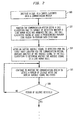
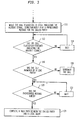
- Figs. 2 and 3 are portions of a flowchart illustrating a method for managing an outgoing call within a call center.
- a call to a target customer is first initiated over a communication medium (step 100).
- the communication medium can include a link within a public switched telephone network (PSTN) or any other communication network that is capable of supporting voice communication.
- PSTN public switched telephone network
- Some types of communication networks that can be used in accordance with the present invention include, for example, a satellite communication network, an optical fiber communication network, a local area network, a wide area network, a municipal area network, a private branch exchange network, the Internet, and/or a terrestrial wireless network.
- the communication medium is monitored using a call classifier to detect and classify signals from the first party location (step 102).
- the call classifier is capable of processing a received signal to determine whether the signal originated from a live party or from a machine.
- step 104 analysis of the audible signal is initiated within the call classifier to determine whether the audible signal is a live human voice (step 104).
- the call classifier continues to monitor the communication medium after the initial audible signal has ended to detect a period of silence having a predetermined duration on the communication medium (step 106).
- a prerecorded message is played in response thereto (steps 108 and 110).
- the playback of the prerecorded message and the analysis of the audible signal by the call classifier are simultaneously performed within the call center.
- step 112 It is next determined whether the call classifier has finished analyzing the audible signal (step 112). If not, the method waits for the analysis to be completed (step 114). The call classifier eventually makes a determination as to whether the initial audible signal is a live human voice or not. If the audible signal is determined by the call classifier to be other than a live human voice, the call is terminated (steps 116 and 118). If the audible signal is determined to be a live human voice, it is next determined whether playback of the prerecorded message has ended (step 120). If playback has not yet ended, the method waits until playback has ended (step 122). When playback has ended, a talk path is completed between the called party and a local agent within the call center (step 124).
Landscapes
- Business, Economics & Management (AREA)
- Marketing (AREA)
- Engineering & Computer Science (AREA)
- Signal Processing (AREA)
- Telephonic Communication Services (AREA)
- Management, Administration, Business Operations System, And Electronic Commerce (AREA)
Applications Claiming Priority (2)
| Application Number | Priority Date | Filing Date | Title |
|---|---|---|---|
| US09/482,969 US6925166B1 (en) | 2000-01-12 | 2000-01-12 | Method and apparatus for generating automatic greetings in a call center |
| US482969 | 2000-01-12 |
Publications (2)
| Publication Number | Publication Date |
|---|---|
| EP1117237A2 true EP1117237A2 (de) | 2001-07-18 |
| EP1117237A3 EP1117237A3 (de) | 2002-07-31 |
Family
ID=23918118
Family Applications (1)
| Application Number | Title | Priority Date | Filing Date |
|---|---|---|---|
| EP01300194A Withdrawn EP1117237A3 (de) | 2000-01-12 | 2001-01-10 | Anrufzentrale mit automatisch abgehender Wahl und Detektierung von live angerufenen Teilnehmern |
Country Status (5)
| Country | Link |
|---|---|
| US (1) | US6925166B1 (de) |
| EP (1) | EP1117237A3 (de) |
| JP (1) | JP2001251428A (de) |
| KR (1) | KR20010070498A (de) |
| CA (1) | CA2330263C (de) |
Cited By (1)
| Publication number | Priority date | Publication date | Assignee | Title |
|---|---|---|---|---|
| EP2802133A1 (de) * | 2013-05-10 | 2014-11-12 | Noetica Ltd | Erfassung lebender Personen in einem automatisierten Rufsystem |
Families Citing this family (30)
| Publication number | Priority date | Publication date | Assignee | Title |
|---|---|---|---|---|
| US7136461B1 (en) * | 2001-02-16 | 2006-11-14 | Telesector Resources Group, Inc. | Method and apparatus for implementing voice messaging using E-mail |
| US7167551B2 (en) * | 2001-12-12 | 2007-01-23 | International Business Machines Corporation | Intermediary device based callee identification |
| US7245716B2 (en) | 2001-12-12 | 2007-07-17 | International Business Machines Corporation | Controlling hold queue position adjustment |
| US9088645B2 (en) | 2001-12-12 | 2015-07-21 | International Business Machines Corporation | Intermediary device initiated caller identification |
| US20030108163A1 (en) * | 2001-12-12 | 2003-06-12 | International Business Machines Corporation | Origin device based caller identification |
| US7443970B2 (en) | 2001-12-17 | 2008-10-28 | International Business Machines Corporation | Logging calls according to call context |
| JP2005518114A (ja) * | 2002-02-14 | 2005-06-16 | アバイア テクノロジー コーポレーション | 存在追跡および名前空間相互接続の技術 |
| US7023980B2 (en) | 2002-12-04 | 2006-04-04 | Avaya Technology Corp. | Outbound dialing decision criteria based |
| US7474741B2 (en) * | 2003-01-20 | 2009-01-06 | Avaya Inc. | Messaging advise in presence-aware networks |
| US7386101B2 (en) * | 2003-04-08 | 2008-06-10 | Intervoice Limited Partnership | System and method for call answer determination for automated calling systems |
| US9398152B2 (en) | 2004-02-25 | 2016-07-19 | Avaya Inc. | Using business rules for determining presence |
| US7769154B1 (en) | 2004-06-09 | 2010-08-03 | Avaya Inc. | Aggregated perceived presence |
| US20050276407A1 (en) * | 2004-06-09 | 2005-12-15 | Avaya Technology Corp. | Telephony device ring determination by scheduler |
| US8842818B2 (en) * | 2006-06-30 | 2014-09-23 | Avaya Inc. | IP telephony architecture including information storage and retrieval system to track fluency |
| US7573996B1 (en) | 2006-10-03 | 2009-08-11 | Avaya Inc. | Presence based callback |
| US8355484B2 (en) * | 2007-01-08 | 2013-01-15 | Nuance Communications, Inc. | Methods and apparatus for masking latency in text-to-speech systems |
| US8150003B1 (en) | 2007-01-23 | 2012-04-03 | Avaya Inc. | Caller initiated undivert from voicemail |
| US10671600B1 (en) | 2007-07-24 | 2020-06-02 | Avaya Inc. | Communications-enabled dynamic social network routing utilizing presence |
| US7734029B2 (en) * | 2008-03-17 | 2010-06-08 | Transcend Products, Llc | Apparatus, system, and method for automated call initiation |
| US8533606B2 (en) * | 2008-06-13 | 2013-09-10 | At&T Intellectual Property I, L.P. | System and method for personalized hold |
| US8462930B2 (en) | 2008-08-20 | 2013-06-11 | Sellaring Ltd. | Method and apparatus for network maintenance and supervision of an on-board controlled display portion |
| US8503659B2 (en) | 2008-08-20 | 2013-08-06 | Sellaring Ltd. | Method and apparatus for ringback tone replacement with downloaded audio files |
| US8953754B1 (en) | 2009-04-24 | 2015-02-10 | Wells Fargo Bank, N.A. | Pre-authentication system and method for outgoing communication |
| US8301581B2 (en) | 2009-09-24 | 2012-10-30 | Avaya Inc. | Group compositing algorithms for presence |
| US9294623B2 (en) * | 2010-09-16 | 2016-03-22 | SurveyMonkey.com, LLC | Systems and methods for self-service automated dial-out and call-in surveys |
| US8649501B1 (en) | 2012-12-28 | 2014-02-11 | Convergent Resources Holdings, LLC | Interactive dialing system |
| US9154317B2 (en) * | 2013-07-24 | 2015-10-06 | Vonage Network Llc | Method and apparatus for providing bridgeless conferencing services |
| US9160549B2 (en) * | 2013-07-24 | 2015-10-13 | Vonage Network Llc | Method and apparatus for providing bridgeless conferencing services |
| US9667780B1 (en) * | 2016-05-05 | 2017-05-30 | Interactive Intelligence Group, Inc. | System and method for communication provider and remote device connection analysis |
| US9843448B1 (en) | 2017-06-07 | 2017-12-12 | Global Tel*Link Corporation | System and method for customizing inmate communication notification |
Family Cites Families (9)
| Publication number | Priority date | Publication date | Assignee | Title |
|---|---|---|---|---|
| US4817130A (en) | 1986-09-11 | 1989-03-28 | International Telesystems Corporation | Call management system with protocol converter and port controller |
| US4941168A (en) * | 1988-09-21 | 1990-07-10 | U.S. Telecom International Inc. | System for the recognition of automated telephone answering devices and delivery of prerecorded messages to such devices |
| US5430792A (en) * | 1991-05-03 | 1995-07-04 | Electronic Information Systems, Inc. | Automated telephone calling system |
| US5309505A (en) * | 1991-05-20 | 1994-05-03 | Inventions, Inc. | Automated voice system for improving agent efficiency and improving service to parties on hold |
| US5644624A (en) | 1994-05-23 | 1997-07-01 | Caldwell Communications Development, Inc. | Automatic telephone call origination and retry system and method of operation |
| US6430271B1 (en) * | 1998-02-20 | 2002-08-06 | Aspect Communications Corporation | Message delivery system |
| US6449260B1 (en) * | 1998-05-01 | 2002-09-10 | Siemens Information And Communication Networks, Inc. | Multimedia automatic call distribution system |
| US6226360B1 (en) * | 1998-05-19 | 2001-05-01 | At&T Corp. | System and method for delivery of pre-recorded voice phone messages |
| US6546097B1 (en) * | 1999-05-13 | 2003-04-08 | Rockwell Electronic Commerce Corp. | Automatic call distribution system with signal generator and method |
-
2000
- 2000-01-12 US US09/482,969 patent/US6925166B1/en not_active Expired - Lifetime
-
2001
- 2001-01-05 CA CA002330263A patent/CA2330263C/en not_active Expired - Fee Related
- 2001-01-10 EP EP01300194A patent/EP1117237A3/de not_active Withdrawn
- 2001-01-11 KR KR1020010001505A patent/KR20010070498A/ko not_active Withdrawn
- 2001-01-12 JP JP2001004892A patent/JP2001251428A/ja active Pending
Cited By (1)
| Publication number | Priority date | Publication date | Assignee | Title |
|---|---|---|---|---|
| EP2802133A1 (de) * | 2013-05-10 | 2014-11-12 | Noetica Ltd | Erfassung lebender Personen in einem automatisierten Rufsystem |
Also Published As
| Publication number | Publication date |
|---|---|
| US6925166B1 (en) | 2005-08-02 |
| KR20010070498A (ko) | 2001-07-25 |
| JP2001251428A (ja) | 2001-09-14 |
| CA2330263C (en) | 2004-12-14 |
| EP1117237A3 (de) | 2002-07-31 |
| CA2330263A1 (en) | 2001-07-12 |
Similar Documents
| Publication | Publication Date | Title |
|---|---|---|
| US6925166B1 (en) | Method and apparatus for generating automatic greetings in a call center | |
| US6470077B1 (en) | Apparatus and method for storage and accelerated playback of voice samples in a call center | |
| US5457732A (en) | Method and apparatus for delivery of a response in a messaging system | |
| US6546097B1 (en) | Automatic call distribution system with signal generator and method | |
| US8325901B1 (en) | Methods and apparatus for providing expanded telecommunications service | |
| US6442245B1 (en) | System and method for providing voice messaging services utilizing a network connection | |
| US7386101B2 (en) | System and method for call answer determination for automated calling systems | |
| US20010008553A1 (en) | Method and system for delivering messages to both live recipients and recording systems | |
| JPH02117255A (ja) | オペレータ アシスタント呼に対するより効率的な呼処理 | |
| US20130343205A1 (en) | Methods and apparatus for providing expanded telecommunications service | |
| US20060062373A1 (en) | Call center agent presence verification | |
| US5809113A (en) | Enhanced, deferred messaging service | |
| EP1117242A2 (de) | Verfahren und Vorrichtung zum Kommentieren von Sprachnachricht-Antworten | |
| US6711248B1 (en) | Message callback feature | |
| US6714630B1 (en) | System and method for screening calls | |
| EP0900504B1 (de) | Anschliessen von telefonen, faxgeräten und rechnern in einem intelligenten netzwerk | |
| US7949104B1 (en) | Message delivery system with echo-cancellation | |
| US7151821B2 (en) | Realcall message delivery system with echo cancellation | |
| JP2002191062A (ja) | ボタン電話装置及び着信呼転送方法 | |
| JP2003517780A (ja) | 発信者id及び優先者リストに応じて呼を取り扱う留守番電話装置 | |
| JPH10112756A (ja) | 音声蓄積装置 | |
| CA2096631A1 (en) | Calling party message response method and apparatus | |
| JPS62104351A (ja) | 留守番電話装置 |
Legal Events
| Date | Code | Title | Description |
|---|---|---|---|
| PUAI | Public reference made under article 153(3) epc to a published international application that has entered the european phase |
Free format text: ORIGINAL CODE: 0009012 |
|
| AK | Designated contracting states |
Kind code of ref document: A2 Designated state(s): AT BE CH CY DE DK ES FI FR GB GR IE IT LI LU MC NL PT SE TR |
|
| AX | Request for extension of the european patent |
Free format text: AL;LT;LV;MK;RO;SI |
|
| PUAL | Search report despatched |
Free format text: ORIGINAL CODE: 0009013 |
|
| AK | Designated contracting states |
Kind code of ref document: A3 Designated state(s): AT BE CH CY DE DK ES FI FR GB GR IE IT LI LU MC NL PT SE TR |
|
| AX | Request for extension of the european patent |
Free format text: AL;LT;LV;MK;RO;SI |
|
| AKX | Designation fees paid |
Designated state(s): DE FR GB |
|
| STAA | Information on the status of an ep patent application or granted ep patent |
Free format text: STATUS: THE APPLICATION IS DEEMED TO BE WITHDRAWN |
|
| 18D | Application deemed to be withdrawn |
Effective date: 20030201 |