EP1119211A2 - Verfahren und System zum Anbieten von positionsabhängigen Diensten an GSM/PCS Teilnehmer - Google Patents
Verfahren und System zum Anbieten von positionsabhängigen Diensten an GSM/PCS Teilnehmer Download PDFInfo
- Publication number
- EP1119211A2 EP1119211A2 EP00116787A EP00116787A EP1119211A2 EP 1119211 A2 EP1119211 A2 EP 1119211A2 EP 00116787 A EP00116787 A EP 00116787A EP 00116787 A EP00116787 A EP 00116787A EP 1119211 A2 EP1119211 A2 EP 1119211A2
- Authority
- EP
- European Patent Office
- Prior art keywords
- location
- server
- mobile equipment
- mobile
- client
- Prior art date
- Legal status (The legal status is an assumption and is not a legal conclusion. Google has not performed a legal analysis and makes no representation as to the accuracy of the status listed.)
- Granted
Links
Images





Classifications
-
- H—ELECTRICITY
- H04—ELECTRIC COMMUNICATION TECHNIQUE
- H04W—WIRELESS COMMUNICATION NETWORKS
- H04W4/00—Services specially adapted for wireless communication networks; Facilities therefor
- H04W4/02—Services making use of location information
- H04W4/029—Location-based management or tracking services
-
- H—ELECTRICITY
- H04—ELECTRIC COMMUNICATION TECHNIQUE
- H04L—TRANSMISSION OF DIGITAL INFORMATION, e.g. TELEGRAPHIC COMMUNICATION
- H04L67/00—Network arrangements or protocols for supporting network services or applications
- H04L67/01—Protocols
- H04L67/04—Protocols specially adapted for terminals or networks with limited capabilities; specially adapted for terminal portability
-
- H—ELECTRICITY
- H04—ELECTRIC COMMUNICATION TECHNIQUE
- H04L—TRANSMISSION OF DIGITAL INFORMATION, e.g. TELEGRAPHIC COMMUNICATION
- H04L67/00—Network arrangements or protocols for supporting network services or applications
- H04L67/50—Network services
- H04L67/51—Discovery or management thereof, e.g. service location protocol [SLP] or web services
-
- H—ELECTRICITY
- H04—ELECTRIC COMMUNICATION TECHNIQUE
- H04L—TRANSMISSION OF DIGITAL INFORMATION, e.g. TELEGRAPHIC COMMUNICATION
- H04L67/00—Network arrangements or protocols for supporting network services or applications
- H04L67/50—Network services
- H04L67/52—Network services specially adapted for the location of the user terminal
-
- H—ELECTRICITY
- H04—ELECTRIC COMMUNICATION TECHNIQUE
- H04W—WIRELESS COMMUNICATION NETWORKS
- H04W4/00—Services specially adapted for wireless communication networks; Facilities therefor
- H04W4/02—Services making use of location information
-
- H—ELECTRICITY
- H04—ELECTRIC COMMUNICATION TECHNIQUE
- H04L—TRANSMISSION OF DIGITAL INFORMATION, e.g. TELEGRAPHIC COMMUNICATION
- H04L69/00—Network arrangements, protocols or services independent of the application payload and not provided for in the other groups of this subclass
- H04L69/30—Definitions, standards or architectural aspects of layered protocol stacks
- H04L69/32—Architecture of open systems interconnection [OSI] 7-layer type protocol stacks, e.g. the interfaces between the data link level and the physical level
- H04L69/322—Intralayer communication protocols among peer entities or protocol data unit [PDU] definitions
- H04L69/329—Intralayer communication protocols among peer entities or protocol data unit [PDU] definitions in the application layer [OSI layer 7]
-
- H—ELECTRICITY
- H04—ELECTRIC COMMUNICATION TECHNIQUE
- H04W—WIRELESS COMMUNICATION NETWORKS
- H04W8/00—Network data management
- H04W8/18—Processing of user or subscriber data, e.g. subscribed services, user preferences or user profiles; Transfer of user or subscriber data
Definitions
- the present invention relates generally to cellular telecommunications systems and, more specifically, to delivering precise-location- and/or user-specific services to users of mobile equipment within a GSM/PCS cellular system.
- the GSM standards specify the infrastructure for a digital cellular service. To ensure interoperability among GSM systems, the standards address parameters such as the radio interface (900 MHz, 1800 MHz or 1900 MHz), switching, signaling, and intelligent network features.
- the radio interface 900 MHz, 1800 MHz or 1900 MHz
- switching 900 MHz, 1800 MHz or 1900 MHz
- signaling 900 MHz, signaling, and intelligent network features.
- GSM subscriber-related data is carried on a Subscriber Identity Module (“SIM”) card installed or inserted in the phone or other mobile equipment.
- SIM Subscriber Identity Module
- the SIM card allows a user to place a cellular telephone call from any valid mobile equipment, since the subscriber data is used to complete the call rather than the mobile equipment's serial number.
- WAP The Wireless Application Protocol
- WAP is a standard protocol for the delivery of services from the Internet to users of wireless mobile equipment over cellular wireless networks.
- WAP establishes a protocol common to all mobile equipment manufacturers for the presentation of information on the small display screens that are characteristic of mobile equipment.
- WAP servers can deliver information via "cards” to mobile equipment using the Wireless Markup Language (“WML”), which is a modification of standard hypertext markup language (“HTML”) (cards are analogized to HTML pages) for use with mobile equipment.
- WML allows users to access the Internet and send and receive email via the mobile equipment.
- Molnar describes the use of an array of spot beams directed near a mobile user to determine mobile user position by measuring the relative power received from the mobile user in each spot beam.
- Molnar teaches determining the location of a mobile station at any point in time as precisely as possible without requiring any interaction between the mobile subscriber and the cellular system. This enables location-sensitive public security services (such as for locating suspicious or fraudulent mobile stations), enables location dependent emergency services (such as 911 services under the assumption that the caller cannot actively cooperate), and provides a technical solution for network routing or tracking purposes (such as fleet management).
- Technology also exists to provide location-specific services to mobile subscribers at the location area level. For example, it is known to provide a WML card listing of all of the restaurants located within a location area to a mobile subscriber in response to a request from the subscriber. This conventional system provides location-specific services at a geographical resolution level of the location area.
- the present invention provides a client/server-based method and system for registering, ordering and using location- and user-specific services in a GSM/PCS cellular communications system.
- a server for delivering location- and user-specific services over a digital cellular communications system to users of WAP-enabled mobile equipment is provided.
- the server includes an entity relationship model (ERM) component that defines the relationships between a user account, the mobile subscription, and a mobile equipment location.
- ERP entity relationship model
- a server engine operates on the ERM component, operates on a service request from the mobile equipment, and generates a communication based on the results of the ERM component operation.
- the server has an interface that accepts the service request from and delivers the communication to the mobile equipment.
- the client system is a WAP-enabled, GSM-compatible telephone logged onto a GSM 900/1800 or PCS 1900 telecommunications network.
- the application server is either a combination of a WAP gateway with a standard web server or a stand-alone WAP application server.
- the application server elements may be interlinked via an IP network and may access a database.
- the database stores user, mobile subscription, location, and service data according to the entity relationship model.
- a location-based information service can be delivered to a WAP-enabled mobile equipment.
- a mobile equipment identification and a location are received at an applications server.
- a determination is made whether the mobile subscription is entitled to receive the information service.
- the information service is built using the mobile subscription identification and the location.
- the information service is delivered to the mobile equipment for presentation to the user.
- a user of the location-specific application server system can create and maintain a valid account and register location preferences for one or many GSM/PCS networks. This activity is typically completed via a secure e-commerce website.
- the user can order and use location and user-specific services by invoking a specific transaction flow when the user is located within a location area that contains a geographical item of interest, such as a building, an airport, a landmark, or a street.
- the invocation results in a service dialog between the client (the WAP-enabled GSM phone) and the application server (either directly or through the WAP gateway).
- the application server operating on the ERM completes authorization and other consistency checks as well as controlling the service transaction.
- a computer-readable medium that has data fields organized within a data structure.
- the medium comprises an account data field that contains data representing a mobile equipment user and a user account; a subscription identification data field that contains data representing the wireless subscription; a location data field that contains data representing a location area; and a services logic field with logic for delivering a service to the user through the wireless mobile equipment based on the data fields.
- the invention deliver services that are unique to specific geographical items located within a location area and tailored to the particular mobile equipment user.
- the present invention is directed to providing location-specific and/or user-specific services to users of cellular system mobile equipment.
- cellular system mobile equipment Although the preferred embodiment of the invention will be described with respect to providing services to users in a GSM cellular system, those skilled in the art will recognize that the invention may be utilized in connection with providing location-specific or user-specific services to mobile subscribers within a variety of mobile communications system environments.
- Other conventional mobile communication systems include DCS, PCS and AMPS cell-based wireless systems.
- the exemplary embodiments are based on the assumption that the mobile station equipment of interest is primarily used for basic telephony services and that the exact location is not of interest to the mobile subscriber unless and until the subscriber requests location-specific information in a particular situation. For example, when the subscriber is entering an airport building, standing in front of a historic landmark, or simply asking for guidance to walk from street A to street B in a foreign city, location-specific services become of interest to the subscriber.
- a mobile subscriber can be integrated with the cellular network in an interactive way, thereby enabling the subscriber to register, order or use location- or user-specific services on demand.
- the following cellular system and server components can be deployed in an exemplary embodiment of the invention.
- the GSM standards referenced are accessible via the Internet's World Wide Web at http://www.etsi.org.
- a computer-based information processing server system can include either (1) a web server that interfaces through a WAP gateway over the GSM system to a mobile equipment subscriber, or (2) a WAP application server that interfaces directly over the GSM system to a subscriber.
- a database system can be interconnected to the web server or WAP application server.
- the application server advantageously includes a specific entity relationship model ("ERM") and a specific flow of transaction logic initiated by the mobile subscriber in order to register, order, and use location- and user-specific services.
- ERM implements the rules that define the relationships among the various data elements and establishes a structure for the delivery of services by the system to the mobile subscriber.
- the database may be implemented as a relational or object-oriented database, as is known in the art.
- FIG. 1 depicts the user or subscriber 100 of a WAP-enabled cellular telephone or other mobile equipment 102 .
- the user communicates via the mobile equipment 102 , also described as a mobile station, over a radio link 104 to cellular tower 106 .
- Cellular tower 106 provides coverage of one or several location areas in a cellular system.
- An application server 108 accesses database 110 and provides services to the subscriber 100 through the cellular system over IP network 112 . These services can be specific to particular geographical items 114 located within a particular location area that is served by cellular tower 106 .
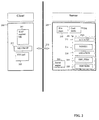
- FIG. 2 A schematic diagram is provided in FIG. 2 that illustrates a client-server system according to one embodiment of the invention.
- the client system 200 includes a GSM/WAP enabled mobile equipment (ME) 201 and a SIM card 203.
- the mobile equipment 201 operates on the GSM-specified interface between the ME 201 and the SIM (“ME-SIM interface") 202.
- the client 200 uses a standard GSM/WAP protocol stack 210, as is known in the art, to communicate with the server system 204 .
- the server system 204 generates or contains web pages 205 , a server engine 208 , and a memory having a data structure with several data entities 212, 214, 216, 218, 220. These data entities are related to each other by relationships defined in an ERM 211.
- the server system 204 may also generate or contain wireless markup language card decks 206.
- the entity ACCOUNT 212 represents data necessary to uniquely describe a user 100 and the user's payment and billing information (such as the subscriber's name, address, credit card, etc.).
- An individual account is created and maintained through a secure web site by using a unique UserId and Password, as is known in the art.
- the entity MSISDN 214 represents a mobile station ISDN number representing a wireless subscription as defined by the GSM standards available at http://www.etsi.org.
- the entity LOCATION 216 represents a location area as specified by the GSM standards.
- the entity GEO_ITEM 218 represents any physical object, such as a geographical item 114 , located in a given location area within the coverage area of cellular tower 106 .
- Examples of possible geographical items include buildings, streets, airports, and landmarks.
- GEO_ITEMs 218 may have a complicated, recursive internal structure to describe details like a floor in a building, a store in a mall, a specific position on a street, a gate in an airport building, or other geographic detail.
- the entity SERVICES 220 represents available logic and/or content stored in database 110 for a given GEO_ITEM. Services are delivered to subscribers by application server 108 and may have descriptive names and data, but typically comprise executable software logic elements.
- the server engine 208 receives requests from the client 200.
- the server engine 208 then operates on the entity relation model 211, and prepares web pages 205 and/or WML card decks 206 and delivers them to the client 200 .
- the server engine 208 might use push technology to send information to the client at a time during which a service is in use by the client 200 .
- FIG. 3 illustrates a client-server architecture in which the server 307 communicates with the mobile station 301 operating as a client through a WAP-compliant gateway 305.
- the client is embodied as a GSM phase 2+ compliant mobile station equipment 301 , as specified in the GSM specifications.
- the client is also WAP-enabled according to the WAP specifications available at http://www.wapforum.org, and is attached to a GSM 11.11 or a GSM 11.14 compliant SIM card 303.
- the ME-SIM interface 302 is compliant to GSM 11.11, and may also be compliant to GSM 11.14, as specified in the GSM specifications.
- the mobile station 301 communicates via the GSM/WAP protocol 304 with a WAP-compliant gateway 305 which, in turn, communicates via the Internet hypertext transfer protocol ("HTTP") with a Web server or application server 307.
- HTTP Internet hypertext transfer protocol
- the data stores DS 1 through DSn 308 implement the entity relationship model in a relational or object-oriented database.
- the logical end-to-end communication channel 309 between mobile station 301 and server 307 can be specified as a series of requests from the mobile equipment client 301 to the server 307 , each containing a uniform resource locator ("URL") and/or user data. Corresponding replies, including data, are sent by the server 307 to the mobile station 301 .
- URL uniform resource locator
- FIG. 4 illustrates an exemplary embodiment of the client-server architecture in which a WAP-compliant server 407 communicates directly with a mobile station 401 operating as a client.
- the client is embodied as a GSM phase 2+ compliant mobile station 401, as specified in the GSM specifications.
- the client is also WAP-enabled and has a GSM 11.11 or a GSM 11.14 compliant SIM card 403 attached.
- the ME-SIM interface 402 is compliant with GSM 11.11 and may also be compliant to GSM 11.14.
- the mobile station 401 communicates using the GSM/WAP protocol 404 with WAP server 407.
- the databases DS1 through DSn 408 implement the entity relationship model in a relational or object-oriented database.
- the logical end-to-end communications channel 409 between mobile station 401 and WAP server 407 can be specified as a series of requests from the mobile equipment client to the server, each containing a URL and/or user data. Corresponding replies are sent by the WAP server 407 to the mobile station 401 and include data.
- the account data needed to create a user account can include a UserID and Password, a UserName and Address, user credit card information, and user MSISDN information. Collectively, these data elements define a valid account. It is then optional for the user to specify location preferences.
- the user can specify the user's specific location within a location area of the cellular system. For example, the user may specify that he or she is at the airport or another geographical item.
- the typical structure of the relationships between user locations and services is as follows: there are one or more GSM networks available to the user; for each GSM network, there are one or more location areas; for each location area, there are one or more geographical items; and for each geographical item, there are one or more services available.
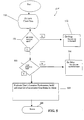
- FIG. 5 is a flow diagram illustrating the steps in an exemplary method for providing location-specific geographical items to a mobile subscriber according to the status of the user account and the user-specific location preferences. Among other functions, the flow diagram of FIG. 5 defines the authorization and consistency checks that are performed by the server.
- the server 204 retrieves the client data from the client 200 to initiate the exemplary routine 510 .
- the data preferably includes the client's MSISDN and the current location given by the parameter MCC_MNC_LAC or MCC_MNC_LAC_CI as specified in the GSM specification.
- the server 204 evaluates the client's MSISDN. According to the rules implemented in the ERM 211 , the server 204 can check if the MSISDN is attached to a valid account. If not, the "No" branch is followed from step 501 to step 502. An error message is sent at step 502 to the client 200, and the routine 510 terminates.
- the client 200 may, for example, display a message to the user indicating that service has been denied.
- step 503 The server 204 evaluates in step 503 the current location of the client 200 .
- This evaluation of current location can be completed in the form of a location area code MCC_MNC_LAC or MCC_MNC_LAC_CI (per the GSM specification).
- the server 204 checks the location preferences of the client 200 , based on the validated account/MSISDN information. If it is determined by the server 204 that the client 200 is entitled to use service in this particular geographical area, then the "Yes" branch is followed from step 503 to step 505 .
- the client 200 may be entitled to receive service both when the user is logged onto the user's home network as well as when the user is roaming in a foreign network.
- step 504 If the server 204 determines at step 503 that the user is not entitled to use location-based services in that particular geographical location, the "No" branch is followed to step 504 .
- An error message is sent in step 504 indicating that the client 200 cannot proceed.
- the client 200 may display a message for the user indicating that the user is not registered for service at that particular location.
- the routine 510 terminates upon the transmission of this error message.
- the server 204 compiles a list of available geographical items that are located in the area of the user 100 and sends that list back to the client 200 in the form of a web page 205 or a WML card 206.
- the routine 510 terminates at step 506.
- FIG. 6 illustrates a representative mobile equipment screen displaying a list of location-specific geographical items that are available in the location area of the mobile subscriber.
- message display 606 may be displayed on mobile equipment 102 at step 505 of the exemplary routine 510 shown in FIG. 5.
- the message display 606 is rendered by server 204 to a user 100 with a valid account when that user enters a particular location area.
- the geographical items within that location area for example, the international airport terminal, the domestic airport terminal, streets A-G, and streets H-Z
- FIG. 7 is a flow diagram illustrating the steps in an exemplary method for offering location-specific services associated with geographical items to a mobile subscriber.
- the exemplary method permits the user to specify particular geographical items within a location area in order to use a particular location dependant service.
- the flow diagram also defines the authorization and consistency checks performed by the server.
- the exemplary routine 710 begins at step 700 , at which step the server 204 retrieves the client data from the client 200 .
- the data preferably includes the client's MSISDN and the current location given by the parameter MCC_MNC_LAC or MCC_MNC_LAC_CI (as specified in the GSM specification).
- the server 204 evaluates the client's MSISDN. According to the rules implemented in the ERM 211, the server 204 can conduct an inquiry to determine whether the MSISDN is attached to a valid account. If not, the "No" branch is followed from step 701 to step 702. An error message is sent at step 702 to the client 200 , and the routine 710 terminates.
- the client 200 may, for example, display a message to the user indicating that the user is not authorized to access interactive services.
- step 703 the server 204 evaluates in step 703 the current location of the client 200, in the form of a location area code MCC_MNC_LAC or MCC_MNC_LAC_CI (per the GSM specification). According to the ERM 211, the server 204 checks the location preferences of the client, based on the validated account and MSISDN information. If it is determined by the server 204 that the client 200 is entitled to access services in this particular geographical area, then the "Yes" branch is followed from step 703 to step 705 . The client 200 may be entitled to receive service both when the user is logged on in the user's home network as well as when the user is roaming in a foreign network.
- step 703 If the server 204 determines at step 703 that the user is not entitled to use location-based services in that particular geographical location, the "No" branch is followed to step 704.
- An error message is sent in step 704 indicating that the client 200 cannot proceed with the requested operation.
- the client 200 may display a message to the user indicating that the user is not registered for service at that particular location.
- Steps 700-703 are preferably completed, even though account validation and local preferences validation steps were performed in steps 500-503 of FIG. 5, because the mobile equipment 102 is typically a moving object and may have moved outside the original location area. Moreover, the mobile equipment 102 may have switched to a different MSISDN if the user has a multi-MSISDN GSM subscription.
- the server 204 evaluates the Geo_Item that the user selected from the list rendered by the server.
- the Geo_Item is checked against the user's location preferences, and a list of available services that are associated with that Geo_Item is then compiled and rendered for client evaluation and selection.
- the list of available services may be pushed to the client 200 from the server 204 without requiring a client request to initiate the information transfer.
- the method then terminates at step 706 .
- FIG. 8 illustrates a representative mobile equipment screen displaying a list of available location-specific services associated with a geographical item to a mobile subscriber.
- message display 806 shows a mobile equipment screen display of the list rendered by the server 204 in step 705.
- the available services associated with the geographical item selected by the user 100 are presented for consideration and selection by the user in this representative screen display.
- FIG. 9 is a flow diagram illustrating the steps in an exemplary method for performing a service dialog with a mobile subscriber.
- the method enables the client to further specify and to use the selected service by interacting with server 204 .
- the flow diagram also defines the authorization and consistency checks performed by the server.
- the routine 910 begins at step 900, in which the server 204 retrieves client data from the client 200 .
- the data preferably includes the client's MSISDN and the current location given by the parameter MCC_MNC_LAC or MCC_MNC-LAC_CI (as specified in the GSM specification).
- the server 204 evaluates the client's MSISDN. According to the rules implemented in the ERM 211, the server 204 can check if the MSISDN is attached to a valid account. If not, then the "No" branch is followed from step 901 to step 902. An error message is sent at step 902 to the client 200, and the routine 910 terminates.
- the client 200 may, for example, display a message to the user indicating that the user is not authorized to access interactive services.
- step 903 the server 204 evaluates in step 903 the current location of the client 200, in the form of a location area code MCC_MNC_LAC or MCC_MNC_LAC_CI. According to the ERM 211, the server 204 checks the location preferences of the client 200, based on the validated account and MSISDN information. If it is determined by the server 204 that the client 200 is entitled to use service in this particular geographical area, then the "Yes" branch is followed from step 903 to step 905 . The client 200 may be entitled to receive service both when the user is logged on in the user's home network as well as when the user is roaming in a foreign network.
- step 903 If the server 204 determines at step 903 that the user is not entitled to use location-based services in that particular geographical location, the "No" branch is followed to step 904.
- An error message is sent in step 904 indicating that the client 200 cannot proceed with the requested operation.
- the client 200 may display a message to the user indicating that the user is not registered for service at that particular location.
- Steps 900-903 are preferably completed, even though account validation and local preferences validation steps were performed in steps 500-503 of FIG. 5 and steps 700-703 of FIG. 7, because the mobile equipment 102 is typically a moving object and may have moved outside of the original location area. Moreover, the mobile equipment may have switched to a different MSISDN if the user has a multi-MSISDN GSM subscription.
- the server 204 and the client 200 engage in a dialog to request and deliver the service selected by the client according to the ERM 211 .
- the server 204 executes the logic associated with the specified service.
- This service-specific dialog might, for example, provide a flight boarding schedule to a user located at an airport and a weather report for the user's destination city.
- the service-specific information may be pushed to the client 200 from the server 204 without requiring a client request to initiate the information transfer.
- routine 910 returns to step 900 .
- an extensive dialog between the client and the server may require that substantial additional data be retrieved from the client.
- FIG. 10 illustrates a representative mobile equipment screen displaying the results of a service dialog between a server system and a mobile subscriber according to one embodiment of the invention.
- message display 1007 shows a message rendered by server 204 for mobile equipment 102 to provide information associated with the service-specific dialog carried out between the client 200 and the server 204 at step 905 of FIG. 9.
- the information rendered includes gate change and boarding information for an airplane flight along with a destination weather report.
- the present invention supports registering, ordering and using location- and/or user-specific services in a client-server environment having mobile equipment operating within wireless communication cells.
- the client is typically a WAP-enabled GSM phone logged onto a GSM 900/1800 or PCS 1900 cellular telecommunications network.
- the server may be either a combination WAP gateway and standard Web server or a WAP application server.
- the server may be interlinked via the Internet and may have access to a database system.
- the database stores geographical information required for a location-based service, such as the level of rooms in a building, aisles in a store, or gates at an airport.
- the database also can include service-specific logic that is executed in response to a client demands.
- the client exploits location data that is stored on an SIM card attached to the mobile equipment. Forwarding the current location area code together with the subscriber's MSISDN to a WAP application can trigger the server to execute the application logic. The user may then select a more precise location and a service attached to that location. By using push technology, the server may deliver information to the client without receiving an information request from the client.
Landscapes
- Engineering & Computer Science (AREA)
- Computer Networks & Wireless Communication (AREA)
- Signal Processing (AREA)
- Mobile Radio Communication Systems (AREA)
- Telephonic Communication Services (AREA)
- Exchange Systems With Centralized Control (AREA)
Applications Claiming Priority (4)
| Application Number | Priority Date | Filing Date | Title |
|---|---|---|---|
| US543095 | 1983-10-18 | ||
| US17683100P | 2000-01-19 | 2000-01-19 | |
| US176831P | 2000-01-19 | ||
| US54309500A | 2000-04-03 | 2000-04-03 |
Publications (3)
| Publication Number | Publication Date |
|---|---|
| EP1119211A2 true EP1119211A2 (de) | 2001-07-25 |
| EP1119211A3 EP1119211A3 (de) | 2002-08-28 |
| EP1119211B1 EP1119211B1 (de) | 2004-11-17 |
Family
ID=26872642
Family Applications (1)
| Application Number | Title | Priority Date | Filing Date |
|---|---|---|---|
| EP00116787A Expired - Lifetime EP1119211B1 (de) | 2000-01-19 | 2000-08-03 | Verfahren und System zum Anbieten von positionsabhängigen Diensten an GSM/PCS Teilnehmer |
Country Status (6)
| Country | Link |
|---|---|
| EP (1) | EP1119211B1 (de) |
| AT (1) | ATE282934T1 (de) |
| DE (1) | DE60015914T2 (de) |
| DK (1) | DK1119211T3 (de) |
| ES (1) | ES2233247T3 (de) |
| PT (1) | PT1119211E (de) |
Cited By (26)
| Publication number | Priority date | Publication date | Assignee | Title |
|---|---|---|---|---|
| WO2002063911A1 (en) * | 2001-02-08 | 2002-08-15 | Nokia Corporation | Method and apparatus for providing position profiles in mobile value-added services |
| EP1303105A1 (de) * | 2001-10-10 | 2003-04-16 | Sun Microsystems, Inc. | Verfahren und System, um aufenthaltsort-kennenden Informationszugang und Abruf in einem schnurlosen Portalserver durchzuführen |
| FR2831689A1 (fr) * | 2002-02-22 | 2003-05-02 | France Telecom | Procede de transfert de contenu personnalise vers un terminal |
| WO2003048970A1 (en) * | 2001-12-07 | 2003-06-12 | Nokia Corporation | Method and server for providing database inquiry services |
| WO2003067447A1 (en) * | 2002-02-06 | 2003-08-14 | Ktfreetel Co., Ltd. | System and method for maintaining mobile network connection |
| WO2004004372A1 (en) | 2002-06-28 | 2004-01-08 | Nokia Corporation | System and method for initiating location-dependent applications on mobile devices |
| EP1389026A1 (de) * | 2002-08-08 | 2004-02-11 | Alcatel | Vorrichtung und Verfahren zum Datenverarbeiten von standortdaten, für mobil Telephon |
| DE10234214A1 (de) * | 2002-07-22 | 2004-02-19 | Markus Salamon | Verfahren zum Bereitstellen von Informationen auf einer mobilen elektronischen Einheit |
| FR2846174A1 (fr) * | 2002-10-17 | 2004-04-23 | France Telecom | Systeme de telecommunications entre un terminal mobile et un serveur via internet |
| WO2005029886A1 (ja) | 2003-09-19 | 2005-03-31 | Vodafone K.K. | 国際ローミング対応型移動通信ネットワーク利用システム |
| EP1538859A1 (de) * | 2003-12-02 | 2005-06-08 | Alcatel | Bereitstellung von standortabhängigen Diensten an mobilen Telefongeräten in einem drahtlosen Netzwerk |
| WO2006018794A1 (en) * | 2004-08-19 | 2006-02-23 | Koninklijke Philips Electronics N.V. | Method and apparatus for a user equipment to obtain location-based services |
| EP1398914A3 (de) * | 2002-09-12 | 2006-08-02 | Broadcom Corporation | Werbung und Steuerung der Werbung in drahtlosen Hotspots |
| US7328254B2 (en) * | 2002-04-03 | 2008-02-05 | Sun Microsystems, Inc. | Dynamic location storage and retrieval in a wireless portal server |
| EP2073498A1 (de) * | 2007-12-18 | 2009-06-24 | Lg Electronics Inc. | Kommunikationsvorrichtung und Verfahren zur Auswahl von Anwendungen der Kommunikationsvorrichtung nach Ortsinformation |
| US8243905B2 (en) | 2005-04-28 | 2012-08-14 | Apple Inc. | Multi-participant conference setup |
| US8249237B2 (en) | 2005-04-28 | 2012-08-21 | Apple Inc. | Heterogeneous video conferencing |
| US8269816B2 (en) | 2005-04-28 | 2012-09-18 | Apple Inc. | Video encoding in a video conference |
| WO2012137035A1 (en) * | 2011-04-04 | 2012-10-11 | Talaat Mohamed | Use of gsm networks for national level location based mobile voting/polling system |
| US8433813B2 (en) | 2010-04-07 | 2013-04-30 | Apple Inc. | Audio processing optimization in a multi-participant conference |
| US8456508B2 (en) | 2005-04-28 | 2013-06-04 | Apple Inc. | Audio processing in a multi-participant conference |
| EP2822304A4 (de) * | 2012-02-29 | 2015-03-11 | Tencent Tech Shenzhen Co Ltd | Verfahren zur gewinnung von informationen, verfahren zur ausgabe von informationen, mobiles endgerät, server und system |
| CN105704158A (zh) * | 2016-04-08 | 2016-06-22 | 成都景博信息技术有限公司 | 移动端车辆运行数据通信方法 |
| CN105897889A (zh) * | 2016-04-08 | 2016-08-24 | 成都景博信息技术有限公司 | 基于云计算的车联网信息处理方法 |
| RU2609756C2 (ru) * | 2013-12-13 | 2017-02-02 | Гонконг ЮКЛАУДЛИНК Нетворк Тек, Лтд. | Система и устройство разделения услуг |
| US9681298B1 (en) * | 2009-03-24 | 2017-06-13 | Sprint Communications Company L.P. | Controlling an amount of information disclosed by a position-determining system |
Families Citing this family (3)
| Publication number | Priority date | Publication date | Assignee | Title |
|---|---|---|---|---|
| KR20080039520A (ko) | 2005-09-07 | 2008-05-07 | 노키아 코포레이션 | 지역화 된 방송을 위한 디지털 모바일 방송 서비스가이드에서 셀의 시그널링 |
| CN101729591B (zh) * | 2008-10-29 | 2013-02-13 | 中国移动通信集团公司 | 一种用户引导装置、系统和方法 |
| US20130244685A1 (en) | 2012-03-14 | 2013-09-19 | Kelly L. Dempski | System for providing extensible location-based services |
Family Cites Families (2)
| Publication number | Priority date | Publication date | Assignee | Title |
|---|---|---|---|---|
| US6088594A (en) * | 1997-11-26 | 2000-07-11 | Ericsson Inc. | System and method for positioning a mobile terminal using a terminal based browser |
| WO2001043390A2 (en) * | 1999-12-13 | 2001-06-14 | Markport Limited | A wap service personalisation, management and billing object-oriented platform |
-
2000
- 2000-08-03 DK DK00116787T patent/DK1119211T3/da active
- 2000-08-03 ES ES00116787T patent/ES2233247T3/es not_active Expired - Lifetime
- 2000-08-03 AT AT00116787T patent/ATE282934T1/de not_active IP Right Cessation
- 2000-08-03 PT PT00116787T patent/PT1119211E/pt unknown
- 2000-08-03 DE DE60015914T patent/DE60015914T2/de not_active Expired - Fee Related
- 2000-08-03 EP EP00116787A patent/EP1119211B1/de not_active Expired - Lifetime
Cited By (39)
| Publication number | Priority date | Publication date | Assignee | Title |
|---|---|---|---|---|
| US8027691B2 (en) | 2001-02-08 | 2011-09-27 | Nokia Corporation | Method and apparatus for providing position profiles in mobile value-added services |
| WO2002063911A1 (en) * | 2001-02-08 | 2002-08-15 | Nokia Corporation | Method and apparatus for providing position profiles in mobile value-added services |
| EP1303105A1 (de) * | 2001-10-10 | 2003-04-16 | Sun Microsystems, Inc. | Verfahren und System, um aufenthaltsort-kennenden Informationszugang und Abruf in einem schnurlosen Portalserver durchzuführen |
| WO2003048970A1 (en) * | 2001-12-07 | 2003-06-12 | Nokia Corporation | Method and server for providing database inquiry services |
| WO2003067447A1 (en) * | 2002-02-06 | 2003-08-14 | Ktfreetel Co., Ltd. | System and method for maintaining mobile network connection |
| FR2831689A1 (fr) * | 2002-02-22 | 2003-05-02 | France Telecom | Procede de transfert de contenu personnalise vers un terminal |
| US7328254B2 (en) * | 2002-04-03 | 2008-02-05 | Sun Microsystems, Inc. | Dynamic location storage and retrieval in a wireless portal server |
| EP1518424A4 (de) * | 2002-06-28 | 2007-03-14 | Nokia Corp | System und verfahren zum einleiten ortsabhängiger anwendungen auf mobilen einrichtungen |
| WO2004004372A1 (en) | 2002-06-28 | 2004-01-08 | Nokia Corporation | System and method for initiating location-dependent applications on mobile devices |
| DE10234214B4 (de) * | 2002-07-22 | 2006-02-23 | Markus Salamon | Verfahren zum Bereitstellen von Informationen auf einer mobilen elektronischen Einheit |
| DE10234214A1 (de) * | 2002-07-22 | 2004-02-19 | Markus Salamon | Verfahren zum Bereitstellen von Informationen auf einer mobilen elektronischen Einheit |
| EP1389026A1 (de) * | 2002-08-08 | 2004-02-11 | Alcatel | Vorrichtung und Verfahren zum Datenverarbeiten von standortdaten, für mobil Telephon |
| FR2843514A1 (fr) * | 2002-08-08 | 2004-02-13 | Cit Alcatel | Dispositif et procede de traitement de donnees de localisation, par detection de parametre(s) de geolocalisation de zone(s) d'un reseau, pour un dispositif de telephonie mobile |
| US7363041B2 (en) | 2002-08-08 | 2008-04-22 | Alcatel | Device and a method for use in a mobile telephone device for processing location data by detecting geolocation parameters of an area or areas of a network |
| EP1398914A3 (de) * | 2002-09-12 | 2006-08-02 | Broadcom Corporation | Werbung und Steuerung der Werbung in drahtlosen Hotspots |
| US8086245B2 (en) | 2002-09-12 | 2011-12-27 | Broadcom Corporation | Advertising and controlling the advertisement of wireless hot spots |
| FR2846174A1 (fr) * | 2002-10-17 | 2004-04-23 | France Telecom | Systeme de telecommunications entre un terminal mobile et un serveur via internet |
| WO2005029886A1 (ja) | 2003-09-19 | 2005-03-31 | Vodafone K.K. | 国際ローミング対応型移動通信ネットワーク利用システム |
| EP1667476A4 (de) * | 2003-09-19 | 2011-09-07 | Vodafone Plc | System zur verwendung eines internationalen roaming-fähigen mobilkommunikationsnetzes |
| US8774796B2 (en) | 2003-09-19 | 2014-07-08 | Vodafone Group Plc | System using international roaming-capable mobile communication network |
| US7869816B2 (en) | 2003-12-02 | 2011-01-11 | Alcatel | Method of transmitting area specific content |
| EP1538859A1 (de) * | 2003-12-02 | 2005-06-08 | Alcatel | Bereitstellung von standortabhängigen Diensten an mobilen Telefongeräten in einem drahtlosen Netzwerk |
| WO2006018794A1 (en) * | 2004-08-19 | 2006-02-23 | Koninklijke Philips Electronics N.V. | Method and apparatus for a user equipment to obtain location-based services |
| US8456508B2 (en) | 2005-04-28 | 2013-06-04 | Apple Inc. | Audio processing in a multi-participant conference |
| US8243905B2 (en) | 2005-04-28 | 2012-08-14 | Apple Inc. | Multi-participant conference setup |
| US8249237B2 (en) | 2005-04-28 | 2012-08-21 | Apple Inc. | Heterogeneous video conferencing |
| US8269816B2 (en) | 2005-04-28 | 2012-09-18 | Apple Inc. | Video encoding in a video conference |
| EP2073498A1 (de) * | 2007-12-18 | 2009-06-24 | Lg Electronics Inc. | Kommunikationsvorrichtung und Verfahren zur Auswahl von Anwendungen der Kommunikationsvorrichtung nach Ortsinformation |
| US8868581B2 (en) | 2007-12-18 | 2014-10-21 | Lg Electronics Inc. | Communication device and method of controlling operation of communication device |
| US10691677B2 (en) | 2007-12-18 | 2020-06-23 | Lg Electronics Inc. | Communication device and method of controlling operation of communication device |
| US9681298B1 (en) * | 2009-03-24 | 2017-06-13 | Sprint Communications Company L.P. | Controlling an amount of information disclosed by a position-determining system |
| US8433755B2 (en) | 2010-04-07 | 2013-04-30 | Apple Inc. | Dynamic designation of a central distributor in a multi-participant conference |
| US8433813B2 (en) | 2010-04-07 | 2013-04-30 | Apple Inc. | Audio processing optimization in a multi-participant conference |
| WO2012137035A1 (en) * | 2011-04-04 | 2012-10-11 | Talaat Mohamed | Use of gsm networks for national level location based mobile voting/polling system |
| EP2822304A4 (de) * | 2012-02-29 | 2015-03-11 | Tencent Tech Shenzhen Co Ltd | Verfahren zur gewinnung von informationen, verfahren zur ausgabe von informationen, mobiles endgerät, server und system |
| JP2015510362A (ja) * | 2012-02-29 | 2015-04-02 | 騰訊科技(深▲せん▼)有限公司 | 情報取得方法、情報プッシュ方法、端末、サーバ、およびシステム |
| RU2609756C2 (ru) * | 2013-12-13 | 2017-02-02 | Гонконг ЮКЛАУДЛИНК Нетворк Тек, Лтд. | Система и устройство разделения услуг |
| CN105704158A (zh) * | 2016-04-08 | 2016-06-22 | 成都景博信息技术有限公司 | 移动端车辆运行数据通信方法 |
| CN105897889A (zh) * | 2016-04-08 | 2016-08-24 | 成都景博信息技术有限公司 | 基于云计算的车联网信息处理方法 |
Also Published As
| Publication number | Publication date |
|---|---|
| ATE282934T1 (de) | 2004-12-15 |
| PT1119211E (pt) | 2005-02-28 |
| DE60015914T2 (de) | 2005-03-17 |
| ES2233247T3 (es) | 2005-06-16 |
| DK1119211T3 (da) | 2005-03-21 |
| EP1119211B1 (de) | 2004-11-17 |
| EP1119211A3 (de) | 2002-08-28 |
| DE60015914D1 (de) | 2004-12-23 |
Similar Documents
| Publication | Publication Date | Title |
|---|---|---|
| EP1119211B1 (de) | Verfahren und System zum Anbieten von positionsabhängigen Diensten an GSM/PCS Teilnehmer | |
| CN1307830C (zh) | 提供位置相关信息的方法和系统 | |
| US8019361B2 (en) | Provision of location information | |
| US6505046B1 (en) | Method and apparatus for distributing location-based messages in a wireless communication network | |
| US7869815B2 (en) | Location system with enhanced security | |
| EP1446972B1 (de) | Bereitstellung von positionsinformationen | |
| US7203752B2 (en) | Method and system for managing location information for wireless communications devices | |
| US7020460B1 (en) | Method and system for providing a mobile network notification service | |
| US20040224702A1 (en) | System and method for access control in the delivery of location information | |
| US20030087648A1 (en) | End user to mobile service provider message exchange system based on proximity | |
| US20030013434A1 (en) | Systems and methods for automatically provisioning wireless services on a wireless device | |
| AU5220199A (en) | Subscriber delivered location-based services | |
| US20050059410A1 (en) | System and method for providing differential location services | |
| WO2004004394A1 (en) | Communicating information associated with provisioning of a service, over a user plane connection | |
| US7548978B2 (en) | Network access using network identification | |
| US20140370916A1 (en) | Area watcher for wireless network | |
| RU2314551C2 (ru) | Способ осуществления услуги определения местоположения в системе связи | |
| EP1570696B1 (de) | Verfahren und system zur positionierung in einem mobilkommunikationsnetz | |
| CN100388843C (zh) | 基于位置类业务的实现方法及位置业务中间件 | |
| GB2371173A (en) | Providing position information in initial data transmission over cellular network | |
| EP2136578A1 (de) | Kommunikationstechnik zur Koordinierung der Dienstbenutzung | |
| KR20060134023A (ko) | 위치 인식 시스템 및 그 방법 | |
| EP1435189B1 (de) | System zum bereitstellen von information zum standort des mobilen nutzers, der netzdienste beansprucht und in ein anderes netz gewechselt ist, in dem nicht das gleiche positionierungsverfahren bereitgestellt wird | |
| KR100653552B1 (ko) | 인터넷을 이용한 공간적 위치조회 서비스 시스템 |
Legal Events
| Date | Code | Title | Description |
|---|---|---|---|
| PUAI | Public reference made under article 153(3) epc to a published international application that has entered the european phase |
Free format text: ORIGINAL CODE: 0009012 |
|
| 17P | Request for examination filed |
Effective date: 20000803 |
|
| AK | Designated contracting states |
Kind code of ref document: A2 Designated state(s): AT BE CH CY DE DK ES FI FR GB GR IE IT LI LU MC NL PT SE |
|
| AX | Request for extension of the european patent |
Free format text: AL;LT;LV;MK;RO;SI |
|
| PUAL | Search report despatched |
Free format text: ORIGINAL CODE: 0009013 |
|
| AK | Designated contracting states |
Kind code of ref document: A3 Designated state(s): AT BE CH CY DE DK ES FI FR GB GR IE IT LI LU MC NL PT SE |
|
| AX | Request for extension of the european patent |
Free format text: AL;LT;LV;MK;RO;SI |
|
| 17Q | First examination report despatched |
Effective date: 20030116 |
|
| AKX | Designation fees paid |
Designated state(s): AT BE CH CY DE DK ES FI FR GB GR IE IT LI LU MC NL PT SE |
|
| GRAP | Despatch of communication of intention to grant a patent |
Free format text: ORIGINAL CODE: EPIDOSNIGR1 |
|
| GRAS | Grant fee paid |
Free format text: ORIGINAL CODE: EPIDOSNIGR3 |
|
| GRAA | (expected) grant |
Free format text: ORIGINAL CODE: 0009210 |
|
| AK | Designated contracting states |
Kind code of ref document: B1 Designated state(s): AT BE CH CY DE DK ES FI FR GB GR IE IT LI LU MC NL PT SE |
|
| REG | Reference to a national code |
Ref country code: GB Ref legal event code: FG4D |
|
| REG | Reference to a national code |
Ref country code: CH Ref legal event code: NV Representative=s name: BOVARD AG PATENTANWAELTE Ref country code: CH Ref legal event code: EP |
|
| REG | Reference to a national code |
Ref country code: IE Ref legal event code: FG4D |
|
| REF | Corresponds to: |
Ref document number: 60015914 Country of ref document: DE Date of ref document: 20041223 Kind code of ref document: P |
|
| REG | Reference to a national code |
Ref country code: GR Ref legal event code: EP Ref document number: 20040404322 Country of ref document: GR |
|
| REG | Reference to a national code |
Ref country code: PT Ref legal event code: SC4A Free format text: AVAILABILITY OF NATIONAL TRANSLATION Effective date: 20041230 |
|
| REG | Reference to a national code |
Ref country code: SE Ref legal event code: TRGR |
|
| REG | Reference to a national code |
Ref country code: DK Ref legal event code: T3 |
|
| REG | Reference to a national code |
Ref country code: ES Ref legal event code: FG2A Ref document number: 2233247 Country of ref document: ES Kind code of ref document: T3 |
|
| PLBE | No opposition filed within time limit |
Free format text: ORIGINAL CODE: 0009261 |
|
| STAA | Information on the status of an ep patent application or granted ep patent |
Free format text: STATUS: NO OPPOSITION FILED WITHIN TIME LIMIT |
|
| 26N | No opposition filed |
Effective date: 20050818 |
|
| ET | Fr: translation filed | ||
| PGFP | Annual fee paid to national office [announced via postgrant information from national office to epo] |
Ref country code: MC Payment date: 20060728 Year of fee payment: 7 |
|
| PGFP | Annual fee paid to national office [announced via postgrant information from national office to epo] |
Ref country code: GR Payment date: 20060731 Year of fee payment: 7 Ref country code: PT Payment date: 20060731 Year of fee payment: 7 |
|
| PGFP | Annual fee paid to national office [announced via postgrant information from national office to epo] |
Ref country code: CY Payment date: 20060802 Year of fee payment: 7 |
|
| PGFP | Annual fee paid to national office [announced via postgrant information from national office to epo] |
Ref country code: CH Payment date: 20060815 Year of fee payment: 7 |
|
| PGFP | Annual fee paid to national office [announced via postgrant information from national office to epo] |
Ref country code: BE Payment date: 20060816 Year of fee payment: 7 Ref country code: DK Payment date: 20060816 Year of fee payment: 7 Ref country code: LU Payment date: 20060816 Year of fee payment: 7 Ref country code: NL Payment date: 20060816 Year of fee payment: 7 |
|
| PGFP | Annual fee paid to national office [announced via postgrant information from national office to epo] |
Ref country code: AT Payment date: 20060818 Year of fee payment: 7 |
|
| PGFP | Annual fee paid to national office [announced via postgrant information from national office to epo] |
Ref country code: IE Payment date: 20060828 Year of fee payment: 7 |
|
| PGFP | Annual fee paid to national office [announced via postgrant information from national office to epo] |
Ref country code: SE Payment date: 20060810 Year of fee payment: 7 |
|
| REG | Reference to a national code |
Ref country code: PT Ref legal event code: MM4A Free format text: LAPSE DUE TO NON-PAYMENT OF FEES Effective date: 20080204 |
|
| BERE | Be: lapsed |
Owner name: *HERTEL JOACHIM Effective date: 20070831 |
|
| EUG | Se: european patent has lapsed | ||
| REG | Reference to a national code |
Ref country code: CH Ref legal event code: PL |
|
| REG | Reference to a national code |
Ref country code: DK Ref legal event code: EBP |
|
| PG25 | Lapsed in a contracting state [announced via postgrant information from national office to epo] |
Ref country code: LI Free format text: LAPSE BECAUSE OF NON-PAYMENT OF DUE FEES Effective date: 20070831 Ref country code: NL Free format text: LAPSE BECAUSE OF NON-PAYMENT OF DUE FEES Effective date: 20080301 Ref country code: CH Free format text: LAPSE BECAUSE OF NON-PAYMENT OF DUE FEES Effective date: 20070831 Ref country code: SE Free format text: LAPSE BECAUSE OF NON-PAYMENT OF DUE FEES Effective date: 20070804 Ref country code: MC Free format text: LAPSE BECAUSE OF NON-PAYMENT OF DUE FEES Effective date: 20070831 |
|
| NLV4 | Nl: lapsed or anulled due to non-payment of the annual fee |
Effective date: 20080301 |
|
| PG25 | Lapsed in a contracting state [announced via postgrant information from national office to epo] |
Ref country code: PT Free format text: LAPSE BECAUSE OF NON-PAYMENT OF DUE FEES Effective date: 20080204 |
|
| REG | Reference to a national code |
Ref country code: IE Ref legal event code: MM4A |
|
| PG25 | Lapsed in a contracting state [announced via postgrant information from national office to epo] |
Ref country code: CY Free format text: LAPSE BECAUSE OF NON-PAYMENT OF DUE FEES Effective date: 20070803 Ref country code: AT Free format text: LAPSE BECAUSE OF NON-PAYMENT OF DUE FEES Effective date: 20070803 |
|
| PG25 | Lapsed in a contracting state [announced via postgrant information from national office to epo] |
Ref country code: DK Free format text: LAPSE BECAUSE OF NON-PAYMENT OF DUE FEES Effective date: 20070831 |
|
| PG25 | Lapsed in a contracting state [announced via postgrant information from national office to epo] |
Ref country code: BE Free format text: LAPSE BECAUSE OF NON-PAYMENT OF DUE FEES Effective date: 20070831 |
|
| PG25 | Lapsed in a contracting state [announced via postgrant information from national office to epo] |
Ref country code: IE Free format text: LAPSE BECAUSE OF NON-PAYMENT OF DUE FEES Effective date: 20070803 |
|
| PGFP | Annual fee paid to national office [announced via postgrant information from national office to epo] |
Ref country code: ES Payment date: 20080821 Year of fee payment: 9 |
|
| PGFP | Annual fee paid to national office [announced via postgrant information from national office to epo] |
Ref country code: FI Payment date: 20080819 Year of fee payment: 9 Ref country code: FR Payment date: 20080829 Year of fee payment: 9 Ref country code: IT Payment date: 20080808 Year of fee payment: 9 |
|
| PGFP | Annual fee paid to national office [announced via postgrant information from national office to epo] |
Ref country code: GB Payment date: 20080731 Year of fee payment: 9 |
|
| PG25 | Lapsed in a contracting state [announced via postgrant information from national office to epo] |
Ref country code: GR Free format text: LAPSE BECAUSE OF NON-PAYMENT OF DUE FEES Effective date: 20080304 |
|
| PGFP | Annual fee paid to national office [announced via postgrant information from national office to epo] |
Ref country code: DE Payment date: 20081029 Year of fee payment: 9 |
|
| REG | Reference to a national code |
Ref country code: GB Ref legal event code: 732E Free format text: REGISTERED BETWEEN 20090416 AND 20090422 |
|
| REG | Reference to a national code |
Ref country code: FR Ref legal event code: TP |
|
| PG25 | Lapsed in a contracting state [announced via postgrant information from national office to epo] |
Ref country code: LU Free format text: LAPSE BECAUSE OF NON-PAYMENT OF DUE FEES Effective date: 20070803 |
|
| GBPC | Gb: european patent ceased through non-payment of renewal fee |
Effective date: 20090803 |
|
| PG25 | Lapsed in a contracting state [announced via postgrant information from national office to epo] |
Ref country code: FI Free format text: LAPSE BECAUSE OF NON-PAYMENT OF DUE FEES Effective date: 20090803 |
|
| REG | Reference to a national code |
Ref country code: FR Ref legal event code: ST Effective date: 20100430 |
|
| PG25 | Lapsed in a contracting state [announced via postgrant information from national office to epo] |
Ref country code: FR Free format text: LAPSE BECAUSE OF NON-PAYMENT OF DUE FEES Effective date: 20090831 Ref country code: DE Free format text: LAPSE BECAUSE OF NON-PAYMENT OF DUE FEES Effective date: 20100302 |
|
| REG | Reference to a national code |
Ref country code: ES Ref legal event code: FD2A Effective date: 20090804 |
|
| PG25 | Lapsed in a contracting state [announced via postgrant information from national office to epo] |
Ref country code: GB Free format text: LAPSE BECAUSE OF NON-PAYMENT OF DUE FEES Effective date: 20090803 |
|
| PG25 | Lapsed in a contracting state [announced via postgrant information from national office to epo] |
Ref country code: IT Free format text: LAPSE BECAUSE OF NON-PAYMENT OF DUE FEES Effective date: 20090803 |
|
| PG25 | Lapsed in a contracting state [announced via postgrant information from national office to epo] |
Ref country code: ES Free format text: LAPSE BECAUSE OF NON-PAYMENT OF DUE FEES Effective date: 20090804 |