EP1120113A2 - Emploi de ligands selectifs dans le traitement d'etats pathologiques sensibles aux hormones steroides ou analogues - Google Patents
Emploi de ligands selectifs dans le traitement d'etats pathologiques sensibles aux hormones steroides ou analogues Download PDFInfo
- Publication number
- EP1120113A2 EP1120113A2 EP01103552A EP01103552A EP1120113A2 EP 1120113 A2 EP1120113 A2 EP 1120113A2 EP 01103552 A EP01103552 A EP 01103552A EP 01103552 A EP01103552 A EP 01103552A EP 1120113 A2 EP1120113 A2 EP 1120113A2
- Authority
- EP
- European Patent Office
- Prior art keywords
- steroid
- rar
- ligand
- hormone
- selective
- Prior art date
- Legal status (The legal status is an assumption and is not a legal conclusion. Google has not performed a legal analysis and makes no representation as to the accuracy of the status listed.)
- Ceased
Links
Images


Classifications
-
- A—HUMAN NECESSITIES
- A61—MEDICAL OR VETERINARY SCIENCE; HYGIENE
- A61K—PREPARATIONS FOR MEDICAL, DENTAL OR TOILETRY PURPOSES
- A61K31/00—Medicinal preparations containing organic active ingredients
- A61K31/045—Hydroxy compounds, e.g. alcohols; Salts thereof, e.g. alcoholates
- A61K31/07—Retinol compounds, e.g. vitamin A
-
- A—HUMAN NECESSITIES
- A61—MEDICAL OR VETERINARY SCIENCE; HYGIENE
- A61K—PREPARATIONS FOR MEDICAL, DENTAL OR TOILETRY PURPOSES
- A61K31/00—Medicinal preparations containing organic active ingredients
-
- A—HUMAN NECESSITIES
- A61—MEDICAL OR VETERINARY SCIENCE; HYGIENE
- A61K—PREPARATIONS FOR MEDICAL, DENTAL OR TOILETRY PURPOSES
- A61K31/00—Medicinal preparations containing organic active ingredients
- A61K31/185—Acids; Anhydrides, halides or salts thereof, e.g. sulfur acids, imidic, hydrazonic or hydroximic acids
- A61K31/19—Carboxylic acids, e.g. valproic acid
-
- A—HUMAN NECESSITIES
- A61—MEDICAL OR VETERINARY SCIENCE; HYGIENE
- A61K—PREPARATIONS FOR MEDICAL, DENTAL OR TOILETRY PURPOSES
- A61K31/00—Medicinal preparations containing organic active ingredients
- A61K31/185—Acids; Anhydrides, halides or salts thereof, e.g. sulfur acids, imidic, hydrazonic or hydroximic acids
- A61K31/19—Carboxylic acids, e.g. valproic acid
- A61K31/192—Carboxylic acids, e.g. valproic acid having aromatic groups, e.g. sulindac, 2-aryl-propionic acids, ethacrynic acid
-
- A—HUMAN NECESSITIES
- A61—MEDICAL OR VETERINARY SCIENCE; HYGIENE
- A61K—PREPARATIONS FOR MEDICAL, DENTAL OR TOILETRY PURPOSES
- A61K31/00—Medicinal preparations containing organic active ingredients
- A61K31/185—Acids; Anhydrides, halides or salts thereof, e.g. sulfur acids, imidic, hydrazonic or hydroximic acids
- A61K31/19—Carboxylic acids, e.g. valproic acid
- A61K31/195—Carboxylic acids, e.g. valproic acid having an amino group
- A61K31/196—Carboxylic acids, e.g. valproic acid having an amino group the amino group being directly attached to a ring, e.g. anthranilic acid, mefenamic acid, diclofenac, chlorambucil
-
- A—HUMAN NECESSITIES
- A61—MEDICAL OR VETERINARY SCIENCE; HYGIENE
- A61K—PREPARATIONS FOR MEDICAL, DENTAL OR TOILETRY PURPOSES
- A61K31/00—Medicinal preparations containing organic active ingredients
- A61K31/185—Acids; Anhydrides, halides or salts thereof, e.g. sulfur acids, imidic, hydrazonic or hydroximic acids
- A61K31/19—Carboxylic acids, e.g. valproic acid
- A61K31/20—Carboxylic acids, e.g. valproic acid having a carboxyl group bound to a chain of seven or more carbon atoms, e.g. stearic, palmitic, arachidic acids
-
- A—HUMAN NECESSITIES
- A61—MEDICAL OR VETERINARY SCIENCE; HYGIENE
- A61K—PREPARATIONS FOR MEDICAL, DENTAL OR TOILETRY PURPOSES
- A61K31/00—Medicinal preparations containing organic active ingredients
- A61K31/185—Acids; Anhydrides, halides or salts thereof, e.g. sulfur acids, imidic, hydrazonic or hydroximic acids
- A61K31/19—Carboxylic acids, e.g. valproic acid
- A61K31/20—Carboxylic acids, e.g. valproic acid having a carboxyl group bound to a chain of seven or more carbon atoms, e.g. stearic, palmitic, arachidic acids
- A61K31/203—Retinoic acids ; Salts thereof
-
- A—HUMAN NECESSITIES
- A61—MEDICAL OR VETERINARY SCIENCE; HYGIENE
- A61P—SPECIFIC THERAPEUTIC ACTIVITY OF CHEMICAL COMPOUNDS OR MEDICINAL PREPARATIONS
- A61P17/00—Drugs for dermatological disorders
-
- A—HUMAN NECESSITIES
- A61—MEDICAL OR VETERINARY SCIENCE; HYGIENE
- A61P—SPECIFIC THERAPEUTIC ACTIVITY OF CHEMICAL COMPOUNDS OR MEDICINAL PREPARATIONS
- A61P35/00—Antineoplastic agents
- A61P35/02—Antineoplastic agents specific for leukemia
-
- A—HUMAN NECESSITIES
- A61—MEDICAL OR VETERINARY SCIENCE; HYGIENE
- A61P—SPECIFIC THERAPEUTIC ACTIVITY OF CHEMICAL COMPOUNDS OR MEDICINAL PREPARATIONS
- A61P43/00—Drugs for specific purposes, not provided for in groups A61P1/00-A61P41/00
-
- A—HUMAN NECESSITIES
- A61—MEDICAL OR VETERINARY SCIENCE; HYGIENE
- A61P—SPECIFIC THERAPEUTIC ACTIVITY OF CHEMICAL COMPOUNDS OR MEDICINAL PREPARATIONS
- A61P5/00—Drugs for disorders of the endocrine system
Definitions
- the present invention relates to therapeutic uses of compounds which function as steroid hormones or steroid-like hormones.
- the present invention relates to the use of compounds which selectively or preferentially interact with a single subtype of a given steroid hormone or steroid-like hormone receptor class.
- chromosomal translocation e.g., a chromosomal translocation.
- PML for "promyelocytes”
- RAR- ⁇ retinoic acid receptor- ⁇
- APL acute promyelocytic leukemia
- a gene product not normally subject to hormone expression control e.g., PML
- a hormone responsive sequence e.g., RAR- ⁇
- a gene such as PML may fall under the control of a hormone responsive sequence (such as RAR- ⁇ ) as a result of a translocation event.
- APL can be effectively controlled by treatment with retinoic acid.
- retinoic acid e.g., RAR- ⁇ , RAR- ⁇ , RAR- ⁇ , RXR- ⁇ , RXR- ⁇ , RXR- ⁇
- administration of retinoic acid as a treatment for APL has the potential to cause many undesirable side-reactions for the patient.
- Vitamin D-dependent Ricketts is responsive to treatment with Vitamin D
- acne is responsive to treatment with retinoic acid, and the like.
- available hormone or hormone-like compounds are effective for the treatment of such disease states, there is always the competing concern of undesirable side effects of such hormone treatments.
- Such compounds are useful for the selective treatment of hormone responsive disease states, thereby minimizing the occurrence of side effects caused by the activation of hormone responsive pathways not directly associated with the disease state being treated.
- Figure 1 is a dose response curve showing the response of RAR- ⁇ , RAR- ⁇ , RAR- ⁇ , and RXR- ⁇ to increasing concentrations of retinoic acid.
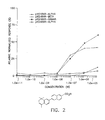
- Figure 2 is a dose response curve showing the response of RAR- ⁇ , RAR- ⁇ , RAR- ⁇ , and RXR- ⁇ to increasing concentrations of the phenyl-naphthyl derivative referred to herein as Compound I.
- Figure 3 is a dose response curve showing the response of RAR- ⁇ , RAR- ⁇ , RAR- ⁇ , and RXR- ⁇ to increasing concentrations of the polyunsaturated carboxylic acid derivative referred to herein as Compound II.
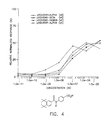
- Figure 4 is a dose response curve showing the response of RAR- ⁇ , RAR- ⁇ , RAR- ⁇ , and RXR- ⁇ to increasing concentrations of the amide derivative referred to herein as Compound III.
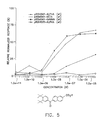
- Figure 5 is a dose response curve showing the response of RAR- ⁇ , RAR- ⁇ , RAR- ⁇ , and RXR- ⁇ to increasing concentrations of the benzophenone derivative referred to herein as Compound IV.
- methods for the treatment of a subject afflicted with a steroid or steroid-like hormone-responsive disease state comprising administering to said subject an effective amount of a ligand which selectively interacts with the steroid or steroid-like hormone receptor subtype associated with said steroid or steroid-like hormone-responsive disease state, wherein said ligand selectively interacts with said steroid or steroid-like hormone receptor subtype associated with said steroid or steroid-like hormone-responsive disease state, to a significantly greater extent than do other subtypes of the same receptor class.
- steroid or steroid-like hormone-responsive disease state refers to:
- the phrase "ligand which selectively interacts with the receptor subtype associated with said steroid or steroid-like hormone responsive disease state to a significantly greater extent than with other subtypes of the same receptor class” refers to compounds which are preferentially selective for one receptor subtype in modulating the transcription activation properties thereof.
- the terminology "significantly greater extent”, as applied to interaction between ligand and a specific receptor subtype, refers to ligands which have a significantly higher therapeutic index (i.e., the ratio of efficacy to toxicity) for treatment of the target disease state than for activation of pathways mediated by other subtypes of the same receptor class.
- the present invention provides a means to dramatically reduce the incidence of side-reactions commonly associated with hormone therapy. See, for example, the selectivity demonstrated in Figures 2-5.
- receptors subtype and receptor "class”.
- retinoid responsive receptors comprise a "class” of receptors, all of which are responsive to retinoid compounds.
- thyroid hormone receptors comprise a "class” of receptors which are responsive to thyroid hormone.
- Each class can be divided into various subtypes, i.e., specific members of the class which have different tissue distributions, different affinities for the native ligand, different activation properties when contacted with the native ligand, and so on.
- Some classes of receptors include sub-families of distinctly different types of receptors.
- the retinoid class of receptors includes both the retinoic acid receptors (RARs) and the retinoid X receptors (RXRs), these two different sub-families are clearly distinct.
- each member of the RAR sub-family is responsive to a defined first hormone response element (HRE)
- each member of the RXR sub-family is responsive to a defined second HRE (which is distinctly different from the first HRE).
- Ligands contemplated by the present invention are selected from RAR- ⁇ selective ligands, RAR- ⁇ selective ligands, RAR- ⁇ selective ligands, TR- ⁇ -selective ligands, TR- ⁇ -selective ligands, RXR- ⁇ selective ligands, RXR- ⁇ selective ligands, RXR- ⁇ selective ligands, coup- ⁇ selective ligands, coup- ⁇ selective ligands, coup- ⁇ selective ligands, coup- ⁇ selective ligands, coup- ⁇ selective ligands, and the like.
- Exemplary selective ligands contemplated for use in the practice of the present invention include the phenyl-naphthyl derivative having the structure: referred to herein as Compound I, which selectively interacts with the retinoic acid receptor- ⁇ and retinoic acid receptor- ⁇ (see, for example, FIG. 2); the polyunsaturated carboxylic acid derivative having the structure: referred to herein as Compound II, which selectively interacts with RAR subtypes relative to RXR subtypes (see, for example, FIG.
- the amide having the structure: referred to herein as Compound III which selectively interacts with RAR- ⁇ , and displays a different rank order of potency relative to the other RAR subtypes and RXR- ⁇ , relative to the other retinoid compounds tested (see, for example, FIG. 4); the benzophenone derivative having the structure: referred to herein as Compound IV, which selectively interacts with the retinoic acid receptor- ⁇ and retinoic acid receptor- ⁇ (see, for example, FIG. 5), and the like.
- ligands in suitable form (employing suitable vehicle for delivery, such as, for example, gelatin capsule(s) or compressed tablet(s) where oral administration is contemplated; in an appropriate base where topical administration is contemplated; in a suitable infusion medium where injection or other means of delivery are contemplated; and the like), can be administered to a subject employing standard methods, such as, for example, orally, topically (e.g., transdermal mode of administration), by intraperitoneal, intramuscular, intravenous, or subcutaneous injection or implant, and the like.
- suitable vehicle for delivery such as, for example, gelatin capsule(s) or compressed tablet(s) where oral administration is contemplated; in an appropriate base where topical administration is contemplated; in a suitable infusion medium where injection or other means of delivery are contemplated; and the like
- suitable vehicle for delivery such as, for example, gelatin capsule(s) or compressed tablet(s) where oral administration is contemplated; in an appropriate base where topical administration is contemplated; in
- dosages in the range of about 1 up to 500 mg/kg body weight per day, depending on the disease state being treated, will be employed.
- Active compound can be administered in a sustained release form, or in divided doses throughout the day.
- topical delivery in the range of about 0.05 mg up to 10 mg/kg body weight per day, depending on the disease state being treated, will be employed.
- injection modes of delivery in the range of about 10 ⁇ g up to 2 mg/kg body weight per day, depending on the disease state being treated. It should be emphasized, however, that dosage requirements are variable and are typically individualized on the basis of the disease under treatment and the response of the patient.
- the proper maintenance dosage can be determined by decreasing the initial drug dosage in small increments at appropriate time intervals until the lowest drug dosage which will maintain an adequate clinical response is reached.
- a method for the treatment of a subject afflicted with acute promyelocytic leukemia comprising administering to said subject an effective amount of a ligand which selectively interacts with retinoic acid receptors, in preference to retinoid X receptors.
- an effective amount of a ligand which selectively interacts with RAR- ⁇ , relative to other retinoic acid receptor subtypes (as well as retinoid X receptors) will be employed.
- physicians will determine the particular dosage of the selective ligand which is most suitable. The selected dosage will vary depending upon the mode of administration employed, the particular compound administered, the patient under treatment, and the particular disease being treated.
- the method of the invention can be applied to the selective treatment of skin disorders such as acne, psoriasis, photodamage, and the like.
- skin disorders such as acne, psoriasis, photodamage, and the like.
- compounds which selectively interact with RAR- ⁇ , relative to other retinoid receptors are preferred.
- a series of dose response curves were generated to determine the response of retinoic acid receptor- ⁇ , retinoic acid receptor- ⁇ , retinoic acid receptor- ⁇ and retinoid X receptor- ⁇ upon exposure to retinoic acid, Compound I (i.e., the phenyl-naphthyl derivative), Compound II (i.e., the polyunsaturated carboxylic acid derivative), and Compound III (i.e., the amide derivative), and Compound IV (i.e., the benzophenone derivative).
- Compound I i.e., the phenyl-naphthyl derivative
- Compound II i.e., the polyunsaturated carboxylic acid derivative
- Compound III i.e., the amide derivative
- Compound IV i.e., the benzophenone derivative
- retinoic acid receptor- ⁇ was encoded by vector pRShRAR-alpha (see US Patent No. 4,981,784, issued January 1, 1991, the entire contents of which are hereby incorporated by reference herein), retinoic acid receptor- ⁇ was encoded by vector pRShRAR-beta (see Brand et al. in Nature 332 :850 (1988) and Benbrook et al.
- retinoic acid receptor- ⁇ was encoded by vector pRShRAR-gamma (see USSN 370,407, filed June 22, 1989, the entire contents of which are hereby incorporated by reference herein), and retinoid X receptor- ⁇ was encoded by vector pRShRXR-alpha (see USSN 478,071, filed February 9, 1990, the entire contents of which are hereby incorporated by reference herein).
- the reporter vector used in all experiments was TREp- ⁇ MTV-LUC, as described by Umesono et al. in Nature 336 :262 (1988), the entire contents of which are hereby incorporated by reference herein.
- Figure 1 presents the results of a dose response study carried out with retinoic acid as the ligand for each of the receptors: RAR- ⁇ , PAR- ⁇ , RAR- ⁇ , and RXR- ⁇ .
- each of the retinoid receptor subtypes is activated to approximately the same extent.
- concentrations below about 1x10 -9 each of the retinoid receptor subtypes is activated to approximately the same extent.
- concentrations above about 1x10 -6 each of the retinoid receptor subtypes is activated to approximately the same extent.
- rank order potency as follows: RAR- ⁇ > RAR- ⁇ > RAR- ⁇ > RXR- ⁇ , retinoic acid is seen to exert a substantial effect on each of the retinoid receptors tested.
- Administration of retinoic acid as a therapeutic agent is, therefore, likely to induce many hormone mediated pathways, not just the pathway involved in the disease state to be treated.
- Figure 2 presents the results of a dose response study carried out with Compound I (phenyl-naphthyl derivative) as the ligand for each of the receptors: RAR- ⁇ , RAR- ⁇ , RAR- ⁇ , and RXR- ⁇ .
- Compound I phenyl-naphthyl derivative
- each of the retinoid receptor subtypes is activated to approximately the same extent.
- concentrations above about 1x10 -8 there is a readily discerned rank order potency as follows: RAR- ⁇ ⁇ RAR- ⁇ >>> RAR- ⁇ ⁇ RXR- ⁇ .
- Compound I could be used for the treatment' of a disease state which involves RAR- ⁇ and/or PAR- ⁇ , without perturbing pathways which are responsive to RAR- ⁇ or the retinoid X receptor.
- Figure 3 presents the results of a dose response study carried out with Compound II (polyunsaturated carboxylic acid derivative) as the ligand for each of the receptors: RAR- ⁇ , RAR- ⁇ , RAR- ⁇ , and RXR- ⁇ .
- Compound II polyunsaturated carboxylic acid derivative
- each of the receptor subtypes is activated to approximately the same extent.
- the rank order potency is as follows: RAR- ⁇ ⁇ RAR- ⁇ ⁇ RAR- ⁇ >> RXR- ⁇ .
- Compound II could be used for the treatment of a disease state which involves a retinoic acid receptor, without perturbing pathways which are responsive to the retinoid X receptor.
- Figure 4 presents the results of a dose response study carried out with Compound III (amide derivative) as the ligand for each of the receptors: RAR- ⁇ , RAR- ⁇ , RAR- ⁇ , and RXR- ⁇ .
- each of the receptor subtypes is activated to approximately the same extent.
- concentrations below about 1x10 -9 each of the receptor subtypes is activated to approximately the same extent.
- concentrations above about 1x10 -7 each of the receptor subtypes is activated to approximately the same extent.
- concentrations between about 1x10 -9 and 1x10 -7 the rank order potency is as follows: RAR- ⁇ > RAR- ⁇ ⁇ RXR- ⁇ > RAR- ⁇ .
- Compound III could be used for the treatment of a disease state which involves RAR- ⁇ , while perturbing pathways which are responsive to other retinoid receptors to a much lesser extent.
- Figure 5 presents the results of a dose response study carried out with compound IV (benzophenone derivative) as the ligand for each of the receptors: RAR- ⁇ , RAR- ⁇ , RAR- ⁇ , and RXR- ⁇ .
- each of the receptor subtypes is activated to approximately the same extent.
- concentrations above about 1x10 -8 there is a readily discernible rank order potency as follows: RAR- ⁇ ⁇ RAR- ⁇ >>> RAR- ⁇ ⁇ RXR- ⁇ .
- Compound IV could be used for the treatment of a disease state which involves RAR- ⁇ and/or RAR- ⁇ , without perturbing pathways which are responsive to RAR- ⁇ or the retinoid X receptor.
Landscapes
- Health & Medical Sciences (AREA)
- Pharmacology & Pharmacy (AREA)
- Veterinary Medicine (AREA)
- Public Health (AREA)
- General Health & Medical Sciences (AREA)
- Chemical & Material Sciences (AREA)
- Animal Behavior & Ethology (AREA)
- Medicinal Chemistry (AREA)
- Life Sciences & Earth Sciences (AREA)
- Epidemiology (AREA)
- Chemical Kinetics & Catalysis (AREA)
- Nuclear Medicine, Radiotherapy & Molecular Imaging (AREA)
- General Chemical & Material Sciences (AREA)
- Organic Chemistry (AREA)
- Bioinformatics & Cheminformatics (AREA)
- Engineering & Computer Science (AREA)
- Endocrinology (AREA)
- Hematology (AREA)
- Oncology (AREA)
- Dermatology (AREA)
- Diabetes (AREA)
- Acyclic And Carbocyclic Compounds In Medicinal Compositions (AREA)
- Pharmaceuticals Containing Other Organic And Inorganic Compounds (AREA)
- Medicines That Contain Protein Lipid Enzymes And Other Medicines (AREA)
- Steroid Compounds (AREA)
Applications Claiming Priority (3)
| Application Number | Priority Date | Filing Date | Title |
|---|---|---|---|
| US74876791A | 1991-08-23 | 1991-08-23 | |
| US748767 | 1991-08-23 | ||
| EP92919124A EP0600028B1 (fr) | 1991-08-23 | 1992-08-21 | Emploi de ligands selectifs dans le traitement d'etats pathologiques sensibles aux hormones steroides ou analogues |
Related Parent Applications (1)
| Application Number | Title | Priority Date | Filing Date |
|---|---|---|---|
| EP92919124A Division EP0600028B1 (fr) | 1991-08-23 | 1992-08-21 | Emploi de ligands selectifs dans le traitement d'etats pathologiques sensibles aux hormones steroides ou analogues |
Publications (2)
| Publication Number | Publication Date |
|---|---|
| EP1120113A2 true EP1120113A2 (fr) | 2001-08-01 |
| EP1120113A3 EP1120113A3 (fr) | 2003-05-07 |
Family
ID=25010830
Family Applications (2)
| Application Number | Title | Priority Date | Filing Date |
|---|---|---|---|
| EP92919124A Expired - Lifetime EP0600028B1 (fr) | 1991-08-23 | 1992-08-21 | Emploi de ligands selectifs dans le traitement d'etats pathologiques sensibles aux hormones steroides ou analogues |
| EP01103552A Ceased EP1120113A3 (fr) | 1991-08-23 | 1992-08-21 | Emploi de ligands selectifs dans le traitement d'etats pathologiques sensibles aux hormones steroides ou analogues |
Family Applications Before (1)
| Application Number | Title | Priority Date | Filing Date |
|---|---|---|---|
| EP92919124A Expired - Lifetime EP0600028B1 (fr) | 1991-08-23 | 1992-08-21 | Emploi de ligands selectifs dans le traitement d'etats pathologiques sensibles aux hormones steroides ou analogues |
Country Status (8)
| Country | Link |
|---|---|
| US (1) | US6096787A (fr) |
| EP (2) | EP0600028B1 (fr) |
| JP (1) | JPH07505607A (fr) |
| AT (1) | ATE208194T1 (fr) |
| AU (1) | AU2516092A (fr) |
| CA (1) | CA2114936C (fr) |
| DE (1) | DE69232188T2 (fr) |
| WO (1) | WO1993003713A1 (fr) |
Families Citing this family (26)
| Publication number | Priority date | Publication date | Assignee | Title |
|---|---|---|---|---|
| FR2722985B1 (fr) * | 1994-07-27 | 1996-09-13 | Cird Galderma | Nouvelles compositions a base d'un melange synergetique entre au moins un ligand specifique des rxrs et au moins un ligand specifique de rar-x ou de vdr, et leurs utilisations |
| FR2723315B1 (fr) * | 1994-08-02 | 1996-10-25 | Cird Galderma | Procede et composition pour stimuler la differenciation des cellules preadipocytaires et traitements therapeutiques associes |
| US5807900A (en) * | 1995-03-31 | 1998-09-15 | Hoffmann-La Roche, Inc. | Method for identifying compounds having increased activity for the repair of skin photodamage |
| US5624957A (en) * | 1995-06-06 | 1997-04-29 | Bristol-Myers Squibb Company | Rary-specific retinobenzoic acid derivatives |
| US6942980B1 (en) | 1995-09-01 | 2005-09-13 | Allergan, Inc. | Methods of identifying compounds having nuclear receptor negative hormone and/or antagonist activities |
| WO1997012853A1 (fr) | 1995-10-06 | 1997-04-10 | Ligand Pharmaceuticals Incorporated | Modulateurs rxr selectifs pour les dimeres et leurs methodes d'utilisation |
| US5965606A (en) * | 1995-12-29 | 1999-10-12 | Allergan Sales, Inc. | Methods of treatment with compounds having RAR.sub.α receptor specific or selective activity |
| US5741896A (en) | 1996-06-21 | 1998-04-21 | Allergan | O- or S- substituted tetrahydronaphthalene derivatives having retinoid and/or retinoid antagonist-like biological activity |
| US5728846A (en) | 1996-12-12 | 1998-03-17 | Allergan | Benzo 1,2-g!-chrom-3-ene and benzo 1,2-g!-thiochrom-3-ene derivatives |
| US5919970A (en) * | 1997-04-24 | 1999-07-06 | Allergan Sales, Inc. | Substituted diaryl or diheteroaryl methanes, ethers and amines having retinoid agonist, antagonist or inverse agonist type biological activity |
| FR2802808B1 (fr) * | 1999-12-22 | 2002-08-09 | Oreal | Utilisation de composes polycycliques aromatiques en tant qu'activateurs des recepteurs de type ppars dans une composition cosmetique ou pharmaceutique |
| US20040033600A1 (en) | 2001-03-21 | 2004-02-19 | Palli Subba Reddy | Ecdysone receptor-based inducible gene expression system |
| US8105825B2 (en) | 2000-10-03 | 2012-01-31 | Intrexon Corporation | Multiple inducible gene regulation system |
| JP4955904B2 (ja) | 2001-02-20 | 2012-06-20 | イントレキソン コーポレーション | 新規エクジソン受容体/無脊椎動物レチノイドx受容体−ベースの誘導性遺伝子発現システム |
| WO2002066614A2 (fr) * | 2001-02-20 | 2002-08-29 | Rheogene Holdings, Inc. | Recepteurs x de retinoides chimeriques et utilisations de ceux-ci dans un nouveau systeme d'expression de gene inductible fonde sur un recepteur d'ecdysone |
| EP1373470B1 (fr) | 2001-02-20 | 2013-04-24 | Intrexon Corporation | Nouveaux recepteurs de mutants de substitution et utilisation de ceux-ci dans un systeme d'expression genique inductible a base de recepteurs nucleaires |
| EP1534738B1 (fr) | 2001-02-20 | 2012-06-20 | Intrexon Corporation | Nouveaux recepteurs a mutant de substitution et utilisation de ceux-ci dans un systeme d'expression de gene inductible fonde sur un recepteur nucleaire |
| DE10244149A1 (de) * | 2001-09-25 | 2003-04-30 | Werner Keber | Verfahren und Einrichtung zum Verhindern einer unzulässigen Flugannäherung von Flugzeugen an zu schützende Bodenobjeke |
| MXPA04002810A (es) * | 2001-09-26 | 2005-06-06 | Rheogene Holdings Inc | Acidos nucleicos receptores de ecdisona de saltarilla, polipeptidos, y sus usos. |
| US7919269B2 (en) * | 2001-09-26 | 2011-04-05 | Intrexon Corporation | Whitefly ecdysone receptor nucleic acids, polypeptides, and uses thereof |
| US7304161B2 (en) * | 2003-02-10 | 2007-12-04 | Intrexon Corporation | Diaclhydrazine ligands for modulating the expression of exogenous genes in mammalian systems via an ecdysone receptor complex |
| US7456315B2 (en) | 2003-02-28 | 2008-11-25 | Intrexon Corporation | Bioavailable diacylhydrazine ligands for modulating the expression of exogenous genes via an ecdysone receptor complex |
| US7935510B2 (en) * | 2004-04-30 | 2011-05-03 | Intrexon Corporation | Mutant receptors and their use in a nuclear receptor-based inducible gene expression system |
| EP2345409A4 (fr) * | 2008-09-22 | 2012-03-28 | Univ Kagoshima | Agent thérapeutique pour une leucémie à lymphocyte t de l'adulte |
| US9127024B2 (en) | 2013-03-15 | 2015-09-08 | Intrexon Corporation | Boron-containing diacylhydrazines |
| AU2015317862A1 (en) | 2014-09-17 | 2017-04-06 | Intrexon Corporation | Boron-containing diacylhydrazine compounds |
Family Cites Families (3)
| Publication number | Priority date | Publication date | Assignee | Title |
|---|---|---|---|---|
| DE3580134D1 (de) * | 1984-07-07 | 1990-11-22 | Shudo Koichi Prof Dr Chem | Benzoesaeurederivate. |
| IL80270A0 (en) * | 1985-10-11 | 1987-01-30 | Cird | Naphthalene derivatives,their preparation and pharmaceutical compositions containing them |
| US4981784A (en) * | 1987-12-02 | 1991-01-01 | The Salk Institute For Biological Studies | Retinoic acid receptor method |
-
1992
- 1992-08-21 CA CA002114936A patent/CA2114936C/fr not_active Expired - Fee Related
- 1992-08-21 DE DE69232188T patent/DE69232188T2/de not_active Expired - Fee Related
- 1992-08-21 WO PCT/US1992/007064 patent/WO1993003713A1/fr not_active Ceased
- 1992-08-21 JP JP5504607A patent/JPH07505607A/ja active Pending
- 1992-08-21 EP EP92919124A patent/EP0600028B1/fr not_active Expired - Lifetime
- 1992-08-21 AU AU25160/92A patent/AU2516092A/en not_active Abandoned
- 1992-08-21 EP EP01103552A patent/EP1120113A3/fr not_active Ceased
- 1992-08-21 AT AT92919124T patent/ATE208194T1/de active
-
1997
- 1997-09-16 US US08/931,694 patent/US6096787A/en not_active Expired - Fee Related
Also Published As
| Publication number | Publication date |
|---|---|
| US6096787A (en) | 2000-08-01 |
| CA2114936A1 (fr) | 1993-03-04 |
| WO1993003713A1 (fr) | 1993-03-04 |
| EP0600028B1 (fr) | 2001-11-07 |
| DE69232188D1 (de) | 2001-12-13 |
| DE69232188T2 (de) | 2002-06-20 |
| ATE208194T1 (de) | 2001-11-15 |
| AU2516092A (en) | 1993-03-16 |
| JPH07505607A (ja) | 1995-06-22 |
| EP0600028A1 (fr) | 1994-06-08 |
| CA2114936C (fr) | 2004-02-10 |
| EP1120113A3 (fr) | 2003-05-07 |
Similar Documents
| Publication | Publication Date | Title |
|---|---|---|
| EP1120113A2 (fr) | Emploi de ligands selectifs dans le traitement d'etats pathologiques sensibles aux hormones steroides ou analogues | |
| US5668175A (en) | Use of selective ligands for treatment of disease states responsive to steroid or steroid-like retinoids | |
| AU739440B2 (en) | Treatment of cell-mediated immune diseases | |
| EP1602372B1 (fr) | Medicament ameliorant le pronostic de l'hemorragie sous arachnoidienne | |
| US20250248948A1 (en) | Transdermal and/or Topical, Pharmaceutical Formulations Comprising Cannabidiol and/or Tetrahydrocannabinol for the Treatment of Chronic Pain | |
| DE69835441T2 (de) | Behandlung von t-helfer zell typ 2 vermittelten immunkrankheiten mit retinoid antagonisten | |
| Hamada et al. | Phase I/II study of the oral retinoid X receptor agonist bexarotene in Japanese patients with cutaneous T‐cell lymphomas | |
| Achkar et al. | Differences in the pharmacokinetic properties of orally administered all-trans-retinoic acid and 9-cis-retinoic acid in the plasma of nude mice. | |
| EP1480631B1 (fr) | Methodes de traitement de troubles de la vessie non douloureux au moyen de modulateurs de la sous unite alpha-2-delta- du canal calcique | |
| JP2002513389A (ja) | パーキンソン病を治療するための方法並びに装置 | |
| Adamson et al. | Dose-dependent pharmacokinetics of all-trans-retinoic acid | |
| US20250339394A1 (en) | Compositions comprising encapsulated tretinoin | |
| Hofmann | Retinoids—“Differentiation agents” for cancer treatment and prevention | |
| Adamson et al. | Pharmacokinetics of 9-cis-retinoic acid in the rhesus monkey | |
| WO2022224184A1 (fr) | Formulations pharmaceutiques transdermiques pour le traitement de la douleur chronique | |
| DiGiovanna | Retinoids for the future: oncology | |
| KR950015055B1 (ko) | 활성성분으로서 노르슈도에페드린을 함유하는 경피 치료용 시스템 | |
| EP1771166A2 (fr) | Traitement de maladies inflammatoires avec des antagonistes du rxr | |
| KULKARNI et al. | Diclofenac and enolicam as ocular anti-inflammatory drugs in rabbit corneal wound model | |
| US20080090850A1 (en) | Herpetic neuralgia topical treatment | |
| WO2001041771A2 (fr) | Systeme transdermique contenant de l'acide acetylsalicylique pour le traitement de la migraine | |
| Hulsebosch | Mechanisms and treatment strategies for chronic central neuropathic pain after spinal cord injury | |
| Cope et al. | Efficacy of 9-cis-retinoic acid and N-(4-hydroxyphenyl) retinamide alone and in combination in mammary cancer prevention | |
| JP3824422B2 (ja) | レチノイン酸の活性増強剤 | |
| Anadkat et al. | 3 Systemic Retinoids |
Legal Events
| Date | Code | Title | Description |
|---|---|---|---|
| PUAI | Public reference made under article 153(3) epc to a published international application that has entered the european phase |
Free format text: ORIGINAL CODE: 0009012 |
|
| 17P | Request for examination filed |
Effective date: 20010219 |
|
| AC | Divisional application: reference to earlier application |
Ref document number: 600028 Country of ref document: EP |
|
| AK | Designated contracting states |
Kind code of ref document: A2 Designated state(s): AT BE CH DE DK ES FR GB GR IE IT LI LU MC NL SE |
|
| RIN1 | Information on inventor provided before grant (corrected) |
Inventor name: STEIN, ROBERT B. Inventor name: BERGER, CHRISTINA S. Inventor name: HEYMAN, RICHARD A. Inventor name: EVANS, RONALD M. |
|
| PUAL | Search report despatched |
Free format text: ORIGINAL CODE: 0009013 |
|
| AK | Designated contracting states |
Designated state(s): AT BE CH DE DK ES FR GB GR IE IT LI LU MC NL SE |
|
| AKX | Designation fees paid |
Designated state(s): AT BE CH DE DK ES FR GB GR IE IT LI LU MC NL SE |
|
| 17Q | First examination report despatched |
Effective date: 20040421 |
|
| APBN | Date of receipt of notice of appeal recorded |
Free format text: ORIGINAL CODE: EPIDOSNNOA2E |
|
| APAI | Date of receipt of notice of appeal modified |
Free format text: ORIGINAL CODE: EPIDOSCNOA2E |
|
| APBR | Date of receipt of statement of grounds of appeal recorded |
Free format text: ORIGINAL CODE: EPIDOSNNOA3E |
|
| APAF | Appeal reference modified |
Free format text: ORIGINAL CODE: EPIDOSCREFNE |
|
| APBT | Appeal procedure closed |
Free format text: ORIGINAL CODE: EPIDOSNNOA9E |
|
| STAA | Information on the status of an ep patent application or granted ep patent |
Free format text: STATUS: THE APPLICATION HAS BEEN REFUSED |
|
| 18R | Application refused |
Effective date: 20070329 |