EP1120636A2 - Verfahren zum Bestimmen von bodennaher UV-Strahlung - Google Patents

Verfahren zum Bestimmen von bodennaher UV-Strahlung Download PDF

Info

Publication number
EP1120636A2
EP1120636A2 EP01100702A EP01100702A EP1120636A2 EP 1120636 A2 EP1120636 A2 EP 1120636A2 EP 01100702 A EP01100702 A EP 01100702A EP 01100702 A EP01100702 A EP 01100702A EP 1120636 A2 EP1120636 A2 EP 1120636A2
Authority
EP
European Patent Office
Prior art keywords
sza
radiation
opd
erythema
determining
Prior art date
Legal status (The legal status is an assumption and is not a legal conclusion. Google has not performed a legal analysis and makes no representation as to the accuracy of the status listed.)
Granted
Application number
EP01100702A
Other languages
English (en)
French (fr)
Other versions
EP1120636A3 (de
EP1120636B1 (de
Inventor
Ralf Dr. Meerkötter
Current Assignee (The listed assignees may be inaccurate. Google has not performed a legal analysis and makes no representation or warranty as to the accuracy of the list.)
Deutsches Zentrum fuer Luft und Raumfahrt eV
Original Assignee
Deutsches Zentrum fuer Luft und Raumfahrt eV
Priority date (The priority date is an assumption and is not a legal conclusion. Google has not performed a legal analysis and makes no representation as to the accuracy of the date listed.)
Filing date
Publication date
Application filed by Deutsches Zentrum fuer Luft und Raumfahrt eV filed Critical Deutsches Zentrum fuer Luft und Raumfahrt eV
Publication of EP1120636A2 publication Critical patent/EP1120636A2/de
Publication of EP1120636A3 publication Critical patent/EP1120636A3/de
Application granted granted Critical
Publication of EP1120636B1 publication Critical patent/EP1120636B1/de
Anticipated expiration legal-status Critical
Expired - Lifetime legal-status Critical Current

Links

Images

Classifications

    • GPHYSICS
    • G01MEASURING; TESTING
    • G01JMEASUREMENT OF INTENSITY, VELOCITY, SPECTRAL CONTENT, POLARISATION, PHASE OR PULSE CHARACTERISTICS OF INFRARED, VISIBLE OR ULTRAVIOLET LIGHT; COLORIMETRY; RADIATION PYROMETRY
    • G01J1/00Photometry, e.g. photographic exposure meter
    • G01J1/42Photometry, e.g. photographic exposure meter using electric radiation detectors
    • G01J1/429Photometry, e.g. photographic exposure meter using electric radiation detectors applied to measurement of ultraviolet light
    • GPHYSICS
    • G01MEASURING; TESTING
    • G01JMEASUREMENT OF INTENSITY, VELOCITY, SPECTRAL CONTENT, POLARISATION, PHASE OR PULSE CHARACTERISTICS OF INFRARED, VISIBLE OR ULTRAVIOLET LIGHT; COLORIMETRY; RADIATION PYROMETRY
    • G01J1/00Photometry, e.g. photographic exposure meter

Definitions

  • the invention relates to a method for determining near the ground UV radiation using radiation transport simulations.
  • the decrease in stratospheric ozone and the related Increase in near-ground UV radiation has a direct effect and indirectly negative on people.
  • direct Damages include, for example, skin cancer, the weakening of the immune system as well as eye diseases. Indirectly affected is man through damage in agriculture or due to damage to the marine ecosystems the latter affects fishing. Furthermore can also use different materials through intense UV radiation be destroyed.
  • UV radiation can be divided into three categories, namely Radiation transport simulations, semi-empirical methods and methods based on so-called 'look-up tables'.
  • Radiation transport simulations are computer models for numerical integration of the radiation transmission equation, are used to calculate near-ground UV radiation. All relevant UV influencing parameters are input parameters for the radiation transport simulations.
  • a disadvantage of radiation transport simulations is that their Long computing times for determining the near-ground UV radiation requires so that an operational application, in particular the comprehensive mapping is not possible is. This is e.g. the case when the UV influencing variables from Satellite data are available in high spatial resolution and thus large amounts of data need to be processed quickly.
  • the semi-empirical methods are also used for determination the UV radiation used. This is the combination of radiation transport simulations with empirical Formulas. The disadvantage of this combination is that the use of numerical models also at long computing times leads. Furthermore, semi-empirical methods for Part restricted to certain areas or require measurements the influencing variables with certain instruments.
  • look-up tables requires in the application no radiation transport calculations, but are further procedural steps, like queries and interpolations, necessary around the UV radiation according to the current configuration to determine the influencing variables. Such procedures are for operational use is only suitable to a very limited extent.
  • the invention has for its object to provide methods with which the influence of ozone, sun position, Terrain height and optical thickness of the clouds on the UV radiation can be determined, for example, for Daily analyzes and forecasts provide comprehensive information UV radiation near the ground in the shortest possible time to provide.
  • this is a method for determining ground-level UV radiation using radiation transport simulations through the procedural steps of Claim 1 reached.
  • the inventive works Process so effectively that near-ground UV radiation in near real time from the above UV-relevant influencing variables can be determined.
  • the method according to the invention is not prescribed here, where the influencing factors come from. For example, you can from satellite measurements, ground measurements or as a result prognostic models are available.
  • the method according to the invention thus offers a wide range of applications, since it is both for the analysis of Changes in UV radiation with historical data as also suitable for short and long-term UV forecasting. Further can with the help of the inventive method UV products, especially cards in the media and other industries used sizes, the UV index and the sunburn time will be created.
  • the invention is based on an optimal adaptation the relationship between the UV radiation size and the simultaneously acting UV-relevant influencing factors, such as Ozone content, terrain height, soil albedo, solar zenith angle as well optical density of the clouds, a fast, i.e. operational Applicable method for determining the ground level UV radiation taking into account everything for UV radiation essential influencing factors created.
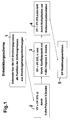
  • Fig.1 is first a record for one to be determined Radiation quantity as a function of the influencing variables from radiation transport calculations with the help of radiation transport simulations created (block 1).
  • Radiation quantity as a function of the influencing variables from radiation transport calculations with the help of radiation transport simulations created (block 1).
  • UV ( O 3, e.g. ) cf 1 + cf 2 * e.g. + cf 3rd * z 2 + cf 4th * z 3rd + cf 5 * O 3 + cf 6 * O 3 * e.g. + cf 7 * O 3rd * z 2 + cf 8th * O 3 * e.g. 3rd + cf 9 * O 3rd 2 + cf 10 * O 3rd 2 * e.g.
  • This reduction factor RF is chosen as the ratio of the UV radiation size in the cloudy sky to the UV radiation size in the cloudless atmosphere with an otherwise identical configuration of the UV influencing variables O3, z, and sza.
  • the dependence of the radiation quantity UV on the total ozone column O3, the terrain height z, the zenith angle sza and the optical thickness of the cloud or of clouds opd can be determined by the combination of the above-described Eqs. (1) to (3).
  • the development steps shown schematically in blocks 2 and 3 are chosen so that an optimal adaptation of the relationship between the radiation quantity UV and the simultaneously acting influences of the total ozone column O3, the terrain height z and the solar zenith angle sza takes place.
  • Eq. (2) By inserting Eq. (2) in Eq. (1) and by multiplying by Eq. (3) the result is the correspondingly adjusted dependence of the radiation quantity UV on O3, z, sza and opd in Eq. (4) below: UV ( O 3, e.g.
  • sza , opd ( y 0 * exp ( y 1 * opd ) + y 2) * (( a 0 + a 1 * sza 1 + a 2 * sza 2 + a 3 * sza 3rd + a 4 * sza 4th + a 5 * sza 5 ) + ( b 0 + b 1* sza 1 + b 2 * sza 2 + b 3 * sza 3rd + b 4 * sza 4th + b 5 * sza 5 ) * e.g.
  • the simultaneous influence of ozone content, ground level, position of the sun and optical thickness of the clouds on ground-level UV radiation is thus according to the invention by a single Method step, namely by calculating the radiation size UV according to Eq. (4) determined.
  • the Radiation variable UV influencing variables or parameters for example from satellite measurements, ground measurements or with Be determined using a forecast model (see block 6).
  • the value of the total ozone column O3 in DU- (Dobson Unit) (block 7), the value of the terrain height z in m (block 8), the value of the solar zenith angle sza in degrees (°) (block 9) and the value of Optical thickness of the cloud or clouds opd (see block 10) for determining near-ground UV radiation according to process steps b 1 to b 3 is introduced into the UV determination process (block 11).
  • This will make erythema more effective UV radiation flux density understood the size which the spectral sensitivity of human skin to redness due to UV exposure in the spectral range from 290 to 400nm considered.
  • the erythema-effective UV radiation flux density results in the unit mW / m 2 if the ozone column 03 in DU, the terrain height z in km, the solar zenith angle sza in degrees ( °) and the optical thickness of the cloud opd is used at the wavelength 0.55 ⁇ m. If the ground is free of snow, Eq. (5) applied; if it is covered with snow, Eq. (6) applied; if it is partially covered in snow, Eq. (7) applied.
  • the UV index is derived from the erythema-effective UV radiation flux density by multiplication by the factor 1 / (25mW / m 2 ), while the sunburn time in minutes is by definition the reciprocal of the erythema-effective UV radiation flux density multiplied by the factor 3500min * (mW / m 2 ).

Landscapes

  • Physics & Mathematics (AREA)
  • General Physics & Mathematics (AREA)
  • Spectroscopy & Molecular Physics (AREA)
  • Photometry And Measurement Of Optical Pulse Characteristics (AREA)
  • Investigating Or Analysing Materials By Optical Means (AREA)
  • Management, Administration, Business Operations System, And Electronic Commerce (AREA)
  • Investigating, Analyzing Materials By Fluorescence Or Luminescence (AREA)
  • Testing Resistance To Weather, Investigating Materials By Mechanical Methods (AREA)

Abstract

Zum Bestimmen bodennaher UV-Strahlung wird mit Hilfe von Strahlungstransportsimulation ein Datensatz erstellt, welcher für eine große Variationsbreite der UV-relevanten Einflußgrößen eine zu bestimmende UV-Strahlungsgröße beinhaltet. Die Abhängigkeit der berechneten UV-Strahlungsgröße UV vom Ozongehalt der Atmosphäre und von der Geländehöhe wird miteinem zweidimensionalen Polynom 3. Grades gemäß Gl. (1) angepaßt. Eine in Polynom-Koeffizienten enthaltene Abhängigkeit der mit Gl.(1) berechneten UV-Strahlungsgröße vom solaren Zenitwinkel wird mit Hilfe eines eindimensionalen Polynoms 5. Grades gemäß Gl.(2) angepaßt. Die Abhängigkeit der UV-Strahlungsgröße von der optischen Dicke der Wolke wird durch Multiplikation mit einem Reduktionsfaktor entsprechend der Funktion (3) angepaßt. Schließlich wird die Anpassung der Abhängigkeit der UV-Strahlungsgröße durch Einsetzen von Gl.(2) in Gl. (1) und Multiplikation mit der Funktion (3) in Form von Gl.(4) erhalten. Mit Hilfe von Gl. (4) kann die bodennahe erythemwirksame UV-Strahlungsflußdichte bei schneefreiem, teilweise oder ganz schneebedecktem Boden für bestimmte isotope UV-Bodenalbedo im Spektralbereich von 290 bis 420nm bestimmt werden. <IMAGE>

Description

Die Erfindung betrifft ein Verfahren zum Bestimmen von bodennaher UV-Strahlung unter Verwendung von Strahlungstransportsimulationen.
Die Abnahme des stratosphärischen Ozons und die dadurch bedingte Zunahme der bodennahen UV-Strahlung wirkt sich direkt und indirekt negativ auf den Menschen aus. Zu den direkten Schädigungen gehören beispielsweise der Hautkrebs, die Schwächung des Immunsystems sowie Augenkrankheiten. Indirekt betroffen ist der Mensch durch Schäden in der Landwirtschaft oder durch Schädigungen der Ökosysteme im Meer, da durch letzteres der Fischfang beeinträchtigt wird. Darüber hinaus können auch verschiedene Materialien durch intensive UV-Strahlung zerstört werden.
Da aus diesen Gründen die Öffentlichkeit sensibilisiert ist, sind nicht nur die Medien, sondern beispielsweise auch die Krankenkassen, die Hersteller von Sonnenschutzprodukten oder die Tourismus-Industrie an täglichen Analysen bzw. Prognosen der UV-Strahlung interessiert.
Bekannte Verfahren zur Bestimmung und Kartierung der UV-Strahlung lassen sich in drei Kategorien einteilen, nämlich Strahlungstransportsimulationen, semi-empirische Verfahren und Verfahren, die sich auf sogenannte 'look-up-tables' stützen.
Strahlungstransportsimulationen, das sind Computermodelle zur numerischen Integration der Strahlungsübertragungsgleichung, werden zur Berechnung der bodennahen UV-Strahlung verwendet. Alle relevanten UV Einflußparameter sind Eingabeparameter für die Strahlungstransportsimulationen.
Nachteilig bei Strahlungstransportsimulationen ist, daß deren Einsatz zur Bestimmung der bodennahen UV-Strahlung lange Rechenzeiten erfordert, so daß eine operationelle Anwendung, insbesondere die flächendeckende Kartierung, nicht möglich ist. Dies ist z.B. der Fall, wenn die UV-Einflußgrößen aus Satellitendaten in räumlich hoher Auflösung vorliegen und somit große Datenmengen schnell verarbeitet werden müssen.
Die semi-empirischen Verfahren werden ebenfalls zur Bestimmung der UV-Strahlung verwendet. Hierbei handelt es sich um die Kombination von Strahlungstransportsimulationenn mit empirischen Formeln. Nachteilig bei dieser Kombination ist, daß der Einsatz der numerischen Modelle ebenfalls zu langen Rechenzeiten führt. Ferner sind semi-empirische Verfahren zum Teil auf bestimmte Gebiete beschränkt oder erfordern Messungen der Einflußgrößen mit bestimmten Instrumenten.
Darüber hinaus werden auch Verfahren eingesetzt, die sich auf die Ergebnisse von Strahlungstransportrechnungen, sogenannte 'look-up-tables', stützen. Die bodennahe UV-Strahlung wird dann durch Anwendung von Interpolationsverfahren bestimmt, welche die aktuelle Konfiguration der UV relevanten Einflußparameter berücksichtigen.
Die Verwendung der look-up-tables erfordert in der Anwendung keine Strahlungstransportrechnungen, jedoch sind weitere Verfahrensschritte, wie Abfragen und Interpolationen, notwendig, um die UV-Strahlung entsprechend der aktuellen Konfiguration der Einflußgrößen zu bestimmen. Derartige Verfahren sind für den operationellen Einsatz nur sehr bedingt geeignet.
Somit ist festzuhalten, daß alle dem Anmelder bekannten Verfahren zur Bestimmung der UV-Strahlung zu aufwendig sind, um aus großen Datenmengen der UV-relevanten Einflußgrößen die bodennahe UV-Strahlung flächendeckend und schnell zur Verfügung zu stellen. Ferner arbeiten die bekannten Verfahren relativ langsam, so daß sie für operationelle und Flexibilität erfordernde Anwendungen nicht oder nur sehr eingeschränkt einsetzbar sind.
Der Erfindung liegt die Aufgabe zugrunde, Verfahren zu schaffen, mit welchen gleichzeitig der Einfluß von Ozon, Sonnenstand, Geländehöhe und optischer Dicke der Wolken auf die UV-Strahlung ermittelt werden kann, um beispielsweise für tägliche Analysen und Vorhersagen eine flächendeckende Information der bodennahen UV-Strahlung in möglichst kurzer Zeit bereitzustellen.
Gemäß der Erfindung ist dies bei einem Verfahren zum Bestimmen von bodennaher UV-Strahlung unter Verwendung von Strahlungstransportsimulationen durch die Verfahrensschritte des Anspruchs 1 erreicht.
Da gemäß der Erfindung gleichzeitig der Einfluß von Ozongehalt, Geländehöhe, Sonnenstand und optischer Dicke der Wölken auf bodennahe UV-Strahlung ermittelt wird, arbeitet das erfindungsgemäße Verfahren so effektiv, daß bodennahe UV-Strahlung in nahezu Echtzeit aus den vorstehend angegebenen UV-relevanten Einflußgrößen ermittelt werden kann. Bei dem erfindungsgemäßen Verfahren ist hierbei nicht vorgeschrieben, woher die Einflußgrößen stammen. Sie können beispielsweise aus Satellitenmessungen, Bodenmessungen oder als Ergebnis prognostischer Modelle vorliegen.
Das erfindungsgemäße Verfahren bietet somit eine breite Anwendungsmöglichkeit, da es sich sowohl für die Analyse von Veränderungen der UV-Strahlung mit historischen Daten als auch für die kurz- und langfristige UV-Prognose eignet. Ferner können mit Hilfe des erfindungsgemäßen Verfahrens verschiedene UV-Produkte, insbesondere Karten der in den Medien und anderen Industriezweigen verwendeten Größen, der UV-Index und die Sonnenbrandzeit erstellt werden.
Somit ist durch die Erfindung aufgrund einer optimalen Anpassung des Zusammenhanges zwischen der UV-Strahlungsgröße und den gleichzeitig wirkenden UV-relevanten Einflußgrößen, wie Ozongehalt, Geländehöhe, Bodenalbedo, solarem Zenitwinkel sowie optischer Dichte der Wolken, ein schnelles, d.h. operationell einsetzbares Verfahren zur Bestimmung der bodennahen UV-Strahlung unter Berücksichtigung aller für die UV-Strahlung wesentlichen Einflußgrößen geschaffen.
Die Vorteile dieses Verfahrens sind folgende:
  • · Zur Ermittlung der UV-Strahlung in Abhängigkeit von Ozongesamtsäule, solarem Zenitwinkel, Geländehöhe und optischer Dicke der Wolken ist im Vergleich zu den eingangs kurz angeführten bekannten Verfahren gemäß der Erfindung ein beinahe in Echtzeit durchzuführendes Verfahren geschaffen, welches sehr schnelle Anwendungen für den operationellen Betrieb ermöglicht. Selbst die weniger aufwendigen, bekannten Verfahren, die auf 'look-up-tables' zugreifen, benötigen weitere zusätzliche Verfahrensschritte, wie beispielsweise im allgemeinen zeitaufwendigere Interpolationen.
  • · Das erfindungsgemäße Verfahren eignet sich prinzipiell auch zur Bestimmung verschiedener UV-Strahlungsgrößen, wenn vorher ein entsprechender Datensatz für diese Strahlungsgröße mit Hilfe von Strahlungstransportrechnungen erstellt wird. Verschiedene Strahlungsgrößen sind beispielsweise die Strahlungsflußdichte im UV-A Spektralbereich von 320 bis 400nm oder die Strahlungsflußdichte im UV-B Spektralbereich von 290 bis 320nm. Beispiele weiterer UV-Strahlungsgrößen sind die für Hautrötung wirksame(erythem-wirksame) UV-Strahlungsflußdichte im gesamten UV-Spektralbereich von 290 bis 400nm, aus der sich auch UV-Index und Sonnenbrandzeit ableiten lassen, oder die für DNA-Schädigung oder für Hautkrebs wirksamen UV-Strahlungsdichten.
  • · Ferner können mit dem erfindungsgemäßen Verfahren auch die in der Öffentlichkeit bekannten und in den Medien und anderen Industriezweigen verwendeten Größen UV-Index und Sonnenbrandzeit ermittelt werden.
  • · Zur Durchführung des erfindungsgemäßen Verfahrens wird auch nicht vorgeschrieben, mit welchem Meßinstrument oder Prognosemodell die benötigten UV-relevanten Einflußgrößen bereitzustellen sind. Damit erschließt das erfindungsgemäße Verfahren ein breites Anwendungspotential von der Rekonstruktion der UV-Bedingungen mit historischen Daten über die tägliche Analyse und Prognose bis hin zur langfristigen Prognose über beispielsweise 10 Jahre und mehr.
  • · Insbesondere kann das erfindungsgemäße Verfahren zur Kartierung der UV-Strahlung für große Gebiete, wie beispielsweise für Gesamteuropa oder für globale Kartierungen eingesetzt werden, da das Verfahren eine schnelle Verarbeitung großer Datenmengen ermöglicht, die dann entstehen, wenn die UV-Einflußgrößen in räumlich hoher Auflösung vorliegen.
  • Weiterhin kann mittels des erfindungsgemäßen Verfahrens die aktuelle Intensität der UV-Strahlung oder daraus ableitbarer Größen, wie UV-Index, Sonnenbrandzeit oder auch zeitlich integrierte UV-Dosiswerte an bestimmten, fixierten Orten oder an dem (den) Aufenthaltsort(en) einer einzelnen Person bzw. einzelner Personen ermittelt werden, wenn für diesen Ort bzw. diese Orte die wichtigsten aktuellen UV-relevanten Einflußgrößen vorliegen. Auch können in Einrichtungen, wie beispielsweise Empfangsgeräten mit integrierten Prozessoren die erfindungsgemäßen Verfahren realisiert werden. Dies schließt dann auch die Nutzung mobiler Empfangsgeräte oder moderner Übertragungs- und Navigationstechnologien, wie beispielsweise GPS (Global Positioning System) ein.
    Nachstehend wird die Erfindung anhand der Zeichnungen näher erläutert. Es zeigen:
    Fig. 1
    anhand eines Blockdiagramms in Form eines Entwicklungsschemas Teilschritte zur Entwicklung des erfindungsgemäßen Verfahrens und
    Fig.2
    ein Anwendungsschema des erfindungsgemäßen Verfahrens.
    Wie dem in Fig.1 dargestellten Entwicklungsschema zu entnehmen ist, wird zuerst ein Datensatz für eine zu bestimmende Strahlungsgröße als Funktion der Einflußgrößen aus Strahlungstransportrechnungen mit Hilfe von Strahlungstransportsimulationen erstellt (Block 1). Hierbei ist der Datensatz so ausgelegt, daß er für eine große Variationsbreite der UV-relevanten Einflußgrößen eine zu bestimmende UV-Strahlungsgröße beeinhaltet.
    Da die zu berechnende UV-Strahlungsgröße vom Ozongehalt der Atmosphäre und von der Geländehöhe abhängt, wird diese Abhängigkeit durch ein zweidimensionales Polynom 3. Grades gemäß der nachstehenden Gl. (1) angepaßt (Block 2). UV(O3,z) = cf1 + cf2 * z + cf3 * z 2 + cf4 * z 3 + cf 5 * O3 + cf6 * O3 * z + cf7 * O3 * z 2 + cf8 * O3 * z 3 + cf9 * O32 + cf10 * O32 * z + cf11 * O32 * z 2 + cf12 * O32 * z 3 + cf13 * O33 + cf14 * O33 * z + cf15 * O33 * z 2 + cf16 * O33 * z 3
    Hierbei ist in der Gl. (1) mit O3 die Ozongesamtsäule in DU (Dopson Unit) und mit z die Geländehöhe in m bezeichnet. Darüber hinaus sind mit cfn mit n= 1 bis 16 Polynom-Koeffizienten bezeichnet (siehe Block 2).
    Da die in den Polynom-Koeffizienten cfn enthaltene Abhängigkeit der mittels der Gl.(1) berechneten UV-Strahlungsgröße vom solaren Zenitwinkel sza abhängt, wird diese Abhängigkeit mit Hilfe eines eindimensionalen Polynoms 5. Grades (Block 3) gemäß der nachstehenden Gl. (2) (Block 3) angepaßt: cfn(sza) = cf0' + cf1' * sza 1 + cf2' * sza 2 + cf3' * sza 3 + cf4' * sza 4 + cf5' * sza 5
    Da die UV-Strahlungsgröße auch noch von der optischen Dicke der Wolken opd abhängt, wird diese Abhängigkeit durch Multiplikation mit einem Reduktionsfaktor RF berücksichtigt. Dieser Reduktionsfaktor RF ist gewählt als das Verhältnis der UV-Strahlungsgröße bei bewölktem Himmel zu der UV-Strahlungsgröße der wolkenlosen Atmosphäre bei einer sonst gleichen Konfiguration der UV-Einflußgrößen O3, z, und sza. Der Reduktionsfaktor RF selbst ist hierbei von der optischen Dicke der Wolke bzw. Wolken abhängig (siehe Block 4); diese Abhängigkeit wird durch die nachstehend in Gl. (3) wiedergegebene Funktion angepaßt: RF(opd) = y0 * exp(y1 * opd) + y2
    Die Abhängigkeit der Strahlungsgröße UV von der Ozongesamtsäule O3, der Geländehöhe z, dem Zenitwinkel sza und der optischen Dicke der Wolke bzw. von Wolken opd läßt sich durch die Kombination der vorstehend wiedergegebenen Gl'en (1) bis (3) erfassen. Die in den Blöcken 2 und 3 schematisch wiedergegebenen Entwicklungsschritte sind so gewählt, daß dadurch eine optimale Anpassung des Zusammenhangs zwischen der Strahlungsgröße UV und den gleichzeitig wirkenden Einflüssen der Ozon-Gesamtsäule O3, der Geländehöhe z und des solaren Zenitwinkels sza erfolgt. Durch Einsetzen von Gl. (2) in Gl. (1) und durch eine Multiplikation mit Gl. (3) ergibt sich dann die in der nachstehend wiedergegebenen Gl.(4) entsprechend angepaßte Abhängigkeit der Strahlungsgröße UV von O3, z, sza und opd: UV(O3,z,sza,opd) = (y0 * exp(y1 * opd) + y2) * ((a0 + a1 * sza 1 + a2 * sza 2 + a3 * sza 3 + a4 * sza 4 + a5 * sza 5) + (b0 + b1* sza 1 + b2 * sza 2 + b3 * sza 3 + b4 * sza 4 + b5 * sza 5) * z + (c0 + c1 * sza 1 + c2 * sza 2 + c3 * sza 3 + c4 * sza 4 + c5 * sza 5) * z 2 + (d0 + d1 * sza 1 + d2 * sza 2 + d3 * sza 3 + d4 * sza 4 + d5 * sza 5) * z 3 + (e0 + e1 * sza 1 + e2 * sza 2 + e3 * sza 3 + e4 * sza 4 + e5 * sza 5) * O3 + (f0 + f1 * sza 1 + f2 * sza 2 + f3 * sza 3 + f4 * sza 4 + f5 * sza 5) * O3 * z + (g0 + g1 * sza 1 + g2 * sza 2 + g3 * sza 3 + g4 * sza 4 + g5 * sza 5) * O3 * z 2 + (h0 + h1 * sza 1 + h2 * sza 2 + h3 * sza 3 + h4 * sza 4 + h5 * sza 5) * O3 * z 3 + (i0 + i1 * sza 1 + i2 * sza 2 + i3 * sza 3 + i4 * sza 4 + i5 * sza 5) * O32 + (j0 + j1 * sza 1 + j2 * sza 2 + j3 * sza 3 + j4 * sza 4 + j5 * sza 5) * O32 * z + (k0 + k1 * sza 1 + k2 * sza 2 + k3 * sza 3 + k4 * sza 4 + k5 * sza 5) * O32* z 2 + (l0 + l1 * sza 1 + l2 * sza 2 + l3 * sza 3 + l4 * sza 4 + l5 * sza 5) * O32 * z 3 + (m0 + m1 * sza 1 + m2 * sza 2 + m3 * sza 3 + m4 * sza 4 + m5 * sza 5) * O33 + (n0 + n1 * sza 1 + n2 * sza 2 + n3 * sza 3 + n4 * sza 4 + n5 * sza 5) * O33 * z + (p0 + p1 * sza 1 + p2 * sza 2 + p3 * sza 3 + p4 * sza 4 + p5 * sza 5) * O33 * z 2 + (q0 + q1 * sza 1 + q2 * sza 2 + q3 * sza 3 + q4 * sza 4 + q5 * sza 5) * O33 * z 3)
    Mit dem in Gl. (4) zusammengefaßten Verfahren zur Bestimmung der Strahlungsgröße UV lassen sich, wie eingangs bereits erwähnt, beinahe in Echtzeit bodennahe UV-Strahlungsgrößen ermitteln (Block 4). Hierbei sind die Koeffizienten in Gl. (4) als Funktion der Bodenalbedo und der optischen Dicke eines Aerosols angegeben, wie nachstehend anhand von speziellen Ausführungsbeispielen im einzelnen erläutert wird.
    Der gleichzeitige Einfluß von Ozongehalt, Geländehöhe, Sonnenstand und optischer Dicke der Wolken auf bodennahe UV-Strahlung wird somit gemäß der Erfindung durch einen einzigen Verfahrensschritt, nämlich durch Berechnen der Strahlungsgröße UV gemäß Gl. (4) ermittelt.
    Bei dem als Blockdiagramm in Fig.2 wiedergegebenen Anwendungsschema können, wie eingangs bereits erwähnt, die die Strahlungsgröße UV beeinflussenden Größen bzw. Parameter beispielsweise aus Satellitenmessungen, Bodenmessungen oder mit Hilfe eines Prognosemodells ermittelt werden (siehe Block 6).
    Ferner werden der Wert der Ozongesamtsäule O3 in DU-(Dobson Unit) (Block 7), der Wert der Geländehöhe z in m (Block 8), der Wert des solaren Zenitwinkels sza in Grad (°)(Block 9) und der Wert der optischen Dicke der Wolke bzw. Wolken opd (siehe Block 10) zum Bestimmen von bodennaher UV-Strahlung gemäß den Verfahrensschritten b1 bis b3 in das UV-Bestimmungsverfahren (Block 11) eingebracht.Daraus wird gemäß Gl. (4) letztendlich die UV-Strahlungsgröße in Abhängigkeit von den Werten gemäß den Blöcken 7 bis 10 bestimmt (Block 12).
    Im folgenden werden drei Ausführungsbeispiele des erfindungsgemäßen Verfahrens zur Bestimmung der bodennahen erythemwirksamen UV-Strahlungsflußdichte beschrieben, nämlich ein Verfahren für schneefreien Boden, ein Verfahren für schneebedeckten Boden und ein Verfahren für teilweise schneebedeckten Boden, da große Unterschiede der UV-Bodenalbedo im wesentlichen zwischen schneebedecktem, teilweise schneebedecktem und schneefreiem Boden bestehen. Hierbei wird unter erythemwirksamer UV-Strahlungsflußdichte die Größe verstanden, welche die spektrale Empfindlichkeit der menschlichen Haut für Rötung durch UV-Einwirkung im Spektralbereich von 290 bis 400nm berücksichtigt.
    Für den schneefreien Boden wird eine im Spektralbereich von 290 bis 400nm wellenlängenunabhängige isotrope UV-Bodenalbedo mit einem Wert von 0,03 angenommen, während für den schneebedeckten Boden eine UV-Bodenalbedo von 0,85 und für den teilweise schneebedeckten Boden ein UV-Bodenalbedo von 0,50 angenommen wird. Die optische Dicke des Aerosols im UV-Spektralbereich wird in diesem Beispiel als konstant angenommen, und zwar mit einem Wert, der einer optischen Dicke von 0,2 bei der Wellenlänge 0,55 µm entspricht. Ferner wird auch die Abnahme der optischen Dicke des Aerosols mit der Geländehöhe berücksichtigt.
    Für schneefreien Boden wird die erythemwirksame UV-Strahlungsflußdichte gemäß Gl. (5) ermittelt mit: UV erythem(O3, z, sza, opd) = (0.794591 * e-0.0509768 * opd + 0.140257) * (510.20418 + 0.56354260 * sza - 0.23091040 * sza 2 + 0.00028181759 * sza 3 + 3.8327128 * 10-5 * sza 4 - (2.3897392 * 10-7) * sza 5 + (13.951441 - 0.11194501 * sza + 0.0031988493 * sza 2- 0.00020872375 * sza 3 + 3.0125029 * 10-6 * sza 4 - 1.2745954 * 10-8 * sza 5) * (z * 4) + (-0.49736838 + 0.0049108703 * sza - 0.00017665002 * sza 2 + 9.2427409 * 10-6 * sza 3 - 1.2980119 * 10-7 * sza 4 + 5.5284446 * 10-10* sza 5) * (z * 4)2 + (0.012506738 - 0.00012638193 * sza + 47448107 * 10-6 * sza 2 - 2.3648445 * 10-7 * sza 3 + 3.2550523 * 10-9 * sza 4 - 1.3671391 * 10-11 * sza 5) * (z * 4)3 + (-57.957108 + 0.018697043 * sza + 0.019653410 * sza 2 + 0.00014143825 * sza 3 - 6.2112118 * 10-6 * sza 4 + 3.4130968 * 10-8 * sza 5) * ((O3 - 180.0)/20.) + (-1.6809458 + 0.017892802 * sza - 0.00069857920 * sza 2+ 3.3101588 * 10-5 * sza 3 - 44775136 * 10-7 * sza 4 + 1.8583037 * 10-9 * sza 5) * ((O3 - 180.0)/20.) * (z * 4) + (0.059711761 - 0.00071318594 * sza + 2.9968515 * 10-5 * sza 2 - 1.3470159 * 10-6 * sza 3 + 1.8319632 * 10-8 * sza 4 - 7.7609877 * 10-11 * sza 5) * ((O3 - 180.0)/20.) * (z * 4)2 + (-0.0015088040 + 1.7944364 * 10-5 * sza - 7.6195930 * 10-7 * sza 2 + 3.3543192 * 10-8 * sza 3 - 44904497 * 10-10 * sza 4 + 1.8755097 * 10-12 * sza 5) * ((O3 - 1800)/20.) * (z * 4)3 + (3.7065718 - 0.0049669960 * sza - 0.00093686582 * sza 2 - 1.6524994 * 10-5 * sza 3 + 46530307 * 10-7 * sza 4 - 2.3972347 * 10-9 * sza 5) * ((O3 - 180.0)/20.)2 + (0.10864932 - 0.0012787741*sza + 5.4793034 * 10-5 * sza 2 - 2.3546769 * 10-6 * sza 3 + 3.0805197 * 10-8 * sza 4 - 1.2562536 * 10-10 * sza 5) * ((O3 - 180.0)/20.)2 * (z * 4) + (-0.0038758366 + 49905607 * 10-5 * sza - 2.2291359 * 10-6 * sza 2 + 9.3982087 * 10-8 * sza 3 - 1.2492823 * 10-9 * sza 4 + 5.2320434 * 10-12* sza 5) * ((O3 - 180.0)/20.)2 * (z * 4)2 + (9.8235179 * 10-5 - 1.2583546 * 10-6 * sza + 5.6382820 * 10-8 * sza 2 - 2.3321797 * 10-9 * sza 3 + 3.0509427 * 10-11 * sza 4 - 1.2586983 * 10-13 * sza 5) * ((O3-180.0)/20.)2 * (z * 4)3 + (-0.093949447 + 0.00018223477 * sza + 1.9002251 * 10-5 * sza 2 + 5.2897951 * 10-7 * sza 3 - 1.2790851 * 10-8 * sza 4 + 6.3891664 * 10-11 * sza 5) * ((O3 - 180.0)/20.)3 + (-0.0027640020 + 3.4143271 * 10-5 * sza - 1.5277506 * 10-6 * sza 2 + 6.2890250 * 10-8 * sza 3 - 8.0910603 * 10-10 * sza 4 + 3.2684995 * 10-12 * sza 5) * ((O3 - 180.0)/20.)3 * (z * 4) + (9,8858332 * 10-5 - 1.3109935 * 10-6 * sza + 6.0400422 * 10-8 * sza 2 - 2.4814975 * 10-9 * sza 3 + 3.2634138 * 10-11 * sza 4 - 1.3586470 * 10-13 * sza 5) * ((O3 - 180.0)/20.)3 * (z * 4)2 +(-2.5083741*10-6+3.2881673*10-8*sza - 1.5141186 * 10-9 * sza 2 + 6.1260233 * 10-11 * sza 3 - 7.9344363 * 10-13 * sza 4 + 3.2536086 * 10-15 * sza 5) * ((O3-180.0)/20.)3 * (z * 4)3))
    Für schneebedeckten Boden gilt analog gemäß Gl. (6) : UVerythem(O3, z, sza, opd) = (0.801062 * e-0.0199109 * opd + 0.21295) * (744.82837 + 0.54654448 * sza - 0.31517295 * sza 2 - 7.9710675 * 10-5 * sza 3 + 6.0228237 * 10-5 * sza 4 - 3.6160453 * 10-7 * sza 5 + (13.980316 - 0.17230379 * sza + 0.0076620868 * sza 2 - 0.00030858998 * sza 3 + 3.8950397 * 10-6 * sza 4 - 1.5427345 * 10-8 * sza 5) * (z * 4) + (-0.79486218 + 0.0087952125 * sza - 0.00035120114 * sza 2 + 1.6211036 * 10-5 * sza 3 - 2.1875327 * 10-7 * sza 4 + 9.1146350 * 10-10 * sza 5) * (z * 4)2 + (0.020519671 - 0.00021938183 * sza + 8.5986248 * 10-6 * sza 2 - 4.0589149 * 10-7 * sza 3 + 5.4989948 * 10-9 * sza 4 - 2.2914581 * 10-11 * sza 5) * (z * 4)3 + (-86.435378 + 0.049973262 * sza + 0.027617279 * sza 2 + 0.00024504829 * sza 3 - 9.5111446 * 10-6 * sza 4 + 5.1430311 * 10-8 * sza 5) * ((O3 - 180.0)/20.) + (-1.8163896 + 0.026145486 * sza - 0.0012485826 * sza 2 + 4.6735567 * 10-5 * sza 3 - 5.8080747 * 10-7 sza 4 + 2.3047928 * 10-9 * sza 5) * ((O3 - 180.0)/20.) * (z * 4) + (0.10499966 - 0.0012238824 * sza + 5.0835136 * 10-5 * sza 2 - 2.2942330 * 10-6 * sza 3 + 3.1032027 * 10-8 * sza 4 - 1.3042199 * 10-10 * sza 5) * ((O3 - 180.0)/20.) * (z * 4)2 + (-0.0027097231 + 2.9538523 * 10-5 * sza - 1.1838537 * 10-6 * sza 2 + 5.5838228 * 10-8 * sza 3 - 7.6190621 * 10-10 * sza 4 + 3.2046338 * 10-12 * sza 5) * ((O3-180.0)/20.) * (z * 4)3 + (5.5840202 - 0.0082260536 * sza - 0.0013571859 * sza 2 - 2.5747269 * 10-5 * sza 3 + 7.0360953 * 10-7 * sza 4 - 3.5983927 * 10-9 * sza 5) * ((O3-180.0)/20)2 + (0.12075276 - 0.0018100274 * sza + 8.8928937 * 10-5 * sza 2 - 3.2339098 * 10-6 * sza 3 + 3.9615536 * 10-8 * sza 4 - 1.5572669 *10-10 * sza 5) * ((O3-180.0)/20.)2 * (z * 4) + (-0.0070853672 + 8.2435257 * 10-5 * sza - 3.4955323 * 10-6 * sza 2 + 1.5646155 * 10-7 * sza 3 - 2.1053642 * 10-9 * sza 4 + 8.8150285 * 10-12 * sza 5) * ((O3 - 180.0)/20.)2 * (z * 4)2 + (0.00018281095 - 1.9437734 * 10-6 * sza + 7.9084037 * 10-8 * sza 2 - 3.7554387 * 10-9 * sza 3 + 5.1149904 * 10-11 * sza 4 - 2.1451019 * 10-13 * sza 5) * ((O3 - 180.0)/20.)2 * (z *4 )3 + (-0.14229575 + 0.00028701410 * sza + 2.8110798 * 10-5 * sza 2 + 8.0507080 * 10-7 * sza 3 - 1.9263427 * 10-8 * sza 4 + 9.5823389 * 10-11 * sza 5) * ((O3 - 180.0)/20.)3 + (-0.0031172065 + 4.7864190 * 10-5 * sza - 2.3915873 * 10-6 * sza 2 + 8.5552287 * 10-8 * sza 3 - 1.0391554 * 10-9 * sza 4 + 4.0618929 * 10-12 * sza 5) * ((O3 - 180.0)/20.)3 * (z * 4) + (0.00018430997 - 2.1347198 * 10-6 * sza + 9.1993333 * 10-8 * sza 2 - 4.1010649 * 10-9 * sza 3 + 5.5004210 * 10-11 * sza 4 - 2.2971660 * 10-13 * sza 5) * ((O3 - 180.0)/20.)3 * (z * 4)2 + (-4.7513116 * 10-6 + 4.9163628 * 10-8 * sza - 2.0270926 * 10-9 * sza 2 + 9.7263510 * 10-11 * sza 3 - 1.3246033 * 10-12 * sza 4 + 5.5457569 * 10-15 * sza 5) * ((O3 - 180.0)/20.)3 * (z * 4)3)
    Für teilweise schneebedeckten Boden gilt analog gemäß Gl. (7): UV erythem(O3, z, sza, opd) = (0.790367 * e - 0.0372151* opd + 0.167212) * (619.031 + 1.128906 * sza - 0.303467 * sza 2 + 0.0008506775 * sza 3 + 4.190207 * 10-5 * sza 4 - 2.728775 * 10-7 * sza 5) + (14.8594 - 0.2248535 * sza + 0.00959015 * sza 2 - 0.0003596544 * sza 3 + 4.563481 * 10-6 * sza 4 - 1.861190 * 10-8 * sza 5) * (z * 4.) + (-0.660065 + 0.01091385 * sza - 0.000475883 * sza 2 + 1.750886 * 10-5 * sza 3 - 2.255547 * 10-7 * sza 4 + 9.363248 * 10-10 * sza 5) * (z * 4.)2 + (0.0165081 - 0.0002747774 * sza + 1.20550 * 10-5 * sza 2 - 4.413305 * 10-7 * sza 3 + 5.620677 * 10-9 * sza 4 - 2.317790 * 10-11 * sza 5) * (z * 4.)3 + (-71.6113 + 0.05224609 * sza + 0.0227356 * sza 2 + 0.0002121925 * sza 3 - 8.113682 * 10-6 * sza 4 + 4.385947 * 10-8 * sza 5) * ((O3 - 180.0)/20.) + (-1.87738 + 0.03576660 * sza - 0.00167751 * sza 2 + 5.669892 * 10-5 * sza 3 - 6.963965 * 10-7 * sza 4 + 2.811248 * 10-9 * sza 5) * ((O3 - 180.0)/20.) * (z * 4.) + (0.0840569 - 0,001587868 * sza + 7.24792 * 10-5 * sza 2 - 2.541579 * 10-6 * sza 3 + 3.222522 * 10-8 * sza 4 - 1.338094 * 10-10 * sza 5) * ((O3 - 180.0)/20.) * (z * 4.)2 + (-0.00210190 + 3.857911 * 10-5 * sza - 1.76206 * 10-6 * sza 2 + 6.172922 * 10-8 * sza 3 - 7.794370 * 10-10 * sza 4 + 3.221423 * 10-12 * sza 5) * ((O3 - 180.0)/20.) * (z * 4.)3 + (4.62158 - 0.01095581 * sza - 0.000907898 * sza 2 - 2.634525 * 10-5 * sza 3 + 6.398186 * 10-7 * sza 4 - 3.215973 * 10-9 * sza 5) * ((O3 - 180.0)/20.)2 + (0.123844 - 0.002576828 * sza + 0.000124454 * sza 2 - 4.045665 * 10-6 * sza 3 + 4.882168 * 10-8 * sza 4 - 1.944613 * 10-10 * sza 5) * ((O3 - 180.0)/20.)2 * (z * 4.) + (-0.00560665 + 0.0001119077 * sza - 5.23776 * 10-6 * sza 2 + 1.783483 * 10-7 * sza 3 - 2.232355 * 10-9 * sza 4 + 9.185541 * 10-12 * sza 5) * ((O3 - 180.0)/20.)2 * (z * 4.)2 + (0.000140205 - 2.695248 * 10-6 * sza + 1.24739 * 10-7 * sza 2 - 4.273716 * 10-9 * sza 3 + 5.329071 * 10-11 * sza 4 - 2.189360 * 10-13 * sza 5) * ((O3 - 180.0)/20.)2 * (z * 4.)3 + (-0.117653 + 0.0003852844 * sza + 1.56164 * 10-5 * sza 2 + 8.493662 * 10-7 * sza 3 - 1.793524 * 10-8 * sza 4 + 8.728307 * 10-11 * sza 5) * ((O3-180.0)/20.)3 + (-0.00318766 + 6.940961 * 10-5 * sza - 3.39840 * 10-6* sza 2 + 1.085282 * 10-7 * sza 3 - 1.292847 * 10-9 * sza 4 + 5.121237 * 10-12 * sza 5) * ((O3-180.0)/20.)3 * (z *4.) + (0.000145316 - 3.011897 * 10-6 * sza + 1.42260 * 10-7* sza 2 - 4.770300 * 10-9 * sza 3 + 5.911716 * 10-11 * sza 4 - 2.428058 * 10-13 * sza 5) * ((O3 - 180.0)/20.)3 * (z * 4.)2 + (-3.63658 * 10-6 + 7.200288 * 10-8 * sza - 3.37786 * 10-9 * sza 2 + 1.134879 * 10-10 * sza 3 - 1.409095 * 10-12 * sza 4 + 5.748874 * 10-15 * sza 5) * ((O3 - 180.0)/20.)3 * (z * 4.)3)
    Bei den Ausführungsbeispielen gemäß Gl.'en (5) und (6) ergibt sich die erythemwirksame UV-Strahlungsflußdichte in der Einheit mW/m2, wenn die Ozonsäule 03 in DU, die Geländehöhe z in km, der solare Zenitwinkel sza in Grad (°) und die optische Dicke der Wolke opd bei der Wellenlänge 0,55 µm eingesetzt wird. Ist der Boden schneefrei, wird Gl. (5) angewendet; ist er schneebedeckt, wird Gl. (6) angewendet; ist er teilweise schneebedeckt, wird Gl. (7) angewendet.
    Der UV-Index wird definitionsgemäß aus der erythemwirksamen UV-Strahlungsflußdichte durch Multiplikation mit dem Faktor 1/(25mW/m2) abgeleitet, während die Sonnenbrandzeit in Minuten definitionsgemäß der Kehrwert der erythemwirksamen UV-Strahlungsflußdichte, multipliziert mit dem Faktor 3500min* (mW/m2) ist.

    Claims (9)

    1. Verfahren zum Bestimmen von bodennaher UV-Strahlung unter Verwendung von Strahlungstransportsimulationen, dadurch gekennzeichnet, daß
      a) mit Hilfe der Strahlungstransportsimulation ein Datensatz erstellt wird, welcher für eine große Variationsbreite der UV-relevanten Einflußgrößen eine zu bestimmende UV-Strahlungsgröße beinhaltet,
      b1)die Abhängigkeit der berechneten UV-Strahlungsgröße UV vom Ozongehalt der Atmosphäre und von der Geländehöhe mit einem zweidimensionalen Polynom 3. Grades gemäß Gl.(1) angepaßt wird: UV(O3,z)= cf1 + cf2 * z + cf3 * z 2 + cf4 * z 3 + cf5 * O3 + cf6 * O3 * z + cf7 * O3 * z 2 + cf8 * O3 * z 3 + cf9 * O32 + cf10 * O32 * z + cf11 * O32 * z 2 + cf12 * O32 * z 3 + cf13 * O33 + cf14 * O33 * z + cf15 * O33 * z 2 + cf16 * O33 * z 3 wobei mit O3 die Ozongesamtsäule in DU (Dobson Units), mit z die Geländehöhe in m, und mit cfn (n=1 bis 16) Polynom-Koeffizienten bezeichnet sind,
      b2) die in den Polynom-Koeffizienten cfn enthaltene Abhängigkeit der mit Gl. (1) berechneten UV-Strahlungsgröße vom solaren Zenitwinkel sza mit Hilfe eines eindimensionalen Polynoms 5. Grades gemäß Gl. (2) angepaßt wird: cfn(sza) = cf0' + cf1' * sza 1 + cf2' * sza 2 + cf3' * sza 3 + cf4' * sza 4 + cf 5' * sza 5
      b3)die Abhängigkeit der UV-Strahlungsgröße von der optischen Dicke opd der Wolke durch Multiplikation mit einem Reduktionsfaktor RF, welcher als das Verhältnis der UV-Strahlungsgröße bei bewölktem Himmel zu der UV-Strahlungsgröße der wolkenlosen Atmosphäre bei sonst gleicher Konfiguration der UV-Einflußgrößen 03, z und sza definiert ist, entsprechend der Funktion (3) angepaßt wird RF(opd) = y0 * exp(y1 * opd) + y2
      c) schließlich die Anpassung der Abhängigkeit der UV-Strahlungsgröße von den Größen O3, z, sza und opd durch Einsetzen von Gl. (2) in Gl. (1) und Multiplikation mit der Funktion (3) in Form von Gl. (4) erhalten wird: UV(O3, z, sza, opd) = (y0*exp(y1*opd)+y2)* ((a0+a1*sza 1 +a2*sza 2+a3*sza 3+a4*sza 4+a5*sza 5) +(b0+b1*sza 1+b2*sza 2+b3*sza 3+b4*sza 4+b5*sza 5)*z +(c0+c1*sza 1+c2*sza 2 +c3*sza 3 +c4*sza 4+c5*sza 5)*z 2 +(d0+d1*sza 1+d2*sza 2+d3*sza 3+d4*sza 4+d5*sza 5)*z 3 +(e0+e1*sza 1+e2*sza 2+e3*sza 3+e4*sza 4+e5*sza 5)*O3 +(f0+f1*sza 1+f2*sza 2+f3*sza 3+f4*sza 4+f5*sza 5)*O3*z +(g0+g1*sza 1+g2*sza 2+g3*sza 3+g4*sza 4+g5*sza 5)*O3*z 2 +(h0+h1*sza 1+h2*sza 2+h3*sza 3+h4*sza 4+h5*sza 5)*O3*z 3 +(i0+i1*sza 1+i2*sza 2+i3*sza 3+i4*sza 4+i5*sza 5)*O32 +(j0+j1*sza 1+j2*sza 2+j3*sza 3+j4*sza 4+j5*sza 5)*O32*z +(k0 +k1*sza 1+k2*sza 2+k3*sza 3+k4*sza 4+k5*sza 5)*O32*z 2 +(l0+l1*sza 1+l2*sza 2+l3*sza 3+l4*sza 4+l5*sza 5)*O32*z 3 +(m0+m1*sza 1+m2*sza 2+m3*sza 3+m4*sza 4+m5*sza 5)*O33 +(n0+n1*sza 1+n2*sza 2+n3*sza 3+n4*sza 4+n5*sza 5)*O33*z +(p0+p1*sza 1+p2*sza 2+p3*sza 3+p4*sza 4+p5*sza 5)*O33*z 2 +(q0+q1*sza 1+q2*sza 2+q3*sza 3+q4*sza 4+q5*sza 5)*O33*z 3)
    2. Verfahren zum Bestimmen von bodennaher erythemwirksamen UV-Strahlungsflußdichte mit Hilfe von Gl. (4) in Anspruch 1 bei schneefreiem Boden für eine im Spektralbereich von 290 bis 400nm wellenlängenunabhängige, isotope UV-Bodenalbedo mit einem Wert von 0,03 gemäß Gl. (5) : UV erythem(O3, z, sza, opd) = (0.794591*e-0.0509768* opd +0.140257)* (510.20418+0.56354260*sza-0.23091040*sza 2+0.00028181759*sza 3+3.8327128* 10-5*sza 4 -(2.3897392*10-7)*sza 5 +(13.951441-0.11194501*sza +0.0031988493 *sza 2-0.00020872375 *sza 3+ 3.0125029*10-6*sza 4-1.2745954*10-8*sza 5)*(z*4) +(-0.49736838+0.0049108703*sza-0.00017665002*sza 2+9.2427409*10-6* sza 3-1.2980119*10-7*sza 4+5.5284446*10-10*sza 5)*(z*4)2 +(0.012506738 - 0.00012638193*sza+47448107*10-6*sza 2-2.3648445 *10-7* sza 3+3.2550523*10-9*sza 4-1.3671391*10-11*sza 5)*(z*4)3 +(-57.957108+0.018697043*sza+0.019653410*sza 2+0.00014143825*sza 3- 6.2112118*10-6*sza 4+3.4130968*10-8*sza 5)*((O3-180.0)/20.) +(-1.6809458+0.017892802*sza-0.00069857920*sza 2+3.3101588*10-5*sza 3 44775136*10-7*sza 4+1,8583037*10-9*sza 5)*((O3-180.0)/20.)*(z*4) +(0.059711761 - 0.00071318594*sza+2.9968515*10-5*sza 2-1.3470159*10-6* sza 3+1.8319632*10-8*sza 4-7.7609877*10-11*sza 5)*((O3-180.0)/20.)*(z*4)2 +(-0.0015088040+1.7944364*10-5*sza-7.6195930*10-7*sza 2+3.3543192*10-8* sza 3-44904497*10-10*sza 4+1.8755097*10-12*sza 5)((O3-180.0)/20.)*(z*4)3 +(3.7065718-0.0049669960 *sza-0.00093686582*sza 2-1.6524994*10-5*sza 3+ 46530307*10-7*sza 4-2.3972347*10-9*sza 5)*((O3-180.0)/20.)2 +(0.10864932 - 0.0012787741 *sza+5.4793034*10-5*sza 2-2.3546769 *10-6* sza 3+3.0805197*10-8*sza 4-1.2562536*10-10*sza 5)*((O3-180.0)/20.)2*(z*4) +(-0.0038758366+49905607*10-5*sza-2.2291359*10-6*sza 2+9.3982087*10-8* sza 3-1.2492823*10-9*sza 4+5.2320434*10-12*sza 5)*((O3-180.0)/20.)2*(z*4)2 +(9.8235179*10-5-1.2583546*10-6*sza+5.6382820*10-8*sza 2-2.3321797*10-9* sza 3+3.0509427*10-11*sza 4-1.2586983*10-13*sza 5)*((O3-180.0)/20.)2*(z*4)3 +(-0.093949447+0.00018223477*sza+1.9002251*10-5*sza 2+5.2897951*10-7* sza 3-1.2790851*10-8*sza 4+6.3891664*10-11*sza 5)*((O3-180.0)/20.)3 +(-0.0027640020+3.4143271*10-5*sza-1.5277506*10-6*sza 2+6.2890250*10-8* sza 3-8.0910603*10-10*sza 4+3.2684995*10-12*sza 5)*((O3-180.0)/20.)3*(z*4) +(9.8858332*10-5-1.3109935*10-6*sza+6.0400422*10-8*sza 2-2.4814975*10-9* sza 3 + 3.2634138*10-11*sza 4 - 1.3586470*10-13*sza 5)*((O3 - 180.0)/20.)3*(z*4)2 + (-2.5083741 * 10-6 + 3.2881673 * 10-8 * sza - 1.5141186 * 10-9 * sza 2 + 6.1260233 * 10-11 * sza 3 - 7.9344363 * 10-13 * sza 4 +3.2536086 * 10-15* sza 5) * ((O3 - 180.0)/20.)3 * (z * 4)3))
    3. Verfahren zum Bestimmen von bodennaher erythemwirksamen UV-Strahlungsflußdichte mit Hilfe von Gl. (4) in Anspruch 1 bei schneebecktem Boden für eine im Spektralbereich von 290 bis 400nm wellenlängenunabhängige, isotope UV-Bodenalbedo mit einem Wert von 0,85 gemäß Gl. (6): UVerythem(O3,z,sza,opd) = (0.801062*e-0.0199109* opd +0.21295)* (744.82837+0.54654448*sza-0.31517295*sza 2-7.9710675*10-5*sza 3+6.0228237* 10-5*sza 4-3.6160453*10-7*sza 5 +(13.980316-0.17230379*sza+0.0076620868*sza 2-0.00030858998*sza 3+ 3.8950397*10-6*sza 4-1.5427345 *10-8*sza 5)*(z*4) +(-0.79486218 +0.0087952125*sza-0.00035120114 *sza 2+1.6211036 *10-5* sza 3 -2.1875327 *10-7*sza 4 +9.1146350*10-10*sza 5)*(z*4)2 +(0.020519671-0.00021938183*sza+8.5986248*10-6*sza 2-4.0589149*10-7* sza 3 + 5.4989948 * 10-9 * sza 4 - 2.2914581 * 10-11 * sza 5) * (z * 4)3 +(-86.435378+0.049973262*sza+0.027617279*sza 2+0.00024504829*sza 3-9.5111446 *10-6*sza 4+5.1430311*10-8*sza 5)*((O3-180.0)/20.) +(-1.8163896+0.026145486*sza-0.0012485826*sza 2+4.6735567*10-5*sza 3-5.8080747*10-7*sza 4+2.3047928*10-9*sza 5)*((O3-180.0)/20.)*(z*4) +(0.10499966 - 0.0012238824*sza+5.0835136*10-5*sza 2-2.2942330 *10-6* sza 3+3.1032027*10-8*sza 4-1.3042199*10-10*sza 5)*((O3-180.0)/20.)*(z*4)2 +(-0.0027097231+2.9538523*10-5*sza-1.1838537*10-6*sza 2+5.5838228*10-8* sza 3-7.6190621*10-10*sza 4+3.2046338*10-12*sza 5)*((O3-180.0)/20.)*(z*4)3 +(5.5840202 - 0.0082260536*sza-0.0013571859 *sza 2-2.5747269 *10-5*sza 3+ 7.0360953 *10-7*sza 4-3.5983927 *10-9*sza 5)*((O3-180.0)/20.)2 + (0.12075276 - 0.0018100274 * sza + 8.8928937 * 10-5 * sza 2 - 3.2339098 * 10-6 * sza 3 + 3.9615536 * 10-8 * sza 4 - 1.5572669 * 10-10 * sza 5) * ((O3 - 180.0)/20.)2 * (z * 4) + (-0.0070853672+8.2435257*10-5*sza-3.4955323*10-6*sza 2+1.5646155*10-7* sza 3 - 2.1053642*10-9*sza 4 + 8.8150285*10-12*sza 5)*((O3 - 180.0)/20.)2*(z*4)2 +(0.00018281095 - 1.9437734 * 10-6 * sza + 7.9084037*10-8 * sza 2 - 3.7554387*10-9 * sza 3+5.1149904 * 10-11 * sza 4 - 2.1451019*10-13*sza 5)*((O3-180.0)/20.)2 * (z * 4)3 + (-0.14229575 + 0.00028701410 * sza + 2.8110798 * 10-5 * sza 2 + 8.0507080 * 10-7 * sza 3 - 1.9263427 * 10-8 * sza 4 + 9.5823389 * 10-11 * sza 5) * ((O3 - 180.0)/20.)3 +(-0.0031172065+4.7864190*10-5*sza-2.3915873*10-6*sza 2+8.5552287*10-8* sza 3-1.0391554*10-9*sza 4+4.0618929*10-12*sza 5)*((O3-180.0)/20.)3*(z*4) +(0.00018430997-2.1347198*10-6*sza+9.1993333*10-8*sza 2-4.1010649*10-9* sza 3+5.5004210*10-11*sza 4-2.2971660*10-13*sza 5)*((O3-180.0)/20.)3*(z*4)2 +(-4.7513116*10-6+4.9163628*10-8*sza-2.0270926*10-9*sza 2+9,7263510* 10-11*sza 3-1.3246033*10-12*sza 4+5.5457569*10-15*sza 5)*((O3-180.0)/20.)3* (z*4)3)
    4. Verfahren zum Bestimmen von bodennaher erythemwirksamen UV-Strahlungsflußdichte mit Hilfe von Gl. (4) in Anspruch 1 bei teilweise schneebecktem Boden für eine im Spektralbereich von 290 bis 400nm wellenlängenunabhängige, isotope UV-Bodenalbedo mit einem Wert von 0,50 gemäß Gl. (7) : UVerythem(O3, z, sza, opd) = (0.790367*e-0.0372151* opd +0.167212)* (619.031+1.128906*sza-0.303467*sza 2+0.0008506775*sza 3+4.190207*10-5* sza 4-2.728775*10-7*sza 5) +(14.8594-0.2248535*sza+0.00959015*sza 2-0.0003596544*sza 3+4.563481* 10-6*sza 4-1.861190 *10-8*sza 5)*(z*4.) +(-0.660065+0.01091385*sza-0.000475883*sza 2+1.750886*10-5*sza 3- 2.255547*10-7*sza 4+9.363248*10-10*sza 5)*(z*4.)2 +(0.0165081-0.0002747774*sza+1.20550*10-5*sza 2-4.413305*10-7*sza 3+ 5.620677*10-9*sza 4- 2.317790*10-11*sza 5)*(z*4.)3 +(-71.6113+0.05224609*sza+0.0227356*sza 2+0.0002121925 *sza 3-8.113682* 10-6*sza 4 +4.385947*10-8*sza 5)*((O3-180.0)/20.) +(-1.87738+0.03576660*sza-0.00167751*sza 2+5.669892*10-5*sza 3-6.963965* 10-7*sza 4+2.811248*10-9*sza 5)*((O3-180.0)/20.)*(z * 4.) +(0.0840569-0.001587868*sza+7.24792*10-5*sza 2-2.541579*10-6*sza 3+ 3.222522*10-8*sza 4-1.338094*10-10*sza 5)*((O3-180.0)/20.)*(z*4.)2 +(-0.00210190+3.857911*10-5*sza-1.76206*10 - 6*sza 2+6.172922*10-8* sza 3-7.794370*10-10*sza 4+3.221423*10-12*sza 5)*((O3-180.0)/20.)*(z*4.)3 +(4.62158-0.01095581*sza-0.000907898*sza 2-2.634525*10-5*sza 3+6.398186* 10-7*sza 4-3.215973*10-9*sza 5)*((O3-180.0)/20.)2 +(0.123844 - 0.002576828 *sza+0.000124454 *sza 2-4.045665 *10-6*sza 3+ 4.882168*10-8*sza 4-1.944613*10-10*sza 5)*((O3-180.0)/20.)2*(z*4.) +(-0.00560665+0.0001119077*sza-5.23776*10-6*sza 2+1.783483*10-7* sza 3-2.232355*10-9*sza 4+9.185541*10-12*sza 5)*((O3-180.0)/20.)2*(z*4.)2 +(0.000140205-2.695248*10-6*sza+1.24739*10-7*sza 2-4.273716*10-9* sza 3+5.329071*10-11*sza 4-2.189360*10-13*sza 5)*((O3-180.0)/20.)2*(z*4.)3 +(-0.117653+0.0003852844*sza+1.56164*10-5*sza 2+8.493662*10-7*sza 3- 1.793524*10-8*sza 4+8.728307*10-11*sza 5)*((O3-180.0)/20.)3 +(-0.00318766+6.940961*10-5*sza-3.39840*10-6*sza 2+1.085282*10-7* sza 3-1.292847*10-9*sza 4+5.121237*10-12*sza 5)*((O3-180.0)/20.)3*(z*4.) +(0.000145316 - 3.011897 *10-6*sza+1.42260*10-7*sza 2-4.770300*10-9* sza 3+5.911716*10-11*sza 4-2.428058*10-13*sza 5)*((O3-180.0)/20.)3*(z*4.)2 +(-3.63658*10-6+7.200288*10-8*sza-3.37786*10-9*sza 2+1.134879*10-10 sza 3-1.409095 10-12*sza 4+5.748874*10-15*sza 5)*((O3-180.0)/20.)3*(z*4.)3)
    5. Verfahren zum Bestimmen eines UV-Index, wobei die erythemwirksame UV-Strahlungsflußdichte UVerythem in mW/m2 nach einem der Ansprüche 2 bis 4 mit dem Faktor 1/(25mW/m2) multipliziert wird.
    6. Verfahren zum Bestimmen der Sonnenbrandzeit in Minuten, wobei der Kehrwert der UV-Strahlungsflußdichte UVerythem in mW/m2 nach einem der Ansprüche 2 bis 4 mit dem Faktor 3500 (mW/m2) multipliziert wird.
    7. Einrichtung zum Durchführen des Verfahrens nach Anspruch 5 gekennzeichnet durch eine Einrichtung zum Herstellen von UV-Index-Karten.
    8. Einrichtung zum Durchführen des Verfahrens nach Anspruch 6 gekennzeichnet durch eine Einrichtung zum Herstellen von Sonnenbrandzeit-Karten.
    9. Einrichtung zum Durchführen des Verfahrens zum Bestimmen und Messen der UV-Strahlung und daraus ableitbaren Größen, wie UV-Index und Sonnenbrandzeit nach einem der Ansprüche 2 bis 6 bezogen auf einen bestimmten Ort oder den Aufenthaltsort einer einzelnen Person.
    EP01100702A 2000-01-24 2001-01-12 Verfahren zum Bestimmen von bodennaher UV-Strahlung Expired - Lifetime EP1120636B1 (de)

    Applications Claiming Priority (2)

    Application Number Priority Date Filing Date Title
    DE10003000A DE10003000A1 (de) 2000-01-24 2000-01-24 Verfahren zum Bestimmen von bodennaher UV-Strahlung
    DE10003000 2000-01-24

    Publications (3)

    Publication Number Publication Date
    EP1120636A2 true EP1120636A2 (de) 2001-08-01
    EP1120636A3 EP1120636A3 (de) 2002-09-04
    EP1120636B1 EP1120636B1 (de) 2003-09-03

    Family

    ID=7628604

    Family Applications (1)

    Application Number Title Priority Date Filing Date
    EP01100702A Expired - Lifetime EP1120636B1 (de) 2000-01-24 2001-01-12 Verfahren zum Bestimmen von bodennaher UV-Strahlung

    Country Status (3)

    Country Link
    EP (1) EP1120636B1 (de)
    AT (1) ATE249031T1 (de)
    DE (2) DE10003000A1 (de)

    Cited By (3)

    * Cited by examiner, † Cited by third party
    Publication number Priority date Publication date Assignee Title
    EP1589326A1 (de) * 2004-04-23 2005-10-26 Fuji Xerox Co., Ltd. Verfahren und Gerät zum Messen der UV Strahlung
    EP1647815A1 (de) * 2004-10-12 2006-04-19 Fuji Xerox Co., Ltd. Messverfahren und Messvorrichtung für Ultraviolettstrahlung
    WO2018090530A1 (zh) * 2016-11-17 2018-05-24 深圳市行远科技发展有限公司 一种紫外线强度检测方法和装置

    Families Citing this family (1)

    * Cited by examiner, † Cited by third party
    Publication number Priority date Publication date Assignee Title
    US8486132B2 (en) 2007-03-22 2013-07-16 J.W. Medical Systems Ltd. Devices and methods for controlling expandable prostheses during deployment

    Non-Patent Citations (1)

    * Cited by examiner, † Cited by third party
    Title
    HOOGEN ET AL.: "Ozone profiles from Gome satellite data : algorithm description and first validation" JOURNAL OF GEOPHYSICAL RESEARCH, Bd. 104, Nr. D7, Juli 1999 (1999-07), Seite 8263 seq. XP002203056 Washington, USA *

    Cited By (5)

    * Cited by examiner, † Cited by third party
    Publication number Priority date Publication date Assignee Title
    EP1589326A1 (de) * 2004-04-23 2005-10-26 Fuji Xerox Co., Ltd. Verfahren und Gerät zum Messen der UV Strahlung
    US7227153B2 (en) 2004-04-23 2007-06-05 Fuji Xerox Co., Ltd. Method for measuring ultraviolet radiation and ultraviolet measuring device
    CN100406912C (zh) * 2004-04-23 2008-07-30 富士施乐株式会社 紫外线辐射测量方法及紫外线测量设备
    EP1647815A1 (de) * 2004-10-12 2006-04-19 Fuji Xerox Co., Ltd. Messverfahren und Messvorrichtung für Ultraviolettstrahlung
    WO2018090530A1 (zh) * 2016-11-17 2018-05-24 深圳市行远科技发展有限公司 一种紫外线强度检测方法和装置

    Also Published As

    Publication number Publication date
    EP1120636A3 (de) 2002-09-04
    ATE249031T1 (de) 2003-09-15
    EP1120636B1 (de) 2003-09-03
    DE50100564D1 (de) 2003-10-09
    DE10003000A1 (de) 2001-08-02

    Similar Documents

    Publication Publication Date Title
    McCarthy et al. Least-squares fit with digital filter: a status report
    DE68902738T2 (de) Verfahren zur bestimmung mittels strahlungsabsorption von substanzen in absorbierenden und streuenden matrixmaterialien.
    Jenkins A procedure for correcting the apparent optical depths of moderately saturated interstellar absorption lines
    Vountas et al. Ring effect: Impact of rotational Raman scattering on radiative transfer in Earth’s atmosphere
    Maher et al. Is the subtropical jet shifting poleward?
    Redondas et al. Evaluation of the use of five laboratory-determined ozone absorption cross sections in Brewer and Dobson retrieval algorithms
    DE69218536T2 (de) Verfahren und Gerät zur Spektrenvergleichung
    Maoz et al. Variations of the ultraviolet Fe II and Balmer continuum emission in the Seyfert galaxy NGC 5548
    Romali et al. Hydrological modelling using HEC-HMS for flood risk assessment of Segamat Town, Malaysia
    Carrer et al. Wood anatomical traits highlight complex temperature influence on Pinus cembra at high elevation in the Eastern Alps
    EP3098581A1 (de) Verfahren zur korrektur von untergrundsignalen in einem spektrum
    Lites et al. Characterization of magnetic flux in the quiet Sun. II. The internetwork fields at high angular resolution
    De Abreu et al. Comparison of in situ and AVHRR-derived broadband albedo over Arctic sea ice
    Paulescu et al. Models for obtaining daily global solar irradiation from air temperature data
    Weber et al. Benefits of simulating precipitation characteristics over Africa with a regionally-coupled atmosphere–ocean model
    EP1120636B1 (de) Verfahren zum Bestimmen von bodennaher UV-Strahlung
    Blanchet et al. Climatic pacing of extreme Nile floods during the North African Humid Period
    Nagel High precision optical and near-infrared velocimetry with CARMENES
    Roux et al. Ionosphere fluctuations and global indices: A scale dependent wavelet-based cross-correlation analysis
    Vishwakarma et al. Non-parametric trend and the validity of a newly developed drought indicator for agricultural application over the central India region
    Khan et al. Assimilation of INSAT-3D imager retrieved aerosol optical depth for enhanced dust storm prediction using WRF-Chem model
    Laguarda et al. UV Index from Global Solar Irradiance: Performance according to cloudiness and air mass
    DE69407300T2 (de) Methode und vorrichtung zur konzentrationsmessung einer in einer strömenden flüssigkeit in form einer dispersion anwesenden komponente
    Bregman et al. Detection of Lyman continuum absorption in the BL Lacertae object PKS 0735+ 178
    Bhardwaj et al. Characterization of ionospheric total electron content data using wavelet-based multifractal formalism

    Legal Events

    Date Code Title Description
    PUAI Public reference made under article 153(3) epc to a published international application that has entered the european phase

    Free format text: ORIGINAL CODE: 0009012

    AK Designated contracting states

    Kind code of ref document: A2

    Designated state(s): AT BE CH CY DE DK ES FI FR GB GR IE IT LI LU MC NL PT SE TR

    AX Request for extension of the european patent

    Free format text: AL;LT;LV;MK;RO;SI

    PUAL Search report despatched

    Free format text: ORIGINAL CODE: 0009013

    RIC1 Information provided on ipc code assigned before grant

    Free format text: 7G 01J 1/00 A, 7G 01J 1/42 B

    AK Designated contracting states

    Kind code of ref document: A3

    Designated state(s): AT BE CH CY DE DK ES FI FR GB GR IE IT LI LU MC NL PT SE TR

    AX Request for extension of the european patent

    Free format text: AL;LT;LV;MK;RO;SI

    17P Request for examination filed

    Effective date: 20020912

    17Q First examination report despatched

    Effective date: 20021031

    GRAH Despatch of communication of intention to grant a patent

    Free format text: ORIGINAL CODE: EPIDOS IGRA

    AKX Designation fees paid

    Designated state(s): AT BE CH CY DE DK ES FI FR GB GR IE IT LI LU MC NL PT SE TR

    GRAS Grant fee paid

    Free format text: ORIGINAL CODE: EPIDOSNIGR3

    GRAA (expected) grant

    Free format text: ORIGINAL CODE: 0009210

    AK Designated contracting states

    Kind code of ref document: B1

    Designated state(s): AT BE CH CY DE DK ES FI FR GB GR IE IT LI LU MC NL PT SE TR

    PG25 Lapsed in a contracting state [announced via postgrant information from national office to epo]

    Ref country code: IT

    Free format text: LAPSE BECAUSE OF FAILURE TO SUBMIT A TRANSLATION OF THE DESCRIPTION OR TO PAY THE FEE WITHIN THE PRESCRIBED TIME-LIMIT;WARNING: LAPSES OF ITALIAN PATENTS WITH EFFECTIVE DATE BEFORE 2007 MAY HAVE OCCURRED AT ANY TIME BEFORE 2007. THE CORRECT EFFECTIVE DATE MAY BE DIFFERENT FROM THE ONE RECORDED.

    Effective date: 20030903

    Ref country code: TR

    Free format text: LAPSE BECAUSE OF FAILURE TO SUBMIT A TRANSLATION OF THE DESCRIPTION OR TO PAY THE FEE WITHIN THE PRESCRIBED TIME-LIMIT

    Effective date: 20030903

    Ref country code: ES

    Free format text: LAPSE BECAUSE OF FAILURE TO SUBMIT A TRANSLATION OF THE DESCRIPTION OR TO PAY THE FEE WITHIN THE PRESCRIBED TIME-LIMIT

    Effective date: 20030903

    Ref country code: NL

    Free format text: LAPSE BECAUSE OF FAILURE TO SUBMIT A TRANSLATION OF THE DESCRIPTION OR TO PAY THE FEE WITHIN THE PRESCRIBED TIME-LIMIT

    Effective date: 20030903

    Ref country code: CY

    Free format text: LAPSE BECAUSE OF FAILURE TO SUBMIT A TRANSLATION OF THE DESCRIPTION OR TO PAY THE FEE WITHIN THE PRESCRIBED TIME-LIMIT

    Effective date: 20030903

    Ref country code: FI

    Free format text: LAPSE BECAUSE OF FAILURE TO SUBMIT A TRANSLATION OF THE DESCRIPTION OR TO PAY THE FEE WITHIN THE PRESCRIBED TIME-LIMIT

    Effective date: 20030903

    Ref country code: IE

    Free format text: LAPSE BECAUSE OF FAILURE TO SUBMIT A TRANSLATION OF THE DESCRIPTION OR TO PAY THE FEE WITHIN THE PRESCRIBED TIME-LIMIT

    Effective date: 20030903

    REG Reference to a national code

    Ref country code: GB

    Ref legal event code: FG4D

    Free format text: NOT ENGLISH

    REG Reference to a national code

    Ref country code: CH

    Ref legal event code: EP

    REF Corresponds to:

    Ref document number: 50100564

    Country of ref document: DE

    Date of ref document: 20031009

    Kind code of ref document: P

    REG Reference to a national code

    Ref country code: IE

    Ref legal event code: FG4D

    Free format text: GERMAN

    PG25 Lapsed in a contracting state [announced via postgrant information from national office to epo]

    Ref country code: SE

    Free format text: LAPSE BECAUSE OF FAILURE TO SUBMIT A TRANSLATION OF THE DESCRIPTION OR TO PAY THE FEE WITHIN THE PRESCRIBED TIME-LIMIT

    Effective date: 20031203

    Ref country code: DK

    Free format text: LAPSE BECAUSE OF FAILURE TO SUBMIT A TRANSLATION OF THE DESCRIPTION OR TO PAY THE FEE WITHIN THE PRESCRIBED TIME-LIMIT

    Effective date: 20031203

    Ref country code: GR

    Free format text: LAPSE BECAUSE OF FAILURE TO SUBMIT A TRANSLATION OF THE DESCRIPTION OR TO PAY THE FEE WITHIN THE PRESCRIBED TIME-LIMIT

    Effective date: 20031203

    REG Reference to a national code

    Ref country code: CH

    Ref legal event code: NV

    Representative=s name: SERVOPATENT GMBH

    GBT Gb: translation of ep patent filed (gb section 77(6)(a)/1977)

    Effective date: 20031217

    PG25 Lapsed in a contracting state [announced via postgrant information from national office to epo]

    Ref country code: LU

    Free format text: LAPSE BECAUSE OF NON-PAYMENT OF DUE FEES

    Effective date: 20040112

    PG25 Lapsed in a contracting state [announced via postgrant information from national office to epo]

    Ref country code: BE

    Free format text: LAPSE BECAUSE OF NON-PAYMENT OF DUE FEES

    Effective date: 20040131

    Ref country code: MC

    Free format text: LAPSE BECAUSE OF NON-PAYMENT OF DUE FEES

    Effective date: 20040131

    NLV1 Nl: lapsed or annulled due to failure to fulfill the requirements of art. 29p and 29m of the patents act
    PG25 Lapsed in a contracting state [announced via postgrant information from national office to epo]

    Ref country code: PT

    Free format text: LAPSE BECAUSE OF FAILURE TO SUBMIT A TRANSLATION OF THE DESCRIPTION OR TO PAY THE FEE WITHIN THE PRESCRIBED TIME-LIMIT

    Effective date: 20040203

    REG Reference to a national code

    Ref country code: IE

    Ref legal event code: FD4D

    ET Fr: translation filed
    PLBE No opposition filed within time limit

    Free format text: ORIGINAL CODE: 0009261

    STAA Information on the status of an ep patent application or granted ep patent

    Free format text: STATUS: NO OPPOSITION FILED WITHIN TIME LIMIT

    BERE Be: lapsed

    Owner name: *DEUTSCHES ZENTRUM FUR LUFT- UND RAUMFAHRT E.V.

    Effective date: 20040131

    26N No opposition filed

    Effective date: 20040604

    REG Reference to a national code

    Ref country code: CH

    Ref legal event code: PFA

    Owner name: DEUTSCHES ZENTRUM FUER LUFT- UND RAUMFAHRT E.V.

    Free format text: DEUTSCHES ZENTRUM FUER LUFT- UND RAUMFAHRT E.V.# #53175 BONN (DE) -TRANSFER TO- DEUTSCHES ZENTRUM FUER LUFT- UND RAUMFAHRT E.V.# #53175 BONN (DE)

    REG Reference to a national code

    Ref country code: FR

    Ref legal event code: PLFP

    Year of fee payment: 16

    REG Reference to a national code

    Ref country code: FR

    Ref legal event code: PLFP

    Year of fee payment: 17

    REG Reference to a national code

    Ref country code: FR

    Ref legal event code: PLFP

    Year of fee payment: 18

    PGFP Annual fee paid to national office [announced via postgrant information from national office to epo]

    Ref country code: FR

    Payment date: 20191226

    Year of fee payment: 20

    PGFP Annual fee paid to national office [announced via postgrant information from national office to epo]

    Ref country code: GB

    Payment date: 20191231

    Year of fee payment: 20

    Ref country code: AT

    Payment date: 20191230

    Year of fee payment: 20

    Ref country code: DE

    Payment date: 20191218

    Year of fee payment: 20

    PGFP Annual fee paid to national office [announced via postgrant information from national office to epo]

    Ref country code: CH

    Payment date: 20200106

    Year of fee payment: 20

    REG Reference to a national code

    Ref country code: CH

    Ref legal event code: PCAR

    Free format text: NEW ADDRESS: WANNERSTRASSE 9/1, 8045 ZUERICH (CH)

    REG Reference to a national code

    Ref country code: DE

    Ref legal event code: R071

    Ref document number: 50100564

    Country of ref document: DE

    REG Reference to a national code

    Ref country code: CH

    Ref legal event code: PL

    REG Reference to a national code

    Ref country code: GB

    Ref legal event code: PE20

    Expiry date: 20210111

    REG Reference to a national code

    Ref country code: AT

    Ref legal event code: MK07

    Ref document number: 249031

    Country of ref document: AT

    Kind code of ref document: T

    Effective date: 20210112

    PG25 Lapsed in a contracting state [announced via postgrant information from national office to epo]

    Ref country code: GB

    Free format text: LAPSE BECAUSE OF EXPIRATION OF PROTECTION

    Effective date: 20210111