EP1120720A2 - Benutzerschnittstelle für Datenpräsentationssysteme - Google Patents
Benutzerschnittstelle für Datenpräsentationssysteme Download PDFInfo
- Publication number
- EP1120720A2 EP1120720A2 EP01300122A EP01300122A EP1120720A2 EP 1120720 A2 EP1120720 A2 EP 1120720A2 EP 01300122 A EP01300122 A EP 01300122A EP 01300122 A EP01300122 A EP 01300122A EP 1120720 A2 EP1120720 A2 EP 1120720A2
- Authority
- EP
- European Patent Office
- Prior art keywords
- user
- information
- knowledge
- natural language
- sisl
- Prior art date
- Legal status (The legal status is an assumption and is not a legal conclusion. Google has not performed a legal analysis and makes no representation as to the accuracy of the status listed.)
- Ceased
Links
Images








Classifications
-
- G—PHYSICS
- G06—COMPUTING OR CALCULATING; COUNTING
- G06F—ELECTRIC DIGITAL DATA PROCESSING
- G06F16/00—Information retrieval; Database structures therefor; File system structures therefor
- G06F16/20—Information retrieval; Database structures therefor; File system structures therefor of structured data, e.g. relational data
- G06F16/24—Querying
- G06F16/248—Presentation of query results
-
- G—PHYSICS
- G06—COMPUTING OR CALCULATING; COUNTING
- G06F—ELECTRIC DIGITAL DATA PROCESSING
- G06F16/00—Information retrieval; Database structures therefor; File system structures therefor
- G06F16/20—Information retrieval; Database structures therefor; File system structures therefor of structured data, e.g. relational data
- G06F16/24—Querying
- G06F16/242—Query formulation
- G06F16/2423—Interactive query statement specification based on a database schema
-
- G—PHYSICS
- G06—COMPUTING OR CALCULATING; COUNTING
- G06F—ELECTRIC DIGITAL DATA PROCESSING
- G06F16/00—Information retrieval; Database structures therefor; File system structures therefor
- G06F16/20—Information retrieval; Database structures therefor; File system structures therefor of structured data, e.g. relational data
- G06F16/24—Querying
- G06F16/242—Query formulation
- G06F16/243—Natural language query formulation
Definitions
- This invention relates to user interfaces and, more particularly, to an interface for a data presentation system.
- problems and limitations of prior known data presentation system interfaces are overcome by employing so-called open-ended natural language inquiries to the interface that translates them into database queries and a set of information to be provided to a user. More specifically, a natural language inquiry is translated to database queries by determining if any complete database queries can be formulated based on the natural language inquiry and, if so, specifying which complete database queries are to be made.
- knowledge of the information visualization presentation is advantageously employed in the interface to guide a user in response to the user's natural language inquiries.
- knowledge of the data under exploration and knowledge of the information visualization presentation are advantageously employed in the interface to guide a user in response to the user's natural language inquiries.
- knowledge of the data under exploration, knowledge of the information visualization presentation and context information about the query dialogue are advantageously employed in the interface to guide a user in response to the user's natural language inquiries.
- the set of data presentation information can be in audio, visual, or both audio-visual form.
- the inquiry and data presentation information delivery process can be interactive between the user and the interface.
- one or more modes of user-interface interaction can be utilized. These modes of interaction can include text, speech, point and click, or the like.
- a technical advantage of the invention is that a user is allowed to focus on answering questions supported by the interface, rather than on the specific mechanics of accessing data and creating presentations of the information.
- FIG. 1 shows, in simplified block diagram form, details of apparatus including an embodiment of the invention.
- computer system 100 including central processor unit 101 interconnected via bus 102 with monitor and display 103, I/O controller 104, system memory 105, keyboard 106, mouse 107, removable disk drive 108, hard disk drive 109 and modem 110.
- FIG. 1 illustrates but one arrangement that may be utilized in implementing an embodiment of the invention, and other similar arrangements, personal computers, workstations or the like, may be employed to equally practice one or more embodiments of the invention.
- one or more databases, files, target application programs, etc. may be stored in system memory 105.
- FIG. 2 shows, in simplified block diagram form, details of a system architecture 200 on which an embodiment of the invention may be practiced. Shown are SISL 201 including SISL grammar unit 202 and SISL service logic 203, InfoStill 204 including Task Manager 205, Presentation Manager 206, Data Warehouse 207 and Views 208, and viaVoice and JSAPI 209.
- SISL 201 including SISL grammar unit 202 and SISL service logic 203
- InfoStill 204 including Task Manager 205, Presentation Manager 206, Data Warehouse 207 and Views 208
- viaVoice and JSAPI 209 viaVoice and JSAPI 209.
- One interface component is a Data-independent natural language support for users to manipulate information visualization views.
- This interface allows users to control and select infoVis views via natural language, where the voice commands are essentially at the same level as traditional mouse and keyboard commands. For example, the user might say "sort by largest column,” and may then interact with the updated view through a combination of natural language and mouse commands.
- This natural language interface is independent of the semantics of the data to be explored, and can be used across all data sets. However, it assumes that the user has some familiarity with the structure of the data and some experience with info Vis environments.
- Another interface component is a domain knowledge and interactive design to guide users in exploring a specific data set.
- This natural language interface is aimed at providing higher-level support for information visualization, tailored for a specific data set.
- it uses knowledge about the syntax and semantics of the data, as well as knowledge about infoVis views, to guide the user in exploring a specific data set.
- the aim is to allow users who are unfamiliar with the structure of the data and/or with infoVis tools to explore the data set naturally and effectively.
- the system 200 thus guides the user in exploring the data by using domain-specific knowledge, and automatically creates a set of infoVis views that aid in data analysis.
- the user may then interact with the generated views via a combination of natural language using both interfaces, and the traditional mouse and keyboard interface. This interface thus complements the data-independent natural language interface described earlier.
- SISL Single Logic
- ISL Interferences, Single Logic
- SISL grammars from 202 specify the user utterances that are recognized by the system.
- Dialogue management is specified by the SISL service logic 203, which also constructs the appropriate database query and chooses the appropriate view to display. It then sends the corresponding command to InfoStill 204, which displays and updates the relevant views.
- InfoStill 204 is a task-oriented framework for analyzing data through information visualization. It supports data analysis tasks such as getting an overview of data tables from a data warehouse 207, interactively exploring data in search of trends within a linked views paradigm, and creating hierarchical, annotated presentations of results in the form of live documents (i.e., standard HTML web pages enhanced with linked Java applet visualizations). More importantly, InfoStill 204 supports users in mapping threads of inquiry to relevant interactive presentations of results.
- the overall system architecture 200 is shown in FIG. 2.
- the SISL service logic 203 uses a natural-language user interface implemented with IBM's ViaVoice 209 and interpreted with input from the speech grammar 202 to send commands to the InfoStill 204 infoVis framework.
- Commands sent to the InfoStill Presentation Manager (PM) 206 are used to control and select visualization views, while commands sent to the InfoStill Task Manager (TM) 205 select data subsets and create views to present to the end-user.
- TM InfoStill Task Manager
- a natural language user interface is realized using ViaVoice 209 through speech via a microphone, synthesized voice to a speaker, natural language text via a keyboard or the like.
- SISL 201 other user interfaces, e.g., telephone, Web or the like, are realized through SISL 201.
- a graphical user interface is realized through InfoStill 204 using a mouse, monitor screen, keyboard or the like. More detailed information about SISL 201, InfoStill 204, and the connection between these two key components of our system architecture is described below.
- duplication can be a serious problem in that there may be a different service logic (i.e., the code that defines the essence of the service) for every different user interface to the service.
- service logic i.e., the code that defines the essence of the service
- services must allow users considerable flexibility in the way they input their service requests.
- Some of the desired capabilities include allowing requests to be phrased in various ways (e.g., needed information can appear in any order), prompting for missing information, correction of erroneous information, lookahead (to allow the user to speak several commands at once), and backtracking to earlier points in the service logic.
- Current approaches for multi-modal services are based on finite-state machines. The machines are often duplicated (in part or whole) for each different interface, and often every possible ordering of request must be described explicitly. The resulting finite state machines are huge and impossible to maintain.
- SISL 201 is an architecture and domain-specific language for structuring services with multiple user interfaces. SISL 201 supports multiple user interfaces, allows flexibility in inputs, and enables service providers to support multiple interchangeable interfaces to a single consistent source of service logic and data.
- FIG. 2 shows how SISL 201 is used in this invention and also serves to illustrate the use of SISL 201 for supporting multiple interfaces.
- the SISL service logic 203 communicates with multiple user interfaces.
- the interfaces include a speech engine using IBM's ViaVoice 209 and its associated Java Speech application programming interface (API) library, and a graphical user interface using InfoStill 204.
- SISL 201 can communicate with other interfaces, such as telephones, Web servers or browsers, e-mail, and so on.
- the SISL service logic 203 and the multiple user interfaces communicate via events.
- the SISL service logic 203 communicates to user interfaces which information it is ready to accept next.
- SISL 201 may inform the natural-language interface that it can accept an organization e.g., if the user has said "Show me the size of the organization.” The interface may then prompt the user, e.g. by speaking "What organization do you want to see?" If the user responds with something that the natural-language interface recognizes as an organization, the interface will then generate a SISL event indicating the organization was detected. This event will then be processed by the SISL service logic 203.
- SISL 201 also provides a convenient framework for designing and implementing a variety of interfaces.
- the user interface (UI) designer need only specify a prompt and a help function that generate strings to be given as prompts to the user.
- UI user interface
- a set of speech grammars the input to a speech recognition engine that permits it to efficiently and effectively recognize spoken input
- the SISL 201 infrastructure automatically generates user interfaces, and integrates them with the SISL service logic 203.
- the SISL 203 infrastructure automatically generates a desktop interface based on the Java Speech API (JSAPI).
- JSAPI Java Speech API
- SISL 201 Further details of SISL 201 are described below.
- InfoStill 204 short for Information Distillery, is a framework for information visualization (info Vis) that aids users in the various tasks associated with performing data analyses.
- infoVis environment involves a number of user tasks, such as developing a problem definition, identifying and retrieving appropriate data sources, exploring and analyzing the data, and recording the results of the analysis for presentation. This process is far from linear and typically involves many separate threads of investigation, some of which may be discarded as dead ends, together with considerable backtracking.
- InfoStill 204 the major system components of the InfoStill 204 architecture are the Task Manager 205 and Presentation Manager 206; these obtain data from the Data Warehouse 207 and present it in the form of (dynamically-created) Views 208.
- InfoStill 204 uses a linked views paradigm, whereby users may interact with the displayed data (e.g., by selecting some of the graphics) and see the results of their actions propagated to other views.
- the Task Manager 205 assists users in organizing their analysis process, breaking down their analysis into groups and sequences of tasks. For example, a user wishing to answer a question such as "How are the jobs in a given organization distributed among the departments within that organization?" must perform a series of tasks. First the analyst must obtain the data for the organization, departments, and jobs from the data warehouse. This task involves sub-tasks such as finding the appropriate data table, selecting fields from that table, and formulating a query to retrieve the desired data. The data must then be displayed as one or more views, an activity that itself has sub-tasks such as choosing data, choosing the type of view (bar charts, line charts, tables, etc.), and creating the view. Expertise about successful patterns of investigation may be stored in the form of task templates which users can use as starting points in their analysis process.
- the Presentation Manager 206 displays the results of an analysis in the form of presentations, i.e., Views 208.
- the Presentation Manager 206 combines two paradigms. First, it is a workspace where users can interactively analyze data using linked views. Second, it is a reporting system, which allows the results of analyses to be saved for later examination. For example, the Task Manager may be asked to list the tables in the data warehouse or the fields within those tables, or to create a new database query. Similarly, the Presentation Manager 206 may be asked to create a new view using the results of a database query. This capability was originally used for scripting and bookmarks, but as the next section illustrates it has proved to be very useful when integrating SISL 201 with InfoStill 204.
- SISL 201 is connected to InfoStill204 via the InfoStill 204 command API, thereby keeping a simple interface between the two systems.
- InfoStill 2-4 is not a SISL 201 user interface, so InfoStill 204 does not generate SISL 201 events, nor does it respond to SISL 201 prompts for input.
- the commands sent by SISL service logic 203 to InfoStill 204 are passed to the Task Manager 205 and Presentation Manager 206, and executed. Results from queries, i.e., responses, are returned through the same API.
- the SISL natural-language interface logic is thus using InfoStill 204 to generate and display views of data in much the same way that a SISL banking logic would access and use the bank's accounting system to inspect and modify account balances.
- SISL 201 must use the InfoStill 204 API to query the views (through the Presentation Manager 206) for the result, which is then given to the user (e.g., by generating speech on the voice interface).
- a goal of system 200 is to provide data-independent natural language support for controlling and selecting Views 208 that have already been created through InfoStill 204.
- This natural language interface is intended to be independent of the semantics of the data to be explored, and thus must be usable across all InfoStill data sets.
- PM Presentation Manager
- the automatic speech recognition engine used with SISL 201 matches user utterances against the SISL grammars from 202 and generates SISL events that are sent to the SISL service logic 203.
- the SISL service logic 203 performs actions such as prompting users for additional information, or sending PM 206 commands to InfoStill 204.
- PM 206 commands are well-defined events for accomplishing the following types of user interactions: setting the current view, selecting data items or subsets within a view, identifying data items or objects within a view, hiding or showing data items or subsets in a view, and sorting data items or objects within a sortable view (e.g., sorting bars in a bar chart-alphabetically or by size).
- PM 206 commands focus on the interface to InfoStill 204 views 208 and are independent of the domain of the data being displayed within Views 208.
- the same SISL grammar 202 and SISL service logic 203 can be used to generate PM 206 commands for InfoStill Views 208 of any data set, independent of the domain of the data.
- the SISL grammar 202 can parse the spoken equivalents to the menu commands, as well as variations to the commands (e.g., to toggle the selection of bars in a bar chart, a user can say “toggle all", “toggle all bars” or “toggle selection”).
- selections such as “select the top ten bars” or “select all bars greater than 20" can be easy to say, but may be more cumbersome to specify with the mouse, especially for a larger number of similarly sized bars.
- a combination of common natural language and infoVis terminology is added to the SISL grammar 202 and the SISL service logic 203 for this interface.
- These extensions allow users more flexibility in natural language input to InfoStill 204.
- our interface will prompt the user and collect the remaining information. For example, if a user merely says "sort", the interface will prompt the user as to the desired sorting criteria.
- Our interface also encapsulates a sequence of InfoStill 204 GUI commands into a single spoken command, such as "sort by first and third smallest columns”.
- the SISL service logic 203 then sends the appropriate sequence of PM 206 commands to InfoStill 204.
- Excerpts from the SISL grammars from 202 and SISL service logic 203 used for doing sorting on a bar chart are as follows:
- " notation indicates choices among the subrules, while the [] notation indicates that the subrule inside the brackets is optional.
- the subrules inside ⁇ > specify that another subrule with the enclosed name is to be invoked.
- ⁇ intval> refers to a subrule that matches against "first”, "third", etc, and ⁇ bar> matches against different spoken alternatives for the phrase "bar” or "bars”.
- the * indicates that the enclosed expression may be matched multiple times.
- the expressions inside ⁇ correspond to the SISL 201 (FIG. 2) events automatically sent to the SISL service logic 203.
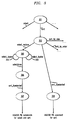
- FIG. 3 is a reactive constraint graph illustrating the SISL service logic 203 of FIG. 2 for a portion of a domain-independent interface.
- the SISL service logic 203 is in an idle node 301.
- the SISL service logic 203 can accept a sort or select event, for example. If a sort event arrives from the speech recognition engine, the SISL service logic 203 changes state to the target of the arrow labeled sort , namely, node 302. If it next receives a select_replace event, it changes once again to node 303. It loops in this new node 303 upon receipt of either select_bypos 304 or select_bysize 305 events.
- node 303 It exits node 303 upon receipt of a selectdone event and goes to node 306.
- a sort_byselected event Upon receiving a sort_byselected event, it goes to node 307, which is a "leaf" node.
- node 307 When traversal reaches a leaf node, e.g., node 307, the appropriate PM 206 command is sent to InfoStill 204.
- a leaf node 308 is reached directly from node 302 upon receiving a sort_byselected event. The end user can thus say "Sort by current selection”. This matches the ⁇ sort> grammar rule, and causes the SISL sort and sort_byselected events to be sent to the SISL service logic 203.
- the SISL service logic 203 then sends a PM 206 command to InfoStill 204, corresponding to sorting by the currently selected data.
- the user might say "Sort by first and third column.”
- the "first and third column” matches against the ⁇ select_bypos> subrule, since the "and third column” matches the ⁇ add_to_selection> subrule.
- the sort, select_replace , select_bypos (first), select _by _pos(third), select_done, and sort_by_selected events are sent to the service logic.
- the SISL service logic 203 then sends two PM 206 commands to InfoStill 204: one corresponding to sorting by the first column; and another corresponding to sorting by the third column.
- the SISL service logic 203 also remembers the context of the user dialogue. For example, if the user now says "And the fifth column", the SISL service logic 203 remembers that a new selection had just been made for the basis of a sort. SISL service logic 203 thus sends PM 206 commands to InfoStill 204 corresponding to adding the fifth column to the current selection and sorting by it.
- the SISL service logic 203 If the user is unsure about the sorting criteria, he/she may just say "Sort". This matches the ⁇ sort> grammar rule, and causes a sort event to be sent to the SISL service logic 203. Since no other events have been sent, the SISL service logic 203 then prompts the user with "Do you want to sort by current selection, by size, by order, or by a new selection?" The user can then say the appropriate choice. If the user is completely unsure of what to say, he/she can simply say "I need help”. The service logic will receive a help event, and will prompt the user with "You may sort or select the data, or ".
- This sample SISL grammar 202 and SISL service logic 203 illustrate the power of using SISL 201 for processing speech commands to InfoStill Views 208.
- our interface increases the precision in data selection for large data sets, allows the user to speak a single sentence corresponding to a sequence of InfoStill GUI commands, and allows the user to give partial information, giving guidance as to the possible user options corresponding to that task.
- This natural language interface can be used across all data sets.
- Domain knowledge and interactive design is employed in an interface to guide users in exploring a specific data set.
- This natural language interface is aimed at providing higher-level support for information visualization, tailored for a specific data set. It is thus closely related to the InfoStill Task Manager 205 (TM), which is designed to help users manage their data analysis tasks.
- TM InfoStill Task Manager 205
- An important aspect of this task to aid users in matching their intended analysis inquiries with a single View 208 or set of Views (together with the appropriate data variables to display) that aid in investigating these inquiries.
- a collection of such inquiries and corresponding infoVis views are typically tailored to a particular data domain. Saving such a collection into a "task template" provides old and new InfoStill 204 users with a starting place for examining newer versions of the same data or similar data from the same domain. This is particularly useful for native or novice infoVis users, who may know the types of analysis inquiries in which they are interested (e.g. "how has an organization evolved over time?") but may not have knowledge about data
- the speech interface for generating TM 205 commands uses the notion of a task template in that:
- analysis inquiries of interest about an organizational database are:
- a SISL grammar 202 and SISL service logic 203 were generated to collect information from the user, conduct a dialogue with the user about his/her intended inquiries (from the identified set), refine these inquiries into complete and unambiguous queries, and generate corresponding TM 205 commands to send to InfoStill 204.
- the user can then interact with the generated views through a combination of the speech commands from the domain-independent natural language interface, and the InfoStill 204 GUI interface.
- the SISL service logic 203 When sufficient information has been gathered from the user to construct a complete and unambiguous query, the SISL service logic 203 generates an appropriate TM 205 command: for example, it may create a bar chart, values list and/or grid chart, displaying the appropriate data variables.
- FIG. 4 is a reactive constraint graph illustrating the SISL service logic 203 of FIG. 2 for a portion of a natural language interface to organizational data.
- the corresponding SISL service logic 203 can accept events corresponding to the types of inquiries. If it receives a peoplefrom event from the speech recognition engine, it changes to the target node, namely, node 403. It then requires a who event and which event, in either order before it can change to another node. When both events have been received, it needs either an organizations or locations event to change node. If an organizations event is received it goes to node 405. Then, upon receiving a whatorglevel event, it goes to node 406, which requires a when event.
- the SISL service logic 203 When the SISL service logic 203 is in node 403 and a locations event is received, it changes to node 404, which also requires a when event. When traversal reaches a leaf node, i.e., node 406 or node 404, the appropriate TM 205 command is sent from SISL service logic 203 to InfoStill 204.
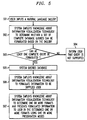
- FIG. 5 is a flow chart illustrating the steps employed in an embodiment of the invention implemented by the system architecture 200 of FIG. 2.
- the inquiry process starts in step 501 by a user inputting a natural language inquiry.
- step 502 causes system 200 (FIG. 2) to employ knowledge about information visualization technology to translate the natural language inquiry into one or more database queries by determining whether a set of complete database queries can be formulated and, if so, specifying the one or more database queries to be made.
- the set can include one or more complete database queries. However, if the set includes only one complete database query, that query is unambiguous.
- Knowledge about the information visualization technology is encoded in SISL service logic 203 in the form of a reactive constraint graph.
- Choice nodes represent the alternatives available to the user, while constraint nodes represent required sets of information.
- Leaf nodes contain a database query and corresponding information visualization views, e.g., presentation formats. Natural language input from the user is matched against the SISL grammars from 202, and appropriate events are sent to the SISL service logic 203. The reactive constraint graph is traversed according to these events. If control halts at a choice node or constraint node, it is determined that further information is needed from the user, and the user is prompted accordingly, as indicated below. Otherwise, if control halts at a leaf node, this indicates that the information given by the user can be translated into a set of complete and unambiguous database query (described in the leaf node).
- Step 503 tests to determine if at least one database query has been specified. If the test result in step 503 is NO, step 504 informs the user that the query is not supported. If the test result in step 503 is YES, at least one database query has been specified and step 505 queries the appropriate database.
- the system 200 employs knowledge about information visualization technology to formulate information to be supplied to the user. Then, in step 507, the system 200 employs knowledge about information visualization technology to determine one or more formats and presents the formulated information in the determined one or more formats using one or more presentation modes.
- the presentation formats may be predetermined or dynamically determined from a set of formats. It is further noted that the formats may include text, graphics, screen views, e.g., charts, etc., or the like. Additionally, the presentation modes may include at least text, voice, telephone, web, graphics, other visual or the like and/or any desired combination thereof.
- FIG. 6 is a flow chart illustrating the steps employed in another embodiment of the invention implemented by the system architecture 200 of FIG. 2.
- the inquiry process starts in step 601 by a user inputting a natural language inquiry.
- step 602 causes system 200 (FIG. 2) to employ knowledge about information visualization technology to translate the natural language inquiry into one or more database queries by determining whether a set of complete database queries can be formulated and, if so, specifying the one or more database queries to be made.
- the set can include one or more complete database queries. However, if the set includes only one complete database query that query is unambiguous. This is realized in essentially the same manner as described above in relation to step 502.
- Step 603 tests to determine if at least one database query has been specified.
- step 604 the system 200 is caused to employ knowledge about information visualization technology, and context information about the dialogue including any additional and/or corrected information to prompt the user for additional information.
- Context information about the dialogue is implicitly represented by the current state of the reactive constraint graph. It is also encoded in the service monitor 1402 (FIG. 14), in the form of event priorities.
- step 605 the user provides additional information and/or corrects previously provided information.
- Step 606 causes system 200 (FIG.
- step 608 to employ knowledge about information visualization technology, and context information about the dialogue including the addition and/or corrected information to translate the natural language inquiry into one or more database queries by determining whether a set of complete database queries can be formulated and, if so, specifying the one or more database queries to be made. Again, this realized in essentially the same manner as described above in relation to step 502 but with the addition of context information about the dialogue. Thereafter, control is returned to step 603 and steps 603 through 606 are iterated until step 603 yields a YES result. Upon step 603 yielding a YES result, thereby indicating that at least one database query has been specified, step 607 queries the appropriate database. In step 608, the system 200 employs knowledge about information visualization technology to formulate information to be supplied to the user.
- the system 200 employs knowledge about information visualization technology to determine one or more formats and presents the formulated information in the determined one or more formats using one or more presentation modes.
- the presentation format may be predetermined or dynamically determined from a set of formats.
- the formats may include text, graphics, screen views, e.g., charts, etc., or the like.
- the presentation modes may include at least text, voice, telephone, web, graphics, other visual or the like and/or any desired combination thereof.
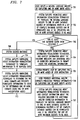
- FIG. 7 is a flow chart illustrating the steps employed in yet another embodiment of the invention implemented by the system architecture 200 of FIG. 2.
- the inquiry process starts in step 701 by a user inputting a natural language inquiry by employing one or more input modes. It is noted that any one of the input modes or any combination of the input modes may be employed to input the natural language inquiry. These input, i.e., interaction, modes may include text, voice, point and click, e.g., mouse, or the like using a telephone, personal computer, microphone, web, mouse, keyboard or the like, or any desired combination thereof.
- step 702 causes system 200 (FIG.
- Step 703 tests to determine if at least one database query has been specified. If the test result in step 703 is NO, in step 704 the system 200 is caused to employ knowledge about information visualization technology, and context information about the dialogue including any additional and/or corrected information to prompt the user for additional information.
- Context information about the dialogue is implicitly represented by the current state of the reactive constraint graph. It is also encoded in the service monitor 1402 (FIG. 14), in the form of event priorities.
- Step 705 causes system 200 to prompt the user by employing a prescribed mode of or a combination of modes of a plurality of prescribed modes.
- the user provides additional information and/or corrects previously provided information via step 706 by employing one or more input modes.
- step 707 the system 200 is caused to employ knowledge about information visualization technology, and context information about the dialogue including the additional and/or corrected information to translate the natural language inquiry into one or more database queries by determining whether a set of complete database queries can be formulated and, if so, specifying the one or more database queries to be made.
- step 703 If the set includes only one complete database query that query is unambiguous. Again, this realized in essentially the same manner as described above in relation to step 502 but with the addition of context information about the dialogue. Thereafter, control is returned to step 703 and steps 703 through 707 are iterated until step 703 yields a YES result. Upon step 703 yielding a YES result, thereby indicating that at least one database query has been specified, step 708 queries the appropriate database. In step 709, the system 200 employs knowledge about information visualization technology to formulate information to be supplied to the user. Then, in step 710, the system 200 employs knowledge about information visualization technology to determine one or more formats and presents the formulated information in the determined one or more formats using one or more presentation modes.
- presentation modes may include at least text, voice, telephone, web, graphics, other visual or like and/or any desired combination thereof.
- the formats may include text, graphics, screen views, e.g., charts, etc., or the like. It should also be noted that the presentation formats may be predetermined or dynamically determined from a set of formats.
- FIG. 8 is a flow chart illustrating the steps employed in still another embodiment of the invention implemented by the system architecture 200 of FIG. 2.
- the inquiry process starts in step 801 by a user inputting a natural language inquiry by employing one or more input modes. Again, these input, i.e., interaction, modes may include text, voice, point and click, e.g., mouse, or the like using a telephone, personal computer, microphone, web, mouse, keyboard or the like, or any desired combination thereof.
- step 802 causes system 200 (FIG. 2) to employ knowledge about information visualization technology to translate the natural language inquiry into one or more database queries by determining whether a set of complete database queries can be formulated and, if so, specifying the one or more database queries to be made.
- Step 803 tests to determine if at least one database query has been specified. If the test result in step 803 is NO, in step 804 the user is informed by employing one or more presentation modes that the query is not supported. If the test result in 803 is YES, at least one database query has been specified and step 805 queries the appropriate database. In step 806, the system 200 employs knowledge about information visualization technology to formulate information to be supplied to the user. Then, in step 807 the system 200 employs knowledge about information visualization technology to determine one or more formats and presents the formulated information in the determined one or more formats using one or more presentation modes.
- the presentation modes may include at least text, voice, telephone, web, graphics, other visual or the like and/or any desired combination thereof.
- the formats may include text, graphics, screen views, e.g., charts, etc., or the like. It should also be noted that the presentation formats may be predetermined or dynamically determined from a set of formats.
- FIG. 9 is a flow chart illustrating the steps employed in an embodiment of the invention implemented by the system architecture 200 of FIG. 2.
- the inquiry process starts in step 901 by a user inputting a natural language inquiry.
- step 902 causes system 200 (FIG. 2) to employ knowledge about the data under exploration and knowledge about information visualization technology to translate the natural language inquiry into one or more database queries by determining whether a set of complete database queries can be formulated and, if so, specifying the one or more database queries to be made. Note that if the set includes only one complete database query that query is unambiguous.
- Knowledge about the information visualization technology and knowledge about the data under exploration is encoded in SISL service logic 203 in the form of a reactive constraint graph.
- Choice nodes represent the alternatives available to the user, while constraint nodes represent required sets of information.
- Leaf nodes contain a database query and corresponding information visualization views. Natural language input from the user is matched against the SISL grammars from 202, and appropriate events are sent to the SISL service logic 203. The reactive constraint graph is traversed according to these events. If control halts at a choice node or constraint node, it is determined that further information is needed from the user, and the user is prompted accordingly. Otherwise, if control halts at a leaf node, this indicates that the information given by the user can be translated into a set of complete and unambiguous database query (described in the leaf node). The leaf node also indicates which kind of information visualization views should be displayed.
- Step 903 tests to determine if at least one database query has been specified. If the test result in step 903 is NO, step 904 informs the user that the query is not supported. If the test result in step 903 is YES, at least one database query has been specified and step 905 queries the appropriate database.
- the system 200 employs domain knowledge about data under exploration and knowledge about information visualization technology to formulate information to be supplied to the user. Then, in step 907, the system 200 employs knowledge about data under exploration and knowledge about information visualization technology to determine one or more formats and presents the formulated information to the use in the determined one or more formats using one or more presentation modes. It should be noted that the presentation format may -be predetermined or dynamically determined from a set of formats.
- the formats may include text, graphics, screen views, e.g., charts, etc., or the like.
- the presentation modes may include at least text, voice, telephone, web, graphics, other visual or the like and/or any desired combination thereof.
- FIG. 10 is a flow chart illustrating the steps employed in another embodiment of the invention implemented by the system architecture 200 of FIG. 2.
- the inquiry process starts in step 1001 by a user inputting a natural language inquiry.
- step 1002 causes system 200 (FIG. 2) to employ knowledge about the data under exploration and knowledge about information visualization technology to translate the natural language inquiry into one or more database queries by determining whether a set of complete database queries can be formulated and, if so, specifying the one or more database queries to be made. Note that if the set includes only one complete database query that query is unambiguous. This is realized in essentially the same manner as described above in relation to step 902.
- Step 1003 tests to determine if at least one database query has been specified.
- step 1004 the system 200 is caused to employ knowledge about data under exploration and knowledge about information visualization technology, and context information about the dialogue including any additional and/or corrected information to prompt the user for additional information.
- Context information about the dialogue is implicitly represented by the current state of the reactive constraint graph. It is also encoded in the service monitor 1402 (FIG. 14), in the form of event priorities.
- step 1005 the user provides additional information and/or corrects previously provided information.
- Step 1006 causes system 200 (FIG.
- step 1007 queries the appropriate database.
- the system 200 employs knowledge about data under exploration and knowledge about information visualization technology to formulate information to be supplied to the user. Then, in step 1009, the system 200 employs knowledge about data under exploration and knowledge about information visualization technology to determine one or more formats and presents the formulated information to the use in the determined one or more formats using one or more presentation modes.
- the presentation format may be predetermined or dynamically determined from a set of formats.
- the formats may include text, graphics, screen views, e.g., charts, etc., or the like.
- the presentation modes may include at least text, voice, telephone, web, graphics, other visual or the like and/or any desired combination thereof.
- FIG. 11 is a flow chart illustrating the steps employed in yet another embodiment of the invention implemented by the system architecture 200 of FIG. 2.
- the inquiry process starts in step 1101 by a user inputting a natural language inquiry by employing one or more input modes. Again, these input, i.e., interaction, modes may include text, voice, point and click, e.g., mouse, or the like using a telephone, personal computer, microphone, web, mouse, keyboard or the like, or any desired combination thereof.
- step 1102 causes system 200 (FIG. 2) to employ knowledge about the data under exploration and knowledge about information visualization technology to translate the natural language inquiry into one or more database queries by determining whether a set of complete database queries can be formulated and, if so, specifying the one or more database queries to be made.
- Step 1103 tests to determine if at least one database query has been specified. If the test result in step 1103 is NO, in step 1104 the system 200 is caused to employ knowledge about data under exploration and knowledge about information visualization technology, and context information about the dialogue including any additional and/or corrected information to prompt the user for additional information. Context information about the dialogue is implicitly represented by the current state of the reactive constraint graph. It is also encoded in the service monitor 1402 (FIG. 14), in the form of event priorities.
- Step 1105 causes system 200 to prompt the user by employing a prescribed mode of or a combination of modes of a plurality of prescribed modes.
- step 1105 the user provides additional information and/or corrects previously provided information via step 1106 by employing one or more input modes.
- the system 200 is caused to employ knowledge about the data under exploration and knowledge about information visualization technology, and context information about the dialogue including the additional and/or corrected information to translate the natural language inquiry into one or more database queries by determining whether a set of complete database queries can be formulated and, if so, specifying the one or more database queries to be made. Note that if the set includes only one complete query that query is unambiguous. Again, this realized in essentially the same manner as described above in relation to step 902 but with the addition of context information about the dialogue.
- step 1109 the system 200 employs domain knowledge about data and information visualization technology to formulate information to be supplied to the user.
- step 1110 the system 200 employs knowledge about data under exploration and knowledge about information visualization technology to determine one or more formats and presents the formulated information to the use in the determined one or more formats using one or more presentation modes.
- presentation modes may include at least text, voice, telephone, web, graphics, other visual or the like and/or any desired combination thereof.
- the formats may include text, graphics, screen views, e.g., charts, etc., or the like. It should also be noted that the presentation formats may be predetermined or dynamically determined from a set of formats.
- FIG. 12 is a flow chart illustrating the steps employed in still another embodiment of the invention implemented by the system architecture 200 of FIG. 2.
- the inquiry process starts in step 1201 by a user inputting a natural language inquiry by employing one or more input modes. Again, these input, i.e., interaction, modes may include text, voice, point and click, e.g., mouse, or the like using a telephone, personal computer, microphone, web, mouse, keyboard or the like, or any desired combination thereof.
- step 1202 causes system 200 (FIG. 2) to employ knowledge about the data under exploration and knowledge about information visualization technology to translate the natural language inquiry into one or more database queries by determining whether a set of complete database queries can be formulated and, if so, specifying the one or more database queries to be made.
- Step 1203 tests the determination of step 1202 if a complete and unambiguous query can be formulated. If the test result in step 1203 is NO, in step 1204 the user is informed by employing one or more presentation modes that the query is not supported. If the test result in step 1203 is YES, at least one database query has been specified and step 1205 queries the appropriate database. In step 1206, the system 200 employs knowledge about data under exploration and knowledge about information visualization technology to formulate information to be supplied to the user.
- the system 200 employs knowledge about data under exploration and knowledge about information visualization technology to determine one or more formats and presents the formulated information to the use in the determined one or more formats using one or more presentation modes.
- the presentation modes may include at least text, voice, telephone, web, graphics, other visual or the like and/or any desired combination thereof.
- the formats may include text, graphics, screen views, e.g., charts, etc., or the like. It should also be noted that the presentation formats may be predetermined or dynamically determined from a set of formats.
- FIG. 13 shows, in simplified block diagram form, details of an interactive system in which the invention may be advantageously employed. It should be noted that the arrangement shown in FIG. 13 is but one example of an application of the invention. Indeed, a plurality of different user interfaces and/or one more identical user interfaces may be employed as desired.
- SISL Single Interfaces, Single Logic
- home/office computer 1302 used as a customer and/or provider interface, including automatic speech recognition having a natural language understanding, if desired, that is interfaced to SISL service unit 1301 via an Internet link 1303
- telephone 1304 also used as a customer and/or provider interface that is interfaced to SISL service unit 1301 via a telephone network 1305 including, for example, touch-tone, i.e., multifrequency, signaling
- computer 1306 used as a customer and/or provider interface, which may also have automatic speech recognition including natural language understanding, that is interfaced to SISL service unit 1301 via a local area network (LAN).
- LAN local area network
- SISL provides a clean separation between the service logic and the software for a variety of user interfaces including but not limited to Java applets, HTML pages, speech-based natural language dialog, and telephone-based voice access.
- SISL is implemented using the JAVA programming language.
- Any-Time Teller banking service is an interactive banking service.
- the service is login protected; customers must authenticate themselves by entering an identifier (login) and PIN, i.e., personal identification number, (password) to access the functions.
- PIN personal identification number
- PIN personal identification number
- the transfer capability of the Any-Time Teller requires the collection of three events: the source account ( src ), target account ( tgt ), and dollar amount ( amt ). There are five constraints that those input events must meet before a transfer can take place:
- the service should check whether or not a constraint is violated as soon as possible; hence, it must be prepared to react when only a subset of the three events is present. The service must then prompt for the remaining events.
- the source account, target account, and dollar amount of the transfer capability should be independent events that can be collected in any order, where all three events are necessary to perform a transfer. By making explicit independent and dependent events, it in clear what events may be reordered without affecting the behavior of the service. This points the way to our first principle of the service specification:
- Services that obey the above principles generalize from linear user interactions to potentially allow multiple points of interaction to be enabled at a given instant.
- This information serves as an abstraction of the current control point of the service, and can be handled in a different manner by different user interfaces.
- the information about currently enabled events is used by the user interface in two ways:
- a user interface need not respond to all currently enabled events of the service. Thus, different user interfaces can formulate different queries to the user even though the control point in the underlying service logic, as revealed by the current set of enabled events, is the same.
- the decoupling that we are seeking between the user interface and the service logic therefore points the way to our last principle of the service specification:
- SISL user interface
- any user interface (UI) that performs these functions can be employed in conjunction with a SISL service logic.
- SISL provides a convenient framework for designing and implementing web-based, applet-based, automatic speech recognition-based and telephone voice-based interfaces. To implement such user interfaces, the UI designer need only specify two functions corresponding to the prompt and help mechanism.
- a set of speech grammars i.e., the input to a speech recognition engine that permits it to efficiently and effectively recognize spoken input, together with a third function that specifies which grammars to enable is also required.
- the prompt and help functions are self explanatory and is as follows:
- a portion of the associated grammar function shared by an automatic speech recognition-based interface and a telephone-based voice interface pseudo code is self explanatory and is as follows:
- the SISL infrastructure automatically coordinates the collection and event transformation mechanisms, and integrates the user interface with the service logic and the service monitor.
- the SISL infrastructure automatically generates a desktop interface based on JAVA Speech API (Application Programming Interface).
- JAVA Speech API Application Programming Interface
- VoiceXML pages which specify the voice dialog to be carried out on a telephony platform.
- Web-based interfaces the SISL infrastructure automatically generates HTML (Hypertext Markup Language) pages. It is noted that SISL provides a mechanism for the UI designer to customize the look and feel of the interface.
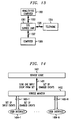
- FIG. 14 shows, in simplified block form, details of the SISL (Several Interfaces, Single Logic) architecture employed in the embodiment of FIG. 13.
- the SISL architecture together with the event communication protocol provides modularity between the service logic 1401 and user interfaces 1404.
- two features of the event communication protocol allow service logic 1401 to function completely without knowledge of the specifics of the individual user interfaces 1404. These features are: (1) events are multicast from service logic 1401 via service monitor 1402 to user interfaces 1404 and, consequently, service logic 1401 does not need to know the destinations of these events; and (2) the source of the events from the user interfaces 1404 is not recorded and, consequently, the service logic 1401 does not know which one or more of user interfaces 1404 sent the events.
- Service monitor 1402 is responsible for maintaining this communication protocol. This modularity allows service providers to provide interchangeable user interfaces 1404, or add new ones, to a single consistent source of service logic and data.
- FIG. 14 shown in FIG. 14 are service logic unit 1401, service monitor 1402 and user interfaces 1404-1 through 1404-N.
- the key principle underlying SISL is that all user interfaces 1404 to a service share a single service logic 1401. All communications between the service logic 1401 and its multiple user interfaces 1404 are through events, via a service monitor 1402. Events from the service logic 1401 are broadcast to the user interfaces 1404 via 1403 to the service monitor 1402 and, then, via 1405 as a set of enabled events to the user interfaces 1404.
- each user interface 1404 registers with the service monitor 1402 to indicate which events it is interested in receiving.
- the user interfaces 1404 After collecting information from the user, the user interfaces 1404 send events to the service monitor 1402 via bi-directional links 1405; the service monitor 1402 does not record the source of these events.
- the service monitor 1402 passes the events, one at a time, via 1403 to the service logic 1401. Details of a service monitor, which can be advantageously employed for service monitor 1402, are described in EP application no. 00307177.6.
- Event communication supports decoupling of the service logic 1401 and the user interfaces 1404, and allows service providers to provide interchangeable user interfaces 1404, or add new ones, to a single consistent source of service logic 1401 and data.
- the SISL infrastructure automatically sends out a set of events via 1403 from the service logic 1401 to the service monitor 1402, corresponding to the events that are currently enabled in the service logic 1401.
- Prompt events indicate to the user interface what information to communicate to the user and what information the service is ready to accept.
- Up events correspond to prior points in the service logic 401 to which the user may go back.
- the service logic 1401 sends an up_MainMenu event via 1403 to the service monitor 1402. This allows the user to abort any transaction and go back up to the main menu.
- Notify events are simply notifications that the user interface 1404 should give the user; for example, that a transaction has completed successfully or that information provided by the user was incorrect or inconsistent.
- FIG. 15 is a flowchart illustrating the steps in implementing the SISL architecture of FIG. 14. Specifically, the implementation process is started via step 1501. Then, step 1502 causes the SISL service logic to be written in SISL. Step 1503 causes the service monitor 1402 to be written. Thereafter, a plurality of user interfaces UI-1 thorough UI-N are developed in steps 1504-1 through 1504-N.
- step 1606 causes the execution of the process of the constraint flowchart of FIG. 15, as described below, until a new child node is determined and, then, assigns "n” to the determined new child node.
- step 1607 causes a unique arc "a” to be selected from node "n” whose precondition is TRUE.
- step 1609 causes a wait for any event "e” that is the label of some arc "a” from node "n” or is the uplabel of some ancestor node of node "n". Then, step 1610 tests to determine if event "e” is the uplabel of some ancestor node of node "n". If the test result in step 1610 is YES, step 1611 causes control to be transferred to the ancestor node. If the test result in step 1610 is NO, control is passed to step 1608, which is then effected as described above. Reactive constraints are discussed further below.
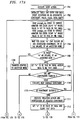
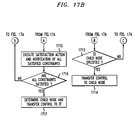
- FIG. 17A and FIG. 17B when connected A-A, B-B, C-C, and D-D is a flowchart illustrating the steps in the process of executing constraint nodes.
- step 1701 causes the entry action to be executed.
- step 1702 causes initialization of a table to be one entry for each event occurring in an associated constraint; value to FALSE; and data to EMPTY.
- step 1703 causes a prompt_req to be sent to service monitor 1402 for every event "e” whose value is set to FALSE in the table, and a prompt_opf to be sent to service monitor 1402 for every event "e" whose value is set to TRUE in the table.
- Step 1704 waits for an event "e” that occurs in any associated constraint, or is the uplabel of an ancestor node. Then, step 1705 tests to determine whether event "e” is an uplabel of an ancestor node. If the test result instep 1705 is YES, control is transferred to the ancestor node via step 1706. If the test result in step 1705 is NO, step 1707 causes event "e” to be set TRUE in the table, and assigns data to be "e's” data. Then, step 1708 tests to determine if any constraints are enabled. If the test result in step 1708 is YES, step 1709 causes the next enabled constraint to be evaluated. Then, step 1710 tests to determine whether the evaluated constraint has been satisfied.
- step 1710 If the test result in step 1710 is NO, the constraint is not satisfied and step 1711 causes the execution to be effected of the violation action and the notification of violated constraint.
- Step 1712 causes the setting of event "e” to be False in the table and clears "e's" data.
- step 1713 tests to determine if a child node is specified. If the test result in step 1713 is YES, step 1714 causes control to be transferred to the specified child node.
- step 1716 tests to determine whether all constraints have been satisfied.
- step 1717 causes the child node to be determined and, then, transfers control to it. If the test result in step 1716 is NO, control is returned to step 1703 and appropriate ones of steps 1703 through 1717 are iterated until either step 1706 is reached, or step 1714 is reached, or step 1717 is reached. Returning to step 1710, if a YES result is obtained, control is returned to step 1708 and steps 1708 through 1710 are iterated until either step 1708 yields a NO result or step 1710 yields a NO result. Then, the processes, as described above regarding steps 1708 or 1710 yielding a NO result are repeated. Returning to step 1713, if the test result is NO, the child node is not specified and control is returned to step 1703. Thereafter, appropriate ones of steps 1703 through 1717 are iterated until either step 1706, or step 1714 or step 1717 is reached.
Landscapes
- Engineering & Computer Science (AREA)
- Physics & Mathematics (AREA)
- Theoretical Computer Science (AREA)
- Databases & Information Systems (AREA)
- Computational Linguistics (AREA)
- Data Mining & Analysis (AREA)
- Mathematical Physics (AREA)
- General Engineering & Computer Science (AREA)
- General Physics & Mathematics (AREA)
- Artificial Intelligence (AREA)
- Information Retrieval, Db Structures And Fs Structures Therefor (AREA)
- User Interface Of Digital Computer (AREA)
- Machine Translation (AREA)
Applications Claiming Priority (2)
| Application Number | Priority Date | Filing Date | Title |
|---|---|---|---|
| US09/487,684 US6701294B1 (en) | 2000-01-19 | 2000-01-19 | User interface for translating natural language inquiries into database queries and data presentations |
| US487684 | 2000-01-19 |
Publications (2)
| Publication Number | Publication Date |
|---|---|
| EP1120720A2 true EP1120720A2 (de) | 2001-08-01 |
| EP1120720A3 EP1120720A3 (de) | 2006-06-14 |
Family
ID=23936721
Family Applications (1)
| Application Number | Title | Priority Date | Filing Date |
|---|---|---|---|
| EP01300122A Ceased EP1120720A3 (de) | 2000-01-19 | 2001-01-08 | Benutzerschnittstelle für Datenpräsentationssysteme |
Country Status (3)
| Country | Link |
|---|---|
| US (1) | US6701294B1 (de) |
| EP (1) | EP1120720A3 (de) |
| JP (1) | JP3779162B2 (de) |
Cited By (4)
| Publication number | Priority date | Publication date | Assignee | Title |
|---|---|---|---|---|
| JP2005267647A (ja) * | 2004-03-18 | 2005-09-29 | Microsoft Corp | 自然言語コマンドを使用してテーブルをレンダリングすること |
| US7120626B2 (en) | 2002-11-15 | 2006-10-10 | Koninklijke Philips Electronics N.V. | Content retrieval based on semantic association |
| CN103365836A (zh) * | 2012-04-01 | 2013-10-23 | 郭佳 | 一种采用自然语言的分布式智能交互的实现方法及其系统 |
| WO2016174682A1 (en) * | 2015-04-29 | 2016-11-03 | Yellai Mahesh | Method for generating visual representations of data based on controlled natural language queries and system thereof |
Families Citing this family (221)
| Publication number | Priority date | Publication date | Assignee | Title |
|---|---|---|---|---|
| US7392185B2 (en) * | 1999-11-12 | 2008-06-24 | Phoenix Solutions, Inc. | Speech based learning/training system using semantic decoding |
| US7050977B1 (en) | 1999-11-12 | 2006-05-23 | Phoenix Solutions, Inc. | Speech-enabled server for internet website and method |
| US9076448B2 (en) * | 1999-11-12 | 2015-07-07 | Nuance Communications, Inc. | Distributed real time speech recognition system |
| US7725307B2 (en) | 1999-11-12 | 2010-05-25 | Phoenix Solutions, Inc. | Query engine for processing voice based queries including semantic decoding |
| US8645137B2 (en) | 2000-03-16 | 2014-02-04 | Apple Inc. | Fast, language-independent method for user authentication by voice |
| US7216080B2 (en) * | 2000-09-29 | 2007-05-08 | Mindfabric Holdings Llc | Natural-language voice-activated personal assistant |
| US7447703B2 (en) * | 2001-06-21 | 2008-11-04 | Coverity, Inc. | Collection information manager |
| US7409335B1 (en) * | 2001-06-29 | 2008-08-05 | Microsoft Corporation | Inferring informational goals and preferred level of detail of answers based on application being employed by the user |
| US6985865B1 (en) * | 2001-09-26 | 2006-01-10 | Sprint Spectrum L.P. | Method and system for enhanced response to voice commands in a voice command platform |
| ITFI20010199A1 (it) | 2001-10-22 | 2003-04-22 | Riccardo Vieri | Sistema e metodo per trasformare in voce comunicazioni testuali ed inviarle con una connessione internet a qualsiasi apparato telefonico |
| US7398209B2 (en) * | 2002-06-03 | 2008-07-08 | Voicebox Technologies, Inc. | Systems and methods for responding to natural language speech utterance |
| US7693720B2 (en) * | 2002-07-15 | 2010-04-06 | Voicebox Technologies, Inc. | Mobile systems and methods for responding to natural language speech utterance |
| US20040034531A1 (en) * | 2002-08-15 | 2004-02-19 | Wu Chou | Distributed multimodal dialogue system and method |
| US20040034532A1 (en) * | 2002-08-16 | 2004-02-19 | Sugata Mukhopadhyay | Filter architecture for rapid enablement of voice access to data repositories |
| US8965771B2 (en) * | 2003-12-08 | 2015-02-24 | Kurzweil Ainetworks, Inc. | Use of avatar with event processing |
| GB2420192A (en) * | 2004-11-12 | 2006-05-17 | Quadstone Ltd | Formulating and refining queries on structured data |
| US7693705B1 (en) * | 2005-02-16 | 2010-04-06 | Patrick William Jamieson | Process for improving the quality of documents using semantic analysis |
| US20060253272A1 (en) * | 2005-05-06 | 2006-11-09 | International Business Machines Corporation | Voice prompts for use in speech-to-speech translation system |
| US7640160B2 (en) | 2005-08-05 | 2009-12-29 | Voicebox Technologies, Inc. | Systems and methods for responding to natural language speech utterance |
| US7620549B2 (en) * | 2005-08-10 | 2009-11-17 | Voicebox Technologies, Inc. | System and method of supporting adaptive misrecognition in conversational speech |
| US8700404B1 (en) * | 2005-08-27 | 2014-04-15 | At&T Intellectual Property Ii, L.P. | System and method for using semantic and syntactic graphs for utterance classification |
| US7949529B2 (en) | 2005-08-29 | 2011-05-24 | Voicebox Technologies, Inc. | Mobile systems and methods of supporting natural language human-machine interactions |
| EP1934971A4 (de) * | 2005-08-31 | 2010-10-27 | Voicebox Technologies Inc | Dynamische sprachverschärfung |
| US8677377B2 (en) * | 2005-09-08 | 2014-03-18 | Apple Inc. | Method and apparatus for building an intelligent automated assistant |
| US9318108B2 (en) | 2010-01-18 | 2016-04-19 | Apple Inc. | Intelligent automated assistant |
| US8073681B2 (en) | 2006-10-16 | 2011-12-06 | Voicebox Technologies, Inc. | System and method for a cooperative conversational voice user interface |
| US20080126729A1 (en) * | 2006-11-28 | 2008-05-29 | Yigang Cai | Systems and methods for controlling access by a third party to a patient's medical records on a medical information card |
| US8117022B2 (en) * | 2006-12-07 | 2012-02-14 | Linker Sheldon O | Method and system for machine understanding, knowledge, and conversation |
| US20080154853A1 (en) | 2006-12-22 | 2008-06-26 | International Business Machines Corporation | English-language translation of exact interpretations of keyword queries |
| US20080177892A1 (en) * | 2007-01-19 | 2008-07-24 | International Business Machines Corporation | Method for service oriented data extraction transformation and load |
| US7818176B2 (en) | 2007-02-06 | 2010-10-19 | Voicebox Technologies, Inc. | System and method for selecting and presenting advertisements based on natural language processing of voice-based input |
| US8977255B2 (en) | 2007-04-03 | 2015-03-10 | Apple Inc. | Method and system for operating a multi-function portable electronic device using voice-activation |
| US9053089B2 (en) | 2007-10-02 | 2015-06-09 | Apple Inc. | Part-of-speech tagging using latent analogy |
| US8595642B1 (en) | 2007-10-04 | 2013-11-26 | Great Northern Research, LLC | Multiple shell multi faceted graphical user interface |
| US8140335B2 (en) | 2007-12-11 | 2012-03-20 | Voicebox Technologies, Inc. | System and method for providing a natural language voice user interface in an integrated voice navigation services environment |
| US8219407B1 (en) | 2007-12-27 | 2012-07-10 | Great Northern Research, LLC | Method for processing the output of a speech recognizer |
| US9330720B2 (en) | 2008-01-03 | 2016-05-03 | Apple Inc. | Methods and apparatus for altering audio output signals |
| US8065143B2 (en) | 2008-02-22 | 2011-11-22 | Apple Inc. | Providing text input using speech data and non-speech data |
| US8996376B2 (en) | 2008-04-05 | 2015-03-31 | Apple Inc. | Intelligent text-to-speech conversion |
| US10496753B2 (en) | 2010-01-18 | 2019-12-03 | Apple Inc. | Automatically adapting user interfaces for hands-free interaction |
| US8589161B2 (en) * | 2008-05-27 | 2013-11-19 | Voicebox Technologies, Inc. | System and method for an integrated, multi-modal, multi-device natural language voice services environment |
| US9305548B2 (en) | 2008-05-27 | 2016-04-05 | Voicebox Technologies Corporation | System and method for an integrated, multi-modal, multi-device natural language voice services environment |
| US8464150B2 (en) | 2008-06-07 | 2013-06-11 | Apple Inc. | Automatic language identification for dynamic text processing |
| US20100030549A1 (en) | 2008-07-31 | 2010-02-04 | Lee Michael M | Mobile device having human language translation capability with positional feedback |
| US8768702B2 (en) | 2008-09-05 | 2014-07-01 | Apple Inc. | Multi-tiered voice feedback in an electronic device |
| US8898568B2 (en) | 2008-09-09 | 2014-11-25 | Apple Inc. | Audio user interface |
| US8712776B2 (en) | 2008-09-29 | 2014-04-29 | Apple Inc. | Systems and methods for selective text to speech synthesis |
| US8676904B2 (en) | 2008-10-02 | 2014-03-18 | Apple Inc. | Electronic devices with voice command and contextual data processing capabilities |
| US9959870B2 (en) | 2008-12-11 | 2018-05-01 | Apple Inc. | Speech recognition involving a mobile device |
| US8862252B2 (en) * | 2009-01-30 | 2014-10-14 | Apple Inc. | Audio user interface for displayless electronic device |
| US8326637B2 (en) | 2009-02-20 | 2012-12-04 | Voicebox Technologies, Inc. | System and method for processing multi-modal device interactions in a natural language voice services environment |
| US8380507B2 (en) | 2009-03-09 | 2013-02-19 | Apple Inc. | Systems and methods for determining the language to use for speech generated by a text to speech engine |
| US9858925B2 (en) | 2009-06-05 | 2018-01-02 | Apple Inc. | Using context information to facilitate processing of commands in a virtual assistant |
| US10241644B2 (en) | 2011-06-03 | 2019-03-26 | Apple Inc. | Actionable reminder entries |
| US10241752B2 (en) | 2011-09-30 | 2019-03-26 | Apple Inc. | Interface for a virtual digital assistant |
| US10255566B2 (en) | 2011-06-03 | 2019-04-09 | Apple Inc. | Generating and processing task items that represent tasks to perform |
| US10540976B2 (en) | 2009-06-05 | 2020-01-21 | Apple Inc. | Contextual voice commands |
| US9431006B2 (en) | 2009-07-02 | 2016-08-30 | Apple Inc. | Methods and apparatuses for automatic speech recognition |
| US8275834B2 (en) * | 2009-09-14 | 2012-09-25 | Applied Research Associates, Inc. | Multi-modal, geo-tempo communications systems |
| US9171541B2 (en) | 2009-11-10 | 2015-10-27 | Voicebox Technologies Corporation | System and method for hybrid processing in a natural language voice services environment |
| US9502025B2 (en) | 2009-11-10 | 2016-11-22 | Voicebox Technologies Corporation | System and method for providing a natural language content dedication service |
| US8682649B2 (en) | 2009-11-12 | 2014-03-25 | Apple Inc. | Sentiment prediction from textual data |
| US8381107B2 (en) | 2010-01-13 | 2013-02-19 | Apple Inc. | Adaptive audio feedback system and method |
| US8311838B2 (en) | 2010-01-13 | 2012-11-13 | Apple Inc. | Devices and methods for identifying a prompt corresponding to a voice input in a sequence of prompts |
| US10679605B2 (en) | 2010-01-18 | 2020-06-09 | Apple Inc. | Hands-free list-reading by intelligent automated assistant |
| US10705794B2 (en) | 2010-01-18 | 2020-07-07 | Apple Inc. | Automatically adapting user interfaces for hands-free interaction |
| US10276170B2 (en) | 2010-01-18 | 2019-04-30 | Apple Inc. | Intelligent automated assistant |
| US10553209B2 (en) | 2010-01-18 | 2020-02-04 | Apple Inc. | Systems and methods for hands-free notification summaries |
| DE202011111062U1 (de) | 2010-01-25 | 2019-02-19 | Newvaluexchange Ltd. | Vorrichtung und System für eine Digitalkonversationsmanagementplattform |
| US10541048B2 (en) * | 2010-02-18 | 2020-01-21 | Siemens Healthcare Gmbh | System for monitoring and visualizing a patient treatment process |
| US8682667B2 (en) | 2010-02-25 | 2014-03-25 | Apple Inc. | User profiling for selecting user specific voice input processing information |
| US8713021B2 (en) | 2010-07-07 | 2014-04-29 | Apple Inc. | Unsupervised document clustering using latent semantic density analysis |
| US8719006B2 (en) | 2010-08-27 | 2014-05-06 | Apple Inc. | Combined statistical and rule-based part-of-speech tagging for text-to-speech synthesis |
| US8719014B2 (en) | 2010-09-27 | 2014-05-06 | Apple Inc. | Electronic device with text error correction based on voice recognition data |
| US10515147B2 (en) | 2010-12-22 | 2019-12-24 | Apple Inc. | Using statistical language models for contextual lookup |
| US10762293B2 (en) | 2010-12-22 | 2020-09-01 | Apple Inc. | Using parts-of-speech tagging and named entity recognition for spelling correction |
| US8781836B2 (en) | 2011-02-22 | 2014-07-15 | Apple Inc. | Hearing assistance system for providing consistent human speech |
| US9262612B2 (en) | 2011-03-21 | 2016-02-16 | Apple Inc. | Device access using voice authentication |
| US10057736B2 (en) | 2011-06-03 | 2018-08-21 | Apple Inc. | Active transport based notifications |
| US10672399B2 (en) | 2011-06-03 | 2020-06-02 | Apple Inc. | Switching between text data and audio data based on a mapping |
| US8812294B2 (en) | 2011-06-21 | 2014-08-19 | Apple Inc. | Translating phrases from one language into another using an order-based set of declarative rules |
| US8706472B2 (en) | 2011-08-11 | 2014-04-22 | Apple Inc. | Method for disambiguating multiple readings in language conversion |
| US8994660B2 (en) | 2011-08-29 | 2015-03-31 | Apple Inc. | Text correction processing |
| US8762156B2 (en) | 2011-09-28 | 2014-06-24 | Apple Inc. | Speech recognition repair using contextual information |
| US8972263B2 (en) | 2011-11-18 | 2015-03-03 | Soundhound, Inc. | System and method for performing dual mode speech recognition |
| US10134385B2 (en) | 2012-03-02 | 2018-11-20 | Apple Inc. | Systems and methods for name pronunciation |
| US9483461B2 (en) | 2012-03-06 | 2016-11-01 | Apple Inc. | Handling speech synthesis of content for multiple languages |
| US9280610B2 (en) | 2012-05-14 | 2016-03-08 | Apple Inc. | Crowd sourcing information to fulfill user requests |
| US8775442B2 (en) | 2012-05-15 | 2014-07-08 | Apple Inc. | Semantic search using a single-source semantic model |
| US10417037B2 (en) | 2012-05-15 | 2019-09-17 | Apple Inc. | Systems and methods for integrating third party services with a digital assistant |
| US9721563B2 (en) | 2012-06-08 | 2017-08-01 | Apple Inc. | Name recognition system |
| US10019994B2 (en) | 2012-06-08 | 2018-07-10 | Apple Inc. | Systems and methods for recognizing textual identifiers within a plurality of words |
| US9495129B2 (en) | 2012-06-29 | 2016-11-15 | Apple Inc. | Device, method, and user interface for voice-activated navigation and browsing of a document |
| US9576574B2 (en) | 2012-09-10 | 2017-02-21 | Apple Inc. | Context-sensitive handling of interruptions by intelligent digital assistant |
| US9547647B2 (en) | 2012-09-19 | 2017-01-17 | Apple Inc. | Voice-based media searching |
| US8935167B2 (en) | 2012-09-25 | 2015-01-13 | Apple Inc. | Exemplar-based latent perceptual modeling for automatic speech recognition |
| DE112014000709B4 (de) | 2013-02-07 | 2021-12-30 | Apple Inc. | Verfahren und vorrichtung zum betrieb eines sprachtriggers für einen digitalen assistenten |
| US10642574B2 (en) | 2013-03-14 | 2020-05-05 | Apple Inc. | Device, method, and graphical user interface for outputting captions |
| US10652394B2 (en) | 2013-03-14 | 2020-05-12 | Apple Inc. | System and method for processing voicemail |
| US9368114B2 (en) | 2013-03-14 | 2016-06-14 | Apple Inc. | Context-sensitive handling of interruptions |
| US9977779B2 (en) | 2013-03-14 | 2018-05-22 | Apple Inc. | Automatic supplementation of word correction dictionaries |
| US9733821B2 (en) | 2013-03-14 | 2017-08-15 | Apple Inc. | Voice control to diagnose inadvertent activation of accessibility features |
| US10572476B2 (en) | 2013-03-14 | 2020-02-25 | Apple Inc. | Refining a search based on schedule items |
| WO2014144579A1 (en) | 2013-03-15 | 2014-09-18 | Apple Inc. | System and method for updating an adaptive speech recognition model |
| KR102057795B1 (ko) | 2013-03-15 | 2019-12-19 | 애플 인크. | 콘텍스트-민감성 방해 처리 |
| CN105190607B (zh) | 2013-03-15 | 2018-11-30 | 苹果公司 | 通过智能数字助理的用户培训 |
| WO2014144949A2 (en) | 2013-03-15 | 2014-09-18 | Apple Inc. | Training an at least partial voice command system |
| US10748529B1 (en) | 2013-03-15 | 2020-08-18 | Apple Inc. | Voice activated device for use with a voice-based digital assistant |
| WO2014197336A1 (en) | 2013-06-07 | 2014-12-11 | Apple Inc. | System and method for detecting errors in interactions with a voice-based digital assistant |
| US9582608B2 (en) | 2013-06-07 | 2017-02-28 | Apple Inc. | Unified ranking with entropy-weighted information for phrase-based semantic auto-completion |
| WO2014197334A2 (en) | 2013-06-07 | 2014-12-11 | Apple Inc. | System and method for user-specified pronunciation of words for speech synthesis and recognition |
| WO2014197335A1 (en) | 2013-06-08 | 2014-12-11 | Apple Inc. | Interpreting and acting upon commands that involve sharing information with remote devices |
| US10176167B2 (en) | 2013-06-09 | 2019-01-08 | Apple Inc. | System and method for inferring user intent from speech inputs |
| KR101959188B1 (ko) | 2013-06-09 | 2019-07-02 | 애플 인크. | 디지털 어시스턴트의 둘 이상의 인스턴스들에 걸친 대화 지속성을 가능하게 하기 위한 디바이스, 방법 및 그래픽 사용자 인터페이스 |
| KR101809808B1 (ko) | 2013-06-13 | 2017-12-15 | 애플 인크. | 음성 명령에 의해 개시되는 긴급 전화를 걸기 위한 시스템 및 방법 |
| KR101749009B1 (ko) | 2013-08-06 | 2017-06-19 | 애플 인크. | 원격 디바이스로부터의 활동에 기초한 스마트 응답의 자동 활성화 |
| US9214156B2 (en) * | 2013-08-06 | 2015-12-15 | Nuance Communications, Inc. | Method and apparatus for a multi I/O modality language independent user-interaction platform |
| US10572473B2 (en) | 2013-10-09 | 2020-02-25 | International Business Machines Corporation | Optimized data visualization according to natural language query |
| US10296160B2 (en) | 2013-12-06 | 2019-05-21 | Apple Inc. | Method for extracting salient dialog usage from live data |
| US9984127B2 (en) | 2014-01-09 | 2018-05-29 | International Business Machines Corporation | Using typestyles to prioritize and rank search results |
| US11921715B2 (en) | 2014-01-27 | 2024-03-05 | Microstrategy Incorporated | Search integration |
| US11386085B2 (en) | 2014-01-27 | 2022-07-12 | Microstrategy Incorporated | Deriving metrics from queries |
| US10255320B1 (en) | 2014-01-27 | 2019-04-09 | Microstrategy Incorporated | Search integration |
| US10095759B1 (en) | 2014-01-27 | 2018-10-09 | Microstrategy Incorporated | Data engine integration and data refinement |
| US11062057B2 (en) * | 2014-05-09 | 2021-07-13 | Autodesk, Inc. | Techniques for using controlled natural language to capture design intent for computer-aided design |
| US9620105B2 (en) | 2014-05-15 | 2017-04-11 | Apple Inc. | Analyzing audio input for efficient speech and music recognition |
| US10592095B2 (en) | 2014-05-23 | 2020-03-17 | Apple Inc. | Instantaneous speaking of content on touch devices |
| US9502031B2 (en) | 2014-05-27 | 2016-11-22 | Apple Inc. | Method for supporting dynamic grammars in WFST-based ASR |
| US10170123B2 (en) | 2014-05-30 | 2019-01-01 | Apple Inc. | Intelligent assistant for home automation |
| US9715875B2 (en) | 2014-05-30 | 2017-07-25 | Apple Inc. | Reducing the need for manual start/end-pointing and trigger phrases |
| US10078631B2 (en) | 2014-05-30 | 2018-09-18 | Apple Inc. | Entropy-guided text prediction using combined word and character n-gram language models |
| US10289433B2 (en) | 2014-05-30 | 2019-05-14 | Apple Inc. | Domain specific language for encoding assistant dialog |
| US9734193B2 (en) | 2014-05-30 | 2017-08-15 | Apple Inc. | Determining domain salience ranking from ambiguous words in natural speech |
| US9760559B2 (en) | 2014-05-30 | 2017-09-12 | Apple Inc. | Predictive text input |
| WO2015184186A1 (en) | 2014-05-30 | 2015-12-03 | Apple Inc. | Multi-command single utterance input method |
| US9633004B2 (en) | 2014-05-30 | 2017-04-25 | Apple Inc. | Better resolution when referencing to concepts |
| US9842101B2 (en) | 2014-05-30 | 2017-12-12 | Apple Inc. | Predictive conversion of language input |
| US9785630B2 (en) | 2014-05-30 | 2017-10-10 | Apple Inc. | Text prediction using combined word N-gram and unigram language models |
| US9430463B2 (en) | 2014-05-30 | 2016-08-30 | Apple Inc. | Exemplar-based natural language processing |
| US10318016B2 (en) * | 2014-06-03 | 2019-06-11 | Harman International Industries, Incorporated | Hands free device with directional interface |
| US20150363513A1 (en) * | 2014-06-13 | 2015-12-17 | Wolfram Alpha Llc | Method and system for designing products |
| US9338493B2 (en) | 2014-06-30 | 2016-05-10 | Apple Inc. | Intelligent automated assistant for TV user interactions |
| US10659851B2 (en) | 2014-06-30 | 2020-05-19 | Apple Inc. | Real-time digital assistant knowledge updates |
| US10446141B2 (en) | 2014-08-28 | 2019-10-15 | Apple Inc. | Automatic speech recognition based on user feedback |
| US9818400B2 (en) | 2014-09-11 | 2017-11-14 | Apple Inc. | Method and apparatus for discovering trending terms in speech requests |
| US10789041B2 (en) | 2014-09-12 | 2020-09-29 | Apple Inc. | Dynamic thresholds for always listening speech trigger |
| EP4478276A3 (de) | 2014-09-16 | 2025-01-22 | VB Assets, LLC | Sprachkommerz |
| US9898459B2 (en) | 2014-09-16 | 2018-02-20 | Voicebox Technologies Corporation | Integration of domain information into state transitions of a finite state transducer for natural language processing |
| US9646609B2 (en) | 2014-09-30 | 2017-05-09 | Apple Inc. | Caching apparatus for serving phonetic pronunciations |
| US9886432B2 (en) | 2014-09-30 | 2018-02-06 | Apple Inc. | Parsimonious handling of word inflection via categorical stem + suffix N-gram language models |
| US10074360B2 (en) | 2014-09-30 | 2018-09-11 | Apple Inc. | Providing an indication of the suitability of speech recognition |
| US10127911B2 (en) | 2014-09-30 | 2018-11-13 | Apple Inc. | Speaker identification and unsupervised speaker adaptation techniques |
| US9668121B2 (en) | 2014-09-30 | 2017-05-30 | Apple Inc. | Social reminders |
| CN107003999B (zh) | 2014-10-15 | 2020-08-21 | 声钰科技 | 对用户的在先自然语言输入的后续响应的系统和方法 |
| US10614799B2 (en) | 2014-11-26 | 2020-04-07 | Voicebox Technologies Corporation | System and method of providing intent predictions for an utterance prior to a system detection of an end of the utterance |
| US10431214B2 (en) | 2014-11-26 | 2019-10-01 | Voicebox Technologies Corporation | System and method of determining a domain and/or an action related to a natural language input |
| US10552013B2 (en) | 2014-12-02 | 2020-02-04 | Apple Inc. | Data detection |
| US9711141B2 (en) | 2014-12-09 | 2017-07-18 | Apple Inc. | Disambiguating heteronyms in speech synthesis |
| US9865280B2 (en) | 2015-03-06 | 2018-01-09 | Apple Inc. | Structured dictation using intelligent automated assistants |
| US10567477B2 (en) | 2015-03-08 | 2020-02-18 | Apple Inc. | Virtual assistant continuity |
| US9886953B2 (en) | 2015-03-08 | 2018-02-06 | Apple Inc. | Virtual assistant activation |
| US9721566B2 (en) | 2015-03-08 | 2017-08-01 | Apple Inc. | Competing devices responding to voice triggers |
| US9899019B2 (en) | 2015-03-18 | 2018-02-20 | Apple Inc. | Systems and methods for structured stem and suffix language models |
| US9842105B2 (en) | 2015-04-16 | 2017-12-12 | Apple Inc. | Parsimonious continuous-space phrase representations for natural language processing |
| US10083688B2 (en) | 2015-05-27 | 2018-09-25 | Apple Inc. | Device voice control for selecting a displayed affordance |
| US10127220B2 (en) | 2015-06-04 | 2018-11-13 | Apple Inc. | Language identification from short strings |
| US9578173B2 (en) | 2015-06-05 | 2017-02-21 | Apple Inc. | Virtual assistant aided communication with 3rd party service in a communication session |
| US10101822B2 (en) | 2015-06-05 | 2018-10-16 | Apple Inc. | Language input correction |
| US10255907B2 (en) | 2015-06-07 | 2019-04-09 | Apple Inc. | Automatic accent detection using acoustic models |
| US11025565B2 (en) | 2015-06-07 | 2021-06-01 | Apple Inc. | Personalized prediction of responses for instant messaging |
| US10186254B2 (en) | 2015-06-07 | 2019-01-22 | Apple Inc. | Context-based endpoint detection |
| KR102315350B1 (ko) | 2015-08-27 | 2021-10-20 | 삼성전자주식회사 | 질의 처리 자동화 장치 및 방법 |
| US10747498B2 (en) | 2015-09-08 | 2020-08-18 | Apple Inc. | Zero latency digital assistant |
| US10671428B2 (en) | 2015-09-08 | 2020-06-02 | Apple Inc. | Distributed personal assistant |
| EP3142029A1 (de) | 2015-09-11 | 2017-03-15 | Google, Inc. | Vereindeutigung von verknüpfungspfaden für anfragen von natürlicher sprache |
| US9697820B2 (en) | 2015-09-24 | 2017-07-04 | Apple Inc. | Unit-selection text-to-speech synthesis using concatenation-sensitive neural networks |
| US11010550B2 (en) | 2015-09-29 | 2021-05-18 | Apple Inc. | Unified language modeling framework for word prediction, auto-completion and auto-correction |
| US10366158B2 (en) | 2015-09-29 | 2019-07-30 | Apple Inc. | Efficient word encoding for recurrent neural network language models |
| US11587559B2 (en) | 2015-09-30 | 2023-02-21 | Apple Inc. | Intelligent device identification |
| US10691473B2 (en) | 2015-11-06 | 2020-06-23 | Apple Inc. | Intelligent automated assistant in a messaging environment |
| US10515093B2 (en) * | 2015-11-30 | 2019-12-24 | Tableau Software, Inc. | Systems and methods for interactive visual analysis using a specialized virtual machine |
| US10049668B2 (en) | 2015-12-02 | 2018-08-14 | Apple Inc. | Applying neural network language models to weighted finite state transducers for automatic speech recognition |
| US10223066B2 (en) | 2015-12-23 | 2019-03-05 | Apple Inc. | Proactive assistance based on dialog communication between devices |
| US10446143B2 (en) | 2016-03-14 | 2019-10-15 | Apple Inc. | Identification of voice inputs providing credentials |
| US9934775B2 (en) | 2016-05-26 | 2018-04-03 | Apple Inc. | Unit-selection text-to-speech synthesis based on predicted concatenation parameters |
| US9972304B2 (en) | 2016-06-03 | 2018-05-15 | Apple Inc. | Privacy preserving distributed evaluation framework for embedded personalized systems |
| US10249300B2 (en) | 2016-06-06 | 2019-04-02 | Apple Inc. | Intelligent list reading |
| US10049663B2 (en) | 2016-06-08 | 2018-08-14 | Apple, Inc. | Intelligent automated assistant for media exploration |
| DK179588B1 (en) | 2016-06-09 | 2019-02-22 | Apple Inc. | INTELLIGENT AUTOMATED ASSISTANT IN A HOME ENVIRONMENT |
| US10509862B2 (en) | 2016-06-10 | 2019-12-17 | Apple Inc. | Dynamic phrase expansion of language input |
| US10490187B2 (en) | 2016-06-10 | 2019-11-26 | Apple Inc. | Digital assistant providing automated status report |
| US10586535B2 (en) | 2016-06-10 | 2020-03-10 | Apple Inc. | Intelligent digital assistant in a multi-tasking environment |
| US10192552B2 (en) | 2016-06-10 | 2019-01-29 | Apple Inc. | Digital assistant providing whispered speech |
| US10067938B2 (en) | 2016-06-10 | 2018-09-04 | Apple Inc. | Multilingual word prediction |
| DK179343B1 (en) | 2016-06-11 | 2018-05-14 | Apple Inc | Intelligent task discovery |
| DK179049B1 (en) | 2016-06-11 | 2017-09-18 | Apple Inc | Data driven natural language event detection and classification |
| DK179415B1 (en) | 2016-06-11 | 2018-06-14 | Apple Inc | Intelligent device arbitration and control |
| DK201670540A1 (en) | 2016-06-11 | 2018-01-08 | Apple Inc | Application integration with a digital assistant |
| US10331784B2 (en) | 2016-07-29 | 2019-06-25 | Voicebox Technologies Corporation | System and method of disambiguating natural language processing requests |
| US10042613B2 (en) * | 2016-08-19 | 2018-08-07 | International Business Machines Corporation | System, method, and recording medium for validating computer documentation |
| US10043516B2 (en) | 2016-09-23 | 2018-08-07 | Apple Inc. | Intelligent automated assistant |
| US10593346B2 (en) | 2016-12-22 | 2020-03-17 | Apple Inc. | Rank-reduced token representation for automatic speech recognition |
| US10846318B1 (en) | 2017-04-18 | 2020-11-24 | Microstrategy Incorporated | Natural language visualizations |
| DK201770439A1 (en) | 2017-05-11 | 2018-12-13 | Apple Inc. | Offline personal assistant |
| DK179745B1 (en) | 2017-05-12 | 2019-05-01 | Apple Inc. | SYNCHRONIZATION AND TASK DELEGATION OF A DIGITAL ASSISTANT |
| DK179496B1 (en) | 2017-05-12 | 2019-01-15 | Apple Inc. | USER-SPECIFIC Acoustic Models |
| DK201770431A1 (en) | 2017-05-15 | 2018-12-20 | Apple Inc. | Optimizing dialogue policy decisions for digital assistants using implicit feedback |
| DK201770432A1 (en) | 2017-05-15 | 2018-12-21 | Apple Inc. | Hierarchical belief states for digital assistants |
| DK179560B1 (en) | 2017-05-16 | 2019-02-18 | Apple Inc. | FAR-FIELD EXTENSION FOR DIGITAL ASSISTANT SERVICES |
| US10410635B2 (en) | 2017-06-09 | 2019-09-10 | Soundhound, Inc. | Dual mode speech recognition |
| US10861455B2 (en) * | 2017-07-13 | 2020-12-08 | Microsoft Technology Licensing, Llc | Inference on date time constraint expressions |
| RU2707149C2 (ru) | 2017-12-27 | 2019-11-22 | Общество С Ограниченной Ответственностью "Яндекс" | Устройство и способ модифицирования вывода аудиосигнала устройства |
| USD882547S1 (en) | 2017-12-27 | 2020-04-28 | Yandex Europe Ag | Speaker device |
| RU2711104C2 (ru) | 2017-12-27 | 2020-01-15 | Общество С Ограниченной Ответственностью "Яндекс" | Способ и компьютерное устройство для определения намерения, связанного с запросом для создания зависящего от намерения ответа |
| RU2693332C1 (ru) | 2017-12-29 | 2019-07-02 | Общество С Ограниченной Ответственностью "Яндекс" | Способ и компьютерное устройство для выбора текущего зависящего от контекста ответа для текущего пользовательского запроса |
| US20200134103A1 (en) * | 2018-10-26 | 2020-04-30 | Ca, Inc. | Visualization-dashboard narration using text summarization |
| US11087179B2 (en) * | 2018-12-19 | 2021-08-10 | Netskope, Inc. | Multi-label classification of text documents |
| US11195050B2 (en) | 2019-02-05 | 2021-12-07 | Microstrategy Incorporated | Machine learning to generate and evaluate visualizations |
| USD947152S1 (en) | 2019-09-10 | 2022-03-29 | Yandex Europe Ag | Speaker device |
| US11614970B2 (en) | 2019-12-06 | 2023-03-28 | Microstrategy Incorporated | High-throughput parallel data transmission |
| US11567965B2 (en) | 2020-01-23 | 2023-01-31 | Microstrategy Incorporated | Enhanced preparation and integration of data sets |
Family Cites Families (12)
| Publication number | Priority date | Publication date | Assignee | Title |
|---|---|---|---|---|
| US4688195A (en) * | 1983-01-28 | 1987-08-18 | Texas Instruments Incorporated | Natural-language interface generating system |
| JPH02270067A (ja) * | 1987-04-16 | 1990-11-05 | Westinghouse Electric Corp <We> | インテリジェント問合せシステム |
| JP2664915B2 (ja) * | 1988-01-12 | 1997-10-22 | 株式会社日立製作所 | 情報検索システム |
| SE466029B (sv) * | 1989-03-06 | 1991-12-02 | Ibm Svenska Ab | Anordning och foerfarande foer analys av naturligt spraak i ett datorbaserat informationsbehandlingssystem |
| US5454106A (en) * | 1993-05-17 | 1995-09-26 | International Business Machines Corporation | Database retrieval system using natural language for presenting understood components of an ambiguous query on a user interface |
| US5619709A (en) * | 1993-09-20 | 1997-04-08 | Hnc, Inc. | System and method of context vector generation and retrieval |
| DE69423838T2 (de) * | 1993-09-23 | 2000-08-03 | Xerox Corp., Rochester | Semantische Gleichereignisfilterung für Spracherkennung und Signalübersetzungsanwendungen |
| US5515488A (en) * | 1994-08-30 | 1996-05-07 | Xerox Corporation | Method and apparatus for concurrent graphical visualization of a database search and its search history |
| JPH09231233A (ja) * | 1996-02-26 | 1997-09-05 | Fuji Xerox Co Ltd | ネットワーク検索装置 |
| US6298174B1 (en) * | 1996-08-12 | 2001-10-02 | Battelle Memorial Institute | Three-dimensional display of document set |
| US5895466A (en) * | 1997-08-19 | 1999-04-20 | At&T Corp | Automated natural language understanding customer service system |
| US6178404B1 (en) * | 1999-07-23 | 2001-01-23 | Intervoice Limited Partnership | System and method to facilitate speech enabled user interfaces by prompting with possible transaction phrases |
-
2000
- 2000-01-19 US US09/487,684 patent/US6701294B1/en not_active Expired - Lifetime
-
2001
- 2001-01-08 EP EP01300122A patent/EP1120720A3/de not_active Ceased
- 2001-01-19 JP JP2001010923A patent/JP3779162B2/ja not_active Expired - Fee Related
Cited By (11)
| Publication number | Priority date | Publication date | Assignee | Title |
|---|---|---|---|---|
| US7120626B2 (en) | 2002-11-15 | 2006-10-10 | Koninklijke Philips Electronics N.V. | Content retrieval based on semantic association |
| JP2005267647A (ja) * | 2004-03-18 | 2005-09-29 | Microsoft Corp | 自然言語コマンドを使用してテーブルをレンダリングすること |
| EP1577797A3 (de) * | 2004-03-18 | 2006-11-08 | Microsoft Corporation | Tabellenzugriff mit Befehlen aus natürlicher Sprache |
| US7613719B2 (en) | 2004-03-18 | 2009-11-03 | Microsoft Corporation | Rendering tables with natural language commands |
| RU2380747C2 (ru) * | 2004-03-18 | 2010-01-27 | Майкрософт Корпорейшн | Отображение таблиц с помощью команд на естественном языке |
| AU2005200962B2 (en) * | 2004-03-18 | 2010-06-03 | Microsoft Technology Licensing, Llc | Rendering tables with natural language commands |
| KR100969447B1 (ko) | 2004-03-18 | 2010-07-14 | 마이크로소프트 코포레이션 | 자연 언어 커맨드에 따른 표 렌더링 |
| CN1670733B (zh) * | 2004-03-18 | 2011-07-13 | 微软公司 | 用自然语言命令呈递表格 |
| CN103365836A (zh) * | 2012-04-01 | 2013-10-23 | 郭佳 | 一种采用自然语言的分布式智能交互的实现方法及其系统 |
| CN103365836B (zh) * | 2012-04-01 | 2016-05-11 | 郭佳 | 一种采用自然语言的分布式智能交互的实现方法及其系统 |
| WO2016174682A1 (en) * | 2015-04-29 | 2016-11-03 | Yellai Mahesh | Method for generating visual representations of data based on controlled natural language queries and system thereof |
Also Published As
| Publication number | Publication date |
|---|---|
| JP3779162B2 (ja) | 2006-05-24 |
| EP1120720A3 (de) | 2006-06-14 |
| US6701294B1 (en) | 2004-03-02 |
| JP2001256252A (ja) | 2001-09-21 |
Similar Documents
| Publication | Publication Date | Title |
|---|---|---|
| US6701294B1 (en) | User interface for translating natural language inquiries into database queries and data presentations | |
| Cox et al. | A multi-modal natural language interface to an information visualization environment | |
| US11782917B2 (en) | Systems and methods for automated analysis of business intelligence | |
| KR102565455B1 (ko) | 신속한 스크리닝을 위한 도메인-특정 언어 해석기 및 대화형 시각적 인터페이스 | |
| US10838569B2 (en) | Method and apparatus for user interface non-conformance detection and correction | |
| US7539656B2 (en) | System and method for providing an intelligent multi-step dialog with a user | |
| US11960500B1 (en) | Natural language data analysis, visualization and editing system | |
| EP1701247B1 (de) | XML-basierte Architektur zur Steuerung von Benutzerschnittstellen mit kontextabhängigen Sprachbefehlen | |
| US5930512A (en) | Method and apparatus for building and running workflow process models using a hypertext markup language | |
| US7627466B2 (en) | Natural language interface for driving adaptive scenarios | |
| US6587969B1 (en) | Software system and methods for testing the functionality of a transactional server | |
| US7720867B2 (en) | Natural language query construction using purpose-driven template | |
| US7983997B2 (en) | Interactive complex task teaching system that allows for natural language input, recognizes a user's intent, and automatically performs tasks in document object model (DOM) nodes | |
| US20050234894A1 (en) | Techniques for maintaining collections of generated web forms that are hyperlinked by subject | |
| US20070299862A1 (en) | Context-aware, adaptive approach to information selection for interactive information analysis | |
| US20030167209A1 (en) | Online intelligent information comparison agent of multilingual electronic data sources over inter-connected computer networks | |
| US6529863B1 (en) | Method and apparatus for providing interactive services with multiple interfaces | |
| WO2007100519A1 (en) | Adaptive semantic platform architecture | |
| US20120265777A1 (en) | Mixed mode (mechanical process and english text) query building support for improving the process of building queries correctly | |
| Castaldo et al. | Conversational data exploration | |
| EP1081592A2 (de) | Verfahren und Gerät zur Bereitstellung von interaktiven Diensten mit mehreren Schnittstellen | |
| EP1909170A1 (de) | Verfahren und System zur automatischen Erzeugung einer Kommunikationsschnittstelle | |
| Urban et al. | Utilizing an executable specification language for an information system | |
| JP7762371B1 (ja) | データ処理方法、データ処理システム、及びデータ処理用プログラム | |
| US20080147437A1 (en) | Intelligent Guided Registration Within A Health Information System |
Legal Events
| Date | Code | Title | Description |
|---|---|---|---|
| PUAI | Public reference made under article 153(3) epc to a published international application that has entered the european phase |
Free format text: ORIGINAL CODE: 0009012 |
|
| AK | Designated contracting states |
Kind code of ref document: A2 Designated state(s): AT BE CH CY DE DK ES FI FR GB GR IE IT LI LU MC NL PT SE TR |
|
| AX | Request for extension of the european patent |
Free format text: AL;LT;LV;MK;RO;SI |
|
| PUAL | Search report despatched |
Free format text: ORIGINAL CODE: 0009013 |
|
| AK | Designated contracting states |
Kind code of ref document: A3 Designated state(s): AT BE CH CY DE DK ES FI FR GB GR IE IT LI LU MC NL PT SE TR |
|
| AX | Request for extension of the european patent |
Extension state: AL LT LV MK RO SI |
|
| 17P | Request for examination filed |
Effective date: 20061204 |
|
| 17Q | First examination report despatched |
Effective date: 20070116 |
|
| AKX | Designation fees paid |
Designated state(s): DE FR GB |
|
| RAP3 | Party data changed (applicant data changed or rights of an application transferred) |
Owner name: LUCENT TECHNOLOGIES INC. |
|
| RAP1 | Party data changed (applicant data changed or rights of an application transferred) |
Owner name: ALCATEL-LUCENT USA INC. |
|
| STAA | Information on the status of an ep patent application or granted ep patent |
Free format text: STATUS: THE APPLICATION HAS BEEN REFUSED |
|
| 18R | Application refused |
Effective date: 20130125 |
|
| 111Z | Information provided on other rights and legal means of execution |
Free format text: DE FR GB Effective date: 20130410 |