EP1120962A1 - Recepteur de television et technique de selection de canal - Google Patents
Recepteur de television et technique de selection de canal Download PDFInfo
- Publication number
- EP1120962A1 EP1120962A1 EP00951882A EP00951882A EP1120962A1 EP 1120962 A1 EP1120962 A1 EP 1120962A1 EP 00951882 A EP00951882 A EP 00951882A EP 00951882 A EP00951882 A EP 00951882A EP 1120962 A1 EP1120962 A1 EP 1120962A1
- Authority
- EP
- European Patent Office
- Prior art keywords
- channel selection
- channel
- broadcast
- entered
- integers
- Prior art date
- Legal status (The legal status is an assumption and is not a legal conclusion. Google has not performed a legal analysis and makes no representation as to the accuracy of the status listed.)
- Granted
Links
Images


Classifications
-
- H—ELECTRICITY
- H04—ELECTRIC COMMUNICATION TECHNIQUE
- H04N—PICTORIAL COMMUNICATION, e.g. TELEVISION
- H04N5/00—Details of television systems
- H04N5/44—Receiver circuitry for the reception of television signals according to analogue transmission standards
- H04N5/50—Tuning indicators; Automatic tuning control
-
- H—ELECTRICITY
- H04—ELECTRIC COMMUNICATION TECHNIQUE
- H04N—PICTORIAL COMMUNICATION, e.g. TELEVISION
- H04N21/00—Selective content distribution, e.g. interactive television or video on demand [VOD]
- H04N21/40—Client devices specifically adapted for the reception of or interaction with content, e.g. set-top-box [STB]; Operations thereof
- H04N21/47—End-user applications
-
- H—ELECTRICITY
- H04—ELECTRIC COMMUNICATION TECHNIQUE
- H04N—PICTORIAL COMMUNICATION, e.g. TELEVISION
- H04N21/00—Selective content distribution, e.g. interactive television or video on demand [VOD]
- H04N21/40—Client devices specifically adapted for the reception of or interaction with content, e.g. set-top-box [STB]; Operations thereof
- H04N21/47—End-user applications
- H04N21/482—End-user interface for programme selection
-
- H—ELECTRICITY
- H04—ELECTRIC COMMUNICATION TECHNIQUE
- H04N—PICTORIAL COMMUNICATION, e.g. TELEVISION
- H04N5/00—Details of television systems
- H04N5/44—Receiver circuitry for the reception of television signals according to analogue transmission standards
Definitions
- the present invention relates to a channel selection method for a television set and to the television set.
- the method described in Japanese Patent Application Laid-Open No. 5-90907 is commonly known as a channel selection method for a television set.
- the tuner section of this television set is for example a car-mounted tuner in which an audio device having an FM/AM radio and a cassette tape recorder is provided with a function of receiving television broadcasting.
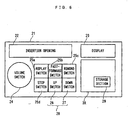
- the tuner section 21 of this television set is comprised of an insertion opening 22 for inserting cassette tapes or other media; a display section 23 for displaying frequency, time, etc. during reception; a volume 24 for adjusting volume; a replay switch 25a; a fast-forward switch 25b; a rewind switch 25c; a stop switch 25d; channel selection switches 28 comprised of an up switch 26 and a down switch 27 for switching broadcast channels upward and downward; a storage section 29 for storing reception frequencies corresponding to the broadcast channels; and a controller section 30 for controlling each of these configurations in the tuner section 21 or for controlling a receiver section (not shown) with an antenna for receiving broadcasting.
- reception frequencies for their respective broadcast channels are stored.
- This storage area is set to a maximum storage area at the point of this storage setting, and a reception frequency is switched among reception frequencies within the maximum area that have been set in the storage section 29 by the up switch 26 and the down switch 27, which are the channel selection switches 28.
- this channel selection method is known to make it possible to reduce the number of preset keys and even to select only the channels for the stored reception frequencies.
- the conventional channel selection method for the television set as mentioned above has a problem that it puts considerable burden on the selection of a target broadcast channel if the preset broadcast channels are quite many, since a user has to operate the up switch 26 and the down switch 27 shown in FIG. 6 to switch to the target broadcast channel among the quite many broadcast channels.
- a television set can be contemplated in which the channel selection switches 28 are comprised of operation keys for respective integers from 0 to 9 instead of the up switch 26 and the down switch 27.
- the channel selection switches 28 are comprised of operation keys for respective integers from 0 to 9 instead of the up switch 26 and the down switch 27.
- the number of digits of broadcast channels variable.
- Both of these confirmation means will put burden on a user, since the former case in which the confirmation button is provided is burdensome as it increases the number of the operation keys that the user presses, and the latter case of timeout requires time before timeout.
- the user will have to frequently enter three digits to view the broadcast channels that are selected with three digits even though the number of digits is set to be variable.
- an object of the present invention is to provide a channel selection method for a television set and the television set that make it possible to quickly select broadcast channels with minimum operations required, to reduce burden on the user, and to achieve the saving of space.
- a channel selection method for a television set that displays images of a specified broadcast channel out of received broadcast waves comprises: in selecting a broadcast channel, waiting for a next entry when an integer other than particular integers in a plurality of integers is entered to entering means which receives an entry of a channel selection number corresponding to a broadcast channel to be selected; arranging, when one of the particular integers is entered, entered integers including the particular integer in the order in which they were entered to confirm the channel selection number; and selecting a broadcast channel corresponding to the confirmed channel selection number to display its images.
- the above mentioned channel selection method for the television set makes it possible to enter a channel selection number with minimum operations required for a user, to confirm the channel selection number when the particular integer is entered in selecting the channel selection number, to quickly select the broadcast channel, to reduce a burden on the user, to eliminate the need for a conventional confirmation button or timeout means, and to achieve the saving of space.
- a television set of the present invention is the television set that displays images of a specified broadcast channel out of received broadcast waves, comprising: an entering means which has operation keys for respective integers and which receives an entry of a channel selection number corresponding to a broadcast channel to be selected; and channel selection controlling means which, if a particular integer in the integers is entered while the channel selection number is being entered to the entering means, arranges entered integers including the particular integer in the order in which they were entered to confirm the channel selection number and directs that the broadcast channel corresponding to the confirmed channel selection number be selected.
- the configuration of the above mentioned television set can provide the above mentioned channel selection method for the television set.
- Another television set of the present invention has a configuration in which the operation keys of the entering means for respective integers are operation keys for respective integers from 0 to 9.
- the configuration of the above mentioned television set can make it possible to enter and confirm a channel selection number only with the operation keys for the respective integers from 0 to 9, to eliminate the need for a conventional confirmation button or timeout means, and to achieve the saving of space.
- another channel selection method of the present invention comprises: in selecting a broadcast channel, measuring selection frequencies of broadcast channels; resetting channel selection numbers so that a smaller channel selection number is reassigned to a broadcast channel selected with a higher frequency when directed to reset the channel selection numbers in accordance with the measured selection frequencies; and selecting, when a channel selection number that has been reset is entered, a broadcast channel corresponding to the entered reset channel selection number to display its images.
- the above mentioned channel selection method for the television set makes it possible to reset selection numbers of broadcast channels in accordance with selection frequencies of broadcast channels that a user has viewed, so that the average number of user's operations for entering a selection numbers can be reduced.
- Another television set of the present invention is the television set that displays images of a specified broadcast channel out of received broadcast waves, comprising: entering means which receives an entry of a channel selection number corresponding to a broadcast channel to be selected; a processing section which stores selection frequencies of broadcast channels corresponding to channel selection numbers entered to the entering means and statistically processes them; and channel selection number modifying means which resets the channel selection numbers so that a channel selection number with fewer digits is reassigned to a broadcast channel selected with a higher broadcast channel selection frequency when directed to reset the channel selection numbers in accordance with the measured selection frequencies.
- the above mentioned configuration of the television set makes it possible to reset the selection numbers of broadcast channels in accordance with the selection frequencies of broadcast channels that a user has viewed, so that the average number of user's operations for entering a selection number can be reduced.
- a channel selection method for television set and the television set will be described below in detail with reference to drawings, the method and the television set representing embodiments of the present invention.
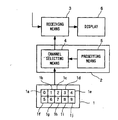
- the television set of the embodiment 1 of the present invention shown in FIG. 1 is the television set that displays images of a specified broadcast channel out of received broadcast waves as in the conventional example described above. However, it differs from the conventional example described above in that it comprises channel entering means 1 and channel selection controlling means 2.
- the channel entering means 1 has operation keys from 1a to 1j for respective integers from 0 to 9 as a plurality of integers and receives an entry of a channel selection number corresponding to a broadcast channel to be selected.
- the channel selection controlling means 2 arranges entered integers including the particular integer in the order in which they were entered and confirms the channel selection number, and then it directs that the broadcast channel corresponding to the confirmed channel selection number be selected.
- the channel selection controlling means 2 is comprised of channel selecting means 4 and presetting means 5.
- the channel selecting means 4 continues waiting for the next entry if an odd number in the integers from 0 to 9 is entered, and if an even number is entered, it arranges entered integers including the even number in the order in which they were entered and confirms the channel selection number (confirmation rule). Then, the channel selecting means 4 directs a receiving means 3 to select the broadcast channel corresponding to the confirmed channel selection number.
- the presetting means 5 indicates correspondence between channel selection numbers and broadcast channels to the channel selecting means 4.
- Display 6 is a display device that displays images, such as a CRT (Cathode Ray Tube), a liquid crystal display, or a plasma display.
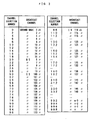
- the channel selecting means 4 is set by the presetting means 5 with correspondence between broadcast channels to be received and channel selection numbers as shown in FIGS. 2 and 3.
- the numbers identical with the channel selection numbers that have been set by the broadcast stations are set as channel selection numbers.
- the broadcast channels and the channel selection numbers are all even numbers and are identical with each other, and they have terminal symbols of even numbers.
- the channels are set in the manner that the broadcast channels decided by the broadcast stations are modified based on the above described confirmation rule to allow the broadcast channels to correspond to the channel selection numbers. Since the broadcast channel and the channel selection number are identical as to the channels from 2ch to 12ch of ground waves, they are set directly as channel selection numbers. However, the broadcast channel and the channel selection number are different as to other channels, so the remaining broadcast channels are appropriately set to channel selection numbers of even number, for example 19ch of ground waves is set to the channel selection number "14", 5ch of BS is set to the channel selection number "30", and so on.
- the user After setting all the broadcast channels, the user actually enters a channel selection number digit by digit to the channel entering means 1.
- the channel selecting means 4 receives a first digit integer entered to the channel entering means 1, and at a step S2 of the channel selecting means 4, it determines if the first digit integer is an even number. If the integer is an odd number, it determines that a further number will be entered and returns to the step S1 to be in a waiting state for the entry of the second digit integer. If the first digit integer is an even number, it proceeds to a step S3 to immediately terminate the enter state and confirm the integer entered as the channel selection number.
- termination of the enter state can be immediately determined by the even number being entered. If a channel selection number having an even number for a second digit like “10", “32”, or “90” is entered, termination of the enter state can be immediately determined with the even number being entered for the second digit. If a channel selection number having an even number for a third digit like “190", "310", or “332” is entered, termination of the enter state can be immediately determined with the even number being entered at the third digit.
- the channel selecting means 4 directs the receiving means 3 to receive the broadcast channel corresponding to the confirmed channel selection number and displays on the display 6 images of the broadcast channel received by the receiving means 3.
- channel entering means 1 is comprised of only the operation keys from 1a to 1j for respective integers from 0 to 9 as far as the channel selection function is concerned so that operation keys other than those keys can be eliminated.
- channel selection numbers of broadcast channels that have been set by broadcast stations do not follow the above described confirmation rule, channel selection numbers unique to this television set will be applied to them. However, if broadcast stations have set their channel selection numbers of broadcast channels by following the confirmation rule, the broadcast channels of the broadcast stations can be matched with the channel selection numbers of this television set. Further, if broadcast stations adopt this manner and assign a few digits to channels to be recommended to users and many digits to other channels, they can effectively differentiate their channels.
- the channel selecting means 4 is provided with the function of confirming a channel selection number entered through the channel entering means 1 in this embodiment 1, the same effects as described above will be achieved even if the channel entering means 1 is provided with this function and is configured to enter the confirmed channel selection number to the channel selecting means 4.
- the operation keys of the channel entering means 1 for the respective integers is the operation keys from 1a to 1j for the respective integers from 0 to 9 in this embodiment 1, the same effects as described above will be achieved even if the channel entering means 1 is configured to have a part of the operation keys from 1a to 1j for the respective integers from 0 to 9, or to have operation keys for extra integers in addition to the operation keys from 1a to 1j for the respective integers from 0 to 9.
- a channel selection number corresponding to a broadcast channel is an integer of even number with three or less digits in this embodiment 1, the same effects as described above will be achieved even if it is an even number with digits other than three.
- a channel selection number has an even number for its terminal symbol in this embodiment 1, the same effects as described above will be achieved even if the terminal symbol is an odd number or a particular number in the numbers from 0 to 9, for example only "0" or "2".
- the number of channels to be actually assigned to respective digit numbers can be changed.
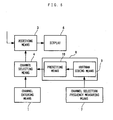
- the television set of the embodiment 2 of the present invention shown in FIG. 5 is the television set that displays images of a specified broadcast channel among received broadcast waves as in the embodiment 1 described above. However, it differs from the embodiment 1 described above in that it has channel selection frequency measuring means 7 and channel selection number modifying means 8.
- the channel selection frequency measuring means 7 is a processing section for measuring selection frequencies of broadcast channels corresponding to channel selection numbers entered to the channel entering means 1, the channel entering means 1 receiving an entry of a channel selection numbers corresponding to a broadcast channels to be selected.
- the channel selection number modifying means 8 resets the channel selection numbers to reassign a smaller channel selection number to a broadcast channel selected with higher frequency when directed to reset the channel selection numbers in accordance with the measured selection frequencies.
- the channel selection number modifying means 8 is comprised of Huffman coding means 9 and presetting means 10, for example.
- the Huffman coding means 9 converts a channel number into a Huffman code using the result of statistical processing of the channel selection frequency measuring means 7, and the presetting means 10 presets a channel setting that was Huffman-coded by the Huffman coding means 9.
- the Huffman coding is a coding method in which different length is assigned to each of the codes to be used depending on the frequency of use of each code to minimize the length of the codes under the condition of actual use.
- the channel selecting means 4 is initialized by the presetting means 10 with correspondence between broadcast channels to be received and channel selection numbers.
- a learning period for learning the selection frequencies of broadcast channels the following is repeatedly executed; a user enters a channel selection number initialized by the presetting means 10 to the channel entering means 1, the channel selecting means 4 directs the receiving means 3 to receive the broadcast channel corresponding to the channel selection number entered to the channel entering means 1, and the channel selecting means 4 displays on the display 6 the broadcast channel received by the receiving means 3.
- the channel selection frequency measuring means 7 also has the channel selection number entered to the channel entering means 1, and it measures the frequency with which the user selects the broadcast channel. The history about broadcast channels viewed in the learning period is stored and maintained by the channel selection frequency measuring means 7.
- the Huffman coding means 9 converts the selection numbers of the broadcast channels into Huffman codes based on the result of the channel selection frequency measuring means 7, and resets the selection numbers of the broadcast channels to reassign selection numbers of broadcast channels with higher frequency of use to selection numbers with a few digits and to reassign selection numbers of broadcast channels with lower frequency of use to selection numbers with many digits in accordance with the Huffman codes.
- the presetting means 10 again performs the presetting of the channel selecting means 4.
- channels are selected in accordance with the channel selection numbers that were preset again.
- the information about the correspondence between the channel selection numbers that were preset again and the broadcast channels can be checked as needed, with configuring the channel selecting means 4 to display the information on the display 6 when required by the user.
- This configuration makes it possible to reset selection numbers of broadcast channels in accordance with the selection frequencies of the broadcast channels viewed by the user, which can reduce the average number of user's operations for the channel entering means.
- channel selection numbers with a few digits it is possible to assign channel selection numbers with a few digits to broadcast channels that the user frequently views, and channel selection numbers with many digits to other broadcast channels. Since the user mainly views the broadcast channels of the channel selection numbers with a few digits, the user can select a desired broadcast channel by entering the channel selection number with a few digits so that the user can reduce the average number of operations. The average number of operations can also be reduced by checking on the display 6 the desired channel selection number having high selection frequency that was reset, and then selecting it.
- channels can be effectively differentiated, since it is possible to assign channel selection numbers with a few digits to popular broadcast channels with a large audience share and channel selection numbers with many digits to other broadcast channels, for example. This is achieved by the fact that a broadcast station performs Huffman coding with respect to an audience share or other factors in advance and decides the channel selection numbers of the broadcast channels based on the coding result, and that a user periodically presets it.
- this embodiment 2 is configured to terminate the learning period by the direction from a user to execute the reset in accordance with selection frequencies of channel selection numbers, the same effects as the above embodiment will be achieved even if it is configured to automatically execute the reset of the channel selection numbers in accordance with the selection frequencies when the user's entries of the selection numbers reach a predetermined number.
Landscapes
- Engineering & Computer Science (AREA)
- Multimedia (AREA)
- Signal Processing (AREA)
- Human Computer Interaction (AREA)
- Circuits Of Receivers In General (AREA)
- Channel Selection Circuits, Automatic Tuning Circuits (AREA)
Applications Claiming Priority (3)
| Application Number | Priority Date | Filing Date | Title |
|---|---|---|---|
| JP22701099 | 1999-08-11 | ||
| JP22701099A JP4544664B2 (ja) | 1999-08-11 | 1999-08-11 | テレビジョン受像機の選局方法とテレビジョン受像機 |
| PCT/JP2000/005234 WO2001013629A1 (fr) | 1999-08-11 | 2000-08-03 | Recepteur de television et technique de selection de canal |
Publications (3)
| Publication Number | Publication Date |
|---|---|
| EP1120962A1 true EP1120962A1 (fr) | 2001-08-01 |
| EP1120962A4 EP1120962A4 (fr) | 2005-09-21 |
| EP1120962B1 EP1120962B1 (fr) | 2007-10-17 |
Family
ID=16854109
Family Applications (1)
| Application Number | Title | Priority Date | Filing Date |
|---|---|---|---|
| EP00951882A Expired - Lifetime EP1120962B1 (fr) | 1999-08-11 | 2000-08-03 | Recepteur de television et technique de selection de canal |
Country Status (7)
| Country | Link |
|---|---|
| US (1) | US6704062B1 (fr) |
| EP (1) | EP1120962B1 (fr) |
| JP (1) | JP4544664B2 (fr) |
| KR (1) | KR100392873B1 (fr) |
| CN (1) | CN1141837C (fr) |
| DE (1) | DE60036775T2 (fr) |
| WO (1) | WO2001013629A1 (fr) |
Families Citing this family (8)
| Publication number | Priority date | Publication date | Assignee | Title |
|---|---|---|---|---|
| JP4655521B2 (ja) * | 2004-06-30 | 2011-03-23 | カシオ計算機株式会社 | データ入力装置、及びプログラム |
| JP4665505B2 (ja) * | 2004-12-15 | 2011-04-06 | 船井電機株式会社 | テレビジョン受信チューナおよびテレビジョン受像機。 |
| CN101335846B (zh) * | 2007-06-29 | 2010-09-08 | 株式会社日立制作所 | 电视机频道的排列方法、排列装置及包含该装置的电视机 |
| CN102457685A (zh) * | 2010-10-20 | 2012-05-16 | Tcl集团股份有限公司 | 频道切换方法及采用该方法的电视机 |
| WO2014028070A1 (fr) | 2012-08-17 | 2014-02-20 | Flextronics Ap, Llc | Changeur de canal pour téléviseur intelligent |
| US11368760B2 (en) | 2012-08-17 | 2022-06-21 | Flextronics Ap, Llc | Applications generating statistics for user behavior |
| KR20160071784A (ko) * | 2014-12-12 | 2016-06-22 | 삼성전자주식회사 | 셋톱박스의 채널 전환 방법 및 이를 위한 장치 |
| CN106027186B (zh) * | 2016-05-27 | 2018-11-09 | 上海传英信息技术有限公司 | 移动通信装置及其收音机功能的操作方法 |
Family Cites Families (11)
| Publication number | Priority date | Publication date | Assignee | Title |
|---|---|---|---|---|
| US4187469A (en) * | 1977-10-07 | 1980-02-05 | Zenith Radio Corporation | Limited channel television receiver with organized memory |
| US4603438A (en) * | 1984-09-28 | 1986-07-29 | Rca Corporation | Tuning system with provisions for skipping nonpreferred tuning positions |
| JPH0622317B2 (ja) * | 1985-05-18 | 1994-03-23 | ソニー株式会社 | 入力表示装置 |
| JPH0758884B2 (ja) * | 1986-07-31 | 1995-06-21 | ソニー株式会社 | テレビ受像機 |
| JP2529367B2 (ja) * | 1988-11-11 | 1996-08-28 | アルパイン株式会社 | 電子式チュ―ナ |
| JPH02135910A (ja) * | 1988-11-17 | 1990-05-24 | Alpine Electron Inc | 電子式チューナ |
| US5045947A (en) * | 1989-05-31 | 1991-09-03 | Jack Beery | Television receiver having memory control for tune-by-label feature |
| JPH0590907A (ja) | 1991-09-27 | 1993-04-09 | Alpine Electron Inc | 選局方法 |
| KR0138746B1 (ko) * | 1992-08-26 | 1998-05-15 | 윤종용 | 메모리된 채널 표시방법 |
| US5963269A (en) * | 1995-06-07 | 1999-10-05 | Beery; Jack | Apparatus for controlling a television receiver using a plurality of stored labels |
| US6188448B1 (en) * | 1997-11-24 | 2001-02-13 | Mitsubishi Digital Electronics America, Inc. | Fast tuning audiovisual display system |
-
1999
- 1999-08-11 JP JP22701099A patent/JP4544664B2/ja not_active Expired - Fee Related
-
2000
- 2000-08-03 US US09/806,229 patent/US6704062B1/en not_active Expired - Lifetime
- 2000-08-03 EP EP00951882A patent/EP1120962B1/fr not_active Expired - Lifetime
- 2000-08-03 WO PCT/JP2000/005234 patent/WO2001013629A1/fr not_active Ceased
- 2000-08-03 KR KR10-2001-7004540A patent/KR100392873B1/ko not_active Expired - Fee Related
- 2000-08-03 CN CNB008016402A patent/CN1141837C/zh not_active Expired - Fee Related
- 2000-08-03 DE DE60036775T patent/DE60036775T2/de not_active Expired - Lifetime
Also Published As
| Publication number | Publication date |
|---|---|
| DE60036775T2 (de) | 2008-02-07 |
| KR100392873B1 (ko) | 2003-07-28 |
| WO2001013629A1 (fr) | 2001-02-22 |
| DE60036775D1 (de) | 2007-11-29 |
| CN1320327A (zh) | 2001-10-31 |
| JP2001054029A (ja) | 2001-02-23 |
| JP4544664B2 (ja) | 2010-09-15 |
| US6704062B1 (en) | 2004-03-09 |
| KR20010080088A (ko) | 2001-08-22 |
| EP1120962A4 (fr) | 2005-09-21 |
| CN1141837C (zh) | 2004-03-10 |
| EP1120962B1 (fr) | 2007-10-17 |
Similar Documents
| Publication | Publication Date | Title |
|---|---|---|
| EP0477753B1 (fr) | Caractéristique du canal précédent dans un récepteur de télévision à entrées multiples RF | |
| US6833878B2 (en) | Channel selection device for use in broadcasting receiver and broadcasting receiver equipped with the same | |
| US7050117B2 (en) | Channel selection device used in digital/analog broadcasting receiver | |
| US7030933B2 (en) | Broadcast receiving system with function of on-screen displaying channel information | |
| JP3037260B2 (ja) | ディジタルテレビジョン受像機のサブチャネル情報表示方法 | |
| US5020139A (en) | Three digit channel entry by use of an extended keypress | |
| US6084645A (en) | Method and apparatus for selecting a channel of a digital multichannel television | |
| US4870492A (en) | Television receiver having automatically programmable skip channel list | |
| JP2795906B2 (ja) | 選局装置 | |
| US6505346B2 (en) | Station jump loop | |
| US6031580A (en) | Apparatus and method for automatically displaying broadcasting program information in television receiver | |
| US6704062B1 (en) | Method for channel selection without confirmation operation by user | |
| US20020104103A1 (en) | Channel selection device for digital/analog broadcasting receiver | |
| JP2004120057A (ja) | 放送受信装置 | |
| KR20020034246A (ko) | 디지털 티브이의 채널 튜닝 제어방법 | |
| US6324695B1 (en) | Method and apparatus for selecting an image mode for television receivers | |
| US7397516B2 (en) | Television broadcast receiver | |
| GB2325805A (en) | Selecting a channel in a composite analogue/digital TV receiver | |
| EP0285869A2 (fr) | Montage d'accord pour la réception de signaux de télévision transmis à partir de stations terrestres et de satellites | |
| JP2000184227A (ja) | 多チャネル放送受信装置 | |
| JPH11164214A (ja) | テレビ放送受信機 | |
| US20060285023A1 (en) | Broadcasting receiver | |
| KR960007546B1 (ko) | 채널선택방법 | |
| KR19990056473A (ko) | 위성 방송 수신기의 프로그램 정보 처리 방법 | |
| KR0153161B1 (ko) | 오에스디 화면을 이용한 채널 자동 선국 방법 |
Legal Events
| Date | Code | Title | Description |
|---|---|---|---|
| PUAI | Public reference made under article 153(3) epc to a published international application that has entered the european phase |
Free format text: ORIGINAL CODE: 0009012 |
|
| 17P | Request for examination filed |
Effective date: 20010406 |
|
| AK | Designated contracting states |
Kind code of ref document: A1 Designated state(s): AT BE CH CY DE DK ES FI FR GB GR IE IT LI LU MC NL PT SE |
|
| AX | Request for extension of the european patent |
Free format text: AL;LT;LV;MK;RO;SI |
|
| RBV | Designated contracting states (corrected) |
Designated state(s): DE FR GB |
|
| A4 | Supplementary search report drawn up and despatched |
Effective date: 20050808 |
|
| RIC1 | Information provided on ipc code assigned before grant |
Ipc: 7H 04N 5/50 B Ipc: 7H 04N 5/44 A Ipc: 7H 04N 5/445 B |
|
| 17Q | First examination report despatched |
Effective date: 20060426 |
|
| GRAP | Despatch of communication of intention to grant a patent |
Free format text: ORIGINAL CODE: EPIDOSNIGR1 |
|
| GRAS | Grant fee paid |
Free format text: ORIGINAL CODE: EPIDOSNIGR3 |
|
| GRAA | (expected) grant |
Free format text: ORIGINAL CODE: 0009210 |
|
| AK | Designated contracting states |
Kind code of ref document: B1 Designated state(s): DE FR GB |
|
| REG | Reference to a national code |
Ref country code: GB Ref legal event code: FG4D |
|
| REF | Corresponds to: |
Ref document number: 60036775 Country of ref document: DE Date of ref document: 20071129 Kind code of ref document: P |
|
| ET | Fr: translation filed | ||
| PLBE | No opposition filed within time limit |
Free format text: ORIGINAL CODE: 0009261 |
|
| STAA | Information on the status of an ep patent application or granted ep patent |
Free format text: STATUS: NO OPPOSITION FILED WITHIN TIME LIMIT |
|
| 26N | No opposition filed |
Effective date: 20080718 |
|
| REG | Reference to a national code |
Ref country code: GB Ref legal event code: 746 Effective date: 20130617 |
|
| REG | Reference to a national code |
Ref country code: DE Ref legal event code: R084 Ref document number: 60036775 Country of ref document: DE Effective date: 20130701 |
|
| REG | Reference to a national code |
Ref country code: FR Ref legal event code: PLFP Year of fee payment: 17 |
|
| REG | Reference to a national code |
Ref country code: FR Ref legal event code: PLFP Year of fee payment: 18 |
|
| REG | Reference to a national code |
Ref country code: FR Ref legal event code: PLFP Year of fee payment: 19 |
|
| PGFP | Annual fee paid to national office [announced via postgrant information from national office to epo] |
Ref country code: DE Payment date: 20180724 Year of fee payment: 19 Ref country code: FR Payment date: 20180712 Year of fee payment: 19 |
|
| PGFP | Annual fee paid to national office [announced via postgrant information from national office to epo] |
Ref country code: GB Payment date: 20180801 Year of fee payment: 19 |
|
| REG | Reference to a national code |
Ref country code: DE Ref legal event code: R119 Ref document number: 60036775 Country of ref document: DE |
|
| GBPC | Gb: european patent ceased through non-payment of renewal fee |
Effective date: 20190803 |
|
| PG25 | Lapsed in a contracting state [announced via postgrant information from national office to epo] |
Ref country code: DE Free format text: LAPSE BECAUSE OF NON-PAYMENT OF DUE FEES Effective date: 20200303 Ref country code: FR Free format text: LAPSE BECAUSE OF NON-PAYMENT OF DUE FEES Effective date: 20190831 |
|
| PG25 | Lapsed in a contracting state [announced via postgrant information from national office to epo] |
Ref country code: GB Free format text: LAPSE BECAUSE OF NON-PAYMENT OF DUE FEES Effective date: 20190803 |