EP1122901A2 - Système de diffusion numérique par voie hertzienne et méthode de transmission de messages d'événements - Google Patents
Système de diffusion numérique par voie hertzienne et méthode de transmission de messages d'événements Download PDFInfo
- Publication number
- EP1122901A2 EP1122901A2 EP01300937A EP01300937A EP1122901A2 EP 1122901 A2 EP1122901 A2 EP 1122901A2 EP 01300937 A EP01300937 A EP 01300937A EP 01300937 A EP01300937 A EP 01300937A EP 1122901 A2 EP1122901 A2 EP 1122901A2
- Authority
- EP
- European Patent Office
- Prior art keywords
- event
- event message
- content
- information
- event information
- Prior art date
- Legal status (The legal status is an assumption and is not a legal conclusion. Google has not performed a legal analysis and makes no representation as to the accuracy of the status listed.)
- Withdrawn
Links
Images





Classifications
-
- H—ELECTRICITY
- H04—ELECTRIC COMMUNICATION TECHNIQUE
- H04H—BROADCAST COMMUNICATION
- H04H60/00—Arrangements for broadcast applications with a direct linking to broadcast information or broadcast space-time; Broadcast-related systems
- H04H60/02—Arrangements for generating broadcast information; Arrangements for generating broadcast-related information with a direct linking to broadcast information or to broadcast space-time; Arrangements for simultaneous generation of broadcast information and broadcast-related information
- H04H60/06—Arrangements for scheduling broadcast services or broadcast-related services
-
- H—ELECTRICITY
- H04—ELECTRIC COMMUNICATION TECHNIQUE
- H04H—BROADCAST COMMUNICATION
- H04H60/00—Arrangements for broadcast applications with a direct linking to broadcast information or broadcast space-time; Broadcast-related systems
- H04H60/02—Arrangements for generating broadcast information; Arrangements for generating broadcast-related information with a direct linking to broadcast information or to broadcast space-time; Arrangements for simultaneous generation of broadcast information and broadcast-related information
- H04H60/04—Studio equipment; Interconnection of studios
Definitions
- the present invention relates to a digital broadcasting system and a method for use in the digital broadcasting system, and more specifically relates to a digital broadcasting system that transmits an event message and an event message transmission method.
- BS broadcasting satellite
- An event message transmission method is used in the digital broadcasting. With this method, immediately after the instruction to transmit an event message (message information) is inputted or at a specified time to transmit the event message, the event message is transmitted from a broadcast station to each receiver that runs an application. After receiving the event message, each receiver displays the event message on a television screen or performs predetermined processing (event processing) using the event message as a trigger.
- event messages called “manual event messages” in this specification
- event messages called “time event messages” in this specification
- Fig. 1 is a block diagram showing the construction of a conventional digital broadcasting system 500.
- the digital broadcasting system 500 is a computer system that supports the process from the production and editing of contents for digital broadcasting to the transmission of the contents over broadcasting waves.
- the digital broadcasting system 500 includes an authoring unit 501, a content storing unit 520, a content registering unit 530, and a transmission system 510.
- the transmission system 510 includes a video and audio transmission control unit 511, a content transmission control unit 512, amanual event message generating and issuing unit (hereinafter abbreviated to "manual event message unit”) 513, and a multiplexing unit 514.
- the authoring unit 501 is an editing apparatus that produces contents for data broadcasts (the contents for data broadcasts are hereinafter simply referred to as the "contents").
- the content storing unit 520 is a storing apparatus that stores the produced contents.
- Fig. 1 shows an example content (a content 521) stored in the content storing unit 520.
- the content 521 includes various files that can be roughly classified into three types of files: a content structure information file 522, scene information files 523, and monomedia information files 524.
- the content structure information file 522 is a file that holds information concerning the whole structure of the content 521.
- Each scene information file 523 includes scene information specifying the components of a display screen.
- Each monomedia information file 524 includes a monomedia, such as a bitmap, that is a component of a scene.
- the content registering unit 530 reads, according to a certain schedule, the contents stored in the content storing unit 520, converts the read contents to be in a MPEG2 section format, and registers the converted contents at the transmission system 510 (transfers the converted contents to the content transmission control unit 512).
- the video and audio transmission control unit 511 is a real-time encoder that reads video and audio information from a VTR (videotape recorder) or another apparatus, generates MPEG2 elementary streams (video streams and audio streams) by subjecting the video and audio information to compression coding, and outputs the MPEG2 elementary streams to the multiplexing unit 514.
- VTR videotape recorder
- MPEG2 elementary streams video streams and audio streams
- the content transmission control unit 512 performs the following operations according to a certain program schedule.
- the content transmission control unit 512 generates carousel data streams from the contents sent from the content registering unit 530 and outputs the carousel data streams to the multiplexing unit 514.
- the carousel data streams are streams of information (carousel data) that is to be repeatedly broadcasted with a data carousel method.
- the manual event message unit 513 is a terminal apparatus that includes a manual event message storing unit 513a, such as a hard disc drive apparatus; and includes a graphical user interface for an operator. According to the instructions inputted by the operator through the graphical user interface, the manual event message unit 513 generates and edits a manual event message and stores the manual event message in the manual event message storing unit 513a. Immediately after receiving an operator's instruction to issue the manual event message, the manual event message unit 513 reads the manual event message from the manual event message storing unit 513a and outputs the read manual event message to the multiplexing unit 514.
- the multiplexing unit 514 generates packets from the video and audio streams, carousel data streams, and manual event message that are respectively sent from the video and audio transmission control unit 511, the content transmission control unit 512, and the manual event message unit 513.
- the multiplexing unit 514 then multiplexes the packets to generate a transport stream and transmits the transport stream over a broadcasting wave.
- the operation procedure that should be performed by each receiver that receives the manual event message 3 is embedded into the content 521 as a program by the authoring unit 501. More specifically, as shown in Fig . 1, the operation procedure is written as a program in a scene information file 523a.
- the scene information file 523a includes a program for having each receiver that receives the event message 3 display message data included in the event message 3 on a screen.
- each manual event message includes a name ID, a message ID, message data, the number of transmissions, and a transmission interval.
- the manual event message unit 513 Immediately after receiving an operator's instruction to transmit a manual event message, the manual event message unit 513 repeatedly outputs a message ID and message data of the event message to the multiplexing unit 514 at a specified transmission interval for a specified number of times(corresponding to the number of transmissions included in the event message).
- Each receiver has already received a program corresponding to the manual event message (a program having the message ID of the manual event message). Therefore, immediately after receiving the manual event message, each receiver displays message data included in the manual event message by superimposing the message data on a current image displayed on a television screen. As a result, urgent messages (such as the report of an earthquake) that need to be asynchronously transmitted is immediately transmitted from a broadcast station to each receiver.
- the first object of the present invention is to provide a digital broadcasting system and an event message transmission method, each of which allows operations concerning manual event messages to be performed smoothly.
- the second object of the present invention is to provide a digital broadcasting system arid an event message transmission method, each of which allows manual event messages to be generated in advance.
- the third object of the present invention is to provide a digital broadcasting system and an event message transmission method, each of which produces a content where manual event messages are distinguished from time event messages.
- a digital broadcasting system including an authoring apparatus and a transmission apparatus that transmits a content transferred from the authoring apparatus, where the authoring apparatus includes: a generating unit for generating event information, which defines an event message that should be transmitted immediately after an operator's instruction to transmit the event message is inputted, and a processing unit for processing a content, which should be transferred to the transmission apparatus, by adding the generated event information.
- the generated event information may include the event message and tag information, the tag information allowing the authoring apparatus to recognize that the event message should be (a) transferred to the transmission apparatus before the operator's instruction is inputted and (b) transmitted from the transmission apparatus immediately after the operator's instruction is inputted.
- the authoring apparatus further may include: an extracting unit for extracting the event information from the processed content by referring to the tag information; and a transferring unit for transferring the extracted event information to the transmission apparatus
- the transmission apparatus may include: a storing unit for storing the event message included in the event information transferred from the authoring apparatus; an issuing unit for issuing the event message stored in the storing unit by receiving the operator's instruction; and a multiplexing unit for multiplexing and transmitting the issued event message with a content that has been transferred from the authoring apparatus.
- each manual event message which has been defined during the production of a content, is extracted at the authoring apparatus and is accumulated in the transmission apparatus. This saves the operator from generating each event message at the transmission apparatus when the event message becomes necessary. That is, it is enough for the operator to generate only event messages that unexpectedly become necessary later at the transmission apparatus. Also, it becomes possible to define manual event messages using a markup language such as HTML. As a result, the compatibility with other description languages can be easily maintained.
- the generated event information may include the event message and tag information, the tag information allowing the authoring apparatus to recognize that the event message should be issued to the transmission apparatus and transmitted therefrom immediately after the operator's instruction is inputted.
- the authoring apparatus may further include: an extracting unit for extracting the event information from the processed content by referring to the tag information; a storing unit for storing the event message included in the extracted event information; and an issuing unit for issuing the event message stored in the storing unit to the transmission apparatus by receiving the operator's instruction, and the transmission apparatus may include: a multiplexing unit for multiplexing and transmitting the issued event message with a content that has been transferred from the authoring apparatus.
- This construction allows the producer to perform the generation, accumulation, and issuance operations concerning manual event messages at the authoring apparatus (in an upstream process) instead of at the transmission apparatus.
- the authoring apparatus may further includes an obtaining unit for obtaining a content, to which event information has been added, from the outside, and the extracting unit may extract the event information from the obtained content. Also, the obtaining unit may obtain a content, to which event information has been added, from a transportable recording medium or via a network.
- contents produced at other authoring apparatuses are obtained from recording media or via networks, and the generation, accumulation, and issuance operations concerning manual event messages are performed for the obtained contents.
- the present invention may be realized as processing procedures of the characteristic construction elements of the digital broadcasting system of the present invention.
- the processing procedures may be achieved as a program to be executed by a computer.
- the present invention may be realized as a computer-readable recording medium that records a content for digital broadcasting.
- the recorded content includes (i) event information defining a manual event message that should be transmitted to each receiving apparatus immediately after an operator's instruction to transmit the event message is inputted and (ii) a program that describes processing, which each receiving apparatus should perform when receiving the manual event message.
- the content stated above includes statements defining manual event messages that are likely to become necessary, in addition to programs describing event processing that should be performed by receivers that receive the manual event messages. This allows a broadcast station to provide each receiver with an advanced service where each receiver performs predetermined processing according to the event information that has been asynchronously transmitted from the broadcast station.
- the present invention allows each broadcast station to smoothly perform the generation, accumulation, and issuance operations concerning manual event messages. As a result, the present invention has a great practical use as a digital broadcasting system and an event message transmission method.
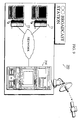
- Fig. 2 shows the overall construction of a digital broadcasting system 100 of the first embodiment.
- the digital broadcasting system 100 allows a manual event message to be defined during the production of a content and includes authorizing apparatuses 11 and 12 and a transmission system 110.
- the authoring apparatuses 11 and 12 are each connected to the transmission system 110 via a LAN (local area network).
- LAN local area network
- Fig. 3 is a functional block diagram showing the construction of the digital broadcasting system 100 of the first embodiment.
- the authoring apparatus 11 includes an authoring unit 101, a content storing unit 120, a content registering unit 130, and a manual event message extracting unit 131.
- manual event messages are event messages that are transmitted immediately after the instructions to transmit the event messages are inputted at broadcast stations.
- time event messages that are transmitted at times specified at broadcast stations.
- the transmission system 110 includes a video and audio transmission control unit 511, a content transmission control unit 512, a manual event message generating and issuing unit (hereinafter abbreviated to "manual event message unit") 113, and a multiplexing unit 514.
- a video and audio transmission control unit 511 a content transmission control unit 512
- a manual event message generating and issuing unit hereinafter abbreviated to "manual event message unit”
- multiplexing unit 514 a multiplexing unit 514.
- the authoring unit 101 is an apparatus that includes authoring software for editing interactive contents for digital broadcasts, basic software (such as Windows (Microsoft Corp.)) on which the authoring software runs, and a personal computer. With this construction, the authoring unit 101 produces and edits contents according to the instructions inputted by an operator.
- the authoring unit 101 includes a manual event message generating unit lOla that generates manual event messages.
- the authoring software includes a general-purpose text editor as well as authoring tools specialized in data broadcasts.
- the manual event message generating unit lOla provides a graphical user interface for a producer who is to define manual event messages. Through the graphical user interface, the producer inputs various instructions and the definition of each manual event message. As a result, the manual event message generating unit 101a generates each statement that defines a manual event message in a certain notation, embeds each generated statement into a content structure information file 122, and outputs the content structure information file 122 to the content storing unit 120.
- the content storing unit 120 is a storing apparatus that stores contents produced by the authoring unit 101 and includes, for instance, a large-capacity hard disc drive.
- a content 121 stored in the content storing unit 120 includes the content structure information file 122, a scene information file group 123, and a monomedia information file group 124.
- the content. structure information file 122 includes each definition (between tags ⁇ manual issue> and ⁇ /manual issue>) of a manual event message.
- tags ⁇ manual issue> and ⁇ /manual issue> may be replaced with tags ⁇ receive> and ⁇ /receive> whose names are derived from the fact that before receiving an operator's instruction to transmit a manual event message, the transmission system 110 "receives" the event message between the tags ⁇ manual issue> and ⁇ /manual issue>.
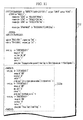
- Fig. 4 shows an example program list showing the content of the content structure information file 122.
- the content structure information file 122 includes a description portion 122b (between tags ⁇ repetitive transmission> and ⁇ /repetitive transmission>) that is written in a markup language and specifies information to be repeatedly broadcasted using a data carousel method, a description portion 122c (tags ⁇ audio ...> and ⁇ video ...>) that specifies the video and audio streams to be reproduced with a data broadcast, a statement 122d (a tag ⁇ event_msg ...>) that defines a time event message, and manual event information 122e (between tags ⁇ manual issue> and ⁇ /manual issue>) that is generated by the manual event message generating unit 101a and includes (defines) at least one manual even message.
- the attribute "start time” shows the start time of the repetitive transmission using the data carousel method and the attribute “duration” shows how long the repetitive transmission should be performed.
- the data carousel is repeatedly transmitted for twenty minutes.
- tags ⁇ module ...> and ⁇ /module> show each module (unit data) to be transmitted with the data carousel method.
- Each tag ⁇ resource ...> shows a material file used in one or more scenes
- each attribute "type” shows the type of a file
- each attribute "src” shows a file name.
- the module named "Module 1" includes three scenes (scene information files) and one bitmap image (a monomedia information file).
- the attribute "component_tag" in each of tags ⁇ audio ...> and ⁇ video ...> shows an audio stream or a video stream.
- Each tag ⁇ event_msg ... /> defines the construction element of an event message.
- this tag ⁇ event_msg ... /> defines a manual event message.
- the attributes "id”, “message_id”, “start_time”, “num_times”, “interval”, “private_data” in each tag ⁇ event_msg ... /> give information concerning a corresponding event message and respectively shows the name, the message id, the transmission start time, the number of transmissions, the transmission interval (in units of milliseconds), and the message data (the content of the event message, such as the character string shown in this drawing) of the event message.
- three manual event messages included in the manual event information 122e and one time event message 122d are defined in the content structure information file 122.
- the time event message (event message 1), it is programmed to repeatedly transmit the character string assigned a message ID "0001" ("This program has been sponsored ") twenty times from "00:10:00" at intervals of five milliseconds.
- the manual eventmessage (eventmessage 2), it is programmed to repeatedly transmit the character string assigned a message ID "0002" ("Up-to-the-minute reports on election, ... is projected to win") twenty times at intervals of five milliseconds immediately after an operator's instruction to transmit this message is received.
- each program related to an event message (a description concerning event processing) is arranged in the scene information file 123a, like in the conventional digital broadcasting system.
- the content registering unit 130 reads the content 121 stored in the content storing unit 120, converts the read content to be in the MPEG2 section format, and registers the converted content at the content transmission control unit 512 of the transmission system 110 (transfers the converted content to the content transmission control unit 512).
- the content registering unit 13C includes specialized software for performing these operations, basic software (such as Windows (Microsoft Corp.)) on which the specialized software runs, and a personal computer.
- the manual event message extracting unit 131 performs the following operations before the registration of the converted content by the content registering unit 130 is started.
- the manual event message extracting unit 131 extracts all of the manual event information 122e from the read content 121 and sends the manual event information 122e to the manual event message unit 113.
- the content registering unit 130 registers the content, from which the manual event information 122e has been extracted (deleted) by the manual event message extracting unit 131, at the transmission system 110.
- the manual event message unit 113 is a terminal apparatus that includes a manual event message storing unit 113a, such as a hard disc drive apparatus, and displays a graphical user interface for the operator.
- the manual event message unit 113 has a function of additionally storing each manual event message sent from the manual event message extracting unit 131 in the manual event message storing unit 113a.
- each manual event message included in the content structure information 122a is transferred from the manual event message extracting unit 131 and is stored in the manual event message storing unit 113a as a transferred manual event message 113b.
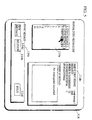
- Fig. 5 shows an example display screen displayed by the manual event message unit 113.
- the display screen 114 includes a list 114a of names of the manual event messages 113b stored in the manual event message storing unit 113a, details 114b about an event message selected from the list 114a, and a button icon group 114c that allows the operator to input various instructions.
- the event messages 2-4 on the list 114a correspond to three manual event messages included in the manual event information 122e shown in Fig. 4.
- These event messages are information that have been generated by the manual event message generating unit 101a of the authoring unit 101 according to instructions from the producer during the production of a content, stored in the content storing unit 120, sent to the content registering unit 130, extracted by the manual event message extracting unit 131, and registered at the manual event message unit 113 (transferred to the manual event message storing unit 113a).
- the operator selects one of the event messages on the list 114a, checks the content of the selected event message, edits the selected event message, and immediately issues the edited event message by clicking on an issue button 114f. During these operations, the operator uses a mouse and keyboard. Note that like in the conventional digital broadcasting system, the operator also generates a new manual event message and registers the generated manual event message at the manual event message storing unit 113a by clicking on a new message button 114d and deletes a manual event message registered at the manual event message storing unit 113a by clicking on a deletion button 114e.
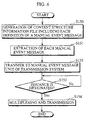
- Fig. 6 is a flowchart showing the operation procedure of the digital broadcasting system 100 from the generation of manual event messages to the issuance of the manual event messages.
- the manual event message generating unit 101a of the authoring unit 101 generates each manual event message (the manual event information 122e) between the tags ⁇ manual issue> and ⁇ /manual issue> that defines a manual event message, embeds each generated manual event message into the content structure information file 122 along with other statements defining construction elements of the content 121, and outputs the content structure information file 122 to the content storing unit 120.
- the content structure information file 122 is stored along with the scene information file group 123 and the monomedia information file group 124 (step S150).
- the manual event message extracting unit 131 After the content registering unit 130 reads the content 121 from the content storing unit 120, the manual event message extracting unit 131 searches the content 121 (the content structure information file 122) for tags ⁇ manual issue> and ⁇ /manual issue> to find the manual event information 122e. The manual event message extracting unit 131 then extracts the manual event information 122e from the content 121 and outputs the extracted manual event information 122e to the manual event message unit 113. The content registering unit 130 processes remaining information 122-124 and registers the processed information at the transmission system 110 (step S151).
- the manual event message unit 113 After receiving each manual event message (the extracted manual event information 122e) from the manual event message extracting unit 131, the manual event message unit 113 additionally stores each received manual event message in the manual event message storing unit 113a (step S152).
- the manual event message unit 113 displays a display screen through which the operator inputs various instructions. According to the instructions inputted by the operator, the manual event message unit 113 displays a list of event messages in the manual event message storing unit 113a and receives an operator's instruction to change, delete, or issue an event message on the list (step S153).
- the manual event message unit 113 Immediately after receiving an operator's instruction to issue an event message on the list, the manual event message unit 113 reads the event message from the manual event message storing unit 113a and outputs message data, such as a character string, of the event message to the multiplexing unit 514 along with a corresponding message ID. The manual event message unit 113 performs this output operation according to the attributes of the event message, such as the number of transmissions and a transmission interval ("Yes" in step S153) .
- the multiplexing unit 514 After receiving various information, such as the message data, from the manual event message unit 113, the multiplexing unit 514 generates packets from the received information, generates transmission data by multiplexing the packets with other packets generated from streams, and transmits the transmission data over a broadcasting wave (step S154).
- Example display screens which are displayed by a receiver (a television set) that receives a broadcast program from the digital broadcasting system 100, are described below with reference to Figs. 7 and 8.
- Fig. 7 shows example display screens that are displayed before the receiver receives an event message.
- the display screen 600 is a scene showing news headlines and includes various screen objects, such as weather information 601, a television image 602, and two buttons 603 and 604 linked to other scenes.
- the display screen 605 shows detailed news and is displayed when the button 603 in the display screen 600 is selected by the operator.
- the display screen 609 shows detailed news and is displayed when the button 604 in the display screen 600 is selected by the operator.
- the display screen 605 shows detailed news 606, a television image 607, and a return button 608 that is to be selected by the operator to return to the display screen 600.
- the display screens 600, 605, and 609, and the television image 602 respectively correspond to contents of descriptions "news headline bml”, “detailed news 1.bml”, “detailed news 2.bml”, and "news image 2" in the content structure information file 122 shown in Fig. 4.
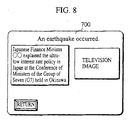
- Fig. 8 shows an example display screen that is displayed immediately after the receiver receives an event message.
- the display screen 700 corresponds to the case where message data "An earthquake occurred” is displayed in the upper area of the display screen 605 (in Fig. 7) that shows detailed news.
- This example corresponds to the case where an event message (event message 3) whose message_id is "0003" is transmitted over a broadcasting wave and the scene file "detailed news 1.bml" shown in Fig. 4 includes a program for displaying the message data of the event message in the upper area of a current display screen immediately after the event message is received.
- Each receiver that displays the content "detailed news 1.bml” executes the program included in the content. Therefore, while displaying this content, the receiver monitors broadcast data and checks whether an event message whose message id is "0003" is transmitted. If the event message is transmitted, the receiver displays the message data "An earthquake occurred” included in the event message by superimposing the message data on a current display screen.
- the digital broadcasting system 100 of the first embodiment allows a producer to produce manual event messages as well as programs for the event messages during the production of a content at the authorizing apparatus 11. This means that the digital broadcasting system 100 simplifies the operations concerning manual event messages that have conventionally been complicated because different apparatuses are used to write programs for manual event messages and to generate and issue the manual event messages.
- the digital broadcasting system 100 also allows the producer to write manual event messages in advance during the production of a content. As a result, it is enough for the producer to generate and issue only event messages that becomes necessary later using the manual event message unit 113. Consequently, the digital broadcasting system 100 allows the producer to flexibly manage manual event messages.
- the digital broadcasting system 100 allows event processing to be programmed, with manual event messages being distinguished from time event messages. This is because, like the content structure information file shown in Fig. 4, different message IDs are used to define manual event messages and time event messages and the digital broadcasting system 100 distinguishes the manual event messages from the time event messages by referring to the message IDs.
- Fig. 9 shows the overall construction of a digital broadcasting system 200 of the second embodiment.
- the digital broadcasting system 200 allows a producer to define each manual event message during the production of a content and to accumulate and issue each defined manual event message before registering the manual event messages at a transmission system. That is, the digital broadcasting system 200 allows the producer to perform these operations in an upstream process concerning manual event messages.
- the digital broadcasting system 200 includes authorizing apparatuses 21 and 22 and a transmission system 210.
- the authoring apparatuses 21 and 22 are each connected to the transmission system 210 via a LAN (local area network). It should be noted here that the authoring apparatuses 21 and 22 have the same construction and so only the authorizing apparatus 21 is described below.
- Fig. 10 is a functional block diagram showing the construction of the digital broadcasting system 200 of the second embodiment.
- the authoring apparatus 21 includes an authoring unit 201, a content storing unit 220, a content registering unit 230, an immediate event message extracting unit 231, an immediate event message selecting unit 232, and an immediate event message storing unit 233.
- the transmission system 210 includes a video and audio transmission control unit 511, a content transmission control unit 512, an event message transmission control unit 213, and a multiplexing unit 514.
- the following description centers on the differences between the first and second embodiments.
- the authoring unit 201 includes a characteristic construction element (an immediate event message generating unit 201a) that generates an immediate event message, in addition to the functions of the authoring unit 101 of the first embodiment.
- a characteristic construction element an immediate event message generating unit 201a
- an immediate event message is a manual event message that is to be transmitted over a broadcasting wave immediately after being registered at (transferred to) the transmission system 210. That is, until an operator's instruction to issue the immediate event message is received, the immediate event message is not registered at the transmission system 210 and is accumulated in the authoring apparatus 21 that performs the upstream process concerning event messages. Immediately after an operator's instruction to issue the immediate event message is received, the event message is transferred to the transmission system 210 and is transmitted therefrom.
- the immediate event message generating unit 201a provides a graphical user interface for a producer who is to define immediate event messages. Through the graphical user interface, the producer inputs various instructions and each description defini ig an immediate event message. As a result, the immediate event message generating unit 201a generates each statement that defines an immediate event message in a certain notation, embeds each generated statement into a content structure information file 222, and outputs the content structure information file 222 to the content storing unit 220.
- the content storing unit 220 is a storing apparatus that stores contents produced by the authoring unit 201 and includes, for instance, a large-capacity hard disc drive.
- the content structure information file 222 includes each definition (between tags ⁇ immediate> and ⁇ /immediate>) of an immediate event message.
- tags ⁇ immediate> and ⁇ /immediate> may be replaced with tags ⁇ after> and ⁇ /after> whose names are derived from the fact that "after" receiving an operator's instruction to transmit an immediate event message, the transmission system 210 receives the event message between the tags ⁇ immediate> and ⁇ /immediate>.
- Fig. 11 shows an example program list showing the content of the content structure information file 222.
- the content structure information file 222 includes immediate event information 222b (between tags ⁇ immediate> and ⁇ /immediate>) that is generated by the immediate event message generating unit 201a and includes (defines) at least one immediate event message.
- the immediate event information 222b defines three immediate event messages.
- the immediate event message (event message 4), it is programmed to repeatedly transmit the character string assigned a message ID "0004" ("The next is ") twenty times at intervals of five milliseconds immediately after the event message is registered at the transmission system 210 according to an operator's instruction inputted at the authoring apparatus 21 to issue the event message.
- each program for an event message (a description concerning an event processing) is included in a scene information file 223a, like in the conventional digital broadcasting system.
- the content registering unit 230 reads the content 221 from the content storing unit 220, converts the read content to be in the MPEG2 section format, and registers the converted content at the content transmission control unit 512 of the transmission system 210.
- the immediate event message extracting unit 231 performs the following operations before the content registering unit 230 processes the content 221 read from the content storing unit 220.
- the immediate event message extracting unit 231 extracts the immediate event information 222b from the read content and stores the extracted immediate event information 222b in the immediate event message storing unit 233. Accordingly, the content registering unit 230 registers the content, from which the immediate event information 222b has been extracted (deleted) by the immediate event message extracting unit 231, at the transmission system 210.
- the immediate event message storing unit 233 is a semiconductor memory or a large-capacity storing apparatus, such as a hard disc, and stores each immediate event message 233a, as shown in Fig. 10.
- the immediate event message selecting unit 232 is, for instance, an intelligent terminal apparatus and provides a graphical user interface for the operator. According to the instructions inputted by the operator through the graphical user interface, the immediate event message selecting unit 232 displays and edits each necessary immediate event message 233a stored in the immediate event message storing unit 233. Immediately after receiving an operator's instruction to issue an immediate event message, the immediate event message selecting unit 232 reads the immediate event message from the immediate event message storing unit 233 and outputs the read immediate event message to the event message transmission control unit 213.
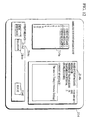
- Fig. 12 shows an example display screen displayed by the immediate event message selecting unit 232.
- the display screen 214 includes a list 214a of names of the immediate event messages 233a registered at the immediate event message storing unit 233, details 214b about an event message selected from the list 214a, and a button icon group 214c that allows the operator to input various instructions.
- the event messages 2-4 on the list 214a correspond to three immediate event messages included in the immediate event information 222b shown in Fig. 11.
- the operator selects one of the event messages on the list 214a, checks the content of the selected event message, edits the selected event message, and immediately issue the edited event message by clicking on an issue button 214f. During these operations, the operator uses a mouse and a keyboard. Note that like the operations using the manual event message unit 113 of the first embodiment, the operator also generates a new immediate event message and registers the generated immediate event message at the immediate event message storing unit 233 by clicking on a new message button 214d and deletes an immediate event message registered at the immediate event message storing unit 233 by clicking on a deletion button 214e.
- the event message transmission control unit 213 has a function of sending each immediate event message to the multiplexing unit 514 immediately after receiving the immediate event message from the immediate event message selecting unit 232.
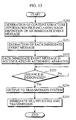
- Fig. 13 is a flowchart showing the operation procedure of the digital broadcasting system 200 from the generation of immediate event messages to the issuance of the immediate event messages.
- the immediate event message generating unit 201a of the authoring unit 201 According to instructions inputted by the producer of the content 221, the immediate event message generating unit 201a of the authoring unit 201 generates each immediate event message (the immediate event information 222b) between the tags ⁇ immediate> and ⁇ /immediate>, embeds the generated immediate event information 222b into the content structure information file 222 along with other descriptions defining construction elements of the content, and outputs the content structure information file 222 to the content storing unit 220.
- the content structure information file 222 is stored along with the scene information file group 223 and the monomedia information file group 224 (step S250).
- the immediate event message extracting unit 231 After the content registering unit 230 reads the content 221 from the content storing unit 220, the immediate event message extracting unit 231 searches the content 221 (the content structure information file 222) for tags ⁇ immediate> and ⁇ /immediate> to find the immediate event information 222b. The immediate event message extracting unit 231 then extracts the immediate event information 222b from the content 221 (step S251) and stores the extracted immediate event information 222b in the immediate event message storing unit 233 (step S252).
- the immediate event message selecting unit 232 receives instructions from the operator through a display screen. According to the instructions inputted by the operator, the immediate event message selecting unit 232 displays a list of the event messages stored in the immediate event message storing unit 233 and receives an operator's instruction to change, delete, or issue an event message on the list (step S253).
- the immediate event message selecting unit 232 Immediately after receiving an operator's instruction to issue an event message on the list, the immediate event message selecting unit 232 reads the event message from the immediate event message storing unit 233 and outputs message data, such as a character string, of the event message to the event message transmission control unit 213 along with a corresponding message ID.
- the immediate event message selecting unit 232 performs this processing according to the attributes of the event message, such as the number of transmissions and a transmission interval (step S254).
- the event message transmission control unit 213 After receiving various information, such as the message data, from the immediate event message selecting unit 232, the event message transmission control unit 213 sends the various information to the multiplexing unit 514.
- the multiplexing unit 514 generates packets from the received information in real time, generates transmission data by multiplexing the packets with other packets generated from streams, and transmits the transmission data over a broadcasting wave (step S255).
- the digital broadcasting system 200 of the second embodiment allows a producer to produce immediate event messages as well as programs for the event messages during the production of a content at the authorizing apparatus 21.
- Each of the generated immediate event messages is accumulated in the authoring apparatus 21 (in an upstream process) and is issued through the transmission system 210 immediately after an operator's instruction to issue the event message is received.
- the digital broadcasting system 200 allows a producer to generate event messages in advance during the production of a content even if it is unsure whether the event messages needs to be issued. When it becomes necessary to issue the generated event messages, the producer immediately issues the event messages without operating the transmission system 210.
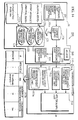
- Fig. 14 is a functional block diagram showing the construction of a digital broadcasting system 300 of the third embodiment.
- the digital broadcasting system 300 allows manual event messages, which are included in contents produced at other authoring apparatuses, to be read during the production of a content.
- An authoring apparatus 31 shown in Fig. 14 differs from the authoring apparatus 11 of the first embodiment (see Fig. 3) in that the authoring apparatus 31 includes a content registering unit 330 instead of the content registering unit 130 and additionally includes an I/O unit 340. Note that the same construction elements as those in the first embodiment are assigned the same reference numbers and are not described here. Therefore, the following description centers on the construction elements unique to the third embodiment.
- the content registering unit 330 has a function of reading contents generated by other authoring apparatuses via the I/O unit 340, in addition to the functions of the content registering unit 130 of the first embodiment.
- the I/O unit 340 is an I/O port included in the content registering unit 330 and a recording medium reading apparatus is connected to the I/O port.
- the connected recording medium reading apparatus is, for instance, a floppy disc drive, a CD-ROM drive, a DVD-ROM drive, a DVD-RAM drive, or an MO drive.
- the content registering unit 330 reads contents, which have been generated by other authoring apparatuses, from a recording medium. The content registering unit 330 then performs the same processing as the content registering unit 130 on each read content.
- the I/O unit 340 may be an NIC (network interface card).
- the content registering unit 330 reads contents from a NAS (network attached storage), a SAN (storage area network), or a file server apparatus, each of which stores contents generated by other authoring apparatuses, via a network connected to the NIC.
- each statement defining an event message is written in a content structure information file.
- the pyesent invention is not limited to this.
- each statement defining a manual event message may be written in an external reference file 401 that is different from a content structure information file 400, as shown in Fig. 15. In this case, a pointer to the external reference file is written in the content structure information file 400.
- first and second embodiments may be combined to realize a modified digital broadcasting system where the construction elements 101a and 131 unique to the first embodiment and the construction elements 201a and 231-233 unique to the second embodiment are added to a conventional digital broadcasting system.
- an advanced digital broadcasting system is realized that allows a producer to simultaneously produce the first event messages (such as manual event messages) and the second event messages (such as immediate event messages), with the first event messages being distinguished from the second event messages. That is, this digital broadcasting system allows event processing to be programmed, with the first event messages being distinguished from the second event messages.
- the characteristic construction elements of the present invention may be realized as programs that are executed by a general-purpose computer. Also, the programs may be distributed using recording media, such as CD-ROMs, or via transmission media, such as communication networks. Further, the data files 122, 222, 400, and 401 that contain characteristic event message define statements of the present invention may also be distributed using recording media or via transmission media.
Landscapes
- Engineering & Computer Science (AREA)
- Signal Processing (AREA)
- Two-Way Televisions, Distribution Of Moving Picture Or The Like (AREA)
- Television Systems (AREA)
- Information Transfer Between Computers (AREA)
Applications Claiming Priority (4)
| Application Number | Priority Date | Filing Date | Title |
|---|---|---|---|
| JP2000026797 | 2000-02-03 | ||
| JP2000026797 | 2000-02-03 | ||
| JP2000044983 | 2000-02-22 | ||
| JP2000044983 | 2000-02-22 |
Publications (2)
| Publication Number | Publication Date |
|---|---|
| EP1122901A2 true EP1122901A2 (fr) | 2001-08-08 |
| EP1122901A3 EP1122901A3 (fr) | 2006-07-12 |
Family
ID=26584822
Family Applications (1)
| Application Number | Title | Priority Date | Filing Date |
|---|---|---|---|
| EP01300937A Withdrawn EP1122901A3 (fr) | 2000-02-03 | 2001-02-02 | Système de diffusion numérique par voie hertzienne et méthode de transmission de messages d'événements |
Country Status (4)
| Country | Link |
|---|---|
| US (1) | US7028324B2 (fr) |
| EP (1) | EP1122901A3 (fr) |
| CN (1) | CN1254953C (fr) |
| HK (1) | HK1039414A1 (fr) |
Families Citing this family (20)
| Publication number | Priority date | Publication date | Assignee | Title |
|---|---|---|---|---|
| US7159039B1 (en) * | 2000-02-28 | 2007-01-02 | Verizon Laboratories Inc. | Systems and methods for providing in-band and out-band message processing |
| US6636237B1 (en) * | 2000-07-31 | 2003-10-21 | James H. Murray | Method for creating and synchronizing links to objects in a video |
| US7240286B2 (en) * | 2000-08-25 | 2007-07-03 | Matsushita Electric Industrial Co., Ltd. | Content editing apparatus, content editing method, content editing program, and computer-readable storage medium |
| GB2391978B (en) * | 2001-03-16 | 2005-02-09 | Nds Ltd | Method and system for literal data access |
| US7886003B2 (en) * | 2001-07-06 | 2011-02-08 | Ericsson Television, Inc. | System and method for creating interactive events |
| US20030084443A1 (en) * | 2001-11-01 | 2003-05-01 | Commerce Tv Corporation, Inc. | System and method for creating program enhancements for use in an interactive broadcast network |
| JP2004030327A (ja) * | 2002-06-26 | 2004-01-29 | Sony Corp | コンテンツ関連情報提供装置及びコンテンツ関連情報提供方法、電子掲示板システム、並びにコンピュータ・プログラム |
| US7009655B2 (en) * | 2002-07-23 | 2006-03-07 | Mediostream, Inc. | Method and system for direct recording of video information onto a disk medium |
| EP1698139B1 (fr) * | 2003-10-27 | 2007-11-07 | Matsushita Electric Industrial Co., Ltd. | Terminal de reception de donnees et procede de creation de courrier |
| US7970060B2 (en) * | 2004-04-15 | 2011-06-28 | Panasonic Corporation | Contents generator and method |
| US20060069766A1 (en) * | 2004-07-30 | 2006-03-30 | Bruce Hamilton | Method and system for treating events and data uniformly |
| US8180883B1 (en) * | 2004-08-02 | 2012-05-15 | Cisco Technology, Inc. | Method and system for processing directives included in management events |
| JP2006302052A (ja) * | 2005-04-22 | 2006-11-02 | Hitachi Ltd | ストレージシステムおよびデジタル放送システム |
| US20070199023A1 (en) * | 2006-01-26 | 2007-08-23 | Small Kelly E | Audiovisual systems and methods of presenting audiovisual content |
| US7676461B2 (en) * | 2007-07-18 | 2010-03-09 | Microsoft Corporation | Implementation of stream algebra over class instances |
| EP2177998B1 (fr) * | 2007-08-08 | 2017-10-04 | Panasonic Intellectual Property Management Co., Ltd. | Dispositif de communication et son procédé de traitement d'événement |
| JP2009076981A (ja) * | 2007-09-18 | 2009-04-09 | Toshiba Corp | 携帯端末装置 |
| US20100088325A1 (en) | 2008-10-07 | 2010-04-08 | Microsoft Corporation | Streaming Queries |
| US9158816B2 (en) | 2009-10-21 | 2015-10-13 | Microsoft Technology Licensing, Llc | Event processing with XML query based on reusable XML query template |
| CH715990A1 (fr) * | 2019-03-22 | 2020-09-30 | Jyad Murr | Procédé mis en oeuvre par ordinateur pour la diffusion d'informations de contenu multimedia. |
Family Cites Families (7)
| Publication number | Priority date | Publication date | Assignee | Title |
|---|---|---|---|---|
| JPS51101721U (fr) * | 1975-02-13 | 1976-08-16 | ||
| US5260778A (en) * | 1990-06-26 | 1993-11-09 | General Instrument Corporation | Apparatus for selective distribution of messages over a communications network |
| JP3498403B2 (ja) * | 1995-02-10 | 2004-02-16 | 株式会社日立製作所 | ディジタル信号受信装置 |
| US6496981B1 (en) * | 1997-09-19 | 2002-12-17 | Douglass A. Wistendahl | System for converting media content for interactive TV use |
| US5945986A (en) * | 1997-05-19 | 1999-08-31 | University Of Illinois At Urbana-Champaign | Silent application state driven sound authoring system and method |
| EP0912053A1 (fr) * | 1997-10-24 | 1999-04-28 | CANAL+ Société Anonyme | Système de télévision numérique à canaux multiples |
| US6543051B1 (en) * | 1998-08-07 | 2003-04-01 | Scientific-Atlanta, Inc. | Emergency alert system |
-
2001
- 2001-02-02 EP EP01300937A patent/EP1122901A3/fr not_active Withdrawn
- 2001-02-03 CN CNB011123877A patent/CN1254953C/zh not_active Expired - Fee Related
- 2001-02-05 US US09/777,023 patent/US7028324B2/en not_active Expired - Fee Related
-
2002
- 2002-02-05 HK HK02100892.7A patent/HK1039414A1/en unknown
Also Published As
| Publication number | Publication date |
|---|---|
| HK1039414A1 (en) | 2002-04-19 |
| US20010013130A1 (en) | 2001-08-09 |
| CN1310527A (zh) | 2001-08-29 |
| US7028324B2 (en) | 2006-04-11 |
| CN1254953C (zh) | 2006-05-03 |
| EP1122901A3 (fr) | 2006-07-12 |
Similar Documents
| Publication | Publication Date | Title |
|---|---|---|
| US7028324B2 (en) | Digital broadcasting system and event message transmission method | |
| US6751800B1 (en) | Information processing apparatus, method, and computer-readable medium | |
| JP3800267B2 (ja) | 送信装置および送信方法、受信装置および受信方法、並びに伝送媒体 | |
| JP4169180B2 (ja) | 一方向データ・ストリームに対し双方向接続をシミュレートする携帯通信装置 | |
| US6920641B1 (en) | Transmit device and method thereof, record/play device and method thereof as well as recording system and media | |
| JP4081966B2 (ja) | 放送番組受信装置及びその方法 | |
| US6064420A (en) | Simulating two way connectivity for one way data streams for multiple parties | |
| US20070199037A1 (en) | Broadcast program content retrieving and distributing system | |
| CA2377571A1 (fr) | Controle automatique de la diffusion et de l'execution d'applications interactives afin de maintenir une operation synchrone avec des programmes diffuses | |
| CN101473649A (zh) | 创建和观看定制的多媒体片段的方法和系统 | |
| EP1104128A1 (fr) | Systeme de radiodiffusion | |
| JPH11103452A (ja) | インタラクティブ番組における対話及び画面制御方法 | |
| JPWO2004073309A1 (ja) | ストリーム出力装置及び情報提供装置 | |
| CN101981625A (zh) | 将元数据与内容相关联用于直播制作的方法与设备 | |
| US7079497B2 (en) | Method for receiving information, apparatus for receiving information and medium | |
| JP3262539B2 (ja) | データ放送方式及び同方式に適用されるデータ受信装置 | |
| JP4275980B2 (ja) | 放送番組編成制作支援システム,編成端末装置,制作端末装置,放送番組編成制作方法,およびプログラム | |
| JP3766280B2 (ja) | コンテンツ仲介装置およびコンテンツ仲介処理方法 | |
| US6922400B2 (en) | Transmission method of digital broadcasting, digital broadcasting receiver, and digital broadcasting station system | |
| US20060218248A1 (en) | Contents distribution system, contents distribution method, and computer-readable storage medium therefor | |
| JP2005130075A (ja) | テレビジョン受信機 | |
| JP2001313620A (ja) | デジタル放送システム | |
| EP1251649A2 (fr) | Système de distribution de programmes télévisés | |
| JP4590464B2 (ja) | 放送受信装置及びその制御方法 | |
| JP4592282B2 (ja) | 受信方法及び装置 |
Legal Events
| Date | Code | Title | Description |
|---|---|---|---|
| PUAI | Public reference made under article 153(3) epc to a published international application that has entered the european phase |
Free format text: ORIGINAL CODE: 0009012 |
|
| AK | Designated contracting states |
Kind code of ref document: A2 Designated state(s): AT BE CH CY DE DK ES FI FR GB GR IE IT LI LU MC NL PT SE TR |
|
| AX | Request for extension of the european patent |
Free format text: AL;LT;LV;MK;RO;SI |
|
| PUAL | Search report despatched |
Free format text: ORIGINAL CODE: 0009013 |
|
| AK | Designated contracting states |
Kind code of ref document: A3 Designated state(s): AT BE CH CY DE DK ES FI FR GB GR IE IT LI LU MC NL PT SE TR |
|
| AX | Request for extension of the european patent |
Extension state: AL LT LV MK RO SI |
|
| 17P | Request for examination filed |
Effective date: 20061107 |
|
| AKX | Designation fees paid |
Designated state(s): DE FR GB |
|
| 17Q | First examination report despatched |
Effective date: 20080123 |
|
| STAA | Information on the status of an ep patent application or granted ep patent |
Free format text: STATUS: THE APPLICATION IS DEEMED TO BE WITHDRAWN |
|
| RAP1 | Party data changed (applicant data changed or rights of an application transferred) |
Owner name: PANASONIC CORPORATION |
|
| 18D | Application deemed to be withdrawn |
Effective date: 20080607 |
|
| REG | Reference to a national code |
Ref country code: HK Ref legal event code: WD Ref document number: 1039414 Country of ref document: HK |