EP1122904A2 - Access-Knoten für optische Netze mit variablen Access-Wellenlängen - Google Patents
Access-Knoten für optische Netze mit variablen Access-Wellenlängen Download PDFInfo
- Publication number
- EP1122904A2 EP1122904A2 EP01100608A EP01100608A EP1122904A2 EP 1122904 A2 EP1122904 A2 EP 1122904A2 EP 01100608 A EP01100608 A EP 01100608A EP 01100608 A EP01100608 A EP 01100608A EP 1122904 A2 EP1122904 A2 EP 1122904A2
- Authority
- EP
- European Patent Office
- Prior art keywords
- access node
- light
- optical
- user devices
- wavelengths
- Prior art date
- Legal status (The legal status is an assumption and is not a legal conclusion. Google has not performed a legal analysis and makes no representation as to the accuracy of the status listed.)
- Withdrawn
Links
Images
Classifications
-
- H—ELECTRICITY
- H04—ELECTRIC COMMUNICATION TECHNIQUE
- H04Q—SELECTING
- H04Q11/00—Selecting arrangements for multiplex systems
- H04Q11/0001—Selecting arrangements for multiplex systems using optical switching
- H04Q11/0005—Switch and router aspects
-
- H—ELECTRICITY
- H04—ELECTRIC COMMUNICATION TECHNIQUE
- H04Q—SELECTING
- H04Q11/00—Selecting arrangements for multiplex systems
- H04Q11/0001—Selecting arrangements for multiplex systems using optical switching
- H04Q11/0062—Network aspects
- H04Q2011/0086—Network resource allocation, dimensioning or optimisation
Definitions
- Access nodes for optical networks with variable access wavelengths User device for connection to such an access node, Method for feeding several signals of multiple users in an optical network and using one Access node and at least one user device Implementation of such a procedure.
- the invention is concerned with an access node for optical Networks with variable access wavelengths, one user device for connection to such an access node, a method for feeding in multiple signals from multiple users into an optical network and the use of an access node and at least one user device for implementation of such a procedure.
- Tunable light sources are required for this, whose wavelength can be changed.
- transponders These are devices that have any input wavelength implement a fixed output wavelength, usually first convert the signal to baseband and this signal then the output wavelength again is modulated. This means that the user of the send optical network on any wavelength can.
- this known solution has the major disadvantage that a separate transponder for each user in the access node is required. As a result, network access is only possible by applying of considerable costs.
- the risk that the transponder Signal quality deteriorated This is particularly the case with designs the case that only reinforce in the baseband or with Limiters work.
- there are known ones Solutions the danger that not all signal formats are processed can be. This is particularly the case with versions of the Case that make a complete regeneration in the baseband.
- the object of the invention is therefore, access nodes, user devices and a method for feeding several signals available to multiple users in an optical network who do not have the above problems.
- an access node it is provided that the required light sources with the different wavelengths are arranged in this itself and no longer in the individual user devices. This makes it unnecessary for everyone Provide users in the access node with a transponder. Likewise it is not necessary to have line cards in the user devices exchange because the respective wavelength in the access node is generated and from there to the individual user devices is transmitted. Furthermore, the operator of the optical Network through an access node according to the invention full control over all light sources in its network. He is thus able to easily maintain the frequency constancy and the power level of the light signals in its network to deliver.
- the spatial proximity of the light sources enables in addition, the division of expensive monitoring equipment, such as optical spectrum analyzers, among all Swell.
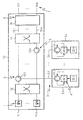
- the single figure shows a schematic representation of a Access node with user devices connected to an optical network connected.
- the optical access node 10 has n light sources 11.1-11.n where n is greater than or equal to the number of different ones Is wavelengths used in the optical network.
- the wavelengths of these light sources 11.1-11.n are identical with the wavelengths used in the optical network. Because the light sources are spatially close together, namely in the access node 10 and not for every user, can preferably be used laser arrays that oppose Single lasers are cheaper and in their emission wavelengths already on the channel division of the wavelength division multiplex can be manufactured in a coordinated manner.
- the principle conceivable use of laser arrays related Transponders fail due to the space requirement of the baseband electronics, which fills an entire card. In order to it is necessary to have each transponder card with a separate one To equip lasers. Because the present invention is based on baseband electronics waived is such a limitation unavailable.
- a switching matrix 12 connects to the light sources 11.1-11.n. on. K First circulators are connected to the switching matrix 12 13.1-13.k, which are arranged in parallel lines.
- the first circulators 13.1-13.k are first light guides via k 3.1-3.k, which are led out of the access node 10, connected to the user devices 2.1-2.k.
- Within the access node 10 follows the first circulators 13.1-13.k a second switching matrix 14.
- the second switching matrix 14 is via k connections 15.1-15.k with a signal processing block 16 connected. From signal processing block 16 starting from the second light guide 4.1-4.m are from the access node 10 led out with the optical network (not shown) are connected.
- the access node 10 Via the first light guide 3.1-3.k with the access node 10 connected user devices 2.1-2.k each have one second circulator 21.1-21.k and a modulator 22.1-22.k on.
- the modulators 22.1-22.k are each with an information source 23.1-23.k connected.
- a method according to the invention for feeding several Signals from several users in an optical network also run the device described above as follows:
- the light sources 11.1-11.n of the optical access node 10 there is a generation 1 of different light signals Wavelengths. Act at these wavelengths used in the optical network as described above Wavelengths.
- the number corresponds n of the light sources 11.1-11.n exactly the number of wavelengths of wavelength division multiplex, i.e. the number of optical Channels per light guide.
- the n unmodulated light signals from the light sources 11.1-11.n become the first switching matrix 12 supplied.
- the first switching matrix 12 routes this Light signals to the k first circulators 13.1-13.k accordingly the assignment of the individual wavelengths.
- the unmodulated are in the individual user devices 2.1-2.k.
- Light signals on the second circulators 21.1-21.k on the respective modulator 22.1-22.k forwarded.
- the modulators 22.1-22.k there is a modulation 4 of these Light signals according to the information from the information sources 23.1-23.k passed on to the modulators 22.1-22.k become.
- the now modulated light signals are in turn back in via the same first light guides 3.1-3.k.
- the access node 10 transmit, which is a coupling 5 in corresponds to the access node 10.
- the second circulators 21.1-21.k and the modulators 22.1-22.k can also reflection modulators are used.
- first circulators 13.1-13.k can also use directional couplers become.
- Such directional couplers are preferably used which are designed as fiber directional couplers.
- the second switching matrix 14 the light signals according to their wavelengths ordered and then over the connections 15.1-15.k for further processing to the signal processing block 16 forwarded.
- This signal processing block 16 contains at least wavelength division multiplexer. But he can do the same good also additional switching fields, optical switches, optical Amplifiers, optical monitoring devices and / or other signal processing units included. If the Signal processing block 16 contains a further switching matrix, this is advantageously done with the second switching matrix 14 summarized. In this case, the connections are omitted 15.1-15.k. Generation occurs in the wave multiplexers 6 of wavelength division multiplex signals.
- the signal processing block 16 transmits those produced in it Wavelength division multiplex signals on the second light guide 4.1-4.m, resulting in a feed 7 into the optical Network leads. If only a single second light guide 4.1 the signal processing block 16 with the optical network connects, there is one terminal multiplexer, with two second Optical fibers 4.1, 4.2 an add / drop multiplexer and for more than two second light guides 4.1-4.m an optical cross-connect. If there is more than one second light guide 4.1-4.m the possibility, instead of a number m each of light sources 11.1-11.n a wavelength less Number of light sources 11.1-11.n to be provided, and this Light sources 11.1-11.n under several user devices 2.1-2.k to share.
- the first switching matrix 12 must be multicast-capable be carried out.
- a wavelength more than m light sources 11.1-11.n it is also possible to for a wavelength more than m light sources 11.1-11.n to be provided to 11.1-11.n to a redundant light source 11.1-11.n of the same wavelength to be able to fall back on.
Landscapes
- Engineering & Computer Science (AREA)
- Computer Networks & Wireless Communication (AREA)
- Optical Communication System (AREA)
- Use Of Switch Circuits For Exchanges And Methods Of Control Of Multiplex Exchanges (AREA)
Abstract
Description
Claims (12)
- Access-Knoten (10) für optische Netze mit variablen Access-Wellenlängen, der über jeweils einen ersten Lichtleiter (3.1-3.k) mit Nutzergeräten (2.1-2.k) verbindbar und über zweite Lichtleiter (4.1-4.m) an das optische Netz anschließbar ist,
dadurch gekennzeichnet, daß
er Lichtquellen (11.1-11.n) aufweist, die auf Wellenlängen des optischen Netzes emittieren, deren Licht in den Nutzgeräten (2.1-2.k) modulierbar ist. - Access-Knoten (10) nach Anspruch 1,
dadurch gekennzeichnet, daß
die Lichtquellen (11.1-11.n) Laser, insbesondere Laser Arrays, sind. - Access-Knoten (10) nach Anspruch 1 oder 2,
dadurch gekennzeichnet, daß
er optische Koppelelemente aufweist, insbesondere erste Zirkulatoren (13.1-13.k) und/oder Richtkoppler, die zwischen den Lichtquellen (11.1-11.n) und den ersten Lichtleitern (3.1-3.k) angeordnet sind. - Access-Knoten (10) nach einem der vorstehenden Ansprüche,
dadurch gekennzeichnet, daß
zwischen den Lichtquellen (11.1-11.n) und den ersten Lichtleitern (3.1-3.k) ein erstes Koppelfeld (12) angeordnet ist, das bevorzugt multicast-fähig ist. - Access-Knoten (10) nach einem der vorstehenden Ansprüche,
dadurch gekennzeichnet, daß zwischen den ersten Lichtleitern (3.1-3.k) und den zweiten Lichtleitern (4.1-4.m) ein Signalverarbeitungsblock (16) mit optischen Wellenlängenmultiplexern angeordnet ist. - Access-Knoten (10) nach Anspruch 5,
dadurch gekennzeichnet, daß
zwischen den ersten Lichtleitern (3.1-3.k) und dem Signalverarbeitungsblock (16) ein zweites Koppelfeld (14) angeordnet ist. - Access-Knoten (10) nach Anspruch 5 oder 6,
dadurch gekennzeichnet, daß
der Signalverarbeitungsblock (16) mindestens eine zusätzliche Signalverarbeitungseinheit aufweist, insbesondere ein weiteres Koppelfeld, einen optischen Schalter, einen optischen Verstärker und/oder eine optische Überwachungseinrichtung. - Access-Knoten (10) nach Anspruch 6 und 7,
dadurch gekennzeichnet, daß
das weitere Koppelfeld mit dem zweiten Koppelfeld (14) zusammengefaßt ist. - Nutzergerät (2.1-2.k) zum Anschluß an einen Access-Knoten (10) nach einem der vorstehenden Ansprüche,
dadurch gekennzeichnet, daß
es einen zweiten Zirkulator (21.1-21.k) und einen Modulator (22.1-22.k) aufweist, der mit einer Informationsquelle (23.1-23.k) verbindbar ist. - Nutzergerät (2.1-2.k) zum Anschluß an einen Access-Knoten (10) nach einem der Ansprüche 1 bis 8,
dadurch gekennzeichnet, daß
es einen in Reflexion arbeitenden Modulator aufweist, der mit einer Informationsquelle (23.1-23.k) verbindbar ist. - Verfahren zum Einspeisen von mehreren Signalen von mehreren Nutzern in ein optisches Netz mit folgenden Schritten:Erzeugung (1) von n Lichtsignalen unterschiedlicher Wellenlänge in einem Access-Knoten (10), der insbesondere nach einem der Ansprüche 1 bis 7 ausgestaltet ist;Auskoppeln (2) der Lichtsignale aus dem Access-Knoten (10) und Übermitteln (3) zu k Nutzergeräten (2.1-2.k), die insbesondere nach Anspruch 8 und/oder 9 ausgestaltet sind;Modulieren (4) der Lichtsignale mit den Nutzersignalen in den Nutzergeräten (2.1-2.k);Einkoppeln (5) der modulierten Lichtsignale in den Access-Knoten (10);Erzeugen (6) von Wellenlängenmultiplexsignalen im Access-Knoten (10); undEinspeisen (7) der Wellenlängenmultiplexsignale in das optische Netz.
- Verwendung eines Access-Knotens (10) nach einem der Ansprüche 1 bis 7 und mindestens eines Nutzergeräts (2.1-2.k) nach einem der Ansprüche 8 und/oder 9 zur Durchführung eines Verfahrens nach Anspruch 10.
Applications Claiming Priority (2)
| Application Number | Priority Date | Filing Date | Title |
|---|---|---|---|
| DE10004290A DE10004290B4 (de) | 2000-02-01 | 2000-02-01 | Access-Knoten für optische Netze mit variablen Access-Wellenlängen, Nutzergerät zum Anschluss an einen solchen Access-Knoten, Verfahren zum Einspeisen von mehreren Signalen von mehreren Nutzern in ein optisches Netz und Verwendung eines Access-Knotens und mindestens eines Nutzergeräts zur Durchführung eines solchen Verfahrens |
| DE10004290 | 2000-02-01 |
Publications (2)
| Publication Number | Publication Date |
|---|---|
| EP1122904A2 true EP1122904A2 (de) | 2001-08-08 |
| EP1122904A3 EP1122904A3 (de) | 2005-07-27 |
Family
ID=7629415
Family Applications (1)
| Application Number | Title | Priority Date | Filing Date |
|---|---|---|---|
| EP01100608A Withdrawn EP1122904A3 (de) | 2000-02-01 | 2001-01-10 | Access-Knoten für optische Netze mit variablen Access-Wellenlängen |
Country Status (3)
| Country | Link |
|---|---|
| US (1) | US7013086B2 (de) |
| EP (1) | EP1122904A3 (de) |
| DE (1) | DE10004290B4 (de) |
Cited By (1)
| Publication number | Priority date | Publication date | Assignee | Title |
|---|---|---|---|---|
| RU2311739C2 (ru) * | 2005-11-03 | 2007-11-27 | Юрий Анатольевич Волков | Распределенная мультисервисная телекоммуникационная система |
Families Citing this family (4)
| Publication number | Priority date | Publication date | Assignee | Title |
|---|---|---|---|---|
| GB2371431A (en) * | 2001-01-20 | 2002-07-24 | Marconi Comm Ltd | Optical switch positioned between multi-wavelenth light sources and a plurality of modulators |
| FR2838568B1 (fr) * | 2002-04-11 | 2004-06-18 | Cit Alcatel | Generateur de signaux optiques porteurs de donnees et de longueurs d'onde porteuses selectionnables |
| WO2011061742A2 (en) * | 2009-11-18 | 2011-05-26 | Yissum Research Development Company Of The Hebrew University Of Jerusalem, Ltd. | Communication system and method for managing data transfer through a communication network |
| EP3416316B1 (de) * | 2017-06-14 | 2019-09-25 | Nokia Solutions and Networks Oy | Karte und sender mit optischer leitung |
Family Cites Families (13)
| Publication number | Priority date | Publication date | Assignee | Title |
|---|---|---|---|---|
| DE3422219A1 (de) * | 1984-06-15 | 1985-12-19 | Standard Elektrik Lorenz Ag, 7000 Stuttgart | Optisches nachrichtenuebertragungssystem im teilnehmeranschlussbereich |
| IT1185679B (it) * | 1985-09-03 | 1987-11-12 | Face Standard Ind | Sistema di multiplazione a divisione di frequenza per reti a fibre ottiche in ottica coerente |
| DE69530803D1 (de) * | 1994-02-17 | 2003-06-26 | Toshiba Kawasaki Kk | Optisches Wellenlängenmultiplex Netzwerk |
| US5870216A (en) * | 1995-10-26 | 1999-02-09 | Trw Inc. | Splitterless optical broadcast switch |
| JPH1079705A (ja) * | 1996-09-03 | 1998-03-24 | Fujitsu Ltd | 光変調装置及び光変調方法 |
| JP3042605B2 (ja) * | 1997-02-14 | 2000-05-15 | 日本電気株式会社 | 光送信器 |
| DE19734957C1 (de) * | 1997-08-13 | 1998-12-24 | Lucent Tech Network Sys Gmbh | Verfahren und Anordnung zur Wellenlängenstabilisierung für mehrkanalige optische Übertragungssysteme |
| JP3930952B2 (ja) * | 1997-10-20 | 2007-06-13 | 富士通株式会社 | 光クロスコネクト装置,光挿入分岐装置および光源装置 |
| US6275511B1 (en) * | 1998-07-13 | 2001-08-14 | E-Tek Dynamics | Overlapping multiple fiber Bragg gratings |
| US6535313B1 (en) * | 1998-10-16 | 2003-03-18 | Lucent Technologies Inc. | Dynamically assignable optical signal access control apparatus |
| US6626590B1 (en) * | 1998-12-08 | 2003-09-30 | Nippon Telegraph And Telephone Corporation | Optical communication network |
| JP2000286492A (ja) * | 1999-01-28 | 2000-10-13 | Nec Corp | 光 源 |
| CA2300235A1 (en) * | 1999-03-22 | 2000-09-22 | Kazem A. Sohraby | Wavelength division multiplexed system for optical access rings |
-
2000
- 2000-02-01 DE DE10004290A patent/DE10004290B4/de not_active Expired - Fee Related
-
2001
- 2001-01-10 EP EP01100608A patent/EP1122904A3/de not_active Withdrawn
- 2001-02-01 US US09/775,040 patent/US7013086B2/en not_active Expired - Fee Related
Cited By (1)
| Publication number | Priority date | Publication date | Assignee | Title |
|---|---|---|---|---|
| RU2311739C2 (ru) * | 2005-11-03 | 2007-11-27 | Юрий Анатольевич Волков | Распределенная мультисервисная телекоммуникационная система |
Also Published As
| Publication number | Publication date |
|---|---|
| DE10004290B4 (de) | 2004-01-29 |
| US20010013963A1 (en) | 2001-08-16 |
| EP1122904A3 (de) | 2005-07-27 |
| US7013086B2 (en) | 2006-03-14 |
| DE10004290A1 (de) | 2001-08-09 |
Similar Documents
| Publication | Publication Date | Title |
|---|---|---|
| DE69129893T2 (de) | Optisches Übertragungsnetz mit Frequenzmultiplexierung | |
| EP0998798B1 (de) | Verfahren und anordnung zur datenübertragung im wellenlängenmultiplexverfahren in einem optischen ringnetz | |
| DE69131668T2 (de) | Verfahren und vorrichtung zum optischen schalten | |
| DE69424311T2 (de) | Querverbindungssystem für ein optisches netzwerk | |
| DE69021778T2 (de) | Kommunikationsnetzwerksystem für Breitbandinformation mit Übertragunsleitungen für kohärente optische Daten. | |
| DE60320044T2 (de) | Paket und optische leitweglenkgeräte und verfahren | |
| EP0499065A2 (de) | Optisches Nachrichtenübertragungssystem für den Teilnehmeranschlussbereich mit optischen Verstärkern | |
| EP0755616A1 (de) | Transportnetz mit hoher übertragungskapazität für die telekommunikation | |
| EP0394728A2 (de) | Optisches Nachrichtenübertragungssystem für den Teilnehmeranschlussbereich | |
| DE69233488T2 (de) | Optische Koppelmatrix für Wellenlängen- Multiplexsignale | |
| DE60030112T2 (de) | Verfahren und vorrichtung zur erhöhung der anzahl von von optischen wellenlängen übertragenen informationskanälen | |
| DE69634149T2 (de) | Optischer knoten in einem optischen busnetz | |
| EP0972367B1 (de) | Zugangsnetz zur übertragung von optischen signalen | |
| DE69634769T2 (de) | Optischer Schalter mit Synchronisation | |
| DE69816026T2 (de) | Verfahren zur Erzeugung eines Verwaltungskanals in einem optischen Netzwerk, ein Leitungsabschluss, eine erste Netzabschlusskarte und eine zweite Netzabschlusskarte zur Durchführung des Verfahrens | |
| DE3632047C2 (de) | Optisches Nachrichtenübertragungssystem für Schmalband- und Breitband-Nachrichtensignale | |
| DE69817021T2 (de) | Verfahren und vorrichtung zur kodierung von wdm signalen | |
| DE4226838B4 (de) | Optisches, breitbandiges Nachrichtenübertragungssystem für Kommunikations- und Verteildienste | |
| DE10004290B4 (de) | Access-Knoten für optische Netze mit variablen Access-Wellenlängen, Nutzergerät zum Anschluss an einen solchen Access-Knoten, Verfahren zum Einspeisen von mehreren Signalen von mehreren Nutzern in ein optisches Netz und Verwendung eines Access-Knotens und mindestens eines Nutzergeräts zur Durchführung eines solchen Verfahrens | |
| DE102006008404B4 (de) | Optische Schaltungsstrukturen zur Realisierung eines Knotens höherer Ordnung in einem optischen Übertragungsnetzwerk sowie Basis- und Erweiterungsschaltungsstruktur | |
| DE60104100T2 (de) | Optisches kommunikationssystem mit zwei parallelen übertragungswegen | |
| EP1588512A2 (de) | Sender und verfahren zur nachrichten bertragung auf einer optischen faser | |
| EP1371163B1 (de) | Selbstheilende ringstruktur zur optischen nachrichtenübertragung im wellenlängenmultiplex und add/drop-multiplexer hierfür | |
| EP1751896B1 (de) | Schaltung zur signalübertragung in einem netzwerkknoten, insbesondere für eine kanalkarte für eine optische wdm-signalübertragungseinrichtung | |
| EP1554832B1 (de) | Optischen add/drop-multiplexer und ringstruktur zur datenübertragung mittels eines optischen wellenlängenmultiplexe-systems |
Legal Events
| Date | Code | Title | Description |
|---|---|---|---|
| PUAI | Public reference made under article 153(3) epc to a published international application that has entered the european phase |
Free format text: ORIGINAL CODE: 0009012 |
|
| AK | Designated contracting states |
Kind code of ref document: A2 Designated state(s): AT BE CH CY DE DK ES FI FR GB GR IE IT LI LU MC NL PT SE TR |
|
| AX | Request for extension of the european patent |
Free format text: AL;LT;LV;MK;RO;SI |
|
| PUAL | Search report despatched |
Free format text: ORIGINAL CODE: 0009013 |
|
| AK | Designated contracting states |
Kind code of ref document: A3 Designated state(s): AT BE CH CY DE DK ES FI FR GB GR IE IT LI LU MC NL PT SE TR |
|
| AX | Request for extension of the european patent |
Extension state: AL LT LV MK RO SI |
|
| 17P | Request for examination filed |
Effective date: 20050704 |
|
| AKX | Designation fees paid |
Designated state(s): DE FR GB IT |
|
| STAA | Information on the status of an ep patent application or granted ep patent |
Free format text: STATUS: THE APPLICATION IS DEEMED TO BE WITHDRAWN |
|
| 18D | Application deemed to be withdrawn |
Effective date: 20060221 |