EP1124419B1 - Procede mettant en oeuvre un acide glutamique et un acide glycolique pour augmenter la productivite d'une plante - Google Patents
Procede mettant en oeuvre un acide glutamique et un acide glycolique pour augmenter la productivite d'une plante Download PDFInfo
- Publication number
- EP1124419B1 EP1124419B1 EP99971266A EP99971266A EP1124419B1 EP 1124419 B1 EP1124419 B1 EP 1124419B1 EP 99971266 A EP99971266 A EP 99971266A EP 99971266 A EP99971266 A EP 99971266A EP 1124419 B1 EP1124419 B1 EP 1124419B1
- Authority
- EP
- European Patent Office
- Prior art keywords
- composition
- ppm
- plant
- acid
- glutamic acid
- Prior art date
- Legal status (The legal status is an assumption and is not a legal conclusion. Google has not performed a legal analysis and makes no representation as to the accuracy of the status listed.)
- Expired - Lifetime
Links
- AEMRFAOFKBGASW-UHFFFAOYSA-N Glycolic acid Chemical compound OCC(O)=O AEMRFAOFKBGASW-UHFFFAOYSA-N 0.000 title claims abstract description 205
- WHUUTDBJXJRKMK-UHFFFAOYSA-N Glutamic acid Natural products OC(=O)C(N)CCC(O)=O WHUUTDBJXJRKMK-UHFFFAOYSA-N 0.000 title claims abstract description 107
- 235000013922 glutamic acid Nutrition 0.000 title claims abstract description 105
- 239000004220 glutamic acid Substances 0.000 title claims abstract description 105
- 238000000034 method Methods 0.000 title claims abstract description 51
- 230000001965 increasing effect Effects 0.000 title claims abstract description 40
- WHUUTDBJXJRKMK-VKHMYHEASA-N L-glutamic acid Chemical compound OC(=O)[C@@H](N)CCC(O)=O WHUUTDBJXJRKMK-VKHMYHEASA-N 0.000 title claims description 19
- 239000000203 mixture Substances 0.000 claims abstract description 126
- ZCCIPPOKBCJFDN-UHFFFAOYSA-N calcium nitrate Chemical compound [Ca+2].[O-][N+]([O-])=O.[O-][N+]([O-])=O ZCCIPPOKBCJFDN-UHFFFAOYSA-N 0.000 claims abstract description 40
- 229920000954 Polyglycolide Polymers 0.000 claims abstract description 38
- 239000004633 polyglycolic acid Substances 0.000 claims abstract description 38
- 159000000007 calcium salts Chemical class 0.000 claims abstract description 17
- 230000006353 environmental stress Effects 0.000 claims abstract 3
- 235000013399 edible fruits Nutrition 0.000 claims description 18
- 230000012010 growth Effects 0.000 claims description 11
- 239000000575 pesticide Substances 0.000 claims description 11
- 201000010099 disease Diseases 0.000 claims description 9
- 208000037265 diseases, disorders, signs and symptoms Diseases 0.000 claims description 9
- 239000000417 fungicide Substances 0.000 claims description 8
- 230000000855 fungicidal effect Effects 0.000 claims description 7
- 230000007226 seed germination Effects 0.000 claims description 6
- XLYOFNOQVPJJNP-UHFFFAOYSA-N water Substances O XLYOFNOQVPJJNP-UHFFFAOYSA-N 0.000 claims description 6
- 230000005070 ripening Effects 0.000 claims description 5
- 230000008641 drought stress Effects 0.000 claims description 4
- 241000196324 Embryophyta Species 0.000 description 93
- 238000011282 treatment Methods 0.000 description 41
- OZDAOHVKBFBBMZ-UHFFFAOYSA-N 2-aminopentanedioic acid;hydrate Chemical compound O.OC(=O)C(N)CCC(O)=O OZDAOHVKBFBBMZ-UHFFFAOYSA-N 0.000 description 35
- 240000007124 Brassica oleracea Species 0.000 description 21
- 235000007688 Lycopersicon esculentum Nutrition 0.000 description 17
- 240000003768 Solanum lycopersicum Species 0.000 description 17
- 239000000243 solution Substances 0.000 description 16
- 235000002566 Capsicum Nutrition 0.000 description 13
- 241000758706 Piperaceae Species 0.000 description 13
- 238000002474 experimental method Methods 0.000 description 13
- 230000008635 plant growth Effects 0.000 description 12
- 235000003899 Brassica oleracea var acephala Nutrition 0.000 description 10
- 235000011301 Brassica oleracea var capitata Nutrition 0.000 description 10
- 235000001169 Brassica oleracea var oleracea Nutrition 0.000 description 10
- 230000000694 effects Effects 0.000 description 8
- 244000207740 Lemna minor Species 0.000 description 7
- 235000006439 Lemna minor Nutrition 0.000 description 7
- 235000001855 Portulaca oleracea Nutrition 0.000 description 7
- 239000002253 acid Substances 0.000 description 7
- 241001465180 Botrytis Species 0.000 description 6
- 239000011248 coating agent Substances 0.000 description 6
- 238000000576 coating method Methods 0.000 description 6
- 239000002609 medium Substances 0.000 description 6
- 230000001850 reproductive effect Effects 0.000 description 6
- 108010079058 casein hydrolysate Proteins 0.000 description 5
- 208000015181 infectious disease Diseases 0.000 description 5
- 235000013855 polyvinylpyrrolidone Nutrition 0.000 description 5
- 239000001267 polyvinylpyrrolidone Substances 0.000 description 5
- 150000003839 salts Chemical class 0.000 description 5
- 239000007787 solid Substances 0.000 description 5
- 240000008415 Lactuca sativa Species 0.000 description 4
- 235000003228 Lactuca sativa Nutrition 0.000 description 4
- 240000007377 Petunia x hybrida Species 0.000 description 4
- 150000007513 acids Chemical class 0.000 description 4
- RIOXQFHNBCKOKP-UHFFFAOYSA-N benomyl Chemical compound C1=CC=C2N(C(=O)NCCCC)C(NC(=O)OC)=NC2=C1 RIOXQFHNBCKOKP-UHFFFAOYSA-N 0.000 description 4
- 230000008859 change Effects 0.000 description 4
- 239000003337 fertilizer Substances 0.000 description 4
- 239000007788 liquid Substances 0.000 description 4
- 239000002689 soil Substances 0.000 description 4
- 239000000126 substance Substances 0.000 description 4
- 235000001014 amino acid Nutrition 0.000 description 3
- 150000001413 amino acids Chemical class 0.000 description 3
- 239000007864 aqueous solution Substances 0.000 description 3
- -1 calcium nitrate Chemical class 0.000 description 3
- 238000003306 harvesting Methods 0.000 description 3
- 238000011081 inoculation Methods 0.000 description 3
- OYPRJOBELJOOCE-UHFFFAOYSA-N Calcium Chemical compound [Ca] OYPRJOBELJOOCE-UHFFFAOYSA-N 0.000 description 2
- 229920000742 Cotton Polymers 0.000 description 2
- 206010017533 Fungal infection Diseases 0.000 description 2
- 241000208822 Lactuca Species 0.000 description 2
- 208000031888 Mycoses Diseases 0.000 description 2
- 241000209049 Poa pratensis Species 0.000 description 2
- 241000589516 Pseudomonas Species 0.000 description 2
- 230000002745 absorbent Effects 0.000 description 2
- 239000002250 absorbent Substances 0.000 description 2
- 239000004480 active ingredient Substances 0.000 description 2
- 239000003899 bactericide agent Substances 0.000 description 2
- 239000011575 calcium Substances 0.000 description 2
- 229910052791 calcium Inorganic materials 0.000 description 2
- 235000012343 cottonseed oil Nutrition 0.000 description 2
- 230000006870 function Effects 0.000 description 2
- 230000035784 germination Effects 0.000 description 2
- 239000001963 growth medium Substances 0.000 description 2
- 238000010438 heat treatment Methods 0.000 description 2
- 230000000977 initiatory effect Effects 0.000 description 2
- 238000012986 modification Methods 0.000 description 2
- 230000004048 modification Effects 0.000 description 2
- 150000007524 organic acids Chemical class 0.000 description 2
- 235000005985 organic acids Nutrition 0.000 description 2
- 229920000642 polymer Polymers 0.000 description 2
- 238000004382 potting Methods 0.000 description 2
- 230000008569 process Effects 0.000 description 2
- 230000001737 promoting effect Effects 0.000 description 2
- 239000007921 spray Substances 0.000 description 2
- 230000004936 stimulating effect Effects 0.000 description 2
- 230000000638 stimulation Effects 0.000 description 2
- UCSJYZPVAKXKNQ-HZYVHMACSA-N streptomycin Chemical compound CN[C@H]1[C@H](O)[C@@H](O)[C@H](CO)O[C@H]1O[C@@H]1[C@](C=O)(O)[C@H](C)O[C@H]1O[C@@H]1[C@@H](NC(N)=N)[C@H](O)[C@@H](NC(N)=N)[C@H](O)[C@H]1O UCSJYZPVAKXKNQ-HZYVHMACSA-N 0.000 description 2
- 230000035882 stress Effects 0.000 description 2
- 238000012360 testing method Methods 0.000 description 2
- UHPMCKVQTMMPCG-UHFFFAOYSA-N 5,8-dihydroxy-2-methoxy-6-methyl-7-(2-oxopropyl)naphthalene-1,4-dione Chemical compound CC1=C(CC(C)=O)C(O)=C2C(=O)C(OC)=CC(=O)C2=C1O UHPMCKVQTMMPCG-UHFFFAOYSA-N 0.000 description 1
- 241000894006 Bacteria Species 0.000 description 1
- 240000002791 Brassica napus Species 0.000 description 1
- 235000004977 Brassica sinapistrum Nutrition 0.000 description 1
- 235000008534 Capsicum annuum var annuum Nutrition 0.000 description 1
- 240000008384 Capsicum annuum var. annuum Species 0.000 description 1
- 240000008574 Capsicum frutescens Species 0.000 description 1
- 235000002568 Capsicum frutescens Nutrition 0.000 description 1
- 108010076119 Caseins Proteins 0.000 description 1
- VEXZGXHMUGYJMC-UHFFFAOYSA-M Chloride anion Chemical compound [Cl-] VEXZGXHMUGYJMC-UHFFFAOYSA-M 0.000 description 1
- 244000052363 Cynodon dactylon Species 0.000 description 1
- 240000007175 Datura inoxia Species 0.000 description 1
- 244000000626 Daucus carota Species 0.000 description 1
- 235000002767 Daucus carota Nutrition 0.000 description 1
- QEVGZEDELICMKH-UHFFFAOYSA-N Diglycolic acid Chemical compound OC(=O)COCC(O)=O QEVGZEDELICMKH-UHFFFAOYSA-N 0.000 description 1
- 241000588698 Erwinia Species 0.000 description 1
- 241000221785 Erysiphales Species 0.000 description 1
- 241000234642 Festuca Species 0.000 description 1
- 241000233866 Fungi Species 0.000 description 1
- 241000223218 Fusarium Species 0.000 description 1
- WQZGKKKJIJFFOK-GASJEMHNSA-N Glucose Natural products OC[C@H]1OC(O)[C@H](O)[C@@H](O)[C@@H]1O WQZGKKKJIJFFOK-GASJEMHNSA-N 0.000 description 1
- 235000015802 Lactuca sativa var crispa Nutrition 0.000 description 1
- 240000004201 Lactuca sativa var. crispa Species 0.000 description 1
- 241000209510 Liliopsida Species 0.000 description 1
- 241000209082 Lolium Species 0.000 description 1
- 244000061176 Nicotiana tabacum Species 0.000 description 1
- 235000002637 Nicotiana tabacum Nutrition 0.000 description 1
- GRYLNZFGIOXLOG-UHFFFAOYSA-N Nitric acid Chemical compound O[N+]([O-])=O GRYLNZFGIOXLOG-UHFFFAOYSA-N 0.000 description 1
- 241000233639 Pythium Species 0.000 description 1
- 241001632422 Radiola linoides Species 0.000 description 1
- 244000088415 Raphanus sativus Species 0.000 description 1
- 235000006140 Raphanus sativus var sativus Nutrition 0.000 description 1
- 241001361634 Rhizoctonia Species 0.000 description 1
- KEAYESYHFKHZAL-UHFFFAOYSA-N Sodium Chemical class [Na] KEAYESYHFKHZAL-UHFFFAOYSA-N 0.000 description 1
- 241000208292 Solanaceae Species 0.000 description 1
- 244000061456 Solanum tuberosum Species 0.000 description 1
- 235000002595 Solanum tuberosum Nutrition 0.000 description 1
- 241000723658 Squash mosaic virus Species 0.000 description 1
- QAOWNCQODCNURD-UHFFFAOYSA-L Sulfate Chemical compound [O-]S([O-])(=O)=O QAOWNCQODCNURD-UHFFFAOYSA-L 0.000 description 1
- 244000152045 Themeda triandra Species 0.000 description 1
- 241000723873 Tobacco mosaic virus Species 0.000 description 1
- 241000700605 Viruses Species 0.000 description 1
- 240000008042 Zea mays Species 0.000 description 1
- 235000005824 Zea mays ssp. parviglumis Nutrition 0.000 description 1
- 235000002017 Zea mays subsp mays Nutrition 0.000 description 1
- 230000004075 alteration Effects 0.000 description 1
- 239000003242 anti bacterial agent Substances 0.000 description 1
- 230000000840 anti-viral effect Effects 0.000 description 1
- 229940088710 antibiotic agent Drugs 0.000 description 1
- 239000003443 antiviral agent Substances 0.000 description 1
- 229940121357 antivirals Drugs 0.000 description 1
- CKLJMWTZIZZHCS-REOHCLBHSA-N aspartic acid group Chemical group N[C@@H](CC(=O)O)C(=O)O CKLJMWTZIZZHCS-REOHCLBHSA-N 0.000 description 1
- 230000000975 bioactive effect Effects 0.000 description 1
- 230000015572 biosynthetic process Effects 0.000 description 1
- 239000005018 casein Substances 0.000 description 1
- BECPQYXYKAMYBN-UHFFFAOYSA-N casein, tech. Chemical compound NCCCCC(C(O)=O)N=C(O)C(CC(O)=O)N=C(O)C(CCC(O)=N)N=C(O)C(CC(C)C)N=C(O)C(CCC(O)=O)N=C(O)C(CC(O)=O)N=C(O)C(CCC(O)=O)N=C(O)C(C(C)O)N=C(O)C(CCC(O)=N)N=C(O)C(CCC(O)=N)N=C(O)C(CCC(O)=N)N=C(O)C(CCC(O)=O)N=C(O)C(CCC(O)=O)N=C(O)C(COP(O)(O)=O)N=C(O)C(CCC(O)=N)N=C(O)C(N)CC1=CC=CC=C1 BECPQYXYKAMYBN-UHFFFAOYSA-N 0.000 description 1
- 235000021240 caseins Nutrition 0.000 description 1
- 238000004113 cell culture Methods 0.000 description 1
- 230000010261 cell growth Effects 0.000 description 1
- 235000013339 cereals Nutrition 0.000 description 1
- 239000003795 chemical substances by application Substances 0.000 description 1
- 150000001875 compounds Chemical class 0.000 description 1
- 239000012141 concentrate Substances 0.000 description 1
- 235000008504 concentrate Nutrition 0.000 description 1
- 238000009833 condensation Methods 0.000 description 1
- 230000005494 condensation Effects 0.000 description 1
- 235000005822 corn Nutrition 0.000 description 1
- 239000012895 dilution Substances 0.000 description 1
- 238000010790 dilution Methods 0.000 description 1
- 239000000539 dimer Substances 0.000 description 1
- 235000021186 dishes Nutrition 0.000 description 1
- 239000012153 distilled water Substances 0.000 description 1
- 230000000459 effect on growth Effects 0.000 description 1
- 230000002708 enhancing effect Effects 0.000 description 1
- 230000002255 enzymatic effect Effects 0.000 description 1
- 241001233957 eudicotyledons Species 0.000 description 1
- 239000012530 fluid Substances 0.000 description 1
- 238000009472 formulation Methods 0.000 description 1
- 238000005194 fractionation Methods 0.000 description 1
- 230000005094 fruit set Effects 0.000 description 1
- 230000002538 fungal effect Effects 0.000 description 1
- 239000008103 glucose Substances 0.000 description 1
- 125000000291 glutamic acid group Chemical group N[C@@H](CCC(O)=O)C(=O)* 0.000 description 1
- 230000002401 inhibitory effect Effects 0.000 description 1
- 238000002347 injection Methods 0.000 description 1
- 239000007924 injection Substances 0.000 description 1
- 230000003902 lesion Effects 0.000 description 1
- 229910021645 metal ion Inorganic materials 0.000 description 1
- 239000000178 monomer Substances 0.000 description 1
- 229910017604 nitric acid Inorganic materials 0.000 description 1
- 238000010899 nucleation Methods 0.000 description 1
- 150000002894 organic compounds Chemical class 0.000 description 1
- 229920003023 plastic Polymers 0.000 description 1
- 239000004033 plastic Substances 0.000 description 1
- 229920000036 polyvinylpyrrolidone Polymers 0.000 description 1
- 235000012015 potatoes Nutrition 0.000 description 1
- 235000018102 proteins Nutrition 0.000 description 1
- 108090000623 proteins and genes Proteins 0.000 description 1
- 102000004169 proteins and genes Human genes 0.000 description 1
- 238000000746 purification Methods 0.000 description 1
- 229920005604 random copolymer Polymers 0.000 description 1
- 230000010076 replication Effects 0.000 description 1
- 238000011160 research Methods 0.000 description 1
- 238000007619 statistical method Methods 0.000 description 1
- 229960005322 streptomycin Drugs 0.000 description 1
- 229910021653 sulphate ion Inorganic materials 0.000 description 1
- 239000000725 suspension Substances 0.000 description 1
- 239000008399 tap water Substances 0.000 description 1
- 235000020679 tap water Nutrition 0.000 description 1
- 235000013311 vegetables Nutrition 0.000 description 1
- 230000009105 vegetative growth Effects 0.000 description 1
- 230000017260 vegetative to reproductive phase transition of meristem Effects 0.000 description 1
- 230000035899 viability Effects 0.000 description 1
- 230000003442 weekly effect Effects 0.000 description 1
- 238000005303 weighing Methods 0.000 description 1
Images


Classifications
-
- A—HUMAN NECESSITIES
- A01—AGRICULTURE; FORESTRY; ANIMAL HUSBANDRY; HUNTING; TRAPPING; FISHING
- A01N—PRESERVATION OF BODIES OF HUMANS OR ANIMALS OR PLANTS OR PARTS THEREOF; BIOCIDES, e.g. AS DISINFECTANTS, AS PESTICIDES OR AS HERBICIDES; PEST REPELLANTS OR ATTRACTANTS; PLANT GROWTH REGULATORS
- A01N37/00—Biocides, pest repellants or attractants, or plant growth regulators containing organic compounds containing a carbon atom having three bonds to hetero atoms with at the most two bonds to halogen, e.g. carboxylic acids
- A01N37/36—Biocides, pest repellants or attractants, or plant growth regulators containing organic compounds containing a carbon atom having three bonds to hetero atoms with at the most two bonds to halogen, e.g. carboxylic acids containing at least one carboxylic group or a thio analogue, or a derivative thereof, and a singly bound oxygen or sulfur atom attached to the same carbon skeleton, this oxygen or sulfur atom not being a member of a carboxylic group or of a thio analogue, or of a derivative thereof, e.g. hydroxy-carboxylic acids
-
- A—HUMAN NECESSITIES
- A01—AGRICULTURE; FORESTRY; ANIMAL HUSBANDRY; HUNTING; TRAPPING; FISHING
- A01N—PRESERVATION OF BODIES OF HUMANS OR ANIMALS OR PLANTS OR PARTS THEREOF; BIOCIDES, e.g. AS DISINFECTANTS, AS PESTICIDES OR AS HERBICIDES; PEST REPELLANTS OR ATTRACTANTS; PLANT GROWTH REGULATORS
- A01N3/00—Preservation of plants or parts thereof, e.g. inhibiting evaporation, improvement of the appearance of leaves or protection against physical influences such as UV radiation using chemical compositions; Grafting wax
-
- A—HUMAN NECESSITIES
- A01—AGRICULTURE; FORESTRY; ANIMAL HUSBANDRY; HUNTING; TRAPPING; FISHING
- A01N—PRESERVATION OF BODIES OF HUMANS OR ANIMALS OR PLANTS OR PARTS THEREOF; BIOCIDES, e.g. AS DISINFECTANTS, AS PESTICIDES OR AS HERBICIDES; PEST REPELLANTS OR ATTRACTANTS; PLANT GROWTH REGULATORS
- A01N37/00—Biocides, pest repellants or attractants, or plant growth regulators containing organic compounds containing a carbon atom having three bonds to hetero atoms with at the most two bonds to halogen, e.g. carboxylic acids
- A01N37/44—Biocides, pest repellants or attractants, or plant growth regulators containing organic compounds containing a carbon atom having three bonds to hetero atoms with at the most two bonds to halogen, e.g. carboxylic acids containing at least one carboxylic group or a thio analogue, or a derivative thereof, and a nitrogen atom attached to the same carbon skeleton by a single or double bond, this nitrogen atom not being a member of a derivative or of a thio analogue of a carboxylic group, e.g. amino-carboxylic acids
Definitions
- the present invention relates generally to a process for increasing plant productivity. Specifically, the method relates to increasing plant productivity by treating roots, seeds, stems and/or foliage of plants with compositions containing glutamic acid and either polyglycolic acid or glycolic acid.
- US-A-5 814 582 describes a composition for enhancing plant productivity which contains polymeric acid component, e.g. a random co-polymer of aspartic acid residues and glycolic acid residues or a conjugated protein constituted by glutamic acid residue chains.
- polymeric acid component e.g. a random co-polymer of aspartic acid residues and glycolic acid residues or a conjugated protein constituted by glutamic acid residue chains.
- WO-A-9800012 relates to an agricultural composition containing glycolic acid as active ingredient and metal ion compounds such as calcium useful for controlling crop growth.
- US-A-3 679 392 describes an aqueous concentrate suitable for dilutions to form a plant growth stimulant foliar spray comprising glycolic acid.
- US-A-5 439 873 relates to methods for stimulating plant growth by treating plants with organic compounds for example with an amino acid such as glutamic acid.
- a method of treating a plant with a composition comprising glutamic acid and glycolic acid is provided.
- the method is advantageous in increasing plant productivity, including increasing the growth of plants, increasing the ripeness of the fruit of plants and increasing the resistance of the plants to disease and other stresses.
- a method of treating a plant comprising treating the plant with a composition comprising glutamic acid and glycolic acid in amounts effective in increasing plant productivity is provided.
- a method of treating a plant with a composition comprising glutamic acid, glycolic acid and a calcium salt.
- the calcium salt is preferably calcium nitrate.
- the composition may further comprise a calcium salt, preferably calcium nitrate.
- compositions comprising glutamic acid and glycolic acid provides in a carrier medium wherein the carrier medium is a pesticide, fungicide or calcium nitrate.
- the present invention relates to a method for treating a plant by treating the plant with a composition comprising glutamic acid and either glycolic acid or polyglycolic acid.
- composition of the present invention has properties conducive for increasing plant productivity. For example, by combining glutamic acid and either glycolic acid or polyglycolic acid, an unexpected greater stimulation of plant growth occurs than is possible using either acid alone.
- the compositions are also very effective at increasing reproductive plant growth, increasing the ripening of fruit, the germination of seeds, and protecting plants from disease and other stresses.
- the compositions may thus allow for earlier harvesting of harvestable produce.
- calcium salts are included and enhance the efficacy of the plant treatments.
- Glutamic acid and glycolic acid may be obtained from commercial sources or may be synthesized by methods known in the art. Glutamic acid may also be isolated from natural sources by methods known in the art. Any form of glutamic acid may be used, including various salts of glutamic acid, including the monosodium salts.
- concentrations of glutamic acid and glycolic acid in the compositions and the amount of the compositions effective in increasing plant productivity will depend on various factors, including the type of plant, the quantity of plants treated, and whether increased ripening, increased plant growth, or increased resistance to disease is desired.
- the desired concentrations and amounts can be determined by one skilled in the art.
- compositions include about 0.5 ppm to about 5,000 ppm glycolic acid, and about 0.5 ppm to about 5,000 ppm glutamic acid, but preferably include about 0.5 ppm to about 2,500 ppm glycolic acid, and about 0.5 ppm to about 2,500 ppm glutamic acid, and more preferably, include about 50 ppm to about 500 ppm glutamic acid, and about 50 ppm to about 500 ppm glutamic acid, all on weight/volume basis. It is further preferable that the compositions be comprised of a 1:1 composition of the components.
- a 1:1 composition as defined herein is a composition having equal weights of the individual components or equal volumes of solutions containing a single component provided the solutions are at the same concentration.
- the composition may comprise glutamic acid, glycolic acid, and a calcium salt. Any salt of calcium may be used, including chloride and sulphate. Calcium nitrate, however, is preferred. Addition of the calcium salt to a composition including glycolic acid and glutamic acid may further increase plant productivity. For example, addition of calcium nitrate to a composition comprising glutamic acid and glycolic acid increases reproductive plant growth and may increase the early ripening of harvestable produce, including fruit, to a greater extent than the same composition without calcium nitrate.
- compositions that include a calcium salt such as calcium nitrate
- the salt is typically present in amounts of about 100 ppm to about 10,000 ppm, but may vary depending on the application.
- the composition further includes a calcium salt, preferably calcium nitrate, as discussed above for the composition including glutamic acid and glycolic acid.
- Polyglycolic acid may be produced by heating monomeric glycolic acid under reduced pressure at an elevated temperature as described in U.S. Patent No. 4,813,997, which is hereby incorporated by reference.
- Linear condensation polymers of glycolic acid are most useful in the practice of the invention.
- the polymeric mixture obtained by heating monomeric glycolic acid under reduced pressure may be used without purification.
- the polymeric mixture can be separated into its components by various fractionation techniques known in the art, if desired.
- small amounts of polymerized glycolic acid occur naturally in concentrated aqueous solutions of glycolic acid.
- the most cost effective source of glycolic acid is a 70% solution of glycolic acid, manufactured by DuPont, which contains 6-8% glycolic acid dimers.
- compositions include about 0.5 ppm to about 5,000 ppm glutamic acid, and about 0.5 ppm to about 5,000 ppm polyglycolic acid, but preferably include about 0.5 ppm to about 2,500 ppm glutamic acid, and about 0.5 ppm to about 2,500 ppm polyglycolic acid, and more preferably include about 50 ppm to about 500 ppm glutamic acid and about 50 ppm to about 500 ppm glutamic acid. It is further preferable that the compositions be comprised of a 1:1 composition of the components. In compositions that include a salt of nitric acid, such as calcium nitrate, the salt is typically present in amounts of about 100 ppm to about 10,000 ppm.
- a salt of nitric acid such as calcium nitrate
- compositions may be combined with a carrier medium as known in the art.
- the compositions may be in water, including distilled and tap water, a fertilizer solution, or other pesticide solution.
- the pesticide may be either a chemical or biological (natural) pesticide as known in the art, including fungicides, bacteriocides and anti-virals.
- the pesticides include antibiotics such as streptomycin and biological.
- bacteriocides such as Pseudomonas fluoroscens commercialized as blight ban A506.
- One skilled in the art would be familiar with the various fertilizer and pesticide solutions which may be employed. However, the compositions of the present invention are most simply combined with water.
- the present invention also provides a composition for treating a plant comprising glutamic acid and glycolic acid in a carrier medium wherein the carrier medium is a pesticide, fungicide or calcium nitrate.
- the invention also provides a composition comprising glutamic acid and polyglycolic acid.
- This composition may further include a calcium salt, such as calcium nitrate, as described above.
- composition including glutamic acid and either glycolic or polyglycolic acid (or glycolic acid and low levels of dimers of glycolic acid as discussed above), is preferably applied in amounts effective in increasing plant productivity as described above.
- the method and composition of the present invention may be used to increase a plant's reproductive as well as vegetative growth.
- the method and composition of the present invention may be used to treat recreational plants, decorative plants, trees or crops, and is particularly useful for treating commercial crops.
- Examples of plants and crops that may be treated in the present invention include monocotyledons, such as duckweed, corn and turf (including rye grass, Bermuda grass, blue grass, fescue), and dicotyledons, including crucifers (such as rape seed, radishes and cabbage) and solanaceae (including green peppers, potatoes and tomatoes).
- the compositions of the present invention are typically applied to the roots, stems, seeds and/or foliage of the plant.
- compositions When the compositions are applied, such as a foliar application, a hand sprayer may be used and the compositions are sprayed to drip.
- the expression "sprayed to drip” is generally defined as a volume of about 100 gallons/acre (65 l/hectare).
- the compositions may also be applied hydroponically (as in Example 1), as a soil drench or as a seed coating.
- compositions of the present invention can also be used to protect plants from disease.
- treating plants with compositions including glutamic acid and either polyglycolic acid or glycolic acid helps plants resist infection from diseases caused by, for example, fungi (including late blight, powdery mildew disease, Pythium, Rhizoctonia and Fusarium), bacteria (including Erwinia and Pseudomonas) and viruses (including tobacco mosaic virus and squash mosaic virus).
- fungi including late blight, powdery mildew disease, Pythium, Rhizoctonia and Fusarium
- bacteria including Erwinia and Pseudomonas
- viruses including tobacco mosaic virus and squash mosaic virus.
- the methods and compositions of the present invention can further be used to stimulate seed germination as shown in Examples 11, 12 and 13.
- the methods and compositions of the present invention may increase the rate of seed germination and/or may also increase the total number of seeds which germinate.
- the media used contained 5 g/L glucose in addition to the fertilizer that was used, as described in the previous example.
- Treatments (mgs) Dry wt ⁇ SD Increase in weight over Control Expected Increase increase in weight over control Control 44 ⁇ 5 Casein Hydrolysate 500ppm 58 ⁇ 3 14 Polyglycolic Acid 500 ppm 59 ⁇ 12 15 Casein Hydrolysate 500ppm + Polyglycolic Acid 500ppm 96 ⁇ 15 52 29
- Results in Table 2 show that when casein hydrolysate was added to the medium, plant growth increased as shown by the 14 mg increase in weight of the plant. Addition of polyglycolic acid increased growth as shown by the 15 mg increase in weight of the plant. Addition of casein and polyglycolic together was thus expected to cause an increase in the weight of the plant by 29 mg (i.e., 15 mg + 14mg). However, the actual increase was 52 mg, a 79% greater than expected increase.
- Tiny Tim tomatoes were grown in the greenhouse and treated with three foliar applications of mixtures of glutamic and glycolic acids with the first application being made at the first sign of fruit set. The second and third applications were made one week after the first application and the following week the ripe fruit from each plant was harvested. Results below show the average number of ripe fruit per plant, the average number of ripe fruit weighing more than 10 g per plant, and the total weight of ripe fruit harvested from each treatment. Each treatment and control had four replicates with three potted plants per replicate.
- Results in Table 3 show that mixtures of glutamic and glycolic acids [containing either 100 ppm GLU/GA (50 ppm GLU with 50 ppm GA) or 300 ppm GLU/GA (150 ppm GLU with 150 ppm GA)] increased the numbers and weight of ripe tomato fruit by more than three times when plants were given foliar applications of the acids. The numbers of large fruit were also increased in the treated plants. Duncans multiple range test was used to analyze results for statistical significance, and all the increases were found to be statistically significant as indicated by the different letters following the treatments. A letter different from the control signifies a statistical difference at a probability of 95% or greater.
- Results show that the glutamic acid (GLU)/glycolic acid (GA) composition at 100 ppm (i.e., 50 ppm GLU with 50 ppm GA) and 50 ppm GLU/GA, (i.e., 25 ppm GLU with 25 ppm GA) increased the amount of extra large tomatoes by about 150%. Total tomato productivity was significantly increased by 123% when plants were given 100 ppm of the acid mixture.
- the tomato experiments show that the present invention can be used to increase early ripening of tomatoes, to increase the average size of tomatoes, and to increase total tomato yield from plants.
- Example 3 The procedure followed in Example 3 was repeated but in this experiment lower levels of the mixed acids were used, and harvested peppers were separated according to size. Results are shown in Table 6.
- Table 6 shows the average values and respective standard deviation from three repetitions. Each replication consisted of three plants having similar amounts of flowering.
- Example 5 show that low levels of the bioactive mixture (less than 1 oz active ingredients/acre - 71 g/hectare) significantly increased reproductive growth, as seen by the large increases in the average numbers of peppers/plant. The increased numbers of large and total peppers were significantly different at 0.99 and 0.90 respectively.
- the effectiveness of the composition of this invention in promoting cabbage growth was compared using liquid or solid glycolic acid in mixtures with glutamic acid.
- the solid glycolic acid was GlypureTM, a high purity crystalline source of glycolic acid from DuPont.
- the liquid glycolic acid was a 70% aqueous solution of glycolic acid containing about 6-8% diglycolic acid and small amounts of larger oligomers.
- the liquid glycolic acid was also obtained from DuPont.
- a third tomato experiment was performed using Tiny Tim tomatoes grown in 4" (10.2 cm) black plastic pots. Each treatment included three replicates and each replicate included three plants. Plants were given two foliar treatments one week apart with the first treatment given when plants were seven weeks old. Plants were harvested one week after the second treatment and the number and weight of ripe and unripe fruit determined. Results are shown in Table 9. Figure 1 shows the yield of fruit taken from a single replicate of treated and untreated plants. AuxF06 is the company designation for the mixture of glutamic and glycolic acids which is the subject of the invention.
- Plants were grown until nearly mature to gain row closure and sufficient senescent leaf debris for good saprophytic colonization after inoculation.
- the first test substance foliar treatment took place eight days prior to inoculation and the second treatment followed inoculation by eight days. Lettuce harvest occurred ten days following the second application.
- Lettuce was treated with Benlate® , a fungicide, or with mixtures of glutamic acid and glycolic acid, that were given to plants as a foliar application or were left untreated. Eight days after the treatments, the lettuce was inoculated with Botrytis. Plants were given a second treatment eight days following infection and harvested ten days after the treatment. At harvest, plants were rated on a scale from 0 to 100 with 0 showing the least damage and 100 showing the most damage from fungal injection. Results of this rating are shown in Table 10. Treatment Disease Severity Rating Non-Inoculated Control 0 Inoculated Control 100 Inoculated 1 oz. AuxF06 15 Inoculated 2 oz. AuxF06 4 Inoculated 16 oz. Benlate® 68 Inoculated 4 oz. Benlate® 85
- Figure 2 shows representative plants from the treatments in Table 10.
- the discolored lesions on the stems of the infected plants indicate the severity of fungal infection.
- the non-treated control (NTC) that was not inoculated with Botrytis showed no signs of infection. Lettuce treated with the mixture of glutamic acid and glycolic acid (AuxF06) resisted infection much more successfully.
- Heads-Up cabbage seed (lot #79739-9c, 92% germ 9-97) was purchased from Harris Seeds Inc. and planted in 6 x 12 well plug flats. Seedlings were transplanted at the one-true-leaf stage into half-gallon pots at 2 per pot. Plants received the first spray treatment at approximately 2.5 mL per plant when they had reached an average of 7 true-leaves per plant. The second treatment was applied 5 days later, just following the final watering of the plants to be drought treated. The soil moisture content was measured at drought initiation. A plotting of the soil moisture points gave a nearly perfect "Normal" distribution pattern.
- the drought treatment was performed by withholding water until a severe wilt was apparent, but without passing the permanent wilting point. At 7 days following drought initiation, pots were watered, terminating the drought treatment. At 24hr following drought termination the plants were harvested. Fresh and dry weights of all plants were measured.
- composition of this invention was studied in a petri dish experiment.
- a single Whatman (Maidstone, UK) 90mm filter paper was placed in each petri dish and 5ml of treatment solution were added to the dish. 130 seeds of Kentucky Blue Grass were then added to each dish. After 6 days, the number of seeds germinated in each petri dish was counted and results shown below in Table 11. Kentucky Blue Grass seed germination study in petri dishes Treatments # germinated Seeds, avg.
- Results show that the treatment containing 100ppm w/v of the glutamic/glycolic acid solution increased germination 260% over controls.
- the glycolic acid used in this experiment was crystalline GlypureTM from DuPont.
- the glutamic acid/glycolic acid composition used in the previous example was mixed with polyvinyl-pyrrolidone (Sigma Chemicals, St. Louis, Missouri) to form a mixture that was used to coat seeds. Seeds are often commercially coated with pesticides and other agents to increase the viability of germinated seedlings.
- a coating solution was made from a solution containing 5,000 ppm w/v glutamic acid/glycolic acid with 24g polyvinyl-pyrrolidone.
- petunia seeds Ultra Red Star, Goldsmith Seed, Gilray, CA
- the mixture was used to coat petunia seeds (Ultra Red Star, Goldsmith Seed, Gilray, CA) in the manner described below: Approximately 1000 petunia seeds were placed in a small dish and 2-3 ml of the coating solution was poured over the seeds. Seeds were agitated with the mixture until all were coated (2-4 minutes). The seed suspension was then poured onto an absorbent surface to remove the excess fluid. After a few minutes, seeds were removed and air-dried. The dried seeds and non-coated control seeds were planted in a seedling planting mix and the number of germinated seedlings counted at different days after planting (DAP). Results are shown below in the bar graph ( Figure 4). AuxF06 is the company designation of the glutamic acid/glycolic acid mixture.
- a cotton seed sample (Fibermax 832) was received from a Georgia cotton farmer which was fungicide coated (blue).
- Figure 5 shows that seeds coated with AuxF06 in combination with the fungicide polyvinyl-pyrrolidone germinated faster than control seeds. A week after seed had been planted, only about 10% of the non-treated control seed had germinated, whereas over 90% of the treated seeds had germinated.
Landscapes
- Life Sciences & Earth Sciences (AREA)
- Health & Medical Sciences (AREA)
- General Health & Medical Sciences (AREA)
- Wood Science & Technology (AREA)
- Environmental Sciences (AREA)
- Engineering & Computer Science (AREA)
- Dentistry (AREA)
- Plant Pathology (AREA)
- Agronomy & Crop Science (AREA)
- Zoology (AREA)
- Pest Control & Pesticides (AREA)
- Toxicology (AREA)
- Agricultural Chemicals And Associated Chemicals (AREA)
- Fertilizers (AREA)
- Organic Low-Molecular-Weight Compounds And Preparation Thereof (AREA)
- Cultivation Of Plants (AREA)
- Pretreatment Of Seeds And Plants (AREA)
Claims (35)
- Composition comprenant de l'acide glutamique et de l'acide glycolique dans un milieu servant d'excipient, dans laquelle le milieu servant d'excipient est un pesticide, un fongicide ou du nitrate de calcium.
- Composition selon la revendication 1, dans laquelle ledit acide glutamique et ledit acide glycolique sont présents en des quantités efficaces en termes d'augmentation de la productivité végétale.
- Composition selon la revendication 1, dans laquelle ledit milieu servant d'excipient comprend de l'eau.
- Composition selon la revendication 1, dans laquelle ladite composition comprend environ 0,5 ppm à environ 2 500 ppm d'acide glutamique, et environ 0,5 ppm à environ 2 500 ppm d'acide glycolique, toutes sur la base d'un rapport poids/volume.
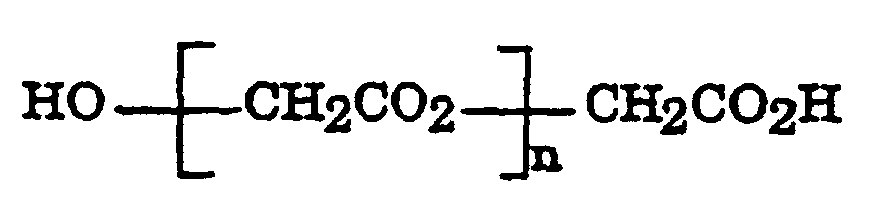
- Composition comprenant de l'acide glutamique et un acide polyglycolique conformes à la formule générale suivante:dans laquelle n = 1 à 10.
- Composition selon la revendication 5, dans laquelle ladite composition comprend environ 0,5 ppm à environ 2 500 ppm d'acide glutamique, et environ 0,5 ppm à environ 2 500 ppm d'acide polyglycolique, toutes sur la base d'un rapport poids/volume.
- Composition selon la revendication 5, dans laquelle ladite composition est dans un milieu servant d'excipient.
- Composition selon la revendication 7, dans laquelle ledit milieu servant d'excipient est de l'eau.
- Composition selon la revendication 7, dans laquelle ledit milieu servant d'excipient est un pesticide.
- Composition selon la revendication 5, ladite composition comprenant en outre un sel de calcium.
- Composition selon la revendication 10, dans laquelle ledit sel de calcium est du nitrate de calcium.
- Procédé de traitement d'une plante consistant à traiter la plante au moyen d'une composition comprenant de l'acide glutamique et de l'acide glycolique.
- Procédé selon la revendication 12, dans lequel ladite composition comprend environ 0,5 ppm à environ 2 500 ppm d'acide glutamique, et environ 0,5 ppm à environ 2 500 ppm d'acide glycolique, toutes sur la base d'un rapport poids/volume.
- Procédé selon la revendication 12, dans lequel ladite composition est dans un milieu servant d'excipient.
- Procédé selon la revendication 14, dans lequel ledit milieu servant d'excipient est de l'eau.
- Procédé selon la revendication 14, dans lequel ledit milieu servant d'excipient est un pesticide.
- Procédé selon la revendication 12, dans lequel la composition comprend en outre un sel de calcium.
- Procédé selon la revendication 17, dans lequel ledit sel de calcium est du nitrate de calcium.
- Procédé selon la revendication 18, dans lequel ladite composition comprend environ 0,5 ppm à environ 2 500 ppm d'acide glutamique, environ 0,5 ppm à environ 2 500 ppm d'acide glycolique et environ 100 ppm à environ 10 000 ppm de nitrate de calcium.
- Procédé selon la revendication 12, qui consiste en outre à traiter la plante avec une quantité de la composition efficace pour augmenter la productivité végétale.
- Procédé selon la revendication 12, dans lequel ladite plante fournit des produits pouvant être récoltés.
- Procédé selon la revendication 19, dans lequel ladite composition est appliquée à la plante en des quantités efficaces pour accélérer la maturation précoce du fruit.
- Procédé selon la revendication 12, dans lequel ladite composition est appliquée à la plante en des quantités efficaces pour augmenter la croissance de ladite plante.
- Procédé selon la revendication 12, dans lequel ladite composition est appliquée à la plante en des quantités efficaces pour augmenter la résistance de la plante aux stress environnementaux.
- Procédé selon la revendication 24, dans lequel ledit stress environnemental est le stress de sécheresse.
- Procédé selon la revendication 12, dans lequel ladite composition est appliquée à la plante en des quantités efficaces pour augmenter la résistance desdites plantes à la maladie.
- Procédé selon la revendication 12, dans lequel ladite composition est appliquée aux semences de ladite plante en des quantités efficaces pour stimuler la germination des graines.
- Procédé de traitement d'une plante consistant à traiter la plante à l'aide d'une composition comprenant de l'acide glutamique et de l'acide polyglycolique conformes à la formule générale suivante:dans laquelle n = 1 à 10.

- Procédé selon la revendication 28, ladite composition comprenant en outre un sel de calcium.
- Procédé selon la revendication 29, dans lequel ledit sel de calcium est du nitrate de calcium.
- Procédé selon la revendication 30, dans lequel ladite composition comprend en outre environ 100 ppm à environ 10 000 ppm dudit nitrate de calcium.
- Procédé selon la revendication 28, dans lequel ladite composition est dans un milieu servant d'excipient.
- Procédé selon la revendication 28, et qui comprend le traitement de la plante à l'aide d'une quantité de composition efficace pour augmenter la productivité végétale.
- Procédé selon la revendication 28, dans lequel ladite composition comprend environ 0,5 ppm à environ 2 500 ppm d'acide glutamique et environ 0,5 ppm à environ 2 500 ppm d'acide polyglycolique.
- Procédé selon la revendication 28, dans lequel ladite composition est appliquée aux semences de ladite plante en des quantités efficaces pour stimuler la germination des graines.
Applications Claiming Priority (3)
| Application Number | Priority Date | Filing Date | Title |
|---|---|---|---|
| US09/182,140 US6124241A (en) | 1998-10-29 | 1998-10-29 | Method for increasing plant productivity using glutamic acid and glycolic acid |
| US182140 | 1998-10-29 | ||
| PCT/US1999/025313 WO2000025582A1 (fr) | 1998-10-29 | 1999-10-28 | Procede mettant en oeuvre un acide glutamique et un acide glycolique pour augmenter la productivite d'une plante |
Publications (3)
| Publication Number | Publication Date |
|---|---|
| EP1124419A1 EP1124419A1 (fr) | 2001-08-22 |
| EP1124419A4 EP1124419A4 (fr) | 2002-09-18 |
| EP1124419B1 true EP1124419B1 (fr) | 2004-05-26 |
Family
ID=22667222
Family Applications (1)
| Application Number | Title | Priority Date | Filing Date |
|---|---|---|---|
| EP99971266A Expired - Lifetime EP1124419B1 (fr) | 1998-10-29 | 1999-10-28 | Procede mettant en oeuvre un acide glutamique et un acide glycolique pour augmenter la productivite d'une plante |
Country Status (11)
| Country | Link |
|---|---|
| US (1) | US6124241A (fr) |
| EP (1) | EP1124419B1 (fr) |
| JP (1) | JP2002528470A (fr) |
| AT (1) | ATE267522T1 (fr) |
| AU (1) | AU756078B2 (fr) |
| DE (1) | DE69917669T2 (fr) |
| ES (1) | ES2222758T3 (fr) |
| IL (1) | IL142747A (fr) |
| MX (1) | MXPA01004176A (fr) |
| NZ (1) | NZ511266A (fr) |
| WO (1) | WO2000025582A1 (fr) |
Families Citing this family (10)
| Publication number | Priority date | Publication date | Assignee | Title |
|---|---|---|---|---|
| US6331505B1 (en) * | 1998-10-29 | 2001-12-18 | Emerald Bioagriculture Corporation | Method for increasing plant productivity using glutamic acid and glycolic acid |
| US6432883B1 (en) * | 2000-04-20 | 2002-08-13 | Emerald Bioagriculture Corporation | Methods of treating plants with glycolic acid |
| JP2001316204A (ja) * | 2000-04-28 | 2001-11-13 | Kao Corp | 植物活力剤 |
| WO2011087002A1 (fr) * | 2010-01-13 | 2011-07-21 | 味の素株式会社 | Agent de potentialisation de résistance aux maladies de plante de la famille des cucurbitacées et procédé de lutte contre maladie de plante utilisant celui-ci |
| BR112013006599A2 (pt) * | 2010-09-23 | 2016-06-21 | Globachem | uso de aminoácidos isolados em concentrações baixas para influenciar os processos de vida das culturas |
| IN2015MU03463A (fr) * | 2015-09-09 | 2015-10-02 | Suunil Sudhakar Chaudhry | |
| JP7078982B2 (ja) * | 2018-04-10 | 2022-06-01 | 国立研究開発法人農業・食品産業技術総合研究機構 | 植物の土壌伝染性病害防除方法 |
| WO2021016355A1 (fr) * | 2019-07-22 | 2021-01-28 | Compass Minerals Usa Inc. | Formulation d'acide aminé et de nutriment pour l'atténuation du stress des plantes |
| JP7611706B2 (ja) * | 2021-01-05 | 2025-01-10 | 三菱商事ライフサイエンス株式会社 | 乳酸菌発酵物を含む肥料又は植物成長調整剤 |
| EP4602916A1 (fr) * | 2022-10-14 | 2025-08-20 | Kirin Holdings Kabushiki Kaisha | Composition pour conférer une résistance au stress à des plantes |
Family Cites Families (15)
| Publication number | Priority date | Publication date | Assignee | Title |
|---|---|---|---|---|
| US3436278A (en) * | 1966-08-08 | 1969-04-01 | Ibm | Glycol soldering fluxes |
| US3679392A (en) * | 1969-06-18 | 1972-07-25 | Union Oil Co | Plant growth stimulated by a combination of glycolic acid and gibberellin |
| CA1245097A (fr) * | 1982-11-30 | 1988-11-22 | Lawrence Buckholz, Jr. | Melange d'assaisonnements |
| US4491464A (en) * | 1983-05-17 | 1985-01-01 | Ashmead H H | Potassium polyphosphate protein hydrolysate fertilizer |
| GB8514243D0 (en) * | 1985-06-05 | 1985-07-10 | Diversey Corp | Water-dilutable disinfectant composition |
| US4813997B1 (en) * | 1987-04-06 | 1995-07-18 | Cpc International Inc | Method for regulating plant growth |
| US4908353A (en) * | 1987-10-16 | 1990-03-13 | Nippon Zoki Pharmaceutical Co., Ltd. | Novel dipeptide useful as a plant growth regulator |
| US4917913A (en) * | 1989-09-29 | 1990-04-17 | International Flavors & Fragrances Inc. | Use of sclareolide in augmenting or enhancing the organoleptic properties of foodstuffs |
| RU2125796C1 (ru) * | 1992-06-19 | 1999-02-10 | М.Нономура Артур | Способ промотирования роста растений и композиция, промотирующая рост растений |
| US5350735A (en) * | 1992-11-05 | 1994-09-27 | Donlar Corporation | Composition and method for enhanced fertilizer uptake by plants |
| US5814582A (en) * | 1992-11-05 | 1998-09-29 | Donlar Corporation | Method for enhanced plant productivity |
| US5439873A (en) * | 1994-02-23 | 1995-08-08 | Plant Growth Development Corporation | Method for stimulating plant growth using GABA |
| US5840656A (en) * | 1994-02-23 | 1998-11-24 | Auxein Corporation | Method for increasing fertilizer efficiency |
| US6008256A (en) * | 1995-08-28 | 1999-12-28 | Showa Yakuhin Kako Co., Ltd. | Composition for local anesthesia |
| IL118780A0 (en) * | 1996-07-02 | 1996-10-31 | Shitzer Boaz | Agricultural compositions containing glycolic acid |
-
1998
- 1998-10-29 US US09/182,140 patent/US6124241A/en not_active Expired - Fee Related
-
1999
- 1999-10-28 MX MXPA01004176A patent/MXPA01004176A/es not_active IP Right Cessation
- 1999-10-28 WO PCT/US1999/025313 patent/WO2000025582A1/fr not_active Ceased
- 1999-10-28 NZ NZ511266A patent/NZ511266A/en unknown
- 1999-10-28 IL IL14274799A patent/IL142747A/xx not_active IP Right Cessation
- 1999-10-28 DE DE69917669T patent/DE69917669T2/de not_active Expired - Fee Related
- 1999-10-28 ES ES99971266T patent/ES2222758T3/es not_active Expired - Lifetime
- 1999-10-28 EP EP99971266A patent/EP1124419B1/fr not_active Expired - Lifetime
- 1999-10-28 AU AU14548/00A patent/AU756078B2/en not_active Ceased
- 1999-10-28 AT AT99971266T patent/ATE267522T1/de not_active IP Right Cessation
- 1999-10-28 JP JP2000579051A patent/JP2002528470A/ja active Pending
Also Published As
| Publication number | Publication date |
|---|---|
| IL142747A (en) | 2005-05-17 |
| EP1124419A4 (fr) | 2002-09-18 |
| DE69917669D1 (de) | 2004-07-01 |
| ES2222758T3 (es) | 2005-02-01 |
| NZ511266A (en) | 2003-07-25 |
| AU756078B2 (en) | 2003-01-02 |
| WO2000025582A1 (fr) | 2000-05-11 |
| US6124241A (en) | 2000-09-26 |
| EP1124419A1 (fr) | 2001-08-22 |
| AU1454800A (en) | 2000-05-22 |
| DE69917669T2 (de) | 2005-06-16 |
| JP2002528470A (ja) | 2002-09-03 |
| IL142747A0 (en) | 2002-03-10 |
| MXPA01004176A (es) | 2002-06-04 |
| ATE267522T1 (de) | 2004-06-15 |
Similar Documents
| Publication | Publication Date | Title |
|---|---|---|
| JP5775539B2 (ja) | 除草剤へのストレス耐性を改善するためのプロリンの使用 | |
| WO2004066730A1 (fr) | Compositions contenant des lignosulfonates en vue de l'amelioration du rendement et de la qualite des recoltes | |
| CA1291342C (fr) | Composes et methodes la lutte contre les bryophytes, les lichens, les algueset les champigons et microbes pathogenes des vegetaux | |
| TR201815600T4 (tr) | Bitkilerin özelliklerini geliştirmek için melanoidinlerin kullanılması. | |
| EP1124419B1 (fr) | Procede mettant en oeuvre un acide glutamique et un acide glycolique pour augmenter la productivite d'une plante | |
| US6331505B1 (en) | Method for increasing plant productivity using glutamic acid and glycolic acid | |
| KR101120972B1 (ko) | 적용 또는 유도된 옥신에 의한 식물 병원균 및 해충 억제 | |
| Sanderson | Screening Chemicals for Controlling Growth and Flowering of Forsythia intermedia Zabel1 | |
| US20260041093A1 (en) | Ionic Derivatives Of Aromatic Carboxylic Acid For Use As Plant Stimulants, Method For Stimulating Plants And Use Of These Derivatives For Manufacturing Compositions For Stimulating Plants | |
| JPH08104602A (ja) | 植物の生体防御増強剤 | |
| NZ522081A (en) | Methods of treating plants with glycolic acid to reduce the effects of plant stress | |
| AU2001253663A1 (en) | Methods of treating plants with glycolic acid | |
| WO2020092641A1 (fr) | Lutte contre la maladie des plantes atteintes de la candidatus liberibacter par application de glyphosate | |
| WO1988008249A1 (fr) | Regulateurs de croissance vegetale | |
| Haag | Responses of concord grape to iron additives with 2, 4-D herbicides |
Legal Events
| Date | Code | Title | Description |
|---|---|---|---|
| PUAI | Public reference made under article 153(3) epc to a published international application that has entered the european phase |
Free format text: ORIGINAL CODE: 0009012 |
|
| 17P | Request for examination filed |
Effective date: 20010522 |
|
| AK | Designated contracting states |
Kind code of ref document: A1 Designated state(s): AT BE CH CY DE DK ES FI FR GB GR IE IT LI LU MC NL PT SE |
|
| AX | Request for extension of the european patent |
Free format text: AL;LT;LV;MK;RO;SI |
|
| A4 | Supplementary search report drawn up and despatched |
Effective date: 20020805 |
|
| AK | Designated contracting states |
Kind code of ref document: A4 Designated state(s): AT BE CH CY DE DK ES FI FR GB GR IE IT LI LU MC NL PT SE |
|
| RIC1 | Information provided on ipc code assigned before grant |
Free format text: 7A 01N 37/36 A, 7A 01N 37/44 B, 7A 01N 63/00 B, 7C 12N 9/08 B |
|
| 17Q | First examination report despatched |
Effective date: 20030123 |
|
| GRAP | Despatch of communication of intention to grant a patent |
Free format text: ORIGINAL CODE: EPIDOSNIGR1 |
|
| GRAS | Grant fee paid |
Free format text: ORIGINAL CODE: EPIDOSNIGR3 |
|
| GRAA | (expected) grant |
Free format text: ORIGINAL CODE: 0009210 |
|
| AK | Designated contracting states |
Kind code of ref document: B1 Designated state(s): AT BE CH CY DE DK ES FI FR GB GR IE IT LI LU MC NL PT SE |
|
| PG25 | Lapsed in a contracting state [announced via postgrant information from national office to epo] |
Ref country code: NL Free format text: LAPSE BECAUSE OF FAILURE TO SUBMIT A TRANSLATION OF THE DESCRIPTION OR TO PAY THE FEE WITHIN THE PRESCRIBED TIME-LIMIT Effective date: 20040526 Ref country code: LI Free format text: LAPSE BECAUSE OF FAILURE TO SUBMIT A TRANSLATION OF THE DESCRIPTION OR TO PAY THE FEE WITHIN THE PRESCRIBED TIME-LIMIT Effective date: 20040526 Ref country code: FI Free format text: LAPSE BECAUSE OF FAILURE TO SUBMIT A TRANSLATION OF THE DESCRIPTION OR TO PAY THE FEE WITHIN THE PRESCRIBED TIME-LIMIT Effective date: 20040526 Ref country code: CY Free format text: LAPSE BECAUSE OF FAILURE TO SUBMIT A TRANSLATION OF THE DESCRIPTION OR TO PAY THE FEE WITHIN THE PRESCRIBED TIME-LIMIT Effective date: 20040526 Ref country code: CH Free format text: LAPSE BECAUSE OF FAILURE TO SUBMIT A TRANSLATION OF THE DESCRIPTION OR TO PAY THE FEE WITHIN THE PRESCRIBED TIME-LIMIT Effective date: 20040526 Ref country code: BE Free format text: LAPSE BECAUSE OF FAILURE TO SUBMIT A TRANSLATION OF THE DESCRIPTION OR TO PAY THE FEE WITHIN THE PRESCRIBED TIME-LIMIT Effective date: 20040526 Ref country code: AT Free format text: LAPSE BECAUSE OF FAILURE TO SUBMIT A TRANSLATION OF THE DESCRIPTION OR TO PAY THE FEE WITHIN THE PRESCRIBED TIME-LIMIT Effective date: 20040526 |
|
| REG | Reference to a national code |
Ref country code: GB Ref legal event code: FG4D |
|
| REG | Reference to a national code |
Ref country code: CH Ref legal event code: EP |
|
| REG | Reference to a national code |
Ref country code: IE Ref legal event code: FG4D |
|
| REF | Corresponds to: |
Ref document number: 69917669 Country of ref document: DE Date of ref document: 20040701 Kind code of ref document: P |
|
| PG25 | Lapsed in a contracting state [announced via postgrant information from national office to epo] |
Ref country code: SE Free format text: LAPSE BECAUSE OF FAILURE TO SUBMIT A TRANSLATION OF THE DESCRIPTION OR TO PAY THE FEE WITHIN THE PRESCRIBED TIME-LIMIT Effective date: 20040826 Ref country code: GR Free format text: LAPSE BECAUSE OF FAILURE TO SUBMIT A TRANSLATION OF THE DESCRIPTION OR TO PAY THE FEE WITHIN THE PRESCRIBED TIME-LIMIT Effective date: 20040826 Ref country code: DK Free format text: LAPSE BECAUSE OF FAILURE TO SUBMIT A TRANSLATION OF THE DESCRIPTION OR TO PAY THE FEE WITHIN THE PRESCRIBED TIME-LIMIT Effective date: 20040826 |
|
| PG25 | Lapsed in a contracting state [announced via postgrant information from national office to epo] |
Ref country code: LU Free format text: LAPSE BECAUSE OF NON-PAYMENT OF DUE FEES Effective date: 20041028 Ref country code: IE Free format text: LAPSE BECAUSE OF NON-PAYMENT OF DUE FEES Effective date: 20041028 |
|
| PG25 | Lapsed in a contracting state [announced via postgrant information from national office to epo] |
Ref country code: MC Free format text: LAPSE BECAUSE OF NON-PAYMENT OF DUE FEES Effective date: 20041031 |
|
| REG | Reference to a national code |
Ref country code: CH Ref legal event code: PL |
|
| NLV1 | Nl: lapsed or annulled due to failure to fulfill the requirements of art. 29p and 29m of the patents act | ||
| REG | Reference to a national code |
Ref country code: ES Ref legal event code: FG2A Ref document number: 2222758 Country of ref document: ES Kind code of ref document: T3 |
|
| ET | Fr: translation filed | ||
| PLBE | No opposition filed within time limit |
Free format text: ORIGINAL CODE: 0009261 |
|
| STAA | Information on the status of an ep patent application or granted ep patent |
Free format text: STATUS: NO OPPOSITION FILED WITHIN TIME LIMIT |
|
| 26N | No opposition filed |
Effective date: 20050301 |
|
| PGFP | Annual fee paid to national office [announced via postgrant information from national office to epo] |
Ref country code: FR Payment date: 20051010 Year of fee payment: 7 |
|
| PGFP | Annual fee paid to national office [announced via postgrant information from national office to epo] |
Ref country code: DE Payment date: 20051020 Year of fee payment: 7 |
|
| PGFP | Annual fee paid to national office [announced via postgrant information from national office to epo] |
Ref country code: GB Payment date: 20051026 Year of fee payment: 7 |
|
| PGFP | Annual fee paid to national office [announced via postgrant information from national office to epo] |
Ref country code: ES Payment date: 20051129 Year of fee payment: 7 |
|
| REG | Reference to a national code |
Ref country code: IE Ref legal event code: MM4A |
|
| PGFP | Annual fee paid to national office [announced via postgrant information from national office to epo] |
Ref country code: IT Payment date: 20061031 Year of fee payment: 8 |
|
| PG25 | Lapsed in a contracting state [announced via postgrant information from national office to epo] |
Ref country code: DE Free format text: LAPSE BECAUSE OF NON-PAYMENT OF DUE FEES Effective date: 20070501 |
|
| GBPC | Gb: european patent ceased through non-payment of renewal fee |
Effective date: 20061028 |
|
| REG | Reference to a national code |
Ref country code: FR Ref legal event code: ST Effective date: 20070629 |
|
| PG25 | Lapsed in a contracting state [announced via postgrant information from national office to epo] |
Ref country code: GB Free format text: LAPSE BECAUSE OF NON-PAYMENT OF DUE FEES Effective date: 20061028 |
|
| PG25 | Lapsed in a contracting state [announced via postgrant information from national office to epo] |
Ref country code: PT Free format text: LAPSE BECAUSE OF NON-PAYMENT OF DUE FEES Effective date: 20041026 |
|
| REG | Reference to a national code |
Ref country code: ES Ref legal event code: FD2A Effective date: 20061030 |
|
| PG25 | Lapsed in a contracting state [announced via postgrant information from national office to epo] |
Ref country code: FR Free format text: LAPSE BECAUSE OF NON-PAYMENT OF DUE FEES Effective date: 20061031 Ref country code: ES Free format text: LAPSE BECAUSE OF NON-PAYMENT OF DUE FEES Effective date: 20061030 |
|
| PG25 | Lapsed in a contracting state [announced via postgrant information from national office to epo] |
Ref country code: IT Free format text: LAPSE BECAUSE OF NON-PAYMENT OF DUE FEES Effective date: 20071028 |