EP1124671B1 - Bio-öl holzschutzmittel - Google Patents
Bio-öl holzschutzmittel Download PDFInfo
- Publication number
- EP1124671B1 EP1124671B1 EP99952177A EP99952177A EP1124671B1 EP 1124671 B1 EP1124671 B1 EP 1124671B1 EP 99952177 A EP99952177 A EP 99952177A EP 99952177 A EP99952177 A EP 99952177A EP 1124671 B1 EP1124671 B1 EP 1124671B1
- Authority
- EP
- European Patent Office
- Prior art keywords
- bio
- oil
- wood
- methoxy
- preservative
- Prior art date
- Legal status (The legal status is an assumption and is not a legal conclusion. Google has not performed a legal analysis and makes no representation as to the accuracy of the status listed.)
- Expired - Lifetime
Links
Images






Classifications
-
- C—CHEMISTRY; METALLURGY
- C10—PETROLEUM, GAS OR COKE INDUSTRIES; TECHNICAL GASES CONTAINING CARBON MONOXIDE; FUELS; LUBRICANTS; PEAT
- C10L—FUELS NOT OTHERWISE PROVIDED FOR; NATURAL GAS; SYNTHETIC NATURAL GAS OBTAINED BY PROCESSES NOT COVERED BY SUBCLASSES C10G OR C10K; LIQUIFIED PETROLEUM GAS; USE OF ADDITIVES TO FUELS OR FIRES; FIRE-LIGHTERS
- C10L1/00—Liquid carbonaceous fuels
- C10L1/02—Liquid carbonaceous fuels essentially based on components consisting of carbon, hydrogen, and oxygen only
- C10L1/026—Liquid carbonaceous fuels essentially based on components consisting of carbon, hydrogen, and oxygen only for compression ignition
-
- A—HUMAN NECESSITIES
- A01—AGRICULTURE; FORESTRY; ANIMAL HUSBANDRY; HUNTING; TRAPPING; FISHING
- A01N—PRESERVATION OF BODIES OF HUMANS OR ANIMALS OR PLANTS OR PARTS THEREOF; BIOCIDES, e.g. AS DISINFECTANTS, AS PESTICIDES OR AS HERBICIDES; PEST REPELLANTS OR ATTRACTANTS; PLANT GROWTH REGULATORS
- A01N31/00—Biocides, pest repellants or attractants, or plant growth regulators containing organic oxygen or sulfur compounds
- A01N31/08—Oxygen or sulfur directly attached to an aromatic ring system
- A01N31/10—Pentachlorophenol
-
- A—HUMAN NECESSITIES
- A01—AGRICULTURE; FORESTRY; ANIMAL HUSBANDRY; HUNTING; TRAPPING; FISHING
- A01N—PRESERVATION OF BODIES OF HUMANS OR ANIMALS OR PLANTS OR PARTS THEREOF; BIOCIDES, e.g. AS DISINFECTANTS, AS PESTICIDES OR AS HERBICIDES; PEST REPELLANTS OR ATTRACTANTS; PLANT GROWTH REGULATORS
- A01N61/00—Biocides, pest repellants or attractants, or plant growth regulators containing substances of unknown or undetermined composition, e.g. substances characterised only by the mode of action
- A01N61/02—Mineral oils; Tar oils; Tar; Distillates, extracts or conversion products thereof
-
- C—CHEMISTRY; METALLURGY
- C10—PETROLEUM, GAS OR COKE INDUSTRIES; TECHNICAL GASES CONTAINING CARBON MONOXIDE; FUELS; LUBRICANTS; PEAT
- C10C—WORKING-UP PITCH, ASPHALT, BITUMEN, TAR; PYROLIGNEOUS ACID
- C10C5/00—Production of pyroligneous acid distillation of wood, dry distillation of organic waste
-
- C—CHEMISTRY; METALLURGY
- C10—PETROLEUM, GAS OR COKE INDUSTRIES; TECHNICAL GASES CONTAINING CARBON MONOXIDE; FUELS; LUBRICANTS; PEAT
- C10L—FUELS NOT OTHERWISE PROVIDED FOR; NATURAL GAS; SYNTHETIC NATURAL GAS OBTAINED BY PROCESSES NOT COVERED BY SUBCLASSES C10G OR C10K; LIQUIFIED PETROLEUM GAS; USE OF ADDITIVES TO FUELS OR FIRES; FIRE-LIGHTERS
- C10L1/00—Liquid carbonaceous fuels
- C10L1/02—Liquid carbonaceous fuels essentially based on components consisting of carbon, hydrogen, and oxygen only
-
- B—PERFORMING OPERATIONS; TRANSPORTING
- B27—WORKING OR PRESERVING WOOD OR SIMILAR MATERIAL; NAILING OR STAPLING MACHINES IN GENERAL
- B27K—PROCESSES, APPARATUS OR SELECTION OF SUBSTANCES FOR IMPREGNATING, STAINING, DYEING, BLEACHING OF WOOD OR SIMILAR MATERIALS, OR TREATING OF WOOD OR SIMILAR MATERIALS WITH PERMEANT LIQUIDS, NOT OTHERWISE PROVIDED FOR; CHEMICAL OR PHYSICAL TREATMENT OF CORK, CANE, REED, STRAW OR SIMILAR MATERIALS
- B27K3/00—Impregnating wood, e.g. impregnation pretreatment, for example puncturing; Wood impregnation aids not directly involved in the impregnation process
- B27K3/34—Organic impregnating agents
- B27K3/44—Tar; Mineral oil
- B27K3/48—Mineral oil
-
- C—CHEMISTRY; METALLURGY
- C10—PETROLEUM, GAS OR COKE INDUSTRIES; TECHNICAL GASES CONTAINING CARBON MONOXIDE; FUELS; LUBRICANTS; PEAT
- C10G—CRACKING HYDROCARBON OILS; PRODUCTION OF LIQUID HYDROCARBON MIXTURES, e.g. BY DESTRUCTIVE HYDROGENATION, OLIGOMERISATION, POLYMERISATION; RECOVERY OF HYDROCARBON OILS FROM OIL-SHALE, OIL-SAND, OR GASES; REFINING MIXTURES MAINLY CONSISTING OF HYDROCARBONS; REFORMING OF NAPHTHA; MINERAL WAXES
- C10G2300/00—Aspects relating to hydrocarbon processing covered by groups C10G1/00 - C10G99/00
- C10G2300/10—Feedstock materials
- C10G2300/1011—Biomass
- C10G2300/1014—Biomass of vegetal origin
-
- Y—GENERAL TAGGING OF NEW TECHNOLOGICAL DEVELOPMENTS; GENERAL TAGGING OF CROSS-SECTIONAL TECHNOLOGIES SPANNING OVER SEVERAL SECTIONS OF THE IPC; TECHNICAL SUBJECTS COVERED BY FORMER USPC CROSS-REFERENCE ART COLLECTIONS [XRACs] AND DIGESTS
- Y02—TECHNOLOGIES OR APPLICATIONS FOR MITIGATION OR ADAPTATION AGAINST CLIMATE CHANGE
- Y02E—REDUCTION OF GREENHOUSE GAS [GHG] EMISSIONS, RELATED TO ENERGY GENERATION, TRANSMISSION OR DISTRIBUTION
- Y02E50/00—Technologies for the production of fuel of non-fossil origin
- Y02E50/10—Biofuels, e.g. bio-diesel
-
- Y—GENERAL TAGGING OF NEW TECHNOLOGICAL DEVELOPMENTS; GENERAL TAGGING OF CROSS-SECTIONAL TECHNOLOGIES SPANNING OVER SEVERAL SECTIONS OF THE IPC; TECHNICAL SUBJECTS COVERED BY FORMER USPC CROSS-REFERENCE ART COLLECTIONS [XRACs] AND DIGESTS
- Y02—TECHNOLOGIES OR APPLICATIONS FOR MITIGATION OR ADAPTATION AGAINST CLIMATE CHANGE
- Y02P—CLIMATE CHANGE MITIGATION TECHNOLOGIES IN THE PRODUCTION OR PROCESSING OF GOODS
- Y02P30/00—Technologies relating to oil refining and petrochemical industry
- Y02P30/20—Technologies relating to oil refining and petrochemical industry using bio-feedstock
-
- Y—GENERAL TAGGING OF NEW TECHNOLOGICAL DEVELOPMENTS; GENERAL TAGGING OF CROSS-SECTIONAL TECHNOLOGIES SPANNING OVER SEVERAL SECTIONS OF THE IPC; TECHNICAL SUBJECTS COVERED BY FORMER USPC CROSS-REFERENCE ART COLLECTIONS [XRACs] AND DIGESTS
- Y10—TECHNICAL SUBJECTS COVERED BY FORMER USPC
- Y10T—TECHNICAL SUBJECTS COVERED BY FORMER US CLASSIFICATION
- Y10T428/00—Stock material or miscellaneous articles
- Y10T428/31504—Composite [nonstructural laminate]
- Y10T428/31844—Of natural gum, rosin, natural oil or lac
- Y10T428/31848—Next to cellulosic
-
- Y—GENERAL TAGGING OF NEW TECHNOLOGICAL DEVELOPMENTS; GENERAL TAGGING OF CROSS-SECTIONAL TECHNOLOGIES SPANNING OVER SEVERAL SECTIONS OF THE IPC; TECHNICAL SUBJECTS COVERED BY FORMER USPC CROSS-REFERENCE ART COLLECTIONS [XRACs] AND DIGESTS
- Y10—TECHNICAL SUBJECTS COVERED BY FORMER USPC
- Y10T—TECHNICAL SUBJECTS COVERED BY FORMER US CLASSIFICATION
- Y10T428/00—Stock material or miscellaneous articles
- Y10T428/4935—Impregnated naturally solid product [e.g., leather, stone, etc.]
- Y10T428/662—Wood timber product [e.g., piling, post, veneer, etc.]
Definitions
- the present invention relates to the preparation and use of bio-oil as a preservative. More specifically, this invention is directed to the use of bio-oil as a wood preservative, either alone or in combination with other preservatives. Furthermore, this invention is relates to methods for recycling wood preservatives from treated wood products.
- Wood preservatives are required to extend the service life of wood beyond what would normally be available if the wood was left untreated and exposed to the natural process of biodegradation.
- wood preservative fall into two basic classes: oil based and water based.
- the major oil based preservatives are creosote and pentachlorophenol (PCP). Copper, chromium, arsenate (CCA) is the most commonly used water based preservative.
- thermochemical processes The processing of carbonaceous feedstocks to produce heat, chemicals or fuels can be accomplished by a number of thermochemical processes, one such process being pyrolysis.
- Pyrolysis is characterized by the thermal decomposition of materials in the relative absence of oxygen (i.e., significantly less oxygen than required for complete combustion).
- oxygen i.e., significantly less oxygen than required for complete combustion.
- pyrolysis refers to slow conventional pyrolysis whose equilibrium products included roughly equal proportions of non-reactive solids (char and ash), secondly liquids, and non-condensible gases.
- Fast pyrolysis is a generic term that encompasses various methods of rapidly imparting a relatively high temperature to feedstocks for a very short time, then rapidly reducing the temperature of the primary products before chemical equilibrium can occur.
- the complex structures of carbonaceous feedstocks are broken into reactive chemical fragments which are initially formed by depolymerization and volatilization reactions, but do not persist for any significant length of time.
- non-equilibrium products are preserved, and valuable, reactive chemicals, chemical intermediates, light primary organic liquids etc may be obtained
- Fast pyrolysis is an intense, short duration process that can be carried out in a variety of reactor systems.
- the common aspect of these reactors is the ability to achieve extremely rapid feedstock heating with limitation of the reaction to relatively short times by rapid cooling which stops the chemical reactions before the valuable intermediates can degrade to non-reactive, low-value final products.
- a fast pyrolysis process reactor system typically provides for a very rapid feedstock heating rate, typically within the range of 1,000.degree. to 1,000,000.degree. C. per second.
- the elevation in reaction temperature is controlled and lies within the range of 350.degree. to 800.degree. C.
- the reaction/residence time is also controlled and short and lies within the range of 0.03 seconds to 2 seconds.
- Fast pyrolysis is also characterized by a rapid product quench where the products are quickly cooled below 350.degree. C. within 0.5 seconds.
- An example of such a process is found in US 5,792,340 which discloses the conversion of wood and other biomass residues to a non-viscous liquid product, termed "bio-oil".
- preservative-treated wood via pyrolysis is possibly an option for recycling creosote or pentachlorophenol based wood preservatives.
- US 5,378,323 discloses the thermolysis of oil or tar based wood preservatives from sawdust and shavings obtained from the outer layer of treated telephone poles.
- the use of a fast pyrolysis reactor involving an inorganic particulate heat carrier for the recycling of these preservatives is not disclosed, nor are any of the properties of the product produced as a result of this process disclosed.
- bio-oil obtained from the fast pyrolysis of wood biomass, as a preservative.
- bio-oil may also be mixed with traditional oil-based preservatives and be used either as a preservative carrier, or as an active ingredient within these novel compositions.
- This invention also pertains to the recycling of wood treated with preservatives using fast pyrolysis to produce a bio-oil with properties suitable for use as a wood preservative.
- Results present herein demonstrate that bio-oil obtained from the fast pyrolysis of wood treated with creosote is as, or is more, effective than commercial grades of creosote.
- bio-oil adds to the strength of wood treated with bio-oil and acts not only as a preservative, but also to wood strengthening agent. Bio-oil also forms a protective skin on the exterior of the treated wood and acts as a physical barrier to decay.
- the present invention relates to the preparation and use of bio-oil as a preservative. More specifically, this invention is directed to the use of bio-oil as a wood preservative, either alone or in combination with other preservatives. Furthermore, this invention is related to methods for recycling wood preservatives from treated wood products.
- the invention provides a composition comprising:
- composition of the invention thus, comprises derivatized lignin, alcohol, natural organic acids and carbonyls that are liquid at room temperature.
- bio-oil containing composition of the invention may be further characterized in comprising 2-methoxy-4-methylphenol and 3,4-dimethoxybenzoic acid.
- This invention also embraces uses of the composition of the invention for sealing and increasing the strength of a wood product.
- wood products treated with the composition of the invention are envisaged as falling within the scope of the present invention.
- This invention also provides, in a further aspect, a method of preparing a preservative composition comprising: either
- novel compositions of the present invention are effective in wood preservative applications and exhibit several desirable properties including increased preservative qualities, increased wood strength, the formation of a protective coating of the wood product and pleasant wood coloration.
- the invention thus, allows for the recycling of treated wood products and demonstrates the suitability of the re-use of the resultant bio-oil product within preservative applications.
- the present invention relates to the use of bio-oil as a preservative. More specifically, this invention is directed to the use of bio-oil as a wood preservative, either alone or in combination with other preservatives. Furthermore, this invention relates to methods for recycling wood preservatives from treated wood products.
- bio-oil it is meant the liquid fraction obtained following the fast pyrolysis of wood.
- the bio-oil is obtained from the product vapour which is produced along with char following pyrolysis. Upon removal of the char the product vapour is condensed and collected within one or more condensers which are typically linked in series.
- Bio-oil refers to the combination of the condensed products obtained from all of the condensers. Both hardwoods and softwoods, and residues derived from either of these woods can be used as feedstock for the purposes of the invention as described herein. Furthermore, as is described in more detail below, wood products already treated with preservatives, and associated treated wood product residues may also be used as feedstock for the preparation of bio-oil.
- bio-oil When produced from wood, associated residues, or treated wood, bio-oil consists of depolymerized wood components which are made up primarily of carbon, hydrogen and oxygen. Sulphur levels are extremely low, typically negligible.
- the major organic constituents in bio-oil are a liquid lignin derivative (depolymerized "liquid” lignin), alcohols, natural organic acids, and carbonyls. Water is also a major component and is fully miscible in the bio-oil.
- Bio-oil is a non-viscous, oxygenated organic liquid which is pourable and pumpable at room temperature.
- the bio-oil of the present invention is different from the products obtained from wood conversion processes such as slow pyrolysis that result in 20-30 % yields, and a thick polymerized "tar" product.
- the bio-oil of the present invention is prepared using a fast pyrolysis reactor, and such pyrolysis systems are known within the art, for example US 5,792,340 , or WO 91/11499 .
- Fast pyrolysis of wood, associated residues, or treated wood results in the preparation of product vapours and char. After removal of the char components from the product stream, the product vapours are condensed to obtain a bio-oil product from pyrolysis.
- the system includes a feed system (10), a reactor (20), a particulate inorganic heat carrier reheating system (30), and for the purposes of the invention described herein, primary (40) and secondary (50) condensers, through which the product vapours produced during pyrolysis are cooled and collected using a suitable condenser means (80).
- a feed system (10 a reactor (20), a particulate inorganic heat carrier reheating system (30), and for the purposes of the invention described herein, primary (40) and secondary (50) condensers, through which the product vapours produced during pyrolysis are cooled and collected using a suitable condenser means (80).
- a suitable condenser means 80
- analogous fast pyrolysis systems comprising differences in the reactor processes, or that utilize an alternative heat carrier, or different numbers or size of condensers, or different condensing means may be used for the preparation of the bio-oil of this invention.
- the bio-oil comprises chemical properties that are suitable for use as a wood preservative as described herein.
- the reactor is capable of producing high yields of bio-oil, for example from about 60 to about 80% of the feedstock.
- an example for the suitable conditions for a the pyrolytic treatment of feedstock, and the production of bio-oil is described in US 5,792.340 and utilizes an inorganic particulate heat carrier, such as sand. This process include a reactor temperature from about 520° to about 1200°C; loading ratios of particulate heat carrier to feedstock from about 5:1 to about 200:1. and residence times from about 0.35 to about 0.7 sec.
- bio-oil is effective as a natural wood preservative.
- Chemical analysis of a typical bio-oil reveals several chemicals that inhibit the growth of fungi. These chemicals include, but are not limited to, lignin-derived phenolic compounds and their derivatives.
- bio-oil contains components that polymerize upon exposure to air forming a solid skin. Therefore, following treatment of wood, bio-oil forms a continuous coating that seals the wood surface, locking in the preservative to prevent leaching, and also inhibit water penetration.
- This property may be desired in using bio-oil alone, or when bio-oil is used along with another wood preservative that are known to become depleted when applied to wood surfaces, for example, but not limited to, pentachlorophenol (penta) preservatives. Therefore, formulations comprising bio-oil and another preservative may be desired in order to treat a wood product.
- bio-oil alone, or when bio-oil is used along with another wood preservative that are known to become depleted when applied to wood surfaces, for example, but not limited to, pentachlorophenol (penta) preservatives. Therefore, formulations comprising bio-oil and another preservative may be desired in order to treat a wood product.
- Wood products treated with bio-oil, or bio-oil formulated preservatives have a pleasing colour, which may be darkened if desired depending upon the application.
- wood products may be treated using bio-oil produced from virgin hardwoods.
- Such applications may include exterior lumber uses, decking, plywood, or other panelling materials, siding etc.
- bio-oil may also be desired in order to compliment the properties of the desired preservative.
- bio-oil may also be used as a carrier for a preservatives of either oilborne or waterborne preservatives. It is preferred that the preservatives are miscible with bio-oil, and in this manner, bio-oil may function as a replacement of the fuel oil or aqueous solvents now used in the industry.
- bio-oil may function as an active ingredient within these preservative formulations, and complement the preservatives activity
- addition of bio-oil to pentachlorophenol preservatives may be desired since bio-oil exhibits superior activity against white rot fungus, thereby complimenting the lack of this activity in pentachlorophenol preservatives.
- preservative formulations comprising bio-oil and creosote may also be used, since formulations comprising these two components exhibit better preservative properties against both white and brown-rot fungi than either bio-oil or creosote alone.
- bio-oil/preservative combinations may also be effective as wood preservatives, providing that the bio-oil is either miscible within the desired preservative, forms an emulsion with the preservative, or that the bio-oil be otherwise present within the formulation so as to exhibit a desired property to the formulation.
- a desired property may include, but is not limited to, enhancing the preservative quality of the treated wood, increasing the strength of the treated wood, sealing the treated wood, or modifying the colouring of the treated wood.
- This invention is also directed to the processing and recycling of creosote-treated wood using fast pyrolysis.
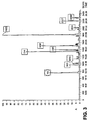
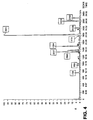
- the bio-oil produced from this feedstock is shown to comprise characteristic compounds present in both creosote and bio-oil (see Figures 3 to 6), and gives rise to a novel bio-oil formulation that is very effective as a wood preservative.
- these novel formulations comprise additional properties as discussed above including increased strength, sealing etc, that may be beneficial for the treatment of a wood product.
- the feedstock comprising pre-treated wood may comprise the entire treated wood product that is chipped in order to be in a form that can be feed into the reactor.
- processed wood products for example comprising the outer layer of hydro poles, as disclosed in US 5,378,323 , may also be used as feedstock as described herein.
- the bio-oil of the present invention may be characterized by its general elution profile following GC analysis, such as that in figure 5, or in Table 1, for bio-oil prepared from wood, or figure 6, or Table 3 for bio-oil prepared from creosote treated wood.
- these figures and tables are to be considered as example of several desired bio-oil preparations, and it is to be understood that these elution profiles and chemical compositions are not to be considered limiting in any manner.
- other bio-oil components may be present in bio-oil depending to the feedstock used for fast pyrolysis.
- this invention includes a bio-oil produced using fast pyrolysis, providing that the bio-oil exhibits the characteristics associated with wood preservatives.
- This invention is also directed to a plant for the pressure treatment of wood using bio-oil, or bio-oil-preservative formulations, such as that shown on Figure 11.
- the plant is designed to handle typical wood products such as, but not limited to, a poles ties, lumber and the like.
- the retort may be heated to desired temperatures and pressures that are consistent with industry norms, or as required for the specific product desired. Treating solutions are cycled from storage tanks to the treatment baths or retorts. As preservative is used the tanks are topped up with fresh preservative. Preliminary data indicate that creosote containing bio-oils may be effectively recycled and replenished in this manner.
- Salvaged railway ties were obtained locally.
- a wood chipper was used to reduce the railway ties to a fraction capable of being feed into a fast pyrolysis reactor such as that described in US 5,792,340 .
- All wood exiting the grinder had a grain size of approximately 6 mm.
- Physical properties for the creosote treated wood are presented in Table 4. TABLE 4.
- Conditions for pyrolysis treatment of the feedstock are as described in US 5,792,340 , and briefly include a reactor temperature from about 520° to about 1200°C. Loading ratios for particulate heat carrier to feedstock from about 5:1 to about 200:1, and residence times from about 0.35 to about 0.7 sec. These conditions are outlined in more detail below.
- Sample R152 was oven dried. It was felt that some volatile components may be lost during oven drying and subsequent samples were air dried only, hence the higher moisture content.
- the ash content is higher than is normal for most wood (0.3 to 0.6 wt%).
- Salvaged railway ties have usually picked up dirt and sand during their service life. The pumping action of a train travelling over a tie can force particles into cracks or embed sand grains directly into the wood.
- the creosote on new ties may be tacky and conducive to picking up inorganic material during placement. As the creosote dries and hardens during use, the inorganic material becomes bonded to the tie and will increase the ultimate ash content.
- creosote content of the feedstock was measured at 16 % by weight. New ties have approximately the same content and confirms the notion that once creosote is impregnated into the wood it tends to remain there and does not biodegrade during the life span of the treated wood.
- Creosote samples for gas chromatography were prepared from the feed stock ties by toluene extraction in a socket apparatus. The separation of creosote from bio-oil was accomplished using an acetone wash, a separation funnel and Rotovap apparatus.
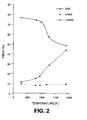
- Figure 2 shows a plot of the product yields versus the reactor temperature. There is a sharp break in the liquid yield curve between 1000°F and 1047°F. Above 1000°F liquid yields decrease rapidly and there is a corresponding increase in gas yield. A maximum liquid yield was not obtained over the reactor temperatures used in this set of runs. Normally the liquid yield for wood is a maximum between 915°F and 959°F. Run R156 at a reactor temperature of 865°F had a liquid yield of 76.2%. The maximum liquid yield is obtained between about 800°F to about 900°F. Overall the char yield remained constant at between 8.7% and 10.0%. There does not appear to be a dependence of char yield on reactor temperature.
- the creosote present in bio-oil is essentially a combination of the bio-oil spectra and the creosote spectra ( Figure 6). This is clear evidence that creosote is recovered during pyrolysis. Furthermore, the results suggest that the separation techniques employed, involving acetone extraction, filtering, and Rotovap did not remove all of the bio-oil from the creosote. Therefore the effect of bio-oil within the creosote was examined to determine if bio-oil can act as a wood preservative, and if bio-oil has a positive, neutral or negative effect on the efficacy of the recovered creosote as a wood preservative.
- Hardwood (containing no creosote) was processed in a fast pyrolysis system under conditions disclosed in US 5,792,340 .
- the recovered bio-oil (R151) was analysed using soil block testing (see below) to establish the toxic threshold value for the bio-oil against a brown-rot fungus, Gloeophyllum trabeum (G. trabeum) and a white-rot fungus, Trametes versicolor (T. versicolor).
- the results were compared against those obtained using creosote. Also several samples containing creosote alone, and bio-oil alone (as per example 1) were also tested.
- a range of concentrations of samples were used for this analysis, from 5 to 50 % bio-oil, or from 5 to 25% creosote, with the remainder being methanol or methylene chloride. Methanol or methylene chloride (100%) were used as controls.
- Soil block testing is a standard technique (AWPA E-10-91) for evaluating the efficacy of a wood preservative against white-rot and brown-rot fungi.
- This technique uses the mass loss of a soil block as a measure of decay. The test duration takes a minimum of 15 weeks.
- Nicholas and Jin (1996) developed a modified AWPA method using the compressive strength of wood blocks and thereby reduced the incubation time from 15 weeks to 6 weeks.
- Southern yellow pine and aspen sapwood was cut into blocks measuring 19 mm x 19 mm x 5 mm. The blocks were then numbered and separated into sequentially numbered pairs. One of the pairs served as the control specimen while the other was treated and subjected to decay testing. Aspen blocks were used in decay testing with white-rot while southern yellow pine was used for brown-rot testing.
- One half of the blocks were placed in a vessel and placed under a vacuum of between 28 to 30 inches of Hg. Preservative was then introduced into the vessel and the vacuum removed. Preservative retention was established by weighing of samples before and after introduction of the preservative. The desired retention was governed by diluting the preservative with methanol or methylene chloride. Test results are reported as the loss (gain) in compressive strength as function of retention.
- Aspen blocks were used in conjunction with white-rot fungus and southern yellow pine for decay testing with brown-rot fungus. After 6 weeks the samples were strength tested and the loss in strength was measured against the control block. The retention was varied for both preservatives to determine the fungus toxicity threshold.
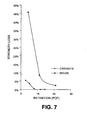
- Bio-oil exhibits fungicidal activity against both tested fungi. However, it is considerably more effective against whit-rot fungus, T. versicolor than brown-rot fungus, G. trabeum (see Table 6 and Figure 7). TABLE 6: FUNGICIDAL ACTIVITY OF WOOD PRESERVATIVES Treatment Approximate Toxic Threshold value (pcf) G. trabeum T. versicolor Creosote 5-8 > 2 Bio-oil 20 4-13
- Figure 7 is a plot of strength loss versus preservative retention for creosote (standard) and bio-oil (R151) when exposed to brown-rot fungus.
- the toxicity threshold for creosote is 9 pounds per cubic foot (PCF) and approximately 15 PCF for bio-oil.
- the curves represent the mean strength loss over eight (8) samples for each retention.
- the % compression and stress loss for the brown rot fungus control samples was 37.3 and 63.2 for methylene chloride and methanol treated wafer blocks, respectively.
- the control values for white-rot fungus were 79.4 and 66.4 for methylene chloride and methanol, respectively.
- Creosote at a retention of 2.8 PCF is more potent preservative than bio-oil at 3.5 PCF retention.
- Creosote completely protects the wood against brown-rot decay.
- PCF bio-oil provides some protection against brown-rot.
- Bio-oil is more effective against white-rot decay. Bio-oil affords nearly total protection against decay at retentions in excess of 13 PCF (see Figure 8). Creosote provides the same level of protection at a retention of 2.4 PCF.
- Bio-oil exhibits sufficient activity against these two fungi. It is also possible that formulations comprising traditional preservatives, for example, penta or creosote, and bio-oil may enhance the activity of these preservatives. Formulations comprising bio-oil and penta are desired as the bio-oil component complements and improve penta's activity against white-rot fungi.
- the physical improvement in wood treated with bio-oil may arise from bio-oil solidifying on the surface of the wood and this may act as a physical barrier to rot causing fungi.
- This feature may also be beneficial in formulations comprising traditional preservatives and bio-oil, in that depletion rates of these preservatives, for example, penta-based preservatives, are reduced in the presence of bio-oil.
- creosote passes through the pyrolysis process relatively untouched. Therefore, samples of bio-oil obtained as described in Example 1 (R162) were tested using soil block testing (see example 2).
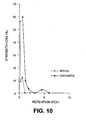
- Figures 9 and 10 show the decrease in strength loss for brown and white rot fungi respectively. In both cases the big-oil showed slightly better preservative performance than creosote.
- Bio-oil also appears to improve the strength of treated wood, and as a result bio-oil may have an additional advantage over traditional preservatives. Tests with bio-oil concentrations greater than 50% significantly increased the compressive strength of wood. The final compressive strength exceeded the load cell capacity and was not measured. These observations indicate that there is a trend towards increasing the strength of the wood with increasing retention of bio-oil. Furthermore, wafers treated with bio-oil and processed using the soil-block test subject to compression strength analysis (as would be regularly done for soil-block analysis) either directly, or following autoclaving further demonstrates that bio-oil increases the strength of bio-oil treated wood (Table 8).
- Varying concentration of penta or creosote were added to bio-oil, heated to dissolve, followed by cooling to room temperature.
- the resultant formulations were tested for efficacy using the soil block test.
- Bio-oil from creosote-treated wood is an effective wood preservative and can be easily applied to wood. Since bio-oil is a low viscosity fluid at ambient temperatures, the uptake of the bio-oil preservative by wood was examined.
Landscapes
- Chemical & Material Sciences (AREA)
- Life Sciences & Earth Sciences (AREA)
- Engineering & Computer Science (AREA)
- Oil, Petroleum & Natural Gas (AREA)
- Chemical Kinetics & Catalysis (AREA)
- General Chemical & Material Sciences (AREA)
- Organic Chemistry (AREA)
- Wood Science & Technology (AREA)
- Health & Medical Sciences (AREA)
- Plant Pathology (AREA)
- Pest Control & Pesticides (AREA)
- Dentistry (AREA)
- General Health & Medical Sciences (AREA)
- Agronomy & Crop Science (AREA)
- Zoology (AREA)
- Environmental Sciences (AREA)
- Materials Engineering (AREA)
- Agricultural Chemicals And Associated Chemicals (AREA)
- Chemical And Physical Treatments For Wood And The Like (AREA)
- Solid Fuels And Fuel-Associated Substances (AREA)
Claims (18)
- Zusammensetzung, umfassend :
entweder(A) (i) ein Bio-Öl, erhalten durch ein Verfahren, das die schnelle Pyrolyse eines Holzproduktes umfasst,
wobei die schnelle Pyrolyse die Umsetzung des Holzprodukts in einem Reaktor bei einer Reaktortemperatur von zwischen 520°C und 1200°C in Gegenwart eines teilchenförmigen Wärmeträgers oder
Wärmeübertragungsmittels umfasst, wobei die Verweilzeit das Holzprodukts in dem Reaktor zwischen 0,35 und 0,7 einer Sekunde und das Verhältnis des teilchenförmigen Wärmeträgers oder
Wärmeübertragungsmittels zu dem Holzprodukt zwischen 5:1 und 200:1 beträgt, und worin das erhaltene Bio-Öl depolymerisiertes Lignin, Alkohole, natürliche organische Säuren und Carbonyle umfasst und bei Raumtemperatur eine Flüssigkeit ist, und
(ii) ein Holzschutzmittel, bei dem es sich entweder um Kreosot oder Pentachlorphenol handelt,
oder(B) eine Bio-Öl-Zusammensetzung, erhalten durch ein Verfahren, das die schnelle Pyrolyse eines mit einem Holzschutzmittel behandelten
Holzprodukts umfasst, wobei das Holzschutzmittel Kreosot oder Pentachlorphenol ist,
wobei die schnelle Pyrolyse die Umsetzung des mit einem Holzschutzmittel behandelten Holzprodukts in einem Reaktor bei einer Reaktortemperatur von zwischen 520°C und 1200°C in Gegenwart eines teilchenförmigen
Wärmeträgers oder Wärmeübertragungsmittels umfasst, wobei die Verweilzeit des Holzprodukts in dem Reaktor zwischen 0,35 und 0,7 einer Sekunde und das Verhältnis des teilchenförmigen Wärmeträgers oder
Wärmeübertragungsmittels zu dem mit Holzschutzmittel behandelten Holzprodukt zwischen 5:1 und 200:1 beträgt, und
worin die entstandene Bio-Öl-Zusammensetzung depolymerisiertes Lignin, Alkohole, natürliche organische Säuren, Carbonyle und das Holzschutzmittel enthält und bei Raumtemperatur eine Flüssigkeit ist. - Zusammensetzung gemäß Anspruch 1, worin das Reaktionsprodukt des Verfahrens innerhalb von ungefähr 0,5 Sekunden auf weniger als 350 °C abgekühlt wird.
- Zusammensetzung gemäß den Ansprüchen 1 oder 2, worin die Zusammensetzung umfasst:etwa 15 bis etwa-30 % Wasser;etwa 20 bis etwa 30 % depolymerisiertes Lignin;etwa 10 bis etwa 20 % Carbonsäuren;etwa 14 bis etwa 25 % Aldehyde;etwa 5 bis etwa 15 % Zucker;etwa 4 bis etwa 10 % Ketone, undetwa 2 bis etwa 10 % Alkohole.
- Zusammensetzung gemäß Anspruch 3, worin:das Wasser in einer Menge von etwa 22 bis etwa 24 % vorhanden ist:die Carbonsäuren ausgewählt sind aus der aus Essigsäure, Ameisensäure, Propionsäure, Glycolsäure, Buttersäure, Valeriansäure und Capronsäure bestehenden Gruppe;die Aldehyde ausgewählt sind aus der aus Glycolaldehyd, Glyoxal, Hydroxypropanol, Methylglyoxal, Formaldehyd, Acetaldehyd, 2-Furaldehyd und Syringaaldehyd bestehenden Gruppe;die Zucker ausgewählt sind aus der aus Lävoglucosan, Fructose, Cellobiosan, Glukose und Oligosacchariden bestehenden Gruppe;die Ketone ausgewählt sind aus der aus Hydroxypropan, Cyclopentanon, Cyclopenten, Furanon, Hydroxymethylpyron, Butyrolacton und Acetyloxypropanon bestehenden Gruppe, unddie Alkohole ausgewählt sind aus der aus Acetol, Methanol und Ethylenglycol bestehenden Gruppe.
- Zusammensetzung gemäß den Ansprüchen 1 bis 4, worin die Zusammensetzung eine Viskosität von etwa 30 bis etwa 80 cSt (bei 50°C) besitzt.
- Zusammensetzung gemäß den Ansprüchen 1 bis 5, worin die Zusammensetzung eine Dichte von über 1,1t/m3 (bei 15°C) besitzt.
- Zusammensetzung gemäß den Ansprüchen 1 bis 6, worin die Zusammensetzung ein spezifisches Gewicht von etwa 1,15 bis etwa 1,25 besitzt.
- Zusammensetzung gemäß den Ansprüchen 1 bis 7, worin das Holzschutzmittel Kreosot ist.
- Zusammensetzung gemäß den Ansprüchen 1 bis 7, worin das Holzschutzmittel Pentachlorphenol ist.
- Zusammensetzung gemäß den Ansprüchen 1 bis 9, dadurch gekennzeichnet, dass sie 2-Methoxy-4-methylphenol und 3,4-Dimethoxybenzoesäure umfasst.
- Zusammensetzung gemäß Anspruch 10, weiterhin dadurch gekennzeichnet, dass sie eine oder mehr als eine Verbindung umfasst, ausgewählt aus der aus2-Methoxyphenol,4-Ethyl-2-methoxyphenol,1,4-Dimethoxy-2-methylphenol,2-Methoxy-5-(1 -propenyl)phenol,2-Methoxy-4,6-(1-propenyl)phenol,2,6-Dimethoxyphenol,3,4-Dimethoxyphenol,2-Methoxy-4-(1-propenyl) phenol,2-Methoxy-6-(1-propenyl) phenol,4-Hydroxy-3-methoxybenzoesäure,2,5-Dimethoxybenzylalkohol,(1,1-Dimethylethyl)-1,2-dihydroxybenzol,1-(4-Hydroxy-3-methoxyphenyl) ethanon,2,6-Dimethoxy-4-(2-propenyl)-phenol,3,4'-1,1'-Biphenyl,3,3'-1,1'-Biphenyl, und4,4'-1,1'-Biphenylbestehenden Gruppe.
- Zusammensetzung gemäß Anspruch 1, weiterhin umfassend:2-Methoxyphenol,2-Methoxy-4-methylphenol,4-Ethyl-2-methoxyphenol oder 1,4-Dimethoxy-2-methylphenol,2-Methoxy-5- (oder 4,6-) (1-propenyl) phenol,2,6- oder (3,4-) Dimethoxyphenol,2-Methoxy-5- (oder 4-, oder 6-) (1-propenyl) phenol,4-Hydroxy-3-methoxybenzoesäure oder 2,5-Dimethoxybenzylalkohol,(1,1-Dimethylethyl)-1, 2-dihydroxybenzol oder 1-(4-Hydroxy-3 methoxyphenyl) ethanon,3,4-Dimethoxybenzoesäure,2,6-Dimethoxy-4-(2-propenyl)-phenol und3,4'-(oder 3,3' oder 4,4'.)-1, 1'-Biphenyl.
- Zusammensetzung gemäß Anspruch 10, weiterhin dadurch gekennzeichnet, dass sie eine oder mehr als eine Verbindung aufweist, ausgewählt aus der aus2-Methoxyphenol,4-Ethyl-2-methoxyphenol,1,4-Dimethoxy-2-methylphenol,1-Methylnaphthalin,2-Methylnaphthalin,2-Methoxy-5-(1-propenyl) phenol,2-Methoxy-4,6-(1-propenyl) phenol,2,6-Dimethoxyphenol,3,4-Dimethoxyphenol,1,1'-Biphenyl,Acenaphthalin,2-Ethenyl-naphthalin,2-Methoxy-4-(1-propenyl) phenol,2-Methoxy-6-(1-propenyl) phenol,3-Hydroxy-4-methoxy-phenol,4-Hydroxy-3-methoxy-phenol,4-Hydroxy-3-methoxybenzoesäure,2,5-Dimethoxybenzylalkohol,(1,1-Dimethylethyl)-1,2-dihydroxybenzol,1-(4-Hydroxy-3-methoxyphenyl)ethanon,Dibenzofuran,4-Hydroxy-3~methoxy-benzolessigsäure,9 H-Fluoren,1 H-Phenalen,2,6-Dimethoxy-4-(2-propenyl)-phenol,3,4'-1,1'-Biphenyl,3,3'-1,1'-Biphenyl,4,4'-1,1'-Biphenyl,Phenanthren,Anthracen,Fluoranthen undPyrenbestehenden Gruppe.
- Zusammensetzung gemäß Anspruch 1, weiterhin umfassend:2-Methoxyphenol,2-Methoxy-4-methylphenol,4-Ethyl-2-methoxyphenol oder 1,4-Dimethoxy-2-methylphenol,1-(oder 2-) Methylnaphthalin,2-Methoxy-5- (oder 4,6-) (1-propenyl) phenol,2,6- (oder 3,4-) Dimethoxyphenol,1, 1'-Biphenyl oder Acenaphthalin oder 2-Ethenyl-naphthalin,2-Methoxy-5- (oder 4-, oder 6-) (1-propenyl) phenol,3-Hydroxy-4-methoxy (oder 4-Hydroxy-3-methoxy)-phenol,4-Hydroxy-3-methoxybenzoesäure oder 2,5-Dimethoxybenzylalkohol,1,1'-Biphenyl, oder Acenaphthalin oder 2-Ethenyl-naphthalin,(1,1-Dimethylethyl)-1, 2-dihydroxybenzol oder 1- (4-Hydroxy-3 methoxyphenyl) ethanon,Dibenzofuran,3,4-Dimethoxybenzoesäure,4-Hydroxy-3-methoxy-benzolessigsäure,9 H-Fluoren, oder 1 H-Phenalen2,6-Dimethoxy-4-(2-propenyl)-phenol,3,4' (oder 3,3' oder 4,4')-1,1'-biphenyl,Phenanthren, oder Anthracen undFluoranthen oder Pyren.
- Verfahren zum Herstellen einer Konservierungs-Zusammensetzung, umfassend: entweder(A) i) Umsetzung eines Holzprodukts durch schnelle Pyrolyse, wodurch ein Bio-Öl entsteht, worin die schnelle Pyrolyse das Umsetzen des Holzprodukts in einem Reaktor bei einer Reaktortemperatur von zwischen 520°C und 1200°C in Gegenwart eines teilchenförmigen Wärmeträgers oder
Wärmeübertragungsmittels umfasst, wobei die Verweildauer des Holzprodukts in dem Reaktor zwischen 0,35 und 0,7 einer Sekunde beträgt und das Verhältnis des teilchenförmigen Wärmeträgers oder
Wärmeübertragungsmittels zu dem Holzprodukt zwischen 5:1 und 200:1 beträgt, derart, dass das entstandene Bio-Öl depolymerisiertes Lignin, Alkohole, natürliche organische Säuren und Cabonyle enthält und bei Raumtemperatur flüssig ist;
ii) Erwärmen oder Erhitzen der Bio-Öl-Zusammensetzung;
iii) Zusetzen eines Holzschutzmittels, ausgewählt unter Kreosot und Pentachlorphenol, zu dem Bio-Öl, und
iv) Abkühlen der entstandenen Zusammensetzung auf Raumtemperatur, wodurch die Konservierungs-Zusammensetzung erhalten wird;
oder(B) i) Umsetzen eines mit einem Holzschutzmittel versetzten Holzprodukts durch schnelle Hydrolyse, wobei eine Bio-Öl-Zusammensetzung erhalten wird, wobei das Holzschutzmittel ausgewählt ist unter Kreosot und Pentachlorphenol, worin die schnelle Pyrolyse das Umsetzen des mit einem Holzschutzmittel versetzten Holzprodukts in einem Reaktor bei einer Reaktortemperatur von zwischen 520°C und 1200°C in Gegenwart eines teilchenförmigen Wärmeträgers oder Wärmeübertragungsmittels umfasst, wobei die Verweildauer des mit dem Holzschutzmittel versetzten Holzprodukts in dem Reaktor zwischen 0,35 und 0,7 einer Sekunde beträgt und das Verhältnis des teilchenförmigen Wärmeträgers oder Wärmeübertragungsmittels zu dem Holzprodukt zwischen 5:1 und 200:1 beträgt, derart, dass die entstandene Bio-Öl-Zusammensetzung depolymerisiertes Lignin, Alkohole, natürliche organische Säuren, Carbonyle und das Holzschutzmittel umfasst und die Bio-Öl-Zusammensetzung bei Raumtemperatur eine Flüssigkeit ist, und
ii) Gewinnen der Konservierungs-Zusammensetzung. - Verwendung einer Zusammensetzung gemäß den Ansprüchen 1 bis 14 zum Abdichten eines Holzprodukts.
- Verwendung einer Zusammensetzung gemäß den Ansprüchen 1 bis 14 zum Verbessern der Festigkeit oder Haltbarkeit eines Holzprodukts.
- Holzprodukt, behandelt mit einer und aufweisend eine Zusammensetzung gemäß den Ansprüchen 1 bis 14.
Applications Claiming Priority (3)
| Application Number | Priority Date | Filing Date | Title |
|---|---|---|---|
| US182964 | 1998-10-30 | ||
| US09/182,964 US6485841B1 (en) | 1998-10-30 | 1998-10-30 | Bio-oil preservatives |
| PCT/CA1999/000984 WO2000025996A1 (en) | 1998-10-30 | 1999-10-25 | Bio-oil preservatives |
Publications (2)
| Publication Number | Publication Date |
|---|---|
| EP1124671A1 EP1124671A1 (de) | 2001-08-22 |
| EP1124671B1 true EP1124671B1 (de) | 2007-07-25 |
Family
ID=22670825
Family Applications (1)
| Application Number | Title | Priority Date | Filing Date |
|---|---|---|---|
| EP99952177A Expired - Lifetime EP1124671B1 (de) | 1998-10-30 | 1999-10-25 | Bio-öl holzschutzmittel |
Country Status (9)
| Country | Link |
|---|---|
| US (1) | US6485841B1 (de) |
| EP (1) | EP1124671B1 (de) |
| AT (1) | ATE367903T1 (de) |
| AU (1) | AU6454999A (de) |
| CA (1) | CA2348945C (de) |
| DE (1) | DE69936662T2 (de) |
| DK (1) | DK1124671T3 (de) |
| ES (1) | ES2289827T3 (de) |
| WO (1) | WO2000025996A1 (de) |
Cited By (1)
| Publication number | Priority date | Publication date | Assignee | Title |
|---|---|---|---|---|
| CN107098796A (zh) * | 2017-04-27 | 2017-08-29 | 中国科学院青岛生物能源与过程研究所 | 从快速热解生物油中获取愈创木酚的方法 |
Families Citing this family (32)
| Publication number | Priority date | Publication date | Assignee | Title |
|---|---|---|---|---|
| ITMI20010336U1 (it) * | 2001-06-20 | 2002-12-20 | Cadif Srl | Membrana con anima metallica per impermeabilizzazioni e protezioni strutturali,elettrotermica |
| US20070125369A1 (en) * | 2005-02-07 | 2007-06-07 | Olson Edwin S | Process for converting anhydrosugars to glucose and other fermentable sugars |
| US20090054711A1 (en) * | 2005-05-04 | 2009-02-26 | Tom Lawrence | Pyrolysis Systems, Methods of Use Thereof, and Methods of Bio-Oil Transformation |
| CN101460473A (zh) | 2006-04-03 | 2009-06-17 | 药物热化学品公司 | 热提取方法和产物 |
| US20080006519A1 (en) * | 2006-07-06 | 2008-01-10 | Badger Phillip C | Method and system for accomplishing flash or fast pyrolysis with carbonaceous materials |
| US7905990B2 (en) | 2007-11-20 | 2011-03-15 | Ensyn Renewables, Inc. | Rapid thermal conversion of biomass |
| US8476480B1 (en) * | 2008-08-29 | 2013-07-02 | Iowa State University Research Foundation, Inc. | Bio-oil fractionation and condensation |
| WO2010102145A1 (en) * | 2009-03-04 | 2010-09-10 | Washington State University | Systems and processes for producing bio-fuels from lignocellulosic materials |
| US8298406B2 (en) * | 2009-05-21 | 2012-10-30 | Coates Engineering, Llc | Method and apparatus for maximizing throughput of indirectly heated rotary kilns |
| US8317883B1 (en) | 2009-06-26 | 2012-11-27 | The United States Of America As Represented By The Secretary Of Agriculture | Production of stable pyrolysis bio-oil from mustard family seeds, mustard family seed presscake, and defatted mustard family seed presscake |
| WO2011019901A1 (en) * | 2009-08-14 | 2011-02-17 | Badger Phillip C | Plant for the flash or fast pyrolysis of carbonaceous materials |
| US20110284359A1 (en) | 2010-05-20 | 2011-11-24 | Uop Llc | Processes for controlling afterburn in a reheater and for controlling loss of entrained solid particles in combustion product flue gas |
| US8499702B2 (en) | 2010-07-15 | 2013-08-06 | Ensyn Renewables, Inc. | Char-handling processes in a pyrolysis system |
| US8083900B2 (en) * | 2010-08-09 | 2011-12-27 | Kior Inc. | Removal of water from bio-oil |
| US8323456B2 (en) * | 2010-08-26 | 2012-12-04 | Kior, Inc. | Removal of bound water from bio-oil |
| US8999017B2 (en) | 2010-09-10 | 2015-04-07 | Coates Engineering, Llc | Method and apparatus for fast pyrolysis of biomass in rotary kilns |
| US9441887B2 (en) | 2011-02-22 | 2016-09-13 | Ensyn Renewables, Inc. | Heat removal and recovery in biomass pyrolysis |
| ITTO20110752A1 (it) * | 2011-08-08 | 2013-02-09 | Co Ma Se S R L | Procedimento di produzione di bioliquidi o biocarburanti |
| US9347005B2 (en) | 2011-09-13 | 2016-05-24 | Ensyn Renewables, Inc. | Methods and apparatuses for rapid thermal processing of carbonaceous material |
| US10400175B2 (en) | 2011-09-22 | 2019-09-03 | Ensyn Renewables, Inc. | Apparatuses and methods for controlling heat for rapid thermal processing of carbonaceous material |
| US10041667B2 (en) | 2011-09-22 | 2018-08-07 | Ensyn Renewables, Inc. | Apparatuses for controlling heat for rapid thermal processing of carbonaceous material and methods for the same |
| US9044727B2 (en) | 2011-09-22 | 2015-06-02 | Ensyn Renewables, Inc. | Apparatuses and methods for controlling heat for rapid thermal processing of carbonaceous material |
| US9109177B2 (en) | 2011-12-12 | 2015-08-18 | Ensyn Renewables, Inc. | Systems and methods for renewable fuel |
| ITTO20111176A1 (it) | 2011-12-20 | 2013-06-21 | Co Ma Se S R L | Procedimento di produzione di bioliquidi o biocarburanti |
| US20150111056A1 (en) | 2012-05-31 | 2015-04-23 | Stichting Dienst Landbouwkundig Onderzoek | Lignocellulose preservative composition, process using such composition, preserved lignocellulosic material obtainable by such process and product comprising such material |
| US9670413B2 (en) | 2012-06-28 | 2017-06-06 | Ensyn Renewables, Inc. | Methods and apparatuses for thermally converting biomass |
| WO2014210150A1 (en) | 2013-06-26 | 2014-12-31 | Ensyn Renewables, Inc. | Systems and methods for renewable fuel |
| RU2551141C1 (ru) * | 2014-03-20 | 2015-05-20 | Федеральное государственное бюджетное образовательное учреждение высшего профессионального образования "Сибирский государственный технологический университет" (СибГТУ) | Способ сушки круглых лесоматериалов |
| WO2017034981A1 (en) | 2015-08-21 | 2017-03-02 | Ensyn Renewables, Inc. | Liquid biomass heating system |
| MY193949A (en) | 2016-12-29 | 2022-11-02 | Ensyn Renewables Inc | Demetallization Of Liquid Biomass |
| ES3065351T3 (en) * | 2019-12-23 | 2026-05-05 | Kerry Group Services International Ltd | Methods for formaldehyde control |
| EP4359180A1 (de) * | 2021-06-24 | 2024-05-01 | BTG Biomass Technology Group B.V. | Pyrolyse-bioöl in konservierungsformulierungen für holz oder holzwerkstoffe |
Family Cites Families (21)
| Publication number | Priority date | Publication date | Assignee | Title |
|---|---|---|---|---|
| US4209647A (en) | 1978-06-22 | 1980-06-24 | American Can Company | Fractionation of oil obtained by pyrolysis of lignocellulosic materials to recover a phenolic fraction for use in making phenol-formaldehyde resins |
| US4288249A (en) * | 1979-02-26 | 1981-09-08 | Reichhold Chemicals, Inc. | Water soluble pentachlorophenol and tetrachlorophenol wood treating systems |
| US4234665A (en) * | 1979-10-17 | 1980-11-18 | Buckman Laboratories, Inc. | Oil-borne creosote and pentachlorophenol wood preservative compositions containing dimethylamide |
| USRE33121E (en) | 1980-05-08 | 1989-11-28 | Idacon, Inc. | Method and composition for treating wood with pentachlorophenol |
| US4354316A (en) * | 1981-08-24 | 1982-10-19 | Schroeder Herbert A | Method of beneficiating wood |
| US4379810A (en) * | 1981-08-28 | 1983-04-12 | Reichhold Chemicals, Incorporated | Water soluble pentachlorophenol and tetrachlorophenol wood treating systems containing fatty acid amine oxides |
| US4382105A (en) * | 1981-08-28 | 1983-05-03 | Reichhold Chemicals, Incorporated | Water soluble pentachlorophenol and tetrachlorophenol wood treating systems containing fatty acid amine oxides |
| US4461721A (en) | 1982-04-12 | 1984-07-24 | Basf Aktiengesellschaft | Wood preservative |
| US5098472A (en) * | 1983-06-17 | 1992-03-24 | Commonwealth Scientific & Industrial Research Organization | Preservative composition |
| NL8400339A (nl) | 1984-02-03 | 1985-09-02 | Tno | Samenstelling en werkwijze voor het verduurzamen van hout. |
| US4649065A (en) * | 1985-07-08 | 1987-03-10 | Mooney Chemicals, Inc. | Process for preserving wood |
| CA1329311C (en) | 1987-04-28 | 1994-05-10 | David Lloyd Evans | Compositions and methods of treatment of timber |
| US4942269A (en) | 1988-03-17 | 1990-07-17 | Midwest Research Institute | Process for fractionating fast-pyrolysis oils, and products derived therefrom |
| US4988576A (en) * | 1989-12-13 | 1991-01-29 | Daishowa Chemicals Inc. | Wood preservative |
| CA2009021C (en) | 1990-01-31 | 2001-09-11 | Barry A. Freel | Method and apparatus for a circulating bed transport fast pyrolysis reactor system |
| DE4112652A1 (de) * | 1991-04-18 | 1992-10-22 | Wolman Gmbh Dr | Holzschutzmittel |
| DE4127777A1 (de) | 1991-08-23 | 1993-02-25 | Ruetgerswerke Ag | Verfahren zur entsorgung von mit teer impraegnierten holz |
| US5246739A (en) * | 1992-01-24 | 1993-09-21 | Lignotech Usa, Inc. | Method for the treatment of wood with metal-lignin salts |
| CA2099318A1 (en) | 1993-06-28 | 1994-12-29 | Peter Fransham | Thermolysis of pentachlorophenol treated poles |
| CN1059917C (zh) * | 1994-02-05 | 2000-12-27 | 杨炳霖 | 木馏液及其制备方法和用途 |
| DE4439341A1 (de) | 1994-11-04 | 1996-05-09 | Nmi Univ Tuebingen | Verfahren zur umweltfreundlichen thermischen Verwertung von kontaminiertem Altholz |
-
1998
- 1998-10-30 US US09/182,964 patent/US6485841B1/en not_active Expired - Lifetime
-
1999
- 1999-10-25 AU AU64549/99A patent/AU6454999A/en not_active Abandoned
- 1999-10-25 DE DE69936662T patent/DE69936662T2/de not_active Expired - Lifetime
- 1999-10-25 ES ES99952177T patent/ES2289827T3/es not_active Expired - Lifetime
- 1999-10-25 CA CA002348945A patent/CA2348945C/en not_active Expired - Lifetime
- 1999-10-25 EP EP99952177A patent/EP1124671B1/de not_active Expired - Lifetime
- 1999-10-25 DK DK99952177T patent/DK1124671T3/da active
- 1999-10-25 WO PCT/CA1999/000984 patent/WO2000025996A1/en not_active Ceased
- 1999-10-25 AT AT99952177T patent/ATE367903T1/de not_active IP Right Cessation
Non-Patent Citations (1)
| Title |
|---|
| None * |
Cited By (1)
| Publication number | Priority date | Publication date | Assignee | Title |
|---|---|---|---|---|
| CN107098796A (zh) * | 2017-04-27 | 2017-08-29 | 中国科学院青岛生物能源与过程研究所 | 从快速热解生物油中获取愈创木酚的方法 |
Also Published As
| Publication number | Publication date |
|---|---|
| DK1124671T3 (da) | 2007-11-05 |
| ES2289827T3 (es) | 2008-02-01 |
| WO2000025996A1 (en) | 2000-05-11 |
| US6485841B1 (en) | 2002-11-26 |
| EP1124671A1 (de) | 2001-08-22 |
| CA2348945C (en) | 2008-05-13 |
| ATE367903T1 (de) | 2007-08-15 |
| CA2348945A1 (en) | 2000-05-11 |
| DE69936662D1 (de) | 2007-09-06 |
| AU6454999A (en) | 2000-05-22 |
| DE69936662T2 (de) | 2008-05-21 |
Similar Documents
| Publication | Publication Date | Title |
|---|---|---|
| US6485841B1 (en) | Bio-oil preservatives | |
| Mohan et al. | Fungicidal values of bio-oils and their lignin-rich fractions obtained from wood/bark fast pyrolysis | |
| RU2360791C2 (ru) | Способ импрегнирования древесины или материала на древесной основе | |
| Irbe et al. | On the changes of pinewood (Pinus sylvestris L.) chemical composition and ultrastructure during the attack by brown-rot fungi Postia placenta and Coniophora puteana | |
| EP3377283B1 (de) | Osb (oriented strand board)-holzwerkstoffplatte mit verbesserten eigenschaften und verfahren zu deren herstellung | |
| Baysal | Determination of oxygen index levels and thermal analysis of Scots pine (Pinus sylvestris L.) impregnated with melamine formaldehyde-boron combinations | |
| Temiz et al. | Efficiency of bio-oil against wood destroying organisms | |
| Sanson et al. | Enhancing water repellency and decay resistance of wood by using water-soluble fractions separated from pyrolytic lignin of fast-pyrolysis bio-oil | |
| Hofmann et al. | Investigation of the chemical changes in the structure of wood thermally modified within a nitrogen atmosphere autoclave | |
| US6503638B1 (en) | Impregnation of a lignocellulosic material | |
| Byrne | Polymer, ceramic and carbon composites derived from wood | |
| DE3044221A1 (de) | Verfahren zur dimensionsstabilisierung von pressverdichteten holzwerkstoffen | |
| Clausen et al. | Properties of structural panels fabricated from bioremediated CCA-treated wood: Pilot scale | |
| USRE33121E (en) | Method and composition for treating wood with pentachlorophenol | |
| Barros Oliveira et al. | Characterization of Acrocarpus fraxinifolius wood submitted to heat treatment | |
| EP0039887B1 (de) | Verfahren und Zusammensetzung zur Behandlung von Holz mit Pentachlorphenol | |
| Mohareb et al. | Chemical Composition and Resistance to Decay of Thermally Modified Wood from Casuarina glauca and Eucalyptus camaldulensis Grown in Egypt | |
| DE2105806A1 (en) | Impregnating plant - for porous solid materials esp wood | |
| Augustina et al. | Density profile and NIRs spectra of boron-densified wood at different compression ratios | |
| Wang et al. | Review on thermal treatments of wood | |
| Niemz et al. | Investigation of chemical changes in the structure of wood thermally modified | |
| WO2022268329A1 (en) | Pyrolysis bio-oil in preservative formulations for wood or wood derived materials | |
| Vietheer | Process optimization of thermal modification of Chilean Eucalyptus nitens plantation wood |
Legal Events
| Date | Code | Title | Description |
|---|---|---|---|
| PUAI | Public reference made under article 153(3) epc to a published international application that has entered the european phase |
Free format text: ORIGINAL CODE: 0009012 |
|
| 17P | Request for examination filed |
Effective date: 20010518 |
|
| AK | Designated contracting states |
Kind code of ref document: A1 Designated state(s): AT BE CH CY DE DK ES FI FR GB GR IE IT LI LU MC NL PT SE |
|
| AX | Request for extension of the european patent |
Free format text: AL;LT;LV;MK;RO;SI |
|
| 17Q | First examination report despatched |
Effective date: 20020528 |
|
| GRAP | Despatch of communication of intention to grant a patent |
Free format text: ORIGINAL CODE: EPIDOSNIGR1 |
|
| GRAS | Grant fee paid |
Free format text: ORIGINAL CODE: EPIDOSNIGR3 |
|
| RAP1 | Party data changed (applicant data changed or rights of an application transferred) |
Owner name: ENSYN TECHNOLOGIES INC. |
|
| GRAA | (expected) grant |
Free format text: ORIGINAL CODE: 0009210 |
|
| AK | Designated contracting states |
Kind code of ref document: B1 Designated state(s): AT BE CH CY DE DK ES FI FR GB GR IE IT LI LU MC NL PT SE |
|
| REG | Reference to a national code |
Ref country code: GB Ref legal event code: FG4D |
|
| REG | Reference to a national code |
Ref country code: CH Ref legal event code: EP |
|
| REG | Reference to a national code |
Ref country code: IE Ref legal event code: FG4D |
|
| REF | Corresponds to: |
Ref document number: 69936662 Country of ref document: DE Date of ref document: 20070906 Kind code of ref document: P |
|
| REG | Reference to a national code |
Ref country code: DK Ref legal event code: T3 |
|
| REG | Reference to a national code |
Ref country code: SE Ref legal event code: TRGR |
|
| REG | Reference to a national code |
Ref country code: GR Ref legal event code: EP Ref document number: 20070403112 Country of ref document: GR |
|
| ET | Fr: translation filed | ||
| PG25 | Lapsed in a contracting state [announced via postgrant information from national office to epo] |
Ref country code: PT Free format text: LAPSE BECAUSE OF FAILURE TO SUBMIT A TRANSLATION OF THE DESCRIPTION OR TO PAY THE FEE WITHIN THE PRESCRIBED TIME-LIMIT Effective date: 20071226 |
|
| REG | Reference to a national code |
Ref country code: CH Ref legal event code: PL |
|
| REG | Reference to a national code |
Ref country code: ES Ref legal event code: FG2A Ref document number: 2289827 Country of ref document: ES Kind code of ref document: T3 |
|
| PG25 | Lapsed in a contracting state [announced via postgrant information from national office to epo] |
Ref country code: CH Free format text: LAPSE BECAUSE OF FAILURE TO SUBMIT A TRANSLATION OF THE DESCRIPTION OR TO PAY THE FEE WITHIN THE PRESCRIBED TIME-LIMIT Effective date: 20070725 Ref country code: LI Free format text: LAPSE BECAUSE OF FAILURE TO SUBMIT A TRANSLATION OF THE DESCRIPTION OR TO PAY THE FEE WITHIN THE PRESCRIBED TIME-LIMIT Effective date: 20070725 Ref country code: AT Free format text: LAPSE BECAUSE OF FAILURE TO SUBMIT A TRANSLATION OF THE DESCRIPTION OR TO PAY THE FEE WITHIN THE PRESCRIBED TIME-LIMIT Effective date: 20070725 |
|
| PG25 | Lapsed in a contracting state [announced via postgrant information from national office to epo] |
Ref country code: BE Free format text: LAPSE BECAUSE OF FAILURE TO SUBMIT A TRANSLATION OF THE DESCRIPTION OR TO PAY THE FEE WITHIN THE PRESCRIBED TIME-LIMIT Effective date: 20070725 |
|
| PG25 | Lapsed in a contracting state [announced via postgrant information from national office to epo] |
Ref country code: MC Free format text: LAPSE BECAUSE OF NON-PAYMENT OF DUE FEES Effective date: 20071031 |
|
| PLBE | No opposition filed within time limit |
Free format text: ORIGINAL CODE: 0009261 |
|
| STAA | Information on the status of an ep patent application or granted ep patent |
Free format text: STATUS: NO OPPOSITION FILED WITHIN TIME LIMIT |
|
| 26N | No opposition filed |
Effective date: 20080428 |
|
| PGFP | Annual fee paid to national office [announced via postgrant information from national office to epo] |
Ref country code: NL Payment date: 20081005 Year of fee payment: 10 |
|
| PGFP | Annual fee paid to national office [announced via postgrant information from national office to epo] |
Ref country code: IE Payment date: 20081015 Year of fee payment: 10 Ref country code: DK Payment date: 20081013 Year of fee payment: 10 |
|
| PGFP | Annual fee paid to national office [announced via postgrant information from national office to epo] |
Ref country code: IT Payment date: 20081030 Year of fee payment: 10 |
|
| PGFP | Annual fee paid to national office [announced via postgrant information from national office to epo] |
Ref country code: GR Payment date: 20081016 Year of fee payment: 10 |
|
| PG25 | Lapsed in a contracting state [announced via postgrant information from national office to epo] |
Ref country code: CY Free format text: LAPSE BECAUSE OF FAILURE TO SUBMIT A TRANSLATION OF THE DESCRIPTION OR TO PAY THE FEE WITHIN THE PRESCRIBED TIME-LIMIT Effective date: 20070725 |
|
| PG25 | Lapsed in a contracting state [announced via postgrant information from national office to epo] |
Ref country code: LU Free format text: LAPSE BECAUSE OF NON-PAYMENT OF DUE FEES Effective date: 20071025 |
|
| REG | Reference to a national code |
Ref country code: NL Ref legal event code: V1 Effective date: 20100501 |
|
| REG | Reference to a national code |
Ref country code: DK Ref legal event code: EBP |
|
| PG25 | Lapsed in a contracting state [announced via postgrant information from national office to epo] |
Ref country code: NL Free format text: LAPSE BECAUSE OF NON-PAYMENT OF DUE FEES Effective date: 20100501 |
|
| PG25 | Lapsed in a contracting state [announced via postgrant information from national office to epo] |
Ref country code: IE Free format text: LAPSE BECAUSE OF NON-PAYMENT OF DUE FEES Effective date: 20091026 Ref country code: GR Free format text: LAPSE BECAUSE OF NON-PAYMENT OF DUE FEES Effective date: 20100504 |
|
| PG25 | Lapsed in a contracting state [announced via postgrant information from national office to epo] |
Ref country code: DK Free format text: LAPSE BECAUSE OF NON-PAYMENT OF DUE FEES Effective date: 20091031 |
|
| PG25 | Lapsed in a contracting state [announced via postgrant information from national office to epo] |
Ref country code: IT Free format text: LAPSE BECAUSE OF NON-PAYMENT OF DUE FEES Effective date: 20091025 |
|
| PGFP | Annual fee paid to national office [announced via postgrant information from national office to epo] |
Ref country code: FR Payment date: 20121018 Year of fee payment: 14 |
|
| PGFP | Annual fee paid to national office [announced via postgrant information from national office to epo] |
Ref country code: ES Payment date: 20121031 Year of fee payment: 14 |
|
| PGFP | Annual fee paid to national office [announced via postgrant information from national office to epo] |
Ref country code: SE Payment date: 20131029 Year of fee payment: 15 |
|
| REG | Reference to a national code |
Ref country code: FR Ref legal event code: ST Effective date: 20140630 |
|
| PG25 | Lapsed in a contracting state [announced via postgrant information from national office to epo] |
Ref country code: FR Free format text: LAPSE BECAUSE OF NON-PAYMENT OF DUE FEES Effective date: 20131031 |
|
| REG | Reference to a national code |
Ref country code: ES Ref legal event code: FD2A Effective date: 20150429 |
|
| REG | Reference to a national code |
Ref country code: SE Ref legal event code: EUG |
|
| PG25 | Lapsed in a contracting state [announced via postgrant information from national office to epo] |
Ref country code: ES Free format text: LAPSE BECAUSE OF NON-PAYMENT OF DUE FEES Effective date: 20131026 Ref country code: SE Free format text: LAPSE BECAUSE OF NON-PAYMENT OF DUE FEES Effective date: 20141026 |
|
| PGFP | Annual fee paid to national office [announced via postgrant information from national office to epo] |
Ref country code: DE Payment date: 20151028 Year of fee payment: 17 Ref country code: GB Payment date: 20151028 Year of fee payment: 17 |
|
| REG | Reference to a national code |
Ref country code: DE Ref legal event code: R119 Ref document number: 69936662 Country of ref document: DE |
|
| GBPC | Gb: european patent ceased through non-payment of renewal fee |
Effective date: 20161025 |
|
| PG25 | Lapsed in a contracting state [announced via postgrant information from national office to epo] |
Ref country code: DE Free format text: LAPSE BECAUSE OF NON-PAYMENT OF DUE FEES Effective date: 20170503 Ref country code: GB Free format text: LAPSE BECAUSE OF NON-PAYMENT OF DUE FEES Effective date: 20161025 |
|
| PGFP | Annual fee paid to national office [announced via postgrant information from national office to epo] |
Ref country code: FI Payment date: 20181009 Year of fee payment: 20 |