EP1132046B1 - Dispositif d'appreciation/presentation de l'etat de sante - Google Patents
Dispositif d'appreciation/presentation de l'etat de sante Download PDFInfo
- Publication number
- EP1132046B1 EP1132046B1 EP00954942.9A EP00954942A EP1132046B1 EP 1132046 B1 EP1132046 B1 EP 1132046B1 EP 00954942 A EP00954942 A EP 00954942A EP 1132046 B1 EP1132046 B1 EP 1132046B1
- Authority
- EP
- European Patent Office
- Prior art keywords
- indices
- health condition
- ratio
- mass
- fat
- Prior art date
- Legal status (The legal status is an assumption and is not a legal conclusion. Google has not performed a legal analysis and makes no representation as to the accuracy of the status listed.)
- Expired - Lifetime
Links
Images



Classifications
-
- A—HUMAN NECESSITIES
- A61—MEDICAL OR VETERINARY SCIENCE; HYGIENE
- A61B—DIAGNOSIS; SURGERY; IDENTIFICATION
- A61B5/00—Measuring for diagnostic purposes; Identification of persons
- A61B5/48—Other medical applications
- A61B5/4869—Determining body composition
-
- A—HUMAN NECESSITIES
- A61—MEDICAL OR VETERINARY SCIENCE; HYGIENE
- A61B—DIAGNOSIS; SURGERY; IDENTIFICATION
- A61B5/00—Measuring for diagnostic purposes; Identification of persons
- A61B5/05—Detecting, measuring or recording for diagnosis by means of electric currents or magnetic fields; Measuring using microwaves or radio waves
- A61B5/053—Measuring electrical impedance or conductance of a portion of the body
- A61B5/0537—Measuring body composition by impedance, e.g. tissue hydration or fat content
-
- A—HUMAN NECESSITIES
- A61—MEDICAL OR VETERINARY SCIENCE; HYGIENE
- A61B—DIAGNOSIS; SURGERY; IDENTIFICATION
- A61B5/00—Measuring for diagnostic purposes; Identification of persons
- A61B5/48—Other medical applications
- A61B5/4869—Determining body composition
- A61B5/4872—Body fat
Definitions
- the present invention relates to a health condition judgment display device capable of obtaining indices relating to health condition of a human subject.
- a device adapted to give indicators used for judgment of diabetes as one of today's typical diseases caused by obesity and a device capable of performing more accurate estimation according to verification using CT section imaging analyzer or the like.
- a device which obtains the indicators or the like associated with physical health is disclosed in Japanese Laid-Open Patent Publication No. Sho. 48-37591 , in which body impedances of hands and feet between left side of body and right side of body are measured and the existence/non-existence of disease is judged according to the balance of the impedances.
- a device disclosed in Japanese Laid-Open Patent Publication No. Hei. 11-188016 is capable of making judgment of health condition from basal metabolism amount obtained from fat-free mass obtained by measuring the body impedance and amount of consumed oxygen, and muscle mass obtained from the fat-free mass or the like.
- the conventional device which obtains the indicators or the like associated with physical health is merely capable of judgment based on a single specified index relating to body or a few specified indices relating to body that are highly correlative, when such indicators are obtained.
- an object of the present invention is to provide a health condition judgment display device which is capable of making total judgment of health condition.
- US-A- 5720296 discloses a health condition judgement display device comprising:
- the invention provides a health condition judgement display device as set out in claim 1.
- Figure 1 is a perspective view showing a health condition judgment display device 10 according to an embodiment of the present invention.
- the health condition judgment display device 10 shown in Figure 1 comprises a base portion 9, a support portion 2 provided on the base portion 9, and an operation panel 1 provided on the support portion 2.
- the operation panel 1 is provided with a key input portion 4 and a display portion 5.
- the key input portion 4 is provided with a number of keys. By operating the keys provided on the key input portion 4, individual body characteristic information of a human subject can be input.
- the individual body characteristic information input with the key input portion 4 is body height, age, sex, hip size, waist size, and the like.
- the display portion 5 is adapted to display the individual body characteristic information, body measurement information such as body impedance mentioned later, body information including these information, and various indices relating to health condition which are obtained based on these information. These information or the like on the display portion 5 can be selectively displayed as necessary.
- An electrode 3a is provided at a left end of a tip end portion of a front surface of the operation panel 1 and an electrode 3c is provided at a right end of the tip end portion.
- An electrode 3b is provided on a portion of a rear surface of the operation panel 1 which substantially corresponds to the portion where the electrode 3a is provided and an electrode 3d is provided on a portion of the rear face which substantially corresponds to the portion where the electrode 3c is provided.
- Electrodes 3a, 3b, 3c, 3d serve to measure internal body impedance with both hands as body end portions and constitute a measuring means for measuring the body impedance as the body measurement information.
- the electrodes 3a, 3b, 3c, 3d can be used as a pair of current path forming electrodes used for making internal body conduct current to form a current path and a pair of voltage measuring electrodes for measuring a potential difference between two points in the current path.
- the electrodes 3a, 3b, 3c, 3d are connected to a body impedance measuring portion 11 provided inside of the health condition judgment display device 10 and the body impedance is measured through these electrodes.
- the body impedance measuring portion 11 comprises an impedance measuring means having a current supply source, an electrometer, and the like, which are well-known as means for measurement of body fat.
- two fingers of the left hand of the human subject are respectively brought into contact with the electrodes 3a, 3b at the left end and two fingers of the right hand of the human subject are respectively brought into contact with the electrodes 3c, 3d at the right end, for measuring the impedance of body.
- the base portion 9 connected to the operation panel 1 through the support portion 2 is provided with a weight measuring portion 7 and an electrode sustaining portion 8 formed as separate portions.
- the weight measuring portion 7 is constituted by a well-known weighing machine. By mounting the human subject's feet on the weight measuring portion, the weight of the human subject is measured.
- the weight measuring portion 7 corresponds to a weight measuring means for measuring weight data as the body measurement information. The weight data measured by the weight measuring portion 7 can be displayed on the display portion 5.
- the electrode sustaining portion 8 is provided with four electrodes 6a, 6b, 6c, 6d.
- the electrodes 6a, 6b are provided on a left side of the electrode sustaining portion 8 and the electrodes 6c, 6d are provided on a right side of the electrode sustaining portion 8.
- Electrodes 6a, 6b, 6c, 6d serve to measure internal body impedance with both feet as body end portions and can be used as a pair of current path forming electrodes used for making a portion of the internal body for which impedance is to be detected, conduct current, to form a current path and a pair of voltage measuring electrodes for measuring a potential difference between two points in the current path.
- the human subject mounts his/her feet on the electrode sustaining portion 8 and makes his/her left sole come into contact with the electrodes 6a, 6b, and make his/her right sole come into contact with the electrodes 6c, 6d, thereby measuring the impedance.
- the electrodes 6a, 6b, 6c, 6d are connected to the body impedance measuring portion 11 provided inside of the health condition judgment display device 10 and are adapted to measure the body impedance through these electrodes.
- the electrodes 3a, 3b, 3c, 3d for hands and the electrodes for feet are suitably selected and used as the current path forming electrodes and the voltage measuring electrodes, as mentioned later.
- impedance of each portion of body as well as impedance of the entire body can be measured.
- data processing based on the measured impedance can obtain the impedance of each portion.
- a multi-frequency current is used as the current output through the electrodes as the current path forming electrodes and various-frequency currents to be conducted can vary according to the internal portions of the body for which the impedance is to be measured.
- the health condition judgment display device 10 is capable of measuring the body impedance of each of left arm, right arm, internal portion of waist, left leg, and right leg of body.
- a C/T scan device (not shown in Figure 1 ) may be connected to the health condition judgment display device 10.
- the C/T scan device may be used to image a section of abdomen of the human subject, for measurement of a sectional area of a visceral organ of the abdomen and a sectional area of subcutaneous fat of the abdomen, which are to be input to the health condition judgment display device 10.
- a subcutaneous fat meter (not shown in Figure 1 and generally referred to as "caliper") may be connected. Subcutaneous fat thickness measured by using the caliper may be input to the health condition judgment display device 10.
- this subcutaneous fat thickness data complements the data processing relating to information of the body fat obtained based on the body impedance and improves accuracy in information pertaining to the body fat to be measured.
- An automatic measuring device for measuring waist size (waist circumference) or hip size (hip circumference) of the human subject may be connected to the health condition judgment display device 10 and the waist size or the hip size measured by the automatic measuring device may be input to the display device 10.
- the waist size or the hip size may be measured by using a tape measure or the like and so measured values may be input as the individual body characteristic information by operation of a key of the key input portion 4 and used as the body information mentioned later.
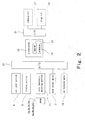
- the individual body characteristic information input by operating the key input portion 4 is input to a data processing portion 12 through an input/output (I/O) portion 21.
- the measured data of the body impedance as the body measurement information which has been measured through the electrodes 3a, 6a, and the like, is input to the data processing portion 12 through the input/output (I/O) portion 21.
- Selective switching between the current path forming electrodes and the voltage measuring electrodes, corresponding to the eight electrodes 3a, 6a, ... in measurement of the body impedance, can be performed by operation of the data processing portion 12.
- the current path can be formed in a required portion of the body and a path through which the impedance is detected can be formed, allowing the impedance of each portion of the body to be measured.
- the weight data measured by the weight measuring portion 7 is input to the data processing portion 12 through the input/output (I/O) portion 21.
- measuring means such as a fat thickness meter 16 for measuring the subcutaneous fat thickness, an abdomen C/T 17 for abdomen measurement, and a thigh C/T 18 for thigh measurement are connected
- body measurement information measured by these measuring means is also input to the data processing portion 12 through the input/output (I/O) portion 21.
- the data processing portion 12 comprises an arithmetic unit 14 and a storage unit 15.
- the various individual body characteristic information and body measurement information input to the data processing portion 12 are stored in the storage unit 15.
- the input data is also stored as the body information.
- Well-known arithmetic expressions or coefficients used for obtaining indices relating to health condition from the stored body information are also stored in the storage unit 15.
- the arithmetic unit 14 performs arithmetic operation for obtaining various indices relating to health condition from the body information stored in the storage unit 15.
- the individual body characteristic information, the body measurement information, the body information, and the indices relating to health condition are displayed on the display portion 5.
- the contents to be displayed are sent from the key input portion 4, the body impedance measuring portion 11, and the data processing portion 12, through the input/output (I/O) portion 21, and to the display portion 5.
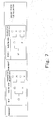
- Figure 3 shows contents of the example of one set of the associated obtained items stored in the first storage table.
- the individual body characteristic information input by operation of the key input portion 4 the body measurement information such as the body impedance input through the body impedance measuring portion 11, and the body information composed of these information are stored in a first area 31.
- Data obtained by data processing based on the information stored in the first area 31 is stored in a second area 32 in the first storage table.
- the indices relating to health condition are stored in a third area 33 of the first storage table.
- the data stored in the second area 32 is stored in the third area as the indices relating to health condition.
- Degrees of balance indicating balance between portions of body as one of the indices relating to health condition are stored in a fourth area 34 of the first storage table.
- Body fat ratio, body fat mass, and body water mass are obtained by data processing based on the body impedance as the body information.
- precision in data processing can be improved.
- the multi-frequency current is used to measure the body impedance. Thereby, mass of liquid outside of cells and the body water mass are obtained, and from difference between these, the mass of liquid in the cells is obtained. Then, the fat-free mass is obtained from the body water mass or the like. Further, the muscle mass is obtained from the fat-free mass, bone mass, and lipid mass. Moreover, basal metabolism amount is obtained from the fat-free mass and the amount of consumed oxygen.
- a body mass index is obtained as a ratio of body weight to body height squared (body weight/ (body height X body height)). Since the body mass index lowly correlates with body height and highly correlates with fat mass, it is called BMI and is an international index used for judging whether the human subject is obese/underweight. From this value, a standard weight ratio is obtained and obesity is classified into five stages as: less than -20%: Extreme Underweight, -20% to -10%: Underweight, -10% to +10% : Normal, +10% to +20 %: Overweight, and more than +20% : Extreme Obesity). These obesity classes serve as an index for judgment of diabetes highly correlative with obesity.
- the body fat ratio can be used as the index used for accurately judging whether or not the human subject is obese.
- the body fat ratio can be obtained from body impedance of the entire body, and the individual body characteristic information such as body height, age, body weight, sex and the like. From the body fat ratio, the obesity is classified into four stages for male and female (Male/0 to 10%: Underweight, 10% to 15%: Normal, 15% to 20%: Overweight, 20% or more : Extreme overweight, Female/0 to 20%: Underweight, 20% to 25%: Normal, 25% to 30%: Overweight, 30% or more : Extreme overweight). Like the BMI, the body fat ratio can be used for judgment of diabetes as the index accurately indicating the obesity class. It should be noted that the body fat ratio refers to an internal fat ratio of the entire body and the internal body fat ratio refers to a fat ratio of each portion of the body and the entire body.
- An odds ratio is an index indicating how possible that a person having a risk factor exceeds an outcome as compared to a person which has no risk factor, that is, how many times the odds is.
- V/S ratio A ratio of visceral fat mass (V) to subcutaneous fat mass (S) (V/S ratio), (or visceral fat mass and subcutaneous fat mass) can be used as the index, from which spots of body at which body fat is deposited, i.e., distribution of body fat, is known. Therefore, the V/S ratio can be used as the reference to correctly know health condition. As the V/ S ratio, a ratio of the visceral fat sectional area to the subcutaneous fat sectional area may be obtained.
- Viceral-type obesity V/S > 0.4 : visceral fat deposition type obesity
- V/S ⁇ 0.4 subcutaneous fat deposition type obesity
- this obesity highly correlates with disease such as diabetes and insulin resistance.
- type of obesity it is judged whether or not the human subject is likely to develop diabetes, hyperlipemia, and lipid metabolism disorder.
- the V/S ratio can be used as an important index from which accurate judgment of these diseases is made.
- the visceral fat and subcutaneous fat as basic data from which the V/S ratio is obtained can be obtained based on measurement of the body impedance, and can be also obtained from measurement of a sectional area of each fat by using a C/T device. Further, a visceral fat sectional area of abdomen can be estimated from waist size or a ratio of waist size to hip size.
- the subcutaneous fat can be easily obtained by directly measuring its thickness by using the caliper.
- a ratio of waist size (W) to hip size (H) can be also used as the index based on the spots at which the fat is deposited.
- Obesity with high W/H ratio is named upper half body obesity and obesity with low W/H ratio is named lower half body obesity.
- a person having upper half body obesity is considered to have complication such as glucose metabolism disorder and lipid metabolism disorder.
- a muscle is an organ that has large energy consumption and large metabolism amount.
- the muscle takes in glucose by action of insulin as hormone and therefore plays an important role in metabolism of glucose.
- effects of insulin it is known that the greater the fat mass is, the less effectively insulin works and the more likely diabetes or the like is to develop.
- leg muscle mass is an index as a result of appropriate kinesiology such as walking.
- the leg muscle mass can be used for accurate judgment.
- an ergometer is used to measure lower limb muscle mass correlative with recovery, for estimation and evaluation of degree of improvement of exercise-resistance ability.
- the thigh CT imaging device is used to measure a sectional area of thigh muscle as the muscle mass, for estimation and evaluation of the degree of improvement of the exercise-resistance ability.
- the body water mass can be used as the index indicating whether or not the body water mass of the human subject is in a proper range, in comparison with his/her body weight.
- the body water mass is advantageous when used as the index of dehydration of an old person who often has complications.
- water distribution or body impedance distribution of body (associated with interior/exterior of cells, upper half of body, or lower half of body) is obtained, and is monitored with an elapse of time so that metabolic ability of body can be estimated and improvement of the exercise-resistance ability in kinesiology can be evaluated.
- These distribution can be used for grasping the state of diseases such as heart disease and kidney disease, causing various water distribution abnormality (for example, monitor in artificial dialysis, monitor of a patient after disease, and so forth) and treatment of the disease.
- Lower limb water mass/upper limb water mass is used as an index for high blood pressure (PIH) triggered by pregnancy .
- PIH blood pressure
- the lower limb water mass/upper limb water mass can be obtained by measuring the impedance of leg (lower limb) and the impedance of arm (upper limb) and dividing the impedance of leg (lower limb) by the impedance of arm (upper limb).
- a ratio between conflicting measured values for example, body water mass/body fat mass, can be used as an index.
- the degree of balance Using the degree of balance, balance between left side of the body and right side of the body and balance between upper side of the body and lower side of the body can be evaluated, with regard to the body impedance, the body water mass, and the muscle mass of body. This degree of balance can be used for judgment of health condition of body. In particular, with regard to evaluation based on the balance associated with the muscle mass, effects of exercise, training, and the like can be evaluated for each portion of body and for entire body, in terms of health and sports medicine. Also, in terms of beauty, balance of the muscle mass can be compared to a target or ideal value, in addition to the conventional body type judgment.
- left arm refers to a portion from a base of left arm to a tip end of left hand and “waist” refers to the entire internal waist of body in the vertical direction.
- waist + left leg represents a sum of indices of left arm, waist, and left leg.
- Figure 4 shows contents of the second storage table as an example of a table stored in the storage unit 15.
- the second storage table contains allowable values for respective indices relating to health condition as the factors associated with disease, for each disease.
- the second storage table contains known data and is stored in the storage unit 15.
- BMI body fat ratio
- abdomen visceral fat sectional area and waist size as the contents of the second storage table
- BMI body fat ratio
- abdomen visceral fat sectional area and waist size as the contents of the second storage table. It is known that the BMI, the abdomen visceral fat sectional area, and the waist size highly correlates with obesity. Based on these indices, judgment of obesity, i.e., a cause of various types of adult disease, is made.
- Figure 5 shows the contents of a third table as an example of tables stored in the storage unit 15.
- the third storage table contains results of comparison made between the indices relating to health condition and the allowable values stored in the second table, with regard to diabetes as one of diseases for each human subject. Total judgment of whether each human subject is at a risk of developing diabetes is stored in a right end area.
- evaluation when it is less than the allowable value, evaluation is O and when it is greater than the allowable value, evaluation is X.
- total evaluation O or X is decided. In the total judgment, the evaluation is ⁇ , when care should be taken although the evaluation is neither ⁇ or X.
- Figure 6 shows contents stored in the fourth storage table as an example of the table stored in the storage unit 15.
- the various types of degrees of balance stored in the fourth area 34 of the first storage table are arranged for each body information and stored. According to the contents shown in Figure 6 , balance between portions of the body, relating to various indices, can be easily known.
- respective indices as factors of the disease and judgment results of the respective indices can be displayed on a display portion 5.
- the respective indices can be arranged according to the degree of correlation between the indices and disease.
- Figure 7 shows an example in which the respective indices as factors of disease and judgment results of the respective indices are displayed on the display portion 5.
- results for human subjects 1, 2 are displayed.
- the respective indices are arranged according to the degree of correlation with disease and displayed. As displayed, "BMI" has the highest correlation with disease, "body fat ratio” has the second highest correlation, and "visceral fat sectional area” has the lowest correlation.
- judgment results of the respective indices are hierarchically branched.
- the result of BMI in a layer is good ( O )
- results of the body fat ratio in a layer lower than the layer of the BMI are good ( O ) and bad (x)
- results of the visceral fat sectional area are good ( O ) and bad (X)
- results of the visceral fat sectional area are good ( O ) and bad (x)
- the health condition judgment display device is capable of making total judgment of health condition based on a plurality of indices relating to health condition.
- the device is capable of objectively making judgment of the risk of developing disease according to relationship between disease and a plurality of indices considered as factors of the disease.
- the health condition judgment display device since at least two types of indices relating to health condition are obtained, total judgement of the health condition of the human subject can be made.
- the measuring means includes a body impedance measuring means capable of measuring body impedance of entire body and/or portions of the body
- the body measurement information includes body impedance of portions of the body and/or the entire body
- the individual body characteristic information includes body height, body weight, age, and sex
- the body information includes information of body fat mass, body fat ratio, fat-free mass, body water mass, and muscle mass of portions of the body and/or the entire body, which are obtained based on the body height, the body weight, the age, the sex, and the body impedance of portions of the body and/or the entire body.
- the body information may include information of basal metabolism amount obtained from the amount of consumed oxygen and the muscle mass.
- the body information includes waist size and hip size.
- the waist size refers to a circumferential dimension of waist of the human subject and the hip size refers to a circumferential dimension of hip of the human subject.
- the body information may include subcutaneous fat thickness, abdomen visceral fat sectional area, abdomen subcutaneous fat sectional area, and thigh muscle sectional area.
- the indices relating to health condition includes a ratio of the body fat mass to the muscle mass (F/M ratio) for the entire body and portions of the body.
- the body information includes waist size, hip size, subcutaneous fat thickness, abdomen visceral fat sectional area, abdomen subcutaneous fat sectional area, and thigh muscle sectional area
- the indices relating to health condition may include a body mass index (BMI), a ratio of the waist size to the hip size (W/H ratio), a ratio of the visceral fat to the subcutaneous fat (V/S ratio), a ratio of the body fat mass to the body water mass, a ratio of the body water mass to the body weight, and a ratio of the body fat ratio to leg muscle mass.
- the indices relating to health condition may further include abdomen visceral fat sectional area, waist size, and odds ratio.
- the indices relating to health condition include ratios relating to balance of the body impedance, the body water mass, and the muscle mass, between left half of the body and right half of the body.
- the indices relating to health condition also include ratios relating to balance of the body impedance, the body water mass, and the muscle mass, between upper half of the body and lower half of the body.
- information of various types of diseases are stored, and items of the indices relating to health condition as factors of each disease and their associated allowable values are stored for each of the diseases, and a comparing means that compares each of the indices relating to health condition to the allowable value is provided.
- the risk of developing disease is judged based on the indices relating to health condition and according to the relationship with the disease.
- each of the indices is classified into two or more stages based on comparison made by the comparing means. Thereby, the risk of developing disease associated with the obtained indices relating to health condition can be judged with high accuracy.
- a combination of two or more indices is obtained according to the stages of each of the indices relating to health, and total judgment of health condition of the human subject is made according to the combination of the indices. Thereby, total judgment of the risk of developing the disease can be made.
- the comparing means compares the indices relating to health condition to the allowable values by weighting according to type of the indices and according to type of disease. Using the correlation with disease according to type of the index relating to health condition, the risk of developing the disease can be judged with higher accuracy.
- the display means is adapted to display the respective indices relating to health condition which are associated with each of the diseases and the obtained indices relating to health condition, corresponding to the respective items of the indices, for each of the diseases.
- various types of diseases are stored, items of the indices relating to health condition as factors of each disease and their associated allowable values are stored for each of the diseases, a comparing means that compares each of the indices relating to health condition to the allowable value is provided, and it is judged whether each of the indices relating to health condition is good or bad, according to comparison between each of the indices and the allowable value, the display means is adapted to arrange and display results of good or bad, for the respective judged indices relating to health condition, and the results of good or bad are arranged according to degree of correlation with disease associated with the indices.
- results of good or bad of the judged indices relating to health condition are arranged, to each of results of good and bad of a first index having correlation with disease, results of good and bad of a second index having correlation lower than that of the first index are connected, the results of good and bad of the first and second indices being hierarchically represented, and an appropriate side corresponding to a judgment result for the human subject is selected and displayed, among the results of good and bad of the first and second indices.
- the indices for which judgment results are displayed include BMI, body fat ratio, and abdomen visceral fat sectional area.
- the results of good or bad for the respective judged indices relating to health condition can be displayed on the display means for each of the diseases.
- the information of various types of diseases stored in the health condition judgment display device may include diabetes, dehydration, and metabolic defect.
- the measuring means may include a body weight measuring means capable of measuring body weight of the human subject.
Landscapes
- Health & Medical Sciences (AREA)
- Life Sciences & Earth Sciences (AREA)
- Surgery (AREA)
- Biophysics (AREA)
- Pathology (AREA)
- Engineering & Computer Science (AREA)
- Biomedical Technology (AREA)
- Heart & Thoracic Surgery (AREA)
- Medical Informatics (AREA)
- Molecular Biology (AREA)
- Physics & Mathematics (AREA)
- Animal Behavior & Ethology (AREA)
- General Health & Medical Sciences (AREA)
- Public Health (AREA)
- Veterinary Medicine (AREA)
- Nuclear Medicine, Radiotherapy & Molecular Imaging (AREA)
- Radiology & Medical Imaging (AREA)
- Measurement And Recording Of Electrical Phenomena And Electrical Characteristics Of The Living Body (AREA)
- Measuring And Recording Apparatus For Diagnosis (AREA)
- Medical Treatment And Welfare Office Work (AREA)
Claims (19)
- Dispositif d'affichage d'appréciation d'état de santé, comprenant :des moyens d'entrée (4) avec lesquels des informations de caractéristiques corporelles individuelles d'un sujet humain sont entrées ;des moyens de mesure (3a-3d, 6a-6d, 7) pour obtenir des informations de mesure corporelles grâce à une mesure réalisée sur le sujet humain ;une partie de traitement de données (12) apte à stocker des informations corporelles contenant les informations de caractéristiques corporelles individuelles à partir des moyens d'entrée, et les informations de mesure corporelles à partir des moyens de mesure, et à traiter ces informations afin de fournir au moins deux indices concernant l'état de santé du sujet humain ; etdes moyens d'affichage (5) aptes à afficher les informations corporelles contenant les informations de caractéristiques corporelles individuelles et les informations de mesure corporelles, et les indices obtenus concernant l'état de santé, étant préciséque les moyens de mesure comprennent des moyens aptes à mesurer l'impédance du corps entier et/ou de chaque partie du corps, parmi le groupe de parties du corps constitué par le bras gauche, le bras droit, la partie interne de la taille, la jambe gauche et la jambe droite,que les informations de mesure corporelles contiennent l'impédance du corps entier et/ou de chaque partie du corps dudit groupe de parties du corps, etque les informations de caractéristiques corporelles individuelles contiennent la taille, le poids, l'âge et le sexe,que les informations corporelles contiennent des informations sur la masse grasse du corps, sur l'indice de masse grasse, sur la masse maigre du corps, sur la masse hydrique et sur la masse musculaire dudit groupe de parties du corps et/ou du corps entier, qui sont obtenues sur la base de la taille, du poids, de l'âge et du sexe, de l'impédance corporelle dudit groupe de parties du corps et/ou du corps entier, du tour de taille et du tour de hanches du sujet humain,que les indices concernant l'état de santé contiennent la section de graisse viscérale abdominale obtenue par un CT de l'abdomen, un indice de masse corporelle (IMC), un indice de masse grasse et un tour de taille.
- Dispositif selon la revendication 1, étant précisé que les informations corporelles contiennent des informations sur le métabolisme de base obtenues à partir d'informations de quantité d'oxygène consommé et de masse musculaire.
- Dispositif selon la revendication 1 ou 2, étant précisé que les informations corporelles contiennent également l'épaisseur de graisse sous-cutanée, la section de graisse viscérale abdominale, la section de graisse sous-cutanée abdominale et la section des muscles des cuisses.
- Dispositif selon la revendication 1, étant précisé que les indices concernant l'état de santé contiennent le rapport masse grasse corporelle/masse musculaire pour le corps entier et/ou chaque partie du groupe de parties du corps.
- Dispositif selon la revendication 3, étant précisé que les indices concernant l'état de santé contiennent le rapport masse grasse corporelle/masse musculaire pour le corps entier et/ou chaque partie du groupe de parties du corps, le rapport tour de taille/tour de hanches (RTH), le rapport graisse viscérale/graisse sous-cutanée, le rapport masse grasse corporelle/masse hydrique corporelle, le rapport masse hydrique corporelle/ poids, et le rapport du rapport de masse grasse sur la masse musculaire des jambes.
- Dispositif selon la revendication 5, étant précisé que les indices concernant l'état de santé contiennent également un rapport de cotes, ce rapport de cotes étant un indice qui indique le facteur de risque d'une maladie, déterminé par la comparaison des indices concernant l'état de santé à des valeurs admissibles pour la maladie.
- Dispositif selon l'une quelconque des revendications 1 à 6, étant précisé que les indices concernant l'état de santé contiennent des rapports concernant l'équilibre de l'impédance corporelle, de la masse hydrique corporelle et de la masse musculaire entre la moitié gauche du corps et la moitié droite du corps.
- Dispositif selon l'une quelconque des revendications 1 à 6, étant précisé que les indices concernant l'état de santé contiennent des rapports concernant l'équilibre de l'impédance corporelle, de la masse hydrique corporelle et de la masse musculaire entre la moitié supérieure du corps et la moitié inférieure du corps.
- Dispositif selon l'une quelconque des revendications 1 à 6, qui stocke des informations de divers types de maladies, et étant précisé que des éléments des indices concernant l'état de santé comme facteurs de chaque maladie et leurs valeurs admissibles associées sont stockés pour chacune des maladies, le dispositif comprenant également des moyens pour comparer chacun des indices concernant l'état de santé à la valeur admissible.
- Dispositif selon la revendication 9, étant précisé que chacun des indices est classé en deux niveaux ou plus, sur la base d'une comparaison faite par les moyens de comparaison.
- Dispositif selon la revendication 10, étant précisé qu'une combinaison de deux indices ou plus est obtenue selon les niveaux de chacun des indices concernant la santé, et une appréciation totale de l'état de santé du sujet humain est faite selon la combinaison des indices.
- Dispositif selon la revendication 11, étant précisé que les moyens de comparaison comparent les indices concernant l'état de santé aux valeurs admissibles, grâce à une pondération selon le type des indices et selon le type de maladie.
- Dispositif selon la revendication 9, étant précisé que les moyens d'affichage (5) sont aptes à afficher les indices respectifs concernant l'état de santé, qui sont associés à chacune des maladies et les indices obtenus concernant l'état de santé, correspondant aux éléments respectifs des indices, pour chacune des maladies.
- Dispositif selon la revendication 9, étant précisé que chacun des indices concernant l'état de santé est jugé bon ou mauvais selon la comparaison entre chacun des indices et la valeur admissible, et que les moyens d'affichage sont aptes à disposer et afficher les résultats bons ou mauvais, pour les indices jugés respectifs.
- Dispositif selon la revendication 14, étant précisé que les résultats bons ou mauvais sont disposés selon le degré de corrélation avec la maladie associée aux indices.
- Dispositif selon la revendication 15, étant précisé qu'à chacun des résultats bons et mauvais d'un premier indice présentant une corrélation avec la maladie sont rattachés les résultats bons et mauvais d'un second indice présentant une corrélation inférieure à celle du premier indice, les résultats bons et mauvais des premier et second indices étant représentés hiérarchiquement, et qu'un côté approprié correspondant à un résultat d'appréciation pour le sujet humain est sélectionné et affiché, parmi les résultats bons et mauvais des premier et second indices.
- Dispositif selon la revendication 14, étant précisé que les résultats bons ou mauvais sont sélectionnés et affichés pour chacune des maladies.
- Dispositif selon la revendication 9, étant précisé que les maladies comprennent le diabète, la déshydratation et les défauts du métabolisme.
- Dispositif selon l'une quelconque des revendications 1 à 6, étant précisé que les moyens de mesure (7) sont aptes à mesurer le poids corporel du sujet humain.
Applications Claiming Priority (3)
| Application Number | Priority Date | Filing Date | Title |
|---|---|---|---|
| JP24119599 | 1999-08-27 | ||
| JP24119599 | 1999-08-27 | ||
| PCT/JP2000/005657 WO2001015600A1 (fr) | 1999-08-27 | 2000-08-24 | Dispositif d'appreciation/presentation de l'etat de sante |
Publications (3)
| Publication Number | Publication Date |
|---|---|
| EP1132046A1 EP1132046A1 (fr) | 2001-09-12 |
| EP1132046A4 EP1132046A4 (fr) | 2002-10-31 |
| EP1132046B1 true EP1132046B1 (fr) | 2015-09-16 |
Family
ID=17070633
Family Applications (1)
| Application Number | Title | Priority Date | Filing Date |
|---|---|---|---|
| EP00954942.9A Expired - Lifetime EP1132046B1 (fr) | 1999-08-27 | 2000-08-24 | Dispositif d'appreciation/presentation de l'etat de sante |
Country Status (10)
| Country | Link |
|---|---|
| US (1) | US6643542B1 (fr) |
| EP (1) | EP1132046B1 (fr) |
| JP (1) | JP4597450B2 (fr) |
| KR (1) | KR100428468B1 (fr) |
| CN (1) | CN1327376A (fr) |
| AU (1) | AU757258B2 (fr) |
| CA (1) | CA2348601C (fr) |
| HK (1) | HK1040176A1 (fr) |
| TW (1) | TW529930B (fr) |
| WO (1) | WO2001015600A1 (fr) |
Families Citing this family (51)
| Publication number | Priority date | Publication date | Assignee | Title |
|---|---|---|---|---|
| US8882666B1 (en) | 1998-05-08 | 2014-11-11 | Ideal Life Inc. | Personal health monitoring and/or communication system |
| US7411489B1 (en) | 1999-12-29 | 2008-08-12 | Cooper Wiring Devices, Inc. | Self-adjusting dual technology occupancy sensor system and method |
| JP2002238870A (ja) * | 2001-02-15 | 2002-08-27 | Tanita Corp | 内臓脂肪計 |
| JP4716586B2 (ja) * | 2001-02-23 | 2011-07-06 | 大和製衡株式会社 | 血圧計付き内臓脂肪計 |
| JP2002355222A (ja) * | 2001-03-28 | 2002-12-10 | Yamato Scale Co Ltd | 健康情報表示装置 |
| JP3792547B2 (ja) * | 2001-07-19 | 2006-07-05 | 株式会社タニタ | 生体測定装置 |
| JP3753651B2 (ja) * | 2001-11-19 | 2006-03-08 | 株式会社タニタ | 入力装置及び入力装置を用いた生体情報装置 |
| DE10205823A1 (de) * | 2002-02-13 | 2003-08-21 | Soehnle Waagen Gmbh & Co Kg | Verfahren zur Darstellung des Mess-Ergebnisses einer Körperanalysewaage |
| JP3653519B2 (ja) * | 2002-06-12 | 2005-05-25 | ヤーマン株式会社 | 体内構成測定装置 |
| JP2004008659A (ja) | 2002-06-11 | 2004-01-15 | Tanita Corp | 生体測定装置 |
| JP4101589B2 (ja) * | 2002-08-27 | 2008-06-18 | 株式会社タニタ | 体格体力判定方法および体格体力判定装置 |
| USD492905S1 (en) | 2003-01-10 | 2004-07-13 | Tanita Corporation | Scale |
| DE602004001890T2 (de) * | 2003-02-26 | 2006-12-07 | Tanita Corp. | Tiergesundheitsüberwachungssystem |
| JP4099428B2 (ja) * | 2003-05-21 | 2008-06-11 | 株式会社タニタ | 筋肉量推定装置 |
| JP4377611B2 (ja) * | 2003-05-21 | 2009-12-02 | 財団法人 東京都福祉保健財団 | 健脚判定装置 |
| JP2004344518A (ja) * | 2003-05-23 | 2004-12-09 | Tanita Corp | 筋肉測定装置 |
| JP2004351053A (ja) * | 2003-05-30 | 2004-12-16 | Tanita Corp | 妊婦用体組成管理装置 |
| US8034294B1 (en) | 2003-07-15 | 2011-10-11 | Ideal Life, Inc. | Medical monitoring/consumables tracking device |
| US8571880B2 (en) * | 2003-08-07 | 2013-10-29 | Ideal Life, Inc. | Personal health management device, method and system |
| WO2005020898A2 (fr) * | 2003-08-21 | 2005-03-10 | Tercica, Inc. | Methodes destinees a reduire la graisse viscerale par augmentation des taux du facteur de croissance insulinomimetique de type i (igf-i) |
| EP1659937A1 (fr) * | 2003-08-28 | 2006-05-31 | Tanita Corporation | Analyseur de composition corporelle |
| USD503120S1 (en) * | 2003-11-13 | 2005-03-22 | Tanita Corporation | Body composition meter |
| ATE519424T1 (de) * | 2004-06-29 | 2011-08-15 | Fresenius Medical Care De Gmbh | Verfahren und vorrichtung zur bestimmung der hydrierung und/oder des ernährungszustands eines patienten |
| US20060067490A1 (en) * | 2004-09-29 | 2006-03-30 | Sysmex Corporation | Sales support system, information processor, and adviser support system |
| US8165893B1 (en) * | 2005-02-16 | 2012-04-24 | Ideal Life Inc. | Medical monitoring and coordinated care system |
| US7777632B2 (en) | 2006-02-06 | 2010-08-17 | Cooper Technologies Company | Acoustic occupancy sensor |
| JP4923648B2 (ja) * | 2006-03-17 | 2012-04-25 | オムロンヘルスケア株式会社 | 生体情報測定装置 |
| KR100829217B1 (ko) * | 2006-03-27 | 2008-05-14 | 삼성전자주식회사 | 부분 체지방 측정 장치 및 그에 따른 동작 방법 |
| US20080051679A1 (en) * | 2006-04-03 | 2008-02-28 | Maljanian Rosemarie D | System and method for analyzing body mass |
| JP2008142469A (ja) * | 2006-12-13 | 2008-06-26 | Tanita Corp | 生体測定装置 |
| JP2008036449A (ja) * | 2007-09-28 | 2008-02-21 | Tanita Corp | 内臓脂肪測定装置 |
| FR2921847B1 (fr) * | 2007-10-08 | 2011-03-18 | Saint Gobain Ct Recherches | Structure de purification incorporant un systeme de catalyse electrochimique polarise |
| US20110077719A1 (en) * | 2009-09-30 | 2011-03-31 | Broadcom Corporation | Electromagnetic power bio-medical unit |
| JP2011177298A (ja) * | 2010-02-26 | 2011-09-15 | Tanita Corp | 生体指標測定装置 |
| JP5557321B2 (ja) * | 2010-07-14 | 2014-07-23 | 株式会社タニタ | 測定装置 |
| JP5917079B2 (ja) * | 2011-10-14 | 2016-05-11 | 花王株式会社 | 健康アドバイス装置 |
| CN103190892A (zh) * | 2012-01-04 | 2013-07-10 | 深圳比科斯电子股份有限公司 | 一种多用途人体保健测量系统 |
| JP5953490B2 (ja) * | 2012-05-10 | 2016-07-20 | 株式会社タニタ | 浮腫評価装置 |
| CN103544397A (zh) * | 2013-10-30 | 2014-01-29 | 江苏万全科技有限公司 | 人体的生理健康指标数据进行汇总分析预警的方法 |
| CN104776773A (zh) * | 2015-03-13 | 2015-07-15 | 东莞捷荣技术股份有限公司 | 一种可显示变化量的电子软尺及测量方法 |
| CN104776772A (zh) * | 2015-03-13 | 2015-07-15 | 东莞捷荣技术股份有限公司 | 一种关联体重数据的电子软尺及实现方法 |
| JP2018517122A (ja) * | 2015-04-10 | 2018-06-28 | コーニンクレッカ フィリップス エヌ ヴェKoninklijke Philips N.V. | 人の液体消費量及び/又は食物消費量のモニタリング |
| USD796681S1 (en) | 2015-11-03 | 2017-09-05 | Impeto Medical | Electrode |
| JP6878449B2 (ja) | 2015-11-10 | 2021-05-26 | インペディメッド・リミテッド | インピーダンス測定システム |
| JP2017205161A (ja) * | 2016-05-16 | 2017-11-24 | 医療法人社団陣内会 | 体成分組成分析によるインスリン抵抗性の臨床指標 |
| WO2019040472A1 (fr) * | 2017-08-21 | 2019-02-28 | Bomi LLC | Méthodes et dispositifs pour calculer un indice de santé |
| EP3477657A1 (fr) * | 2017-10-26 | 2019-05-01 | Advanced MR Analytics AB | Évaluation des caractéristiques d'un individu d'au moins un phénotype variable |
| CN109029672B (zh) * | 2018-07-12 | 2024-02-20 | 中山市金利电子衡器有限公司 | 一种智能体脂称 |
| CN110491510A (zh) * | 2019-07-22 | 2019-11-22 | 缤刻普达(北京)科技有限责任公司 | 身体测量装置、方法及健康管理意见报告生成装置 |
| JP7241000B2 (ja) * | 2019-10-18 | 2023-03-16 | 富士フイルム株式会社 | 情報処理装置、情報処理方法、及び情報処理プログラム |
| CN111870243B (zh) * | 2020-09-04 | 2025-01-28 | 重庆博恩富克医疗设备有限公司 | 一种用于识别脑卒中的颅脑生物电阻抗测试系统及方法 |
Family Cites Families (11)
| Publication number | Priority date | Publication date | Assignee | Title |
|---|---|---|---|---|
| JPH052164Y2 (fr) * | 1987-05-27 | 1993-01-20 | ||
| JPH0192389A (ja) * | 1987-09-30 | 1989-04-11 | Aichi Steel Works Ltd | ステンレス鋼線材の酸洗肌荒れ防止方法 |
| US5335667A (en) * | 1992-11-20 | 1994-08-09 | University Of Utah Research Foundation | Method and apparatus for determining body composition using bioelectrical impedance |
| JPH0712635A (ja) * | 1993-06-25 | 1995-01-17 | Ya Man Ltd | 体脂肪測定装置 |
| US5579782A (en) * | 1993-08-12 | 1996-12-03 | Omron Corporation | Device to provide data as a guide to health management |
| JP3240401B2 (ja) * | 1994-12-07 | 2001-12-17 | オムロン株式会社 | インピーダンス測定装置および健康管理指針アドバイス装置 |
| KR0161602B1 (ko) * | 1995-06-24 | 1999-01-15 | 이재석 | 생체전기 임피던스법을 이용한 인체 성분분석 및 그 분석방법 |
| JPH09285455A (ja) * | 1996-02-23 | 1997-11-04 | Omron Corp | 健康管理指針アドバイス装置 |
| ES2206850T3 (es) * | 1997-12-25 | 2004-05-16 | Yamato Scale Co., Ltd. | Dispositivo determinante de grasa corporal. |
| JPH11188016A (ja) * | 1997-12-25 | 1999-07-13 | Omron Corp | 健康管理指針アドバイス装置 |
| JP3939443B2 (ja) * | 1998-07-23 | 2007-07-04 | 大和製衡株式会社 | 体脂肪計 |
-
2000
- 2000-08-22 TW TW089117128A patent/TW529930B/zh not_active IP Right Cessation
- 2000-08-24 EP EP00954942.9A patent/EP1132046B1/fr not_active Expired - Lifetime
- 2000-08-24 WO PCT/JP2000/005657 patent/WO2001015600A1/fr not_active Ceased
- 2000-08-24 CN CN00802380A patent/CN1327376A/zh active Pending
- 2000-08-24 KR KR10-2001-7005321A patent/KR100428468B1/ko not_active Expired - Lifetime
- 2000-08-24 CA CA002348601A patent/CA2348601C/fr not_active Expired - Lifetime
- 2000-08-24 HK HK02101625.9A patent/HK1040176A1/zh unknown
- 2000-08-24 US US09/830,521 patent/US6643542B1/en not_active Expired - Lifetime
- 2000-08-24 JP JP2001519819A patent/JP4597450B2/ja not_active Expired - Lifetime
- 2000-08-24 AU AU67269/00A patent/AU757258B2/en not_active Expired
Also Published As
| Publication number | Publication date |
|---|---|
| CN1327376A (zh) | 2001-12-19 |
| JP4597450B2 (ja) | 2010-12-15 |
| US6643542B1 (en) | 2003-11-04 |
| CA2348601A1 (fr) | 2001-03-08 |
| HK1040176A1 (zh) | 2002-05-31 |
| AU6726900A (en) | 2001-03-26 |
| KR20010099762A (ko) | 2001-11-09 |
| EP1132046A1 (fr) | 2001-09-12 |
| WO2001015600A1 (fr) | 2001-03-08 |
| KR100428468B1 (ko) | 2004-04-28 |
| AU757258B2 (en) | 2003-02-13 |
| EP1132046A4 (fr) | 2002-10-31 |
| CA2348601C (fr) | 2004-09-28 |
| TW529930B (en) | 2003-05-01 |
Similar Documents
| Publication | Publication Date | Title |
|---|---|---|
| EP1132046B1 (fr) | Dispositif d'appreciation/presentation de l'etat de sante | |
| JPWO2001015600A1 (ja) | 健康状態判定表示装置 | |
| EP1550399B1 (fr) | Système de soins de santé pour femme enceinte | |
| KR100453181B1 (ko) | 내장 지방 측정장치 | |
| KR100457401B1 (ko) | 보수 측정기능을 갖는 내장지방계 | |
| US5720296A (en) | Apparatus and method for analyzing body composition based on bioelectrical impedance analysis | |
| ES2555964T3 (es) | Indicador | |
| JP4773666B2 (ja) | 内臓脂肪計 | |
| CA2397780C (fr) | Dispositif d'administration de soins de sante | |
| JP4740667B2 (ja) | 体幹部内臓・皮下脂肪測定方法および装置 | |
| US6587716B2 (en) | Method and instrument for estimating condition of growing ovum | |
| JP4616715B2 (ja) | 電極間距離測定機能付き体幹部脂肪測定装置 | |
| JP3112717U (ja) | 体成分分析結果シート | |
| JP4845991B2 (ja) | 生体インピーダンス式体内異常計測装置 | |
| JP5309181B2 (ja) | 体幹部皮下脂肪測定方法及び体幹部皮下脂肪測定装置 | |
| JP2007014664A (ja) | 体幹部皮下脂肪測定方法および装置、並びに体幹部内臓脂肪測定方法および装置 | |
| JP4660256B2 (ja) | 体幹内臓脂肪測定方法および装置 | |
| López-Dionicio et al. | En busca de una definición operativa y científica de la obesidad, una amenaza multifacética y compleja para la salud mundial | |
| JP4272448B2 (ja) | 内臓脂肪推定方法、プログラム、及び装置 | |
| BenRamdane et al. | Accuracy of InBody 770 device analysis | |
| López-Dionicio et al. | In search of an operational and science-based definition of obesity, a multifaceted and complex global health threat | |
| JP2007014663A (ja) | 体幹部皮下脂肪測定方法および装置、並びに体幹部内臓脂肪測定方法および装置 | |
| JP2012005861A (ja) | 生体インピーダンス測定装置 |
Legal Events
| Date | Code | Title | Description |
|---|---|---|---|
| PUAI | Public reference made under article 153(3) epc to a published international application that has entered the european phase |
Free format text: ORIGINAL CODE: 0009012 |
|
| AK | Designated contracting states |
Kind code of ref document: A1 Designated state(s): DE FR GB IT Kind code of ref document: A1 Designated state(s): AT BE CH CY DE DK ES FI FR GB GR IE IT LI LU MC NL PT SE |
|
| 17P | Request for examination filed |
Effective date: 20010830 |
|
| A4 | Supplementary search report drawn up and despatched | ||
| AK | Designated contracting states |
Kind code of ref document: A4 Designated state(s): AT BE CH CY DE DK ES FI FR GB GR IE IT LI LU MC NL PT SE |
|
| A4 | Supplementary search report drawn up and despatched |
Effective date: 20021031 |
|
| RIC1 | Information provided on ipc code assigned before grant |
Free format text: 7A 61B 5/05 A, 7G 01G 19/50 B, 7G 01G 19/414 B |
|
| 17Q | First examination report despatched |
Effective date: 20030606 |
|
| RBV | Designated contracting states (corrected) |
Designated state(s): DE FR GB IT |
|
| 17Q | First examination report despatched |
Effective date: 20030606 |
|
| REG | Reference to a national code |
Ref country code: DE Ref legal event code: R079 Ref document number: 60049078 Country of ref document: DE Free format text: PREVIOUS MAIN CLASS: A61B0005050000 Ipc: A61B0005053000 |
|
| GRAP | Despatch of communication of intention to grant a patent |
Free format text: ORIGINAL CODE: EPIDOSNIGR1 |
|
| RIC1 | Information provided on ipc code assigned before grant |
Ipc: A61B 5/05 20060101ALI20150225BHEP Ipc: A61B 5/053 20060101AFI20150225BHEP Ipc: G01G 19/414 20060101ALI20150225BHEP Ipc: G01G 19/50 20060101ALI20150225BHEP |
|
| INTG | Intention to grant announced |
Effective date: 20150327 |
|
| GRAS | Grant fee paid |
Free format text: ORIGINAL CODE: EPIDOSNIGR3 |
|
| GRAA | (expected) grant |
Free format text: ORIGINAL CODE: 0009210 |
|
| AK | Designated contracting states |
Kind code of ref document: B1 Designated state(s): DE FR GB IT |
|
| REG | Reference to a national code |
Ref country code: GB Ref legal event code: FG4D |
|
| REG | Reference to a national code |
Ref country code: DE Ref legal event code: R096 Ref document number: 60049078 Country of ref document: DE |
|
| REG | Reference to a national code |
Ref country code: DE Ref legal event code: R097 Ref document number: 60049078 Country of ref document: DE |
|
| REG | Reference to a national code |
Ref country code: FR Ref legal event code: PLFP Year of fee payment: 17 |
|
| PLBE | No opposition filed within time limit |
Free format text: ORIGINAL CODE: 0009261 |
|
| STAA | Information on the status of an ep patent application or granted ep patent |
Free format text: STATUS: NO OPPOSITION FILED WITHIN TIME LIMIT |
|
| 26N | No opposition filed |
Effective date: 20160617 |
|
| REG | Reference to a national code |
Ref country code: FR Ref legal event code: PLFP Year of fee payment: 18 |
|
| REG | Reference to a national code |
Ref country code: FR Ref legal event code: PLFP Year of fee payment: 19 |
|
| PGFP | Annual fee paid to national office [announced via postgrant information from national office to epo] |
Ref country code: DE Payment date: 20190813 Year of fee payment: 20 Ref country code: IT Payment date: 20190821 Year of fee payment: 20 Ref country code: FR Payment date: 20190711 Year of fee payment: 20 |
|
| PGFP | Annual fee paid to national office [announced via postgrant information from national office to epo] |
Ref country code: GB Payment date: 20190822 Year of fee payment: 20 |
|
| REG | Reference to a national code |
Ref country code: DE Ref legal event code: R071 Ref document number: 60049078 Country of ref document: DE |
|
| REG | Reference to a national code |
Ref country code: GB Ref legal event code: PE20 Expiry date: 20200823 |
|
| PG25 | Lapsed in a contracting state [announced via postgrant information from national office to epo] |
Ref country code: GB Free format text: LAPSE BECAUSE OF EXPIRATION OF PROTECTION Effective date: 20200823 |