EP1132468A1 - Molecules transduisant un signal specifique de cellule basophile/mastocyte et leurs adn complementaires - Google Patents
Molecules transduisant un signal specifique de cellule basophile/mastocyte et leurs adn complementaires Download PDFInfo
- Publication number
- EP1132468A1 EP1132468A1 EP00961053A EP00961053A EP1132468A1 EP 1132468 A1 EP1132468 A1 EP 1132468A1 EP 00961053 A EP00961053 A EP 00961053A EP 00961053 A EP00961053 A EP 00961053A EP 1132468 A1 EP1132468 A1 EP 1132468A1
- Authority
- EP
- European Patent Office
- Prior art keywords
- mist
- protein
- cells
- cell
- seq
- Prior art date
- Legal status (The legal status is an assumption and is not a legal conclusion. Google has not performed a legal analysis and makes no representation as to the accuracy of the status listed.)
- Granted
Links
Images


Classifications
-
- C—CHEMISTRY; METALLURGY
- C07—ORGANIC CHEMISTRY
- C07K—PEPTIDES
- C07K14/00—Peptides having more than 20 amino acids; Gastrins; Somatostatins; Melanotropins; Derivatives thereof
- C07K14/435—Peptides having more than 20 amino acids; Gastrins; Somatostatins; Melanotropins; Derivatives thereof from animals; from humans
- C07K14/46—Peptides having more than 20 amino acids; Gastrins; Somatostatins; Melanotropins; Derivatives thereof from animals; from humans from vertebrates
- C07K14/47—Peptides having more than 20 amino acids; Gastrins; Somatostatins; Melanotropins; Derivatives thereof from animals; from humans from vertebrates from mammals
Definitions
- the present invention relates to a signal transducer specifically expressed in mouse and human mast cell, and polynucleotides (cDNAs) encoding this protein molecule. More particularly, the present invention relates to a novel protein that is useful, for example, as a target molecule for screening a therapeutic agent for allergic diseases, and various genetic engineering materials useful for production and functional analysis of this protein.
- cDNAs polynucleotides
- the type-I allergic response is a complicated immune reaction induced by release of granules containing histamine and serotonin through cross-linking of high affinity IgE receptors mainly expressed in the mast cell and basophilic leukocytes with IgE antibodies and allergens.
- This reaction has been elucidated to be composed of the following three stages:
- the inventors of the present invention have isolated an adapter molecule BASH that is specifically expressed in B cell (J. Immunol., 161:5804-5808, 1998).
- This BASH has a similar molecular structure to SLP-76 (J. Biol. Chem., 270:7029-7032, 1995) that is expressed in T cell, and indicates the presence of a family of signal transducers specific to hemopoietic immunoreceptors through structural and functional analysis.
- the object of the present invention performed based on the foregoing situations is to provide signal transducers specifically expressed in mouse and human mast cells, and polynucleotides (cDNAs) encoding these protein molecules.
- Another object of the present invention is to provide various genetic engineering materials involved in the signal transducers.
- the present invention provides the following inventions (1) to (10).
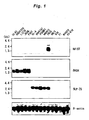
- Fig. 1 shows the results of Northern blot analysis investigating expression of MIST, BASH and SLP-76 in the hemopoietic and non-hemopoietic cell lines.
- 18-18 B-precursor cells
- WEHI1279 B cells
- L1210 B-lymphocyte precursor cells
- J558L and P3U1 plasma cells
- EL-4 and BW5147 T cells
- P388D1 and WEHI3 macrophages
- P815 mast cell
- B8/3 erythroblast
- B16,Y1, NIH3T3 and ES-E14 non-hemopoirtic cell lines.
- Fig. 2 shows the results of RT-PCR analysis investigating expression of MIST in various hemopoietic cell lines.
- Figs. 3 and 4 show the results of immunohistological analysis investigating expression of MIST in inflammatory mast cell in atopic dermatitis of the NC/Nga mouse.
- Fig. 5 shows the results of degranulation reaction of RBL-2H3 clone expressing wild-type or mutant MIST.
- the present inventor identified an EST clone from 13.5 day mouse embryo cDNA library (GenBank accession No. AA166259) which showed a significant amino acid homology to the SH2 domain of chicken BASH (J. Immunol. 161:5804-5808, 1998). The inventor further found that the 1.8 kb mRNA of this clone is not expressed in other hemopoietic cell lines and non-hemopoietic cell lines (such as B cell, T cell and macrophages) in which BASH and SLP-76 are expressed, and is expressed only in mastcytoma cell line P815 (Fig. 1). The expressed protein molecule was named as MIST (Mast Cell-specific Immunoreceptor Signal Transducer) form such specific expression pattern and its function to be described hereinafter.
- MIST Mest Cell-specific Immunoreceptor Signal Transducer
- the MISTs according to the inventions (1) and (2) are proteins that are specifically expressed in mouse and human mast cells.
- the mouse MIST in the invention (1) is a protein encoded in the polynucleotide (full-length cDNA: SEQ ID No. 1) of the invention (3).
- the human MIST in the invention (2) is, on the other hand, a protein encoded in the polynucleotide of the invention (4) containing the sequence of SEQ ID No. 3 (a partial cDNA).
- mouse MIST in the invention (1) and human MIST in the invention (2) may be obtained by a method for isolating from organs and cell lines of mouse and human, respectively, by a method for preparing a peptide by a chemical synthesis based on the amino acid sequences provided by the present invention, or by a production method using a recombinant DNA technology using the polynucleotides of the inventions (3) and (4), the recombinant DNA method is preferably used.
- RNA is prepared by in vitro transcription from a vector having the polynucleotides of the inventions (3) and (4), and MIST is expressed in vitro by in vitro translation using the RNA as a template.
- the mouse MIST and human MIST encoded by the polynucleotide can be expressed in large scale in prokaryotic cells such as E. coli and Bacillus subtilis, and in eukaryotic cells such as yeast, insect cells, mammal cells and plant cells by recombination of the coding region with the expression vector using a conventional method.
- prokaryotic cells such as E. coli and Bacillus subtilis
- eukaryotic cells such as yeast, insect cells, mammal cells and plant cells by recombination of the coding region with the expression vector using a conventional method.
- the polynucleotide (SEQ ID No. 1) of the invention (3) can be obtained by a chemical synthesis or screening of the mouse cDNA library.
- an oligonucleotide is synthesized based on the base sequence in an arbitrary portion of SEQ ID No. 1, and the polynucleotide is screened by colony or plaque hybridization by the method known in the art using the oligonucleotide as a probe.
- oligonucleotides that can hybridize to both ends of the desired polynucleotide are synthesized, and the polynucleotide of the invention (3) is prepared by a PCR method using the oligonucleotides as primers and genomic DNA isolated from the mouse cells as a template.
- the polynucleotide of the invention (4) can be prepared by isolating a full-length cDNA by hybridization screening or PCR using the oligonucleotides synthesized based on the base sequence at an arbitrary portion of SEQ ID No. 3.
- the polynucleotide of the invention (3) or (4) is recombined into a vector having a RNA polymerase promoter [the inventions (5) and (6)], and the recombinant vector is added to an in vitro translation system such as a lysate of rabbit reticulocytes or wheat germ extract containing the RNA polymerase corresponding to the promoter, thereby producing the mouse and human MIST in vitro.
- a RNA polymerase promoters include T7, T3 and SP6.
- the vectors containing the RNA polymerase are pKA1, pCDM8, pT3/T7 18, pT7/3 19 and pBluescript II.
- an expression vector [the invention (5) and (6)] is prepared by recombining the polynucleotide of the invention (3) or (4) into an expression vector having an origin capable of replication in microorganisms, a promoter, a ribosome binding site, DNA cloning sites and terminator.
- the transformant obtained [the inventions (7) and (8)] is cultured for large scale production of MIST encoded by these polynucleotides in microorganisms.
- MIST fragments containing arbitrary regions may be obtained by adding an initiation codon and a termination codon before and after the arbitrary coding region.
- the protein can be expressed as a fusion protein with other proteins. Only the protein regions encoded by this cDNA may be obtained by cleaving the fusion protein with an appropriate protease.
- the expression vector for use in E. coli include a pUC series vector, pBluescript II, pET expression system and pGEX expression system.
- the polynucleotide of the invention (3) or (4) is recombined with an expression vector for eukaryotic cells that comprises a promoter, splicing site, poly(A) additional site to prepare a recombinamt vector [the inventions (5) and (6)], and the vector is introduced into the eukaryotic cell to transform a host cell [the inventions (7) and (8)].
- the expression vectors include pKA1, pCDM8, pSVK3, pMSG, pSVL, pBK-CMV, pBK-RSV, EBV vector, pRS and pYES2.
- MIST may be expressed as a fusion protein to which various tags such as His tag, FLAG tag and GFP by using pIND/V5-His, pFLAG-CMV-2, pEGFP-N1 and pEGFP-C1 as an expression vector.
- cultured cells of a mammal such as monkey kidney cells COS7 and Chinese hamster ovary cells CHO, budding yeast, dividing yeast, silkworm cells and African clawed frog egg cells are usually used as the eukaryotic cells, any eukaryotic cells may be used so long as they are able to express MIST.
- the expression vector can be introduced into the eukaryotic cell by a conventional method such as an electroporation method, a calcium phosphate method, a liposome method, and a DEAE dextran method.
- a combination of separation methods known in the art may be used for purifying the desired protein from the culture after allowing MIST to express in the prokaryotic cells and eukaryotic cells.
- these methods include treatment with a denaturation reagent such as urea or with a surface active agent, ultrasonic treatment, enzymatic digestion, salting-out and solvent precipitation method, dialysis, centrifugation, ultrafiltration, gel filtration, SDS-PAGE, isoelectric focusing electrophoresis, ion exchange chromatography, hydrophobic chromatography, affinity chromatography and reversed phase chromatography.
- the mouse MIST of the invention (1) and the human MIST of the invention (2) contain any peptide fragments (five amino acid residues or more) represented by SEQ ID Nos. 2 and 4. These peptide fragments may be used for preparing antibodies.
- the MISTs of the inventions (1) and (2) are modified in any ways in the cell after translation. Accordingly, these modified proteins are also included within the scope of the present invention. Examples of modification after translation include elimination of N-terminal methionine, N-terminal acetylation, addition of sugar chains, restricted degradation by an intracellular protease, addition of miristoleic acid, isoprenylation and phosphorylation.
- polynucleotides having addition or deletion of one or plural nucleotides and/or substitution with other nucleotides in the base sequence of SEQ ID Nos. 1 and 3 are also included within the scope of the present invention.
- MISTs having addition or deletion of one or plural amino acids and/or substitution with other amino acids caused by the alteration of polynucleotides as described above are also included within the scope of the present invention so long as it has an activity of the MIST containing the amino acid sequences of SEQ ID Nos. 2 and 4.
- the polynucleotides in the inventions (3) and (4) also include DNA fragments (10 bp or more) comprising any partial base sequence of SEQ ID Nos. 1 and 3. DNA fragments comprising sense strand and antisense strans are also included within the scope as described above.
- the antibodies according to the inventions (9) and (10) can be obtained from serums of an animals immunized with the proteins of the inventions (1) and (2) Chemically synthesized peptides based on the amino acid sequences of SEQ ID Nos. 2 and 4, and MIST itself expressed in the eukaryotic or prokaryotic cells may be used for the antigen. Otherwise, the antibodies may be produced from collected serums after introducing the expression vector for the eukaryotic cell into the muscle or skin of an animal by injection or using a gene gun (for example, the method described in Japanese Patent Publication No. 7-31387).
- the animals used include mouse, rat, rabbit, goat and chicken.
- Monoclonal antibodies against MIST can be obtained by preparing a hybridoma by fusing B cell extracted from an immunized animal with myeloma cells.
- Full-length mouse MIST cDNA was isolated from PT18 cDNA library with 5'- and 3'-RACE (Marathon cDNA amplification kit, made by Clontech Co.), using primers prepared based on the sequence information of EST clone (GenGank accession No. AA166259).
- the partial cDNA of human MIST was amplified by PCR using mRNA prepared from human cord blood mast cell (HCMC) cultured with IL-6 and the stem cell factor (SFC: Peprotech) according to the method in "Blood 86:3705-3714, 1995.
- the sequence of the cDNA obtained was determined by the method known in the art, confirming that the mouse MIST cDNA comprises the base sequence represented by SEQ ID No. 1 and the human MIST partial cDNA comprises the base sequence represented by SEQ ID No. 3. It was also confirmed that the mouse MIST has the amino acid sequence represented by SEQ ID No. 2 with a molecular weight of about 60 kDa. Eight Tyr residues capable of phosphorylation are found in the mouse MIST from the N-terminus to the central part. The C-terminal part contains an SH2 domain which is most similar to the SH2 domain of mouse BASH and SLP-76 in amino acid level (41% and 53% identities, respectively). In addition, the central part of MIST is rich in Pro residues, and contains SH3 domain-binding motif. Consequently, MIST was confirmed to have the features as a signal molecule.
- the human MIST showed, on the other hand, 60% homology with the mouse MIST in the amino acid level.
- the coding region of the mouse MIST cDNA obtained in Example 1 was amplified by PCR, and the amplified region was inserted between the EcoRI and Sal I sites of pCATneo expression vector (J. Immunol., 161:5804-5808, 1998) to construct a recombinant expression vector (pCATneo-MIST-WT).
- MIST-YF The MIST mutant (MIST-YF) in which amino acids (Tyr) at 69, 96, 101, 153, 174 and 188 in SEQ ID No. 2 were substituted with other amino acids (Phe) was prepared by a PCR-based mutagenesis using a commercially available mutation kit (made by Stratagene Co.), and subcloned the MIST-YF into the pCATneo to construct a recombinant expression vector (pCATneo-MIST-YF).
- the rat must cell line RBL-2H3 were transfected with the recombinant expression vectors pCATneo-MIST or pCATneo-MIST-YF prepared in Example 2 to prepare the transformed cell RBL-2H3-MIST and RBL-2H3-MIST-YE.
- An anti-MIST antibody was prepared from a rabbit immunized with a fusion protein of a polypeptide comprising the amino acid sequence 193-435 in SEQ ID No. 2 and glutathione-S-transferase (GST).
- the antisera were at first precleared with Seharose beads coupled with GST alone, and then purified with an affinity column coupled with GST-MIST fusion protein. Specificity of the antibody purified with affinity chromatography was confirmed by an immunoblot analysis on cell lysates from COS cells transfected with mouse MIST cDNA.
- mice and human MISTs obtained in Example 1 were confirmed by RT-PCR.
- the objective cells were IL-3-induced mouse bone marrow-derived mast cells (BMMC), mouse mast cell line PT18, human mast cells (HCNC) cultured with SCF and IL-6, and other hemocyte cell lines (Jurkat: human T cell, Romas: human B cell, KU812: human basophil precursor cell, EOL-1: human eosinophil precursor cell).
- MIST is a protein specifically expressed in mast cell.
- Phosphorylation of tyrosine in MIST by stimulating with Fc ⁇ RI was investigated using the rat mast cell line RBL-2H3 in which signal transduction of Fc ⁇ RI had been confirmed.
- the transformed cell RBL-2H3-MIST prepared in Example 3 was cultured with 10 ⁇ g of anti-DNP mouse IgE (made by Sigma Co.) for 1 hour, and the cells were stimulated with 100 ng/ml of DNP-HSA.
- the cells were lysed with 1% NP40 lysis buffer, and the lysate was subjected to immune precipitation together with various antibodies.
- Tyrosine of the MIST molecule was phosphorylated by stimulating the Fc ⁇ receptor on the mast cell IgE and antigens, and MIST associate with signal molecules such as PLC- ⁇ and Vav. Consequently, the MIST molecule was confirmed to be a signal molecule existing at the downstream of the Fc ⁇ receptor. MIST was evidently phosphorylated by Lyn kinase among tyrosine kinases present in the mast cell, showing that the Lyn kinase has an important role for degranulation of the mast cell.
- the cells were cultured with 1 ⁇ g/ml of anti-DNP mouse IgE overnight, washed twice with PBS, and stimulated with DNP-HSA at 37°C for 30 minutes. Degranulation was confirmed by measuring release of ⁇ -hexosaminidase by the method described in the literature (Int. Immunol., 7:251-258, 1992).
- the present invention provides signal transducers that are specifically expressed in mouse and human mast cells, polynucleotides (cDNAs) encoding this protein molecule and various gene engineering materials concerning these signal transducers. Screening of novel agents for allergic diseases becomes possible by using these signal transducers as targets.
- cDNAs polynucleotides
Landscapes
- Chemical & Material Sciences (AREA)
- Health & Medical Sciences (AREA)
- Life Sciences & Earth Sciences (AREA)
- Organic Chemistry (AREA)
- General Health & Medical Sciences (AREA)
- Gastroenterology & Hepatology (AREA)
- Biochemistry (AREA)
- Biophysics (AREA)
- Zoology (AREA)
- Genetics & Genomics (AREA)
- Medicinal Chemistry (AREA)
- Molecular Biology (AREA)
- Proteomics, Peptides & Aminoacids (AREA)
- Toxicology (AREA)
- Peptides Or Proteins (AREA)
- Micro-Organisms Or Cultivation Processes Thereof (AREA)
- Preparation Of Compounds By Using Micro-Organisms (AREA)
Applications Claiming Priority (3)
| Application Number | Priority Date | Filing Date | Title |
|---|---|---|---|
| JP26377899A JP3146204B1 (ja) | 1999-09-17 | 1999-09-17 | マスト細胞特異的シグナル伝達分子とそのcDNA |
| JP26377899 | 1999-09-17 | ||
| PCT/JP2000/006351 WO2001021788A1 (fr) | 1999-09-17 | 2000-09-18 | Molecules transduisant un signal specifique de cellule basophile/mastocyte et leurs adn complementaires |
Publications (3)
| Publication Number | Publication Date |
|---|---|
| EP1132468A1 true EP1132468A1 (fr) | 2001-09-12 |
| EP1132468A4 EP1132468A4 (fr) | 2002-12-04 |
| EP1132468B1 EP1132468B1 (fr) | 2007-05-16 |
Family
ID=17394157
Family Applications (1)
| Application Number | Title | Priority Date | Filing Date |
|---|---|---|---|
| EP00961053A Expired - Lifetime EP1132468B1 (fr) | 1999-09-17 | 2000-09-18 | Molecules transduisant un signal specifique de cellule basophile/mastocyte et leurs adn complementaires |
Country Status (6)
| Country | Link |
|---|---|
| US (2) | US6831151B1 (fr) |
| EP (1) | EP1132468B1 (fr) |
| JP (1) | JP3146204B1 (fr) |
| CA (1) | CA2351722C (fr) |
| DE (1) | DE60034867T2 (fr) |
| WO (1) | WO2001021788A1 (fr) |
Cited By (1)
| Publication number | Priority date | Publication date | Assignee | Title |
|---|---|---|---|---|
| WO2002026986A3 (fr) * | 2000-09-29 | 2003-01-23 | Bristol Myers Squibb Co | Identification et clonage d'un gene humain entier apparente a cink, et transducteur du signal d'immunorecepteur de basophile/mastocyte, appele mist |
Families Citing this family (2)
| Publication number | Priority date | Publication date | Assignee | Title |
|---|---|---|---|---|
| US20040229237A1 (en) * | 1999-09-17 | 2004-11-18 | Ryo Goitsuka | Mast cell-specific signal transducer and cDNA thereof |
| JP3146204B1 (ja) * | 1999-09-17 | 2001-03-12 | 科学技術振興事業団 | マスト細胞特異的シグナル伝達分子とそのcDNA |
Family Cites Families (1)
| Publication number | Priority date | Publication date | Assignee | Title |
|---|---|---|---|---|
| JP3146204B1 (ja) * | 1999-09-17 | 2001-03-12 | 科学技術振興事業団 | マスト細胞特異的シグナル伝達分子とそのcDNA |
-
1999
- 1999-09-17 JP JP26377899A patent/JP3146204B1/ja not_active Expired - Fee Related
-
2000
- 2000-09-18 CA CA002351722A patent/CA2351722C/fr not_active Expired - Fee Related
- 2000-09-18 WO PCT/JP2000/006351 patent/WO2001021788A1/fr not_active Ceased
- 2000-09-18 US US09/856,061 patent/US6831151B1/en not_active Expired - Fee Related
- 2000-09-18 EP EP00961053A patent/EP1132468B1/fr not_active Expired - Lifetime
- 2000-09-18 DE DE60034867T patent/DE60034867T2/de not_active Expired - Fee Related
-
2006
- 2006-09-29 US US11/529,217 patent/US7226997B2/en not_active Expired - Fee Related
Non-Patent Citations (2)
| Title |
|---|
| No further relevant documents disclosed * |
| See also references of WO0121788A1 * |
Cited By (3)
| Publication number | Priority date | Publication date | Assignee | Title |
|---|---|---|---|---|
| WO2002026986A3 (fr) * | 2000-09-29 | 2003-01-23 | Bristol Myers Squibb Co | Identification et clonage d'un gene humain entier apparente a cink, et transducteur du signal d'immunorecepteur de basophile/mastocyte, appele mist |
| US7241590B2 (en) | 2000-09-29 | 2007-07-10 | Bristol-Myers Squibb Company | Identification and cloning of a full-length human Clnk-related gene, MIST (mast cell immunoreceptor signal transducer) |
| US7442770B2 (en) | 2000-09-29 | 2008-10-28 | Bristol-Myers Squibb Company | Human clnk-related polypeptide, MIST (Mast Cell Immunoreceptor Signal Transducer) |
Also Published As
| Publication number | Publication date |
|---|---|
| EP1132468B1 (fr) | 2007-05-16 |
| US20070020732A1 (en) | 2007-01-25 |
| EP1132468A4 (fr) | 2002-12-04 |
| DE60034867D1 (de) | 2007-06-28 |
| JP3146204B1 (ja) | 2001-03-12 |
| US7226997B2 (en) | 2007-06-05 |
| US6831151B1 (en) | 2004-12-14 |
| WO2001021788A1 (fr) | 2001-03-29 |
| JP2001078780A (ja) | 2001-03-27 |
| DE60034867T2 (de) | 2008-02-14 |
| CA2351722A1 (fr) | 2001-03-29 |
| CA2351722C (fr) | 2008-02-26 |
Similar Documents
| Publication | Publication Date | Title |
|---|---|---|
| US7129338B1 (en) | Secretory protein or membrane protein | |
| EP1067182A2 (fr) | Proteine secretoire ou proteine de membrane | |
| CA2260365C (fr) | Polypeptide de differenciation-suppressive | |
| JPWO1998002458A1 (ja) | 分化抑制剤 | |
| US7226997B2 (en) | Mast cell-specific signal transducer and cDNA thereof | |
| JP2004521607A (ja) | ケモカイン、神経ペプチド前駆体または少なくとも一つの神経ペプチドをコードする核酸配列を含んでなる核酸分子 | |
| US7423134B1 (en) | Protein AMSH and cDNA thereof | |
| US20040229237A1 (en) | Mast cell-specific signal transducer and cDNA thereof | |
| US6838551B2 (en) | Protein AMSH and cDNA thereof | |
| WO2001023557A1 (fr) | Polypeptides et genes les codant | |
| US6395477B1 (en) | Human potassium channel polynucleotide and polypeptides and uses thereof | |
| US20020115203A1 (en) | Human proteins STAM2a and STAM2b, and cDNAs encoding these molecules | |
| EP1148125B1 (fr) | Nucleoproteine humaine possedant un domaine ww et polynucleotide codant cette nucleoproteine | |
| JP2003259871A (ja) | 脳特異的発現を示す分泌タンパク質creg2とその利用 | |
| CA2315241C (fr) | Proteine rim2 | |
| WO2000023586A1 (fr) | PROTEINE HUMAINE Grf40 ET ADNc DE CETTE PROTEINE | |
| JP2007222001A (ja) | 疎水性ドメインを有するヒトタンパク質及びそれをコードするdna | |
| WO2000057683A2 (fr) | Gene et proteine a expression differentielle | |
| JPH10313870A (ja) | 新規なb細胞表面タンパク質及びこれをコードするdna | |
| WO2001090355A1 (fr) | Canal sodium humain scn12a et scn8a | |
| JP2012029589A (ja) | コアα1,3−フコース転移酵素をコードするDNA、発現ベクター、形質転換体、組換えタンパク質、及び組換えタンパク質を生産する方法 | |
| JP2001224379A (ja) | ヒト蛋白質とcDNA[8] | |
| JP2000093178A (ja) | Dd13遺伝子 | |
| CA2406342A1 (fr) | Genes associes a l'apoptose humaine et proteines produites associees a l'apoptose humaine |
Legal Events
| Date | Code | Title | Description |
|---|---|---|---|
| PUAI | Public reference made under article 153(3) epc to a published international application that has entered the european phase |
Free format text: ORIGINAL CODE: 0009012 |
|
| 17P | Request for examination filed |
Effective date: 20010615 |
|
| AK | Designated contracting states |
Kind code of ref document: A1 Designated state(s): AT BE CH CY DE DK ES FI FR GB GR IE IT LI LU MC NL PT SE |
|
| A4 | Supplementary search report drawn up and despatched |
Effective date: 20021016 |
|
| AK | Designated contracting states |
Kind code of ref document: A4 Designated state(s): AT BE CH CY DE DK ES FI FR GB GR IE IT LI LU MC NL PT SE |
|
| RBV | Designated contracting states (corrected) |
Designated state(s): DE FR GB |
|
| RAP1 | Party data changed (applicant data changed or rights of an application transferred) |
Owner name: JAPAN SCIENCE AND TECHNOLOGY AGENCY |
|
| 17Q | First examination report despatched |
Effective date: 20050429 |
|
| GRAP | Despatch of communication of intention to grant a patent |
Free format text: ORIGINAL CODE: EPIDOSNIGR1 |
|
| GRAS | Grant fee paid |
Free format text: ORIGINAL CODE: EPIDOSNIGR3 |
|
| GRAA | (expected) grant |
Free format text: ORIGINAL CODE: 0009210 |
|
| AK | Designated contracting states |
Kind code of ref document: B1 Designated state(s): DE FR GB |
|
| REG | Reference to a national code |
Ref country code: GB Ref legal event code: FG4D |
|
| REF | Corresponds to: |
Ref document number: 60034867 Country of ref document: DE Date of ref document: 20070628 Kind code of ref document: P |
|
| ET | Fr: translation filed | ||
| PLBE | No opposition filed within time limit |
Free format text: ORIGINAL CODE: 0009261 |
|
| STAA | Information on the status of an ep patent application or granted ep patent |
Free format text: STATUS: NO OPPOSITION FILED WITHIN TIME LIMIT |
|
| 26N | No opposition filed |
Effective date: 20080219 |
|
| PGFP | Annual fee paid to national office [announced via postgrant information from national office to epo] |
Ref country code: FR Payment date: 20080912 Year of fee payment: 9 |
|
| PGFP | Annual fee paid to national office [announced via postgrant information from national office to epo] |
Ref country code: DE Payment date: 20080919 Year of fee payment: 9 |
|
| PGFP | Annual fee paid to national office [announced via postgrant information from national office to epo] |
Ref country code: GB Payment date: 20090922 Year of fee payment: 10 |
|
| REG | Reference to a national code |
Ref country code: FR Ref legal event code: ST Effective date: 20100531 |
|
| PG25 | Lapsed in a contracting state [announced via postgrant information from national office to epo] |
Ref country code: FR Free format text: LAPSE BECAUSE OF NON-PAYMENT OF DUE FEES Effective date: 20090930 Ref country code: DE Free format text: LAPSE BECAUSE OF NON-PAYMENT OF DUE FEES Effective date: 20100401 |
|
| GBPC | Gb: european patent ceased through non-payment of renewal fee |
Effective date: 20100918 |
|
| PG25 | Lapsed in a contracting state [announced via postgrant information from national office to epo] |
Ref country code: GB Free format text: LAPSE BECAUSE OF NON-PAYMENT OF DUE FEES Effective date: 20100918 |