EP1133256B1 - Outil diagnostique utilisant un instrument predictif - Google Patents
Outil diagnostique utilisant un instrument predictif Download PDFInfo
- Publication number
- EP1133256B1 EP1133256B1 EP99960462A EP99960462A EP1133256B1 EP 1133256 B1 EP1133256 B1 EP 1133256B1 EP 99960462 A EP99960462 A EP 99960462A EP 99960462 A EP99960462 A EP 99960462A EP 1133256 B1 EP1133256 B1 EP 1133256B1
- Authority
- EP
- European Patent Office
- Prior art keywords
- probability
- outcome
- patient
- conditional probabilities
- diagnostic test
- Prior art date
- Legal status (The legal status is an assumption and is not a legal conclusion. Google has not performed a legal analysis and makes no representation as to the accuracy of the status listed.)
- Expired - Lifetime
Links
Images

Classifications
-
- A—HUMAN NECESSITIES
- A61—MEDICAL OR VETERINARY SCIENCE; HYGIENE
- A61B—DIAGNOSIS; SURGERY; IDENTIFICATION
- A61B5/00—Measuring for diagnostic purposes; Identification of persons
- A61B5/24—Detecting, measuring or recording bioelectric or biomagnetic signals of the body or parts thereof
- A61B5/316—Modalities, i.e. specific diagnostic methods
- A61B5/318—Heart-related electrical modalities, e.g. electrocardiography [ECG]
- A61B5/346—Analysis of electrocardiograms
- A61B5/349—Detecting specific parameters of the electrocardiograph cycle
-
- A—HUMAN NECESSITIES
- A61—MEDICAL OR VETERINARY SCIENCE; HYGIENE
- A61B—DIAGNOSIS; SURGERY; IDENTIFICATION
- A61B5/00—Measuring for diagnostic purposes; Identification of persons
- A61B5/41—Detecting, measuring or recording for evaluating the immune or lymphatic systems
- A61B5/412—Detecting or monitoring sepsis
-
- G—PHYSICS
- G16—INFORMATION AND COMMUNICATION TECHNOLOGY [ICT] SPECIALLY ADAPTED FOR SPECIFIC APPLICATION FIELDS
- G16H—HEALTHCARE INFORMATICS, i.e. INFORMATION AND COMMUNICATION TECHNOLOGY [ICT] SPECIALLY ADAPTED FOR THE HANDLING OR PROCESSING OF MEDICAL OR HEALTHCARE DATA
- G16H15/00—ICT specially adapted for medical reports, e.g. generation or transmission thereof
-
- A—HUMAN NECESSITIES
- A61—MEDICAL OR VETERINARY SCIENCE; HYGIENE
- A61B—DIAGNOSIS; SURGERY; IDENTIFICATION
- A61B5/00—Measuring for diagnostic purposes; Identification of persons
- A61B5/72—Signal processing specially adapted for physiological signals or for diagnostic purposes
- A61B5/7235—Details of waveform analysis
- A61B5/7264—Classification of physiological signals or data, e.g. using neural networks, statistical classifiers, expert systems or fuzzy systems
-
- G—PHYSICS
- G16—INFORMATION AND COMMUNICATION TECHNOLOGY [ICT] SPECIALLY ADAPTED FOR SPECIFIC APPLICATION FIELDS
- G16H—HEALTHCARE INFORMATICS, i.e. INFORMATION AND COMMUNICATION TECHNOLOGY [ICT] SPECIALLY ADAPTED FOR THE HANDLING OR PROCESSING OF MEDICAL OR HEALTHCARE DATA
- G16H10/00—ICT specially adapted for the handling or processing of patient-related medical or healthcare data
- G16H10/40—ICT specially adapted for the handling or processing of patient-related medical or healthcare data for data related to laboratory analysis, e.g. patient specimen analysis
-
- G—PHYSICS
- G16—INFORMATION AND COMMUNICATION TECHNOLOGY [ICT] SPECIALLY ADAPTED FOR SPECIFIC APPLICATION FIELDS
- G16H—HEALTHCARE INFORMATICS, i.e. INFORMATION AND COMMUNICATION TECHNOLOGY [ICT] SPECIALLY ADAPTED FOR THE HANDLING OR PROCESSING OF MEDICAL OR HEALTHCARE DATA
- G16H40/00—ICT specially adapted for the management or administration of healthcare resources or facilities; ICT specially adapted for the management or operation of medical equipment or devices
- G16H40/60—ICT specially adapted for the management or administration of healthcare resources or facilities; ICT specially adapted for the management or operation of medical equipment or devices for the operation of medical equipment or devices
-
- G—PHYSICS
- G16—INFORMATION AND COMMUNICATION TECHNOLOGY [ICT] SPECIALLY ADAPTED FOR SPECIFIC APPLICATION FIELDS
- G16H—HEALTHCARE INFORMATICS, i.e. INFORMATION AND COMMUNICATION TECHNOLOGY [ICT] SPECIALLY ADAPTED FOR THE HANDLING OR PROCESSING OF MEDICAL OR HEALTHCARE DATA
- G16H50/00—ICT specially adapted for medical diagnosis, medical simulation or medical data mining; ICT specially adapted for detecting, monitoring or modelling epidemics or pandemics
- G16H50/20—ICT specially adapted for medical diagnosis, medical simulation or medical data mining; ICT specially adapted for detecting, monitoring or modelling epidemics or pandemics for computer-aided diagnosis, e.g. based on medical expert systems
-
- G—PHYSICS
- G16—INFORMATION AND COMMUNICATION TECHNOLOGY [ICT] SPECIALLY ADAPTED FOR SPECIFIC APPLICATION FIELDS
- G16H—HEALTHCARE INFORMATICS, i.e. INFORMATION AND COMMUNICATION TECHNOLOGY [ICT] SPECIALLY ADAPTED FOR THE HANDLING OR PROCESSING OF MEDICAL OR HEALTHCARE DATA
- G16H50/00—ICT specially adapted for medical diagnosis, medical simulation or medical data mining; ICT specially adapted for detecting, monitoring or modelling epidemics or pandemics
- G16H50/50—ICT specially adapted for medical diagnosis, medical simulation or medical data mining; ICT specially adapted for detecting, monitoring or modelling epidemics or pandemics for simulation or modelling of medical disorders
Definitions
- the invention relates to predictive instruments for computing a patient's probability of a serious medical condition.
- a hand-held predictive instrument is described by Michael W. Pozen et al. in "A Predictive Instrument to Improve Coronary-Care-Unit Admission Practices in Acute Ischemic Heart Disease” The New England Journal of Medicine, Vol 310 pp. 1273-1278, May 17, 1984.
- a physician can compute a patient's probability of having acute cardiac ischemia based upon physician-entered values for a set of clinical variables.
- An automatic, computerized version of this instrument which utilizes output from a electrocardiograph and a waveform analyzer is described by H.P. Selker et al. in "A Time-Insensitive Predictive Instrument for Acute Myocardial Infarction Mortality", Med. Care 1991; 29:1196-1211.
- a predictive instrument for determining the probability of acute hospital mortality of a cardiac patient is described in U.S. 4,957,115 to Dr. Harry P. Selker.
- the probability of acute hospital mortality is commonly understood to mean the probability of dying from a current acute condition, generally during the specific initial hospitalization for the problem. It is also referred to as the probability of imminent death for the patient. That is, it is a short term, as opposed to a long term, probability of mortality which does not necessarily have a precisely defined period of time associated with it.
- a predictive instrument for evaluating whether to use thrombolytic therapy to treat a patient with a heart condition is described in U.S. 4,998,535 to Dr. Selker et al..
- the predictive instrument computes a first probability of acute hospital mortality for the patient assuming that thrombolytic therapy is not administered and it computes a second probability of acute hospital mortality for the patient assuming that thrombolytic therapy is administered.
- the difference in the computed probabilities may assist the physician in deciding whether it would be advantageous to administer the thrombolytic therapy to the patient.
- the above-mentioned predictive instruments use logistic regression equations to model the probability that the patient has a serious cardiac condition (e.g. the probability of acute cardiac ischemia or the probability of imminent death from a cardiac condition).
- a serious cardiac condition e.g. the probability of acute cardiac ischemia or the probability of imminent death from a cardiac condition.
- the invention is a method for evaluating a medical condition of a patient.
- the method includes the steps of monitoring one or more clinical features of a patient; based on the monitored features, computing a primary probability of a medical outcome or diagnosis; computing a plurality of conditional probabilities for a selected diagnostic test, wherein the conditional probabilities include a first probability of the medical outcome or diagnosis assuming the selected diagnostic test produces a first outcome and a second probability of the medical outcome or diagnosis assuming the selected diagnostic test produces a second outcome; and displaying the computed primary probability as well as the plurality of computed conditional probabilities to a user as an aid to determining whether to administer the selected diagnostic test to the patient.
- the step of monitoring involves monitoring EKG-related characteristics of the patient, wherein the computed primary probability is a probability of a cardiac problem, and wherein the selected diagnostic test is selected from the group consisting of a CK blood test, an ETT, a stress test, and Sestamibi scanning test.
- the method also includes the step of computing a second plurality of conditional probabilities for a second selected diagnostic test, the second conditional probabilities including a first probability of the medical outcome or diagnosis assuming the second selected diagnostic test produces a first outcome and a second probability of the medical outcome or diagnosis assuming the second selected diagnostic test produces a second outcome.
- the method includes computing a second plurality of conditional probabilities for a second selected diagnostic test, the second plurality of conditional probabilities assuming a particular outcome of the first-mentioned selected diagnostic test, the second conditional probabilities including a first probability of the medical outcome or diagnosis also assuming the second selected diagnostic test produces a first outcome and a second probability of the medical outcome or diagnosis also assuming the second selected diagnostic test produces a second outcome.
- the invention is a method for determining a diagnostic test plan for a patient which includes the steps of: monitoring EKG-related characteristics of the patient; based on the measured characteristics, computing a primary probability of a cardiac problem; computing a plurality of conditional probabilities for a selected diagnostic test, wherein the conditional probabilities include a first probability of cardiac problem assuming the selected diagnostic test produces a first outcome and a second probability assuming the selected diagnostic test produces a second outcome; and displaying the computed primary probability as well as the plurality of computed conditional probabilities to a user as an aid to determining whether to administer the selected diagnostic test to the patient.
- the invention is a diagnostic apparatus for use with a patient.
- the apparatus includes a monitoring device which during use monitors one or more clinical features of the patient; an output device; and a predictive instrument receiving input from the monitoring device and programmed to: (1) compute therefrom a primary probability of a medical outcome or diagnosis based on the monitored one or more clinical features; (2) compute a plurality of conditional probabilities for a selected diagnostic test, the plurality of conditional probabilities including a first probability of said medical outcome or diagnosis assuming the selected diagnostic test produces a first outcome and a second probability of said medical outcome or diagnosis assuming the selected diagnostic test produces a second outcome; and (3) display the computed primary probability along with the plurality of computed conditional probabilities on the output device.
- the array of computed probabilities not only gives potentially revised probabilities of a diagnostic problem/outcome (e.g. acute ischemia) once the diagnostic test results are in-hand, but more importantly,by providing estimates of the potential probabilities that would result based on the possible results of a particular diagnostic test, it also gives the clinician accurate advice and guidance as to which of the diagnostic tests would be most helpful in diagnosing the seriousness of patient's condition.
- a diagnostic problem/outcome e.g. acute ischemia
- a predictive instrument constructed in accordance with the invention includes a 12-lead electrocardiograph 10, a waveform analyzer 12, and a programmed processor module 14.
- Electrocardiograph 10 is connected to a patient 18 and produces a set of ECG waveforms for the patient.
- Waveform analyzer 12 is programmed to analyze the ECG waveforms and recognize the presence of certain characteristics that are particularly indicative of the cardiac condition of the patient, e.g. the presence and elevation or depression of S-T segments, the presence Q waves, and the presence of elevated, depressed or inverted T-waves.
- the particular characteristics which the waveform analyzer is programmed to recognize depend upon the function that is performed by the predictive instrument which in turn determines the set of clinical variables that are required to perform that function.
- Processor module 14 uses the output of waveform analyzer 12 in conjunction with other clinical information about the patient that has been entered by a physician through a keyboard 22 and is programmed to compute a probability that the patient has a life-threatening cardiac condition. According to an important aspect of the present embodiment, processor module 14 is also programmed to generate and display a hierarchical array of conditional probabilities which guide the physician in selecting the most appropriate diagnostic test or sequence of tests to perform on the patient to increase the certainty of the medical diagnosis.
- the programs that are described herein are typically presented on a computer-readable medium, e.g. a CD-ROM or floppy disk 36. The program is then read into or loaded into the processor module or computer.
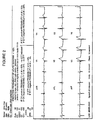
- the processor module generates two sets of conditional probabilities, which are shown in Fig. 2.
- the first set includes two levels with the top level presenting the conditional probabilities for a CK (creatine kinase) blood test and the bottom level presenting conditional probabilities for an ETT (Exercise Tolerance Test), assuming that the CK blood test produced negative results.
- the second set simply presents the conditional probabilities for a ETT test given the results of the preceeding ECG and CK tests.
- the processor module displays the computed probabilities in a form and manner that is designed to be most useful to the physician using the predictive instrument.
- the results are printed across the top of the ECG waveform trace output that is also generated by the electrocardiograph so that a permanent record of them is generated for the patient's file and so that they are available in a convenient readily accessible form for the physician.
- the results can be displayed in some other fashion such as through the video monitor that is part of the instrument.
- the significance of the information which is communicated to the physician is as follows. Based upon the monitored ECG waveform and the presenting information that is obtained from the patient, the computed probability of acute cardiac ischemia (ACI) is 42%. In other words, among the people that were represented in the database that was used to generate the regression equation, 42% of those people who had similar characteristics were actually experiencing ACI.
- ACI acute cardiac ischemia
- the report also presents the physician with guidance regarding what further tests to perform on the patient in order to most effectively and efficiently decide whether the patient's likelihood of acute cardiac ischemia is such that he or she should be admitted to the hospital or allowed to go home.
- the guidance is in the form of the predicted conditional probabilities for each of two tests that could be performed on the patient, namely, a CK blood test and an ETT. If a CK blood test is performed and the results are positive, the computed probability of ACI will increase to 85%. That would be high enough to suggest an admission without further testing but not clearly high enough to clearly mandate hospitalization. However, if the CK blood test results produce negative results, the probability will fall to 25%.
- the 25% is still high enough to justify continuing concern and to thus warrant further testing. If the ETT is then performed for the patient, assuming that the patient produced negative CK blood test results, the outcome of the ETT will change the computed probabilities in the manner shown. If the ETT is negative, the probability will fall to 3%, justifying a non-admission decision for the patient. Whereas if the ETT results are positive, the probability will increase to 40%, which probably warrants admitting the patient for further observations. So, before performing any tests on the patient beyond the initial examination and the ECG, the physician, by knowing what the potential diagnostic yield might be by the use of different tests, can be guided in both the choice of tests and also the ultimate decision.
- the report also presents conditional probabilities for an ETT (see information presented in upper right side of Fig. 2).
- the processor module determines that if an ETT is performed, a positive result will yield a predicted probability of 70% and a negative result will yield a predicted probability of 30%.
- the computed probabilities for this patient seem to indicate that performing the CK blood test as the first test will produce the most discrimination between a patient who should be admitted and one who can be allowed to go home.
- electrocardiograph 10 and waveform analyzer 12 are commercially available as a single unit.
- Hewlett Packard makes the HP Pagewriter XLi which is a mobile unit that can be moved from one patient to the next.
- the Pagewriter XLi includes an internal computer that can be programmed to perform the appropriate waveform analysis. For example, it can be programmed to recognize and quantify the presence of key features within the ECG waveform. It can also be programmed to identify the location of a myocardial infarction (MI) based on the characteristics of the set of signals produced by the twelve monitoring leads.
- MI myocardial infarction
- the computer within the unit can also be programmed to perform the functions of other components or modules within the system, e.g. the computations of the predictive instrument.
- processor module 14 uses logistic regression-based equations for computing the probabilities that the patient is experiencing acute cardiac ischemia.
- predictive instruments which are capable of computing probabilities of ACI or other medical problems and which can be used in connection with the present invention refer to the following patents.
- b 0 is a constant
- the b i 's are coefficients of the explanatory variables x i which are included in the model.
- the variables that are used in the model will of course depend upon the particular medical outcome or diagnosis which is being evaluated. Some examples are presented below along with variables that would be included in the model.
- Standard, well known regression techniques and other mathematical modeling may be employed to identify the most appropriate set of explanatory variables, namely, the x i 's, and to determine the values of the coefficients of these variables.
- explanatory variables namely, the x i 's
- PLR Stepwise Logistic Regression BMDP Statistical Software, Chap. 14.5, pp. 330-334, BMDP publishers, Westwood, California.
- the precise set of explanatory variables that are identified and the predictive ability of the resulting logistic equation generally depends upon the quality of the underlying data that is used to develop the model. Such factors as the size and completeness of the database are often of significant importance.
- the selection of the relevant variables and the computation of the appropriate coefficients are well within the skill of an ordinary person skilled in the art.
- each level of conditional probabilities is computed using a corresponding different logistic regression equation.
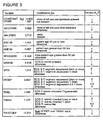
- Each regression equation is derived using the same approach that was used to derive the regression equation illustrated in Fig. 3.
- at least one additional explanatory variable is added to account for the test that is being modeled by the regression equation.
- those test results are represented as an additional dichotomous variable (e.g. an additional b j x j term in the regression equation).
- those results are also represented by at least one additional dichotomous variable.
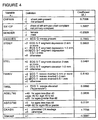
- Fig. 4 An example of the variables which would appear in the logistic regression equation which computes the conditional probabilities for the CK blood test and the coefficients for those coefficients is presented in Fig. 4.
- CKABN the additional variable that accounts for the outcome of the CK test. It takes on two values, namely, 1 for an abnormal CK reading and 0 for otherwise. The other variables are described in the figure.
- the processor module computes a probability for each value of the variable and reports those as the conditional probabilities.
- test results can be modeled as producing three possible outcomes, e.g. positive, negative, and ambiguous.
- the variables could even be modeled to have more than three possible discrete outcomes or even to be a continuous variable that takes on values over a range of numbers.
- the system operates in the following manner.
- the physician or other user enters the relevant clinical information about the patient. For example, if the predictive instrument is programmed to compute the probability of acute cardiac ischemia in accordance with the above model, the physician enters the following information about the patient: (1) name; (2) age; (3) sex; (4) whether the patient is experiencing chest or left arm pain; and (5) whether the patient's chief complaint is chest or left arm pain.
- the physician After the physician has set up the system for a particular patient and connects the leads of the electrocardiograph to the patient, the physician causes the system to perform an initial ECG for the patient.
- the waveform analyzer acquires and analyzes a current segment of the patient's ECG waveform.
- the output of the waveform analyzer reports whether: (1) any Q waves are present; (2) whether the S-T segment is elevated or depressed and by how much; (3) whether the T-waves are elevated inverted or flat; (4) if the T-waves are elevated, by how much; and (5) whether both the STDEP and TWINV leads are non-zero.
- the processor module uses the output of the waveform analyzer and previously entered values for other clinical variables to generate a probability that the patient has acute cardiac ischemia and the array of conditional probabilities that the system is configured to generate. This information is then printed on the top of the ECG printout in the manner described earlier.
- CK blood test and ETT were not meant to be limiting.
- Other potential tests that could be included either in addition to or as alternatives to the CK blood test and ETT include: other blood tests such as troponin and myoglobin and radionucleide imaging tests, such as Sestamibi scanning, and other forms of exercise stress tests, just to name a few.
- other ways in which to display the array of conditional probabilities We have described a simple presentation. But more a complex tree or multiple trees of conditional probabilities could be generated. The added conditional probabilities, however, present greater challenges in communicating the information to the physician in an effectively and readily understandable manner.
- the diagnostic tool described above has applicability to many other medical problems beyond the above-described cardiac related problems.
- the extension to circumstances that are not cardiac related is straight forward.
- Such alternative embodiments would likely (but not necessarily) have a similar functional block diagram structure to that described above, except that a different diagnostic or monitoring instrument would be used in place of the electrocardiograph, and the system may or may not include a module which analyzes the output of the monitoring instrument before providing input to the predictive instrument portion.
- the regression equations for computing the probabilities of a pulmonary embolus would include among its key variables the same variables as listed above, and also heart rate and respiration rate, as well as a modification of the symptoms regarding the suddenness of onset, and also ECG variables related to right heart strain (e.g. relating to QRS complex and ST/T wave changes). Diagnostic tests for which conditonal probabilities would be important would include pulse oximetry P a O 2 (oxygen concentration in the blood) and echocardiogram evidence of pulmonary hypertension and/or right ventricular strain, and other blood tests.
- the regression equations for computing the probabilities of a cerebral hemorrhage would include among their key variables the patient's history of medications (e.g. anticoagulants, etc.), prior history of cardiac disorders that predispose to cerebral thrombosis (e.g. atrial fibrillation, valvular disease), and history of trauma to the head, as well as laboratory tests such as prothrombin time and partial thromboplastin time and platelet count, which are all measures of the clotting ability of the blood. They also include blood pressure, with emphasis on pulse pressure (i.e., a difference between the systolic and diastolic pressure). The most important additional diagnostic tests for which conditional probabilities would be useful would include CT and MRI scan evidence of stroke.
- medications e.g. anticoagulants, etc.
- cardiac disorders that predispose to cerebral thrombosis e.g. atrial fibrillation, valvular disease
- laboratory tests such as prothrombin time and partial thromboplastin time and
- the regression equations for computing the probabilities of an intra-abdominal catastrophe would include among their key variables the presence of abdominal pain, the patient's physical findings by the physician of so-called peritoneal signs (rigidity of the abdomen, no bowel sounds, etc.), monitor data such as temperature, heart rate, blood pressure, and potentially x-ray findings that reveal bowel gas pattern.
- Diagnostic tests for which conditional probabilities would be useful include tests for the complete blood count (CBC: including the white blood cell count, the red cell count (or hematocrit), and the platelete count), as well as tests for the erythrocyte sedimentation rate (ESR) and abdominal sonography.
- the regression equations for computing the probabilities of sepsis would include among their key variables the patient's level of consciousness, specific complaints, and monitored physiologic measures such as blood pressure (especially low), heart rate (especially high), respiratory rate (especially high), body temperature (especially either unduly high or unduly low), ECG abnormalities (as not showing a contrary cardiac cause for derangements in heart rate, blood pressure, respiratory rate and other findings in the form of an interaction term in the mathematical model) laboratory tests such as white blood count (either unduly high or unduly low), and other special blood tests typically available on-line from hospital clinical information systems.
- blood pressure especially low
- heart rate especially high
- respiratory rate especially high
- body temperature especially either unduly high or unduly low
- ECG abnormalities as not showing a contrary cardiac cause for derangements in heart rate, blood pressure, respiratory rate and other findings in the form of an interaction term in the mathematical model
- laboratory tests such as white blood count (either unduly high or unduly low), and other special blood tests typically available on
- Each of the above diagnoses to be predicted have consequences in terms of clinical outcomes including, for example, mortality.
- Other outcomes that can be predicted by a predictive instrument include mortality due to acute myocardial infarction or congestive heart failure, as well as conditional outcomes such as are obtained from the thrombolytic predictive instrument (see U.S. 4,998,535).
- the use of this approach also applies to other non-cardiac conditions for which prediction of medical outcomes can be conditioned on the use of specific therapies.
- the examples presented above are meant to be merely illustrative of the many ways in which the invention can be used to aid in the diagnosis of a patient's medical condition. It is not intended that the invention be limited to the few examples that were described here. In general, the invention covers any instrument which computes on the basis of a set of clinical features a probability of a medical outcome or diagnosis and an array of conditional probabilities associated with possible follow-up tests that could be performed.
- clinical features it should be understood that we mean any data form that gives direct information about the clinical, i.e., the medical, state of the patient.
- some clinical features can be directly acquired in electronic form, such as heart rate and respiratory rate acquired by monitors, such as waveforms acquired by an electrocardiograph, such as oxygen saturation measured by a sensor attached to the patient's finger (pulse oximetry), and such as biochemical laboratory results.
- other clinical features can be obtained in other forms and in other ways as well. For example, as described above in connection with the use of the cardiac predictive instrument, direct questioning of the patient provides important clinical features, namely, whether or not the patient is having chest pain and whether chest pains are the chief complaint.
- a relevant clinical feature would be an indication as to whether the patient has shortness of breath. These symptoms are linked to the relevant underlying medical processes and can, in combination with other clinical variables in the mathematical model, add important information. And in the case of a predictive instrument for predicting neurologic problems, relevant clinical features include indications as to whether the patient has a headache and/or neurologic symptoms. In addition, some sources of data are less directly connected to the patient but nevertheless still supply important clinical features. For example, sociodemographic data such as age and gender are obviously important, as was the case for the cardiac predictive instrument described above.
- a clinical feature is any piece of additional information about the patient, which when incorporated into a mathematical model predicts a given medical outcome.
- a medical outcome or medical diagnosis such as might be predicted by a predictive instrument, is defined in the following way.
- a medical outcome is the state of a patient defined in medical terms, typically described in the context of a particular constellation of presenting symptoms and clinical features. In practice, the outcome is selected to be clinically meaningful to the care of the patient. Therefore, an important medical outcome for a patient with a heart attack is mortality. For a person with respiratory failure, it is also mortality but it is also long-term respiratory disability, which might be defined, for example, as lack of ability to do activities of daily living due to shortness of breath as well. For a person with neurologic presenting symptoms, an important medical outcome is preservation of normal mental function as well as mortality.
- the diagnosis i.e., the ongoing medical/clinical process
- acute cardiac ischemia i.e., occlusion of a coronary artery
- this requires treatment to prevent its potential downstream outcomes from occurring (e.g., death) and that treatment is very different from what would be used if the diagnosis is costocondritis (inflammation of the joints of the sternum), stomach ulcer, or some other cause of the symptoms.
- costocondritis inflammation of the joints of the sternum
- stomach ulcer or some other cause of the symptoms.
- the invention can be used with a wide variety of patient monitoring devices including, for example, heart rate monitors, respiratory rate monitors, bioanalyzers, blood oximeters, and fetal monitors, just to name a few.
Landscapes
- Health & Medical Sciences (AREA)
- Life Sciences & Earth Sciences (AREA)
- Public Health (AREA)
- Engineering & Computer Science (AREA)
- Cardiology (AREA)
- General Health & Medical Sciences (AREA)
- Medical Informatics (AREA)
- Animal Behavior & Ethology (AREA)
- Biophysics (AREA)
- Heart & Thoracic Surgery (AREA)
- Pathology (AREA)
- Molecular Biology (AREA)
- Surgery (AREA)
- Physics & Mathematics (AREA)
- Biomedical Technology (AREA)
- Veterinary Medicine (AREA)
- Immunology (AREA)
- Vascular Medicine (AREA)
- Epidemiology (AREA)
- Primary Health Care (AREA)
- Measurement And Recording Of Electrical Phenomena And Electrical Characteristics Of The Living Body (AREA)
- Measurement Of The Respiration, Hearing Ability, Form, And Blood Characteristics Of Living Organisms (AREA)
- Complex Calculations (AREA)
Claims (6)
- Appareil de diagnostic destiné à être utilisé avec un patient, ledit appareil comprenant :un dispositif de surveillance adapté pour surveiller un ou plusieurs paramètres cliniques du patient ;un dispositif de sortie ; etun instrument prédictif adapté pour recevoir une entrée provenant du dispositif de surveillance et programmé pour :(1) calculer à partir de celui-ci une probabilité primaire d'un résultat médical ou d'un diagnostic médical sur la base du ou des paramètres cliniques surveillés ;(2) calculer une pluralité de probabilités conditionnelles pour un test de diagnostic sélectionné, ladite pluralité de probabilités conditionnelles comprenant une première probabilité dudit résultat médical ou dudit diagnostic médical supposant que le test de diagnostic sélectionné produise un premier résultat et une seconde probabilité dudit résultat médical ou dudit diagnostic médical supposant que le test de diagnostic sélectionné produise un second résultat ; et(3) afficher la probabilité primaire calculée conjointement avec la pluralité de probabilités conditionnelles calculées sur le dispositif de sortie.
- Appareil de diagnostic selon la revendication 1, dans lequel le dispositif de surveillance est adapté pour surveiller des paramètres en relation avec l'électrocardiogramme d'un patient.
- Appareil de diagnostic selon la revendication 2, dans lequel l'instrument prédictif est programmé pour calculer la probabilité primaire d'un problème cardiaque.
- Appareil de diagnostic selon la revendication 3, dans lequel le test de diagnostic sélectionné est choisi dans le groupe constitué par un test sanguin de créatine-kinase (CK), une échographie cardiaque transthoracique (ETT), une épreuve d'effort et un test de balayage Sestamibi.
- Appareil de diagnostic selon la revendication 1, dans lequel l'instrument prédictif est encore programmé pour calculer une seconde pluralité de probabilités conditionnelles pour un second test de diagnostic sélectionné, ladite seconde pluralité de probabilités conditionnelles comprenant une première probabilité du résultat médical ou du diagnostic médical supposant que le second test de diagnostic sélectionné produise un premier résultat et une seconde probabilité du résultat médical ou du diagnostic médical supposant que le second test de diagnostic sélectionné produise un second résultat.
- Appareil de diagnostic selon la revendication 1, dans lequel l'instrument prédictif est encore programmé pour calculer une seconde pluralité de probabilités conditionnelles pour un second test de diagnostic sélectionné, ladite seconde pluralité de probabilités conditionnelles supposant un résultat particulier du test de diagnostic sélectionné mentionné en premier, lesdites secondes probabilités conditionnelles comprenant une première probabilité du résultat médical ou du diagnostic médical supposant également que le second test de diagnostic sélectionné produise un premier résultat et une seconde probabilité du résultat médical ou du diagnostic médical supposant également que le second test de diagnostic sélectionné produise un second résultat.
Applications Claiming Priority (3)
| Application Number | Priority Date | Filing Date | Title |
|---|---|---|---|
| US193971 | 1998-11-18 | ||
| US09/193,971 US6067466A (en) | 1998-11-18 | 1998-11-18 | Diagnostic tool using a predictive instrument |
| PCT/US1999/027340 WO2000028893A1 (fr) | 1998-11-18 | 1999-11-18 | Outil diagnostique utilisant un instrument predictif |
Publications (3)
| Publication Number | Publication Date |
|---|---|
| EP1133256A1 EP1133256A1 (fr) | 2001-09-19 |
| EP1133256A4 EP1133256A4 (fr) | 2003-03-12 |
| EP1133256B1 true EP1133256B1 (fr) | 2005-07-20 |
Family
ID=22715797
Family Applications (1)
| Application Number | Title | Priority Date | Filing Date |
|---|---|---|---|
| EP99960462A Expired - Lifetime EP1133256B1 (fr) | 1998-11-18 | 1999-11-18 | Outil diagnostique utilisant un instrument predictif |
Country Status (5)
| Country | Link |
|---|---|
| US (1) | US6067466A (fr) |
| EP (1) | EP1133256B1 (fr) |
| JP (1) | JP2002529873A (fr) |
| DE (1) | DE69926259T2 (fr) |
| WO (1) | WO2000028893A1 (fr) |
Cited By (1)
| Publication number | Priority date | Publication date | Assignee | Title |
|---|---|---|---|---|
| US9420959B2 (en) | 2010-12-15 | 2016-08-23 | Cardiac Pacemakers, Inc. | Detecting heart failure by monitoring the time sequence of physiological changes |
Families Citing this family (105)
| Publication number | Priority date | Publication date | Assignee | Title |
|---|---|---|---|---|
| US10361802B1 (en) | 1999-02-01 | 2019-07-23 | Blanding Hovenweep, Llc | Adaptive pattern recognition based control system and method |
| US7758503B2 (en) * | 1997-01-27 | 2010-07-20 | Lynn Lawrence A | Microprocessor system for the analysis of physiologic and financial datasets |
| US8932227B2 (en) | 2000-07-28 | 2015-01-13 | Lawrence A. Lynn | System and method for CO2 and oximetry integration |
| US6312378B1 (en) * | 1999-06-03 | 2001-11-06 | Cardiac Intelligence Corporation | System and method for automated collection and analysis of patient information retrieved from an implantable medical device for remote patient care |
| US6270457B1 (en) * | 1999-06-03 | 2001-08-07 | Cardiac Intelligence Corp. | System and method for automated collection and analysis of regularly retrieved patient information for remote patient care |
| US7134996B2 (en) | 1999-06-03 | 2006-11-14 | Cardiac Intelligence Corporation | System and method for collection and analysis of patient information for automated remote patient care |
| US6607485B2 (en) | 1999-06-03 | 2003-08-19 | Cardiac Intelligence Corporation | Computer readable storage medium containing code for automated collection and analysis of patient information retrieved from an implantable medical device for remote patient care |
| US7429243B2 (en) * | 1999-06-03 | 2008-09-30 | Cardiac Intelligence Corporation | System and method for transacting an automated patient communications session |
| CA2314517A1 (fr) | 1999-07-26 | 2001-01-26 | Gust H. Bardy | Systeme et methode de determination du niveau de reference de l'etat d'un patient pour utilisation dans un systeme automatise de collecte et d'analyse de donnees sur les soins aux patients |
| US6221011B1 (en) * | 1999-07-26 | 2001-04-24 | Cardiac Intelligence Corporation | System and method for determining a reference baseline of individual patient status for use in an automated collection and analysis patient care system |
| CA2314513A1 (fr) | 1999-07-26 | 2001-01-26 | Gust H. Bardy | Systeme et methode de normalisation de la retroaction vocale d'un patient dans un systeme automatise de collecte et d'analyse de donnees sur les soins aux patients |
| US6272377B1 (en) * | 1999-10-01 | 2001-08-07 | Cardiac Pacemakers, Inc. | Cardiac rhythm management system with arrhythmia prediction and prevention |
| US7127290B2 (en) * | 1999-10-01 | 2006-10-24 | Cardiac Pacemakers, Inc. | Cardiac rhythm management systems and methods predicting congestive heart failure status |
| GB2363874B (en) * | 1999-11-06 | 2004-08-04 | Dennis Sunga Fernandez | Bioinformatic transaction scheme |
| US6368284B1 (en) * | 1999-11-16 | 2002-04-09 | Cardiac Intelligence Corporation | Automated collection and analysis patient care system and method for diagnosing and monitoring myocardial ischemia and outcomes thereof |
| US6440066B1 (en) | 1999-11-16 | 2002-08-27 | Cardiac Intelligence Corporation | Automated collection and analysis patient care system and method for ordering and prioritizing multiple health disorders to identify an index disorder |
| US6336903B1 (en) | 1999-11-16 | 2002-01-08 | Cardiac Intelligence Corp. | Automated collection and analysis patient care system and method for diagnosing and monitoring congestive heart failure and outcomes thereof |
| US6411840B1 (en) * | 1999-11-16 | 2002-06-25 | Cardiac Intelligence Corporation | Automated collection and analysis patient care system and method for diagnosing and monitoring the outcomes of atrial fibrillation |
| US6398728B1 (en) * | 1999-11-16 | 2002-06-04 | Cardiac Intelligence Corporation | Automated collection and analysis patient care system and method for diagnosing and monitoring respiratory insufficiency and outcomes thereof |
| US8369937B2 (en) | 1999-11-16 | 2013-02-05 | Cardiac Pacemakers, Inc. | System and method for prioritizing medical conditions |
| US6687685B1 (en) * | 2000-04-07 | 2004-02-03 | Dr. Red Duke, Inc. | Automated medical decision making utilizing bayesian network knowledge domain modeling |
| WO2002005061A2 (fr) | 2000-07-06 | 2002-01-17 | David Paul Felsher | Infrastructure de dossiers d'information, et systeme et procede associes |
| EP1316010A4 (fr) * | 2000-08-09 | 2004-11-24 | Clinical Care Systems Inc | Procede et systeme pour logiciel distribue d'analyse et de diagnostic dans un environnement intranet ou internet |
| US6665559B2 (en) * | 2000-10-06 | 2003-12-16 | Ge Medical Systems Information Technologies, Inc. | Method and apparatus for perioperative assessment of cardiovascular risk |
| US6506163B1 (en) * | 2000-11-28 | 2003-01-14 | Ge Medical Systems Information Technologies, Inc. | Method and system of distinguishing pressure pulses from v waves during wedge pressure measurement |
| US9053222B2 (en) | 2002-05-17 | 2015-06-09 | Lawrence A. Lynn | Patient safety processor |
| US7181017B1 (en) | 2001-03-23 | 2007-02-20 | David Felsher | System and method for secure three-party communications |
| US7831442B1 (en) | 2001-05-16 | 2010-11-09 | Perot Systems Corporation | System and method for minimizing edits for medical insurance claims processing |
| US7822621B1 (en) | 2001-05-16 | 2010-10-26 | Perot Systems Corporation | Method of and system for populating knowledge bases using rule based systems and object-oriented software |
| US7236940B2 (en) | 2001-05-16 | 2007-06-26 | Perot Systems Corporation | Method and system for assessing and planning business operations utilizing rule-based statistical modeling |
| US20030032871A1 (en) * | 2001-07-18 | 2003-02-13 | New England Medical Center Hospitals, Inc. | Adjustable coefficients to customize predictive instruments |
| US7216088B1 (en) | 2001-07-26 | 2007-05-08 | Perot Systems Corporation | System and method for managing a project based on team member interdependency and impact relationships |
| CA2465531A1 (fr) * | 2001-11-02 | 2003-05-15 | R. Bharat Rao | Exploration de donnees relatives a des patients pour des essais cliniques |
| US8949082B2 (en) | 2001-11-02 | 2015-02-03 | Siemens Medical Solutions Usa, Inc. | Healthcare information technology system for predicting or preventing readmissions |
| US20110295621A1 (en) * | 2001-11-02 | 2011-12-01 | Siemens Medical Solutions Usa, Inc. | Healthcare Information Technology System for Predicting and Preventing Adverse Events |
| US7313531B2 (en) * | 2001-11-29 | 2007-12-25 | Perot Systems Corporation | Method and system for quantitatively assessing project risk and effectiveness |
| US20030114763A1 (en) * | 2001-12-13 | 2003-06-19 | Reddy Shankara B. | Fusion of computerized medical data |
| US7457731B2 (en) * | 2001-12-14 | 2008-11-25 | Siemens Medical Solutions Usa, Inc. | Early detection of disease outbreak using electronic patient data to reduce public health threat from bio-terrorism |
| CA2471595A1 (fr) * | 2001-12-28 | 2003-09-25 | Ivan E. Modrovich | Systemes d'informations de diagnostic |
| US20030144829A1 (en) * | 2002-01-25 | 2003-07-31 | Geatz Michael W. | System and method for sensing and evaluating physiological parameters and modeling an adaptable predictive analysis for symptoms management |
| EP1529487A4 (fr) * | 2002-07-04 | 2009-05-27 | Dainippon Sumitomo Pharma Co | Dispositif d'analyse d'electrocardiogramme et methode associee |
| US7680086B2 (en) | 2002-09-09 | 2010-03-16 | Siemens Canada Limited | Wireless local area network with clients having extended freedom of movement |
| US9740817B1 (en) | 2002-10-18 | 2017-08-22 | Dennis Sunga Fernandez | Apparatus for biological sensing and alerting of pharmaco-genomic mutation |
| GB0224425D0 (en) * | 2002-10-21 | 2002-11-27 | Univ Leicester | Method for prediction of cardiac disease |
| US7009511B2 (en) | 2002-12-17 | 2006-03-07 | Cardiac Pacemakers, Inc. | Repeater device for communications with an implantable medical device |
| US9818136B1 (en) | 2003-02-05 | 2017-11-14 | Steven M. Hoffberg | System and method for determining contingent relevance |
| US7330750B2 (en) * | 2003-04-25 | 2008-02-12 | Instrumentarium Corp. | Estimation of cardiac death risk |
| US8346482B2 (en) | 2003-08-22 | 2013-01-01 | Fernandez Dennis S | Integrated biosensor and simulation system for diagnosis and therapy |
| US7488290B1 (en) | 2004-02-19 | 2009-02-10 | Cardiac Pacemakers, Inc. | System and method for assessing cardiac performance through transcardiac impedance monitoring |
| US8025624B2 (en) * | 2004-02-19 | 2011-09-27 | Cardiac Pacemakers, Inc. | System and method for assessing cardiac performance through cardiac vibration monitoring |
| US20050234354A1 (en) * | 2004-04-15 | 2005-10-20 | Rowlandson G I | System and method for assessing a patient's risk of sudden cardiac death |
| US7415304B2 (en) * | 2004-04-15 | 2008-08-19 | Ge Medical Systems Information Technologies, Inc. | System and method for correlating implant and non-implant data |
| US7272435B2 (en) * | 2004-04-15 | 2007-09-18 | Ge Medical Information Technologies, Inc. | System and method for sudden cardiac death prediction |
| US7162294B2 (en) | 2004-04-15 | 2007-01-09 | Ge Medical Systems Information Technologies, Inc. | System and method for correlating sleep apnea and sudden cardiac death |
| US20060025931A1 (en) * | 2004-07-30 | 2006-02-02 | Richard Rosen | Method and apparatus for real time predictive modeling for chronically ill patients |
| US7329226B1 (en) | 2004-07-06 | 2008-02-12 | Cardiac Pacemakers, Inc. | System and method for assessing pulmonary performance through transthoracic impedance monitoring |
| US20060058591A1 (en) * | 2004-09-16 | 2006-03-16 | Memtec Corporation | First-response portable recorder and automated report generator |
| US20100063840A1 (en) * | 2005-05-03 | 2010-03-11 | Hoyme Kenneth P | System and method for managing coordination of collected patient data in an automated patient management system |
| US20060253300A1 (en) * | 2005-05-03 | 2006-11-09 | Somberg Benjamin L | System and method for managing patient triage in an automated patient management system |
| US8781847B2 (en) * | 2005-05-03 | 2014-07-15 | Cardiac Pacemakers, Inc. | System and method for managing alert notifications in an automated patient management system |
| US20060265253A1 (en) * | 2005-05-18 | 2006-11-23 | Rao R B | Patient data mining improvements |
| NZ564868A (en) * | 2005-06-08 | 2012-04-27 | Carefusion 303 Inc | System for dynamic determination of disease prognosis |
| US8874477B2 (en) | 2005-10-04 | 2014-10-28 | Steven Mark Hoffberg | Multifactorial optimization system and method |
| US20070244724A1 (en) * | 2006-04-13 | 2007-10-18 | Pendergast John W | Case based outcome prediction in a real-time monitoring system |
| US8337408B2 (en) * | 2006-07-13 | 2012-12-25 | Cardiac Pacemakers, Inc. | Remote monitoring of patient cognitive function using implanted CRM devices and a patient management system |
| JP2008176473A (ja) * | 2007-01-17 | 2008-07-31 | Toshiba Corp | 患者容体変化予測装置、及び患者容体変化管理システム |
| US20090112621A1 (en) * | 2007-10-30 | 2009-04-30 | Searete Llc, A Limited Liability Corporation Of The State Of Delaware | Computational user-health testing responsive to a user interaction with advertiser-configured content |
| US20080243005A1 (en) * | 2007-03-30 | 2008-10-02 | Searete Llc, A Limited Liability Corporation Of The State Of Delaware | Computational user-health testing |
| US20080242948A1 (en) * | 2007-03-30 | 2008-10-02 | Searete Llc, A Limited Liability Corporation Of The State Of Delaware | Effective low-profile health monitoring or the like |
| US20080287821A1 (en) * | 2007-03-30 | 2008-11-20 | Searete Llc, A Limited Liability Corporation Of The State Of Delaware | Computational user-health testing |
| US20090112616A1 (en) * | 2007-10-30 | 2009-04-30 | Searete Llc, A Limited Liability Corporation Of The State Of Delaware | Polling for interest in computational user-health test output |
| US20090119154A1 (en) * | 2007-11-07 | 2009-05-07 | Searete Llc, A Limited Liability Corporation Of The State Of Delaware | Determining a demographic characteristic based on computational user-health testing of a user interaction with advertiser-specified content |
| US20080243543A1 (en) * | 2007-03-30 | 2008-10-02 | Searete Llc, A Limited Liability Corporation Of The State Of Delaware | Effective response protocols for health monitoring or the like |
| US20090132275A1 (en) * | 2007-11-19 | 2009-05-21 | Searete Llc, A Limited Liability Corporation Of The State Of Delaware | Determining a demographic characteristic of a user based on computational user-health testing |
| US20090005654A1 (en) * | 2007-03-30 | 2009-01-01 | Searete Llc, A Limited Liability Corporation Of The State Of Delaware | Computational user-health testing |
| US20090005653A1 (en) * | 2007-03-30 | 2009-01-01 | Searete Llc, A Limited Liability Corporation Of The State Of Delaware | Computational user-health testing |
| US20080242947A1 (en) * | 2007-03-30 | 2008-10-02 | Searete Llc, A Limited Liability Corporation Of The State Of Delaware | Configuring software for effective health monitoring or the like |
| US20080242952A1 (en) * | 2007-03-30 | 2008-10-02 | Searete Llc, A Limited Liablity Corporation Of The State Of Delaware | Effective response protocols for health monitoring or the like |
| US8065240B2 (en) | 2007-10-31 | 2011-11-22 | The Invention Science Fund I | Computational user-health testing responsive to a user interaction with advertiser-configured content |
| US20080242951A1 (en) * | 2007-03-30 | 2008-10-02 | Searete Llc, A Limited Liability Corporation Of The State Of Delaware | Effective low-profile health monitoring or the like |
| US20080242950A1 (en) * | 2007-03-30 | 2008-10-02 | Searete Llc, A Limited Liability Corporation Of The State Of Delaware | Computational user-health testing |
| US20080319276A1 (en) * | 2007-03-30 | 2008-12-25 | Searete Llc, A Limited Liability Corporation Of The State Of Delaware | Computational user-health testing |
| US20090024050A1 (en) * | 2007-03-30 | 2009-01-22 | Searete Llc, A Limited Liability Corporation Of The State Of Delaware | Computational user-health testing |
| US20080242949A1 (en) * | 2007-03-30 | 2008-10-02 | Searete Llc, A Limited Liability Corporation Of The State Of Delaware | Computational user-health testing |
| US20110029322A1 (en) * | 2007-04-11 | 2011-02-03 | Dr. Walid Hindo | Health care system |
| EP2170155A4 (fr) * | 2007-06-28 | 2012-01-25 | Cardiosoft Llp | Système de diagnostic et de prédiction et méthodologie utilisant la technique superscore d'électrocardiographie à paramètres multiples |
| US8525679B2 (en) | 2009-09-18 | 2013-09-03 | Hill-Rom Services, Inc. | Sensor control for apparatuses for supporting and monitoring a person |
| US20110301432A1 (en) | 2010-06-07 | 2011-12-08 | Riley Carl W | Apparatus for supporting and monitoring a person |
| JP5398518B2 (ja) * | 2009-12-25 | 2014-01-29 | キヤノン株式会社 | 医療診断支援装置 |
| US8844073B2 (en) | 2010-06-07 | 2014-09-30 | Hill-Rom Services, Inc. | Apparatus for supporting and monitoring a person |
| US10943676B2 (en) | 2010-06-08 | 2021-03-09 | Cerner Innovation, Inc. | Healthcare information technology system for predicting or preventing readmissions |
| JP6251035B2 (ja) * | 2010-12-01 | 2017-12-20 | コーニンクレッカ フィリップス エヌ ヴェKoninklijke Philips N.V. | nリード式ECGシステムの作動方法 |
| US20120171650A1 (en) * | 2010-12-29 | 2012-07-05 | Warner Adrian F | Methods and systems for developing medical waveforms and training methods |
| US20130054264A1 (en) | 2011-03-04 | 2013-02-28 | Sterling Point Research, Llc | Systems and methods for optimizing medical care through data monitoring and feedback treatment |
| US20130231949A1 (en) | 2011-12-16 | 2013-09-05 | Dimitar V. Baronov | Systems and methods for transitioning patient care from signal-based monitoring to risk-based monitoring |
| US11676730B2 (en) | 2011-12-16 | 2023-06-13 | Etiometry Inc. | System and methods for transitioning patient care from signal based monitoring to risk based monitoring |
| WO2013121374A2 (fr) * | 2012-02-17 | 2013-08-22 | Koninklijke Philips N.V. | Évaluation et surveillance du syndrome respiratoire aigu (ali)/syndrome de détresse respiratoire aiguë (sdra) |
| US20130231953A1 (en) * | 2012-03-01 | 2013-09-05 | Shahram Ebadollahi | Method, system and computer program product for aggregating population data |
| JP6261879B2 (ja) | 2012-05-22 | 2018-01-17 | ヒル−ロム サービシズ,インコーポレイテッド | 使用者離床予測システム、方法および装置 |
| EP2667313B1 (fr) | 2012-05-22 | 2021-08-04 | Hill-Rom Services, Inc. | Système de détection, évaluation et réponse aux conditions indésirables |
| US11259745B2 (en) * | 2014-01-28 | 2022-03-01 | Masimo Corporation | Autonomous drug delivery system |
| US11172892B2 (en) | 2017-01-04 | 2021-11-16 | Hill-Rom Services, Inc. | Patient support apparatus having vital signs monitoring and alerting |
| US12465295B2 (en) | 2017-01-04 | 2025-11-11 | Hill-Rom Services, Inc. | Patient support apparatus having vital signs monitoring and alerting |
| EP3963339A4 (fr) * | 2019-05-02 | 2023-01-18 | Beckman Coulter, Inc. | Système et procédé de contrôle de qualité spécifique de dispositif |
| WO2022020646A1 (fr) * | 2020-07-22 | 2022-01-27 | Spora Health, Inc. | Évaluation à base de modèle de questions d'évaluation, de réponses d'évaluation et de données de patients pour détecter des pathologies |
Family Cites Families (13)
| Publication number | Priority date | Publication date | Assignee | Title |
|---|---|---|---|---|
| DE1453869C1 (de) * | 1964-12-07 | 1997-02-27 | Short Brothers Plc Belfast | Steuereinrichtung für einen Flugkörper |
| US4679144A (en) * | 1984-08-21 | 1987-07-07 | Q-Med, Inc. | Cardiac signal real time monitor and method of analysis |
| US4957115A (en) * | 1988-03-25 | 1990-09-18 | New England Medical Center Hosp. | Device for determining the probability of death of cardiac patients |
| US4998535A (en) * | 1989-09-05 | 1991-03-12 | Univ. of Washington New England Medical Center Hospitals, Inc. | Thrombolysis predictive instrument |
| US5276612A (en) * | 1990-09-21 | 1994-01-04 | New England Medical Center Hospitals, Inc. | Risk management system for use with cardiac patients |
| FR2671278B1 (fr) * | 1990-12-13 | 1998-01-16 | Odam | Procede de reconnaissance d'un etat pathologique cardiaque ventriculaire en vue d'une defibrillation automatique et moniteur-defibrillateur destine a le mettre en óoeuvre. |
| US5161539A (en) * | 1991-05-09 | 1992-11-10 | Physio-Control | Method and apparatus for performing mapping-type analysis including use of limited electrode sets |
| US5277188A (en) | 1991-06-26 | 1994-01-11 | New England Medical Center Hospitals, Inc. | Clinical information reporting system |
| EP0590200A1 (fr) * | 1992-10-02 | 1994-04-06 | E.R. SQUIBB & SONS, INC. | Dispositif et méthode de visualisation des facteurs de risque cardiovasculaire |
| US5724983A (en) | 1994-08-01 | 1998-03-10 | New England Center Hospitals, Inc. | Continuous monitoring using a predictive instrument |
| US5501229A (en) | 1994-08-01 | 1996-03-26 | New England Medical Center Hospital | Continuous monitoring using a predictive instrument |
| AU5530996A (en) * | 1995-03-31 | 1996-10-16 | Michael W. Cox | System and method of generating prognosis reports for corona ry health management |
| US5713938A (en) * | 1996-11-12 | 1998-02-03 | Pacesetter, Inc. | Fuzzy logic expert system for an implantable cardiac device |
-
1998
- 1998-11-18 US US09/193,971 patent/US6067466A/en not_active Expired - Lifetime
-
1999
- 1999-11-18 WO PCT/US1999/027340 patent/WO2000028893A1/fr not_active Ceased
- 1999-11-18 DE DE69926259T patent/DE69926259T2/de not_active Expired - Lifetime
- 1999-11-18 JP JP2000581945A patent/JP2002529873A/ja active Pending
- 1999-11-18 EP EP99960462A patent/EP1133256B1/fr not_active Expired - Lifetime
Cited By (2)
| Publication number | Priority date | Publication date | Assignee | Title |
|---|---|---|---|---|
| US9420959B2 (en) | 2010-12-15 | 2016-08-23 | Cardiac Pacemakers, Inc. | Detecting heart failure by monitoring the time sequence of physiological changes |
| US10039499B2 (en) | 2010-12-15 | 2018-08-07 | Cardiac Pacemakers, Inc. | Detecting heart failure by monitoring the time sequence of physiological changes |
Also Published As
| Publication number | Publication date |
|---|---|
| EP1133256A4 (fr) | 2003-03-12 |
| JP2002529873A (ja) | 2002-09-10 |
| WO2000028893A1 (fr) | 2000-05-25 |
| EP1133256A1 (fr) | 2001-09-19 |
| DE69926259D1 (de) | 2005-08-25 |
| DE69926259T2 (de) | 2006-04-27 |
| US6067466A (en) | 2000-05-23 |
Similar Documents
| Publication | Publication Date | Title |
|---|---|---|
| EP1133256B1 (fr) | Outil diagnostique utilisant un instrument predictif | |
| US5724983A (en) | Continuous monitoring using a predictive instrument | |
| US20220277849A1 (en) | Wellness analysis system | |
| EP1277433B1 (fr) | Coefficients réglables pour personnaliser des instruments prédictifs | |
| JP3133756B2 (ja) | 危険管理フォームを生成するための危険管理システム | |
| EP0370085B1 (fr) | Dispositif determinant la probabilite de deces cardiaques | |
| US6917829B2 (en) | Method and system for a distributed analytical and diagnostic software over the intranet and internet environment | |
| EP0591439B1 (fr) | Methode et systeme de presentation d'informations cliniques | |
| US5501229A (en) | Continuous monitoring using a predictive instrument | |
| Matias et al. | Prediction of Atrial Fibrillation using artificial intelligence on Electrocardiograms: A systematic review | |
| Techentin et al. | 1D convolutional neural networks for estimation of compensatory reserve from blood pressure waveforms | |
| Heldt et al. | Integrating data, models, and reasoning in critical care | |
| US6450954B1 (en) | Method of randomizing patients in a clinical trial | |
| CN111315292A (zh) | 用于远程患者监测的医疗系统和方法 | |
| TWI803893B (zh) | 敗血症之人工智慧輔助醫療診斷方法及其系統 | |
| Dechert et al. | When Do Smartwatch Heart Rate Concerns in Children Indicate Arrhythmia? | |
| Saeed et al. | Artificial intelligence and machine learning for predicting intracranial pressure crises in TBI patients. | |
| Thakare et al. | AI Tools for Detection of Cardiovascular Disorders | |
| Wong et al. | Identifying vital sign abnormality in acutely-ill patients | |
| Ashwa et al. | ECG-Based Diagnosis of Sudden Cardiac Death Using Machine Learning | |
| Zahro et al. | EARLY DETECTION AND PROGNOSIS OF CHRONIC HEART DISEASES USING ARTIFICIAL INTELLIGENCE | |
| CN119092133A (zh) | 一种重症监护室患者状态预测方法 | |
| Trace et al. | Testing Pattern Recognition as fQrMeasuring Severity of Illness | |
| Aswathy | CARDIOVASCULAR STATE DETECTION USING THE RISK FACTORS | |
| van der Putten | Data mining in ECG data to predict patient deterioration in low resource settings |
Legal Events
| Date | Code | Title | Description |
|---|---|---|---|
| PUAI | Public reference made under article 153(3) epc to a published international application that has entered the european phase |
Free format text: ORIGINAL CODE: 0009012 |
|
| 17P | Request for examination filed |
Effective date: 20010618 |
|
| AK | Designated contracting states |
Kind code of ref document: A1 Designated state(s): AT BE CH CY DE DK ES FI FR GB GR IE IT LI LU MC NL PT SE |
|
| A4 | Supplementary search report drawn up and despatched |
Effective date: 20030127 |
|
| RIC1 | Information provided on ipc code assigned before grant |
Ipc: 7G 06F 19/00 B Ipc: 7A 61B 5/0452 B Ipc: 7A 61B 5/0402 A |
|
| RBV | Designated contracting states (corrected) |
Designated state(s): DE FR GB |
|
| 17Q | First examination report despatched |
Effective date: 20040506 |
|
| GRAP | Despatch of communication of intention to grant a patent |
Free format text: ORIGINAL CODE: EPIDOSNIGR1 |
|
| RAP1 | Party data changed (applicant data changed or rights of an application transferred) |
Owner name: NEW ENGLAND MEDICAL CENTER HOSPITALS, INC |
|
| GRAS | Grant fee paid |
Free format text: ORIGINAL CODE: EPIDOSNIGR3 |
|
| GRAA | (expected) grant |
Free format text: ORIGINAL CODE: 0009210 |
|
| AK | Designated contracting states |
Kind code of ref document: B1 Designated state(s): DE FR GB |
|
| REG | Reference to a national code |
Ref country code: GB Ref legal event code: FG4D |
|
| REF | Corresponds to: |
Ref document number: 69926259 Country of ref document: DE Date of ref document: 20050825 Kind code of ref document: P |
|
| ET | Fr: translation filed | ||
| PLBE | No opposition filed within time limit |
Free format text: ORIGINAL CODE: 0009261 |
|
| STAA | Information on the status of an ep patent application or granted ep patent |
Free format text: STATUS: NO OPPOSITION FILED WITHIN TIME LIMIT |
|
| 26N | No opposition filed |
Effective date: 20060421 |
|
| PGFP | Annual fee paid to national office [announced via postgrant information from national office to epo] |
Ref country code: GB Payment date: 20131227 Year of fee payment: 15 |
|
| PGFP | Annual fee paid to national office [announced via postgrant information from national office to epo] |
Ref country code: DE Payment date: 20140129 Year of fee payment: 15 |
|
| PGFP | Annual fee paid to national office [announced via postgrant information from national office to epo] |
Ref country code: FR Payment date: 20140117 Year of fee payment: 15 |
|
| REG | Reference to a national code |
Ref country code: DE Ref legal event code: R119 Ref document number: 69926259 Country of ref document: DE |
|
| GBPC | Gb: european patent ceased through non-payment of renewal fee |
Effective date: 20141118 |
|
| REG | Reference to a national code |
Ref country code: FR Ref legal event code: ST Effective date: 20150731 |
|
| PG25 | Lapsed in a contracting state [announced via postgrant information from national office to epo] |
Ref country code: GB Free format text: LAPSE BECAUSE OF NON-PAYMENT OF DUE FEES Effective date: 20141118 Ref country code: DE Free format text: LAPSE BECAUSE OF NON-PAYMENT OF DUE FEES Effective date: 20150602 |
|
| PG25 | Lapsed in a contracting state [announced via postgrant information from national office to epo] |
Ref country code: FR Free format text: LAPSE BECAUSE OF NON-PAYMENT OF DUE FEES Effective date: 20141201 |