EP1137215B1 - Optimisation de débit dans un système de communication cellulaire - Google Patents
Optimisation de débit dans un système de communication cellulaire Download PDFInfo
- Publication number
- EP1137215B1 EP1137215B1 EP00400829A EP00400829A EP1137215B1 EP 1137215 B1 EP1137215 B1 EP 1137215B1 EP 00400829 A EP00400829 A EP 00400829A EP 00400829 A EP00400829 A EP 00400829A EP 1137215 B1 EP1137215 B1 EP 1137215B1
- Authority
- EP
- European Patent Office
- Prior art keywords
- coding
- mobile station
- bitrate
- modulation
- maximum bitrate
- Prior art date
- Legal status (The legal status is an assumption and is not a legal conclusion. Google has not performed a legal analysis and makes no representation as to the accuracy of the status listed.)
- Expired - Lifetime
Links
- 230000010267 cellular communication Effects 0.000 title abstract description 8
- 238000000034 method Methods 0.000 claims abstract description 23
- 238000004891 communication Methods 0.000 claims abstract description 8
- 230000005540 biological transmission Effects 0.000 claims abstract description 6
- 230000001413 cellular effect Effects 0.000 claims description 3
- 238000012544 monitoring process Methods 0.000 claims 2
- 101710116852 Molybdenum cofactor sulfurase 1 Proteins 0.000 description 5
- 230000001419 dependent effect Effects 0.000 description 5
- 230000008859 change Effects 0.000 description 2
- 101100437784 Drosophila melanogaster bocks gene Proteins 0.000 description 1
- 230000009471 action Effects 0.000 description 1
- 230000004913 activation Effects 0.000 description 1
- 230000006978 adaptation Effects 0.000 description 1
- 230000009286 beneficial effect Effects 0.000 description 1
- 230000002457 bidirectional effect Effects 0.000 description 1
- 238000005352 clarification Methods 0.000 description 1
- 230000007423 decrease Effects 0.000 description 1
- 238000010586 diagram Methods 0.000 description 1
- 238000012986 modification Methods 0.000 description 1
- 230000004048 modification Effects 0.000 description 1
- 230000004044 response Effects 0.000 description 1
- 230000011664 signaling Effects 0.000 description 1
Images

Classifications
-
- H—ELECTRICITY
- H04—ELECTRIC COMMUNICATION TECHNIQUE
- H04L—TRANSMISSION OF DIGITAL INFORMATION, e.g. TELEGRAPHIC COMMUNICATION
- H04L1/00—Arrangements for detecting or preventing errors in the information received
- H04L1/0001—Systems modifying transmission characteristics according to link quality, e.g. power backoff
- H04L1/0009—Systems modifying transmission characteristics according to link quality, e.g. power backoff by adapting the channel coding
-
- H—ELECTRICITY
- H04—ELECTRIC COMMUNICATION TECHNIQUE
- H04L—TRANSMISSION OF DIGITAL INFORMATION, e.g. TELEGRAPHIC COMMUNICATION
- H04L1/00—Arrangements for detecting or preventing errors in the information received
- H04L1/0001—Systems modifying transmission characteristics according to link quality, e.g. power backoff
- H04L1/0002—Systems modifying transmission characteristics according to link quality, e.g. power backoff by adapting the transmission rate
- H04L1/0003—Systems modifying transmission characteristics according to link quality, e.g. power backoff by adapting the transmission rate by switching between different modulation schemes
-
- H—ELECTRICITY
- H04—ELECTRIC COMMUNICATION TECHNIQUE
- H04L—TRANSMISSION OF DIGITAL INFORMATION, e.g. TELEGRAPHIC COMMUNICATION
- H04L1/00—Arrangements for detecting or preventing errors in the information received
- H04L1/0001—Systems modifying transmission characteristics according to link quality, e.g. power backoff
- H04L1/0006—Systems modifying transmission characteristics according to link quality, e.g. power backoff by adapting the transmission format
Definitions
- This invention relates to bitrates in cellular communications systems. More specifically, this invention relates to throughput capabilities of a mobile subscriber or station (MS) within a cellular communications system.
- MS mobile subscriber or station
- an MS indicates to the network its multislot capability, i.e. the number of time slots (TS) which it supports in the uplink and downlink directions.
- TS time slots
- data to be transmitted is transmitted in time frames. Each frame comprises eight time slots.
- the communication between an MS and the network is termed uplink and between the network and an MS is termed downlink.
- Each TS may utilise one of a number of different modulation and coding schemes. The choice is dependent upon the quality of the radio link between the MS and the network. In a GPRS system, four coding schemes are available (CS-1 to CS-4), and in an EGPRS system, nine modulation and coding schemes are available (MCS-1 to MCS-9).
- the network allocates resource, i.e. time slots, to the MS in accordance with its multislot class.
- the multislot class is an indication of the maximum number of uplink, downlink and concurrent link time slots the MS can handle.
- the bitrate per time slot may vary considerably depending upon the CS or MCS used.
- CS-1 provides a TS bitrate of 9.2 kbits/s
- CS-4 provides a TS bitrate of 21.55 kbits/s.
- MCS-1 provides a TS bitrate of 10.45 kbits/s
- MCS-9 provides a TS bitrate of 61.4 kbits/s.
- an MS may have internal constraints which prevent it from utilising some of the bitrates provided by the network with which it is communicating.
- the MS itself may be capable of accepting data at a bitrate of 61.4 kbits/s, but one or more of the layers of control associated with communication between an MS and a network may be unable to deal with data at that bitrate. This may be due to interface limitations, or layer 1 (L1) and layer 3 (L3) capacities for example. L1 and L3 are control and traffic layers within the system. If this is the case, the multislot class of the MS will have to downgraded, because the MS will not support high CSs or MCSs on all of its time slots. Downgrading of the multislot class has a negative impact on the MS throughput in medium or bad radio conditions.
- a mean bitrate is negotiated between an MS and a serving GPRS support node (SGSN), a network entity, during Packet Data Protocol (PDP) context activation.
- This negotiation is transparent to a base station system BSS (which comprises a base transceiver station (BTS) and a base station controller (BSC)).
- BSS base transceiver station
- BSC base station controller
- the SGSN uses this information to indicate peak bitrate to the BSS in the Quality of Service (QoS) profile for the network.
- QoS Quality of Service
- the BSS simply uses the QoS to allocate radio resources to the MS in an implementation dependent fashion.
- the peak bitrate determined fails to consider potential repetitions from the radio interface between the MS and the network leading to a high radio link control/medium access control (RLC/MAC) level bitrate resulting from a low logical link control (LLC) level bitrate.
- RLC/MAC and LLC are levels of control between, and associated with, the MS and the network. This will be appreciated as a further problem inherent in present methods and systems.
- the MS is unable to use bitrate information to control the radio interface bitrate.
- US patent no. 5,701,294 discloses a system for dynamically adapting the user bit rate of a TDMA cellular telecommunication system to achieve optimum voice quality over a board range of radio channel conditions.
- the system continuously monitors radio channel quality on both the uplink and the downlink, and dynamically adapts the system's combination of speech coding, channel coding, modulation, and number of assignable time slots per call to optimize voice quality for the measured conditions.
- the present invention addresses some or all of the above disadvantages.
- the present invention provides, as claimed in the appendent claims, a method for, and system of, maximising the throughput of data in a cellular communications system, utilising a maximum bitrate, and a method for, and system of, providing a substantially stable bitrate in a cellular communications system in varying radio conditions, utilising a maximum bitrate.
- a method of maximising the throughput of data in a cellular communications system wherein the maximum bitrate constraint associated with an MS is transmitted to a network.
- the maximum bitrate may be transmitted to a network in different manners according to the type of temporary block flow (TBF) to be employed.
- TBF temporary block flow
- the bitrate is transmitted with the MS multislot class.
- the bitrate may be transmitted during two phase access, wherein information is sent as part of a PACKET RESOURCE REQUEST.
- a downlink TBF is to be employed, the bitrate is sent by the MS to the SGSN where it is stored as a part of the MS radio access capabilities.
- the SGSN may send the MS radio access capabilities to a BSS in the network when a request for the establishment of a downlink TBF is made. If a concurrent TBF is to be employed, the bitrate may be transmitted with the MS multislot class and to the SGSN where it may be stored as part of the MS radio access capabilities.
- a BSS may determine a number of time slots to be used in a transmission, those TSs being part of a number of TSs allocated to the MS for communication purposes, and further determine a level of coding, or modulation and coding, to be used with each time slot. This may be done to ensure that the best throughput is achieved under current radio conditions whilst ensuring that the MS's maximum bitrate constraint is not exceeded. Further, prevalent radio conditions may be monitored and, if necessary, the number of TSs used and/or the coding, or modulation and coding, scheme used may be adjusted to retain the maximum possible throughput, whilst remaining within the MS's bitrate constraint.
- an extra piece of information is added to an MS's radio access capability details. These details are passed to the network in order to notify the network of the MS's capacity regarding TSs.
- the new information consists of an indication of the maximum bitrate before channel coding (for an uplink temporary block flow (UL-TBF)), and after channel coding (for a downlink temporary block flow (DL-TBF)).
- UL-TBF uplink temporary block flow
- DL-TBF downlink temporary block flow
- ⁇ is used to account for the fact that uplink is less restrictive than downlink because of the requirement for equalisation, channel decoding and incremental redundancy in a downlink.
- the maximum bitrate is the sum of the downlink maximum bitrate and the uplink maximum bitrate with ⁇ applied.
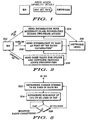
- Figure 2 details how the additional information detailed above is conveyed to the network BSS.
- the MS 202 sends the maximum bitrate information with the multislot class information as indicated in function box 204.
- the multislot class may optionally detail the amount of blocks that are to be transmitted during an uplink.
- the maximum bitrate and multislot class is sent during the two phase access required to make a PACKET RESOURCE REQUEST (a request to the network to allocate resource).
- Two phase access comprises of two access bursts being required to transmit all the necessary data and is utilised for long TBFs.
- Bitrate information is not sent during a one phase access because there is insufficient space in the PACKET CHANNEL REQUEST MESSAGE at present. However, the inclusion of bitrate information in the PACKET CHANNEL REQUEST MESSAGE is contemplated.
- Function box 206 details how the bitrate is sent to the network or BSS 210, if a downlink TBF is to be established. In this instance, the data rate is sent to the SGSN where it is stored as a part of the MS radio access capabilities. Subsequently, whenever a downlink TBF establishment request is sent to the BSS, the MS radio access capabilities are sent along with it. Finally, for a concurrent TBF (function box 208) the MS sends the above values for both the uplink and downlink through the procedures outlined above (function boxes 204 and 206).
- the algorithm in the BSS determining allocation of resource is implementation dependent. This algorithm allocates TSs within the MS's capabilities (multislot class) and determines the level of encoding to be used in order to maximise the throughput of data within the limitation of the MS's maximum bitrate constraint. This is discussed further below.
- the maximum data rate or bitrate is an average value. It is averaged over a radio block, which is 20 ms in duration, and it takes into account all of the radio data blocks sent and received by the MS on all TSs during that 20 ms period.
- DL_data_blocks represents the downlink data blocks 855 (BSS transmission) and UL_data_blocks represents the uplink data blocks 855 (BSS receipt).
- This equation allows the number of uplink data blocks that would be expected to be supported at the maximum bitrate to be exceeded.
- the setting of ⁇ to a value below 1 achieves this (see values of ⁇ set out below).
- the number of uplink bocks be altered in this way because more system resource is required to deal with downlink blocks than with uplink blocks. As such, the system may deal with a larger number of uplink blocks than downlink blocks for the same cost in resources.
- Signalling blocks which are transmitted between the MS and the network are vice versa, have a negligible affect on the maximum bitrate. This is because, they are single blocks interspersed periodically between the data blocks. As such, they are given no weight in the above equation.
- the BSS allocates "n" time slots to the MS using assignment messages.
- the value of n depends upon the MS's multislot class and the current radio resource availability.
- Function box 502 shows the step of the BSS choosing a coding scheme, or modulation and coding scheme, on each of the n allocated time slots. This choice is dependent upon the prevalent radio conditions.
- Function box 504 details the step of the BSS choosing a subgroup of useable time slots, depending upon the MS maximum bitrate and the bitrate per time slot (defined in Function Box 502).
- both of these stages ensure that maximum throughput is achieved whilst the maximum bitrate constraint, delivered to the BSS with the multislot class, is respected.
- the allocation algorithm ensures that the product of the number of time slots being used with the bitrate associated with the encoding scheme being used on those time slots is less than the maximum bitrate constraint associated with the MS with which it is in communication (No. of TS * coding scheme bitrate ⁇ max_bitrate).
- a downlink EGPRS TBF is established towards a multislot class 7 MS (this class of MS can utilise a maximum of three time slots in either of the uplink or downlink directions, and can utilise a maximum of four time slots when uplink and downlink TBFs are both active).
- the MS indicates a maximum data rate of 65 kbits/s.
- the network downgrades the number of time slots used to 1, and utilises modulation and coding schemes MCS-7 to MCS-9.
- MCS-9 the maximum data rate is 61,4 kbits/s.
- a downlink EGPRS TBF is established towards a MS of the same multislot class as used in Example 1.
- the network allocates three time slots to the MS, but as radio conditions are good modulation and coding scheme 9 (MCS-9) is used on two time slots only. The third time slot is allocated but unused, because this use would exceed the 130 kbits/s limitation.
- a request for an uplink (concurrent) TBF is sent by the MS.
- the network decides that 65 kbits/s will be allocated to the uplink and 65 kbits/s will be allocated to the downlink TBF.
- the network may still, decide to allocate three time slots on downlink, and to allocate one time slot on uplink.
- the radio conditions are still good, so MCS-9 is used.
- One time slot carries data in both directions, the two other time slots on downlink are allocated but not used.
- This arrangement results in a total throughput of 61.4 kbits/s in the uplink direction and 61.4 kbits/s in the downlink direction. As such total throughput is 122.8 kbits/s, which respects the MS maximum bitrate constraint of 130 kbits/s.
- the data throughput of an MS may be optimised.
- the bitrate per time slot decreases, the number of time slots utilised increases, and vice versa.
- the adaptation of the number of time slots utilised attempts to compensate for the change in bitrate per time slot, thereby providing an approximately constant bitrate to upper layers of the system.
- MCS equalisation and channel decoding
- MCS's range from MCS-1 (which provides a low bitrate, a high amount of data protection, and is suited to bad radio conditions) to MSC-9 (which gives a high bitrate, a low amount of data protection, and is suited to good radio conditions).
- Low MCS's MCS-1 to MCS-4) use GMSK modulation which is less complex than the 8-PSK modulation used by MCS-5 to MCS-9 providing a higher throughput.
- 8-PSK modulation higher MCS's (MCS-8 and MCS-9) carry two data blocks in each radio block. This obviously has an associated increase in complexity. This relates to the L1 layer of control, and utilising the maximum bitrate as described above allows the optimisation of MS throughput taking into account L1 complexity limitations.
- layer L3 (RLC/MAC level).
- the processing that occurs in the RLC layer is linked to the amount of data present in each RLC block, and the amount of data blocks. This depends upon the CS or MCS used, and thus upon the bitrate. As such, optimisation of MS throughput is beneficial at this layer also
- the MS could provide multiple pieces of information, either bitrate or which coding schemes are supported. These could be values relating to an uplink unidirectional TBF, a downlink unidirectional TBF, an uplink with concurrent TBF, or a downlink with concurrent TBF.
Landscapes
- Engineering & Computer Science (AREA)
- Quality & Reliability (AREA)
- Computer Networks & Wireless Communication (AREA)
- Signal Processing (AREA)
- Mobile Radio Communication Systems (AREA)
- Optical Communication System (AREA)
- Communication Control (AREA)
- Detection And Prevention Of Errors In Transmission (AREA)
Claims (16)
- Procédé destiné à déterminer une affectation de ressources dans un système de communication à tranches de temps cellulaire comportant les étapes consistant à:fournir des informations, constituées d'une indication d'un débit binaire maximum d'une station mobile, à un système de station de base;dans le système de station de base, déterminer (502) un niveau de codage, ou de modulation et de codage, à utiliser avec chaque tranche de temps affectée à une station mobile selon des conditions radio en cours et une disponibilité de ressources radio; etdans le système de station de base, déterminer (504) un certain nombre de tranches de temps à utiliser dans une transmission, selon une classe à tranches de temps multiples de la station mobile et le niveau déterminé de codage ou de modulation et de codage, afin de ne pas excéder le débit binaire maximum de la station mobile.
- Procédé selon la revendication 1, dans lequel le débit binaire maximum est un débit binaire d'interface radio avant le codage de canal ou après le codage de canal.
- Procédé selon l'une quelconque des revendications précédentes, dans lequel l'étape de transmission des informations comporte l'étape de transmission du débit binaire maximum d'une station mobile à un réseau.
- Procédé selon l'une quelconque des revendications précédentes, dans lequel le débit binaire maximum est transmis au réseau d'une façon différente selon le type de flux de bloc temporaire à utiliser, le type étant l'un des suivants: flux de bloc temporaire en liaison montante, flux de bloc temporaire en liaison descendante et flux de bloc temporaire en simultané.
- Procédé selon la revendication 4, dans lequel, si un flux de bloc temporaire en liaison montante doit être utilisé, le débit binaire maximum est transmis avec une classe à tranches de temps multiples de station mobile, qui indique le nombre de tranches de temps que la station mobile peut prendre en charge.
- Procédé selon la revendication 5, dans lequel les informations sont transmises en tant qu'élément d'une DEMANDE DE RESSOURCES DE PAQUET.
- Procédé selon la revendication 4, dans lequel, si un flux de bloc temporaire en liaison descendante doit être utilisé, le débit binaire maximum est envoyé par la station mobile à un noeud de support GPRS de service SGSN où il est stocké en tant qu'élément de capacités d'accès radio de station mobile.
- Procédé selon la revendication 7, dans lequel le noeud de support GPRS de service transmet les capacités d'accès radio de station mobile à un système de station de base dans le réseau lors d'une demande d'établissement d'un flux de bloc temporaire en liaison descendante entre le système de station de base et la station mobile.
- Procédé selon la revendication 4, dans lequel, si un flux de bloc temporaire en simultané doit être utilisé, le débit binaire maximum est transmis avec une classe à tranches de temps multiples de station mobile et à un noeud de support GPRS de service où il est stocké en tant qu'élément des capacités d'accès radio de station mobile.
- Procédé selon l'une quelconque des revendications précédentes, dans lequel le débit binaire maximum est donné par l'équation:

dans lequel DL_data_blocks représente les blocs de données en liaison descendante, UL data blocks représente les blocs de données en liaison montante et λ est une valeur entre 0 et 1. - Procédé selon la revendication 1, comportant en outre l'étape consistant à surveiller des conditions radio et, si nécessaire, à régler le nombre de tranches de temps utilisées et/ou le schéma de codage, ou de modulation et de codage, utilisé en outre, afin de conserver un débit maximum, tout en restant dans le débit binaire maximum de la station mobile.
- Procédé selon la revendication 1, dans lequel l'étape de transmission des informations comporte en outre l'étape consistant à fournir, par une station mobile, une indication des schémas de codage ou des schémas de codage et modulation prise en charge par la station mobile,
dans lequel l'étape consistant à déterminer (502) un niveau de codage, ou de modulation et de codage, à utiliser avec chaque tranche de temps affectée à une station mobile comporte l'étape consistant à déterminer un des schémas de codage ou un des schémas de codage et de modulation indiqués à utiliser avec chaque tranche de temps selon les conditions radio en cours et une disponibilité de ressources radio. - Agencement destiné à déterminer une affectation de ressources dans un système de communication à tranches de temps cellulaire, ledit agencement comportant:un moyen destiné à transmettre des informations, constituées d'une indication d'un débit binaire maximum d'une station mobile, à un système de station de base;un moyen destiné à déterminer, dans le système de station de base, un niveau de codage, ou de modulation et de codage, à utiliser avec chaque tranche de temps affectée à une station mobile selon des conditions radio en cours et une disponibilité de ressources radio; etun moyen destiné à déterminer, dans le système de station de base, un certain nombre de tranches de temps à utiliser dans une transmission, selon une classe à tranches de temps multiples de la station mobile et le niveau déterminé de codage ou de modulation et de codage, pour ne pas excéder le débit binaire maximum de la station mobile.
- Agencement selon la revendication 13, comportant en outre
un moyen destiné à surveiller les conditions radio et à régler le nombre de tranches de temps utilisées et le schéma de codage, ou le schéma de modulation et de codage, par conséquent, si nécessaire. - Agencement selon la revendication 13 ou 14, dans lequel le moyen de transmission des informations comporte un moyen de transmission du débit binaire maximum à un réseau.
- Agencement selon la revendication 13 ou 14, dans lequel le moyen de transmission des informations comporte un moyen de transmission d'une indication des schémas de codage ou des schémas de modulation et de codage pris en charge par la station mobile.
Priority Applications (6)
| Application Number | Priority Date | Filing Date | Title |
|---|---|---|---|
| DE60034425T DE60034425T2 (de) | 2000-03-24 | 2000-03-24 | Bitratenoptimierung in einem zellularen Kommunikationssystem |
| AT00400829T ATE360303T1 (de) | 2000-03-24 | 2000-03-24 | Bitratenoptimierung in einem zellularen kommunikationssystem |
| EP00400829A EP1137215B1 (fr) | 2000-03-24 | 2000-03-24 | Optimisation de débit dans un système de communication cellulaire |
| ES00400829T ES2283279T3 (es) | 2000-03-24 | 2000-03-24 | Optimizacion de nitrato en un sistema de comunicacion celular. |
| PCT/EP2001/003351 WO2001071962A1 (fr) | 2000-03-24 | 2001-03-23 | Optimisation des debits binaires dans un systeme de telecommunications cellulaire |
| AU46508/01A AU4650801A (en) | 2000-03-24 | 2001-03-23 | Bitrate optimisation in a cellular communications system |
Applications Claiming Priority (1)
| Application Number | Priority Date | Filing Date | Title |
|---|---|---|---|
| EP00400829A EP1137215B1 (fr) | 2000-03-24 | 2000-03-24 | Optimisation de débit dans un système de communication cellulaire |
Publications (2)
| Publication Number | Publication Date |
|---|---|
| EP1137215A1 EP1137215A1 (fr) | 2001-09-26 |
| EP1137215B1 true EP1137215B1 (fr) | 2007-04-18 |
Family
ID=8173617
Family Applications (1)
| Application Number | Title | Priority Date | Filing Date |
|---|---|---|---|
| EP00400829A Expired - Lifetime EP1137215B1 (fr) | 2000-03-24 | 2000-03-24 | Optimisation de débit dans un système de communication cellulaire |
Country Status (6)
| Country | Link |
|---|---|
| EP (1) | EP1137215B1 (fr) |
| AT (1) | ATE360303T1 (fr) |
| AU (1) | AU4650801A (fr) |
| DE (1) | DE60034425T2 (fr) |
| ES (1) | ES2283279T3 (fr) |
| WO (1) | WO2001071962A1 (fr) |
Families Citing this family (1)
| Publication number | Priority date | Publication date | Assignee | Title |
|---|---|---|---|---|
| WO2003107702A1 (fr) * | 2002-06-14 | 2003-12-24 | Siemens Aktiengesellschaft | Procede d'attribution de canaux pour une transmission de donnees utiles par l'intermediaire d'une interface radio entre une station radio emettrice et une station radio receptrice |
Family Cites Families (5)
| Publication number | Priority date | Publication date | Assignee | Title |
|---|---|---|---|---|
| US5701294A (en) * | 1995-10-02 | 1997-12-23 | Telefonaktiebolaget Lm Ericsson | System and method for flexible coding, modulation, and time slot allocation in a radio telecommunications network |
| US6167031A (en) * | 1997-08-29 | 2000-12-26 | Telefonaktiebolaget Lm Ericsson (Publ) | Method for selecting a combination of modulation and channel coding schemes in a digital communication system |
| US6396827B1 (en) * | 1998-06-16 | 2002-05-28 | Nokia Corporation | Multi-mode mobile apparatus and method for calculating frame/time slot offsets, and allowing mobiles to synchronize with different mobile protocols/schemes |
| FI108203B (fi) * | 1998-11-27 | 2001-11-30 | Nokia Mobile Phones Ltd | Menetelmä ja järjestely tiedon siirtämiseksi pakettiradiopalvelussa |
| FI109072B (fi) * | 1999-06-16 | 2002-05-15 | Nokia Corp | Menetelmä ja järjestely kanavakoodaus- ja lomitusmenettelyn valitsemiseksi eräissä pakettidatayhteyksissä |
-
2000
- 2000-03-24 EP EP00400829A patent/EP1137215B1/fr not_active Expired - Lifetime
- 2000-03-24 DE DE60034425T patent/DE60034425T2/de not_active Expired - Lifetime
- 2000-03-24 AT AT00400829T patent/ATE360303T1/de not_active IP Right Cessation
- 2000-03-24 ES ES00400829T patent/ES2283279T3/es not_active Expired - Lifetime
-
2001
- 2001-03-23 WO PCT/EP2001/003351 patent/WO2001071962A1/fr not_active Ceased
- 2001-03-23 AU AU46508/01A patent/AU4650801A/en not_active Abandoned
Also Published As
| Publication number | Publication date |
|---|---|
| EP1137215A1 (fr) | 2001-09-26 |
| AU4650801A (en) | 2001-10-03 |
| DE60034425D1 (de) | 2007-05-31 |
| WO2001071962A1 (fr) | 2001-09-27 |
| ES2283279T3 (es) | 2007-11-01 |
| ATE360303T1 (de) | 2007-05-15 |
| DE60034425T2 (de) | 2008-01-03 |
Similar Documents
| Publication | Publication Date | Title |
|---|---|---|
| EP1718010B1 (fr) | Méthode de demande d'attribution des ressources de liaison montante pour service d'interrogation en temps réel prolongé dans un système de communication sans fil | |
| US7447287B1 (en) | Method and arrangement for choosing a channel coding and interleaving scheme for certain types of packet data connections | |
| CN1604685B (zh) | 用于上行链路分组传输的调度分配的装置和方法 | |
| RU2430477C2 (ru) | Способ для надежной передачи коротких битовых массивов ack/nack в процессе arq внутри систем, совместимых с edge | |
| CN101821966B (zh) | 在移动通信系统中调整上行链路数据速率的方法和设备 | |
| EP1588579B1 (fr) | Choix de tfc dans la liaison montante | |
| CN1132463C (zh) | 传送窗口的选择方法和移动站 | |
| RU2430480C2 (ru) | Способ снижения задержки передачи в чувствительных к задержке приложениях gsm/edge | |
| US20020080758A1 (en) | Method of reporting radio access capacity information from a mobile station to a mobile radio network in packet mode | |
| EP1093315A2 (fr) | Procédé pour la transmission de données sur un canal de données en mode paquet | |
| GB2396087A (en) | adaptive control of data buffering in a data transmitter for a packet data based network | |
| EP1137215B1 (fr) | Optimisation de débit dans un système de communication cellulaire | |
| US7382745B2 (en) | Method for allocating radio technical resources for data transmission in a radio communication network | |
| HK1152816A1 (en) | Dynamic resource allocation scheduling and signaling for a variable data rate service in lte |
Legal Events
| Date | Code | Title | Description |
|---|---|---|---|
| PUAI | Public reference made under article 153(3) epc to a published international application that has entered the european phase |
Free format text: ORIGINAL CODE: 0009012 |
|
| AK | Designated contracting states |
Kind code of ref document: A1 Designated state(s): AT BE CH CY DE DK ES FI FR GB GR IE IT LI LU MC NL PT SE |
|
| AX | Request for extension of the european patent |
Free format text: AL;LT;LV;MK;RO;SI |
|
| 17P | Request for examination filed |
Effective date: 20020326 |
|
| AKX | Designation fees paid |
Free format text: AT BE CH CY DE DK ES FI FR GB GR IE IT LI LU MC NL PT SE |
|
| AXX | Extension fees paid |
Free format text: AL PAYMENT 20020326;LT PAYMENT 20020326;LV PAYMENT 20020326;MK PAYMENT 20020326;RO PAYMENT 20020326;SI PAYMENT 20020326 |
|
| 17Q | First examination report despatched |
Effective date: 20041029 |
|
| GRAP | Despatch of communication of intention to grant a patent |
Free format text: ORIGINAL CODE: EPIDOSNIGR1 |
|
| GRAS | Grant fee paid |
Free format text: ORIGINAL CODE: EPIDOSNIGR3 |
|
| GRAA | (expected) grant |
Free format text: ORIGINAL CODE: 0009210 |
|
| AK | Designated contracting states |
Kind code of ref document: B1 Designated state(s): AT BE CH CY DE DK ES FI FR GB GR IE IT LI LU MC NL PT SE |
|
| AX | Request for extension of the european patent |
Extension state: AL LT LV MK RO SI |
|
| PG25 | Lapsed in a contracting state [announced via postgrant information from national office to epo] |
Ref country code: FI Free format text: LAPSE BECAUSE OF FAILURE TO SUBMIT A TRANSLATION OF THE DESCRIPTION OR TO PAY THE FEE WITHIN THE PRESCRIBED TIME-LIMIT Effective date: 20070418 Ref country code: LI Free format text: LAPSE BECAUSE OF FAILURE TO SUBMIT A TRANSLATION OF THE DESCRIPTION OR TO PAY THE FEE WITHIN THE PRESCRIBED TIME-LIMIT Effective date: 20070418 Ref country code: CH Free format text: LAPSE BECAUSE OF FAILURE TO SUBMIT A TRANSLATION OF THE DESCRIPTION OR TO PAY THE FEE WITHIN THE PRESCRIBED TIME-LIMIT Effective date: 20070418 |
|
| REG | Reference to a national code |
Ref country code: CH Ref legal event code: EP |
|
| REG | Reference to a national code |
Ref country code: IE Ref legal event code: FG4D |
|
| REF | Corresponds to: |
Ref document number: 60034425 Country of ref document: DE Date of ref document: 20070531 Kind code of ref document: P |
|
| REG | Reference to a national code |
Ref country code: SE Ref legal event code: TRGR |
|
| PG25 | Lapsed in a contracting state [announced via postgrant information from national office to epo] |
Ref country code: PT Free format text: LAPSE BECAUSE OF FAILURE TO SUBMIT A TRANSLATION OF THE DESCRIPTION OR TO PAY THE FEE WITHIN THE PRESCRIBED TIME-LIMIT Effective date: 20070918 |
|
| LTIE | Lt: invalidation of european patent or patent extension |
Effective date: 20070418 |
|
| ET | Fr: translation filed | ||
| REG | Reference to a national code |
Ref country code: CH Ref legal event code: PL |
|
| NLV1 | Nl: lapsed or annulled due to failure to fulfill the requirements of art. 29p and 29m of the patents act | ||
| REG | Reference to a national code |
Ref country code: ES Ref legal event code: FG2A Ref document number: 2283279 Country of ref document: ES Kind code of ref document: T3 |
|
| PG25 | Lapsed in a contracting state [announced via postgrant information from national office to epo] |
Ref country code: AT Free format text: LAPSE BECAUSE OF FAILURE TO SUBMIT A TRANSLATION OF THE DESCRIPTION OR TO PAY THE FEE WITHIN THE PRESCRIBED TIME-LIMIT Effective date: 20070418 |
|
| PG25 | Lapsed in a contracting state [announced via postgrant information from national office to epo] |
Ref country code: BE Free format text: LAPSE BECAUSE OF FAILURE TO SUBMIT A TRANSLATION OF THE DESCRIPTION OR TO PAY THE FEE WITHIN THE PRESCRIBED TIME-LIMIT Effective date: 20070418 |
|
| PG25 | Lapsed in a contracting state [announced via postgrant information from national office to epo] |
Ref country code: DK Free format text: LAPSE BECAUSE OF FAILURE TO SUBMIT A TRANSLATION OF THE DESCRIPTION OR TO PAY THE FEE WITHIN THE PRESCRIBED TIME-LIMIT Effective date: 20070418 Ref country code: NL Free format text: LAPSE BECAUSE OF FAILURE TO SUBMIT A TRANSLATION OF THE DESCRIPTION OR TO PAY THE FEE WITHIN THE PRESCRIBED TIME-LIMIT Effective date: 20070418 |
|
| PLBE | No opposition filed within time limit |
Free format text: ORIGINAL CODE: 0009261 |
|
| STAA | Information on the status of an ep patent application or granted ep patent |
Free format text: STATUS: NO OPPOSITION FILED WITHIN TIME LIMIT |
|
| 26N | No opposition filed |
Effective date: 20080121 |
|
| PG25 | Lapsed in a contracting state [announced via postgrant information from national office to epo] |
Ref country code: GR Free format text: LAPSE BECAUSE OF FAILURE TO SUBMIT A TRANSLATION OF THE DESCRIPTION OR TO PAY THE FEE WITHIN THE PRESCRIBED TIME-LIMIT Effective date: 20070719 |
|
| PG25 | Lapsed in a contracting state [announced via postgrant information from national office to epo] |
Ref country code: MC Free format text: LAPSE BECAUSE OF NON-PAYMENT OF DUE FEES Effective date: 20080331 |
|
| PG25 | Lapsed in a contracting state [announced via postgrant information from national office to epo] |
Ref country code: IE Free format text: LAPSE BECAUSE OF NON-PAYMENT OF DUE FEES Effective date: 20080324 |
|
| PG25 | Lapsed in a contracting state [announced via postgrant information from national office to epo] |
Ref country code: CY Free format text: LAPSE BECAUSE OF FAILURE TO SUBMIT A TRANSLATION OF THE DESCRIPTION OR TO PAY THE FEE WITHIN THE PRESCRIBED TIME-LIMIT Effective date: 20070418 |
|
| PG25 | Lapsed in a contracting state [announced via postgrant information from national office to epo] |
Ref country code: LU Free format text: LAPSE BECAUSE OF NON-PAYMENT OF DUE FEES Effective date: 20080324 |
|
| REG | Reference to a national code |
Ref country code: GB Ref legal event code: 732E Free format text: REGISTERED BETWEEN 20110127 AND 20110202 |
|
| REG | Reference to a national code |
Ref country code: DE Ref legal event code: R081 Ref document number: 60034425 Country of ref document: DE Owner name: MOTOROLA MOBILITY, INC. ( N.D. GES. D. STAATES, US Free format text: FORMER OWNER: MOTOROLA, INC., SCHAUMBURG, US Effective date: 20110324 Ref country code: DE Ref legal event code: R081 Ref document number: 60034425 Country of ref document: DE Owner name: MOTOROLA MOBILITY, INC. ( N.D. GES. D. STAATES, US Free format text: FORMER OWNER: MOTOROLA, INC., SCHAUMBURG, ILL., US Effective date: 20110324 Ref country code: DE Ref legal event code: R081 Ref document number: 60034425 Country of ref document: DE Owner name: GOOGLE TECHNOLOGY HOLDINGS LLC, MOUNTAIN VIEW, US Free format text: FORMER OWNER: MOTOROLA, INC., SCHAUMBURG, ILL., US Effective date: 20110324 |
|
| REG | Reference to a national code |
Ref country code: FR Ref legal event code: TP Owner name: MOTOROLA MOBILITY, INC., US Effective date: 20110912 |
|
| REG | Reference to a national code |
Ref country code: FR Ref legal event code: PLFP Year of fee payment: 17 |
|
| REG | Reference to a national code |
Ref country code: FR Ref legal event code: PLFP Year of fee payment: 18 |
|
| REG | Reference to a national code |
Ref country code: GB Ref legal event code: 732E Free format text: REGISTERED BETWEEN 20170831 AND 20170906 |
|
| REG | Reference to a national code |
Ref country code: FR Ref legal event code: CD Owner name: GOOGLE TECHNOLOGY HOLDINGS LLC, US Effective date: 20171214 Ref country code: FR Ref legal event code: TP Owner name: GOOGLE TECHNOLOGY HOLDINGS LLC, US Effective date: 20171214 |
|
| REG | Reference to a national code |
Ref country code: FR Ref legal event code: PLFP Year of fee payment: 19 |
|
| REG | Reference to a national code |
Ref country code: DE Ref legal event code: R082 Ref document number: 60034425 Country of ref document: DE Representative=s name: BETTEN & RESCH PATENT- UND RECHTSANWAELTE PART, DE Ref country code: DE Ref legal event code: R081 Ref document number: 60034425 Country of ref document: DE Owner name: GOOGLE TECHNOLOGY HOLDINGS LLC, MOUNTAIN VIEW, US Free format text: FORMER OWNER: MOTOROLA MOBILITY, INC. ( N.D. GES. D. STAATES DELAWARE ), LIBERTYVILLE, LLL., US |
|
| PGFP | Annual fee paid to national office [announced via postgrant information from national office to epo] |
Ref country code: DE Payment date: 20190327 Year of fee payment: 20 Ref country code: FR Payment date: 20190325 Year of fee payment: 20 Ref country code: IT Payment date: 20190322 Year of fee payment: 20 |
|
| PGFP | Annual fee paid to national office [announced via postgrant information from national office to epo] |
Ref country code: SE Payment date: 20190326 Year of fee payment: 20 |
|
| PGFP | Annual fee paid to national office [announced via postgrant information from national office to epo] |
Ref country code: ES Payment date: 20190401 Year of fee payment: 20 |
|
| PGFP | Annual fee paid to national office [announced via postgrant information from national office to epo] |
Ref country code: GB Payment date: 20190404 Year of fee payment: 20 |
|
| REG | Reference to a national code |
Ref country code: DE Ref legal event code: R071 Ref document number: 60034425 Country of ref document: DE |
|
| REG | Reference to a national code |
Ref country code: GB Ref legal event code: PE20 Expiry date: 20200323 |
|
| PG25 | Lapsed in a contracting state [announced via postgrant information from national office to epo] |
Ref country code: GB Free format text: LAPSE BECAUSE OF EXPIRATION OF PROTECTION Effective date: 20200323 |
|
| REG | Reference to a national code |
Ref country code: SE Ref legal event code: EUG |
|
| REG | Reference to a national code |
Ref country code: ES Ref legal event code: FD2A Effective date: 20200904 |
|
| PG25 | Lapsed in a contracting state [announced via postgrant information from national office to epo] |
Ref country code: ES Free format text: LAPSE BECAUSE OF EXPIRATION OF PROTECTION Effective date: 20200325 |
|
| P01 | Opt-out of the competence of the unified patent court (upc) registered |
Effective date: 20230511 |