EP1137247A2 - Photofinissage numérique - Google Patents
Photofinissage numérique Download PDFInfo
- Publication number
- EP1137247A2 EP1137247A2 EP01200156A EP01200156A EP1137247A2 EP 1137247 A2 EP1137247 A2 EP 1137247A2 EP 01200156 A EP01200156 A EP 01200156A EP 01200156 A EP01200156 A EP 01200156A EP 1137247 A2 EP1137247 A2 EP 1137247A2
- Authority
- EP
- European Patent Office
- Prior art keywords
- image
- images
- digital
- output
- identification data
- Prior art date
- Legal status (The legal status is an assumption and is not a legal conclusion. Google has not performed a legal analysis and makes no representation as to the accuracy of the status listed.)
- Withdrawn
Links
Images


Classifications
-
- H—ELECTRICITY
- H04—ELECTRIC COMMUNICATION TECHNIQUE
- H04N—PICTORIAL COMMUNICATION, e.g. TELEVISION
- H04N1/00—Scanning, transmission or reproduction of documents or the like, e.g. facsimile transmission; Details thereof
- H04N1/00127—Connection or combination of a still picture apparatus with another apparatus, e.g. for storage, processing or transmission of still picture signals or of information associated with a still picture
- H04N1/00132—Connection or combination of a still picture apparatus with another apparatus, e.g. for storage, processing or transmission of still picture signals or of information associated with a still picture in a digital photofinishing system, i.e. a system where digital photographic images undergo typical photofinishing processing, e.g. printing ordering
- H04N1/00135—Scanning of a photographic original
-
- G—PHYSICS
- G06—COMPUTING OR CALCULATING; COUNTING
- G06Q—INFORMATION AND COMMUNICATION TECHNOLOGY [ICT] SPECIALLY ADAPTED FOR ADMINISTRATIVE, COMMERCIAL, FINANCIAL, MANAGERIAL OR SUPERVISORY PURPOSES; SYSTEMS OR METHODS SPECIALLY ADAPTED FOR ADMINISTRATIVE, COMMERCIAL, FINANCIAL, MANAGERIAL OR SUPERVISORY PURPOSES, NOT OTHERWISE PROVIDED FOR
- G06Q10/00—Administration; Management
- G06Q10/10—Office automation; Time management
- G06Q10/103—Workflow collaboration or project management
-
- G—PHYSICS
- G06—COMPUTING OR CALCULATING; COUNTING
- G06Q—INFORMATION AND COMMUNICATION TECHNOLOGY [ICT] SPECIALLY ADAPTED FOR ADMINISTRATIVE, COMMERCIAL, FINANCIAL, MANAGERIAL OR SUPERVISORY PURPOSES; SYSTEMS OR METHODS SPECIALLY ADAPTED FOR ADMINISTRATIVE, COMMERCIAL, FINANCIAL, MANAGERIAL OR SUPERVISORY PURPOSES, NOT OTHERWISE PROVIDED FOR
- G06Q30/00—Commerce
- G06Q30/06—Buying, selling or leasing transactions
- G06Q30/0601—Electronic shopping [e-shopping]
- G06Q30/0641—Electronic shopping [e-shopping] utilising user interfaces specially adapted for shopping
-
- H—ELECTRICITY
- H04—ELECTRIC COMMUNICATION TECHNIQUE
- H04N—PICTORIAL COMMUNICATION, e.g. TELEVISION
- H04N1/00—Scanning, transmission or reproduction of documents or the like, e.g. facsimile transmission; Details thereof
- H04N1/00127—Connection or combination of a still picture apparatus with another apparatus, e.g. for storage, processing or transmission of still picture signals or of information associated with a still picture
- H04N1/00132—Connection or combination of a still picture apparatus with another apparatus, e.g. for storage, processing or transmission of still picture signals or of information associated with a still picture in a digital photofinishing system, i.e. a system where digital photographic images undergo typical photofinishing processing, e.g. printing ordering
-
- H—ELECTRICITY
- H04—ELECTRIC COMMUNICATION TECHNIQUE
- H04N—PICTORIAL COMMUNICATION, e.g. TELEVISION
- H04N1/00—Scanning, transmission or reproduction of documents or the like, e.g. facsimile transmission; Details thereof
- H04N1/00127—Connection or combination of a still picture apparatus with another apparatus, e.g. for storage, processing or transmission of still picture signals or of information associated with a still picture
- H04N1/00132—Connection or combination of a still picture apparatus with another apparatus, e.g. for storage, processing or transmission of still picture signals or of information associated with a still picture in a digital photofinishing system, i.e. a system where digital photographic images undergo typical photofinishing processing, e.g. printing ordering
- H04N1/00143—Ordering
-
- H—ELECTRICITY
- H04—ELECTRIC COMMUNICATION TECHNIQUE
- H04N—PICTORIAL COMMUNICATION, e.g. TELEVISION
- H04N1/00—Scanning, transmission or reproduction of documents or the like, e.g. facsimile transmission; Details thereof
- H04N1/00127—Connection or combination of a still picture apparatus with another apparatus, e.g. for storage, processing or transmission of still picture signals or of information associated with a still picture
- H04N1/00132—Connection or combination of a still picture apparatus with another apparatus, e.g. for storage, processing or transmission of still picture signals or of information associated with a still picture in a digital photofinishing system, i.e. a system where digital photographic images undergo typical photofinishing processing, e.g. printing ordering
- H04N1/00185—Image output
- H04N1/00188—Printing, e.g. prints or reprints
Definitions
- the present invention relates to a photofinishing system and method which incorporates digital technology. More specifically the invention relates to workflow management processes that can be employed in wholesale photo-labs or lab networks that incorporate digital photofinishing.
- the film When consumers (i.e. end users) drop off their exposed film at a retailer for developing and printing (D&P) next-day service, the film is placed into an envelope with the consumer's order information (typically name/address and type of service request) noted on the envelope.
- the envelopes from many retailers within a geographic region are picked up and taken to a centralized wholesale photofinishing laboratory.
- the orders typically arrive at the lab in the late afternoon or early evening for overnight work.
- the completed work is picked up by various couriers in the early morning so that they reach their appropriate destinations in a timely manner.
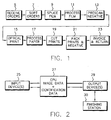
- Figure 1 illustrates a typical developing and printing workflow.
- the orders arrive and are received in the lab (step 5), they are sorted (step 7) according to the time of next day courier pickup. That is, orders from the more distant retailers must be worked on first in order to fulfill timely delivery back to the originating retailer. The orders from those retailers located close to the lab can be worked on last. Therefore, a "last-in, first-out" concept is generally followed.
- Sorting may also be required to meet specialized retailer packaging for the returned services. For example, a resulting batch formed from a particular retailer is one having the same film type and the same print size / number / print surface of output print. In this case, order envelopes are grouped together and sent to splicing. Then the film is removed from the cartridge and the individual filmstrips are spliced together end to end and placed onto a reel (step 9). The envelopes are kept in the same sequence as the spliced film reel. This reel - or batch - is then taken to a film processor where the film is processed (step 11). Following chemical processing, negative images are formed on the filmstrip. The filmstrips are then wound back onto a reel.
- each image is "pre-scanned” and analyzed based on historical information to determine the image characteristics for printing (step 13). These characteristics are passed to an optical printer (step 15) that uses the image characteristic data to adjust exposure conditions of the printer's light source when optically projected through the negative film strip onto a web of photographic paper.
- the paper web is chemically processed (step 17) and dried to provide a strip of viewable prints.
- the individual prints are then cut (step 19) from the paper web and matched up with the corresponding negatives and original envelopes to form a completed order (step 21). The process to this point maintains batch integrity and sequence.
- the completed individual orders from a particular retailer are sorted and invoiced for courier pickup (step 23).
- the first four options listed in Table 1 and the first three options listed in Table 2 are the traditional optical film-based images.
- the next five options listed in Table 1 and the next six options listed in Table 2 are digital.
- Picture CD registered trademark of Eastman Kodak Company
- This format requires labs to install a film scanner and a CD reader/writer to provide this digital product. With digital printing equipment, these labs can then accept a previously recorded Picture CD (a digital "reorder" product) and provide prints/reprints, enlargements, pictures on coffee mugs, etc.
- Picture Disk (registered trademark of Eastman Kodak Company) is a lower resolution image storage format using the 3.5-inch floppy diskettes of personal computers but otherwise is similar to Picture CD in functionality.
- Image orders sent electronically such as via the internet or a local area network (LAN) will become a significant business to the wholesale lab.
- LAN local area network
- DSC digital still cameras
- Some labs may even offer pre-stored digital image data to be added to the consumer's/retailer's output image (last option in Tables 1 and 2). Examples of pre-stored image data are borders, calendars, backgrounds and messages (such as for holidays, birthdays, etc.).
- an object of the present invention is to improve the operational efficiency in managing image workflow within a photofinishing lab.
- a photofinishing lab is not limited to a single plant or location having photofinishing equipment therein.
- a photofinishing lab could be a network or system which comprises different photofinishing centers that do not have to be located in the same physical plant.
- the network could comprise a stand-alone kiosk, a kiosk at a retail store, a retail minilab and a photo-lab all electronically interconnected.
- an object of the present invention is to improve the operational efficiency of wholesale photofinishing labs in an increasingly digital imaging era, without requiring appreciable change of behavior on the part of the consumer or on the part of the retailer.
- these labs will be able to provide the highest image quality product at the lowest cost.
- the digital wholesale photofinishing lab and process of the present invention provides the opportunity to solve many of the physical batch and workflow problems that occur in the typical current wholesale lab that has to handle a wide variety of input/output options. This can be achieved by removing some of the constraints due to physical media characteristics and/or the sequence of output creation.
- the present invention relates to a method of producing digital image products in a photofininshing lab, with the photofinishing lab having a plurality of image obtaining devices for obtaining a plurality of digital images, a plurality of digital output devices for providing a plurality of digital image products based on the obtained digital images, and a central processing unit.
- Each one of the obtained digital images is related to an original order.
- the method comprises the steps of: associating each obtained digital image with identification data; sending each of the obtained digital images and their associated identification data to the central processing unit, with the central processing unit analyzing each of the obtained digital images and comparing the analyzed obtained digital images with reference digital image data representative of an optimum image, and the central processing unit further determining an output sequence of each of the obtained digital images to the output devices based on at least the associated identification data; providing a digital image product based on the obtained digital image at the digital output device; and combining the digital image product from the output device with a related original order from the original orders using the associated identification data.
- the present invention further relates to a photofinishing lab for producing digital image products.
- the photofinishing lab comprises a plurality of image obtaining devices for obtaining digital images, with each of the digital images being related to original orders; a plurality of image output devices for providing digital image products based on the obtained digital images, with each of the obtained digital images being associated with identification data; a central processing unit which receives the obtained digital images and the associated identification data, with the central processing unit being adapted to analyze the obtained digital images and compare each of the obtained digital images with reference image data representative of an optimum image, and the central processing unit being further adapted to determine an output sequence for each of the obtained digital images to the image output devices based on at least the associated identification data; and a finishing arrangement which is adapted to combine the digital image products from the image output devices with a related original order from the original orders using the associated identification data.
- the present invention further relates to a photofinishing method for managing workflow in a photofinishing lab.
- the method comprises the steps of: receiving images at the photofinishing lab, with each of the images being related to original orders; associating each image with identification data; sending each image and its associated identification data to a processing unit, with the processing unit analyzing the image with reference to image data representative of an optimum image and determining an output sequence of each of the images to output devices based on at least the associated identification data; providing an image product based on the image at an output device of the output devices which is appropriate for the image product; and combining the image product from the output device with a related original order from the original orders using the associated identification data.
- the present invention further relates to a computer program product which comprises: a computer readable storage medium having a computer program thereon which when loaded into a computer causes the computer to manage workflow in a photofinishing lab by performing the following steps: associating images received at the photofinishing lab with identification data, with each of the images being related to original orders; sending each image and its associated identification data to a processing unit, with the processing unit determining an output sequence of each of the images to output devices based on at least the associated identification data; providing an image product based on the image at an output device of the output devices which is appropriate for the image product; and combining the image product from the output device with a related original order from the original orders using the associated identification data.
- the present invention further relates to a digital photofinishing arrangement which comprises a plurality of output devices, with each of the output devices being adapted to produce a different output image product; a plurality of image obtaining devices for obtaining images, with at least one of the image obtaining devices being adapted to convert non-digital images from the images to a digital format so as to place all of the obtained images in a common digital format; and a processing unit which is adapted to create a virtual batch of the obtained images for forwarding to the plurality of output devices.
- the virtual batch is created based on at least a time necessary to complete the output image products so as to compile a sequence of completion of the output image products that permits an efficient use of the output devices.
- the present invention further relates to a photofinishing method which comprises the steps of: receiving images at a photofinishing lab; converting non-digital images of said received images into a digital format, such that all of the images received at the photofinishing lab are in a common digital format; and creating a virtual batch of the received images based on at least a time necessary to complete output image products at any of a plurality of output devices.
- the output image products are each related to an associated received image from the received images, such that a sequence of completion of the output image products permits efficient use of the output devices is compiled.
- the present invention further relates to a method of managing workflow in a photofinishing lab comprising the steps of: receiving images at the photofinishing lab; determining an output service/product which will be produced in association with the received images; and creating a virtual batch of the received images based on at least the output service/product associated with the received image.
- the virtual batch is indicative of an order sequence for completing the output service/product for the received images.
- the present invention further relates to a computer program product which comprises a computer readable storage medium having a computer program thereon which when loaded into a computer causes the computer to manage a photofinishing workflow by performing the following steps: determining an output service/product which will be produced in association with captured images; and creating a virtual batch of the images based on at least the output service/product associated with the image.
- the virtual batch is indicative of an order sequence for completing the output service/product for the image.
- the present invention further relates to a photofinishing method comprising the steps of: receiving images at a photofinishing lab; associating the images with identification data; and creating a virtual batch of the images based on at least the identification data so as to provide for a sequence of completion of output image products associated with the images.
- the present invention also relates to a photofinishing method which comprises the steps of: receiving images at a photofinishing lab in a first sequence; converting non-digital images of the received images into a digital format, such that all of the images received at the photofinishing lab are in a common digital format; and creating a virtual batch of the received images based on at least a common output product/service in a second sequence different than the first sequence.
- Figure 2 schematically illustrates a digital photofinishing lab concept in accordance with the present invention.
- the bold lines represent the flow of image data or digital image data while the standard width lines represent the flow of identification data.
- a feature of a digital photo lab is that images are converted in the lab to a common digital format even if they do not arrive at the lab in digital form.
- Various image obtaining devices 25 may be employed to convert the lab input format to digital image data.
- processed film will be input to a film scanner for conversion to digital image data.
- Output devices 29 will accept the digital image data (digital images) and produce the required output such as prints or other products or services.
- the digital image can "look the same" without regard to the original image source (that is, whether the original image source was 35mm, APS, a reorder copy print Picture CD, Picture Disk, direct electronic input or a digital camera image). In this way, an output sequence of work done at an output device is not dictated by the sequence of orders formed from physical batches.
- the work can be performed in an order that is most efficient from the standpoint of the output device or based on other considerations in the lab.
- This is referred to as "virtual batching", since the work batches are not based on the physical batches that are required of conventional photofinishing labs. It is understood that at least some operations should be completed on the physical batch or orders from which the digital image was obtained.
- the output sequence or virtual batch as noted above, depends upon, but is not limited to, (1) the arrival time of previously partially completed orders; (2) the available time in which to complete an order to be ready for courier pickup; (3) the availability of the output device including necessary supplies to complete the order; (4) the number of orders of each type; and (5) the output product/service that is to be produced for the associated image.
- the output service/product is created in the digital lab by retrieving stored image data in a defined sequence and then creating the output.
- identification data is all data associated with the image except for the image data. This would include (but not limited to) the retailer store name or ID, consumer/retailer unique identification number, type of input (e.g., 35mm, 100 speed color negative film), the source of the obtained image, magnetic data on film and the output product (or service) requested by the consumer/retailer.
- the image data and identification data are then stored in a Central Processing Unit (CPU) 27 for access by the various digital output devices.
- CPU 27 can be a single computer, a computer network, a component of an IDM (image data manager), etc.
- the following example illustrates how a digital lab having the features described in the present invention can handle orders more efficiently than a traditional lab. More specifically, the following table illustrates how a traditional lab and a digital lab would handle orders with two film types and two product/services.
- One of the film types is based on 35mm film and the other film type is based on APS film.
- orders 1 and 5 can be placed into a sequence as a virtual batch X representing a printing job and orders 2, 3, 4 and 6 can be sequenced in a virtual batch Y representing another printing job.
- the system of the present invention permits the reduction of batches or printing jobs from 4 to 2, resulting in a more efficient workflow.
- the above example illustrates workflow orders in which the input is film and the output service/product is a print.
- digital products such as a Picture CD
- the addition of a digital product such as a Picture CD to any of the orders would not require the creation of another physical batch. Rather, information with respect to the digital product would appear in or be referred to, for example, the identification data, and stored in CPU 27, which monitors a finishing operation to assure that the digital product is created in sequence with the associated prints.
- the present invention further accommodates a hybrid optical/digital workflow. For example, there are times when input film batches will be scanned and the image data stored for producing a digital product (Picture CD, Picture Disk, prints etc.). However, a lab may choose to print this batch optically instead of digitally. In these cases, an optical printer such as a CLAS 35 printer can be used and controlled in such a manner to skip those orders which are to be printed digitally.
- a hybrid optical/digital workflow For example, there are times when input film batches will be scanned and the image data stored for producing a digital product (Picture CD, Picture Disk, prints etc.). However, a lab may choose to print this batch optically instead of digitally. In these cases, an optical printer such as a CLAS 35 printer can be used and controlled in such a manner to skip those orders which are to be printed digitally.
- the input devices 25 and output devices 29 communicate with CPU 27 which manages or controls the flow of image data (when and what data) to and from the input and output devices.
- image data may go to one output device 29, such as a digital printer, as well as to a second output device 29, such as a Picture CD writer.
- Included in the communication from output device 29 to CPU 27 will be the status or readiness of the output device to receive data.
- Algorithms can be used by CPU 27 to efficiently match up image data with the appropriate output device 29.
- input device 25 provides image and identification data to CPU 27.
- Identification data is provided to CPU 27 along with other data (production control data, for example) necessary to control the system.
- CPU 27 controls the flow of image data to the appropriate output devices 29.
- Reference numeral 30 represents a finishing station in which a digital image product from one of the output devices are combined with the original consumer/retailer order using the associated identification data.
- FIG 3 this figure expands upon Figure 2 by illustrating many of the types of input and output devices which can be used in a digital wholesale photofinishing lab.
- Processed film 31 for example, reels of spliced processed film, would arrive from either a film processor for D&P orders or from an envelope for film reorders and would be scanned by film scanner(s) 33.
- scanner 33 will accept cut negative film strips.
- Scanner 33 scans the film and provides digital image data and identification data, which would be sent to CPU 27 for association and/or storage. It is noted that the identification data can come from sources other than input devices 25 (scanner 33 etc.).
- Picture CD reader 35 can receive image input from a Picture CD 43
- Picture Disk reader 37 can receive image input from a floppy diskette 45
- DSC media reader 39 can receive image input from a card 47 such as a PCMCIA card.
- the image data as received by CPU 27 has not yet been processed for color correction, tone scale, sharpening, etc..
- CPU 27 can analyze the original image data (taking into account the characteristics of the image obtaining device and the selected identification data) and compare it to a database with reference digital image data.
- the database with reference digital image data is formed from a combination of previous experience and may be updated by regression analysis using the current image data.
- the reference digital image database can include information representative of at least an optimum image.
- the current image data is automatically manipulated, corrected or modified without operator intervention to provide optimized image data.
- CPU 27 Prior to a sending or retrieval of the image data to an output device (50, 52, 54, 56, 58) the image data is analyzed, processed and/or prepared (formatted) for the specific output device characteristics at CPU 27. More specifically, CPU 27 or CPU 27 in communication with an image processing unit 75 is adapted to determine a timing and/or an output sequence of each of the images to the output device based on at least the associated identification data, and routes the image data to the appropriate output device.
- the identification data could be source data indicative of a source of the original or obtained image or the digital image, the type of output product/service desired, a unique consumer/retailer identifier, or it can be read from magnetic data on film. In this way, the image quality is optimized for the specific characteristics of the output device. Some images may be previewed by an operator 77 (for correction or for applying additional image manipulation) prior to being committed to output.
- CPU 27 can be adapted to create a virtual batch of the images for forwarding to the plurality of output devices 29.
- the virtual batch can be created based on at least (1) a time necessary to complete the output image products, so as to compile a sequence of completion of the output image products that permits an efficient use of the output devices 29, or (2) the output service/product associated with the image, such that the virtual batch can be indicative of at least an order sequence for completing the output service/products for the image.
- CPU 27 can be operationally associated with a timer to determine, set-up or begin the output sequence.
- the photofinishing workflow managing features of the invention can be achieved by way of a computer program product that includes a computer readable storage medium.
- the computer readable storage medium can be operationally associated with or integrated with CPU 27 to achieve photofinishing and image workflow control and management between the input and output devices and the CPU in the manner describe in the present specification.
- the input medium (film, CD, floppy diskette, etc.) is no longer needed in the lab for producing output (unless a hybrid optical/digital workflow is employed).
- the input medium i.e., a filmstrip, would be needed for optical printing.
- digital printers can be used in place of the traditional optical printers.
- Digital printers are well known such as those that employ thermal dye-diffusion printers, drop-on-demand or continuous inkjet printers, and various laser-type printers including those that use silver halide photographic paper as the medium.
- the output devices 29 can include digital printers 50 which produce digital prints, a Picture CD writer 52 which produces a Picture CD 62, and a Picture Disk writer 54 which produces a floppy disk 64.
- the output can also be realized via an online or electronic service 56 such as AOL, and can include specialized output devices 58 for producing mugs, T-shirts, etc.
- the output devices being digital, they need not be located in the proximity of the input devices; some or all could be at a remote location.
- a printing lab may employ a variety of digital printers 50.
- One digital printer may be used for producing standard size prints (3.5x5-inch, 4x6-inch), one for index prints and one for enlargements.
- the inputs to any of the output devices (50, 52, 54, 56, 58) could have originated from any of the input sources (33, 35, 37, 39, 40, 41) shown in Figure 3.
- Algorithms are developed to determine when the digital data is downloaded to a digital output device. This output sequence will depend on at least the readiness of the output device. In other words, the printer must be loaded with the appropriate amount of the right type and size of paper. The output sequence will also depend on when the consumer/retailer order must be completed. As described earlier, orders from the more distant retailer must be completed earlier than the retailers located closer to the wholesale lab.
- a virtual batch can be created based on at least the use of one or more order ID's (identification data) that are sent in sequence to CPU 27 as a result of some action within the workflow of the lab. That action may be caused by a reading station or device 100 which identifies the order ID, the envelope ID for envelopes 105 (schematically shown as an example in Fig. 4), or even a previously established physical batch ID. Once that reading device 100 sends the ID data to CPU 27, envelopes 105 or media generating the ID are kept in the same logical sequence in which the ID's were read and sent to CPU 27.
- Figure 5 schematically depicts a method of defining the sequence for producing output in a digital lab in accordance with the present invention.
- Reading device 100 is used to read a code such as a machine readable code or barcode on order envelope 105.
- the code may contain information on what output was requested by the consumer/retailer or may refer to stored information associated with the identification data.
- An operator can pick up an envelope and swipe the code through reading device 100.
- Reading device 100 will then send a communication to CPU 27.
- CPU 27 it is determined which bin 200a, 200b, 200c the envelope should be placed into.
- This bin information or message 300 is then sent to the operator who carries out the action (for example, placing the envelopes in sequence in the bins).
- the bins represent different output services or products.
- Bin 1 (200a) could represent those orders requiring Picture CD
- Bin 2 (200b) could represent those orders requiring Picture Disk, and so forth.
- CPU 27 knows the order of the envelopes in each bin (200a-200c). This will be the same order that the appropriate output device 29 will use.
- the order of the envelopes in Bin 1 (200a) will drive the sequence that image data is downloaded to the Picture CD writer and, therefore, the same order that Picture CD's are produced.
- the stack of Picture CD's are delivered to Bin 1 (200a)
- the order will be the same as the envelopes thus making it straightforward to add the correct Picture CD to the correct envelope.
- FIG. 6 illustrates one output device 29 with five output service/products (or envelopes) A-E of a first type and another output device 29 with two output service/products (or envelopes) F-G of a second type different than the first type.
- CPU 27 sends the output order sequence to an envelope sorter 500 having a reading device 500a.
- the reading device 500a places the corresponding envelopes A-E in the same order as received from CPU 27.
- the envelopes not needed for the current batch, matchup, or finishing step i.e. F and G
- subsequent batches i.e. F and G
- Each batch is then sent to finishing station 30 (Fig. 2) for final packaging.
- a virtual batch of images based on at least a common output product/service is created in a sequence (i.e. a second sequence) that is not the same as the sequence (i.e. a first sequence) of the original batch (order) or image source acquisition.
- Envelope sorter 500 is effective to re-sequence the original batch or order to the second sequence.
Landscapes
- Engineering & Computer Science (AREA)
- Business, Economics & Management (AREA)
- Multimedia (AREA)
- Strategic Management (AREA)
- Signal Processing (AREA)
- Human Resources & Organizations (AREA)
- General Business, Economics & Management (AREA)
- Physics & Mathematics (AREA)
- Accounting & Taxation (AREA)
- General Physics & Mathematics (AREA)
- Finance (AREA)
- Marketing (AREA)
- Entrepreneurship & Innovation (AREA)
- Economics (AREA)
- Theoretical Computer Science (AREA)
- Data Mining & Analysis (AREA)
- Development Economics (AREA)
- Operations Research (AREA)
- Quality & Reliability (AREA)
- Tourism & Hospitality (AREA)
- Projection-Type Copiers In General (AREA)
- Two-Way Televisions, Distribution Of Moving Picture Or The Like (AREA)
- Facsimiles In General (AREA)
- Management, Administration, Business Operations System, And Electronic Commerce (AREA)
Applications Claiming Priority (2)
| Application Number | Priority Date | Filing Date | Title |
|---|---|---|---|
| US49401100A | 2000-01-28 | 2000-01-28 | |
| US494011 | 2000-01-28 |
Publications (2)
| Publication Number | Publication Date |
|---|---|
| EP1137247A2 true EP1137247A2 (fr) | 2001-09-26 |
| EP1137247A3 EP1137247A3 (fr) | 2002-10-09 |
Family
ID=23962640
Family Applications (1)
| Application Number | Title | Priority Date | Filing Date |
|---|---|---|---|
| EP01200156A Withdrawn EP1137247A3 (fr) | 2000-01-28 | 2001-01-18 | Photofinissage numérique |
Country Status (3)
| Country | Link |
|---|---|
| US (1) | US20030033220A1 (fr) |
| EP (1) | EP1137247A3 (fr) |
| JP (1) | JP2001274931A (fr) |
Cited By (5)
| Publication number | Priority date | Publication date | Assignee | Title |
|---|---|---|---|---|
| EP1453290A1 (fr) * | 2003-02-28 | 2004-09-01 | Agfa-Gevaert AG | Procédé et dispositif pour la production de tirages des images numeriques de photographie de manière automatique |
| WO2005006200A3 (fr) * | 2003-07-01 | 2005-05-19 | Polaroid Corp | Systeme d'impression d'image numerique a grande vitesse |
| EP1345407A3 (fr) * | 2002-02-20 | 2005-07-13 | CeWe Color AG & Co. OHG | Contrôle d'accès de suppports de données |
| EP1403802A3 (fr) * | 2002-09-24 | 2007-01-10 | Fuji Photo Film Co., Ltd. | Système de gestion pour un laboratoire photographique |
| WO2007072133A3 (fr) * | 2005-12-22 | 2008-01-03 | G P E Srl | Procédé et appareil pour l'impression automatique de photographies, à partir de données digitales |
Families Citing this family (7)
| Publication number | Priority date | Publication date | Assignee | Title |
|---|---|---|---|---|
| US6999202B2 (en) | 2001-03-27 | 2006-02-14 | Polaroid Corporation | Method for generating a halftone of a source image |
| US6937365B2 (en) | 2001-05-30 | 2005-08-30 | Polaroid Corporation | Rendering images utilizing adaptive error diffusion |
| US6906736B2 (en) | 2002-02-19 | 2005-06-14 | Polaroid Corporation | Technique for printing a color image |
| US7197071B1 (en) * | 2002-09-09 | 2007-03-27 | Warner Bros. Entertainment Inc. | Film resource manager |
| US7376183B2 (en) | 2002-09-09 | 2008-05-20 | Warner Bros. Entertainment, Inc. | Post-production processing |
| US7283666B2 (en) | 2003-02-27 | 2007-10-16 | Saquib Suhail S | Digital image exposure correction |
| JP4700971B2 (ja) * | 2005-01-14 | 2011-06-15 | 株式会社リコー | 画像出力システム、サーバ装置、クライアント装置、実行制御方法、実行制御プログラムおよび該プログラムを記録した記録媒体 |
Citations (1)
| Publication number | Priority date | Publication date | Assignee | Title |
|---|---|---|---|---|
| JPH10239780A (ja) * | 1996-12-24 | 1998-09-11 | Fuji Photo Film Co Ltd | 写真画像データの出力方法および装置 |
Family Cites Families (49)
| Publication number | Priority date | Publication date | Assignee | Title |
|---|---|---|---|---|
| IT1158791B (it) * | 1982-10-06 | 1987-02-25 | Photo Engineering Di Signorett | Procedimento per stabilire e verificare la correlazione tra negativo e busta di lavorazione in laboratori fotografici |
| US5093684A (en) * | 1987-02-20 | 1992-03-03 | Algorex, Inc. | Photofinishing apparatus and method |
| US4823162A (en) * | 1987-05-15 | 1989-04-18 | Ciba-Geigy Corporation | Method and apparatus for marking photographic orders |
| DE3833468A1 (de) * | 1988-10-01 | 1990-04-05 | Agfa Gevaert Ag | Verfahren und vorrichtung zur kennzeichnung von zu einem langen band zusammengefuegten fotografischen filmen |
| DE4132846B4 (de) * | 1990-10-04 | 2006-06-14 | Fuji Photo Film Co., Ltd., Minami-Ashigara | Verfahren zur Zusammenstellung eines entwickelten Photofilms mit einem Satz von Photoabzügen |
| US5272549A (en) * | 1991-11-01 | 1993-12-21 | Mcdonald Bruce A | Apparatus for electronic editing of integrated color images with related text material and employing an image frame |
| US5477353A (en) * | 1993-04-21 | 1995-12-19 | Olympus Optical Co., Ltd. | Photographic image processing system having laboratory unit for processing film and photographer unit for supplying printing information |
| JP3367062B2 (ja) * | 1994-01-10 | 2003-01-14 | 富士写真フイルム株式会社 | プリントの注文装置 |
| JPH07261279A (ja) * | 1994-02-25 | 1995-10-13 | Eastman Kodak Co | 写真画像の選択システム及び方法 |
| US5907391A (en) * | 1994-03-09 | 1999-05-25 | Fuji Photo Film Co., Ltd. | Method and apparatus for accepting an order for photographic processing |
| US6243171B1 (en) * | 1994-07-29 | 2001-06-05 | Fuji Photo Film Co., Ltd. | Laboratory system, method of controlling operation thereof, playback apparatus and method, film image management method, image data copying system and method of copying image data |
| US5530517A (en) * | 1995-01-09 | 1996-06-25 | Eastman Kodak Company | Method for communicating scene orientation of camera film to photo finishing equipment |
| US5715034A (en) * | 1995-01-11 | 1998-02-03 | Noritsu Koki Co., Ltd. | Index print preparation and feeding apparatus and photo-printing and developing apparatus |
| US5761558A (en) * | 1995-06-05 | 1998-06-02 | Eastman Kodak Company | Expanded film cartridge bar code |
| US6657741B1 (en) * | 1995-08-07 | 2003-12-02 | Tr Systems, Inc. | Multiple print engine system with selectively distributed ripped pages |
| US6031596A (en) * | 1996-01-24 | 2000-02-29 | Konica Corporation | Photographic processing system |
| US5799219A (en) * | 1996-02-20 | 1998-08-25 | Eastman Kodak Company | System and method for remote image communication and processing using data recorded on photographic film |
| DE69706583T2 (de) * | 1996-03-01 | 2002-07-11 | Noritsu Koki Co., Ltd. | Photolabor mit Einrichtung zum automatischen Sortieren der Filme nach Kriterien, die von den Filmen gelesen werden |
| US6049392A (en) * | 1996-04-05 | 2000-04-11 | Konica Corporation | Print production system for photographic document |
| IT1288920B1 (it) * | 1996-06-12 | 1998-09-25 | Giampaolo Sala | Sistema automatizzato di raccolta e distribuzione materiale fotografico |
| JP3947251B2 (ja) * | 1996-09-04 | 2007-07-18 | 富士フイルム株式会社 | デジタルプリントの発注納品システム及び受付処理装置 |
| JP3555672B2 (ja) * | 1996-09-10 | 2004-08-18 | ノーリツ鋼機株式会社 | 写真処理装置 |
| US5847809A (en) * | 1996-09-10 | 1998-12-08 | Noritsu Koki Co., Ltd | Photographic processing apparatus |
| US6108104A (en) * | 1996-09-16 | 2000-08-22 | Eastman Kodak Company | Image handling method and system |
| US5926288A (en) * | 1996-09-16 | 1999-07-20 | Eastman Kodak Company | Image handling system and method using mutually remote processor-scanner stations |
| US5760917A (en) * | 1996-09-16 | 1998-06-02 | Eastman Kodak Company | Image distribution method and system |
| US5760916A (en) * | 1996-09-16 | 1998-06-02 | Eastman Kodak Company | Image handling system and method |
| US5970166A (en) * | 1996-09-24 | 1999-10-19 | Cognex Corporation | System or method for identifying contents of a semi-opaque envelope |
| JPH10161248A (ja) * | 1996-11-27 | 1998-06-19 | Fuji Photo Film Co Ltd | フォトフィニッシングシステム |
| US6017157A (en) * | 1996-12-24 | 2000-01-25 | Picturevision, Inc. | Method of processing digital images and distributing visual prints produced from the digital images |
| US6069712A (en) * | 1997-01-31 | 2000-05-30 | Eastman Kodak Company | Image handling method and system incorporating coded instructions |
| EP0859271B1 (fr) * | 1997-02-18 | 2001-09-12 | Noritsu Koki Co., Ltd. | Système de sélection de négatifs pour appareil de tirage photographique |
| US5965859A (en) * | 1997-02-19 | 1999-10-12 | Eastman Kodak Company | Automated system and method for associating identification data with images |
| JP3877830B2 (ja) * | 1997-04-01 | 2007-02-07 | 富士フイルムホールディングス株式会社 | フォトフィニッシングシステム |
| JPH11167594A (ja) * | 1997-09-30 | 1999-06-22 | Fuji Photo Film Co Ltd | 写真サービス用の注文情報記録媒体および注文ファイル作成装置 |
| JPH11231434A (ja) * | 1998-02-10 | 1999-08-27 | Konica Corp | 写真処理システム、受注受付システム、画像記録媒体及び写真製品引渡システム |
| US6094541A (en) * | 1998-03-04 | 2000-07-25 | Eastman Kodak Company | System and method for transferring images on an image content of a first format to a photosensitive film of a second format |
| EP0961482B1 (fr) * | 1998-05-28 | 2007-12-12 | Eastman Kodak Company | Photofinissage numérique avec traitement d'image numérique de support alternatif pour saisie photographique en couleur |
| US6157435A (en) * | 1998-05-29 | 2000-12-05 | Eastman Kodak Company | Image processing |
| US6157436A (en) * | 1998-08-31 | 2000-12-05 | Eastman Kodak Company | Image printing |
| IT1302788B1 (it) * | 1998-10-22 | 2000-09-29 | Giampaolo Sala | Dispositivo per la raccolta di materiale fotografico |
| US6201931B1 (en) * | 1998-12-28 | 2001-03-13 | Eastman Kodak Company | Method for handling user and producer film unit customization data and system |
| US6206585B1 (en) * | 1999-03-18 | 2001-03-27 | Ncr Corporation | Film drop-off apparatus and method |
| US6367991B1 (en) * | 1999-05-27 | 2002-04-09 | Eastman Kodak Company | Processing of developing film and sending reprints |
| US6657702B1 (en) * | 1999-08-31 | 2003-12-02 | Shutterfly, Inc. | Facilitating photographic print re-ordering |
| US6646754B1 (en) * | 1999-08-31 | 2003-11-11 | Shutterfly, Inc. | Backprinting image prints |
| US6806974B1 (en) * | 1999-09-22 | 2004-10-19 | Konica Corporation | Print order receiving apparatus |
| US6515732B1 (en) * | 2000-06-26 | 2003-02-04 | Eastman Kodak Company | Photofinishing method and system |
| US6567619B1 (en) * | 2000-06-27 | 2003-05-20 | Ncr Corporation | System and method for notifying customers of film development |
-
2001
- 2001-01-18 EP EP01200156A patent/EP1137247A3/fr not_active Withdrawn
- 2001-01-26 JP JP2001018713A patent/JP2001274931A/ja active Pending
-
2002
- 2002-07-23 US US10/201,145 patent/US20030033220A1/en not_active Abandoned
Patent Citations (1)
| Publication number | Priority date | Publication date | Assignee | Title |
|---|---|---|---|---|
| JPH10239780A (ja) * | 1996-12-24 | 1998-09-11 | Fuji Photo Film Co Ltd | 写真画像データの出力方法および装置 |
Non-Patent Citations (1)
| Title |
|---|
| PATENT ABSTRACTS OF JAPAN vol. 1998, no. 14 31 December 1998 (1998-12-31) * |
Cited By (7)
| Publication number | Priority date | Publication date | Assignee | Title |
|---|---|---|---|---|
| EP1345407A3 (fr) * | 2002-02-20 | 2005-07-13 | CeWe Color AG & Co. OHG | Contrôle d'accès de suppports de données |
| EP1403802A3 (fr) * | 2002-09-24 | 2007-01-10 | Fuji Photo Film Co., Ltd. | Système de gestion pour un laboratoire photographique |
| US7603288B2 (en) | 2002-09-24 | 2009-10-13 | Fujifilm Corporation | Photo laboratory management system |
| EP1453290A1 (fr) * | 2003-02-28 | 2004-09-01 | Agfa-Gevaert AG | Procédé et dispositif pour la production de tirages des images numeriques de photographie de manière automatique |
| WO2005006200A3 (fr) * | 2003-07-01 | 2005-05-19 | Polaroid Corp | Systeme d'impression d'image numerique a grande vitesse |
| US8773685B2 (en) | 2003-07-01 | 2014-07-08 | Intellectual Ventures I Llc | High-speed digital image printing system |
| WO2007072133A3 (fr) * | 2005-12-22 | 2008-01-03 | G P E Srl | Procédé et appareil pour l'impression automatique de photographies, à partir de données digitales |
Also Published As
| Publication number | Publication date |
|---|---|
| JP2001274931A (ja) | 2001-10-05 |
| US20030033220A1 (en) | 2003-02-13 |
| EP1137247A3 (fr) | 2002-10-09 |
Similar Documents
| Publication | Publication Date | Title |
|---|---|---|
| US6646754B1 (en) | Backprinting image prints | |
| US5974401A (en) | Digital print order and delivery method and system | |
| US6943866B2 (en) | Image prints having customized backprinting message | |
| JP4558860B2 (ja) | 画像印刷システム | |
| US20100128297A1 (en) | On-demand in-time manufacturing of image-based products | |
| US7215432B2 (en) | Printer sharing control method and a system for implementing this method | |
| US20050264832A1 (en) | Printing images in an optimized manner | |
| US7016059B1 (en) | Printing images in an optimized manner | |
| JP3970144B2 (ja) | フォトラボ管理システム | |
| US7034958B1 (en) | Method, apparatus and recording medium for printing control | |
| JP2005010798A (ja) | 写真画像の選択システム及び方法 | |
| JP3877830B2 (ja) | フォトフィニッシングシステム | |
| EP1137247A2 (fr) | Photofinissage numérique | |
| JP2000056397A (ja) | 写真仕上げにおける顧客画像処理方法とそれに用いる装置 | |
| US6104468A (en) | Image movement in a photographic laboratory | |
| US7957028B2 (en) | Order processing system for performing image reproduction processing in response to order for reproducing digital image data | |
| JPH1184542A (ja) | 画像処理システムおよびコンピュータ読み取り可能な記録媒体 | |
| US6288771B1 (en) | Method and device for producing positive images | |
| JP2000250144A (ja) | デジタル画像をプリントする方法及び装置 | |
| JP2001249990A (ja) | 画像サービスシステム及びコンピュータ読み取り可能な記憶媒体 | |
| US6795206B1 (en) | Method and apparatus for outputting picture image data | |
| US20020033893A1 (en) | Method and apparatus for generating images | |
| JP2002366636A (ja) | ラボサーバー及びプリント作成システム | |
| JP2002031860A (ja) | 写真処理方法、写真処理装置、及びインデックスプリント | |
| JP2003076507A (ja) | デジタル画像処理システム |
Legal Events
| Date | Code | Title | Description |
|---|---|---|---|
| PUAI | Public reference made under article 153(3) epc to a published international application that has entered the european phase |
Free format text: ORIGINAL CODE: 0009012 |
|
| AK | Designated contracting states |
Kind code of ref document: A2 Designated state(s): AT BE CH CY DE DK ES FI FR GB GR IE IT LI LU MC NL PT SE TR |
|
| AX | Request for extension of the european patent |
Free format text: AL;LT;LV;MK;RO;SI |
|
| PUAL | Search report despatched |
Free format text: ORIGINAL CODE: 0009013 |
|
| AK | Designated contracting states |
Kind code of ref document: A3 Designated state(s): AT BE CH CY DE DK ES FI FR GB GR IE IT LI LU MC NL PT SE TR |
|
| AX | Request for extension of the european patent |
Free format text: AL;LT;LV;MK;RO;SI |
|
| 17P | Request for examination filed |
Effective date: 20030313 |
|
| AKX | Designation fees paid |
Designated state(s): DE FR GB |
|
| 17Q | First examination report despatched |
Effective date: 20030523 |
|
| STAA | Information on the status of an ep patent application or granted ep patent |
Free format text: STATUS: THE APPLICATION IS DEEMED TO BE WITHDRAWN |
|
| 18D | Application deemed to be withdrawn |
Effective date: 20060322 |