EP1138664A2 - Gereinigtes Salz von B-Hydroxyethoxyessigsäure, 2-P-Dioxanon und Verfahren zu seiner Herstellung - Google Patents
Gereinigtes Salz von B-Hydroxyethoxyessigsäure, 2-P-Dioxanon und Verfahren zu seiner Herstellung Download PDFInfo
- Publication number
- EP1138664A2 EP1138664A2 EP01303038A EP01303038A EP1138664A2 EP 1138664 A2 EP1138664 A2 EP 1138664A2 EP 01303038 A EP01303038 A EP 01303038A EP 01303038 A EP01303038 A EP 01303038A EP 1138664 A2 EP1138664 A2 EP 1138664A2
- Authority
- EP
- European Patent Office
- Prior art keywords
- acetic acid
- dioxanone
- manufacturing
- hydroxyethoxy
- purified salt
- Prior art date
- Legal status (The legal status is an assumption and is not a legal conclusion. Google has not performed a legal analysis and makes no representation as to the accuracy of the status listed.)
- Withdrawn
Links
- VPVXHAANQNHFSF-UHFFFAOYSA-N 1,4-dioxan-2-one Chemical compound O=C1COCCO1 VPVXHAANQNHFSF-UHFFFAOYSA-N 0.000 title claims abstract description 107
- 150000003839 salts Chemical class 0.000 title claims abstract description 76
- 238000004519 manufacturing process Methods 0.000 title claims description 64
- QTBSBXVTEAMEQO-UHFFFAOYSA-N Acetic acid Chemical compound CC(O)=O QTBSBXVTEAMEQO-UHFFFAOYSA-N 0.000 title 3
- VDNMIIDPBBCMTM-UHFFFAOYSA-N 2-(2-hydroxyethoxy)acetic acid Chemical compound OCCOCC(O)=O VDNMIIDPBBCMTM-UHFFFAOYSA-N 0.000 claims abstract description 70
- 230000004927 fusion Effects 0.000 claims abstract description 31
- 238000000113 differential scanning calorimetry Methods 0.000 claims abstract description 17
- 238000000034 method Methods 0.000 claims description 47
- 230000008569 process Effects 0.000 claims description 40
- 125000003178 carboxy group Chemical group [H]OC(*)=O 0.000 claims description 24
- 238000005481 NMR spectroscopy Methods 0.000 claims description 22
- 238000006116 polymerization reaction Methods 0.000 claims description 20
- 239000002904 solvent Substances 0.000 claims description 16
- 238000007363 ring formation reaction Methods 0.000 claims description 8
- 150000007522 mineralic acids Chemical class 0.000 claims description 6
- 238000006386 neutralization reaction Methods 0.000 claims description 6
- 238000005406 washing Methods 0.000 claims description 5
- LYCAIKOWRPUZTN-UHFFFAOYSA-N Ethylene glycol Chemical compound OCCO LYCAIKOWRPUZTN-UHFFFAOYSA-N 0.000 description 82
- VEXZGXHMUGYJMC-UHFFFAOYSA-N Hydrochloric acid Chemical compound Cl VEXZGXHMUGYJMC-UHFFFAOYSA-N 0.000 description 31
- OKKJLVBELUTLKV-UHFFFAOYSA-N Methanol Chemical compound OC OKKJLVBELUTLKV-UHFFFAOYSA-N 0.000 description 24
- 229920000642 polymer Polymers 0.000 description 24
- CSCPPACGZOOCGX-UHFFFAOYSA-N Acetone Chemical compound CC(C)=O CSCPPACGZOOCGX-UHFFFAOYSA-N 0.000 description 21
- 238000006243 chemical reaction Methods 0.000 description 18
- 239000012535 impurity Substances 0.000 description 18
- CEAQLKGSEMCNNR-UHFFFAOYSA-M sodium;2-(2-hydroxyethoxy)acetate Chemical compound [Na+].OCCOCC([O-])=O CEAQLKGSEMCNNR-UHFFFAOYSA-M 0.000 description 18
- ZWEHNKRNPOVVGH-UHFFFAOYSA-N 2-Butanone Chemical compound CCC(C)=O ZWEHNKRNPOVVGH-UHFFFAOYSA-N 0.000 description 15
- YXFVVABEGXRONW-UHFFFAOYSA-N Toluene Chemical compound CC1=CC=CC=C1 YXFVVABEGXRONW-UHFFFAOYSA-N 0.000 description 15
- 239000002253 acid Substances 0.000 description 15
- 239000002243 precursor Substances 0.000 description 15
- LFQSCWFLJHTTHZ-UHFFFAOYSA-N Ethanol Chemical compound CCO LFQSCWFLJHTTHZ-UHFFFAOYSA-N 0.000 description 13
- UHOVQNZJYSORNB-UHFFFAOYSA-N Benzene Chemical compound C1=CC=CC=C1 UHOVQNZJYSORNB-UHFFFAOYSA-N 0.000 description 12
- FAPWRFPIFSIZLT-UHFFFAOYSA-M Sodium chloride Chemical compound [Na+].[Cl-] FAPWRFPIFSIZLT-UHFFFAOYSA-M 0.000 description 12
- VLKZOEOYAKHREP-UHFFFAOYSA-N n-Hexane Chemical compound CCCCCC VLKZOEOYAKHREP-UHFFFAOYSA-N 0.000 description 12
- 150000001805 chlorine compounds Chemical class 0.000 description 11
- 238000000746 purification Methods 0.000 description 11
- 230000015572 biosynthetic process Effects 0.000 description 10
- JHIVVAPYMSGYDF-UHFFFAOYSA-N cyclohexanone Chemical compound O=C1CCCCC1 JHIVVAPYMSGYDF-UHFFFAOYSA-N 0.000 description 10
- 238000001914 filtration Methods 0.000 description 10
- 238000003786 synthesis reaction Methods 0.000 description 10
- 238000004821 distillation Methods 0.000 description 9
- 239000011734 sodium Substances 0.000 description 9
- XLYOFNOQVPJJNP-UHFFFAOYSA-N water Substances O XLYOFNOQVPJJNP-UHFFFAOYSA-N 0.000 description 9
- IMNFDUFMRHMDMM-UHFFFAOYSA-N N-Heptane Chemical compound CCCCCCC IMNFDUFMRHMDMM-UHFFFAOYSA-N 0.000 description 8
- FOCAUTSVDIKZOP-UHFFFAOYSA-N chloroacetic acid Chemical compound OC(=O)CCl FOCAUTSVDIKZOP-UHFFFAOYSA-N 0.000 description 8
- 239000002994 raw material Substances 0.000 description 8
- RYHBNJHYFVUHQT-UHFFFAOYSA-N 1,4-Dioxane Chemical compound C1COCCO1 RYHBNJHYFVUHQT-UHFFFAOYSA-N 0.000 description 7
- MTHSVFCYNBDYFN-UHFFFAOYSA-N diethylene glycol Chemical compound OCCOCCO MTHSVFCYNBDYFN-UHFFFAOYSA-N 0.000 description 7
- 238000011835 investigation Methods 0.000 description 7
- 230000007017 scission Effects 0.000 description 7
- 238000003756 stirring Methods 0.000 description 7
- CTQNGGLPUBDAKN-UHFFFAOYSA-N O-Xylene Chemical compound CC1=CC=CC=C1C CTQNGGLPUBDAKN-UHFFFAOYSA-N 0.000 description 6
- HEMHJVSKTPXQMS-UHFFFAOYSA-M Sodium hydroxide Chemical compound [OH-].[Na+] HEMHJVSKTPXQMS-UHFFFAOYSA-M 0.000 description 6
- 239000006227 byproduct Substances 0.000 description 6
- 230000015556 catabolic process Effects 0.000 description 6
- 239000003054 catalyst Substances 0.000 description 6
- 150000001875 compounds Chemical class 0.000 description 6
- 239000013078 crystal Substances 0.000 description 6
- 238000006731 degradation reaction Methods 0.000 description 6
- 239000000178 monomer Substances 0.000 description 6
- 238000003385 ring cleavage reaction Methods 0.000 description 6
- 238000007142 ring opening reaction Methods 0.000 description 6
- 239000011780 sodium chloride Substances 0.000 description 6
- HXJUTPCZVOIRIF-UHFFFAOYSA-N sulfolane Chemical compound O=S1(=O)CCCC1 HXJUTPCZVOIRIF-UHFFFAOYSA-N 0.000 description 6
- 239000008096 xylene Substances 0.000 description 6
- KEAYESYHFKHZAL-UHFFFAOYSA-N Sodium Chemical class [Na] KEAYESYHFKHZAL-UHFFFAOYSA-N 0.000 description 5
- 150000001298 alcohols Chemical class 0.000 description 5
- 239000007789 gas Substances 0.000 description 5
- 150000002576 ketones Chemical class 0.000 description 5
- -1 lactone compounds Chemical class 0.000 description 5
- 238000002844 melting Methods 0.000 description 5
- 230000008018 melting Effects 0.000 description 5
- 239000000126 substance Substances 0.000 description 5
- XDTMQSROBMDMFD-UHFFFAOYSA-N Cyclohexane Chemical compound C1CCCCC1 XDTMQSROBMDMFD-UHFFFAOYSA-N 0.000 description 4
- 238000006356 dehydrogenation reaction Methods 0.000 description 4
- 239000003814 drug Substances 0.000 description 4
- 238000004817 gas chromatography Methods 0.000 description 4
- 238000010438 heat treatment Methods 0.000 description 4
- 125000000623 heterocyclic group Chemical group 0.000 description 4
- 229930195733 hydrocarbon Natural products 0.000 description 4
- 150000002430 hydrocarbons Chemical class 0.000 description 4
- 150000001261 hydroxy acids Chemical class 0.000 description 4
- 229910052708 sodium Inorganic materials 0.000 description 4
- FDRCDNZGSXJAFP-UHFFFAOYSA-M sodium chloroacetate Chemical compound [Na+].[O-]C(=O)CCl FDRCDNZGSXJAFP-UHFFFAOYSA-M 0.000 description 4
- 159000000000 sodium salts Chemical class 0.000 description 4
- 238000001228 spectrum Methods 0.000 description 4
- QYGBFJBLNZTKAC-UHFFFAOYSA-N 3-chloro-1,4-dioxane-2-carboxylic acid Chemical compound OC(=O)C1OCCOC1Cl QYGBFJBLNZTKAC-UHFFFAOYSA-N 0.000 description 3
- DGAQECJNVWCQMB-PUAWFVPOSA-M Ilexoside XXIX Chemical compound C[C@@H]1CC[C@@]2(CC[C@@]3(C(=CC[C@H]4[C@]3(CC[C@@H]5[C@@]4(CC[C@@H](C5(C)C)OS(=O)(=O)[O-])C)C)[C@@H]2[C@]1(C)O)C)C(=O)O[C@H]6[C@@H]([C@H]([C@@H]([C@H](O6)CO)O)O)O.[Na+] DGAQECJNVWCQMB-PUAWFVPOSA-M 0.000 description 3
- QAOWNCQODCNURD-UHFFFAOYSA-N Sulfuric acid Chemical class OS(O)(=O)=O QAOWNCQODCNURD-UHFFFAOYSA-N 0.000 description 3
- 239000007810 chemical reaction solvent Substances 0.000 description 3
- 229940106681 chloroacetic acid Drugs 0.000 description 3
- 230000000052 comparative effect Effects 0.000 description 3
- 238000001816 cooling Methods 0.000 description 3
- 150000002009 diols Chemical class 0.000 description 3
- 229940079593 drug Drugs 0.000 description 3
- 125000002887 hydroxy group Chemical group [H]O* 0.000 description 3
- 238000002955 isolation Methods 0.000 description 3
- 238000005259 measurement Methods 0.000 description 3
- 150000007524 organic acids Chemical class 0.000 description 3
- 235000005985 organic acids Nutrition 0.000 description 3
- 238000007151 ring opening polymerisation reaction Methods 0.000 description 3
- 239000000725 suspension Substances 0.000 description 3
- 238000001644 13C nuclear magnetic resonance spectroscopy Methods 0.000 description 2
- 238000005160 1H NMR spectroscopy Methods 0.000 description 2
- IJGRMHOSHXDMSA-UHFFFAOYSA-N Atomic nitrogen Chemical compound N#N IJGRMHOSHXDMSA-UHFFFAOYSA-N 0.000 description 2
- IAZDPXIOMUYVGZ-WFGJKAKNSA-N Dimethyl sulfoxide Chemical compound [2H]C([2H])([2H])S(=O)C([2H])([2H])[2H] IAZDPXIOMUYVGZ-WFGJKAKNSA-N 0.000 description 2
- AEMRFAOFKBGASW-UHFFFAOYSA-M Glycolate Chemical compound OCC([O-])=O AEMRFAOFKBGASW-UHFFFAOYSA-M 0.000 description 2
- UFHFLCQGNIYNRP-UHFFFAOYSA-N Hydrogen Chemical compound [H][H] UFHFLCQGNIYNRP-UHFFFAOYSA-N 0.000 description 2
- NBIIXXVUZAFLBC-UHFFFAOYSA-N Phosphoric acid Chemical compound OP(O)(O)=O NBIIXXVUZAFLBC-UHFFFAOYSA-N 0.000 description 2
- 239000003708 ampul Substances 0.000 description 2
- 238000009835 boiling Methods 0.000 description 2
- 230000008859 change Effects 0.000 description 2
- 238000004090 dissolution Methods 0.000 description 2
- 239000001257 hydrogen Substances 0.000 description 2
- 229910052739 hydrogen Inorganic materials 0.000 description 2
- WGCNASOHLSPBMP-UHFFFAOYSA-N hydroxyacetaldehyde Natural products OCC=O WGCNASOHLSPBMP-UHFFFAOYSA-N 0.000 description 2
- 229910052751 metal Inorganic materials 0.000 description 2
- 239000002184 metal Substances 0.000 description 2
- 238000005580 one pot reaction Methods 0.000 description 2
- 239000000047 product Substances 0.000 description 2
- 230000009257 reactivity Effects 0.000 description 2
- 239000002002 slurry Substances 0.000 description 2
- ZOZUXFQYIYUIND-QWWZWVQMSA-N (2s,3s)-2,3-dichloro-1,4-dioxane Chemical compound Cl[C@@H]1OCCO[C@H]1Cl ZOZUXFQYIYUIND-QWWZWVQMSA-N 0.000 description 1
- ZOZUXFQYIYUIND-UHFFFAOYSA-N 2,3-dichloro-1,4-dioxane Chemical compound ClC1OCCOC1Cl ZOZUXFQYIYUIND-UHFFFAOYSA-N 0.000 description 1
- NGNBDVOYPDDBFK-UHFFFAOYSA-N 2-[2,4-di(pentan-2-yl)phenoxy]acetyl chloride Chemical compound CCCC(C)C1=CC=C(OCC(Cl)=O)C(C(C)CCC)=C1 NGNBDVOYPDDBFK-UHFFFAOYSA-N 0.000 description 1
- RYGMFSIKBFXOCR-UHFFFAOYSA-N Copper Chemical compound [Cu] RYGMFSIKBFXOCR-UHFFFAOYSA-N 0.000 description 1
- 239000005749 Copper compound Substances 0.000 description 1
- AEMRFAOFKBGASW-UHFFFAOYSA-N Glycolic acid Chemical class OCC(O)=O AEMRFAOFKBGASW-UHFFFAOYSA-N 0.000 description 1
- PMZURENOXWZQFD-UHFFFAOYSA-L Sodium Sulfate Chemical compound [Na+].[Na+].[O-]S([O-])(=O)=O PMZURENOXWZQFD-UHFFFAOYSA-L 0.000 description 1
- 229910052784 alkaline earth metal Inorganic materials 0.000 description 1
- 150000001342 alkaline earth metals Chemical class 0.000 description 1
- 125000000217 alkyl group Chemical group 0.000 description 1
- 229910052782 aluminium Inorganic materials 0.000 description 1
- XAGFODPZIPBFFR-UHFFFAOYSA-N aluminium Chemical compound [Al] XAGFODPZIPBFFR-UHFFFAOYSA-N 0.000 description 1
- 229910000147 aluminium phosphate Inorganic materials 0.000 description 1
- QVGXLLKOCUKJST-UHFFFAOYSA-N atomic oxygen Chemical compound [O] QVGXLLKOCUKJST-UHFFFAOYSA-N 0.000 description 1
- 238000010533 azeotropic distillation Methods 0.000 description 1
- 244000309464 bull Species 0.000 description 1
- 229910052791 calcium Inorganic materials 0.000 description 1
- 150000001732 carboxylic acid derivatives Chemical class 0.000 description 1
- 150000001735 carboxylic acids Chemical class 0.000 description 1
- 230000003197 catalytic effect Effects 0.000 description 1
- 238000003776 cleavage reaction Methods 0.000 description 1
- 239000003426 co-catalyst Chemical class 0.000 description 1
- 229910052802 copper Inorganic materials 0.000 description 1
- 239000010949 copper Substances 0.000 description 1
- 150000001880 copper compounds Chemical class 0.000 description 1
- 238000002425 crystallisation Methods 0.000 description 1
- 230000008025 crystallization Effects 0.000 description 1
- 230000018044 dehydration Effects 0.000 description 1
- 238000006297 dehydration reaction Methods 0.000 description 1
- 238000006471 dimerization reaction Methods 0.000 description 1
- HFCSXCKLARAMIQ-UHFFFAOYSA-L disodium;sulfate;hydrate Chemical compound O.[Na+].[Na+].[O-]S([O-])(=O)=O HFCSXCKLARAMIQ-UHFFFAOYSA-L 0.000 description 1
- LQZZUXJYWNFBMV-UHFFFAOYSA-N dodecan-1-ol Chemical compound CCCCCCCCCCCCO LQZZUXJYWNFBMV-UHFFFAOYSA-N 0.000 description 1
- 238000001704 evaporation Methods 0.000 description 1
- 230000008020 evaporation Effects 0.000 description 1
- 239000000706 filtrate Substances 0.000 description 1
- 150000004820 halides Chemical class 0.000 description 1
- 150000002366 halogen compounds Chemical class 0.000 description 1
- XLYOFNOQVPJJNP-UHFFFAOYSA-M hydroxide Chemical compound [OH-] XLYOFNOQVPJJNP-UHFFFAOYSA-M 0.000 description 1
- 230000006872 improvement Effects 0.000 description 1
- 238000005342 ion exchange Methods 0.000 description 1
- 150000002596 lactones Chemical class 0.000 description 1
- 239000007788 liquid Substances 0.000 description 1
- 229910052749 magnesium Inorganic materials 0.000 description 1
- 239000001095 magnesium carbonate Substances 0.000 description 1
- ZLNQQNXFFQJAID-UHFFFAOYSA-L magnesium carbonate Chemical compound [Mg+2].[O-]C([O-])=O ZLNQQNXFFQJAID-UHFFFAOYSA-L 0.000 description 1
- 229910000021 magnesium carbonate Inorganic materials 0.000 description 1
- 238000012423 maintenance Methods 0.000 description 1
- 239000000463 material Substances 0.000 description 1
- 150000002739 metals Chemical class 0.000 description 1
- 229910052757 nitrogen Inorganic materials 0.000 description 1
- XZZXKVYTWCYOQX-UHFFFAOYSA-J octanoate;tin(4+) Chemical compound [Sn+4].CCCCCCCC([O-])=O.CCCCCCCC([O-])=O.CCCCCCCC([O-])=O.CCCCCCCC([O-])=O XZZXKVYTWCYOQX-UHFFFAOYSA-J 0.000 description 1
- 150000002894 organic compounds Chemical class 0.000 description 1
- 230000001590 oxidative effect Effects 0.000 description 1
- TWNQGVIAIRXVLR-UHFFFAOYSA-N oxo(oxoalumanyloxy)alumane Chemical compound O=[Al]O[Al]=O TWNQGVIAIRXVLR-UHFFFAOYSA-N 0.000 description 1
- 239000001301 oxygen Substances 0.000 description 1
- 229910052760 oxygen Inorganic materials 0.000 description 1
- 229910052700 potassium Inorganic materials 0.000 description 1
- 230000001737 promoting effect Effects 0.000 description 1
- 230000009467 reduction Effects 0.000 description 1
- 238000011160 research Methods 0.000 description 1
- 238000004062 sedimentation Methods 0.000 description 1
- 229910052938 sodium sulfate Inorganic materials 0.000 description 1
- 235000011152 sodium sulphate Nutrition 0.000 description 1
- RPACBEVZENYWOL-XFULWGLBSA-M sodium;(2r)-2-[6-(4-chlorophenoxy)hexyl]oxirane-2-carboxylate Chemical compound [Na+].C=1C=C(Cl)C=CC=1OCCCCCC[C@]1(C(=O)[O-])CO1 RPACBEVZENYWOL-XFULWGLBSA-M 0.000 description 1
- 239000007858 starting material Substances 0.000 description 1
- YBBRCQOCSYXUOC-UHFFFAOYSA-N sulfuryl dichloride Chemical compound ClS(Cl)(=O)=O YBBRCQOCSYXUOC-UHFFFAOYSA-N 0.000 description 1
- 150000003752 zinc compounds Chemical class 0.000 description 1
Images

Classifications
-
- C—CHEMISTRY; METALLURGY
- C07—ORGANIC CHEMISTRY
- C07D—HETEROCYCLIC COMPOUNDS
- C07D319/00—Heterocyclic compounds containing six-membered rings having two oxygen atoms as the only ring hetero atoms
- C07D319/10—1,4-Dioxanes; Hydrogenated 1,4-dioxanes
- C07D319/12—1,4-Dioxanes; Hydrogenated 1,4-dioxanes not condensed with other rings
-
- C—CHEMISTRY; METALLURGY
- C07—ORGANIC CHEMISTRY
- C07C—ACYCLIC OR CARBOCYCLIC COMPOUNDS
- C07C51/00—Preparation of carboxylic acids or their salts, halides or anhydrides
- C07C51/42—Separation; Purification; Stabilisation; Use of additives
- C07C51/43—Separation; Purification; Stabilisation; Use of additives by change of the physical state, e.g. crystallisation
-
- C—CHEMISTRY; METALLURGY
- C07—ORGANIC CHEMISTRY
- C07C—ACYCLIC OR CARBOCYCLIC COMPOUNDS
- C07C51/00—Preparation of carboxylic acids or their salts, halides or anhydrides
- C07C51/42—Separation; Purification; Stabilisation; Use of additives
- C07C51/47—Separation; Purification; Stabilisation; Use of additives by solid-liquid treatment; by chemisorption
Definitions
- the present invention relates to a purified salt of ⁇ -hydroxyethoxy acetic acid, which is a precursor of a 2-p-dioxanone.
- the present invention relates to a manufacturing method of a purified salt of ⁇ -hydroxyethoxy acetic acid, which is a precursor of a 2-p-dioxanone.
- the present invention relates to a manufacturing method of a 2-p-dioxanone obtained from a purified salt of ⁇ -hydroxyethoxy acetic acid.
- the present invention relates to a method of manufacturing 2-p-dioxanone in an industrially advantageous manner.
- the present invention also relates to 2-p-dioxanone which is usable to produce a polyparadioxane desirably having a high molecular weight and a narrow molecular weight distribution characterized by not having a carboxyl group at the molecule end, after a polymerization reaction.
- the present invention relates to 2-p-dioxanone which is usable to produce a polyparadioxane desirably having a high molecular weight and a narrow molecular weight distribution characterized by not detecting a peak in 8.1 ppm attributable to a proton of a carboxyl group by nuclear-magnetic-resonance spectrometry (NMR, measured at 25 °C).
- NMR nuclear-magnetic-resonance spectrometry
- the present inventors have thus conducted investigations eagerly and obtained a novel finding that in the course of purification of salts of ⁇ -hydroxyethoxy acetic acid, they change from an oily state to crystalline and the fusion peak-top temperature gradually becomes measurable by differential scanning calorimetry (DSC).
- DSC differential scanning calorimetry
- the fusion peak-top temperature is preferably 205 to 208°C, more preferably 206 to 207°C, further preferably 206.5 ⁇ 0.2°C.
- 2-p-Dioxanone is a compound useful as a raw material for a biodegradable and absorbable polymer used in medicine etc.
- the present inventors have obtained a finding that hydrochloric acid and acid chlorides, if present in 2-p-dioxanone, would generate undesirable impurities due to their high reactivity, and the undesirable impurities involves such a critical problem that even if only a trace amount remains, they promote ring-opening, cleavage, and degradation of 2-p-dioxanone.
- the present inventors have found that if such ring-opening, cleavage, and degradation occur, undesirable impurities having a carboxyl group at ends are produced, which in turn inhibit a ring-opening polymerisation reaction, suppress an increase in molecular weight, induce production of undesirable oligomers, and widen a molecular weight distribution as well.
- the present inventors have found that it is quite easy to purify a salt of ⁇ -hydroxyethoxy acetic acid, a precursor of 2-p-dioxanone, and reached to consider whether a pure 2-p-dioxanone, which requires no further purification, might be readily obtained from a purified precursor, and thus made eager investigation.
- J. Am. Chem. Soc. Vol. 80, 604-608 (1958) discloses a process of manufacturing 2-p-dioxanone in which trans-2,3-dichloro-p-dioxane is reacted with an acid chloride represented by formula (3) to obtain 2-carboxy-3-chloro-p-dioxane (4) represented by the following formula (4), and then 2-carboxy-3-chloro-p-dioxane is subjected to heat treatment to obtain 2,3-dichloro-p-dioxanone.
- R represents p-C 6 H 4 Cl, CH 3 , and H.
- This manufacturing process has such a problem that hydrochloric acid and acid chlorides are produced as byproducts, however.
- the byproducts, hydrochloric acid and acid chlorides, are highly reactive with an object, 2-p-dioxanone, to produce undesirable impurities.
- the undesirable impurities involve such a critical problem that even if only a trace amount remains, they promote ring-opening, cleavage, and degradation of 2-p-dioxanone.
- the raw material 2,3-dichloro-p-dioxanone, also generates hydrochloric acid and acid chlorides as byproducts in its manufacturing process and has problems similar to those described above.
- 2,3-dichloro-p-dioxane a raw material of this synthetic route, is generally synthesized by a reaction of dioxane with sulfuryl chloride, but each 2 equivalents of HCl and SO 2 gases are generated, treatment of which gases is industrially problematic.
- Japanese Patent Application Laid-Open No. 4-505321 discloses a method of manufacturing 2-p-dixanone by a catalytic dehydrogenation reaction of dialkylene glycol comprising the step of contacting dialkylene glycol with an effective amount of a dehydrogenation catalyst containing catalytically effective amounts of copper compounds, zinc compounds, and co-catalyst compounds.
- the selectivity rates in the examples are 73.7 to 99%.
- Japanese Patent Application Laid-Open No. 10-120675 describes a process of manufacturing 2-p-dioxanone in which diethylene glycols are contacted with a catalyst comprising copper on a carrier with acid strength (Ho) more than 1.5 and a total amount of acid points in the range of 0 to 2 ⁇ 10 -7 equivalent per square meters in the present of hydrogen at temperature in the range from 200 to 400°C.
- the selectivity rates in the examples are 95 to 98%.
- Japanese Patent Application Laid-Open No. 1-299279 describes a manufacturing process in which organic compounds containing at least 2 primary hydroxyl groups in the molecule are subjected to oxidative intramolecular dimerization of the 2 hydroxyl groups using organic acids in the presence of halogen compounds to produce lactone compounds.
- 2-p-Dioxanone the object of the present invention, is included in a category of cyclic lactones.
- the reaction formula of this manufacturing process is shown by formula (5).
- Japanese Patent Application Laid-Open No. 60-36785 discloses a process of manufacturing 2-p-dioxanone to be used as a raw material of synthetic absorbable sutures.
- This process uses inexpensive ethylene glycol and chloroacetic acid as raw materials and can be said an industrial manufacturing process in this respect.
- the embodiment of this manufacturing process is as follows.
- Metal sodium is dissolved in a largely excessive amount of ethylene glycol to obtain glycolate, which is then reacted with choroacetic acid in a quantity of about 0.5 mol per 1 mol of sodium to obtain a sodium salt of hydroxy acid.
- a filtrate of the hydroxy acid is slowly heated to about 200°C preferably in the presence of MgCO 3 to remove alcohol and water by distillation. Further heating under atmospheric pressure results in production of p-dioxanone, which is distilled off at a tower top temperature of about 200 to 220°C. It is disclosed that the purity of the crude dioxanone product measured by gas chromatography is generally about 60-70% and its yield is about 50 to 70%.
- the crude p-dioxanone is purified by redistillation to a purity of about 98% and finally by multi-step crystallization and/or distillation to a purity not lower than 99%.
- the present inventors conducted a follow-up study on the synthetic process (4). The results showed that remaining ethylene glycol as well as remaining glycolates or chloroacetic acid affected the cyclization reaction to reduce the yield. If ethylene glycol remains, it is difficult to separate by distillation due to its boiling point close to that of 2-p-dioxanone, and thus it is difficult to obtain a highly purified 2-p-dioxanone. In addition, 2-p-dioxanone tends to be cleaved by a reaction with the impurity to change to oligomers. If glycolate remains, when hydrochloric acid is added, the sodium salt is detached to produce ethylene glycol and a reaction the same as that described above occurs.
- Preferred embodiments of the invention may enable one or more of the following to be attained:
- the present inventors considered the problems in the above described "(4) Synthesis from Sodium ⁇ -Hydroxyethoxy acetate" in the Prior Art and proceeded research eagerly.
- 2-p-dioxanone is highly reactive with organic acids, especially carboxylic acids or acid halides and substances having a hydroxyl group, especially diols such as ethylene glycol and diethylene glycol and therefore remaining of these substances affects to stability of 2-p-dixanone, and removal of these impurities largely contributes to remarkable improvement of a reaction yield.
- 2-p-dioxanone of the present invention after purified sodium ⁇ -hydroxyethoxy acetate is first isolated to obtain a precursor (intermediate) containing less impurities, a cyclization reaction is conducted. This may be followed by distillation once. As a result, a purified 2-p-dioxanone having a sufficient purity to be used for a monomer can be obtained.
- the 2-p-dioxanone obtained by the manufacturing process according to preferred embodiments of the present invention is a monomer suitable for polymers that have a high molecular weight and a narrow molecular weight distribution required as raw materials of bioabsorbable materials.
- the present invention is specified by the items described in [1] to [16] below.
- Fig.1 shows the results of differential scanning calorimetry (DSC) for the purified salt of ⁇ -hydroxyethoxy acetic acid (purified sodium ⁇ -hydroxyethoxy acetate obtained in Example 1) according to the present invention.
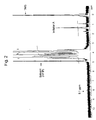
- Fig.2 is shown a nuclear magnetic resonance (NMR, measured at 25°C) spectrum of the polyparadioxane with a high molecular weight and a narrow molecular weight distribution obtained by a polymerization reaction of the purified 2-p-dioxanone according to the present invention obtained in Example 3.
- NMR nuclear magnetic resonance
- the present inventors have obtained findings that hydrochloric acid and acid chlorides present in 2-p-dioxanone would generate undesirable impurities due to their high reactivity, and the undesirable impurities involves such a critical problem that even if only a trace amount remains, they promote ring-opening, cleavage, and degradation of 2-p-dioxanone.
- the present inventors have found that if such ring-opening, cleavage, and degradation occur, undesirable impurities having a carboxyl group at ends are produced, which in turns inhibit a ring-opening polymerization reaction, suppress an increase in molecular weight, induce production of undesirable oligomers, and widen a molecular weight distribution as well.
- the present inventors have found that it is quite easy to purify a salt of ⁇ -hydroxyethoxy acetic acid, a precursor of 2-p-dioxanone and reached to consider whether a purified 2-p-dioxanone, which has been purified and required no further purification, might be purified readily obtained from a purified precursor, and thus proceeded eager investigation.
- salts of ⁇ -hydroxyethoxy acetic acid represented by formula (1) can be used as a starting material.
- n represents 1 to 2
- M is Na and/or K when n is 1 and Ca and/or Mg when n is 2.
- Na, K, Ca, Mg salts and the like can be mentioned as salts, and Na salt is industrially advantageous.
- the salts of ⁇ -hydroxyethoxy acetic acid represented by formula (1) are generally synthesized by a reaction of a monosalt of ethylene glycol and a monochloroacetic acid or monochloroacetic acid salt in an ethylene glycol solvent.
- the monosalt of ethylene glycol can be readily obtained by a known method in which a largely excessive quantity of ethylene glycol is mixed with an oxide or hydroxide of alkaline metals or alkaline earth metals and a dehydration promoting solvent such as xylene and the like is added to form a salt.
- monochloroacetic acid or its salt in a theoretical equivalent quantity in the above described synthetic reaction.
- monochloroacetic acid it is useful to use in a molar ratio of preferably 0.4 to 0.5, more preferably 0.47 to 0.49.
- a monochloroacetic acid salt it is useful to use in a molar ratio of preferably 0.8 to 1.0, more preferably 0.95 to 0.98.
- a poor solvent is charged into the reaction solution to make a salt of ⁇ -hydroxyethoxy acetic acid to be slurry crystals, which are isolated by filtration.
- the reaction solvent may be first distilled off to form slurry crystals, which may be isolated by filtration. This operation may provide crude salts of ⁇ -hydroxyethoxy acetic acid as crystals.
- hydrocarbons such as benzene, toluene, xylene, cyclohexane, hexane, and heptane
- ketones such as acetone, methyl ethyl ketone, and cyclohexanone
- alcohols such as methanol and ethanol
- heterocycles such as dioxane and sulfolan can be used alone or in combination.
- crude salts of ⁇ -hydroxyethoxy acetic acid obtained in the above are resedimented or suspended with heat to remove impurities, especially monosalts of ethylene glycol and ethylene glycol.
- Good solvents used for dissolution at the time of resedimentation for example, water is used alone, or in combination with alcohols such as methanol and ethanol; and ketones such as acetone, methylethyl ketone, and cyclohexanone. Desirably, it is industrially useful to use water alone.
- a temperature for dissolution is preferably 0 to 150°C, more preferably 50 to 100°C.
- hydrocarbons such as benzene, toluene, xylene, cyclohexane, hexane, and heptane
- ketones such as acetone, methylethyl ketone, and cyclohexanone
- alcohols such as methanol and ethanol
- heterocycles such as dioxane and sulfolan can be used alone or in combination.
- solvents used in thermal suspension for example, water is used alone, or in combination with hydrocarbons such as benzene, toluene, xylene, cyclohexane, hexane, and heptane; ketones such as acetone, methylethyl ketone, and cyclohexanone; alcohols such as methanol and ethanol; and heterocycles such as dioxane and sulfolan.
- Resedimentation or thermal suspension may provide highly purified salts of ⁇ -hydroxyethoxy acetic acid.
- crystals After thermal suspension, in order to crystallize the partly dissolved salts of ⁇ -hydroxyethoxy acetic acid, crystals can be taken out from a filtration mother liquid using the above described solvents used for resedimentation to further improve a total yield.
- inorganic acids for example, halogenated hydrogen, sulfuric acid, phosphoric acid and the like are used. It is useful to use in a theoretical equivalent or less and preferably use in 0.9 to 1.0 equivalent.
- This reaction can be conducted without solvent, but it is advantageous to perform using an appropriate quantity of a solvent.
- solvents to be used for example, hydrocarbons such as benzene, toluene, xylene, cyclohexane, hexane, and heptane; ketones such as acetone, methylethyl ketone, and cyclohexanone; alcohols such as methanol and ethanol; and heterocycles such as dioxane and sulfolan, and water can be mentioned, and they can be used alone or in combination.
- hydrocarbons such as benzene, toluene, xylene, cyclohexane, hexane, and heptane
- ketones such as acetone, methylethyl ketone, and cyclohexanone
- alcohols such as methanol and ethanol
- heterocycles such as dioxane and sulfolan, and water can be mentioned, and they can be used alone or in combination.
- a cyclization reaction occurs almost simultaneously with a neutralization reaction between the salts of ⁇ -hydroxyethoxy acetic acid represented by formula (1) obtained as described above and the inorganic acids.
- a reaction temperature at this point in time is preferably from -20 to 150°C, more preferably from -20 to 40°C.
- reaction solvent and produced water are removed by distillation under a reduced pressure or ambient pressure, and the produced salt (for example, sodium chloride, sodium sulfate) is removed by filtration under a reduced pressure and the like.
- the object is obtained by distillation under a reduced or ambient pressure under N 2 -gas flow.
- the salts of ⁇ -hydroxyethoxy acetic acid represented by formula (1) obtained by the above described method are reacted with inorganic acids under a relatively mild temperature condition so that a neutralization reaction and a cyclization reaction are conducted in one pot to obtain 2-p-dioxanone represented by formula (2).
- the 2-p-dioxanone thus obtained is highly pure and does not require further purification.
- the content of sodium ⁇ -hydroxyethoxy acetate was 69.7%, and the contents of other substances were 29.5% for sodium chloride, 0.5% for monosodium salt of ethylene glycol, and 0.3% for ethylene glycol.
- the yield based on sodium monochloroacetate was 96.9%.
- the melting point of this purified sodium ⁇ -hydroxyethoxy acetate was 206.5°C.
- Fig.1 shows the results of differential scanning calorimetry (DSC) for the purified salt of ⁇ -hydroxyethoxy acetic acid (purified sodium ⁇ -hydroxyethoxy acetate obtained in Example 1) according to the present invention.
- the differential scanning calorimetry (DSC) chart shows that a fusion peak-top is detected at 206.5°C.
- the measurement conditions for differential scanning calorimetry are as follows: About 6.8 to 7.0 mg of a sample was weighed into an aluminum pan. The first temperature was set at -67°C and DSC measurement was conducted with increasing temperature from -40°C to 260°C at a rate of 5°C/min. The used measurement apparatus was RIGAKU DSC 8230 and the standard substance was aluminum oxide.
- the abscissa axis shows a scanning range for temperature, and the ordinate axis shows exothermic/exothermic calorie.
- the melting point was 24.2°C
- the purity measured by gas chromatography was 99.1%
- the yield based on sodium monochloroacetate was 66.7%.
- the melting point was 26.1°C
- the purity measured by gas chromatography was 99.4%
- the yield based on sodium monochloroacetate was 56.8%.
- the water contents of the monomers obtained in Examples 2 and 3 measured were 34.4 and 25.7 ppm, respectively, which indicate sufficient quality for polymerization.
- each 10 g (0.098 mol) of the monomer, 0.022 g (1.18 ⁇ 10 -4 mol) of lauryl alcohol, and a tin octanate (3.92 ⁇ 10 -6 mol) solution in toluene were weighed and charged in a sufficiently dried ampoule. After a reduction in pressure at room temperature, the ampoule was sealed with melting and heated on an oil bath at 95°C for 12 hours. After the polymerization reaction was continued on the oil bath at 80°C for further 7 days, polymer was recovered. The solution viscosities ( ⁇ ) of the polymers thus obtained were measured using 0.1 g/dl of hexafluroroisopropanol at 25°C, which were 2.20 and 2.43, respectively.
- 2-p-Dioxanone was manufactured according to the known manufacturing process described in Japanese Patent Publication No. 60-36785.
- the monomer thus obtained had a purity of 75.81% measured by gas chromatography. After the first distillation, the monomer contained ethylene glycol. Then the polymerization reaction was conducted by operation similar to that in Example 4.
- the solution viscosity ( ⁇ ) of the polymer was 0.12.
- Fig.2 is shown a nuclear magnetic resonance (NMR, measured at 25°C) spectrum of the polyparadioxane with a high molecular weight and a narrow molecular weight distribution obtained by a polymerization reaction of the purified 2-p-dioxanone according to the present invention obtained in Example 3.
- NMR nuclear magnetic resonance
- polymers having a high molecular weight and a narrow molecular weight distribution are extremely favorably used for biodegradable absorbable polymers used for drugs and the like and sutures for surgical operation and the like.
- the abscissa axis shows ppm and the ordinate axis shows strength.
- symbols a, b, and c represent protons at positions a, b, and c shown together with arrows in the following formula (6), respectively.
- formula (6) represents a repeating unit of polyparadioxane subjected to nuclear magnetic resonance spectrometry (NMR, measured at 25°C).
- R represents an alkyl group; symbols a, b, and c represent positions of protons in the repeating unit, and n represents a degree of polymerization.
Landscapes
- Chemical & Material Sciences (AREA)
- Organic Chemistry (AREA)
- Engineering & Computer Science (AREA)
- Oil, Petroleum & Natural Gas (AREA)
- Crystallography & Structural Chemistry (AREA)
- Organic Low-Molecular-Weight Compounds And Preparation Thereof (AREA)
- Heterocyclic Compounds That Contain Two Or More Ring Oxygen Atoms (AREA)
Applications Claiming Priority (2)
| Application Number | Priority Date | Filing Date | Title |
|---|---|---|---|
| JP2000098225A JP2001288180A (ja) | 2000-03-31 | 2000-03-31 | 精製β−ヒドロキシエトキシ酢酸塩類化合物及びその製造方法、並びに、精製2−p−ジオキサノン及びその製造方法 |
| JP2000098225 | 2000-03-31 |
Publications (2)
| Publication Number | Publication Date |
|---|---|
| EP1138664A2 true EP1138664A2 (de) | 2001-10-04 |
| EP1138664A3 EP1138664A3 (de) | 2003-09-24 |
Family
ID=18612734
Family Applications (1)
| Application Number | Title | Priority Date | Filing Date |
|---|---|---|---|
| EP01303038A Withdrawn EP1138664A3 (de) | 2000-03-31 | 2001-03-30 | Gereinigtes Salz von B-Hydroxyethoxyessigsäure, 2-P-Dioxanon und Verfahren zu seiner Herstellung |
Country Status (6)
| Country | Link |
|---|---|
| US (1) | US6384241B2 (de) |
| EP (1) | EP1138664A3 (de) |
| JP (1) | JP2001288180A (de) |
| KR (1) | KR100432445B1 (de) |
| CN (1) | CN1198782C (de) |
| TW (1) | TW574203B (de) |
Families Citing this family (9)
| Publication number | Priority date | Publication date | Assignee | Title |
|---|---|---|---|---|
| CA2519931C (en) * | 2003-04-18 | 2011-06-21 | Langford Ic Systems, Inc. | Supplemental ozone treatment methods for difficult cleaning and sterilizing applications |
| CA2629077C (en) * | 2005-11-16 | 2014-03-18 | F. Hoffmann-La Roche Ag | Novel process for the preparation of thoc |
| CN101628909B (zh) * | 2008-07-15 | 2013-06-05 | 南通法茵克医药化工有限公司 | 用乙二醇合成1,4-二氧六环-2-酮的方法 |
| CN101824023B (zh) * | 2009-03-06 | 2013-12-11 | 惠州华阳医疗器械有限公司 | 一种对二氧环己酮单体的纯化方法 |
| KR101015936B1 (ko) * | 2009-04-09 | 2011-02-23 | 심상배 | 게임 볼 표면 처리 장치 |
| CN102731469B (zh) * | 2012-07-04 | 2013-12-25 | 宁波九胜创新医药科技有限公司 | 一种高纯度1,4-二氧六环-2-酮的制备方法 |
| RU2513111C1 (ru) * | 2012-11-26 | 2014-04-20 | Федеральное государственное бюджетное учреждение науки Институт органического синтеза им. И.Я. Постовского Уральского отделения Российской академии наук | Способ очистки пара-диоксанона |
| CN103508879B (zh) * | 2013-09-22 | 2015-10-21 | 江苏德峰药业有限公司 | 一种卤代烷氧基乙酸的合成方法 |
| CN117486851A (zh) * | 2023-11-07 | 2024-02-02 | 苏州西脉新诚生物科技有限公司 | 一种高纯度对二氧环己酮的合成方法 |
Family Cites Families (2)
| Publication number | Priority date | Publication date | Assignee | Title |
|---|---|---|---|---|
| US3631189A (en) * | 1970-04-01 | 1971-12-28 | Eastman Kodak Co | Salts containing 2-p-dioxanone and method of preparing same |
| US4052988A (en) * | 1976-01-12 | 1977-10-11 | Ethicon, Inc. | Synthetic absorbable surgical devices of poly-dioxanone |
-
2000
- 2000-03-31 JP JP2000098225A patent/JP2001288180A/ja active Pending
-
2001
- 2001-03-30 EP EP01303038A patent/EP1138664A3/de not_active Withdrawn
- 2001-03-30 TW TW90107688A patent/TW574203B/zh not_active IP Right Cessation
- 2001-03-30 US US09/820,674 patent/US6384241B2/en not_active Expired - Lifetime
- 2001-03-31 KR KR10-2001-0017216A patent/KR100432445B1/ko not_active Expired - Fee Related
- 2001-03-31 CN CNB011178876A patent/CN1198782C/zh not_active Expired - Fee Related
Also Published As
| Publication number | Publication date |
|---|---|
| US20010056192A1 (en) | 2001-12-27 |
| JP2001288180A (ja) | 2001-10-16 |
| TW574203B (en) | 2004-02-01 |
| US6384241B2 (en) | 2002-05-07 |
| CN1198782C (zh) | 2005-04-27 |
| EP1138664A3 (de) | 2003-09-24 |
| CN1317478A (zh) | 2001-10-17 |
| KR20010095218A (ko) | 2001-11-03 |
| KR100432445B1 (ko) | 2004-05-22 |
Similar Documents
| Publication | Publication Date | Title |
|---|---|---|
| EP0632807B1 (de) | Verfahren zur herstellung von cyclischen estern aus hydroxysäuren und deren derivaten | |
| CN101891733B (zh) | 乳酸酯直接转化为丙交酯的催化剂和使用该催化剂制备丙交酯的方法 | |
| JP5179595B2 (ja) | ラクチドの製造方法 | |
| CN1263719C (zh) | 芳基烷基醚的制备方法 | |
| CN103209951B (zh) | 酮基羧酸、酮基羧酸酯、其制造和使用方法 | |
| CN110684011A (zh) | 乙交酯的制备方法 | |
| US6384241B2 (en) | Purified salt of β-hydroxyethoxy acetic acid, purified 2-p-dioxanone, and manufacturing method therefor | |
| JPH10109983A (ja) | 環状エステルの製造方法および精製方法 | |
| KR100231406B1 (ko) | 폴리에틸렌 나프탈레이트의 제조방법 | |
| EP2539332B1 (de) | Verbessertes verfahren zur herstellung von l-lactid mit hohem chemischem gehalt und hoher optischer reinheit | |
| US20070110701A1 (en) | Acyloxyacetic acid polymer and process for producing the same | |
| US10253012B2 (en) | Method and apparatus for preparation of lactide using lactide purification process | |
| JPH01110650A (ja) | 精製された2,6−ナフタレジカルボン酸ビス(2−ヒドロキシエチル)エステルの製造方法 | |
| CN116621709B (zh) | 一种环丙胺的合成方法 | |
| WO2006121111A1 (ja) | ポリエーテルポリオールの製造方法 | |
| JPS59137431A (ja) | トリメチロ−ルヘプタンの製造方法 | |
| JPS60190729A (ja) | トリメチロ−ルヘプタンの製法 | |
| KR100821619B1 (ko) | 초고순도 파라-디옥사논 제조방법 | |
| JPWO2006118014A1 (ja) | 4,4’−ビシクロヘキサンジオンモノケタール類の製造方法 | |
| JPH1036366A (ja) | ラクチドの製造方法 | |
| US5378797A (en) | Process for preparing aliphatic polyesters | |
| WO2009017261A1 (en) | Method for manufacturing ultrafine p dioxanone | |
| JP2010168325A (ja) | 2,6−ナフタレンジカルボン酸の製造方法 | |
| JPH01233272A (ja) | 2,2,6,6−テトラメチル−4−オキソピペリジンの製造方法 | |
| JP2002193944A (ja) | 5−アリールヒダントイン類の製造方法 |
Legal Events
| Date | Code | Title | Description |
|---|---|---|---|
| PUAI | Public reference made under article 153(3) epc to a published international application that has entered the european phase |
Free format text: ORIGINAL CODE: 0009012 |
|
| 17P | Request for examination filed |
Effective date: 20010419 |
|
| AK | Designated contracting states |
Kind code of ref document: A2 Designated state(s): AT BE CH CY DE DK ES FI FR GB GR IE IT LI LU MC NL PT SE TR |
|
| AX | Request for extension of the european patent |
Free format text: AL;LT;LV;MK;RO;SI |
|
| PUAL | Search report despatched |
Free format text: ORIGINAL CODE: 0009013 |
|
| AK | Designated contracting states |
Kind code of ref document: A3 Designated state(s): AT BE CH CY DE DK ES FI FR GB GR IE IT LI LU MC NL PT SE TR |
|
| AX | Request for extension of the european patent |
Extension state: AL LT LV MK RO SI |
|
| AKX | Designation fees paid |
Designated state(s): DE FR GB |
|
| RAP1 | Party data changed (applicant data changed or rights of an application transferred) |
Owner name: MITSUI CHEMICALS, INC. |
|
| 17Q | First examination report despatched |
Effective date: 20050621 |
|
| GRAP | Despatch of communication of intention to grant a patent |
Free format text: ORIGINAL CODE: EPIDOSNIGR1 |
|
| STAA | Information on the status of an ep patent application or granted ep patent |
Free format text: STATUS: THE APPLICATION IS DEEMED TO BE WITHDRAWN |
|
| 18D | Application deemed to be withdrawn |
Effective date: 20091014 |