EP1138752B1 - Organische Molybdänkomplexe enthaltende Schmiermittelzusammensetzungen - Google Patents
Organische Molybdänkomplexe enthaltende Schmiermittelzusammensetzungen Download PDFInfo
- Publication number
- EP1138752B1 EP1138752B1 EP01106336A EP01106336A EP1138752B1 EP 1138752 B1 EP1138752 B1 EP 1138752B1 EP 01106336 A EP01106336 A EP 01106336A EP 01106336 A EP01106336 A EP 01106336A EP 1138752 B1 EP1138752 B1 EP 1138752B1
- Authority
- EP
- European Patent Office
- Prior art keywords
- oil
- composition
- compound
- lubricating
- additive
- Prior art date
- Legal status (The legal status is an assumption and is not a legal conclusion. Google has not performed a legal analysis and makes no representation as to the accuracy of the status listed.)
- Expired - Lifetime
Links
- 239000000203 mixture Substances 0.000 title claims description 53
- 239000000314 lubricant Substances 0.000 title description 2
- 150000001875 compounds Chemical class 0.000 claims description 63
- 239000003446 ligand Substances 0.000 claims description 43
- 239000003921 oil Substances 0.000 claims description 37
- 239000000654 additive Substances 0.000 claims description 36
- 239000010687 lubricating oil Substances 0.000 claims description 24
- 239000003963 antioxidant agent Substances 0.000 claims description 22
- 230000000996 additive effect Effects 0.000 claims description 20
- 230000001050 lubricating effect Effects 0.000 claims description 18
- NINIDFKCEFEMDL-UHFFFAOYSA-N Sulfur Chemical compound [S] NINIDFKCEFEMDL-UHFFFAOYSA-N 0.000 claims description 16
- 229910052717 sulfur Inorganic materials 0.000 claims description 16
- 239000012141 concentrate Substances 0.000 claims description 15
- 238000002156 mixing Methods 0.000 claims description 14
- ZOKXTWBITQBERF-UHFFFAOYSA-N Molybdenum Chemical group [Mo] ZOKXTWBITQBERF-UHFFFAOYSA-N 0.000 claims description 12
- 125000004432 carbon atom Chemical group C* 0.000 claims description 12
- 239000011593 sulfur Substances 0.000 claims description 12
- -1 disulfide ion Chemical class 0.000 claims description 11
- 125000001183 hydrocarbyl group Chemical group 0.000 claims description 9
- 125000000129 anionic group Chemical group 0.000 claims description 8
- 229910052760 oxygen Inorganic materials 0.000 claims description 6
- 229910052750 molybdenum Inorganic materials 0.000 claims description 5
- 239000003599 detergent Substances 0.000 claims description 4
- 238000000034 method Methods 0.000 claims description 4
- 239000011733 molybdenum Substances 0.000 claims description 4
- 239000005864 Sulphur Substances 0.000 claims description 3
- 238000002485 combustion reaction Methods 0.000 claims description 3
- 239000001301 oxygen Substances 0.000 claims description 3
- 238000009877 rendering Methods 0.000 claims description 3
- 229910052711 selenium Inorganic materials 0.000 claims description 3
- 150000001450 anions Chemical class 0.000 claims description 2
- QVGXLLKOCUKJST-UHFFFAOYSA-N atomic oxygen Chemical compound [O] QVGXLLKOCUKJST-UHFFFAOYSA-N 0.000 claims description 2
- 239000003795 chemical substances by application Substances 0.000 claims description 2
- 239000002270 dispersing agent Substances 0.000 claims description 2
- 230000002708 enhancing effect Effects 0.000 claims description 2
- 239000004094 surface-active agent Substances 0.000 claims description 2
- 235000019198 oils Nutrition 0.000 description 34
- OKKJLVBELUTLKV-UHFFFAOYSA-N Methanol Chemical compound OC OKKJLVBELUTLKV-UHFFFAOYSA-N 0.000 description 21
- 235000006708 antioxidants Nutrition 0.000 description 20
- YXFVVABEGXRONW-UHFFFAOYSA-N Toluene Chemical compound CC1=CC=CC=C1 YXFVVABEGXRONW-UHFFFAOYSA-N 0.000 description 15
- 239000005078 molybdenum compound Substances 0.000 description 11
- 150000002752 molybdenum compounds Chemical class 0.000 description 11
- 125000003118 aryl group Chemical group 0.000 description 10
- 229910052802 copper Inorganic materials 0.000 description 10
- 239000010949 copper Substances 0.000 description 10
- RYGMFSIKBFXOCR-UHFFFAOYSA-N Copper Chemical compound [Cu] RYGMFSIKBFXOCR-UHFFFAOYSA-N 0.000 description 9
- 229910052751 metal Inorganic materials 0.000 description 9
- 239000002184 metal Substances 0.000 description 9
- 125000001424 substituent group Chemical group 0.000 description 7
- QGJOPFRUJISHPQ-UHFFFAOYSA-N Carbon disulfide Chemical compound S=C=S QGJOPFRUJISHPQ-UHFFFAOYSA-N 0.000 description 6
- OAICVXFJPJFONN-UHFFFAOYSA-N Phosphorus Chemical compound [P] OAICVXFJPJFONN-UHFFFAOYSA-N 0.000 description 6
- 125000000217 alkyl group Chemical group 0.000 description 6
- 125000004429 atom Chemical group 0.000 description 6
- DMBHHRLKUKUOEG-UHFFFAOYSA-N diphenylamine Chemical class C=1C=CC=CC=1NC1=CC=CC=C1 DMBHHRLKUKUOEG-UHFFFAOYSA-N 0.000 description 6
- 229910052698 phosphorus Inorganic materials 0.000 description 6
- 239000011574 phosphorus Substances 0.000 description 6
- 239000007787 solid Substances 0.000 description 6
- 150000004982 aromatic amines Chemical class 0.000 description 5
- 239000000047 product Substances 0.000 description 5
- IJGRMHOSHXDMSA-UHFFFAOYSA-N Atomic nitrogen Chemical compound N#N IJGRMHOSHXDMSA-UHFFFAOYSA-N 0.000 description 4
- 239000005749 Copper compound Substances 0.000 description 4
- 230000003078 antioxidant effect Effects 0.000 description 4
- 150000001880 copper compounds Chemical class 0.000 description 4
- 239000003879 lubricant additive Substances 0.000 description 4
- 229910052757 nitrogen Inorganic materials 0.000 description 4
- 125000000962 organic group Chemical group 0.000 description 4
- 238000002360 preparation method Methods 0.000 description 4
- 235000011044 succinic acid Nutrition 0.000 description 4
- QTBSBXVTEAMEQO-UHFFFAOYSA-N Acetic acid Chemical compound CC(O)=O QTBSBXVTEAMEQO-UHFFFAOYSA-N 0.000 description 3
- ZMXDDKWLCZADIW-UHFFFAOYSA-N N,N-Dimethylformamide Chemical compound CN(C)C=O ZMXDDKWLCZADIW-UHFFFAOYSA-N 0.000 description 3
- 150000001412 amines Chemical class 0.000 description 3
- 150000001735 carboxylic acids Chemical class 0.000 description 3
- 238000006243 chemical reaction Methods 0.000 description 3
- 239000012990 dithiocarbamate Substances 0.000 description 3
- 229930195733 hydrocarbon Natural products 0.000 description 3
- 150000002430 hydrocarbons Chemical class 0.000 description 3
- 229920000098 polyolefin Polymers 0.000 description 3
- 239000005077 polysulfide Substances 0.000 description 3
- 229920001021 polysulfide Polymers 0.000 description 3
- 150000008117 polysulfides Polymers 0.000 description 3
- 239000000376 reactant Substances 0.000 description 3
- 238000003756 stirring Methods 0.000 description 3
- 239000004215 Carbon black (E152) Substances 0.000 description 2
- WYURNTSHIVDZCO-UHFFFAOYSA-N Tetrahydrofuran Chemical compound C1CCOC1 WYURNTSHIVDZCO-UHFFFAOYSA-N 0.000 description 2
- 125000002723 alicyclic group Chemical group 0.000 description 2
- 125000001931 aliphatic group Chemical group 0.000 description 2
- 125000003545 alkoxy group Chemical group 0.000 description 2
- 125000002029 aromatic hydrocarbon group Chemical group 0.000 description 2
- DKVNPHBNOWQYFE-UHFFFAOYSA-N carbamodithioic acid Chemical compound NC(S)=S DKVNPHBNOWQYFE-UHFFFAOYSA-N 0.000 description 2
- 229910052799 carbon Inorganic materials 0.000 description 2
- 150000001879 copper Chemical class 0.000 description 2
- 125000000753 cycloalkyl group Chemical group 0.000 description 2
- GVPWHKZIJBODOX-UHFFFAOYSA-N dibenzyl disulfide Chemical compound C=1C=CC=CC=1CSSCC1=CC=CC=C1 GVPWHKZIJBODOX-UHFFFAOYSA-N 0.000 description 2
- 150000004659 dithiocarbamates Chemical class 0.000 description 2
- 230000000694 effects Effects 0.000 description 2
- 239000012530 fluid Substances 0.000 description 2
- 239000000446 fuel Substances 0.000 description 2
- IPCSVZSSVZVIGE-UHFFFAOYSA-N hexadecanoic acid Chemical compound CCCCCCCCCCCCCCCC(O)=O IPCSVZSSVZVIGE-UHFFFAOYSA-N 0.000 description 2
- 238000010348 incorporation Methods 0.000 description 2
- 230000014759 maintenance of location Effects 0.000 description 2
- 150000002739 metals Chemical class 0.000 description 2
- 125000000449 nitro group Chemical group [O-][N+](*)=O 0.000 description 2
- 230000003647 oxidation Effects 0.000 description 2
- 238000007254 oxidation reaction Methods 0.000 description 2
- 239000002530 phenolic antioxidant Substances 0.000 description 2
- 229920005652 polyisobutylene succinic anhydride Polymers 0.000 description 2
- 150000003444 succinic acids Chemical class 0.000 description 2
- 125000004434 sulfur atom Chemical group 0.000 description 2
- 238000005292 vacuum distillation Methods 0.000 description 2
- 239000012991 xanthate Substances 0.000 description 2
- 229910052725 zinc Inorganic materials 0.000 description 2
- 239000011701 zinc Substances 0.000 description 2
- OBETXYAYXDNJHR-SSDOTTSWSA-M (2r)-2-ethylhexanoate Chemical compound CCCC[C@@H](CC)C([O-])=O OBETXYAYXDNJHR-SSDOTTSWSA-M 0.000 description 1
- WRIDQFICGBMAFQ-UHFFFAOYSA-N (E)-8-Octadecenoic acid Natural products CCCCCCCCCC=CCCCCCCC(O)=O WRIDQFICGBMAFQ-UHFFFAOYSA-N 0.000 description 1
- FALRKNHUBBKYCC-UHFFFAOYSA-N 2-(chloromethyl)pyridine-3-carbonitrile Chemical class ClCC1=NC=CC=C1C#N FALRKNHUBBKYCC-UHFFFAOYSA-N 0.000 description 1
- DAJWPDRPGLCTJD-UHFFFAOYSA-N 2-[[3,5-bis(2,3-dimethylbutan-2-yl)-2-hydroxyphenyl]methyl]-4,6-bis(2,3-dimethylbutan-2-yl)phenol Chemical compound CC(C)C(C)(C)C1=CC(C(C)(C)C(C)C)=CC(CC=2C(=C(C=C(C=2)C(C)(C)C(C)C)C(C)(C)C(C)C)O)=C1O DAJWPDRPGLCTJD-UHFFFAOYSA-N 0.000 description 1
- LQJBNNIYVWPHFW-UHFFFAOYSA-N 20:1omega9c fatty acid Natural products CCCCCCCCCCC=CCCCCCCCC(O)=O LQJBNNIYVWPHFW-UHFFFAOYSA-N 0.000 description 1
- MDWVSAYEQPLWMX-UHFFFAOYSA-N 4,4'-Methylenebis(2,6-di-tert-butylphenol) Chemical compound CC(C)(C)C1=C(O)C(C(C)(C)C)=CC(CC=2C=C(C(O)=C(C=2)C(C)(C)C)C(C)(C)C)=C1 MDWVSAYEQPLWMX-UHFFFAOYSA-N 0.000 description 1
- YPIFGDQKSSMYHQ-UHFFFAOYSA-N 7,7-dimethyloctanoic acid Chemical compound CC(C)(C)CCCCCC(O)=O YPIFGDQKSSMYHQ-UHFFFAOYSA-N 0.000 description 1
- QSBYPNXLFMSGKH-UHFFFAOYSA-N 9-Heptadecensaeure Natural products CCCCCCCC=CCCCCCCCC(O)=O QSBYPNXLFMSGKH-UHFFFAOYSA-N 0.000 description 1
- 125000006539 C12 alkyl group Chemical group [H]C([H])([H])C([H])([H])C([H])([H])C([H])([H])C([H])([H])C([H])([H])C([H])([H])C([H])([H])C([H])([H])C([H])([H])C([H])([H])C([H])([H])* 0.000 description 1
- OYPRJOBELJOOCE-UHFFFAOYSA-N Calcium Chemical compound [Ca] OYPRJOBELJOOCE-UHFFFAOYSA-N 0.000 description 1
- OKTJSMMVPCPJKN-UHFFFAOYSA-N Carbon Chemical compound [C] OKTJSMMVPCPJKN-UHFFFAOYSA-N 0.000 description 1
- CUDSBWGCGSUXDB-UHFFFAOYSA-N Dibutyl disulfide Chemical group CCCCSSCCCC CUDSBWGCGSUXDB-UHFFFAOYSA-N 0.000 description 1
- BWGNESOTFCXPMA-UHFFFAOYSA-N Dihydrogen disulfide Chemical compound SS BWGNESOTFCXPMA-UHFFFAOYSA-N 0.000 description 1
- MYMOFIZGZYHOMD-UHFFFAOYSA-N Dioxygen Chemical compound O=O MYMOFIZGZYHOMD-UHFFFAOYSA-N 0.000 description 1
- 239000005642 Oleic acid Substances 0.000 description 1
- ZQPPMHVWECSIRJ-UHFFFAOYSA-N Oleic acid Natural products CCCCCCCCC=CCCCCCCCC(O)=O ZQPPMHVWECSIRJ-UHFFFAOYSA-N 0.000 description 1
- 235000021314 Palmitic acid Nutrition 0.000 description 1
- ISWSIDIOOBJBQZ-UHFFFAOYSA-N Phenol Chemical compound OC1=CC=CC=C1 ISWSIDIOOBJBQZ-UHFFFAOYSA-N 0.000 description 1
- 235000021355 Stearic acid Nutrition 0.000 description 1
- HCHKCACWOHOZIP-UHFFFAOYSA-N Zinc Chemical compound [Zn] HCHKCACWOHOZIP-UHFFFAOYSA-N 0.000 description 1
- SQKDNFMDCCWSBT-UHFFFAOYSA-K [Cu+3].[O-]P([O-])([S-])=S Chemical compound [Cu+3].[O-]P([O-])([S-])=S SQKDNFMDCCWSBT-UHFFFAOYSA-K 0.000 description 1
- 125000005595 acetylacetonate group Chemical group 0.000 description 1
- 239000002253 acid Substances 0.000 description 1
- 150000008065 acid anhydrides Chemical class 0.000 description 1
- 150000007513 acids Chemical class 0.000 description 1
- 239000004480 active ingredient Substances 0.000 description 1
- 125000002252 acyl group Chemical group 0.000 description 1
- 125000004442 acylamino group Chemical group 0.000 description 1
- 229910052784 alkaline earth metal Inorganic materials 0.000 description 1
- 125000003342 alkenyl group Chemical group 0.000 description 1
- 125000004414 alkyl thio group Chemical group 0.000 description 1
- 125000002947 alkylene group Chemical group 0.000 description 1
- OBETXYAYXDNJHR-UHFFFAOYSA-N alpha-ethylcaproic acid Natural products CCCCC(CC)C(O)=O OBETXYAYXDNJHR-UHFFFAOYSA-N 0.000 description 1
- 229910052782 aluminium Inorganic materials 0.000 description 1
- 150000004945 aromatic hydrocarbons Chemical class 0.000 description 1
- 125000004104 aryloxy group Chemical group 0.000 description 1
- 239000002199 base oil Substances 0.000 description 1
- 230000009286 beneficial effect Effects 0.000 description 1
- 230000015572 biosynthetic process Effects 0.000 description 1
- 229910052791 calcium Inorganic materials 0.000 description 1
- 239000011575 calcium Substances 0.000 description 1
- OSMZVRQRVPLKTN-UHFFFAOYSA-N calcium;1-nonyl-7-thiabicyclo[4.1.0]hepta-2,4-dien-6-ol Chemical compound [Ca].C1=CC=CC2(CCCCCCCCC)C1(O)S2 OSMZVRQRVPLKTN-UHFFFAOYSA-N 0.000 description 1
- 150000001721 carbon Chemical group 0.000 description 1
- 150000007942 carboxylates Chemical class 0.000 description 1
- 150000001732 carboxylic acid derivatives Chemical class 0.000 description 1
- 239000000969 carrier Substances 0.000 description 1
- 239000007795 chemical reaction product Substances 0.000 description 1
- 239000003638 chemical reducing agent Substances 0.000 description 1
- 125000001309 chloro group Chemical group Cl* 0.000 description 1
- BWFPGXWASODCHM-UHFFFAOYSA-N copper monosulfide Chemical compound [Cu]=S BWFPGXWASODCHM-UHFFFAOYSA-N 0.000 description 1
- SVOAENZIOKPANY-CVBJKYQLSA-L copper;(z)-octadec-9-enoate Chemical compound [Cu+2].CCCCCCCC\C=C/CCCCCCCC([O-])=O.CCCCCCCC\C=C/CCCCCCCC([O-])=O SVOAENZIOKPANY-CVBJKYQLSA-L 0.000 description 1
- KGGZTXSNARMULX-UHFFFAOYSA-L copper;dicarbamodithioate Chemical compound [Cu+2].NC([S-])=S.NC([S-])=S KGGZTXSNARMULX-UHFFFAOYSA-L 0.000 description 1
- 125000000392 cycloalkenyl group Chemical group 0.000 description 1
- MIHINWMALJZIBX-UHFFFAOYSA-N cyclohexa-2,4-dien-1-ol Chemical class OC1CC=CC=C1 MIHINWMALJZIBX-UHFFFAOYSA-N 0.000 description 1
- 150000001991 dicarboxylic acids Chemical class 0.000 description 1
- 239000002283 diesel fuel Substances 0.000 description 1
- 235000014113 dietary fatty acids Nutrition 0.000 description 1
- LAWOZCWGWDVVSG-UHFFFAOYSA-N dioctylamine Chemical compound CCCCCCCCNCCCCCCCC LAWOZCWGWDVVSG-UHFFFAOYSA-N 0.000 description 1
- 238000000921 elemental analysis Methods 0.000 description 1
- 150000002148 esters Chemical class 0.000 description 1
- 125000001033 ether group Chemical group 0.000 description 1
- 239000003925 fat Substances 0.000 description 1
- 229930195729 fatty acid Natural products 0.000 description 1
- 239000000194 fatty acid Substances 0.000 description 1
- 150000004665 fatty acids Chemical class 0.000 description 1
- 125000001153 fluoro group Chemical group F* 0.000 description 1
- 238000009472 formulation Methods 0.000 description 1
- 239000007789 gas Substances 0.000 description 1
- 125000005843 halogen group Chemical group 0.000 description 1
- 229910052739 hydrogen Inorganic materials 0.000 description 1
- 125000004356 hydroxy functional group Chemical group O* 0.000 description 1
- 229910052500 inorganic mineral Inorganic materials 0.000 description 1
- 239000000543 intermediate Substances 0.000 description 1
- QXJSBBXBKPUZAA-UHFFFAOYSA-N isooleic acid Natural products CCCCCCCC=CCCCCCCCCC(O)=O QXJSBBXBKPUZAA-UHFFFAOYSA-N 0.000 description 1
- 239000007788 liquid Substances 0.000 description 1
- 229910052748 manganese Inorganic materials 0.000 description 1
- 238000004519 manufacturing process Methods 0.000 description 1
- 239000011707 mineral Substances 0.000 description 1
- 239000010688 mineral lubricating oil Substances 0.000 description 1
- 239000002480 mineral oil Substances 0.000 description 1
- 238000012986 modification Methods 0.000 description 1
- 230000004048 modification Effects 0.000 description 1
- 239000010705 motor oil Substances 0.000 description 1
- WQEPLUUGTLDZJY-UHFFFAOYSA-N n-Pentadecanoic acid Natural products CCCCCCCCCCCCCCC(O)=O WQEPLUUGTLDZJY-UHFFFAOYSA-N 0.000 description 1
- 125000005608 naphthenic acid group Chemical group 0.000 description 1
- 150000005002 naphthylamines Chemical class 0.000 description 1
- 229910052759 nickel Inorganic materials 0.000 description 1
- 239000012299 nitrogen atmosphere Substances 0.000 description 1
- QJGQUHMNIGDVPM-UHFFFAOYSA-N nitrogen group Chemical group [N] QJGQUHMNIGDVPM-UHFFFAOYSA-N 0.000 description 1
- QIQXTHQIDYTFRH-UHFFFAOYSA-N octadecanoic acid Chemical compound CCCCCCCCCCCCCCCCCC(O)=O QIQXTHQIDYTFRH-UHFFFAOYSA-N 0.000 description 1
- OQCDKBAXFALNLD-UHFFFAOYSA-N octadecanoic acid Natural products CCCCCCCC(C)CCCCCCCCC(O)=O OQCDKBAXFALNLD-UHFFFAOYSA-N 0.000 description 1
- 125000002347 octyl group Chemical group [H]C([*])([H])C([H])([H])C([H])([H])C([H])([H])C([H])([H])C([H])([H])C([H])([H])C([H])([H])[H] 0.000 description 1
- ZQPPMHVWECSIRJ-KTKRTIGZSA-N oleic acid Chemical compound CCCCCCCC\C=C/CCCCCCCC(O)=O ZQPPMHVWECSIRJ-KTKRTIGZSA-N 0.000 description 1
- 239000013110 organic ligand Substances 0.000 description 1
- 125000001484 phenothiazinyl group Chemical class C1(=CC=CC=2SC3=CC=CC=C3NC12)* 0.000 description 1
- 125000001997 phenyl group Chemical group [H]C1=C([H])C([H])=C(*)C([H])=C1[H] 0.000 description 1
- 150000003017 phosphorus Chemical class 0.000 description 1
- 235000013824 polyphenols Nutrition 0.000 description 1
- 125000002924 primary amino group Chemical group [H]N([H])* 0.000 description 1
- 239000002994 raw material Substances 0.000 description 1
- 150000003839 salts Chemical class 0.000 description 1
- 150000003336 secondary aromatic amines Chemical class 0.000 description 1
- 239000012265 solid product Substances 0.000 description 1
- 235000012424 soybean oil Nutrition 0.000 description 1
- 239000003549 soybean oil Substances 0.000 description 1
- 239000007858 starting material Substances 0.000 description 1
- 239000008117 stearic acid Substances 0.000 description 1
- 238000003860 storage Methods 0.000 description 1
- 239000000126 substance Substances 0.000 description 1
- 125000003107 substituted aryl group Chemical group 0.000 description 1
- 229940014800 succinic anhydride Drugs 0.000 description 1
- PXQLVRUNWNTZOS-UHFFFAOYSA-N sulfanyl Chemical class [SH] PXQLVRUNWNTZOS-UHFFFAOYSA-N 0.000 description 1
- PTISTKLWEJDJID-UHFFFAOYSA-N sulfanylidenemolybdenum Chemical compound [Mo]=S PTISTKLWEJDJID-UHFFFAOYSA-N 0.000 description 1
- 150000003464 sulfur compounds Chemical class 0.000 description 1
- 125000004354 sulfur functional group Chemical group 0.000 description 1
- 238000003786 synthesis reaction Methods 0.000 description 1
- YLQBMQCUIZJEEH-UHFFFAOYSA-N tetrahydrofuran Natural products C=1C=COC=1 YLQBMQCUIZJEEH-UHFFFAOYSA-N 0.000 description 1
- VLLMWSRANPNYQX-UHFFFAOYSA-N thiadiazole Chemical compound C1=CSN=N1.C1=CSN=N1 VLLMWSRANPNYQX-UHFFFAOYSA-N 0.000 description 1
- 150000004867 thiadiazoles Chemical class 0.000 description 1
- 150000003568 thioethers Chemical class 0.000 description 1
- 239000010913 used oil Substances 0.000 description 1
- 235000013311 vegetables Nutrition 0.000 description 1
- 239000003981 vehicle Substances 0.000 description 1
- XLYOFNOQVPJJNP-UHFFFAOYSA-N water Substances O XLYOFNOQVPJJNP-UHFFFAOYSA-N 0.000 description 1
Classifications
-
- C—CHEMISTRY; METALLURGY
- C10—PETROLEUM, GAS OR COKE INDUSTRIES; TECHNICAL GASES CONTAINING CARBON MONOXIDE; FUELS; LUBRICANTS; PEAT
- C10M—LUBRICATING COMPOSITIONS; USE OF CHEMICAL SUBSTANCES EITHER ALONE OR AS LUBRICATING INGREDIENTS IN A LUBRICATING COMPOSITION
- C10M159/00—Lubricating compositions characterised by the additive being of unknown or incompletely defined constitution
- C10M159/12—Reaction products
- C10M159/18—Complexes with metals
-
- C—CHEMISTRY; METALLURGY
- C07—ORGANIC CHEMISTRY
- C07F—ACYCLIC, CARBOCYCLIC OR HETEROCYCLIC COMPOUNDS CONTAINING ELEMENTS OTHER THAN CARBON, HYDROGEN, HALOGEN, OXYGEN, NITROGEN, SULFUR, SELENIUM OR TELLURIUM
- C07F11/00—Compounds containing elements of Groups 6 or 16 of the Periodic Table
- C07F11/005—Compounds containing elements of Groups 6 or 16 of the Periodic Table compounds without a metal-carbon linkage
-
- C—CHEMISTRY; METALLURGY
- C10—PETROLEUM, GAS OR COKE INDUSTRIES; TECHNICAL GASES CONTAINING CARBON MONOXIDE; FUELS; LUBRICANTS; PEAT
- C10M—LUBRICATING COMPOSITIONS; USE OF CHEMICAL SUBSTANCES EITHER ALONE OR AS LUBRICATING INGREDIENTS IN A LUBRICATING COMPOSITION
- C10M2219/00—Organic non-macromolecular compounds containing sulfur, selenium or tellurium as ingredients in lubricant compositions
- C10M2219/06—Thio-acids; Thiocyanates; Derivatives thereof
- C10M2219/062—Thio-acids; Thiocyanates; Derivatives thereof having carbon-to-sulfur double bonds
-
- C—CHEMISTRY; METALLURGY
- C10—PETROLEUM, GAS OR COKE INDUSTRIES; TECHNICAL GASES CONTAINING CARBON MONOXIDE; FUELS; LUBRICANTS; PEAT
- C10M—LUBRICATING COMPOSITIONS; USE OF CHEMICAL SUBSTANCES EITHER ALONE OR AS LUBRICATING INGREDIENTS IN A LUBRICATING COMPOSITION
- C10M2219/00—Organic non-macromolecular compounds containing sulfur, selenium or tellurium as ingredients in lubricant compositions
- C10M2219/06—Thio-acids; Thiocyanates; Derivatives thereof
- C10M2219/062—Thio-acids; Thiocyanates; Derivatives thereof having carbon-to-sulfur double bonds
- C10M2219/066—Thiocarbamic type compounds
-
- C—CHEMISTRY; METALLURGY
- C10—PETROLEUM, GAS OR COKE INDUSTRIES; TECHNICAL GASES CONTAINING CARBON MONOXIDE; FUELS; LUBRICANTS; PEAT
- C10M—LUBRICATING COMPOSITIONS; USE OF CHEMICAL SUBSTANCES EITHER ALONE OR AS LUBRICATING INGREDIENTS IN A LUBRICATING COMPOSITION
- C10M2219/00—Organic non-macromolecular compounds containing sulfur, selenium or tellurium as ingredients in lubricant compositions
- C10M2219/06—Thio-acids; Thiocyanates; Derivatives thereof
- C10M2219/062—Thio-acids; Thiocyanates; Derivatives thereof having carbon-to-sulfur double bonds
- C10M2219/066—Thiocarbamic type compounds
- C10M2219/068—Thiocarbamate metal salts
-
- C—CHEMISTRY; METALLURGY
- C10—PETROLEUM, GAS OR COKE INDUSTRIES; TECHNICAL GASES CONTAINING CARBON MONOXIDE; FUELS; LUBRICANTS; PEAT
- C10M—LUBRICATING COMPOSITIONS; USE OF CHEMICAL SUBSTANCES EITHER ALONE OR AS LUBRICATING INGREDIENTS IN A LUBRICATING COMPOSITION
- C10M2223/00—Organic non-macromolecular compounds containing phosphorus as ingredients in lubricant compositions
- C10M2223/02—Organic non-macromolecular compounds containing phosphorus as ingredients in lubricant compositions having no phosphorus-to-carbon bonds
- C10M2223/04—Phosphate esters
- C10M2223/045—Metal containing thio derivatives
-
- C—CHEMISTRY; METALLURGY
- C10—PETROLEUM, GAS OR COKE INDUSTRIES; TECHNICAL GASES CONTAINING CARBON MONOXIDE; FUELS; LUBRICANTS; PEAT
- C10M—LUBRICATING COMPOSITIONS; USE OF CHEMICAL SUBSTANCES EITHER ALONE OR AS LUBRICATING INGREDIENTS IN A LUBRICATING COMPOSITION
- C10M2227/00—Organic non-macromolecular compounds containing atoms of elements not provided for in groups C10M2203/00, C10M2207/00, C10M2211/00, C10M2215/00, C10M2219/00 or C10M2223/00 as ingredients in lubricant compositions
- C10M2227/09—Complexes with metals
-
- C—CHEMISTRY; METALLURGY
- C10—PETROLEUM, GAS OR COKE INDUSTRIES; TECHNICAL GASES CONTAINING CARBON MONOXIDE; FUELS; LUBRICANTS; PEAT
- C10N—INDEXING SCHEME ASSOCIATED WITH SUBCLASS C10M RELATING TO LUBRICATING COMPOSITIONS
- C10N2010/00—Metal present as such or in compounds
- C10N2010/12—Groups 6 or 16
-
- C—CHEMISTRY; METALLURGY
- C10—PETROLEUM, GAS OR COKE INDUSTRIES; TECHNICAL GASES CONTAINING CARBON MONOXIDE; FUELS; LUBRICANTS; PEAT
- C10N—INDEXING SCHEME ASSOCIATED WITH SUBCLASS C10M RELATING TO LUBRICATING COMPOSITIONS
- C10N2040/00—Specified use or application for which the lubricating composition is intended
- C10N2040/25—Internal-combustion engines
-
- C—CHEMISTRY; METALLURGY
- C10—PETROLEUM, GAS OR COKE INDUSTRIES; TECHNICAL GASES CONTAINING CARBON MONOXIDE; FUELS; LUBRICANTS; PEAT
- C10N—INDEXING SCHEME ASSOCIATED WITH SUBCLASS C10M RELATING TO LUBRICATING COMPOSITIONS
- C10N2040/00—Specified use or application for which the lubricating composition is intended
- C10N2040/25—Internal-combustion engines
- C10N2040/251—Alcohol-fuelled engines
-
- C—CHEMISTRY; METALLURGY
- C10—PETROLEUM, GAS OR COKE INDUSTRIES; TECHNICAL GASES CONTAINING CARBON MONOXIDE; FUELS; LUBRICANTS; PEAT
- C10N—INDEXING SCHEME ASSOCIATED WITH SUBCLASS C10M RELATING TO LUBRICATING COMPOSITIONS
- C10N2040/00—Specified use or application for which the lubricating composition is intended
- C10N2040/25—Internal-combustion engines
- C10N2040/255—Gasoline engines
-
- C—CHEMISTRY; METALLURGY
- C10—PETROLEUM, GAS OR COKE INDUSTRIES; TECHNICAL GASES CONTAINING CARBON MONOXIDE; FUELS; LUBRICANTS; PEAT
- C10N—INDEXING SCHEME ASSOCIATED WITH SUBCLASS C10M RELATING TO LUBRICATING COMPOSITIONS
- C10N2040/00—Specified use or application for which the lubricating composition is intended
- C10N2040/25—Internal-combustion engines
- C10N2040/255—Gasoline engines
- C10N2040/28—Rotary engines
Definitions
- the present invention relates to lubricating oil compositions and concentrates therefor containing metal core compounds, specifically polynuclear molybdenum core compounds.
- Certain oil-soluble or oil-dispersible metal core compounds ie compounds having a metal core bonded to one or more ligands, are known as additives (or additive components) for lubricating oil compositions (or lubricants) for improving the composition's properties and performance.
- the ligand or ligands confer oil-solubility on the compound.
- certain oil-soluble molybdenum- and sulfur-containing compounds have been proposed and investigated as lubricant additives, US-A-2,951,040; - 3,419,589; -3,840,463; -4,966,719; - 4,995,996; and - 4,978,464 are representative of patent specifications describing molybdenum- and sulfur- containing compounds.
- Molybdenum compounds for use as lubricant additives described in the art are principally dinuclear molybdenum compounds, characterised by the oxidation state Mo(V). See, for example, US-A-5,627,146. Also, EP-A-0 960 178, based on International Patent Application No. PCT IB97/01656, describes use of trinuclear molybdenum compounds as lubricant additives, i.e. characterised by a different oxidation state (Mo(IV)).
- WO 99/66013 discloses a lubricating oil composition
- a lubricating oil composition comprising oil of lubricating viscosity and an additive comprising a metal core and bonded thereto one or more ligands capable of rendering the compound oil-soluble or oil-dispersible, at least one, and preferably all, of the ligand$ containing at least two hydrocarbyl groups of which one has 1 to 7 carbon atoms and the other or another has at least one more carbon atoms than the said hydrocarbyl group.
- This disclosure relates to asymmetric compounds which include both dinulclear and trinuclear molybdenum compounds.
- WO 99/47629 discloses that certain properties of a lubricating oil composition, namely fuel economy and fuel economy retention, can be improved using a mixture of an overbased oil soluble calcium detergent and an oil soluble trinuclear molybdenum compound.
- the latter is represented by the formula Mo 3 S k L n , where k is 4 to 10, n is 1 to 4 and L represents an organic ligand having sufficient carbon atoms to render the molybdenum compound oil-soluble or oil-dispersible.
- dinuclear molybdenum compounds may be exemplified by the formula Mo 2 O x S y L 2
- the above-exemplified compounds have Mo: ligand (L) molar ratios of 1:1 and 3:4 respectively, ie the number of moles of Mo never exceeds the number of moles of ligand L. Since the Mo is an active part of the compound, it would be desirable to increase its proportion, relative to ligand L, in order to reduce the raw material cost of making the compounds. The art does not describe any such accomplishment, even though it would be beneficial to do so.
- the present invention solves the above problem and provides oil-soluble or - dispersible compounds with polynuclear Mo cores whose Mo content exceeds its solubility or dispersibility conferring ligand content.
- the invention is a lubricating oil composition
- a lubricating oil composition comprising, or made by mixing, a major amount of an oil of lubricating viscosity and a minor amount of, as an additive, at least one compound comprising a polynuclear, molybdenum core and bonded thereto one or more monoanionic ligands capable of rendering the compound oil-soluble or oil-dispersible and at least one anionic group bonded to the core, such anionic group being other than a ligand group that confers oil-solubility or oil-dispersibility on the compound,
- the compound or compounds being represented by the general formula (I) below: Mo a E k L n X b (I) wherein E represents O, Se or Se, or a combination thereof L represents the monoanionic ligand; X represents the anionic group bonded to the core; a is 2, 3 or 4: k is at least 4, for example in the range from 4 to 10, such as 4 to 7, preferably 4 or 7; n is an integer that is less than a; and b is an integer to confer, in combination with X electrical neutrality to the compound, and wherein the combination of said at least one or more monoanionic ligands and said at least one anionic group confers electrical neutrality to the compound, wherein the ratio of the number of molybdenum atoms in the core to the number of said ligands is greater than 1:1, such as 3:2 or greater.
- the compound may provide at least 1, for example 1 to 2000, such as 5 to 1000, preferably 20 to 1000, ppm by mass of the Mo, expressed as Mo atom
- the molybdenum core as a Mo cluster core comprising more than one Mo atom, is dinuclear or trinuclear. It may contain non-metallic atoms consisting wholly or partly of sulphur. Preferably it consists of trinuclear molybdenum and sulphur.
- the ligands or ligands may, for example, be bidentate ligands, e.g. bonding to the core through two sulphur atoms.
- the lubricating oil composition according to the first aspect of the invention has excellent antiwear, antioxidant, and friction-reducing properties; also it may be compatible with other additives used In formulating commercial lubricating oil compositions and can be made from readily available starting materials.
- the invention is an additive concentrate for blending with an oil of lubricating viscosity comprising, or made by mixing, an oleaginous carrier and from 1 to 200,000, for example 50 to 150,00, such as 50 to 100,000, ppm by mass of the Mo, expressed as Mo atoms, of an additive defined in the first aspect of the invention, based on the mass of the concentrate.
- the invention is a method of lubricating an internal combustion engine comprising operating the engine and lubricating the engine with a lubricating oil composition of the first aspect of the invention.
- the invention is use of an additive as defined in the first aspect of the invention for enhancing one or more lubricating oil properties of a lubricating oil composition.
- the invention is a method of making a lubricating oil composition or an additive concentrate comprising mixing an additive defined in the first aspect of the invention with an oil of lubricating viscosity or an oleaginous carrier.
- This oil may be selected from vegetable, animal, mineral, or synthetic oils.
- the oils may range in viscosity from light distillate mineral oils to heavy lubricating oils such as gas engine oil, mineral lubricating oil, motor vehicle oil, and heavy duty diesel oil.
- the oils may be unrefined, refined, and re-refined.
- the oil may be used oil.
- the ligands including ligands L, may be independently selected from the group of: ⁇ X ⁇ R or and mixtures thereof, and perthio derivatives thereof wherein X, X 1 , X 2 and Y are independently selected from the group of oxygen and sulfur, and wherein R 1 , R 2 , and R are independently selected from the group consisting of H and organo groups that may be the same or different.
- the organo groups are hydrocarbyl groups such as alkyl (e.g., in which the carbon atom attached to the remainder of the ligand is primary, secondary or tertiary), aryl, substituted aryl and ether groups. More preferably, all ligands are the same.
- the organo groups of the ligands have a sufficient number of carbon atoms to render the compounds soluble or dispersible in the oil.
- the compounds' oil solubility or dispersibility may be influenced by the number of carbon atoms in the ligands.
- the ligand source chosen has a sufficient number of carbon atoms to render the compound soluble or dispersible in the oil.
- the total number of carbon atoms present among all of the organo groups of the compounds' ligands typically will be at least 21, e.g. 21 to 800, such as at least 25, at least 30 or at least 35.
- the number of carbon atoms in each alkyl group will generally range between I to 100, preferably I to 40 and more preferably between 3 and 20.
- Preferred ligands include dialkyldithiophosphate ("ddp"), xanthates, thioxanthates, dialkylphosphate, dialkyldithiocarbamate (“dtc”), and carboxylate and of these the dtc is more preferred.
- hydrocarbyl denotes a substituent having carbon atoms directly attached to the remainder of the ligand and which is predominantly hydrocarbyl in character within the context of this invention.
- substituents include the following: (1) hydrocarbon substituents, that is, aliphatic (for example alkyl or alkenyl), alicyclic (for example cycloalkyl or cycloalkenyl) substituents, aromatic-, aliphatic- and alicyclic-substituted aromatic nuclei, as well as cyclic substituents wherein the ring is completed through another portion of the ligand (that is, any two indicated substituents may together form an alicyclic group); (2) substituted hydrocarbon substituents, that is, those containing nonhydrocarbon groups which, in the context of this invention, do not alter the predominantly hydrocarbyl character of the substituent.
- hetero substituents that is, substituents which, while predominantly hydrocarbon in character within the context of this invention, contain atoms other than carbon present in a chain or ring otherwise composed of carbon atoms.
- Preferred embodiments of compounds of formula (I) are those where E represents O or S or a combination thereof; and/or a is 2 or 3.
- a more preferred embodiment is a compound of the general formula (II) below: Mo 3 S k L 2 X where k is 4 or 7 and X (II) represents a divalent anion such as the disulfide ion.
- the subject compounds may be made by reacting, in a polar medium, a reactant molybdenum compound that contains a polynuclear molybdenum core, such as a trinuclear molybdenum core, and the ligand, L, such as a dithiocarbamate, in a stoichiometric ratio, corresponding to that of the subject compound, wherein neither the reactant molybdenum compound nor the ligand is derivatised.
- a reactant molybdenum compound that contains a polynuclear molybdenum core, such as a trinuclear molybdenum core
- the ligand, L such as a dithiocarbamate
- the polar medium may, for example, comprise a liquid alkanol such as methanol, tetrahydrofuran, dimethylformamide, toluene or water; the reactant molybdenum compound may, for example, contain the [Mo 3 S 13 ] 2- ion; and L may, for example, be a dihydrocarbyl-, preferably dialkyl-, substituted dithiocarbamate.
- a liquid alkanol such as methanol, tetrahydrofuran, dimethylformamide, toluene or water
- the reactant molybdenum compound may, for example, contain the [Mo 3 S 13 ] 2- ion
- L may, for example, be a dihydrocarbyl-, preferably dialkyl-, substituted dithiocarbamate.
- the above-described reaction is conducted at elevated temperature.
- the synthesis of Mo 3 S 7 (dtc) 2 (S 2 ), being a subject compound, may proceed with stoichiometric quantities of dtc according to the equation shown below: (NH 4 ) 2 Mo 3 S 13 + 2Hdtc ⁇ Mo 3 S 7 (dtc) 2 (S 2 ) + 2H 2 S 2 + 2NH 3
- the lubricating oil compositions of the present invention may be prepared by adding to an oil of lubricating viscosity a mixture of an effective minor amount of at least one compound, and, if necessary, one or more co-additives such as described hereinafter. This preparation may be accomplished by adding the compound directly to the oil or by first mixing the compound in a suitable carrier fluid to achieve oil solubility or dispersibility, arid adding the mixture to the lubricating oil. Co-additives may be added to the oil by any method known to those skilled in the art, either prior to, contemporaneously with, or subsequent to addition of the compound.
- Concentrates of the compounds and co-additives, if required, in a suitable oleagenous, typically hydrocarbon, carrier fluid provide a convenient means of handling them before their use.
- Oils of lubricating viscosity such as those described above as well as aliphatic, naphthenic, and aromatic hydrocarbons, are examples of suitable carriers for concentrates. These concentrates may contain 1 to 90 mass % of the additives based on the weight of the concentrate; preferred is 1 to 50, more preferably 20 to 70, mass %.
- the lubricating oil compositions made by mixing (or blending) an oil of lubricating viscosity containing at least one compound of the types and in the amounts described herein and optional co-additives may be used to lubricate mechanical engine components, particularly of an internal combustion engine such as a spark-ignited or compression-ignition engine, by adding the lubricating oil thereto in the crankcase thereof.
- lubricant additives may be used for blending in the compositions of this invention. These include dispersants, detergents, e.g., single or mixed metal detergent systems, pour point depressants, viscosity improvers, antioxidants, surfactants, antiwear agents, and friction reducing agents. These can be combined in proportions known in the art.
- additives containing phosphorus and/or sulfur compounds such as a zinc dialkyl dithiophosphate(ZDDP) can be prepared and used with the compounds of the present invention.
- ZDDP zinc dialkyl dithiophosphate
- the compounds of the present invention may be effective or may even possess improved properties when used in lubricating oil compositions that are free or substantially free of added phosphorus and/or sulfur.
- a lubricating oil composition that is substantial free of phosphorus and/or sulfur is one in which the amount of phosphorus and/or sulfur is not more than is inherently present in base oils of lubricating viscosity.
- suitable antioxidants are selected from copper-containing antioxidants, sulfur-containing antioxidants, aromatic amine-containing antioxidants and phenolic antioxidants.
- suitable copper-containing antioxidants include oil-soluble copper compounds described in EP-B-24 146, EP-A-280 579 and EP-A-280 580.
- the copper may be blended into the oil as an oil-soluble copper salt of a synthetic or natural carboxylic acid.
- carboxylic acids from which suitable copper salts may be derived include C 2 to C 18 carboxylic acids (e.g., acetic acid, and fatty acids such as stearic acid and palmitic acid), unsaturated acids (e.g., oleic acid), branched carboxylic acids (e.g., naphthenic acids of molecular weight of from 200 to 500, neodecanoic acid and 2-ethylhexanoic acid), and alkyl- or alkenyl-substituted dicarboxylic acids (e.g., polyalkenyl-substituted succinic acids such as octadecenyl succinic acids, dodecenyl succinic acids and polyisobutenyl succinic acids).
- carboxylic acids from which suitable copper salts may be derived include C 2 to C 18 carboxylic acids (e.g., acetic acid, and fatty acids such as stearic acid and palmitic
- suitable compounds may be derived from an acid anhydride, for example, from a substituted succinic anhydride.
- the copper antioxidant may be, for example, a copper dithiocarbamate or copper dithiophosphate.
- Other copper- and sulfur-containing antioxidant compounds for example, copper mercaptides, xanthates, and thioxanthates, are also suitable for use in accordance with the invention, as are copper sulfonates, phenates (optionally sulfurized) and acetylacetonates.
- Other copper compounds which may be used in accordance with the invention are overbased copper compounds. Examples of such compounds, and of processes for their preparation, are described in US-A-4,664,822 and EP-A-0 425 367.
- the copper compound may be in cuprous or cupric form.
- aromatic amine-containing antioxidants are aromatic amines which have at least one aromatic group directly attached to at least one amine nitrogen atom. Secondary aromatic amines, especially those having two aromatic groups attached to the same amine nitrogen atom, are preferred, but the use of other aromatic amines is not excluded.
- the amines may contain one or more aromatic groups, for example at least two aromatic groups. Where there are two aromatic groups, both are preferably bonded directly to the same amine nitrogen.
- Compounds in which two aromatic groups are linked by a covalent bond or by an atom or group e.g., an oxygen or sulfur atom, or a -CO-, -SO 2 - or alkylene group
- an atom or group e.g., an oxygen or sulfur atom, or a -CO-, -SO 2 - or alkylene group
- Aromatic rings which are preferably aromatic hydrocarbon rings, may be unsubstituted or substituted by one or more substituents selected from alkyl, cycloalkyl, alkoxy, aryloxy, acyl, acylamino, hydroxy, and nitro groups.
- Amines containing alkyl-substituted aromatic hydrocarbon rings are preferred, especially those containing two alkylsubstituted phenyl groups.
- Preferred N-aryl amines for use in accordance with the invention are naphthylamines and, especially, diphenylamines, including alkyl substituted diphenylamines, wherein the alkyl group may be the same or different, having I to 28 carbon atoms.
- Other nitrogen- containing antioxidants for example, phenothiazine type compounds, may also be used in this invention.
- phenolic antioxidants include (a) sterically hindered tertiary-alkylated monohydric phenols such as those described in more detail in US-A-2,944,086; -3,043,775; and -3,211,652; and (b) methylene-bridged tertiary alkyl polyphenols, such as 4,4'-methylene bis (2,6-di-tertbutylphenol) and 2,2'-methylene bis (4,6-di-(1,1,2-trimethylpropyl)phenol), and mixtures of (a) and (b) such as those described in more detail in EP-B-0456925.
- sterically hindered tertiary-alkylated monohydric phenols such as those described in more detail in US-A-2,944,086; -3,043,775; and -3,211,652
- methylene-bridged tertiary alkyl polyphenols such as 4,4'-methylene bis (2,6-
- sulfur-containing antioxidants examples include alkaline earth metal salts of alkylphenolthioesters having preferably C5 to C12 alkyl side chains, calcium nonylphenol sulfide, ashless oil-soluble phenates and sulfurized phenates, phosphosulfurized or sulfurized hydrocarbons, phosphorus esters and other sulfur-containing molybdenum-containing compounds.
- sulfur-containing antioxidants are metal salts of dihydrocarbyl dithiophosphate or dihydrocarbyl dithiocarbamate compounds, wherein the metal is selected from Zn, Mn, Ni, Al, Group 1 metals and Group 2 metals.
- sulfur-containing compounds include those described in EP-A-699 759, for example, sulfides of oils, fats or polyolefins, in which a sulfur group having two or more sulfur atoms is adjoined and bonded together in a molecular structure.
- sulfurized sperm oil sulfurized pinene oil, sulfurized soybean oil, sulfurized polyolefin, sulfurized esters, dialkyl disulfide, dialkyl polysulfide, dibenzyl disulfide, ditertiary butyl disulfide, polyolefin polysulfide, a thiadiazole type compound such as bis-alkyl polysulfide thiadiazole, and sulfurized phenol.
- Preferable antioxidants are copper-containing antioxidants, aromatic amine-containing compounds including diphenylamines and derivatives thereof that have an effect herein comparable to diphenylamines), and mixtures thereof.
- copper-containing antioxidants include copper polyisobutylene succinic anhydride ("copper PIBSA”) and copper oleate
- diphenylamines include all effective derivatives of diphenylamines.
- the lubricating oil compositions of the present invention may include a minor amount of at least one antioxidant and at least one oil-soluble or oil-dispersible compound.
- the composition may include a mixture of the compounds and antioxidants of the types disclosed herein, the lubricating oil and/or other additives disclosed herein per se, and/or of any intermediates and reaction products occurring as a result of the mixture.
- the antioxidants and compounds are present in a minor effective amount to produce the enhanced lubricating performance, particularly friction reduction, friction reduction retention, antioxidancy and/or antiwear properties in the oil.
- Example 2 The product of Example 2 was subjected to the Cameron-Plint test as follows.
Landscapes
- Chemical & Material Sciences (AREA)
- Organic Chemistry (AREA)
- Chemical Kinetics & Catalysis (AREA)
- General Chemical & Material Sciences (AREA)
- Oil, Petroleum & Natural Gas (AREA)
- Lubricants (AREA)
Claims (14)
- Schmierölzusammensetzung, die eine größere Menge Öl mit Schmierviskosität und eine geringere Menge, als Additiv, von mindestens einer Verbindung umfasst oder durch Mischen hergestellt ist, welche einen mehrkernigen Molybdänkern und daran gebunden einen oder mehrere monoanionische Liganden, die die Verbindung öllöslich oder öldispergierbar machen können, und mindestens eine an den Kern gebundene anionische Gruppe umfasst, wobei diese anionische Gruppe von einer Ligandengruppe, die der Verbindung Öllöslichkeit oder Öldispergierbarkeit verleiht, verschieden ist, wobei die Verbindung oder Verbindungen durch die folgende allgemeine Formel (I) wiedergegeben werden:
MoaEkLnXb (I)
wobei E für O, S oder Se oder eine Kombination davon steht;
L für den monoanionischen Liganden steht;
X für die an den Kern gebundene anionische Gruppe steht;
a 2, 3 oder 4 ist;
k mindestens 4 ist, beispielsweise im Bereich von 4 bis 10, wie 4 bis 7, vorzugsweise 4 oder 7;
n eine ganze Zahl kleiner als a ist, und
b eine ganze Zahl ist, um der Verbindung in Kombination mit X elektrische Neutralität zu verleihen, und wobei die Kombination des mindestens einen oder der mehreren monoanionischen Liganden und der mindestens einen anionischen Gruppe der Verbindung elektrische Neutralität verleiht, wobei das Verhältnis der Anzahl der Molybdänätome in dem Kern zu der Anzahl der Liganden größer als 1:1 ist, wie 3:2 oder größer. - Zusammensetzung nach Anspruch 1, bei der E für O, S oder eine Kombination davon steht und/oder a 2 oder 3 ist.
- Zusammensetzung nach Anspruch 2, bei der die Verbindung oder Verbindungen durch die folgende allgemeine Formel (II) wiedergegeben werden:
Mo3SkL2X (II),
wobei L wie in Anspruch 2 definiert ist, k 4 oder 7 ist und X für ein zweiwertiges Anion wie das Disulfidion steht. - Zusammensetzung nach einem der vorhergehenden Ansprüche, bei der der Ligand oder die Liganden einschließlich L durch die Formeln
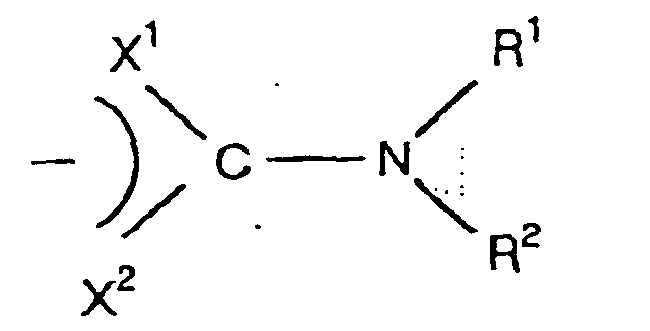
oder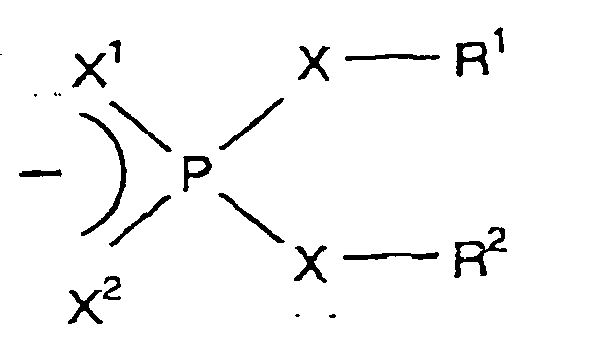
und Mischungen davon und Perthioderivate davon wiedergegeben wird bzw. werden, wobei X, X1, X2 und Y unabhängig ausgewählt sind aus der Gruppe von Sauerstoff und Schwefel, und wobei R1 und R2 unabhängig für Kohlenwasserstoffgruppen stehen. - Zusammensetzung nach Anspruch 4, bei der der oder dieser Ligand oder diese Liganden ein Dialkyldithiophosphat- oder Dialkyldithiocarbamatligand ist.
- Zusammensetzung nach einem der vorhergehenden Ansprüche, bei der die Masse von Molybdän aus der Verbindung, bezogen auf die Masse der Zusammensetzung, mindestens 1, beispielsweise 1 bis 2000, wie 5 bis 1000, vorzugsweise 20 bis 1000 ppm ist.
- Zusammensetzung nach einem der vorhergehenden Ansprüche, bei der die Gesamtanzahl der Kohlenstoffatome in allen der Liganden mindestens 21 beträgt, wie 21 bis 800.
- Zusammensetzung nach einem der vorhergehenden Ansprüche, bei der das Öl mit Schmierviskosität schwefelfrei ist.
- Zusammensetzung nach einem der vorhergehenden Ansprüche, die ferner mindestens ein Antioxidansadditiv umfasst bzw. durch Mischen damit hergestellt ist.
- Zusammensetzung nach einem der vorhergehenden Ansprüche, die ferner ein oder mehrere Dispergiermittel, Detergentien, Stockpunktsenkungsmittel, Viskositätsverbesserer, Tenside und Antiverschleißmittel umfasst oder durch Mischen damit hergestellt ist.
- Additivkonzentrat zum Mischen mit Öl mit Schmierviskosität, das ferner ölhaltigen oder ölartigen Träger und, bezogen auf die Masse des Konzentrats, 1 bis 200.000 Gew.ppm, beispielsweise 50 bis 150.000, wie 50 bis 100.000 Massen-ppm Molybdän von Additiv wie in einem der Ansprüche 1 bis 8 definiert umfasst oder durch Mischen damit hergestellt ist.
- Additivkonzentrat nach Anspruch 11, das ferner mindestens ein Antioxidansadditiv umfasst oder durch Mischen damit hergestellt ist, wobei das Konzentrat, bezogen auf die Masse des Konzentrats, 1 bis 90, wie 1 bis 50 Massen% Additive enthält.
- Verfahren zum Schmieren eines Verbrennungsmotors, das das Betreiben des Motors und Schmieren des Motors mit einer Schmierölzusammensetzung gemäß einem der Ansprüche 1 bis 10 umfasst.
- Verwendung eines Additivs oder von Additiven wie in einem der Ansprüche 1 bis 10 definiert zur Verbesserung von einer oder mehreren Schmiereigenschaften von Schmierölzusammensetzung.
Priority Applications (1)
| Application Number | Priority Date | Filing Date | Title |
|---|---|---|---|
| EP01106336A EP1138752B1 (de) | 2000-03-29 | 2001-03-15 | Organische Molybdänkomplexe enthaltende Schmiermittelzusammensetzungen |
Applications Claiming Priority (3)
| Application Number | Priority Date | Filing Date | Title |
|---|---|---|---|
| EP00201137 | 2000-03-29 | ||
| EP00201137 | 2000-03-29 | ||
| EP01106336A EP1138752B1 (de) | 2000-03-29 | 2001-03-15 | Organische Molybdänkomplexe enthaltende Schmiermittelzusammensetzungen |
Publications (2)
| Publication Number | Publication Date |
|---|---|
| EP1138752A1 EP1138752A1 (de) | 2001-10-04 |
| EP1138752B1 true EP1138752B1 (de) | 2006-02-22 |
Family
ID=26072055
Family Applications (1)
| Application Number | Title | Priority Date | Filing Date |
|---|---|---|---|
| EP01106336A Expired - Lifetime EP1138752B1 (de) | 2000-03-29 | 2001-03-15 | Organische Molybdänkomplexe enthaltende Schmiermittelzusammensetzungen |
Country Status (1)
| Country | Link |
|---|---|
| EP (1) | EP1138752B1 (de) |
Families Citing this family (3)
| Publication number | Priority date | Publication date | Assignee | Title |
|---|---|---|---|---|
| FR2744856B1 (fr) * | 1996-02-12 | 1998-04-17 | Labavia | Transmission de vehicule equipee d'un ralentisseur electrique |
| CN110462012A (zh) | 2016-12-16 | 2019-11-15 | 卡斯特罗尔有限公司 | 基于醚的润滑剂组合物、方法和用途 |
| EP3461877B1 (de) | 2017-09-27 | 2019-09-11 | Infineum International Limited | Verbesserungen an und im zusammenhang mit schmiermittelzusammensetzungen |
Family Cites Families (8)
| Publication number | Priority date | Publication date | Assignee | Title |
|---|---|---|---|---|
| NL137307C (de) * | 1965-10-01 | |||
| US4995996A (en) * | 1989-12-14 | 1991-02-26 | Exxon Research And Engineering Company | Molybdenum sulfur antiwear and antioxidant lube additives |
| JP3454593B2 (ja) * | 1994-12-27 | 2003-10-06 | 旭電化工業株式会社 | 潤滑油組成物 |
| US5888945A (en) * | 1996-12-13 | 1999-03-30 | Exxon Research And Engineering Company | Method for enhancing and restoring reduction friction effectiveness |
| JP4533973B2 (ja) * | 1996-12-13 | 2010-09-01 | エクソンモービル リサーチ アンド エンジニアリング カンパニー | 有機モリブデン錯体を含有する潤滑油組成物 |
| US5837657A (en) * | 1997-12-02 | 1998-11-17 | Fang; Howard L. | Method for reducing viscosity increase in sooted diesel oils |
| US6143701A (en) * | 1998-03-13 | 2000-11-07 | Exxon Chemical Patents Inc. | Lubricating oil having improved fuel economy retention properties |
| GB9813070D0 (en) * | 1998-06-17 | 1998-08-19 | Exxon Chemical Patents Inc | Lubricant compositions |
-
2001
- 2001-03-15 EP EP01106336A patent/EP1138752B1/de not_active Expired - Lifetime
Also Published As
| Publication number | Publication date |
|---|---|
| EP1138752A1 (de) | 2001-10-04 |
Similar Documents
| Publication | Publication Date | Title |
|---|---|---|
| US6153564A (en) | Lubricating oil compositions | |
| EP0960178B1 (de) | Organische molybdänkomplexe enthaltende schmierölzusammensetzungen | |
| EP1062308B1 (de) | Schmierölzusammensetzungen mit dauerhafter brennstoffsparungsverbesserung | |
| US6232276B1 (en) | Trinuclear molybdenum multifunctional additive for lubricating oils | |
| JP3502041B2 (ja) | 燃料節減保持特性の改良された潤滑油 | |
| EP1136497B1 (de) | Öllösliche Molybdän enthaltende Zusammensetzungen | |
| US5824627A (en) | Heterometallic lube oil additives | |
| US6358894B1 (en) | Molybdenum-antioxidant lube oil compositions | |
| US7309680B2 (en) | Molybdenum-sulfur additives | |
| US6541429B2 (en) | Lubricant compositions | |
| US6211123B1 (en) | Lubricating oil compositions | |
| US6953771B2 (en) | Lubricant compositions | |
| EP1138752A1 (de) | Organische Molybdänkomplexe enthaltende Schmiermittelzusammensetzungen | |
| WO1995025781A1 (en) | Lubricating compositions | |
| MXPA99005513A (en) | Lubricating oil compositions containing organic molybdenum complexes |
Legal Events
| Date | Code | Title | Description |
|---|---|---|---|
| PUAI | Public reference made under article 153(3) epc to a published international application that has entered the european phase |
Free format text: ORIGINAL CODE: 0009012 |
|
| 17P | Request for examination filed |
Effective date: 20010315 |
|
| AK | Designated contracting states |
Kind code of ref document: A1 Designated state(s): AT BE CH CY DE DK ES FI FR GB GR IE IT LI LU MC NL PT SE TR Kind code of ref document: A1 Designated state(s): BE DE FR GB IT NL |
|
| AX | Request for extension of the european patent |
Free format text: AL;LT;LV;MK;RO;SI |
|
| AKX | Designation fees paid |
Free format text: BE DE FR GB IT NL |
|
| 17Q | First examination report despatched |
Effective date: 20040916 |
|
| GRAP | Despatch of communication of intention to grant a patent |
Free format text: ORIGINAL CODE: EPIDOSNIGR1 |
|
| RIN1 | Information on inventor provided before grant (corrected) |
Inventor name: MCCONNACHIE, JONATHAN MARTIN Inventor name: BELL, IAN ALEXANDER WESTON Inventor name: BROWN, ALISDAIR JAMES Inventor name: STIEFEL, EDWARD IRA Inventor name: HILL, ERNESTINE W. |
|
| GRAS | Grant fee paid |
Free format text: ORIGINAL CODE: EPIDOSNIGR3 |
|
| GRAA | (expected) grant |
Free format text: ORIGINAL CODE: 0009210 |
|
| AK | Designated contracting states |
Kind code of ref document: B1 Designated state(s): BE DE FR GB IT NL |
|
| REG | Reference to a national code |
Ref country code: GB Ref legal event code: FG4D |
|
| REF | Corresponds to: |
Ref document number: 60117311 Country of ref document: DE Date of ref document: 20060427 Kind code of ref document: P |
|
| ET | Fr: translation filed | ||
| PLBE | No opposition filed within time limit |
Free format text: ORIGINAL CODE: 0009261 |
|
| STAA | Information on the status of an ep patent application or granted ep patent |
Free format text: STATUS: NO OPPOSITION FILED WITHIN TIME LIMIT |
|
| 26N | No opposition filed |
Effective date: 20061123 |
|
| PGFP | Annual fee paid to national office [announced via postgrant information from national office to epo] |
Ref country code: GB Payment date: 20080211 Year of fee payment: 8 Ref country code: IT Payment date: 20080325 Year of fee payment: 8 Ref country code: NL Payment date: 20080219 Year of fee payment: 8 |
|
| PGFP | Annual fee paid to national office [announced via postgrant information from national office to epo] |
Ref country code: FR Payment date: 20080307 Year of fee payment: 8 |
|
| PGFP | Annual fee paid to national office [announced via postgrant information from national office to epo] |
Ref country code: BE Payment date: 20080403 Year of fee payment: 8 |
|
| BERE | Be: lapsed |
Owner name: *INFINEUM INTERNATIONAL LTD Effective date: 20090331 |
|
| GBPC | Gb: european patent ceased through non-payment of renewal fee |
Effective date: 20090315 |
|
| NLV4 | Nl: lapsed or anulled due to non-payment of the annual fee |
Effective date: 20091001 |
|
| REG | Reference to a national code |
Ref country code: FR Ref legal event code: ST Effective date: 20091130 |
|
| PG25 | Lapsed in a contracting state [announced via postgrant information from national office to epo] |
Ref country code: BE Free format text: LAPSE BECAUSE OF NON-PAYMENT OF DUE FEES Effective date: 20090331 Ref country code: NL Free format text: LAPSE BECAUSE OF NON-PAYMENT OF DUE FEES Effective date: 20091001 |
|
| PG25 | Lapsed in a contracting state [announced via postgrant information from national office to epo] |
Ref country code: GB Free format text: LAPSE BECAUSE OF NON-PAYMENT OF DUE FEES Effective date: 20090315 Ref country code: FR Free format text: LAPSE BECAUSE OF NON-PAYMENT OF DUE FEES Effective date: 20091123 |
|
| PG25 | Lapsed in a contracting state [announced via postgrant information from national office to epo] |
Ref country code: IT Free format text: LAPSE BECAUSE OF NON-PAYMENT OF DUE FEES Effective date: 20090315 |
|
| PGFP | Annual fee paid to national office [announced via postgrant information from national office to epo] |
Ref country code: DE Payment date: 20200214 Year of fee payment: 20 |
|
| REG | Reference to a national code |
Ref country code: DE Ref legal event code: R071 Ref document number: 60117311 Country of ref document: DE |