EP1140904B1 - Inhibiteurs de la farnesyl proteine transferase - Google Patents
Inhibiteurs de la farnesyl proteine transferase Download PDFInfo
- Publication number
- EP1140904B1 EP1140904B1 EP99967139A EP99967139A EP1140904B1 EP 1140904 B1 EP1140904 B1 EP 1140904B1 EP 99967139 A EP99967139 A EP 99967139A EP 99967139 A EP99967139 A EP 99967139A EP 1140904 B1 EP1140904 B1 EP 1140904B1
- Authority
- EP
- European Patent Office
- Prior art keywords
- compound
- alkyl
- title compound
- preparative example
- listed
- Prior art date
- Legal status (The legal status is an assumption and is not a legal conclusion. Google has not performed a legal analysis and makes no representation as to the accuracy of the status listed.)
- Expired - Lifetime
Links
- 0 CN1CC(C**)*CC1 Chemical compound CN1CC(C**)*CC1 0.000 description 49
- GHJPZQCAVQYABA-UHFFFAOYSA-N C(C1)CNCC1Oc1cnccc1 Chemical compound C(C1)CNCC1Oc1cnccc1 GHJPZQCAVQYABA-UHFFFAOYSA-N 0.000 description 1
- JCQBWMAWTUBARI-SNVBAGLBSA-N CC(C)(C)OC(N(CCC1)C[C@@H]1C=C)=O Chemical compound CC(C)(C)OC(N(CCC1)C[C@@H]1C=C)=O JCQBWMAWTUBARI-SNVBAGLBSA-N 0.000 description 1
- JHHKLQLCJHWZMV-YOWDQXJLSA-N CC(C)(C)OC(N(CCN(C1)C(C2N=CC(Br)=CC2CCc2c3)c2ccc3Cl)[C@H]1C=O)=O Chemical compound CC(C)(C)OC(N(CCN(C1)C(C2N=CC(Br)=CC2CCc2c3)c2ccc3Cl)[C@H]1C=O)=O JHHKLQLCJHWZMV-YOWDQXJLSA-N 0.000 description 1
- GRKAHMQAJBNHMR-PSDZMVHGSA-N CC(C)(C)OC(N(CCN(C1)C(c(c(CCc2c3)c4)ccc4Cl)c2ncc3Cl)[C@H]1C(OC)=O)=O Chemical compound CC(C)(C)OC(N(CCN(C1)C(c(c(CCc2c3)c4)ccc4Cl)c2ncc3Cl)[C@H]1C(OC)=O)=O GRKAHMQAJBNHMR-PSDZMVHGSA-N 0.000 description 1
- PTBRHICEMYAVGK-UHFFFAOYSA-N CC(C)(C)OC(N(CCN(C1)C(c(cc2)c(CCc3c4)cc2Cl)c3ncc4Br)C1C(N1C(CC[n]2cncc2)CCCC1)=O)=O Chemical compound CC(C)(C)OC(N(CCN(C1)C(c(cc2)c(CCc3c4)cc2Cl)c3ncc4Br)C1C(N1C(CC[n]2cncc2)CCCC1)=O)=O PTBRHICEMYAVGK-UHFFFAOYSA-N 0.000 description 1
- LDZYSGKJIKCETH-VSZORKFZSA-N CC(C)(C)OC(N(CCN(C1)C2C(N=CC(C)(C3)F)=C3CCc3cc(Cl)ccc23)[C@H]1C(OC)=O)=O Chemical compound CC(C)(C)OC(N(CCN(C1)C2C(N=CC(C)(C3)F)=C3CCc3cc(Cl)ccc23)[C@H]1C(OC)=O)=O LDZYSGKJIKCETH-VSZORKFZSA-N 0.000 description 1
- XYUSXTCFOYQJEA-UHFFFAOYSA-N CC(C)(C)OC(N1CCC(CCC[n]2cncc2)CC1)=O Chemical compound CC(C)(C)OC(N1CCC(CCC[n]2cncc2)CC1)=O XYUSXTCFOYQJEA-UHFFFAOYSA-N 0.000 description 1
- ZHMHJCUTSNXGFX-GFCCVEGCSA-N CC(C)(C)OC(N1C[C@@H](C[n]2cncc2)CCC1)=O Chemical compound CC(C)(C)OC(N1C[C@@H](C[n]2cncc2)CCC1)=O ZHMHJCUTSNXGFX-GFCCVEGCSA-N 0.000 description 1
- PBOYEPGAGJCLRP-UHFFFAOYSA-N CC(C)(C)OC(N1c2ccccc2CC(CO)C1)=O Chemical compound CC(C)(C)OC(N1c2ccccc2CC(CO)C1)=O PBOYEPGAGJCLRP-UHFFFAOYSA-N 0.000 description 1
- GXPQWIPJXBPWPD-UHFFFAOYSA-N CC(C1)(C=NC2=C1CCc1ccccc1C2=O)N Chemical compound CC(C1)(C=NC2=C1CCc1ccccc1C2=O)N GXPQWIPJXBPWPD-UHFFFAOYSA-N 0.000 description 1
- DQKHGLNYDWBGFF-PBRIBJEASA-N CC(CC1)(CCC1OC(N(CCN(C1)[C@@H]2c3ncccc3CCc3cc(Cl)ccc23)[C@H]1C(N1C[C@H](C[n]2cnc(C)c2)CCC1)=O)=O)O Chemical compound CC(CC1)(CCC1OC(N(CCN(C1)[C@@H]2c3ncccc3CCc3cc(Cl)ccc23)[C@H]1C(N1C[C@H](C[n]2cnc(C)c2)CCC1)=O)=O)O DQKHGLNYDWBGFF-PBRIBJEASA-N 0.000 description 1
- ZWXSCACYMQXVRQ-UHFFFAOYSA-N CC(NC(C1)C1N1CC=NCC1)=C Chemical compound CC(NC(C1)C1N1CC=NCC1)=C ZWXSCACYMQXVRQ-UHFFFAOYSA-N 0.000 description 1
- RUYPDZUOLYBUBS-UHFFFAOYSA-N CC(OC(CC1)CCC1O)=O Chemical compound CC(OC(CC1)CCC1O)=O RUYPDZUOLYBUBS-UHFFFAOYSA-N 0.000 description 1
- RVGUDSXMIIXRKF-UHFFFAOYSA-N CC(OC(CC1)CCC1OC(Cl)=O)=O Chemical compound CC(OC(CC1)CCC1OC(Cl)=O)=O RVGUDSXMIIXRKF-UHFFFAOYSA-N 0.000 description 1
- BGTOKULRBXLYFB-CBNASQMGSA-N CC(O[C@H](CC1)CC[C@H]1OC(N(CCN(C1)[C@@H](c(cc2)c(CC3)cc2Cl)c2c3cccn2)[C@H]1C(N1CC(C[n]2cnc(C)c2)CCC1)=O)=O)=O Chemical compound CC(O[C@H](CC1)CC[C@H]1OC(N(CCN(C1)[C@@H](c(cc2)c(CC3)cc2Cl)c2c3cccn2)[C@H]1C(N1CC(C[n]2cnc(C)c2)CCC1)=O)=O)=O BGTOKULRBXLYFB-CBNASQMGSA-N 0.000 description 1
- TXAUOMUWMZDLDC-UHFFFAOYSA-N CC1(CN2CNCC2)C[NH]=CCC1 Chemical compound CC1(CN2CNCC2)C[NH]=CCC1 TXAUOMUWMZDLDC-UHFFFAOYSA-N 0.000 description 1
- PIBHPRCAUCJIML-UHFFFAOYSA-N CC1N(CCC2NCCC2)C=NC1C Chemical compound CC1N(CCC2NCCC2)C=NC1C PIBHPRCAUCJIML-UHFFFAOYSA-N 0.000 description 1
- PSRCBRFNAHXZGZ-OAHLLOKOSA-N CCOC([C@]1(Cc2ccccc2)CNCCC1)=O Chemical compound CCOC([C@]1(Cc2ccccc2)CNCCC1)=O PSRCBRFNAHXZGZ-OAHLLOKOSA-N 0.000 description 1
- KYXSVGVQGFPNRQ-UHFFFAOYSA-N CN(CC1)Cc2c1cccc2 Chemical compound CN(CC1)Cc2c1cccc2 KYXSVGVQGFPNRQ-UHFFFAOYSA-N 0.000 description 1
- FDDKIOBSNZVSGD-UHFFFAOYSA-N COC(CC1N(Cc2ccccc2)CCC1)=O Chemical compound COC(CC1N(Cc2ccccc2)CCC1)=O FDDKIOBSNZVSGD-UHFFFAOYSA-N 0.000 description 1
- NVNPKINMXCVTPV-WDEREUQCSA-N C[C@H]([C@H](CCC1)CN1C(OC(C)(C)C)=O)C=O Chemical compound C[C@H]([C@H](CCC1)CN1C(OC(C)(C)C)=O)C=O NVNPKINMXCVTPV-WDEREUQCSA-N 0.000 description 1
- BLHTXORQJNCSII-UHFFFAOYSA-N Cc1c[n](C)cn1 Chemical compound Cc1c[n](C)cn1 BLHTXORQJNCSII-UHFFFAOYSA-N 0.000 description 1
- FSNSUSQYNLCLRF-UHFFFAOYSA-N N#CCC1N(Cc2ccccc2)CCC1 Chemical compound N#CCC1N(Cc2ccccc2)CCC1 FSNSUSQYNLCLRF-UHFFFAOYSA-N 0.000 description 1
- LZPXJUZSKHRCFQ-UHFFFAOYSA-N NC1=CCC=N1 Chemical compound NC1=CCC=N1 LZPXJUZSKHRCFQ-UHFFFAOYSA-N 0.000 description 1
- AYPXTHMBDUCIAE-UHFFFAOYSA-N O=C(C(C1)NCCN1C(c(c(CCc1c2)c3)ccc3Cl)c1ncc2Br)N1C(CC[n]2cncc2)CCCC1 Chemical compound O=C(C(C1)NCCN1C(c(c(CCc1c2)c3)ccc3Cl)c1ncc2Br)N1C(CC[n]2cncc2)CCCC1 AYPXTHMBDUCIAE-UHFFFAOYSA-N 0.000 description 1
- MPZSOZLVSHMFJK-INIRZFJWSA-N O=C([C@@H]1NCCN(CC(c(c(CCc2c3)c4)ccc4Cl)c2ncc3Br)C1)N(CCC1)CC1C#C[n]1cncc1 Chemical compound O=C([C@@H]1NCCN(CC(c(c(CCc2c3)c4)ccc4Cl)c2ncc3Br)C1)N(CCC1)CC1C#C[n]1cncc1 MPZSOZLVSHMFJK-INIRZFJWSA-N 0.000 description 1
- XUMKIAODVFSHKM-UHFFFAOYSA-N O=[I]OC1CCCCC1 Chemical compound O=[I]OC1CCCCC1 XUMKIAODVFSHKM-UHFFFAOYSA-N 0.000 description 1
- PQANGXXSEABURG-UHFFFAOYSA-N OC1C=CCCC1 Chemical compound OC1C=CCCC1 PQANGXXSEABURG-UHFFFAOYSA-N 0.000 description 1
- MGNFFGHGSYCBIA-UHFFFAOYSA-N OC=C=CC1CNCCC1 Chemical compound OC=C=CC1CNCCC1 MGNFFGHGSYCBIA-UHFFFAOYSA-N 0.000 description 1
- PWWRXANDKQBKRW-UHFFFAOYSA-N OCC1CNc2ccccc2C1 Chemical compound OCC1CNc2ccccc2C1 PWWRXANDKQBKRW-UHFFFAOYSA-N 0.000 description 1
Classifications
-
- C—CHEMISTRY; METALLURGY
- C07—ORGANIC CHEMISTRY
- C07D—HETEROCYCLIC COMPOUNDS
- C07D231/00—Heterocyclic compounds containing 1,2-diazole or hydrogenated 1,2-diazole rings
- C07D231/02—Heterocyclic compounds containing 1,2-diazole or hydrogenated 1,2-diazole rings not condensed with other rings
- C07D231/10—Heterocyclic compounds containing 1,2-diazole or hydrogenated 1,2-diazole rings not condensed with other rings having two or three double bonds between ring members or between ring members and non-ring members
- C07D231/12—Heterocyclic compounds containing 1,2-diazole or hydrogenated 1,2-diazole rings not condensed with other rings having two or three double bonds between ring members or between ring members and non-ring members with only hydrogen atoms, hydrocarbon or substituted hydrocarbon radicals, directly attached to ring carbon atoms
-
- A—HUMAN NECESSITIES
- A61—MEDICAL OR VETERINARY SCIENCE; HYGIENE
- A61P—SPECIFIC THERAPEUTIC ACTIVITY OF CHEMICAL COMPOUNDS OR MEDICINAL PREPARATIONS
- A61P35/00—Antineoplastic agents
-
- A—HUMAN NECESSITIES
- A61—MEDICAL OR VETERINARY SCIENCE; HYGIENE
- A61P—SPECIFIC THERAPEUTIC ACTIVITY OF CHEMICAL COMPOUNDS OR MEDICINAL PREPARATIONS
- A61P43/00—Drugs for specific purposes, not provided for in groups A61P1/00-A61P41/00
-
- C—CHEMISTRY; METALLURGY
- C07—ORGANIC CHEMISTRY
- C07D—HETEROCYCLIC COMPOUNDS
- C07D233/00—Heterocyclic compounds containing 1,3-diazole or hydrogenated 1,3-diazole rings, not condensed with other rings
- C07D233/54—Heterocyclic compounds containing 1,3-diazole or hydrogenated 1,3-diazole rings, not condensed with other rings having two double bonds between ring members or between ring members and non-ring members
- C07D233/56—Heterocyclic compounds containing 1,3-diazole or hydrogenated 1,3-diazole rings, not condensed with other rings having two double bonds between ring members or between ring members and non-ring members with only hydrogen atoms or radicals containing only hydrogen and carbon atoms, attached to ring carbon atoms
-
- C—CHEMISTRY; METALLURGY
- C07—ORGANIC CHEMISTRY
- C07D—HETEROCYCLIC COMPOUNDS
- C07D249/00—Heterocyclic compounds containing five-membered rings having three nitrogen atoms as the only ring hetero atoms
- C07D249/02—Heterocyclic compounds containing five-membered rings having three nitrogen atoms as the only ring hetero atoms not condensed with other rings
- C07D249/08—1,2,4-Triazoles; Hydrogenated 1,2,4-triazoles
-
- C—CHEMISTRY; METALLURGY
- C07—ORGANIC CHEMISTRY
- C07D—HETEROCYCLIC COMPOUNDS
- C07D401/00—Heterocyclic compounds containing two or more hetero rings, having nitrogen atoms as the only ring hetero atoms, at least one ring being a six-membered ring with only one nitrogen atom
- C07D401/02—Heterocyclic compounds containing two or more hetero rings, having nitrogen atoms as the only ring hetero atoms, at least one ring being a six-membered ring with only one nitrogen atom containing two hetero rings
- C07D401/04—Heterocyclic compounds containing two or more hetero rings, having nitrogen atoms as the only ring hetero atoms, at least one ring being a six-membered ring with only one nitrogen atom containing two hetero rings directly linked by a ring-member-to-ring-member bond
-
- C—CHEMISTRY; METALLURGY
- C07—ORGANIC CHEMISTRY
- C07D—HETEROCYCLIC COMPOUNDS
- C07D401/00—Heterocyclic compounds containing two or more hetero rings, having nitrogen atoms as the only ring hetero atoms, at least one ring being a six-membered ring with only one nitrogen atom
- C07D401/14—Heterocyclic compounds containing two or more hetero rings, having nitrogen atoms as the only ring hetero atoms, at least one ring being a six-membered ring with only one nitrogen atom containing three or more hetero rings
Definitions
- WO 95/10516 published April 20, 1995
- WO96/314708 published October 10, 1996
- appending Application Serial No. 09/094687 filed June 15, 1998 and WO 98/57960 disclose tricyclic compounds useful for inhibiting farnesyl protein transferase.
- This invention provides compounds useful for the inhibition of farnesyl protein transferase (FPT).
- FPT farnesyl protein transferase
- a compound of the formula: or a pharmaceutically acceptable salt or solvate thererof wherein: one of a, b, c and d represents N or N + O - , and the remaining a, b, c and d groups represent CR 1 or CR 2 ; or each of a, b, c, and d are independently selected from CR 1 or CR 2 ; each R 1 and each R 2 is independently selected from H, halo, -CF 3 , -OR 10 (e.g., -OCH 3 ), -COR 10 , -SR 10 (e.g., -SCH 3 and -SCH 2 C 6 H 5 ), -S(O) t R 11 (wherein t is 0, 1 or 2, e.g., -SOCH 3 and -SO 2 CH 3 ), -N(R 10 ) 2 , -NO 2 , -OC(O)R 10 , -CO 2 R 10 , -OCO 2 R 11
- R 9 is 12.0. In another embodiment R 9 is 13.0. In another embodiment R 9 is 14.0. In another embodiment R 9 is 15.0. In another embodiment R 9 is 16.0.
- the compounds of this invention (i) potently inhibit farnesyl protein transferase, but not geranylgeranyl protein transferase I, in vitro ; (ii) block the phenotypic change induced by a form of transforming Ras which is a farnesyl acceptor but not by a form of transforming Ras engineered to be a geranylgeranyl acceptor; (iii) block intracellular processing of Ras which is a farnesyl acceptor but not of Ras engineered to be a geranylgeranyl acceptor; and (iv) block abnormal cell growth in culture induced by transforming Ras.
- the compounds of this invention inhibit farnesyl protein transferase and the farnesylation of the oncogene protein Ras.
- this invention further provides a method of inhibiting farnesyl protein transferase, (e.g., ras farnesyl protein transferase) in mammals, especially humans, by the administration of an effective amount of the tricyclic compounds described above.
- farnesyl protein transferase e.g., ras farnesyl protein transferase
- the administration of the compounds of this invention to patients, to inhibit farnesyl protein transferase is useful in the treatment of the cancers described below.
- This invention provides a method for inhibiting or treating the abnormal growth of cells, including transformed cells, by administering an effective amount of a compound of this invention.
- Abnormal growth of cells refers to cell growth independent of normal regulatory mechanisms (e.g., loss of contact inhibition). This includes the abnormal growth of: (1) tumor cells (tumors) expressing an activated Ras oncogene; (2) tumor cells in which the Ras protein is activated as a result of oncogenic mutation in another gene; and (3) benign and malignant cells of other proliferative diseases in which aberrant Ras activation occurs.
- This invention also provides a method for inhibiting or treating tumor growth by administering an effective amount of the tricyclic compounds, described herein, to a mammal (e.g., a human) in need of such treatment.
- this invention provides a method for inhibiting or treating the growth of tumors expressing an activated Ras oncogene by the administration of an effective amount of the above described compounds.
- tumors which may be inhibited or treated include, but are not limited to, lung cancer (e.g., lung adenocarcinoma), pancreatic cancers (e.g., pancreatic carcinoma such as, for example, exocrine pancreatic carcinoma), colon cancers (e.g., colorectal carcinomas, such as, for example, colon adenocarcinoma and colon adenoma), myeloid leukemias (for example, acute myelogenous leukemia (AML)), thyroid follicular cancer, myelodysplastic syndrome (MDS), bladder carcinoma, epidermal carcinoma, melanoma, breast cancer and prostate cancer.
- lung cancer e.g., lung adenocarcinoma
- pancreatic cancers e.g., pancreatic carcinoma such as, for example, exocrine pancreatic carcinoma
- colon cancers e.g., colorectal carcinomas, such as, for example, colon adenocarcinoma and colon
- this invention also provides a method for inhibiting or treating proliferative diseases, both benign and malignant, wherein Ras proteins are aberrantly activated as a result of oncogenic mutation in other genes--i.e., the Ras gene itself is not activated by mutation to an oncogenic form--with said inhibition or treatment being accomplished by the administration of an effective amount of the tricyclic compounds described herein, to a mammal (e.g., a human) in need of such treatment.
- a mammal e.g., a human
- the benign proliferative disorder neurofibromatosis, or tumors in which Ras is activated due to mutation or overexpression of tyrosine kinase oncogenes may be inhibited or treated by the tricyclic compounds described herein.
- the tricyclic compounds useful in the methods of this invention inhibit or treat the abnormal growth of cells.
- these compounds may function through the inhibition of G-protein function, such as ras p21, by blocking G-protein isoprenylation, thus making them useful in the treatment of proliferative diseases such as tumor growth and cancer.
- G-protein function such as ras p21
- G-protein isoprenylation thus making them useful in the treatment of proliferative diseases such as tumor growth and cancer.
- these compounds inhibit ras farnesyl protein transferase, and thus show antiproliferative activity against ras transformed cells.
- the compounds of formula 1.0 include the 2R and 2S isomers shown below (2R is preferred):
- R 12 or R 12A examples include: -CH 3 , -CH 2 OH, -CH 2 OC(O)O-cyclohexyl, -CH 2 OC(O)O-cyclopentyl, ethyl, isopropyl, NH 2 , and -NHC(O)CF 3 .
- R 17 examples include: -C(O)NH-cyclohexyl, -C(phenyl) 3 , H, methyl or ethyl.
- R 20 examples include t-butyl, i-propyl, neopentyl, cyclohexyl, cyclopropylmethyl,
- R 20 for group 12.0 examples include: t-butyl, ethyl, benzyl, -CH(CH 3 ) 2 , -CH 2 CH(CH 3 ) 2 , -(CH 2 ) 2 CH 3 , n-butyl, n-hexyl, n-octyl, p-chlorophenyl, cyclohexyl, cyclopentyl, neopentyl, cyclopropylmethyl or
- R 20 and R 21 for 13.0 include: cyclohexyl, t-butyl, H, -CH(CH 3 ) 2 , ethyl, -(CH 2 ) 2 CH 3 , phenyl, benzyl, -(CH 2 ) 2 phenyl, and -CH 3 .
- R 20 for 14.0 examples include: 4-pyridylNO, -OCH 3 , -CH(CH 3 ) 2 , -t-butyl, H, propyl, cyclohexyl and
- R 22 for 15.0 examples include: t-butyl, cyclohexyl, cyclopentyl, cyclobutyl, cyclopropyl, cyclopropylmethyl, phenyl, substitued phenyl (e.g., halo, such as F or Cl),
- R 20 for 16.0 examples include: methyl, phenyl, isopropyl and cyclohexylmethyl.
- R 13 and R 14 examples include: H, F, phenyl, -CH 3 , -CH 2 CH(CH 3 ) 2 , -(CH 2 ) 3 CH 3 , benzyl, ethyl, p-chlorophenyl, and -OH (provided that that there can only be one OH on each carbon).
- Cyclopropyl is an Example of the R 13 and R 14 group being taken together with the carbon atom to which they are bound to form a cycloalkyl ring.
- R 1 , R 2 , R 3 , and R 4 are preferably selected from H and halo, and are more preferably selected from H, Br, F and Cl.
- Representative compounds of formula 1.0 include trihalo, dihalo and monohalo substituted compounds, such as, for example: (1) 3,8,10-trihalo; (2) 3,7,8-trihalo; (3) 3,8-dihalo; (4) 8-halo; (5) 10-halo; and (6) 3-halo (i.e., no substituent in Ring III) substituted compounds; wherein each halo is independently selected.
- Preferred compounds of formula 1.0 include: (1) 3-Br-8-Cl-10-Br-substituted compounds; (2) 3-Br-7-Br-8-Cl-substituted compounds; (3) 3-Br-8-Cl- substituted compounds; (4) 3-Cl-8-Cl-substituted compounds; (5) 3-F-8-Cl-substituted compounds; (6) 8-Cl-substituted compounds; (7) 10-Cl-substituted compounds; (8) 3-Cl-substituted compounds; (9) 3-Br-substituted compounds; and (10) 3-F-substituted compounds.
- Substituent a is preferably N or N + O - with N being preferred.
- a and B are preferably H 2 , i.e., the optional bond is absent and the C5-C6 bridge is unsubstituted.
- R 5 , R 6 , and R 7 are preferably H.
- X is preferably N or CH (i.e., the optional bond is absent), and more preferably X is N.
- the substituents are generally selected from: -N(R 15 ) 2 , -NHC(O)R 15 , -C(R 18 ) 2 OR 19 , or alkyl, e.g., -CH 3 , -CH 2 OH, -CH 2 OC(O)O-cyclohexyl, -CH 2 OC(O)O-cyclopentyl, ethyl, isopropyl, NH 2 , or -NHC(O)CF 3 .
- R 17 is preferably H or alkyl, most preferably H, methyl or ethyl, and more preferably methyl.
- R 20 in substituent 12.0 is preferably selected from: alkyl or cycloalkyl, most preferably t-butyl, isopropyl, neopentyl, cyclohexyl or cyclopropylmethyl.
- R 20 in substituent 13.0 is preferably selected from: alkyl or cycloalkyl; most preferably t-butyl, isopropyl or cyclohexyl.
- R 21 is preferably selected from: H or alkyl; most preferably H, methyl or isopropyl; and more preferably H.
- R 20 in substituent 14.0 is preferably selected from: cycloalkyl or alkyl.
- R 22 in substituent 15.0 is preferably selected from: phenyl, cyclopropyl, cyclobutyl, cyclopentyl, cyclohexyl, t-butyl, cyclopropylmethyl, and most preferably selected from: t-butyl, cyclopropyl, cyclobutyl, cyclopentyl or cyclohexyl.
- R 20 in substituent 16.0 is preferably selected from: alkyl or cycloalkylalkyl; most preferably methyl, isopropyl or cyclohexylmethyl; more preferably methyl or isopropyl; and even more preferably methyl.
- R 13 and R 14 are preferably selected from: H, F, C 1 to C 4 alkyl (e.g., methyl or isopropyl), -CON(R 15 ) 2 (e.g., -CONH 2 ), -OR 15 (e.g., -OH), aryl (e.g., phenyl) or arylalkyl (e.g., benzyl); or when R 13 and R 14 are taken together to form a cycloalkyl ring, said ring is preferably cyclopropyl cyclopentyl or cyclohexyl. Most preferably R 13 and R 14 are H.
- n is preferably 1-3, most preferably 1-2.
- the -(CR 13 R 14 ) n -R 12 substituent can be in the 2-, 3- or 4- position relative to the ring nitrogen, provided that the -(CR 13 R 14 ) n -R 12 substituent is not in the 4-position when Y is O, S, SO or SO 2 .
- the -(CR 13 R 14 ) n -R 12 substituent is in the 2- or 3- position, and most preferably in the 3- position. More preferably, the -(CR 13 R 14 ) n -R 12 substituent is in the 2- position when n is 2, and in the 3- position when n is 1.
- Compounds of this invention include the C-11 R- and S-isomers having the 2S stereochemistry.
- Compounds of this invention include:
- Compounds of the invention also include compounds corresponding to 19.0-42.0 DD, except that Ring I is phenyl instead of pyridyl.
- Compounds of the invention also include compounds corresonding to 19.0-42.0DD, except that Ring I is phenyl instead of Pyridyl, and the compounds have the 2S stereochemistry.
- Compounds of this invention also include compounds corresponding to 19.0-42.0DD, except that the compounds have the 2S stereochemistry.
- Compounds of formula 1.0 include compounds of formula 1.0(C) wherein R 1 is H or halo (preferably Br, Cl or F), and R 2 is H or halo (preferably Cl), and R 9 is as defined for formula 1.0.
- R 1 is halo (most preferably Br, Cl or F)
- R 2 is H or halo (preferably Cl).
- compounds of formula 1.0(C) include compounds of formulas 1.0(D) to 1.0(G): and
- Lines drawn into the ring systems indicate that the indicated bond may be attached to any of the substitutable ring carbon atoms of any ring when more than one ring is present (e.g., ring 5.0).
- Certain compounds of the invention may exist in different isomeric (e.g., enantiomers, diastereoisomers, atropisomers) forms.
- the invention contemplates all such isomers both in pure form and in admixture, including racemic mixtures. Enol forms are also included.
- Certain tricyclic compounds will be acidic in nature, e.g. those compounds which possess a carboxyl or phenolic hydroxyl group. These compounds may form pharmaceutically acceptable salts. Examples of such salts may include sodium, potassium, calcium, aluminum, gold and silver salts. Also contemplated are salts formed with pharmaceutically acceptable amines such as ammonia, alkyl amines, hydroxyalkylamines, N-methylglucamine and the like.
- Certain basic tricyclic compounds also form pharmaceutically acceptable salts, e.g., acid addition salts.
- the pyrido-nitrogen atoms may form salts with strong acid, while compounds having basic substituents such as amino groups also form salts with weaker acids.
- suitable acids for salt formation are hydrochloric, sulfuric, phosphoric, acetic, citric, oxalic, malonic, salicylic, malic, fumaric, succinic, ascorbic, maleic, methanesulfonic and other mineral and carboxylic acids well known to those in the art.
- the salts are prepared by contacting the free base form with a sufficient amount of the desired acid to produce a salt in the conventional manner.
- the free base forms may be regenerated by treating the salt with a suitable dilute aqueous base solution such as dilute aqueous NaOH, potassium carbonate, ammonia and sodium bicarbonate.
- a suitable dilute aqueous base solution such as dilute aqueous NaOH, potassium carbonate, ammonia and sodium bicarbonate.
- the free base forms differ from their respective salt forms somewhat in certain physical properties, such as solubility in polar solvents, but the acid and base salts are otherwise equivalent to their respective free base forms for purposes of the invention.
- the compounds of formula 1.0 can exist in unsolvated as well as solvated forms, including hydrated forms, e.g., hemi-hydrate.
- solvated forms including hydrated forms, e.g., hemi-hydrate.
- pharmaceutically acceptable solvents such as water, ethanol and the like are equivalent to the unsolvated forms for purposes of the invention.
- the amine can be coupled to the di-BOC-protected acid intermediate prior to incorporation of the tricycle (Scheme 4).
- anhydride derivative can be opened with the appropriate amine (rt, CH 2 Cl 2 ), followed by acylation, alkylation, or amidation of the resulting free amine. From there, a similar sequence as illustrated in Scheme 4 (Scheme 5) may be employed for the synthesis of the desired derivatives.
- the corresponding 2- and 3-substituted piperazine derivatives can generally be accessed through the anhydride (Scheme 5) as shown in Scheme 7.
- Ring opening of the anhydride with EtOH followed by reduction with NaBH 4 gives the amino alcohol which can be converted to the N-substituted derivative by reductive amination with paraformaldehyde or another relevant aldehyde.
- Conversion to the desired imidazole derivative can be accomplished by displacement of the mesylate or tosylate with the sodium salt of the imidazole which upon removal of the BOC-protecting group gives the desired amine.
- the 4-membered ring analogs can be synthesized as illustrated in Schemes 9 and 10.
- the sequence begins with mesylation of the alcohol followed by displacement with the sodium salt of the desired imidazole derivative. Removal of the benzhydryl protecting group is accomplished by catalytic hydrogenation.
- the morpholino side chains are prepared beginning with the epichlorohydrin as shown in Scheme 11 (Heterocycle, 38, 1033, 1994). Ring opening of the epoxide with benzyl amine followed by alkylation of the resulting amino alcohol gives the amide. Reduction of the amide with BH 3 gives the morpholine into which the imidazole is incorporated by previously discussed methodology. Removal of the N-benzyl protecting group gives the desired amine.
- the 4-substituted piperidine-3-methanol derivatives can be synthesized as illustrated in Scheme 13. Protection of the carboxylic acid as the oxazoline also serves to activate the pyridine ring toward nucleophilic attack by MeLi. Rearomatization with sulfur, hydrolysis of the oxazoline, and esterification gives the ester which upon quatemization and reduction gives the enoate. Conjugate addition with Mel gives the 4,4-dimethyl derivative. This ester may be converted into the desired compound by previously described procedures.
- Reaction Step a Isatoic anhydride/methylene chloride
- Reaction Step b sodium nitrite/hydrochloric acid/methanol/cuprous chloride
- Reaction Step c (i) aq. hydrochloric acid/methanol/reflux (ii) sodium hydroxide/sodium cyanide
- Reaction Step d conc. hydrochloric acid/reflux.
- Reaction Step e di- tert .butyldicarbonate/-sodium hydroxide/tetrahydrofuran.
- reaction was checked by tlc (30% MeOH/NH 3 /CH 2 Cl 2 ) and if not complete, more (Boc) 2 O was added keeping the pH at ⁇ 10.5.
- the reaction mixture was washed with Et 2 O (2 X 180 mL) (check that the product is not in the Et 2 O layer and dispose of the Et 2 O layer).
- the aqueous layer was cooled in an ice bath and pH to adjusted to 2.0 with 1N HCl (slowly) (get bubbling initially).
- the aqueous layer was extracted with EtOAc (3 X 200 mL) and the combined organics dried over MgSO 4 , filtered and evaporated in vacuo to obtain a white solid (9.68 g, 88% yield).
- the tricyclic alcohol (5.6 gm, 17.33 mmol) was dissolved in CH 2 Cl 2 (56 mL) and SOCl 2 (2.46 mL) was added while stirring under a dry N 2 atmosphere. After 5 hrs. the tlc was checked ( by adding an aliquot of the reaction mixture to 1N NaOH and shaking with CH 2 Cl 2 and checking the CH 2 Cl 2 layer by tlc using 50% EtOAc/Hexanes as the eluent). The mixture was evaporated to give a gum which was evporated from dry toluene twice and once from CH 2 Cl 2 to give a foamy solid.
- the solution was cooled to 0 °C and treated with a 2.0 M aqueous ammonia solution (25 ml, 50.00 mmol, excess) to give a snow-white suspension.
- the suspension was filtered through a Celite® 521 plug and the filtrate was extracted with diethyl ether (4 x 25 ml).
- the ethereal extracts were combined and washed with brine (10 ml), dried over Na 2 SO 4 , filtered, and concentrated under house vacuum at 30 °C.
- Methanesulfonyl chloride (296 ⁇ l, 3.80 mmol, 1.25 eq.) was added dropwise to a stirred solution of the title compound from Step B (700 mg, 3.04 mmol, 1.0 eq.) and triethylamine (640 ⁇ l, 4.56 mmol, 1.50 eq.) in anhydrous dichloromethane (5 ml) at 0 °C under a nitrogen atmosphere. The resulting yellow suspension was stirred at 0 °C for 1h and at room temperature for another 3h. The mixture was poured onto brine (25 ml) and extracted with dichloromethane (5 x 10 ml).
- the crude tile compound from Step C was dissolved in 30 ml of THF, cooled in an ice bath, and stirred.
- a 2M THF solution of Lithium borohydride (9 mL, 18 mmol) was added dropwise and the reaction mixture stirred for 3 hours.
- 1N HCl ( ⁇ 10 mL) was added slowly and the mixture stirred for 5 min.
- 1N NaOH ( ⁇ 20 mL) was added and the crude product extracted with ethylacetate, dried over magnesium sulfate, filtered, and evaporated to obtain a crude oil.
- Example 2 The title compound from Example 1 was separated into individual (R)- and (S)-isomers by Preparative HPLC with a CHIRALPAK AD column using a 15% iPrOH in hexanes solution with 0.2% DEA as eluent.
- Example 10 By essentially the same procedure set forth in Example 10 and 11 except using the title compound from Example 2, the title compounds were prepared.
- Tricyclic chloride (5.04g, 1.1 eq.) was added to a solution of the title compound from Preparative Example 5 (4.0g, 17.3 mmol) and TEA (12.05 mL, 5 eq.) in DMF (60 mL). The resulting solution was stirred at room temperature 72 hours at which time the reaction mixture was concentrated under reduced pressure. The residue was diluted with 3M NaOH and extracted with EtOAc. The aqueous layer was neutralized with 50% citric acid and extracted with EtOAc. The combine organics were dried over Na 2 SO 4 , filtered, and concentrated in vacuo.
- the crude product was purified by flash chromatography using a 12% (10% NH 4 OH in MeOH) solution in CH 2 Cl 2 as eluent to give the C-11 (S)-isomer (2.13g, 54%) as the first eluting isomer and the C-11 (R)-isomer (2.4g, 61%) as the second eluting isomer.
- Example 48 By essentially the same procedure set forth in Example 48 only substituting the title compounds from the Preparative Example listed in column 2 of Table 8, the title compounds of the formula shown below with R 8 listed as in column 4 of Table 8 are obtained.
- (S) isomer was prepared from 3(S)-(3-Methanesulfonyloxymethyl)pyrrolidine (0.993g, 3.56 mmoles to give the title compound (1.1409g, 100%).
- Example 2 The title compound from Example 1 was separated into individual 11-(R)- and 11-(S)- isomers by Preparative HPLC with a CHIRALPAK AD column using a 15% iPrOH in hexane solution with 0.2% DEA as eluant.
- 3-Hydroxymethylquinoline (0.45g, 2.83mmoles) (prepared as described in: B. R. Brown, D. Ll. Hammick and B. H. Thewlis, J. Chem. Soc., 1951 ,1145-1149.) was dissolved in methanol (100mL) and placed in a Parr bomb. Platinum (IV) oxide monohydrate (0.225g. 0.918mmoles) was added and the mixture was hydrogenated at 50psi at 25°C for 6h. The catalyst was removed by decantation and washed with methanol. The methanol was evaporated to dryness and the product was chromatographed on silica gel using 3% (10% conc.
- 6-Hydroxymethylquinoline (0.4325g, 2.72mmoles) (prepared by the method of: C. E. Kaslow and W. R. Clark, J. Org. Chem., 1953, 18 , 55-58.) and triethylamine (1.5147mL, 10.87mmoles) were dissolved in anhydrous dichloromethane (16mL) and the mixture was cooled to 0°C. Methanesulfonyl chloride (0.421mL, 5.43mmoles) was added and the mixture was stirred under argon at 0°C for 1h.
- 6-Hydroxymethylquinoline (1g, 6.28mmoles) (prepared by the method of: C. E. Kaslow and W. R. Clark, J. Org. Chem., 1953, 18 , 55-58.) and methanol (200mL) were placed in a Parr bomb and platinum (IV) oxide monohydrate (0.5g, 2.04mmoles) was added. The mixture was hydrogenated at 50psi at 25°C for 2h. The catalyst was filtered off and washed with methanol. The combined filtrates were evaporated to dryness and the product was chromatographed on silica gel using 1.5% (10% conc.
- the title compound may be prepared by catalytic hydrogenation of 4-isoquinolinecarboxaldehyde using 10% Pd-Al 2 O 3 as the catalyst (as described in: J. Valich, G, Smets, J. P. Declercq, G. Germain and M. Van Meerssche, J. Org. Chem., 1980, 45 , 1557-1565).
- the title compound may be prepared by catalytic hydrogenation of 4-isoquinolinecarboxaldehyde using 10% Pd-Al 2 O 3 as the catalyst (as described in: J. Valich, G, Smets, J. P. Declercq, G. Germain and M. Van Meerssche, J. Org. Chem., 1980, 45 , 1557-1565).
- the title compound from Step A above may be selectively reduced with freshly prepared zinc borohydride (as described in: D. C. Sakar, A. R. Das and B. C. Ranu, J. Org. Chem., 1990, 55, 5799-5801.) to give title allylic alcohol.
- the regio-isomers may be separated by chiral HPLC on a Chiralpak® column, or by treatment with trityl chloride as described above.
- the single tlc spot is a mixture of four isomers.
- the imidazole (reagent 2) (220mg,0.92mmol) was added to a solution of the Boc-acid (reagent 1), (0.45g,0.842mmol), EDCI (200mg, 1.043mmol),HOBT (130mg, 0.962mmol),and N-methyl morpholine (0.2ml,1.81mmol) in DMF (anhydrous, 3ml) at room temperature (20°C). The resultant solution was stirred overnight at 20°C. The solvent was evaporated, water (70ml) and EtOAC (120 ml) were added.
- 1,4-Di-N-tert-butoxycarbonylpiperazine-2(R)-carboxylate prepared as described in Preparative Example 2 (0.6946g, 2.1mmoles), 2(R/S)-[2-(1H-imidazol-1-yl)ethyl]piperidine (0.49g, 2.73mmoles) (prepared as described in Preparative Example 57, Step D) (IN0972), 1-(3-dimethylaminopropyl)-3-ethylcarbodiimide hydrochloride (0.524g, 2.73mmoles), 1-hydroxybenzotriazole (0.3693g, 2.73mmoles) and 4-methylmorpholine (0.2765g, 0.3005mL, 2.73mmoles) were dissolved in anhydrous DMF (3mL) and the mixture was stirred under argon at 25°C for 122h.
- Example 2 The title compound from Example 2 (0.225g, 0.363mmoles) was dissolved in methanol (2mL). A 10% (v/v) solution of conc. H 2 SO 4 in dioxane (v/v) (4.92mL) was added and the mixture was stirred at 25°C for 30h. The mixture was diluted with methanol (300mL) and then treated with BioRad AG1-X8 (OH - ) resin until it was basic. The resin was filtered off and washed with methanol. The combined filtrates were evaporated to dryness and the residue was chromatographed on silica gel using 4% (10% conc.
- 4-Methylimidazole (6.46g, 78.64mmoles) was dissolved in anhydrous DMF (300mL) and 95% sodium hydride (1.987g, 86.5mmoles) was added in portions over 0.25h to the stirred solution at 25°C under argon. The mixture was stirred for 1.5h.
- a solution of 1-tert-butoxycarbonyl-2(R/S)-(2-methanesulfonyloxyethyl)piperidine (21.97g, 71.49mmoles) (prepared as described in Preparative Example 57, Step B) in anhydrous DMF (70mL) was added and the mixture was heated under reflux at 65°C for 2.25h.
- 1,4-Di-N-tert-butoxycarbonylpiperazine-2(R)-carboxylate (0.521g, 1.6mmoles) (prepared as described in Preparative Example 2), 1-(3-dimethylaminopropyl)-3-ethylcarbodiimide hydrochloride (0.393g, 2.1mmoles), 1-hydroxybenzotriazole (0.0.277g, 2.1mmoles) and 4-methylmorpholine (0.225mL, 2.1mmoles) were dissolved in anhydrous DMF (3mL) and the mixture was stirred under argon at 25°C for 150h.
Landscapes
- Chemical & Material Sciences (AREA)
- Organic Chemistry (AREA)
- Health & Medical Sciences (AREA)
- Chemical Kinetics & Catalysis (AREA)
- Life Sciences & Earth Sciences (AREA)
- General Chemical & Material Sciences (AREA)
- Medicinal Chemistry (AREA)
- Nuclear Medicine, Radiotherapy & Molecular Imaging (AREA)
- Veterinary Medicine (AREA)
- Pharmacology & Pharmacy (AREA)
- Public Health (AREA)
- Animal Behavior & Ethology (AREA)
- General Health & Medical Sciences (AREA)
- Engineering & Computer Science (AREA)
- Bioinformatics & Cheminformatics (AREA)
- Pharmaceuticals Containing Other Organic And Inorganic Compounds (AREA)
- Plural Heterocyclic Compounds (AREA)
Abstract
Claims (30)
- Composé de formuleou sel ou produit d'addition de solvant, pharmacologiquement admissible, d'un tel composé,

dans laquelle formule :étant entendu que :l'un des symboles a, b, c et d représente N ou N+O-, et les autres des symboles a, b, c et d représentent CR1 ou CR2 ;ou bien chacun des symboles a, b, c et d représente indépendamment CR1 ou CR2 ;chaque symbole R1 et chaque symbole R2 représente indépendamment un atome d'hydrogène ou d'halogène, un groupe de formule -CF3, -OR10, -COR10, -SR10, -S(O)tR11 où t vaut 0, 1 ou 2, -N(R10)2, -NO2, -OC(O)R10, -CO2R10, -OCO2R11, -CN, -NR10COOR11, -NR10COOR11, -SR11C(O)OR11 ou -SR11N(R75)2 (sous réserve que R11, dans ce groupe -SR11N(R75)2, ne représente pas -CH2-) où chaque symbole R75 représente indépendamment un atome d'hydrogène ou un groupe -C(O)OR11, ou un groupe benzotriazol-1-yl-oxy, tétrazol-5-yl-thio, tétrazol-5-yl-thio à substituant, alcynyle, alcényle ou alkyle, ce groupe alcényle ou alkyle pouvant porter en tant que substituant un atome d'halogène ou un groupe -OR10 ou -CO2R10 ;R3 et R4 sont identiques ou différents et représentent chacun, indépendamment, un atome d'hydrogène ou n'importe lequel des substituants cités pour R1 et R2, ou bien R3 et R4 représentent ensemble un cycle saturé ou insaturé en C5-7, condensé avec le cycle benzénique III ;R5, R6 et R7 représentent chacun, indépendamment, un atome d'hydrogène, un groupe de formule -CF3 ou -COR10, ou un groupe alkyle ou aryle, lequel groupe alkyle ou aryle porte éventuellement un substituant de formule -OR10, -SR10, -S(O)tR11, -NR10COOR11, -N(R10)2, -NO2, -COR10, -OCOR10, -OCO2R11, -CO2R10 ou -OPO3R10, ou bien R5 représente, conjointement avec R6, un substituant =O ou =S, sous réserve que R10 ne représente pas un atome d'hydrogène dans les substituants -OR10, -SR10 et -N(R10)2 ;R10 représente un atome d'hydrogène ou un groupe alkyle, aryle ou aralkyle ;R11 représente un groupe alkyle ou aryle ;X représente N, CH ou C, la liaison éventuelle, représentée par le trait en pointillé, à l'atome de carbone n° 11 étant présente si X représente C, mais absente si X représente CH ;le trait en pointillé placé entre les atomes de carbone n° 5 et n° 6 représente une liaison éventuelle, de sorte que, lorsqu'il y a là une double liaison, A et B représentent chacun, indépendamment, un atome d'halogène ou un groupe de formule -R10, -OR11, -OCO2R11 ou -OC(O)R10, et lorsqu'il n'y a pas de double liaison entre les atomes de carbone n° 5 et n° 6, A et B représentent chacun, indépendamment, l'une des paires H2, (OR11)2, H et halogène, (halogène)2, H et alkyle, (alkyle)2, H et -OC(O)R10, H et -OR10, ou H et aryle, ou encore un substituant =O, =NOR10 ou -O-(CH2)p-O- où p vaut 2, 3 ou 4 ;R8 représente un groupe hétérocyclique choisi parmi :
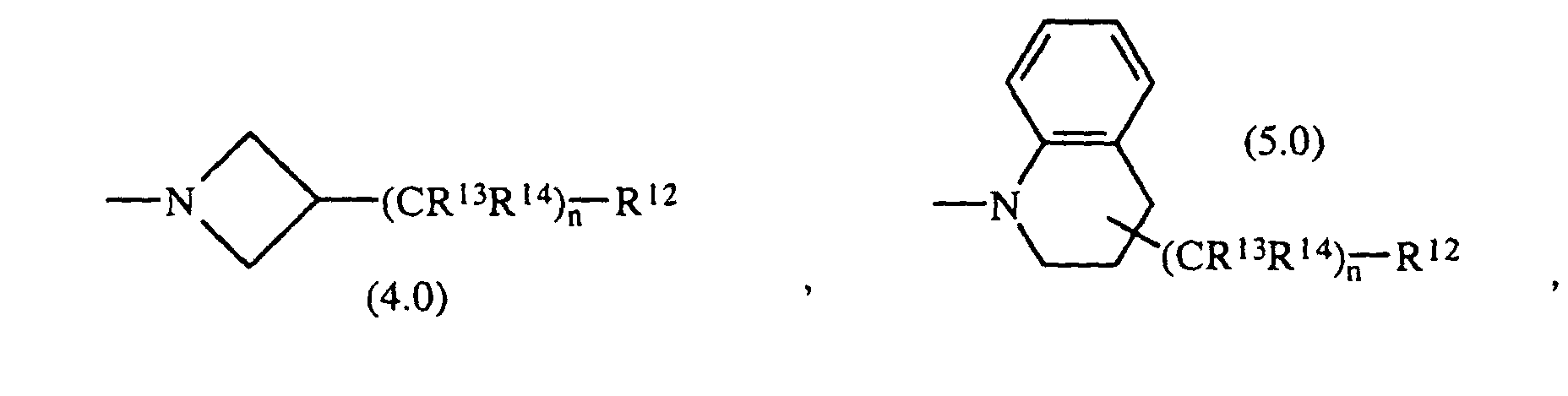
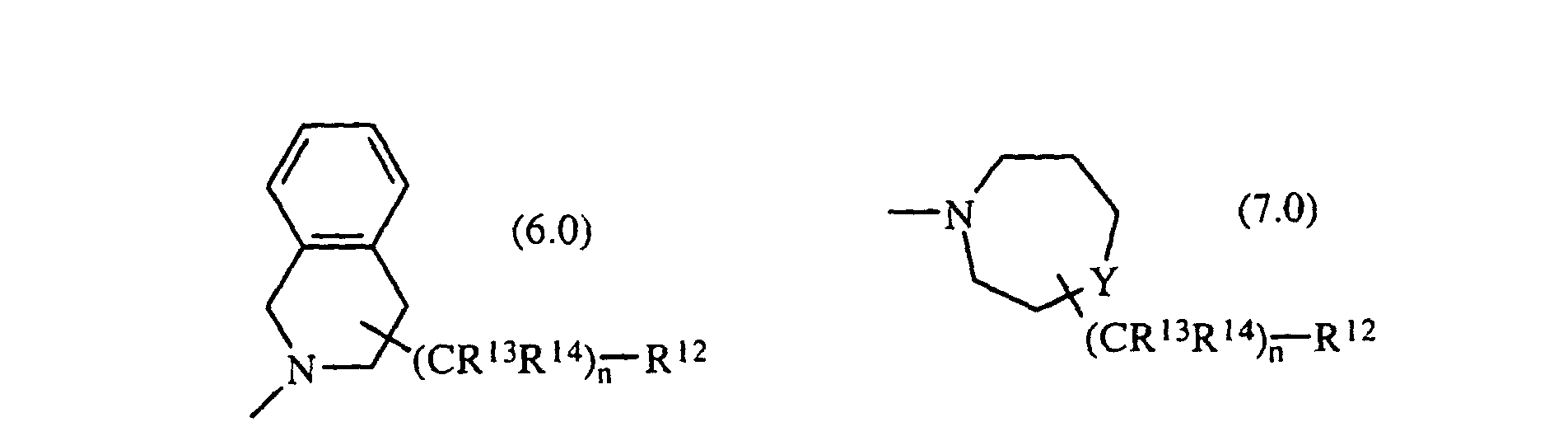
 ces groupes hétérocycliques 2.0 à 7.0 et 2,1 à 7.1 portant éventuellement un ou plusieurs substituants choisis indépendamment parmi les suivants :
 a) les groupes alkyle,b) les groupes alkyle à substituant(s), ledit ou lesdits substituant(s) étant choisi(s) parmi halogéno, aryle, hétéroaryle, hétérocycloalkyle, cycloalkyle, -OR15 et -N(R15)2 où les R15 sont identiques ou différents, sous réserve que ledit ou lesdits éventuels substituants ne soient pas liés à un atome de carbone adjacent à un atome d'oxygène ou d'azote, R15 représentant un atome d'hydrogène ou un groupe alkyle, aryle, aryl-alkyle, hétéroaryle, hétéroaryl-alkyle, cycloalkyle ou cyclolkyl-alkyle,c) le groupe hydroxyle, sous réserve que les atomes de carbone adjacents à un atome d'azote, d'oxygène ou de soufre du cycle ne portent aucun substituant hydroxyle,d) les groupes alcoxy,e) et les groupes aryl-alcoxy ;Y représente CH2, NR16, O, S, SO ou SO2, où R16 représente un atome d'hydrogène ou un groupe alkyle, cycloalkyle, cycloalkyl-alkyle, aryle, aryl-alkyle, hétéroaryle, hétéroaryl-alkyle, acyle, aroyle, carbamyle, carboxamido, alkylsulfonyle, arylsulfonyle, aryl-alkylsulfonyle, sulfonamido, alkylsulfonamido, arylsulfonamido ou aryl-alkylsulfonamido ;n vaut de 0 à 6 ;Q représente O ou N, sous réserve que Q ne soit pas adjacent à un hétéroatome des cycles hétérocycloalkyliques des groupes de formules 2.1, 3.1, 4.1, 5.1, 6.1 et 7.1 ;R12 est choisi parmi les cycles de formules :où R17 est choisi parmi
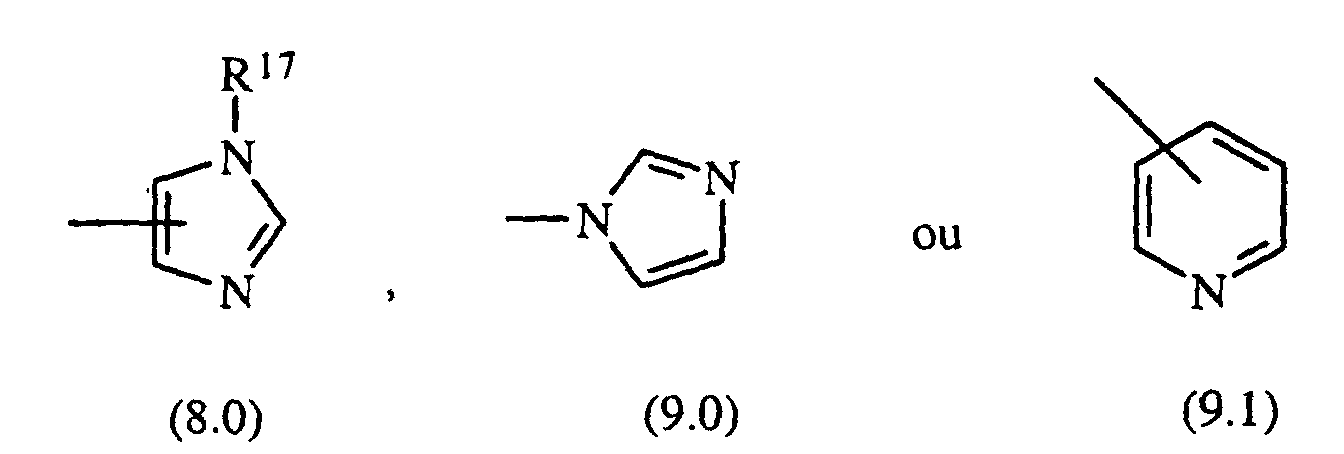 1) un atome d'hydrogène,2) les groupes alkyle,3) les groupes aryle,4) les groupes aryl-alkyle,5) les groupes aryl-alkyle portant un ou des substituants choisis parmi les atomes d'halogène et le groupe cyano,6) les groupes de type -C(aryle)3,7) les groupes cycloalkyle,8) les groupes alkyle à substituant(s), tels que définis plus haut en (b),9) et les groupes cycloalkyl-alkyle ;R12A est choisi parmi les cycles 8.0 et 9.1, définis ci-dessus ;ledit cycle imidazolyle 8.0 portant éventuellement un ou deux substituants, ledit cycle imidazolo 9.0 portant éventuellement un à trois substituants, et ledit cycle pyridyle 9.1 portant éventuellement un à quatre substituants, lesquels éventuels substituants portés par ces cycles 8.0, 9.0 et 9.1 sont liés à des atomes de carbone de ces cycles et sont choisis indépendamment parmi les groupes de formules -NHC(O)R15, -C(R18)2OR19, -OR15, -SR15 et N(R15)2, les atomes de fluor, de chlore et de brome et les groupes alkyle, alkyle à substituant(s), tels que définis plus haut en (b), aryle, aryl-alkyle et cycloalkyle, où R15 a la signification indiquée plus haut, chaque symbole R18 représente indépendamment un atome d'hydrogène ou un groupe alkyle, et R19 représente un atome d'hydrogène ou un groupe de formule -C(O)NHR20 où R20 a la signification indiquée plus loin ;R13 et R14, pour chaque valeur de n, représentent chacun, indépendamment, un atome d'hydrogène ou de fluor, un groupe alkyle, aryle, aryl-alkyle, hétéroaryle, hétéroaryl-alkyle, cycloalkyle ou cycloalkyl-alkyle, ou un groupe de formule -CON(R15)2, -OR15 ou -N(R15)2 où R15 a la signification indiquée plus haut, sous réserve que les groupes -OR15 et -N(R15)2 ne soient pas liés à un atome de carbone adjacent à un atome d'azote, et sous réserve qu'il n'y ait qu'un seul groupe -OH sur chaque atome de carbone, et les groupes représentés par R13 et R14 qui peuvent porter un substituant portent éventuellement un ou plusieurs substituants choisis parmi les atomes de fluor et les groupes alkyle, cycloalkyle, aryl-alkyle et hétéroaryl-alkyle ;ou les groupes représentés par R13 et R14, pour chaque valeur de n, constituent, conjointement avec l'atome de carbone auquel ils sont liés, un groupe cycloalkyle en C3-6 ;R9 est choisi parmi les groupes de formules :
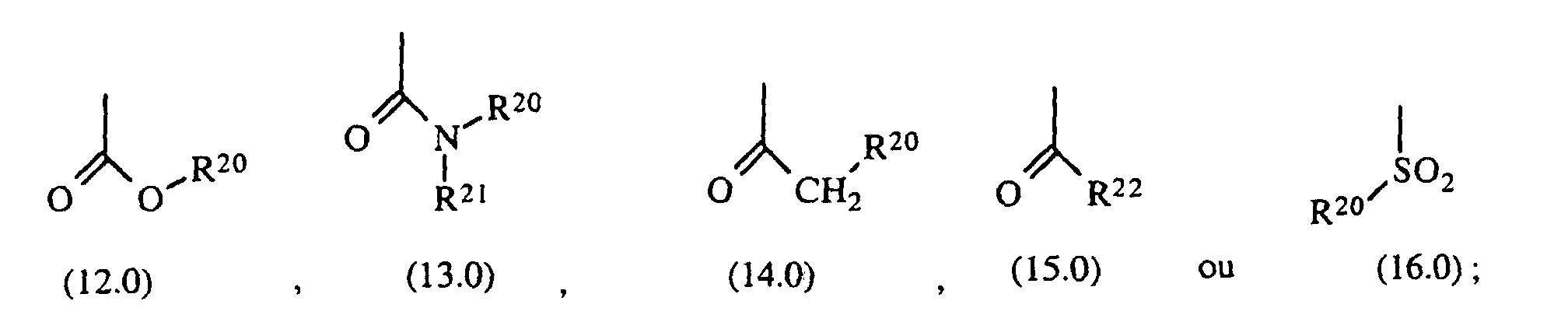 R20 est choisi parmi un atome d'hydrogène et les groupes alkyle, aryle, aryl-alkyle, cycloalkyle, cycloalkyl-alkyle, hétéroaryle, hétéroaryl-alkyle, hétérocycloalkyle et hétérocycloalkyl-alkyle, sous réserve que R20 ne représente pas un atome d'hydrogène quand R9 représente un groupe de formule 12.0 ou 16.0, étant entendu que, si R20 représente autre chose qu'un atome d'hydrogène, le groupe représenté par R20 porte éventuellement un ou plusieurs substituants choisis parmi les atomes d'halogène, les groupes alkyle ou aryle et les groupes de formule -OC(O)R15, -OR15 ou -N(R15)2 où les R15 sont identiques ou différents et où R15 a la signification indiquée plus haut, sous réserve que cet ou ces éventuels substituants ne soient pas liés à un atome de carbone adjacent à un atome d'oxygène ou d'azote ;R21 est choisi parmi un atome d'hydrogène et les groupes alkyle, aryle, aryl-alkyle, cycloalkyle, cycloalkyl-alkyle, hétéroaryle, hétéroaryl-alkyle, hétérocycloalkyle et hétérocycloalkyl-alkyle, étant entendu que, si R21 représente autre chose qu'un atome d'hydrogène, le groupe représenté par R21 porte éventuellement un ou plusieurs substituants choisis parmi les groupes alkyle ou aryle, où les R15 sont identiques ou différents et où R15 a la signification indiquée plus haut ;et R22 est choisi parmi un groupe cycloalkyle portant éventuellement un ou plusieurs substituants choisis parmi les groupes alkyle, hydroxyle, carboxyle et carbamyle, un groupe hétérocycloalkyle, un groupe aryle, un groupe aryle à substituant, et un groupe alkyle portant éventuellement un ou plusieurs substituants choisis parmi les groupes alkyle, hydroxyle, carboxyle et carbamyle ;le terme "alkyle" désigne une chaíne linéaire ou ramifiée d'atomes de carbone, qui comporte de 1 à 20 atomes de carbone et de préférence de 1 à 6 atomes de carbone, ledit groupe cycloalkyle portant éventuellement un ou plusieurs substituants alkyle qui peuvent, s'il y en a plus d'un, être identiques ou différents ;le terme "acyle" désigne un groupe de formule G-C(O)- où G représente un groupe alkyle, aryle, hétéroaryle, cycloalkyle, hétérocycloalkyle, alcoxy ou aryl-oxy ou un groupe de formule -NR25R26 où R25 et R26 représentent chacun, indépendamment, un groupe alkyle ou aryle ;le terme "aryl-alkyle" désigne un groupe alkyle, tel que défini ci-dessus, qui porte en tant que substituant un groupe aryle, tel que défini ci-dessous, de telle sorte que la liaison provenant d'un autre fragment aboutit au groupe alkyle ;le terme "aryle", ainsi que l'élément "aryl" du terme "aryl-alkyle", désigne un groupe carbocyclique qui comporte de 6 à 15 atomes de carbone et au moins un cycle aromatique et dont tous les atomes de carbone disponibles pour porter des substituants peuvent constituer le point d'attache, ledit groupe carbocyclique portant éventuellement un ou plusieurs substituants halogéno, alkyle, hydroxy, alcoxy, phénoxy, -CF3, -C(O)N(R18)2, -SO2R18, -SO2N(R18)2, amino, alkylamino, dialkylamino, nitro ou -COOR23 où R23 représente un groupe alkyle ou aryle ;le terme "aroyle" désigne un groupe -C(O)-aryle, où le groupe aryle est tel que défini ci-dessus ;le terme "cycloalkyle" désigne un groupe carbocyclique saturé comportant 3 à 20 atomes de carbone et de préférence 3 à 7 atomes de carbone, ce groupe cycloalkyle portant éventuellement un ou plusieurs substituants alkyle qui peuvent, s'il y en a plus d'un, être identiques ou différents ;le terme "cycloalkyl-alkyle" désigne un groupe cycloalkyle, tel que défini ci-dessus, qui porte en tant que substituant un groupe alkyle, tel que défini ci-dessus, de telle sorte que la liaison provenant d'un autre fragment aboutit au groupe alkyle ;le terme "halogène" désigne fluor, chlore, brome ou iode ;le terme "hétéroaryl-alkyle" désigne un groupe alkyle, tel que défini ci-dessus, qui porte en tant que substituant un groupe hétéroaryle, tel que défini ci-dessous, de telle sorte que la liaison provenant d'un autre fragment aboutit au groupe alkyle ;le terme "hétéroaryle" désigne des groupes cycliques portant éventuellement des substituants représentés par R3 ou R4, comportant au moins un hétéroatome choisi parmi O, S et N, lequel hétéroatome est inséré dans une structure carbocyclique, et possédant suffisamment d'électrons π délocalisés pour présenter un caractère aromatique, ces groupes hétérocycliques aromatiques comportant de préférence 2 à 14 atomes de carbone, tels par exemple les groupes 2- ou 3-furyle, 2- ou 3-thiényle, 2-, 4- ou 5-thiazolyle, 2-, 4- ou 5-imidazolyle, 2-, 4- ou 5-pyrimidinyle, 2-pyrazinyle, 3- ou 4-pyridazinyle, 3-, 5- ou 6-(1,2,4-triazinyle), 3- ou 5-(1,2,4-thiadiazolyle), 2-, 3-, 4-, 5-, 6- ou 7-benzofuranyle, 2-, 3-, 4-, 5-, 6- ou 7-indolyle, 3-, 4- ou 5-pyrazolyle, 2-, 4- ou 5-oxazolyle, triazolyle, 2-, 3- ou 4-pyridyle ou -pyridyle-N-oxyde (tous portant éventuellement des substituants représentés par R3 ou R4), le groupe pyridyle-N-oxyde pouvant être représenté ainsi :
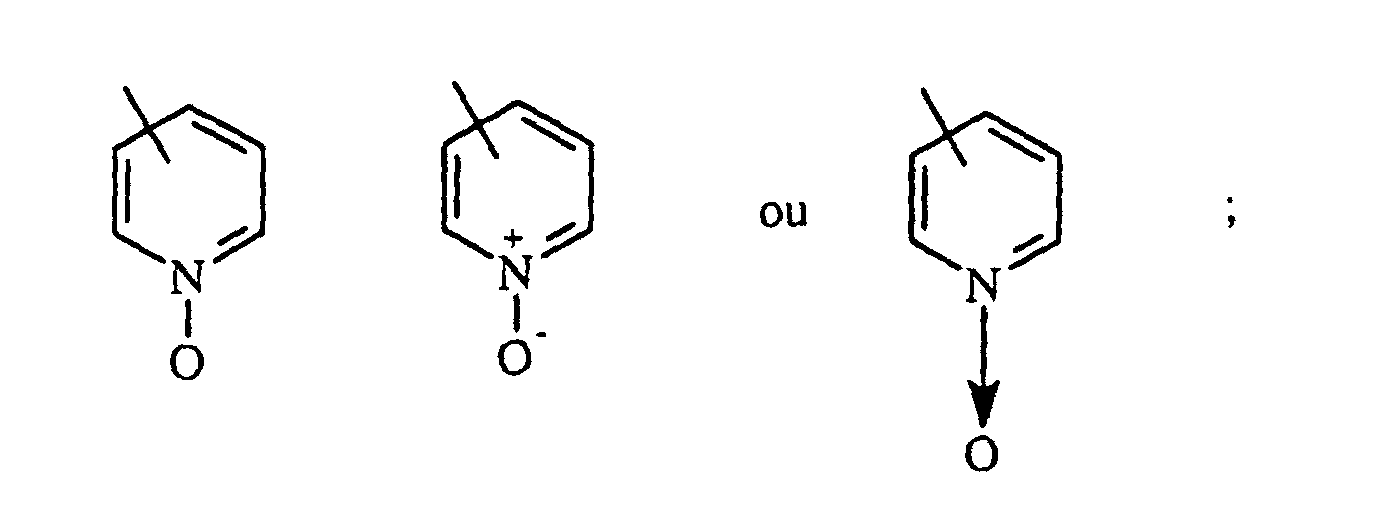 et le terme "hétérocycloalkyle" désigne des groupes carbocycliques saturés, ramifiés ou non, qui comportent de 3 à 15 atomes de carbone et de préférence de 4 à 6 atomes de carbone et dans lesquels sont insérés 1 à 3 hétéroatomes ou hétérogroupes choisis parmi -O-, -S- et -N(R24)- où R24 représente un groupe alkyle, aryle ou acyle, ou encore un groupe de formule -C(O)N(R10)2 où R10 a la signification indiquée plus haut (parmi les groupes hétérocycloalkyle appropriés, il y a les groupes 2- ou 3-tétrahydrofuranyle, 2- ou 3-tétrahydrothiényle, tétrahydropyranyle, 2-, 3- ou 4-pipéridinyle, 2- ou 3-pyrrolidinyle, 2- ou 3-pipérazinyle, 2- ou 4-dioxanyle, et morpholinyle).
 - Composé conforme à la revendication 1, de formuleou
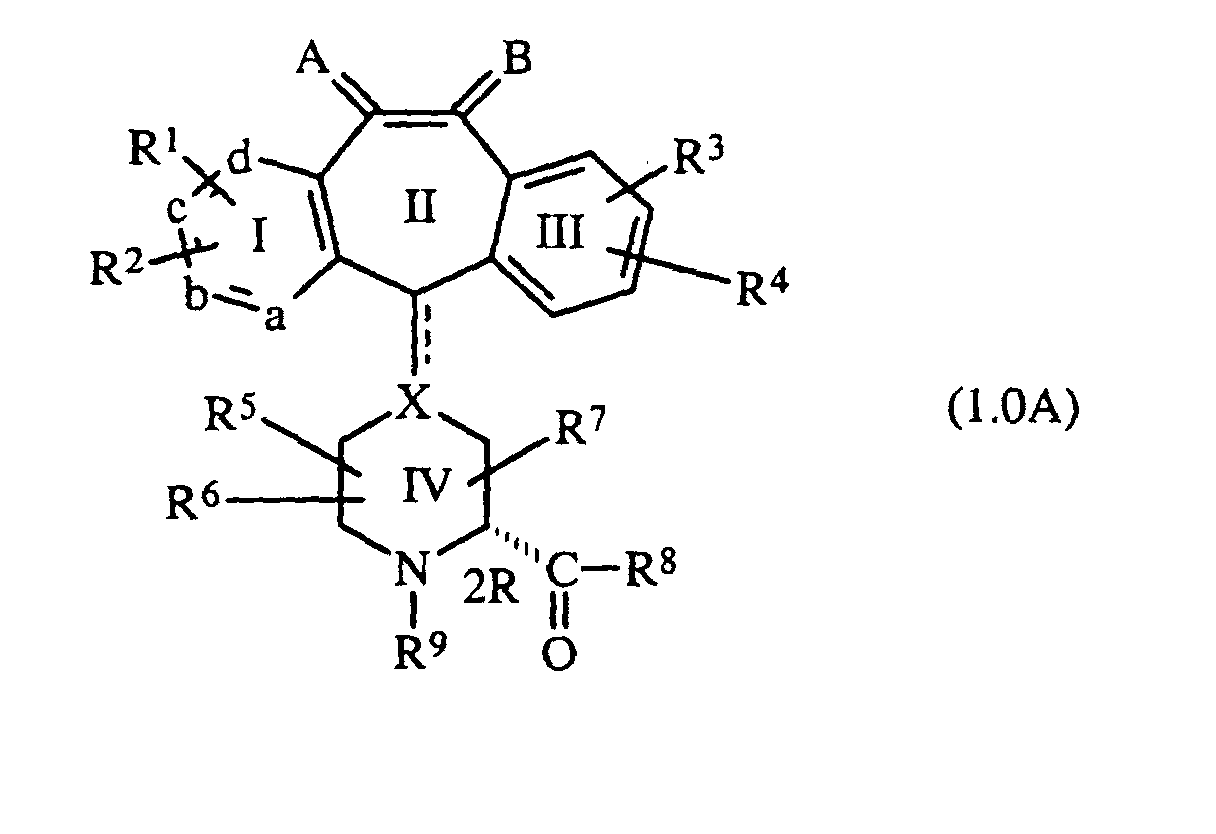

- Composé conforme à la revendication 1, dans lequel les symboles R1 à R4 représentent chacun, indépendamment, un atome d'hydrogène, de brome, de fluor ou de chlore, les symboles R5 à R7 représentent chacun un atome d'hydrogène, le symbole a représente un atome d'azote et les autres symboles b, c et d représentent des atomes de carbone ou bien les symboles a, b, c et d représentent des atomes de carbone, les symboles A et B représentent chacun une paire d'atomes d'hydrogène, et n vaut de 1 à 3.
- Composé conforme à la revendication 1, dans lequel le symbole R8 représente un groupe cyclique de formule 2.0 sur lequel le substituant de formule -(CR13R14)n-R12 se trouve en position 2 ou 3.
- Composé conforme à la revendication 1, dans lequel le symbole R8 représente un groupe cyclique de formule 2.0 sur lequel le substituant de formule -(CR13R14)n-R12 se trouve en position 2 ou 3, et le symbole Y représente CH2.
- Composé conforme à la revendication 1, dans lequel les symboles R13 et R14 représentent chacun un atome d'hydrogène.
- Composé conforme à la revendication 1, dans lequel le symbole Y représente S, SO ou SO2.
- Composé conforme à la revendication 1, dans lequel le symbole Y représente O.
- Composé conforme à la revendication 1, dans lequel le symbole Y représente NR16.
- Composé conforme à la revendication 1, dans lequel le symbole R9 représente un groupe de formule 12.0, 13.0 ou 15.0.
- Composé conforme à la revendication 1, dans lequel les symboles R1 à R4 représentent chacun, indépendamment, un atome d'hydrogène, de brome, de fluor ou de chlore, les symboles R5 à R7 représentent chacun un atome d'hydrogène, le symbole a représente un atome d'azote et les autres symboles b, c et d représentent des atomes de carbone, les symboles A et B représentent chacun une paire d'atomes d'hydrogène, n vaut de 1 à 3, le symbole R8 représente un groupe cyclique de formule 2.0 sur lequel le substituant de formule -(CR13R14)n-R12 se trouve en position 2 ou 3, et le symbole Y représente CH2.
- Composé conforme à la revendication 11, de formule
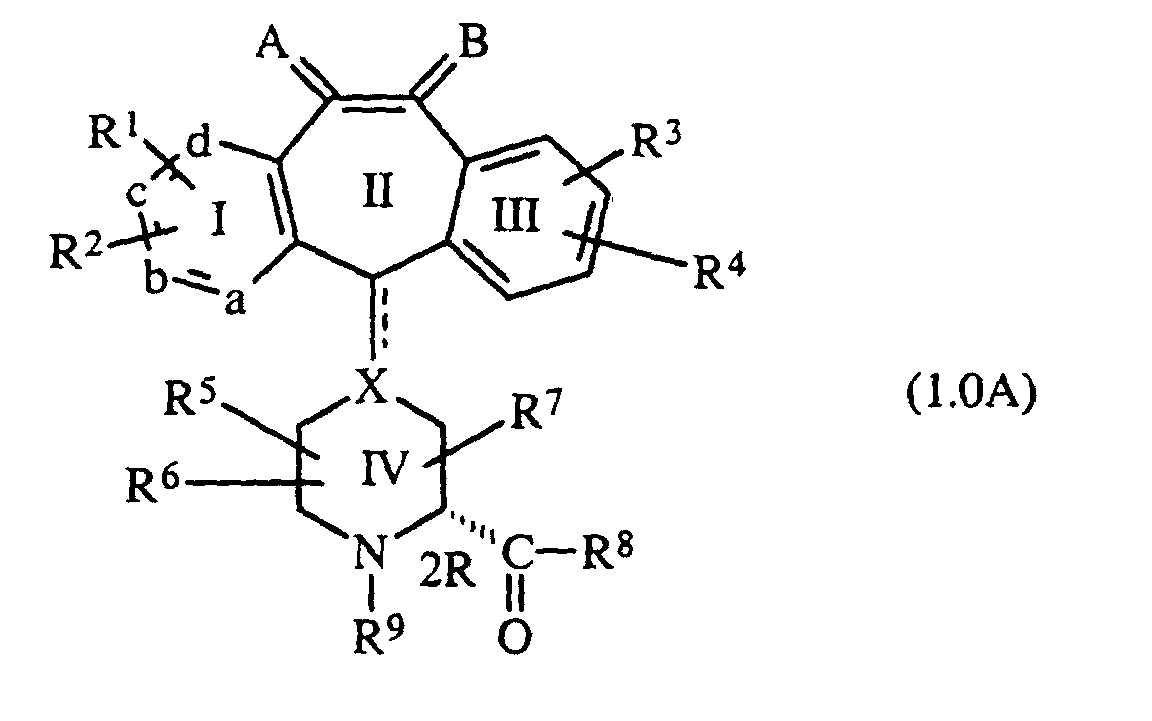
- Composé conforme à la revendication 12, dans lequel les symboles R13 et R14 représentent chacun un atome d'hydrogène.
- Composé conforme à la revendication 13, dans lequel le symbole R12 représente un groupe de formule 9.0.
- Composé conforme à la revendication 12, dans lequel le symbole R9 représente un groupe de formule 12.0, 13.0 ou 15.0.
- Composé conforme à la revendication 12, dans lequel le symbole R20 représente un groupe t-butyle, i-propyle, néopentyle, cyclohexyle ou cyclopropyl-méthyle, ou encore un groupe de formule

- Composé conforme à la revendication 13, dans lequel le symbole R9 représente un groupe de formule 12.0 ou 13.0, et dans la formule 13.0, le symbole R21 représente un atome d'hydrogène.
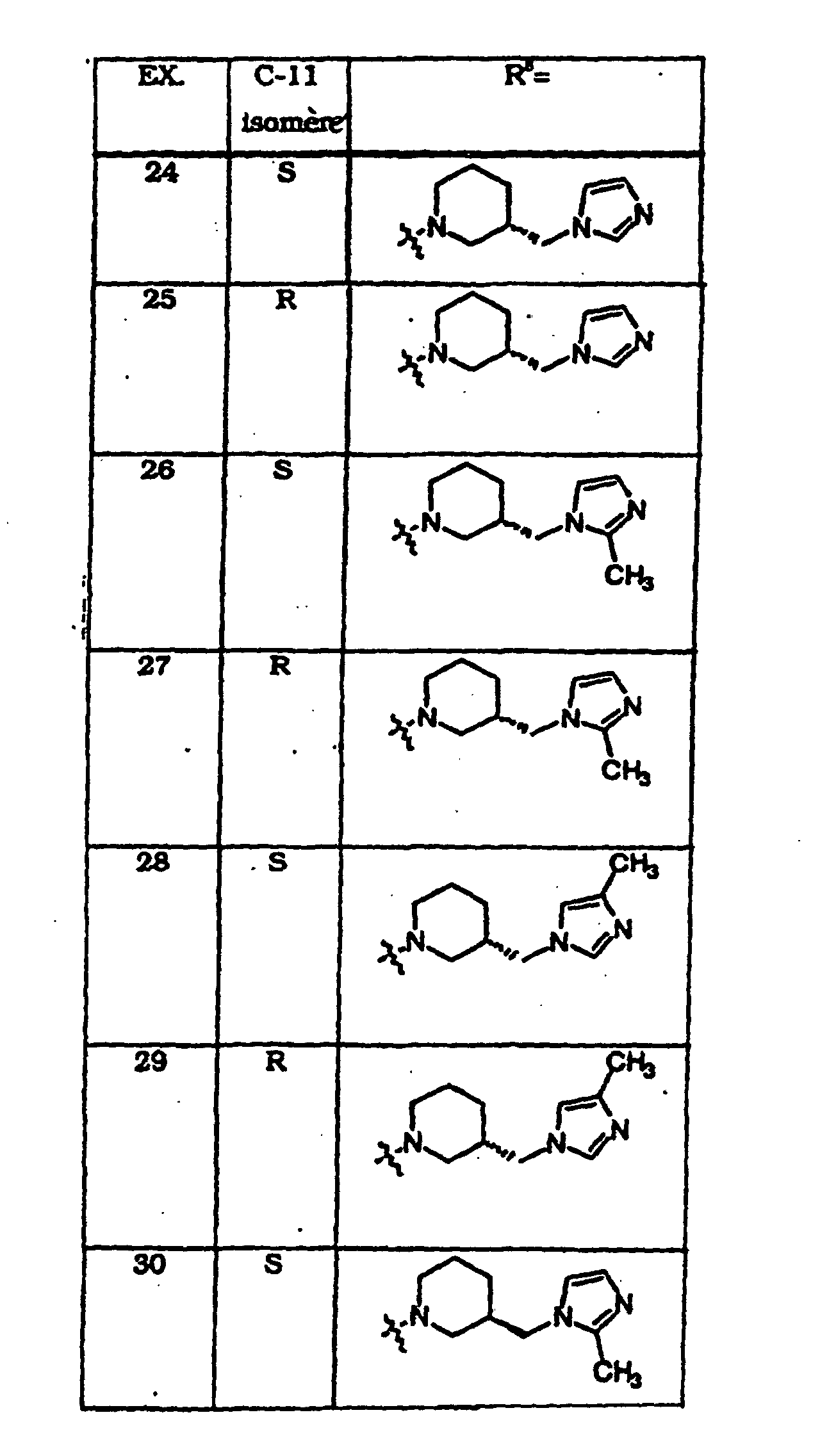
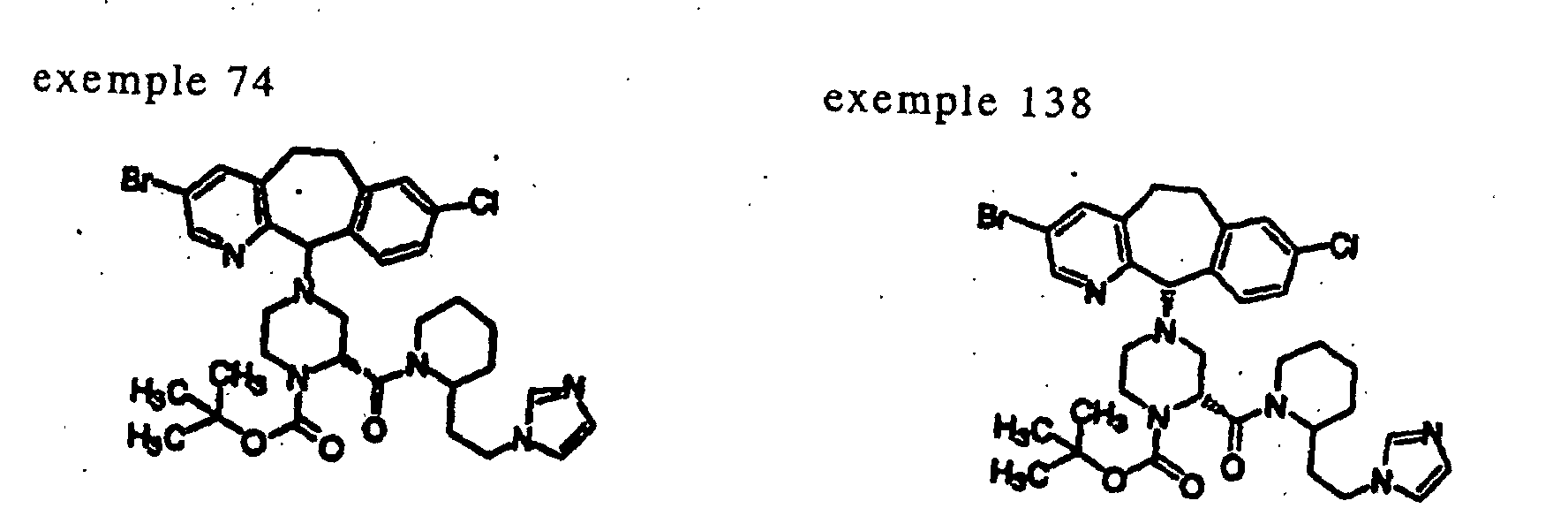
- Composé choisi parmi les composés des exemples 1 à 4, 4.1, 4.2, 10 à 19, 24 à 51, 74, 138, 142, 144, 145, 35(A), 35(C), 35(D), 35(E), 35(F), 41(A), 41(B), 41(C), 47(A), 47(B), 47(D), 47(G), 47(H), 47(I), 47(K), 47(L), 47(M), 47(N), 47(O), 47(P), 47(R), 47(S), 47(T), 47(U), 47(CC), 51(A) à 51(D), 138A à 147A, 148 à 158, 160, 161, 163, 169 à 180, 183 à 188, 191, 192, 197, 201, 207 à 216, 227 à 234, 238 à 240, 245, 255 à 262, 287 à 294, 297 à 303, 316 à 324, 351 à 354, 383, 384, 387, 388, 391, 392, 394 à 397, 407, 408, 409, 410, 411, 412, 414, 415 à 417, 419, 422, 424, 463A et 466 à 469, lesquels composés présentent les structures indiquées ci-dessous :composés de structuredans laquelle R8 représente ce qui est indiqué dans les tableaux suivants :

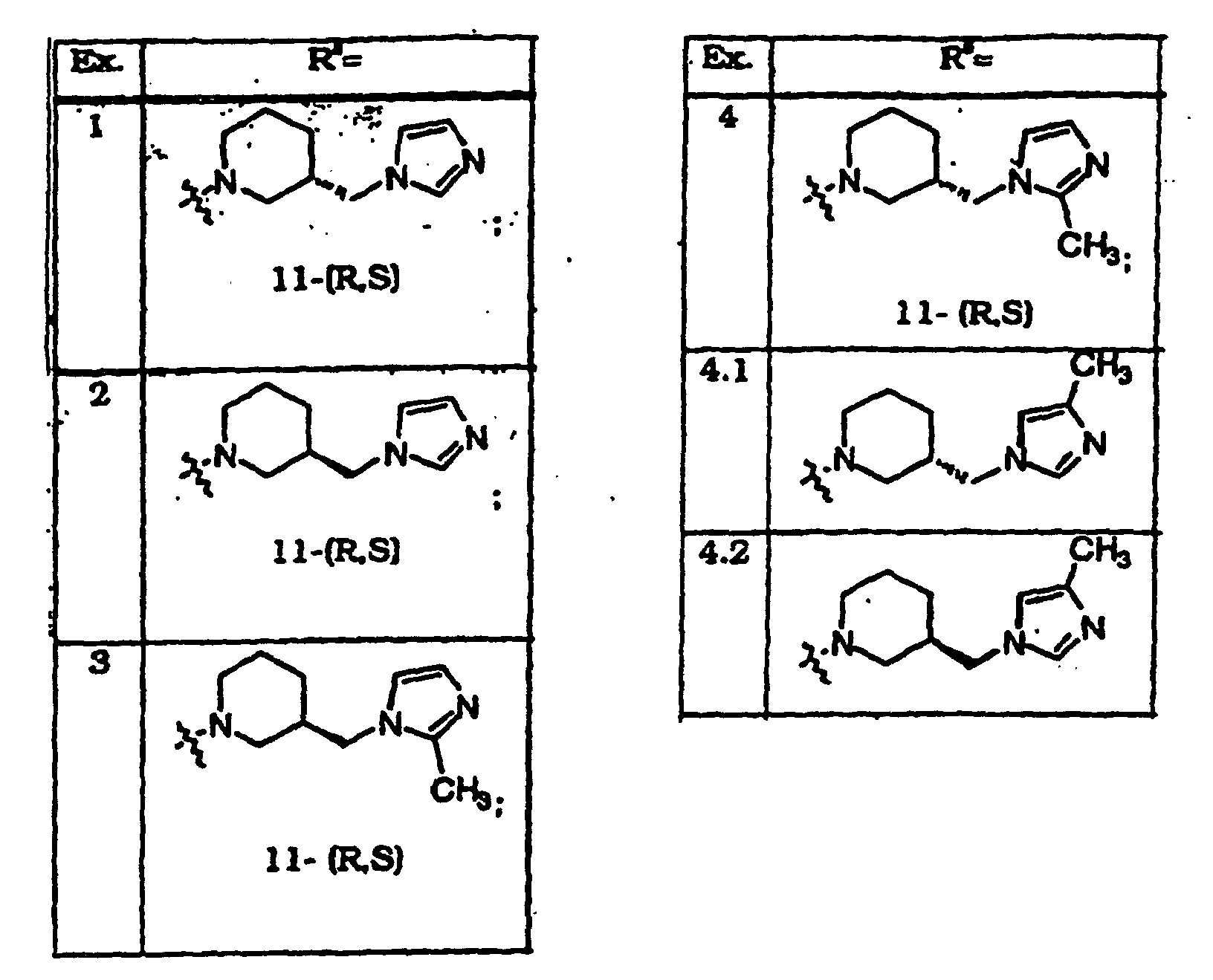
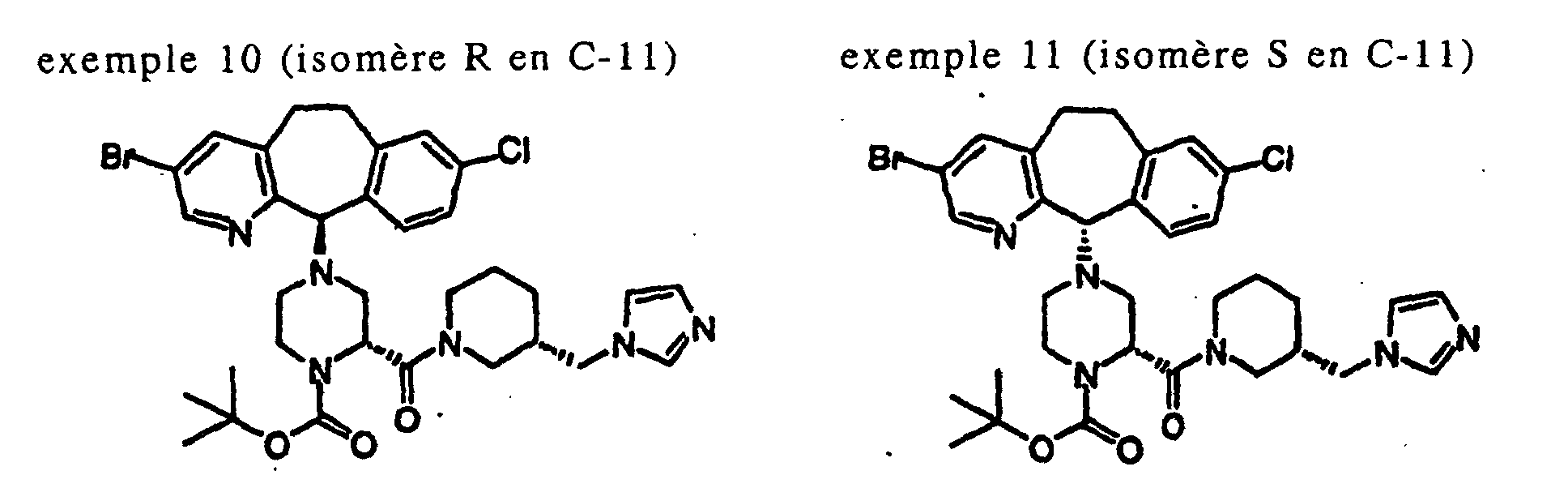


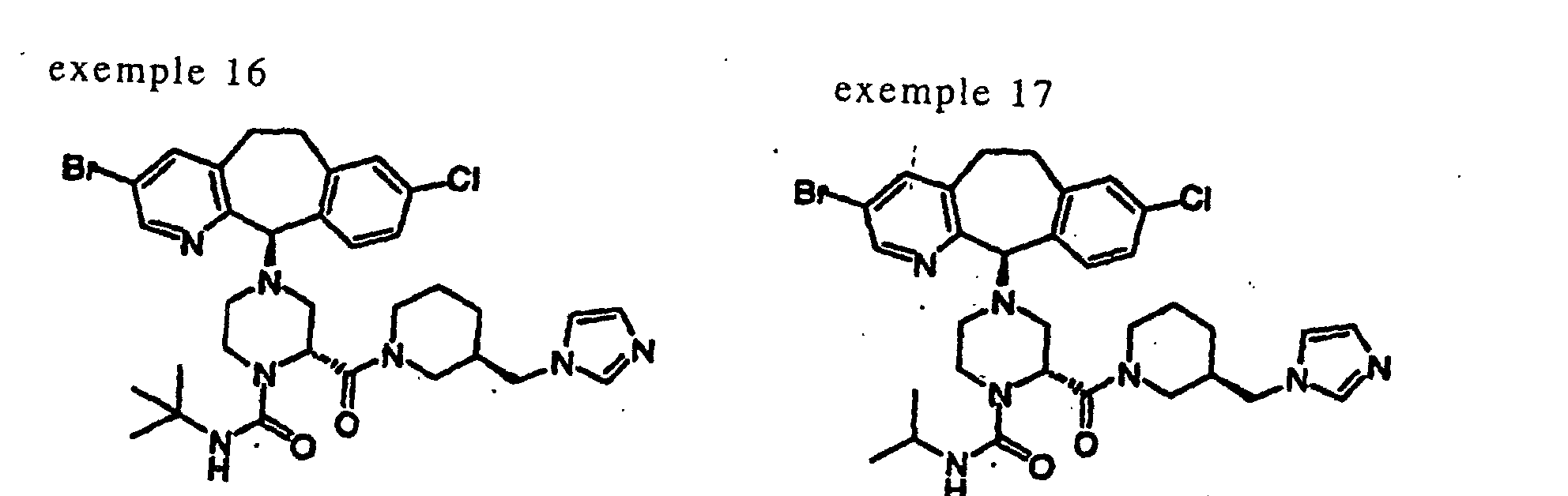
 composés de structuredans laquelle R8 représente ce qui est indiqué dans les tableaux suivants :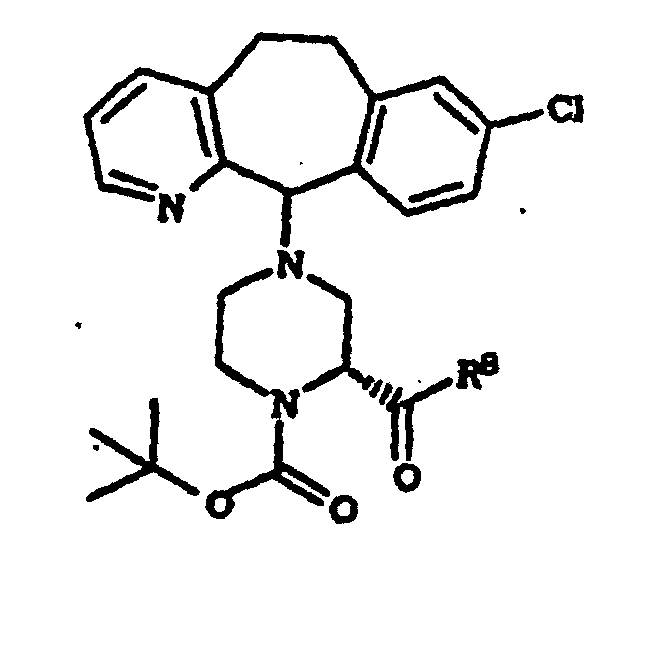
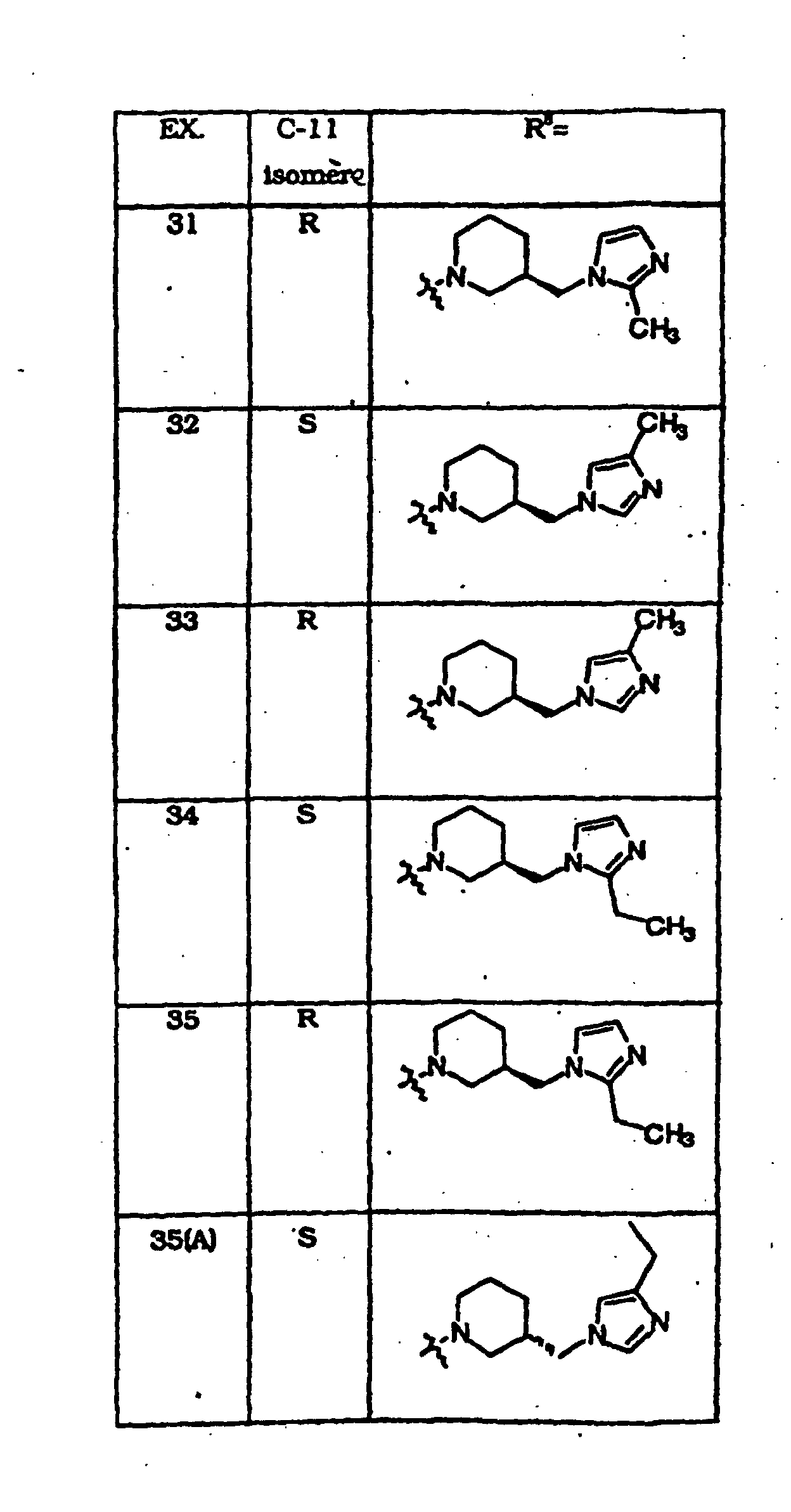
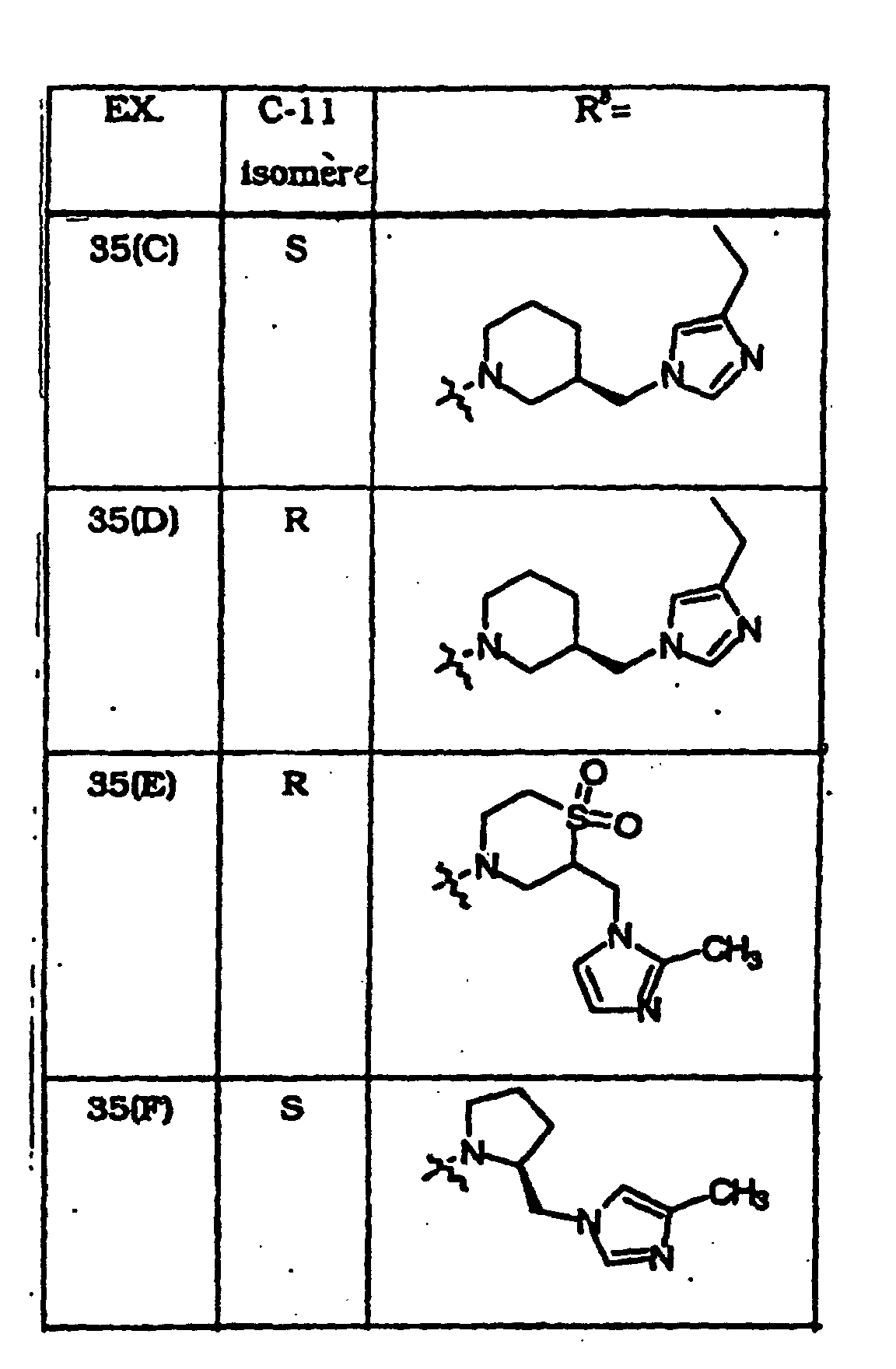 composés de structuredans laquelle R8 représente ce qui est indiqué dans les tableaux suivants :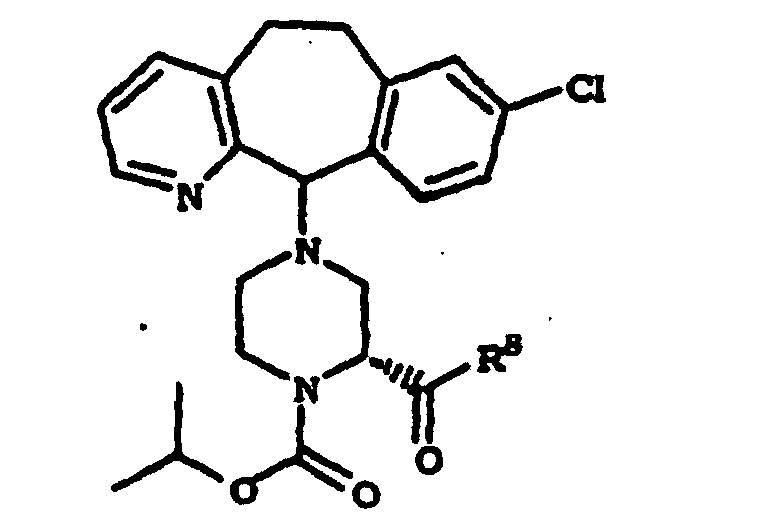
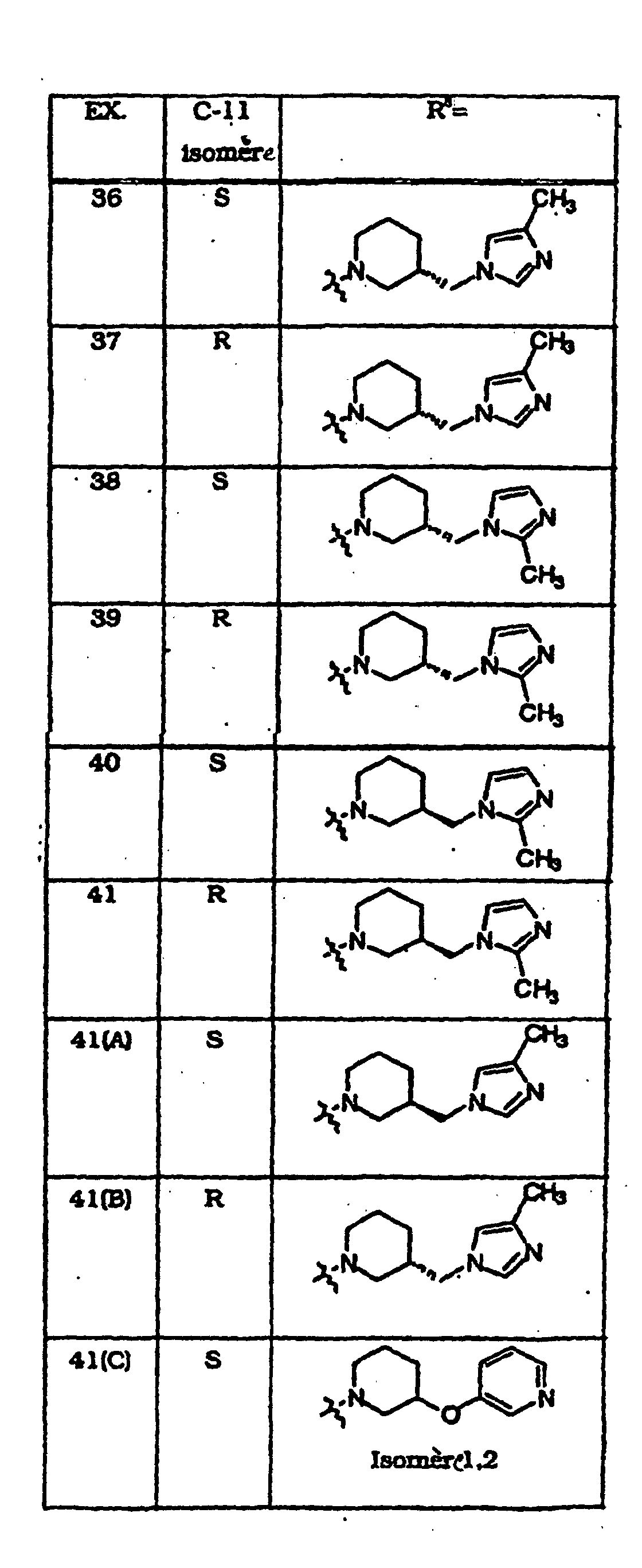 composés de structuredans laquelle R8 représente ce qui est indiqué dans les tableaux suivants :

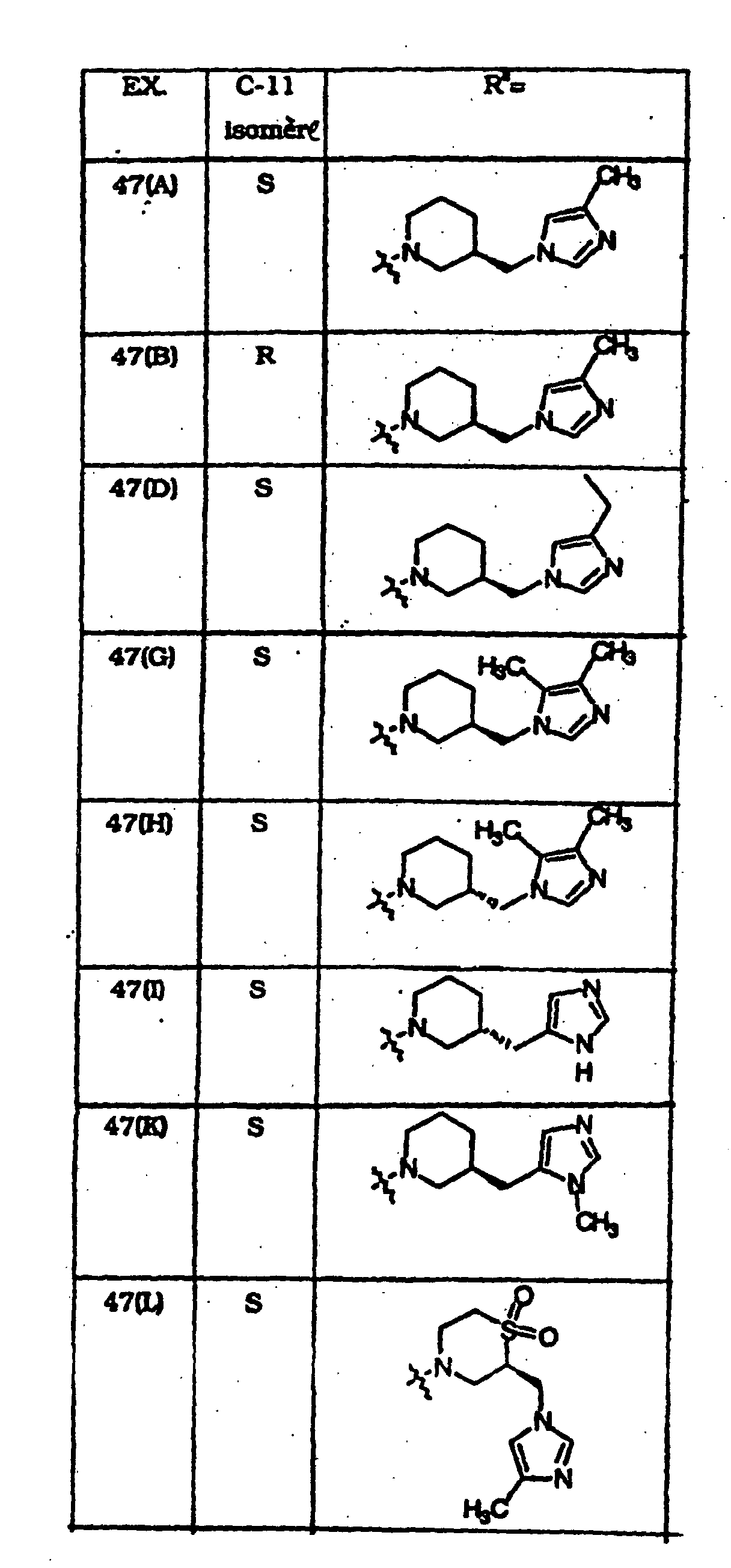


 composés de structuredans laquelle R8 représente ce qui est indiqué dans les tableaux suivants :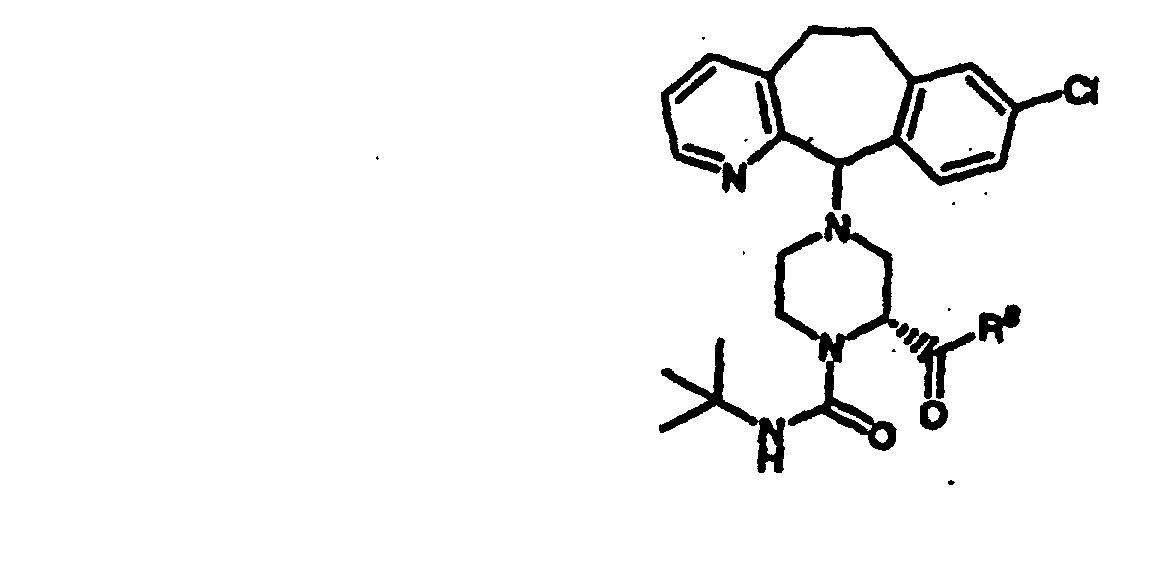
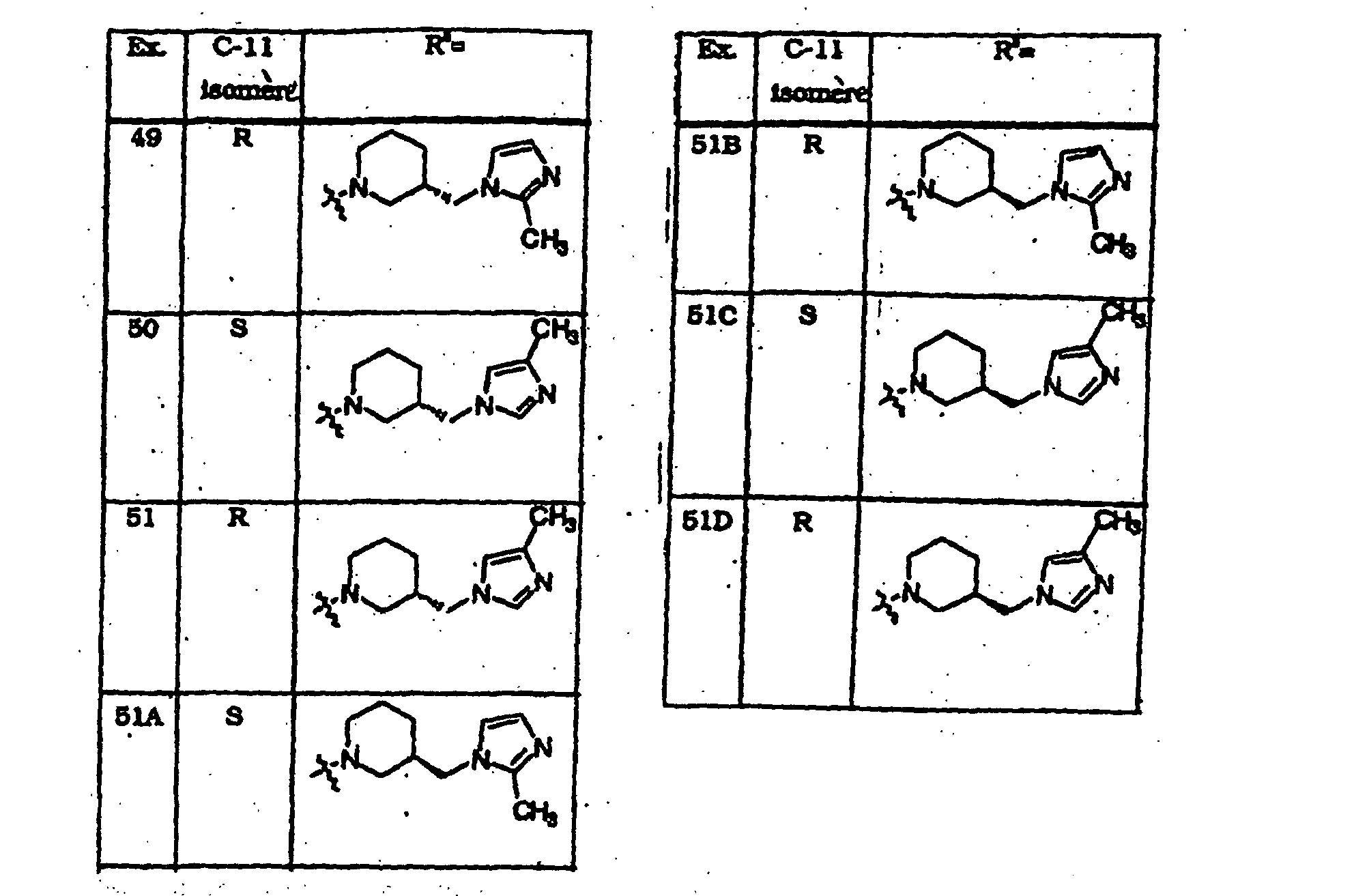
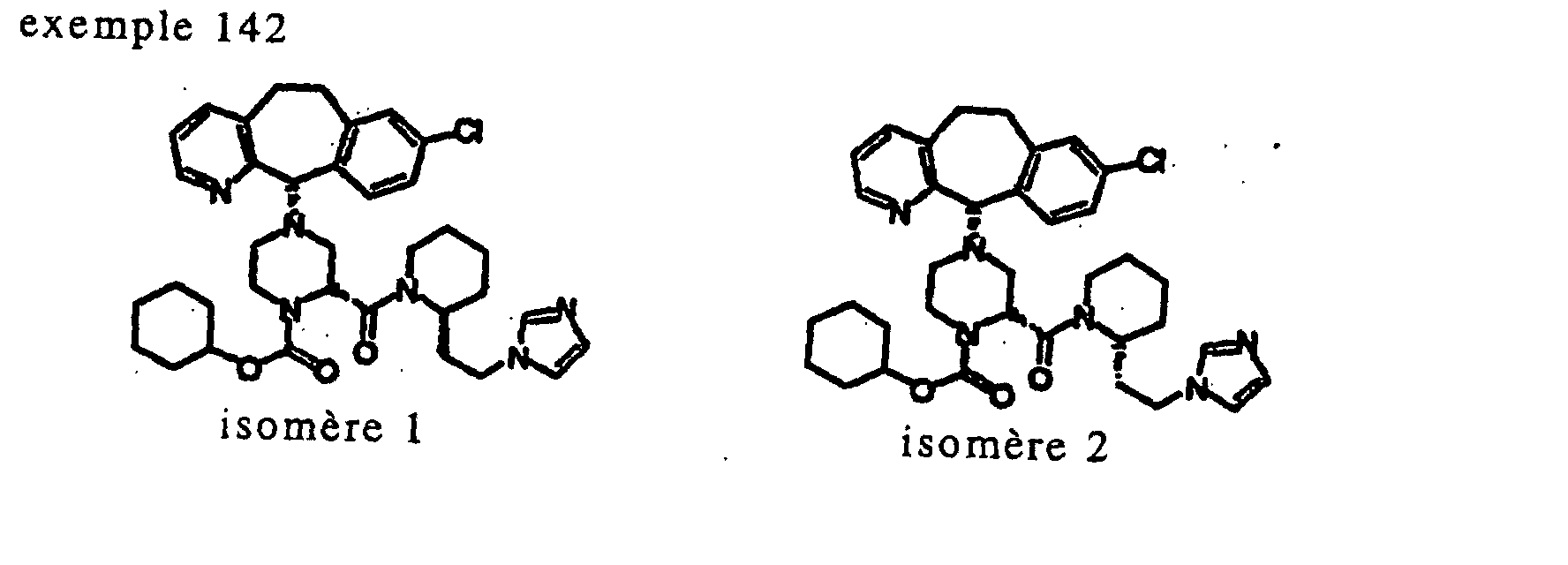

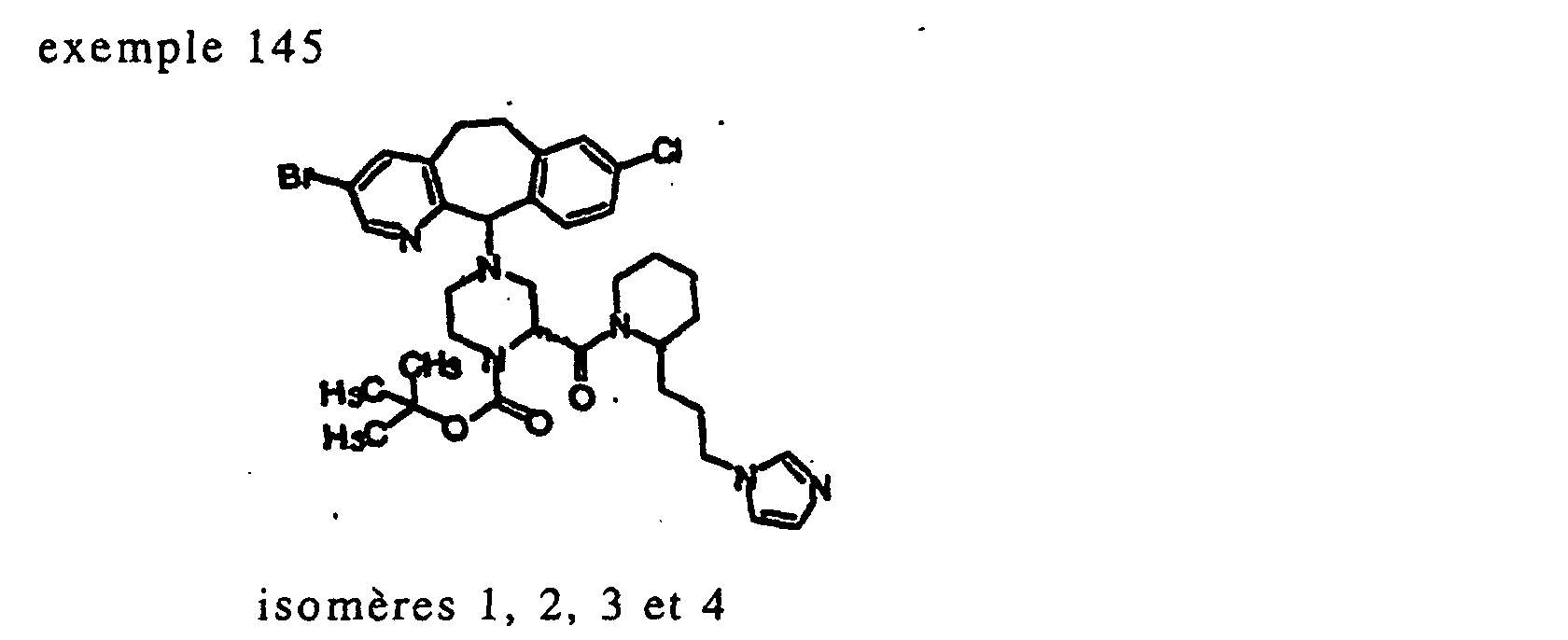 composés de structuredans laquelle R8 représente ce qui est indiqué dans les tableaux suivants :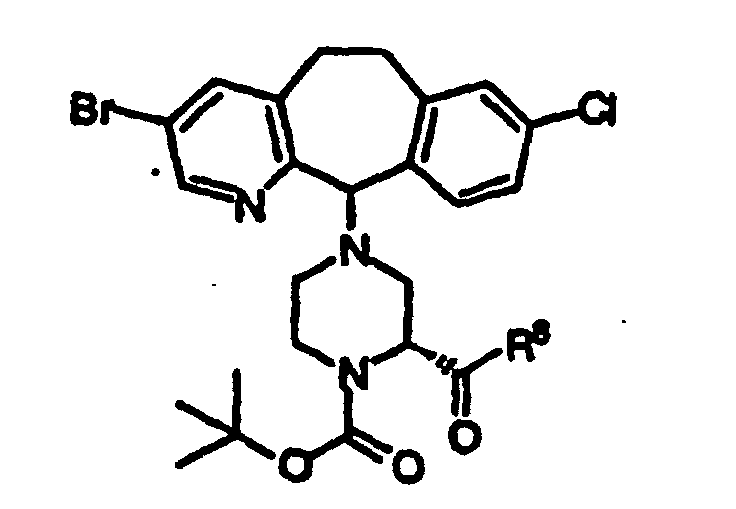
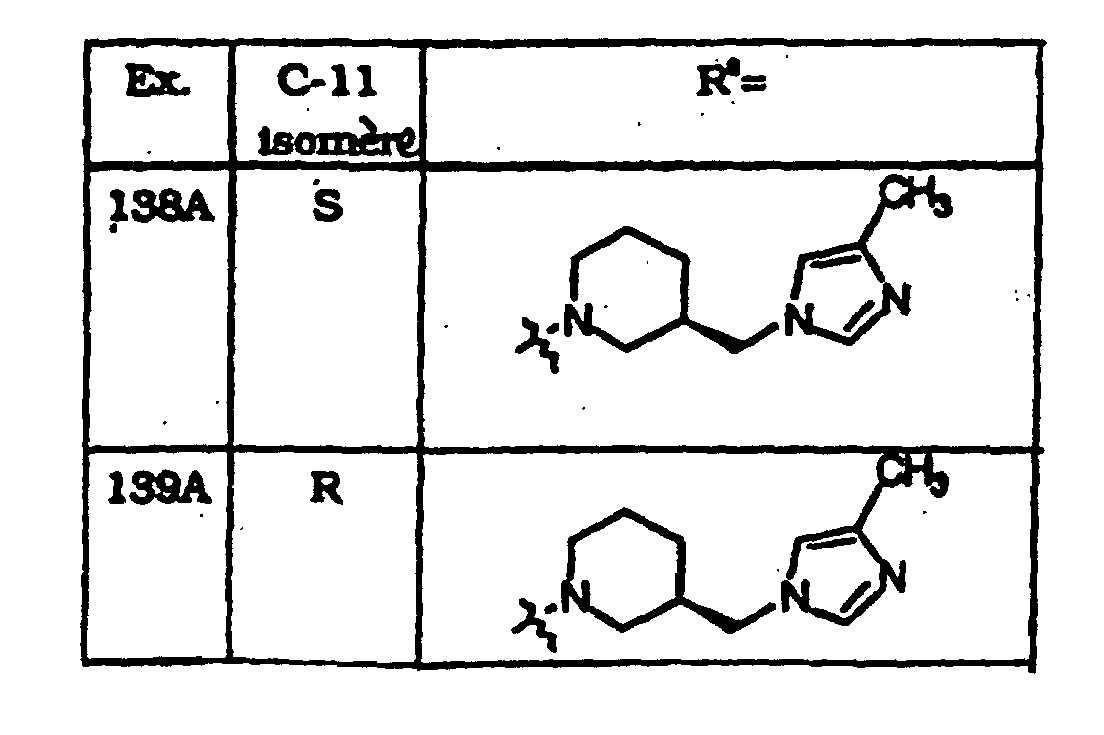
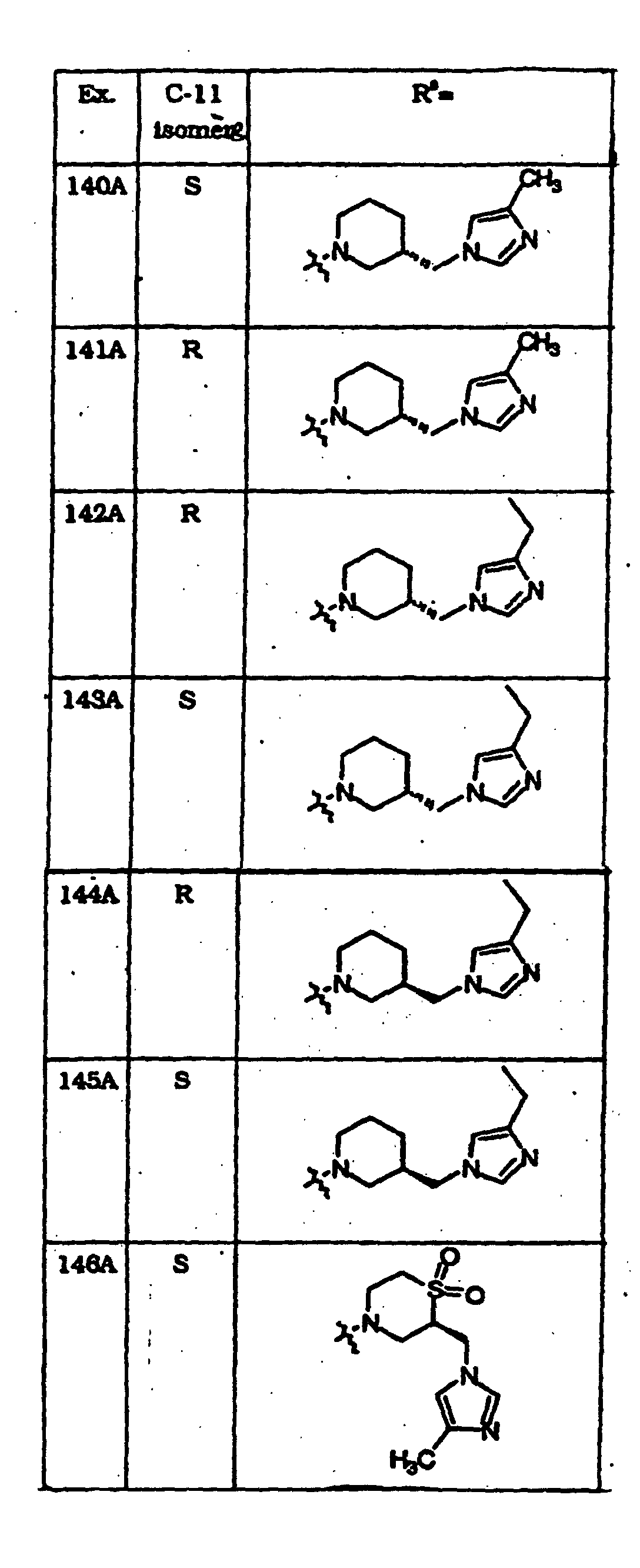

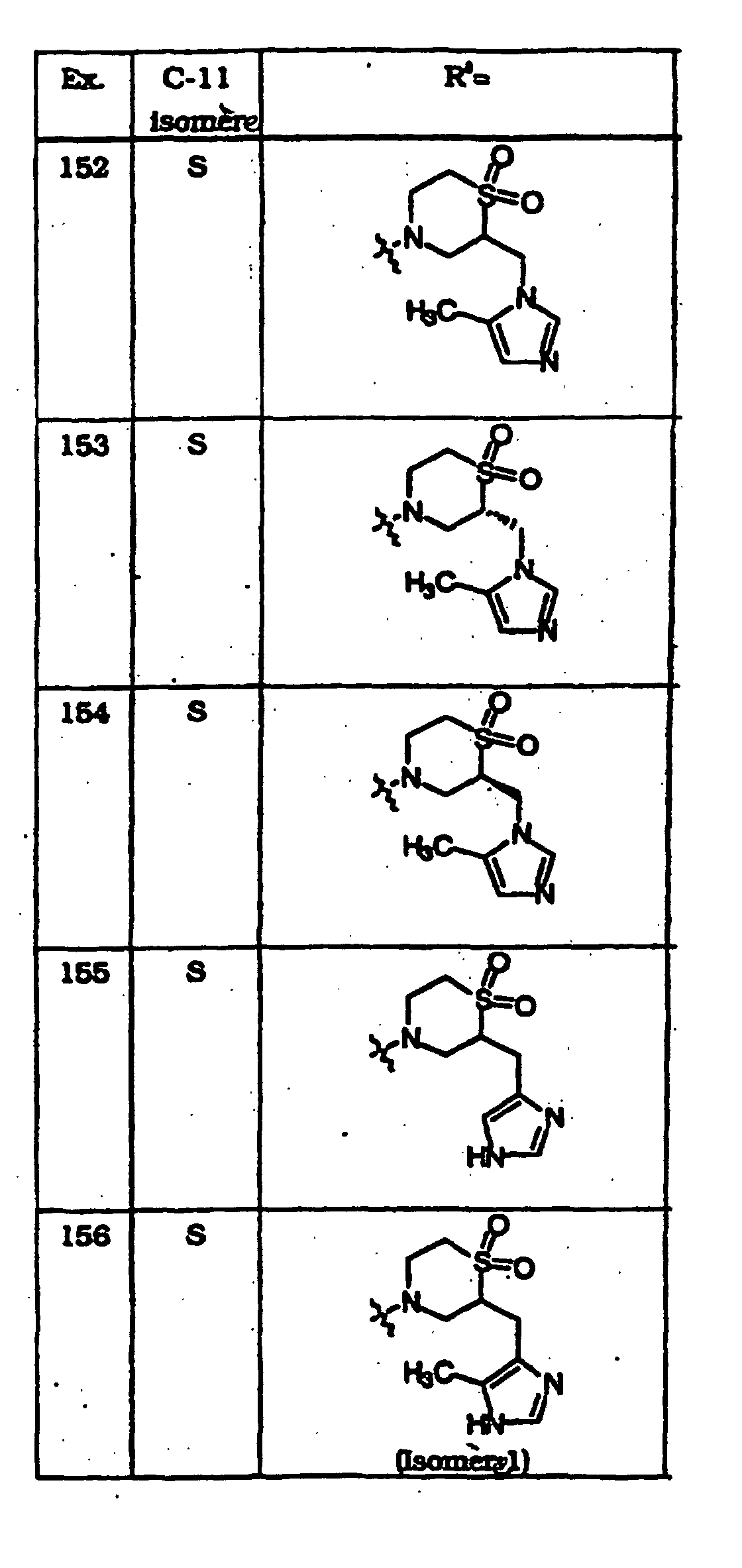
 composés de structuredans laquelle R9 représente ce qui est indiqué dans les tableaux suivants :
 composés de structuredans laquelle R9 représente ce qui est indiqué dans les tableaux suivants :

 composés de structuredans laquelle R8 représente ce qui est indiqué dans les tableaux suivants :
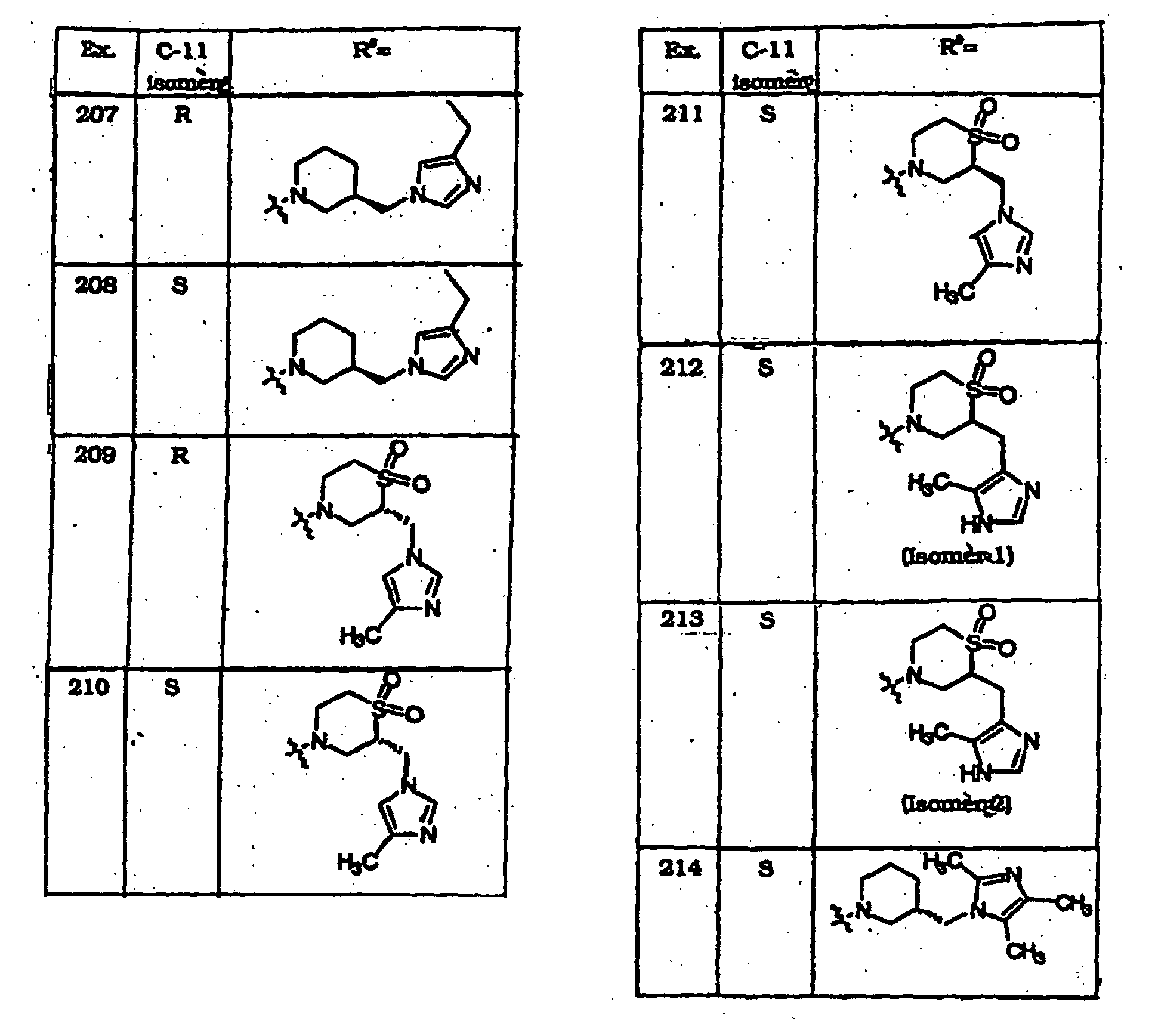
 composés de structuredans laquelle R8 représente ce qui est indiqué dans le tableau suivant :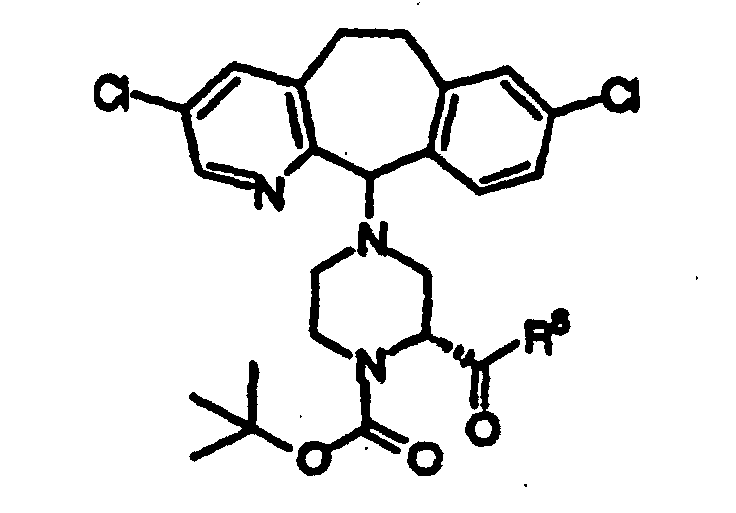
 composés de structuredans laquelle R9 représente ce qui est indiqué dans le tableau suivant :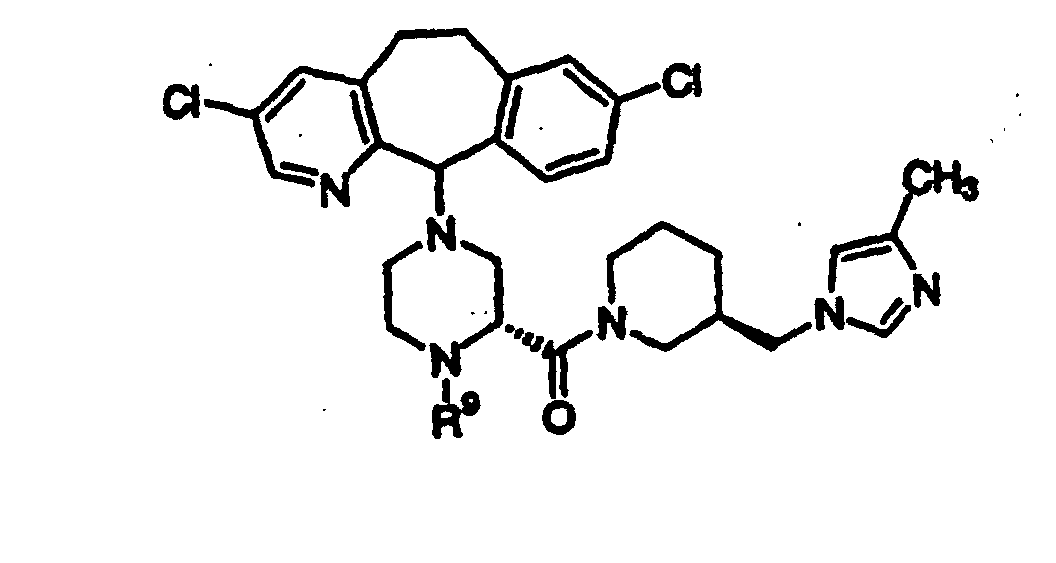
 exemple 245 (isomère R en C-11)
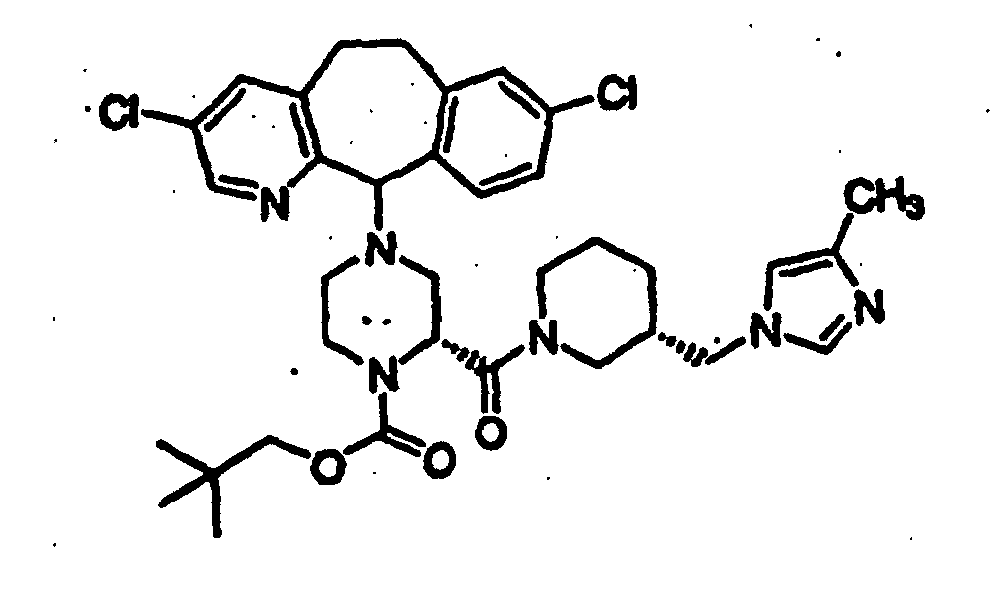 composés de structuredans laquelle R8 représente ce qui est indiqué dans le tableau suivant :
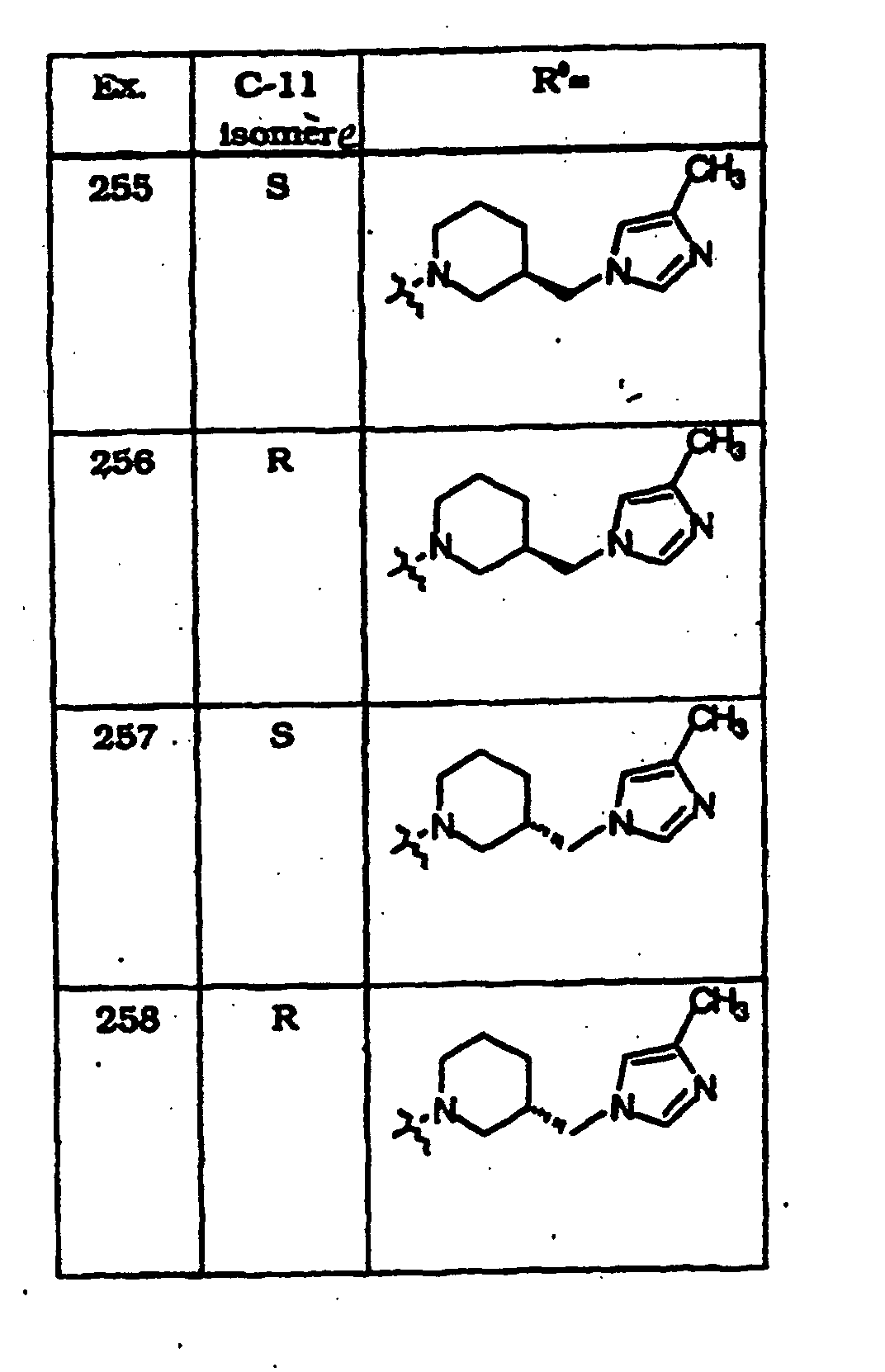 composés de structuredans laquelle R8 représente ce qui est indiqué dans le tableau suivant :
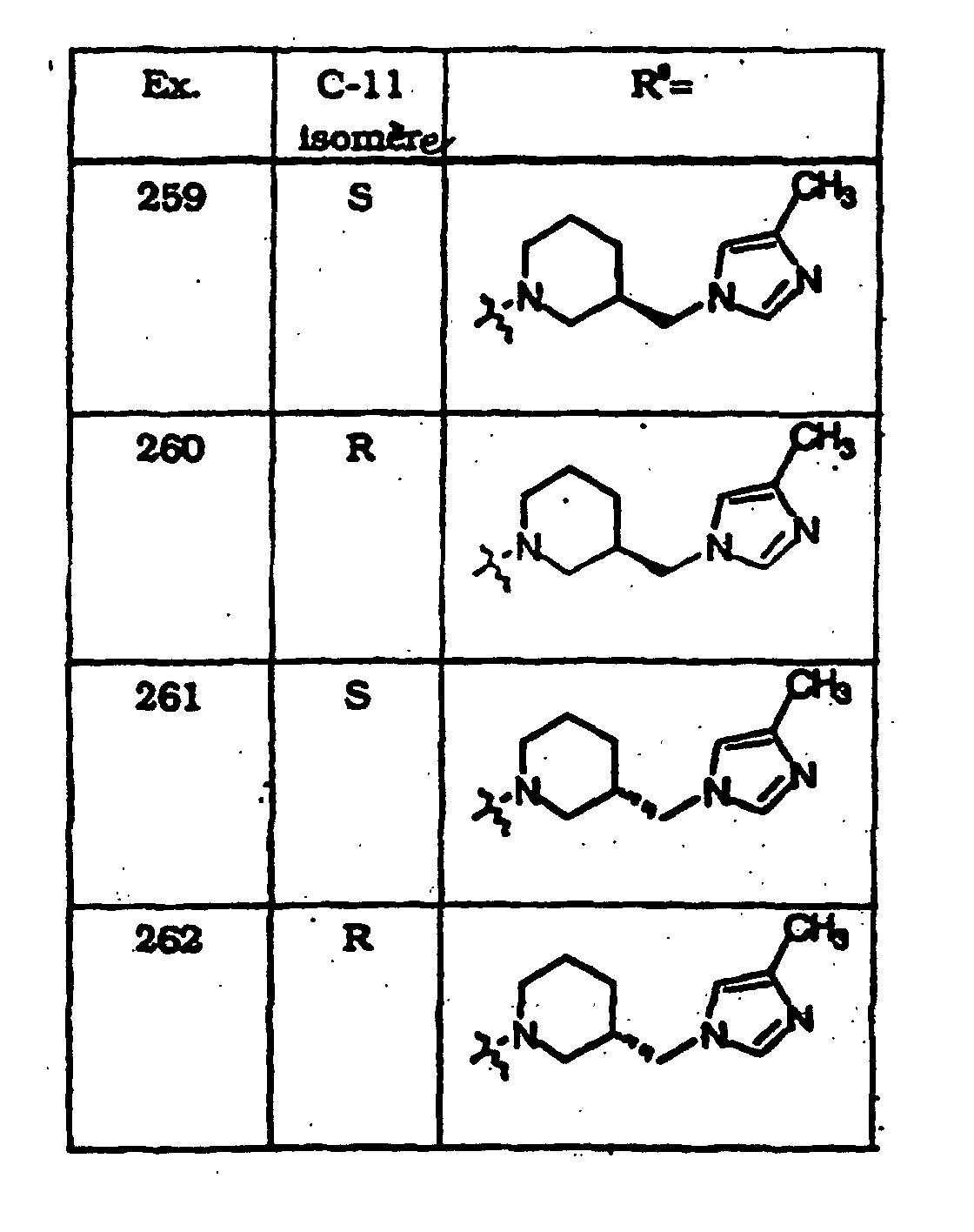 composés de structuredans laquelle R8 représente ce qui est indiqué dans le tableau suivant :
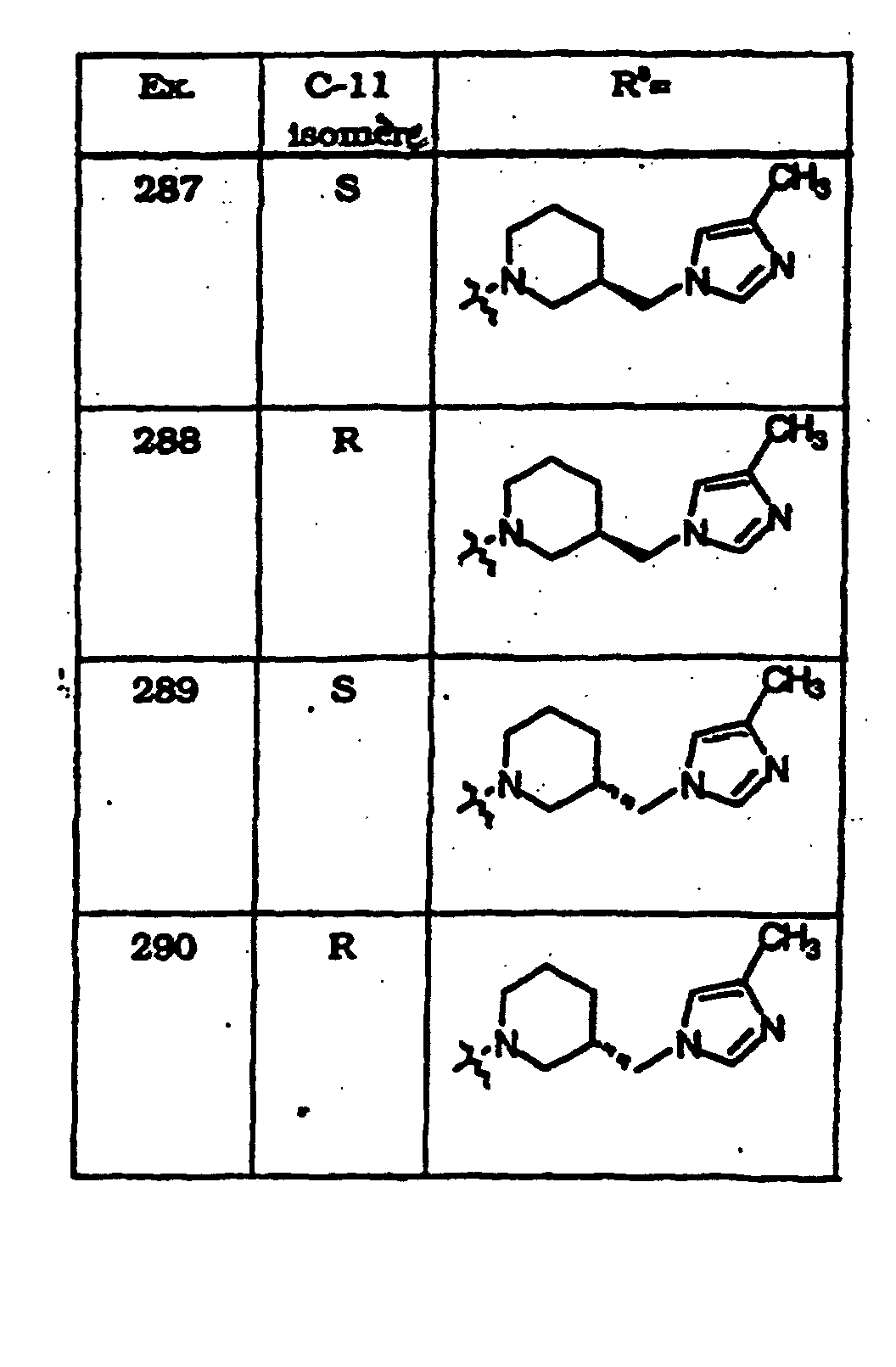 composés de structuredans laquelle R8 représente ce qui est indiqué dans le tableau suivant :
 composés de structuredans laquelle R9 représente ce qui est indiqué dans le tableau suivant :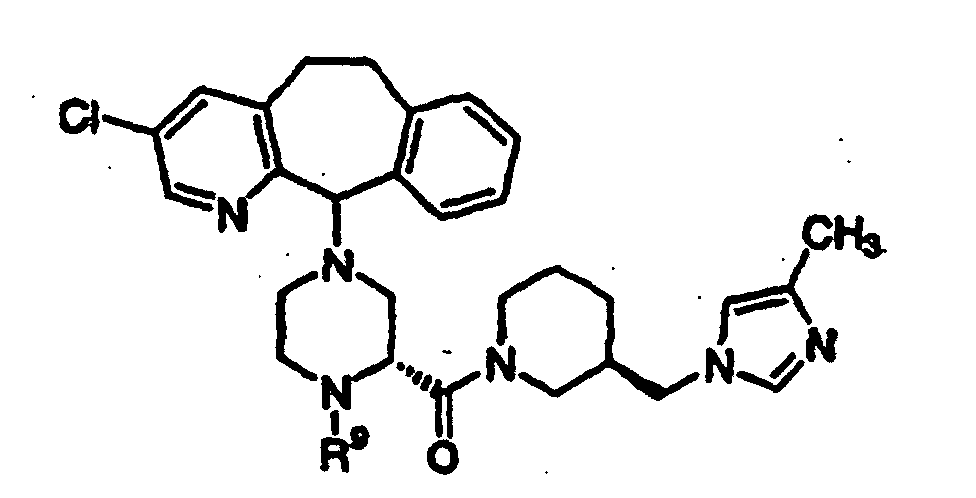
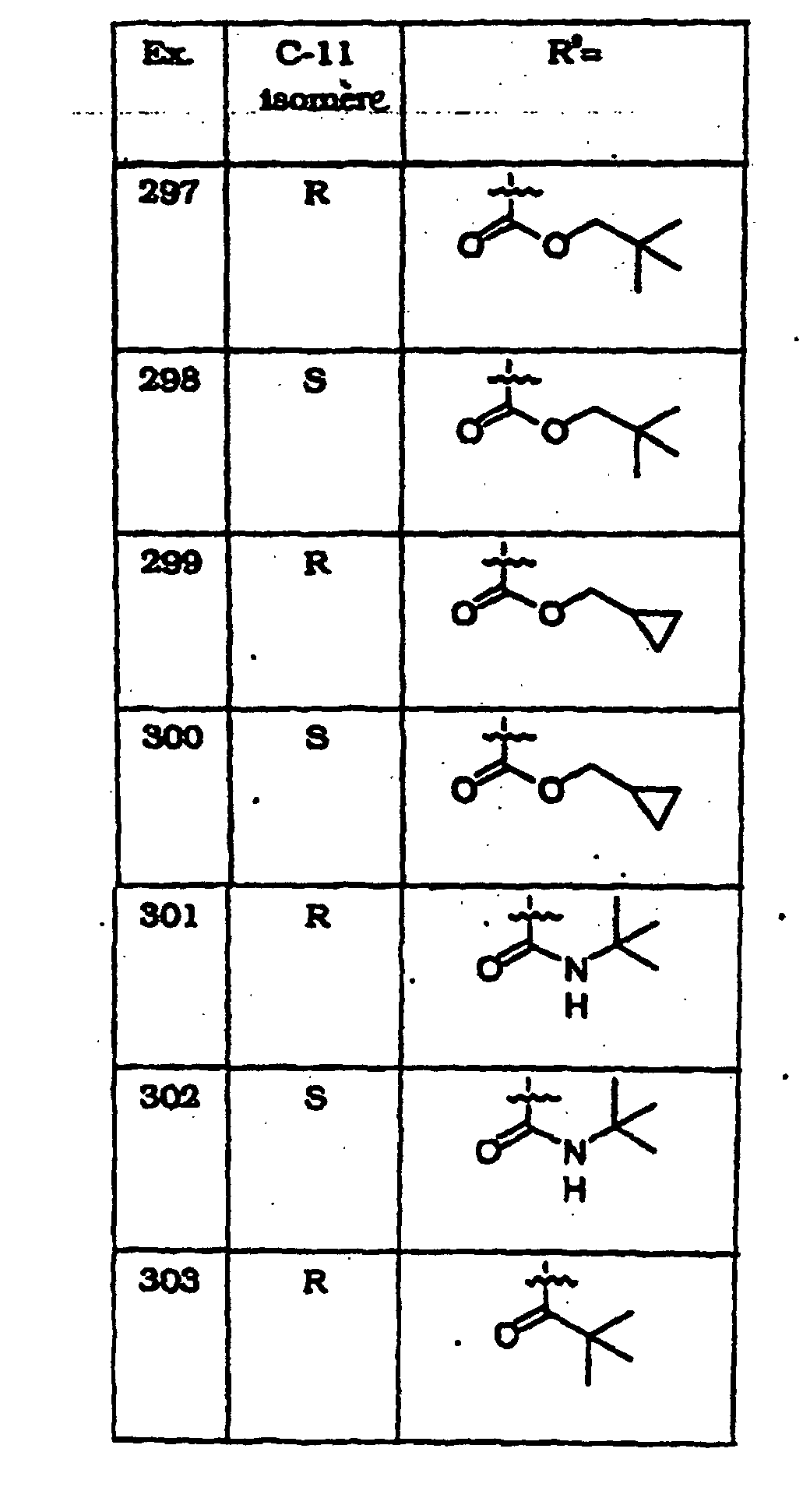 composés de structuredans laquelle R9 représente ce qui est indiqué dans le tableau suivant :
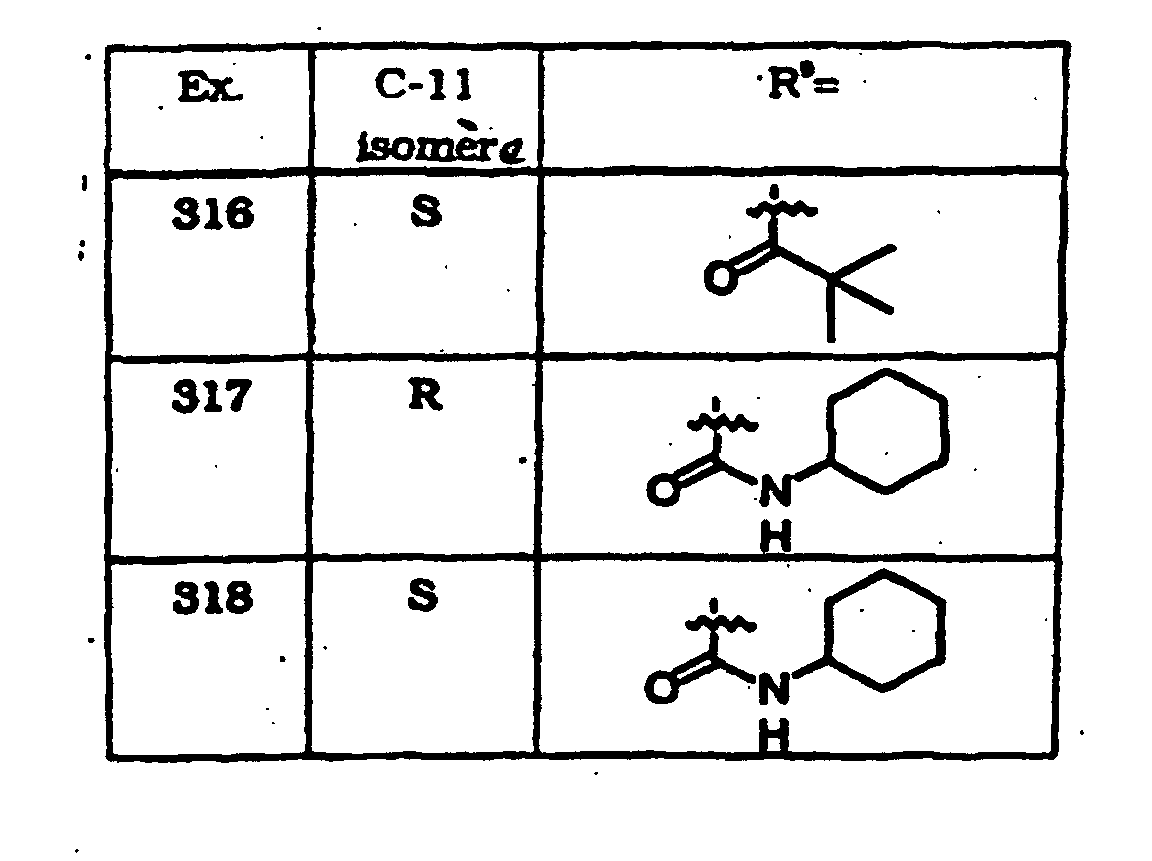 composés de structuredans laquelle R8 représente ce qui est indiqué dans le tableau suivant :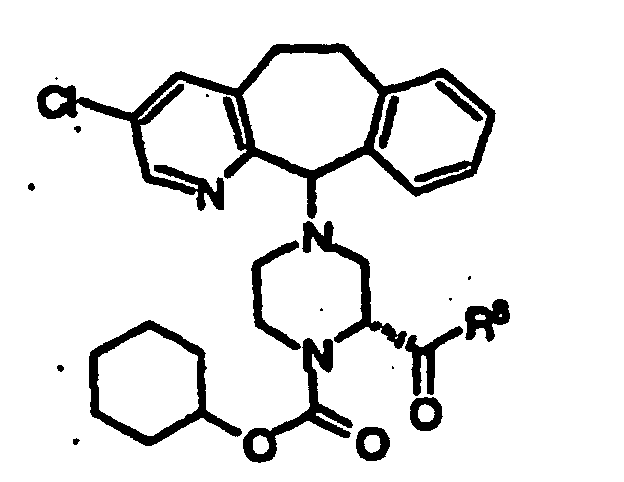
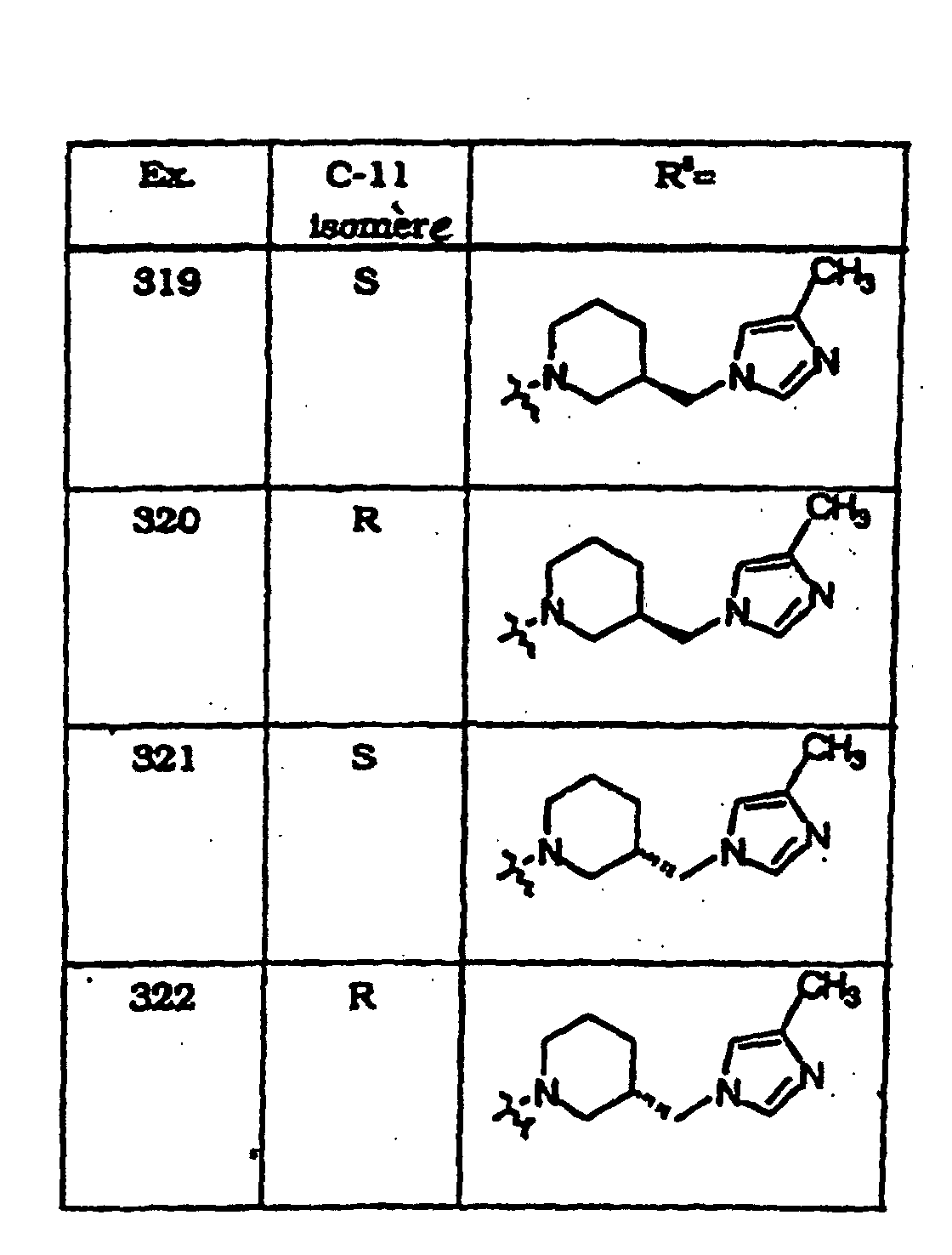 composés de structuredans laquelle R8 représente ce qui est indiqué dans le tableau suivant :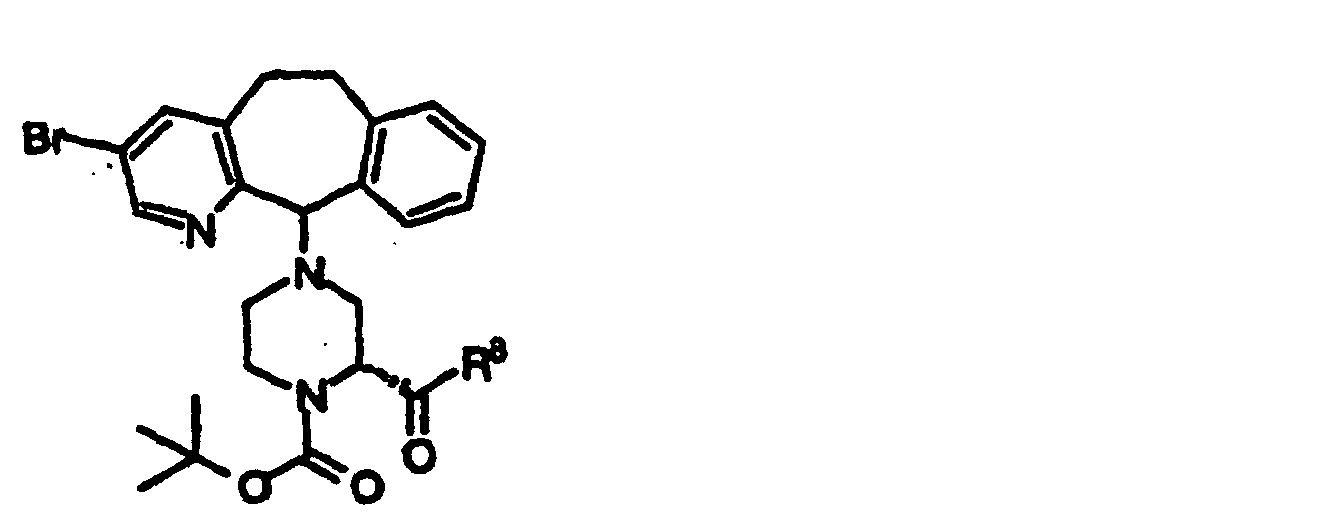
 composés de structuredans laquelle R8 représente ce qui est indiqué dans le tableau suivant :
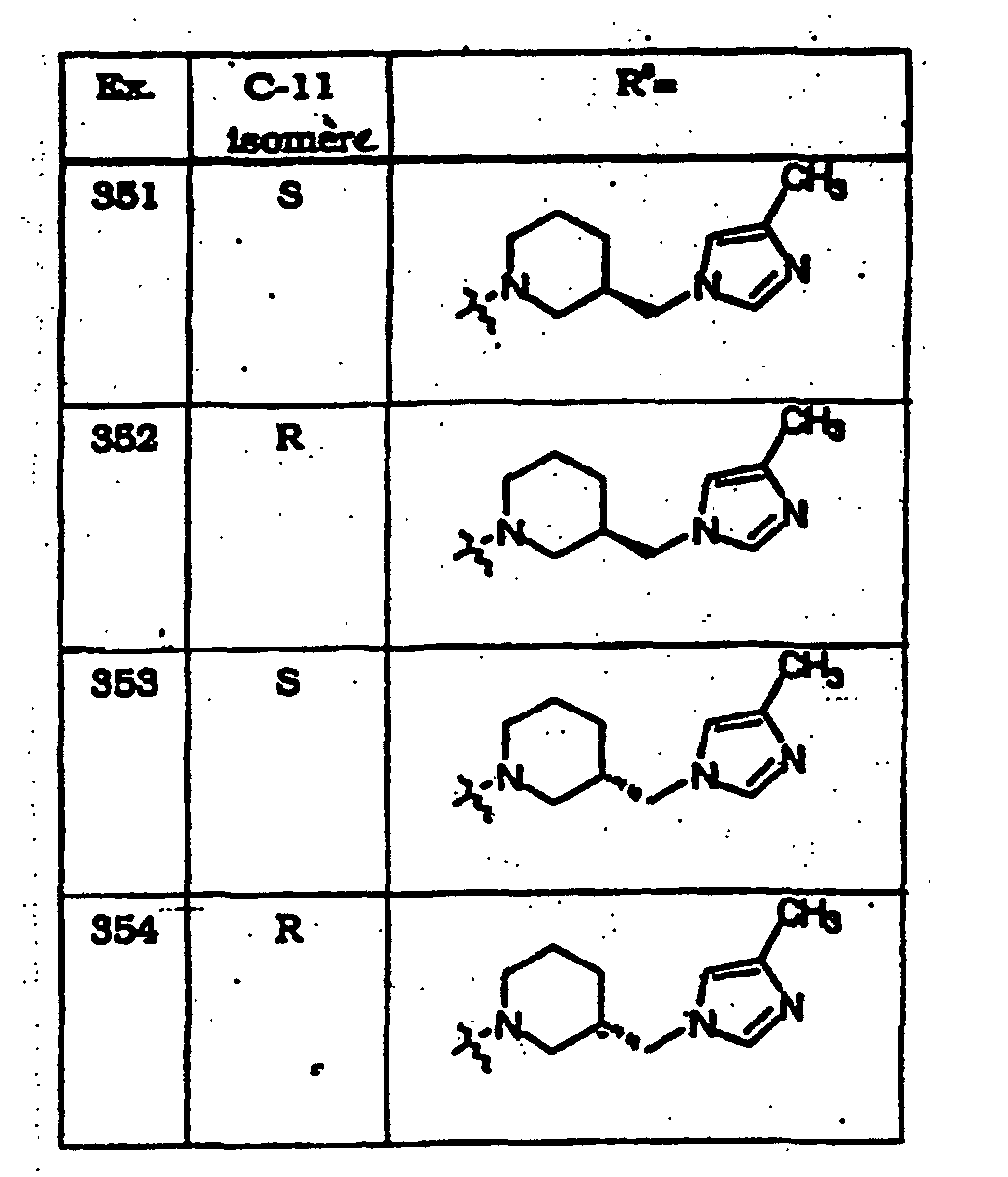 composés de structuredans laquelle R8 représente ce qui est indiqué dans le tableau suivant :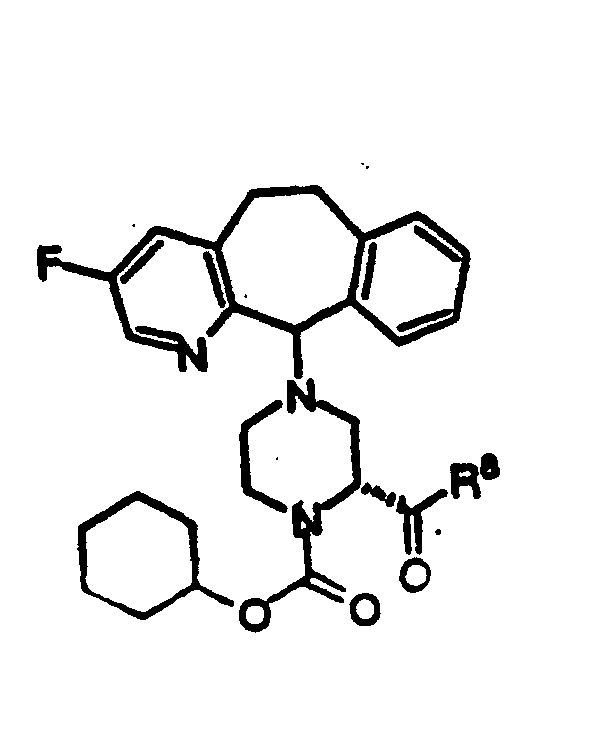

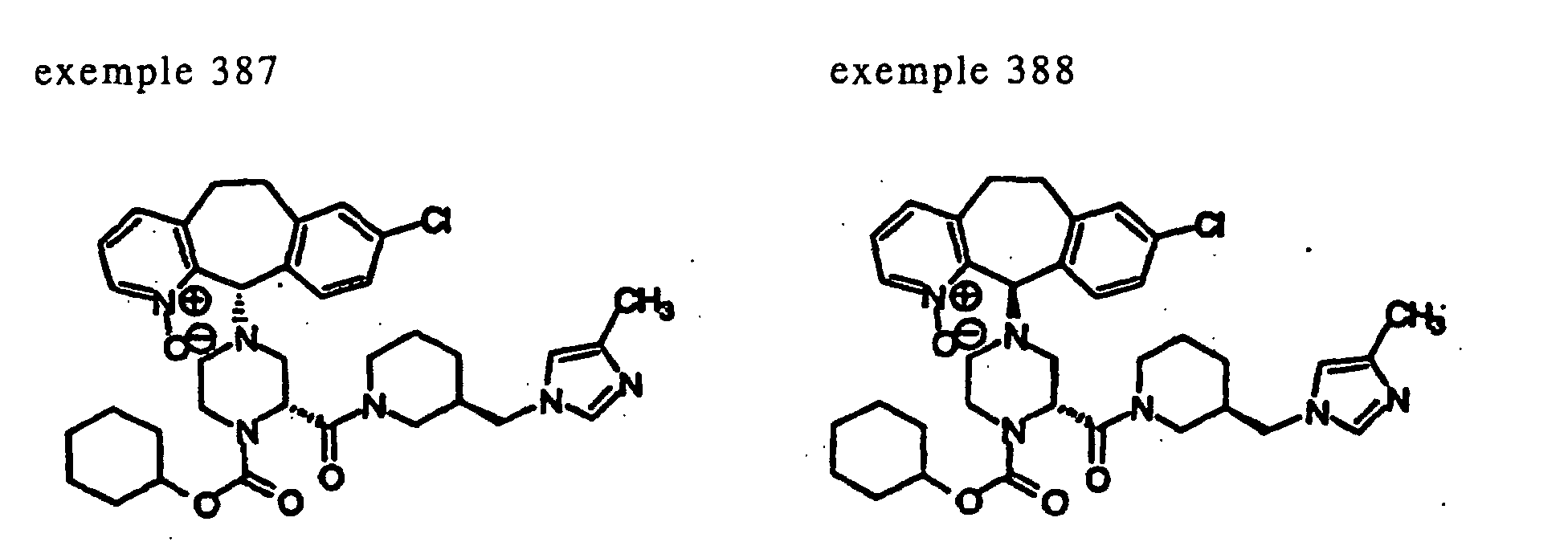 composés de structuredans laquelle R9 représente ce qui est indiqué dans le tableau suivant :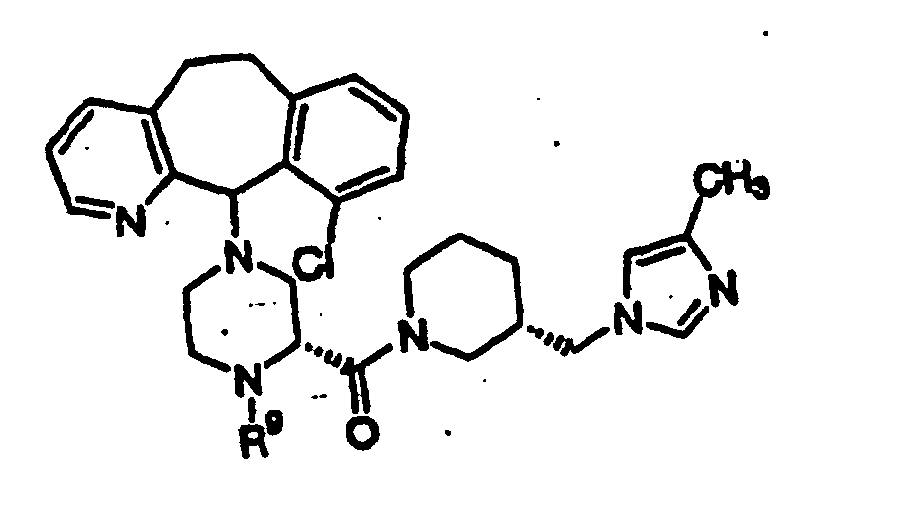
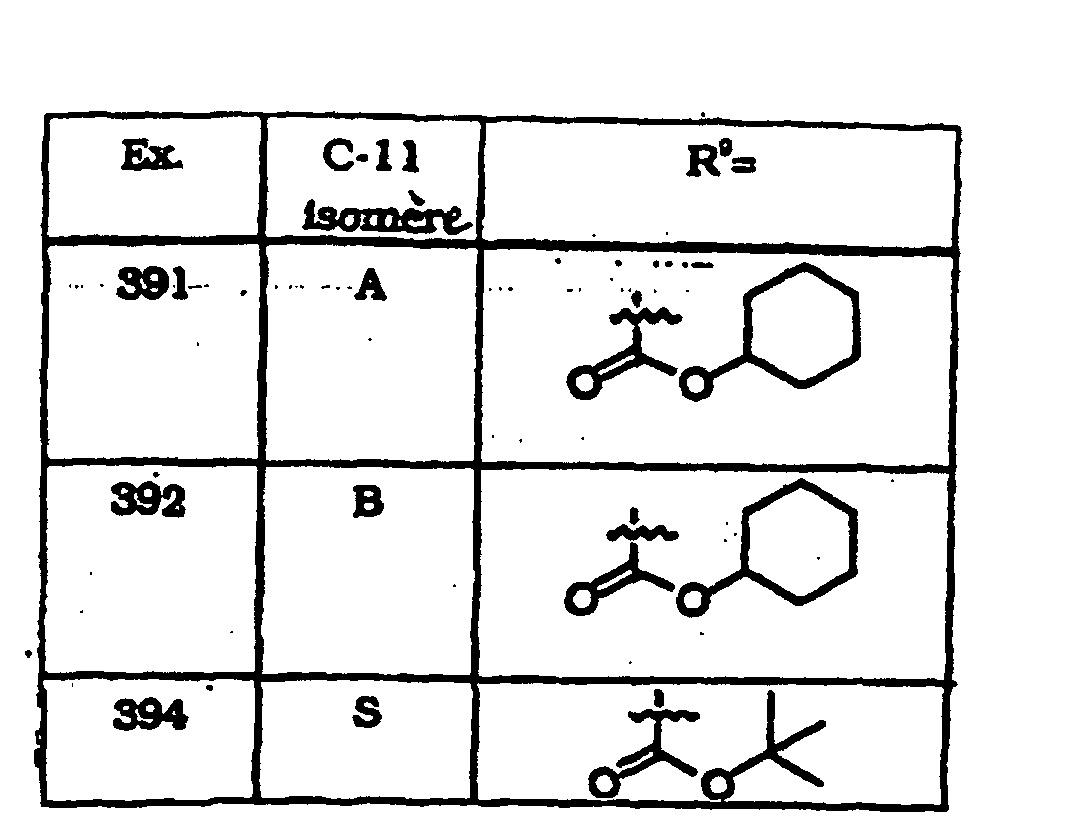 composés de structuredans laquelle R9 représente ce qui est indiqué dans le tableau suivant :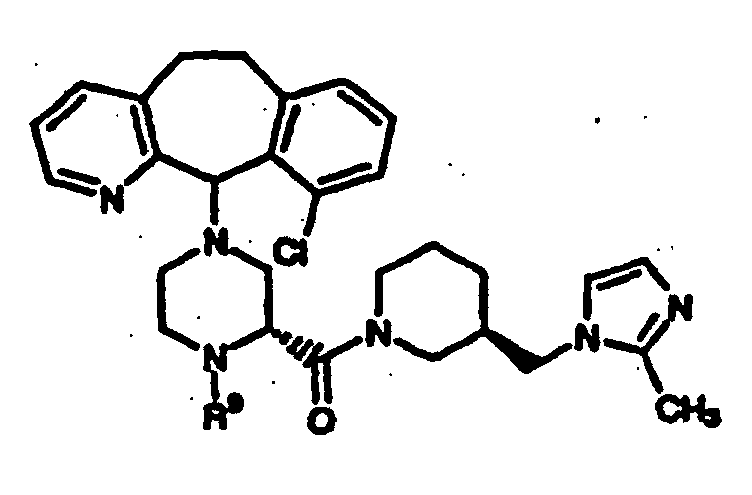
 composés de structuredans laquelle R8 représente ce qui est indiqué dans le tableau suivant :
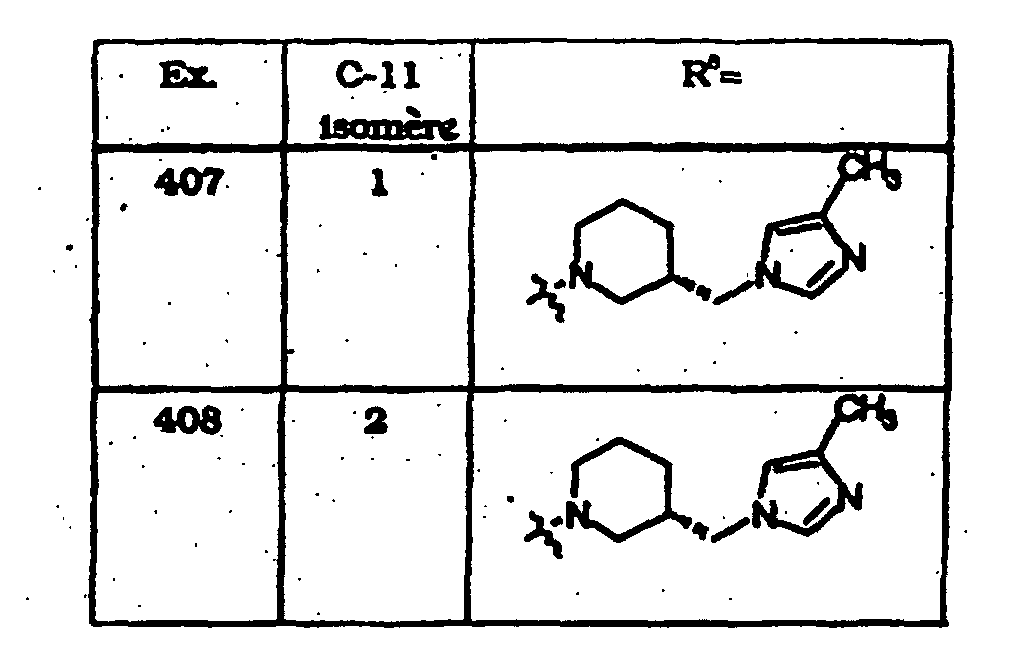 composés de structuredans laquelle R8 représente ce qui est indiqué dans le tableau suivant :
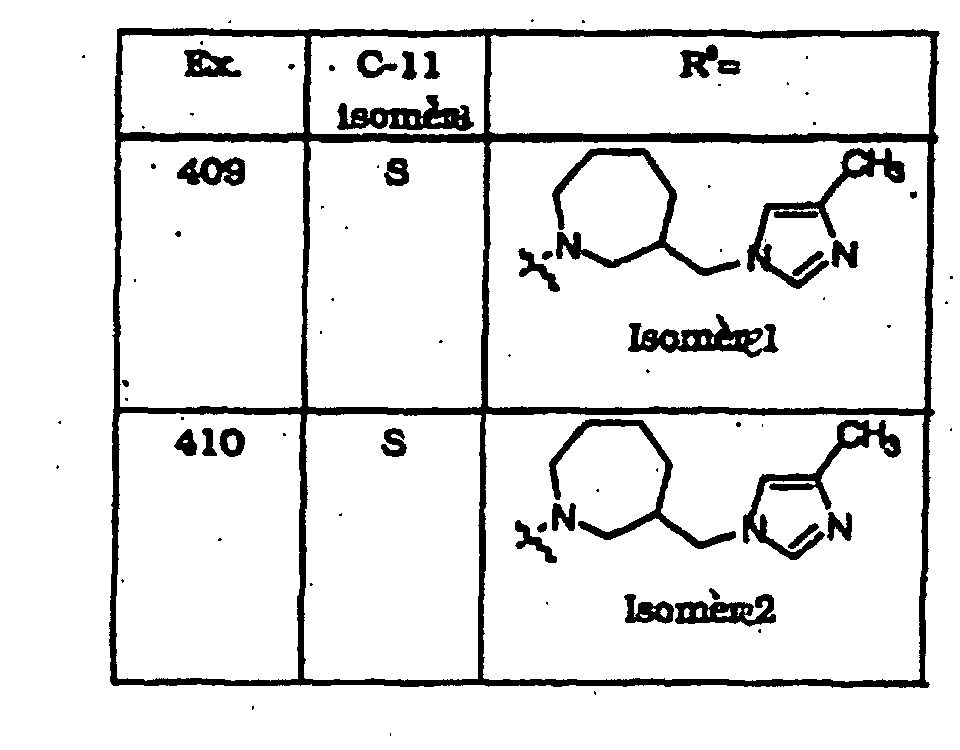


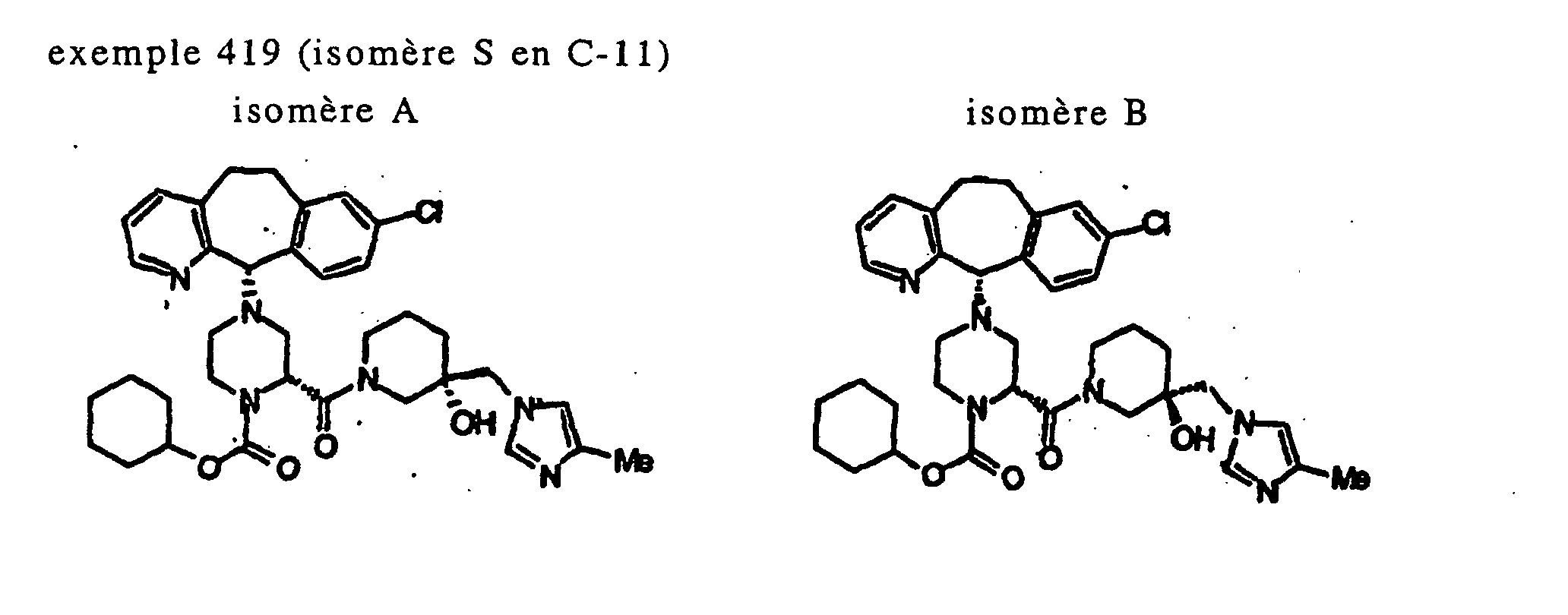

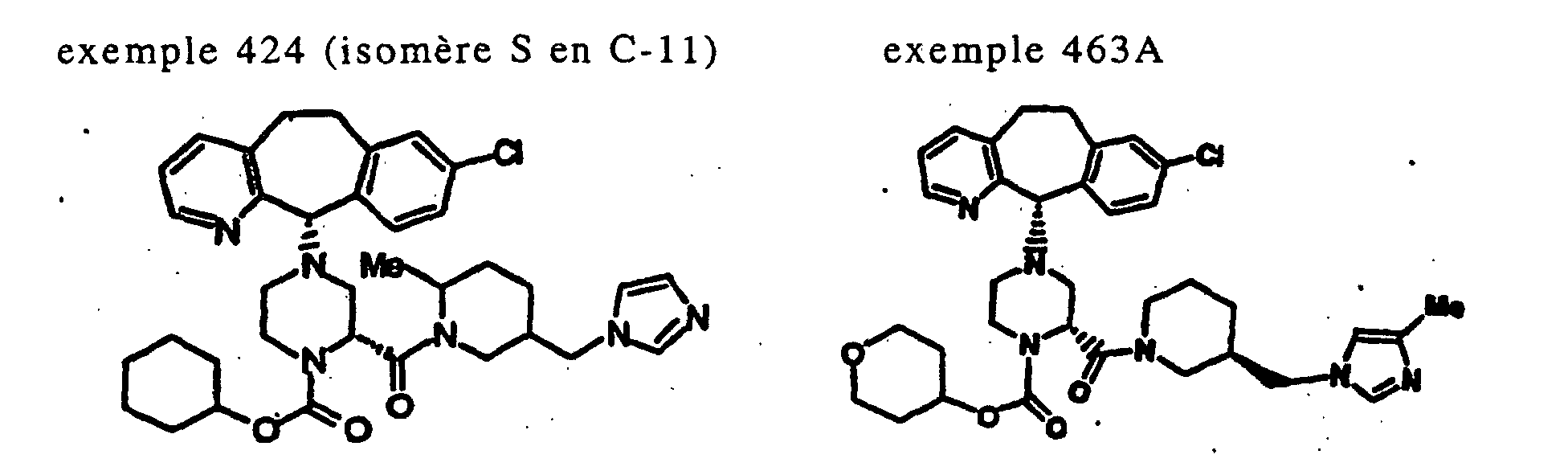
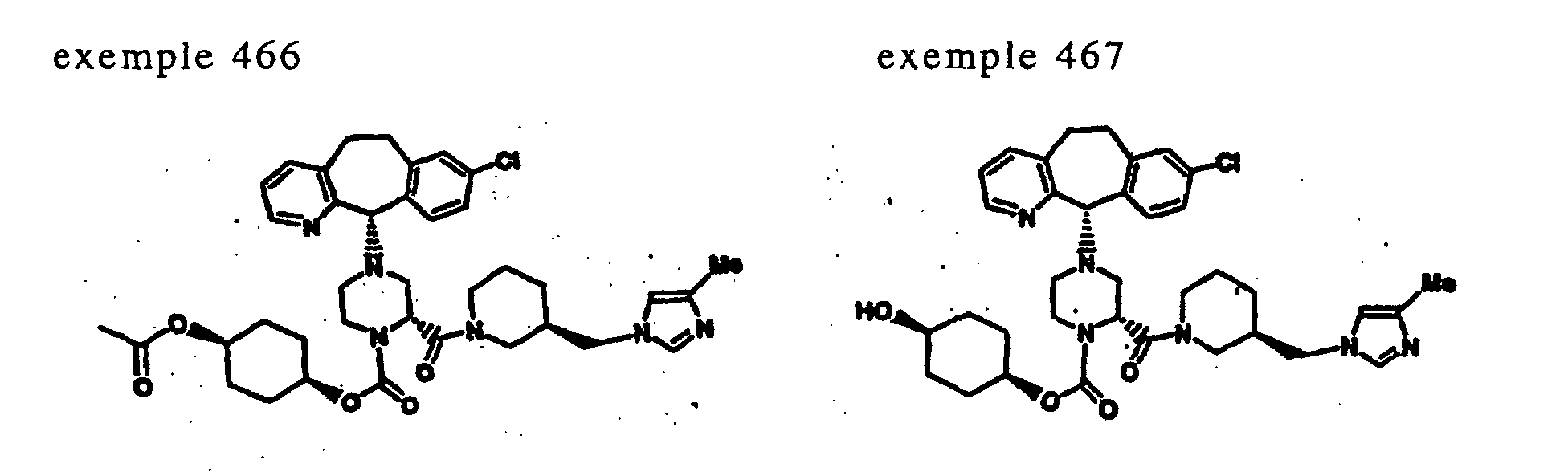

- Composé conforme à la revendication 18, choisi parmi les composés des exemples 35(C), 41(A), 47(S), 47(T), 140A, 144 (isomères 1 et 2), 163, 164, 183, 185, 215, 238, 258, 259, 287, 291, 292, 298, 300, 320, 351, 353, 411 et 416.
- Composé conforme à la revendication 18, choisi parmi les composés des exemples 47(A) et 140A.
- Composition pharmaceutique servant à inhiber la farnésyl:protéine transférase, comprenant une quantité efficace d'un composé conforme à l'une des revendications 1 à 20, en combinaison avec un véhicule pharmacologiquement admissible.
- Composé conforme à l'une des revendications 1 à 20, destiné à servir de médicament.
- Composé conforme à l'une des revendications 1 à 20, destiné à servir pour inhiber la farnésyl:protéine transférase.
- Composé conforme à l'une des revendications 1 à 20, destiné à servir pour inhiber la farnésyl:protéine transférase.
- Composé conforme à l'une des revendications 1 à 20, destiné à servir pour traiter des cellules tumorales.
- Composé conforme à la revendication 23, lequel composé est destiné à servir pour traiter des cellules de tumeur du pancréas, des cellules de cancer du poumon, des cellules tumorales de leucémie myéloïde, des cellules de tumeur des vésicules thyroïdiennes, des cellules de tumeur myélodysplasique, des cellules tumorales de carcinome épidermoïde, des cellules tumorales de cancer de la vessie, des cellules de tumeur du côlon, des cellules de mélanome, des cellules de tumeur du sein ou des cellules de tumeur de la prostate.
- Emploi d'un composé conforme à l'une des revendications 1 à 20 dans la fabrication d'une composition pharmaceutique destinée au traitement de cellules tumorales.
- Emploi conforme à la revendication 27, dans lequel les cellules tumorales traitées sont des cellules de tumeur du pancréas, des cellules de cancer du poumon, des cellules tumorales de leucémie myéloïde, des cellules de tumeur des vésicules thyroïdiennes, des cellules de tumeur myélodysplasique, des cellules tumorales de carcinome épidermoïde, des cellules tumorales de cancer de la vessie, des cellules de tumeur du côlon, des cellules de mélanome, des cellules de tumeur du sein ou des cellules de tumeur de la prostate.
- Emploi d'un composé conforme à l'une des revendications 1 à 20 dans la fabrication d'une composition pharmaceutique destinée à inhiber la farnésyl:protéine transférase.
- Emploi conforme à la revendication 29, dans lequel ladite composition pharmaceutique est destinée au traitement de cellules tumorales dans lesquelles la protéine Ras est activée par suite d'une mutation oncogénique survenue au sein de gènes autres que le gène de Ras.
Applications Claiming Priority (3)
| Application Number | Priority Date | Filing Date | Title |
|---|---|---|---|
| US21656098A | 1998-12-18 | 1998-12-18 | |
| US216560 | 1998-12-18 | ||
| PCT/US1999/027938 WO2000037458A1 (fr) | 1998-12-18 | 1999-12-16 | Inhibiteurs de la farnesyl proteine transferase |
Publications (2)
| Publication Number | Publication Date |
|---|---|
| EP1140904A1 EP1140904A1 (fr) | 2001-10-10 |
| EP1140904B1 true EP1140904B1 (fr) | 2005-04-20 |
Family
ID=22807539
Family Applications (1)
| Application Number | Title | Priority Date | Filing Date |
|---|---|---|---|
| EP99967139A Expired - Lifetime EP1140904B1 (fr) | 1998-12-18 | 1999-12-16 | Inhibiteurs de la farnesyl proteine transferase |
Country Status (23)
| Country | Link |
|---|---|
| EP (1) | EP1140904B1 (fr) |
| JP (1) | JP2002533335A (fr) |
| KR (1) | KR20010081115A (fr) |
| CN (1) | CN1285588C (fr) |
| AR (1) | AR021716A1 (fr) |
| AT (1) | ATE293622T1 (fr) |
| AU (1) | AU2347900A (fr) |
| BR (1) | BR9916328A (fr) |
| CA (1) | CA2354774C (fr) |
| CO (1) | CO5160344A1 (fr) |
| CZ (1) | CZ20011900A3 (fr) |
| DE (1) | DE69924876T2 (fr) |
| ES (1) | ES2237963T3 (fr) |
| HU (1) | HUP0203054A3 (fr) |
| ID (1) | ID29065A (fr) |
| IL (1) | IL143409A0 (fr) |
| NO (1) | NO20012960L (fr) |
| PE (1) | PE20001516A1 (fr) |
| PL (1) | PL348294A1 (fr) |
| SK (1) | SK7582001A3 (fr) |
| TR (1) | TR200101754T2 (fr) |
| WO (1) | WO2000037458A1 (fr) |
| ZA (1) | ZA200104236B (fr) |
Families Citing this family (25)
| Publication number | Priority date | Publication date | Assignee | Title |
|---|---|---|---|---|
| US7361663B2 (en) | 1999-11-10 | 2008-04-22 | Aventis Pharmaceuticals Inc. | N-acylpyrrolidin-2-ylalkylbenzamidine derivatives as inhibitors of factor Xa |
| EP1263726B1 (fr) * | 1999-11-10 | 2007-09-26 | Sanofi-Aventis Deutschland GmbH | Derives de n-acylpyrrolidin-2-ylalkylbenzamidine utilises comme inhibiteurs du facteur xa |
| US6589978B2 (en) * | 2000-06-30 | 2003-07-08 | Hoffman-La Roche Inc. | 1-sulfonyl pyrrolidine derivatives |
| US7342016B2 (en) | 2000-08-30 | 2008-03-11 | Schering Corporation | Farnesyl protein transferase inhibitors as antitumor agents |
| AR033680A1 (es) * | 2000-08-30 | 2004-01-07 | Schering Corp | Compuestos triciclicos utiles como inhibidores de la farnesil proteino transferasa y su uso para la manufactura de medicamentos como agentes antitumorales |
| US6376514B1 (en) | 2000-10-17 | 2002-04-23 | The Procter & Gamble Co. | Substituted six-membered heterocyclic compounds useful for treating multidrug resistance and compositions and methods thereof |
| US6809093B2 (en) | 2000-10-17 | 2004-10-26 | H. Lee Moffitt Cancer & Research Institute, Inc. | 2-substituted heterocyclic compounds |
| US6693099B2 (en) | 2000-10-17 | 2004-02-17 | The Procter & Gamble Company | Substituted piperazine compounds optionally containing a quinolyl moiety for treating multidrug resistance |
| WO2002056884A2 (fr) * | 2001-01-22 | 2002-07-25 | Schering Corporation | Traitement du paludisme au moyen d'inhibiteurs de la farnesyl proteine transferase (fpt) |
| ATE412638T1 (de) | 2001-02-16 | 2008-11-15 | Aventis Pharma Inc | Heterocyclische substituierte carbonyl derivate und ihre verwendung als dopamin d3 rezeptor liganden |
| WO2002080895A2 (fr) * | 2001-04-06 | 2002-10-17 | Schering Corporation | Traitements antipaludiques comprenant l'administration d'inhibiteurs de la fasnesyl proteine transferase |
| FR2825705B1 (fr) | 2001-06-08 | 2005-05-20 | Aventis Pharma Sa | Nouveaux composes heterocycliques, leur preparation et leur utilisation comme medicaments, notamment comme anti-bacteriens |
| GB0115862D0 (en) * | 2001-06-28 | 2001-08-22 | Smithkline Beecham Plc | Compounds |
| US6740757B2 (en) * | 2001-08-29 | 2004-05-25 | Pfizer Inc | Enantiomers of 6-[(4-chloro-phenyl)-hydroxy-(3-methyl-3h-imidazol-4-yl)-methyl]-4-[3-(3-hydroxy-3-methyl-but-1-ynyl)-phenyl]-1-methyl-1h-quinolin-2-one and salts thereof, useful in the treatment of cancer |
| FR2835186B1 (fr) | 2002-01-28 | 2006-10-20 | Aventis Pharma Sa | Nouveaux composes heterocycliques, actifs comme inhibiteurs de beta-lactamases |
| FR2844273B1 (fr) | 2002-09-05 | 2008-04-04 | Aventis Pharma Sa | Nouveaux composes heterocycliques, procede et intermediaires de preparation et utilisation comme medicament, notamment comme inhibiteurs de beta-lactamases et anti-bacteriens. |
| DE60323765D1 (de) * | 2002-12-17 | 2008-11-06 | Schering Corp | Inhibitoren der 17 beta-hydroxysteroiddehydrogenase des typs 3 zur behandlung androgenabhängiger krankheiten |
| EP1838324A2 (fr) * | 2004-12-13 | 2007-10-03 | Schering Corporation | Nouveaux inhibiteurs de la farnesyl proteine transferase et leur utilisation dans le traitement du cancer |
| EP1833481A1 (fr) | 2004-12-14 | 2007-09-19 | Schering Corporation | Inhibiteurs de farnésyl protéine transférase et méthodes de traitement de maladies proliférantes |
| JP2009523799A (ja) * | 2006-01-19 | 2009-06-25 | シェーリング コーポレイション | ファルネシルタンパク質トランスフェラーゼインヒビターとしてのピペラジン誘導体 |
| CN102123999B (zh) * | 2008-05-22 | 2014-06-18 | 默沙东公司 | 制备食欲素受体拮抗剂的方法 |
| HU231150B1 (hu) | 2017-03-13 | 2021-03-29 | Richter Gedeon Nyrt | Eljárás racém 3-alkilpiperidin-3-karbonsav-etil-észterek optikai izomerjeinek elválasztására |
| AU2020286381C1 (en) | 2019-06-04 | 2025-07-10 | Hager Biosciences, Llc | Imidazolo derivatives, compositions and methods as orexin antagonists |
| TWI907472B (zh) | 2020-08-05 | 2025-12-11 | 匈牙利商羅特格登公司 | 具藥理活性之經雜環取代的吡唑并〔1,5-a〕嘧啶衍生物 |
| CN114349711B (zh) * | 2022-02-28 | 2023-08-15 | 四川依维欣医药科技有限公司 | 一种(R)-1-Boc-3-羟甲基哌嗪的合成方法 |
Family Cites Families (4)
| Publication number | Priority date | Publication date | Assignee | Title |
|---|---|---|---|---|
| IL111235A (en) * | 1993-10-15 | 2001-03-19 | Schering Plough Corp | Medicinal preparations for inhibiting protein G activity and for the treatment of malignant diseases, containing tricyclic compounds, some such new compounds and a process for the preparation of some of them |
| GB9420172D0 (en) * | 1994-10-06 | 1994-11-23 | Boots Co Plc | Therapeutic agents |
| IL117798A (en) * | 1995-04-07 | 2001-11-25 | Schering Plough Corp | Tricyclic compounds useful for inhibiting the function of protein - G and for the treatment of malignant diseases, and pharmaceutical preparations containing them |
| CN1266433A (zh) * | 1997-06-17 | 2000-09-13 | 先灵公司 | 用于抑制法呢基蛋白转移酶的苯并吡啶并环庚烷化合物 |
-
1999
- 1999-12-16 TR TR2001/01754T patent/TR200101754T2/xx unknown
- 1999-12-16 SK SK758-2001A patent/SK7582001A3/sk unknown
- 1999-12-16 JP JP2000589530A patent/JP2002533335A/ja active Pending
- 1999-12-16 ES ES99967139T patent/ES2237963T3/es not_active Expired - Lifetime
- 1999-12-16 CN CNB998162078A patent/CN1285588C/zh not_active Expired - Fee Related
- 1999-12-16 AR ARP990106459A patent/AR021716A1/es unknown
- 1999-12-16 WO PCT/US1999/027938 patent/WO2000037458A1/fr not_active Ceased
- 1999-12-16 AT AT99967139T patent/ATE293622T1/de not_active IP Right Cessation
- 1999-12-16 CZ CZ20011900A patent/CZ20011900A3/cs unknown
- 1999-12-16 CA CA002354774A patent/CA2354774C/fr not_active Expired - Fee Related
- 1999-12-16 AU AU23479/00A patent/AU2347900A/en not_active Abandoned
- 1999-12-16 BR BR9916328-4A patent/BR9916328A/pt not_active IP Right Cessation
- 1999-12-16 DE DE69924876T patent/DE69924876T2/de not_active Expired - Fee Related
- 1999-12-16 EP EP99967139A patent/EP1140904B1/fr not_active Expired - Lifetime
- 1999-12-16 PL PL99348294A patent/PL348294A1/xx not_active Application Discontinuation
- 1999-12-16 HU HU0203054A patent/HUP0203054A3/hu unknown
- 1999-12-16 KR KR1020017007535A patent/KR20010081115A/ko not_active Withdrawn
- 1999-12-16 CO CO99078838A patent/CO5160344A1/es unknown
- 1999-12-16 ID IDW00200101310A patent/ID29065A/id unknown
- 1999-12-16 IL IL14340999A patent/IL143409A0/xx unknown
- 1999-12-17 PE PE1999001293A patent/PE20001516A1/es not_active Application Discontinuation
-
2001
- 2001-05-23 ZA ZA200104236A patent/ZA200104236B/en unknown
- 2001-06-15 NO NO20012960A patent/NO20012960L/no not_active Application Discontinuation
Also Published As
| Publication number | Publication date |
|---|---|
| PE20001516A1 (es) | 2001-01-06 |
| ES2237963T3 (es) | 2005-08-01 |
| BR9916328A (pt) | 2001-10-02 |
| CN1352642A (zh) | 2002-06-05 |
| ID29065A (id) | 2001-07-26 |
| WO2000037458A1 (fr) | 2000-06-29 |
| JP2002533335A (ja) | 2002-10-08 |
| HUP0203054A2 (hu) | 2003-01-28 |
| CA2354774A1 (fr) | 2000-06-29 |
| AU2347900A (en) | 2000-07-12 |
| PL348294A1 (en) | 2002-05-20 |
| ATE293622T1 (de) | 2005-05-15 |
| DE69924876T2 (de) | 2006-03-02 |
| CA2354774C (fr) | 2009-05-26 |
| SK7582001A3 (en) | 2002-03-05 |
| HK1036279A1 (en) | 2001-12-28 |
| DE69924876D1 (de) | 2005-05-25 |
| NO20012960D0 (no) | 2001-06-15 |
| AR021716A1 (es) | 2002-07-31 |
| CN1285588C (zh) | 2006-11-22 |
| ZA200104236B (en) | 2002-08-23 |
| NO20012960L (no) | 2001-08-15 |
| CO5160344A1 (es) | 2002-05-30 |
| IL143409A0 (en) | 2002-04-21 |
| HUP0203054A3 (en) | 2004-01-28 |
| TR200101754T2 (tr) | 2002-05-21 |
| CZ20011900A3 (cs) | 2002-02-13 |
| KR20010081115A (ko) | 2001-08-27 |
| EP1140904A1 (fr) | 2001-10-10 |
Similar Documents
| Publication | Publication Date | Title |
|---|---|---|
| EP1140904B1 (fr) | Inhibiteurs de la farnesyl proteine transferase | |
| US6362188B1 (en) | Farnesyl protein transferase inhibitors | |
| US6372747B1 (en) | Farnesyl protein transferase inhibitors | |
| US6432959B1 (en) | Inhibitors of farnesyl-protein transferase | |
| WO1997016443A1 (fr) | Derives de 2-quinolone inhibant la farnesyle transferase | |
| US6800636B2 (en) | Farnesyl protein transferase inhibitors | |
| EP0989983B1 (fr) | Composes a base de cycloheptane benzpyrido servant d'inhibiteurs de farnesyl proteine transferase | |
| EP1140902A1 (fr) | Inhibiteurs de la farnesyl proteine transferase tryciclique | |
| EP0927181A1 (fr) | Composes tricycliques servant a inhiber la farnesyl-proteine transferase | |
| WO1998011099A1 (fr) | Derives substitues de la benzocycloheptapyridine servant a inhiber la farnesyl-proteine transferase | |
| WO1998011091A2 (fr) | Composes servant a inhiber la farnesyl proteine transferase | |
| EP1140909B1 (fr) | Inhibiteurs de farnesyl proteine transferase | |
| HK1036279B (en) | Farnesyl protein transferase inhibitors | |
| MXPA01006153A (en) | Farnesyl protein transferase inhibitors | |
| EP0942906B1 (fr) | Composes utiles pour inhiber la farnesyl-proteine transferase | |
| EP0927179B1 (fr) | Derives substitues de la benzocycloheptapyridine utiles pour l'inhibition de la farnesyl transferase | |
| MXPA01006611A (en) | Novel inhibitors of farnesyl-protein transferase |
Legal Events
| Date | Code | Title | Description |
|---|---|---|---|
| PUAI | Public reference made under article 153(3) epc to a published international application that has entered the european phase |
Free format text: ORIGINAL CODE: 0009012 |
|
| 17P | Request for examination filed |
Effective date: 20010531 |
|
| AK | Designated contracting states |
Kind code of ref document: A1 Designated state(s): AT BE CH CY DE DK ES FI FR GB GR IE IT LI LU MC NL PT SE |
|
| AX | Request for extension of the european patent |
Free format text: AL;LT;LV;MK;RO PAYMENT 20010531;SI PAYMENT 20010531 |
|
| 17Q | First examination report despatched |
Effective date: 20020304 |
|
| GRAP | Despatch of communication of intention to grant a patent |
Free format text: ORIGINAL CODE: EPIDOSNIGR1 |
|
| GRAS | Grant fee paid |
Free format text: ORIGINAL CODE: EPIDOSNIGR3 |
|
| GRAA | (expected) grant |
Free format text: ORIGINAL CODE: 0009210 |
|
| AK | Designated contracting states |
Kind code of ref document: B1 Designated state(s): AT BE CH CY DE DK ES FI FR GB GR IE IT LI LU MC NL PT SE |
|
| AX | Request for extension of the european patent |
Extension state: RO SI |
|
| PG25 | Lapsed in a contracting state [announced via postgrant information from national office to epo] |
Ref country code: NL Free format text: LAPSE BECAUSE OF FAILURE TO SUBMIT A TRANSLATION OF THE DESCRIPTION OR TO PAY THE FEE WITHIN THE PRESCRIBED TIME-LIMIT Effective date: 20050420 Ref country code: LI Free format text: LAPSE BECAUSE OF FAILURE TO SUBMIT A TRANSLATION OF THE DESCRIPTION OR TO PAY THE FEE WITHIN THE PRESCRIBED TIME-LIMIT Effective date: 20050420 Ref country code: FI Free format text: LAPSE BECAUSE OF FAILURE TO SUBMIT A TRANSLATION OF THE DESCRIPTION OR TO PAY THE FEE WITHIN THE PRESCRIBED TIME-LIMIT Effective date: 20050420 Ref country code: CH Free format text: LAPSE BECAUSE OF FAILURE TO SUBMIT A TRANSLATION OF THE DESCRIPTION OR TO PAY THE FEE WITHIN THE PRESCRIBED TIME-LIMIT Effective date: 20050420 Ref country code: BE Free format text: LAPSE BECAUSE OF FAILURE TO SUBMIT A TRANSLATION OF THE DESCRIPTION OR TO PAY THE FEE WITHIN THE PRESCRIBED TIME-LIMIT Effective date: 20050420 Ref country code: AT Free format text: LAPSE BECAUSE OF FAILURE TO SUBMIT A TRANSLATION OF THE DESCRIPTION OR TO PAY THE FEE WITHIN THE PRESCRIBED TIME-LIMIT Effective date: 20050420 |
|
| REG | Reference to a national code |
Ref country code: GB Ref legal event code: FG4D |
|
| REG | Reference to a national code |
Ref country code: CH Ref legal event code: EP |
|
| REG | Reference to a national code |
Ref country code: IE Ref legal event code: FG4D |
|
| REF | Corresponds to: |
Ref document number: 69924876 Country of ref document: DE Date of ref document: 20050525 Kind code of ref document: P |
|
| PG25 | Lapsed in a contracting state [announced via postgrant information from national office to epo] |
Ref country code: SE Free format text: LAPSE BECAUSE OF FAILURE TO SUBMIT A TRANSLATION OF THE DESCRIPTION OR TO PAY THE FEE WITHIN THE PRESCRIBED TIME-LIMIT Effective date: 20050720 Ref country code: GR Free format text: LAPSE BECAUSE OF FAILURE TO SUBMIT A TRANSLATION OF THE DESCRIPTION OR TO PAY THE FEE WITHIN THE PRESCRIBED TIME-LIMIT Effective date: 20050720 Ref country code: DK Free format text: LAPSE BECAUSE OF FAILURE TO SUBMIT A TRANSLATION OF THE DESCRIPTION OR TO PAY THE FEE WITHIN THE PRESCRIBED TIME-LIMIT Effective date: 20050720 |
|
| REG | Reference to a national code |
Ref country code: ES Ref legal event code: FG2A Ref document number: 2237963 Country of ref document: ES Kind code of ref document: T3 |
|
| REG | Reference to a national code |
Ref country code: HK Ref legal event code: GR Ref document number: 1036279 Country of ref document: HK |
|
| PG25 | Lapsed in a contracting state [announced via postgrant information from national office to epo] |
Ref country code: PT Free format text: LAPSE BECAUSE OF FAILURE TO SUBMIT A TRANSLATION OF THE DESCRIPTION OR TO PAY THE FEE WITHIN THE PRESCRIBED TIME-LIMIT Effective date: 20050920 |
|
| REG | Reference to a national code |
Ref country code: CH Ref legal event code: PL |
|
| NLV1 | Nl: lapsed or annulled due to failure to fulfill the requirements of art. 29p and 29m of the patents act | ||
| PG25 | Lapsed in a contracting state [announced via postgrant information from national office to epo] |
Ref country code: IE Free format text: LAPSE BECAUSE OF NON-PAYMENT OF DUE FEES Effective date: 20051216 Ref country code: CY Free format text: LAPSE BECAUSE OF FAILURE TO SUBMIT A TRANSLATION OF THE DESCRIPTION OR TO PAY THE FEE WITHIN THE PRESCRIBED TIME-LIMIT Effective date: 20051216 |
|
| PG25 | Lapsed in a contracting state [announced via postgrant information from national office to epo] |
Ref country code: MC Free format text: LAPSE BECAUSE OF NON-PAYMENT OF DUE FEES Effective date: 20051231 Ref country code: LU Free format text: LAPSE BECAUSE OF NON-PAYMENT OF DUE FEES Effective date: 20051231 |
|
| ET | Fr: translation filed | ||
| PLBE | No opposition filed within time limit |
Free format text: ORIGINAL CODE: 0009261 |
|
| STAA | Information on the status of an ep patent application or granted ep patent |
Free format text: STATUS: NO OPPOSITION FILED WITHIN TIME LIMIT |
|
| 26N | No opposition filed |
Effective date: 20060123 |
|
| REG | Reference to a national code |
Ref country code: IE Ref legal event code: MM4A |
|
| PGFP | Annual fee paid to national office [announced via postgrant information from national office to epo] |
Ref country code: ES Payment date: 20081222 Year of fee payment: 10 |
|
| PGFP | Annual fee paid to national office [announced via postgrant information from national office to epo] |
Ref country code: IT Payment date: 20081216 Year of fee payment: 10 |
|
| PGFP | Annual fee paid to national office [announced via postgrant information from national office to epo] |
Ref country code: FR Payment date: 20081205 Year of fee payment: 10 |
|
| PGFP | Annual fee paid to national office [announced via postgrant information from national office to epo] |
Ref country code: DE Payment date: 20081230 Year of fee payment: 10 |
|
| PGFP | Annual fee paid to national office [announced via postgrant information from national office to epo] |
Ref country code: GB Payment date: 20081110 Year of fee payment: 10 |
|
| GBPC | Gb: european patent ceased through non-payment of renewal fee |
Effective date: 20091216 |
|
| REG | Reference to a national code |
Ref country code: FR Ref legal event code: ST Effective date: 20100831 |
|
| PG25 | Lapsed in a contracting state [announced via postgrant information from national office to epo] |
Ref country code: FR Free format text: LAPSE BECAUSE OF NON-PAYMENT OF DUE FEES Effective date: 20091231 |
|
| PG25 | Lapsed in a contracting state [announced via postgrant information from national office to epo] |
Ref country code: DE Free format text: LAPSE BECAUSE OF NON-PAYMENT OF DUE FEES Effective date: 20100701 |
|
| PG25 | Lapsed in a contracting state [announced via postgrant information from national office to epo] |
Ref country code: GB Free format text: LAPSE BECAUSE OF NON-PAYMENT OF DUE FEES Effective date: 20091216 |
|
| REG | Reference to a national code |
Ref country code: ES Ref legal event code: FD2A Effective date: 20110310 |
|
| PG25 | Lapsed in a contracting state [announced via postgrant information from national office to epo] |
Ref country code: IT Free format text: LAPSE BECAUSE OF NON-PAYMENT OF DUE FEES Effective date: 20091216 |
|
| PG25 | Lapsed in a contracting state [announced via postgrant information from national office to epo] |
Ref country code: ES Free format text: LAPSE BECAUSE OF NON-PAYMENT OF DUE FEES Effective date: 20110309 |
|
| PG25 | Lapsed in a contracting state [announced via postgrant information from national office to epo] |
Ref country code: ES Free format text: LAPSE BECAUSE OF NON-PAYMENT OF DUE FEES Effective date: 20091217 |