EP1140916B1 - Acetals heteroaryl-cycliques - Google Patents
Acetals heteroaryl-cycliques Download PDFInfo
- Publication number
- EP1140916B1 EP1140916B1 EP99962334A EP99962334A EP1140916B1 EP 1140916 B1 EP1140916 B1 EP 1140916B1 EP 99962334 A EP99962334 A EP 99962334A EP 99962334 A EP99962334 A EP 99962334A EP 1140916 B1 EP1140916 B1 EP 1140916B1
- Authority
- EP
- European Patent Office
- Prior art keywords
- formula
- alkyl
- compounds
- group
- heteroaryl
- Prior art date
- Legal status (The legal status is an assumption and is not a legal conclusion. Google has not performed a legal analysis and makes no representation as to the accuracy of the status listed.)
- Expired - Lifetime
Links
- 0 CC(*O*(*)N(C)*)(C1CCCCC1)N Chemical compound CC(*O*(*)N(C)*)(C1CCCCC1)N 0.000 description 4
Classifications
-
- C—CHEMISTRY; METALLURGY
- C07—ORGANIC CHEMISTRY
- C07D—HETEROCYCLIC COMPOUNDS
- C07D409/00—Heterocyclic compounds containing two or more hetero rings, at least one ring having sulfur atoms as the only ring hetero atoms
- C07D409/14—Heterocyclic compounds containing two or more hetero rings, at least one ring having sulfur atoms as the only ring hetero atoms containing three or more hetero rings
-
- A—HUMAN NECESSITIES
- A61—MEDICAL OR VETERINARY SCIENCE; HYGIENE
- A61P—SPECIFIC THERAPEUTIC ACTIVITY OF CHEMICAL COMPOUNDS OR MEDICINAL PREPARATIONS
- A61P11/00—Drugs for disorders of the respiratory system
- A61P11/06—Antiasthmatics
-
- A—HUMAN NECESSITIES
- A61—MEDICAL OR VETERINARY SCIENCE; HYGIENE
- A61P—SPECIFIC THERAPEUTIC ACTIVITY OF CHEMICAL COMPOUNDS OR MEDICINAL PREPARATIONS
- A61P19/00—Drugs for skeletal disorders
- A61P19/02—Drugs for skeletal disorders for joint disorders, e.g. arthritis, arthrosis
-
- A—HUMAN NECESSITIES
- A61—MEDICAL OR VETERINARY SCIENCE; HYGIENE
- A61P—SPECIFIC THERAPEUTIC ACTIVITY OF CHEMICAL COMPOUNDS OR MEDICINAL PREPARATIONS
- A61P27/00—Drugs for disorders of the senses
- A61P27/02—Ophthalmic agents
-
- A—HUMAN NECESSITIES
- A61—MEDICAL OR VETERINARY SCIENCE; HYGIENE
- A61P—SPECIFIC THERAPEUTIC ACTIVITY OF CHEMICAL COMPOUNDS OR MEDICINAL PREPARATIONS
- A61P3/00—Drugs for disorders of the metabolism
- A61P3/04—Anorexiants; Antiobesity agents
-
- A—HUMAN NECESSITIES
- A61—MEDICAL OR VETERINARY SCIENCE; HYGIENE
- A61P—SPECIFIC THERAPEUTIC ACTIVITY OF CHEMICAL COMPOUNDS OR MEDICINAL PREPARATIONS
- A61P3/00—Drugs for disorders of the metabolism
- A61P3/08—Drugs for disorders of the metabolism for glucose homeostasis
- A61P3/10—Drugs for disorders of the metabolism for glucose homeostasis for hyperglycaemia, e.g. antidiabetics
-
- A—HUMAN NECESSITIES
- A61—MEDICAL OR VETERINARY SCIENCE; HYGIENE
- A61P—SPECIFIC THERAPEUTIC ACTIVITY OF CHEMICAL COMPOUNDS OR MEDICINAL PREPARATIONS
- A61P35/00—Antineoplastic agents
-
- A—HUMAN NECESSITIES
- A61—MEDICAL OR VETERINARY SCIENCE; HYGIENE
- A61P—SPECIFIC THERAPEUTIC ACTIVITY OF CHEMICAL COMPOUNDS OR MEDICINAL PREPARATIONS
- A61P43/00—Drugs for specific purposes, not provided for in groups A61P1/00-A61P41/00
-
- A—HUMAN NECESSITIES
- A61—MEDICAL OR VETERINARY SCIENCE; HYGIENE
- A61P—SPECIFIC THERAPEUTIC ACTIVITY OF CHEMICAL COMPOUNDS OR MEDICINAL PREPARATIONS
- A61P9/00—Drugs for disorders of the cardiovascular system
- A61P9/10—Drugs for disorders of the cardiovascular system for treating ischaemic or atherosclerotic diseases, e.g. antianginal drugs, coronary vasodilators, drugs for myocardial infarction, retinopathy, cerebrovascula insufficiency, renal arteriosclerosis
-
- C—CHEMISTRY; METALLURGY
- C07—ORGANIC CHEMISTRY
- C07D—HETEROCYCLIC COMPOUNDS
- C07D405/00—Heterocyclic compounds containing both one or more hetero rings having oxygen atoms as the only ring hetero atoms, and one or more rings having nitrogen as the only ring hetero atom
- C07D405/14—Heterocyclic compounds containing both one or more hetero rings having oxygen atoms as the only ring hetero atoms, and one or more rings having nitrogen as the only ring hetero atom containing three or more hetero rings
-
- C—CHEMISTRY; METALLURGY
- C07—ORGANIC CHEMISTRY
- C07D—HETEROCYCLIC COMPOUNDS
- C07D413/00—Heterocyclic compounds containing two or more hetero rings, at least one ring having nitrogen and oxygen atoms as the only ring hetero atoms
- C07D413/14—Heterocyclic compounds containing two or more hetero rings, at least one ring having nitrogen and oxygen atoms as the only ring hetero atoms containing three or more hetero rings
Definitions
- This invention is directed to heteroaryl-cyclic acetals, their preparation, pharmaceutical compositions containing these compounds, and their pharmaceutical use in the treatment of disease states capable of being modulated by the inhibition of TNF.
- Tumour necrosis factor is an important pro-inflammatory cytokine which causes hemorrhagic necrosis of tumors and possesses other important biological activities. TNF is released by activated macrophages, activated T-lymphocytes, natural killer cells, mast cells and basophils, fibroblasts, endothelial cells and brain astrocytes among other cells.
- TNF The principal in vivo actions of TNF can be broadly classified as inflammatory and catabolic. It has been implicated as a mediator of endotoxic shock, inflammation of joints and of the airways, immune deficiency states, allograft rejection, and in the cachexia associated with malignant disease and some parasitic infections. In view of the association of high serum levels of TNF with poor prognosis in sepsis, graft versus host disease and adult respiratory distress syndrome, and its role in many other immunologic processes, this factor is regarded as an important mediator of general inflammation.
- TNF primes or activates neutrophils, cosinophils, and endothelial cells to release tissue damaging mediators and increase the expression of adhesion molecules.
- TNF stimulates the production of collagenase, an enzyme implicated in the joint destruction in rheumatoid arthritis.
- TNF also activates monocytes, macrophages and T-lymphocytes to cause the production of colony stimulating factors and other pro-inflammatory cytokines such IL-1, IL-6, IL-8 and GM-CSF, which in some cases mediate the end effects of TNF.
- TNF Human Immunodeficiency Virus
- TNF-alpha inhibits surfactant protein C gene transcription, which may contribute to abnormalities of surfactant homeostasis associated with pulmonary injury and infection, induces mucin hypersecretion and mediates the recruitment of neutrophils and eosinophils during airway inflammation.
- TNF-alpha inhibits collagen synthesis in fibroblasts, a number of studies point to it being pro-fibrotic in vivo.
- the compounds of the invention have potential in suppressing the inflammation and airways remodelling that occurs in asthma.
- TNF-alpha inhibits the ability of insulin to stimulate glucose uptake in adipose tissue. In obesity the overproduction of TNF is thought to cause an insulin-resistant state. Thus, by blocking TNF release the compounds of the invention have anti-diabetic potential.
- TNF-alpha can induce angiogenesis in normally avascular tissue, possibly through upregulation of other pro-inflammatory cytokines, upregulation of adhesion molecules, stimulation of matrix mettalloproteinase expression and increased prostaglandin production.
- inhibition of TNF-alpha release by compounds of the invention will have benefit in angiogenesis dependent diseases including arthritis, diabetic retinopathies and ischemia induced diseases (myocardial infarction) and cancer.
- TNF disease states associated with TNF including those disease states related to the production of TNF itself, and disease states associated with other cytokines, such as, but not limited to IL-1 or IL-6, that are modulated by association with TNF.
- IL-1 associated disease state
- IL-6 cytokines
- a IL-1 associated disease state where IL-1 production or action is exacerbated or secreted in response to TNF. would therefore be considered a disease state associated with TNF.
- TNF-alpha and TNF-beta are also herein referred to collectively as "TNF” unless specifically delineated otherwise, since there is a close structural homology between TNF-alpha (cachectin) and TNF-beta (lymphotoxin) and each of them has a capacity to induce similar biological responses and hind to the same cellular receptor.
- the present invention is directed to compounds of general formula (I) wherein:-
- Preferred heteroaryl group substituents when R 1 or R 2 is pyrimidinyl include R 11 Z 2 - [where R 11 is alkyl, aryl, cycloalkyl, heteroaryl, heterocycloalkyl, or alkyl substituted by alkoxy, aryl, cyano, cycloalkyl, heteroaryl, heterocycloalkyl, hydroxy, oxo, -CO 2 R 7 , -CONY 3 Y 4 or-NY 1 Y 2 and Z 2 is O or S(O) n ] and Y 1 Y 2 N-.
- Suitable esters of compounds of formula (I) containing a hydroxy group are for example acetates, citrates, lactates, tartrates, malonates, oxalates, salicylates, propionates, succinates, fumarates, maleates, methylene-bis-b-hydroxynaphthoates, gentisates, isethionates, di-p-toluoyltartrates, methanesulphonates, ethanesulphonates, benzenesulphonates, p-toluenesulphonates, cyclohexylsulphamates and quinates.
- Suitable esters of compounds of formula (I) containing a carboxy group are for example those described by F.J.Leinweber, Drug Metab. Res., 1987, 18 , page 379.
- esters of compounds of formula (I) containing a hydroxy group may be formed from acid moieties selected from those described by Bundgaard et. al., J. Med. Chem., 1989, 32 , page 2503-2507, and include substituted (aminomethyl)-benzoates, for example dialkylamino-methylbenzoates in which the two alkyl groups may be joined together and/or interrupted by an oxygen atom or by an optionally substituted nitrogen atom, e.g. an alkylated nitrogen atom, more especially (morpholino-methyl)benzoates, e.g. 3- or 4-(morpholinomethyl)-benzoates, and (4-alkylpiperazin-1-yl)benzoates, e.g. 3- or 4-(4-alkylpiperazin-1-yl)benzoates.
- substituted (aminomethyl)-benzoates for example dialkylamino-methylbenzoates in which the two alkyl groups may be joined together and/or interrupted by an oxygen
- Some of the compounds of the present invention are basic, and such compounds are useful in the form of the free base or in the form of a pharmaceutically acceptable acid addition salt thereof.
- Acid addition salts are a more convenient form for use; and in practice, use of the salt form inherently amounts to use of the free base form.
- the acids which can be used to prepare the acid addition salts include preferably those which produce, when combined with the free base, pharmaceutically acceptable salts, that is, salts whose anions are non-toxic to the patient in pharmaceutical doses of the salts, so that the beneficial inhibitory effects inherent in the free base are not vitiated by side effects ascribable to the anions.
- compositions include those derived from mineral acids and organic acids, and include hydrohalides, e.g. hydrochlorides and hydrobromides, sulphates, phosphates, nitrates, sulphamates, acetates.
- base addition salts may be formed and are simply a more convenient form for use; and in practice, use of the salt form inherently amounts to use of the free acid form.
- the bases which can be used to prepare the base addition salts include preferably those which produce, when combined with the free acid.
- pharmaccutically acceptable salts that is, salts whose cations are non-toxic to the patient in pharmaceutical doses of the salts, so that the beneficial inhibitory effects inherent in the free base are not vitiated by side effects ascribable to the cations.
- Pharmaceutically acceptable salts including those derived from alkali and alkaline earth metal salts, within the scope of the invention include those derived from the following bases: sodium hydride, sodium hydroxide, potassium hydroxide, calcium hydroxide, aluminium hydroxide, lithium hydroxide, magnesium hydroxide, zinc hydroxide, ammonia, ethylenediamine, N-methyl-glucamine, lysine, arginine, ornithine, choline, N,N'-dibenzylethylenediamine, chloroprocaine, diethanolamine, procaine, N-benzylphenethylamine, diethylamine, piperazine, tris(hydroxymethyl)aminomethane, tetramethylammonium hydroxide, and the like.
- salts of compounds of the invention are useful for the purposes of purification of the compounds, for example by exploitation of the solubility differences between the salts and the parent compounds, side products and/or starting materials by techniques well known to those skilled in the art.
- R 1 and R 2 may particularly represent optionally substituted azaheteroaryl such as optionally substituted pyridyl, pyrimidinyl, quinolinyl, isoquinolinyl, quinazolinyl, imidazolyl or benzimidazolyl (for example optionally substituted 4-pyridyl, 4-pyrimidinyl, 4-quinolinyl, 6-isoquinolinyl, 4-quinazolinyl, 1-imidazolyl or 1-benzimidazolyl) and the other may particularly represent optionally substituted phenyl.
- optionally substituted pyridyl pyrimidinyl, quinolinyl, isoquinolinyl, quinazolinyl, imidazolyl or benzimidazolyl
- 4-pyridyl 4-pyrimidinyl
- 4-quinolinyl 6-isoquinolinyl
- 4-quinazolinyl 1-imidazolyl or 1-benzimi
- R 1 or R 2 represents optionally substituted azaheteroaryl such as 2-substituted 4-pyridyl or 2-substituted 4-pyrimidinyl
- preferred substituents include C 1-4 alkyl (especially methyl), -NY 1 Y 2 (especially where at least one of Y 1 and Y 2 is hydrogen) or -OR 11 (especially where R 11 is cycloalkyl).
- R 1 or R 2 represents optionally substituted phenyl
- 4-halophenyl e.g. 4-fluorophenyl
- R 3 may also particularly represent -NY 1 Y 2 , where Y 1 and Y 2 are as defined hereinbefore, especially where Y 1 and Y 2 are hydrogen.
- R 7 is hydrogen
- R 9 is aryl (e.g. substituted or more preferably, unsubstituted phenyl) or heteroaryl.
- R 3 may also particularly represent alkyl especially methyl.
- R 3 may also particularly represent a group -L 1 -R 6 where L 1 is C 1-6 alkylene, especially methylene, and R 6 is hydroxy.
- R 3 may also particularly represent a group -L 1 -R 6 where L 1 is C 1-6 alkylene, especially C 1-3 alkylene, preferably methylene, and R 6 is -NY 1 Y 2 , where Y 1 and Y 2 are as defined hereinbefore, especially where Y 1 and Y 2 are hydrogen.
- R 3 may also particularly represent a group -L 1 -R 6 where L 1 is C 1-6 alkylene, especially methylene or ethylene, and R 6 is aryl or heteroaryl.
- R 3 may also particularly represent a group -L 1 -R 6 where L 1 is C 1-6 alkylene, especially methylene, and R 6 is -N(R 7 )-SO 2 -R 8 , in which R 7 and R 8 are as defined hereinbefore, especially where R 7 is hydrogen and R 8 is alkyl, aryl or heteroaryl.
- R 3 may also particularly represent a group -L 1 -R 6 where L 1 is C 1-6 alkylene, especially methylene, and R 6 is -N(R 7 )-SO 2 -L 2 -R 8 , in which L 2 , R 7 and R 8 are as defined hereinbefore, especially where L 2 is methylene, R 7 is hydrogen and R 8 is alkyl, aryl or heteroaryl.
- R 4 may particularly represent hydrogen or C 1-4 alkyl, especially methyl.
- R 3 and R 4 are preferably attached to the same ring carbon atom.
- R 5 may particularly represent hydrogen or C 1-4 alkyl, especially hydrogen.
- n is preferably an integer 1.
- the ring is preferably
- a particular group of compounds of the invention are compounds of formula (Ia) in which R 3 , R 4 , X 1 , X 2 and X 5 are as hereinbefore defined, one of R 1 and R 2 is 4-pyridyl and the other is 4-fluorophenyl, and N-oxides thereof, and their prodrugs; and pharmaceutically acceptable salts and solvates (e.g. hydrates) of compounds of formula (Ia) and N-oxides thereof, and their prodrugs.
- R 3 , R 4 , X 1 , X 2 and X 5 are as hereinbefore defined, one of R 1 and R 2 is 4-pyridyl and the other is 4-fluorophenyl, and N-oxides thereof, and their prodrugs; and pharmaceutically acceptable salts and solvates (e.g. hydrates) of compounds of formula (Ia) and N-oxides thereof, and their prodrugs.
- a further particular group of compounds of the invention are compounds of formula (Ib) in which R 3 , R 4 , X 2 , X 3 , X 4 and X 5 are as hereinbefore defined, one of R 1 and R 2 is 4-pyridyl and the other is 4-fluorophenyl, and N-oxides thereof, and their prodrugs; and pharmaceutically acceptable salts and solvates (e.g hydrates) of compounds of formula (Ib) and N-oxides thereof, and their prodrugs.
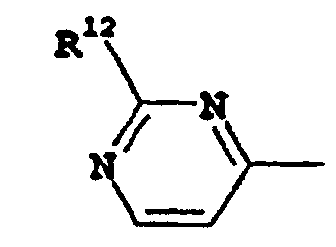
- a further particular group of compounds of the invention are compounds of formula (Ic) in which R 3 , R 4 , X 1 , X 2 and X 5 are as hereinbefore defined, one of R 1 and R 2 is 4-fluorophenyl and the other is in which R 12 is R 11 Z 2 - or Y 1 Y 2 N- ( wherein R 11 , Y 1 , Y 2 and Z 2 are as hereinbefore defined), and N-oxides thereof, and their prodrugs; and pharmaceutically acceptable salts and solvates (e.g. hydrates) of compounds of formula (Ic) and N-oxides thereof, and their prodrugs.
- R 3 , R 4 , X 1 , X 2 and X 5 are as hereinbefore defined
- one of R 1 and R 2 is 4-fluorophenyl and the other is in which R 12 is R 11 Z 2 - or Y 1 Y 2 N- ( wherein R 11 , Y 1 , Y 2 and Z 2 are as
- a further particular group of compounds of the invention are compounds of formula (Id) in which R 3 , R 4 , X 2 , X 3 , X 4 and X 5 are as hereinbefore defined, one of R 1 and R 2 is 4-fluorophenyl and the other is in which R 12 is R 11 Z 2 - or Y 1 Y 2 N- ( wherein R 11 , Y 1 , Y 2 and Z 2 are as hereinbefore defined), and N-oxides thereof, and their prodrugs; and pharmaceutically acceptable salts and solvates (e.g. hydrates) of compounds of formula (Id) and N-oxides thereof, and their prodrugs.
- R 3 , R 4 , X 2 , X 3 , X 4 and X 5 are as hereinbefore defined
- one of R 1 and R 2 is 4-fluorophenyl and the other is in which R 12 is R 11 Z 2 - or Y 1 Y 2 N- ( wherein R 11 , Y 1
- Preferred compounds of the invention are those of formula (Ia), (Ib), (Ic) or (Id) in which R 3 is C 1-4 alkyl (e.g. methyl) and R 4 represents C 1-4 alkyl (e.g. methyl).
- R 12 is preferably -NY 1 Y 2 where Y 1 and Y 2 are as hereinbefore defined, especially where Y 1 is hydrogen and Y 2 is cycloalkyl or C 2-6 alkyl substituted by C 1-4 alkoxy, for example or ⁇ NHCH 2 CH 2 OCH 3 .
- a particular group of compounds of the invention are those selected from the following:
- the compounds of the invention exhibit useful pharmacological activity and accordingly are incorporated into pharmaceutical compositions and used in the treatment of patients suffering from certain medical disorders.
- the present invention thus provides, according to a further aspect, compounds of the invention and compositions containing compounds of the invention for use in therapy.
- TNF tumour necrosis factor
- the present invention provides compounds of the invention and compositions containing compounds of the invention for use in the treatment of a patient suffering from, or subject to, conditions which can be ameliorated by the administration of an inhibitor of TNF, especially of TNF-alpha.
- compounds of the present invention are useful in the treatment of joint inflammation, including arthritis, rheumatoid arthritis and other arthritic conditions such as rheumatoid spondylitis, gouty arthritis, traumatic arthritis, rubella arthritis, psoriatic arthritis and osteoarthritis.
- the compounds are useful in the treatment of acute synovitis, tuberculosis, atherosclerosis, muscle degeneration, cachexia, Reiter's syndrome, endotoxaemia, sepsis, septic shock, endotoxic shock, gram negative sepsis, gout, toxic shock syndrome, chronic pulmonary inflammatory diseases including asthma and adult respiratory distress syndrome, silicosis, pulmonary sarcoidosis, bone resorption diseases, osteoporosis, restenosis, heart failure and myocardial ischaemic syndromes, cardiac and renal reperfusion injury, thrombosis, glomerularnephritis, graft vs, host reaction, allograft rejection and leprosy.
- the compounds are useful in the treatment of infections such as viral infections, for example HIV, cytomegalovirus (CMV), influenza, adenovirus and the Herpes group of viruses, parasitic infections, for example malaria such as cerebral malaria, and yeast and fungal infections, for example fungal meningitis; fever and myalgias due to infection; AIDS; AIDS related complex (ARC); cachexia secondary to infection or malignancy; cachexia secondary to acquired immune deficiency syndrome (AIDS) or to cancer; keloid and scar tissue formation; pyresis; diabetes; inflammatory bowel diseases such as Crohn's disease and ulcerative colitis; eczema: contact dermititis; psoriasis; sunburn and conjunctivitis.
- viruses such as viral infections, for example HIV, cytomegalovirus (CMV), influenza, adenovirus and the Herpes group of viruses, parasitic infections, for example malaria such as cerebral malaria, and yeast and fungal infections, for example fungal meningitis; fever
- Compounds of the invention are also useful in the treatment of diseases of, or injury to, the brain in which over-production of TNF-alpha has been implicated, such as multiple sclerosis, Alzheimers disease, trauma, stroke and other ischaemic conditions.
- Compounds of the invention may also be useful in inhibiting diseases associated with over-production of other pro-inflammatory cytokines.
- IL-1, IL-6 and IL-8 are examples of pro-inflammatory cytokines.
- a special embodiment of the therapeutic methods of the present invention is the treating of asthma.
- Another special embodiment of the therapeutic methods of the present invention is the treating of joint inflammation.
- Effective amount is meant to describe an amount of compound of the present invention effective in inhibiting TNF and thus producing the desired therapeutic effect.
- references herein to treatment should be understood to include prophylactic therapy as well as treatment of established conditions.
- the present invention also includes within its scope pharmaceutical compositions comprising at least one of the compounds of the invention in association with a pharmaceutically acceptable carrier or excipient.
- Compounds of the invention may be administered by any suitable means.
- compounds of the present invention may generally be administered parenterally, topically, rectally, orally or by inhalation, especially by the oral route.
- compositions according to the invention may be prepared according to the customary methods, using one or more pharmaceutically acceptable adjuvants or excipients.
- the adjuvants comprise, inter alia, diluents, sterile aqueous media and the various non-toxic organic solvents.
- the compositions may be presented in the form of tablets, pills, granules, powders, aqueous solutions or suspensions, injectable solutions, elixirs or syrups, and can contain one or more agents chosen from the group comprising sweeteners, flavorings, colorings, or stabilizers in order to obtain pharmaceutically acceptable preparations.
- excipients such as lactose, sodium citrate, calcium carbonate, dicalcium phosphate and disintegrating agents such as starch, alginic acids and certain complex silicates combined with lubricants such as magnesium stearate, sodium lauryl sulphate and talc may be used for preparing tablets.
- lactose and high molecular weight polyethylene glycols When aqueous suspensions are used they can contain emulsifying agents or agents which facilitate suspension.
- Diluents such as sucrose, ethanol, polyethylene glycol, propylene glycol, glycerol and chloroform or mixtures thereof may also be used.
- emulsions, suspensions or solutions of the products according to the invention in vegetable oil for example sesame oil, groundnut oil or olive oil, or aqueous-organic solutions such as water and propylene glycol, injectable organic esters such as ethyl oleate, as well as sterile aqueous solutions of the pharmaceutically acceptable salts, are used.
- vegetable oil for example sesame oil, groundnut oil or olive oil
- aqueous-organic solutions such as water and propylene glycol
- injectable organic esters such as ethyl oleate
- sterile aqueous solutions of the pharmaceutically acceptable salts are used.
- the solutions of the salts of the products according to the invention are especially useful for administration by intramuscular or subcutaneous injection.
- aqueous solutions also comprising solutions of the salts in pure distilled water, may be used for intravenous administration with the proviso that their pH is suitably adjusted, that they are judiciously buffered and rendered isotonic with a sufficient quantity of glucose or sodium chloride and that they are sterilized by heating, irradiation or microfiltration.
- gels water or alcohol based
- creams or ointments containing compounds of the invention may be used.
- Compounds of the invention may also be incorporated in a gel or matrix base for application in a patch, which would allow a controlled release of compound through the transdermal barrier.
- inhalation compounds of the invention may be dissolved or suspended in a suitable carrier for use in a nebulizer or a suspension or solution aerosol, or may be absorbed or adsorbed onto a suitable solid carrier for use in a dry powder inhaler.
- Solid compositions for rectal administration include suppositories formulated in accordance with known methods and containing at least one compound of the invention.
- the percentage of active ingredient in the compositions of the invention may be varied, it being necessary that it should constitute a proportion such that a suitable dosage shall be obtained. Obviously, several unit dosage forms may be administered at about the same time.
- the dose employed will be determined by the physician, and depends upon the desired therapeutic effect, the route of administration and the duration of the treatment, and the condition of the patient. In the adult, the doses are generally from about 0.001 to about 50, preferably about 0.001 to about 5, mg/kg body weight per day by inhalation, from about 0.01 to about 100, preferably 0.1 to 70, more especially 0.5 to 10, mg/kg body weight per day by oral administration, and from about 0.001 to about 10, preferably 0.01 to 1, mg/kg body weight per day by intravenous administration. In each particular case, the doses will be determined in accordance with the factors distinctive to the subject to be treated, such as age, weight, general state of health and other characteristics which can influence the efficacy of the medicinal product.
- the compounds according to the invention may he administered as frequently as necessary in order to obtain the desired therapeutic effect. Some patients may respond rapidly to a higher or lower dose and may find much weaker maintenance doses adequate. For other patients, it may be necessary to have long-term treatments at the rate of 1 to 4 doses per day, in accordance with the physiological requirements of each particular patient. Generally, the active product may be administered orally I to 4 times per day. Of course, for some patients, it will be necessary to prescribe not more than one or two doses per day.
- compounds of formula (I), wherein Het, R 3 , R 4 , R 5 and mare as defined in formula (I). may be prepared by reaction of a compound of formula (II):- Het-R 13 wherein Het is as just hereinbefore defined and R 13 is -CHO or -CH(OC 1-4 alkyl) 2 [e.g. -CH(OMe) 2 or -CH(OEt) 2 ] with a compound of formula (III):- wherein R 3 , R 4 , R 5 and m are as just hereinbefore defined.
- the reaction may conveniently be carried out in the presence of an acid catalyst, such as pyridinium 4-toluene sulphonate or 4-toluene sulphonic acid, in an inert solvent, such as toluene, at reflux temperature, with azeotropic removal of the water formed in the reaction.
- an acid catalyst such as pyridinium 4-toluene sulphonate or 4-toluene sulphonic acid
- compounds of formula (1) in which within Het R 1 represents wherein R 12 is Y 4 Y 5 N- [in which Y 4 and Y 5 are as defined in formula (I)], may be prepared by reaction of a compound of formula (IV):- wherein R 2 , R 4 , R 5 , X 1 , X 2 , X 3 , X 4 and X 5 are as defined in formula (I), with an amine of formula HNY 4 Y 5 wherein Y 4 and Y 5 are as just hereinbefore defined.
- the reaction may conveniently he carried out in an inert solvent such as dimethylformamide at a temperature up to about 100°C.
- Y 5 is hydrogen the reaction may be conveniently carried out in a sealed vessel.
- Y 5 is aryl, for example phenyl
- the reaction may be conveniently carried out with the lithio-anion of the amine.
- compounds of formula (1) wherein R 3 , R 4 , R 5 and m are as hereinbefore defined in formula (I) and within Het R 1 represents [where R 12 is a -OR 11 group in which R 11 is as defined in formula (I)] may be prepared by treating a compound of formula (IV) as defined above, with an appropriately substituted alcohol of formula R 11 OH (in which R 11 is as defined in formula (I)).
- the reaction may conveniently be carried out in the presence of an alkali metal hydride, such as sodium hydride, in a mixture of inert solvents, for example tetrahydrofuran and dimethylformamide, and at a temperature at about room temperature.
- compounds of the invention may be prepared by interconversion of other compounds of the invention.
- a base such as potassium or ammonium carbonate in methanol, or a mixture of methanol and water
- an inert solvent such as tetrahydrofuran
- peptide coupling procedures may be employed for the reaction, such as treatment with a carbodiimide, for example dicyclohexylcarbodiimide, in the presence of triethylamine, or treatment with 1-hydroxybenzotriazole and a carbodiimide, such as 1-(3-dimethylaminopropyl)-3-ethylcarbodiimide, in an inert solvent such as dimethylformamide and at a temperature at about room temperature.
- a carbodiimide for example dicyclohexylcarbodiimide
- 1-hydroxybenzotriazole and a carbodiimide such as 1-(3-dimethylaminopropyl)-3-ethylcarbodiimide
- an inert solvent such as tetrahydrofuran
- an inert solvent such as tetrahydrofuran
- an inert solvent such as tetrahydrofuran
- compounds of formula (1) in which R 3 contains a -CO 2 H group may be prepared by hydrolysis of a corresponding compound of formula (1) in which R 3 contains a -CO 2 R 14 group (in which R 14 is as hereinbefore defined).
- the hydrolysis may conveniently he carried out by alkaline hydrolysis using a base, such as an alkali metal hydroxide or carbonate, in the presence of an aqueous/organic solvent mixture, using organic solvents such as dioxan, tetrahydrofuran or methanol, at a temperature from about ambient to about reflux.
- the hydrolysis may also be carried out by acid hydrolysis using an inorganic acid, such as hydrochloric acid, in the presence of an aqueous/inert organic solvent mixture, using organic solvents such as dioxan or tetrahydrofuran, at a temperature from about 50°C to about 80°C.
- an inorganic acid such as hydrochloric acid
- an aqueous/inert organic solvent mixture using organic solvents such as dioxan or tetrahydrofuran, at a temperature from about 50°C to about 80°C.
- the coupling reaction may conveniently be carried out in the presence of 1-hydroxybenzotriazole and a carbodiimide such as 1-(3-dimethylaminopropyl)-3-ethylcarbodiimide in an inert solvent such as dimethylformamide and at a temperature at about room temperature.
- reaction may be carried out by initial conversion of the acid of formula (I), wherein R 3 contains a -CO 2 H group, to the corresponding acid chloride (for example by reaction with thionyl chloride or oxalyl chloride at room temperature) followed by treatment with an appropriately substituted amine of formula HNY 4 Y 3 .
- compounds of formula (I) containing sulphoxide linkages may be prepared by the oxidation of a corresponding compound containing an -S- linkage.
- the oxidation may conveniently be carried out by means of reaction with a peroxyacid, e.g. 3-chloroperbenzoic acid, preferably in an inert solvent, e.g. dichloromethane, preferably at or near room temperature, or alternatively by means of potassium hydrogen peroxomonosulphate in a medium such as aqueous methanol, buffered to about pH5, at temperatures between about 0°C and room temperature.
- a peroxyacid e.g. 3-chloroperbenzoic acid
- an inert solvent e.g. dichloromethane
- potassium hydrogen peroxomonosulphate a medium such as aqueous methanol, buffered to about pH5, at temperatures between about 0°C and room temperature.
- This latter method is preferred for compounds containing an acid-labile group
- compounds of formula (I) containing sulphone linkages may be prepared by the oxidation of a corresponding compounds containing an -S- or sulphoxide linkage.
- the oxidation may conveniently be carried out by means of reaction with a peroxyacid, e.g. 3-chloroperbenzoic acid, preferably in an inert solvent. e.g. dichloromethane, preferably at or near room temperature.
- compounds of formula (I) in which R 3 contains a -N(R 7 )-SO 2 -R 8 or -N(R 7 )-SO 2 -L 2 -R 9 group may be prepared from a corresponding compound of formula (I) in which R 3 contains a -NH 2 group by treatment with the appropriately substituted acid chloride Cl-SO 2 -R 8 or Cl-SO 2 -L 2 -R 9 (in which R 8 , R 9 and L 2 are as just hereinbefore defined), in the presence of a suitable base, such as triethylamine, in an inert solvent, such as tetrahydrofuran, and at a temperature at about room temperature.
- a suitable base such as triethylamine
- compounds of the present invention may contain asymmetric centres. These asymmetric centres may independently be in either the R or S configuration. It will be apparent to those skilled in the art that certain compounds of the invention may also exhibit geometrical isomerism. It is to he understood that the present invention includes individual geometrical isomers and stereoisomers and mixtures thereof, including racemic mixtures, of compounds of formula (I) hereinabove. Such isomers can be separated from their mixtures, by the application or adaptation of known methods, for example chromatographic techniques and recrystallisation techniques, or they are separately prepared from the appropriate isomers of their intermediates. Additionally, in situations where tautomers of the compounds of formula (I) are possible, the present invention is intended to include all tautomeric forms of the compounds.
- acid addition salts of the compounds of this invention may be prepared by reaction of the free base with the appropriate acid, by the application or adaptation of known methods.
- the acid addition salts of the compounds of this invention may be prepared either by dissolving the free base in water or an aqueous alcohol solution or other suitable solvents containing the appropriate acid and isolating the salt by evaporating the solution, or by reacting the free base and acid in an organic solvent, such as tetrahydrofuran, in which case the salt separates directly or can be obtained by concentration of the solution.
- parent compounds of the invention can be regenerated from their acid addition salts by the application or adaptation of known methods.
- parent compounds of the invention can be regenerated from their acid addition salts by treatment with an alkali, e.g. aqueous sodium bicarbonate solution or aqueous ammonia solution.
- base addition salts of the compounds of this invention may be prepared by reaction of the free acid with the appropriate base, by the application or adaptation of known methods.
- the base addition salts of the compounds of this invention may he prepared either by dissolving the free acid in water or aqueous alcohol solution or other suitable solvents containing the appropriate base and isolating the salt by evaporating the solution, or by reacting the free acid and base in an organic solvent, in which case the salt separates directly or can be obtained by concentration of the solution.
- parent compounds of the invention can be regenerated from their base addition salts by the application or adaptation of known methods.
- parent compounds of the invention can be regenerated from their base addition salts by treatment with an acid, e.g. hydrochloric acid.
- Hydrates of compounds of the present invention may lie conveniently prepared, or formed during the process of the invention, as solvates (e.g. hydrates). Hydrates of compounds of the present invention may be conveniently prepared by recrystallisation from water.
- the starting materials and intermediates may be prepared by the application or adaptation of known methods, for example methods as described in the Reference Examples or their obvious chemical equivalents.
- a suitable base such as lithium bis (trimethylsilyl)amide
- an inert solvent such as tetrahydrofuran
- Alkenes of formula (4) wherein Het is [in which R 1 and R 2 are as defined in formula (I)] may be prepared by adaptation of the methodology described by Ciufolini, M A et al., J. Am. Chem. Soc. 1996, 118(48), 12082-12089.
- Esters of formula (6) wherein Het is [in which R 1 and R 2 are as defined in formula (I)] and R 15 is alkyl may be prepared by the application or adaptation of the methods described in the specification of European Patent Application No. EP 728755.
- Esters of formula (6) wherein Het is [in which R 1 and R 2 are as defined in formula (I)] and R 15 is alkyl may be prepared by the application or adaptation of methods described by Bruche, Luca et al., Synthesis, 1985, 3, 304-5.
- Esters of formula (6) wherein Het is [in which R 1 and R 2 are as defined in formula (I)] and R 15 is alkyl may be prepared by the application or adaptation of methods described by I.K.Khanna et al., J.Med.Chem., 1997, 40, pages 1634-1647.
- Esters of formula (6) wherein Het is [in which R 1 and R 2 are as defined in formula (I)] and R 15 is alkyl may be prepared by the application or adaptation of methods described in the specification of International Patent Application Publication No. WO 98/03484.
- Esters of formula (6) wherein Het is [in which R 1 and R 2 are as defined in formula (I)] and R 15 is methyl may be prepared by methoxycarbonylation of a corresponding pyridazine-6-trifluoromethanesulphonate (7):- wherein R 1 and R 2 are as just hereinbefore defined and R 16 is -OSO 2 CF 3 by the application or adaptation of the procedure described by Rhor, M et al., Heterocycles, 1996, 43, 1459-1464.
- Pyrrole derivatives of formula (9) wherein Het is [in which R 1 and R 2 are as defined in formula (I)] may be prepared by adaptation of the methods described by Katritzky, A R, Tetrahedron, 1995, 51, 13271-6.
- Oxazole derivatives of formula (9) wherein Het is [in which R 1 and R 2 are as defined in formula (I)] may he prepared by reaction of compounds of formula (10):- wherein R 1 and R 2 are as just hereinbefore defined, with urea and formic acid in an inert solvent, such as acetonitrile, in the presence of triethylamine and at a temperature at about reflux temperature.
- an inert solvent such as acetonitrile
- Oxazole derivatives of formula (9) wherein Het is [in which R 1 and R 2 are as defined in formula (I)] may be prepared by reaction of compounds of formula (12):- wherein R 1 and R 2 are as just hereinbefore dcfined, with zine in formic acid at a temperature at about reflux temperature.
- Compounds of formula (12) wherein R 1 and R 2 are as defined in formula (I) may be prepared by reaction of compounds of formula (II) wherein R 1 and R 2 are as defined in formula (I) with sodium nitrite in water at a temperature at about 10°C.
- Compounds of formula (13) wherein R 2 is as defined in formula (I) may be prepared by reaction of methyl diethoxyacetimidate (prepared according to the procedure of Schaefer et.al. J.Org.Chem., 1961, 26, pages 412-418) with hydrazines of formula (15):- R 2 -NH-NH 2 .HCl wherein R 2 is as just hereinbefore defined at a temperature at about room temperature.
- a base such as potassium carbonate
- an inert solvent such as dimethylformamide
- the coupling may conveniently be carried out with a carbodiimide, such as dicyclohexylcarbodiimide, in the presence of 1-hydroxybenzotriazole and disisopropylethylamine, in an inert solvent, such as acetonitrile, and at a temperature from room temperature to about 55°C.
- a carbodiimide such as dicyclohexylcarbodiimide
- 1-hydroxybenzotriazole and disisopropylethylamine in an inert solvent, such as acetonitrile
- an inert solvent such as tetrahydrofuran
- Resins of formula Resin C in which R 2 , R 4 , R 5 and m are as hereinbefore defined, and R 3 contains a -N(R 7 )-SO 2 -R 8 or -N(R 7 )-SO 2 -L 2 -R 9 group (in which R 7 , R 8 , R 9 and L 2 are as hereinbefore defined), may be prepared from a corresponding Resin C, in which R 2 , R 4 , R 5 and m are as hereinbefore defined and R 3 contains a -NH 2 group by treatment with the appropriately substituted sulphonyl chloride Cl-SO 2 -R 8 or Cl-SO 2 -L 2 -R 9 (in which R 8 , R 9 and L 2 are as hereinbefore defined), in the presence of triethylamine, in an inert solvent, such as tetrahvdrofuran, and at a temperature at about room temperature.
- an inert solvent such as tetrahvdro
- Compounds of formula (IV) may conveniently be prepared by means of reacting a compound of formula (16):- wherein R 2 , R 4 , R 5 , X 1 , X 2 , X 3 , X 4 and X 5 are as defined in formula (IV) above, with an amine of formula HNY 4 Y 5 wherein Y 4 and Y 5 are as defined in formula (IV) above, with a peroxyacid, e.g. 3-chloroperbenzoic acid, preferably in an inert solvent, such as dichloromethane, at a temperature from about 0°C to about room temperature.
- a peroxyacid e.g. 3-chloroperbenzoic acid
- the present invention is further Exemplified but not limited by the following illustrative Examples and Reference Examples.
- Mass spectra were recorded on a Micromass Platform 11 mass spectrometer fitted with an Electrospray source and an HP1100 liquid chromatograph; using a mixture of acetonitrile and water (1:1, v/v) as the mobile phase, a flow rate of 0.3 ml/minute, an injection volume of 20 ⁇ l, a run time of 2.0 minutes, a scan range of 80 - 850 Daltons Positive/Negative, a scan time of 2.0 seconds, an ESI voltage of 3.5Kv, an ESI pressure of 20n/m2 Nitrogen.
- PBMs peripheral blood monocytes
- HBSS Hank's balanced salts solution
- Cells from the mononuclear leukocyte fraction were centrifuged (200g, 10min, 20°C), resuspended, at a density of 10 6 cells/ml, in RPMI 1640 containing foetal calf serum (FCS) (1 % ), penicillin (50 U/ml) and streptomycin (50 ⁇ g/ml) and allowed to adhere in 96 well plates. Following incubation (5% CO 2 . 37°C) for 90minutes, medium containing non-adherent cells was removed, the cells were washed once with fresh medium and fresh medium was added.
- FCS foetal calf serum
- penicillin 50 U/ml
- streptomycin 50 ⁇ g/ml
- Adherent cells in culture medium were incubated for 1 hour (5% CO 2 , 37°C) with fresh medium containing compounds or vehicle (0.1 % dimethylsulphoxide). Compounds were tested within the concentration range of 3x10 -9 M to 3x10 -6 M. LPS (10 ng/ml) was then added to the cells and the incubation continued for a further 18 hours. Cell supernatants were removed into 96 well. 0.22 ⁇ m filtration plates for storage at -20°C. TNF-alpha concentrations in cell supernatants were quantified by sandwich ELISA. Briefly, ELISA plates were coated overnight with 2 ⁇ g/ml of mouse anti-human TNF-alpha antibody in bicarbonate buffer (pH 9.9).
- TNF ⁇ concentrations in supernatants from control and LPS-stimulated monocyte incubations were calculated by interpolation from a standard (log/log) curve (0.125-16 ng/ml) fitted by linear regression using a Multicalc software program (Wallac U.K., Ltd).
- Compounds within the scope of the invention produce 50% inhibition of LPS induced TNF-alpha release from human monocytes at concentrations within the range of 10 -9 M to 10 -4 M, preferably within the range of 10 -9 M to 10 -7 M.
- mice Female Balb/c mice (age 6-8 weeks, weight 20-22g from Charles River, U.K.) in groups of live or more animals were dosed p.o. with compounds (1 to 100mg/kg) suspended in 1.5% (w/v) carboxymethyl cellulose then challenged after a minimum period of 30 minutes with 30mg of LPS i.p. After 90 minutes, the animals were killed by carbon dioxide asphyxiation and bled by cardiac puncture. Blood was allowed to clot at 4°C, centrifuged (12,000 g for 5 minutes) and serum taken for TNF-alpha analysis. TNF-alpha levels are measured using a commercially available murine TNF-alpha ELISA kit, purchased from Genzyme (Cat. no. 1509.00), as recommended by the manufacturer. Values for TNF-alpha were calculated from a recombinant murine TNF-alpha standard curve as above.
- Compounds within the scope of the invention inhibit TNF-alpha release in LPS challenged mice up to 50% at doses of 0.1 mg/kg to 100mg/kg.
Landscapes
- Health & Medical Sciences (AREA)
- Chemical & Material Sciences (AREA)
- Organic Chemistry (AREA)
- Medicinal Chemistry (AREA)
- Chemical Kinetics & Catalysis (AREA)
- General Chemical & Material Sciences (AREA)
- Engineering & Computer Science (AREA)
- Nuclear Medicine, Radiotherapy & Molecular Imaging (AREA)
- Bioinformatics & Cheminformatics (AREA)
- Pharmacology & Pharmacy (AREA)
- Life Sciences & Earth Sciences (AREA)
- Animal Behavior & Ethology (AREA)
- General Health & Medical Sciences (AREA)
- Public Health (AREA)
- Veterinary Medicine (AREA)
- Diabetes (AREA)
- Pulmonology (AREA)
- Hematology (AREA)
- Obesity (AREA)
- Endocrinology (AREA)
- Immunology (AREA)
- Cardiology (AREA)
- Heart & Thoracic Surgery (AREA)
- Emergency Medicine (AREA)
- Child & Adolescent Psychology (AREA)
- Ophthalmology & Optometry (AREA)
- Vascular Medicine (AREA)
- Orthopedic Medicine & Surgery (AREA)
- Rheumatology (AREA)
- Physical Education & Sports Medicine (AREA)
- Urology & Nephrology (AREA)
- Pharmaceuticals Containing Other Organic And Inorganic Compounds (AREA)
- Plural Heterocyclic Compounds (AREA)
Claims (19)
- Un composé de formule générale (I) :où :-
 et des oxydes N de ceux-ci et leurs prodrogues ; et des sels pharmaceutiquement acceptables et des solutés de composés de formule (I) et des oxydes N de ceux-ci ; et leurs prodrogues.Het est un noyau hétéroaromatique à cinq ou six membres de formuledans laquelle un de R1 et R2 est un hétéroaryle facultativement substitué et l'autre est un hétéroaryle facultativement substitué ou un aryle facultativement substitué ; X1 est une liaison, X3 et X4 sont chacun indépendamment N ou C et X2 et X5 sont indépendamment CH, N, NH, O ou S ; ou X3 et X4 sont C, un de X1, X2 et X5 est N et les autres sont N ou CH ; à l'exclusion toutefois des composés où X1 est une liaison, un de X2 et X5 est N et l'autre est NH et X3 et X4 sont tous deux C ;
 R3 représente un groupement -L1-R6 ;R4 représente de l'hydrogène, alkyle ou hydroxyalkyle ; ouR3 et R4, s'ils sont liés au même atome de carbone, peuvent former avec ce dit atome de carbone un noyau cycloalkyle, cycloalkényle ou hétérocycloalkyle ou un groupement C=CH2 ;R5 représente de l'hydrogène ou de l'alkyle ;R6 est un hydrogène, alkyle, azido, hydroxy, alkoxy, aryle, arylalkyloxy, aryloxy, carboxy (ou -C(=O)-NHOH, -C(=O)-CH2OH, -C(=O)-CH2SH, -C(=O)-NH-CN, sulpho, phosphono, alkylsulphonylcarbamoyle, tétrazolyle, arylsulphonylcarbamoyle, hétéroarylsulphonylcarbamoyle, N-méthoxycarbamoyle, 3-hydroxy-3-cyclobutène-1,2-dione,3,5-dioxo-1,2,4-oxadiazolidinyl,3-hydroxyisoxazolyle ou 3-hydroxy-1-méthylpyrazolyl) cycloalkyle, cycloalkyloxy, hétéroaryle, hétéroarylalkyloxy, hétéroaryloxy, hétérocycloalkyle, hétérocycloalkyloxy, nitro, -NY1Y2, -N(R7)-C(=Z)-R8, -N(R7)-C(=Z)-L2-R9, -NH-C(=Z)-NH-R8, -NH-C(=Z)-NH-L2-R9, -N(R7)-SO2-R8, -N(R7)-SO2-L2-R9, -S(O)nR10, -C(=Z)-NY1Y2 ou -C(=Z)-OR10 ;R7 est un hydrogène, alkyle, aryle, arylalkyle, cycloalkyle, hétéroaryle, hétéroarylalkyle, ou hétérocycloalkyle ;R8 est un alkyle, alkoxy, aryle, arylalkyloxy, cycloalkyle, hétéroaryle, hétéroarylalkyloxy ou hétérocycloalkyle ;R9 est un alkoxy, aryle, arylalkyloxy, arylalkyloxycarbonylamino, carboxy (ou -C(=O)-NHOH,-C(=O)-CH2OH, -C(=O)-CH2SH, -C(=O)-NH-CN, sulpho, phosphono, alkylsulphonylcarbamoyle, tétrazolyle, arylsulphonylcarbamoyle, hétéroarylsulphonylcarbamoyle, N-méthoxycarbamoyle, 3-hydroxy-3-cyclobutène-1,2-dione,3,5-dioxo-1,2,4-oxadiazolidinyl,3-hydroxyisoxazolyle ou 3-hydroxy-1-méthylpyrazolyl), cycloalkyle, cyano, halo, hétéroaryle, hétéroarylalkoxy, hétérocycloalkyle, hydroxy ou -NY3Y4 ;R10 est un alkyle, aryle, arylalkyle, cycloalkyle, hétéroaryle, hétéroarylalkyle, ou hétérocycloalkyle ;L1 représente une liaison directe ou une liaison alkylène à chaíne droite ou ramifiée contenant de 1 à environ 6 atomes de carbone et facultativement substitué de halogène, hydroxy, alkoxy ou oxo ;L2 est une liaison alkylène à chaíne droite ou ramifiée contenant de 1 à environ 6 atomes de carbone ;Y1 et Y2 sont indépendamment un hydrogène, alkenyle, alkynyle, aryle, cycloalkyle, hétérocycloalkyle, hétéroaryle ou alkyle facultativement substitué de alkoxy, aryle, cyano, cycloalkyle, hétéroaryle, hétérocycloalkyle, hydroxy, oxo, -CO2R7, -CONY3Y4 ou -NY3Y4 ou le groupement -NY1Y2 peut former une amine cyclique à 5-7 membres (i) qui peuvent être facultativement substitués par un substituent ou plus sélectionnés parmi les alkoxy, carboxamido, carboxy, hydroxy, oxo (ou un dérivé acétal cyclique de ceux-ci à 5,6 ou 7 membres), alkyle, aryle, arylalkyle, cycloalkyle, hétéroaryle, hétéroarylalkyle ou hétérocycloalkyle ou alkyle substitué de carboxy, carboxamido ou hydroxy (ii) qui peuvent également contenir un hétéroatome supplémentaire sélectionné parmi O, S, SO2 ou NY5 et (iii) qui peuvent également être en fusion avec des noyaux aryle, hétéroaryle, hétérocycloalkyle ou cycloalkyle supplémentaires pour former un système de noyau bicyclique ou tricyclique ;Y3 et Y4 sont indépendamment un hydrogène, alkenyle, alkyle, alkynyle, aryle, arylalkyle, cycloalkyle, hétéroaryle ou hétéroarylalkyle ou le groupement
-NY3Y4 peut former une amine cyclique à 5-7 membres, telle que définie pour -NY1Y2 ci-dessus ;Y5 est un hydrogène, alkyle, aryle, arylalkyle, -C(=Z)R10, -C(=Z)OR10 ou -SO2R10 ;Z est un atome d'oxygène ou de soufre ;m est zéro ou un nombre entier 1 ou 2 ; etn est zéro ou un nombre entier 1 ou 2 ; - Un composé selon la revendication 1, où Het représenteoù un de X1, X2 et X5 représente N et les autres indépendamment représentent N ou CH.
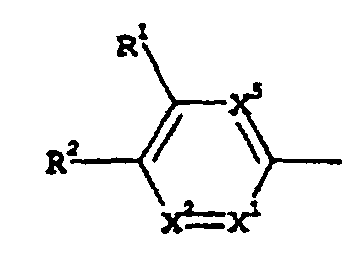
- Un composé selon la revendication 1, où Het représenteoù X2 et X5 sont indépendamment CH, N, NH, O ou S, et X3 et X4 indépendamment représentent N ou C, mais à l'exclusion des composés où un de X2 et X5 est N et l'autre est NH et X3 et X4 sont tous deux C.

- Un composé selon toute revendication précédente où le noyauest


- Un composé selon toute revendication précédente où un de R1 et R2 est un 4-pyridyle et l'autre est un 4-fluorophényle.
- Un composé selon l'une quelconque des revendications 1 à 4, où un de R1 et R2 est un 4-fluorophényle et l'autre est[où R12 est R11Z2- (où R11 est alkyle, aryle, cycloalkyle, hétéroaryle, hétérocycloalkyle ou un alkyle substitué par alkoxy, aryle, cyano, cycloalkyle, hétéroaryle, hétérocycloalkyle, hydroxy, oxo, -CO2R7, -CONY3Y4 ou -NY1Y2 et Z2 est O ou S(O)n) ou Y1Y2N- et Y1 à Y4, R7 et n sont tels que définis en revendication 1].
- Un composé selon la revendication 1 répondant à la formule (Ia)dans laquelle R3, R4, X1, X2 et X5 sont tels que définis en revendication 1, un de R1 et R2 est une 4-pyridyle et l'autre est un 4-fluorophényle et des oxydes N de ceux-ci, ainsi que leurs prodrogues ; et les sels pharmaceutiquement acceptables et les solutés des composés de formule (Ia) et les oxydes N de ceux-ci et leurs prodrogues.

- Un composé selon la revendication 1 répondant à la formule (Ib)dans laquelle R3, R4, X2 , X3, X4 et X5 sont tels que définis en revendication 1, un de R1 et R2 est une 4-pyridyle et l'autre est un 4-fluorophényle et des oxydes N de ceux-ci, ainsi que leurs prodrogues ; et les sels pharmaceutiquement acceptables et les solutés des composés de formule (Ib) et les oxydes N de ceux-ci et leurs prodrogues.

- Un composé selon la revendication 1 répondant à la formule (Ic)dans laquelle R3, R4, X1, X2 et X5 sont tels que définis en revendication 1, un de R1 et R2 est un 4-fluorophényle et l'autre est
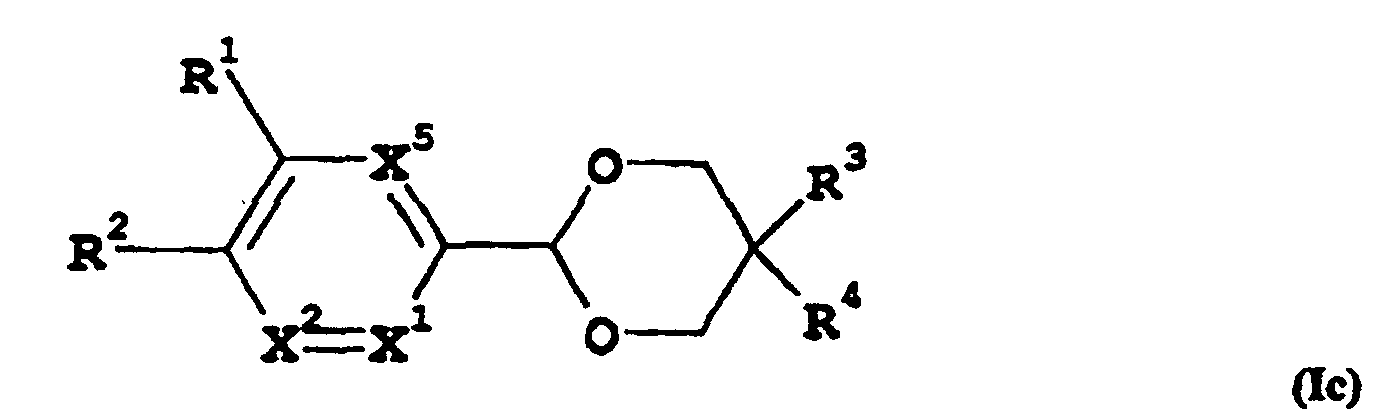 [où R12 est Y1Y2N- où Y1 et Y2 sont tels que définis en revendication 1], et des oxydes N de ceux-ci, ainsi que leurs prodrogues ; et les sels pharmaceutiquement acceptables et les solutés des composés de formule (Ic) et les oxydes N de ceux-ci et leurs prodrogues.
- Un composé selon la revendication 1 répondant à la formule (Id)dans laquelle R3, R4, X2 , X3, X4 et X5 sont tels que définis en revendication 1, un de R1 et R2 est un 4-fluorophényle et l'autre est
 [où R12 est Y1Y2N- où Y1 et Y2 sont tels que définis en revendication 1] et des oxydes N de ceux-ci, ainsi que leurs prodrogues ; et les sels pharmaceutiquement acceptables et des solutés des composés de formule (Id) et les oxydes N de ceux-ci et leurs prodrogues.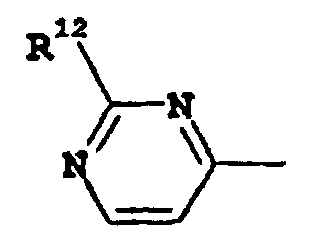
- Un composé selon toute revendication précédente où R3 et R4 sont tous deux des groupes C1-4alkyle.
- Un composé selon l'une quelconque des revendications 1 à 10 où R3 est -C(=O)-NY1Y2 (où Y1 et Y2 sont tels que définis en revendication 1) et R4 est C1-4alkyle.
- Un composé selon la revendication 12 où Y1 est de l'hydrogène et Y2 est un alkyle ou cycloalkyle.
- Un composé selon la revendication 12 où le groupe -NY1Y2 forme une amine cyclique à 5-7 membres contenant un hétéroatome supplémentaire sélectionné parmi O ou NY5 (où Y5 est H ou alkyle).
- Une composition pharmaceutique comprenant un composé selon la revendication 1 ainsi qu'un support ou excipient pharmaceutiquement acceptable.
- Un composé selon la revendication 1 d'usage thérapeutique.
- Utilisation d'un composé selon la revendication 1 pour la production d'un médicament visant le traitement d'un état qui peut être amélioré par l'administration d'un inhibiteur ou de TNF-alpha.
- Utilisation selon la revendication 17 pour le traitement de l'asthme.
- Utilisation selon la revendication 17 pour le traitement des inflammations articulaires.
Priority Applications (1)
| Application Number | Priority Date | Filing Date | Title |
|---|---|---|---|
| SI9930181T SI1140916T1 (en) | 1998-12-16 | 1999-12-16 | Heteroaryl-cyclic acetals |
Applications Claiming Priority (5)
| Application Number | Priority Date | Filing Date | Title |
|---|---|---|---|
| GB9827721 | 1998-12-16 | ||
| GBGB9827721.3A GB9827721D0 (en) | 1998-12-16 | 1998-12-16 | Chemical compounds |
| US12242599P | 1999-03-02 | 1999-03-02 | |
| US122425P | 1999-03-02 | ||
| PCT/GB1999/004283 WO2000035911A1 (fr) | 1998-12-16 | 1999-12-16 | Acetals heteroaryl-cycliques |
Publications (2)
| Publication Number | Publication Date |
|---|---|
| EP1140916A1 EP1140916A1 (fr) | 2001-10-10 |
| EP1140916B1 true EP1140916B1 (fr) | 2002-11-13 |
Family
ID=26314848
Family Applications (1)
| Application Number | Title | Priority Date | Filing Date |
|---|---|---|---|
| EP99962334A Expired - Lifetime EP1140916B1 (fr) | 1998-12-16 | 1999-12-16 | Acetals heteroaryl-cycliques |
Country Status (11)
| Country | Link |
|---|---|
| US (1) | US7479501B2 (fr) |
| EP (1) | EP1140916B1 (fr) |
| JP (1) | JP4634613B2 (fr) |
| AT (1) | ATE227719T1 (fr) |
| AU (1) | AU768259B2 (fr) |
| CA (1) | CA2355075C (fr) |
| DE (1) | DE69903976T2 (fr) |
| DK (1) | DK1140916T3 (fr) |
| ES (1) | ES2188280T3 (fr) |
| PT (1) | PT1140916E (fr) |
| WO (1) | WO2000035911A1 (fr) |
Cited By (1)
| Publication number | Priority date | Publication date | Assignee | Title |
|---|---|---|---|---|
| EP1224207B1 (fr) * | 1999-09-29 | 2006-02-15 | Phytopharm Plc | Derives 5-hydroxysapogenine actifs contre la demence |
Families Citing this family (37)
| Publication number | Priority date | Publication date | Assignee | Title |
|---|---|---|---|---|
| US6777217B1 (en) | 1996-03-26 | 2004-08-17 | President And Fellows Of Harvard College | Histone deacetylases, and uses related thereto |
| US6858617B2 (en) | 1998-05-26 | 2005-02-22 | Smithkline Beecham Corporation | Substituted imidazole compounds |
| WO2000025791A1 (fr) | 1998-11-04 | 2000-05-11 | Smithkline Beecham Corporation | Pyrazines substitues pyridin-4-yle ou pyrimidin-4-yle |
| AU1781601A (en) | 1999-11-23 | 2001-06-04 | Smithkline Beecham Corporation | 3,4-dihydro-(1h)quinazolin-2-one compounds as csbp/p38 kinase inhibitors |
| EP1233951B1 (fr) | 1999-11-23 | 2005-06-01 | SmithKline Beecham Corporation | Composes de 3,4-dihydro-(1h)quinazolin-2-one utilises comme inhibiteurs de kinase csbp/p38 |
| ATE305787T1 (de) | 1999-11-23 | 2005-10-15 | Smithkline Beecham Corp | 3,4-dihydro-(1h)chinazolin-2-on-verbindungen als csbp/p39-kinase-inhibitoren |
| US7235551B2 (en) | 2000-03-02 | 2007-06-26 | Smithkline Beecham Corporation | 1,5-disubstituted-3,4-dihydro-1h-pyrimido[4,5-d]pyrimidin-2-one compounds and their use in treating csbp/p38 kinase mediated diseases |
| US20030129724A1 (en) | 2000-03-03 | 2003-07-10 | Grozinger Christina M. | Class II human histone deacetylases, and uses related thereto |
| EE200300437A (et) | 2001-03-09 | 2004-02-16 | Pfizer Products Inc. | Triasolopüridiinid kui põletikuvastased ained |
| CA2440211A1 (fr) | 2001-03-09 | 2002-09-19 | Pfizer Products Inc. | Composes de benzimidazole anti-inflammatoires |
| ES2247271T3 (es) | 2001-04-04 | 2006-03-01 | Pfizer Products Inc. | Nuevos benzotriazoles como compuestos antiinflamatorios. |
| WO2002089782A2 (fr) * | 2001-05-09 | 2002-11-14 | President And Fellows Of Harvard College | Dioxanes et leurs utilisations |
| US7244853B2 (en) | 2001-05-09 | 2007-07-17 | President And Fellows Of Harvard College | Dioxanes and uses thereof |
| IL160327A0 (en) | 2001-08-13 | 2004-07-25 | Janssen Pharmaceutica Nv | 2,4,5-trisubstituted thiazolyl derivatives and their antiinflammatory activity |
| DE60310730T2 (de) | 2002-07-09 | 2007-05-16 | Boehringer Ingelheim Pharma Gmbh & Co. Kg | Pharmazeutische zusammensetzungen aus anticholinergica und p38 kinase hemmern zur behandlung von erkrankungen der atemwege |
| US7005523B2 (en) | 2002-08-30 | 2006-02-28 | Pfizer Inc. | Cycloalkyl-[4-(trifluorophenyl)-oxazol-5yl]-triazolo-pyridines |
| US7012143B2 (en) | 2002-08-30 | 2006-03-14 | Dombroski Mark A | Cycloalkyl-[4-(difluorophenyl)-oxazol-5-yl]-triazolo-pyridines |
| US6949652B2 (en) | 2002-08-30 | 2005-09-27 | Pfizer, Inc. | Crystalline forms of 3-isopropyl-6-[4-(2,5-difluoro-phenyl)-oxazol-5-yl]-[1,2,4]triazolo-[4,3-A]pyridine |
| US7037923B2 (en) | 2002-08-30 | 2006-05-02 | Pfizer, Inc. | Alkyl-[4-(trifluorophenyl)-oxazol-5-yl]-triazolo-pyridines |
| PA8579601A1 (es) | 2002-08-30 | 2004-05-07 | Pfizer Prod Inc | Compuestos antiinflamatorios de di y trifloruro-triazolo-piridinas |
| US8273347B2 (en) * | 2003-05-13 | 2012-09-25 | Depuy Spine, Inc. | Autologous treatment of degenerated disc with cells |
| US7344716B2 (en) * | 2003-05-13 | 2008-03-18 | Depuy Spine, Inc. | Transdiscal administration of specific inhibitors of pro-inflammatory cytokines |
| US7429378B2 (en) * | 2003-05-13 | 2008-09-30 | Depuy Spine, Inc. | Transdiscal administration of high affinity anti-MMP inhibitors |
| US8895540B2 (en) * | 2003-11-26 | 2014-11-25 | DePuy Synthes Products, LLC | Local intraosseous administration of bone forming agents and anti-resorptive agents, and devices therefor |
| US20060035893A1 (en) | 2004-08-07 | 2006-02-16 | Boehringer Ingelheim International Gmbh | Pharmaceutical compositions for treatment of respiratory and gastrointestinal disorders |
| PE20060777A1 (es) | 2004-12-24 | 2006-10-06 | Boehringer Ingelheim Int | Derivados de indolinona para el tratamiento o la prevencion de enfermedades fibroticas |
| CN101495116A (zh) | 2005-03-22 | 2009-07-29 | 哈佛大学校长及研究员协会 | 蛋白降解病症的治疗 |
| AU2007214458C1 (en) | 2006-02-14 | 2012-12-06 | Dana-Farber Cancer Institute, Inc. | Histone deacetylase inhibitors |
| AU2007345292B2 (en) | 2006-02-14 | 2013-10-31 | Dana-Farber Cancer Institute, Inc. | Bifunctional histone deacetylase inhibitors |
| CA2654540C (fr) | 2006-05-03 | 2017-01-17 | President And Fellows Of Harvard College | Inhibiteurs d'histone desacetylases et de tubuline desacetylases |
| EP1992344A1 (fr) | 2007-05-18 | 2008-11-19 | Institut Curie | P38 alpha comme cible therapeutique pour les maladies associées á une mutation de FGFR3 |
| US8986696B2 (en) * | 2007-12-21 | 2015-03-24 | Depuy Mitek, Inc. | Trans-capsular administration of p38 map kinase inhibitors into orthopedic joints |
| US20090162351A1 (en) * | 2007-12-21 | 2009-06-25 | Depuy Spine, Inc. | Transdiscal administration of inhibitors of p38 MAP kinase |
| RU2515611C2 (ru) | 2008-07-23 | 2014-05-20 | Президент Энд Феллоуз Оф Гарвард Колледж | Ингибиторы деацетилазы и их применение |
| WO2011019393A2 (fr) | 2009-08-11 | 2011-02-17 | President And Fellows Of Harvard College | Inhibiteurs de hdac classe- et isoforme-spécifiques et utilisations de ceux-ci |
| CN104039785A (zh) | 2011-10-06 | 2014-09-10 | 拜耳知识产权有限责任公司 | 作为杀真菌剂的杂环基吡(嘧)啶基吡唑 |
| WO2017151409A1 (fr) | 2016-02-29 | 2017-09-08 | University Of Florida Research Foundation, Incorporated | Méthodes de chimiothérapie |
Family Cites Families (8)
| Publication number | Priority date | Publication date | Assignee | Title |
|---|---|---|---|---|
| DE3346175A1 (de) * | 1983-12-21 | 1985-07-11 | Merck Patent Gmbh, 6100 Darmstadt | Pyridylthiophene |
| GB9106508D0 (en) * | 1991-03-27 | 1991-05-15 | Rhone Poulenc Rorer Ltd | New compositions of matter |
| WO1996014302A1 (fr) * | 1994-11-08 | 1996-05-17 | Eisai Co., Ltd. | Derives pyrazole presentant des effets anti-inflammatoires et analgesiques |
| EP0983260A2 (fr) | 1997-05-22 | 2000-03-08 | G.D. Searle & Co. | PYRAZOLES 3(5)-HETEROARYL SUBSTITUEES UTILISEES COMME INHIBITEURS DE KINASE p38 |
| PL337020A1 (en) | 1997-05-22 | 2000-07-31 | Searle & Co | Substituted pyrazoles as kinase p38 inhibitors |
| AU7726898A (en) | 1997-05-22 | 1998-12-11 | G.D. Searle & Co. | Pyrazole derivatives as p38 kinase inhibitors |
| KR100704059B1 (ko) * | 1997-06-12 | 2007-04-05 | 롱프랑 로라 리미티드 | 이미다졸릴-사이클릭 아세탈 |
| CA2294057A1 (fr) | 1997-06-13 | 1998-12-17 | Smithkline Beecham Corporation | Nouveaux composes de pyrazole et de pyrazoline substitues |
-
1999
- 1999-12-16 WO PCT/GB1999/004283 patent/WO2000035911A1/fr not_active Ceased
- 1999-12-16 EP EP99962334A patent/EP1140916B1/fr not_active Expired - Lifetime
- 1999-12-16 CA CA002355075A patent/CA2355075C/fr not_active Expired - Lifetime
- 1999-12-16 ES ES99962334T patent/ES2188280T3/es not_active Expired - Lifetime
- 1999-12-16 AT AT99962334T patent/ATE227719T1/de active
- 1999-12-16 DE DE69903976T patent/DE69903976T2/de not_active Expired - Lifetime
- 1999-12-16 AU AU18711/00A patent/AU768259B2/en not_active Expired
- 1999-12-16 JP JP2000588171A patent/JP4634613B2/ja not_active Expired - Fee Related
- 1999-12-16 PT PT99962334T patent/PT1140916E/pt unknown
- 1999-12-16 DK DK99962334T patent/DK1140916T3/da active
-
2001
- 2001-05-31 US US09/871,564 patent/US7479501B2/en not_active Expired - Fee Related
Cited By (1)
| Publication number | Priority date | Publication date | Assignee | Title |
|---|---|---|---|---|
| EP1224207B1 (fr) * | 1999-09-29 | 2006-02-15 | Phytopharm Plc | Derives 5-hydroxysapogenine actifs contre la demence |
Also Published As
| Publication number | Publication date |
|---|---|
| DE69903976T2 (de) | 2003-07-24 |
| PT1140916E (pt) | 2003-03-31 |
| US7479501B2 (en) | 2009-01-20 |
| DK1140916T3 (da) | 2003-03-10 |
| US20050090501A1 (en) | 2005-04-28 |
| ATE227719T1 (de) | 2002-11-15 |
| AU768259B2 (en) | 2003-12-04 |
| JP4634613B2 (ja) | 2011-02-16 |
| CA2355075C (fr) | 2009-12-08 |
| WO2000035911A1 (fr) | 2000-06-22 |
| AU1871100A (en) | 2000-07-03 |
| CA2355075A1 (fr) | 2000-06-22 |
| ES2188280T3 (es) | 2003-06-16 |
| EP1140916A1 (fr) | 2001-10-10 |
| DE69903976D1 (de) | 2002-12-19 |
| JP2002532495A (ja) | 2002-10-02 |
Similar Documents
| Publication | Publication Date | Title |
|---|---|---|
| EP1140916B1 (fr) | Acetals heteroaryl-cycliques | |
| US11492365B2 (en) | Heterocyclic GLP-1 agonists | |
| PL199893B1 (pl) | Imidazolilo-cykliczne acetale, kompozycja farmaceutyczna oraz zastosowanie imidazolilo-cyklicznych acetali | |
| EP1183254B1 (fr) | Composes d'heteroaryle bicyclique substitue utilises comme antagonistes de l'integrine | |
| US20230391760A1 (en) | Heterocyclic glp-1 agonists | |
| US20240366639A1 (en) | Heterocyclic glp-1 agonists | |
| EP1592686B1 (fr) | Inhibiteurs de gyrase et utilisations de ces inhibiteurs | |
| EP2308869B1 (fr) | Composé azole | |
| US20100152178A1 (en) | Imidazole derivatives | |
| JP2024534659A (ja) | N-(5-置換[(1,3,4-チアジアゾリル)または(チアゾリル)])(置換)カルボキサミド化合物、及びヒトポリメラーゼシータを阻害するためのその使用 | |
| EA019146B1 (ru) | Агонисты рецептора меланокортина | |
| JP2001504490A (ja) | トリアリール置換イミダゾール、そのような化合物を含む組成物及び使用方法 | |
| EP1382603A1 (fr) | Compose azote a anneaux condenses possedant un groupe pyrazolyle et servant de substituant, et composition medicale le comprenant | |
| KR20090015066A (ko) | C-fms 키나제의 저해제 | |
| MX2009000395A (es) | Triazolil fenil bencenosulfonamidas. | |
| JPWO2014030743A1 (ja) | 複素環化合物 | |
| CA2513631A1 (fr) | Derives d'uree cyclique, leur preparation et leur utilisation pharmaceutique comme inhibiteurs de kinases | |
| EA039493B1 (ru) | Биарилметильные гетероциклы | |
| US9745282B2 (en) | Indoline compounds as aldosterone synthase inhibitors | |
| TW200904433A (en) | Substituted imidazole compound and use thereof | |
| KR20100110834A (ko) | 트리아졸 옥사다이아졸 유도체 | |
| JP2022537904A (ja) | ヒストン脱アセチル化酵素6阻害剤としての1,3,4-オキサジアゾールホモフタルイミド誘導体化合物、およびそれを含む薬剤学的組成物 | |
| JP2013536207A (ja) | ヒドロキサメート骨格のデアセチラーゼ類阻害剤 | |
| US5955480A (en) | Triaryl substituted imidazoles, compositions containing such compounds and methods of use | |
| CA2372836C (fr) | Pyrrolidines substituees |
Legal Events
| Date | Code | Title | Description |
|---|---|---|---|
| PUAI | Public reference made under article 153(3) epc to a published international application that has entered the european phase |
Free format text: ORIGINAL CODE: 0009012 |
|
| 17P | Request for examination filed |
Effective date: 20010606 |
|
| AK | Designated contracting states |
Kind code of ref document: A1 Designated state(s): AT BE CH CY DE DK ES FI FR GB GR IE IT LI LU MC NL PT SE |
|
| AX | Request for extension of the european patent |
Free format text: AL;LT;LV;MK;RO PAYMENT 20010606;SI PAYMENT 20010606 |
|
| 17Q | First examination report despatched |
Effective date: 20011119 |
|
| GRAG | Despatch of communication of intention to grant |
Free format text: ORIGINAL CODE: EPIDOS AGRA |
|
| GRAG | Despatch of communication of intention to grant |
Free format text: ORIGINAL CODE: EPIDOS AGRA |
|
| GRAH | Despatch of communication of intention to grant a patent |
Free format text: ORIGINAL CODE: EPIDOS IGRA |
|
| GRAH | Despatch of communication of intention to grant a patent |
Free format text: ORIGINAL CODE: EPIDOS IGRA |
|
| GRAA | (expected) grant |
Free format text: ORIGINAL CODE: 0009210 |
|
| AK | Designated contracting states |
Kind code of ref document: B1 Designated state(s): AT BE CH CY DE DK ES FI FR GB GR IE IT LI LU MC NL PT SE |
|
| AX | Request for extension of the european patent |
Free format text: RO PAYMENT 20010606;SI PAYMENT 20010606 |
|
| REF | Corresponds to: |
Ref document number: 227719 Country of ref document: AT Date of ref document: 20021115 Kind code of ref document: T |
|
| REG | Reference to a national code |
Ref country code: GB Ref legal event code: FG4D |
|
| REG | Reference to a national code |
Ref country code: CH Ref legal event code: EP |
|
| REG | Reference to a national code |
Ref country code: IE Ref legal event code: FG4D |
|
| REF | Corresponds to: |
Ref document number: 69903976 Country of ref document: DE Date of ref document: 20021219 |
|
| REG | Reference to a national code |
Ref country code: CH Ref legal event code: NV Representative=s name: HEPP, WENGER & RYFFEL AG |
|
| REG | Reference to a national code |
Ref country code: DK Ref legal event code: T3 |
|
| REG | Reference to a national code |
Ref country code: GR Ref legal event code: EP Ref document number: 20030400388 Country of ref document: GR |
|
| REG | Reference to a national code |
Ref country code: PT Ref legal event code: SC4A Free format text: AVAILABILITY OF NATIONAL TRANSLATION Effective date: 20030212 |
|
| LTIE | Lt: invalidation of european patent or patent extension |
Effective date: 20021113 |
|
| REG | Reference to a national code |
Ref country code: ES Ref legal event code: FG2A Ref document number: 2188280 Country of ref document: ES Kind code of ref document: T3 |
|
| ET | Fr: translation filed | ||
| PLBE | No opposition filed within time limit |
Free format text: ORIGINAL CODE: 0009261 |
|
| STAA | Information on the status of an ep patent application or granted ep patent |
Free format text: STATUS: NO OPPOSITION FILED WITHIN TIME LIMIT |
|
| 26N | No opposition filed |
Effective date: 20030814 |
|
| REG | Reference to a national code |
Ref country code: SI Ref legal event code: IF |
|
| REG | Reference to a national code |
Ref country code: FR Ref legal event code: PLFP Year of fee payment: 17 |
|
| REG | Reference to a national code |
Ref country code: FR Ref legal event code: PLFP Year of fee payment: 18 |
|
| REG | Reference to a national code |
Ref country code: FR Ref legal event code: PLFP Year of fee payment: 19 |
|
| PGFP | Annual fee paid to national office [announced via postgrant information from national office to epo] |
Ref country code: LU Payment date: 20181126 Year of fee payment: 20 |
|
| PGFP | Annual fee paid to national office [announced via postgrant information from national office to epo] |
Ref country code: IE Payment date: 20181210 Year of fee payment: 20 Ref country code: GR Payment date: 20181112 Year of fee payment: 20 Ref country code: PT Payment date: 20181217 Year of fee payment: 20 Ref country code: MC Payment date: 20181128 Year of fee payment: 20 Ref country code: DK Payment date: 20181211 Year of fee payment: 20 Ref country code: NL Payment date: 20181213 Year of fee payment: 20 Ref country code: AT Payment date: 20181126 Year of fee payment: 20 Ref country code: DE Payment date: 20181204 Year of fee payment: 20 Ref country code: SE Payment date: 20181211 Year of fee payment: 20 Ref country code: FI Payment date: 20181210 Year of fee payment: 20 |
|
| PGFP | Annual fee paid to national office [announced via postgrant information from national office to epo] |
Ref country code: CH Payment date: 20181217 Year of fee payment: 20 Ref country code: GB Payment date: 20181212 Year of fee payment: 20 Ref country code: BE Payment date: 20181015 Year of fee payment: 20 Ref country code: FR Payment date: 20181122 Year of fee payment: 20 |
|
| PGFP | Annual fee paid to national office [announced via postgrant information from national office to epo] |
Ref country code: CY Payment date: 20181105 Year of fee payment: 20 Ref country code: ES Payment date: 20190102 Year of fee payment: 20 Ref country code: IT Payment date: 20181220 Year of fee payment: 20 |
|
| REG | Reference to a national code |
Ref country code: DE Ref legal event code: R071 Ref document number: 69903976 Country of ref document: DE |
|
| REG | Reference to a national code |
Ref country code: NL Ref legal event code: MK Effective date: 20191215 |
|
| REG | Reference to a national code |
Ref country code: CH Ref legal event code: PL |
|
| REG | Reference to a national code |
Ref country code: DK Ref legal event code: EUP Effective date: 20191216 |
|
| REG | Reference to a national code |
Ref country code: GB Ref legal event code: PE20 Expiry date: 20191215 |
|
| REG | Reference to a national code |
Ref country code: FI Ref legal event code: MAE |
|
| REG | Reference to a national code |
Ref country code: SE Ref legal event code: EUG |
|
| REG | Reference to a national code |
Ref country code: BE Ref legal event code: MK Effective date: 20191216 |
|
| PG25 | Lapsed in a contracting state [announced via postgrant information from national office to epo] |
Ref country code: GB Free format text: LAPSE BECAUSE OF EXPIRATION OF PROTECTION Effective date: 20191215 Ref country code: PT Free format text: LAPSE BECAUSE OF EXPIRATION OF PROTECTION Effective date: 20191231 |
|
| REG | Reference to a national code |
Ref country code: IE Ref legal event code: MK9A |
|
| REG | Reference to a national code |
Ref country code: AT Ref legal event code: MK07 Ref document number: 227719 Country of ref document: AT Kind code of ref document: T Effective date: 20191216 |
|
| PG25 | Lapsed in a contracting state [announced via postgrant information from national office to epo] |
Ref country code: IE Free format text: LAPSE BECAUSE OF EXPIRATION OF PROTECTION Effective date: 20191216 |
|
| REG | Reference to a national code |
Ref country code: ES Ref legal event code: FD2A Effective date: 20200724 |
|
| PG25 | Lapsed in a contracting state [announced via postgrant information from national office to epo] |
Ref country code: ES Free format text: LAPSE BECAUSE OF EXPIRATION OF PROTECTION Effective date: 20191217 |