EP1148493B1 - Procédé pour vérifier l'information de la zone de gestion des défauts d'un disque optique et appareil pour sa réalisation - Google Patents
Procédé pour vérifier l'information de la zone de gestion des défauts d'un disque optique et appareil pour sa réalisation Download PDFInfo
- Publication number
- EP1148493B1 EP1148493B1 EP01303253A EP01303253A EP1148493B1 EP 1148493 B1 EP1148493 B1 EP 1148493B1 EP 01303253 A EP01303253 A EP 01303253A EP 01303253 A EP01303253 A EP 01303253A EP 1148493 B1 EP1148493 B1 EP 1148493B1
- Authority
- EP
- European Patent Office
- Prior art keywords
- test
- disc
- dma
- information
- list
- Prior art date
- Legal status (The legal status is an assumption and is not a legal conclusion. Google has not performed a legal analysis and makes no representation as to the accuracy of the status listed.)
- Expired - Lifetime
Links
Images


Classifications
-
- G—PHYSICS
- G11—INFORMATION STORAGE
- G11B—INFORMATION STORAGE BASED ON RELATIVE MOVEMENT BETWEEN RECORD CARRIER AND TRANSDUCER
- G11B20/00—Signal processing not specific to the method of recording or reproducing; Circuits therefor
- G11B20/10—Digital recording or reproducing
- G11B20/18—Error detection or correction; Testing, e.g. of drop-outs
- G11B20/1816—Testing
-
- G—PHYSICS
- G11—INFORMATION STORAGE
- G11B—INFORMATION STORAGE BASED ON RELATIVE MOVEMENT BETWEEN RECORD CARRIER AND TRANSDUCER
- G11B19/00—Driving, starting, stopping record carriers not specifically of filamentary or web form, or of supports therefor; Control thereof; Control of operating function ; Driving both disc and head
- G11B19/02—Control of operating function, e.g. switching from recording to reproducing
- G11B19/04—Arrangements for preventing, inhibiting, or warning against double recording on the same blank or against other recording or reproducing malfunctions
-
- G—PHYSICS
- G11—INFORMATION STORAGE
- G11B—INFORMATION STORAGE BASED ON RELATIVE MOVEMENT BETWEEN RECORD CARRIER AND TRANSDUCER
- G11B20/00—Signal processing not specific to the method of recording or reproducing; Circuits therefor
- G11B20/10—Digital recording or reproducing
- G11B20/18—Error detection or correction; Testing, e.g. of drop-outs
-
- G—PHYSICS
- G11—INFORMATION STORAGE
- G11B—INFORMATION STORAGE BASED ON RELATIVE MOVEMENT BETWEEN RECORD CARRIER AND TRANSDUCER
- G11B27/00—Editing; Indexing; Addressing; Timing or synchronising; Monitoring; Measuring tape travel
- G11B27/36—Monitoring, i.e. supervising the progress of recording or reproducing
-
- G—PHYSICS
- G11—INFORMATION STORAGE
- G11B—INFORMATION STORAGE BASED ON RELATIVE MOVEMENT BETWEEN RECORD CARRIER AND TRANSDUCER
- G11B2220/00—Record carriers by type
- G11B2220/20—Disc-shaped record carriers
-
- G—PHYSICS
- G11—INFORMATION STORAGE
- G11B—INFORMATION STORAGE BASED ON RELATIVE MOVEMENT BETWEEN RECORD CARRIER AND TRANSDUCER
- G11B7/00—Recording or reproducing by optical means, e.g. recording using a thermal beam of optical radiation by modifying optical properties or the physical structure, reproducing using an optical beam at lower power by sensing optical properties; Record carriers therefor
- G11B7/002—Recording, reproducing or erasing systems characterised by the shape or form of the carrier
- G11B7/0037—Recording, reproducing or erasing systems characterised by the shape or form of the carrier with discs
- G11B7/00375—Recording, reproducing or erasing systems characterised by the shape or form of the carrier with discs arrangements for detection of physical defects, e.g. of recording layer
Definitions
- the present invention relates to optical disc recording and reproducing technology, and more particularly, to a method of verifying the defect management area information of a recordable and reproducible optical disc, and a test apparatus for performing the same.
- Digital versatile disc-random access memory (DVD-RAM) discs have a defect management function of replacing defective areas with normal recordable areas and storing information necessary for the defect management in a portion referred to as a defect management area (DMA) thereon.
- DMA information is repeatedly recorded in four portions on a disc: two portions in a lead-in area and two portions in a lead-out area.
- DMA information is composed of a disc definition structure (DDS), a primary defect list (PDL) and a secondary defect list (SDL).
- DMA information includes information on a spare area and important information on the start logical sector number of each zone, in addition to information on defects, which are detected during certification performed while a disc is being initialized or during use of a disc.
- the DMA includes information which varies with the positions and the number of defects on a disc. That is, some information, for example, the position information of the start logical sector number of each zone or the position information of a first logical sector number, can be obtained only by performing complex computation according to a given algorithm based on defect information registered in the DMA.
- a recording medium such as an optical disc, which can be used in a given recording and reproducing apparatus even if DMA information on the disc has been generated or updated in another recording and reproducing apparatus, may have a compatibility problem between the recording and reproducing apparatuses when the DMA information is wrong.
- an apparatus and method of verifying that a recording and reproducing apparatus correctly reads DMA information from a disc and correctly records DMA information on the disc is desired.
- JP-08036842 discloses a disk defect inspection device.
- the device comprises CD drive equipment and a defective inspection disc regenerative apparatus.
- a comparator compares CD data from the defective inspection disc regenerative apparatus with CD data from the CD drive equipment.
- One aim of the present invention is to provide a method of verifying that defect management area (DMA) information on a disc is correctly generated and updated in an optical disc recording and reproducing apparatus which detects defects on the disc and records information on the defects in a DMA.
- DMA defect management area
- a second aim of the present invention is to provide a method of verifying that defect management area (DMA) information on a disc is correctly generated and updated in a recording and reproducing apparatus for repeatedly recordable and reproducible DVD-RAM discs, which detects defects on the disc and records information on the defects in a DMA.
- DMA defect management area
- a third aim of the present invention is to provide a method of verifying that an optical recording and reproducing apparatus always reads and processes defect information properly, under the same conditions without being influenced by an actual state of a disc having defect information.
- a fourth aim of the present invention is to provide a test apparatus for verifying that defect management area (DMA) information on a disc is correctly generated and updated in an optical disc recording and reproducing apparatus which detects defects on the disc and records information on the defects in a DMA.
- DMA defect management area
- a fifth aim of the present invention is to provide an apparatus for testing an optical recording and reproducing apparatus to verify that it always reads and processes defect information properly, under the same conditions without being influenced by an actual state of a disc having defect information.
- a method of verifying whether defect management area (DMA) information is properly generated or updated in a recording and reproducing apparatus which records or reproduces information on or from an optical disc with the DMA information comprising selecting (S102) one among a plurality of test modes for verifying the DMA information and setting a test reference according to the selected verification test mode; generating (S103) test information from the DMA information, which is generated or updated by the recording and reproducing apparatus, according to the selected verification test mode; and executing (S104) a test for verifying the test information using the test reference in the selected verification test mode.
- DMA defect management area
- an apparatus for testing a recording and reproducing apparatus which records or reproduces information on or from a recordable and reproducible optical disc with defect management area (DMA) information to check whether the DMA information is properly generated or updated
- the apparatus comprising a modified drive unit (40) for generating test information (50) from generated or updated DMA information (30) of a test disc (10, 11, 12, 13), which is obtained after the recording and reproducing apparatus (20) processes the test disc (10, 11, 12, 13) with a DMA mirror file corresponding to a selected mode among a plurality of DMA information verification test modes for verifying the DMA information in the selected mode; and a verifier (60) for comparing the test information (50) with predetermined test information of the selected mode to verify a test result.
- DMA defect management area
- An optical disc used in the present invention is a phase change recording DVD-RAM having a capacity of 4.7 gigabytes (GB).
- DVD-RAM discs are defined in the DVD specification for rewritable disc version 2.0.
- Figure 1 is a block diagram of a test apparatus for performing a method of verifying the defect management area (DMA) information of an optical disc according to the present invention.
- DMA defect management area
- a first test type disc (hereinafter referred to as a C-1 disc) 10 is obtained by making known physical defects at predetermined positions on a blank disc.
- a drive to be tested 20 performs initialization with certification or initialization without certification on the C-1 disc 10 to generate DMA information and records the generated DMA information on the C-1 disc 10.
- a disc with DMA 30 is withdrawn from the drive to be tested 20 and loaded into a modified drive 40, which is capable of reading DMA information.
- the modified drive 40 is manufactured to be used exclusively for a test and may be referred to as a reference drive.
- the modified drive 40 reads only the DMA information from the disc with DMA 30 and generates a DMA mirror file 50 of the read DMA information in a file system.
- the drive to be tested 20 is realized as, for example, a DVD-RAM recording and reproducing apparatus, and is not designed to generate a mirror file of the DMA information.
- the recording and reproducing architecture of the DVD-RAM recording and reproducing apparatus 20 is divided into a file layer, a host interface layer for interfacing a host computer with the recording and reproducing apparatus, a physical drive layer for recording and reproducing physical signals, and a recording medium layer, since physical sector numbers of a disc are assigned by a recording medium and a physical drive, and logical sector numbers of a disc are assigned by a host interface and a file system, writing and reading of DMA information is performed in the physical drive layer and the layers therebelow.
- a recording start position is determined based on a logical sector number assigned by a file system.
- the file position indicated by a logical sector number is logical and relative position information.
- the logical sector number needs to be converted into a physical sector number indicating a position at which data is actually recorded on a disc taking into account the physical state such as the state of defects of the disc.
- the user data is transmitted to a recording and reproducing apparatus using only the logical sector number, and the recording and reproducing apparatus converts the logical sector number into the physical sector number, which indicates a position at which the data is actually recorded, using defect management information. Accordingly, when defect management information contained on a disc has erroneously been read and written in a recording and reproducing apparatus, data cannot be exactly read from or written to the disc in another recording and reproducing apparatus.
- every defect management process is supposed to be performed by a drive so that the file system or the host interface can record or reproduce a file without using information related to a completed physical defect management process. Accordingly, most of the drives are not provided with a function of recording or reproducing information in or from a DMA, and moreover, are not provided with a standard command for recording or reproducing information in or from the DMA.
- an environment must be prepared in any way such that data can be read by a computer, which can analyze DMA information, to determine whether the DMA information is properly formed, and correct information must be able to be recorded in a corresponding DMA to make a standard test disc.
- a modified drive for recording or reproducing information in or from the DMA is provided. This modified drive can be easily designed or obtained by those skilled in the art, and thus a description thereof will be omitted.
- a verifier 60 compares the DMA mirror file 50 for the C-1 disc 10, which is generated by the modified drive 40 from the disc with DMA 30 generated by the drive to be tested 20, with a reference DMA mirror file for the C-1 disc 10 in application, and informs the manufacturer or user of the result of performing this test to check whether DMA information is properly generated after initialization.
- the reference DMA mirror file is stored in advance or is provided from the outside (a controller for generating a DMA mirror file) although not shown.
- the DMA mirror file can be referred to as test information, and the reference DMA mirror file can be referred to as predetermined test information.
- the verifier 60 stores therein or is provided with from the outside, a reference DMA mirror file for a second test type disc (referred to as a C-2 disc) 11, a reference DMA mirror file for a third test type disc (referred to as a C-3 disc) 12 and a reference DMA mirror file for a fourth test type disc (referred to as a C-4 disc) 13 in addition to the reference DMA mirror file for the C-1 disc 10.
- a reference DMA mirror file for a second test type disc referred to as a C-2 disc
- a reference DMA mirror file for a third test type disc referred to as a C-3 disc
- a reference DMA mirror file for a fourth test type disc referred to as a C-4 disc
- An adder 70 adds the reference DMA mirror file 1 for the C-2 disc on the C-1 disc 10 and provides the result to the modified drive 40. Then, the modified drive 40 produces the C-2 disc 11.
- the adder 70 is provided outside the modified drive 40 for clear understanding of the present invention, but actually it is preferable to provide the adder 70 within the modified drive 40. In other words, the reference DMA mirror file for the C-2 disc 11 is recorded on the C-1 disc 10 using the modified drive 40.
- the reference DMA mirror file 1 for the C-2 disc 11 has DMA with pre-fixed contents regardless of the state of defects of a disc on which a C-2 mirror file is recorded, and a supplementary spare area (SSA) is not full.
- SSA supplementary spare area
- the drive to be tested 20 enters one of three reinitialization modes, i.e., reinitialization with certification, reinitialization with secondary defect list (SDL) conversion, or reinitialization with clearing G2 list and SDL, to generate or update DMA information, and provides the disc 30 with DMA information that has been generated or updated in the reinitialization mode.
- the modified drive 40 reads only the DMA information and generates a mirror file 50 thereof.
- the DMA mirror file 50 is provided to the verifier 60.
- a disc In the reinitialization with certification, a disc is initialized such that only a P list is maintained, and an old G1 list, an old G2 list and an SDL are disposed. During this reinitialization, defects of all sectors, which are detected by certification, are registered in a new G1 list. A new G2 list and a new SDL are in a null state. When the new G1 list overflows with the defects of the sectors, the remaining defects that cannot be registered in the new G1 list can be registered in the new SDL.
- a list of defective sectors which are detected by the test performed by a manufacturer in a factory, is referred to as a P list.
- PDL primary defect list
- the SDL entries which are processed according to a linear replacement algorithm, are erased and replaced with PDL entries (i.e., the G2 list) that are obtained by processing 16 reassigned sectors, which are included in a defective block, among the SDL entries according to a slipping replacement algorithm.
- PDL entries i.e., the G2 list
- the new SDL is in a null state.
- the P list and the old G1 list are maintained, and the entries of the old G2 list and the entries of the SDL are registered in the new G2 list.
- the reinitialization including the clearing of the G2 list and SDL is to initialize a disc only using the P list while using the disc, or to return to the latest certified state by removing the sectors that are reassigned for linear replacement.
- the SDL and the G2 list in the PDL are disposed, and the updated PDL includes the P list and the G1 list.
- the C-2 disc 11 for reinitialization testing preferably includes all the types of defects, i.e., P, G1 and G2. Particularly, sufficient SDL entries are required for testing list conversion. In other words, it is preferable that the C-2 disc 11 has sufficient PDL entries to result in overflow after the list conversion to test an overflow state during the list conversion.
- n the maximum number of entries of a new PDL, which is obtained after the SDL list is converted into a G2 list by reinitialization, is limited to 7679, a number n of SDL entries, which satisfies the condition of m+n*16>7679, are preferably prepared before reinitialization to test the overflow state of the list conversion.
- defects are located to be concentrated before and after a position, which is most proper to determine whether the positions of a start logical sector number and a first logical sector number, which are determined depending on the positions and the number of defects on the C-2 disc 11, are exact, for example, a position corresponding to a logical sector number 0.
- defects are disposed on the C-2 disc 11 such that the start and last sectors of each zone are processed as defects to increase the test effect.
- the verifier 60 compares the DMA mirror file 50 for the C-2 disc 11 with the reference DMA mirror file for the C-2 disc 11 in application and informs the manufacturer or the user of the test result indicating whether the DMA information generated during the reinitialization mode is correctly generated or updated.
- the adder 70 adds the reference DMA mirror file 2 for the C-3 disc 12 on the C-1 disc 10 and provides the result to the modified drive 40. Then, the modified drive 40 produces the C-3 disc 12.
- the reference DMA mirror file 2 for the C-3 disc 12 has DMA with pre-fixed contents regardless of the actual state of physical defects of a disc on which a C-3 mirror file is recorded, and a supplementary spare area (SSA) includes sufficient SDL defects to be full.
- SSA supplementary spare area
- the drive to be tested 20 tests for whether the state, in which the SSA of the corresponding disc is full, is exactly determined, and informs the user.
- the drive to be tested 20 expands the SSA, which is in full condition, and thus the C-3 disc 12 becomes the disc 30 with DMA information which is updated according to the expansion of the SSA.
- the modified drive 40 reads only the DMA information to generate a mirror file and provides the DMA mirror file 50 to the verifier 60.
- spare area full flags one for a primary spare area and the other for the SSA, which are embedded in the SDL of a reference DMA mirror file provided as such reference information, is recorded to correspond to the state in which the SSA is full
- the spare area full flags can be set to allow checking that, after the expansion of the SSA, the spare area full flag for the primary spare area is maintained, and the spare area full flag for the SSA is converted to indicate the state that the SSA is not full.
- a spare area for defect management on a disc is divided into a primary spare area, a secondary spare area and an SSA.
- the primary spare area which is first assigned when a disc is initialized for replacement of defects, is primarily used for slipping replacement. The remaining spare area can be used as the secondary spare area for linear replacement.
- the secondary spare area which is used for linearly replacing defects occurring while a disc is in use, is defined as a spare area which remains after the primary spare area is used for slipping replacement during the initialization. Alternatively, the secondary spare area may be separately assigned.
- the SSA is used for linearly replacing defects occurring while the disc is in use.
- the SSA is additionally assigned while the disc is in use after the initialization.
- an SSA for linear replacement is assigned in such a manner that the SSA is gradually increased by a predetermined size in a reverse direction starting from the end of a logical volume area in a file system.
- the SSA is also used in the reverse direction starting from the end of the logical volume area during linear replacement.
- the verifier 60 compares the DMA mirror file 50 for the C-3 disc with the reference DMA mirror file for the C-3 disc in application and informs the manufacturer or the user of the result of testing of the proper extension of the SSA. Since the SSA is reversely assigned starting from the end of the logical volume area of the file system, when the test is performed using the C-3 disc, a file system verifier, although not shown, is preferably used for checking whether the assignment of the SSA complies with a file system of a prescribed standard.
- the adder 70 adds the reference DMA mirror file 3 for the C-4 disc on the C-1 disc 10 and provides the result to the modified drive 40. Then, the modified drive 40 produces the C-4 disc 13.
- the reference DMA mirror file 3 for the C-4 disc 13 has DMA with pre-fixed contents regardless of the defect state of a disc on which a C-4 mirror file is recorded, and a wrong start logical sector number of each zone is recorded on purpose.
- the drive to be tested 20 When loaded with the C-4 disc 13, the drive to be tested 20 performs recording and directly provides the result of the recording to the verifier 60, without loading the disc with DMA 30 on the modified drive 40 to allow the generation of the DMA mirror file 50.
- the drive to be tested 20 must be able to detect wrong start logical sector numbers, read data based on the previously stored DMA information, and must not write any user data to a disc.
- the wrong start logical sector number of each zone is written to a disc, it is determined that a recording state that the previous drive determined to be right is wrong.
- previously recorded data can be seriously damaged when new data is recorded on the disc or when the previously recorded data is updated.
- a recording operation of the DMA information on a disc is not performed when the disc, to which the wrong start logical sector number of each zone is written, is loaded into the drive to be tested 20, even if a user starts the operation. Accordingly, if the drive to be tested 20 does not perform the recording operation even if the user starts the recording operation to write data to the C-4 disc 13, the verifier 60 informs the user that the drive to be tested 20 operates normally. If not so, the verifier 60 informs the user that the drive to be tested 20 does not operate normally.
- Such a test of a disc, to which a wrong start logical sector number is written, can be performed by an engineer's manual operation and a determination of whether the drive to be tested 20 operates normally.
- FIG 2 shows the state of the test disc which is used in the test apparatus of Figure 1 .
- Known physical defects are made on a blank reference disc 100, thereby producing a C-1 disc 101.
- Different methods may be used for making the known physical defects on the blank reference disc 100.
- One example is making erroneous PID on a stamper which is used for disc production.
- a C-2 mirror file is written to the C-1 disc 101, thereby producing the C-2 disc 102.
- a C-3 mirror file is written to the C-1 disc 101, thereby producing the C-3 disc 103.
- a C-4 mirror file is written to the C-1 disc 101, thereby producing the C-4 disc 104.
- the C-2 disc 102, the C-3 disc 103 and the C-4 disc 104, from which DMA information is erased, become a C-1 disc 105.
- the C-2 mirror file has the pre-fixed contents of the DMA which are written to a disc regardless of the defective state of the disc on which the C-2 mirror file will be recorded, and the SSA is not full.
- the C-3 mirror file has the pre-fixed contents of the DMA which are written to a disc regardless of the defective state of the disc on which the C-3 mirror file will be recorded, and the SSA is full.
- the C-4 mirror file has the start sector number of each zone among the pre-fixed contents of the DMA written wrongly to a disc on purpose, regardless of the defective state of the disc on which the C-4 mirror file will be recorded.
- a test disc is produced using a mirror file because it is difficult to make a large number of defects (for example, several thousand defects) at predetermined positions.
- defects may occur at undesirable positions even if defects are made at the predetermined positions, a problem that defect information varies with the physical characteristics of a disc may occur when a DMA is formed on the disc through a normal process.
- the DMA information written to the C-2 disc is updated by reinitialization after use of the C-2 disc, the C-2 disc cannot be used as a test disc again.
- standardized DMA contents and a modified drive which can record the contents are prepared, a disc with the same conditions can be reproduced at any time. For this reason, the test disc is made using a mirror file.
- FIG. 3 is a flowchart of a method of verifying DMA information of an optical disc according to an embodiment of the present invention.
- a DMA verification test mode is set using a verification menu or key in step S101.
- one of the displayed verification test modes (a first verification test mode: initialization with certification and initialization without certification, a second verification test mode: reinitialization with certification, reinitialization with list conversion and reinitialization with clearing a defect list, a third verification test mode for verifying the expansion of the SSA, and a fourth verification test mode for verifying that recording is performed based on wrong DMA information) is selected in step S102.
- a DMA mirror file is selected according to the selected verification test mode in step S103.
- step S104 the selected verification test mode is executed using the selected DMA mirror file.
- initialization without certification is selected as the verification test mode
- initialization with certification is selected as the verification test mode
- the verification test mode When reinitialization with clearing is selected as the verification test mode, it is checked whether the result of the test performed by the test apparatus of Figure 1 using the C-2 disc complies with a predetermined DMA structure, it is checked whether the P and G1 lists are maintained, and it is checked whether the G2 list and SDL are erased. The start logical sector number of each zone is also checked.
- the third verification test mode for verifying the expansion of the SSA it is checked whether the result of the test performed by the test apparatus of Figure 1 using the C-3 disc complies with a predetermined DMA structure. In addition, it is checked whether the result of the test complies with a predetermined file system, using a file system verifier.
- the fourth verification test mode for testing start logical sector numbers it is checked by the test apparatus of Figure 1 using the C-4 disc whether wrong start logical sector numbers are sorted, and it is checked whether user data is not written to the disc.
- step S105 the result of the selected verification test mode is displayed in step S105.
- the process of returning to the step S102 to select another verification mode and performing the steps S103 through S105 may be repeated until an end mode is set.
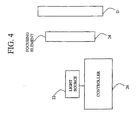
- Figure 4 shows the drive to be tested 20 having a light source 22 to emit light, a focusing element 24 to focus the light emitted from the light source 22 on a disc D, and a controller 26 which controls the light source 22.
- the verification process described above seeks to verify the proper operation of the controller 26.
- the present invention easily verifies that a recording and reproducing apparatus properly translates and processes defect information and simply implements a test apparatus with low cost by using a different test disc, which is made using a mirror file with pre-fixed defect information which is not related to actual defects on a disc, depending on a test type.
Landscapes
- Engineering & Computer Science (AREA)
- Signal Processing (AREA)
- Signal Processing For Digital Recording And Reproducing (AREA)
- Optical Recording Or Reproduction (AREA)
- Management Or Editing Of Information On Record Carriers (AREA)
Claims (36)
- Procédé pour vérifier si les informations de la zone de gestion des défauts (DMA) est produite ou mise à jour correctement dans un appareil d'enregistrement et de reproduction qui enregistre ou reproduit des informations sur ou depuis un disque optique comportant les informations DMA, le procédé comprenant :la sélection (S102) de l'un parmi une pluralité de modes de test destinés à vérifier les informations DMA et à définir une référence de test en fonction du mode de test de vérification sélectionné ;la production (S103) d'informations de test à partir des informations DMA qui sont produites ou mises à jour par l'appareil d'enregistrement et de reproduction, en fonction du mode de test de vérification sélectionné ; etl'exécution (S104) d'un test destiné à vérifier les informations de test en utilisant la référence de test dans le mode de test de vérification sélectionné.
- Procédé selon la revendication 1, dans lequel les informations de test sont un fichier DMA miroir (50).
- Procédé selon la revendication 1 ou 2, dans lequel les informations de test sont directement lues depuis une zone DMA d'un disque utilisé pour un test.
- Procédé selon la revendication 1, 2 ou 3, comprenant en outre l'affichage d'un résultat du test exécuté.
- Procédé selon l'une quelconque des revendications précédentes, dans lequel la pluralité de modes de test destinés à vérifier les informations DMA sont un premier mode de test de vérification destiné à tester la production des informations DMA selon qu'il s'agit d'une initialisation avec certification ou d'une initialisation sans certification du disque optique, un second mode de test de vérification destiné à tester la production ou la mise à jour des informations DMA selon qu'il s'agit d'une réinitialisation avec certification, d'une réinitialisation avec conversion de liste ou d'une réinitialisation avec effacement d'une liste de défauts du disque optique, un troisième mode de test de vérification destiné à vérifier l'extension d'une zone de réserve supplémentaire du disque optique, et un quatrième mode de test de vérification destiné à vérifier qu'un enregistrement sur le disque optique est effectué sur la base d'informations DMA erronées.
- Procédé selon la revendication 5, dans lequel la production des informations de test comprend l'enregistrement de contenus prédéfinis d'une zone DMA et la sélection d'un premier fichier miroir (1), dans lequel la zone de réserve supplémentaire n'est pas pleine, en réponse au fait que le mode de test de vérification sélectionné est le second mode de vérification, l'enregistrement des contenus prédéterminés de la zone DMA et la sélection d'un second fichier miroir (2) dans lequel la zone de réserve supplémentaire est pleine, en réponse au fait que le mode de test de vérification sélectionné est le troisième mode de vérification, et la sélection d'un troisième fichier miroir (3) dans lequel un numéro de secteur de départ de chaque zone parmi les contenus prédéfinis de la zone DMA est volontairement écrit de façon erronée, en réponse au fait que le mode de test de vérification sélectionné est le quatrième mode de vérification.
- Procédé selon la revendication 5 ou 6, comprenant en outre :l'obtention d'un premier disque de test (10) en formant des défauts physiques connus sur un disque vierge et en utilisant le premier disque de test (10) pour produire les informations de test dans le premier mode de test de vérification.
- Procédé selon la revendication 7, dans lequel l'exécution du test comprend la réalisation d'une initialisation sans certification, le fait de contrôler si les informations DMA du premier disque de test (10) respectent une structure DMA prédéterminée, et le contrôle d'un numéro de secteur logique de départ de chaque zone du premier disque de test (10), dans le premier mode de test de vérification.
- Procédé selon la revendication 7, dans lequel l'exécution du test comprend la réalisation d'une initialisation avec certification, le fait de contrôler si les informations DMA du premier disque de test (10) respectent une structure DMA prédéterminée, le contrôle d'une liste des défauts connus du premier disque de test (10), et le contrôle d'un numéro de secteur logique de départ de chaque zone, dans le premier mode de test de vérification.
- Procédé selon la revendication 7, comprenant en outre l'obtention d'un second disque de test (11) par enregistrement de contenus prédéfinis d'une zone DMA dans le premier disque de test (10), et par enregistrement d'un premier fichier miroir indiquant que la zone de réserve supplémentaire n'est pas pleine dans le premier disque de test (10), et l'utilisation du second disque de test (11) pour produire les informations de test dans le second mode de test de vérification.
- Procédé selon la revendication 10, dans lequel l'exécution du test comprend la réalisation d'une réinitialisation avec certification, le fait de contrôler si les informations DMA du second disque de test (11) respectent une structure DMA prédéterminée, le fait de contrôler si une liste P est conservée, le contrôle d'une liste de défauts qui sont identiques aux défauts connus du premier disque de test (10), et le contrôle du numéro de secteur logique de départ de chaque zone du second disque de test (11), dans le second mode de test de vérification.
- Procédé selon la revendication 10, dans lequel l'exécution du test comprend la réalisation d'une réinitialisation avec conversion de liste, et le fait de contrôler si les informations DMA du second disque de test (11) respectent une structure DMA prédéterminée, le fait de contrôler si une liste P et si une liste G1 sont conservées, le contrôle d'une liste de défauts primaires (PDL) et d'une liste de défauts secondaires (SDL) pour la conversion de liste, et le contrôle d'un numéro de secteur logique de départ de chaque zone du second disque de test (11), dans le second mode de test de vérification.
- Procédé selon la revendication 12, dans lequel la production des informations de test comprend en outre la préparation d'un nombre suffisant d'entrées dans la liste SDL pour tester un état de débordement pendant la conversion de liste, dans le second mode de test de vérification.
- Procédé selon la revendication 10, dans lequel l'exécution du test comprend la réalisation d'une réinitialisation avec effacement, le fait de contrôler si les informations DMA du second disque de test (11) respectent une structure DMA prédéterminée, le fait de contrôler si une liste P et si une liste G1 sont conservées, le fait de contrôler si une liste G2 et si une liste de défauts secondaires (SDL) sont effacées, et le contrôle d'un numéro de secteur logique de départ de chaque zone du second disque de test (11) dans le second mode de test de vérification.
- Procédé selon la revendication 7, comprenant en outre l'obtention d'un troisième disque de test (12) par enregistrement de contenus prédéfinis d'une zone DMA dans le premier disque de test (10), et par enregistrement d'un second fichier miroir (2) ayant un nombre suffisant de défauts d'une liste de défauts secondaires (SDL) pour remplir la zone de réserve supplémentaire, et l'utilisation du troisième disque de test (12) pour produire les informations de test dans le troisième mode de test de vérification.
- Procédé selon la revendication 15, dans lequel l'exécution du test comprend le fait de contrôler si les informations DMA du troisième disque de test (12) respectent une structure DMA prédéterminée lorsque le mode de test de vérification sélectionné est le troisième mode de test de vérification.
- Procédé selon la revendication 16, dans lequel l'exécution du test comprend en outre le fait de contrôler si les informations DMA du troisième disque de test (12) respectent un système de fichiers.
- Procédé selon la revendication 7, comprenant en outre l'obtention d'un quatrième disque de test (13) par enregistrement d'un troisième fichier miroir (3), dans lequel un numéro de secteur de départ de chaque zone parmi des contenus prédéfinis d'une zone DMA est volontairement écrit de façon erronée sur le premier disque de test (10), et qui est utilisé dans le quatrième mode de test de vérification.
- Procédé selon la revendication 18, dans lequel l'exécution du test comprend le fait de contrôler si les numéros de secteurs logiques de départ erronés présents sur le quatrième disque de test (13) sont triés, le fait de contrôler si des données d'utilisateur ne sont pas écrites sur le quatrième disque de test (13), et le fait de contrôler si des données sont lues sur la base des informations DMA enregistrées à l'avance, dans le quatrième mode de test de vérification.
- Appareil destiné à tester un appareil d'enregistrement et de reproduction qui enregistre ou reproduit des informations sur ou depuis un disque optique enregistrable et reproductible avec des informations de zone de gestion de défauts (DMA), afin de contrôler si les informations DMA ont été produites ou mises à jour correctement, l'appareil comprenant :une unité de lecture modifiée (40) destinée à produire des informations de test (50) à partir d'informations DMA produites ou mises à jour (30) d'un disque de test (10, 11, 12, 13), qui sont obtenues après que l'appareil d'enregistrement et de reproduction (20) a traité le disque de test (10, 11, 12, 13) avec un fichier miroir DMA correspondant à un mode sélectionné parmi une pluralité de modes de test de vérification d'informations DMA destinés à vérifier les informations DMA dans le mode sélectionné ; etun vérificateur (60) destiné à comparer les informations de test (50) à des informations de test prédéterminées du mode sélectionné pour vérifier un résultat de test.
- Appareil selon la revendication 20, dans lequel les informations de test (50) sont un fichier miroir DMA.
- Appareil selon la revendication 20 ou 21, dans lequel l'unité de lecture modifiée (40) lit les informations de test depuis une zone DMA sur le disque de test et fournit les informations de test au vérificateur (60).
- Appareil selon la revendication 20, 21 ou 22, dans lequel la pluralité de modes de test destinés à vérifier les informations DMA sont un premier mode de test de vérification destiné à tester la production des informations DMA selon qu'il s'agit d'une initialisation avec certification ou d'une initialisation sans certification, un second mode de test de vérification destiné à tester la production ou la mise à jour des informations DMA selon qu'il s'agit d'une réinitialisation avec certification, d'une réinitialisation avec conversion de liste ou d'une réinitialisation avec effacement d'une liste de défauts, un troisième mode de test de vérification destiné à vérifier l'extension d'une zone de réserve supplémentaire, et un quatrième mode de test de vérification destiné à vérifier qu'un enregistrement est réalisé sur la base d'informations DMA erronées.
- Appareil selon la revendication 23, dans lequel le disque de test est un premier disque de test (10) sur lequel des défauts physiques connus sont formés sur un disque vierge, dans le premier mode de test de vérification.
- Appareil selon la revendication 24, dans lequel le vérificateur (60) contrôle si les informations DMA produites sur le premier disque de test (10) respectent une structure DMA prédéterminée et contrôle le numéro de secteur logique de départ de chaque zone du premier disque de test (10), en réponse au fait que le mode de test de vérification sélectionné est le premier mode de test de vérification dans lequel une initialisation sans certification est réalisée.
- Appareil selon la revendication 24, dans lequel le vérificateur (60) contrôle si les informations DMA du premier disque de test (10) respectent une structure DMA prédéterminée et contrôle une liste des défauts connus et le numéro de secteur logique de départ de chaque zone du premier disque de test (10), en réponse au fait que le mode de test de vérification sélectionné est le premier mode de test de vérification dans lequel une initialisation avec certification est réalisée.
- Appareil selon la revendication 23, dans lequel le disque de test est un second disque de test (11) sur lequel des contenus prédéfinis d'une zone DMA sont enregistrés dans le premier disque de test (10), et sur lequel est enregistré un premier fichier miroir qui indique que la zone de réserve supplémentaire n'est pas pleine, dans le deuxième mode de test de vérification.
- Appareil selon la revendication 27, dans lequel le vérificateur (60) contrôle si les informations DMA du second disque de test (11) respectent une structure DMA prédéterminée et si une liste P est conservée, et contrôle une liste de défauts qui sont identiques aux défauts connus et le numéro de secteur logique de départ de chaque zone du second disque de test (11), en réponse au fait que le mode de test de vérification sélectionné est le second mode de test de vérification dans lequel une réinitialisation avec certification est réalisée.
- Appareil selon la revendication 27, dans lequel le vérificateur (60) contrôle si les informations DMA du second disque de test (11) respectent une structure DMA prédéterminée et si une liste P et si une liste G1 sont conservées, et contrôle une liste de défauts primaires (PDL) et une liste de défauts secondaires (SDL) pour la conversion de liste et un numéro de secteur logique de départ de chaque zone du second disque de test (11), en réponse au fait que le mode de test de vérification sélectionné est le second mode de test de vérification dans lequel une réinitialisation avec conversion de liste est réalisée.
- Appareil selon la revendication 29, dans lequel le second disque de test (11) a un nombre suffisant d'entrées SDL pour tester un état de débordement pendant la conversion de liste.
- Appareil selon la revendication 27, dans lequel le vérificateur (60) contrôle si les informations DMA du second disque de test (11) respectent une structure DMA prédéterminée, si une liste P et une liste G1 sont conservées, et si une liste G2 et une liste de défauts secondaires (SDL) sont effacées, et contrôle un numéro de secteur logique de départ de chaque zone du second lecteur de test, en réponse au fait que le mode de test de vérification sélectionné est le second mode de test de vérification dans lequel une réinitialisation avec effacement est réalisée.
- Appareil selon la revendication 23, dans lequel le disque de test est un troisième disque de test (12) sur lequel des contenus prédéfinis d'une zone DMA du premier disque de test (10), et sur lequel un second fichier miroir ayant un nombre suffisant de défauts d'une liste de défauts secondaire (SDL) pour remplir la zone de réserve supplémentaire sont enregistrés, dans le troisième mode de test de vérification.
- Appareil selon la revendication 32, dans lequel le vérificateur (60) contrôle si les informations DMA du troisième disque de test (12) respectent une structure DMA prédéterminée en réponse au fait que le mode de test de vérification sélectionné est le troisième mode de test de vérification.
- Appareil selon la revendication 33, dans lequel le troisième disque de test (12) comporte en outre des informations sur le système de fichiers, l'appareil comprenant en outre un vérificateur du système de fichiers contrôlant si les informations concernant le système de fichiers présentes sur le troisième disque de test (12) respectent un système de fichiers prédéterminé en réponse au fait que le mode de test de vérification sélectionné est le troisième mode de test de vérification.
- Appareil selon la revendication 23, dans lequel le disque de test est un quatrième disque de test (13) sur lequel un troisième fichier miroir dans lequel un numéro de secteur de départ de chaque zone, parmi des contenus prédéfinis d'une zone DMA, est volontairement écrit de façon erronée, est enregistré sur le premier disque de test (10), dans le quatrième mode de test de vérification.
- Appareil selon la revendication 35, dans lequel, en réponse au fait que le mode de test de vérification sélectionné est le quatrième mode de test de vérification, l'unité de lecture modifiée (40) ne lit pas les informations DMA du quatrième disque de test (13) en tant que fichier miroir, et le vérificateur contrôle si les numéros de secteurs logiques de départ erronés présents sur le quatrième disque de test (13) sont triés, si des données d'utilisateur ne sont pas écrites dans le quatrième disque de test (13), et si des données sont lues sur la base des informations DMA enregistrées.
Applications Claiming Priority (6)
| Application Number | Priority Date | Filing Date | Title |
|---|---|---|---|
| KR2000018500 | 2000-04-08 | ||
| KR1020000018500A KR100618993B1 (ko) | 2000-04-08 | 2000-04-08 | 광 디스크의 결함 관리 영역 정보 확인 방법 및 이를수행하기 위한 테스트 장치 |
| US19547300P | 2000-04-10 | 2000-04-10 | |
| US195473P | 2000-04-10 | ||
| US805444 | 2001-03-14 | ||
| US09/805,444 US6714502B2 (en) | 2000-04-08 | 2001-03-14 | Method of verifying defect management area information of optical disc and apparatus for performing the same |
Publications (3)
| Publication Number | Publication Date |
|---|---|
| EP1148493A2 EP1148493A2 (fr) | 2001-10-24 |
| EP1148493A3 EP1148493A3 (fr) | 2006-09-13 |
| EP1148493B1 true EP1148493B1 (fr) | 2009-09-30 |
Family
ID=27350203
Family Applications (1)
| Application Number | Title | Priority Date | Filing Date |
|---|---|---|---|
| EP01303253A Expired - Lifetime EP1148493B1 (fr) | 2000-04-08 | 2001-04-06 | Procédé pour vérifier l'information de la zone de gestion des défauts d'un disque optique et appareil pour sa réalisation |
Country Status (11)
| Country | Link |
|---|---|
| US (1) | US6714502B2 (fr) |
| EP (1) | EP1148493B1 (fr) |
| JP (1) | JP3642744B2 (fr) |
| CN (1) | CN1248227C (fr) |
| BR (1) | BR0103628A (fr) |
| CA (1) | CA2342580C (fr) |
| DE (1) | DE60140022D1 (fr) |
| ID (1) | ID29760A (fr) |
| MY (1) | MY127220A (fr) |
| SG (1) | SG105490A1 (fr) |
| TW (1) | TW544660B (fr) |
Cited By (15)
| Publication number | Priority date | Publication date | Assignee | Title |
|---|---|---|---|---|
| US7620782B2 (en) | 2003-05-09 | 2009-11-17 | Lg Electronics Inc. | Recording medium having data structure for managing at least a data area of the recording medium and recording and reproducing methods and apparatuses |
| US7675828B2 (en) | 2003-02-25 | 2010-03-09 | Lg Electronics Inc. | Recording medium having data structure for managing at least a data area of the recording medium and recording and reproducing methods and apparatuses |
| US7675829B2 (en) | 2004-06-23 | 2010-03-09 | Lg Electronics Inc. | Method and apparatus for overwriting data on recording-medium and the recording medium |
| US7742372B2 (en) | 2005-11-25 | 2010-06-22 | Lg Electronics, Inc. | Recording medium, and method and apparatus for recording defect management information on the recording medium |
| US7765233B2 (en) | 2004-03-19 | 2010-07-27 | Lg Electronics, Inc. | Data structure recorded in a recording medium data recording method and data recording apparatus |
| US7764581B2 (en) | 2003-02-17 | 2010-07-27 | Lg Electronics Inc. | Write-once optical disc, and method and apparatus for allocating spare area on write-once optical disc |
| US7849358B2 (en) | 2004-09-14 | 2010-12-07 | Lg Electronics Inc. | Recording medium, and method and apparatus of recording and reproducing data on the same |
| US7849372B2 (en) | 2003-03-13 | 2010-12-07 | Lg Electronics Inc. | Write-once recording medium and defective area management method and apparatus for write-once recording medium |
| US7903513B2 (en) | 2005-12-02 | 2011-03-08 | Lg Electronics Inc. | Method and apparatus for closing a recording range on a recording medium |
| US7969841B2 (en) | 2004-06-08 | 2011-06-28 | Lg Electronics, Inc. | Method and apparatus for recording management information medium and the recording medium |
| US8045430B2 (en) | 2002-09-30 | 2011-10-25 | Lg Electronics Inc. | Write-once type optical disc, and method and apparatus for managing defective areas on write-once type optical disc using TDMA information |
| US8072853B2 (en) | 2003-01-27 | 2011-12-06 | Lg Electronics Inc. | Optical disc of write once type, method, and apparatus for managing defect information on the optical disc |
| US8149664B2 (en) | 2004-03-19 | 2012-04-03 | Lg Electronics Inc. | Method and apparatus for recording data on write-once recording medium |
| US8223607B2 (en) | 2003-07-04 | 2012-07-17 | Lg Electronics Inc. | Method and apparatus for managing a overwrite recording on optical disc write once |
| US8341456B2 (en) | 2004-08-16 | 2012-12-25 | Lg Electronics, Inc. | Method and apparatus of recording data on write-once recording medium |
Families Citing this family (37)
| Publication number | Priority date | Publication date | Assignee | Title |
|---|---|---|---|---|
| US6850377B2 (en) * | 2001-04-25 | 2005-02-01 | Matsushita Electric Industrial Co., Ltd. | Master information carrier/magnetic recording medium defect inspection method |
| KR20040022009A (ko) * | 2002-09-06 | 2004-03-11 | 삼성전자주식회사 | 광디스크 기록 장치의 기록 제어 방법 |
| JP2006500723A (ja) * | 2002-09-26 | 2006-01-05 | エルジー エレクトロニクス インコーポレーテッド | 追記型光記録媒体上の欠陥領域を管理する方法、およびこの方法を用いた光記録媒体 |
| KR20040027259A (ko) * | 2002-09-26 | 2004-04-01 | 엘지전자 주식회사 | 1 회 기록 가능한 광디스크의 디펙트 영역 관리방법 |
| CA2479505C (fr) * | 2002-09-26 | 2012-12-18 | Lg Electronics Inc. | Disque optique, et procede et appareil pour la gestion des zones defectueuses sur un disque optique du type inscriptible une seule fois |
| US7233550B2 (en) * | 2002-09-30 | 2007-06-19 | Lg Electronics Inc. | Write-once optical disc, and method and apparatus for recording management information on write-once optical disc |
| KR100930239B1 (ko) * | 2002-10-18 | 2009-12-09 | 삼성전자주식회사 | 갱신가능한 결함 관리 영역을 사용한 결함 관리 방법, 그장치 및 그 디스크 |
| KR101008641B1 (ko) * | 2002-12-11 | 2011-01-17 | 엘지전자 주식회사 | 1회 기록가능한 광디스크에 있어서의 중첩기록 관리방법 및장치 |
| ES2340844T3 (es) | 2002-12-11 | 2010-06-10 | Lg Electronics, Inc. | Metodo de gestion de sobrescritura y metodo de grabacion de informacion de gestion de un disco optico de una sola escritura. |
| US7372788B2 (en) * | 2003-01-14 | 2008-05-13 | Lg Electronics Inc. | Method for managing defective area on write-once optical recording medium, and optical recording medium using the same |
| TWI334595B (en) * | 2003-01-27 | 2010-12-11 | Lg Electronics Inc | Optical disc, method and apparatus for managing a defective area on an optical disc |
| TWI335587B (en) * | 2003-02-21 | 2011-01-01 | Lg Electronics Inc | Write-once optical recording medium and defect management information management method thereof |
| US7499383B2 (en) * | 2003-02-21 | 2009-03-03 | Lg Electronics Inc. | Write-once optical disc and method for managing spare area thereof |
| TWI291168B (en) | 2003-02-25 | 2007-12-11 | Lg Electronics Inc | Defect management method for optical recording medium and optical recording medium using the same |
| US7188271B2 (en) * | 2003-02-25 | 2007-03-06 | Lg Electronics Inc. | Write-once optical disc, and method and apparatus for recording management information on write-once optical disc |
| WO2004079740A1 (fr) | 2003-03-04 | 2004-09-16 | Lg Electronics Inc. | Procede d'enregistrement sur un support d'enregistrement optique et appareil exploitant ce procede |
| KR100936026B1 (ko) * | 2003-03-13 | 2010-01-11 | 삼성전자주식회사 | 결함 관리를 위한 스페어 영역 관리가 가능한 디스크, 그 스페어 영역 관리 방법 및 재생 방법 |
| AU2004237020B2 (en) * | 2003-05-09 | 2009-10-22 | Lg Electronics Inc. | Write once optical disc, and method and apparatus for recovering disc management information from the write once optical disc |
| RU2349973C2 (ru) * | 2003-05-09 | 2009-03-20 | Эл Джи Электроникс Инк. | Носитель записи, имеющий структуру данных для управления, по крайней мере, областью данных носителя записи, и способы и устройства записи и воспроизведения |
| MXPA05012044A (es) * | 2003-05-09 | 2006-02-03 | Lg Electronics Inc | Disco optico de una sola escritura, metodo y aparato par recuperacion de informacion de administracion de disco del disco optico de una sola escritura. |
| DE602004020992D1 (de) * | 2003-07-14 | 2009-06-18 | Lg Electronics Inc | Einmalbeschreibbarer optischer datenträger, verfahren und vorrichtung zum aufzeichnen von verwaltungsinformationen auf einem einmalbeschreibbaren optischen datenträger |
| KR20050009031A (ko) * | 2003-07-15 | 2005-01-24 | 엘지전자 주식회사 | 1회 기록 가능한 광디스크 및 광디스크의 관리정보 기록방법 |
| KR101014703B1 (ko) * | 2003-07-15 | 2011-02-21 | 엘지전자 주식회사 | 광디스크의 결함영역 관리방법 및 광디스크의 기록방법과기록재생장치 |
| US7313065B2 (en) * | 2003-08-05 | 2007-12-25 | Lg Electronics Inc. | Write-once optical disc, and method and apparatus for recording/reproducing management information on/from optical disc |
| DK1652174T3 (da) * | 2003-08-05 | 2010-06-07 | Lg Electronics Inc | Engangs-skrivbar optisk disk og fremgangsmåde og apparat til optagelse/reproduktion af styringsinformationer på/fra den optisk disk |
| EP1665261B1 (fr) * | 2003-09-08 | 2013-11-27 | LG Electronics Inc. | Disque optique a ecriture unique, procede et appareil d'enregistrement d'informations de gestion sur ledit disque |
| KR101041819B1 (ko) * | 2003-09-08 | 2011-06-17 | 엘지전자 주식회사 | 1회 기록가능한 광디스크 및 광디스크상에 관리 정보를기록하기 위한 방법 |
| CA2537889C (fr) * | 2003-09-08 | 2013-10-22 | Lg Electronics Inc. | Disque optique non reinscriptible et procede et appareil pour l'enregistrement d'information de gestion sur le disque optique non reinscriptible |
| KR100964685B1 (ko) * | 2003-10-20 | 2010-06-21 | 엘지전자 주식회사 | 1회 기록가능한 광디스크 및 광디스크의 기록재생방법과기록재생장치 |
| KR100584613B1 (ko) * | 2004-02-06 | 2006-06-01 | 삼성전자주식회사 | 한번 기록 디스크에 데이터 기록 장치, 그 방법, 데이터재생 장치, 그 방법 및 그 한번 기록 디스크 |
| KR100619016B1 (ko) * | 2004-05-06 | 2006-08-31 | 삼성전자주식회사 | 광 기록 정보 저장 매체, 기록/재생 장치 및 호스트 장치 |
| KR101041811B1 (ko) * | 2004-08-02 | 2011-06-17 | 엘지전자 주식회사 | 광 저장매체의 기록 재생 방법 및 장치 |
| US7613874B2 (en) * | 2004-10-14 | 2009-11-03 | Lg Electronics, Inc. | Recording medium, and a method and apparatus for overwriting data in the same |
| US7561508B2 (en) * | 2005-08-31 | 2009-07-14 | Mediatek Inc. | Method and apparatus for laser control during recording |
| KR101333725B1 (ko) * | 2006-06-30 | 2013-11-28 | 삼성전자주식회사 | 검증 방법 및 검증 장치 |
| US7852717B2 (en) * | 2007-08-17 | 2010-12-14 | Hitachi Global Storage Technologies Netherlands B.V. | System, method, and apparatus for characterizing, tracking, and segregating known defective disk regions on patterned disks |
| CN109150652B (zh) * | 2018-07-24 | 2022-03-04 | 深蓝信息技术(唐山)股份有限公司 | 一种基于区块链的通信网络交换机自动检测流水线 |
Family Cites Families (9)
| Publication number | Priority date | Publication date | Assignee | Title |
|---|---|---|---|---|
| JPH0770173B2 (ja) * | 1987-03-06 | 1995-07-31 | 松下電器産業株式会社 | 情報記録再生装置 |
| JPH0428061A (ja) * | 1990-05-24 | 1992-01-30 | Matsushita Electric Ind Co Ltd | 情報記録媒体と情報記録再生装置 |
| US5303219A (en) * | 1991-09-09 | 1994-04-12 | International Business Machines Corporation | Reclamation of dust contaminated sectors in optical disk apparatus |
| JPH0836842A (ja) * | 1994-07-20 | 1996-02-06 | Ricoh Co Ltd | ディスク欠陥検査装置及びディスク欠陥検査方法 |
| EP0879466A1 (fr) * | 1995-03-03 | 1998-11-25 | Cirrus Logic, Inc. | Gestion de defaut pour le traitement automatique de piste sans zone d'identification |
| JPH09259576A (ja) * | 1996-03-25 | 1997-10-03 | Toshiba Corp | 複数管理領域を持つ情報記録ディスク |
| JPH10283451A (ja) * | 1997-04-10 | 1998-10-23 | Canon Inc | 情報記録再生方式及び情報記録再生装置 |
| JP3296246B2 (ja) * | 1997-04-17 | 2002-06-24 | 株式会社日立製作所 | 検査方法、検査装置、記録媒体 |
| JP3677995B2 (ja) * | 1998-04-20 | 2005-08-03 | 三菱電機株式会社 | Av用光ディスク、その記録方法および再生方法 |
-
2001
- 2001-03-14 US US09/805,444 patent/US6714502B2/en not_active Expired - Fee Related
- 2001-03-27 TW TW090107156A patent/TW544660B/zh not_active IP Right Cessation
- 2001-04-03 CA CA002342580A patent/CA2342580C/fr not_active Expired - Fee Related
- 2001-04-05 SG SG200102035A patent/SG105490A1/en unknown
- 2001-04-06 BR BR0103628-9A patent/BR0103628A/pt not_active IP Right Cessation
- 2001-04-06 DE DE60140022T patent/DE60140022D1/de not_active Expired - Lifetime
- 2001-04-06 MY MYPI20011665A patent/MY127220A/en unknown
- 2001-04-06 JP JP2001109194A patent/JP3642744B2/ja not_active Expired - Fee Related
- 2001-04-06 EP EP01303253A patent/EP1148493B1/fr not_active Expired - Lifetime
- 2001-04-06 CN CNB011124008A patent/CN1248227C/zh not_active Expired - Fee Related
- 2001-04-09 ID IDP20010314D patent/ID29760A/id unknown
Cited By (16)
| Publication number | Priority date | Publication date | Assignee | Title |
|---|---|---|---|---|
| US8045430B2 (en) | 2002-09-30 | 2011-10-25 | Lg Electronics Inc. | Write-once type optical disc, and method and apparatus for managing defective areas on write-once type optical disc using TDMA information |
| US8072853B2 (en) | 2003-01-27 | 2011-12-06 | Lg Electronics Inc. | Optical disc of write once type, method, and apparatus for managing defect information on the optical disc |
| US7764581B2 (en) | 2003-02-17 | 2010-07-27 | Lg Electronics Inc. | Write-once optical disc, and method and apparatus for allocating spare area on write-once optical disc |
| US7675828B2 (en) | 2003-02-25 | 2010-03-09 | Lg Electronics Inc. | Recording medium having data structure for managing at least a data area of the recording medium and recording and reproducing methods and apparatuses |
| US7849372B2 (en) | 2003-03-13 | 2010-12-07 | Lg Electronics Inc. | Write-once recording medium and defective area management method and apparatus for write-once recording medium |
| US7620782B2 (en) | 2003-05-09 | 2009-11-17 | Lg Electronics Inc. | Recording medium having data structure for managing at least a data area of the recording medium and recording and reproducing methods and apparatuses |
| US8223607B2 (en) | 2003-07-04 | 2012-07-17 | Lg Electronics Inc. | Method and apparatus for managing a overwrite recording on optical disc write once |
| US7765233B2 (en) | 2004-03-19 | 2010-07-27 | Lg Electronics, Inc. | Data structure recorded in a recording medium data recording method and data recording apparatus |
| US8149664B2 (en) | 2004-03-19 | 2012-04-03 | Lg Electronics Inc. | Method and apparatus for recording data on write-once recording medium |
| US7969841B2 (en) | 2004-06-08 | 2011-06-28 | Lg Electronics, Inc. | Method and apparatus for recording management information medium and the recording medium |
| US7936648B2 (en) | 2004-06-23 | 2011-05-03 | Lg Electronics Inc. | Method and apparatus for overwriting data on recording-medium and the recording medium |
| US7675829B2 (en) | 2004-06-23 | 2010-03-09 | Lg Electronics Inc. | Method and apparatus for overwriting data on recording-medium and the recording medium |
| US8341456B2 (en) | 2004-08-16 | 2012-12-25 | Lg Electronics, Inc. | Method and apparatus of recording data on write-once recording medium |
| US7849358B2 (en) | 2004-09-14 | 2010-12-07 | Lg Electronics Inc. | Recording medium, and method and apparatus of recording and reproducing data on the same |
| US7742372B2 (en) | 2005-11-25 | 2010-06-22 | Lg Electronics, Inc. | Recording medium, and method and apparatus for recording defect management information on the recording medium |
| US7903513B2 (en) | 2005-12-02 | 2011-03-08 | Lg Electronics Inc. | Method and apparatus for closing a recording range on a recording medium |
Also Published As
| Publication number | Publication date |
|---|---|
| SG105490A1 (en) | 2004-08-27 |
| EP1148493A3 (fr) | 2006-09-13 |
| CA2342580C (fr) | 2006-03-14 |
| DE60140022D1 (de) | 2009-11-12 |
| ID29760A (id) | 2001-10-11 |
| CA2342580A1 (fr) | 2001-10-08 |
| BR0103628A (pt) | 2002-02-19 |
| CN1323035A (zh) | 2001-11-21 |
| CN1248227C (zh) | 2006-03-29 |
| JP3642744B2 (ja) | 2005-04-27 |
| US6714502B2 (en) | 2004-03-30 |
| US20010033538A1 (en) | 2001-10-25 |
| TW544660B (en) | 2003-08-01 |
| JP2002056631A (ja) | 2002-02-22 |
| EP1148493A2 (fr) | 2001-10-24 |
| MY127220A (en) | 2006-11-30 |
Similar Documents
| Publication | Publication Date | Title |
|---|---|---|
| EP1148493B1 (fr) | Procédé pour vérifier l'information de la zone de gestion des défauts d'un disque optique et appareil pour sa réalisation | |
| US6804797B2 (en) | Method of verifying defect management area information of disc and test apparatus for performing the same | |
| US6782494B2 (en) | Method of verifying defect management area information of disc and test apparatus for performing the same | |
| US6779137B2 (en) | Method of verifying defect management area information of disc and test apparatus for performing the same | |
| US6845473B2 (en) | Method of verifying defect management area information of optical disc | |
| US6785839B2 (en) | Method of verifying defect management area information of disc and test apparatus for performing the same | |
| CA2342415C (fr) | Methode de verification de l'information sur l'emplacement de gestion des defauts d'un disque et appareil d'essai utilise a cette fin | |
| US6892327B2 (en) | Method of verifying defect management area information of optical disc upon initialization with certification and test apparatus for performing the same | |
| US20050122870A1 (en) | Information recording medium, recording and/or reproducing method, and recording and/or reproducing apparatus | |
| US6782493B2 (en) | Method of verifying defect management area information of optical disc upon initialization without certification and test apparatus for performing the same | |
| KR100618993B1 (ko) | 광 디스크의 결함 관리 영역 정보 확인 방법 및 이를수행하기 위한 테스트 장치 |
Legal Events
| Date | Code | Title | Description |
|---|---|---|---|
| PUAI | Public reference made under article 153(3) epc to a published international application that has entered the european phase |
Free format text: ORIGINAL CODE: 0009012 |
|
| 17P | Request for examination filed |
Effective date: 20010418 |
|
| AK | Designated contracting states |
Kind code of ref document: A2 Designated state(s): AT BE CH CY DE DK ES FI FR GB GR IE IT LI LU MC NL PT SE TR |
|
| AX | Request for extension of the european patent |
Free format text: AL;LT;LV;MK;RO;SI |
|
| PUAL | Search report despatched |
Free format text: ORIGINAL CODE: 0009013 |
|
| AK | Designated contracting states |
Kind code of ref document: A3 Designated state(s): AT BE CH CY DE DK ES FI FR GB GR IE IT LI LU MC NL PT SE TR |
|
| AX | Request for extension of the european patent |
Extension state: AL LT LV MK RO SI |
|
| RIC1 | Information provided on ipc code assigned before grant |
Ipc: G11B 27/36 20060101AFI20060809BHEP Ipc: G11B 7/00 20060101ALI20060809BHEP Ipc: G11B 19/04 20060101ALI20060809BHEP Ipc: G11B 20/18 20060101ALI20060809BHEP |
|
| 17Q | First examination report despatched |
Effective date: 20070116 |
|
| AKX | Designation fees paid |
Designated state(s): DE FR GB IT NL |
|
| GRAP | Despatch of communication of intention to grant a patent |
Free format text: ORIGINAL CODE: EPIDOSNIGR1 |
|
| GRAS | Grant fee paid |
Free format text: ORIGINAL CODE: EPIDOSNIGR3 |
|
| GRAA | (expected) grant |
Free format text: ORIGINAL CODE: 0009210 |
|
| AK | Designated contracting states |
Kind code of ref document: B1 Designated state(s): DE FR GB IT NL |
|
| REG | Reference to a national code |
Ref country code: GB Ref legal event code: FG4D |
|
| REF | Corresponds to: |
Ref document number: 60140022 Country of ref document: DE Date of ref document: 20091112 Kind code of ref document: P |
|
| NLV1 | Nl: lapsed or annulled due to failure to fulfill the requirements of art. 29p and 29m of the patents act | ||
| PG25 | Lapsed in a contracting state [announced via postgrant information from national office to epo] |
Ref country code: NL Free format text: LAPSE BECAUSE OF FAILURE TO SUBMIT A TRANSLATION OF THE DESCRIPTION OR TO PAY THE FEE WITHIN THE PRESCRIBED TIME-LIMIT Effective date: 20090930 |
|
| PLBE | No opposition filed within time limit |
Free format text: ORIGINAL CODE: 0009261 |
|
| STAA | Information on the status of an ep patent application or granted ep patent |
Free format text: STATUS: NO OPPOSITION FILED WITHIN TIME LIMIT |
|
| 26N | No opposition filed |
Effective date: 20100701 |
|
| REG | Reference to a national code |
Ref country code: FR Ref legal event code: ST Effective date: 20101230 |
|
| PG25 | Lapsed in a contracting state [announced via postgrant information from national office to epo] |
Ref country code: IT Free format text: LAPSE BECAUSE OF FAILURE TO SUBMIT A TRANSLATION OF THE DESCRIPTION OR TO PAY THE FEE WITHIN THE PRESCRIBED TIME-LIMIT Effective date: 20090930 |
|
| PG25 | Lapsed in a contracting state [announced via postgrant information from national office to epo] |
Ref country code: FR Free format text: LAPSE BECAUSE OF NON-PAYMENT OF DUE FEES Effective date: 20100430 |
|
| PGFP | Annual fee paid to national office [announced via postgrant information from national office to epo] |
Ref country code: GB Payment date: 20140326 Year of fee payment: 14 |
|
| PGFP | Annual fee paid to national office [announced via postgrant information from national office to epo] |
Ref country code: DE Payment date: 20140327 Year of fee payment: 14 |
|
| REG | Reference to a national code |
Ref country code: DE Ref legal event code: R119 Ref document number: 60140022 Country of ref document: DE |
|
| GBPC | Gb: european patent ceased through non-payment of renewal fee |
Effective date: 20150406 |
|
| PG25 | Lapsed in a contracting state [announced via postgrant information from national office to epo] |
Ref country code: GB Free format text: LAPSE BECAUSE OF NON-PAYMENT OF DUE FEES Effective date: 20150406 Ref country code: DE Free format text: LAPSE BECAUSE OF NON-PAYMENT OF DUE FEES Effective date: 20151103 |