EP1149899B1 - Kulturmedium für totipotente embryonale Vogelzellen - Google Patents
Kulturmedium für totipotente embryonale Vogelzellen Download PDFInfo
- Publication number
- EP1149899B1 EP1149899B1 EP01108584A EP01108584A EP1149899B1 EP 1149899 B1 EP1149899 B1 EP 1149899B1 EP 01108584 A EP01108584 A EP 01108584A EP 01108584 A EP01108584 A EP 01108584A EP 1149899 B1 EP1149899 B1 EP 1149899B1
- Authority
- EP
- European Patent Office
- Prior art keywords
- cells
- avian
- culture
- medium
- lif
- Prior art date
- Legal status (The legal status is an assumption and is not a legal conclusion. Google has not performed a legal analysis and makes no representation as to the accuracy of the status listed.)
- Expired - Lifetime
Links
Images



Classifications
-
- A—HUMAN NECESSITIES
- A01—AGRICULTURE; FORESTRY; ANIMAL HUSBANDRY; HUNTING; TRAPPING; FISHING
- A01K—ANIMAL HUSBANDRY; AVICULTURE; APICULTURE; PISCICULTURE; FISHING; REARING OR BREEDING ANIMALS, NOT OTHERWISE PROVIDED FOR; NEW BREEDS OF ANIMALS
- A01K67/00—Rearing or breeding animals, not otherwise provided for; New or modified breeds of animals
- A01K67/027—New or modified breeds of vertebrates
- A01K67/0275—Genetically modified vertebrates, e.g. transgenic
-
- C—CHEMISTRY; METALLURGY
- C12—BIOCHEMISTRY; BEER; SPIRITS; WINE; VINEGAR; MICROBIOLOGY; ENZYMOLOGY; MUTATION OR GENETIC ENGINEERING
- C12N—MICROORGANISMS OR ENZYMES; COMPOSITIONS THEREOF; PROPAGATING, PRESERVING, OR MAINTAINING MICROORGANISMS; MUTATION OR GENETIC ENGINEERING; CULTURE MEDIA
- C12N5/00—Undifferentiated human, animal or plant cells, e.g. cell lines; Tissues; Cultivation or maintenance thereof; Culture media therefor
- C12N5/06—Animal cells or tissues; Human cells or tissues
- C12N5/0602—Vertebrate cells
- C12N5/0603—Embryonic cells ; Embryoid bodies
-
- C—CHEMISTRY; METALLURGY
- C12—BIOCHEMISTRY; BEER; SPIRITS; WINE; VINEGAR; MICROBIOLOGY; ENZYMOLOGY; MUTATION OR GENETIC ENGINEERING
- C12N—MICROORGANISMS OR ENZYMES; COMPOSITIONS THEREOF; PROPAGATING, PRESERVING, OR MAINTAINING MICROORGANISMS; MUTATION OR GENETIC ENGINEERING; CULTURE MEDIA
- C12N5/00—Undifferentiated human, animal or plant cells, e.g. cell lines; Tissues; Cultivation or maintenance thereof; Culture media therefor
- C12N5/06—Animal cells or tissues; Human cells or tissues
- C12N5/0602—Vertebrate cells
- C12N5/0603—Embryonic cells ; Embryoid bodies
- C12N5/0606—Pluripotent embryonic cells, e.g. embryonic stem cells [ES]
-
- A—HUMAN NECESSITIES
- A01—AGRICULTURE; FORESTRY; ANIMAL HUSBANDRY; HUNTING; TRAPPING; FISHING
- A01K—ANIMAL HUSBANDRY; AVICULTURE; APICULTURE; PISCICULTURE; FISHING; REARING OR BREEDING ANIMALS, NOT OTHERWISE PROVIDED FOR; NEW BREEDS OF ANIMALS
- A01K2217/00—Genetically modified animals
- A01K2217/05—Animals comprising random inserted nucleic acids (transgenic)
-
- C—CHEMISTRY; METALLURGY
- C12—BIOCHEMISTRY; BEER; SPIRITS; WINE; VINEGAR; MICROBIOLOGY; ENZYMOLOGY; MUTATION OR GENETIC ENGINEERING
- C12N—MICROORGANISMS OR ENZYMES; COMPOSITIONS THEREOF; PROPAGATING, PRESERVING, OR MAINTAINING MICROORGANISMS; MUTATION OR GENETIC ENGINEERING; CULTURE MEDIA
- C12N2500/00—Specific components of cell culture medium
- C12N2500/30—Organic components
- C12N2500/40—Nucleotides, nucleosides or bases
-
- C—CHEMISTRY; METALLURGY
- C12—BIOCHEMISTRY; BEER; SPIRITS; WINE; VINEGAR; MICROBIOLOGY; ENZYMOLOGY; MUTATION OR GENETIC ENGINEERING
- C12N—MICROORGANISMS OR ENZYMES; COMPOSITIONS THEREOF; PROPAGATING, PRESERVING, OR MAINTAINING MICROORGANISMS; MUTATION OR GENETIC ENGINEERING; CULTURE MEDIA
- C12N2500/00—Specific components of cell culture medium
- C12N2500/30—Organic components
- C12N2500/44—Thiols, e.g. mercaptoethanol
-
- C—CHEMISTRY; METALLURGY
- C12—BIOCHEMISTRY; BEER; SPIRITS; WINE; VINEGAR; MICROBIOLOGY; ENZYMOLOGY; MUTATION OR GENETIC ENGINEERING
- C12N—MICROORGANISMS OR ENZYMES; COMPOSITIONS THEREOF; PROPAGATING, PRESERVING, OR MAINTAINING MICROORGANISMS; MUTATION OR GENETIC ENGINEERING; CULTURE MEDIA
- C12N2501/00—Active agents used in cell culture processes, e.g. differentation
- C12N2501/10—Growth factors
- C12N2501/105—Insulin-like growth factors [IGF]
-
- C—CHEMISTRY; METALLURGY
- C12—BIOCHEMISTRY; BEER; SPIRITS; WINE; VINEGAR; MICROBIOLOGY; ENZYMOLOGY; MUTATION OR GENETIC ENGINEERING
- C12N—MICROORGANISMS OR ENZYMES; COMPOSITIONS THEREOF; PROPAGATING, PRESERVING, OR MAINTAINING MICROORGANISMS; MUTATION OR GENETIC ENGINEERING; CULTURE MEDIA
- C12N2501/00—Active agents used in cell culture processes, e.g. differentation
- C12N2501/10—Growth factors
- C12N2501/115—Basic fibroblast growth factor (bFGF, FGF-2)
-
- C—CHEMISTRY; METALLURGY
- C12—BIOCHEMISTRY; BEER; SPIRITS; WINE; VINEGAR; MICROBIOLOGY; ENZYMOLOGY; MUTATION OR GENETIC ENGINEERING
- C12N—MICROORGANISMS OR ENZYMES; COMPOSITIONS THEREOF; PROPAGATING, PRESERVING, OR MAINTAINING MICROORGANISMS; MUTATION OR GENETIC ENGINEERING; CULTURE MEDIA
- C12N2501/00—Active agents used in cell culture processes, e.g. differentation
- C12N2501/10—Growth factors
- C12N2501/125—Stem cell factor [SCF], c-kit ligand [KL]
-
- C—CHEMISTRY; METALLURGY
- C12—BIOCHEMISTRY; BEER; SPIRITS; WINE; VINEGAR; MICROBIOLOGY; ENZYMOLOGY; MUTATION OR GENETIC ENGINEERING
- C12N—MICROORGANISMS OR ENZYMES; COMPOSITIONS THEREOF; PROPAGATING, PRESERVING, OR MAINTAINING MICROORGANISMS; MUTATION OR GENETIC ENGINEERING; CULTURE MEDIA
- C12N2501/00—Active agents used in cell culture processes, e.g. differentation
- C12N2501/10—Growth factors
- C12N2501/13—Nerve growth factor [NGF]; Brain-derived neurotrophic factor [BDNF]; Cilliary neurotrophic factor [CNTF]; Glial-derived neurotrophic factor [GDNF]; Neurotrophins [NT]; Neuregulins
-
- C—CHEMISTRY; METALLURGY
- C12—BIOCHEMISTRY; BEER; SPIRITS; WINE; VINEGAR; MICROBIOLOGY; ENZYMOLOGY; MUTATION OR GENETIC ENGINEERING
- C12N—MICROORGANISMS OR ENZYMES; COMPOSITIONS THEREOF; PROPAGATING, PRESERVING, OR MAINTAINING MICROORGANISMS; MUTATION OR GENETIC ENGINEERING; CULTURE MEDIA
- C12N2501/00—Active agents used in cell culture processes, e.g. differentation
- C12N2501/20—Cytokines; Chemokines
- C12N2501/23—Interleukins [IL]
- C12N2501/2306—Interleukin-6 (IL-6)
-
- C—CHEMISTRY; METALLURGY
- C12—BIOCHEMISTRY; BEER; SPIRITS; WINE; VINEGAR; MICROBIOLOGY; ENZYMOLOGY; MUTATION OR GENETIC ENGINEERING
- C12N—MICROORGANISMS OR ENZYMES; COMPOSITIONS THEREOF; PROPAGATING, PRESERVING, OR MAINTAINING MICROORGANISMS; MUTATION OR GENETIC ENGINEERING; CULTURE MEDIA
- C12N2501/00—Active agents used in cell culture processes, e.g. differentation
- C12N2501/20—Cytokines; Chemokines
- C12N2501/23—Interleukins [IL]
- C12N2501/2311—Interleukin-11 (IL-11)
-
- C—CHEMISTRY; METALLURGY
- C12—BIOCHEMISTRY; BEER; SPIRITS; WINE; VINEGAR; MICROBIOLOGY; ENZYMOLOGY; MUTATION OR GENETIC ENGINEERING
- C12N—MICROORGANISMS OR ENZYMES; COMPOSITIONS THEREOF; PROPAGATING, PRESERVING, OR MAINTAINING MICROORGANISMS; MUTATION OR GENETIC ENGINEERING; CULTURE MEDIA
- C12N2501/00—Active agents used in cell culture processes, e.g. differentation
- C12N2501/20—Cytokines; Chemokines
- C12N2501/23—Interleukins [IL]
- C12N2501/235—Leukemia inhibitory factor [LIF]
-
- C—CHEMISTRY; METALLURGY
- C12—BIOCHEMISTRY; BEER; SPIRITS; WINE; VINEGAR; MICROBIOLOGY; ENZYMOLOGY; MUTATION OR GENETIC ENGINEERING
- C12N—MICROORGANISMS OR ENZYMES; COMPOSITIONS THEREOF; PROPAGATING, PRESERVING, OR MAINTAINING MICROORGANISMS; MUTATION OR GENETIC ENGINEERING; CULTURE MEDIA
- C12N2501/00—Active agents used in cell culture processes, e.g. differentation
- C12N2501/20—Cytokines; Chemokines
- C12N2501/237—Oncostatin M [OSM]
-
- C—CHEMISTRY; METALLURGY
- C12—BIOCHEMISTRY; BEER; SPIRITS; WINE; VINEGAR; MICROBIOLOGY; ENZYMOLOGY; MUTATION OR GENETIC ENGINEERING
- C12N—MICROORGANISMS OR ENZYMES; COMPOSITIONS THEREOF; PROPAGATING, PRESERVING, OR MAINTAINING MICROORGANISMS; MUTATION OR GENETIC ENGINEERING; CULTURE MEDIA
- C12N2501/00—Active agents used in cell culture processes, e.g. differentation
- C12N2501/30—Hormones
- C12N2501/38—Hormones with nuclear receptors
- C12N2501/385—Hormones with nuclear receptors of the family of the retinoic acid recptor, e.g. RAR, RXR; Peroxisome proliferator-activated receptor [PPAR]
-
- C—CHEMISTRY; METALLURGY
- C12—BIOCHEMISTRY; BEER; SPIRITS; WINE; VINEGAR; MICROBIOLOGY; ENZYMOLOGY; MUTATION OR GENETIC ENGINEERING
- C12N—MICROORGANISMS OR ENZYMES; COMPOSITIONS THEREOF; PROPAGATING, PRESERVING, OR MAINTAINING MICROORGANISMS; MUTATION OR GENETIC ENGINEERING; CULTURE MEDIA
- C12N2502/00—Coculture with; Conditioned medium produced by
- C12N2502/13—Coculture with; Conditioned medium produced by connective tissue cells; generic mesenchyme cells, e.g. so-called "embryonic fibroblasts"
- C12N2502/1323—Adult fibroblasts
-
- C—CHEMISTRY; METALLURGY
- C12—BIOCHEMISTRY; BEER; SPIRITS; WINE; VINEGAR; MICROBIOLOGY; ENZYMOLOGY; MUTATION OR GENETIC ENGINEERING
- C12N—MICROORGANISMS OR ENZYMES; COMPOSITIONS THEREOF; PROPAGATING, PRESERVING, OR MAINTAINING MICROORGANISMS; MUTATION OR GENETIC ENGINEERING; CULTURE MEDIA
- C12N2510/00—Genetically modified cells
Definitions
- the present invention relates to obtaining avian ES cells, in particular to a culture method and to a medium for culturing these cells.
- ES cells Embryonic Stem cells
- ES cells are totipotent embryonic cells capable of regenerating all embryonic tissues, including germinal tissue, after injection into very early embryos. These cells can therefore be considered as Trojan horses to introduce new genetic information into the genetic heritage of an animal.
- the possibility of growing these cells in vitro in the long term offers the possibility of carrying out numerous controls before they are implanted in vivo. On the other hand these cells can be kept unlimitedly in liquid nitrogen, which is a possibility of storing a gene pool.
- the present invention relates to an avian totipotent embryonic cell culture medium of the type comprising a culture medium for avian cells.
- the culture medium is substantially free of active retinoic acid.
- the retinoic acid is substantially inactivated by anti-retinoic acid (ARMA) antibodies present in the medium.
- ARMA anti-retinoic acid
- the media used often contain serum, whose endogenous quantity of retinoic acid can not be controlled.
- a monoclonal anti-retinoic acid antibody which would neutralize the action of the latter on the differentiation of the cells, the Applicant has found that the presence of this antibody increases the presence in cell cultures and colonies with alkaline phosphatase activity.
- steps 3) and 4) the addition of new medium is carried out at the 3rd day and then the medium is changed every day until the next subculture.
- Step 4) may in particular be carried out by enzymatic treatment, washing in a medium containing no growth factor and centrifugation.
- step 5 The primary cultures of cells can be collected directly, which will then be frozen, or alternatively produce successive secondary cultures from the cells of the primary culture.
- a step 5 is carried out in which the ES cells are reseeded on a carpet of feeder cells. or on gelatinized dishes, so as to obtain a secondary culture.
- Steps 4) and 5) can be repeated several times to have tertiary and successive cultures.
- the feeder cell mat may consist of different types of cells previously described, including mitomycin-irradiated or irradiated STO cells.
- Another object of the invention is an avian ES cell culture, obtainable by the culture method according to the invention defined above and as defined by claim 9.
- a modified avian totipotent embryonic cell can say obtained by integration of the gene coding for a heterologous protein into the genome of an avian ES cell in culture.
- Stem cell growth factor is preferably ⁇ -SCF (or avian Stem Cell Factor) and m-SCF (or murine Stem Cell Factor).
- One of the preferred aspects of the invention relates to a culture medium which contains, in addition to the basic nutrients necessary for cell growth, a combination of b-FGF, SCF and LIF.
- a culture medium which contains, in addition to the basic nutrients necessary for cell growth, a combination of b-FGF, SCF and LIF.
- the presence in the medium of a monoclonal antibody neutralizing the differentiation activity exerted by retinoic acid increases the number of totipotent embryogenic stem cells.
- avian ES cells promotes the growth of avian ES cells.
- Various types of cells known to those skilled in the art can be used: mention may in particular be made of cells such as STO cells, treated with miromycin or irradiated cells, GRL-3A cells, LMH cells, QT6 cells and QT6 cells altered tcllcs that QT6 cells are isolated, differentiated cells established in lineage from embryonic stem cell cultures induced to differentiate.
- STO cells are mouse embryo fibroblasts (ATCC catalog): BRL-3A cells (ATCC catalog) are liver cells of "Buffalo rat liver”.
- QT6 cells (ATCC catalog) and modified QT6 cells such as QT6 isolde cells are quail fibroblasts ( Cosset et al., 1990, J. Virol. 64, 10170-1078 ) and LMH cells come from chicken liver carcinoma ( Kawagucchi et al., 1987, Cancer Res., 47, 4460-4464 ).
- the culture medium further contains various essential nutrients and antibiotics.
- a culture medium particularly suitable for the present invention has the following composition: Ers-21 Fetal serum of cattle 10% Chicken serum 2% conalbumin 20 ng / ml Non-essential amino acids 1% Sodium pyruvate 1 mM Nucleosides stock 1% Hepes (1M) 10 mM ⁇ -mercaptoethanol -0.2 mM Penicillin 100 U / ml Streptomycin 100 ⁇ g / ml gentamicin 10 ng / ml
- Final bFGF from 1 to 20 ng / ml Has CFS from 0.5% to 296 flight SN of COS / flight IGF-1 from 5 to 50 ng / ml LIF from 1000 to 5000 U / ml of purified form, ie from approximately 0.1% to 2% vol / vol of culture supernatant of transfected COS cells IL-6 from 5 to 50 ng / ml (about 0.1% to 2% vol / vol of culture supernatant of transfected COS cells) IL-11 from 5 to 50 ng / ml (about 0.1% to 2% vol / vol of culture supernatant of transfected COS cells)
- the concentration of bFGF is greater than 5 ng / ml and the concentration of IGF-1 is greater than 10 ng / ml.
- the nucleoside stock consisting of the mixture: adenosine 80 mg guanosine 85 mg cytidine 73 mg uridine 73 mg thymidine 24 mg H 2 O 100 ml and Cos SN representing a culture supernatant of COS-7 cells transfected in transient expression with a cDNA expression vector of the factor considered, and is suitable for growing totipotent embryo bird cells.
- BHK21 medium (or MEM medium) is a culture medium which has been described in particular by Mc Pherson, I., and Stoker (1962, Virology 16, 147 ).
- Hepes is hydroxy-ethyl-piperazine-ethanesulfonate.
- the Applicant has developed a culture medium and in vitro culture conditions for maintaining in culture avian cells which have morphological, kinetic and histochemical properties reminiscent of totipotent embryonic cells. These observations were made with cells derived from both quail and chicken blastoderm discs. The growth of these cells in vitro culture is made possible by the development of an original medium specially adapted to the culture of embryonic bird cells. It is known that the presence, maintenance and propagation of totipotent cells in culture allow their injection into recipient embryos. The contribution to the morphogenesis of somatic and germinal tissues in the recipient animals by virtue of a totipotent character can lead to the production of transgenic animals.
- the blastodermic disk (3-4 mm diameter for the hen, 2-2.5 mm for the quail) is taken using a pasteur pipette in complete medium without factors.
- the cells are centrifuged at 200 g, washed twice in medium in order to eliminate the maximum of contaminating yolk, resuspended at the rate of 2 disks per 1 ml of medium and dissociated mechanically by passage in a 23 G needle. The factors are then added.
- Selection drugs are added for maintenance but removed two days before mitomycin C treatment.
- the cultures are incubated at 37 ° C. or 41 ° C. in a CO 2 controlled atmosphere (7.5%) and their evolution is monitored under a phase contrast microscope. A partial addition (50%) of new medium with the factors is carried out on the 3 rd day of culture, then the medium is changed every day. At any time, the growing cells can either be fixed for study or removed for re-seeding in secondary or higher cultures, on irradiated irradiated STO cells or on gelatinized dishes.
- the cells are washed with Tris-Glucose twice and then incubated for 10-30 min in an enzymatic solution. It is possible to use a collagenase-dispase solution (1 mg / ml or 1 U / ml final) to which a solution of hyaluronidase (1 mg / ml final or 1 U / ml) can be added: it is also possible to use a solution of pronase at 0.25 mg / ml final.
- the dissociated cells can be deposited on a multilayer gradient of Percoll and centrifuged under the same conditions. The interfaces are then removed, washed in an ESA medium and the most immature cells of the upper interfaces reseeded, or injected into recipient embryos.
- the recovered gradient cells can be frozen in a mixture consisting of 40% FBS, 50% ESA medium and 10% DMSO.
- the cells equivalent to 24 initial blastodiscs are taken up in 0.5 ml of ESA medium, resuspended and 0.4 ml of scrum is added. 0.1 ml of DMSO is then added very slowly.
- the freeze suspension is distributed in freezing tubes (0.5 ml / tube) and slowly frozen at -80 ° C. before being transferred into liquid nitrogen.
- ESA Embryonic Stem cells Avian
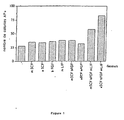
- the first criterion used to evaluate the effect of these factors and the modifications made to the medium was the detection by biochemical staining of the endogenous alkaline phosphatase activity which seems to be specific for a certain number of cells such as totipotent ES cells, precursor cells derived from the germ line and some differentiated cells, easily identifiable by their epithelioid morphology.
- the cells of the blastoderm disks are seeded in ESA medium in the presence of different combinations of factors. After 3 days of culture, the cells are fixed, stained and colonies positive for alkaline phosphatase activity (AP +) are counted.
- AP + alkaline phosphatase activity
- SCF Stem Cell Factor of murine origin -mSCF- or avian-aSCF-
- b-FGF basic Fibroblast Growth Factor
- LIF Leukemia Inhibitory Factor
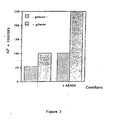
- the cells are seeded either on untreated dishes or gelatin-treated in ESA medium complete with aFcF (avian Stem Cell Factor) growth factors, bFGF (basic Fibroblast Growth Factory, IGF-1 (Insulin-like Growth Factor- 1) and LIF (Leukemia Inhibitory factor)
- aFcF avian Stem Cell Factor
- bFGF basic Fibroblast Growth Factory
- IGF-1 Insulin-like Growth Factor- 1
- LIF Leukemia Inhibitory factor
- the addition of the retinoic acid anti-acid in the medium gives the best results as to the quality and quantity of the colonies present in the cultures
- the addition of the anti-retinoic acid antibody in the culture medium significantly increases the presence and / or maintenance of alkaline phosphatase-active colonies.
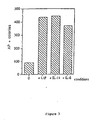
- the cells are inoculated in complete ESA medium with avian Stem Cell Factor (aSCF), bFGF (basic Fibroblast Growth Factor), IGF-1 (Insulin-like Growth Factor-I in the presence of ARMA (1 ⁇ g / ml). ) and after addition or addition of different cytokines of the same family LIF (Leukcmia Inhibitory Factor), IL-11 (Interleukin 11) and IL-6 (Interleukin 6) In order to increase the adhesion and the formation of colonies alkaline phosphatase Positive as well as their size, a second seeding takes place 2 days after the first.The fixation, staining and reading of the colonies took place 3 days after the second seeding.
- aSCF avian Stem Cell Factor
- bFGF basic Fibroblast Growth Factor
- IGF-1 Insulin-like Growth Factor-I in the presence of ARMA (1 ⁇ g / ml).
- mice In mice, the growth of certain ES cells requires the presence of a carpet of feeder cells. The effect of these cells on the cells of bird embryos was tested
- the cells are inoculated in a complete ESA medium with avian Stem Cell Facror (aSCF), bFGF (basic Fibroblast Growth Factor), IGF-1 (Insulin-like Growth Factor-1) and ARMA antibodies (1 ⁇ g / ml). ml) comparatively either on a gelatin background or on a carpet of mitomycin C-treated STO cells as indicated in the Materials and Methods section. After three days of culture, a new seeding is added to the culture.
- aSCF avian Stem Cell Facror
- bFGF basic Fibroblast Growth Factor
- IGF-1 Insulin-like Growth Factor-1
- ARMA antibodies (1 ⁇ g / ml) comparatively either on a gelatin background or on a carpet of mitomycin C-treated STO cells as indicated in the Materials and Methods section.
- cytokines CNTF Ciliary Neuro-Trophic Factor
- OSM Oncostatin M
- LIF Leukemia Inhibitory Factor
- IL-11 1 Interleukin 11
- IL-6 Interleukin 6
- the Figure 4A represents the growth of cells on gelatin in the presence of different cytokines.
- the Figure 4B represents the growth of cells on a carpet of feeder cells in the presence of the same cytokines.
- the ECMA-7, SSEA-1 and SSEA-3 antibodies specific for a totipotency state of murine ES cells, are capable of recognizing epitopes in avian cell populations maintained in cultures.
- double alkaline phosphatase and antibody markings demonstrate that all ECMA-7 recognized cells or cell pools exhibit alkaline phosphatase activity. This property has been observed with all the antibodies used to varying degrees.
- the figure 5 shows respectively the alkaline phosphatase activity and the recognition by the ECMA-7 antibody of cell colonies resulting from the culture of quail blastoderms in the presence of different cytokines.
- SSEA-1 antibodies SSEA-3. also used on murine ES cells also recognize avian cells in alkaline phosphatase positive massifs.
- NC-1, HNK-1 antibodies directed respectively from neural peak cell epitopes and human natural killer cells actually recognize the same epitopes and have been shown to recognize some immature cells of the chicken blastoderm disc. These two antibodies again recognize cells in alkaline phosphatase-active clusters.
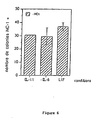
- NC-1 The results with NC-1 are represented on the figure 6 .
- the cells are inoculated in a complete ESA medium with avian Stem Cell Factor (aSCF), bFGF (basic Fibroblast Growth Factor).
- IGF-1 Insulin-like Growth Factor-1
- ARMA antibody (1 ⁇ g / ml) on a mat of STO cells treated with mitomycin C as indicated in the section Materials and Methods.
- a new seeding is added to the culture.
- the cytokines LIF (Leukemia Inhibitory Factor), IL-11 (Interleukin 11) and IL-6 (Interleukin 6) are added in the medium at the concentrations indicated above. Double staining, alkaline phosphatase activity and detection of antibody epitopes is carried out according to the protocols presented above.
- the EMA-I antibody (Hahnel and Eddy, 1986) initially directed against epitopes present on the primordial cells of the murine germ line was used against these same cells in chicken.
- EMA-1 recognizes cells and colonies of cells that all have alkaline phosphatase activity. It was furthermore verified that this EMA-1 antibody only recognizes murine ES cells in their undifferentiated tolipotence state.
- the antibodies were tested either on undifferentiated cultures obtained as described in the material part and Methods as described above or on cultures which were treated with an excess of retinoic acid added to the culture (10 -6 M) for at least 48 hours.
- the table below indicates the state of recognition by the different antibodies used.
- Blastodermal discs of quail or chicken are seeded on STO feeder cell mats. After different days of culture, the cells are subcultured onto STO cell mats as described in the Materials and Methods section.
- the detection of cells and cells positive for both alkaline phosphatase activity and for the localization of ECMA-7 or NC-1 labeling suggests that the culture conditions are defined to maintain the secondary and tertiary cultures of the cells. totipotent cells.
- the transplanting process also ensures, after the first pass, homogeneity to the whole culture, both morphologically, and by the detection of the different epitopes.
- the mass of cells become very extensive and homogeneous, character increased by the large capacity of these cells to divide rapidly, unlike the differentiated cells initially present in the primary culture. So far these identification and characterization criteria can be used and detected for at least 5 weeks after seeding.
- the chicken blastoderm cells obtained in primary cultures or after successive subcultures can be injected into recipient embryos.
- the cells maintained in culture come from a pigmented strain and the recipient embryos from an unpigmented strain.
- the cells maintained in cultures are dissociated and prepared as described in the Materials and Methods part according to the same method as for a subculture.
- the cell suspension is then prepared in a proportion of 1 to 3 ⁇ 10 5 cells per ml of ESA medium.
- the freshly laid, non-incubated egg containing the reviving embryo is slightly irradiated between 5 Gy and 7 Gy. A small window of a few mm 2 is made in the recipient's shell by grinding.
- the shell membrane is cut with a scalpel and the cells are injected with a capillary stretched in the subgerminal cavity of the blastodermic disc in a volume of 1 to 5 ⁇ l, which corresponds to 100 to 1500 cells maximum.
- the average of the injected cells is 500 cells.
- the window is then covered with shell membranes and sealed.
- a piece of adhesive bandage is applied to perfect the seal and to limit the evaporation as much as possible. After 4 days of incubation under optimal conditions, the eggs are opened and the well-developed embryos are transferred to a larger shell and incubated to finish their development satisfactorily.
Landscapes
- Life Sciences & Earth Sciences (AREA)
- Health & Medical Sciences (AREA)
- Engineering & Computer Science (AREA)
- Biomedical Technology (AREA)
- Zoology (AREA)
- Biotechnology (AREA)
- Chemical & Material Sciences (AREA)
- Wood Science & Technology (AREA)
- Organic Chemistry (AREA)
- Bioinformatics & Cheminformatics (AREA)
- Genetics & Genomics (AREA)
- General Health & Medical Sciences (AREA)
- Gynecology & Obstetrics (AREA)
- Developmental Biology & Embryology (AREA)
- Reproductive Health (AREA)
- Microbiology (AREA)
- Biochemistry (AREA)
- General Engineering & Computer Science (AREA)
- Cell Biology (AREA)
- Environmental Sciences (AREA)
- Animal Behavior & Ethology (AREA)
- Animal Husbandry (AREA)
- Biodiversity & Conservation Biology (AREA)
- Veterinary Medicine (AREA)
- Micro-Organisms Or Cultivation Processes Thereof (AREA)
- Medicines Containing Plant Substances (AREA)
- Medicines That Contain Protein Lipid Enzymes And Other Medicines (AREA)
- Preparation Of Compounds By Using Micro-Organisms (AREA)
Claims (13)
- Verfahren zum Kultivieren totipotenter embryonaler Zellen von Vögeln (oder embryonaler Stammzellen von Vögeln), dadurch gekennzeichnet, dass:1) Zellen suspendiert werden, die von Blastodermscheiben von Vogeleiern stammen, die in einem Kulturmedium von totipotenten embryonalen Zellen von Vögeln befruchtet wurden, der Art, die ein Kulturmedium für Zellen von Vögeln umfasst, das Folgendes umfasst:a) b-FGF, SCF und LIF oderb) b-FGF, aSCF (SCF des Vogels), LIF, IL-11, IL-6 und IGF-1 oderc) b-FGF, aSCF (SCF des Vogels), LIF und IGF-1, (b-FGF = basischer Fibroblastenwachstumsfaktor; SCF = Stammzellenfaktor; LIF = Leukämie inhibierender Faktor; IL-11 = Interleukin-11; IL-6 = Interleukin-6; IGF-1 = insulinähnlicher Wachstumsfaktor-1; SCF Stammzellenfaktor des Vogels),2) ein Nährzellenstreifen mit der beim Abschluss von Schritt a) erhaltenen Suspension besät wird,3) die Zellen inkuhiert werden,4) die Zellen in Kultur entnommen und nach dem Gewinnen embryonaler Stammzellen von Vögeln aufgereinigt werden.
- Verfahren nach Anspruch 1, dadurch gekennzeichnet, dass zwischen den Schritten 3) und 4) eine oder mehrere über die Zeit gestaffelten Zugaben von neuem Medium, das mit dem in Schritt 1) verwendeten identisch ist, durchgeführt werden.
- Verfahren nach einem der Ansprüche 1 bis 2, dadurch gekennzeichnet, dass das Kulturmedium im Wesentlichen frei von aktiver Retinsäure ist.
- Verfahren nach einem der Ansprüche 1 bis 2, dadurch gekennzeichnet, dass das Kulturmedium einen Nährzellenstreifen umfasst.
- Verfahren nach einem der Ansprüche 1 bis 4, dadurch gekennzeichnet, dass zwischen den Schritten 3) und 4) die Zugabe von neuem Medium am 3. Tag, danach jeden Tag durchgeführt wird.
- Verfahren nach einem der Ansprüche 1 bis 5, dadurch gekennzeichnet, dass der Schritt 4) durch Enzymbehandlung, Waschen in einem Medium, das keinen Wachstumsfaktor enthält, und Zentrifugation durchgeführt wird.
- Verfahren nach einem der Ansprüche 1 bis 6, dadurch gekennzeichnet, dass beim Abschluss des Schritts 4) ein Schritt 5) durchgeführt wird, in dem die embyronalen Stammzellen erneut auf einem Nährzellenstreifen in Gegenwart des besagten Kulturmediums gesät werden, um eine sekundäre Kultur zu erhalten.
- Verfahren nach Anspruch 7, dadurch gekennzeichnet, dass die Schritte 4) und 5) mehrmals wiederholt werden.
- In-vitro-Kultur von embryonalen Stammzellen von Vögeln, die durch das Verfahren nach einem der Ansprüche 1 bis 8 erhalten werden kann, wobei die besagte Kultur ein Kulturmedium von totipotenen embryonalen Zellen von Vögeln umfasst, das Folgendes umfasst:a) b-FGF, SCF und LIF oderb) b-FGF, aSCF (SCF des Vogels), LIF, IL-11, IL-6 und IGF-1 oderc) b-FGF, aSCF (SCF des Vogels), LIF und IGF-1
(b-FGF = basischer Fibroblastenwachstumsfaktor; SCF = Stammzellenfaktor; LIF = Leukämie inhibierender Faktor; IL-11 = Interleukin-11; IL-6 = Interleukin-6; IGF-1 = insulinähnlicher Wachstumsfaktor-1; aSCF = Stammzellenfaktor des vogels). - Kultur von embryonalen Stammzellen von Vögeln nach Anspruch 9, dadurch gekennzeichnet, dass sie im Vergleich zu dem Hintergrund, der überwiegend aus schwach positiven Zellen besteht, 2- bis 3-mal mehr Kolonien aufweist, die für alkalische Phosphatase-Aktivität positiv sind.
- Kultur von embryonalen Stammzellen von Vögeln nach Anspruch 9 oder 10, dadurch gekennzeichnet, dass die Zellen spezifisch mit mindestens einem Antikörper reagieren, der aus ECMA-7, SSEA-1, SSEA-3, TEC-01, EMA-1 und EMA-6 ausgewählt ist.
- Kultur von embryonalen Stammzellen von Vögeln nach Anspruch 11, dadurch gekennzeichnet, dass die Zellen nicht mit dem Antikörper TROMA-1 reagieren.
- Kultur von embryonalen Stammzellen von Vögeln nach einem der Ansprüche 9 bis 12, dadurch gekennzeichnet, dass die Zellen durch Integration des Gens, das für ein heterologes Protein codiert, modifiziert werden.
Applications Claiming Priority (3)
| Application Number | Priority Date | Filing Date | Title |
|---|---|---|---|
| FR9412598 | 1994-10-21 | ||
| FR9412598A FR2726003B1 (fr) | 1994-10-21 | 1994-10-21 | Milieu de culture de cellules embryonnaires totipotentes aviaires, procede de culture de ces cellules, et cellules embryonnaires totipotentes aviaires |
| EP95935994A EP0787180B1 (de) | 1994-10-21 | 1995-10-20 | Kulturmedium für totipotente embryonalen vogelzellen das von aktiver retinoinsäure frei ist |
Related Parent Applications (1)
| Application Number | Title | Priority Date | Filing Date |
|---|---|---|---|
| EP95935994.4 Division | 1995-10-20 |
Publications (3)
| Publication Number | Publication Date |
|---|---|
| EP1149899A1 EP1149899A1 (de) | 2001-10-31 |
| EP1149899B1 true EP1149899B1 (de) | 2011-02-23 |
| EP1149899B9 EP1149899B9 (de) | 2011-09-21 |
Family
ID=9468082
Family Applications (2)
| Application Number | Title | Priority Date | Filing Date |
|---|---|---|---|
| EP95935994A Expired - Lifetime EP0787180B1 (de) | 1994-10-21 | 1995-10-20 | Kulturmedium für totipotente embryonalen vogelzellen das von aktiver retinoinsäure frei ist |
| EP01108584A Expired - Lifetime EP1149899B9 (de) | 1994-10-21 | 1995-10-20 | Kulturmedium für totipotente embryonale Vogelzellen |
Family Applications Before (1)
| Application Number | Title | Priority Date | Filing Date |
|---|---|---|---|
| EP95935994A Expired - Lifetime EP0787180B1 (de) | 1994-10-21 | 1995-10-20 | Kulturmedium für totipotente embryonalen vogelzellen das von aktiver retinoinsäure frei ist |
Country Status (11)
| Country | Link |
|---|---|
| US (3) | US6114168A (de) |
| EP (2) | EP0787180B1 (de) |
| AT (2) | ATE223480T1 (de) |
| AU (1) | AU3808895A (de) |
| CA (1) | CA2203148C (de) |
| DE (2) | DE69528071T2 (de) |
| DK (1) | DK0787180T3 (de) |
| ES (2) | ES2360595T3 (de) |
| FR (1) | FR2726003B1 (de) |
| PT (1) | PT787180E (de) |
| WO (1) | WO1996012793A1 (de) |
Families Citing this family (82)
| Publication number | Priority date | Publication date | Assignee | Title |
|---|---|---|---|---|
| FR2726003B1 (fr) * | 1994-10-21 | 2002-10-18 | Agronomique Inst Nat Rech | Milieu de culture de cellules embryonnaires totipotentes aviaires, procede de culture de ces cellules, et cellules embryonnaires totipotentes aviaires |
| WO1998004681A2 (en) * | 1996-07-25 | 1998-02-05 | Genzyme Corporation | Chondrocyte media formulations and culture procedures |
| US6011197A (en) | 1997-03-06 | 2000-01-04 | Infigen, Inc. | Method of cloning bovines using reprogrammed non-embryonic bovine cells |
| NZ337495A (en) * | 1997-03-06 | 2001-06-29 | Infigen Inc | Bovine primordial germ cells and their use in cloning |
| US5968809A (en) | 1997-04-11 | 1999-10-19 | Abbot Laboratories | Methods and compositions for synthesis of long chain poly-unsaturated fatty acids |
| US6566583B1 (en) | 1997-06-04 | 2003-05-20 | Daniel Facciotti | Schizochytrium PKS genes |
| AU736087B2 (en) * | 1997-08-04 | 2001-07-26 | University Of Massachusetts | Avian primordial germ cell (PGC) cell line and a method for long term culturing thereof |
| US6333192B1 (en) | 1999-08-09 | 2001-12-25 | North Carolina State University | Method of producing an undifferentiated avian cell culture using avian primordial germ cells |
| FR2808803B1 (fr) * | 2000-05-11 | 2004-12-10 | Agronomique Inst Nat Rech | Cellules es modifiees et gene specifique de cellules es |
| US8273570B2 (en) * | 2000-05-16 | 2012-09-25 | Riken | Process of inducing differentiation of embryonic cell to cell expressing neural surface marker using OP9 or PA6 cells |
| FR2812004B1 (fr) * | 2000-07-24 | 2002-12-27 | Ccd Lab | Milieux de culture pour fecondation in vitro, ou pour la culture de follicules, cellules germinales males ou embryons |
| CA2417356A1 (en) | 2000-08-01 | 2002-02-07 | Yissum Research Development Company | Directed differentiation of embryonic cells |
| EA013564B1 (ru) | 2000-08-03 | 2010-06-30 | Терапеутик Хьюман Поликлоналз Инк. | Гуманизированный иммуноглобулин и содержащая его фармацевтическая композиция |
| US7145057B2 (en) | 2002-02-01 | 2006-12-05 | Origen Therapeutics, Inc. | Chimeric bird from embryonic stem cells |
| FR2836924B1 (fr) * | 2002-03-08 | 2005-01-14 | Vivalis | Lignees de cellules aviaires utiles pour la production de substances d'interet |
| CN1726276A (zh) * | 2002-12-13 | 2006-01-25 | 艾文蒂斯·帕斯图尔公司 | Alvac在禽胚胎干细胞上的生产 |
| CA2528870C (en) * | 2003-06-11 | 2010-09-28 | Japan Science And Technology Agency | Method for producing tissue cells from pluripotent stem cells derived from iris pigmented epithelial cells of animal, and tissue cells obtained by method |
| FR2857671B1 (fr) * | 2003-07-18 | 2007-10-05 | Centre Nat Rech Scient | Nouveau procede de culture de keratinocytes et ses applications |
| EP1646715B1 (de) | 2003-07-22 | 2010-05-12 | Vivalis | Produktion von poxviren mit adhärenten oder nicht adhärenten vogelzellinien |
| US20090104226A1 (en) | 2004-05-21 | 2009-04-23 | Novartis Vaccines And Diagnostics Inc. | Alphavirus Vectors for Respiratory Pathogen Vaccines |
| WO2005123900A1 (en) * | 2004-06-10 | 2005-12-29 | Merial Limited | Medium and methods for culturing of avian primordial germ cells |
| US20060174362A1 (en) * | 2005-02-01 | 2006-08-03 | Origen Therapeutics, Inc. | Long-term culture of avian primordial germ cells (PGCs) |
| WO2006084035A2 (en) * | 2005-02-01 | 2006-08-10 | Origen Therapeutics, Inc. | Transgenic chickens |
| FR2884255B1 (fr) | 2005-04-11 | 2010-11-05 | Vivalis | Utilisation de lignees de cellules souches aviaires ebx pour la production de vaccin contre la grippe |
| RU2303068C1 (ru) * | 2005-10-31 | 2007-07-20 | Всероссийский государственный научно-исследовательский институт животноводства (ВИЖ) | Способ введения ретровирусных векторов в клетки бластодермы при получении трансгенных кур |
| FR2898909A1 (fr) | 2006-03-24 | 2007-09-28 | Agronomique Inst Nat Rech | Combinaison de marqueurs de cellules aviaires |
| FR2898908A1 (fr) * | 2006-03-24 | 2007-09-28 | Agronomique Inst Nat Rech | Procede de preparation de cellules aviaires differenciees et genes impliques dans le maintien de la pluripotence |
| EP2500417A1 (de) * | 2006-08-09 | 2012-09-19 | Vivalis | Verfahren zur Herstellung von transgenen Vögeln unter Verwendung von embryonalen Stammzellen |
| KR20090085019A (ko) * | 2006-08-11 | 2009-08-06 | 주식회사 엠씨티티 | 줄기세포 및 피더세포의 공배양용 배지 조성물 |
| ATE536374T1 (de) | 2006-09-01 | 2011-12-15 | Therapeutic Human Polyclonals Inc | Erhöhte expression von humanem oder humanisiertem immunglobulin bei nicht-humanen transgenen tieren |
| EP1985305A1 (de) | 2007-04-24 | 2008-10-29 | Vivalis | Aus Entenembryonen gewonnene Stammzellkulturen zur Herstellung von Impfstoffen gegen Viren |
| EP1995309A1 (de) * | 2007-05-21 | 2008-11-26 | Vivalis | Rekombinante Proteinproduktion in EBx -Vogelzellen |
| EP2245141B1 (de) | 2008-01-18 | 2018-03-14 | Regents of the University of Minnesota | Stammzellenaggregate und verfahren zur herstellung und verwendung |
| ES2539045T3 (es) | 2009-01-19 | 2015-06-25 | Innate Pharma | Anticuerpos anti-KIR3D |
| EP4218799A1 (de) | 2009-07-15 | 2023-08-02 | GlaxoSmithKline Biologicals S.A. | Rsv-f-proteinzusammensetzungen und verfahren zur herstellung davon |
| EP2456860B1 (de) | 2009-07-21 | 2018-09-05 | ABT Holding Company | Verwendung von stammzellen für reduzierte leukozyten-extravasation |
| SG178064A1 (en) | 2009-07-21 | 2012-03-29 | Abt Holding Co | Use of stem cells to reduce leukocyte extravasation |
| US8865462B2 (en) * | 2010-01-20 | 2014-10-21 | Crystal Bioscience Inc. | Sustained culture of avian gonocytes |
| SG10201501353YA (en) | 2010-02-25 | 2015-04-29 | Abt Holding Co | Modulation of angiogenesis |
| WO2011106521A1 (en) | 2010-02-25 | 2011-09-01 | Abt Holding Company | Modulation of macrophage activation |
| BR112012025364A2 (pt) | 2010-04-07 | 2015-09-22 | Novartis Ag | método para geração de partícula semelhante a vírus de parvovírus b19 |
| WO2011143415A1 (en) | 2010-05-12 | 2011-11-17 | Abt Holding Company | Modulation of splenocytes in cell therapy |
| US9090878B2 (en) | 2010-06-17 | 2015-07-28 | Katholieke Universiteit Leuven | Methods for differentiating cells into hepatic stellate cells and hepatic sinusoidal endothelial cells, cells produced by the methods, and methods for using the cells |
| AU2011276328C1 (en) | 2010-07-06 | 2016-01-21 | Novartis Ag | Norovirus derived immunogenic compositions and methods |
| EP2609191B1 (de) | 2010-08-24 | 2017-11-22 | Regents Of The University Of Minnesota | Nichtstatische suspensionskultur aus zellverbänden |
| EP2625264B1 (de) | 2010-10-08 | 2022-12-07 | Terumo BCT, Inc. | Verfahren und systeme für züchtung und ernte von zellen in einem hohlfaser-bioreaktorsystem mit steuerungsbedingungen |
| AU2012211278B2 (en) | 2011-01-26 | 2016-11-10 | Glaxosmithkline Biologicals Sa | RSV immunization regimen |
| DK2707385T3 (da) | 2011-05-13 | 2017-11-20 | Glaxosmithkline Biologicals Sa | RSV-F-præfusionsantigener |
| EP2718416B1 (de) | 2011-06-06 | 2019-11-13 | Regenesys bvba | Expansion von stammzellen in hohlfaserbioreaktoren |
| US11058762B2 (en) | 2011-07-06 | 2021-07-13 | Glaxosmithkline Biologicals Sa | Immunogenic compositions and uses thereof |
| WO2013006838A1 (en) | 2011-07-06 | 2013-01-10 | Novartis Ag | Immunogenic combination compositions and uses thereof |
| WO2013054199A2 (en) | 2011-10-12 | 2013-04-18 | Novartis Ag | Cmv antigens and uses thereof |
| GB201119335D0 (en) | 2011-11-09 | 2011-12-21 | Univ Leuven Kath | Hepatitis virus infectable stem cells |
| US20150140068A1 (en) | 2012-07-06 | 2015-05-21 | Novartis Ag | Immunogenic compositions and uses thereof |
| EA201590683A1 (ru) | 2012-11-20 | 2015-11-30 | Глаксосмитклайн Байолоджикалс С.А. | Тримеры rsv f, предшествующие слиянию |
| JP6666240B2 (ja) | 2013-04-12 | 2020-03-13 | フランチェスカ, サベリオ ラ | 移植のための臓器の改良 |
| DK2992088T3 (da) | 2013-04-30 | 2019-11-11 | Univ Leuven Kath | Celleterapi for myelodysplastiske syndromer |
| JP6633522B2 (ja) | 2013-11-16 | 2020-01-22 | テルモ ビーシーティー、インコーポレーテッド | バイオリアクターにおける細胞増殖 |
| EP2974739A1 (de) | 2014-07-15 | 2016-01-20 | Novartis AG | RSVF-Trimerisierungsdomänen |
| EP3031822A1 (de) | 2014-12-08 | 2016-06-15 | Novartis AG | Cytomegalovirus-Antigene |
| EP3047856A1 (de) | 2015-01-23 | 2016-07-27 | Novartis AG | Cmv-antigene und ihre verwendungen |
| EP3393512B1 (de) | 2015-12-23 | 2025-11-19 | Pfizer Inc. | Rsv f protein-mutanten |
| US20170258495A1 (en) | 2016-02-29 | 2017-09-14 | The Curators Of The University Of Missouri | Medium supplement to increase the efficiency of oocyte maturation and embryo culture in vitro |
| WO2017210537A1 (en) | 2016-06-02 | 2017-12-07 | The Cleveland Clinic Foundation | Complement inhibition for improving cell viability |
| MX2019011599A (es) | 2017-03-30 | 2019-12-19 | Univ Queensland | Moleculas quimericas y usos de las mismas. |
| WO2019040994A1 (en) | 2017-09-01 | 2019-03-07 | The Australian National University | IMMUNOREGULATOR MOLECULES AND USES THEREOF |
| KR20210016446A (ko) | 2018-05-30 | 2021-02-15 | 인스티튜트 포 리서치 인 바이오메드슨 | 내인성 활성화-유도 시티딘 탈아미노효소를 이용한 b 림프구의 조작 |
| US11260119B2 (en) | 2018-08-24 | 2022-03-01 | Pfizer Inc. | Escherichia coli compositions and methods thereof |
| KR20220035457A (ko) | 2019-07-21 | 2022-03-22 | 글락소스미스클라인 바이오로지칼즈 에스.에이. | 치료 바이러스 백신 |
| EP4004018A1 (de) | 2019-07-24 | 2022-06-01 | GlaxoSmithKline Biologicals SA | Modifizierte humane cytomegalovirus-proteine |
| US12138302B2 (en) | 2020-10-27 | 2024-11-12 | Pfizer Inc. | Escherichia coli compositions and methods thereof |
| US12357681B2 (en) | 2020-12-23 | 2025-07-15 | Pfizer Inc. | E. coli FimH mutants and uses thereof |
| EP4032547A1 (de) | 2021-01-20 | 2022-07-27 | GlaxoSmithKline Biologicals S.A. | Hsv1 fce abgeleitete fragemente zur hsv therapie |
| US20250101067A1 (en) | 2022-01-28 | 2025-03-27 | Glaxosmithkline Biologicals Sa | Modified human cytomegalovirus proteins |
| US20250163388A1 (en) * | 2022-02-15 | 2025-05-22 | University Of Southern California | Methods for derivation and propagation of avian pluripotent stem cells and applications thereof |
| WO2024069420A2 (en) | 2022-09-29 | 2024-04-04 | Pfizer Inc. | Immunogenic compositions comprising an rsv f protein trimer |
| JP2026504862A (ja) | 2023-01-18 | 2026-02-10 | ファイザー・インク | 呼吸器疾患に対するワクチン |
| US20250090650A1 (en) | 2023-09-06 | 2025-03-20 | Sanofi | Modified influenza b hemagglutinin polypeptides and nucleic acids and uses thereof |
| WO2025141200A1 (en) | 2023-12-29 | 2025-07-03 | Sanofi Pasteur Inc. | Modified rna polymerases |
| WO2025163460A2 (en) | 2024-01-30 | 2025-08-07 | Pfizer Inc. | Vaccines against respiratory diseases |
| WO2026027730A1 (en) | 2024-07-31 | 2026-02-05 | Sanofi | Modified h5 influenza hemagglutinin polypeptides and nucleic acids and uses thereof |
| WO2026052773A1 (en) | 2024-09-06 | 2026-03-12 | Sanofi | Modified influenza a hemagglutinin polypeptides and nucleic acids and uses thereof |
Family Cites Families (7)
| Publication number | Priority date | Publication date | Assignee | Title |
|---|---|---|---|---|
| JP2740320B2 (ja) * | 1988-08-04 | 1998-04-15 | アムラド・コーポレイション・リミテッド | 胚幹細胞のインビトロ増殖 |
| AU3597093A (en) * | 1992-01-27 | 1993-09-01 | Embrex Inc. | Gene transfer in poultry by introduction of embryo cells (in ovo) |
| US5340740A (en) * | 1992-05-15 | 1994-08-23 | North Carolina State University | Method of producing an avian embryonic stem cell culture and the avian embryonic stem cell culture produced by the process |
| WO1994003585A1 (en) * | 1992-08-04 | 1994-02-17 | Commonwealth Scientific And Industrial Research Organisation | A method for maintaining embryonic stem cells and avian factor useful for same |
| US5453357A (en) * | 1992-10-08 | 1995-09-26 | Vanderbilt University | Pluripotential embryonic stem cells and methods of making same |
| US5589458A (en) * | 1992-11-13 | 1996-12-31 | Thomas Jefferson University | Compounds that inhibit T cell proliferation and methods for using the same |
| FR2726003B1 (fr) * | 1994-10-21 | 2002-10-18 | Agronomique Inst Nat Rech | Milieu de culture de cellules embryonnaires totipotentes aviaires, procede de culture de ces cellules, et cellules embryonnaires totipotentes aviaires |
-
1994
- 1994-10-21 FR FR9412598A patent/FR2726003B1/fr not_active Expired - Lifetime
-
1995
- 1995-10-20 ES ES01108584T patent/ES2360595T3/es not_active Expired - Lifetime
- 1995-10-20 DE DE69528071T patent/DE69528071T2/de not_active Expired - Lifetime
- 1995-10-20 PT PT95935994T patent/PT787180E/pt unknown
- 1995-10-20 AT AT95935994T patent/ATE223480T1/de active
- 1995-10-20 DK DK95935994T patent/DK0787180T3/da active
- 1995-10-20 EP EP95935994A patent/EP0787180B1/de not_active Expired - Lifetime
- 1995-10-20 US US08/817,671 patent/US6114168A/en not_active Expired - Lifetime
- 1995-10-20 AU AU38088/95A patent/AU3808895A/en not_active Abandoned
- 1995-10-20 AT AT01108584T patent/ATE499436T1/de not_active IP Right Cessation
- 1995-10-20 DE DE69536142T patent/DE69536142D1/de not_active Expired - Lifetime
- 1995-10-20 CA CA2203148A patent/CA2203148C/fr not_active Expired - Lifetime
- 1995-10-20 WO PCT/FR1995/001389 patent/WO1996012793A1/fr not_active Ceased
- 1995-10-20 EP EP01108584A patent/EP1149899B9/de not_active Expired - Lifetime
- 1995-10-20 ES ES95935994T patent/ES2180655T3/es not_active Expired - Lifetime
-
1999
- 1999-09-01 US US09/392,506 patent/US6500668B2/en not_active Expired - Lifetime
-
2002
- 2002-03-15 US US10/097,245 patent/US6998266B2/en not_active Expired - Fee Related
Non-Patent Citations (2)
| Title |
|---|
| KAWASE E. ET AL: "Tumor Necrosis Factor-alpha (TNF-alpha) Stimulates Proliferation of Mouse Primordial Germ Cells in Culture", DEVELOPMENTAL BIOLOGY, ACADEMIC PRESS, NEW YORK, NY, US LNKD- DOI:10.1006/DBIO.1994.1011, vol. 161, no. 1, 1 January 1994 (1994-01-01), pages 91 - 95, XP024779794, ISSN: 0012-1606, [retrieved on 19940101] * |
| MATSUI Y. ET AL: "Derivation of pluripotential embryonic stem cells from murine primordial germ cells in culture", CELL, CELL PRESS, CAMBRIDGE, NA, US LNKD- DOI:10.1016/0092-8674(92)90317-6, vol. 70, no. 5, 4 September 1992 (1992-09-04), pages 841 - 847, XP024245512, ISSN: 0092-8674, [retrieved on 19920904] * |
Also Published As
| Publication number | Publication date |
|---|---|
| ES2180655T3 (es) | 2003-02-16 |
| CA2203148A1 (fr) | 1996-05-02 |
| DE69528071D1 (de) | 2002-10-10 |
| EP0787180B1 (de) | 2002-09-04 |
| EP1149899A1 (de) | 2001-10-31 |
| EP0787180A1 (de) | 1997-08-06 |
| US6998266B2 (en) | 2006-02-14 |
| DK0787180T3 (da) | 2003-01-06 |
| US6114168A (en) | 2000-09-05 |
| WO1996012793A1 (fr) | 1996-05-02 |
| US20010019840A1 (en) | 2001-09-06 |
| ES2360595T3 (es) | 2011-06-07 |
| DE69536142D1 (de) | 2011-04-07 |
| US20020192815A1 (en) | 2002-12-19 |
| FR2726003B1 (fr) | 2002-10-18 |
| EP1149899B9 (de) | 2011-09-21 |
| DE69528071T2 (de) | 2003-05-15 |
| FR2726003A1 (fr) | 1996-04-26 |
| CA2203148C (fr) | 2011-08-09 |
| AU3808895A (en) | 1996-05-15 |
| PT787180E (pt) | 2003-01-31 |
| US6500668B2 (en) | 2002-12-31 |
| ATE499436T1 (de) | 2011-03-15 |
| ATE223480T1 (de) | 2002-09-15 |
Similar Documents
| Publication | Publication Date | Title |
|---|---|---|
| EP1149899B1 (de) | Kulturmedium für totipotente embryonale Vogelzellen | |
| US5340740A (en) | Method of producing an avian embryonic stem cell culture and the avian embryonic stem cell culture produced by the process | |
| JP4841777B2 (ja) | トリ始原生殖細胞を使用して、未分化のトリ細胞培養物を取得する方法 | |
| US6156569A (en) | Prolonged culturing of avian primordial germ cells (PGCs) using specific growth factors, use thereof to produce chimeric avians | |
| FR2808803A1 (fr) | Cellules es modifiees et gene specifique de cellules es | |
| CN1195844C (zh) | 鸟原始生殖细胞(pgc)细胞系及其长期培养的方法 | |
| MX2009001477A (es) | Metodo de produccion de un aviar transgenico utilizando celulas progenitoras embrionicas. | |
| JP2007501625A (ja) | 鳥類精原幹細胞の培養方法及びこれにより収得した鳥類精原幹細胞 | |
| WO2004039965A1 (ja) | 多能性幹細胞培養用の組成物とその使用 | |
| US20060174362A1 (en) | Long-term culture of avian primordial germ cells (PGCs) | |
| KR100502889B1 (ko) | 조류 원시생식세포의 생식선 전이 효율의 개선방법 | |
| JP4376901B2 (ja) | 精原細胞を利用した鳥類キメラの生産方法及び鳥類キメラ | |
| Volkova et al. | Isolation, cultivation and characterization of quail primordial germ cells | |
| Naito et al. | Effect of mytomycin c treatment on feeder cells and the proliferation of cultured chicken primordial germ cells isolated from embryonic blood |
Legal Events
| Date | Code | Title | Description |
|---|---|---|---|
| PUAI | Public reference made under article 153(3) epc to a published international application that has entered the european phase |
Free format text: ORIGINAL CODE: 0009012 |
|
| 17P | Request for examination filed |
Effective date: 20010430 |
|
| AC | Divisional application: reference to earlier application |
Ref document number: 787180 Country of ref document: EP |
|
| AK | Designated contracting states |
Kind code of ref document: A1 Designated state(s): AT BE CH DE DK ES FR GB GR IE IT LI LU MC NL PT SE |
|
| AKX | Designation fees paid |
Free format text: AT BE CH DE DK ES FR GB GR IE IT LI LU MC NL PT SE |
|
| 17Q | First examination report despatched |
Effective date: 20070606 |
|
| RAP1 | Party data changed (applicant data changed or rights of an application transferred) |
Owner name: CENTRE NATIONAL DE LA RECHERCHE SCIENTIFIQUE (CNRS Owner name: INSTITUT NATIONAL DE LA RECHERCHE AGRONOMIQUE Owner name: ECOLE NORMALE SUPERIEURE DE LYON |
|
| GRAP | Despatch of communication of intention to grant a patent |
Free format text: ORIGINAL CODE: EPIDOSNIGR1 |
|
| RIC1 | Information provided on ipc code assigned before grant |
Ipc: C12N 5/00 20060101ALI20100528BHEP Ipc: C12N 5/0735 20100101AFI20100528BHEP |
|
| GRAS | Grant fee paid |
Free format text: ORIGINAL CODE: EPIDOSNIGR3 |
|
| RAP1 | Party data changed (applicant data changed or rights of an application transferred) |
Owner name: CENTRE NATIONAL DE LA RECHERCHE SCIENTIFIQUE (CNRS Owner name: ECOLE NORMALE SUPERIEURE DE LYON Owner name: INSTITUT NATIONAL DE LA RECHERCHE AGRONOMIQUE |
|
| GRAA | (expected) grant |
Free format text: ORIGINAL CODE: 0009210 |
|
| AC | Divisional application: reference to earlier application |
Ref document number: 0787180 Country of ref document: EP Kind code of ref document: P |
|
| AK | Designated contracting states |
Kind code of ref document: B1 Designated state(s): AT BE CH DE DK ES FR GB GR IE IT LI LU MC NL PT SE |
|
| REG | Reference to a national code |
Ref country code: GB Ref legal event code: FG4D Free format text: NOT ENGLISH |
|
| REG | Reference to a national code |
Ref country code: CH Ref legal event code: EP |
|
| REG | Reference to a national code |
Ref country code: IE Ref legal event code: FG4D Free format text: LANGUAGE OF EP DOCUMENT: FRENCH |
|
| REF | Corresponds to: |
Ref document number: 69536142 Country of ref document: DE Date of ref document: 20110407 Kind code of ref document: P |
|
| REG | Reference to a national code |
Ref country code: DE Ref legal event code: R096 Ref document number: 69536142 Country of ref document: DE Effective date: 20110407 |
|
| REG | Reference to a national code |
Ref country code: ES Ref legal event code: FG2A Ref document number: 2360595 Country of ref document: ES Kind code of ref document: T3 Effective date: 20110607 |
|
| REG | Reference to a national code |
Ref country code: NL Ref legal event code: VDEP Effective date: 20110223 |
|
| PG25 | Lapsed in a contracting state [announced via postgrant information from national office to epo] |
Ref country code: SE Free format text: LAPSE BECAUSE OF FAILURE TO SUBMIT A TRANSLATION OF THE DESCRIPTION OR TO PAY THE FEE WITHIN THE PRESCRIBED TIME-LIMIT Effective date: 20110223 Ref country code: PT Free format text: LAPSE BECAUSE OF FAILURE TO SUBMIT A TRANSLATION OF THE DESCRIPTION OR TO PAY THE FEE WITHIN THE PRESCRIBED TIME-LIMIT Effective date: 20110623 Ref country code: GR Free format text: LAPSE BECAUSE OF FAILURE TO SUBMIT A TRANSLATION OF THE DESCRIPTION OR TO PAY THE FEE WITHIN THE PRESCRIBED TIME-LIMIT Effective date: 20110524 |
|
| PG25 | Lapsed in a contracting state [announced via postgrant information from national office to epo] |
Ref country code: NL Free format text: LAPSE BECAUSE OF FAILURE TO SUBMIT A TRANSLATION OF THE DESCRIPTION OR TO PAY THE FEE WITHIN THE PRESCRIBED TIME-LIMIT Effective date: 20110223 Ref country code: AT Free format text: LAPSE BECAUSE OF FAILURE TO SUBMIT A TRANSLATION OF THE DESCRIPTION OR TO PAY THE FEE WITHIN THE PRESCRIBED TIME-LIMIT Effective date: 20110223 |
|
| REG | Reference to a national code |
Ref country code: IE Ref legal event code: FD4D |
|
| PG25 | Lapsed in a contracting state [announced via postgrant information from national office to epo] |
Ref country code: DK Free format text: LAPSE BECAUSE OF FAILURE TO SUBMIT A TRANSLATION OF THE DESCRIPTION OR TO PAY THE FEE WITHIN THE PRESCRIBED TIME-LIMIT Effective date: 20110223 Ref country code: IE Free format text: LAPSE BECAUSE OF FAILURE TO SUBMIT A TRANSLATION OF THE DESCRIPTION OR TO PAY THE FEE WITHIN THE PRESCRIBED TIME-LIMIT Effective date: 20110223 |
|
| PLBE | No opposition filed within time limit |
Free format text: ORIGINAL CODE: 0009261 |
|
| STAA | Information on the status of an ep patent application or granted ep patent |
Free format text: STATUS: NO OPPOSITION FILED WITHIN TIME LIMIT |
|
| 26N | No opposition filed |
Effective date: 20111124 |
|
| REG | Reference to a national code |
Ref country code: DE Ref legal event code: R097 Ref document number: 69536142 Country of ref document: DE Effective date: 20111124 |
|
| BERE | Be: lapsed |
Owner name: ECOLE NORMALE SUPERIEURE DE LYON Effective date: 20111031 Owner name: INSTITUT NATIONAL DE LA RECHERCHE AGRONOMIQUE Effective date: 20111031 Owner name: CENTRE NATIONAL DE LA RECHERCHE SCIENTIFIQUE (CNR Effective date: 20111031 |
|
| PG25 | Lapsed in a contracting state [announced via postgrant information from national office to epo] |
Ref country code: MC Free format text: LAPSE BECAUSE OF NON-PAYMENT OF DUE FEES Effective date: 20111031 |
|
| REG | Reference to a national code |
Ref country code: CH Ref legal event code: PL |
|
| PG25 | Lapsed in a contracting state [announced via postgrant information from national office to epo] |
Ref country code: LI Free format text: LAPSE BECAUSE OF NON-PAYMENT OF DUE FEES Effective date: 20111031 Ref country code: CH Free format text: LAPSE BECAUSE OF NON-PAYMENT OF DUE FEES Effective date: 20111031 Ref country code: BE Free format text: LAPSE BECAUSE OF NON-PAYMENT OF DUE FEES Effective date: 20111031 |
|
| PG25 | Lapsed in a contracting state [announced via postgrant information from national office to epo] |
Ref country code: LU Free format text: LAPSE BECAUSE OF NON-PAYMENT OF DUE FEES Effective date: 20111020 |
|
| PGFP | Annual fee paid to national office [announced via postgrant information from national office to epo] |
Ref country code: GB Payment date: 20141015 Year of fee payment: 20 Ref country code: ES Payment date: 20141021 Year of fee payment: 20 Ref country code: DE Payment date: 20141010 Year of fee payment: 20 Ref country code: FR Payment date: 20141015 Year of fee payment: 20 |
|
| PGFP | Annual fee paid to national office [announced via postgrant information from national office to epo] |
Ref country code: IT Payment date: 20141020 Year of fee payment: 20 |
|
| REG | Reference to a national code |
Ref country code: DE Ref legal event code: R071 Ref document number: 69536142 Country of ref document: DE |
|
| REG | Reference to a national code |
Ref country code: GB Ref legal event code: PE20 Expiry date: 20151019 |
|
| REG | Reference to a national code |
Ref country code: ES Ref legal event code: FD2A Effective date: 20160127 |
|
| PG25 | Lapsed in a contracting state [announced via postgrant information from national office to epo] |
Ref country code: GB Free format text: LAPSE BECAUSE OF EXPIRATION OF PROTECTION Effective date: 20151019 |
|
| PG25 | Lapsed in a contracting state [announced via postgrant information from national office to epo] |
Ref country code: ES Free format text: LAPSE BECAUSE OF EXPIRATION OF PROTECTION Effective date: 20151021 |