EP1154786B1 - Compositions alterant la secretion de mucus - Google Patents
Compositions alterant la secretion de mucus Download PDFInfo
- Publication number
- EP1154786B1 EP1154786B1 EP00912034A EP00912034A EP1154786B1 EP 1154786 B1 EP1154786 B1 EP 1154786B1 EP 00912034 A EP00912034 A EP 00912034A EP 00912034 A EP00912034 A EP 00912034A EP 1154786 B1 EP1154786 B1 EP 1154786B1
- Authority
- EP
- European Patent Office
- Prior art keywords
- mucus
- peptide
- marcks
- secretion
- protein
- Prior art date
- Legal status (The legal status is an assumption and is not a legal conclusion. Google has not performed a legal analysis and makes no representation as to the accuracy of the status listed.)
- Expired - Lifetime
Links
- 210000003097 mucus Anatomy 0.000 title claims abstract description 233
- 230000028327 secretion Effects 0.000 title claims abstract description 152
- 239000000203 mixture Substances 0.000 title claims description 40
- 108090000765 processed proteins & peptides Proteins 0.000 claims abstract description 100
- 230000003248 secreting effect Effects 0.000 claims abstract description 30
- 230000002401 inhibitory effect Effects 0.000 claims abstract description 17
- 239000008194 pharmaceutical composition Substances 0.000 claims abstract description 12
- 239000003937 drug carrier Substances 0.000 claims abstract description 6
- 210000004027 cell Anatomy 0.000 claims description 128
- 102000015695 Myristoylated Alanine-Rich C Kinase Substrate Human genes 0.000 claims description 92
- 108010063737 Myristoylated Alanine-Rich C Kinase Substrate Proteins 0.000 claims description 92
- 150000001875 compounds Chemical class 0.000 claims description 85
- 108091034117 Oligonucleotide Proteins 0.000 claims description 75
- 238000000034 method Methods 0.000 claims description 68
- 239000003814 drug Substances 0.000 claims description 43
- 239000002773 nucleotide Substances 0.000 claims description 36
- 125000003729 nucleotide group Chemical group 0.000 claims description 36
- 241000282414 Homo sapiens Species 0.000 claims description 35
- 239000003112 inhibitor Substances 0.000 claims description 35
- 238000011282 treatment Methods 0.000 claims description 35
- 150000001413 amino acids Chemical class 0.000 claims description 34
- 108090000623 proteins and genes Proteins 0.000 claims description 34
- YUFCOOWNNHGGOD-UMMCILCDSA-N 8-bromo-3',5'-cyclic GMP Chemical compound C([C@H]1O2)OP(O)(=O)O[C@H]1[C@@H](O)[C@@H]2N1C(N=C(NC2=O)N)=C2N=C1Br YUFCOOWNNHGGOD-UMMCILCDSA-N 0.000 claims description 32
- 238000012360 testing method Methods 0.000 claims description 32
- 239000008187 granular material Substances 0.000 claims description 29
- 210000002919 epithelial cell Anatomy 0.000 claims description 27
- PGAVKCOVUIYSFO-UHFFFAOYSA-N uridine-triphosphate Natural products OC1C(O)C(COP(O)(=O)OP(O)(=O)OP(O)(O)=O)OC1N1C(=O)NC(=O)C=C1 PGAVKCOVUIYSFO-UHFFFAOYSA-N 0.000 claims description 24
- PGAVKCOVUIYSFO-XVFCMESISA-N UTP Chemical compound O[C@@H]1[C@H](O)[C@@H](COP(O)(=O)OP(O)(=O)OP(O)(O)=O)O[C@H]1N1C(=O)NC(=O)C=C1 PGAVKCOVUIYSFO-XVFCMESISA-N 0.000 claims description 23
- 102000004169 proteins and genes Human genes 0.000 claims description 21
- 239000012634 fragment Substances 0.000 claims description 20
- 210000004379 membrane Anatomy 0.000 claims description 20
- 239000012528 membrane Substances 0.000 claims description 20
- 230000014509 gene expression Effects 0.000 claims description 19
- 210000004400 mucous membrane Anatomy 0.000 claims description 19
- 201000010099 disease Diseases 0.000 claims description 17
- 208000037265 diseases, disorders, signs and symptoms Diseases 0.000 claims description 17
- 238000004519 manufacturing process Methods 0.000 claims description 16
- 210000000424 bronchial epithelial cell Anatomy 0.000 claims description 15
- 238000000338 in vitro Methods 0.000 claims description 13
- 108010033276 Peptide Fragments Proteins 0.000 claims description 12
- 102000007079 Peptide Fragments Human genes 0.000 claims description 12
- 239000000443 aerosol Substances 0.000 claims description 12
- 230000026731 phosphorylation Effects 0.000 claims description 10
- 238000006366 phosphorylation reaction Methods 0.000 claims description 10
- 208000006673 asthma Diseases 0.000 claims description 8
- 210000000981 epithelium Anatomy 0.000 claims description 8
- 210000004072 lung Anatomy 0.000 claims description 8
- 238000012216 screening Methods 0.000 claims description 8
- 206010006451 bronchitis Diseases 0.000 claims description 7
- 210000001035 gastrointestinal tract Anatomy 0.000 claims description 7
- 208000006545 Chronic Obstructive Pulmonary Disease Diseases 0.000 claims description 6
- 201000003883 Cystic fibrosis Diseases 0.000 claims description 6
- 230000002496 gastric effect Effects 0.000 claims description 6
- 239000002502 liposome Substances 0.000 claims description 6
- 102000000584 Calmodulin Human genes 0.000 claims description 5
- 108010041952 Calmodulin Proteins 0.000 claims description 5
- 206010035664 Pneumonia Diseases 0.000 claims description 5
- 230000000692 anti-sense effect Effects 0.000 claims description 5
- 201000009240 nasopharyngitis Diseases 0.000 claims description 5
- 206010022000 influenza Diseases 0.000 claims description 4
- 230000004962 physiological condition Effects 0.000 claims description 4
- 206010039083 rhinitis Diseases 0.000 claims description 4
- 206010014561 Emphysema Diseases 0.000 claims description 3
- 238000011200 topical administration Methods 0.000 claims description 3
- 125000003275 alpha amino acid group Chemical group 0.000 claims 3
- 102000004196 processed proteins & peptides Human genes 0.000 abstract description 18
- 229920001184 polypeptide Polymers 0.000 abstract description 3
- MWUXSHHQAYIFBG-UHFFFAOYSA-N Nitric oxide Chemical compound O=[N] MWUXSHHQAYIFBG-UHFFFAOYSA-N 0.000 description 60
- 108010063954 Mucins Proteins 0.000 description 48
- 102000015728 Mucins Human genes 0.000 description 47
- PHEDXBVPIONUQT-RGYGYFBISA-N phorbol 13-acetate 12-myristate Chemical compound C([C@]1(O)C(=O)C(C)=C[C@H]1[C@@]1(O)[C@H](C)[C@H]2OC(=O)CCCCCCCCCCCCC)C(CO)=C[C@H]1[C@H]1[C@]2(OC(C)=O)C1(C)C PHEDXBVPIONUQT-RGYGYFBISA-N 0.000 description 38
- PHEDXBVPIONUQT-UHFFFAOYSA-N Cocarcinogen A1 Natural products CCCCCCCCCCCCCC(=O)OC1C(C)C2(O)C3C=C(C)C(=O)C3(O)CC(CO)=CC2C2C1(OC(C)=O)C2(C)C PHEDXBVPIONUQT-UHFFFAOYSA-N 0.000 description 36
- 108010025061 MARCKS-related peptide Proteins 0.000 description 34
- JLCPHMBAVCMARE-UHFFFAOYSA-N [3-[[3-[[3-[[3-[[3-[[3-[[3-[[3-[[3-[[3-[[3-[[5-(2-amino-6-oxo-1H-purin-9-yl)-3-[[3-[[3-[[3-[[3-[[3-[[5-(2-amino-6-oxo-1H-purin-9-yl)-3-[[5-(2-amino-6-oxo-1H-purin-9-yl)-3-hydroxyoxolan-2-yl]methoxy-hydroxyphosphoryl]oxyoxolan-2-yl]methoxy-hydroxyphosphoryl]oxy-5-(5-methyl-2,4-dioxopyrimidin-1-yl)oxolan-2-yl]methoxy-hydroxyphosphoryl]oxy-5-(6-aminopurin-9-yl)oxolan-2-yl]methoxy-hydroxyphosphoryl]oxy-5-(6-aminopurin-9-yl)oxolan-2-yl]methoxy-hydroxyphosphoryl]oxy-5-(6-aminopurin-9-yl)oxolan-2-yl]methoxy-hydroxyphosphoryl]oxy-5-(6-aminopurin-9-yl)oxolan-2-yl]methoxy-hydroxyphosphoryl]oxyoxolan-2-yl]methoxy-hydroxyphosphoryl]oxy-5-(5-methyl-2,4-dioxopyrimidin-1-yl)oxolan-2-yl]methoxy-hydroxyphosphoryl]oxy-5-(4-amino-2-oxopyrimidin-1-yl)oxolan-2-yl]methoxy-hydroxyphosphoryl]oxy-5-(5-methyl-2,4-dioxopyrimidin-1-yl)oxolan-2-yl]methoxy-hydroxyphosphoryl]oxy-5-(5-methyl-2,4-dioxopyrimidin-1-yl)oxolan-2-yl]methoxy-hydroxyphosphoryl]oxy-5-(6-aminopurin-9-yl)oxolan-2-yl]methoxy-hydroxyphosphoryl]oxy-5-(6-aminopurin-9-yl)oxolan-2-yl]methoxy-hydroxyphosphoryl]oxy-5-(4-amino-2-oxopyrimidin-1-yl)oxolan-2-yl]methoxy-hydroxyphosphoryl]oxy-5-(4-amino-2-oxopyrimidin-1-yl)oxolan-2-yl]methoxy-hydroxyphosphoryl]oxy-5-(4-amino-2-oxopyrimidin-1-yl)oxolan-2-yl]methoxy-hydroxyphosphoryl]oxy-5-(6-aminopurin-9-yl)oxolan-2-yl]methoxy-hydroxyphosphoryl]oxy-5-(4-amino-2-oxopyrimidin-1-yl)oxolan-2-yl]methyl [5-(6-aminopurin-9-yl)-2-(hydroxymethyl)oxolan-3-yl] hydrogen phosphate Polymers Cc1cn(C2CC(OP(O)(=O)OCC3OC(CC3OP(O)(=O)OCC3OC(CC3O)n3cnc4c3nc(N)[nH]c4=O)n3cnc4c3nc(N)[nH]c4=O)C(COP(O)(=O)OC3CC(OC3COP(O)(=O)OC3CC(OC3COP(O)(=O)OC3CC(OC3COP(O)(=O)OC3CC(OC3COP(O)(=O)OC3CC(OC3COP(O)(=O)OC3CC(OC3COP(O)(=O)OC3CC(OC3COP(O)(=O)OC3CC(OC3COP(O)(=O)OC3CC(OC3COP(O)(=O)OC3CC(OC3COP(O)(=O)OC3CC(OC3COP(O)(=O)OC3CC(OC3COP(O)(=O)OC3CC(OC3COP(O)(=O)OC3CC(OC3COP(O)(=O)OC3CC(OC3COP(O)(=O)OC3CC(OC3COP(O)(=O)OC3CC(OC3CO)n3cnc4c(N)ncnc34)n3ccc(N)nc3=O)n3cnc4c(N)ncnc34)n3ccc(N)nc3=O)n3ccc(N)nc3=O)n3ccc(N)nc3=O)n3cnc4c(N)ncnc34)n3cnc4c(N)ncnc34)n3cc(C)c(=O)[nH]c3=O)n3cc(C)c(=O)[nH]c3=O)n3ccc(N)nc3=O)n3cc(C)c(=O)[nH]c3=O)n3cnc4c3nc(N)[nH]c4=O)n3cnc4c(N)ncnc34)n3cnc4c(N)ncnc34)n3cnc4c(N)ncnc34)n3cnc4c(N)ncnc34)O2)c(=O)[nH]c1=O JLCPHMBAVCMARE-UHFFFAOYSA-N 0.000 description 32
- 230000004044 response Effects 0.000 description 26
- 230000000694 effects Effects 0.000 description 22
- 108091032973 (ribonucleotides)n+m Proteins 0.000 description 21
- 235000001014 amino acid Nutrition 0.000 description 20
- 239000000074 antisense oligonucleotide Substances 0.000 description 18
- 238000012230 antisense oligonucleotides Methods 0.000 description 18
- 235000018102 proteins Nutrition 0.000 description 18
- 230000007423 decrease Effects 0.000 description 17
- 239000002245 particle Substances 0.000 description 17
- 108090000315 Protein Kinase C Proteins 0.000 description 16
- 102000003923 Protein Kinase C Human genes 0.000 description 16
- 230000001965 increasing effect Effects 0.000 description 16
- 239000007788 liquid Substances 0.000 description 15
- 230000037361 pathway Effects 0.000 description 12
- 108020000948 Antisense Oligonucleotides Proteins 0.000 description 11
- 210000001508 eye Anatomy 0.000 description 11
- 210000002175 goblet cell Anatomy 0.000 description 11
- 108020004999 messenger RNA Proteins 0.000 description 11
- 230000003843 mucus production Effects 0.000 description 11
- 102000040650 (ribonucleotides)n+m Human genes 0.000 description 10
- 238000011534 incubation Methods 0.000 description 10
- 210000001519 tissue Anatomy 0.000 description 10
- 108020004414 DNA Proteins 0.000 description 9
- 239000007787 solid Substances 0.000 description 9
- 230000001225 therapeutic effect Effects 0.000 description 9
- 101150036121 MARCKS gene Proteins 0.000 description 8
- 108091028043 Nucleic acid sequence Proteins 0.000 description 8
- 210000001552 airway epithelial cell Anatomy 0.000 description 8
- 239000003446 ligand Substances 0.000 description 8
- 208000003556 Dry Eye Syndromes Diseases 0.000 description 7
- 206010013774 Dry eye Diseases 0.000 description 7
- 238000009472 formulation Methods 0.000 description 7
- 102000005962 receptors Human genes 0.000 description 7
- 108020003175 receptors Proteins 0.000 description 7
- 230000000580 secretagogue effect Effects 0.000 description 7
- 239000000126 substance Substances 0.000 description 7
- 239000012190 activator Substances 0.000 description 6
- 230000000295 complement effect Effects 0.000 description 6
- 238000012377 drug delivery Methods 0.000 description 6
- 230000005764 inhibitory process Effects 0.000 description 6
- 150000007523 nucleic acids Chemical class 0.000 description 6
- 230000000638 stimulation Effects 0.000 description 6
- 108020005544 Antisense RNA Proteins 0.000 description 5
- 206010011224 Cough Diseases 0.000 description 5
- 101001059479 Homo sapiens Myristoylated alanine-rich C-kinase substrate Proteins 0.000 description 5
- 230000000903 blocking effect Effects 0.000 description 5
- 230000003247 decreasing effect Effects 0.000 description 5
- 102000047241 human MARCKS Human genes 0.000 description 5
- 230000003993 interaction Effects 0.000 description 5
- 230000001404 mediated effect Effects 0.000 description 5
- 102000039446 nucleic acids Human genes 0.000 description 5
- 108020004707 nucleic acids Proteins 0.000 description 5
- -1 nucteotides Proteins 0.000 description 5
- 230000001105 regulatory effect Effects 0.000 description 5
- 230000000717 retained effect Effects 0.000 description 5
- 239000000758 substrate Substances 0.000 description 5
- XLYOFNOQVPJJNP-UHFFFAOYSA-N water Substances O XLYOFNOQVPJJNP-UHFFFAOYSA-N 0.000 description 5
- ZOOGRGPOEVQQDX-UUOKFMHZSA-N 3',5'-cyclic GMP Chemical compound C([C@H]1O2)OP(O)(=O)O[C@H]1[C@@H](O)[C@@H]2N1C(N=C(NC2=O)N)=C2N=C1 ZOOGRGPOEVQQDX-UUOKFMHZSA-N 0.000 description 4
- 108090000994 Catalytic RNA Proteins 0.000 description 4
- 102000053642 Catalytic RNA Human genes 0.000 description 4
- 238000002965 ELISA Methods 0.000 description 4
- 102000003886 Glycoproteins Human genes 0.000 description 4
- 108090000288 Glycoproteins Proteins 0.000 description 4
- 210000000621 bronchi Anatomy 0.000 description 4
- 210000000170 cell membrane Anatomy 0.000 description 4
- 230000001413 cellular effect Effects 0.000 description 4
- 230000008859 change Effects 0.000 description 4
- 238000001727 in vivo Methods 0.000 description 4
- 230000002757 inflammatory effect Effects 0.000 description 4
- 210000000214 mouth Anatomy 0.000 description 4
- 239000000047 product Substances 0.000 description 4
- 230000009467 reduction Effects 0.000 description 4
- 230000000241 respiratory effect Effects 0.000 description 4
- 108091092562 ribozyme Proteins 0.000 description 4
- 210000002955 secretory cell Anatomy 0.000 description 4
- 230000019491 signal transduction Effects 0.000 description 4
- 238000002560 therapeutic procedure Methods 0.000 description 4
- 230000000699 topical effect Effects 0.000 description 4
- 241000271566 Aves Species 0.000 description 3
- 241000283690 Bos taurus Species 0.000 description 3
- 206010006458 Bronchitis chronic Diseases 0.000 description 3
- 108010003591 Cyclic GMP-Dependent Protein Kinases Proteins 0.000 description 3
- 102000004654 Cyclic GMP-Dependent Protein Kinases Human genes 0.000 description 3
- 206010061218 Inflammation Diseases 0.000 description 3
- 241000124008 Mammalia Species 0.000 description 3
- 241001465754 Metazoa Species 0.000 description 3
- 102000006478 Protein Phosphatase 2 Human genes 0.000 description 3
- 108010058956 Protein Phosphatase 2 Proteins 0.000 description 3
- HMNZFMSWFCAGGW-XPWSMXQVSA-N [3-[hydroxy(2-hydroxyethoxy)phosphoryl]oxy-2-[(e)-octadec-9-enoyl]oxypropyl] (e)-octadec-9-enoate Chemical compound CCCCCCCC\C=C\CCCCCCCC(=O)OCC(COP(O)(=O)OCCO)OC(=O)CCCCCCC\C=C\CCCCCCCC HMNZFMSWFCAGGW-XPWSMXQVSA-N 0.000 description 3
- 238000009825 accumulation Methods 0.000 description 3
- SHGAZHPCJJPHSC-YCNIQYBTSA-N all-trans-retinoic acid Chemical compound OC(=O)\C=C(/C)\C=C\C=C(/C)\C=C\C1=C(C)CCCC1(C)C SHGAZHPCJJPHSC-YCNIQYBTSA-N 0.000 description 3
- 230000001580 bacterial effect Effects 0.000 description 3
- 208000007451 chronic bronchitis Diseases 0.000 description 3
- 230000001886 ciliary effect Effects 0.000 description 3
- 239000002299 complementary DNA Substances 0.000 description 3
- 239000003184 complementary RNA Substances 0.000 description 3
- 230000001086 cytosolic effect Effects 0.000 description 3
- 231100000673 dose–response relationship Toxicity 0.000 description 3
- 229940079593 drug Drugs 0.000 description 3
- 238000009510 drug design Methods 0.000 description 3
- 238000005516 engineering process Methods 0.000 description 3
- 230000002708 enhancing effect Effects 0.000 description 3
- 230000002255 enzymatic effect Effects 0.000 description 3
- 230000028023 exocytosis Effects 0.000 description 3
- 239000013604 expression vector Substances 0.000 description 3
- 238000009396 hybridization Methods 0.000 description 3
- 230000004054 inflammatory process Effects 0.000 description 3
- 230000003834 intracellular effect Effects 0.000 description 3
- 150000002632 lipids Chemical class 0.000 description 3
- 230000007246 mechanism Effects 0.000 description 3
- 210000003928 nasal cavity Anatomy 0.000 description 3
- 230000001575 pathological effect Effects 0.000 description 3
- 230000008569 process Effects 0.000 description 3
- 210000005000 reproductive tract Anatomy 0.000 description 3
- 210000002345 respiratory system Anatomy 0.000 description 3
- 230000004936 stimulating effect Effects 0.000 description 3
- 238000006467 substitution reaction Methods 0.000 description 3
- 239000000725 suspension Substances 0.000 description 3
- 208000024891 symptom Diseases 0.000 description 3
- 230000032258 transport Effects 0.000 description 3
- 206010027654 Allergic conditions Diseases 0.000 description 2
- 108020004491 Antisense DNA Proteins 0.000 description 2
- 206010003645 Atopy Diseases 0.000 description 2
- 208000035143 Bacterial infection Diseases 0.000 description 2
- 102000009024 Epidermal Growth Factor Human genes 0.000 description 2
- XKMLYUALXHKNFT-UUOKFMHZSA-N Guanosine-5'-triphosphate Chemical compound C1=2NC(N)=NC(=O)C=2N=CN1[C@@H]1O[C@H](COP(O)(=O)OP(O)(=O)OP(O)(O)=O)[C@@H](O)[C@H]1O XKMLYUALXHKNFT-UUOKFMHZSA-N 0.000 description 2
- 101100182995 Homo sapiens MARCKS gene Proteins 0.000 description 2
- QNAYBMKLOCPYGJ-REOHCLBHSA-N L-alanine Chemical compound C[C@H](N)C(O)=O QNAYBMKLOCPYGJ-REOHCLBHSA-N 0.000 description 2
- 102000001253 Protein Kinase Human genes 0.000 description 2
- 230000009471 action Effects 0.000 description 2
- 239000004480 active ingredient Substances 0.000 description 2
- 230000001154 acute effect Effects 0.000 description 2
- 235000004279 alanine Nutrition 0.000 description 2
- 230000009285 allergic inflammation Effects 0.000 description 2
- 238000004458 analytical method Methods 0.000 description 2
- 208000022362 bacterial infectious disease Diseases 0.000 description 2
- 230000004888 barrier function Effects 0.000 description 2
- 239000007640 basal medium Substances 0.000 description 2
- 230000033228 biological regulation Effects 0.000 description 2
- 201000009267 bronchiectasis Diseases 0.000 description 2
- 239000002775 capsule Substances 0.000 description 2
- 150000001720 carbohydrates Chemical class 0.000 description 2
- 235000014633 carbohydrates Nutrition 0.000 description 2
- 230000015556 catabolic process Effects 0.000 description 2
- 210000000805 cytoplasm Anatomy 0.000 description 2
- 210000004292 cytoskeleton Anatomy 0.000 description 2
- 238000006731 degradation reaction Methods 0.000 description 2
- 238000012217 deletion Methods 0.000 description 2
- 230000037430 deletion Effects 0.000 description 2
- 230000030609 dephosphorylation Effects 0.000 description 2
- 238000006209 dephosphorylation reaction Methods 0.000 description 2
- 238000002474 experimental method Methods 0.000 description 2
- 239000000499 gel Substances 0.000 description 2
- 230000002068 genetic effect Effects 0.000 description 2
- 230000036541 health Effects 0.000 description 2
- JYGXADMDTFJGBT-VWUMJDOOSA-N hydrocortisone Chemical compound O=C1CC[C@]2(C)[C@H]3[C@@H](O)C[C@](C)([C@@](CC4)(O)C(=O)CO)[C@@H]4[C@@H]3CCC2=C1 JYGXADMDTFJGBT-VWUMJDOOSA-N 0.000 description 2
- 206010020718 hyperplasia Diseases 0.000 description 2
- 208000015181 infectious disease Diseases 0.000 description 2
- 239000004615 ingredient Substances 0.000 description 2
- 208000030603 inherited susceptibility to asthma Diseases 0.000 description 2
- NOESYZHRGYRDHS-UHFFFAOYSA-N insulin Chemical compound N1C(=O)C(NC(=O)C(CCC(N)=O)NC(=O)C(CCC(O)=O)NC(=O)C(C(C)C)NC(=O)C(NC(=O)CN)C(C)CC)CSSCC(C(NC(CO)C(=O)NC(CC(C)C)C(=O)NC(CC=2C=CC(O)=CC=2)C(=O)NC(CCC(N)=O)C(=O)NC(CC(C)C)C(=O)NC(CCC(O)=O)C(=O)NC(CC(N)=O)C(=O)NC(CC=2C=CC(O)=CC=2)C(=O)NC(CSSCC(NC(=O)C(C(C)C)NC(=O)C(CC(C)C)NC(=O)C(CC=2C=CC(O)=CC=2)NC(=O)C(CC(C)C)NC(=O)C(C)NC(=O)C(CCC(O)=O)NC(=O)C(C(C)C)NC(=O)C(CC(C)C)NC(=O)C(CC=2NC=NC=2)NC(=O)C(CO)NC(=O)CNC2=O)C(=O)NCC(=O)NC(CCC(O)=O)C(=O)NC(CCCNC(N)=N)C(=O)NCC(=O)NC(CC=3C=CC=CC=3)C(=O)NC(CC=3C=CC=CC=3)C(=O)NC(CC=3C=CC(O)=CC=3)C(=O)NC(C(C)O)C(=O)N3C(CCC3)C(=O)NC(CCCCN)C(=O)NC(C)C(O)=O)C(=O)NC(CC(N)=O)C(O)=O)=O)NC(=O)C(C(C)CC)NC(=O)C(CO)NC(=O)C(C(C)O)NC(=O)C1CSSCC2NC(=O)C(CC(C)C)NC(=O)C(NC(=O)C(CCC(N)=O)NC(=O)C(CC(N)=O)NC(=O)C(NC(=O)C(N)CC=1C=CC=CC=1)C(C)C)CC1=CN=CN1 NOESYZHRGYRDHS-UHFFFAOYSA-N 0.000 description 2
- 210000002490 intestinal epithelial cell Anatomy 0.000 description 2
- 238000002372 labelling Methods 0.000 description 2
- 210000000867 larynx Anatomy 0.000 description 2
- 239000010410 layer Substances 0.000 description 2
- 230000000670 limiting effect Effects 0.000 description 2
- 230000033001 locomotion Effects 0.000 description 2
- 230000014759 maintenance of location Effects 0.000 description 2
- 239000002609 medium Substances 0.000 description 2
- 210000003632 microfilament Anatomy 0.000 description 2
- 230000004048 modification Effects 0.000 description 2
- 238000012986 modification Methods 0.000 description 2
- 229940051875 mucins Drugs 0.000 description 2
- 210000004877 mucosa Anatomy 0.000 description 2
- 210000004897 n-terminal region Anatomy 0.000 description 2
- 239000013642 negative control Substances 0.000 description 2
- 229940124276 oligodeoxyribonucleotide Drugs 0.000 description 2
- 210000000056 organ Anatomy 0.000 description 2
- 210000003800 pharynx Anatomy 0.000 description 2
- 239000002644 phorbol ester Substances 0.000 description 2
- 229920000642 polymer Polymers 0.000 description 2
- 102000040430 polynucleotide Human genes 0.000 description 2
- 108091033319 polynucleotide Proteins 0.000 description 2
- 239000002157 polynucleotide Substances 0.000 description 2
- 239000000843 powder Substances 0.000 description 2
- 108060006633 protein kinase Proteins 0.000 description 2
- 230000002829 reductive effect Effects 0.000 description 2
- 208000023504 respiratory system disease Diseases 0.000 description 2
- 229930002330 retinoic acid Natural products 0.000 description 2
- 230000009962 secretion pathway Effects 0.000 description 2
- 210000000813 small intestine Anatomy 0.000 description 2
- 230000000087 stabilizing effect Effects 0.000 description 2
- 150000003431 steroids Chemical class 0.000 description 2
- 210000002784 stomach Anatomy 0.000 description 2
- 210000004878 submucosal gland Anatomy 0.000 description 2
- 208000011580 syndromic disease Diseases 0.000 description 2
- 239000003826 tablet Substances 0.000 description 2
- RYYWUUFWQRZTIU-UHFFFAOYSA-K thiophosphate Chemical compound [O-]P([O-])([O-])=S RYYWUUFWQRZTIU-UHFFFAOYSA-K 0.000 description 2
- 230000014616 translation Effects 0.000 description 2
- 230000005945 translocation Effects 0.000 description 2
- 229960001727 tretinoin Drugs 0.000 description 2
- 210000003708 urethra Anatomy 0.000 description 2
- 210000003932 urinary bladder Anatomy 0.000 description 2
- 230000003612 virological effect Effects 0.000 description 2
- UCTWMZQNUQWSLP-VIFPVBQESA-N (R)-adrenaline Chemical compound CNC[C@H](O)C1=CC=C(O)C(O)=C1 UCTWMZQNUQWSLP-VIFPVBQESA-N 0.000 description 1
- 229930182837 (R)-adrenaline Natural products 0.000 description 1
- SVUOLADPCWQTTE-UHFFFAOYSA-N 1h-1,2-benzodiazepine Chemical compound N1N=CC=CC2=CC=CC=C12 SVUOLADPCWQTTE-UHFFFAOYSA-N 0.000 description 1
- TWJNQYPJQDRXPH-UHFFFAOYSA-N 2-cyanobenzohydrazide Chemical group NNC(=O)C1=CC=CC=C1C#N TWJNQYPJQDRXPH-UHFFFAOYSA-N 0.000 description 1
- PHEDXBVPIONUQT-LQLWEASQSA-N 63597-44-4 Chemical compound C([C@@]1(O)C(=O)C(C)=C[C@H]1[C@@]1(O)[C@H](C)[C@H]2OC(=O)CCCCCCCCCCCCC)C(CO)=C[C@H]1[C@H]1[C@]2(OC(C)=O)C1(C)C PHEDXBVPIONUQT-LQLWEASQSA-N 0.000 description 1
- APKFDSVGJQXUKY-KKGHZKTASA-N Amphotericin-B Natural products O[C@H]1[C@@H](N)[C@H](O)[C@@H](C)O[C@H]1O[C@H]1C=CC=CC=CC=CC=CC=CC=C[C@H](C)[C@@H](O)[C@@H](C)[C@H](C)OC(=O)C[C@H](O)C[C@H](O)CC[C@@H](O)[C@H](O)C[C@H](O)C[C@](O)(C[C@H](O)[C@H]2C(O)=O)O[C@H]2C1 APKFDSVGJQXUKY-KKGHZKTASA-N 0.000 description 1
- 241001156002 Anthonomus pomorum Species 0.000 description 1
- 208000034309 Bacterial disease carrier Diseases 0.000 description 1
- 108091003079 Bovine Serum Albumin Proteins 0.000 description 1
- 241000282472 Canis lupus familiaris Species 0.000 description 1
- 241000282693 Cercopithecidae Species 0.000 description 1
- 208000017667 Chronic Disease Diseases 0.000 description 1
- 102000012422 Collagen Type I Human genes 0.000 description 1
- 108010022452 Collagen Type I Proteins 0.000 description 1
- 206010010804 Contact lens intolerance Diseases 0.000 description 1
- 241000557626 Corvus corax Species 0.000 description 1
- 102000004127 Cytokines Human genes 0.000 description 1
- 108090000695 Cytokines Proteins 0.000 description 1
- KCXVZYZYPLLWCC-UHFFFAOYSA-N EDTA Chemical compound OC(=O)CN(CC(O)=O)CCN(CC(O)=O)CC(O)=O KCXVZYZYPLLWCC-UHFFFAOYSA-N 0.000 description 1
- 238000012286 ELISA Assay Methods 0.000 description 1
- 102000004190 Enzymes Human genes 0.000 description 1
- 108090000790 Enzymes Proteins 0.000 description 1
- 102400001368 Epidermal growth factor Human genes 0.000 description 1
- 101800003838 Epidermal growth factor Proteins 0.000 description 1
- 102100031940 Epithelial cell adhesion molecule Human genes 0.000 description 1
- 241000283086 Equidae Species 0.000 description 1
- 241000283073 Equus caballus Species 0.000 description 1
- 241000282326 Felis catus Species 0.000 description 1
- 229930182566 Gentamicin Natural products 0.000 description 1
- CEAZRRDELHUEMR-URQXQFDESA-N Gentamicin Chemical compound O1[C@H](C(C)NC)CC[C@@H](N)[C@H]1O[C@H]1[C@H](O)[C@@H](O[C@@H]2[C@@H]([C@@H](NC)[C@@](C)(O)CO2)O)[C@H](N)C[C@@H]1N CEAZRRDELHUEMR-URQXQFDESA-N 0.000 description 1
- WQZGKKKJIJFFOK-GASJEMHNSA-N Glucose Natural products OC[C@H]1OC(O)[C@H](O)[C@@H](O)[C@@H]1O WQZGKKKJIJFFOK-GASJEMHNSA-N 0.000 description 1
- 108010043121 Green Fluorescent Proteins Proteins 0.000 description 1
- 102000004144 Green Fluorescent Proteins Human genes 0.000 description 1
- 241000282412 Homo Species 0.000 description 1
- 101000920667 Homo sapiens Epithelial cell adhesion molecule Proteins 0.000 description 1
- 206010020880 Hypertrophy Diseases 0.000 description 1
- 208000026350 Inborn Genetic disease Diseases 0.000 description 1
- 102000004877 Insulin Human genes 0.000 description 1
- 108090001061 Insulin Proteins 0.000 description 1
- 208000009319 Keratoconjunctivitis Sicca Diseases 0.000 description 1
- 208000019693 Lung disease Diseases 0.000 description 1
- 238000006957 Michael reaction Methods 0.000 description 1
- 241001092142 Molina Species 0.000 description 1
- TUNFSRHWOTWDNC-UHFFFAOYSA-N Myristic acid Natural products CCCCCCCCCCCCCC(O)=O TUNFSRHWOTWDNC-UHFFFAOYSA-N 0.000 description 1
- 235000021360 Myristic acid Nutrition 0.000 description 1
- 206010028980 Neoplasm Diseases 0.000 description 1
- 241000750002 Nestor Species 0.000 description 1
- 206010067776 Ocular pemphigoid Diseases 0.000 description 1
- 241001494479 Pecora Species 0.000 description 1
- 108010067902 Peptide Library Proteins 0.000 description 1
- 108010043958 Peptoids Proteins 0.000 description 1
- 102000004160 Phosphoric Monoester Hydrolases Human genes 0.000 description 1
- 108090000608 Phosphoric Monoester Hydrolases Proteins 0.000 description 1
- 208000004756 Respiratory Insufficiency Diseases 0.000 description 1
- 108091028664 Ribonucleotide Proteins 0.000 description 1
- 241000283984 Rodentia Species 0.000 description 1
- 102000007637 Soluble Guanylyl Cyclase Human genes 0.000 description 1
- 108010007205 Soluble Guanylyl Cyclase Proteins 0.000 description 1
- 206010042033 Stevens-Johnson syndrome Diseases 0.000 description 1
- 231100000168 Stevens-Johnson syndrome Toxicity 0.000 description 1
- 241000282898 Sus scrofa Species 0.000 description 1
- AUYYCJSJGJYCDS-LBPRGKRZSA-N Thyrolar Chemical compound IC1=CC(C[C@H](N)C(O)=O)=CC(I)=C1OC1=CC=C(O)C(I)=C1 AUYYCJSJGJYCDS-LBPRGKRZSA-N 0.000 description 1
- 102000004338 Transferrin Human genes 0.000 description 1
- 108090000901 Transferrin Proteins 0.000 description 1
- 102000004142 Trypsin Human genes 0.000 description 1
- 108090000631 Trypsin Proteins 0.000 description 1
- 208000036142 Viral infection Diseases 0.000 description 1
- 206010047791 Vulvovaginal dryness Diseases 0.000 description 1
- 230000009102 absorption Effects 0.000 description 1
- 238000010521 absorption reaction Methods 0.000 description 1
- 230000001133 acceleration Effects 0.000 description 1
- 230000004913 activation Effects 0.000 description 1
- 239000013543 active substance Substances 0.000 description 1
- 230000002411 adverse Effects 0.000 description 1
- 238000013019 agitation Methods 0.000 description 1
- 208000037883 airway inflammation Diseases 0.000 description 1
- 230000001476 alcoholic effect Effects 0.000 description 1
- 239000013566 allergen Substances 0.000 description 1
- 201000009961 allergic asthma Diseases 0.000 description 1
- 230000004075 alteration Effects 0.000 description 1
- APKFDSVGJQXUKY-INPOYWNPSA-N amphotericin B Chemical compound O[C@H]1[C@@H](N)[C@H](O)[C@@H](C)O[C@H]1O[C@H]1/C=C/C=C/C=C/C=C/C=C/C=C/C=C/[C@H](C)[C@@H](O)[C@@H](C)[C@H](C)OC(=O)C[C@H](O)C[C@H](O)CC[C@@H](O)[C@H](O)C[C@H](O)C[C@](O)(C[C@H](O)[C@H]2C(O)=O)O[C@H]2C1 APKFDSVGJQXUKY-INPOYWNPSA-N 0.000 description 1
- 229960003942 amphotericin b Drugs 0.000 description 1
- 239000003242 anti bacterial agent Substances 0.000 description 1
- 229940088710 antibiotic agent Drugs 0.000 description 1
- 229940125715 antihistaminic agent Drugs 0.000 description 1
- 239000000739 antihistaminic agent Substances 0.000 description 1
- 239000003816 antisense DNA Substances 0.000 description 1
- QVGXLLKOCUKJST-UHFFFAOYSA-N atomic oxygen Chemical compound [O] QVGXLLKOCUKJST-UHFFFAOYSA-N 0.000 description 1
- 230000002238 attenuated effect Effects 0.000 description 1
- 230000003190 augmentative effect Effects 0.000 description 1
- 238000011888 autopsy Methods 0.000 description 1
- 229940049706 benzodiazepine Drugs 0.000 description 1
- 230000002902 bimodal effect Effects 0.000 description 1
- 210000001124 body fluid Anatomy 0.000 description 1
- 239000010839 body fluid Substances 0.000 description 1
- 229940098773 bovine serum albumin Drugs 0.000 description 1
- LSUTUUOITDQYNO-UHFFFAOYSA-N calphostin C Chemical compound C=12C3=C4C(CC(C)OC(=O)C=5C=CC=CC=5)=C(OC)C(O)=C(C(C=C5OC)=O)C4=C5C=1C(OC)=CC(=O)C2=C(O)C(OC)=C3CC(C)OC(=O)OC1=CC=C(O)C=C1 LSUTUUOITDQYNO-UHFFFAOYSA-N 0.000 description 1
- 201000011510 cancer Diseases 0.000 description 1
- 235000013877 carbamide Nutrition 0.000 description 1
- 239000000969 carrier Substances 0.000 description 1
- 238000004113 cell culture Methods 0.000 description 1
- 230000024245 cell differentiation Effects 0.000 description 1
- 230000010261 cell growth Effects 0.000 description 1
- 239000003153 chemical reaction reagent Substances 0.000 description 1
- 239000003795 chemical substances by application Substances 0.000 description 1
- 210000000038 chest Anatomy 0.000 description 1
- 230000001684 chronic effect Effects 0.000 description 1
- 201000010002 cicatricial pemphigoid Diseases 0.000 description 1
- JKNIRLKHOOMGOJ-UHFFFAOYSA-N cladochrome D Natural products COC1=C(CC(C)OC(=O)Oc2ccc(O)cc2)c3c4C(=C(OC)C(=O)c5c(O)cc(OC)c(c45)c6c(OC)cc(O)c(C1=O)c36)CC(C)OC(=O)c7ccc(O)cc7 JKNIRLKHOOMGOJ-UHFFFAOYSA-N 0.000 description 1
- SRJYZPCBWDVSGO-UHFFFAOYSA-N cladochrome E Natural products COC1=CC(O)=C(C(C(OC)=C(CC(C)OC(=O)OC=2C=CC(O)=CC=2)C2=3)=O)C2=C1C1=C(OC)C=C(O)C(C(C=2OC)=O)=C1C=3C=2CC(C)OC(=O)C1=CC=CC=C1 SRJYZPCBWDVSGO-UHFFFAOYSA-N 0.000 description 1
- 229940110456 cocoa butter Drugs 0.000 description 1
- 235000019868 cocoa butter Nutrition 0.000 description 1
- 238000007906 compression Methods 0.000 description 1
- 230000006835 compression Effects 0.000 description 1
- 238000001218 confocal laser scanning microscopy Methods 0.000 description 1
- 210000000795 conjunctiva Anatomy 0.000 description 1
- 239000000599 controlled substance Substances 0.000 description 1
- 230000001276 controlling effect Effects 0.000 description 1
- 239000006071 cream Substances 0.000 description 1
- 238000005138 cryopreservation Methods 0.000 description 1
- 230000001120 cytoprotective effect Effects 0.000 description 1
- 231100000433 cytotoxic Toxicity 0.000 description 1
- 230000001472 cytotoxic effect Effects 0.000 description 1
- 230000007812 deficiency Effects 0.000 description 1
- 239000005547 deoxyribonucleotide Substances 0.000 description 1
- 125000002637 deoxyribonucleotide group Chemical group 0.000 description 1
- 238000000151 deposition Methods 0.000 description 1
- 238000013461 design Methods 0.000 description 1
- 238000001514 detection method Methods 0.000 description 1
- 238000011161 development Methods 0.000 description 1
- 230000018109 developmental process Effects 0.000 description 1
- 239000003085 diluting agent Substances 0.000 description 1
- 230000009977 dual effect Effects 0.000 description 1
- 230000002500 effect on skin Effects 0.000 description 1
- 238000005538 encapsulation Methods 0.000 description 1
- 239000003623 enhancer Substances 0.000 description 1
- 239000002702 enteric coating Substances 0.000 description 1
- 238000009505 enteric coating Methods 0.000 description 1
- 229940116977 epidermal growth factor Drugs 0.000 description 1
- 229960005139 epinephrine Drugs 0.000 description 1
- 210000003560 epithelium corneal Anatomy 0.000 description 1
- 210000003238 esophagus Anatomy 0.000 description 1
- 230000008020 evaporation Effects 0.000 description 1
- 238000001704 evaporation Methods 0.000 description 1
- GNBHRKFJIUUOQI-UHFFFAOYSA-N fluorescein Chemical compound O1C(=O)C2=CC=CC=C2C21C1=CC=C(O)C=C1OC1=CC(O)=CC=C21 GNBHRKFJIUUOQI-UHFFFAOYSA-N 0.000 description 1
- 239000007789 gas Substances 0.000 description 1
- 238000001415 gene therapy Methods 0.000 description 1
- 208000016361 genetic disease Diseases 0.000 description 1
- 238000010353 genetic engineering Methods 0.000 description 1
- 210000004392 genitalia Anatomy 0.000 description 1
- 229960002518 gentamicin Drugs 0.000 description 1
- 210000004907 gland Anatomy 0.000 description 1
- 230000000762 glandular Effects 0.000 description 1
- 239000008103 glucose Substances 0.000 description 1
- PCHJSUWPFVWCPO-UHFFFAOYSA-N gold Chemical compound [Au] PCHJSUWPFVWCPO-UHFFFAOYSA-N 0.000 description 1
- 239000010931 gold Substances 0.000 description 1
- 229910052737 gold Inorganic materials 0.000 description 1
- 239000005090 green fluorescent protein Substances 0.000 description 1
- 239000001963 growth medium Substances 0.000 description 1
- 230000009931 harmful effect Effects 0.000 description 1
- 210000003630 histaminocyte Anatomy 0.000 description 1
- 239000004030 hiv protease inhibitor Substances 0.000 description 1
- 229960000890 hydrocortisone Drugs 0.000 description 1
- 230000002209 hydrophobic effect Effects 0.000 description 1
- 230000000984 immunochemical effect Effects 0.000 description 1
- 230000001976 improved effect Effects 0.000 description 1
- 238000000099 in vitro assay Methods 0.000 description 1
- 230000001939 inductive effect Effects 0.000 description 1
- 239000012678 infectious agent Substances 0.000 description 1
- 230000002458 infectious effect Effects 0.000 description 1
- 208000027866 inflammatory disease Diseases 0.000 description 1
- 230000028709 inflammatory response Effects 0.000 description 1
- 229910052500 inorganic mineral Inorganic materials 0.000 description 1
- 229940125396 insulin Drugs 0.000 description 1
- 230000003780 keratinization Effects 0.000 description 1
- 210000002429 large intestine Anatomy 0.000 description 1
- 210000000265 leukocyte Anatomy 0.000 description 1
- 239000008297 liquid dosage form Substances 0.000 description 1
- 244000144972 livestock Species 0.000 description 1
- 239000006210 lotion Substances 0.000 description 1
- 239000007937 lozenge Substances 0.000 description 1
- 210000005265 lung cell Anatomy 0.000 description 1
- 210000002540 macrophage Anatomy 0.000 description 1
- 238000012423 maintenance Methods 0.000 description 1
- 230000008018 melting Effects 0.000 description 1
- 238000002844 melting Methods 0.000 description 1
- 230000000813 microbial effect Effects 0.000 description 1
- 230000003278 mimic effect Effects 0.000 description 1
- 239000011707 mineral Substances 0.000 description 1
- 239000003595 mist Substances 0.000 description 1
- 238000000340 multi-photon laser scanning microscopy Methods 0.000 description 1
- 238000002663 nebulization Methods 0.000 description 1
- 239000006199 nebulizer Substances 0.000 description 1
- 230000024717 negative regulation of secretion Effects 0.000 description 1
- 210000000440 neutrophil Anatomy 0.000 description 1
- 238000010899 nucleation Methods 0.000 description 1
- 238000007899 nucleic acid hybridization Methods 0.000 description 1
- 229960000988 nystatin Drugs 0.000 description 1
- VQOXZBDYSJBXMA-NQTDYLQESA-N nystatin A1 Chemical compound O[C@H]1[C@@H](N)[C@H](O)[C@@H](C)O[C@H]1O[C@H]1/C=C/C=C/C=C/C=C/CC/C=C/C=C/[C@H](C)[C@@H](O)[C@@H](C)[C@H](C)OC(=O)C[C@H](O)C[C@H](O)C[C@H](O)CC[C@@H](O)[C@H](O)C[C@](O)(C[C@H](O)[C@H]2C(O)=O)O[C@H]2C1 VQOXZBDYSJBXMA-NQTDYLQESA-N 0.000 description 1
- 239000007764 o/w emulsion Substances 0.000 description 1
- 239000003921 oil Substances 0.000 description 1
- 239000002674 ointment Substances 0.000 description 1
- QNDVLZJODHBUFM-WFXQOWMNSA-N okadaic acid Chemical compound C([C@H](O1)[C@H](C)/C=C/[C@H]2CC[C@@]3(CC[C@H]4O[C@@H](C([C@@H](O)[C@@H]4O3)=C)[C@@H](O)C[C@H](C)[C@@H]3[C@@H](CC[C@@]4(OCCCC4)O3)C)O2)C(C)=C[C@]21O[C@H](C[C@@](C)(O)C(O)=O)CC[C@H]2O QNDVLZJODHBUFM-WFXQOWMNSA-N 0.000 description 1
- VEFJHAYOIAAXEU-UHFFFAOYSA-N okadaic acid Natural products CC(CC(O)C1OC2CCC3(CCC(O3)C=CC(C)C4CC(=CC5(OC(CC(C)(O)C(=O)O)CCC5O)O4)C)OC2C(O)C1C)C6OC7(CCCCO7)CCC6C VEFJHAYOIAAXEU-UHFFFAOYSA-N 0.000 description 1
- 229940046166 oligodeoxynucleotide Drugs 0.000 description 1
- 150000002482 oligosaccharides Polymers 0.000 description 1
- 230000003287 optical effect Effects 0.000 description 1
- 150000002926 oxygen Chemical class 0.000 description 1
- 239000001301 oxygen Substances 0.000 description 1
- 229910052760 oxygen Inorganic materials 0.000 description 1
- 239000013618 particulate matter Substances 0.000 description 1
- 239000006072 paste Substances 0.000 description 1
- 244000052769 pathogen Species 0.000 description 1
- 230000008506 pathogenesis Effects 0.000 description 1
- 231100000915 pathological change Toxicity 0.000 description 1
- 230000036285 pathological change Effects 0.000 description 1
- 239000000816 peptidomimetic Substances 0.000 description 1
- 238000002823 phage display Methods 0.000 description 1
- 230000003285 pharmacodynamic effect Effects 0.000 description 1
- 230000000144 pharmacologic effect Effects 0.000 description 1
- 230000001817 pituitary effect Effects 0.000 description 1
- 239000011148 porous material Substances 0.000 description 1
- 230000001124 posttranscriptional effect Effects 0.000 description 1
- 238000011533 pre-incubation Methods 0.000 description 1
- 239000000651 prodrug Substances 0.000 description 1
- 229940002612 prodrug Drugs 0.000 description 1
- 238000004393 prognosis Methods 0.000 description 1
- 230000001681 protective effect Effects 0.000 description 1
- 235000004252 protein component Nutrition 0.000 description 1
- 230000004853 protein function Effects 0.000 description 1
- 239000012268 protein inhibitor Substances 0.000 description 1
- 229940121649 protein inhibitor Drugs 0.000 description 1
- 239000002510 pyrogen Substances 0.000 description 1
- 230000005855 radiation Effects 0.000 description 1
- 230000009103 reabsorption Effects 0.000 description 1
- 238000003259 recombinant expression Methods 0.000 description 1
- 210000000664 rectum Anatomy 0.000 description 1
- 230000016441 regulation of mucus secretion Effects 0.000 description 1
- 238000011160 research Methods 0.000 description 1
- 201000004193 respiratory failure Diseases 0.000 description 1
- 230000002441 reversible effect Effects 0.000 description 1
- 239000002336 ribonucleotide Substances 0.000 description 1
- 125000002652 ribonucleotide group Chemical group 0.000 description 1
- 150000003839 salts Chemical class 0.000 description 1
- 239000000523 sample Substances 0.000 description 1
- 230000018448 secretion by cell Effects 0.000 description 1
- 210000004739 secretory vesicle Anatomy 0.000 description 1
- 238000007493 shaping process Methods 0.000 description 1
- 210000003491 skin Anatomy 0.000 description 1
- 239000007909 solid dosage form Substances 0.000 description 1
- 239000007921 spray Substances 0.000 description 1
- 230000007480 spreading Effects 0.000 description 1
- 238000003892 spreading Methods 0.000 description 1
- 210000001913 submandibular gland Anatomy 0.000 description 1
- 239000013589 supplement Substances 0.000 description 1
- 239000000829 suppository Substances 0.000 description 1
- 239000002344 surface layer Substances 0.000 description 1
- 235000020357 syrup Nutrition 0.000 description 1
- 239000006188 syrup Substances 0.000 description 1
- MPLHNVLQVRSVEE-UHFFFAOYSA-N texas red Chemical compound [O-]S(=O)(=O)C1=CC(S(Cl)(=O)=O)=CC=C1C(C1=CC=2CCCN3CCCC(C=23)=C1O1)=C2C1=C(CCC1)C3=[N+]1CCCC3=C2 MPLHNVLQVRSVEE-UHFFFAOYSA-N 0.000 description 1
- 210000003437 trachea Anatomy 0.000 description 1
- 239000012581 transferrin Substances 0.000 description 1
- 238000013519 translation Methods 0.000 description 1
- 229940035722 triiodothyronine Drugs 0.000 description 1
- 239000012588 trypsin Substances 0.000 description 1
- 241001515965 unidentified phage Species 0.000 description 1
- 230000002485 urinary effect Effects 0.000 description 1
- VBEQCZHXXJYVRD-GACYYNSASA-N uroanthelone Chemical compound C([C@@H](C(=O)N[C@H](C(=O)N[C@@H](CS)C(=O)N[C@@H](CC(N)=O)C(=O)N[C@@H](CS)C(=O)N[C@H](C(=O)N[C@@H]([C@@H](C)CC)C(=O)NCC(=O)N[C@@H](CC=1C=CC(O)=CC=1)C(=O)N[C@@H](CO)C(=O)NCC(=O)N[C@@H](CC(O)=O)C(=O)N[C@@H](CCCNC(N)=N)C(=O)N[C@@H](CS)C(=O)N[C@@H](CCC(N)=O)C(=O)N[C@@H]([C@@H](C)O)C(=O)N[C@@H](CCCNC(N)=N)C(=O)N[C@@H](CC(O)=O)C(=O)N[C@@H](CC(C)C)C(=O)N[C@@H](CCCNC(N)=N)C(=O)N[C@@H](CC=1C2=CC=CC=C2NC=1)C(=O)N[C@@H](CC=1C2=CC=CC=C2NC=1)C(=O)N[C@@H](CCC(O)=O)C(=O)N[C@@H](CC(C)C)C(=O)N[C@@H](CCCNC(N)=N)C(O)=O)C(C)C)[C@@H](C)O)NC(=O)[C@H](CO)NC(=O)[C@H](CC(O)=O)NC(=O)[C@H](CC(C)C)NC(=O)[C@H](CO)NC(=O)[C@H](CCC(O)=O)NC(=O)[C@@H](NC(=O)[C@H](CC=1NC=NC=1)NC(=O)[C@H](CCSC)NC(=O)[C@H](CS)NC(=O)[C@@H](NC(=O)CNC(=O)CNC(=O)[C@H](CC(N)=O)NC(=O)[C@H](CC(C)C)NC(=O)[C@H](CS)NC(=O)[C@H](CC=1C=CC(O)=CC=1)NC(=O)CNC(=O)[C@H](CC(O)=O)NC(=O)[C@H](CC=1C=CC(O)=CC=1)NC(=O)[C@H](CO)NC(=O)[C@H](CO)NC(=O)[C@H]1N(CCC1)C(=O)[C@H](CS)NC(=O)CNC(=O)[C@H]1N(CCC1)C(=O)[C@H](CC=1C=CC(O)=CC=1)NC(=O)[C@H](CO)NC(=O)[C@@H](N)CC(N)=O)C(C)C)[C@@H](C)CC)C1=CC=C(O)C=C1 VBEQCZHXXJYVRD-GACYYNSASA-N 0.000 description 1
- 210000004291 uterus Anatomy 0.000 description 1
- 210000001215 vagina Anatomy 0.000 description 1
- 239000003981 vehicle Substances 0.000 description 1
- 230000009385 viral infection Effects 0.000 description 1
- 239000007762 w/o emulsion Substances 0.000 description 1
Images




Classifications
-
- A—HUMAN NECESSITIES
- A61—MEDICAL OR VETERINARY SCIENCE; HYGIENE
- A61K—PREPARATIONS FOR MEDICAL, DENTAL OR TOILETRY PURPOSES
- A61K31/00—Medicinal preparations containing organic active ingredients
- A61K31/70—Carbohydrates; Sugars; Derivatives thereof
- A61K31/7042—Compounds having saccharide radicals and heterocyclic rings
- A61K31/7052—Compounds having saccharide radicals and heterocyclic rings having nitrogen as a ring hetero atom, e.g. nucleosides, nucleotides
- A61K31/706—Compounds having saccharide radicals and heterocyclic rings having nitrogen as a ring hetero atom, e.g. nucleosides, nucleotides containing six-membered rings with nitrogen as a ring hetero atom
- A61K31/7064—Compounds having saccharide radicals and heterocyclic rings having nitrogen as a ring hetero atom, e.g. nucleosides, nucleotides containing six-membered rings with nitrogen as a ring hetero atom containing condensed or non-condensed pyrimidines
- A61K31/7076—Compounds having saccharide radicals and heterocyclic rings having nitrogen as a ring hetero atom, e.g. nucleosides, nucleotides containing six-membered rings with nitrogen as a ring hetero atom containing condensed or non-condensed pyrimidines containing purines, e.g. adenosine, adenylic acid
- A61K31/708—Compounds having saccharide radicals and heterocyclic rings having nitrogen as a ring hetero atom, e.g. nucleosides, nucleotides containing six-membered rings with nitrogen as a ring hetero atom containing condensed or non-condensed pyrimidines containing purines, e.g. adenosine, adenylic acid having oxo groups directly attached to the purine ring system, e.g. guanosine, guanylic acid
-
- A—HUMAN NECESSITIES
- A61—MEDICAL OR VETERINARY SCIENCE; HYGIENE
- A61K—PREPARATIONS FOR MEDICAL, DENTAL OR TOILETRY PURPOSES
- A61K31/00—Medicinal preparations containing organic active ingredients
- A61K31/21—Esters, e.g. nitroglycerine, selenocyanates
- A61K31/215—Esters, e.g. nitroglycerine, selenocyanates of carboxylic acids
- A61K31/235—Esters, e.g. nitroglycerine, selenocyanates of carboxylic acids having an aromatic ring attached to a carboxyl group
-
- A—HUMAN NECESSITIES
- A61—MEDICAL OR VETERINARY SCIENCE; HYGIENE
- A61K—PREPARATIONS FOR MEDICAL, DENTAL OR TOILETRY PURPOSES
- A61K31/00—Medicinal preparations containing organic active ingredients
- A61K31/33—Heterocyclic compounds
- A61K31/335—Heterocyclic compounds having oxygen as the only ring hetero atom, e.g. fungichromin
- A61K31/35—Heterocyclic compounds having oxygen as the only ring hetero atom, e.g. fungichromin having six-membered rings with one oxygen as the only ring hetero atom
-
- A—HUMAN NECESSITIES
- A61—MEDICAL OR VETERINARY SCIENCE; HYGIENE
- A61K—PREPARATIONS FOR MEDICAL, DENTAL OR TOILETRY PURPOSES
- A61K31/00—Medicinal preparations containing organic active ingredients
- A61K31/33—Heterocyclic compounds
- A61K31/395—Heterocyclic compounds having nitrogen as a ring hetero atom, e.g. guanethidine or rifamycins
- A61K31/435—Heterocyclic compounds having nitrogen as a ring hetero atom, e.g. guanethidine or rifamycins having six-membered rings with one nitrogen as the only ring hetero atom
- A61K31/47—Quinolines; Isoquinolines
-
- A—HUMAN NECESSITIES
- A61—MEDICAL OR VETERINARY SCIENCE; HYGIENE
- A61K—PREPARATIONS FOR MEDICAL, DENTAL OR TOILETRY PURPOSES
- A61K31/00—Medicinal preparations containing organic active ingredients
- A61K31/70—Carbohydrates; Sugars; Derivatives thereof
- A61K31/715—Polysaccharides, i.e. having more than five saccharide radicals attached to each other by glycosidic linkages; Derivatives thereof, e.g. ethers, esters
- A61K31/739—Lipopolysaccharides
-
- A—HUMAN NECESSITIES
- A61—MEDICAL OR VETERINARY SCIENCE; HYGIENE
- A61K—PREPARATIONS FOR MEDICAL, DENTAL OR TOILETRY PURPOSES
- A61K38/00—Medicinal preparations containing peptides
- A61K38/16—Peptides having more than 20 amino acids; Gastrins; Somatostatins; Melanotropins; Derivatives thereof
- A61K38/17—Peptides having more than 20 amino acids; Gastrins; Somatostatins; Melanotropins; Derivatives thereof from animals; from humans
- A61K38/1703—Peptides having more than 20 amino acids; Gastrins; Somatostatins; Melanotropins; Derivatives thereof from animals; from humans from vertebrates
- A61K38/1709—Peptides having more than 20 amino acids; Gastrins; Somatostatins; Melanotropins; Derivatives thereof from animals; from humans from vertebrates from mammals
-
- A—HUMAN NECESSITIES
- A61—MEDICAL OR VETERINARY SCIENCE; HYGIENE
- A61K—PREPARATIONS FOR MEDICAL, DENTAL OR TOILETRY PURPOSES
- A61K38/00—Medicinal preparations containing peptides
- A61K38/16—Peptides having more than 20 amino acids; Gastrins; Somatostatins; Melanotropins; Derivatives thereof
- A61K38/17—Peptides having more than 20 amino acids; Gastrins; Somatostatins; Melanotropins; Derivatives thereof from animals; from humans
- A61K38/19—Cytokines; Lymphokines; Interferons
- A61K38/191—Tumor necrosis factors [TNF], e.g. lymphotoxin [LT], i.e. TNF-beta
-
- A—HUMAN NECESSITIES
- A61—MEDICAL OR VETERINARY SCIENCE; HYGIENE
- A61P—SPECIFIC THERAPEUTIC ACTIVITY OF CHEMICAL COMPOUNDS OR MEDICINAL PREPARATIONS
- A61P1/00—Drugs for disorders of the alimentary tract or the digestive system
-
- A—HUMAN NECESSITIES
- A61—MEDICAL OR VETERINARY SCIENCE; HYGIENE
- A61P—SPECIFIC THERAPEUTIC ACTIVITY OF CHEMICAL COMPOUNDS OR MEDICINAL PREPARATIONS
- A61P11/00—Drugs for disorders of the respiratory system
-
- A—HUMAN NECESSITIES
- A61—MEDICAL OR VETERINARY SCIENCE; HYGIENE
- A61P—SPECIFIC THERAPEUTIC ACTIVITY OF CHEMICAL COMPOUNDS OR MEDICINAL PREPARATIONS
- A61P11/00—Drugs for disorders of the respiratory system
- A61P11/10—Expectorants
-
- A—HUMAN NECESSITIES
- A61—MEDICAL OR VETERINARY SCIENCE; HYGIENE
- A61P—SPECIFIC THERAPEUTIC ACTIVITY OF CHEMICAL COMPOUNDS OR MEDICINAL PREPARATIONS
- A61P43/00—Drugs for specific purposes, not provided for in groups A61P1/00-A61P41/00
-
- C—CHEMISTRY; METALLURGY
- C07—ORGANIC CHEMISTRY
- C07K—PEPTIDES
- C07K14/00—Peptides having more than 20 amino acids; Gastrins; Somatostatins; Melanotropins; Derivatives thereof
- C07K14/435—Peptides having more than 20 amino acids; Gastrins; Somatostatins; Melanotropins; Derivatives thereof from animals; from humans
- C07K14/46—Peptides having more than 20 amino acids; Gastrins; Somatostatins; Melanotropins; Derivatives thereof from animals; from humans from vertebrates
- C07K14/47—Peptides having more than 20 amino acids; Gastrins; Somatostatins; Melanotropins; Derivatives thereof from animals; from humans from vertebrates from mammals
- C07K14/4701—Peptides having more than 20 amino acids; Gastrins; Somatostatins; Melanotropins; Derivatives thereof from animals; from humans from vertebrates from mammals not used
- C07K14/4702—Regulators; Modulating activity
- C07K14/4703—Inhibitors; Suppressors
-
- G—PHYSICS
- G01—MEASURING; TESTING
- G01N—INVESTIGATING OR ANALYSING MATERIALS BY DETERMINING THEIR CHEMICAL OR PHYSICAL PROPERTIES
- G01N33/00—Investigating or analysing materials by specific methods not covered by groups G01N1/00 - G01N31/00
- G01N33/48—Biological material, e.g. blood, urine; Haemocytometers
- G01N33/50—Chemical analysis of biological material, e.g. blood, urine; Testing involving biospecific ligand binding methods; Immunological testing
- G01N33/68—Chemical analysis of biological material, e.g. blood, urine; Testing involving biospecific ligand binding methods; Immunological testing involving proteins, peptides or amino acids
- G01N33/6893—Chemical analysis of biological material, e.g. blood, urine; Testing involving biospecific ligand binding methods; Immunological testing involving proteins, peptides or amino acids related to diseases not provided for elsewhere
-
- G—PHYSICS
- G01—MEASURING; TESTING
- G01N—INVESTIGATING OR ANALYSING MATERIALS BY DETERMINING THEIR CHEMICAL OR PHYSICAL PROPERTIES
- G01N2500/00—Screening for compounds of potential therapeutic value
Definitions
- the present invention relates to medicaments and compositions that are useful in the regulation of mucus secretion, and that may be utilized in treating medical conditions where it is desirable to increase or decrease mucus secretion.
- Mucus is a biological liquid that is capable of forming gels. It is a mixture of components, including water and secretory products from a variety of cells. Expectorated human airway mucus contains approximately 95% water and 5% solids; the solids contents include 2-3% proteins and glycoproteins, 1% lipids, and 1% minerals. See Boat et al., Biochemistry of Mucus , In: Airway Secretion, Takashima and Shimura (eds.), Marcel Dekker, 1994. Mucins, also called mucous glycoproteins or epithelial glycoproteins, are glycoconjugates characterized by numerous oligosaccharide side chains linked to a peptide core by N- and O-linkages.
- mucins are released onto the airway surface from goblet cells on the surface epithelium, and from mucus cells of submucosal glands.
- the total amount of surface liquid (mucus) in the airways is the result of the rate of mucus secretion in conjunction with the rate of clearance of mucus (by epithelial reabsorption, evaporation, ciliary transport, and cough transport). Under "normal" conditions, the rate of secretion and clearance of mucus are balanced so that only a thin surface layer of liquid covers the tracheobronchial tree.
- Mucus hypersecretion results in accumulation of airway mucus, which can result in airflow obstruction and increased retention of inhaled particulate matter and microbial matter.
- Existing strategies to reduce luminal mucus in the airways include inhibition of mucus hypersecretion using indirect pharmacological action, changing the physical characteristics of mucus to enhance ciliary action, and enhancement of cough clearance of mucus.
- Hypersecretion of mucus contributes to the pathogenesis of a large number of airway inflammatory diseases in both human and non-human animals.
- Increased mucus secretion is seen in chronic disease states such as asthma, COPD and chronic bronchitis; in genetic diseases such as cystic fibrosis; in allergic conditions (atopy, allergic inflammation); in bronchiectasis; and in a number of acute, infectious respiratory illnesses such as pneumonia, rhinitis, influenza or the common cold. Accordingly, new methods and therapeutic compounds able to decrease or lessen mucus secretion are desirable.
- Airway mucus acts as a physical barrier against biologically active inhaled particles, and may help prevent bacterial colonization of the airways and inactivate cytotoxic products released from leukocytes. King et al., Respir. Physiol. 62:47-59 (1985); Vishwanath and Ramphal, Infect. Immun . 45:197 (1984); Cross et al., Lancet 1:1328 (1984).
- mucus maintains the tear film, and is important for eye health and comfort.
- Mucus secretion in the gastrointestinal tract also has a cytoprotective function.
- the role of mucus as a chemical, biological and mechanical barrier means that abnormally low mucus secretion by mucous membranes is undesirable.
- the present invention provides the use of a MARCKS protein-related mucus secretion inhibitor for the manufacture of a medicament for the treatment of disease associated with hypersecretion of mucus wherein said inhibitor is a peptide.
- sequence of said peptide comprises SEQ ID NO:1.
- the inhibitor comprises an active fragment of a MARCKS protein.
- said inhibitor is a peptide having a sequence comprising from about 10 to about 50 contiguous amino acids from SEQ ID NO:3.
- the inhibitor binds to a target site selected from:
- the inhibitor is a peptide having an amino acid sequence that comprises from about 10 to about 50 contiguous amino acids from an N-tenninal sequence of a MARCKS protein. More preferably the peptide is myristoylated.
- the peptide has a sequence comprising from about 10 to about 50 contiguous amino acids from SEQ ID NO:3.
- the invention also provides for the use of a MARCKS protein-related mucus secretion inhibitor for the manufacture of a medicament for the treatment of disease associated with hypersecretion of mucus wherein said inhibitor is an antisense construct directed against endogenous nucleotide molecules that encode a MARCKS protein.
- the inhibitor is for administration to the airways or gastrointestinal tract of a mammalian subject or is for administration by inhalation.
- the inhibitor may be introduced into cells via aerosol administration to the lungs.
- the inhibitor is introduced into cells in a liposome.
- mucus is secreted from an epithelial cell contained within airway mucous membranes or gastrointestinal mucous membranes.
- the disease associated with hypersecretion of mucus may be a disease of a mammalian subject and is selected from bronchitis, asthma, cystic fibrosis, chronic obstructive pulmonary disease, emphysema, pneumonia, influenza, rhinitis and the common cold.
- the present invention also provides for the use of a MARCKS protein, or fragment thereof, for the manufacture of a medicament for the treatment of a disease associated with under secretion of mucus, wherein the fragment is a secretion-enhancing fragment.
- the mucus is secreted from an epithelial cell contained within airway mucous membranes, gastrointestinal mucous membranes, genitourinary membranes or ocular mucous membranes.
- the protein has a sequence comprising from about 10 to about 50 contiguous amino acids from SEQ ID NO:3.
- said medicament is for administration to the airways or gastrointestinal tract of a mammalian subject or for administration by inhalation.
- the invention also provides for the use of a MARCKS protein for the manufacture of a medicament for administration to the eye of a mammalian subject or for topical administration to the vaginal epithelium.
- the present invention also provides for the use of a compound that binds to an endogenous inhibitor of MARCKS protein for use in the manufacture of a medicament for treatment of a disease associated with undersecretion of mucus, wherein the medicament enhances mucus secretion by a mucus-secreting cell.
- the compound is a peptide having an amino acid sequence that comprises from about 10 to about 50 contiguous amino acids from a phosphorylation site domain of a MARCKS protein. More preferably the peptide is myristoylated.
- the endogenous inhibitor is calmodulin.
- the present invention also provides a pharmaceutical formulation comprising a mucus-inhibiting peptide fragment of MARCKS and a pharmaceutically acceptable carrier.
- the peptide has an amino acid sequence comprising SEQ ID NO:1.
- the peptide has a sequence comprising from about 10 to about 50 contiguous amino acids from SEQ ID NO:3.
- the present invention also provides an oligonucleotide consisting of about 10 to 50 nucleotides having a nucleotide sequence that hybridizes to nucleotide molecules encoding a MARCKS protein under physiological conditions, and wherein said oligonucleotide inhibits expression of said MARCKS protein when administered to a cell containing said endogenous nucleotide molecules.
- the oligonucleotide and a pharmaceutically acceptable carrier comprise a pharmaceutical formulation.
- the composition is aerosolized. More preferably the oligonucleotide is carried within a liposome.
- the present invention also provides an in-vitro method of screening a test compound for the ability to bind, in a mucus-secreting cell, to a site selected from (a) mucin granule membranes at the site bound by MARCKS protein, and (b) a MARCKS protein at the mucin granule membrane binding site.
- the method comprises administering said test compound to a mucus-secreting cell and then detecting whether said test compound inhibits binding of endogenous MARCKS protein to the mucin granule membrane.
- the mucus-secreting cells are normal human bronchial epithelial cells.
- the method further comprises administering a compound known to stimulate mucus secretion by said cell.
- a compound known to stimulate mucus secretion is selected from uridine 5'- triphosphate (UTP), PMA, and 8-bromo-cGMP.
- the test compound is selected from a peptide fragment of a MARCKS protein, and peptide analogs thereof. More preferably the test compound is labelled with a detectable molecule. In one embodiment of the invention the test compound is an antibody that specifically binds to MARCKS protein.
- the present invention also provides a MARCKS protein for use as a medicament.
- Mucus is the clear viscous secretion of the mucous membranes, and comprises water, mucin, lipids, and various inorganic salts.
- Mucin is a carbohydrate-rich glycoprotein that is secreted by specialized epithelial cells (known as goblet cells), the submaxillary glands, and other mucous glandular cells. Goblet cells are epithelial cells specialized for secretion and containing an accumulation of mucous secretory granules.
- Mucous tissue lines various anatomic structures in the mammalian and avian body, including the eyes, respiratory tract (alveoli, bronchi, oral cavity, larynx, nasal cavity, pharynx, trachea), gastrointestinal tract (esophagus, stomach, small and large intestine, rectum), and genitourinary tract (urethra, urinary bladder, uterus and vagina).
- respiratory tract alveoli, bronchi, oral cavity, larynx, nasal cavity, pharynx, trachea
- gastrointestinal tract esophagus, stomach, small and large intestine, rectum
- genitourinary tract urethra, urinary bladder, uterus and vagina
- Alterations in the quantity of mucus secretions may be due to various underlying factors, including a change in the amount of mucous glycoproteins secreted from mucus-secreting cells, a change in the total number of mucus-secreting cells, or combinations thereof.
- Mediators released by the inflammatory response are known to act as mucus secretagogues, including lipid mediators, oxygen metabolites, and other cell-specific products.
- hyposecretion of mucus refers to production of mucus above a normal or basal amount, or production of mucus in an amount that leads to pathological changes or symptoms.
- the "inhibiting mucus secretion” refers to a lessening or reduction in mucus secretion; it is not meant to imply the complete cessation of mucus secretion.
- a treatment that inhibits mucus secretion results in decreased mucus production compared to that which would occur, or would be expected, in the absence of such treatment.
- Amounts of mucus secreted by a cell in culture, or by a tissue in vivo can be measured or assessed using methods as are known in the art.
- the "enhancement” or “stimulation” of mucus secretion refers to an increase in mucus secretion.
- a treatment that enhances mucus secretion results in increased mucus production compared to that which would occur, or would be expected, in the absence of such treatment.
- stimulated mucus secretion refers to mucus secretion that occurs in response to a secretagogue; this is contrasted to “basal mucus secretion” that occurs under normal physiological conditions.
- a compound that inhibits the MARCKS protein-mediated release of mucin granules includes those compounds that act upon a step in the MARCKS protein-mediated signaling pathway that results in mucus secretion, causing a reduction in mucus secretion.
- endogenous refers to compounds that are naturally occurring in a cell. Endogenous MARCKS protein thus refers to MARCKS protein that is found within a cell, as opposed to MARCKS protein introduced into that cell (either administered directly or by genetic engineering techniques).
- an "active fragment" of a MARCKS protein is one that affects (inhibits or enhances) the MARCKS protein-mediated release of mucus that occurs in response to a secretagogue such as UTP (uridine 5'-triphosphate).
- An active peptide fragment of MARCKS comprises an amino acid sequence that is identical or substantially identical to a contiguous sequence of amino acids found in a naturally occurring MARCKS protein. Active MARCKS protein fragments are typically at least about five, ten, fifteen, twenty or twenty-five amino acids in length, but are shorter than the complete MARCKS protein. Active MARCKS protein fragments preferably have fewer than about fifty, seventy-five, one hundred or two hundred amino acids.
- a “mucus inhibitory” or “mucus inhibiting” amount of a compound is that amount which reduces or inhibits mucus secretion, compared to that which would occur in the absence of the compound.
- a “mucus enhancing” amount of compound is that amount which enhances or increases mucus secretion, compared to that which would occur in the absence of the compound.
- peptides of SEQ ID NO:2 were found to increase mucus secretion in airway epithelium in vivo when provided in a certain amount, and to inhibit mucus secretion when provided in greater amounts. The most effective amount of a particular peptide will vary depending upon the peptide, route of administration, and condition being treated.
- the term “compound” is to be broadly construed to include proteins, peptide fragments, nucteotides, oligonucleotides, and other non-protein chemicals.
- a peptide inhibitor of MARCKS-related mucus secretion is a peptide that, when provided to a mucus secreting cell, inhibits or reduces the secretion of mucus compared to that which would occur in the absence of said peptide.
- a peptide enhancer of MARCKS-related mucus secretion is a peptide that, when provided to a mucus secreting cell, enhances or increases the secretion of mucus compared to that which would occur in the absence of said peptide.
- oligonucleotide refers to DNA or RNA and can include sense and/or antisense strands as appropriate to the desired effect. Oligonucleotides useful in the present invention may be incorporated into recombinant expression vectors that include a promoter and other sequences necessary for expression of the desired translation products (such as a peptide). Alternatively, 'naked' oligonucleotides may be delivered to target cells, as is known in the art (see, e.g., Felgner et al., US Patent No. 5,580,859).
- Mucosa or mucous membranes refers to mucosal tissues of a host wherever they may be located in the body including but not limited to respiratory passages (nasal, oral, tracheal, bronchial), genital passages (vaginal, cervical, anal and penile), urinary passages (urethra, bladder), and the eyes.
- the present invention provides medicaments and compositions that are useful in methods of inhibiting mucus secretion from epithelial cells.
- the present inventors have determined that mucin secretory processes in epithelial cells involve the protein kinase C (PKC) substrate MARCKS protein (myristolated alanine-rich C-kinase substrate).
- PLC protein kinase C
- MARCKS protein myristolated alanine-rich C-kinase substrate
- the present invention also provides medicaments and compositions that are useful in methods of enhancing mucus secretion from epithelial cells. By enhancing the function and/or production of MARCKS protein in secretory epithelial cells, mucin secretion is increased over that which would otherwise occur (i.e., that would occur in the absence of said blocking).
- the present inventors have shown that use of a fragment of the MARCKS protein reduces mucus secretion by epithelial cells. Additionally, use of antisense fragments directed against the MARCKS mRNA sequence also has been shown to decrease mucus production in epithelial cells.
- MARCKS myristolated alanine-rich C-kinase substrate
- MARCKS-related secretion of mucus appears to involve the interaction of mucin secretagogues with airway epithelial (goblet) cells and the activation of two separate protein kinases: PKC and PKG.
- PKC protein kinases
- nitric oxide (NO)-cGMP-PKG pathway activated via the nitric oxide (NO)-cGMP-PKG pathway, in turn activates a cytoplasmic protein phosphatase 2A (PP2A), which dephosphorylates MARCKS, stabilizing its attachment to the granule membrane and allowing MARCKS to cross-link actin filaments, thereby tethering the granule to the cytoskeleton for movement and exocytosis.
- NO nitric oxide
- P2A cytoplasmic protein phosphatase 2A
- This proposed signaling pathway is generally depicted in Figure 4 .
- the present inventors identified MARCKS mRNA and protein in human bronchial epithelial cells, and both mRNA and protein levels increased with secretory cell differentiation in vitro .
- the MARCKS in these cells was phosphorylated by the phorbol ester PMA (phorbol 12-myristate 13-acetate), while subsequent addition of a cGMP activator (8-bromo-cGMP), caused dephosphorylation. Mucin secretion provoked ( i .
- antisense oligonucleotides directed against MARCKS protein block or inhibit mucin secretion, as described further herein. Accordingly, such antisense oligonucleotides find use in methods of inhibiting mucus secretion.
- the present invention thus provides medicaments and compositions useful in methods of regulating (increasing or decreasing) mucus secretion.
- medicaments and compositions are useful in the treatment of medical conditions in which mucus hypersecretion occurs, and are particularly useful in the respiratory tract.
- Medicaments and compositions of the present invention may further be useful in treating medical conditions in which it is desired to increase mucus secretion.
- the medicaments and compositions of the present invention may be used to inhibit or reduce mucus secretion occurring from any mucus-secreting cell (such as goblet cells) or tissue (such as mucous membranes of the airways). While not wishing to be held to a particular theory, the present inventors also believe that the compounds and medicaments of the present invention may also be used to block the secretion of inflammatory mediators from cells such as macrophages, neutrophils and mast cells. In this way, the present mucus-inhibitory compounds may have a dual function of decreasing mucus secretion and inflammation.
- the present invention is also directed to active peptide fragments of MARCKS protein that exhibit a bimodal effect when delivered to mucus-secreting cells.
- a mucus-enhancing amount such peptides increase or enhance mucus secretion (compared to that which would occur in the absence of such treatment).
- this enhancement is no longer observed.
- An even more extreme dose results in the inhibition of or decrease in mucus secretion (compared to that which would occur in the absence of such treatment).
- the present invention provides medicaments and compositions for use in methods of regulating mucus secretion, by regulating the effects of MARCKS protein in the mucus-secretory pathway.
- Such regulation can be achieved by administering active fragments of MARCKS protein in pre-determined amounts, administration of mucus-inhibiting amounts of MARCKS antisense oligonucleotides, or administration of these or other compounds (alone or in combination) that enhance or inhibit the MARCKS-related secretory pathway.
- Such compounds include those that block the dephosphorylated MARCKS protein binding event that leads to mucin release.
- Such compounds may bind to and block the site that is bound by endogenous MARCKS protein, or may bind to the MARCKS protein at the pertinent site.
- the MANS peptide described herein is believed to compete with endogenous MARCKS protein for the pertinent binding site in the cell, thus blocking the MARCKS-mediated release of mucin within the cell.
- an antibody directed to the N-terminal sequence of the MARCKS protein e.g., the MANS sequence
- MARCKS-related mucus secretion when administered to a mucus-secreting cell may be binding to endogenous proteins in the cell that would otherwise bind to MARCKS protein and inhibit MARCKS from completing a step in the mucus-secretion pathway.
- Calmodulin is one such endogenous inhibitor of MARCKS; calmodulin binds to MARCKS and prevents phosphorylation, thus preventing the MARCKS protein from disengaging from the plasma membrane.
- endogenous inhibitors of MARCKS protein are compounds naturally present in a cell that bind to MARCKS protein and prevent the completion of a step in the MARCKS-related mucus secretion pathway.
- a peptide or other compound that binds to a MARCKS inhibitor would leave more endogenous MARCKS protein free to function in the mucus secretion pathway.
- a method for increasing mucus secretion is to administer to a mucus-secreting cell, a compound that binds to a MARCKS protein inhibitor.
- a basal level of mucus secretion i.e., a basal or normal level
- basal mucus secretion may be achieved by regulating the dose of the active compound utilized.
- the present inventors suggest that in some mucous membranes, a basal level of mucus secretion may be maintained by a pathway separate from the MARCKS-related pathway and stimulated mucus secretion.
- the present invention provides medicaments and compositions able to decrease or reduce mucus hypersecretion that occurs in many pathological conditions, including pathological conditions related to inflammatory, viral, bacterial, or genetic causes.
- the medicaments and compositions may be used in methods of treating airway diseases in which mucus secretion is increased over that which occurs in the absence of the disease (i.e., is increased over basal levels, or over normally-occurring levels of mucus secretion).
- Subjects to be treated by the present methods include human and non-human subjects.
- Non-human subjects include companion animals such as cats and dogs, as well as livestock such as cattle, horses, sheep and swine.
- the medicaments and compositions may be used to reduce mucus secretion, or to inhibit mucus hypersecretion, in any secretory epithelium, or epithelial cell, including but not limited to airway epithelial cells (e.g., oral, nasal, bronchial), ocular epithelial cells, gastric or intestinal epithelial cells, and epithelial cells lining the reproductive tract (e.g., vaginal, cervical).
- airway epithelial cells e.g., oral, nasal, bronchial
- ocular epithelial cells e.g., gastric or intestinal epithelial cells
- epithelial cells lining the reproductive tract e.g., vaginal, cervical.
- a treatment that reduces or inhibits mucus secretion refers to a treatment that reduces the amount of secreted mucus compared to that which would occur in the subject in the absence of such treatment.
- the present invention also provides a medicaments and compositions for increasing or stimulating mucus secretion by epithelial cells, including but not limited to airway epithelial cells, ocular epithelial cells (corneal epithelium or conjunctiva), gastric or intestinal epithelial cells, and epithelial cells lining the reproductive tract.
- a treatment that increases, enhances or stimulates mucus secretion refers to a treatment that increases the amount of secreted mucus compared to that which would occur in the absence of such treatment.
- the medicaments and compositions are useful in increasing the secretion of mucus by ocular epithelial cells (to treat dry-eye conditions), and by vaginal epithelial cells (to treat vaginal dryness).
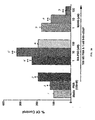
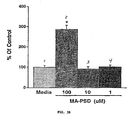
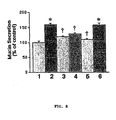
- the peptides and compounds of the present invention block mucus secretion in response to known activators of PKC and protein kinase G ( Figure 1) , and to physiologically relevant stimuli (e.g., UTP). ( Figure 2)
- the present invention thus provides medicaments and compositions for treating epithelial cells or epithelial tissue, where it is desirable to decrease the amount of mucus secreted by the cells or tissue.
- the present invention also thus provides medicaments and compositions for treating epithelial cells or epithelial tissue, where it is desirable to increase the amount of mucus secreted by the cells or tissue.
- the present invention provides medicaments and compositions for treating respiratory conditions where it is desirable to decrease the amount of mucus present in the airways, or where it is desirable to increase the amount of mucus present in the airways.
- Conditions suitable for treatment by the medicaments and compositions include human and animal inflammatory, viral or bacterial airway disease (e.g., asthma, chronic obstructive pulmonary disease, common cold, rhinitis, acute or chronic bronchitis, pneumonia, and kennel cough), allergic conditions (atopy, allergic inflammation), bronchiectasis, and certain genetic conditions (e.g., cystic fibrosis).
- human and animal inflammatory, viral or bacterial airway disease e.g., asthma, chronic obstructive pulmonary disease, common cold, rhinitis, acute or chronic bronchitis, pneumonia, and kennel cough
- allergic conditions atopy, allergic inflammation
- bronchiectasis e.g., cystic fibrosis
- mucus secretion in the lung plays an important role in clearing inhaled foreign particles and pathogens from the airways. Mucus traps inhaled particles, and is then removed from the airways by ciliary action or by coughing. Above-normal levels of mucus secretion (hypersecretion) in the airways can lead to intraluminal mucus accumulation, resulting in airflow obstruction and an increased susceptibility to infectious agents. Secretory cells in the airways include submucosal glands and superficial epithelial mucus cells (goblet cells).
- Airway mucus secretion is an important determinant in the prognosis and clinical features of pulmonary diseases.
- Hypertrophy and/or hyperplasia of airway secretory cells are often found in conditions associated with chronic airway inflammation.
- goblet cell hyperplasia has been observed, with a two- to three-fold increase in the numbers of goblet cells compared to controls. Cutz et al., Histopathology 2:407-421 (1978), Glynn & Michaels Thorax 15:142-153 (1960).
- Airway mucus hypersecretion is a particularly dominant clinical finding in cystic fibrosis, bronchitis, chronic obstructive pulmonary disease (COPD), emphysema, and bronchial asthma. See, e . g ., Airway Secretion , Takishima and Shimura (Eds.), Marcel Dekker Inc., 1994.
- COPD chronic obstructive pulmonary disease
- emphysema bronchial asthma.
- the presence of excessive bronchial mucus can lead to respiratory failure and bacterial infection. Lungs of asthmatic patients, at autopsy, often show the presence of excessive bronchial mucus and mucus plugging.
- Methods of reducing airway mucus secretion would be useful for the treatment of such conditions, as well as in treating bacterial or viral infections (e.g., pneumonia, influenza, and the common cold); in animals, such methods are further useful in treating kennel cough and equine COPD.
- bacterial or viral infections e.g., pneumonia, influenza, and the common cold
- Some therapies act to decrease the signals or stimuli that upregulate mucus secretion.
- inflammatory mediators may upregulate mucus secretion; steroid treatments are often used to decrease inflammation and thus indirectly decrease mucus secretion.
- Antihistamines are used to block the responses to allergens which can trigger attacks of allergic asthma.
- the thickened mucus present in patients with cystic fibrosis is removed by compression therapy, and infections occurring due to the thickened mucus are treated with antibiotics.
- Use of the medicaments and compounds of the present invention to control mucus secretion differs from the above treatments in that cellular secretion of mucus in response to a variety of stimuli is directly blocked at the cellular level.
- the mucus layer on the ocular surface is important in maintaining and spreading the tear film, and is required for normal functioning of the eyes.
- the ocular surface epithelia has been shown to express multiple mucin genes. Gipson, Adv. Exp. Med. Biol . 438:221 (1998).
- Various diseases and syndromes result in pathological "dry-eye" conditions, including keratoconjunctivitis sicca, Stevens-Johnson syndrome, ocular pemphigoid, and surgery- or radiation-induced dry-eye.
- the ocular surface epithelia in such diseases undergoes changes, which may include loss of goblet cells, mucin deficiency, and keratinization. Lower goblet cell densities in the ocular epithelia have been demonstrated in these syndromes. Ralph, Invest. Ophthalmol . 14:299 (1975).
- Increasing mucus secretion in the eyes is desirable where a lack of ocular mucus affects the normal function of the eye. Additionally, increasing mucus secretion in the eye is desirable as an aid in wearing contact lenses.
- the medicaments and compositons of the present invention can be used to reduce (i.e., decrease or inhibit) or to enhance (i.e., increase or stimulate) the production of mucus secretions by mucous membranes or mucus-secreting cells, in a subject in need of such treatment for any reason.
- the medicaments and compositions can be directed to the mucous membranes or mucus-secreting cells of a particular target organ (including but not limited to the oral cavity, nasal cavity, lungs, gastrointestinal tract, eye and reproductive tract), in order to reduce or increase the amount of mucus secreted by, or retained upon, the surfaces being treated.
- the change (reduction or increase) in mucus is assessed by comparison to that which was present prior to treatment (or in the absence of treatment), or to that which would be expected in the absence of such treatment in view of the subject's condition.
- the medicaments and compositions of the present invention may be used in conjunction with other therapies or compounds, including steps to remove retained mucus secretions from the airways of subjects prior to the step of administering the present compounds. This facilitates application of the active agent to the respiratory epithelia during the administering step. Such removal of retained mucus secretions can be carried out by any suitable physical or medicinal means as are known in the art.
- compositions of the present invention include those suitable for inhalation, oral, rectal, vaginal, topical (including buccal, dermal and ocular) administration.
- the compositions may be prepared by any of the methods well known in the art. The most suitable route of administration in any case will depend upon the location of the tissue to be treated, the nature and severity of the condition being treated, and the particular active compound which is being used, as will be apparent to those skilled in the art.
- the dosage of active compound for treatment of diseases of the respiratory tract will vary depending on the condition being treated and the state of the subject. One skilled in the art would be able to determine appropriate dosages of specific compounds without undue experimentation, using dose response studies as are known in the art.
- the active compounds disclosed herein may be administered to the airways of a subject by any suitable means, but are preferably administered by generating an aerosol comprised of respirable particles, the respirable particles comprised of the active compound, which particles the subject inhales.
- the respirable particles may be liquid or solid.
- the particles may optionally contain other therapeutic ingredients.
- particles comprised of active compound for practicing the present invention should include particles of respirable size: that is, particles of a size sufficiently small to pass through the mouth and larynx upon inhalation and into the bronchi and alveoli of the lungs.
- particles of respirable size that is, particles of a size sufficiently small to pass through the mouth and larynx upon inhalation and into the bronchi and alveoli of the lungs.
- particles ranging from about 0.5 to 10 microns in size (more particularly, less than about 5 microns in size) are respirable.
- Particles of non-respirable size which are included in the aerosol tend to deposit in the throat and be swallowed, and the quantity of non-respirable particles in aerosols intended for treatment of the alveoli and/or bronchi is preferably minimized.
- a particle size in the range of 10-500 microns is preferred to ensure retention in the nasal cavity.
- Liquid pharmaceutical compositions of active compound for producing an aerosol can be prepared by combining the active compound with a suitable vehicle, such as sterile pyrogen free water.
- Administration of the active compounds may be carried out therapeutically or prophylactically (e.g., before substantial lung blockage due to retained mucus secretions has occurred, or at a time when such retained secretions have been at least in part removed, as discussed above.)
- Aerosols of liquid particles comprising the active compound may be produced by any suitable means, such as with a nebulizer. See, e.g., U.S. Pat. No. 4,501,729.
- Nebulizers are commercially available devices which transform solutions or suspensions of the active ingredient into a therapeutic aerosol mist either by means of acceleration of a compressed gas, typically air or oxygen, through a narrow venturi orifice or by means of ultrasonic agitation.
- Suitable formulations for use in nebulizers consist of the active ingredient in a liquid carrier, typically water or a dilute aqueous alcoholic solution, and preferably made isotonic with body fluids.
- Aerosols of solid particles comprising the active compound may likewise be produced with any solid particulate medicament aerosol generator.
- One illustrative type of solid particulate aerosol generator is an insufflator.
- Formulations suitable for oral administration may be presented in discrete units, such as capsules, cachets, lozenges, or tablets, each containing a predetermined amount of the active compound; as a powder or granules; as a solution or a suspension in an aqueous or non-aqueous liquid; or as an oil-in-water or water-in-oil emulsion.
- Such formulations may be prepared by any suitable method of pharmacy which includes the step of bringing into association the active compound and a suitable carrier (which may contain one or more accessory ingredients as noted above).
- Formulations for oral administration may optionally include enteric coatings known in the art to prevent degradation of the formulation in the stomach and provide release of the drug in the small intestine.
- Formulations suitable for rectal or vaginal administration may be presented as unit dose suppositories. These may be prepared by admixing the active compound with one or more conventional solid carriers, for example, cocoa butter, and then shaping the resulting mixture.
- conventional solid carriers for example, cocoa butter
- Formulations suitable for topical application to the eye, mouth, nasal or other surfaces may take the form of an ointment, cream, lotion, paste, gel, spray, aerosol, or oil.
- MARCKS myristoylated alanine-rich C kinase substrate
- MARCKS myristoylated alanine-rich C kinase substrate
- MARCKS has been identified in human, bovine, rodent and avian species. Harlan et al., J . Biol . Chem. 266:14399 (1991); Graff et al., J. Biol. Chem. 266:14390 (1991); Graff et al., Mol. Endocrinol . 3:1903 (1989); Stumpo et al., Proc. Natl. Acad. Sci. USA 86:4012-16 (June 1989).
- MARCKS “psd peptide” is available from BIOMOL (Plymouth Meeting, Pennsylvania), having the sequence KKKKKRFSFK KSFKLSGFSF KKNKK (SEQ ID NO:2). See P. Blackshear, J. Biol. Chem. 268:1501 (1993).
- the present inventors have identified two specific active fragments of MARCKS protein that are able to affect mucus secretion.
- a myristoylated polypeptide 24 amino acids in length, with sequence Myristic acid-GAQFSKTAAKGEAAAERPGEAAVA (SEQ ID NO:1), is referred to herein as the MANS peptide for myristolated N-terminal sequence.
- the peptide inhibits secretion of mucus from mucous membranes and mucus-secreting cells, including human airway epithelial cells.
- the present inventors' data suggests that this peptide blocks the attachment of MARCKS protein to the mucin granule, thus blocking or inhibiting the release of mucin granules and the secretion of mucus by the cell.
- PSD peptide sequence is myristic acid --KKKKKRFSFKKSFKLSGFSFKKNKK (SEQ ID NO:2), referred to herein as the MA-PSD peptide.
- MARCKS protein fragments that are able to increase mucus secretion may be binding to endogenous proteins in the cell that competitively inhibit the phosphorylation of MARCKS, thus inhibiting the release of MARCKS from the plasma membrane into the cell interior (see Figure 4 ).
- MARCKS phosphorylation is calmodulin.
- MARCKS inhibitors for purposes of the present invention, are those endogenous compounds that prevent the MARCKS protein from completing a necessary step in the mucus-secretion pathway.
- MARCKS inhibitors may thus act to inhibit the phosphorylation or the dephosphorylation of MARCKS (each of which is necessary in the present pathway), or bind to MARCKS to prevent its binding to the mucin granule membrane.
- Compounds of the present invention that increase the secretion of mucus may be acting by binding to such endogenous inhibitors, thus freeing endogenous MARCKS protein to complete the mucus-secretion pathway.
- peptide fragments of the MARCKS protein maybe designed, tested and selected for their ability to inhibit or enhance mucus secretion, using the present disclosure and methods known in the art.
- the present inventors propose that the pathway for the involvement of MARCKS in mucus secretion in airway epithelium is as shown in Figure 4. It is currently believed that active peptide fragments of MARCKS affect mucus secretion at the level of the interaction of MARCKS with the mucin granules, which contain the major protein components of mucus. As shown in Figure 4 , the present inventors believe that MARCKS must be dephosphorylated to bind to the mucin granule, which triggers mucin exocytosis and results in mucus secretion.
- the present invention includes the use of isolated DNA molecules which encode peptides that control mucus secretion.
- isolated DNA molecules are useful in producing the therapeutic peptides, and may additionally be used in an appropriate gene expression vector for gene therapy, using methods as are known in the art for the expression of the peptide in vivo .
- Cell-specific or inducible promoters may further be used to control the expression of the therapeutic peptide in vivo.
- Analogs of the therapeutic peptides disclosed herein are an aspect of the present invention.
- an "analog” is a chemical compound similar in structure to a first compound, and having a similar physiological action as the first compound.
- MARCKS peptide analogs are those compounds which, while not having the exact amino acid sequences of the native MARCKS fragment, are capable of binding to the same sites as the native MARCKS fragment.
- Such analogs may be peptide or non-peptide analogs, including nucleic acid analogs, as described in further detail below.
- peptides containing such deletions or substitutions are a further aspect of the present invention.
- one or more amino acids of a peptide sequence may be replaced by one or more other amino acids wherein such replacement does not affect the function of that sequence.
- Such changes can be guided by known similarities between amino acids in physical features such as charge density, hydrophobicity/hydrophilicity, size and configuration, so that amino acids are substituted with other amino acids having essentially the same functional properties.
- Ala may be replaced with Val or Ser; Val may be replaced with Ala, Leu, Met, or Tie, preferably Ala or Leu; Leu may be replaced with Ala, Val or Ile, preferably Val or Ile; Gly may be replaced with Pro or Cys, preferably Pro; Pro may be replaced with Gly, Cys, Ser, or Met, preferably Gly, Cys, or Ser; Cys may be replaced with Gly, Pro, Ser, or Met, preferably Pro or Met; Met may be replaced with Pro or Cys, preferably Cys; His may be replaced with Phe or Gln, preferably Phe; Phe may be replaced with His, Tyr, or Trp, preferably His or Tyr; Tyr may be replaced with His, Phe or Trp, preferably Phe or Trp; Trp may be replaced with Phe or Tyr, preferably Tyr; Asn may be replaced with Gln or Ser, preferably Gln; Gln may be replaced with His, Lys, Glu, Asn, or Ser, preferably Asn or
- Non-peptide mimetics of the peptides of the present invention are also an aspect of this invention.
- Non-protein drug design may be carried out using computer graphic modeling to design non-peptide, organic molecules which bind to sites bound by the native MARCKS fragments disclosed herein. See, e.g., Knight, BIO / Technology , 8, 105 (1990). Itzstein et al, Nature, 363, 418 (1993); Lam et al, Science, 263, 380 (Jan. 1994) (rational design of bioavailable nonpeptide cyclic ureas that function as HIV protease inhibitors).
- Analogs may also be developed by generating a library of molecules, selecting for those molecules which act as ligands for a specified target, and identifying and amplifying the selected ligands. See, e.g., Kohl et al., Science, 260 , 1934 (1993). Techniques for constructing and screening combinatorial libraries of oligomeric biomolecules to identify those that specifically bind to a given receptor protein are known. Suitable oligomers include peptides, oligonucleotides, carbohydrates, non-oligonucleotides (e.g., phosphorothioate oligonucleotides; see Chein. and Engineering News, page 20, 7 Feb.
- Peptide libraries may be synthesized on solid supports, or expressed on the surface of bacteriophage viruses (phage display libraries). Known screening methods may be used by those skilled in the art to screen combinatorial libraries to identify suitable peptide analogs.
- combinatorial library refers to collections of diverse oligomeric biomolecules of differing sequence, which can be screened simultaneously for activity as a ligand for a particular target.
- Combinatorial libraries may also be referred to as "shape libraries", i.e., a population of randomized polymers which are potential ligands.
- shape libraries i.e., a population of randomized polymers which are potential ligands.
- the shape of a molecule refers to those features of a molecule that govern its interactions with other molecules, including Van der Waals, hydrophobic, electrostatic and dynamic.
- Nucleic acid molecules may also act as ligands for receptor proteins. See, e.g., Edgington, BIO / Technology , 11, 285 (1993).
- U.S. Patent No. 5,270,163 to Gold and Tuerk describes a method for identifying nucleic acid ligands for a given target molecule by selecting, from a library of RNA molecules with randomized sequences, those molecules that bind specifically to the target molecule.
- a method for the in vitro selection of RNA molecules immunologically cross-reactive with a specific peptide is disclosed in Tsai, Kenan and Keene, Proc. Natl. Acad. Sci. USA , 89, 8864 (1992) and Tsai and Keene, J. Immunology, 150, 1137 (1993).
- antisense oligonucleotides directed against MARCKS mRNA decreases (inhibits) mucus secretion in human airway epithelial cells. ( See Example 6 and Figure 5 ).
- antisense oligonucleotides that are complementary to specific RNAs can inhibit the expression of cellular genes as proteins. See Erickson and Izant, Gene Regulation: Biology Of Antisense RNA And DNA, Vol. 1, Raven Press, New York, 1992. For example, selective inhibition of a p21 gene that differed from a normal gene by a single nucleotide has been reported. Chang et al., Biochemistry 1991,30:8283-8286. Many hypotheses have been proposed to explain the mechanisms by which antisense oligonucleotides inhibit gene expression, however, the specific mechanism involved may depend on the cell type studied, the RNA targeted, the specific site on the RNA targeted, and the chemical nature of the oligonucleotide. Chiang et al., J. Biol. Chem . 1991, 266:18162-18171; Stein and Cohen, Cancer Res . 1988, 48:2659-2668.
- the present invention provides oligonucleotides substantially complementary to a MARCKS protein nucleotide sequence that occurs endogenously in a mucus-secreting cell. Such oligonucleotides are useful in decreasing mucus production by cells into which they are delivered.
- Nucleotide sequence refers to a polynucleotide formed from a series of joined nucleotide units.
- substantially complementary refers to that amount of sequence complementarity between the oligonucleotide and a MARCKS gene nucleotide sequence which allows for interstrand hybridization under physiological conditions and enables the oligonucleotide to inhibit the expression of the MARCKS gene.
- Interstrand hybridization is the interaction between the oligonucleotide and the MARCKS nucleotide sequence.
- the potential of forming a stable interstrand hybrid can be determined by those skilled in the art using methods known in the art, such as, for example, determination of the melting temperature for the hybrid by mathematical modeling or empirical analysis, or solid support nucleic acid hybridizations. (See, e.g., Marmur and Doty, J . Mol . Biol . 1962, 5, 113).
- Antisense DNAs used in the present invention are able to produce the corresponding antisense RNAs.
- An antisense RNA molecule has the nucleotide bases in the reverse or opposite order for expression.
- Such antisense RNAs are well known in the art, see e.g., US Patent No. 4,801,540 to Calgene Inc.
- MARCKS nucleotide sequence refers to any nucleotide sequence derived from a gene encoding a MARCKS protein, including, for example, DNA or RNA sequence, DNA sequence of the gene, any transcribed RNA sequence, RNA sequence of the pre-mRNA or mRNA transcript, and DNA or RNA bound to protein.
- Oligonucleotides targeted to sequences in MARCKS genes can be used to inhibit mucus production in epithelial cells.
- the oligonucleotide may be any length of sequence capable of forming a stable hybrid with the endogenous MARCKS nucleotide sequence under physiologic conditions. It is preferred that the length of the oligonucleotide be between 5 and 200 nucleotides. It is more preferred that the oligonucleotide be between 10 and 50 nucleotides in length. It is most preferred that the oligonucleotide be between 15 and 25 nucleotides in length.
- the nucleotides of the oligonucleotides may be any known in the art including natural and synthetic moieties.
- oligonucleotide refers to a polynucleotide formed from joined nucleotides.
- oligonucleotide includes naturally occurring oligonucleotides or synthetic oligonucleotides formed from naturally occurring subunits or analogous subunits designed to confer special properties on the oligonucleotide so that it is more stable in biological systems or binds more tightly to target sequences. It also includes modifications of the oligonucleotides such as chemically linking them to other compounds that will enhance delivery to cells or to the nucleus and other compartments of cells.
- Oligonucleotides of the invention may be synthesized by any method known in the art, including synthetic chemical methods. See, e . g ., Vu and Hirschbein, Tetrahedron Lett . 1991, 32:30005-30008. Oligonucleotides may be modified via chemical methods known to those skilled in the art, including encapsulation in liposomes, or chemical linkage to steroids, antibodies, and cell receptors.
- a preferred embodiment of the invention is an oligonucleotide complementary to an endogenous MARCKS nucleotide sequence found in the cell to be treated, or having sufficient complementarity to allow stable interstrand hybridization between the oligonucleotide and an endogenous MARCKS nucleotide, and that inhibits the expression of the MARCKS gene.
- a preferred oligonucleotide is one that is complementary to a MARCKS nucleotide sequence derived or selected from a mammal, in particular, a human.
- the oligonucleotides of the present invention may be oligodeoxyribonucleotides or oligoribonucleotides, including modified oligodeoxynucleotides and oligoribonucleotides.
- the oligonucleotides of the invention may be comprised of combinations of deoxyribonucleotides and ribonucleotides.
- oligonucleotides of the invention may also include modified subunits.
- the invention may include phosphorothioate oligodeoxyribonucleotides. It is preferred that the oligonucleotides of the invention be modified to increase stability and prevent intracellular and extracellular degradation. It is more preferred that the oligonucleotides of the invention be modified to increase their affinity for target sequences, and their transport to the appropriate cells and cell compartments when they are delivered into a mammal in a pharmaceutically active form.
- the oligonucleotides of the invention be antisense oligonucleotides.
- the oligonucleotides of the invention may be targeted to a noncoding portion of a MARCKS or targeted to coding sequences of the gene, and may include an intron-exon junction (i.e., several nucleotides on either or both sides of the intron-exon junction).
- the oligonucleotides of the invention may be administered by any method that produces contact of the oligonucleotide with the target tissue or cell in the subject being treated, including but not limited to oral administration, topical administration, and inhalation.
- the pharmaceutical compositions comprising the oligonucleotides may be in solid dosage forms, such as capsules, tablets, and powders, or in liquid dosage forms, such as elixirs, syrups, and suspensions.
- the dosage administered varies depending upon factors such as: pharmacodynamic characteristics; its mode and route of administration; age, health, and weight of the recipient; nature and extent of symptoms; kind of concurrent treatment; and frequency of treatment and the effect desired. Effective dosages are those which are able to inhibit mucus production in the airways at a level which alleviates, reduces, or eliminates the symptoms or conditions associated with the mucus production.
- the oligonucleotides may be administered singly, or in combination with other compounds of the invention, other pharmaceutical compounds, or therapies.
- the oligonucleotides are preferably administered with a pharmaceutically acceptable carrier or diluent selected on the basis of the selected route of administration and standard pharmaceutical practice.
- the invention provides medicaments and compositions useful in methods of inhibiting mucus secretion which comprise contacting a mucus-secretory cell with a MARCKS gene expression inhibitory amount of an oligonucleotide substantially complementary to an endogenous MARCKS gene nucleotide sequence.
- Lipofectin may be used as a carrier for the oligonucleotide.
- the oligonucleotides of the invention are administered to mammals or avians, and preferably to humans, in therapeutically effective amounts or concentrations which are effective to inhibit or reduce mucus production in the target tissue or organ.
- the oligonucleotides of the invention will be capable of reaching their intracellular target to inhibit or reduce the expression of MARCKS protein therein.
- the invention therefore provides medicaments and compositions useful in methods of inhibiting mucus secretion which comprise contacting at least one element of MARCKS gene expression machinery with a gene expression inhibitory amount of an oligonucleotide.
- the elements of the gene expression machinery may comprise any nucleotide sequence of a MARCKS gene, the nucleotide sequence of spliced mRNAs transcribed from a gene, unspliced RNAs and partially spliced RNAs transcribed from a gene, DNA-RNA hybrids comprising sequence derived from a gene, such as in actively transcribing genes, RNA transcribed from a gene bound to protein, and any molecule or structure known in the art to be involved in gene expression.
- US Patent No. 5,858,784 to Debs et al. provides a method of administering nucleic acids to the lung cells of a subject by preparing a liposome-nucleic acid mixture suitable for nebulization, nebulizing the mixture, and depositing the resulting nebulized mixture in the lungs of the subject.
- the nucleic acid sequence may include DNA sequences which encode polypeptides which are directly or indirectly responsible for a therapeutic effect, or active nucleotide sequences such as antisense sequences and ribozymes.
- the nucleic acid constructs can be provided to the cells of the subject as expression cassettes; preferably, the construct does not become integrated into the host cell genome and is introduced into the host as part of a non-integrating expression vector.
- dsRNA exogenous doublestranded RNA
- the methods of the present invention may be carried out by introducing exogenous dsRNA into a mucus-secreting cell, where the dsRNA has sufficient sequence similarity to the RNA of an endogenous MARCKS gene to result in a reduction in MARCKS protein in the cell (compared to that which would occur in the absence of the exogenous dsRNA).
- dsRNA may be carried out using the methods discussed above regarding peptide and antisense oligonucleotide administration.
- DNA encoding an enzymatic RNA molecule may be introduced into the target cell. Ribozymes are directed against and cleave the mRNA transcript of the cell's endogenous MARCKS protein. DNA encoding enzymatic RNA molecules may be produced in accordance with known techniques (see e.g., US Patent No. 4,987,071. Production of such an enzymatic RNA molecule and disruption of MARCKS protein production affects mucus production by the target cell in essentially the same manner as production of an antisense RNA molecule.
- the present invention also provides a method of screening compounds for their ability to affect (enhance or inhibit) mucus production.
- Combinatorial chemistry processes as are known in the art may be used to generate large numbers of structurally diverse compounds, which can then be screened.
- Such screening methods comprise providing a culture of mucus-secreting cells, such as the cultures of normal human bronchial epithelial cells described in Example 1 herein.
- a test compound is administered to the cells, and the cells may also be exposed to a compound known to stimulate mucus production (e.g., PMA, UTP, 8-bromo-cGMP).
- the test compound and the stimulatory compound may be administered to the cells, for example, by exposing the cells to media containing the compounds.
- the cells may, for example, be pre-incubated with the test compound first, then co-incubated with the stimulatory compound and the test compound. Alternatively, the pre-incubation step may be omitted.
- the ability of the test compound to bind to either the mucin granule membrane (or a mucin granule membrane-related receptor) or to endogenous MARCKS protein at the mucin granule membrane binding site is assessed by detecting whether the test compound inhibits binding of endogenous MARCKS to the mucin granule. Such detection can be carried out using methods known in the art, for example, by labelling the test compound with a detectable molecule.
- Optically detectable molecules include fluorescent labels (fluorescein, Texas Red, Green Fluorescent Protein). Methods for viewing intact cells are known, including real-time confocal laser-scanning microscopy and two-photon laser-scanning microscopy.
- Mucus secreted by the cells may also be measured after a pre-determined time period, for example using an ELISA assay as is known in the art.
- the mucus secretion of the cells exposed to the test compound can also be compared to that of control cells that were not exposed to the test compound.
- a decrease in mucus secretion by the test cells compared to the control cells indicates that the test compound inhibits mucus secretion, and an increase in mucus secretion by the test cells compared to the control cells indicates that the test compound enhances mucus secretion.
- NHBE bronchial epithelial
- EGF epidermal growth factor
- bovine pituitary extract prepared by the methods of Bertolero et al.
- Air-liquid interface culture of NHBE cells Following the expansion, NHBE cells were cultured in air/liquid interface according to the methods of Gray and coworkers with minor modifications (Gray et al. Am J Respir Cell Mol Biol 14:104, 1996). The air-liquid interface culture was initiated by seeding NHBE cells (passage-2, 2x10 4 cells/cm 2 ) on Transwell-clear culture inserts (24.5 mm, 0.45 ⁇ m pore size; Costar, Cambridge, MA) that were thin coated with rat tail collagen, type I (Collaborative Research, Bedford, MA).
- Mucus ELISA Mucus secreted from the airway epithelial cells in vitro after stimulation by activators was assessed using an ELISA (antibody capture method) (E. Harlow, D. Lane. "Antibodies: A Laboratory Manual.” New York: Cold Spring Harbor Laboratory Press, 1988), wherein the collected mucus is bound directly to the ELISA plate. Mucus was detected using an antibody raised against monkey airway mucus (Lin et al. Am J Respir Cell Mol Biol 1:41, 1989).
- MARCKS messenger RNA was detected in human bronchial epithelial cells grown in air/liquid interface culture by Northern analysis (Ausubel et al., eds. "Current Protocols in Molecular Biology.” New York: John Wiley & Sons, 1992) using a human MARCKS cDNA (approximate length 1 kb) as a radiolabelled probe. MARCKS message increases as these cells become more differentiated when maintained in an air/liquid interface culture.
- MARCKS myristoylated
- MARCKS within the airway epithelial cells was found to be phosphorylated by the PKC activator, PMA (100 nM), while 4 ⁇ -PMA (a phorbol ester control which does not activate PKC), did not phosphorylate MARCKS.
- Phosphorylation of MARCKS by PMA was attenuated by Calphostin C (500 nM).
- NHBE cells also contained substantial amounts of cGMP-dependent protein kinase type 1 ⁇ (PKG-1 ⁇ ) activity, which was localized to the cytosolic fraction. The cells exhibited constitutive PKG activity which was increased by incubation with 100 ⁇ M dibutyryl cGMP.
- a myristoylated peptide containing the first 24 amino acids of the human MARCKS protein (MANS; myristoylated N-terminal sequence; SEQ ID NO:1) was tested.
- Test cells were co-incubated for 15 minutes in apical and basolateral media containing 1, 10 or 100 ⁇ M of MANS peptide, and then co-incubated for 15 minutes with the peptide and 100 nM PMA plus 1 ⁇ M 8-Br-cGMP (columns 3-5 of Figure 1A ).
- Control cells were not exposed to MANS peptide but were preincubated in media only (column 1 of Figure 1A ) or media containing PMA and 8-Br-cGMP (column 2 of Fig. 1A ).
- Single asterisks (*) indicate that the response was statistically different than the media control (column 1)
- double asterisks (**) indicate that the response was statistically different than that observed in stimulated cells that were not exposed to the MANS peptide (column 2).
- the MANS peptide (100 ⁇ M) was also found to decrease constitutive (basal) mucus secretion by one hour incubation. Cells were treated as described above except that no PMA or 8-Br-cGMP was used. In addition, a negative control peptide of the same amino acid composition as the MANS peptide in random order (RNS; random N-terminal sequence) did not affect constitutive mucus secretion. Results are graphed in Figure 1B . Single asterisk (*) indicates that the response was statistically different than the media control (column 1).
- Single asterisks (*) indicate that the measured response was statistically different than the media control (column 1), and double asterisks (**) indicate that the response was statistically different than that observed in stimulated cells that were not exposed to the MANS peptide (column 2).
- the MANS peptide at 10 and 100 ⁇ M significantly reduced UTP-stimulated mucus secretion.
- Test cells were preincubated for 15 minutes in apical and basolateral media containing the MA-PSD peptide (1, 10 or 1100 ⁇ M), and then co-incubated for 15 minutes with the peptide and stimulus (100 nM PMA plus 1 ⁇ M 8-Br-cGMP).
- Control cells were preincubated in media only (column 1 of Figure 3A ); or with 100 nM PMA only (column 2); or with 100 nM PMA and 1 ⁇ M 8-Br-cGMP (column 3).
- An antisense oligonucleotide was constructed by a commercial supplier (Chemicon International, Temecula, CA; in conjunction with Biognostik GmbH, Gottingen, Germany) based on the human MARCKS gene sequence of Sakai et al. (Genomics 14:175 (1992); GenBank accession number D10522, D90498). A control oligonucleotide was also constructed.
- the oligonucleotides were administered to the differentiated airway epithelial cultures by incubation in media containing the oligonucleotides (5 ⁇ M) for three days.
- the oligonucleotide was supplied to the apical surface of the cells in 0.4 ml of media containing lipofectin reagent (2 ⁇ g/ml; Gibco BRL). Cells were incubated with the oligonucleotide in the presence of lipofectin for 24 hours. Following a media change, cells were incubated with the oligonucleotide alone for an additional 48 hours.
- test cells were stimulated for 15 minutes with 100 nM PMA and 1 ⁇ M 8-Br-cGMP (activators of PKC and PKG, respectively).
- Single asterisks (*) indicate that the measured response was statistically different than the media control (column 1), and double asterisks (**) indicate that the response was statistically different than that observed in stimulated cells that were not exposed to an oligonucleotide (column 2).
- Mucus secreted from the airway epithelial cells after stimulation by PKC and PKG activators was assessed using an ELISA (antibody capture method).
- the antisense oligonucleotide (column 4) caused a statistically significant decrease in mucus secretion compared to stimulated levels.
- MARCKS antisense oligonucleotides inhibit stimulated mucus secretion, although a basal level of mucus secretion can be maintained by selection of appropriate dosages. In contrast, control oligonucleotides had no effect on stimulated secretion.
Landscapes
- Health & Medical Sciences (AREA)
- Life Sciences & Earth Sciences (AREA)
- Chemical & Material Sciences (AREA)
- Medicinal Chemistry (AREA)
- General Health & Medical Sciences (AREA)
- Veterinary Medicine (AREA)
- Public Health (AREA)
- Animal Behavior & Ethology (AREA)
- Pharmacology & Pharmacy (AREA)
- Engineering & Computer Science (AREA)
- Epidemiology (AREA)
- Organic Chemistry (AREA)
- Bioinformatics & Cheminformatics (AREA)
- Molecular Biology (AREA)
- Nuclear Medicine, Radiotherapy & Molecular Imaging (AREA)
- General Chemical & Material Sciences (AREA)
- Chemical Kinetics & Catalysis (AREA)
- Immunology (AREA)
- Proteomics, Peptides & Aminoacids (AREA)
- Gastroenterology & Hepatology (AREA)
- Zoology (AREA)
- Urology & Nephrology (AREA)
- Biochemistry (AREA)
- Pulmonology (AREA)
- Hematology (AREA)
- Biomedical Technology (AREA)
- Biophysics (AREA)
- Microbiology (AREA)
- Physics & Mathematics (AREA)
- General Physics & Mathematics (AREA)
- Pathology (AREA)
- Toxicology (AREA)
- Biotechnology (AREA)
- Food Science & Technology (AREA)
- Cell Biology (AREA)
- Genetics & Genomics (AREA)
- Emergency Medicine (AREA)
- Analytical Chemistry (AREA)
- Marine Sciences & Fisheries (AREA)
- Medicines That Contain Protein Lipid Enzymes And Other Medicines (AREA)
Claims (38)
- Utilisation d'un inhibiteur de sécrétion de mucus à liaison protéique MARCKS en vue de la fabrication d'un médicament pour le traitement d'une maladie associée à l'hypersécrétion de mucus, dans laquelle ledit inhibiteur est un peptide.
- Utilisation selon la revendication 1, dans laquelle la séquence dudit peptide comprend la SEQ ID N° : 1.
- Utilisation selon la revendication 1, dans laquelle ledit inhibiteur comprend un fragment actif d'une protéine MARCKS.
- Utilisation selon la revendication 3, dans laquelle ledit inhibiteur est un peptide possédant une séquence comprenant d'environ 10 à environ 50 acides aminés contigus provenant de la SEQ ID N° : 3.
- Utilisation selon l'une quelconque des revendications précédentes, dans laquelle ledit inhibiteur se lie à un site cible sélectionné parmi :(a) des membranes granulaires de la mucine au niveau du site lié par une protéine MARCKS ; et(b) une protéine MARCKS au niveau du site de liaison du granule de mucine.
- Utilisation selon l'une quelconque des revendications précédentes, dans laquelle ledit inhibiteur est un peptide possédant une séquence d'acides aminés comprenant d'environ 10 à environ 50 acides aminés contigus provenant d'une séquence N-terminale d'une protéine MARCKS.
- Utilisation selon la revendication 6, dans laquelle ledit peptide est myristoylé.
- Utilisation selon la revendication 1, dans laquelle ledit inhibiteur est un peptide possédant une séquence comprenant d'environ 10 à environ 50 acides aminés contigus provenant de la SEQ ID N° : 3.
- Utilisation d'un inhibiteur de sécrétion de mucus à liaison protéique MARCKS en vue de la fabrication d'un médicament pour le traitement d'une maladie associée à l'hypersécrétion de mucus, dans laquelle ledit inhibiteur est un motif antisens dirigé contre des molécules nucléotidiques endogènes codant pour une protéine MARCKS.
- Utilisation selon l'une quelconque des revendications précédentes, dans laquelle ledit inhibiteur doit être administré aux voies respiratoires ou au tractus gastro-intestinal d'un sujet mammifère ou doit être administré par inhalation.
- Utilisation selon l'une quelconque des revendications précédentes, dans laquelle ledit inhibiteur doit être introduit dans des cellules par l'intermédiaire d'une administration par aérosol dans les poumons.
- Utilisation selon l'une quelconque des revendications précédentes, dans laquelle ledit inhibiteur doit être introduit dans des cellules dans un liposome.
- Utilisation selon l'une quelconque des revendications précédentes, dans laquelle du mucus est secrété à partir d'une cellule épithéliale contenue dans des membranes muqueuses des voies respiratoires ou des membranes muqueuses gastro-intestinales.
- Utilisation selon l'une quelconque des revendications précédentes, dans laquelle ladite maladie est une maladie d'un sujet mammifère et est sélectionnée parmi la bronchite, l'asthme, la mucoviscidose, la maladie pulmonaire obstructive chronique, l'emphysème, la pneumonie, la grippe, la rhinite et le rhume courant.
- Utilisation d'une protéine MARCKS, ou d'un fragment de celle-ci, en vue de la fabrication d'un médicament pour le traitement d'une maladie associée à l'hyposécrétion de mucus, dans laquelle le fragment est un fragment améliorant la sécrétion.
- Utilisation selon la revendication 15, dans laquelle du mucus est sécrété à partir d'une cellule épithéliale contenue dans des membranes muqueuses des voies respiratoires, des membranes muqueuses gastro-intestinales, des membranes génito-urinaires ou des membranes muqueuses oculaires.
- Utilisation selon la revendication 15 ou 16, dans laquelle la protéine possède une séquence comprenant d'environ 10 à environ 50 acides aminés contigus provenant de la SEQ ID N° : 3.
- Utilisation selon l'une quelconque des revendications 15 à 17, dans laquelle ledit médicament doit être administré aux voies respiratoires ou au tractus gastro-intestinal d'un sujet mammifère ou doit être administré par inhalation.
- Utilisation selon l'une quelconque des revendications 15 à 18 en vue de l'administration à l'oeil d'un sujet mammifère ou en vue de l'administration par voie topique à l'épithélium vaginal.
- Utilisation d'un composé se liant à un inhibiteur endogène d'une protéine MARCKS dans la fabrication d'un médicament en vue du traitement d'une maladie associée à l'hyposécrétion de mucus, dans laquelle le médicament améliore la sécrétion de mucus par une cellule sécrétant du mucus.
- Utilisation selon la revendication 20, dans laquelle ledit composé est un peptide possédant une séquence d'acides aminés comprenant d'environ 10 à environ 50 acides aminés contigus provenant d'un domaine du site de phosphorylation d'une protéine MARCKS.
- Utilisation selon la revendication 21, dans laquelle ledit peptide est myristoylé.
- Utilisation selon la revendication 20, dans laquelle l'inhibiteur endogène est la calmoduline.
- Formulation pharmaceutique comprenant un fragment de peptide inhibant le mucus de MARCKS et un support pharmaceutiquement acceptable.
- Formulation pharmaceutique selon la revendication 24, dans laquelle ledit peptide possède une séquence d'acides aminés comprenant la SEQ ID N° : 1.
- Formulation pharmaceutique selon la revendication 25, dans laquelle ledit peptide possède une séquence comprenant d'environ 10 à environ 50 acides aminés contigus provenant de la SEQ ID N° : 3.
- Oligonucléotide constitué d'environ 10 à 50 nucléotides possédant une séquence nucléotidique qui s'hybride en des molécules nucléotidiques codant pour une protéine MARCKS dans des conditions physiologiques et dans lequel ledit oligonucléotide inhibe l'expression de ladite protéine MARCKS lorsqu'il est administré à une cellule contenant lesdites molécules nucléotidiques endogènes.
- Formulation pharmaceutique comprenant un oligonucléotide selon la revendication 27 et un support pharmaceutiquement acceptable.
- Formulation pharmaceutique selon l'une quelconque des revendications 24 à 26 ou la revendication 28, dans laquelle ladite composition est sous aérosol.
- Formulation pharmaceutique selon la revendication 27 ou la revendication 28, dans laquelle ledit oligonucléotide est porté par un liposome.
- Procédé in vitro de criblage d'un composé d'essai concernant sa capacité à se lier, dans une cellule sécrétant du mucus, à un site sélectionné parmi (a) des membranes granulaires de la mucine au niveau du site lié par une protéine MARCKS, et (b) une protéine MARCKS au niveau du site de liaison de la membrane granulaire de la mucine, ledit procédé comprenant l'administration dudit composé d'essai à une cellule sécrétant du mucus puis la détection de l'inhibition par ledit composé d'essai de la liaison d'une protéine MARCKS endogène à la membrane granulaire de la mucine.
- Procédé selon la revendication 31, dans lequel lesdites cellules sont des cellules épithéliales bronchiales humaines normales.
- Procédé selon la revendication 31 ou la revendication 32, comprenant en outre l'administration d'un composé connu pour stimuler la sécrétion de mucus par ladite cellule.
- Procédé selon la revendication 33, dans lequel ledit composé connu pour stimuler la sécrétion de mucus est sélectionné parmi l'uridine 5'-triphosphate (UTP), l'AMP et le 8-bromo-GMPc.
- Procédé selon l'une quelconque des revendications 31 à 34, dans lequel ledit composé d'essai est sélectionné à partir d'un fragment de peptide d'une protéine MARCKS et d'analogues de peptide de celle-ci.
- Procédé selon l'une quelconque des revendications 31 à 35, dans lequel ledit composé d'essai est marqué avec une molécule décelable.
- Procédé selon l'une quelconque des revendications 31 à 36, dans lequel ledit composé d'essai est un anticorps se liant spécifiquement à une protéine MARCKS.
- Protéine MARCKS destinée à être utilisée en tant que médicament.
Priority Applications (2)
| Application Number | Priority Date | Filing Date | Title |
|---|---|---|---|
| EP04024019A EP1538162B1 (fr) | 1999-02-24 | 2000-02-24 | Compositions pour modifier la sécrétion du mucus |
| DK04024019.4T DK1538162T3 (da) | 1999-02-24 | 2000-02-24 | Sammensætninger til ændring af slimsekretion |
Applications Claiming Priority (3)
| Application Number | Priority Date | Filing Date | Title |
|---|---|---|---|
| US25615499A | 1999-02-24 | 1999-02-24 | |
| US256154 | 1999-02-24 | ||
| PCT/US2000/005050 WO2000050062A2 (fr) | 1999-02-24 | 2000-02-24 | Methodes et compositions alterant la secretion de mucus |
Related Child Applications (1)
| Application Number | Title | Priority Date | Filing Date |
|---|---|---|---|
| EP04024019A Division EP1538162B1 (fr) | 1999-02-24 | 2000-02-24 | Compositions pour modifier la sécrétion du mucus |
Publications (2)
| Publication Number | Publication Date |
|---|---|
| EP1154786A2 EP1154786A2 (fr) | 2001-11-21 |
| EP1154786B1 true EP1154786B1 (fr) | 2004-10-13 |
Family
ID=22971264
Family Applications (2)
| Application Number | Title | Priority Date | Filing Date |
|---|---|---|---|
| EP04024019A Expired - Lifetime EP1538162B1 (fr) | 1999-02-24 | 2000-02-24 | Compositions pour modifier la sécrétion du mucus |
| EP00912034A Expired - Lifetime EP1154786B1 (fr) | 1999-02-24 | 2000-02-24 | Compositions alterant la secretion de mucus |
Family Applications Before (1)
| Application Number | Title | Priority Date | Filing Date |
|---|---|---|---|
| EP04024019A Expired - Lifetime EP1538162B1 (fr) | 1999-02-24 | 2000-02-24 | Compositions pour modifier la sécrétion du mucus |
Country Status (10)
| Country | Link |
|---|---|
| EP (2) | EP1538162B1 (fr) |
| JP (2) | JP5620037B2 (fr) |
| AT (2) | ATE553121T1 (fr) |
| AU (1) | AU766800B2 (fr) |
| CA (1) | CA2366951A1 (fr) |
| DE (1) | DE60014856T2 (fr) |
| DK (2) | DK1538162T3 (fr) |
| ES (2) | ES2391225T3 (fr) |
| PT (1) | PT1154786E (fr) |
| WO (1) | WO2000050062A2 (fr) |
Families Citing this family (14)
| Publication number | Priority date | Publication date | Assignee | Title |
|---|---|---|---|---|
| US8501911B2 (en) | 1999-02-24 | 2013-08-06 | Biomarck Pharmaceuticals, Ltd | Methods of reducing inflammation and mucus hypersecretion |
| US7544772B2 (en) | 2001-06-26 | 2009-06-09 | Biomarck Pharmaceuticals, Ltd. | Methods for regulating inflammatory mediators and peptides useful therein |
| CA2452123A1 (fr) * | 2001-06-26 | 2003-03-01 | North Carolina State University | Peptide bloquant agissant sur la secretion de mediateurs inflammatoires par les cellules |
| US6943021B2 (en) * | 2002-06-07 | 2005-09-13 | Mattek Corporation | Three dimensional vaginal tissue model containing immune cells |
| US20040175384A1 (en) * | 2003-12-12 | 2004-09-09 | Mohapatra Shyam S. | Protein kinase C as a target for the treatment of respiratory syncytial virus |
| US8592368B2 (en) | 2003-12-19 | 2013-11-26 | University Of South Florida | JAK/STAT inhibitors and MAPK/ERK inhibitors for RSV infection |
| CA2595406C (fr) * | 2005-01-20 | 2017-07-11 | Biomarck Pharmaceuticals, Ltd. | Inhibiteur de l'hypersecretion de mucine fonde sur la structure des peptides mans et methodes d'utilisation |
| WO2006086681A2 (fr) * | 2005-02-09 | 2006-08-17 | Beth Israel Deaconess Medical Center, Inc. | Methodes d'inhibition de la migration et de la proliferation des cellules musculaires lisses |
| RU2423376C2 (ru) * | 2006-07-26 | 2011-07-10 | Байомарк Фармасьютикалз, Лтд. | Способы ослабления высвобождения медиаторов воспаления и пептиды, применяемые для этой цели |
| US11119093B2 (en) * | 2013-12-20 | 2021-09-14 | President And Fellows Of Harvard College | Low shear microfluidic devices and methods of use and manufacturing thereof |
| WO2016011301A1 (fr) * | 2014-07-17 | 2016-01-21 | The Regents Of The University Of Colorado, A Body Corporate | Compositions, procédés et utilisations de nouveaux anticoagulants dans la voie de coagulation |
| WO2020257162A1 (fr) | 2019-06-17 | 2020-12-24 | Biomarck Pharmaceuticals Ltd. | Peptides et méthodes d'utilisation de ceux-ci dans le traitement de l'uvéite |
| WO2022020985A1 (fr) * | 2020-07-27 | 2022-02-03 | 上海市公共卫生临床中心 | Méthode et application pour prévenir et traiter des maladies infectieuses des voies respiratoires en utilisant une membrane de cellule épithéliale des voies respiratoires |
| WO2023150791A1 (fr) * | 2022-02-07 | 2023-08-10 | Biomarck Pharmaceuticals, Ltd. | Peptides et leurs méthodes d'utilisation dans le traitement de troubles oculaires |
Citations (4)
| Publication number | Priority date | Publication date | Assignee | Title |
|---|---|---|---|---|
| US4753945A (en) * | 1986-02-19 | 1988-06-28 | Eye Research Institute Of Retina Foundation | Stimulation of tear secretion with phosphodiesterase inhibitors |
| EP0551200A1 (fr) * | 1992-01-07 | 1993-07-14 | National University Of Singapore | Protéine phosphatase inhibiteur pour l'utilisation en thérapeutique |
| US5298506A (en) * | 1992-05-08 | 1994-03-29 | Brigham And Women's Hospital | Use of guanylate cyclase inhibitors in the treatment of shock |
| WO1995027496A1 (fr) * | 1994-04-07 | 1995-10-19 | Proteinix Company | Polypeptide intestinal vasoactif |
Family Cites Families (3)
| Publication number | Priority date | Publication date | Assignee | Title |
|---|---|---|---|---|
| CA2093125C (fr) * | 1990-10-02 | 2003-12-16 | Warner-Lambert Company | Antagonistes de l'angiotensine ii |
| WO1993000353A1 (fr) * | 1991-06-20 | 1993-01-07 | The United States Of America, As Represented By The Secretary, Department Of Health And Human Services | Sequences caracteristiques de produit de transcription de genes humains |
| US5858784A (en) * | 1991-12-17 | 1999-01-12 | The Regents Of The University Of California | Expression of cloned genes in the lung by aerosol- and liposome-based delivery |
-
2000
- 2000-02-24 ES ES04024019T patent/ES2391225T3/es not_active Expired - Lifetime
- 2000-02-24 DK DK04024019.4T patent/DK1538162T3/da active
- 2000-02-24 AT AT04024019T patent/ATE553121T1/de active
- 2000-02-24 EP EP04024019A patent/EP1538162B1/fr not_active Expired - Lifetime
- 2000-02-24 CA CA002366951A patent/CA2366951A1/fr not_active Abandoned
- 2000-02-24 DE DE60014856T patent/DE60014856T2/de not_active Expired - Lifetime
- 2000-02-24 JP JP2000600672A patent/JP5620037B2/ja not_active Expired - Fee Related
- 2000-02-24 AT AT00912034T patent/ATE279206T1/de active
- 2000-02-24 PT PT00912034T patent/PT1154786E/pt unknown
- 2000-02-24 ES ES00912034T patent/ES2230078T3/es not_active Expired - Lifetime
- 2000-02-24 DK DK00912034T patent/DK1154786T3/da active
- 2000-02-24 AU AU33833/00A patent/AU766800B2/en not_active Ceased
- 2000-02-24 EP EP00912034A patent/EP1154786B1/fr not_active Expired - Lifetime
- 2000-02-24 WO PCT/US2000/005050 patent/WO2000050062A2/fr not_active Ceased
-
2014
- 2014-07-31 JP JP2014156332A patent/JP2015007065A/ja active Pending
Patent Citations (4)
| Publication number | Priority date | Publication date | Assignee | Title |
|---|---|---|---|---|
| US4753945A (en) * | 1986-02-19 | 1988-06-28 | Eye Research Institute Of Retina Foundation | Stimulation of tear secretion with phosphodiesterase inhibitors |
| EP0551200A1 (fr) * | 1992-01-07 | 1993-07-14 | National University Of Singapore | Protéine phosphatase inhibiteur pour l'utilisation en thérapeutique |
| US5298506A (en) * | 1992-05-08 | 1994-03-29 | Brigham And Women's Hospital | Use of guanylate cyclase inhibitors in the treatment of shock |
| WO1995027496A1 (fr) * | 1994-04-07 | 1995-10-19 | Proteinix Company | Polypeptide intestinal vasoactif |
Also Published As
| Publication number | Publication date |
|---|---|
| ES2391225T3 (es) | 2012-11-22 |
| HK1041654A1 (en) | 2002-07-19 |
| PT1154786E (pt) | 2005-02-28 |
| JP2015007065A (ja) | 2015-01-15 |
| DK1538162T3 (da) | 2012-07-23 |
| CA2366951A1 (fr) | 2000-08-31 |
| WO2000050062A2 (fr) | 2000-08-31 |
| WO2000050062A3 (fr) | 2000-12-21 |
| AU766800B2 (en) | 2003-10-23 |
| DE60014856D1 (de) | 2004-11-18 |
| ATE553121T1 (de) | 2012-04-15 |
| DK1154786T3 (da) | 2005-02-14 |
| EP1538162A3 (fr) | 2005-06-15 |
| DE60014856T2 (de) | 2006-02-02 |
| EP1538162B1 (fr) | 2012-04-11 |
| AU3383300A (en) | 2000-09-14 |
| ES2230078T3 (es) | 2005-05-01 |
| JP5620037B2 (ja) | 2014-11-05 |
| EP1538162A2 (fr) | 2005-06-08 |
| JP2002538783A (ja) | 2002-11-19 |
| ATE279206T1 (de) | 2004-10-15 |
| EP1154786A2 (fr) | 2001-11-21 |
Similar Documents
| Publication | Publication Date | Title |
|---|---|---|
| US7919469B2 (en) | Methods and compositions for altering mucus secretion | |
| JP2015007065A (ja) | 粘液分泌を変化させる方法および組成物 | |
| RU2429004C2 (ru) | Способы регуляции медиаторов воспаления и пептиды, используемые в них | |
| US8501911B2 (en) | Methods of reducing inflammation and mucus hypersecretion | |
| US7265088B1 (en) | Method and compositions for altering mucus secretion | |
| US20190000865A1 (en) | Materials and methods for treatment of cystic fibrosis and for induction of ion secretion | |
| EP1411967B1 (fr) | Peptide bloquant agissant sur la secretion cellulaire inflammatoire | |
| AU2002322475A1 (en) | Blocking peptide for inflammatory cell secretion | |
| HK1041654B (en) | Compositions for altering mucus secretion | |
| WO2012006640A2 (fr) | Compositions et procédés utiles dans la stimulation de la mémoire | |
| MXPA01008566A (en) | Methods and compositions for altering mucus secretion | |
| JP4689614B2 (ja) | 脳梗塞の予防・治療方法 | |
| HK1065702B (en) | Blocking peptide for inflammatory cell secretion | |
| AU2008200379A1 (en) | Blocking peptide for inflammatory cell secretion |
Legal Events
| Date | Code | Title | Description |
|---|---|---|---|
| PUAI | Public reference made under article 153(3) epc to a published international application that has entered the european phase |
Free format text: ORIGINAL CODE: 0009012 |
|
| 17P | Request for examination filed |
Effective date: 20010817 |
|
| AK | Designated contracting states |
Kind code of ref document: A2 Designated state(s): AT BE CH CY DE DK ES FI FR GB GR IE IT LI LU MC NL PT SE |
|
| AX | Request for extension of the european patent |
Free format text: AL;LT;LV;MK;RO;SI |
|
| 17Q | First examination report despatched |
Effective date: 20020425 |
|
| GRAP | Despatch of communication of intention to grant a patent |
Free format text: ORIGINAL CODE: EPIDOSNIGR1 |
|
| RTI1 | Title (correction) |
Free format text: COMPOSITIONS FOR ALTERING MUCUS SECRETION |
|
| RTI1 | Title (correction) |
Free format text: COMPOSITIONS FOR ALTERING MUCUS SECRETION |
|
| GRAS | Grant fee paid |
Free format text: ORIGINAL CODE: EPIDOSNIGR3 |
|
| GRAA | (expected) grant |
Free format text: ORIGINAL CODE: 0009210 |
|
| AK | Designated contracting states |
Kind code of ref document: B1 Designated state(s): AT BE CH CY DE DK ES FI FR GB GR IE IT LI LU MC NL PT SE |
|
| REG | Reference to a national code |
Ref country code: GB Ref legal event code: FG4D |
|
| REG | Reference to a national code |
Ref country code: CH Ref legal event code: EP |
|
| REG | Reference to a national code |
Ref country code: IE Ref legal event code: FG4D |
|
| REF | Corresponds to: |
Ref document number: 60014856 Country of ref document: DE Date of ref document: 20041118 Kind code of ref document: P |
|
| REG | Reference to a national code |
Ref country code: CH Ref legal event code: NV Representative=s name: E. BLUM & CO. PATENTANWAELTE |
|
| PGFP | Annual fee paid to national office [announced via postgrant information from national office to epo] |
Ref country code: NL Payment date: 20050203 Year of fee payment: 6 |
|
| PGFP | Annual fee paid to national office [announced via postgrant information from national office to epo] |
Ref country code: SE Payment date: 20050204 Year of fee payment: 6 |
|
| PGFP | Annual fee paid to national office [announced via postgrant information from national office to epo] |
Ref country code: DK Payment date: 20050214 Year of fee payment: 6 |
|
| REG | Reference to a national code |
Ref country code: DK Ref legal event code: T3 |
|
| REG | Reference to a national code |
Ref country code: GR Ref legal event code: EP Ref document number: 20040404448 Country of ref document: GR |
|
| REG | Reference to a national code |
Ref country code: PT Ref legal event code: SC4A Free format text: AVAILABILITY OF NATIONAL TRANSLATION Effective date: 20041215 |
|
| PGFP | Annual fee paid to national office [announced via postgrant information from national office to epo] |
Ref country code: CH Payment date: 20050301 Year of fee payment: 6 |
|
| PGFP | Annual fee paid to national office [announced via postgrant information from national office to epo] |
Ref country code: BE Payment date: 20050408 Year of fee payment: 6 |
|
| REG | Reference to a national code |
Ref country code: HK Ref legal event code: GR Ref document number: 1041654 Country of ref document: HK |
|
| REG | Reference to a national code |
Ref country code: ES Ref legal event code: FG2A Ref document number: 2230078 Country of ref document: ES Kind code of ref document: T3 |
|
| PLBE | No opposition filed within time limit |
Free format text: ORIGINAL CODE: 0009261 |
|
| STAA | Information on the status of an ep patent application or granted ep patent |
Free format text: STATUS: NO OPPOSITION FILED WITHIN TIME LIMIT |
|
| ET | Fr: translation filed | ||
| 26N | No opposition filed |
Effective date: 20050714 |
|
| PG25 | Lapsed in a contracting state [announced via postgrant information from national office to epo] |
Ref country code: SE Free format text: LAPSE BECAUSE OF NON-PAYMENT OF DUE FEES Effective date: 20060225 |
|
| PG25 | Lapsed in a contracting state [announced via postgrant information from national office to epo] |
Ref country code: BE Free format text: LAPSE BECAUSE OF NON-PAYMENT OF DUE FEES Effective date: 20060228 Ref country code: DK Free format text: LAPSE BECAUSE OF NON-PAYMENT OF DUE FEES Effective date: 20060228 Ref country code: LI Free format text: LAPSE BECAUSE OF NON-PAYMENT OF DUE FEES Effective date: 20060228 Ref country code: CH Free format text: LAPSE BECAUSE OF NON-PAYMENT OF DUE FEES Effective date: 20060228 |
|
| PG25 | Lapsed in a contracting state [announced via postgrant information from national office to epo] |
Ref country code: NL Free format text: LAPSE BECAUSE OF NON-PAYMENT OF DUE FEES Effective date: 20060901 |
|
| REG | Reference to a national code |
Ref country code: DK Ref legal event code: EBP |
|
| REG | Reference to a national code |
Ref country code: CH Ref legal event code: PL |
|
| EUG | Se: european patent has lapsed | ||
| NLV4 | Nl: lapsed or anulled due to non-payment of the annual fee |
Effective date: 20060901 |
|
| BERE | Be: lapsed |
Owner name: NORTH CAROLINA *STATE UNIVERSITY Effective date: 20060228 |
|
| PGFP | Annual fee paid to national office [announced via postgrant information from national office to epo] |
Ref country code: MC Payment date: 20120220 Year of fee payment: 13 Ref country code: LU Payment date: 20120308 Year of fee payment: 13 |
|
| PGFP | Annual fee paid to national office [announced via postgrant information from national office to epo] |
Ref country code: PT Payment date: 20120221 Year of fee payment: 13 |
|
| PGFP | Annual fee paid to national office [announced via postgrant information from national office to epo] |
Ref country code: FI Payment date: 20120228 Year of fee payment: 13 |
|
| PGFP | Annual fee paid to national office [announced via postgrant information from national office to epo] |
Ref country code: CY Payment date: 20120305 Year of fee payment: 13 |
|
| PGFP | Annual fee paid to national office [announced via postgrant information from national office to epo] |
Ref country code: AT Payment date: 20120221 Year of fee payment: 13 |
|
| REG | Reference to a national code |
Ref country code: PT Ref legal event code: MM4A Free format text: LAPSE DUE TO NON-PAYMENT OF FEES Effective date: 20130826 |
|
| PG25 | Lapsed in a contracting state [announced via postgrant information from national office to epo] |
Ref country code: MC Free format text: LAPSE BECAUSE OF NON-PAYMENT OF DUE FEES Effective date: 20130228 |
|
| REG | Reference to a national code |
Ref country code: AT Ref legal event code: MM01 Ref document number: 279206 Country of ref document: AT Kind code of ref document: T Effective date: 20130228 |
|
| PG25 | Lapsed in a contracting state [announced via postgrant information from national office to epo] |
Ref country code: FI Free format text: LAPSE BECAUSE OF NON-PAYMENT OF DUE FEES Effective date: 20130224 Ref country code: AT Free format text: LAPSE BECAUSE OF NON-PAYMENT OF DUE FEES Effective date: 20130228 Ref country code: PT Free format text: LAPSE BECAUSE OF NON-PAYMENT OF DUE FEES Effective date: 20130826 |
|
| PG25 | Lapsed in a contracting state [announced via postgrant information from national office to epo] |
Ref country code: CY Free format text: LAPSE BECAUSE OF NON-PAYMENT OF DUE FEES Effective date: 20130224 |
|
| REG | Reference to a national code |
Ref country code: FR Ref legal event code: PLFP Year of fee payment: 16 |
|
| PGFP | Annual fee paid to national office [announced via postgrant information from national office to epo] |
Ref country code: IE Payment date: 20150227 Year of fee payment: 16 Ref country code: DE Payment date: 20150226 Year of fee payment: 16 Ref country code: IT Payment date: 20150225 Year of fee payment: 16 Ref country code: ES Payment date: 20150226 Year of fee payment: 16 |
|
| PGFP | Annual fee paid to national office [announced via postgrant information from national office to epo] |
Ref country code: FR Payment date: 20150217 Year of fee payment: 16 Ref country code: GB Payment date: 20150226 Year of fee payment: 16 |
|
| PG25 | Lapsed in a contracting state [announced via postgrant information from national office to epo] |
Ref country code: LU Free format text: LAPSE BECAUSE OF NON-PAYMENT OF DUE FEES Effective date: 20130224 |
|
| PGFP | Annual fee paid to national office [announced via postgrant information from national office to epo] |
Ref country code: GR Payment date: 20160226 Year of fee payment: 17 |
|
| REG | Reference to a national code |
Ref country code: DE Ref legal event code: R119 Ref document number: 60014856 Country of ref document: DE |
|
| GBPC | Gb: european patent ceased through non-payment of renewal fee |
Effective date: 20160224 |
|
| REG | Reference to a national code |
Ref country code: FR Ref legal event code: ST Effective date: 20161028 |
|
| REG | Reference to a national code |
Ref country code: IE Ref legal event code: MM4A |
|
| PG25 | Lapsed in a contracting state [announced via postgrant information from national office to epo] |
Ref country code: IT Free format text: LAPSE BECAUSE OF NON-PAYMENT OF DUE FEES Effective date: 20160224 |
|
| PG25 | Lapsed in a contracting state [announced via postgrant information from national office to epo] |
Ref country code: FR Free format text: LAPSE BECAUSE OF NON-PAYMENT OF DUE FEES Effective date: 20160229 Ref country code: DE Free format text: LAPSE BECAUSE OF NON-PAYMENT OF DUE FEES Effective date: 20160901 Ref country code: IE Free format text: LAPSE BECAUSE OF NON-PAYMENT OF DUE FEES Effective date: 20160224 Ref country code: GB Free format text: LAPSE BECAUSE OF NON-PAYMENT OF DUE FEES Effective date: 20160224 |
|
| PG25 | Lapsed in a contracting state [announced via postgrant information from national office to epo] |
Ref country code: ES Free format text: LAPSE BECAUSE OF NON-PAYMENT OF DUE FEES Effective date: 20160225 |
|
| PG25 | Lapsed in a contracting state [announced via postgrant information from national office to epo] |
Ref country code: GR Free format text: LAPSE BECAUSE OF NON-PAYMENT OF DUE FEES Effective date: 20170906 |