EP1155642B1 - Tragbares Bett - Google Patents
Tragbares Bett Download PDFInfo
- Publication number
- EP1155642B1 EP1155642B1 EP00309057A EP00309057A EP1155642B1 EP 1155642 B1 EP1155642 B1 EP 1155642B1 EP 00309057 A EP00309057 A EP 00309057A EP 00309057 A EP00309057 A EP 00309057A EP 1155642 B1 EP1155642 B1 EP 1155642B1
- Authority
- EP
- European Patent Office
- Prior art keywords
- frame
- rod
- cot assembly
- cot
- bedding material
- Prior art date
- Legal status (The legal status is an assumption and is not a legal conclusion. Google has not performed a legal analysis and makes no representation as to the accuracy of the status listed.)
- Expired - Lifetime
Links
- 239000000463 material Substances 0.000 claims description 94
- 230000007246 mechanism Effects 0.000 claims description 26
- NJPPVKZQTLUDBO-UHFFFAOYSA-N novaluron Chemical compound C1=C(Cl)C(OC(F)(F)C(OC(F)(F)F)F)=CC=C1NC(=O)NC(=O)C1=C(F)C=CC=C1F NJPPVKZQTLUDBO-UHFFFAOYSA-N 0.000 claims description 20
- 230000008878 coupling Effects 0.000 claims description 15
- 238000010168 coupling process Methods 0.000 claims description 15
- 238000005859 coupling reaction Methods 0.000 claims description 15
- 238000013461 design Methods 0.000 description 10
- 238000013459 approach Methods 0.000 description 4
- 238000010276 construction Methods 0.000 description 4
- 230000006378 damage Effects 0.000 description 4
- 239000004744 fabric Substances 0.000 description 4
- 208000027418 Wounds and injury Diseases 0.000 description 3
- 230000006872 improvement Effects 0.000 description 3
- 208000014674 injury Diseases 0.000 description 3
- 238000000034 method Methods 0.000 description 3
- 238000004026 adhesive bonding Methods 0.000 description 2
- 230000000712 assembly Effects 0.000 description 2
- 238000000429 assembly Methods 0.000 description 2
- 230000000295 complement effect Effects 0.000 description 2
- 230000000694 effects Effects 0.000 description 2
- 230000007704 transition Effects 0.000 description 2
- 241000607479 Yersinia pestis Species 0.000 description 1
- 230000004075 alteration Effects 0.000 description 1
- 238000012937 correction Methods 0.000 description 1
- 230000006870 function Effects 0.000 description 1
- 238000003780 insertion Methods 0.000 description 1
- 230000037431 insertion Effects 0.000 description 1
- 238000004519 manufacturing process Methods 0.000 description 1
- 238000012986 modification Methods 0.000 description 1
- 230000004048 modification Effects 0.000 description 1
- 230000001737 promoting effect Effects 0.000 description 1
- 238000007665 sagging Methods 0.000 description 1
- 238000003860 storage Methods 0.000 description 1
- 238000003466 welding Methods 0.000 description 1
Images

Classifications
-
- A—HUMAN NECESSITIES
- A47—FURNITURE; DOMESTIC ARTICLES OR APPLIANCES; COFFEE MILLS; SPICE MILLS; SUCTION CLEANERS IN GENERAL
- A47C—CHAIRS; SOFAS; BEDS
- A47C19/00—Bedsteads
- A47C19/20—Multi-stage bedsteads; Bedsteads stackable to multi-stage bedsteads
- A47C19/202—Stacking or nesting bedsteads
Definitions
- the present invention relates generally to cots, and more particularly to an improved design for a cot assembly.
- the invention further relates to cots having various advantageous features, including a continuous bedding surface without gaps, a tensioning means for maintaining the bedding material in a taut condition, and the absence of exposed fasteners and the like.
- Cots provide a temporary sleeping surface positioned above the ground or floor.
- the cot is easily moved and transported and/or stored for later use.
- Cots find a wide variety of uses in many different activities for different ages and sizes of people. In one use, cots are used for camping or other outdoor sleeping settings to avoid contact with the ground. In another use, cots are used indoors by children or preschoolers when it is desired to provide a comfortable sleeping surface that is raised above the floor. Cots are more advantageous than mats or other devices that lie directly on the floor or ground for many reasons.
- they provide a more comfortable sleeping surface, allow air flow between the floor or ground and the sleeping surface, provide a sleeping surface for a person which is not in contact with the sleeping surface of another person, and do not expose the sleeping person to filth and/or pests which may be present on the floor or ground.
- U.S. Patent No. 5,003,649 to Kelly provides a nestable cot with a frame that allows a plurality of cots to be nestably stacked one on top of another.
- Each cot includes four corner connectors, each comer connector configured to receive a pedestal from a corresponding one of the comer connectors stacked thereupon.
- the stacked cots occupy a space that has a total height that is less than the sum of the individual heights of each cot, and are more easily stored and handled.
- Cots typically have a frame for supporting bedding material or fabric that extends between members of the frame.
- One of the problems with these prior art cots is that gaps are formed between the bedding material and the frame, and these gaps may pose a safety hazard, particularly for children.
- the potential for injury exists if a child inserts a hand, foot, head or other body part through the gap, where it may become stuck or may cause the child to trip and fall.
- the cot is more susceptible to being damaged. Cots having such gaps, particularly at the corners, have been prevalent in the prior art and means have not been provided for ensuring against such gaps.
- Another problem with prior art cots is related to maintaining the taut condition of the bedding material stretching between members of the frame. Since the sleeping surface is positioned above the floor or ground, when a child or person lies on the cot, the weight on the bedding material at the middle of the cot has the tendency to cause the bedding material to loosen and sag between the members of the frame. This problem worsens over time as the cot is repeatedly subjected to loading.
- the present invention provides a cot assembly that includes a frame and bedding material extending between members of the frame.
- the cot assembly is free of any gaps between the bedding material and the frame, thereby protecting against injury which could otherwise result from the presence of such gaps.
- the cot assembly further includes the combination of a gap-free bedding surface with a means for tensioning the bedding material to maintain it in a desired taut condition.
- a cot assembly that includes a frame defining an interior area and an exterior area.
- the frame has a number of elongated rods with the ends of the rods connected by a number of corner connectors to form a polygonal shape.
- a pedestal extends downwardly from each corner connector to engage the floor or other supporting surface.
- the bedding material extends fully to the perimeter defined by the frame in order to avoid undesirable gaps between the bedding surface and the cot frame.
- each corner connector includes an inwardly projecting portion extending into the interior area of the frame.
- Bedding material is connected with and extends between the rods in the interior area of the frame.
- the bedding material extends at least to the inwardly projecting portions such that no openings are formed in the interior area between the bedding material and the frame.
- each of the corner connectors includes top and bottom flanges extending into the interior area of the frame and defining a slot therebetween for receiving the bedding material.
- a cot assembly which includes a frame and bedding material extending gap-free about the frame.
- Means are provided for positioning and maintaining the bedding material in a taut condition.
- at least one of the rods is rotatable with respect to the cot frame and cooperates with a means for holding the rod in a selected rotational position.
- the holding means comprises a ratchet mechanism that permits rotation of the rod in a first direction which tightens the bedding material attached to the rod. The holding means prohibits rotation of the rod in the opposition rotational direction in order to maintain the bedding material in the taut condition.
- a further object of the present invention is to provide a cot assembly which includes a gap-free bedding surface with the supporting frame and which further includes means for maintaining the bedding material in a taut condition.
- the present invention provides a cot assembly that has several advantageous design features not available in the prior art.
- the cot includes a bedding material that spans the entire interior of the cot frame without any gaps being present between the bedding material and the frame. Also, this fully spanning bedding material is capable of being adjusted after the cot has been assembled to adjust the tightness of he material. Further, these features are provided in a cot assembly that is simple and reliable in construction, is easily assembled and later adjusted for tautness, and does not have exposed parts that may pose a problem for the user, particularly for children.
- the present invention is directed to a cot assembly that has a frame which forms a perimeter which defines an interior area in which a person lying on the cot is supported. Bedding material is connected with and extends between the members of the frame in the interior area such that no openings are formed in the interior area between the bedding material and the frame.
- a ratchet mechanism 11 is provided to position and maintain bedding material 20 in a taut condition.
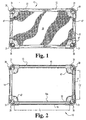
- a cot 10 having a frame 12 including a number of elongated rods 14-17.
- a corresponding number of corner connectors 30 are connected to respective ends of the rods 14-17 to form the frame 12.
- frame 12 may have a plan view forming any one of a number of polygonal shapes, such as a rectangle, square, pentagon, a combination of straight and curved members, or only curved members, etc.
- the frame is shown as consisting of rods which generally comprises hollow tubes either in round or non-round cross-section.
- rods is used more broadly as encompassing any elongated member which can be coupled together to form a frame for supporting the bedding material used in a typical cot. It will therefore be appreciated that such rods may comprise any of a wide variety of material and shapes depending on the intended use of the cot.
- Bedding material 20 is connected with the rods 14-17 of the frame 12 and extends therebetween in the interior area of frame 12 to create a support surface for a person lying on the cot.
- the bedding material 20 extends horizontally substantially parallel to the floor or ground. Bedding material 20 and frame 12 are supported above the floor or ground by pedestals 33 (FIG. 5) extending downwardly from the corner connectors 30 to suspend the bedding surface above an underlying support surface.
- the bedding material 20 is made from a material of suitable strength and comfort to support a person lying on the cot 10, the selection of which is within the ordinary skill in the art.
- Bedding material is typically a relatively thin, flexible and compliant material, preferably sheet-like in shape. The material may be any suitable one, e.g., a natural or synthetic sheeting, fabric, mat, webbing or the like.
- the bedding material 20 and frame 12 are assembled such that there are no openings formed between the frame and the bedding material in the interior area of the frame.
- the bedding material is attached to the frame, and any free portions of the bedding material will at least extend to or overlap with the frame. It will be appreciated that there are numerous ways of attachment to accomplish this gap free construction. Shown herein is a preferred embodiment for providing the gap free condition.
- the term "gap free" or similar terms are used to describe the fact that the bedding material fills the interior of the area defined by the frame perimeter when viewed in the plan view.
- a preferred feature of the present invention is the provision of a gap free condition that further provides for adjusting the tautness of the bedding material, as described hereafter.
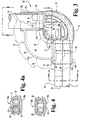
- the cot frame 12 is illustrated in FIG. 2 and without the bedding material shown to better depict the details of the frame 12 and its components.
- the cot assembly includes side rods 15 and 16 spaced apart and extending in substantially parallel relation.
- Each of the paired rods 15 and 16 has a length L1 sufficient to accommodate the height of a person lying on the cot.
- Frame 12 also includes a second pair of spaced end rods 14 and 17 extending in substantially parallel relation and having a length L2 sufficient to accommodate the width of a person lying on the cot. It is of course contemplated that the lengths L1 and L2 may be varied substantially to accommodate different users.
- the side and end rods comprise a profile that provides a preferred support structure and shape for the cot.
- the rods 14-16 are shown as having a cross section with flat top and bottom surfaces connecting rounded sides in a "race track" shape, although other shapes could readily be used, including round, square, oval and many others.
- the configuration shown has several advantages.
- the upper support surface is wider than would be provided for a round rod of comparable diameter.
- the non-round cross section also prevents "racking" when the cots are subjected to a longitudinal twisting force.
- Racking can occur when the round members of a frame rotate relative the comer connectors, thereby skewing the otherwise flat shape of the cot, and causing a corner of the cot to be spaced from the underlying cot when they are stacked or put on the floor. This can lead to instability of a stack of cots.
- non-round rods cannot rotate relative to the corner connectors, the potential for racking is avoided.
- the cot preferably includes at least one end member that enables the user to adjust the tautness of the bedding material. In the embodiment of FIG. 2, this is accomplished by means of the rod 17 and a complementary rotational adjustment system. As shown, a mechanism is provided which operates in cooperation with rod 17 to allow for selective rotation of rod 17 in one direction to tighten the bedding material.
- this end of the cot includes a combination of rod 17 and an adjacent support member 50. As seen in FIG. 4a, rod 17 is round and support member 50 is shaped and positioned complementary with rod 17 so the combination of the two provides an outer cross section profile that is the same as that for the rods 14-16. This enables the rods and corner connectors to be interchangeables.
- the assembly of the cot frame is straightforward.
- the rods can be readily connected with the corner connectors in any of a variety of ways.
- the rods may be attached to the corner connectors by press fit, gluing, mechanical fastening or any other means, with a simple mechanical fit of the components being preferred to simplify assembly and facilitate disassembly if that becomes desired.
- the combination of the bedding material with the frame assembly will provide another means for maintaining the frame members in the assembled condition. It is a feature of the present invention that no screws, pins or other fasteners are required to hold the cot together, and therefore such fasteners are not exposed to the user, and cannot be removed by the user.
- Bedding material 20 is attached to the cot frame. Such attachment may take many forms.
- the bedding material includes a plurality of sleeves 22, each configured to be received over any of the non-adjusting rods, such as rods 14-16.
- bedding material 20 extends around the exterior portion of a rod and is connected to the rod by suitable fasteners, the selection of which is within the ordinary skill in the art. In view of the intended rotation of rod 17 for adjustment of tautness, this method of attachment is appropriate for such an adjusting-type rod.
- bedding material 20 is sized such that when the members of frame 12 and corner connectors 30 are assembled, as described above and shown in FIG. 1, the bedding material 20 extends between the members of the frame 12 and fills the interior area of frame 12.
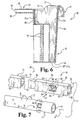
- Each of the corner connectors 30 includes a housing 32 having a top portion 37 (FIG. 5). Housing 32 has a first coupling portion 34a and a second coupling portion 34b. Coupling portions 34a and 34b extend generally perpendicular to one another and are configured to receive corresponding ends of rods 14-16 and/or rod 17 and support member 50.
- First coupling portion 34a includes a first sleeve 35a
- second coupling portion 34b includes a second sleeve 35b.
- Each of the first and second sleeves 35a and 35b defines an opening sized to receive the corresponding ends of the members of frame 12.
- Each of the coupling portions 34a and 34b further includes a first connector 38 and an adjacent second connector 39 extending outwardly into the sleeves 35a and 35b.
- First connector 38 and second connector 39 connect the rod members and assemblies of frame 12 with corner connector 30.
- the first connector 38 is circular in cross-section, as shown in FIG. 5, and sized so that a hollow end of rod 17 can be connected to the connector 38 to be rotatable about the connector.
- the second connector 39 is semi-circular in cross section and sized to receive a hollow end of support member 50 in non-rotational engagement.
- the combined outer perimeter of the adjacent first and second connectors 38 and 39 defines a racetrack shaped cross section that is sized to non-rotatably connect the hollow end of a rod 14 to comer connector 30.
- the present invention also contemplates other cross-sectional shapes for rods 14-16 and the corresponding first and second connectors 38 and 39 as would occur to one of ordinary skill in the art.
- the preferred embodiment shown in the drawings provides a coupling system which advantageously can be combined either with the non-adjusting rods such as 14-16 or the adjusting rod 17 and its associated adjustment mechanism.
- an elevational view looking toward the coupling member 34a shows that the rods, such as 14, is received within the sleeve 35a of coupling member 34a and about the connectors 38 and 39.
- the same connectors 38 and 39 are useful for connecting the rod 17 and support member 50, respectively.
- first and second connectors 38, 39 are replaced by a single connector having a racetrack shaped perimeter for receiving the rod 14 thereover. Such an embodiment would be particularly desirable in a cot assembly that only includes rods 14.
- Other cross-sections for rod 14 and connectors 38 and 39 are also contemplated herein as would occur to one of ordinary skill in the art.
- Pedestal 33 is defined by an outer wall surface 42, which tapers to a reduced cross-section as it extends downwardly to bottom 43. Pedestal 33 has a height from the floor to the coupling portions 34a and 34b that positions bedding material 20 above the ground or floor. Housing 32 also defines pocket 31 positioned between the coupling portions 34a and 34b. Pocket 31 includes substantially vertical inner walls 31a, 31b and 31c on the interior portion of the pocket 31. Inner walls 31a and 31b preferably taper slightly inwardly towards inner wall 31c as each extends downwardly towards a pedestal support surface 40 positioned within pocket 31. Inner wall portion 31c also tapers slightly inwardly towards inner walls 31a and 31b as it extends down to bottom 43 of pedestal 33. A plurality of struts 44 extend between bottom 43 and support surface 40, providing stability and strength to the pedestal 33.
- the inner walls 31a, 31b and 31c define the pocket 31 in a shape to receive the pedestal of a second cot with the outer surface 42 of the received pedestal in close or abutting contact with the inner walls of pocket 31.
- the interface between the inner walls of pocket 31 and the outer surface of the received pedestal is such that a plurality of cots may be easily stacked and unstacked with minimum exertion or effort. Further, the fit is desirably close enough that it provides stability to a stack of cots.
- Bottom 43 defines at least one opening 43a communicating with a hollow interior of pocket 31. Openings 43a provide a passageway for air as a pedestal is inserted into or removed from the pocket 31, thus facilitating the stacking and unstacking of cots.
- Pocket bottom 40 similarly includes apertures which facilitate the passage of air when cots are being stacked or unstacked.
- a rounded overhang 41 extends around the entry to pocket 31 adjacent top 37. Overhang 41 extends between the coupling portions 34a and 34b to provide a smooth transition therebetween. Overhang 41 also stiffens the overall structure of housing 32, supports the pocket 31 and facilitates efficient stacking of cots by providing an entry portion for the pedestal that is free from rough or sharp edges.
- the gap free effect accomplished by the present invention may be obtained in a variety of ways.
- the bedding material is secured to the cot frame in a position that has the bedding material extending at least to the frame perimeter.
- the bedding material extends at least to an overlap with the frame, and in suitable locations, such as along the side and end rods, the material is directly affixed to the frame.
- corner connector 30 includes inwardly projecting portion 47 extending into the interior area of frame 12.
- Bedding material 20 is positioned at least in abutting engagement with an edge 47a of inwardly projecting portion 47 so that no gaps are formed in the interior area of frame 12 between bedding material 20 and the frame 12.
- bedding material 20 at least overlaps the inwardly projecting portion 47 or is fastened thereto.
- inwardly projecting portion 47 includes top flange 48 and bottom flange 49 spanning between coupling portions 34a and 34b and around the pocket 31 in the interior of the frame 12.
- the bottom flange 49 projects inwardly a distance slightly less than top flange 48.
- a slot 46 is defined between the top flange 48 and bottom flange 49, the slot 46 communicating with sleeve 35a and sleeve 35b through apertures, such as 46a (FIG. 5).
- the bedding material 20 has an outer edge 26 (FIG. 3) that is received within slot 46 and extends from first sleeve 35a to second sleeve 35b within the slot 46.
- the present invention contemplates other configurations for inwardly projecting portion 47.
- flanges 48 and 49 such as square, rectangular, wedge-shaped, or triangular, to name a few, are also contemplated.
- only a single flange 48 or 49 is provided for overlapping bedding material 20.
- the top flange 48 shields and protects the edge 26 of bedding material 20, and bottom flange 49 provides additional support along the bottom of bedding material 20 where it spans between the coupling portions.
- the bedding material 20 may also be fastened to one or both of the flanges 48 and 49 adjacent edge 26, thus providing further support.
- top flange 48 is positioned somewhat below top 37 of housing 32.
- Slot 46 is preferably aligned with the center of sleeves 35a, 35b and the members of frame 12, thus providing a smooth transition for the bedding material 20 as it extends between adjacent members of the frame 12.
- the present invention provides a novel method for tightening the bedding material on a cot. It will be appreciated that the tightening of the bedding material may be accomplished with a few as one such means, or with as many as four of them. In certain embodiments, a single adjustment means is sufficient, with it being placed on the end or side, depending on the design of the cot, composition of the bedding material and other such considerations. In an alternate approach, a pair of adjustment means are provided, one being along a side and the other being along an end.
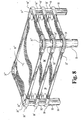
- FIG. 7 depicts an exploded view of a ratchet mechanism 11 that may be incorporated into cot assembly 10.
- a portion of support member 50 is illustrated along with the corresponding portion of rod 17. It should be understood that frame 12 may be provided without ratchet mechanism 11.
- Support member 50 is shown as including an end piece 52 removably connected with an extended connecting member 51.
- End piece 52 includes a body 54 and an insertion end 56 having an interior wall 60 defining a cavity 61.
- a second connector 39 is received within cavity 61 to connect with the end piece 52.
- End piece 52 further has a reduced-size engagement end 58 adapted to be slidingly and non-rotatably received within the cavity 78 formed at end 74 of connecting member 51.
- the connecting member 51 has a body 72 with a length sized to extend from end piece 52 to a second corner connector 30. At this opposite end, connecting member 51 is either directly connected with a second connector 39, or a mirror-image end piece 52 and associated ratchet type mechanism could be employed.
- Assembled support member 50 has a concave surface 53 extending along its length for nestably positioning rod 17 therealong.
- End piece 52 has an aperture 62 formed in concave surface 53 that communicates with cavity 61.
- Integrally formed with and engaged at edge 63 of the aperture 62 is a tang 64 that projects into the aperture 62.
- Tang 64 substantially occupies the aperture 62; however, it is deflectable inwardly with respect to surface 53 of end piece 52 along edge 63.
- Tang 64 has a wedge-shaped projection 66 that includes a top edge 67 and sloped surface 68. The projection 66 extends outwardly from concave surface 53 towards the adjacent rod 17. The tang 64 deflects into cavity 61 when pressure is applied in the direction of arrow P.
- Rod 17 has a cylindrical outer wall and defines a hollow interior 15.
- Rod 17 has a plurality of holes 18 along its length to receive fasteners (not shown) therethrough.
- the fasteners extend through the bedding material 20 positioned around the rod 17 and prevent relative movement therebetween.
- the fasteners may be rivets, screws, bolts, or the like.
- hooks are welded into the bedding fabric and the hooks are in turn received within the holes 18.
- Another preferred approach is to use ultra frequency welding to attach tabs onto the fabric for reception by the holes. Alternatively, other attachment means could be used, such as gluing, taping, clamping, etc.
- Located at the end of rod 17 are several slots 19 communicating with hollow interior 15. The slots 19 are positioned such that they align with and are sized to receive projection 66 of end piece 52 when the support member 50 and rod 17 are engaged to comer connector 30.
- Comer connector 30 defines a tool opening 29 formed in the bottom portion of the wall of sleeve 34b, as shown in FIG. 5.
- the tool opening 29 is to be located where rod 17 is connected with corner connector 30.
- Tool opening 29 is positioned adjacent to but beyond the end of first connector 38 so that there is no interference between the first connector 38 and a tool inserted through opening 29. While tool opening 29 is illustrated in FIG. 5 on sleeve 34b, it is also contemplated herein that tool opening 29 could be positioned on sleeve 34a, or that both first sleeve 34a and second sleeve 34b are provided with tool openings 29.
- the slots 19 are aligned with tool opening 29 formed in the bottom of sleeve 34b such that a tool may be inserted through the opening 29 and into one of the slots 19.
- Ratchet mechanism 11 functions as follows.
- the top surface 67 of projection 66 engages the rod 17 at an edge of one of the plurality of slots 19 to prevent rotation of the rod 17 about axis 1 in the direction indicated by the arrow S. If the rod 17 is allowed to rotate in the direction of arrow S, the bedding material 20 will sag.
- Ratchet assembly 11 allows bedding 20 to be made taut and remove any sag that may be present by rotating the rod 17 about axis 1 in the direction indicated by arrow R.
- the rod 17 may be rotated by extending a tool, such as a screwdriver or other elongated member, through opening 29 and into one of the slots 19.
- the bedding material is made taut by rotating the rod 17 in the direction R.
- the wedged shaped projection 66 flexes into cavity 61 as the bottom portion of the projection is rotated past the previously engaged slot 19.
- the edge of the previously engaged slot 19 applies pressure along the sloped surface of projection 66, gradually flexing the projection 66 further into cavity 61.
- the projection 66 returns to its at rest position and is received within the adjacent slot 19.
- the adjacent slot 19 supports the rod 17 as described above and resists rotation in the direction of arrow S. The above steps may be repeated as necessary to achieve the desired rotation of rod 17 and consequent tensioning of bedding material 20.
- the tensioning mechanism shown in the preferred embodiment is a simple, reliable system that is totally concealed. No fasteners or other devices are required that project from the cot assembly. At the same time, the mechanism can be easily accessed for purposes of adjustment, and only a simple tool such as a screw driver is required.
- each of the corner connectors 30 includes a housing 32 defining a pocket 31 that allows a plurality of cots 10 to be nestably stacked one upon another.
- the pocket of one cot is sized and configured to slidably and removably receive a pedestal of the corner connector of a second cot.
- FIG. 8 illustrates three cots 10, 10', and 10" nestably stacked one on top another.
- Each of the corner connectors 30, 30', 30" includes a pedestal 33, 33', 33" extending therefrom.
- At least a portion of the height H of pedestals 33' of cot 10' and pedestals 33" of cot 10" are received within corresponding ones of the pockets 31 of cot 10 and the pockets 31' of cot 10', respectively.
- the stacked height of cots 10, 10', and 10" is less than the sum of the heights of the individual cots.
- support member 50 has been illustrated as being formed by end piece 52 and connecting member 51, it is contemplated that connecting member 51 may be integrally formed with end piece 52 to form support member 50.
- connecting member 51 may be integrally formed with end piece 52 to form support member 50.
- the use of such separate pieces 51 and 52 has advantages in some applications, including greater flexibility and lower costs in design and fabrication.
- Variations in the position and location of ratchet mechanism 11 are also contemplated herein as would occur to one of ordinary skill in the art.
Landscapes
- Bedding Items (AREA)
- Invalid Beds And Related Equipment (AREA)
Claims (34)
- Bettbaugruppe, die Folgendes umfasst:dadurch gekennzeichnet, dass das Auflagematerial (20) den von dem Rahmen (12) definierten Innenbereich vollständig füllt, so dass es keine Lücken zwischen dem Auflagematerial (20) und dem Rahmen (12) gibt, in die ein Teil des Körpers einer Person gelangen kann.einen Rahmen (12), der eine Umrandung bildet und einen Innenbereich innerhalb der Umrandung definiert;Mittel (33) zum Tragen des Rahmens (12) über einer externen Auflagefläche; undan dem Rahmen (12) befestigtes Auflagematerial (20);
- Bettbaugruppe nach Anspruch 1, die ferner Spannmittel (11) zum Variieren der Spannung des Auflagematerials (20) aufweist.
- Bettbaugruppe nach Anspruch 2, bei der der Rahmen (12) mehrere längliche Stäbe (14-17) mit mehreren Eckverbindem (30) zu einer rechteckigen Umrandung verbindet.
- Bettbaugruppe nach Anspruch 3, bei der das Spannmittel (11) Mittel zum Drehen von wenigstens einem der Stäbe (17) ausweist.
- Bettbaugruppe nach Anspruch 1, bei der der Rahmen (12) mehrere längliche Stäbe (14-17) mit mehreren Eckverbindern (30) zu einer rechteckigen Umrandung verbindet.
- Bettbaugruppe nach Anspruch 5, bei der das Auflagematerial (20) nur an den Stäben (14-17) des Rahmens (12) befestigt ist.
- Bettbaugruppe nach Anspruch 5, bei der das Auflagematerial (20) an den Stäben (14-17) und an den Eckverbindem (30) des Rahmens (12) befestigt ist.
- Bettbaugruppe nach Anspruch 5, bei der das Tragmittel Füße (33) umfasst, die an den Eckverbindern (30) des Rahmens (12) angebracht sind und von diesen nach unten verlaufen.
- Bettbaugruppe nach Anspruch 5, bei der jeder der Eckverbinder (30) einen nach innen vorstehenden Abschnitt (47) aufweist, der sich in den Innenbereich des Rahmens (12) erstreckt, wobei das Auflagematerial (20) wenigstens in die nach innen vorstehenden Abschnitte (47) verläuft, so dass keine Öffnungen im Innenbereich des Rahmens (12) entstehen.
- Bettbaugruppe nach Anspruch 9, bei der das Auflagematerial (20) die nach innen vorstehenden Abschnitte (47) überlappt.
- Bettbaugruppe nach Anspruch 9, bei der das Auflagematerial (20) an den nach innen vorstehenden Abschnitten (47) befestigt ist.
- Bettbaugruppe nach Anspruch 9, bei der jeder der Eckverbinder (30) ein Paar der Stäbe (14-17) aufweist, die mit ihm verbunden sind, wobei jeder Eckverbinder (30) ein Gehäuse (32), einen ersten Endabschnitt (34a), der von dem Gehäuse (32) entlang einem Abschnitt der Länge von einem der damit verbundenen Stäbe (14-17) verläuft, und einen zweiten Endabschnitt (34b) aufweist, der von dem Gehäuse (32) entlang einem Abschnitt der Länge des anderen der damit verbundenen Stäbe (14-17) verläuft.
- Bettbaugruppe nach Anspruch 12, bei der das Tragmittel Füße (33) umfasst, die an den Eckverbindern (30) des Rahmens (12) angebracht sind und von diesen nach unten verlaufen.
- Bettbaugruppe nach Anspruch 13, bei der jedes Gehäuse (32) ein Loch (31) aufweist, das so konfiguriert ist, dass es einen Fuß (33) einer zweiten Bettbaugruppe vcrschachtelnd aufnimmt.
- Bettbaugruppe nach Anspruch 12, bei der jeder der nach innen vorstehenden Abschnitte (47) einen oberen Flansch (48) und einen unteren Flansch (49) aufweist, die sich in den Innenbereich des Rahmens (12) zwischen den Endabschnitten (34a, 34b) erstrecken, wobei der obere und der untere Flansch einen Schlitz (46) zwischen sich definieren, in dem das Auflagematerial (20) aufgenommen wird.
- Bettbaugruppe nach Anspruch 15, bei der der erste Endabschnitt (34a) und der zweite Endabschnitt (34b) jeweils eine hohle Hülse (35a, 35b) definieren, wobei der Schlitz (46) mit den hohlen Hülsen (35a, 35b) in Verbindung ist, wobei das Auflagematerial (20) zwischen den Hülsen (35a, 35b) verläuft.
- Bettbaugruppe nach Anspruch 15, bei der der obere Flansch (48) weiter in das Innere verläuft als der untere Flansch (49).
- Bettbaugruppe nach Anspruch 1, bei der der Rahmen eine Reihe von länglichen Stäben (14-17) sowie eine Reihe von Eckverbindem (30) aufweist, die so mit den Enden eines Paares von assoziierten Stäben (14-17) verbunden sind, dass der Rahmen (12) ein Polygon bildet, wobei jeder der Eckverbinder (30) einen Fuß (33) aufweist, der davon nach unten verläuft und in eine Auflagefläche eingreift, wobei sich das Auflagematerial (20) zwischen den Stäben (14-17) im Innenbereich des Rahmens (12) erstreckt, wobei die Eckverbinder (30) Mittel (46) zum Aufnehmen des Auflagematerials (20) aufweisen, so dass keine Öffnungen im Innenbereich des Rahmens (12) zwischen dem Auflagematerial (20) und den Eckverbindern (30) entstehen.
- Bettbaugruppe nach Anspruch 18, bei der der Rahmen (12) ein Auflageelement (50) aufweist, das neben wenigstens einem der Stäbe (17) entlang dessen Länge verläuft, wobei das Auflageelement (50) Enden aufweist, die drehfest in einen entsprechenden einen aus einem Paar der Eckverbinder (30) eingreifen.
- Bettbaugruppe nach Anspruch 19, bei der jeder der Eckverbinder (30) ein Gehäuse (32) aufweist, wobei das Gehäuse (32) einen ersten Endabschnitt (34a) aufweist, der sich über einen Abschnitt der Länge von einem der damit verbundenen Stäbe (14-17) erstreckt, wobei das Gehäuse ferner einen zweiten Endabschnitt (34b) aufweist, der über einen Abschnitt der Länge des anderen der damit verbundenen Stäbe (14-17) verläuft.
- Bettbaugruppe nach Anspruch 20, bei der das Auflageelement (50) einen Sperrmechanismus (62, 64, 66) aufweist und der wenigstens eine Stab (17) eine Mehrzahl von Schlitzen (19) neben dem Sperrmechanismus (62, 64, 66) definiert, wobei der Sperrmechanismus in einen der Schlitze (19) eingreifen kann, um eine Rotation des wenigstens einen Stabes (17) in einer ersten Richtung zu verhüten und es dabei zuzulassen, dass der wenigstens eine Stab (17) in einer entgegengesetzten zweiten Richtung gedreht wird, um nach dem Aufbringen einer Drehkraft um die Längsachse des wenigstens einen Stabes (17) in einen anderen der Schlitze (19) einzugreifen.
- Bettbaugruppe nach Anspruch 21, bei der der Sperrmechanismus einen ablenkbaren keilförmigen Abschnitt (66) aufweist, der in einen der Schlitze (19) vorsteht, wobei der keilförmige Abschnitt (66) eine Oberseite (67) hat, die an einem Rand des Schlitzes (19) angreift, und eine geneigte Fläche (68), die von der Oberseite (67) abwärts verläuft, um den keilförmigen Abschnitt (66) von dem wenigstens einen Stab (17) weg abzulenken, während der Stab (17) in Reaktion auf die Drehkraft rotiert.
- Bettbaugruppe nach Anspruch 21, wobei das Auflageelement (50) eine konkave Fläche (53) definiert, die neben dem Stab (17) entlang dessen Länge verläuft, wobei der Sperrmechanismus (62, 64, 66) auf der konkaven Fläche (53) positioniert ist.
- Bettbaugruppe nach Anspruch 21, wobei wenigstens einer der Endabschnitte, die den wenigstens einen Stab aufnehmen, eine Werkzeugöffnung (29) definiert, die mit der Mehrzahl von Schlitzen zur Aufnahme eines Werkzeugs fluchtet, das zum Aufbringen einer Drehkraft mit einem der Schlitze in Eingriff gebracht werden kann.
- Bettbaugruppe nach Anspruch 21, wobei jeder aus dem Paar Eckverbinder (30) einen ersten Verbinder (38) und einen zweiten Verbinder (39) aufweist, die von dem Gehäuse (32) in den Kupplungsabschnitt zur Aufnahme des wenigstens einen Stabes (17) und des Auflageelementes (50) vorsteht, wobei der erste Verbinder (38) den wenigstens einen Stab (17) drehbar mit dem Eckverbinder (30) verbindet und der zweite Verbinder (39) das Auflageelement (50) drebfest mit dem Eckverbinder (30) verbindet.
- Bettbaugruppe nach Anspruch 25, wobei der wenigstens eine Stab (17) einen kreisförmigen Querschnitt und das Auflageelement (50) einen halbkreisförmigen Querschnitt hat.
- Bettbaugruppe nach Anspruch 26, wobei die anderen Stäbe (14-16) außer dem wenigstens einen Stab (17) einen rennbahnförmigen Querschnitt haben.
- Bettbaugruppe nach Anspruch 1, wobei der Rahmen (12) Folgendes aufweist:wobei das Auflagematerial (20) in die Reihe von Stäben (14-17) im Innenbereich des Rahmens (12) eingreift und dazwischen verläuft; undeine Reibe von länglichen Stäben (14-17);eine Reihe von Eckverbindern (30), wobei jeder der Eckverbinder (30) mit einem Ende von jedem aus einem Paar der Stäbe (14-17) verbunden ist, so dass der Rahmen (12) ein Polygon bildet;ein Auflageelement (50) neben dem wenigstens einen aus der Reihe von Stäben (17), das daran entlang verläuft, wobei das Auflageelement (50) gegenüberliegende Enden hat, die drehfest in ein entsprechendes Paar der Eckverbinder (30) eingreifen, wobei der wenigstens eine Stab (17) eine Mehrzahl von Schlitzen (19) neben einem der gegenüberliegenden Enden (52) des Auflageelementes (50) bat;einen Fuß (33), der von dem Eckverbinder (30) abwärts verläuft, um am Fußboden anzugreifen;
ein Mittel (11), das mit dem Rahmen (12) assoziiert ist, um das Auflagematerial (20) in einen straffen Zustand zu bringen und darin halten, wobei das Mittel (11), um das Auflagematerial (20) in einen straffen Zustand zu bringen und darin halten, einen Sperrmechanismus (62, 64, 66) an dem Auflageelement (50) aufweist, das in einen der Schlitze (19) des wenigstens einen Stabes (17) eingreifen kann. - Bettbaugruppe nach Anspruch 28, wobei der Sperrmechanismus (62, 64, 66) eine Rotation des Stabes (17) in einer ersten Richtung verhütet und es zulässt, dass der Stab (17) in einer entgegengesetzten zweiten Richtung rotiert, um nach dem Aufbringen einer Drehkraft um die Längsachse des Stabes (17) in einen anderen der Schlitze (19) einzugreifen.
- Bettbaugruppe nach Anspruch 29, wobei der Sperrmechanismus einen ablenkbaren keilförmigen Abschnitt (66) aufweist, der in einen der Schlitze (19) vorsteht, wobei der keilförmige Abschnitt (66) eine Oberseite (67) hat, die an einem Rand des Schlitzes (19) angreift, und eine geneigte Fläche (68), die von der Oberseite (67) abwärts verläuft, um den keilförmigen Abschnitt (66) von dem Stab (17) weg abzulenken, während der Stab (17) in Reaktion auf die Drehkraft rotiert.
- Bettbaugruppe nach Anspruch 30, wobei der Endabschnitt (30), der in den wenigstens einen Stab eingreift, eine Werkzeugöffnung (29) definiert, die mit der Mehrzahl der Schlitze (19) zur Aufnahme eines Werkzeugs fluchtet, das zum Aufbringen einer Drehkraft mit einem der Schlitze (19) in Eingriff gebracht werden kann.
- Bettbaugruppe nach Anspruch 28, wobei das Auflageelement (50) eine konkave Fläche (53) neben dem wenigstens einen Stab (17) definiert, die über dessen Länge verläuft, wobei der Sperrmechanismus (62, 64, 66) auf der konkaven Fläche (53) positioniert ist.
- Bettbaugruppe nach Anspruch 28, wobei das Auflageelement (50) ein Endstück (52) aufweist, das mit einem aus dem Paar Eckverbinder (30) an einem Ende verbunden ist und am anderen Ende in ein Verbindungselement eingreift, wobei sich das Verbindungselement (51) von dem Endstück (52) erstreckt und sich mit dem anderen aus dem Paar Eckverbindem (30) verbindet.
- Bettbaugruppe nach Anspruch 33, wobei der Sperrmechanismus (62, 64, 66) an dem Endstück (52) ist.
Applications Claiming Priority (2)
| Application Number | Priority Date | Filing Date | Title |
|---|---|---|---|
| US571132 | 1995-12-12 | ||
| US09/571,132 US6513178B1 (en) | 2000-05-15 | 2000-05-15 | Cot assembly |
Publications (3)
| Publication Number | Publication Date |
|---|---|
| EP1155642A2 EP1155642A2 (de) | 2001-11-21 |
| EP1155642A3 EP1155642A3 (de) | 2002-07-17 |
| EP1155642B1 true EP1155642B1 (de) | 2005-05-04 |
Family
ID=24282441
Family Applications (1)
| Application Number | Title | Priority Date | Filing Date |
|---|---|---|---|
| EP00309057A Expired - Lifetime EP1155642B1 (de) | 2000-05-15 | 2000-10-16 | Tragbares Bett |
Country Status (3)
| Country | Link |
|---|---|
| US (1) | US6513178B1 (de) |
| EP (1) | EP1155642B1 (de) |
| DE (1) | DE60019900T2 (de) |
Families Citing this family (20)
| Publication number | Priority date | Publication date | Assignee | Title |
|---|---|---|---|---|
| FR2832043B1 (fr) * | 2001-11-14 | 2005-06-10 | Wesco | Couchette empilable et element d'angle pour une telle couchette |
| WO2004100652A2 (en) * | 2003-05-12 | 2004-11-25 | Bryan Fung | Chew-resistant pet bed |
| CA2435453C (en) * | 2003-07-16 | 2008-08-05 | Robert James Hunter | Conversion kit for turning a cross-legged folding cot into a tiered cot |
| US7260856B2 (en) * | 2003-08-20 | 2007-08-28 | Angeles Corporation | Stackable cot assembly |
| US20050166317A1 (en) * | 2004-02-02 | 2005-08-04 | Kelly Ray G. | Method of manufacture and products using fabric in injection molding |
| US7086100B1 (en) * | 2005-05-11 | 2006-08-08 | Lo Feng-Jung | Joining assembly for child's bed |
| US20070062456A1 (en) * | 2005-09-16 | 2007-03-22 | Laura Pace | Animal bed |
| US8769746B2 (en) | 2006-08-07 | 2014-07-08 | Airnettress Ltd. | Support surface assembly and tensioning method for a sleeping person |
| US7559290B2 (en) * | 2006-09-07 | 2009-07-14 | Paula Lee West | Pet bed overlay, system, and retrofit kit |
| USD589655S1 (en) * | 2007-03-16 | 2009-03-31 | Paula Lee West | Blunt end pet bed with overlay |
| US8739333B2 (en) * | 2010-04-05 | 2014-06-03 | Central City Concern | Bedbug infestation-resistant bed |
| US8919284B2 (en) * | 2012-04-20 | 2014-12-30 | Starmark Pet Products, Inc. | Animal bed |
| USD747116S1 (en) | 2014-07-21 | 2016-01-12 | Foundations Worldwide, Inc. | Cot |
| US9398815B2 (en) | 2014-07-21 | 2016-07-26 | Foundations Worldwide, Inc. | Cot |
| USD787873S1 (en) * | 2015-06-18 | 2017-05-30 | ECR4Kids, L.P. | Corner leg for cot |
| ES1168583Y (es) * | 2016-10-14 | 2017-01-24 | Rosa Salvador Jose Poveda | Cama o hamaca |
| US10898006B2 (en) * | 2017-08-03 | 2021-01-26 | The Pet Cot Company | Cot and corner connector therefor |
| CN111265054A (zh) * | 2020-03-18 | 2020-06-12 | 周福亨 | 理疗和助眠运动装置 |
| CN112545244A (zh) * | 2020-12-01 | 2021-03-26 | 上海金字塔睡眠科技有限公司 | 理疗和助眠动力装置 |
| CN112998473A (zh) * | 2021-02-25 | 2021-06-22 | 张志凤 | 一种智能制造具有床板保护和防偏移功能的床腿结构 |
Family Cites Families (13)
| Publication number | Priority date | Publication date | Assignee | Title |
|---|---|---|---|---|
| US1566574A (en) * | 1925-12-22 | Knockdown camp bed | ||
| US1820285A (en) * | 1930-11-06 | 1931-08-25 | Mills Frank Louis | Bed |
| CH261936A (fr) * | 1946-01-23 | 1949-06-15 | Peyron Georges | Meuble pliant. |
| US2924830A (en) | 1953-07-02 | 1960-02-16 | Long Ruth Nash De | Nesting furniture structure |
| US2871489A (en) | 1956-05-29 | 1959-02-03 | Fed Premium Service Inc | Bed construction |
| GB1115511A (en) | 1964-12-23 | 1968-05-29 | John Guythar Bradford | Improvements relating to collapsible supporting structures |
| US3426367A (en) | 1965-12-21 | 1969-02-11 | John G Bradford | Collapsible supporting structures |
| US3710405A (en) | 1971-10-27 | 1973-01-16 | Sealy | Bed carrying frame |
| US3886606A (en) | 1973-05-29 | 1975-06-03 | John Guythar Bradford | Foldable casualty carrier |
| US4958390A (en) | 1988-11-04 | 1990-09-25 | Holbrook-Patterson, Inc. | Rest cot assembly |
| US5003649A (en) | 1990-01-05 | 1991-04-02 | Angeles Nursery Toys, Inc. | Nestable cot and end connector therefor |
| US5960739A (en) * | 1997-10-27 | 1999-10-05 | Scandinavian Computer Furniture, Inc. | Bed for animals |
| US5992348A (en) * | 1998-03-11 | 1999-11-30 | Harding; Michael S. | Chew-proof animal bed |
-
2000
- 2000-05-15 US US09/571,132 patent/US6513178B1/en not_active Expired - Lifetime
- 2000-10-16 EP EP00309057A patent/EP1155642B1/de not_active Expired - Lifetime
- 2000-10-16 DE DE60019900T patent/DE60019900T2/de not_active Expired - Fee Related
Also Published As
| Publication number | Publication date |
|---|---|
| DE60019900D1 (de) | 2005-06-09 |
| EP1155642A3 (de) | 2002-07-17 |
| EP1155642A2 (de) | 2001-11-21 |
| US6513178B1 (en) | 2003-02-04 |
| DE60019900T2 (de) | 2006-02-23 |
Similar Documents
| Publication | Publication Date | Title |
|---|---|---|
| US6513178B1 (en) | Cot assembly | |
| US5894614A (en) | Bed rail center support system | |
| CA3065132C (en) | Bedding/seating product with locked corners | |
| US6510570B2 (en) | Playard having corner panels | |
| US5987822A (en) | Inflatable tent | |
| CA2254486C (en) | Trampoline with elastic frame attachment system | |
| US7240637B2 (en) | Fence-covering system | |
| US4270748A (en) | Modularized slide | |
| US6564400B2 (en) | Continuous tube cot assembly | |
| CA2238684A1 (en) | Unitary body bedding foundation | |
| EP0436460B1 (de) | Stapelbares Kinderbettchen und Verbindungselement | |
| US20010013145A1 (en) | Portable cot apparatus | |
| US7458116B2 (en) | Stackable cot assembly | |
| US20230042530A1 (en) | Headboard | |
| KR200445448Y1 (ko) | 테이블의 다리구조 | |
| WO2004056241A2 (en) | Corrugated cardboard crib | |
| CA2095276A1 (en) | Mounting system for artists material and the like | |
| WO2016081494A1 (en) | Tile chair | |
| KR200243555Y1 (ko) | 휴대용 탁자 | |
| KR101215140B1 (ko) | 접철식 야외용 침대 | |
| US6269498B1 (en) | Bed support mechanism | |
| KR200186798Y1 (ko) | 자동안착 병풍. | |
| KR102839208B1 (ko) | 간이침대 | |
| EP1219209B1 (de) | Bein für ein stapelbares Bett | |
| US6487815B2 (en) | Adjustable protective platform for supporting potted plants |
Legal Events
| Date | Code | Title | Description |
|---|---|---|---|
| PUAI | Public reference made under article 153(3) epc to a published international application that has entered the european phase |
Free format text: ORIGINAL CODE: 0009012 |
|
| AK | Designated contracting states |
Kind code of ref document: A2 Designated state(s): AT BE CH CY DE DK ES FI FR GB GR IE IT LI LU MC NL PT SE |
|
| AX | Request for extension of the european patent |
Free format text: AL;LT;LV;MK;RO;SI |
|
| PUAL | Search report despatched |
Free format text: ORIGINAL CODE: 0009013 |
|
| AK | Designated contracting states |
Kind code of ref document: A3 Designated state(s): AT BE CH CY DE DK ES FI FR GB GR IE IT LI LU MC NL PT SE |
|
| AX | Request for extension of the european patent |
Free format text: AL;LT;LV;MK;RO;SI |
|
| 17P | Request for examination filed |
Effective date: 20030116 |
|
| AKX | Designation fees paid |
Designated state(s): DE FR GB |
|
| 17Q | First examination report despatched |
Effective date: 20031120 |
|
| RAP1 | Party data changed (applicant data changed or rights of an application transferred) |
Owner name: ANGELES GROUP, LLC |
|
| GRAP | Despatch of communication of intention to grant a patent |
Free format text: ORIGINAL CODE: EPIDOSNIGR1 |
|
| GRAS | Grant fee paid |
Free format text: ORIGINAL CODE: EPIDOSNIGR3 |
|
| GRAA | (expected) grant |
Free format text: ORIGINAL CODE: 0009210 |
|
| RAP1 | Party data changed (applicant data changed or rights of an application transferred) |
Owner name: ANGELES GROUP, INC. |
|
| RAP1 | Party data changed (applicant data changed or rights of an application transferred) |
Owner name: ANGELES GROUP, LLC |
|
| AK | Designated contracting states |
Kind code of ref document: B1 Designated state(s): DE FR GB |
|
| REG | Reference to a national code |
Ref country code: GB Ref legal event code: FG4D |
|
| REG | Reference to a national code |
Ref country code: IE Ref legal event code: FG4D |
|
| REF | Corresponds to: |
Ref document number: 60019900 Country of ref document: DE Date of ref document: 20050609 Kind code of ref document: P |
|
| PLBE | No opposition filed within time limit |
Free format text: ORIGINAL CODE: 0009261 |
|
| STAA | Information on the status of an ep patent application or granted ep patent |
Free format text: STATUS: NO OPPOSITION FILED WITHIN TIME LIMIT |
|
| ET | Fr: translation filed | ||
| 26N | No opposition filed |
Effective date: 20060207 |
|
| PGFP | Annual fee paid to national office [announced via postgrant information from national office to epo] |
Ref country code: DE Payment date: 20071011 Year of fee payment: 8 |
|
| PGFP | Annual fee paid to national office [announced via postgrant information from national office to epo] |
Ref country code: FR Payment date: 20071009 Year of fee payment: 8 Ref country code: GB Payment date: 20071010 Year of fee payment: 8 |
|
| GBPC | Gb: european patent ceased through non-payment of renewal fee |
Effective date: 20081016 |
|
| REG | Reference to a national code |
Ref country code: FR Ref legal event code: ST Effective date: 20090630 |
|
| PG25 | Lapsed in a contracting state [announced via postgrant information from national office to epo] |
Ref country code: DE Free format text: LAPSE BECAUSE OF NON-PAYMENT OF DUE FEES Effective date: 20090501 |
|
| PG25 | Lapsed in a contracting state [announced via postgrant information from national office to epo] |
Ref country code: FR Free format text: LAPSE BECAUSE OF NON-PAYMENT OF DUE FEES Effective date: 20081031 |
|
| PG25 | Lapsed in a contracting state [announced via postgrant information from national office to epo] |
Ref country code: GB Free format text: LAPSE BECAUSE OF NON-PAYMENT OF DUE FEES Effective date: 20081016 |