EP1164778A2 - Fotobehandlungsverfahren - Google Patents
Fotobehandlungsverfahren Download PDFInfo
- Publication number
- EP1164778A2 EP1164778A2 EP01202088A EP01202088A EP1164778A2 EP 1164778 A2 EP1164778 A2 EP 1164778A2 EP 01202088 A EP01202088 A EP 01202088A EP 01202088 A EP01202088 A EP 01202088A EP 1164778 A2 EP1164778 A2 EP 1164778A2
- Authority
- EP
- European Patent Office
- Prior art keywords
- image
- customer
- look
- color
- photofinishing
- Prior art date
- Legal status (The legal status is an assumption and is not a legal conclusion. Google has not performed a legal analysis and makes no representation as to the accuracy of the status listed.)
- Withdrawn
Links
- 238000000034 method Methods 0.000 title claims abstract description 125
- 238000012545 processing Methods 0.000 claims description 106
- 238000007639 printing Methods 0.000 claims description 64
- 239000000463 material Substances 0.000 claims description 60
- 230000002452 interceptive effect Effects 0.000 claims description 26
- 238000003860 storage Methods 0.000 claims description 26
- 230000008569 process Effects 0.000 claims description 21
- 238000004590 computer program Methods 0.000 claims description 18
- 230000033458 reproduction Effects 0.000 description 78
- 239000003086 colorant Substances 0.000 description 39
- 230000003287 optical effect Effects 0.000 description 29
- 230000009466 transformation Effects 0.000 description 24
- 239000000975 dye Substances 0.000 description 23
- 238000012360 testing method Methods 0.000 description 21
- 230000000875 corresponding effect Effects 0.000 description 20
- 239000010410 layer Substances 0.000 description 18
- 229910052709 silver Inorganic materials 0.000 description 18
- 239000004332 silver Substances 0.000 description 18
- -1 silver halide Chemical class 0.000 description 18
- 230000005540 biological transmission Effects 0.000 description 17
- 238000004737 colorimetric analysis Methods 0.000 description 14
- 238000011161 development Methods 0.000 description 14
- 230000018109 developmental process Effects 0.000 description 14
- 239000000523 sample Substances 0.000 description 14
- 238000004422 calculation algorithm Methods 0.000 description 13
- 238000013507 mapping Methods 0.000 description 13
- 239000011159 matrix material Substances 0.000 description 13
- 230000035945 sensitivity Effects 0.000 description 13
- 230000000007 visual effect Effects 0.000 description 13
- 238000003384 imaging method Methods 0.000 description 11
- 230000003595 spectral effect Effects 0.000 description 11
- 238000012546 transfer Methods 0.000 description 11
- 230000000694 effects Effects 0.000 description 10
- 238000000844 transformation Methods 0.000 description 10
- 238000012937 correction Methods 0.000 description 9
- 230000001419 dependent effect Effects 0.000 description 9
- 230000006870 function Effects 0.000 description 9
- 238000005286 illumination Methods 0.000 description 9
- 238000009877 rendering Methods 0.000 description 9
- 239000000126 substance Substances 0.000 description 9
- 238000004891 communication Methods 0.000 description 8
- 238000010586 diagram Methods 0.000 description 8
- 238000005516 engineering process Methods 0.000 description 8
- 230000009102 absorption Effects 0.000 description 7
- 238000010521 absorption reaction Methods 0.000 description 7
- 230000000873 masking effect Effects 0.000 description 7
- 230000007935 neutral effect Effects 0.000 description 6
- 230000001131 transforming effect Effects 0.000 description 6
- 239000000047 product Substances 0.000 description 5
- 241001637516 Polygonia c-album Species 0.000 description 4
- 238000007635 classification algorithm Methods 0.000 description 4
- 238000009826 distribution Methods 0.000 description 4
- 238000001035 drying Methods 0.000 description 4
- 239000011229 interlayer Substances 0.000 description 4
- 238000007726 management method Methods 0.000 description 4
- 238000012986 modification Methods 0.000 description 4
- 230000004048 modification Effects 0.000 description 4
- 238000011160 research Methods 0.000 description 4
- 238000001228 spectrum Methods 0.000 description 4
- 244000025254 Cannabis sativa Species 0.000 description 3
- 206010070834 Sensitisation Diseases 0.000 description 3
- 238000012822 chemical development Methods 0.000 description 3
- 230000006872 improvement Effects 0.000 description 3
- 238000005457 optimization Methods 0.000 description 3
- 238000004806 packaging method and process Methods 0.000 description 3
- 238000003672 processing method Methods 0.000 description 3
- 238000001454 recorded image Methods 0.000 description 3
- 230000008313 sensitization Effects 0.000 description 3
- 239000013589 supplement Substances 0.000 description 3
- 241000238370 Sepia Species 0.000 description 2
- 230000006978 adaptation Effects 0.000 description 2
- 230000004075 alteration Effects 0.000 description 2
- 230000008901 benefit Effects 0.000 description 2
- 230000001413 cellular effect Effects 0.000 description 2
- 238000012512 characterization method Methods 0.000 description 2
- 238000012993 chemical processing Methods 0.000 description 2
- 239000003795 chemical substances by application Substances 0.000 description 2
- 239000011248 coating agent Substances 0.000 description 2
- 238000000576 coating method Methods 0.000 description 2
- 238000010276 construction Methods 0.000 description 2
- 230000002596 correlated effect Effects 0.000 description 2
- 238000013479 data entry Methods 0.000 description 2
- 238000002716 delivery method Methods 0.000 description 2
- 238000001514 detection method Methods 0.000 description 2
- 238000005401 electroluminescence Methods 0.000 description 2
- 239000000839 emulsion Substances 0.000 description 2
- 239000000976 ink Substances 0.000 description 2
- 230000003993 interaction Effects 0.000 description 2
- 238000003475 lamination Methods 0.000 description 2
- 238000004519 manufacturing process Methods 0.000 description 2
- 238000005259 measurement Methods 0.000 description 2
- 238000002156 mixing Methods 0.000 description 2
- 238000002360 preparation method Methods 0.000 description 2
- 230000009467 reduction Effects 0.000 description 2
- 229920006395 saturated elastomer Polymers 0.000 description 2
- 238000002834 transmittance Methods 0.000 description 2
- 230000001755 vocal effect Effects 0.000 description 2
- 241000785681 Sander vitreus Species 0.000 description 1
- BQCADISMDOOEFD-UHFFFAOYSA-N Silver Chemical compound [Ag] BQCADISMDOOEFD-UHFFFAOYSA-N 0.000 description 1
- 241001080024 Telles Species 0.000 description 1
- 230000001668 ameliorated effect Effects 0.000 description 1
- 230000003466 anti-cipated effect Effects 0.000 description 1
- 238000013459 approach Methods 0.000 description 1
- 239000011230 binding agent Substances 0.000 description 1
- 230000015572 biosynthetic process Effects 0.000 description 1
- 238000004061 bleaching Methods 0.000 description 1
- 238000005234 chemical deposition Methods 0.000 description 1
- 238000000701 chemical imaging Methods 0.000 description 1
- 238000001311 chemical methods and process Methods 0.000 description 1
- 238000004040 coloring Methods 0.000 description 1
- 230000000295 complement effect Effects 0.000 description 1
- 238000007906 compression Methods 0.000 description 1
- 230000006835 compression Effects 0.000 description 1
- 238000000205 computational method Methods 0.000 description 1
- 238000012790 confirmation Methods 0.000 description 1
- 238000007796 conventional method Methods 0.000 description 1
- 238000013144 data compression Methods 0.000 description 1
- 238000013500 data storage Methods 0.000 description 1
- 238000013501 data transformation Methods 0.000 description 1
- 238000000151 deposition Methods 0.000 description 1
- 230000008021 deposition Effects 0.000 description 1
- 238000013461 design Methods 0.000 description 1
- 230000004069 differentiation Effects 0.000 description 1
- 238000010017 direct printing Methods 0.000 description 1
- 239000003814 drug Substances 0.000 description 1
- 229940079593 drug Drugs 0.000 description 1
- 230000008030 elimination Effects 0.000 description 1
- 238000003379 elimination reaction Methods 0.000 description 1
- 239000000835 fiber Substances 0.000 description 1
- 239000000945 filler Substances 0.000 description 1
- 238000001914 filtration Methods 0.000 description 1
- 230000014509 gene expression Effects 0.000 description 1
- PCHJSUWPFVWCPO-UHFFFAOYSA-N gold Chemical compound [Au] PCHJSUWPFVWCPO-UHFFFAOYSA-N 0.000 description 1
- 239000010931 gold Substances 0.000 description 1
- 229910052737 gold Inorganic materials 0.000 description 1
- 238000009499 grossing Methods 0.000 description 1
- 150000004820 halides Chemical class 0.000 description 1
- 230000004305 hyperopia Effects 0.000 description 1
- 201000006318 hyperopia Diseases 0.000 description 1
- 238000010191 image analysis Methods 0.000 description 1
- 238000007689 inspection Methods 0.000 description 1
- 238000007648 laser printing Methods 0.000 description 1
- 230000000670 limiting effect Effects 0.000 description 1
- 239000004973 liquid crystal related substance Substances 0.000 description 1
- 239000000203 mixture Substances 0.000 description 1
- 239000010956 nickel silver Substances 0.000 description 1
- 230000008520 organization Effects 0.000 description 1
- 239000003973 paint Substances 0.000 description 1
- 230000008447 perception Effects 0.000 description 1
- 230000000737 periodic effect Effects 0.000 description 1
- 230000002093 peripheral effect Effects 0.000 description 1
- 230000005855 radiation Effects 0.000 description 1
- 230000002829 reductive effect Effects 0.000 description 1
- 230000004044 response Effects 0.000 description 1
- 238000005316 response function Methods 0.000 description 1
- 230000000717 retained effect Effects 0.000 description 1
- 230000011218 segmentation Effects 0.000 description 1
- 230000001235 sensitizing effect Effects 0.000 description 1
- 238000012163 sequencing technique Methods 0.000 description 1
- 238000004088 simulation Methods 0.000 description 1
- 239000007787 solid Substances 0.000 description 1
- 239000002904 solvent Substances 0.000 description 1
- 238000000859 sublimation Methods 0.000 description 1
- 230000008022 sublimation Effects 0.000 description 1
- 230000002459 sustained effect Effects 0.000 description 1
- WFKWXMTUELFFGS-UHFFFAOYSA-N tungsten Chemical compound [W] WFKWXMTUELFFGS-UHFFFAOYSA-N 0.000 description 1
- 229910052721 tungsten Inorganic materials 0.000 description 1
- 239000010937 tungsten Substances 0.000 description 1
- 238000012795 verification Methods 0.000 description 1
- 230000004304 visual acuity Effects 0.000 description 1
- 238000005406 washing Methods 0.000 description 1
Images




Classifications
-
- H—ELECTRICITY
- H04—ELECTRIC COMMUNICATION TECHNIQUE
- H04N—PICTORIAL COMMUNICATION, e.g. TELEVISION
- H04N1/00—Scanning, transmission or reproduction of documents or the like, e.g. facsimile transmission; Details thereof
- H04N1/00127—Connection or combination of a still picture apparatus with another apparatus, e.g. for storage, processing or transmission of still picture signals or of information associated with a still picture
- H04N1/00132—Connection or combination of a still picture apparatus with another apparatus, e.g. for storage, processing or transmission of still picture signals or of information associated with a still picture in a digital photofinishing system, i.e. a system where digital photographic images undergo typical photofinishing processing, e.g. printing ordering
- H04N1/00135—Scanning of a photographic original
-
- H—ELECTRICITY
- H04—ELECTRIC COMMUNICATION TECHNIQUE
- H04N—PICTORIAL COMMUNICATION, e.g. TELEVISION
- H04N1/00—Scanning, transmission or reproduction of documents or the like, e.g. facsimile transmission; Details thereof
- H04N1/00127—Connection or combination of a still picture apparatus with another apparatus, e.g. for storage, processing or transmission of still picture signals or of information associated with a still picture
- H04N1/00132—Connection or combination of a still picture apparatus with another apparatus, e.g. for storage, processing or transmission of still picture signals or of information associated with a still picture in a digital photofinishing system, i.e. a system where digital photographic images undergo typical photofinishing processing, e.g. printing ordering
-
- H—ELECTRICITY
- H04—ELECTRIC COMMUNICATION TECHNIQUE
- H04N—PICTORIAL COMMUNICATION, e.g. TELEVISION
- H04N1/00—Scanning, transmission or reproduction of documents or the like, e.g. facsimile transmission; Details thereof
- H04N1/00127—Connection or combination of a still picture apparatus with another apparatus, e.g. for storage, processing or transmission of still picture signals or of information associated with a still picture
- H04N1/00132—Connection or combination of a still picture apparatus with another apparatus, e.g. for storage, processing or transmission of still picture signals or of information associated with a still picture in a digital photofinishing system, i.e. a system where digital photographic images undergo typical photofinishing processing, e.g. printing ordering
- H04N1/00137—Transmission
- H04N1/0014—Transmission via e-mail
-
- H—ELECTRICITY
- H04—ELECTRIC COMMUNICATION TECHNIQUE
- H04N—PICTORIAL COMMUNICATION, e.g. TELEVISION
- H04N1/00—Scanning, transmission or reproduction of documents or the like, e.g. facsimile transmission; Details thereof
- H04N1/00127—Connection or combination of a still picture apparatus with another apparatus, e.g. for storage, processing or transmission of still picture signals or of information associated with a still picture
- H04N1/00132—Connection or combination of a still picture apparatus with another apparatus, e.g. for storage, processing or transmission of still picture signals or of information associated with a still picture in a digital photofinishing system, i.e. a system where digital photographic images undergo typical photofinishing processing, e.g. printing ordering
- H04N1/00143—Ordering
- H04N1/00145—Ordering from a remote location
-
- H—ELECTRICITY
- H04—ELECTRIC COMMUNICATION TECHNIQUE
- H04N—PICTORIAL COMMUNICATION, e.g. TELEVISION
- H04N1/00—Scanning, transmission or reproduction of documents or the like, e.g. facsimile transmission; Details thereof
- H04N1/00127—Connection or combination of a still picture apparatus with another apparatus, e.g. for storage, processing or transmission of still picture signals or of information associated with a still picture
- H04N1/00132—Connection or combination of a still picture apparatus with another apparatus, e.g. for storage, processing or transmission of still picture signals or of information associated with a still picture in a digital photofinishing system, i.e. a system where digital photographic images undergo typical photofinishing processing, e.g. printing ordering
- H04N1/00167—Processing or editing
-
- H—ELECTRICITY
- H04—ELECTRIC COMMUNICATION TECHNIQUE
- H04N—PICTORIAL COMMUNICATION, e.g. TELEVISION
- H04N1/00—Scanning, transmission or reproduction of documents or the like, e.g. facsimile transmission; Details thereof
- H04N1/00127—Connection or combination of a still picture apparatus with another apparatus, e.g. for storage, processing or transmission of still picture signals or of information associated with a still picture
- H04N1/00132—Connection or combination of a still picture apparatus with another apparatus, e.g. for storage, processing or transmission of still picture signals or of information associated with a still picture in a digital photofinishing system, i.e. a system where digital photographic images undergo typical photofinishing processing, e.g. printing ordering
- H04N1/00169—Digital image input
-
- H—ELECTRICITY
- H04—ELECTRIC COMMUNICATION TECHNIQUE
- H04N—PICTORIAL COMMUNICATION, e.g. TELEVISION
- H04N1/00—Scanning, transmission or reproduction of documents or the like, e.g. facsimile transmission; Details thereof
- H04N1/00127—Connection or combination of a still picture apparatus with another apparatus, e.g. for storage, processing or transmission of still picture signals or of information associated with a still picture
- H04N1/00132—Connection or combination of a still picture apparatus with another apparatus, e.g. for storage, processing or transmission of still picture signals or of information associated with a still picture in a digital photofinishing system, i.e. a system where digital photographic images undergo typical photofinishing processing, e.g. printing ordering
- H04N1/00185—Image output
- H04N1/00188—Printing, e.g. prints or reprints
-
- H—ELECTRICITY
- H04—ELECTRIC COMMUNICATION TECHNIQUE
- H04N—PICTORIAL COMMUNICATION, e.g. TELEVISION
- H04N1/00—Scanning, transmission or reproduction of documents or the like, e.g. facsimile transmission; Details thereof
- H04N1/46—Colour picture communication systems
- H04N1/56—Processing of colour picture signals
- H04N1/60—Colour correction or control
- H04N1/6011—Colour correction or control with simulation on a subsidiary picture reproducer
Definitions
- the present invention relates to the field of photography; more particularly, it relates to a photofinishing system as well as to an electronic image processing and manipulation arrangement, which includes digital image processing.
- the method is especially suitable for providing a selection of scene reproductions with more than one particular characteristic appearance or "look", where the image reproduction selection is achieved by the exposure, development, and scanning and image processing of a color photographic recording material intended for scanning.
- Color photographic systems known in the art capture images of scenes on light-sensitive silver halide media or electronic devices, recording the exposing light in analog or digital form, respectively. Following processing, they provide printed hard copy or soft copy output as a visual reproduction of the recorded scene.
- scene images can be captured on color negative film and then reproduced after chemical development by optical printing, or scanning and electronic writing on photographic paper.
- Scene images can also be captured on reversal photographic materials, such as slide transparencies, and then be viewed directly by projection or back-illumination, or even be printed onto silver halide photographic paper.
- color images can be captured by electronic devices, such as video cameras or digital still cameras, and viewed on monitors or printed using dye sublimation thermal printers.
- the systems mentioned above are just some examples of color image recording systems. In each case, these systems produce different appearance characteristics in the color reproduction.
- the final appearance relates to the properties of the scene-recording element (color recording accuracy and signal-to-noise), the system image processing (rendering of hue, colorfulness, lightness, noise, sharpness, and tone scale), and the display form (print, slide or soft copy) with its individual color reproduction gamut, as well as the viewing conditions and the state of adaptation of the viewer.
- the scene-recording element color recording accuracy and signal-to-noise
- the system image processing rendering of hue, colorfulness, lightness, noise, sharpness, and tone scale
- the display form print, slide or soft copy
- Digital minilab photofinishing systems are beginning to supplement optical printing minilabs in the commercial trade, in part to provide printing services to digital still camera photographers as well as network services to current camera films designed for optical printing.
- the NORITSU QSS-2711 DLS System uses KODAK DLS Software in order to provide silver halide prints enhanced by electronic image processing that have adjusted contrast, color balance corrected for indoor lighting, and increased print sharpness. It also provides special effects printing, including black-&-white or sepia-toned renditions of color input (e.g., from color recording films or digital cameras) and exaggerated, high-color printing.
- a method of photofinishing including the steps of offering a plurality of possible image looks and representing the selections on a display medium; receiving image-bearing electronic signals derived from a color photographic recording material intended for scanning from a sender; selecting one or more of the possible looks to apply to image-bearing electronic signals derived from a color photographic recording material intended for scanning; processing said image-bearing electronic signals to provide a processed image having the properties of the selected look; and transferring the processed image to an intended recipient.
- a second aspect of the present invention is to provide a method of photofinishing including the steps of offering a plurality of possible image looks and representing the selections on a display medium; receiving an exposed color photographic recording material intended for scanning; processing the exposed color photographic recording material to produce an image suitable for scanning; scanning the image to produce image-bearing electronic signals; processing the image-bearing electronic signals to apply a selected look and; providing a processed image with the appearance characteristics of the selected look to an intended recipient.
- the present invention has an advantage of providing a photographer with the choice of differing image looks or appearance characteristics that can be selected at any point in the photographic scene capture and image reproduction process, and which can be applied to the image at the time of photofinishing.
- the method allows for the use of a single photographic recording material intended for scanning to produce a selection of different image appearances, which provides convenience and simplicity over selecting from a plurality of films intended for optical printing or direct viewing at the time of photographic capture.
- These differing looks are produced from an origination image file resulting from scanning a photographic recording material that is intended for scanning, providing enormous flexibility in the processes of image look selection and photofinishing.
- the photofinishing method can be offered as an interactive service with an Internet World Wide Web site.
- the photofinisher supplies the customer with a scan film and a processing mailer.
- the examples of looks are displayed on the Web site and the customer selects one or more of the looks to be applied to his images.
- the present invention therefore relates to a photofinishing method which comprises offering a plurality of available image looks to a customer in a manner which permits the customer to select at least one image look for association with at least one image captured by the customer on scan-only photographic material; converting the at least one image to an image-bearing electronic signal representative of the at least one image; applying the selected look to the image-bearing electronic signal; processing the image-bearing electronic signal to provide a processed image having properties of the selected image look; and transferring the processed image to at least one of a customer or an intended recipient.
- the present invention further relates to a photofinishing method which comprises offering a plurality of possible image looks and representing the image looks on a display medium for viewing and selection by a customer; receiving an exposed color photographic recording material intended for scanning from the customer; processing the exposed color photographic recording material to produce an image suitable for scanning; scanning the image to produce image-bearing electronic signals; processing the image-bearing electronic signals to apply a selected look from the plurality of possible image looks; and providing a processed image with an appearance characteristic of the selected image look to at least one of the customer or an intended recipient.
- the present invention further relates to a photofinishing method which comprises offering a plurality of available image looks to a customer in a manner which permits the customer to select at least one image look which is to be applied to an image-bearing electronic signal representative of a captured image; receiving the image-bearing electronic signal and information representative of the selected image look; processing the image-bearing electronic signal to provide a processed image having properties of the selected image look; and transferring the processed image to at least one of the customer or an intended recipient.
- the present invention further relates to an image processing arrangement which comprises an input section adapted to receive a digital image; and a processing section including a display for displaying a plurality of available image looks.
- the processing section is adapted to permit a user to select at least one look from the available looks for association with the digital image, and to process the digital image to provide for a processed image having properties of the selected look.
- the present invention further relates to a computer program product, comprising a computer readable storage medium having a computer program stored thereon, which when loaded into the computer, causes the computer to perform the steps of offer a plurality of available image looks to a customer in a manner which permits the customer to select at least one image look which is to be applied to an image-bearing electronic signal representative of a captured image; transfer the image-bearing electronic signal and information representative of the selected image look to a photofinishing service provider; process the image-bearing electronic signal to provide a processed image having properties of the selected image look; and transfer the processed image to at least one of the customer or an intended recipient.
- a computer program product comprising a computer readable storage medium having a computer program stored thereon, which when loaded into the computer, causes the computer to perform the steps of offer a plurality of available image looks to a customer in a manner which permits the customer to select at least one image look which is to be applied to an image-bearing electronic signal representative of a captured image; transfer the image-
- the present invention further relates to a photofinishing method based on an interactive photofinishing service ordering session between a photofinishing service provider and a customer.
- the method comprises checking for a stored customer profile for the customer based on at least a customer identification of the customer, with the customer profile including information representative of previously selected preferred image looks for the customer. If the customer has a stored customer profile, the method comprises offering a plurality of possible image looks to the customer in a manner which permits the customer to select a preferred image look which is to be applied to an image bearing electronic signal representative of a captured image, with at least one of the offered possible image looks being a previously selected preferred image look from the stored customer profile; and updating the stored customer profile based on the selected preferred image look.
- the method comprises offering a plurality of possible image looks to the customer in a manner which permits the customer to select at least one image look which is to be applied to an image bearing electronic signal representative of a captured image; and creating a new customer profile based on the selected image look.
- the present invention further relates to a computer program product which comprises a computer readable storage medium having a computer program stored thereon, which when loaded into the computer, causes the computer to perform the steps of offering photofinishing services based on an interactive photofinishing service ordering session between a photofinishing service provider and a customer which comprises checking a server for a stored customer profile for the customer based on at least a customer identification of the customer.
- the customer profile includes information representative of previously selected preferred image looks for the customer, wherein if the customer has a stored customer profile, the method comprises offering a plurality of possible image looks to the customer in a manner which permits the customer to select a preferred image look which is to be applied to an image-bearing electronic signal representative of a captured image, with at least one of the offered possible image looks being a previously selected preferred image look from the stored customer profile; and updating the stored customer profile based on the selected preferred image look.
- the method comprises offering a plurality of possible image looks to the customer in a manner which permits the customer to select at least one image look which is to be applied to an image bearing electronic signal representative of a captured image; and creating a new customer profile based on the selected image look.
- the present invention further relates to a photofinishing method based on an interactive photofinishing service ordering session between a photofinishing service provider and a customer, wherein the customer accesses a monitor during the ordering session.
- the method comprises determining monitor settings of the monitor accessed by the customer; comparing the determined monitor settings to optimum monitor settings that provide preferred calibration results; providing color calibration information to the customer based on the comparing step; and checking for a stored customer profile for the customer based on at least a customer identification of the customer.
- the customer profile includes information representative of preferred monitor settings for the customer.
- the present invention further relates to a computer program product which comprises a computer readable storage medium having a computer program stored thereon, which when loaded into the computer, causes the computer to perform the steps of: offer photofinishing services based on an interactive photofinishing service ordering session between a photofinishing service provider and a customer, wherein the customer accesses a monitor during the interactive ordering session; determine monitor settings of the monitor accessed by the customer; compare the determined monitor settings to optimum monitor settings that provide preferred calibration results; provide color calibration information to the customer based on the comparing step; and check for a stored customer profile for the customer based on at least a customer identification of the customer.
- the customer profile includes information representative of preferred monitor settings for the customer.
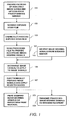
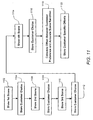
- FIG. 1 is a block diagram illustrating an embodiment of the present invention.
- a photofinisher provides a catalog of available image looks and options for the photofinishing service.
- An image "look" can be defined by characterizing the appearance of a reproduction relative to the appearance of the original scene. Individuals differ in their preference for appearance characteristics of image reproductions.
- An original scene can be reproduced with accurate hues, or with hues shifted in color space according to an individual or a general population preference.
- An original scene can be reproduced with varying levels of colorfulness, i.e., entirely without color as in black-and-white, with accurate colorfulness, or with increased colorfulness; in addition, the colorfulness of particular colors within the scene may desirably be manipulated relative to one another.
- An original scene can be reproduced with varying levels of lightness, e.g., contrast, and with rendering tone scales that vary with overall light levels; tone scale selection can be used to mitigate the visual effect of harsh scene lighting (e.g., lower contrast) or flat scene lighting (e.g., higher contrast).
- tone scale selection can be used to mitigate the visual effect of harsh scene lighting (e.g., lower contrast) or flat scene lighting (e.g., higher contrast).
- spatial image manipulations relating to image noise alteration (e.g., noise reduction or graininess smoothing) and detail or sharpness alteration (e.g., unsharp masking to increases low frequency information) can also affect the appearance of and desirability of a scene reproduction.
- looks relates to specific combinations of color hue reproduction, colorfulness level and tonal rendering, and spatial manipulations, which provide pleasing scene reproductions to one or more individuals. It will be appreciated that a pleasing scene reproduction to a particular individual or group of individuals does not necessarily provide for superior scene reproduction from a technical basis. For example, a grotesque or dark, Gothic reproduction of a scene which may be pleasing to a particular individual, but not necessarily an accurate or broadly preferred rendering of the captured scene, falls within the scope of the present invention.
- the catalog described in Fig. 1 can be a brochure, a sign, an advertisement or a poster.
- the catalog can be a film processing envelope, an order form, a bill, or a receipt.
- the catalog can be represented in a printed form on a reflection material or by an electronic display technology, such as a computer monitor, a liquid crystal display (LCD), a television, or a personal digital assistant. It can be represented by a verbal description suitable for receipt by a voice technology, such as cellular telephone.
- a photofinisher when receiving film for processing, to supply the customer with a processing envelope; when the photofinisher is a wholesale, mail order institution, the processing envelope can be sent through the mail (i.e., a mailer).
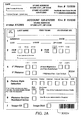
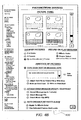
- FIG. 2A shows the front side 3000a of a film-processing envelope for photofinishing services that offer the selection of different image looks (section 3001 a) from a single film capture medium.
- the backside 3000b of a film-processing envelope is shown in Fig. 2B, which provides a catalog (section 3001b) of some available image looks.
- the processing envelope On the processing envelope are commonly found check-off boxes, which provide a menu of options for the photofinishing order.
- the processing envelope can offer various print sizes, single or duplicate prints, and enlargements; it is preferred for the envelope to disclose photofinishing options around variable image appearances.
- the catalog can constitute a description on the film container itself or any associated packaging that indicates the possible use of the film to provide multiple looks. It is common trade practice with consumer photographic films to describe the applications of the product on the container box both on the inside and on the outside.
- the camera used to expose the film can interrogate a microchip, a magnetic coating, or other information storage means associated with the film, or its cartridge or cassette, in order to determine the possible use of the film to provide a selection of image appearances.
- the catalog is represented by a World Wide Web (WWW) page on the Internet. It is contemplated that the customer may purchase both unexposed film and its processing through the same channel at same time, or through different channels at different times and, after taking pictures, return the exposed film to the photofinisher for development and image processing. There is no requirement that the film bear an indication of its suitability for photofinishing to provide multiple appearances (e.g., an advertised, conforming use).
- the customer can be a single individual, such as the photographer who exposed the photographic recording material, or a retail client of the photofinishing service, or he may represent a group of individuals buying services as a consortium (e.g., a club, a cooperative, a business, a firm, an institution, a government organization).
- a consortium e.g., a club, a cooperative, a business, a firm, an institution, a government organization.
- the photofinisher can be an actual operation that conducts all of the technical work of film scanning, image processing, image transmission, processed image printing, etc., or the photofinisher can be a service providing party that offers one of more services to customers and that in turn receives one or more of the needed technical steps or services from a different service provider.
- the photofinisher is a service provider, which only deals in reprinting previously developed film.
- the characteristic appearance that is produced by the invention can be represented by a verbal description, a written description, by icons, by graphical means, or by pictorial description, or by a combination of the various means. It is preferred to represent the different image looks produced by the invention with a pictorial representation, in particular a sample image. It is recognized, however, that the limitations of the printing methodology may compromise the quality of the representation. It is also appreciated that the visual ability or acuity of the viewer or purchaser will vary among the population. The lighting under which the customer views the brochure, the viewer's state of adaptation, or even the production features of the catalog may affect his perception of the nature of the look. Therefore it is highly preferred to supplement pictorial representations of the image looks with text descriptions of the properties of the looks.
- the image looks in terms of the presence or absence of color (that is, a color image, a black-and-white image, rendition, and image sharpness and graininess. It is also possible to compare the offered looks to existing film products known for characteristic or trademark looks. It is also possible to characterize the looks by a ranking system, such as: good, better, best. It is furthermore possible to characterize the image looks by customer segmentation; for example, color rendition preferred by teenagers, by artists, by professional photographers, or by geographical, regional or cultural preference. It is preferred to represent the image looks by application such as landscape, portraiture, baby picture, candid or grab shot, party scene, dreary day, snow or beach scene, and so forth.
- the image looks can also be characterized by their suitability for a particular viewing condition or lighting condition during exposure such as bright lighting levels, low lighting levels, tungsten lighting, natural daylight illumination, artificial fluorescent illumination, and so forth.
- the image looks can furthermore be characterized by their suitability for viewing by a particular segment of the population, such as young persons with excellent visual acuity, middle-aged people with farsightedness, and the elderly with declining visual abilities.
- the photofinishing catalog or brochure is displayed on the Internet as a WWW page.
- the Internet comprises a large number of computers and computer networks that are interconnected through communication links.
- the interconnected computers exchange information using various services, such as electronic mail, Gopher, and the Web.
- the Web service allows a server computer system (a Web server or Web site) to send pages of graphical information to a remote client computer system.
- the remote client computer system can then display the Web pages.
- Each source of content that is a computer Web page of the WWW is uniquely identifiable by a Uniform Resource Locator (URL).
- URL Uniform Resource Locator
- the client computer system specifies the URL for that Web page in a request. The request is forwarded to the Web server that supports that Web page.
- the Web server When the Web server receives the request, it sends that Web page to the client computer system. When the client computer system receives that Web page, it typically displays the Web page using a browser program.
- a browser is a special-purpose application program that conducts the requesting of Web pages and the displaying of Web pages.
- the WWW of the Internet is a particularly suitable means to both display the image looks and to interact with the customer to accept an order and generate a billing transaction.
- An Internet-based catalog can have an introductory page identifying the service and provider, a tutorial page, a sample image page, an ordering page for the photographic recording material or the image processing services, and the address or location of available retail laboratories or sites offering the film, photofinishing service, or the bundled combination if available. Due to concerns about home monitor calibration, it would be preferred to represent the sample images in an exaggerated form that emphasizes the differences between the image the looks, and to supplement the images with text descriptions of the properties of the look.
- image files e.g., a tagged-image-file-format (TIFF) file
- TIFF tagged-image-file-format
- An example of printing over a network is KODAK PHOTONET ONLINE service offered by Eastman Kodak Company, Rochester, New York.
- a photofinishing service receives the customer's exposed scan film.
- a camera speed photographic recording material, or image file derived from a recording material e.g., a film scan
- a recorded image e.g., a print scan image file
- an electronic recording device e.g., a digital still camera
- a film intended for scanning can be characterized by having low suitability for both direct viewing (e.g., projection) and optical printing.
- the film intended for scanning may be suitable for wet, aqueous processing including lamination and chemical transfer methods, or it may be suitable for dry, thermal processing by being comprised of incorporated development chemicals.
- a dry-process film intended for scanning can be characterized as a light sensitive silver halide photographic recording material having an incorporated developer in a binder on a support and capable of forming a differentiable machine-readable image which includes a non-diffusible dye by the application of heat.
- a dry-process film intended for scanning can be characterized as a light sensitive silver halide photographic recording material capable of forming a differentiable machine-readable image which includes a non-diffusible dye by the application of little to no processing solvent and a laminate layer, wherein the dry-process film or the laminate layer has an incorporated developer.
- the film intended for scanning can have long exposure latitude, at least 2.5 log E, preferably at least about 3.0 log E, more preferably at least about 3.5 log E and even more preferably at least about 4.0 log E.
- the long latitude facilitates proper capture of the total range of scene light levels under a variety of lighting conditions and illuminant types.
- the film can have a high sensitivity, preferably having an equivalent threshold sensitivity of at least about ISO 100, more preferably having an equivalent threshold sensitivity of at least about ISO 200 and most preferably having an equivalent threshold sensitivity of at least about ISO 400.
- Equivalent threshold sensitivities of about ISO 800 are useful in one-time-use cameras (OTUCs) based on 35-mm format film, and equivalent threshold sensitivities of up to about ISO 6400 are specifically contemplated.
- the high sensitivity further facilitates capture of scene light levels under poor lighting conditions of low illumination and when the scene subject is in motion, since the high sensitivity permits the use of a fast shutter time on a camera.
- a film intended for scanning can be additionally characterized as having very distinguishable properties from films intended for optical printing or direct viewing.
- the film can form a low gamma image after development.
- the gamma especially when combined with the long latitude, ensures that the formed densities are easily scanned without the introduction of scanner electronic noise produced by scanning through high net density (density above the minimum density).
- Image gammas of up to about 0.7 are preferred, gammas of up to about 0.55 are more preferred and image gammas of up to about 0.45 are even more preferred.
- the film can exhibit a minimal gamma after development processing. Image gammas of about 0.2 are specifically contemplated. Certain methods of scanning allow an almost imperceptible image to be rendered into electronic image-bearing signals.
- a color film can best exploit the full features of the present invention.
- the film can have individual layer units each sensitive to red, green or blue light, such as the film intended for scanning described in EP-A-0 905 561 (published March 31, 1999).
- the film can have layer units sensitive to white light and to specific subsets of white light as described in U.S. Patent Nos. 5,962,205 to Arakawa et al. and 5,053,324 to Sasaki.
- the layer units of a color film intended for scanning can be sensitized using any known color sensitization scheme, they are preferably sensitized in a manner that approximates the sensitivity of the human eye, which allows the accurate recording of scene light types as well as levels and which provides scene colorimetry. Since colorimetric capture requires linear space signal processing, it is incompatible with traditional chemical image processing practiced by color negative films intended for optical printing and color reversal films intended for direct viewing. Colorimetric recording is a desirable trait of films intended for scanning and electronic image processing, because image data with known color accuracy can be more manipulated to a much higher extent before color errors become objectionable, which in turn provides a larger range of possible image looks.
- the film intended for scanning is a color negative film
- it is preferably comprised of little or no colored masking coupler as described in US Patent Nos. 5,698,379 and 5,840,470 to Bohan et al., and 6,021,277 to Sowinski et al., the disclosure of which is herein incorporated by reference.
- Masking coupler is incorporated in a color negative intended for optical printing and performs a color correction step during chemical development. Elimination of the masking coupler provides for improved signal-to-noise characteristics during chemical development and obviates the need to electronically counteract its effect.
- the film preferably exhibits low levels of interlayer interimage effects overall, since electronic signal processing will be relied upon for color correction and image structure enhancement.
- each layer unit of a color film will comprise less than about 0.02 mmole/m 2 of colored masking coupler. Since colored masking couplers are not required in color negative films intended for scanning, the processed film may be better adapted for visual appearance and inspection, in addition for scanning, as described in U.S. Patent No. 5,972,585 to Sowinski et al.
- each of the layer units contains one or more dye image-forming couplers chosen to produce image dye having an absorption half-peak bandwidth lying in a different spectral region.
- the blue, green, or red recording layer unit forms a yellow, magenta, or cyan dye having an absorption half peak bandwidth in the blue, green, or red region of the spectrum, as is conventional in a color negative element intended for use in printing, or an absorption half peak bandwidth in any other convenient region of the spectrum, ranging from the near ultraviolet (300-400 nm) through the visible and through the near infrared (700-1200 nm), so long as the absorption half peak bandwidths of the image dye in the layer units extend in non-coextensive wavelength ranges.
- each image dye exhibits an absorption half-peak bandwidth that extends over at least a 25 (most preferably 50) nm spectral region that is not occupied by an absorption half-peak bandwidth of another image dye.
- Thrust cartridges are disclosed by U.S. Patent Nos. 5,226,613 to Kataoka et al.; 5,200,777 to Zander; 5,031,852 to Dowling et al.; 5,003,334 to Pagano et al.; and 4,834,306 to Robertson et al.
- These thrust cartridges can be employed in reloadable cameras designed specifically to accept them, in cameras fitted with an adapter designed to accept such film cassettes or in one-time-use cameras designed to accept them.
- Narrow-bodied one-time-use cameras suitable for employing thrust cartridges are described in U.S. Patent No.
- film can be mounted in a one-time-use camera in any manner known in the art, it is especially preferred to mount the film in the one-time-use camera such that it is taken up on exposure by a thrust cartridge.
- Film supplied in a thrust cartridge can be supplied in any convenient width. Widths of about 24 mm as employed in the Advanced Photo SystemTM (APS) are contemplated as well as wider formats, such as 35 mm or even wider.
- Photographic recording materials intended for scanning can be prepared by coating light sensitive silver halide emulsion units on a support with magnetic recording capability.
- Magnetic recording layers on film permit the encoding of information with specific images or with a the entire film roll, and they are described in Research Disclosure Item 38957, pages 626-627 (September 1996) Section XIV Scan facilitating features paragraph (2).
- Research Disclosure is a publication of Kenneth Mason Publications Ltd., Dudley House, 12 North Street, Emsworth, Hampshire PO10 7DQ England (also available from Emsworth Design Inc., 121 West 19th Street, New York, N.Y. 10011).
- the exposed scan film can be received at a retail site such as a photo specialty store, a drug store, a department store, or a grocery store.
- the film can be deposited at a drop-off point, a kiosk, or mailed via the U. S. Postal Service using a mailer envelope.
- the customer can be presented with the option of choosing the photographic look that he desires for the planned images.
- he customer can instead order a single default look from which to judge his images.
- the customer can order multiple image renditions derived from the same scene image, or he can order a single image per film frame wherein the look or characteristic appearance of the image is selected by the photofinisher, perhaps for optimum image quality based on scene content or photographic exposure, or perhaps based on a pricing structure.
- the customer can view imagettes (i.e., thumbnail images as used in a film order index print) displayed by a monitor screen through the Internet; in another embodiment, the imagettes are sent to the customer by e-mail for his examination before the full image data is processed. In yet another embodiment of the invention, the imagettes are displayed in real-time by a photographic processing kiosk. In still other embodiments, it is contemplated that the customer will have an option to select the images that he wishes to print or render for a fee, which can be referred to as a photo-select process.
- An example of such a selection methodology is described in U.S. Patent No. 5,666,215 to Fredlund, et al.
- Especially suitable methods of digital photofinishing and image distribution involving a networked computer means are described in U.S. Patent Nos. 6,017,157 and 6,133,985 to Garfinkle et al.
- step 102 it is preferred to assign a unique code to the customer photofinishing order. It is common practice in the photofinishing trade to supply an order number with a processing envelope in order to return the correct processed film and prints to a particular customer. An analogous strategy can be used with a processing kiosk. Other kinds of identifying codes can be present in the order.
- the film cartridge or cassette can be encoded with an identifier for film type, processing conditions, film speed, or image processing requirements.
- the film can have a magnetically recorded encodement or a pre-exposed encodement, such as a bar-code on the edge of the film outside the frame area, to identify image processing requirements, manufacturer's correction factors, and so forth.
- the order identifier associated with the transaction can be used to facilitate the purchase of reprints or enlargements of particular frames, if the customer later desires.
- the order number can be associated with an index print, if provided, or with the customer's returned images in either hard copy or soft copy form. It is preferred to associate the order number with the digital file from the customer's order through the course of image processing and the completion of the transaction.
- a more permanent kind of identifying number can be assigned to a customer in order to process future orders.
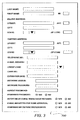
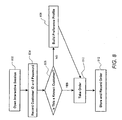
- a customer account can be established using a telephone number, an e-mail address, or a credit card number as a customer identifier, as illustrated in a representative Web page account generation process 700 shown in Fig. 3.
- the customer chooses a particular look, that choice can be stored along with the code number in the customer database.
- a customer profile can be established, at the discretion of the customer.
- the customer code can be stored in the customer database and the identity of the customer's chosen look or preferences can be retrieved and associated with future purchases, if desired.
- the processing envelope or kiosk transaction
- step 106 of Fig. 1 it is determined which image look (or looks) are to be applied to the customer's input image data file prior to the completion of image processing in order to fulfill his order.
- the customer chooses the particular look or looks for his image order.
- the customer can choose the particular look at the time of order placement for photofinishing following photography, and the processing envelope or mailer can be marked with the chosen look properties.
- the processing envelope can be pre-endorsed by the photofinisher based on customer preference data from prior usage of the service.
- the looks selections are transmitted to the image processing equipment by codes or tags that have the customer order number associated with them.
- the customer After photography, the customer has the option of changing the requested look by marking the processing envelope or mailer before returning it and the exposed film to the photofinisher.
- the customer can record a preselected look on the film from a camera, before, during, or after image capture by using magnetic information storage such as found in Advanced Photographic System cameras, or by encoding a selection in an integrated circuit resident in a film cartridge or cassette. If the customer has a film camera with an associated auxiliary digital still capture device and display as disclosed in U.S. Patent No.
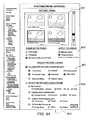
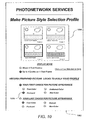
- Figure 4A shows an Internet WWW page 800, which displays the results (section 801) of applying various available looks to a customer's image, and which allows the customer to select the image look on a per-frame or whole-order basis (sections 802, 803).
- the customer has chosen to view up to 4 looks on one frame and to select their picture look themselves. These selections are then transmitted to the image processing equipment with the customer's order number.
- the customer may care to have additional information associated with his image, such as text, as disclosed in EP-A-0 851 661 (published July 1, 1998) or U.S. Patent Nos. 6,005,972 to Fredlund et al.
- the photofinisher or an algorithm selects the looks to be applied to the individual image frames based upon scene content, pictorial quality optimization, and so forth, as also suggested in section 804 of Fig. 4A.
- the look determination can be performed by an algorithm that determines the properties of an individual image frame based on its image content.
- a scene balance algorithm will provide color balance and density balance information for printing an image; it, or an image analysis algorithm, could also provide indications of scene content (i.e., the presence of sky, the presence of grass, the presence of a principal human subject, the presence of a face, the frame orientation, high lighting contrast (sunny day or electronic flash), low lighting contrast (overcast day), and so forth) upon which to base a selection of the optimum look in an automated fashion.
- scene content i.e., the presence of sky, the presence of grass, the presence of a principal human subject, the presence of a face, the frame orientation, high lighting contrast (sunny day or electronic flash), low lighting contrast (overcast day), and so forth
- the customer's exposed scan film is chemically processed to produce a scanable image.
- a full, conventional color process is carried out to provide a normal appearing, processed color negative film.
- the chemical processing can be accelerated; the omission of tail-end processing steps such as washing is specifically contemplated.
- the chemical processing can be limited to only a development step, which can involve aqueous processing chemicals or can alternatively involve thermal processing.
- a color photographic silver halide material comprised of a blocked but releasable photochemical (such as a blocked but releasable color developing agent) can be processed and used with the present invention.
- the apparatus can be employed to process film in a free standing customer accessible kiosk as described in EP-A-0 234 833 (published on September 2, 1987), U.S. Patent Nos. 5,113,351 to Bostic, 5,627,016 to Manico and 5,664,253 to Meyers.
- photothermographic materials providing color images are considered to be within the definition of "color photographic recording materials intended for scanning”.
- Color processing satisfying the requirements of the invention can also be accomplished by lamination methods, such as illustrated by U.S. Patent Nos. 5,756,269 to Ishikawa et al.; 6,022,673 to Ishikawa and 6,030,755 to Matsumoto et al.
- Aerial deposition development methods associated with co-called electronic film development as described in U.S. Patent Nos. 5,988,896 to Edgar and 6,017,688 to Edgar are also specifically contemplated, since such methods can be expected to perform especially well with films intended for scanning.
- step 104 of Fig 1 the imagewise exposed and processed photographic recording material intended for scanning according to the invention is scanned.
- Figure 5 shows, in block diagram form, a manner in which the recorded image information provided by the processed material can be used.
- a film scanner 502 is used to read processed scan film 501 by transmission; similarly, a reflection print scanner 504 or a digital still camera 503 can also provide data input into the image processing system.
- the scanning beam is most conveniently a beam of white light that is split after passage through the film layer units and passed through appropriate filters to create separate image records ⁇ red recording layer unit image record ( R ), green recording layer unit image record (G), and blue recording layer unit image record ( B ). Instead of splitting the beam, blue, green, and red filters can be sequentially caused to intersect the beam at each pixel location.
- separate blue, green and red light beams can be directed at each pixel location.
- an array detector such as an array charge-coupled device (CCD)
- a linear array detector such as a linear array CCD
- R , G , and B picture element signals are generated that can be correlated with spatial location information provided from the scanner.
- Signal intensity and location information is fed to a computer digital image processor 505 preferably associated with a general control processor computer workstation 510 and the information is transformed into intermediary image-bearing electronic signals R', G', and B ', which can be stored in any convenient storage device associated with the general control processor workstation 510 or in off-line storage 511.
- Digital image processor 505 by means of general control processor workstation 510 can transmit information to and receive information from a computer network 512. It is preferred that the computer network be linked to the Internet, and more preferably to the World Wide Web.
- a video monitor 509 which receives the digital image information modified for its requirements, indicated by R" G" and B ", allows viewing of the image data information received and used by the workstation.
- CTR cathode ray tube
- General control processor apparatus 510 which can include a keyboard and pointing device such as a mouse or trackball 513 enables the workstation operator to provide image manipulation instructions for modifying the video image displayed and any image reproduction to be created from the image-bearing electronic signals.
- Modifications of the image data can be viewed on video display 509 as they are being performed and then saved in storage device 511.
- the modified image data in suitable form R"', G "', and B "' can be sent to an output device to produce a hard copy scene reproduction for viewing.
- the output device can be any convenient conventional writing device, such as a CRT or laser silver halide color paper writer 506, a thermal dye transfer printer, an inkjet printer 507, an electrostatic, electrophotographic, or another type of printer.
- the modified image information can also be stored on a transportable recording medium such as a compact disc (CD) produced by a CD writer 508.
- CD compact disc
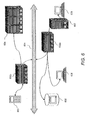
- a workstation 607 with attendant operator input and output capabilities fulfilled by a keyboard and monitor display 608 can serve as a retail operation.
- workstation 607 is linked through a connection computer, such as a server 602a, to a network 601.
- connection computer such as a server 602a
- workstation 607 can communicate with wholesale photofinishing computer operations 604, to provide distributed image processing, storage, Web display, or printing services.
- the retail computer workstation can communicate with customers directly if desired through a personal computer 606, a kiosk 605, or through a mobile computer or computing device 603, such as a laptop computer, a personal digital assistant, or a cellular phone. Therefore, the present invention can take the form of a computer program product which includes a computer readable storage medium having a computer program stored thereon. The computer program product when loaded into a computer would cause the computer to perform the operation as described in the present application
- the photofinishing can be accomplished by a kiosk system, a microlab system, a minilab system, or a high productivity wholesale photofinishing system, either in one location or in multiple locations with separate operations.
- Image data and other pertinent information may be input and output by reading and writing operations, respectively, from magnetic storage media or optical storage.
- Data, communications, billing, and so forth may be transferred by optical transmission means (e.g., direct infrared transmission or fiber optical network), or electromagnetic transmission means (e.g., wireless broadcast, Ethernet, cable or telephone line transmission).
- step 104 in Fig 1. once distinguishable images of one or more color records have been formed in the processed photographic materials, conventional techniques can be employed for retrieving the image information for each color record and manipulating the record for subsequent creation of a color-balanced, viewable image.
- an array detector such as an array CCD
- a linear array detector such as a linear array CCD
- a sequence of R, G, and B picture element signals are generated that can be correlated with spatial location information provided from the scanner.
- Scanning can also be carried out by a microdensitometer.
- Signal intensity and location information can be fed to an image data processor and the information is transformed into an electronic form, which can be stored in any convenient storage device.
- the electrical signal can be passed through an analog-to-digital converter and sent to a digital computer together with location information required for pixel (point) location within the image.
- this electronic signal is encoded with colorimetric or tonal information to form an electronic record that is suitable to allow reconstruction of the image data into viewable forms such as computer monitor displayed images, television images, printed images, and so forth.
- a common approach is to transfer the color negative film information into a video signal using a telecine transfer device.
- Two types of telecine transfer devices are most common: (1) a flying spot scanner using photomultiplier tube detectors; and (2) a CCD as a sensor. These devices transform the scanning beam that has passed through the color negative film at each pixel location into a voltage. The signal processing then inverts the electrical signal in order to render a positive image. The signal is then amplified and modulated and fed into a CRT monitor to display the image, and it is recorded onto magnetic tape for storage.
- the image data information acquired in preceding fashion from a film intended for scanning can be transmitted to the photofinisher's image processing workstation by a sending party, using any convenient method, such as a networked computer system.
- a sending party can be any convenient method, such as a networked computer system.
- the photofinisher scan the film in order to provide a selection of processed image reproduction appearances according to the invention.
- the sender can be a customer or a photographer possessing a home scanner and a modem who transmits an image file; the sender can also be a kiosk, a retail photo specialty shop, and so forth.
- image metadata refers to any additional data or information associated with the image; it may be derivative of the image itself, or it may relate to added material that pertains to the event of photography, customer identification or preferences, or photofinisher routing information.
- Metadata and its encoding that are applicable to the invention can be found in U.S. Patent No. 6,115,717 to Mehrota et al.; U.S. Patent No. 5,893,101 to Balogh et al.; EP-A-1 004 967 (published on May 31, 2000); and U.S. Patent No. 6,134,315 to Galvin.
- Photographic capture information that is desirably encoded as metadata includes any single input or any combination of inputs regarding scene illumination type, flash parameters such as flash output and/or whether the flash was directed at the subject or bounced onto the subject and/or whether sufficient flash power was available to properly illuminate the subject, camera lens f-stop, camera exposure time, and scene orientation, all of which is helpful in color and density balancing.
- the developed image can be scanned multiple times by a combination of transmission and reflection scans, optionally in the infrared and the resultant files combined to produce a single file representative of the initial image.
- a combination of transmission and reflection scans optionally in the infrared and the resultant files combined to produce a single file representative of the initial image.
- Such a procedure is described in U.S. Patent Nos. 5,465,155 to Edgar; 5,519,510 to Edgar; 5,790,277 to Edgar; and 5,988,896 to Edgar, as well as EP-A-0 944 998; WO 99/43148; WO 99/43149 and WO 99/42954. Improvements in the scanning of films that retain silver halide following a rapid development method, such as aerial chemical deposition, are obtained by methods disclosed in U.S. Patent No. 6,069,714 to Edgar.
- Elements having reference images or calibration patches derived from one or more uniform areas exposed onto a portion of unexposed photographic material as described in U.S. Patent Nos. 5,649,260 to Wheeler et al., 5,563,717 to Koeng et al. and 5,644,647 to Cosgrove et al. can be usefully employed to overcome the effects of excessive sensitometric variation.
- the exposure of reference images for the purpose of better calibrating the image processing system can be performed by the photographic recording material manufacturer or by the photofinisher.
- Periodic system calibration events e.g., a daily calibration
- employing reference exposure patches even on a single representative material, such as those contained on a chemical process control strip, can lead to improved image processing results.
- the image data in electronic signal form derived from the input capture material or device color records can be adjusted for scene exposure conditions to produce a more pleasingly color-balanced and lightness-balanced image for viewing.
- An example of a suitable scene balance algorithm is described by. E.Goll, D. Hill, W. Severin, "Modern Exposure Determination for Customizing Photofinishing Printer Response", Journal of Applied Photographic Engineering, 2, 93 (1979).
- Techniques for transforming image-bearing signals after scanning are disclosed in U.S. Patent No. 5,835,627 to Higgins et al., U.S. Patent No. 5,694,484 Cottrell et al. and U.S. Patent No. 5,962,205 to Arakawa et al.
- Giorgianni et al. in '030 provide a method and means to convert the R, G, and B image-bearing signals from a transmission scanner to an image manipulation and/or storage metric which corresponds to the trichromatic signals of a reference image-producing device such as a film or paper writer, thermal printer, video display, etc.
- the metric values correspond to those, which would be required to appropriately reproduce the color image on that device.
- the reference image producing device was chosen to be a specific video display, and the intermediary image data metric was chosen to be the R', G', and B' intensity modulating signals (code values) for that reference video display
- the R, G, and B image-bearing signals from a scanner would be transformed to the R', G', and B' code values corresponding to those which would be required to appropriately reproduce the input image on the reference video display.
- a data set is generated from which the mathematical transformations to convert R, G, and B image-bearing signals to the aforementioned code values are derived.
- Exposure patterns such as neutral and colored patches, chosen to adequately sample and cover the useful exposure range of the film being calibrated, are created by exposing a pattern generator and are fed to an exposing apparatus.
- the exposing apparatus produces trichromatic exposures on film to create test images, which include approximately 150 color patches.
- Test images may be created using a variety of methods appropriate for the application. These methods include: using an exposing apparatus such as a sensitometer, using the output device of a color imaging apparatus, recording images of test objects of known reflectances illuminated by known light sources, or calculating trichromatic exposure values using methods known in the photographic art. If input films of different speeds are used, the overall red, green, and blue exposures must be properly adjusted for each film in order to compensate for the relative speed differences among the films. Each film thus receives equivalent exposures, appropriate for its red, green, and blue speeds.
- the imagewise exposed film is chemically processed to produce a dye image. Film color patches are read by a transmission scanner, which produces R, G, and B image-bearing signals corresponding to each color patch.
- Signal value patterns of the code value pattern generator produce R, G, and B intensity-modulating signals, which are fed to the reference video display.
- the R', G', and B' code values for each test color are adjusted such that a color matching apparatus, which may correspond to an instrument or a human observer, indicates that the video display test colors match the positive film test colors or the colors of a printed negative.
- a transform apparatus creates a transform relating the R, G, and B image-bearing signal values for the film's test colors to the R', G', and B' code values of the corresponding test colors.
- the mathematical operations required to transform R, G, and B image-bearing signals to the intermediary data may include a sequence of matrix operations and look-up tables (LUTs).
- input image-bearing signals R, G, and B are transformed to intermediary data values corresponding to the R', G', and B' output image-bearing signals required to appropriately reproduce the color image on the reference output device as follows:
- look-up tables are typically provided for each input color.
- three 1-dimensional look-up tables can be employed, one for each of a red, green, and blue color record.
- a multi-dimensional look-up table can be employed as described in U.S. Patent No. 4,941,039 to D'Errico.
- the output image-bearing signals for the reference output device of step 4 above may be in the form of device-dependent code values or the output image-bearing signals may require further adjustment to become device specific code values. Such adjustment may be accomplished by further matrix transformation or 1-dimensional look-up table transformation, or a combination of such transformations to properly prepare the output image-bearing signals for any of the steps of transmitting, storing, printing, or displaying them using the specified device.
- the R, G, and B image-bearing signals from a transmission scanner are converted to an image manipulation and/or storage metric which corresponds to a measurement or description of a single reference image-recording or image-capture device and/or medium and in which the metric values for all input media correspond to the trichromatic values which would have been formed by the reference device or medium had it captured the original scene under the same conditions under which the input media captured that scene.
- the reference image recording medium was chosen to be a specific color negative film
- the intermediary image data metric was chosen to be the measured R, G, and B densities of that reference film
- the R, G, and B image-bearing signals from a scanner would be transformed to the R', G', and B' density values corresponding to those of an image which would have been formed by the reference color negative film had it been exposed under the same conditions under which the color negative recording material according to the invention was exposed.
- Exposure patterns chosen to adequately sample and cover the useful exposure range of the film being calibrated, are created by exposing a pattern generator and are fed to an exposing apparatus.
- the exposing apparatus produces trichromatic exposures on film to create test images which include approximately 150 color patches.
- Test images may be created using a variety of methods appropriate for the application. These methods include: using an exposing apparatus such as a sensitometer, using the output device of a color imaging apparatus, recording images of test objects of known reflectances illuminated by known light sources, or calculating trichromatic exposure values using methods known in the photographic art. If input films of different speeds are used, the overall red, green, and blue exposures must be properly adjusted for each film in order to compensate for the relative speed differences among the films.
- Each film thus receives equivalent exposures, appropriate for its red, green, and blue speeds.
- the imagewise exposed film is chemically processed to produce a dye image.
- Film color patches are read by a transmission scanner which produces R, G, and B image-bearing signals corresponding to each color patch and by a transmission densitometer which produces R', G', and B' density values corresponding to each patch.
- a transform apparatus creates a transform relating the R, G, and B image-bearing signal values for the film's test colors to the measured R', G', and B' densities of the corresponding test colors of the reference color negative film.
- the reference image recording medium was chosen to be a specific color negative film
- the intermediary image data metric was chosen to be the predetermined R', G', and B' intermediary densities of step 2 of that reference film
- the R, G, and B image-bearing signals from a scanner would be transformed to the R', G', and B' intermediary density values corresponding to those of an image which would have been formed by the reference color negative film had it been exposed under the same conditions under which the color negative recording material according to the invention was exposed.
- each input film calibrated according to the present method would yield, insofar as possible, identical intermediary data values corresponding to the R', G', and B' code values required to appropriately reproduce the color image which would have been formed by the reference color negative film on the reference output device.
- Uncalibrated films may also be used with transformations derived for similar types of films, and the results would be similar to those described.
- the mathematical operations required to transform R, G, and B image-bearing signals to the intermediary data metric of this preferred embodiment may include a sequence of matrix operations and 1-dimensional LUTs. Three tables are typically provided for the three input colors. It is appreciated that such transformations can also be accomplished in other embodiments by employing a single mathematical operation or a combination of mathematical operations in the computational steps produced by the host computer including, but not limited to, matrix algebra, algebraic expressions dependent on one or more of the image-bearing signals, and n-dimensional LUTs.
- matrix 1 of step 2 is a 3 x 3 matrix. In a more preferred embodiment, matrix 1 of step 2 is a 3 x 10 matrix.
- the 1-dimensional LUT 3 in step 4 transforms the intermediary image-bearing signals according to a color photographic paper characteristic curve, thereby reproducing normal color print image tone scale as one form of image look.
- LUT 3 of step 4 transforms the intermediary image-bearing signals according to a modified viewing tone scale that is more pleasing, such as possessing lower image contrast, as a second form of image look.
- Buhr et al. in U.S. Patent No. 6,163,389 provide a related and even more preferred method of digital photofinishing comprising the steps of: producing a digital color image in printing or other densities of a color image captured on alternative capture photographic media (e.g., a color negative film intended for scanning); first mapping the printing or other densities of the alternative capture media to the printing densities that would have been obtained for reference color photographic media; processing the mapped digital color image with a scene balance algorithm to produce a processed digital color image; second mapping the processed digital color image through a hard copy media characteristic curve to produce the mapped digital color image mapped to print densities of the hard copy media; sharpening the mapped digital color image with a sharpening algorithm optimized to avoid unacceptable artifacts; and digitally printing the sharpened digital color image onto hard copy media.
- alternative capture photographic media e.g., a color negative film intended for scanning
- Information accompanying the captured original scene parameters that describes the camera parameters responsible for capturing the scene can provide useful input for the signal processing algorithms.
- Useful information includes any single input or any combination of inputs which includes scene illumination type, flash parameters such as flash output and/or whether the flash was directed at the subject or bounced onto the subject and/or whether sufficient flash power was available to properly illuminate the subject, camera lens f-stop, camera exposure time, and scene orientation.
- Further features in scene balance algorithms useful in the practice of the invention can include mixed illuminant detection and subject detection.
- the scanner densities, the printing densities, or other film density-representative, image-bearing signals of the input scan film are transformed to image printing instructions or image display instructions based on the properties of a reference film.
- the reference film can be an existing film intended for the required output operation, or it can be another kind of film intended for a different imaging application if appropriate modifications are added to the image processing chain to account for the current application. It is preferred, in one embodiment of the invention, to transform the image-bearing signals of the scan film to known output printing or display instructions for existing color negative films. In this manner, the output derived from a scan film is simply predicted and conveniently image-processed.
- the scanner densities or the printing densities from the imagewise-exposed and processed scan film can be transformed to the printing densities of a plurality of existing color negative films and then written to an output medium such as silver halide color paper.
- the scan film printing densities can be transformed to the printing densities of one or more of the following representative example films to satisfy the requirements of the invention, including, but not limited to: KODAK ROYAL GOLDTM films, KODAK GOLD MAXTM films, KODAK GOLDTM films, KODAK MAXTM films, KODAK SUPRATM films, KODAK VERICOLORTM films, KODAK PORTRATM films, KODAK PRO GOLDTM films, KODAK FUNTIMETM, KODAK VRTM films, KODAK EKTAPRESS PLUSTM films, EASTMAN EXRTM films, and KODAK ADVANTiXTM films.
- the scan film printing densities can be transformed to those of any other selected reference image capture device or medium, as described in U.S. Patent No. 5,267,030 to Giorgianni et al.
- the reference image capture device is a digital still camera, more preferably one with spectral sensitivities that approximate the color matching functions or the human visual system.
- image recording media and devices will not directly record the scene parameters in the way human observers perceive them.
- all of these media and devices can be characterized by a spectral response function, by a function that maps scene intensity ratios to device code values and by a multi-dimensional function or matrix that characterizes the interdependence or cross talk between the at least three color channels. Therefore, obtaining the original scene parameters directly relating to the light levels of the scene (i.e., scene space exposures) involves applying transformations that are the inverses of these functions. It is desirable to make the captured scene parameters independent of the particular input device and/or medium and to make the resulting pixel values represent accurate estimates of the scene colorimetry.
- Scene colorimetry is a preferred intermediary data encoding metric, since a very wide variety of desirable image appearances can be derived by the proper manipulation of the image-bearing electronic signals.
- a most preferred method of providing scene exposures is described in U.S. Patent No. 5,267,030 to Giorgianni et al., wherein a digital image that was created by scanning a film is transformed into a device-independent color space by a mathematical transformation.
- a data set from which the mathematical transformation can be derived is produced by exposing a sample of the film with a pattern of approximately 400 test color stimuli, chosen to adequately sample and cover the useful exposure range of the film.
- Red, green and blue (R, G, B) trichromatic exposures for a reference colorimetric image-capturing device or medium are then computed for the test stimuli, using standard colorimetric computational methods.
- the imagewise exposed film is chemically processed producing a dye image, and the color patches are read by a transmission scanner, which produces R, G, and B image-bearing signals corresponding to each color patch.
- a transformation is then created relating the R, G, and B image-bearing signal values for the film's test colors to the known R, G, and B trichromatic exposures of the corresponding test colors. This transformation is then used to convert digital image values that were produced by scanning a film of the type that was used to generate the transform using the following procedures:
- Test color patch sets having fewer than 400 colors can be employed to enable more efficient generation of the transformation matrices and LUTs and improved use of computational resources.
- the mathematical operations represented by sequential application of individual matrices and LUTs can be numerically concatenated to afford improved computational speed and to reduce the necessary computational power.
- Analogous procedures can be employed to generate transformation matrices and LUTs appropriate for use with the other photographic or electronic image capture, image acquisition, and image processing paths described herein.
- a representation of the original scene parameters may be two-dimensional or three-dimensional and may be of still or moving scenes.
- the only requirement for this means of generating a preferred viewed reproduction of the original scene is that the relationship between the original scene parameters and those in the accessed original scene representation be known or that it be possible to make an accurate assumption about this relationship.
- the accessed scene representation was at some point captured preferably using the methods described above for direct original scene parameter capture.
- Device-independent color spaces are often based on a system of colorimetry developed by the Commission International de l'Eclairage (CIE), and representative examples are CIE XYZ and CIELAB color spaces.
- CIE Commission International de l'Eclairage
- Output device-dependent color spaces can also be used for storage, interchange, and manipulation of digital images, but they frequently produce a compromise in color storage due to a limited functional range or color gamut that necessitates truncation of the colors or luminance ranges that can be reproduced by the system.
- An example of a suitable, contemporary device-dependent color space is sRGB.
- a preferred interchange space comprised of a device-independent color encoding specification for the practice of the invention is Profile Connection Space (PCS) as defined by the International Color Consortium® (ICC), a group of participating corporations that has set open specifications for electronic device color management.
- PCS Profile Connection Space
- the PCS interface represents color appearances by specifying the CIE colorimetry of colors viewed on a reference medium in a reference viewing environment.
- a device profile (often called an ICC profile) is used to relate the device-dependent code values of an input or output image data set to the corresponding color encodement scheme values in PCS.
- ICC has published a description of both PCS and device profiles in "File Format for Color Profiles," Specification ICC.1:1998-09, and in "Addendum 2 to Spec. ICC.1:1998-09,” Document ICC.1A:1999-04, which are quite readily obtained by downloading from the ICC website, www.color.org.
- scene colorimetry does not produce a pleasing image when directly rendered as a reproduction, such as a color print.
- An image "look" can be defined by characterizing the appearance of the reproduction relative to the appearance of the original scene. For example, the reproduction tone scale quantifies the mapping of the tones in the original scene to the tones in the reproduction.
- a three-dimensional color space mapping can be used to quantify the modification of the hues, saturations, and lightnesses of the colors in the original scene necessary to produce the image reproduction of the scene. Additional global characteristics of the reproduction that define the look include sharpness and graininess, pertaining to image spatial frequency reproduction and noise content, respectively.
- object- or region-specific image adjustments may be made to produce the desired "look".
- An example of an object-specific adjustment is to transform all non-skintones into B&W tones.
- An example of a region-specific image adjustment is to darken the edges of an image to produce a vignetting effect.
- image colorimetry can be purposefully manipulated in a variety of ways to achieve changes in image luminance, chroma, and hue, which then can be rendered in the image reproduction by means of subsequent well-known transformations.
- the scene can be reproduced with higher or lower contrast and brightness (which equates to higher or lower scene luminance reproduction (i.e., lightness)), with higher or lower colorfulness (i.e., chroma), and with more accurate or less accurate color shades (i.e., hue).
- hue i.e., hue
- a highly preferred method for transforming the intermediary image-bearing electronic signals representing scene exposures is by colorimetric manipulations that can take the form of consistently and smoothly shifting colors within a region of color space, so as to deliver an image that incorporates the look selected by a customer or a photofinisher, which is disclosed in U. S. Patent Application No. 09/506,712, to Buhr et al. filed on February 18, 2000, entitled 'Color Reproduction of Scenes with Preferential Color Mapping', and in U.S. Patent Application No. 09/540,807 filed March 31, 2000, to Woolfe et al. entitled 'A Color Transform Method for the Mapping of Colors in the Images'.
- the image-bearing electronic signals representing the captured scene can be purposefully manipulated by a photofinisher to achieve a very wide variety of visual reproductions.
- a photofinisher to achieve a very wide variety of visual reproductions.
- the method of Buhr et al. allows specific colors to be manipulated with minimal or no effect at all on other colors in the reproduction.
- the chroma of green relating to grass and blue relating to sky can be increased, while the chroma, hue and lightness of skin colors can remain unaffected.
- a tone scale has to be applied to map the relative luminance values of scene colors to relative luminance values of the reproduced colors. It is well known to those skilled in the art that this is rarely a one-to-one mapping.
- the selection of a tone scale that produces the most preferred images depends on a variety of factors, including the discrepancy between viewing conditions of the scene and the reproduction, anticipated subject matter (e.g., portrait photography, nature photography, landscape photography, candid shots, etc.), the dynamic range of the scene in relation to the dynamic range that can be reproduced, and viewer preferences.
- a family of tone scales that produce preferred reproductions in combination with hue and chroma manipulations are disclosed in U.S. Patent Nos. 5,300,381 to Buhr et al; 5,447,811 to Buhr et al.; and in the previously cited 5,528,339 to Buhr et al.
- the invention is not limited to these tone scales which are characterized by a linear relationship between scene lightness and lightness as perceived by the viewer.
- Traditional S-shaped tone scales which are mostly used in conventional silver halide photography, produce preferred images within the framework of this invention compared with optical printing systems, because of the large improvements in hue reproduction possible following purposeful manipulation of scene exposure data derived in the manner of U.S. Patent No.
- a particular tone scale, or a family of tone scales is combined with a classification algorithm that selects the most appropriate tone scale according to the dynamic range of the scene or if a dynamic range adjustment is applied prior to tone scaling.
- Successful classification algorithms will take many forms, including but not limited to histograms, ranges, parameters based on the distribution, or transformations of the distribution of all or a subset of the recorded or transformed image pixel values. In digital imaging printing systems, classification algorithms can be implemented to select slightly different tone mappings to create the most preferred images.
- the input for the classification can be scene parameters or capture conditions. Information accompanying the captured original scene parameters that describes the camera parameters responsible for capturing the scene can provide useful input for the signal processing algorithms.
- Useful information includes any single instance of or any combination of scene illumination type, flash parameters such as flash output and/or whether the flash was directed at the subject or bounced onto the subject and/or whether the sufficient flash power was available to properly illuminate the subject, camera lens f-stop, camera exposure time, scene orientation and zoom lens status.
- flash parameters such as flash output and/or whether the flash was directed at the subject or bounced onto the subject and/or whether the sufficient flash power was available to properly illuminate the subject
- camera lens f-stop camera exposure time, scene orientation and zoom lens status.
- Such classification algorithms are also useful in automating the selection of optimal image looks by a photofinisher to provide to a customer in an automated method of photofinishing, in another aspect of the invention.
- lightness manipulations can take any of the following forms: applying a scene-dependent tone scale transformation, applying a global scene-independent tone scale transformation, or applying a global scene-dependent or scene-independent tone scale transformation.
- the invention is directed at providing a selection of image looks suitable for viewing a scene reproduction in a variety of viewing illumination environments.
- a method for producing color-appearance matching for an image viewed in different surround conditions by the application of appropriate image luminance contrast factors is described by U.S. Patent No. 6,046,723 to Daniels et al.
- a film intended for scanning is scanned producing image-bearing electronic signals R, G, and B, preferably in the form of scanner densities.
- An ICC profile is used to convert the density-representative signals into scene space exposure-representative signals encoded in a suitable colorimetric space R', G', and B', in step 702.
- ICC has published a description of both PCS and ICC device profiles in "File Format for Color Profiles," Specification ICC.1:1998-09, and in “Addendum 2 to Spec. ICC.1:1998-09,” Document ICC. 1A:1999-04.
- the exposure-representative signals are adjusted for color bias and intensity using a scene balance algorithm in step 703.
- An ICC profile transforms the balanced exposure-representative signals R', G', and B' into the device-independent colorimetric encoding specification of (PCS) R", G", and B" in step 704. It is convenient to provide a plurality of different image looks by applying a plurality of different ICC profiles in PCS space.
- step 705 modified PCS space image-representative signals with the intended properties of the selected image look are produced by the application of the appropriate ICC profile from an available group of look-application profiles. It is preferred that the PCS space image-bearing signals R", G", and B" produced in step 704 are an accurate color or colorimetric representation of the photographed scene rather than a colorimetrically inaccurate, more viewer-preferred representation. Increased simplicity in managing an inventory of appearance profiles is afforded by basing individual appearance profiles on changes to output scene colorimetry, which is unchanging; thus image look profiles can be added and removed from the digital photofinishing system with minimum inconvenience.
- an ICC profile transforms the image-bearing electronic signals of PCS color interchange space into device-dependent code values with the applied image look R"', G "', and B"' appropriate for printing or other end uses as determined by the output profile selection.
- either of the two previously described methods is suitable to produce differentiable image appearances in the output image files: (1) the method of Buhr in U.S. Patent No. 6,163,389 involving the use of printing density transformations wherein scanning and image processing spectral responsivities match those of a particular optical photographic printer and photographic output medium (e.g., densitometric encoding); or (2) the method of Giorgianni in U.S. Patent No. 5,267,030, wherein density-representative signals are rendered channel independent and converted to scene exposure-representative signals prior to colorimetric manipulation of hue, chroma, and lightness (e.g., colorimetric encoding).
- One of the two image processing methods and means can be used separately to provide all of the image looks, or the methods may be used jointly, each method providing one or more of the output looks, preferably from a single acquisition of data by scanning the input medium, to provide the multiplicity of image looks. It is preferred to use the method of the 5,267,030 patent to produce scene space exposure-representative electronic signals to provide at least one of the looks. It will be appreciated that the methods of providing image looks are not limited to the procedures described in '030 of Giorgianni et al. or in '548 of Buhr et al., but any suitable method of image processing that provides differentiable visual reproductions can be used in the invention.
- An especially preferred combination of looks is a black-and-white rendition, a portraiture rendition (e.g., lower chroma, lower contrast, and lower sharpness), a general or basic default rendition (e.g., high chroma, intermediate contrast, high sharpness), and a high colorfulness rendition (e.g., very high chroma, high contrast, and high sharpness).
- the photofinisher prefferably impart color and tone rendition properties that are unavailable through the usual optical print system in at least one of looks in order to provide visually superior digital output. It is more preferred for the photofinisher to provide at least two preferred color and tone looks, neither of which are produced by direct printing density transformations or by the optical print system. Altering the image spatial signal processing, for example to increase sharpness (e.g., for a landscape), or to decrease sharpness (e.g., for a portrait), constitutes a differentiable image look according to the invention even if the color and tone reproduction properties are otherwise unaltered.
- Color image reproductions can be supplemented with black-and-white reproductions as differentiable looks, with monochrome reproductions, with simulations of historical prints hues such as sepia or brown-toned, or other unnatural reproductions of the captured scene.
- cartoonization can constitute one or more of the provided looks. Cartoonization can be made to render the input image to appear like a child's coloring book images, like impressionistic oil paint images, like rasterized color images, like quantized digital color images showing contouring effects, like sidewalk chalk pastel images and so forth.
- texture e.g., patterns
- captions, labels, dates, text boxes, and other kinds of information can be attached to the image data or the output reproduction in printed or other form.
- the last step in Fig. 1 is to produce a visual reproduction of the image in step 108 or to transmit a modified image file to a recipient in step 109 that was processed according to the specifications in steps 106-107.
- the image can be reproduced on any transparent or reflective material (hard copy) or on a self-luminous display (soft copy) that produces images by additively mixing at least three suitably chosen primary colors or by subtractively mixing at least three suitably chosen dyes.
- a digital, electronic representation of the manipulated image is transformed into an analog signal of the correct intensity and spectral distribution in order to generate the desired visual reproduction of the manipulated image.
- Reproduced images may be displayed in two- or three-dimensional form. Examples of this procedure include the display of an image on a color monitor or an electronic printing process whereby a color photographic paper receives an image-wise exposure by a CRT or laser printing device and the material is subsequently chemically processed, for example by KODAK EKTACOLORTM RA-4 Process, to produce a reflection print.
- the electronic signals representing the selected image reproduction resulting from applying steps 104-107 of Fig. 1 must be transformed into a corresponding set of device code values to account for the scene parameter manipulation characteristics of the output device and media in step 108.
- the transformation between device code values and the colorimetry of the colors reproduced by a particular device/media combination can be obtained by a device characterization.
- An example of a device characterization is a procedure that involves generating and printing or displaying a suitable array of device code values in the form of color patches of a size large enough for subsequent measurement.
- patches can be measured using a colorimeter, a spectrophotometer or a telespectroradiometer, depending on the nature of the output, such as for example, a silver halide color paper reflection print, or an inkjet reflection print. If monitor display output spectra are measured, CIE XYZ tristimulus values and other related quantities such as CIELAB or CIELUV color space coordinates can be calculated for the display illuminant using standard colorimetric procedures. This data set can be used to construct the appropriate sequence of one-dimensional look-up tables, multidimensional look-up tables, matrices, polynomials and scalars that accomplish that transformation of the image-bearing electronic signals derived from step 107 of Fig.
- a preferred example of the implementation of this transformation is an ICC-type profile that maps the specifications of the desired visual reproduction, encoded in a color interchange space such as PCS, to device code values, the actual machine printing or monitor display instructions.
- This operation may also include gamut mapping.
- the color gamut of the scene representation at the end of step 107 of Fig. 1 is determined by the set of primaries that was used for encoding the data. Examples include the primaries corresponding to the color-matching functions of the CIE 1931 Standard Colorimetric Observer or any linear combinations thereof.
- Gamut mapping is performed between the gamut defined by this encoding and the gamut of the combination of the output device and the output media, in the case of a reflection print. It is preferred to use gamut-mapping algorithms that maintain color hue, in practice of the invention.
- the image data transformation of step 108 can be combined with any of the transformations in step 107 to form a single set of one-dimensional look-up tables, multidimensional look-up tables, matrices, polynomials and scalars in any sequence.
- Reproductions according to the specifications of the invention can be produced by a variety of technologies. Reproductions can be obtained on silver halide or other light-sensitive materials.
- the light-sensitive material can be transparent film, reflection print paper, or semi-transparent film. These materials are exposed by visible or infrared light derived from many different sources.
- the materials may be designed for typical photofinishing applications or they may be specially designed for digital printing applications.
- the photosensitive materials respond primarily to three different spectral regions of incident light.
- red (600-720 nm), green (500-600 nm), and blue (400-500 nm) light typically, these are red (600-720 nm), green (500-600 nm), and blue (400-500 nm) light.
- any combination of three different spectral sensitivities can be used. These could include green, red, and infrared light or red, infrared 1, and infrared 2 light, or 3 infrared lights of different wavelengths.
- a material sensitive to the three primary wavelengths of visible light may be false sensitized so that the color of the exposing light does not produce image dye of the complementary hue, such as red, green, and blue sensitivity producing magenta, yellow, and cyan dye, respectively.
- Printing can be carried out by exposing all pixels sequentially, by exposing a small array of pixels at the same time, or by exposing all the pixels in the image at the same time.
- Devices which can be used to print on light-sensitive materials, include CRT, light emitting diode (LED), light valve technology (LVT), LCD, laser, as well as any other controlled optical light generating device. All these devices have the ability to expose 3 or more light-sensitive layers in a light-sensitive material to produce a colored image. They differ mainly in the technology on which the devices are based.
- a suitable embodiment of a CRT printer is the KODAK PROFESSIONAL Digital Multiprinter, which can be used in combination with KODAK PROFESSIONAL Digital III Color Paper.
- Non-light-sensitive imaging materials are conveniently used by electronic printing processes to produce high-quality reproductions.
- the method of image formation can be half-tone, continuous tone, or complete material transfer.
- the image reproduction material can be transparent film, reflective paper, or semi-transparent film.
- the media can be written on to produce pictorial images by thermal dye transfer, inkjet, wax, electrophotographic, or other pixelwise writing techniques. These processes use three or more colorants to create colored pictorial representations of pictorial scenes.
- the colorants may be dyes, toner, inks, or any other permanent or semi-permanent colored material.
- a suitable example of a dye transfer thermal printer is the KODAK PROFESSIONAL XLS 8650R Thermal Printer. Both non-impact and impact printing methods, such as traditional press methods, are specifically contemplated.
- images can also be created by optically projecting the image in the form of light rays from behind or in front of the viewer toward a screen, which is in front of a viewer, or by projecting a reversed image toward the viewer onto a screen between the viewer and the projecting device.
- a motion imaging data file (e.g., a digital electronic movie) can be constructed by scene capture and reproduction from a film intended for scanning with multiple characteristic appearances applied on a frame-by-frame or on a scene-by-scene basis to create associated multiple preferred scene reproductions suitable for broadcast and wide-format display as in a movie theater or home display, as on a television set.
- Image data storage can be accomplished in a variety of ways, including magnetic, optical, magneto-optical, RAM, biological, solid state, or other materials, which permanently or semi-permanently record information in a retrievable manner.
- suitable storage media and devices include computer hard drives, floppy disks, writeable optical disks such as KODAK PHOTO CDTM Discs, KODAK PICTURE CD Discs, KODAK Picture Disk Media, and flash EEPROM (Erasable Electrically Programmable Read-only Memory) PCMCIA cards.
- Image data transmission can be accomplished most effectively by high throughput means including the use of optical and electromagnetic transmission technologies.
- a customer purchases a package comprised of color photographic film intended for scanning and a processing mailer envelope for directed photofinishing from a retail photospecialty shop.
- the packaging indicates that the photofinishing service provides a selection of available image appearances, and sample images with exaggerated differences and with descriptive labels appear on the packaging.
- the mailer envelope has check-off boxes associated with the descriptive names for the different appearance selections, and the usual customer identification, billing, and shipping information inputs (see. Figs. 2A and 2B).
- the customer After exposing the roll of film intended for scanning, the customer ships the film to the photofinisher in the mailer envelope with two image looks selected and two prints per image frame requested, each with a different print look, for his whole roll order of processed images.
- One of the selected looks for one set of prints is the service basic look, which features high colorfulness that is intermediate in a range of offerings, preferred color rendition based on the North American region, and a lower contrast tone scale;
- the second look to be applied to the second set of prints is the automated photofinisher selection, based on best image rendition determined by scene categorization algorithm software.
- the photofinisher receives the film, establishes a customer account, tags the film intended for scanning with a customer identification number, develops the film intended for scanning, scans the film intended for scanning, and then applies each of the two different image appearances requested by the customer to each frame of scanned image data for the entire processed roll of color negative film.
- the processed images are printed onto silver halide color with a CRT printer, the color paper is processed, finished and packaged for shipping with the processed color negatives of the film intended for scanning.
- the photofinisher ships the order of two sets of different color paper prints to the customer.
- a customer visits an Internet World Wide Web site for a photo specialty retailer/photofinisher, and orders a supply of film intended for scanning and their processing mailers, which is shipped to his home via a parcel delivery service after a credit card transaction has been completed. While at the Web site, the customer takes the tour of the variable printing photofinishing service offered by the vendor. In a tutorial screen, the vendor highlights the offering of various printing styles, which can be applied to the customer's image, including true color, high color, portrait color, landscape rendering, basic color rendering with digitally enabled color reproduction preferences , and black-and-white (see, for example, Fig. 10).
- the customer views his output printing options, which includes interactively selecting pictures and styles to print following film development.
- the customer exposes the roll of film intended for scanning, completes the photofinishing mailer electing to try the interactive picture selection service, and he mails the mailer with the contained film.
- the mailer is received by a local photofinishing service, and a customer account is created to bill the transaction; a customer identification number is associated with the roll of film, and the film is developed and scanned.
- the customer is notified by e-mail that his film has been scanned.
- the customer again visits the Web page of the photofinishing service and provides a password that admits him to another page in a secure section of the network, which contains an index display of all of the images from his roll.
- the customer selects five of the 15 available images for printing, and examines each of the five desired images at the customization Web page, where he determines which printing style is his preference for each image. Those five images are printed by the photofinisher using an inkjet printer according to the customer selection, and the prints are packaged. Image data files are created of the five images selected for printing with the printing style selected by the customer, image data files of all 15 available images rendered in the normal printing style are also created. All 20 image data files are written to a photographic image CD in a commonly accessible image data file format; the image file construction with metadata encoding allows the photofinisher to recreate the basic customer image data file from modest file sizes produced by data compression as needed for further image processing and to apply any of the available looks at the customer's request at a later date.
- the image prints that were printed according to the selection of the customer and the photographic image CD are packaged together and shipped to the customer.
- the processed color negatives derived from the film intended for scanning are not returned to the customer by his selection of that option.
- downloadable compressed image data files are made available on the server that the customer can access in order to download his image files prior to the arrival of the package of prints and the photographic image CD.
- the customer Before receiving his prints and the CD, the customer decides he would like two additional prints of images he elected not to print following initial development and printing.
- the customer revisits the photofinisher Web page, enters the secure customer image storage area and visits the Web page displaying his index image file set.
- the customer selects those two images, selects new looks to be applied to the two images, and he creates a new printing order transaction and billing cycle.
- the customer also downloads an image file from the Web page in order to send an e-mail message with an attachment of the image to another party.
- the customer arranges the seven images with his selected looks in an electronic photo album Web page that is part of the image network offer by the photofinisher; he then annotates the Web page via PC telephony with comments and captions.
- the customer transmits the password associated with that secure Web page to a relative via e-mail to invite their viewing of his photography and his artistic creation.
- Figs. 8-11 illustrate further features of the photofinishing method and system of the present invention.
- a photofinishing service provider i.e., a wholesale photofinishing lab, a minilab, a retail store, an online service provider, etc.
- identify customer preferences utilizing an interactive "look preference" identification screen by way of their home computer or a computer at a retail location. More specifically, a photofinishing service provider can track previous customer selections as to picture "look" and return the customer to that "look” at the next interaction. Thereafter, the photofinishing service provider can customize the next selection screen based on past preferences. The photofinishing service provider can also track "look" preferences through total order fulfillment.
- the photofinishing service provider can offer various looks to the customer at the interactive screen and record the customer's selection.
- the photofinishing service provider can also return previously chosen looks to the customer at the screen and tie a unique film identification (ID) to the customer's preferred look based on the interactive screen.
- ID unique film identification
- the photofinishing service provider can provide digital processing derived by, for example, scanning and/or digitization of exposed and photographically developed film according to the preferred look at the interactive screen.
- the customer would first open an interactive ordering session (step 802).
- the photofinishing service provider can capture the customer ID (step 804) via, for example, the logon ID 902 / password 904 entered at the customer's web access device as illustrated in Fig. 9.
- the photofinishing service provider can offer an ancillary ID/password reminder function 906 using well-known techniques. New users can be automatically directed 908 towards tutorial screens relating to the screens shown earlier as Figs. 3 through 4B that will describe the photofinishing service offerings. Known users who directly reach service entry points such as those shown in Figs.
- the photofinishing service provider thereafter provides the customer ID to a server and checks for the existence of a customer profile on this server in a file that is identified by the customer ID (step 806). If the customer does not have a profile, then the system proceeds with step 808 that commences the building of a preference profile that is unique to the customer.
- the photofinishing service provider can pass a generic order screen to the customer's web access device. Thereafter, the photofinishing service provider can capture customer order characteristics, such as for example, items, quantity, payment method, delivery method, etc., and preferred picture look preferences (like that shown earlier as Figs. 3 ⁇ 4B). Possible picture look preference choices vary according to criteria such as colorfulness or color intensity (black and white to high color); color shading or hue; contrast (low to high); or low to high detail (softer portrait look to every-small-feature-shows look). Further look preferences can include most accurate color style, portrait style (muted color, best skin tones), brilliant color style (highly saturated colors, postcard look), historic sepia style, black and white style, etc.
- Fig. 10 One embodiment of the first arrangement discussed above is illustrated in Fig. 10.
- the choices are presented as multiple renditions 1004 of a single scene on one screen 1002 with the renditions varying along the named criteria discussed above, and the customer is asked to choose 1006 his/her favorite rendition. After three to five screens, each probing a distinct single scene, the customer's average look/preference choice can be identified and a profile developed accordingly.
- a single scene can be shown to the customer on a screen and the customer can be asked to mouse-position a set of on screen sliders (or radio buttons) to bring the scene to his/her favorite look. After three to five screens, each probing a single scene, the customer's average look/preference choice can be identified and a profile established. In a still further embodiment of the first arrangement, a customer can choose to defer his/her look/preference until the return of the exposed film.
- product preparation directions which follow the customer's order characteristics and the customer's average look/preference can be provided along with payment and delivery directions to the server, and these directions can be passed to an order fulfillment service/function station (step 810), following generally the scheme illustrated in Figs. 2 - 4. Thereafter, the look/preference choices and the directions can be stored (step 812) in a new file which is identified by the customer ID and a date stamp.
- the building of a preference profile is schematically illustrated in greater detail in Fig. 11.
- the selected interrogatory scenes are sequentially passed to the customer, steps 1102, 1106, 1110 and 1114, and the customer's rendition preferences for the individual scenes are recorded, steps 1104, 1108, 1112 and 1116.
- the average offset to the accurate spectral and tonal values that best fulfill the customer's preferences are determined and recorded at step 1118.
- the selected interrogatory scenes are chosen to span the range of scenes typically encountered and can include low and high contrast scenes, scenes with a high memory color content, busy scenes, indoor scenes, outdoor scenes and so forth. Clearly, a single scene can be used to probe several of these axes.
- a single scene can be shown on each screen and interactive means, such as radio buttons or sliders, can be provided for actively altering scene characteristics until a preferred rendition is achieved, and the position of the sliders or radio buttons recorded and passed back to the server.
- interactive means such as radio buttons or sliders
- the customer may be provided with a brochure showing various renditions of the interrogatory scenes and instructions for first choosing between the scenes and then entering the choices, either directly on the brochure or otherwise communicating the selection to the photofinishing service provider as for example via an interactive web-page or a touch screen at a kiosk.
- This embodiment can be preferred since it tends to suppress artifacts relate to the specific color and tonal characteristics of a particular soft copy display.
- This embodiment can also be preferred when communications between the customer's information entry point and the server are challenged.
- the entry point can act primarily as a data entry and display device, however, when communications are intermittent, slow or otherwise bandwidth restricted, the selection routine can be downloaded to the entry point as a free standing application, as for example a JAVA applet.
- selections around the customer's own scenes, as described in Figs. 4A and 4B can be employed to form the basis for determining the average offset required to provide preferred renditions to the customer at future sessions.
- the photofinishing service provider can retrieve the customer's preferences from a server file identified by the customer's identification.
- the photofinishing service provider can post all customer order characteristics to the customer's web access device, and present one of the previous look/preference probing screens pre-set to the customer's last chosen look.
- the photofinishing service provider can present one of the customer's images from a recent order pre-set to the customer's last chosen look.
- the photofinishing service provider can capture the customer order characteristics (such as items, quantity, payment method, delivery method, etc) and preferred picture look/preferences.
- possible picture look/preference choices vary according to criteria such as color intensity (black and white to high color); contrast (low to high); etc.
- multiple renditions of a single scene on one screen can be presented to the customer, with the renditions varying along the name criteria and the customer being asked to choose his/her favorite rendition.
- the customer's average look/preference choice can be identified.
- a single scene can be shown on a screen and a customer can be asked to mouse/position a set of on-screen sliders (or radio buttons) to bring the scene to his/her favorite look.
- the customer's average look/preference choice can be identified.
- the photofinishing service provider can pass product preparation directions following the customer order characteristics and the customer's average look/preference along with payment and delivery directions to a server. Further, the photofinishing service provider can pass directions to an order fulfillment station for fulfilling the customer's specific orders. Thereafter, the photofinishing service provider can store the look/preference choices and all directions in a customer's file identified by the customer's identification and a date stamp.
- the photofinishing service provider can proceed to fulfill the film order (order fulfillment function). In doing this, the photofinishing service provider can proceed to make arrangements for the execution of payment, and pull unexposed film according to the order and the recorded unique film ID.
- the photofinishing service provider can additionally proceed to pull an unused film return envelope and endorse the envelope with the unique film identification, the customer identification, and customer order preferences and desired look/preference. All the endorsements can preferably be made in both human readable and machine readable form.
- the envelope can be endorsed accordingly, and include a reminder and illustrative samples to encourage a look/preference choice.
- the photofinishing service provider further associates the unexposed film and the unused film return envelope. Thereafter, the photofinishing service provider can access the server and customer file and store the unique unexposed film identification in that file in association with other specific order characteristics (look/preference), and thereafter execute order delivery.
- the customer can expose the film accordingly, and return the exposed film to the photofinishing service provider.
- the photofinishing service provider receives the exposed film in an endorsed envelope. If the look/preference on the endorsed envelope matches the stored look/preference, then the photofinishing service provider proceeds with order fulfillment in accordance with the customer's request. If no look/preference is indicated in the stored customer file, the customer file is updated with the look/preference chosen and also, an indication that the look/preference was chosen after order placement. If the look/preference on the envelope does not match with the stored look/preference, the customer file is updated with the look/preference indicated on the envelope, and an indication is made that the look/preference was changed after an initial order placement.
- the photofinishing service provider can proceed to process the imagewise exposed film, scan the film ID, scan images, etc.
- the photofinishing service provider accesses a server and based on the film ID, identifies customer specifications as to look/preference, etc. Based on this, the photofinishing service provider can prepare prints, etc. according to customer specifications including look/preference, and return the prints to the customer. Additionally, the photofinishing service provider can add a descriptive filler to the returned prints to specifically indicate which look/preference was chosen and when it was chosen.
- a soft display (monitor) color profile by providing selectable test targets and recording the customer's best match judgment between the provided target and on screen colors.
- the test targets can be chosen from provided trade-dress, provided calibration patches or preferred memory. Sliders/radio buttons/ring-around can be provided to alter color signals and if an accurate color is not possible, the photofinishing service provider can thereafter inform the customer.
- the customer opens an interactive session.
- the photofinishing service provider can capture the customer ID from a logon ID/password and enter the customer's web access device. Otherwise, the photofinishing service provider can offer an ancillary ID/password reminder function.
- the monitor resolution, monitor color depth, monitor color temperature, operating system information, video card information of the customer's web access device and monitor drive information can be captured using standard browser calls.
- the monitor and system settings of the customer's web access device are compared to preferred system settings that provide the best calibration results. If the current settings are acceptable, these settings can be recorded and stored at a server. If the current settings are not acceptable, the customer can be provided with suggested monitor and system settings for best results. Further, the photofinishing service provider can request that the customer make suggested changes and restart the session if the customer accepts the suggested changes. If the customer does not accept the suggested changes, the photofinishing service provider can provide the customer with a warning that remote calibration may be sub-optimal.
- the settings along with the customer identification can be stored at a server.
- the photofinishing service provider can check for the existence of a customer color profile on the server in the file identified by the customer's ID. If no profile is found, the photofinishing service provider can proceed to build a customer profile. If a profile exists, the photofinishing service provider can utilize the existing profile.
- the photofinishing service provider will pass a color calibration tool to the customer's web access device.
- the tool can include a sequence of screens, each of which presents a patch of a particular color with a set of variations (ring-around) of hue-modified renditions, chroma-modified renditions, and/or lightness-modified renditions of that same color.
- the customer is instructed to pick the best match between the screen display and an in-hand standard.
- the in-hand standard can be a set of ID calibration patches previously provided to the customer, or it can be a set of ID patches printed in a recent catalogue, or it can be an article having a multi-colored trade-dress, etc.
- the tool can be presented as a sequence of screens, each of which presents a color patch with a set of control-sliders or control-radio buttons which can independently control the R, G and B content of the transmitted patch.
- the customer is thereafter instructed to choose the slider combination or radio-button combination that provides the best match between the presented patch and the in-hand standard.
- the tool can include a sequence of screens, each of which presents a memory color (sky, grass, skin, etc.) and is labeled with that memory color. The customer is requested to choose which color rendition best accommodates his memory preferences. Either a color matching protocol or a control method can be employed here.
- the color calibration tool can be controlled remotely from the server or it can be a downloaded tool.
- mixed combinations of the first, second and third embodiments can be employed.
- the customer employs the chosen color calibration tool to choose the modifications to each provided color patch that provides the best match between his screen output and the in-hand color patches.
- the best-matched customer judgments from above are returned to the server and the R, G, B characteristics that compensate for the biases of the user's soft display screen are calculated.
- the color calibration tool with all color patches modified is passed back to the customer's web access device for confirmation by the customer. Further, notice is given that the colors of the color calibration tool have been modified to account for the customer's judgment. If the customer confirms, then the photofinishing service provider can proceed to use the profile, or else use the information to build a profile for an additional pass, and keep count of the number of passes. After two passes, if the colors are still not correct in the customer's judgment, the photofinishing service provider can suggest that color calibration is not likely to succeed and record the results. Thereafter, all the colors can be reset to a standard valve and the program can be closed.
- the photofinishing service provider can retrieve the customer color preferences from the server file identified by the customer identification.
- the photofinishing service provider checks the retrieve monitor and system settings and compares them to the monitor and systems settings captured in the current session. If different, the system can proceed to indicate that the color profile should be rebuilt for best results and directs the customer to build a profile. If everything is acceptable, the photofinishing service provider program can transmit several test colors to the customer's access device using the deviations built into the customer's profile and ask the customer to confirm transmitted colors. If rejected, either that color profile should be rebuilt for best results and the customer should be directed to build a profile. Otherwise, the color deviations can't be employed and embedded in the customer profile to conduct a transaction. At the end of the transaction, the color deviations recorded are employed along with the transaction data.
- the methods and systems described can be part of a computer program product that includes a computer readable storage medium with a computer program stored thereon.
- the computer program product When the computer program product is loaded with a computer, it causes the computer to process images and perform photofinishing services in the manner described in the present specification.
Landscapes
- Engineering & Computer Science (AREA)
- Multimedia (AREA)
- Signal Processing (AREA)
- Facsimile Image Signal Circuits (AREA)
- Image Processing (AREA)
- Color Image Communication Systems (AREA)
- Facsimiles In General (AREA)
- Silver Salt Photography Or Processing Solution Therefor (AREA)
- Television Signal Processing For Recording (AREA)
- Projection-Type Copiers In General (AREA)
Applications Claiming Priority (4)
| Application Number | Priority Date | Filing Date | Title |
|---|---|---|---|
| US592816 | 2000-06-13 | ||
| US09/592,816 US6781724B1 (en) | 2000-06-13 | 2000-06-13 | Image processing and manipulation system |
| US09/742,553 US20010053247A1 (en) | 2000-06-13 | 2000-12-20 | Plurality of picture appearance choices from a color photographic recording material intended for scanning |
| US742553 | 2000-12-20 |
Publications (2)
| Publication Number | Publication Date |
|---|---|
| EP1164778A2 true EP1164778A2 (de) | 2001-12-19 |
| EP1164778A3 EP1164778A3 (de) | 2004-11-24 |
Family
ID=27081554
Family Applications (1)
| Application Number | Title | Priority Date | Filing Date |
|---|---|---|---|
| EP01202088A Withdrawn EP1164778A3 (de) | 2000-06-13 | 2001-06-01 | Fotobehandlungsverfahren |
Country Status (7)
| Country | Link |
|---|---|
| US (1) | US7218776B2 (de) |
| EP (1) | EP1164778A3 (de) |
| JP (1) | JP2002094807A (de) |
| CN (1) | CN1329324A (de) |
| BR (1) | BR0102367A (de) |
| CA (1) | CA2347181A1 (de) |
| TW (1) | TW518895B (de) |
Cited By (4)
| Publication number | Priority date | Publication date | Assignee | Title |
|---|---|---|---|---|
| WO2005020562A1 (en) * | 2003-08-11 | 2005-03-03 | Eastman Kodak Company | Displaying multiple versions of a digital image |
| WO2005029838A3 (en) * | 2003-09-19 | 2005-05-26 | Eastman Kodak Co | Method of providing photofinishing services |
| EP1657906A3 (de) * | 2004-11-15 | 2008-01-23 | Samsung Electronics Co., Ltd. | Druckverfahren und -gerät |
| WO2009101104A3 (en) * | 2008-02-15 | 2009-11-12 | Thomson Licensing | Method for adjusting the settings of a reproduction color device |
Families Citing this family (61)
| Publication number | Priority date | Publication date | Assignee | Title |
|---|---|---|---|---|
| US6563913B1 (en) * | 2000-08-21 | 2003-05-13 | Koninklijke Philips Electronics N.V. | Selective sending of portions of electronic content |
| JP4114127B2 (ja) * | 2000-10-02 | 2008-07-09 | 富士フイルム株式会社 | 通信機器、通信方法、通信プログラムを記録したコンピュータ読み取り可能な記録媒体およびサービスシステム |
| US7961201B1 (en) | 2000-12-21 | 2011-06-14 | Cognex Corporation | Method and apparatus for producing graphical machine vision content for distribution via a network |
| US7962898B1 (en) * | 2000-12-29 | 2011-06-14 | Cognex Corporation | Optimized distribution of machine vision processing |
| US7269303B2 (en) * | 2001-06-04 | 2007-09-11 | Hewlett-Packard Development Company, L.P. | Remote digital image enhancement system and method |
| JP4180810B2 (ja) * | 2001-08-28 | 2008-11-12 | 富士フイルム株式会社 | プリント注文システム、プリントシステム、注文端末およびプログラム |
| JP2003108471A (ja) * | 2001-09-28 | 2003-04-11 | Canon Inc | 情報提供装置、その制御方法、制御プログラム及び記憶媒体 |
| EP1303147A1 (de) * | 2001-10-12 | 2003-04-16 | CSEM Centre Suisse d'Electronique et de Microtechnique SA | Kalibrationsverfahren für eine elektronische Kamera |
| US20040002302A1 (en) * | 2002-06-26 | 2004-01-01 | Fuji Photo Film Co., Ltd. | Image data transmission method, portable terminal apparatus, image processing method, image processing apparatus, and computer program therefor |
| US7450747B2 (en) * | 2002-07-12 | 2008-11-11 | Ge Medical Systems Global Technology Company, Llc | System and method for efficiently customizing an imaging system |
| US7365743B1 (en) * | 2002-10-08 | 2008-04-29 | Adobe Systems Incorporated | Assignments for parallel rasterization |
| US7342682B2 (en) * | 2002-12-05 | 2008-03-11 | Canon Kabushiki Kaisha | Incremental color transform creation |
| US7433096B2 (en) * | 2003-02-28 | 2008-10-07 | Hewlett-Packard Development Company, L.P. | Scanning device calibration system and method |
| JP2005091327A (ja) * | 2003-09-19 | 2005-04-07 | Konica Minolta Medical & Graphic Inc | 色管理システム及びその色管理方法 |
| US20050225787A1 (en) * | 2004-03-29 | 2005-10-13 | Fuji Photo Film Co., Ltd. | Image output system, method, apparatus and program |
| JP2006103100A (ja) * | 2004-10-04 | 2006-04-20 | Noritsu Koki Co Ltd | 画像受付装置 |
| US7751614B2 (en) * | 2005-05-16 | 2010-07-06 | Fujifilm Corporation | Album creating apparatus, album creating method, and album creating program |
| JP4652949B2 (ja) * | 2005-10-24 | 2011-03-16 | 富士フイルム株式会社 | 画像生成方法および画像生成装置 |
| US20070097451A1 (en) * | 2005-10-27 | 2007-05-03 | Kumar Marappan | Multiple document scanning |
| US7924310B1 (en) * | 2006-05-31 | 2011-04-12 | Hewlett-Packard Development Company, L.P. | Image data processing methods, image data processing systems, and articles of manufacture |
| US20080068674A1 (en) * | 2006-09-15 | 2008-03-20 | Mcintyre Dale F | Automated scanning of hard copy images |
| US20080218814A1 (en) * | 2007-03-09 | 2008-09-11 | Andrew Rodney Ferlitsch | Color Proofing Method |
| US8416197B2 (en) * | 2007-06-15 | 2013-04-09 | Ricoh Co., Ltd | Pen tracking and low latency display updates on electronic paper displays |
| US8355018B2 (en) * | 2007-06-15 | 2013-01-15 | Ricoh Co., Ltd. | Independent pixel waveforms for updating electronic paper displays |
| US8279232B2 (en) * | 2007-06-15 | 2012-10-02 | Ricoh Co., Ltd. | Full framebuffer for electronic paper displays |
| US8203547B2 (en) * | 2007-06-15 | 2012-06-19 | Ricoh Co. Ltd | Video playback on electronic paper displays |
| US8913000B2 (en) * | 2007-06-15 | 2014-12-16 | Ricoh Co., Ltd. | Video playback on electronic paper displays |
| US8319766B2 (en) * | 2007-06-15 | 2012-11-27 | Ricoh Co., Ltd. | Spatially masked update for electronic paper displays |
| US8233600B1 (en) | 2007-07-17 | 2012-07-31 | Juniper Networks, Inc. | Automated creation of multiple provider services |
| US8364397B2 (en) * | 2007-08-23 | 2013-01-29 | International Business Machines Corporation | Pictorial navigation |
| JP5361174B2 (ja) * | 2007-11-30 | 2013-12-04 | キヤノン株式会社 | 表示制御装置、表示制御方法、およびプログラム |
| JP5148989B2 (ja) | 2007-12-27 | 2013-02-20 | イーストマン コダック カンパニー | 撮像装置 |
| US7907305B2 (en) * | 2008-02-05 | 2011-03-15 | Xerox Corporation | Estimating an amount of color content in a document |
| US7755800B2 (en) * | 2008-02-05 | 2010-07-13 | Xerox Corporation | Estimating an amount of color content in a document |
| US7903285B2 (en) * | 2008-02-05 | 2011-03-08 | Xerox Corporation | Estimating an amount of color in a document |
| JP2009234089A (ja) * | 2008-03-27 | 2009-10-15 | Mitsubishi Heavy Ind Ltd | 印刷目標色設定方法及び装置並びに絵柄色調制御方法及び装置 |
| KR101662696B1 (ko) * | 2008-08-22 | 2016-10-05 | 톰슨 라이센싱 | 콘텐츠 전달 방법 및 시스템 |
| US8786922B2 (en) * | 2008-11-20 | 2014-07-22 | Hewlett-Packard Development Company, L.P. | Print color management |
| TWI396098B (zh) * | 2008-11-26 | 2013-05-11 | Johnny Liu | 一種利用彩色套色技術輸出防止文件被灰階複印之嵌入式模組及其方法 |
| US8064692B2 (en) * | 2008-12-24 | 2011-11-22 | Weyerhaeuser Nr Company | Automatic age classification of forest land |
| US8194136B1 (en) | 2009-01-26 | 2012-06-05 | Amazon Technologies, Inc. | Systems and methods for lens characterization |
| JP2011023833A (ja) * | 2009-07-13 | 2011-02-03 | Fuji Xerox Co Ltd | 画像読取装置、画像形成装置、およびプログラム |
| JP2011024135A (ja) * | 2009-07-17 | 2011-02-03 | Fuji Xerox Co Ltd | 画像読取装置、画像形成装置、およびプログラム |
| EP2543194A4 (de) | 2010-03-04 | 2015-09-30 | Thx Ltd | Elektronische adaptereinheit zur selektiven modifizierung von audio- oder videodaten zur verwendung mit einer ausgabevorrichtung |
| US20110270947A1 (en) * | 2010-04-29 | 2011-11-03 | Cok Ronald S | Digital imaging method employing user personalization and image utilization profiles |
| WO2013011671A1 (ja) * | 2011-07-15 | 2013-01-24 | パナソニック株式会社 | 送信装置および送信方法 |
| US9055276B2 (en) | 2011-07-29 | 2015-06-09 | Apple Inc. | Camera having processing customized for identified persons |
| US8531474B2 (en) * | 2011-11-11 | 2013-09-10 | Sharp Laboratories Of America, Inc. | Methods, systems and apparatus for jointly calibrating multiple displays in a display ensemble |
| US8964239B2 (en) * | 2012-01-27 | 2015-02-24 | Xerox Corporation | Methods and systems for handling multiple documents while scanning |
| US8937749B2 (en) | 2012-03-09 | 2015-01-20 | Xerox Corporation | Integrated color detection and color pixel counting for billing |
| JP2014021782A (ja) * | 2012-07-19 | 2014-02-03 | Canon Inc | 画像処理装置、その制御方法及びプログラム |
| US20140067564A1 (en) | 2012-08-30 | 2014-03-06 | Ebay Inc. | Shopping list creator and optimizer |
| US9589535B2 (en) | 2013-07-19 | 2017-03-07 | Paypal, Inc. | Social mobile game for recommending items |
| US9773018B2 (en) | 2013-08-13 | 2017-09-26 | Ebay Inc. | Mapping item categories to ambiguous queries by geo-location |
| WO2017157467A1 (en) * | 2016-03-18 | 2017-09-21 | Hp Indigo B.V. | Color mapping with phosphorescent materials |
| CN108805169B (zh) * | 2017-05-04 | 2021-06-01 | 宏达国际电子股份有限公司 | 影像处理方法、非暂态电脑可读取媒体以及影像处理系统 |
| CN107316564A (zh) * | 2017-08-10 | 2017-11-03 | 佛山市三水区彦海通信工程有限公司 | 一种智能相册照片显示方法 |
| CN108537111A (zh) * | 2018-02-26 | 2018-09-14 | 阿里巴巴集团控股有限公司 | 一种活体检测的方法、装置及设备 |
| JP7188930B2 (ja) * | 2018-07-27 | 2022-12-13 | 株式会社Screenホールディングス | 刻印検査装置、刻印検査方法および物品検査装置 |
| KR20210059712A (ko) * | 2018-08-07 | 2021-05-25 | 블링크에이아이 테크놀로지스, 아이엔씨. | 이미지 향상을 위한 인공지능 기법 |
| CN109741408A (zh) * | 2018-11-23 | 2019-05-10 | 成都品果科技有限公司 | 一种图像及视频漫画效果实时渲染方法 |
Family Cites Families (114)
| Publication number | Priority date | Publication date | Assignee | Title |
|---|---|---|---|---|
| FR2537818A1 (fr) | 1982-12-10 | 1984-06-15 | Thomson Csf | Circuit et procede de decodage de chrominance a ligne a retard analogique ou numerique dans un systeme de television de type pal ou secam |
| US4631578A (en) | 1983-03-04 | 1986-12-23 | Canon Kabushiki Kaisha | Method of and apparatus for forming a color picture using a plurality of color correction processings |
| JPS6054570A (ja) | 1983-09-05 | 1985-03-29 | Fuji Photo Film Co Ltd | 画像の鮮鋭度強調方式 |
| JPS60169274A (ja) | 1984-02-10 | 1985-09-02 | Dainippon Screen Mfg Co Ltd | 画像走査記録装置に於ける輪郭強調信号処理方法 |
| US4839721A (en) | 1984-08-28 | 1989-06-13 | Polaroid Corporation | Method of and apparatus for transforming color image data on the basis of an isotropic and uniform colorimetric space |
| US4654722A (en) | 1985-05-06 | 1987-03-31 | Eastman Kodak Company | Tone value sample selection in digital image processing method employing histogram normalization |
| JPH0690463B2 (ja) | 1986-01-08 | 1994-11-14 | 富士写真フイルム株式会社 | カラ−写真感光材料 |
| EP0234833A3 (en) | 1986-02-14 | 1988-08-17 | Samuel Sabbagh | A vending and dispensing system |
| US4694342A (en) | 1986-05-01 | 1987-09-15 | Eastman Kodak Company | Spatial filter useful for removing noise from video images and for preserving detail therein |
| GB8614214D0 (en) | 1986-06-11 | 1986-07-16 | Kodak Ltd | Image processing method |
| US5118591A (en) | 1986-07-10 | 1992-06-02 | Konica Corporation | Processing method for silver halide color photographic light-sensitive material |
| GB8619458D0 (en) | 1986-08-08 | 1986-09-17 | Crosfield Electronics Ltd | Generating colour displays |
| US5008950A (en) | 1987-01-22 | 1991-04-16 | Canon Kabushiki Kaisha | Image processing method and apparatus for error-dispersion digitization without moire or spurious stripe formation |
| US4937662A (en) | 1987-01-27 | 1990-06-26 | Konica Corporation | Color image processing device having ability to process and record an outside or inside region enclosed with a color marker |
| US4979027A (en) | 1987-07-15 | 1990-12-18 | Canon Kabushiki Kaisha | Image reading apparatus having amplification factors vary in response to a spatial frequency of an input image signal |
| US4841361A (en) | 1987-12-03 | 1989-06-20 | Konica Corporation | Color image processing apparatus |
| US4929979A (en) | 1988-01-29 | 1990-05-29 | Konica Corporation | Method and apparatus for processing image |
| DE68916661T2 (de) | 1988-02-05 | 1994-11-10 | Dainippon Screen Mfg | Bildschärfeverbesserungsverfahren und -prozessor für Bildreproduktion mit Abtaster. |
| US4891713A (en) | 1988-06-20 | 1990-01-02 | Eastman Kodak Company | Method of sampling picture signals and apparatus therefor |
| US4977521A (en) | 1988-07-25 | 1990-12-11 | Eastman Kodak Company | Film noise reduction by application of bayes theorem to positive/negative film |
| US4962542A (en) | 1988-08-29 | 1990-10-09 | Eastman Kodak Company | Method for reducing artifacts in error diffused images |
| US5029313A (en) | 1988-10-07 | 1991-07-02 | Eastman Kodak Company | Photofinishing apparatus with film information exchange system using dedicated magnetic tracks on film |
| US4965626A (en) | 1988-10-07 | 1990-10-23 | Eastman Kodak Company | Printing and makeover process for magnetically encodable film with dedicated magnetic tracks |
| BR8907699A (pt) | 1988-10-07 | 1991-07-30 | Eastman Kodak Co | Tira alongada de filme fotografico,processo para gravar dados na mesma,sistema de troca de informacoes de filme e sistema de filme e de fotoacabamento |
| US5006873A (en) | 1988-10-07 | 1991-04-09 | Eastman Kodak Company | Implicit mid roll interrupt protection code for camera using dedicated magnetic tracks on film |
| US5194892A (en) | 1988-10-07 | 1993-03-16 | Eastman Kodak Company | Film information exchange system with virtual identification codes |
| US5021820A (en) | 1988-10-07 | 1991-06-04 | Eastman Kodak Company | Order entry process for magnetically encodable film with dedicated magnetic tracks |
| US4974096A (en) | 1988-10-07 | 1990-11-27 | Eastman Kodak Company | Photofinishing process with film-to-video printer using dedicated magnetic tracks on film |
| US5229810A (en) | 1988-10-07 | 1993-07-20 | Eastman Kodak Company | Film information exchange system using dedicated magnetic tracks on film |
| US5107346A (en) | 1988-10-14 | 1992-04-21 | Bowers Imaging Technologies, Inc. | Process for providing digital halftone images with random error diffusion |
| US4920501A (en) | 1988-10-19 | 1990-04-24 | Eastman Kodak Company | Digital halftoning with minimum visual modulation patterns |
| US5012333A (en) | 1989-01-05 | 1991-04-30 | Eastman Kodak Company | Interactive dynamic range adjustment system for printing digital images |
| US4912569A (en) | 1989-01-24 | 1990-03-27 | Eastman Kodak Company | Method for thresholding an image signal |
| US4941039A (en) | 1989-04-04 | 1990-07-10 | Eastman Kodak Company | Color image reproduction apparatus having a least squares look-up table augmented by smoothing |
| JPH02278383A (ja) | 1989-04-19 | 1990-11-14 | Fuji Photo Film Co Ltd | 画像処理装置 |
| US5065255A (en) | 1989-06-27 | 1991-11-12 | Fuji Photo Film Co., Ltd. | Method of and apparatus for smoothing an image having a periodic pattern |
| US4987439A (en) | 1989-09-11 | 1991-01-22 | Eastman Kodak Company | Sensing magnetic recording on film of series scence indication an use thereof in a photofinishing system |
| US5049984A (en) | 1989-09-12 | 1991-09-17 | Eastman Kodak Company | Motion picture telecine balanced for negative scanning |
| US5025283A (en) | 1989-09-14 | 1991-06-18 | Eastman Kodak Company | Magnetic recording on film of scene parameters and photofinishing process for use therewith |
| US5070413A (en) | 1989-10-10 | 1991-12-03 | Eastman Kodak Company | Color digital halftoning with vector error diffusion |
| US5105266A (en) | 1989-11-30 | 1992-04-14 | Eastman Kodak Company | Single pass color substitution |
| US5003494A (en) | 1989-12-18 | 1991-03-26 | Eastman Kodak Company | Data storage system for an electronic color printer |
| US5267030A (en) | 1989-12-22 | 1993-11-30 | Eastman Kodak Company | Method and associated apparatus for forming image data metrics which achieve media compatibility for subsequent imaging application |
| US5031852A (en) | 1990-01-12 | 1991-07-16 | Eastman Kodak Company | Film-thrusting cassette |
| GB9002477D0 (en) | 1990-02-05 | 1990-04-04 | Crosfield Electronics Ltd | Improvements relating to control data arrays |
| US5081529A (en) | 1990-12-18 | 1992-01-14 | Eastman Kodak Company | Color and tone scale calibration system for a printer using electronically-generated input images |
| US5081692A (en) | 1991-04-04 | 1992-01-14 | Eastman Kodak Company | Unsharp masking using center weighted local variance for image sharpening and noise suppression |
| US5276472A (en) | 1991-11-19 | 1994-01-04 | Eastman Kodak Company | Photographic film still camera system with audio recording |
| US5204708A (en) | 1991-12-20 | 1993-04-20 | Eastman Kodak Company | Method and apparatus for magnetically communicating via a photographic filmstrip with enhanced reliability |
| US5327265A (en) * | 1992-05-01 | 1994-07-05 | Mcdonald Bruce A | Modem accessable image database system for on-demand printing |
| CA2093448C (en) * | 1992-07-17 | 1999-03-09 | Albert D. Edgar | Expert system for image enhancement |
| EP0587128B1 (de) | 1992-09-08 | 1998-07-29 | Fuji Photo Film Co., Ltd. | Bildverarbeitungssystem und Verfahren zur originalgetreuen Wiedergabe der Farben von Objekten auf Negativfilm |
| US5748484A (en) * | 1992-09-23 | 1998-05-05 | Onkor, Ltd. | System for printing social expression cards in response to electronically transmitted orders |
| US5300381A (en) | 1992-09-24 | 1994-04-05 | Eastman Kodak Company | Color image reproduction of scenes with preferential tone mapping |
| US5871800A (en) | 1993-03-23 | 1999-02-16 | Ankel, Inc. | Method for bleaching nuts |
| US5956044A (en) | 1993-05-07 | 1999-09-21 | Eastman Kodak Company | Imaging device to media compatibility and color appearance matching with flare, luminance, and white point comparison |
| JPH07261279A (ja) * | 1994-02-25 | 1995-10-13 | Eastman Kodak Co | 写真画像の選択システム及び方法 |
| US5574519A (en) | 1994-05-03 | 1996-11-12 | Eastman Kodak Company | Talking photoalbum |
| US5493677A (en) | 1994-06-08 | 1996-02-20 | Systems Research & Applications Corporation | Generation, archiving, and retrieval of digital images with evoked suggestion-set captions and natural language interface |
| US5541645A (en) | 1994-07-28 | 1996-07-30 | Eastman Kodak Company | Method and apparatus for dynamically determining and setting charge transfer and color channel exposure times for a multiple color, CCD sensor of a film scanner |
| US5528339A (en) | 1994-08-26 | 1996-06-18 | Eastman Kodak Company | Color image reproduction of scenes with color enhancement and preferential tone mapping |
| JPH0895217A (ja) | 1994-09-26 | 1996-04-12 | Fuji Photo Film Co Ltd | ハロゲン化銀カラー写真感光材料の処理方法 |
| US5609403A (en) | 1994-11-09 | 1997-03-11 | Eastman Kodak Company | Film image display apparatus and method |
| US5694484A (en) | 1995-05-15 | 1997-12-02 | Polaroid Corporation | System and method for automatically processing image data to provide images of optimal perceptual quality |
| US5835627A (en) | 1995-05-15 | 1998-11-10 | Higgins; Eric W. | System and method for automatically optimizing image quality and processing time |
| JP3354035B2 (ja) | 1995-05-31 | 2002-12-09 | 富士写真フイルム株式会社 | ハロゲン化銀カラー写真感光材料の処理方法 |
| US5609978A (en) | 1995-06-06 | 1997-03-11 | Eastman Kodak Company | Method for producing an electronic image from a photographic element |
| US5582961A (en) * | 1995-06-06 | 1996-12-10 | Eastman Kodak Company | Photographic elements which achieve colorimetrically accurate recording |
| US5754222A (en) | 1996-03-08 | 1998-05-19 | Eastman Kodak Company | Visual characterization using display model |
| US5756269A (en) | 1995-08-22 | 1998-05-26 | Fuji Photo Film Co., Ltd. | Method of forming images |
| US5726737A (en) | 1995-11-02 | 1998-03-10 | Eastman Kodak Company | System for controlling photofinishing of photosensitive material |
| US5851749A (en) | 1995-11-30 | 1998-12-22 | Fuji Photo Film Co., Ltd. | Color-developing agent, silver halide photographic light-sensitive material and image-forming method |
| JP3337886B2 (ja) | 1995-11-30 | 2002-10-28 | 富士写真フイルム株式会社 | 発色現像主薬、ハロゲン化銀写真感光材料および画像形成方法 |
| US5945264A (en) | 1996-02-09 | 1999-08-31 | Fuji Photo Film Co., Ltd. | Silver halide color photographic light-sensitive material and color image formation method using the same |
| US5777677A (en) | 1996-02-09 | 1998-07-07 | International Business Machines Corporation | Approximate MPEG decoder with compressed reference frames |
| US5587961A (en) | 1996-02-16 | 1996-12-24 | Micron Technology, Inc. | Synchronous memory allowing early read command in write to read transitions |
| US5874988A (en) | 1996-07-08 | 1999-02-23 | Da Vinci Systems, Inc. | System and methods for automated color correction |
| JP3519218B2 (ja) | 1996-08-14 | 2004-04-12 | 富士写真フイルム株式会社 | ハロゲン化銀写真感光材料および画像形成方法 |
| US5976771A (en) | 1996-08-22 | 1999-11-02 | Fuji Photo Film Co., Ltd. | Silver halide color light-sensitive material and method of forming color images |
| US5878292A (en) | 1996-08-29 | 1999-03-02 | Eastman Kodak Company | Image-audio print, method of making and player for using |
| CN1178953A (zh) | 1996-09-04 | 1998-04-15 | 富士写真菲林株式会社 | 数字式相片订印和交付方法及系统 |
| JP3947251B2 (ja) | 1996-09-04 | 2007-07-18 | 富士フイルム株式会社 | デジタルプリントの発注納品システム及び受付処理装置 |
| JPH1097024A (ja) | 1996-09-24 | 1998-04-14 | Fuji Photo Film Co Ltd | ハロゲン化銀カラー写真感光材料及びカラー画像形成方法 |
| JP3525016B2 (ja) | 1996-10-07 | 2004-05-10 | 富士写真フイルム株式会社 | ハロゲン化銀カラー写真感光材料とそれを用いた画像形成方法および装置 |
| US5698379A (en) | 1996-10-15 | 1997-12-16 | Eastman Kodak Company | Rapid image presentation method employing silver chloride tabular grain photographic elements |
| US6005972A (en) | 1996-11-19 | 1999-12-21 | Eastman Kodak Company | Method for adding personalized text and/or graphics to composite digital image products |
| US6051359A (en) | 1996-11-25 | 2000-04-18 | Fuji Photo Film Co., Ltd. | Heat developable light-sensitive material and method of forming color images |
| JPH10214295A (ja) * | 1996-11-27 | 1998-08-11 | Fuji Photo Film Co Ltd | 写真プリント注文方法およびシステム並びにそれに使用されるプログラムを記憶した記憶媒体 |
| US6069714A (en) | 1996-12-05 | 2000-05-30 | Applied Science Fiction, Inc. | Method and apparatus for reducing noise in electronic film development |
| US6017157A (en) | 1996-12-24 | 2000-01-25 | Picturevision, Inc. | Method of processing digital images and distributing visual prints produced from the digital images |
| JP3980689B2 (ja) | 1996-12-24 | 2007-09-26 | 富士フイルム株式会社 | 写真画像のプリント方法およびその方法に使用する写真プリンタ |
| US5774752A (en) | 1996-12-26 | 1998-06-30 | Eastman Kodak Company | Processing of sound media with still image films in photofinishing labs |
| US5901245A (en) | 1997-01-23 | 1999-05-04 | Eastman Kodak Company | Method and system for detection and characterization of open space in digital images |
| US6017688A (en) | 1997-01-30 | 2000-01-25 | Applied Science Fiction, Inc. | System and method for latent film recovery in electronic film development |
| JP3718023B2 (ja) | 1997-02-12 | 2005-11-16 | 富士写真フイルム株式会社 | 画像形成方法 |
| US6573927B2 (en) * | 1997-02-20 | 2003-06-03 | Eastman Kodak Company | Electronic still camera for capturing digital image and creating a print order |
| US5986671A (en) | 1997-04-10 | 1999-11-16 | Eastman Kodak Company | Method of combining two digitally generated images |
| US6045983A (en) | 1997-09-05 | 2000-04-04 | Eastman Kodak Company | Color negative films adapted for digital scanning |
| US6134315A (en) | 1997-09-30 | 2000-10-17 | Genesys Telecommunications Laboratories, Inc. | Metadata-based network routing |
| US6190847B1 (en) | 1997-09-30 | 2001-02-20 | Eastman Kodak Company | Color negative film for producing images of reduced granularity when viewed following electronic conversion |
| US6046723A (en) | 1997-11-17 | 2000-04-04 | Eastman Kodak Company | Method and apparatus for achieving color-appearance matching for an image viewed in surrounds of different relative luminances |
| US5972585A (en) | 1998-01-21 | 1999-10-26 | Eastman Kodak Company | Color negatives adapted for visual inspection |
| US5995654A (en) | 1998-05-28 | 1999-11-30 | Eastman Kodak Company | Digital photofinishing system including scene balance and image sharpening digital image processing |
| US6317521B1 (en) | 1998-07-06 | 2001-11-13 | Eastman Kodak Company | Method for preserving image detail when adjusting the contrast of a digital image |
| US6143482A (en) | 1998-08-05 | 2000-11-07 | Eastman Kodak Company | Photographic film element containing an emulsion with green-red responsivity |
| US6225037B1 (en) | 1998-08-05 | 2001-05-01 | Eastman Kodak Company | Photographic film element with broad blue sensitivity |
| US6282312B1 (en) | 1998-09-28 | 2001-08-28 | Eastman Kodak Company | System using one or more residual image(s) to represent an extended color gamut digital image |
| EP0991019B1 (de) | 1998-09-28 | 2014-01-08 | Intellectual Ventures Fund 83 LLC | Verfahren zum Manipulieren von Farbdigitalbildern |
| US7664864B2 (en) * | 1998-11-13 | 2010-02-16 | Verisign, Inc. | Meta content distribution network |
| AU1722600A (en) * | 1998-11-13 | 2000-06-05 | E-Color, Inc. | Method for display with colour fidelity of images transmitted in a network |
| EP1004967B1 (de) | 1998-11-25 | 2004-03-17 | Eastman Kodak Company | Zusammenstellung und Änderung von Fotocollagen durch Bilderkennung |
| US6146818A (en) | 1998-12-30 | 2000-11-14 | Eastman Kodak Company | Color negative films intended for scanning having interleaved green and red recording layer units |
| US6093526A (en) | 1999-03-01 | 2000-07-25 | Eastman Kodak Company | Photographic film element containing an emulsion with broadened green responsivity |
| US6781724B1 (en) * | 2000-06-13 | 2004-08-24 | Eastman Kodak Company | Image processing and manipulation system |
-
2001
- 2001-05-09 CA CA002347181A patent/CA2347181A1/en not_active Abandoned
- 2001-05-31 TW TW090113209A patent/TW518895B/zh not_active IP Right Cessation
- 2001-06-01 EP EP01202088A patent/EP1164778A3/de not_active Withdrawn
- 2001-06-12 BR BR0102367-5A patent/BR0102367A/pt not_active IP Right Cessation
- 2001-06-12 JP JP2001177210A patent/JP2002094807A/ja active Pending
- 2001-06-13 CN CN01121296.9A patent/CN1329324A/zh active Pending
-
2005
- 2005-04-08 US US11/102,900 patent/US7218776B2/en not_active Expired - Lifetime
Cited By (6)
| Publication number | Priority date | Publication date | Assignee | Title |
|---|---|---|---|---|
| WO2005020562A1 (en) * | 2003-08-11 | 2005-03-03 | Eastman Kodak Company | Displaying multiple versions of a digital image |
| WO2005029838A3 (en) * | 2003-09-19 | 2005-05-26 | Eastman Kodak Co | Method of providing photofinishing services |
| US7492395B2 (en) | 2003-09-19 | 2009-02-17 | Eastman Kodak Company | Method of providing photofinishing services using recycled digital camera memory devices |
| EP1657906A3 (de) * | 2004-11-15 | 2008-01-23 | Samsung Electronics Co., Ltd. | Druckverfahren und -gerät |
| WO2009101104A3 (en) * | 2008-02-15 | 2009-11-12 | Thomson Licensing | Method for adjusting the settings of a reproduction color device |
| US9024962B2 (en) | 2008-02-15 | 2015-05-05 | Thomson Licensing | Method for adjusting the settings of a reproduction color device |
Also Published As
| Publication number | Publication date |
|---|---|
| TW518895B (en) | 2003-01-21 |
| JP2002094807A (ja) | 2002-03-29 |
| EP1164778A3 (de) | 2004-11-24 |
| US20050174591A1 (en) | 2005-08-11 |
| US7218776B2 (en) | 2007-05-15 |
| CA2347181A1 (en) | 2001-12-13 |
| CN1329324A (zh) | 2002-01-02 |
| BR0102367A (pt) | 2002-02-13 |
Similar Documents
| Publication | Publication Date | Title |
|---|---|---|
| US7218776B2 (en) | Plurality of picture appearance choices from a color photographic recording material intended for scanning | |
| US20010053247A1 (en) | Plurality of picture appearance choices from a color photographic recording material intended for scanning | |
| US6791716B1 (en) | Color image reproduction of scenes with preferential color mapping | |
| US7372597B2 (en) | Tonescales for geographically localized digital rendition of people | |
| CN100403804C (zh) | 根据色度参数修改部分图像的方法和设备 | |
| US6369901B1 (en) | Digital photofinishing system including digital image processing of alternative capture color photographic media | |
| EP0701362B1 (de) | Farbbildwiedergabe mit Farbstichkorrektur und besonderer Farbtonabbildung | |
| US6594388B1 (en) | Color image reproduction of scenes with preferential color mapping and scene-dependent tone scaling | |
| US5223891A (en) | Production of second-generation camera-original control tool photographies via photography of digitally-generated transparency of an original scene | |
| US20020019859A1 (en) | Method and system for contents data processing service | |
| US6739767B2 (en) | Image processing method, image processing apparatus and image recording apparatus | |
| US6628826B1 (en) | Color reproduction of images from color films | |
| US20030035653A1 (en) | Storage and processing service network for unrendered image data | |
| US6163389A (en) | Digital photofinishing system including digital image processing of alternative capture color photographic media | |
| US20060181721A1 (en) | Motion picture content preview | |
| US20030112483A1 (en) | Image forming method | |
| US20040057617A1 (en) | Image data supply method, recording apparatus and program | |
| JP3936041B2 (ja) | 色管理方法および装置 | |
| JP2002354185A (ja) | ネットワークフォトサービス提供方法、ネットワークフォトサービス装置およびネットワークフォトサービスプログラム | |
| US20050259283A1 (en) | Image recording method and image recording program | |
| Sowinski et al. | Film capture for digitization | |
| Mittelstaedt et al. | KODAK I. LAB System Evolution | |
| JPH11146216A5 (de) |
Legal Events
| Date | Code | Title | Description |
|---|---|---|---|
| PUAI | Public reference made under article 153(3) epc to a published international application that has entered the european phase |
Free format text: ORIGINAL CODE: 0009012 |
|
| AK | Designated contracting states |
Kind code of ref document: A2 Designated state(s): AT BE CH CY DE DK ES FI FR GB GR IE IT LI LU MC NL PT SE TR |
|
| AX | Request for extension of the european patent |
Free format text: AL;LT;LV;MK;RO;SI |
|
| PUAL | Search report despatched |
Free format text: ORIGINAL CODE: 0009013 |
|
| AK | Designated contracting states |
Kind code of ref document: A3 Designated state(s): AT BE CH CY DE DK ES FI FR GB GR IE IT LI LU MC NL PT SE TR |
|
| AX | Request for extension of the european patent |
Extension state: AL LT LV MK RO SI |
|
| 17P | Request for examination filed |
Effective date: 20050413 |
|
| AKX | Designation fees paid |
Designated state(s): DE GB |
|
| STAA | Information on the status of an ep patent application or granted ep patent |
Free format text: STATUS: THE APPLICATION IS DEEMED TO BE WITHDRAWN |
|
| 18D | Application deemed to be withdrawn |
Effective date: 20060131 |