EP1167295A1 - Kieselsäuregel - Google Patents
Kieselsäuregel Download PDFInfo
- Publication number
- EP1167295A1 EP1167295A1 EP01115586A EP01115586A EP1167295A1 EP 1167295 A1 EP1167295 A1 EP 1167295A1 EP 01115586 A EP01115586 A EP 01115586A EP 01115586 A EP01115586 A EP 01115586A EP 1167295 A1 EP1167295 A1 EP 1167295A1
- Authority
- EP
- European Patent Office
- Prior art keywords
- silica gel
- gel according
- pore volume
- dmax
- silica
- Prior art date
- Legal status (The legal status is an assumption and is not a legal conclusion. Google has not performed a legal analysis and makes no representation as to the accuracy of the status listed.)
- Granted
Links
- VYPSYNLAJGMNEJ-UHFFFAOYSA-N Silicium dioxide Chemical compound O=[Si]=O VYPSYNLAJGMNEJ-UHFFFAOYSA-N 0.000 title claims abstract description 195
- 239000000741 silica gel Substances 0.000 title claims abstract description 115
- 229910002027 silica gel Inorganic materials 0.000 title claims abstract description 115
- 239000011148 porous material Substances 0.000 claims abstract description 73
- 239000000017 hydrogel Substances 0.000 claims abstract description 36
- 238000010335 hydrothermal treatment Methods 0.000 claims abstract description 35
- 229910052710 silicon Inorganic materials 0.000 claims abstract description 27
- 239000010703 silicon Substances 0.000 claims abstract description 27
- -1 silicon alkoxide Chemical class 0.000 claims abstract description 26
- 239000012535 impurity Substances 0.000 claims abstract description 21
- 230000032683 aging Effects 0.000 claims abstract description 16
- 229910052751 metal Inorganic materials 0.000 claims abstract description 14
- 239000002184 metal Substances 0.000 claims abstract description 14
- 230000003301 hydrolyzing effect Effects 0.000 claims abstract description 8
- 238000006460 hydrolysis reaction Methods 0.000 claims description 17
- 238000004519 manufacturing process Methods 0.000 claims description 13
- 230000007062 hydrolysis Effects 0.000 claims description 11
- 230000035882 stress Effects 0.000 claims description 8
- VHUUQVKOLVNVRT-UHFFFAOYSA-N Ammonium hydroxide Chemical compound [NH4+].[OH-] VHUUQVKOLVNVRT-UHFFFAOYSA-N 0.000 claims description 5
- 235000011114 ammonium hydroxide Nutrition 0.000 claims description 5
- 239000007787 solid Substances 0.000 claims description 5
- 238000000034 method Methods 0.000 abstract description 26
- 239000000377 silicon dioxide Substances 0.000 description 39
- XLYOFNOQVPJJNP-UHFFFAOYSA-N water Substances O XLYOFNOQVPJJNP-UHFFFAOYSA-N 0.000 description 24
- 239000000499 gel Substances 0.000 description 20
- 238000009826 distribution Methods 0.000 description 17
- 230000000052 comparative effect Effects 0.000 description 16
- 230000000704 physical effect Effects 0.000 description 14
- IJGRMHOSHXDMSA-UHFFFAOYSA-N Atomic nitrogen Chemical compound N#N IJGRMHOSHXDMSA-UHFFFAOYSA-N 0.000 description 13
- 238000012360 testing method Methods 0.000 description 11
- 238000006243 chemical reaction Methods 0.000 description 9
- 239000000463 material Substances 0.000 description 8
- 229910001873 dinitrogen Inorganic materials 0.000 description 7
- 238000001035 drying Methods 0.000 description 7
- 239000000243 solution Substances 0.000 description 7
- 238000010586 diagram Methods 0.000 description 6
- 238000000634 powder X-ray diffraction Methods 0.000 description 6
- 238000001179 sorption measurement Methods 0.000 description 6
- LFQSCWFLJHTTHZ-UHFFFAOYSA-N Ethanol Chemical compound CCO LFQSCWFLJHTTHZ-UHFFFAOYSA-N 0.000 description 5
- 239000002253 acid Substances 0.000 description 5
- 229910052910 alkali metal silicate Inorganic materials 0.000 description 5
- 239000003054 catalyst Substances 0.000 description 5
- 238000010438 heat treatment Methods 0.000 description 5
- 238000001228 spectrum Methods 0.000 description 5
- 238000011282 treatment Methods 0.000 description 5
- DGAQECJNVWCQMB-PUAWFVPOSA-M Ilexoside XXIX Chemical compound C[C@@H]1CC[C@@]2(CC[C@@]3(C(=CC[C@H]4[C@]3(CC[C@@H]5[C@@]4(CC[C@@H](C5(C)C)OS(=O)(=O)[O-])C)C)[C@@H]2[C@]1(C)O)C)C(=O)O[C@H]6[C@@H]([C@H]([C@@H]([C@H](O6)CO)O)O)O.[Na+] DGAQECJNVWCQMB-PUAWFVPOSA-M 0.000 description 4
- 238000005481 NMR spectroscopy Methods 0.000 description 4
- RTAQQCXQSZGOHL-UHFFFAOYSA-N Titanium Chemical compound [Ti] RTAQQCXQSZGOHL-UHFFFAOYSA-N 0.000 description 4
- 229910052782 aluminium Inorganic materials 0.000 description 4
- XAGFODPZIPBFFR-UHFFFAOYSA-N aluminium Chemical compound [Al] XAGFODPZIPBFFR-UHFFFAOYSA-N 0.000 description 4
- 238000005259 measurement Methods 0.000 description 4
- 239000002245 particle Substances 0.000 description 4
- 239000002002 slurry Substances 0.000 description 4
- 229910052708 sodium Inorganic materials 0.000 description 4
- 239000011734 sodium Substances 0.000 description 4
- 238000002336 sorption--desorption measurement Methods 0.000 description 4
- 238000003756 stirring Methods 0.000 description 4
- LFQCEHFDDXELDD-UHFFFAOYSA-N tetramethyl orthosilicate Chemical compound CO[Si](OC)(OC)OC LFQCEHFDDXELDD-UHFFFAOYSA-N 0.000 description 4
- 229910052719 titanium Inorganic materials 0.000 description 4
- 239000010936 titanium Substances 0.000 description 4
- OYPRJOBELJOOCE-UHFFFAOYSA-N Calcium Chemical compound [Ca] OYPRJOBELJOOCE-UHFFFAOYSA-N 0.000 description 3
- OKTJSMMVPCPJKN-UHFFFAOYSA-N Carbon Chemical compound [C] OKTJSMMVPCPJKN-UHFFFAOYSA-N 0.000 description 3
- FYYHWMGAXLPEAU-UHFFFAOYSA-N Magnesium Chemical compound [Mg] FYYHWMGAXLPEAU-UHFFFAOYSA-N 0.000 description 3
- OKKJLVBELUTLKV-UHFFFAOYSA-N Methanol Chemical compound OC OKKJLVBELUTLKV-UHFFFAOYSA-N 0.000 description 3
- BPQQTUXANYXVAA-UHFFFAOYSA-N Orthosilicate Chemical compound [O-][Si]([O-])([O-])[O-] BPQQTUXANYXVAA-UHFFFAOYSA-N 0.000 description 3
- ZLMJMSJWJFRBEC-UHFFFAOYSA-N Potassium Chemical compound [K] ZLMJMSJWJFRBEC-UHFFFAOYSA-N 0.000 description 3
- BOTDANWDWHJENH-UHFFFAOYSA-N Tetraethyl orthosilicate Chemical class CCO[Si](OCC)(OCC)OCC BOTDANWDWHJENH-UHFFFAOYSA-N 0.000 description 3
- QCWXUUIWCKQGHC-UHFFFAOYSA-N Zirconium Chemical compound [Zr] QCWXUUIWCKQGHC-UHFFFAOYSA-N 0.000 description 3
- 238000004458 analytical method Methods 0.000 description 3
- 239000007864 aqueous solution Substances 0.000 description 3
- 229910052791 calcium Inorganic materials 0.000 description 3
- 239000011575 calcium Substances 0.000 description 3
- 229910052799 carbon Inorganic materials 0.000 description 3
- 230000008859 change Effects 0.000 description 3
- 239000012065 filter cake Substances 0.000 description 3
- 239000011521 glass Substances 0.000 description 3
- 239000007788 liquid Substances 0.000 description 3
- 229910052749 magnesium Inorganic materials 0.000 description 3
- 239000011777 magnesium Substances 0.000 description 3
- 239000012528 membrane Substances 0.000 description 3
- 229910052757 nitrogen Inorganic materials 0.000 description 3
- 229910052700 potassium Inorganic materials 0.000 description 3
- 239000011591 potassium Substances 0.000 description 3
- 239000000843 powder Substances 0.000 description 3
- 239000000523 sample Substances 0.000 description 3
- 239000004094 surface-active agent Substances 0.000 description 3
- 229910052726 zirconium Inorganic materials 0.000 description 3
- QGZKDVFQNNGYKY-UHFFFAOYSA-N Ammonia Chemical compound N QGZKDVFQNNGYKY-UHFFFAOYSA-N 0.000 description 2
- 238000004438 BET method Methods 0.000 description 2
- KRHYYFGTRYWZRS-UHFFFAOYSA-N Fluorane Chemical compound F KRHYYFGTRYWZRS-UHFFFAOYSA-N 0.000 description 2
- 238000002441 X-ray diffraction Methods 0.000 description 2
- 239000003463 adsorbent Substances 0.000 description 2
- 239000003513 alkali Substances 0.000 description 2
- 229910052783 alkali metal Inorganic materials 0.000 description 2
- 150000001340 alkali metals Chemical class 0.000 description 2
- 238000009835 boiling Methods 0.000 description 2
- 230000006835 compression Effects 0.000 description 2
- 238000007906 compression Methods 0.000 description 2
- 238000002425 crystallisation Methods 0.000 description 2
- 230000008025 crystallization Effects 0.000 description 2
- 238000003795 desorption Methods 0.000 description 2
- 238000004821 distillation Methods 0.000 description 2
- 238000001914 filtration Methods 0.000 description 2
- 239000007789 gas Substances 0.000 description 2
- 229910052500 inorganic mineral Inorganic materials 0.000 description 2
- 239000011707 mineral Substances 0.000 description 2
- 239000000047 product Substances 0.000 description 2
- 230000035484 reaction time Effects 0.000 description 2
- 150000003839 salts Chemical class 0.000 description 2
- 238000005245 sintering Methods 0.000 description 2
- 238000005406 washing Methods 0.000 description 2
- 238000005004 MAS NMR spectroscopy Methods 0.000 description 1
- 239000004677 Nylon Substances 0.000 description 1
- XUIMIQQOPSSXEZ-UHFFFAOYSA-N Silicon Chemical compound [Si] XUIMIQQOPSSXEZ-UHFFFAOYSA-N 0.000 description 1
- 239000004115 Sodium Silicate Substances 0.000 description 1
- 235000010724 Wisteria floribunda Nutrition 0.000 description 1
- 239000000654 additive Substances 0.000 description 1
- 230000000996 additive effect Effects 0.000 description 1
- 229910052784 alkaline earth metal Inorganic materials 0.000 description 1
- 150000001342 alkaline earth metals Chemical class 0.000 description 1
- 150000004703 alkoxides Chemical class 0.000 description 1
- 125000000217 alkyl group Chemical group 0.000 description 1
- 229910021529 ammonia Inorganic materials 0.000 description 1
- 239000012298 atmosphere Substances 0.000 description 1
- 230000015572 biosynthetic process Effects 0.000 description 1
- 239000007853 buffer solution Substances 0.000 description 1
- 230000003197 catalytic effect Effects 0.000 description 1
- 238000006482 condensation reaction Methods 0.000 description 1
- 238000007796 conventional method Methods 0.000 description 1
- 238000004132 cross linking Methods 0.000 description 1
- 238000005388 cross polarization Methods 0.000 description 1
- 238000005384 cross polarization magic-angle spinning Methods 0.000 description 1
- 230000003247 decreasing effect Effects 0.000 description 1
- 239000002274 desiccant Substances 0.000 description 1
- 230000006866 deterioration Effects 0.000 description 1
- 230000000694 effects Effects 0.000 description 1
- 238000011156 evaluation Methods 0.000 description 1
- 238000001704 evaporation Methods 0.000 description 1
- 230000008020 evaporation Effects 0.000 description 1
- 230000002431 foraging effect Effects 0.000 description 1
- 238000001879 gelation Methods 0.000 description 1
- 239000001257 hydrogen Substances 0.000 description 1
- 229910052739 hydrogen Inorganic materials 0.000 description 1
- 230000002209 hydrophobic effect Effects 0.000 description 1
- 238000001027 hydrothermal synthesis Methods 0.000 description 1
- 230000006872 improvement Effects 0.000 description 1
- 239000007791 liquid phase Substances 0.000 description 1
- 239000011159 matrix material Substances 0.000 description 1
- 239000000203 mixture Substances 0.000 description 1
- 238000012986 modification Methods 0.000 description 1
- 230000004048 modification Effects 0.000 description 1
- 239000002808 molecular sieve Substances 0.000 description 1
- 238000000465 moulding Methods 0.000 description 1
- 230000007935 neutral effect Effects 0.000 description 1
- 230000003472 neutralizing effect Effects 0.000 description 1
- 229920001778 nylon Polymers 0.000 description 1
- 239000003921 oil Substances 0.000 description 1
- 230000020477 pH reduction Effects 0.000 description 1
- 230000037361 pathway Effects 0.000 description 1
- 230000000737 periodic effect Effects 0.000 description 1
- 229920001296 polysiloxane Polymers 0.000 description 1
- 239000002243 precursor Substances 0.000 description 1
- 238000002360 preparation method Methods 0.000 description 1
- BDERNNFJNOPAEC-UHFFFAOYSA-N propan-1-ol Chemical compound CCCO BDERNNFJNOPAEC-UHFFFAOYSA-N 0.000 description 1
- 238000010298 pulverizing process Methods 0.000 description 1
- 239000010453 quartz Substances 0.000 description 1
- URGAHOPLAPQHLN-UHFFFAOYSA-N sodium aluminosilicate Chemical compound [Na+].[Al+3].[O-][Si]([O-])=O.[O-][Si]([O-])=O URGAHOPLAPQHLN-UHFFFAOYSA-N 0.000 description 1
- 229910052911 sodium silicate Inorganic materials 0.000 description 1
- NTHWMYGWWRZVTN-UHFFFAOYSA-N sodium silicate Chemical compound [Na+].[Na+].[O-][Si]([O-])=O NTHWMYGWWRZVTN-UHFFFAOYSA-N 0.000 description 1
- 238000003980 solgel method Methods 0.000 description 1
- 238000000371 solid-state nuclear magnetic resonance spectroscopy Methods 0.000 description 1
- 239000002904 solvent Substances 0.000 description 1
- 238000010183 spectrum analysis Methods 0.000 description 1
- 229910001220 stainless steel Inorganic materials 0.000 description 1
- 239000010935 stainless steel Substances 0.000 description 1
- 239000000126 substance Substances 0.000 description 1
- 239000000758 substrate Substances 0.000 description 1
- UQMOLLPKNHFRAC-UHFFFAOYSA-N tetrabutyl silicate Chemical compound CCCCO[Si](OCCCC)(OCCCC)OCCCC UQMOLLPKNHFRAC-UHFFFAOYSA-N 0.000 description 1
- ZQZCOBSUOFHDEE-UHFFFAOYSA-N tetrapropyl silicate Chemical compound CCCO[Si](OCCC)(OCCC)OCCC ZQZCOBSUOFHDEE-UHFFFAOYSA-N 0.000 description 1
- QQQSFSZALRVCSZ-UHFFFAOYSA-N triethoxysilane Chemical compound CCO[SiH](OCC)OCC QQQSFSZALRVCSZ-UHFFFAOYSA-N 0.000 description 1
- YUYCVXFAYWRXLS-UHFFFAOYSA-N trimethoxysilane Chemical compound CO[SiH](OC)OC YUYCVXFAYWRXLS-UHFFFAOYSA-N 0.000 description 1
- 239000011240 wet gel Substances 0.000 description 1
- 229910021489 α-quartz Inorganic materials 0.000 description 1
Images



Classifications
-
- C—CHEMISTRY; METALLURGY
- C01—INORGANIC CHEMISTRY
- C01B—NON-METALLIC ELEMENTS; COMPOUNDS THEREOF; METALLOIDS OR COMPOUNDS THEREOF NOT COVERED BY SUBCLASS C01C
- C01B33/00—Silicon; Compounds thereof
- C01B33/113—Silicon oxides; Hydrates thereof
- C01B33/12—Silica; Hydrates thereof, e.g. lepidoic silicic acid
- C01B33/16—Preparation of silica xerogels
- C01B33/163—Preparation of silica xerogels by hydrolysis of organosilicon compounds, e.g. ethyl orthosilicate
Definitions
- the present invention relates to a novel silica gel which is excellent in e.g. heat resistance and hydrothermal resistance.
- Silica gel has been widely used as a drying agent and in recent years, it has been used for various purposes as e.g. a catalyst support, a separating medium or an adsorbent. Accordingly, requirements for performances of the silica gel have been diversified according to the purposes.
- the performances of the silica gel are greatly influenced by physical properties of the silica gel such as the surface area, the pore diameter, the pore volume, the pore size distribution, and these physical properties are greatly influenced by conditions for producing the silica gel.
- the most common method is to hydrolyze an alkali silicate such as sodium silicate with a mineral acid, and gelate the resulting silica hydrosol, followed by drying.
- an alkali silicate such as sodium silicate
- Many proposals have been made with respect to the details of the production method so as to improve the performances of the silica gel.
- JP-A-62-113713 proposes a method for producing a silica gel having a narrow pore distribution, produced by gelling silica hydrosol formed by reaction of alkali silicate aqueous solution and mineral acid solution, treating a silica hydrogel with acid solution at a pH under 2.5, washing with water, adjusting the pH to 4-9 in a buffer solution and treating hydrothemially.
- a silica gel having an average pore diameter of from 6.7 to 8.5 nm and a pore volume of from about 0.8 to about 0 - 9 ml/g can be obtained by the above method.
- JP-A-9-30809 proposes a method wherein a silica hydrogel is dried by batch flow drying and then a hydrothermal treatment is carried out. Changes in performances of the silica gel obtained by this method are also confirmed, and a silica gel having a sharper pore distribution can be obtained. However, the pore volume, the specific surface area and the average pore diameter can not adequately be changed, and this method is inadequate as a method to obtain a silica gel having desired physical properties.
- the silica gel obtained by using an alkali silicate as a material as explained above usually a considerable amount of impurities such as sodium, calcium, magnesium, titanium, aluminum and zirconium derived from the material is contained.
- the metal impurities in the silica gel can have a significant influence over the performances of the silica gel even if the total content is so small as at a level of several hundreds ppm.
- metal impurities can (1) accelerate crystallization of the silica gel at a high temperature, 2) accelerate a hydrothermal reaction of the silica gel in the presence of water to cause an increase in the pore diameter and the pore volume, a decrease in the specific surface area and a broadening in the pore distribution, and 3) decrease the sintering temperature, and accordingly when a silica gel containing them is heated, the metal impurities cause a decrease in the specific surface area.
- These influences tend to be significant with impurities of alkali metals and alkaline earth metals.
- the acidification site tends to increase, and the silica gel itself may show an unfavorable catalytic effect when used as a catalyst support or an adsorbent.
- a method for producing silica gel containing no impurities a method of purifying a gel obtained by neutralizing an alkali silicate and a method of hydrolyzing a silicon alkoxide have been known, and particularly by the latter method, the silicone alkoxide can be purified by e.g. distillation, and it is thereby possible to obtain a silica gel having a high purity relatively easily.
- a silica gel obtained by a sol-gel method from a silicon alkoxide tends to have a small average pore diameter and a broad pore distribution in general. Further, substantially no report has been made with respect to an improvement in performances even if a hydrothermal treatment is applied to the silica gel.
- Another object of the present invention is to provide a silica gel produced by a method of producing a silica gel having not only large pore volume and specific surface area, but also a narrow pore distribution and excellent heat resistance and hydrothermal resistance.
- a further object of the present invention is to provide a silica gel having not only large pore volume and specific surface area, but also a narrow pore distribution and excellent heat resistance and hydrothermal resistance.
- the silica gel according to the present invention may be characterized as having the following characteristics:
- the silica gel of the present invention has a pore volume and a specific surface area larger than those of conventional one, and the pore volume is generally from 0.6 to 1.6 ml/g, preferably from 0.8 to 1.6 ml/g as measured by a nitrogen gas adsorption/desorption method. Further, the specific surface area is generally from 300 to 900 m 2 /g, preferably from 400 to 900 m 2 /g. The pore volume and the specific surface area can be measured by a BET method, by a nitrogen gas adsorption/desorption.
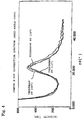
- the silica gel of the present invention has a mode diameter (Dmax) of less than 20 nm on a pore distribution curve calculated by a BJH method as disclosed in E.P. Barrett, L.G. Joyner, P.H. Haklenda, J. Amer. Chem Soc., vol. 73, 373 (1951) from an isothermal desorption curve measured by a nitrogen gas adsorption/desorption method, i.e. a figure obtained by plotting a differential nitrogen gas adsorption amount ( ⁇ V / ⁇ (logd): V is the nitrogen gas adsorption volume) relative to the pore diameter d (nm).
- the lower limit is not particularly limited, but it is preferably at least 2 nm. This means that the mode diameter (Dmax) of the silica gel of the present invention is smaller than that of a conventional silica gel.
- the silica gel of the present invention is characterized by that the volume of pores having diameters within ⁇ 20% of the above mode diameter (Dmax) is at least 50%, more preferably at least 60%, of the total pore volume. Typically the volume of pores having diameters within ⁇ 20% of the above mode diameter (Dmax) is at most 90%. This means that the silica gel of the present invention comprises pores having diameters in the vicinity of the mode diameter (Dmax).
- the silica gel of the present invention has a differential pore volume ⁇ V/ ⁇ (logd) particularly preferably of from 5.0 to 12.0 ml/g at the mode diameter (Dmax) as calculated by the above BJH method (here, in the above formula, d is the pore diameter (nm) and V is the nitrogen gas adsorption volume).
- the silica gel of the present invention wherein the differential pore volume ⁇ V/ ⁇ (logd) is within the above range has an extremely sharp peak of the mode diameter (Dmax).
- the silica gel of the present invention is characterized, in addition to the above characteristics in the pore structure, by being amorphous in view of its three-dimensional structure, namely, it is characterized in that no crystalline structure can be confirmed therein. This means that substantially no crystalline peak can be confirmed when the silica gel of the present invention is analyzed by X-ray diffraction.
- a silica gel will not be amorphous if it has an X-ray diffraction pattern with at least one peak indicating crystalline structure at a position greater than 6 Angstrom units d-spacing.
- the silica gel which is amorphous has an excellent hydrothermal resistance as compared with the silica gel which is crystalline.
- the value of "Q4/Q3" which indicates the molar ratio of Si having four -OSi bonded thereto to Si having three -OSi bonded thereto of the silica gel of the present invention is usually at least 1.3, preferably at least 1-5. It is considered that heat stability is high when the value of "Q4/Q3" is high in general. Typically the value of "Q4/Q3" will be no greater than 10.
- the last characteristic of the silica gel of the present invention is that the total content of metal impurities except for silicon constituting the skeleton of the silica gel is at most 500 ppm, preferably at most 100 ppm, more preferably at most 10 ppm, most preferably at most 1 ppm, and the silica gel has an extremely high purity. Such a small influence of the impurities is one of great factors to show excellent properties such as heat resistance and hydrothermal resistance of the silica gel of the present invention.
- a method for producing the silica gel of the present invention having physical properties as explained above is not particularly limited other than by not aging prior to hydrothermal treatment, and the silica gel may be produced by applying a method of subjecting to a hydrothermal treatment, a silica hydrogel obtained by hydrolyzing an alkali silicate or obtained by hydrolyzing a silicon alkoxide, preferably by hydrolyzing a silicon alkoxide.
- the silicon alkoxide to be used as a material for the silica gel of the present invention may, for example, be a tri- or tetraalkoxysilane having a C 1-4 lower alkyl group or its oligomer, such as trimethoxysilane, tetramethoxysilane, triethoxysilane, tetraethoxysilane, tetrapropoxysilane or tetrabutoxysilane, and preferred are tetramethoxysilane, tetraethoxysilane and their oligomers.
- the above silicon alkoxides may be easily purified by distillation and are suitable as a material for a silica gel having a high purity.
- the total content of metal impurities in the silicon alkoxides is preferably at most 100 ppm, more preferably at most 10 ppm.
- the content of metal impurities may be measured by the same method as the one used to determine impurities in the silica gel.
- the hydrolysis of the silicon alkoxide may be carried out by using usually from 2 to 10 mol, preferably from 3 to 8 mol of water based on 1 mol of the silicon alkoxide.
- a hydrogel of silica and an alcohol are formed by the hydrolysis of the silicon alkoxide. This hydrolysis may be carried out usually at a temperature of from room temperature to about 100°C, but may be carried out at a high temperature by maintaining the liquid phase under elevated pressure.
- the reaction time depends on the reaction solution composition (type of the silicon alkoxide and the molar ratio with water) and the reaction temperature, and is not necessarily defined since the time for relation can vary. Preferably, the reaction time is at most the time that a breaking stress of a hydrogel becomes at most 6 MPa.
- an acid, an alkali, a salt or the like may be added to the reaction, system as a catalyst to accelerate the hydrolysis.
- use of such an additive may cause aging of the formed hydrogel as described hereinafter, and is thereby unfavorable for production of the silica gel of the present invention.
- a silicon alkoxide undergoes hydrolysis so that the silicate is produced and subsequently a condensation reaction of the silicate takes place, the viscosity of the reaction solution increases, and the silicate undergoes gelation to form a hydrogel and is solidified finally.
- hydrogel of silica formed by the hydrolysis to immediately subject the hydrogel of silica formed by the hydrolysis to a hydrothermal treatment substantially without aging as mentioned above, means that the hydrogel of silica is subjected to a subsequent hydrothermal treatment while maintaining a weak stare immediately after the hydrogel of silica is formed.
- the temperature should not be raised too high or the time should not be taken so long more than necessary when the hydrogel is washed with water, dried or left to stand as an after-treatment after the hydrolysis.
- a silica gel having physical properties within ranges as specified in the present invention can be obtained by subjecting a hydrogel in a soft state having a breaking stress of usually at most 6 MPa, preferably at most 3 MPa, more preferably at most 2 MPa, to a hydrothermal treatment.
- water may be in either state of liquid or gas, and may be diluted by a solvent or another gas, but water in a liquid state is preferably used.
- Water in an amount of usually from 0.1 to 10 times, preferably from 0.5 to 5 times, particularly preferably from 1 to 3 times of the weight of the hydrogel of silica is added to obtain a slurry, and the treatment is carried out at a temperature of usually from 40 to 250°C, preferably from 50 to 150°C, for usually from 0.1 to 100 hours, preferably from 1 to 10 hours.
- a lower alcohol, methanol, ethanol or propanol may be contained.
- This hydrothermal treatment method can be applied to a case of a material having silica gel in a form of a membrane or layers formed on a matrix such as particles, a substrate or a tube, with a purpose of making a membrane reactor.
- a reactor for the hydrolysis reaction and subsequently changing the conditions, however, the optimum conditions are usually different between the hydrolysis reaction and the subsequent hydrothermal treatment, and accordingly it is usually difficult to obtain the silica gel of the present invention by such a means.
- the pore diameter and the pore volume of the obtained silica gel tend to be large. Further, the specific surface area of the silica gel tends reach to the maximum once and then gradually decrease along with the treatment time, Accordingly, it is necessary to select proper conditions depending upon the desired physical properties taking the above tendencies into consideration.
- the physical properties of the silica gel are likely to change in the hydrothermal treatment, and accordingly it is preferred to carry out the hydrothermal treatment at a temperature higher than the above hydrolysis reaction condition in general.
- the temperature and the time for the hydrothermal treatment are beyond the above ranges.
- the temperature of the hydrothermal treatment is too high, the pore diameter and the pore volume of the silica gel tend to be too large, and the pore distribution tends to be broad.
- the temperature of the hydrothermal treatments is too low, the formed silica gel tends to have a low degree of crosslinking and tends to be poor in heat stability, and no peak may appear in the pore distribution, or the above Q4/Q3 value tends to be extremely small in the solid state Si-NMR.
- the hydrothermal treatment when the hydrothermal treatment is carried out in ammonia water, the same effects can be obtained at a temperature lower than that in a case of carrying out the treatment in pure water. Further, when the hydrothermal treatment is carried out in ammonia water, the silica gel to be obtained finally tends to be hydrophobic in general as compared with a case of the treatment in pure water, and the hydrophobicity becomes particularly high when the hydrothermal treatment is carried out at a relatively high temperature of from 100 to 150°C.
- the ammonia concentration of the ammonia water is preferably from 0.001 to 10%, particularly preferably from 0.005 to 5%.
- the silica hydrogel subjected to the hydrothermal treatment is dried usually at from 40 to 200°C, preferably from 60 to 120°C.
- the drying method is not particularly limited, and it may be a batch or continuous system, and may be carried out under normal or reduced pressure.
- a carbon content derived from the silicon alkoxide as the material it may be removed by sintering at a temperature of usually from 400 to 600°C, as the case requires.
- the silica hydrogel may be heated to remove the carbon content derived from the silicon alkoxide as the material. Further, pulverization and classification may be carried out as the case requires to obtain the final desired silica gel of the present invention.
- the silica gel which has a crystalline structure tends to be poor in hydrothermal resistance and the gel easily includes crystalline structure when hydrolysis of silicon alkoxide proceeds in the presence of a template such as a surfactant, used for the formation of pores in the gel. Accordingly, in a preferred embodiment of the present invention, hydrolysis is conducted in the absence of a template, such as a surfactant in an amount sufficient to function as a template.
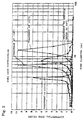
- a silicon alkoxide and water in an amount of 6 molar times the silicon alkoxide were reacted in a 5 liter separable flask, and after the temperature of the reaction solution reached the boiling point of the alcohol to be formed by the reaction, the reaction solution was drawn from the flask, and the drawn reaction solution was put in a 50 cc glass screw tube in a certain amount (at a level of 20 mm as the liquid depth) and sealed, and the tube was held in a water bath having its temperature controlled to be substantially constant, and the disruptive strength was measured by means of a digital force gage (manufactured by A & D, model: AD-4935) with the passage of aging time.
- a digital force gage manufactured by A & D, model: AD-4935
- a probe (stainless round bar having a diameter of 5 mm) was attached to the measuring apparatus, and when it was slowly pushed into the hydrogel, it broke the hydrogel held in the container by compression. The maximum stress applied until the hydrogel was broken by compression was taken as the breaking stress.
- Fig. 1 was obtained by plotting the common logarithm of the aging time of the hydrogel of silica on the horizontal axis and the breaking stress on the vertical axis. It is found from Fig. 1 that the breaking stress becomes high along with the passage of aging time and that the aging rate depends on the temperature.
- Measurement was carried out by means of RAD-RB apparatus manufactured by Rigaku Electric Corporation employing CuK ⁇ as a source.
- the divergent slit was 1/2 deg
- the scattering slit was 1/2 deg
- the acceptance slit was 0.15 mm.
- Hydrofluoric acid was added to 2.5 g of a sample, followed by heating and evaporation to dryness, and water was added thereto to obtain 50 ml of an aqueous solution.
- aqueous solution ICP emission spectral analysis was carried out.
- sodium and potassium were analyzed by flame analysis.
- Measurement was carried out by means of MSL3OO solid state NMR apparatus manufactured by Bruker at a resonance frequency of 59.2 MHz (7.05 T) using a 7 mm CP/MAS (Cross Polarization/Magic Angle Spinning) probe.
- 1,000 g of pure water was introduced into a 5 liter separable flask (jacketed) made of glass and equipped with a water-cooled condenser of air open system at the upper part thereof.
- 1,400 g of tetramethoxysilane was introduced thereto over a period of 3 minutes with stirring at 80 rpm.
- the molar ratio of water/tetramethoxysilane was about 6.
- Hot water of 50°C was passed through the jacket of the separable flask. Stirring was subsequently continued, and the stirring was terminated when the temperature of the content reached the boiling point.
- the formed sol was gelated while subsequently passing hot water of 50°C through the jacket for about 0.5 hour.
- the gel was immediately taken out and pulverized by means of a nylon net having an opening of 600 ⁇ m to obtain a wet gel (silica hydrogel) in a powder state.
- 450 g of this hydrogel and 450 g of pure water were introduced in a 1 liter glass autoclave, and a hydrothermal treatment was carried out under conditions as identified in Table 1.
- filtration was carried out by means of a No. 5A filter paper, and the filter cake thus obtained was dried under reduced pressure at 100°C until a constant weight was reached, without washing the filter cake with water.
- a silica hydrogel was produced in the same manner as in Example 1. 450 g of the silica gel and 450 g of 1 wt% ammonia water were added to a 1 liter autoclave, and a hydrothermal treatment was carried out at 60°C for 3 hours without stirring. Physical properties of the silica gel after drying are shown in Table 1, and the pore size distribution is shown in Fig. 2.
- Example 1 The silica hydrogel produced in Example 1 was put in a sealed container and left to stand at a cold and dark place (from 10 to 15°C) for 2 weeks for aging, and then a hydrothermal treatment was carried out at 60°C for 3 hours in the same manner as in Example 1. Physical properties of the silica gel after drying are shown in Table 1.
- concentrations of metal impurities in G-6 were measured, whereupon sodium was 170 ppm, magnesium was 31 ppm, aluminum was 15 ppm, potassium was 23 ppm, calcium was 160 ppm, titanium was 260 ppm, and zirconium was 44 ppm.
- Example 1 Part of the silica hydrogel used in Example 1 was dried under vacuum at 60°C for 48 hours and then put in a sealed container, and subjected to a hydrothermal treatment at 150°C for 3 hours. Physical properties of the silica gel after drying are shown in Table 1.
- silica gels underwent crystallization under hydrothermal conditions of high temperature and high pressure and the specific surface area significantly decreased, because these silica gels contain e.g. alkali metals at a high concentration and are likely to undergo change in the structure or particle shape.
- a high mechanical strength is required for a silica gel obtained industrially.
- particles may break due to contact among particles or with an apparatus to form fine powder, thus causing a problem in operation of equipment in which the silica gel is involved.
- it is important that it is resistant to the pressure applied during molding, and one having no adequate strength will be formed into a molded product wherein the pore characteristics of the original silica gel can not be put to a good use.
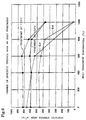
- a conventional silica gel has no adequate strength. As evident from Table 3, the silica gel of the present invention has an adequate crushing strength.
- the novel silica gel of the present invention is excellent in heat resistance and hydrothermal resistance, is highly stable and has a high purity as compared with a conventional silica gel. Further, a silica gel having desired physical properties can be produced by a relatively simple method using a silicon alkoxide as a material.
- the silica gel of the present invention can be used for conventional applications of silica gel, and particularly when it is used as e.g. a catalyst support or a membrane reactor, deterioration in performance tends to be small, and it can be used more stably for a long period of time.
Landscapes
- Chemical & Material Sciences (AREA)
- Organic Chemistry (AREA)
- Dispersion Chemistry (AREA)
- Inorganic Chemistry (AREA)
- Silicon Compounds (AREA)
Applications Claiming Priority (4)
| Application Number | Priority Date | Filing Date | Title |
|---|---|---|---|
| JP2000197558 | 2000-06-30 | ||
| JP2000197558 | 2000-06-30 | ||
| JP2001066167 | 2001-03-09 | ||
| JP2001066167 | 2001-03-09 |
Publications (2)
| Publication Number | Publication Date |
|---|---|
| EP1167295A1 true EP1167295A1 (de) | 2002-01-02 |
| EP1167295B1 EP1167295B1 (de) | 2013-06-05 |
Family
ID=26595042
Family Applications (1)
| Application Number | Title | Priority Date | Filing Date |
|---|---|---|---|
| EP01115586.8A Expired - Lifetime EP1167295B1 (de) | 2000-06-30 | 2001-06-28 | Kieselsäuregel |
Country Status (2)
| Country | Link |
|---|---|
| US (2) | US6838068B2 (de) |
| EP (1) | EP1167295B1 (de) |
Cited By (4)
| Publication number | Priority date | Publication date | Assignee | Title |
|---|---|---|---|---|
| EP1314695A1 (de) * | 2001-11-27 | 2003-05-28 | Mitsubishi Chemical Corporation | Kiesensäure sowie Verfahren zu ihrer Herstellung |
| EP1369907A3 (de) * | 2002-05-30 | 2004-10-27 | Air Products And Chemicals, Inc. | Materialien mit niedriger Dielektrizitätskonstante und Verfahren zu deren Herstellung |
| WO2006013024A1 (en) * | 2004-08-03 | 2006-02-09 | Eastman Kodak Company | Inkjet recording element |
| CN100376480C (zh) * | 2003-02-21 | 2008-03-26 | 青岛海洋化工有限公司 | 大孔硅胶的制造方法 |
Families Citing this family (15)
| Publication number | Priority date | Publication date | Assignee | Title |
|---|---|---|---|---|
| US7101523B2 (en) * | 2001-09-25 | 2006-09-05 | Mitsubishi Chemical Corporation | Silica |
| JP2005053728A (ja) * | 2003-08-01 | 2005-03-03 | Dsl Japan Co Ltd | 高吸油性および高い構造性を有する非晶質シリカ粒子 |
| US20070003762A1 (en) * | 2005-06-20 | 2007-01-04 | Withiam Michael W | Air filtration media comprising metal-doped silicon-based gel materials |
| US7377965B2 (en) * | 2005-06-20 | 2008-05-27 | J.M. Huber Corporation | Air filtration media comprising metal-doped silicon-based gel materials |
| US20070009416A1 (en) * | 2005-06-20 | 2007-01-11 | Withiam Michael C | Method of producing metal-doped silicon-based gel materials |
| FI20070174A0 (fi) * | 2007-02-28 | 2007-02-28 | Delsitech Oy | Menetelmä silikakoostumusten valmistamiseksi, silikakoostumukset ja niiden käytöt |
| US8258076B2 (en) * | 2007-08-03 | 2012-09-04 | Kabushiki Kaisha Toshiba | Phosphorus compound adsorbent, phosphorus compound adsorption system, and method of using phosphorus compound adsorbent |
| US8197782B2 (en) * | 2010-02-08 | 2012-06-12 | Momentive Performance Materials | Method for making high purity metal oxide particles and materials made thereof |
| US9249028B2 (en) | 2010-02-08 | 2016-02-02 | Momentive Performance Materials Inc. | Method for making high purity metal oxide particles and materials made thereof |
| JP6094932B2 (ja) * | 2015-06-02 | 2017-03-15 | 富士シリシア化学株式会社 | 負極活物質用組成物、負極、非水電解質二次電池、及び負極活物質用組成物の製造方法 |
| IL292557A (en) | 2016-02-19 | 2022-06-01 | Hazel Tech Inc | Preparations for the controlled release of active ingredients and methods for their preparation |
| US11111412B2 (en) | 2016-07-15 | 2021-09-07 | Fujimi Incorporated | Polishing composition, method for producing polishing composition, and polishing method |
| PL423320A1 (pl) * | 2017-10-31 | 2019-05-06 | Politechnika Slaska Im Wincent | Sposób otrzymywania porowatych monolitów zol-żelowych o zwiększonych wymiarach geometrycznych przy zachowaniu hierarchicznej struktury porów |
| WO2021173148A1 (en) * | 2020-02-28 | 2021-09-02 | Ecovyst Catalyst Technologies Llc | Chromium-on-silica catalysts and methods of making the same |
| US11732065B2 (en) * | 2020-02-28 | 2023-08-22 | Pq Corporation | Chromium-on-silica catalysts and methods of making the same |
Citations (4)
| Publication number | Priority date | Publication date | Assignee | Title |
|---|---|---|---|---|
| FR2093176A5 (de) * | 1970-06-04 | 1972-01-28 | Pechiney Saint Gobain | |
| US4619908A (en) * | 1984-12-24 | 1986-10-28 | Stauffer Chemical Company | Non-aged inorganic oxide-containing aerogels and their preparation |
| JPS62113713A (ja) | 1985-11-14 | 1987-05-25 | Osaka Soda Co Ltd | シリカゲルの製造法 |
| JPH0930809A (ja) * | 1995-07-21 | 1997-02-04 | Nippon Silica Ind Co Ltd | シリカゲルの製造方法 |
Family Cites Families (7)
| Publication number | Priority date | Publication date | Assignee | Title |
|---|---|---|---|---|
| US5307821A (en) * | 1990-04-27 | 1994-05-03 | Asahi Glass Company Ltd. | Tobacco raw material and method for its production |
| EP0703192A4 (de) * | 1994-04-11 | 2005-04-20 | Ube Nitto Kasei Co | Feine kieselsäurepartikel beschichtet mit vernetztem harz und verfahren zu ihrer herstellung |
| US5834551A (en) * | 1994-06-10 | 1998-11-10 | Dainippon Ink And Chemicals, Inc. | Composite of thermosetting resin with metallic oxide and process for the preparation thereof |
| US6129899A (en) * | 1995-04-28 | 2000-10-10 | Mitsubishi Chemical Corporation | Processes for producing synthetic quartz powder and producing shaped quartz glass |
| JPH09143461A (ja) | 1995-11-24 | 1997-06-03 | Toyota Central Res & Dev Lab Inc | 蓄熱材 |
| JPH11157827A (ja) | 1997-11-21 | 1999-06-15 | Shionogi & Co Ltd | 新規二酸化ケイ素 |
| JP4526611B2 (ja) | 1998-11-12 | 2010-08-18 | 旭化成ケミカルズ株式会社 | 均一細孔分布を有するシリカ系非晶質材料及び担持触媒の製造方法 |
-
2001
- 2001-06-27 US US09/891,412 patent/US6838068B2/en not_active Expired - Lifetime
- 2001-06-28 EP EP01115586.8A patent/EP1167295B1/de not_active Expired - Lifetime
-
2004
- 2004-08-23 US US10/922,908 patent/US7074376B2/en not_active Expired - Lifetime
Patent Citations (4)
| Publication number | Priority date | Publication date | Assignee | Title |
|---|---|---|---|---|
| FR2093176A5 (de) * | 1970-06-04 | 1972-01-28 | Pechiney Saint Gobain | |
| US4619908A (en) * | 1984-12-24 | 1986-10-28 | Stauffer Chemical Company | Non-aged inorganic oxide-containing aerogels and their preparation |
| JPS62113713A (ja) | 1985-11-14 | 1987-05-25 | Osaka Soda Co Ltd | シリカゲルの製造法 |
| JPH0930809A (ja) * | 1995-07-21 | 1997-02-04 | Nippon Silica Ind Co Ltd | シリカゲルの製造方法 |
Non-Patent Citations (6)
| Title |
|---|
| DATABASE CA [online] CHEMICAL ABSTRACTS SERVICE, COLUMBUS, OHIO, US; KONDO, SEIICHI ET AL: "The effect of pH of hydrothermal treatment of hydrogel for the structure of surface and pore of silica gel. A new type of surface silanol groups", XP002179522, retrieved from STN Database accession no. 97:16139 CA * |
| DATABASE WPI Section Ch Week 199715, Derwent World Patents Index; Class E36, AN 1997-161270, XP002179523 * |
| DAVIS P J ET AL: "PORE STRUCTURE EVOLUTION IN SILICA GEL DURING AGING/DRYING. II. EFFECT OF PORE FLUIDS", JOURNAL OF NON-CRYSTALLINE SOLIDS, NORTH-HOLLAND PHYSICS PUBLISHING. AMSTERDAM, NL, vol. 142, 1992, pages 197 - 207, XP000268779, ISSN: 0022-3093 * |
| LOURS T ET AL: "SAXS and BET studies of aging and densification of silica aerogels", SIXTH INTERNATIONAL CONFERENCE ON THE PHYSICS OF NON-CRYSTALLINE SOLIDS, KYOTO, JAPAN, 6-10 JULY 1987, vol. 95-96, pt.2, Journal of Non-Crystalline Solids, Dec. 1987, Netherlands, pages 1151 - 1157, XP002179521, ISSN: 0022-3093 * |
| PATENT ABSTRACTS OF JAPAN vol. 011, no. 326 (C - 454) 23 October 1987 (1987-10-23) * |
| SHIKIZAI KYOKAISHI (1982), 55(3), 131-5, 1982 * |
Cited By (7)
| Publication number | Priority date | Publication date | Assignee | Title |
|---|---|---|---|---|
| EP1314695A1 (de) * | 2001-11-27 | 2003-05-28 | Mitsubishi Chemical Corporation | Kiesensäure sowie Verfahren zu ihrer Herstellung |
| EP1369907A3 (de) * | 2002-05-30 | 2004-10-27 | Air Products And Chemicals, Inc. | Materialien mit niedriger Dielektrizitätskonstante und Verfahren zu deren Herstellung |
| US7186613B2 (en) | 2002-05-30 | 2007-03-06 | Air Products And Chemicals, Inc. | Low dielectric materials and methods for making same |
| US7307343B2 (en) | 2002-05-30 | 2007-12-11 | Air Products And Chemicals, Inc. | Low dielectric materials and methods for making same |
| CN100376480C (zh) * | 2003-02-21 | 2008-03-26 | 青岛海洋化工有限公司 | 大孔硅胶的制造方法 |
| WO2006013024A1 (en) * | 2004-08-03 | 2006-02-09 | Eastman Kodak Company | Inkjet recording element |
| FR2874032A1 (fr) * | 2004-08-03 | 2006-02-10 | Eastman Kodak Co | Materiau destine a la formation d'images par impression par jet d'encre |
Also Published As
| Publication number | Publication date |
|---|---|
| US20020018743A1 (en) | 2002-02-14 |
| EP1167295B1 (de) | 2013-06-05 |
| US6838068B2 (en) | 2005-01-04 |
| US7074376B2 (en) | 2006-07-11 |
| US20050019243A1 (en) | 2005-01-27 |
Similar Documents
| Publication | Publication Date | Title |
|---|---|---|
| US6838068B2 (en) | Silica gel | |
| JP5218465B2 (ja) | シリカ及びその製造方法 | |
| US5731261A (en) | Process for the preparation of mixed porous silica-alumina oxides in a spherical form | |
| US6129949A (en) | Process for preparing organically modified aerogels using alcohols, wherein the resultant salts are precipitated | |
| JPH05213614A (ja) | 高気孔率のシリカキセロゲルおよびその製造方法 | |
| JP3960759B2 (ja) | シリカゲルの製造方法 | |
| Lazareva et al. | Synthesis of high-purity silica nanoparticles by sol-gel method | |
| JP6011804B2 (ja) | シリカゾルの製造方法 | |
| KR20030017617A (ko) | 크기가 큰 무수 겔을 제조하기 위한 졸-겔 방법 및이로부터 유도된 유리 제품 | |
| JP4039833B2 (ja) | シリカゲル | |
| JP2003226516A (ja) | シリカ及びその製造方法 | |
| JP4314077B2 (ja) | シリカ及びその製造方法 | |
| JP3758391B2 (ja) | 高純度シリカ水性ゾル及びその製造方法 | |
| JP4160348B2 (ja) | シリカ、及びシリカの製造方法 | |
| JP4160349B2 (ja) | シリカヒドロゲル及びシリカ、並びにシリカヒドロゲルの製造方法 | |
| JP4314076B2 (ja) | シリカ及びその製造方法 | |
| JP2003221223A (ja) | シリカ | |
| JP2003194792A (ja) | 液体クロマトグラフィー用充填剤 | |
| JP2008222552A (ja) | シリカ | |
| JP2003160326A (ja) | シリカゲル | |
| JP4160347B2 (ja) | シリカ、及びシリカの製造方法 | |
| JP2621153B2 (ja) | 球状多孔体の製造法 | |
| JP2003226515A (ja) | シリカ及びその製造方法 | |
| JP4163919B2 (ja) | シリカ、及びシリカの製造方法 | |
| RU2447020C1 (ru) | Способ получения мелкодисперсных кремнеземов |
Legal Events
| Date | Code | Title | Description |
|---|---|---|---|
| PUAI | Public reference made under article 153(3) epc to a published international application that has entered the european phase |
Free format text: ORIGINAL CODE: 0009012 |
|
| AK | Designated contracting states |
Kind code of ref document: A1 Designated state(s): AT BE CH CY DE DK ES FI FR GB GR IE IT LI LU MC NL PT SE TR Kind code of ref document: A1 Designated state(s): DE FR GB |
|
| AX | Request for extension of the european patent |
Free format text: AL;LT;LV;MK;RO;SI |
|
| 17P | Request for examination filed |
Effective date: 20020621 |
|
| AKX | Designation fees paid |
Free format text: DE FR GB |
|
| RAP1 | Party data changed (applicant data changed or rights of an application transferred) |
Owner name: MITSUBISHI CHEMICAL CORPORATION |
|
| RAP1 | Party data changed (applicant data changed or rights of an application transferred) |
Owner name: MITSUBISHI CHEMICAL CORPORATION |
|
| 17Q | First examination report despatched |
Effective date: 20091030 |
|
| RAP1 | Party data changed (applicant data changed or rights of an application transferred) |
Owner name: MITSUBISHI CHEMICAL CORPORATION |
|
| GRAP | Despatch of communication of intention to grant a patent |
Free format text: ORIGINAL CODE: EPIDOSNIGR1 |
|
| RIN1 | Information on inventor provided before grant (corrected) |
Inventor name: KATO, HANAKO, Inventor name: YAMAGUCHI, TAKASHI, Inventor name: YOSHIMORI, TAKAYUKI, Inventor name: KATSURO, YOSHIO, |
|
| GRAS | Grant fee paid |
Free format text: ORIGINAL CODE: EPIDOSNIGR3 |
|
| GRAA | (expected) grant |
Free format text: ORIGINAL CODE: 0009210 |
|
| AK | Designated contracting states |
Kind code of ref document: B1 Designated state(s): DE FR GB |
|
| REG | Reference to a national code |
Ref country code: GB Ref legal event code: FG4D |
|
| REG | Reference to a national code |
Ref country code: DE Ref legal event code: R081 Ref document number: 60148047 Country of ref document: DE Owner name: MITSUBISHI CHEMICAL CORPORATION, JP Free format text: FORMER OWNER: MITSUBISHI CHEMICAL CORP., TOKIO/TOKYO, JP |
|
| REG | Reference to a national code |
Ref country code: DE Ref legal event code: R096 Ref document number: 60148047 Country of ref document: DE Effective date: 20130801 |
|
| PLBE | No opposition filed within time limit |
Free format text: ORIGINAL CODE: 0009261 |
|
| STAA | Information on the status of an ep patent application or granted ep patent |
Free format text: STATUS: NO OPPOSITION FILED WITHIN TIME LIMIT |
|
| 26N | No opposition filed |
Effective date: 20140306 |
|
| REG | Reference to a national code |
Ref country code: FR Ref legal event code: ST Effective date: 20140416 |
|
| REG | Reference to a national code |
Ref country code: DE Ref legal event code: R097 Ref document number: 60148047 Country of ref document: DE Effective date: 20140306 |
|
| PG25 | Lapsed in a contracting state [announced via postgrant information from national office to epo] |
Ref country code: FR Free format text: LAPSE BECAUSE OF NON-PAYMENT OF DUE FEES Effective date: 20130805 |
|
| REG | Reference to a national code |
Ref country code: DE Ref legal event code: R082 Ref document number: 60148047 Country of ref document: DE Representative=s name: TER MEER STEINMEISTER & PARTNER PATENTANWAELTE, DE Ref country code: DE Ref legal event code: R081 Ref document number: 60148047 Country of ref document: DE Owner name: MITSUBISHI CHEMICAL CORPORATION, JP Free format text: FORMER OWNER: MITSUBISHI CHEMICAL CORPORATION, TOKIO, JP |
|
| REG | Reference to a national code |
Ref country code: GB Ref legal event code: 732E Free format text: REGISTERED BETWEEN 20180726 AND 20180801 |
|
| PGFP | Annual fee paid to national office [announced via postgrant information from national office to epo] |
Ref country code: DE Payment date: 20190618 Year of fee payment: 19 |
|
| PGFP | Annual fee paid to national office [announced via postgrant information from national office to epo] |
Ref country code: GB Payment date: 20190626 Year of fee payment: 19 |
|
| REG | Reference to a national code |
Ref country code: DE Ref legal event code: R119 Ref document number: 60148047 Country of ref document: DE |
|
| GBPC | Gb: european patent ceased through non-payment of renewal fee |
Effective date: 20200628 |
|
| PG25 | Lapsed in a contracting state [announced via postgrant information from national office to epo] |
Ref country code: GB Free format text: LAPSE BECAUSE OF NON-PAYMENT OF DUE FEES Effective date: 20200628 |
|
| PG25 | Lapsed in a contracting state [announced via postgrant information from national office to epo] |
Ref country code: DE Free format text: LAPSE BECAUSE OF NON-PAYMENT OF DUE FEES Effective date: 20210101 |