EP1167529A2 - Système de vecteurs pour l'introduction d'ADN aux cellules eucaryotes - Google Patents
Système de vecteurs pour l'introduction d'ADN aux cellules eucaryotes Download PDFInfo
- Publication number
- EP1167529A2 EP1167529A2 EP01109460A EP01109460A EP1167529A2 EP 1167529 A2 EP1167529 A2 EP 1167529A2 EP 01109460 A EP01109460 A EP 01109460A EP 01109460 A EP01109460 A EP 01109460A EP 1167529 A2 EP1167529 A2 EP 1167529A2
- Authority
- EP
- European Patent Office
- Prior art keywords
- dna
- virus
- gene
- bacteria
- vector system
- Prior art date
- Legal status (The legal status is an assumption and is not a legal conclusion. Google has not performed a legal analysis and makes no representation as to the accuracy of the status listed.)
- Withdrawn
Links
- 239000013598 vector Substances 0.000 title claims abstract description 72
- 108020004414 DNA Proteins 0.000 claims abstract description 284
- 108090000623 proteins and genes Proteins 0.000 claims abstract description 189
- 241000700605 Viruses Species 0.000 claims abstract description 183
- 241000894006 Bacteria Species 0.000 claims abstract description 168
- 210000003527 eukaryotic cell Anatomy 0.000 claims abstract description 61
- 108020005202 Viral DNA Proteins 0.000 claims abstract description 43
- 230000001580 bacterial effect Effects 0.000 claims abstract description 33
- 229960005486 vaccine Drugs 0.000 claims abstract description 25
- 239000003814 drug Substances 0.000 claims abstract description 11
- 229940079593 drug Drugs 0.000 claims abstract description 6
- 208000024191 minimally invasive lung adenocarcinoma Diseases 0.000 claims description 173
- 239000013612 plasmid Substances 0.000 claims description 167
- 238000000034 method Methods 0.000 claims description 95
- 241000588724 Escherichia coli Species 0.000 claims description 71
- 239000012634 fragment Substances 0.000 claims description 50
- 210000004436 artificial bacterial chromosome Anatomy 0.000 claims description 44
- 208000015181 infectious disease Diseases 0.000 claims description 42
- 230000003612 virological effect Effects 0.000 claims description 34
- 102000004169 proteins and genes Human genes 0.000 claims description 33
- 230000002163 immunogen Effects 0.000 claims description 30
- 238000003780 insertion Methods 0.000 claims description 28
- 230000037431 insertion Effects 0.000 claims description 28
- 239000003550 marker Substances 0.000 claims description 28
- 239000000203 mixture Substances 0.000 claims description 25
- 239000000427 antigen Substances 0.000 claims description 23
- 108091007433 antigens Proteins 0.000 claims description 23
- 102000036639 antigens Human genes 0.000 claims description 22
- 230000001225 therapeutic effect Effects 0.000 claims description 21
- 108090000765 processed proteins & peptides Proteins 0.000 claims description 20
- 230000002458 infectious effect Effects 0.000 claims description 19
- 238000004519 manufacturing process Methods 0.000 claims description 18
- 108091028043 Nucleic acid sequence Proteins 0.000 claims description 17
- 241001529453 unidentified herpesvirus Species 0.000 claims description 16
- 108700005077 Viral Genes Proteins 0.000 claims description 15
- 101150024289 hly gene Proteins 0.000 claims description 15
- 238000012360 testing method Methods 0.000 claims description 15
- 241000701022 Cytomegalovirus Species 0.000 claims description 12
- 239000007788 liquid Substances 0.000 claims description 10
- 230000008569 process Effects 0.000 claims description 10
- 230000004927 fusion Effects 0.000 claims description 9
- 230000009466 transformation Effects 0.000 claims description 8
- 108020005544 Antisense RNA Proteins 0.000 claims description 7
- 108090000994 Catalytic RNA Proteins 0.000 claims description 7
- 102000053642 Catalytic RNA Human genes 0.000 claims description 7
- 102000004190 Enzymes Human genes 0.000 claims description 7
- 108090000790 Enzymes Proteins 0.000 claims description 7
- 101100316841 Escherichia phage lambda bet gene Proteins 0.000 claims description 7
- 101100226347 Escherichia phage lambda exo gene Proteins 0.000 claims description 7
- 239000003184 complementary RNA Substances 0.000 claims description 7
- 239000003102 growth factor Substances 0.000 claims description 7
- 229940088597 hormone Drugs 0.000 claims description 7
- 239000005556 hormone Substances 0.000 claims description 7
- 108091092562 ribozyme Proteins 0.000 claims description 7
- 238000004458 analytical method Methods 0.000 claims description 6
- 238000004113 cell culture Methods 0.000 claims description 6
- 241001493065 dsRNA viruses Species 0.000 claims description 6
- 230000002519 immonomodulatory effect Effects 0.000 claims description 6
- 241000607768 Shigella Species 0.000 claims description 5
- 241000607734 Yersinia <bacteria> Species 0.000 claims description 4
- 241000607477 Yersinia pseudotuberculosis Species 0.000 claims description 4
- 229940088598 enzyme Drugs 0.000 claims description 4
- 108091032973 (ribonucleotides)n+m Proteins 0.000 claims description 3
- 241000724252 Cucumber mosaic virus Species 0.000 claims description 3
- 241000186779 Listeria monocytogenes Species 0.000 claims description 3
- 241000607447 Yersinia enterocolitica Species 0.000 claims description 3
- 241000588722 Escherichia Species 0.000 claims description 2
- 101710198693 Invasin Proteins 0.000 claims description 2
- 101710164436 Listeriolysin O Proteins 0.000 claims description 2
- 241000607142 Salmonella Species 0.000 claims description 2
- 210000004102 animal cell Anatomy 0.000 claims description 2
- 230000000692 anti-sense effect Effects 0.000 claims description 2
- 231100000599 cytotoxic agent Toxicity 0.000 claims description 2
- 239000002619 cytotoxin Substances 0.000 claims description 2
- 239000000546 pharmaceutical excipient Substances 0.000 claims description 2
- 229940124531 pharmaceutical excipient Drugs 0.000 claims description 2
- 229940098232 yersinia enterocolitica Drugs 0.000 claims description 2
- 230000003197 catalytic effect Effects 0.000 claims 1
- 210000005260 human cell Anatomy 0.000 claims 1
- 238000010348 incorporation Methods 0.000 claims 1
- 101150079601 recA gene Proteins 0.000 claims 1
- 239000007787 solid Substances 0.000 claims 1
- 210000004507 artificial chromosome Anatomy 0.000 abstract description 5
- 241000699670 Mus sp. Species 0.000 description 61
- 210000004027 cell Anatomy 0.000 description 57
- 238000003752 polymerase chain reaction Methods 0.000 description 46
- 238000002703 mutagenesis Methods 0.000 description 37
- 231100000350 mutagenesis Toxicity 0.000 description 37
- 239000000047 product Substances 0.000 description 29
- 241000700721 Hepatitis B virus Species 0.000 description 28
- 230000006798 recombination Effects 0.000 description 20
- 238000005215 recombination Methods 0.000 description 20
- 210000002950 fibroblast Anatomy 0.000 description 19
- 230000000875 corresponding effect Effects 0.000 description 18
- PEDCQBHIVMGVHV-UHFFFAOYSA-N Glycerine Chemical compound OCC(O)CO PEDCQBHIVMGVHV-UHFFFAOYSA-N 0.000 description 15
- 229960005091 chloramphenicol Drugs 0.000 description 15
- WIIZWVCIJKGZOK-RKDXNWHRSA-N chloramphenicol Chemical compound ClC(Cl)C(=O)N[C@H](CO)[C@H](O)C1=CC=C([N+]([O-])=O)C=C1 WIIZWVCIJKGZOK-RKDXNWHRSA-N 0.000 description 15
- 238000010367 cloning Methods 0.000 description 15
- 229930027917 kanamycin Natural products 0.000 description 15
- 229960000318 kanamycin Drugs 0.000 description 15
- SBUJHOSQTJFQJX-NOAMYHISSA-N kanamycin Chemical compound O[C@@H]1[C@@H](O)[C@H](O)[C@@H](CN)O[C@@H]1O[C@H]1[C@H](O)[C@@H](O[C@@H]2[C@@H]([C@@H](N)[C@H](O)[C@@H](CO)O2)O)[C@H](N)C[C@@H]1N SBUJHOSQTJFQJX-NOAMYHISSA-N 0.000 description 15
- 229930182823 kanamycin A Natural products 0.000 description 15
- 108091008146 restriction endonucleases Proteins 0.000 description 15
- 210000002889 endothelial cell Anatomy 0.000 description 14
- 230000009545 invasion Effects 0.000 description 13
- 239000002609 medium Substances 0.000 description 13
- 210000002966 serum Anatomy 0.000 description 13
- 230000003053 immunization Effects 0.000 description 12
- 238000002649 immunization Methods 0.000 description 12
- 238000002965 ELISA Methods 0.000 description 11
- 241000699666 Mus <mouse, genus> Species 0.000 description 11
- 241001465754 Metazoa Species 0.000 description 10
- 230000006801 homologous recombination Effects 0.000 description 10
- 238000002744 homologous recombination Methods 0.000 description 10
- 230000028993 immune response Effects 0.000 description 10
- 230000010076 replication Effects 0.000 description 10
- 108010043121 Green Fluorescent Proteins Proteins 0.000 description 9
- 102000018120 Recombinases Human genes 0.000 description 9
- 108010091086 Recombinases Proteins 0.000 description 9
- 230000015572 biosynthetic process Effects 0.000 description 9
- 230000035772 mutation Effects 0.000 description 9
- 238000002360 preparation method Methods 0.000 description 9
- 238000012546 transfer Methods 0.000 description 9
- 241000450599 DNA viruses Species 0.000 description 8
- LFQSCWFLJHTTHZ-UHFFFAOYSA-N Ethanol Chemical compound CCO LFQSCWFLJHTTHZ-UHFFFAOYSA-N 0.000 description 8
- 102000004144 Green Fluorescent Proteins Human genes 0.000 description 8
- 241000712899 Lymphocytic choriomeningitis mammarenavirus Species 0.000 description 8
- 238000004520 electroporation Methods 0.000 description 8
- 239000005090 green fluorescent protein Substances 0.000 description 8
- 239000000243 solution Substances 0.000 description 8
- 238000002255 vaccination Methods 0.000 description 8
- 241000282414 Homo sapiens Species 0.000 description 7
- 150000001413 amino acids Chemical group 0.000 description 7
- 235000011187 glycerol Nutrition 0.000 description 7
- 239000013642 negative control Substances 0.000 description 7
- 241000206602 Eukaryota Species 0.000 description 6
- 108091034117 Oligonucleotide Proteins 0.000 description 6
- 108010067390 Viral Proteins Proteins 0.000 description 6
- 230000029087 digestion Effects 0.000 description 6
- 230000000694 effects Effects 0.000 description 6
- 238000007912 intraperitoneal administration Methods 0.000 description 6
- 210000003079 salivary gland Anatomy 0.000 description 6
- 238000012163 sequencing technique Methods 0.000 description 6
- 229960000268 spectinomycin Drugs 0.000 description 6
- UNFWWIHTNXNPBV-WXKVUWSESA-N spectinomycin Chemical compound O([C@@H]1[C@@H](NC)[C@@H](O)[C@H]([C@@H]([C@H]1O1)O)NC)[C@]2(O)[C@H]1O[C@H](C)CC2=O UNFWWIHTNXNPBV-WXKVUWSESA-N 0.000 description 6
- 238000001890 transfection Methods 0.000 description 6
- 108090000695 Cytokines Proteins 0.000 description 5
- 102000004127 Cytokines Human genes 0.000 description 5
- 206010028980 Neoplasm Diseases 0.000 description 5
- 238000012217 deletion Methods 0.000 description 5
- 230000037430 deletion Effects 0.000 description 5
- 230000001965 increasing effect Effects 0.000 description 5
- 238000002347 injection Methods 0.000 description 5
- 239000007924 injection Substances 0.000 description 5
- 238000007918 intramuscular administration Methods 0.000 description 5
- 210000004072 lung Anatomy 0.000 description 5
- 239000002773 nucleotide Substances 0.000 description 5
- 125000003729 nucleotide group Chemical group 0.000 description 5
- 102000004196 processed proteins & peptides Human genes 0.000 description 5
- 230000009747 swallowing Effects 0.000 description 5
- 230000029812 viral genome replication Effects 0.000 description 5
- XLYOFNOQVPJJNP-UHFFFAOYSA-N water Chemical compound O XLYOFNOQVPJJNP-UHFFFAOYSA-N 0.000 description 5
- GMKMEZVLHJARHF-UHFFFAOYSA-N (2R,6R)-form-2.6-Diaminoheptanedioic acid Natural products OC(=O)C(N)CCCC(N)C(O)=O GMKMEZVLHJARHF-UHFFFAOYSA-N 0.000 description 4
- HEDRZPFGACZZDS-UHFFFAOYSA-N Chloroform Chemical compound ClC(Cl)Cl HEDRZPFGACZZDS-UHFFFAOYSA-N 0.000 description 4
- 108020004705 Codon Proteins 0.000 description 4
- 229960000723 ampicillin Drugs 0.000 description 4
- AVKUERGKIZMTKX-NJBDSQKTSA-N ampicillin Chemical compound C1([C@@H](N)C(=O)N[C@H]2[C@H]3SC([C@@H](N3C2=O)C(O)=O)(C)C)=CC=CC=C1 AVKUERGKIZMTKX-NJBDSQKTSA-N 0.000 description 4
- 238000013459 approach Methods 0.000 description 4
- 230000008901 benefit Effects 0.000 description 4
- 239000006143 cell culture medium Substances 0.000 description 4
- 238000012512 characterization method Methods 0.000 description 4
- 210000000349 chromosome Anatomy 0.000 description 4
- 230000009089 cytolysis Effects 0.000 description 4
- 238000001514 detection method Methods 0.000 description 4
- 238000011534 incubation Methods 0.000 description 4
- 238000002955 isolation Methods 0.000 description 4
- 230000001404 mediated effect Effects 0.000 description 4
- GMKMEZVLHJARHF-SYDPRGILSA-N meso-2,6-diaminopimelic acid Chemical compound [O-]C(=O)[C@@H]([NH3+])CCC[C@@H]([NH3+])C([O-])=O GMKMEZVLHJARHF-SYDPRGILSA-N 0.000 description 4
- 210000004400 mucous membrane Anatomy 0.000 description 4
- 239000002245 particle Substances 0.000 description 4
- 238000007920 subcutaneous administration Methods 0.000 description 4
- 239000006228 supernatant Substances 0.000 description 4
- 238000011282 treatment Methods 0.000 description 4
- 210000003462 vein Anatomy 0.000 description 4
- 101150066002 GFP gene Proteins 0.000 description 3
- HVLSXIKZNLPZJJ-TXZCQADKSA-N HA peptide Chemical compound C([C@@H](C(=O)N[C@@H](CC(O)=O)C(=O)N[C@@H](C(C)C)C(=O)N1[C@@H](CCC1)C(=O)N[C@@H](CC(O)=O)C(=O)N[C@@H](CC=1C=CC(O)=CC=1)C(=O)N[C@@H](C)C(O)=O)NC(=O)[C@H]1N(CCC1)C(=O)[C@@H](N)CC=1C=CC(O)=CC=1)C1=CC=C(O)C=C1 HVLSXIKZNLPZJJ-TXZCQADKSA-N 0.000 description 3
- 241000175212 Herpesvirales Species 0.000 description 3
- 241000701029 Murid betaherpesvirus 1 Species 0.000 description 3
- 241000293869 Salmonella enterica subsp. enterica serovar Typhimurium Species 0.000 description 3
- JLCPHMBAVCMARE-UHFFFAOYSA-N [3-[[3-[[3-[[3-[[3-[[3-[[3-[[3-[[3-[[3-[[3-[[5-(2-amino-6-oxo-1H-purin-9-yl)-3-[[3-[[3-[[3-[[3-[[3-[[5-(2-amino-6-oxo-1H-purin-9-yl)-3-[[5-(2-amino-6-oxo-1H-purin-9-yl)-3-hydroxyoxolan-2-yl]methoxy-hydroxyphosphoryl]oxyoxolan-2-yl]methoxy-hydroxyphosphoryl]oxy-5-(5-methyl-2,4-dioxopyrimidin-1-yl)oxolan-2-yl]methoxy-hydroxyphosphoryl]oxy-5-(6-aminopurin-9-yl)oxolan-2-yl]methoxy-hydroxyphosphoryl]oxy-5-(6-aminopurin-9-yl)oxolan-2-yl]methoxy-hydroxyphosphoryl]oxy-5-(6-aminopurin-9-yl)oxolan-2-yl]methoxy-hydroxyphosphoryl]oxy-5-(6-aminopurin-9-yl)oxolan-2-yl]methoxy-hydroxyphosphoryl]oxyoxolan-2-yl]methoxy-hydroxyphosphoryl]oxy-5-(5-methyl-2,4-dioxopyrimidin-1-yl)oxolan-2-yl]methoxy-hydroxyphosphoryl]oxy-5-(4-amino-2-oxopyrimidin-1-yl)oxolan-2-yl]methoxy-hydroxyphosphoryl]oxy-5-(5-methyl-2,4-dioxopyrimidin-1-yl)oxolan-2-yl]methoxy-hydroxyphosphoryl]oxy-5-(5-methyl-2,4-dioxopyrimidin-1-yl)oxolan-2-yl]methoxy-hydroxyphosphoryl]oxy-5-(6-aminopurin-9-yl)oxolan-2-yl]methoxy-hydroxyphosphoryl]oxy-5-(6-aminopurin-9-yl)oxolan-2-yl]methoxy-hydroxyphosphoryl]oxy-5-(4-amino-2-oxopyrimidin-1-yl)oxolan-2-yl]methoxy-hydroxyphosphoryl]oxy-5-(4-amino-2-oxopyrimidin-1-yl)oxolan-2-yl]methoxy-hydroxyphosphoryl]oxy-5-(4-amino-2-oxopyrimidin-1-yl)oxolan-2-yl]methoxy-hydroxyphosphoryl]oxy-5-(6-aminopurin-9-yl)oxolan-2-yl]methoxy-hydroxyphosphoryl]oxy-5-(4-amino-2-oxopyrimidin-1-yl)oxolan-2-yl]methyl [5-(6-aminopurin-9-yl)-2-(hydroxymethyl)oxolan-3-yl] hydrogen phosphate Polymers Cc1cn(C2CC(OP(O)(=O)OCC3OC(CC3OP(O)(=O)OCC3OC(CC3O)n3cnc4c3nc(N)[nH]c4=O)n3cnc4c3nc(N)[nH]c4=O)C(COP(O)(=O)OC3CC(OC3COP(O)(=O)OC3CC(OC3COP(O)(=O)OC3CC(OC3COP(O)(=O)OC3CC(OC3COP(O)(=O)OC3CC(OC3COP(O)(=O)OC3CC(OC3COP(O)(=O)OC3CC(OC3COP(O)(=O)OC3CC(OC3COP(O)(=O)OC3CC(OC3COP(O)(=O)OC3CC(OC3COP(O)(=O)OC3CC(OC3COP(O)(=O)OC3CC(OC3COP(O)(=O)OC3CC(OC3COP(O)(=O)OC3CC(OC3COP(O)(=O)OC3CC(OC3COP(O)(=O)OC3CC(OC3COP(O)(=O)OC3CC(OC3CO)n3cnc4c(N)ncnc34)n3ccc(N)nc3=O)n3cnc4c(N)ncnc34)n3ccc(N)nc3=O)n3ccc(N)nc3=O)n3ccc(N)nc3=O)n3cnc4c(N)ncnc34)n3cnc4c(N)ncnc34)n3cc(C)c(=O)[nH]c3=O)n3cc(C)c(=O)[nH]c3=O)n3ccc(N)nc3=O)n3cc(C)c(=O)[nH]c3=O)n3cnc4c3nc(N)[nH]c4=O)n3cnc4c(N)ncnc34)n3cnc4c(N)ncnc34)n3cnc4c(N)ncnc34)n3cnc4c(N)ncnc34)O2)c(=O)[nH]c1=O JLCPHMBAVCMARE-UHFFFAOYSA-N 0.000 description 3
- 238000003556 assay Methods 0.000 description 3
- 230000002238 attenuated effect Effects 0.000 description 3
- 208000037265 diseases, disorders, signs and symptoms Diseases 0.000 description 3
- 238000002474 experimental method Methods 0.000 description 3
- 239000000499 gel Substances 0.000 description 3
- 238000010255 intramuscular injection Methods 0.000 description 3
- 239000007927 intramuscular injection Substances 0.000 description 3
- 239000008188 pellet Substances 0.000 description 3
- 230000037452 priming Effects 0.000 description 3
- 230000035755 proliferation Effects 0.000 description 3
- 238000003786 synthesis reaction Methods 0.000 description 3
- 210000001519 tissue Anatomy 0.000 description 3
- 238000007862 touchdown PCR Methods 0.000 description 3
- 210000003934 vacuole Anatomy 0.000 description 3
- QKNYBSVHEMOAJP-UHFFFAOYSA-N 2-amino-2-(hydroxymethyl)propane-1,3-diol;hydron;chloride Chemical compound Cl.OCC(N)(CO)CO QKNYBSVHEMOAJP-UHFFFAOYSA-N 0.000 description 2
- 101100355997 Bacillus subtilis (strain 168) recA gene Proteins 0.000 description 2
- UXVMQQNJUSDDNG-UHFFFAOYSA-L Calcium chloride Chemical compound [Cl-].[Cl-].[Ca+2] UXVMQQNJUSDDNG-UHFFFAOYSA-L 0.000 description 2
- 238000007399 DNA isolation Methods 0.000 description 2
- KCXVZYZYPLLWCC-UHFFFAOYSA-N EDTA Chemical compound OC(=O)CN(CC(O)=O)CCN(CC(O)=O)CC(O)=O KCXVZYZYPLLWCC-UHFFFAOYSA-N 0.000 description 2
- 108010067770 Endopeptidase K Proteins 0.000 description 2
- 101100301301 Escherichia coli (strain K12) recE gene Proteins 0.000 description 2
- 101100356230 Escherichia coli (strain K12) recT gene Proteins 0.000 description 2
- 108060002716 Exonuclease Proteins 0.000 description 2
- 241001295925 Gegenes Species 0.000 description 2
- 208000031448 Genomic Instability Diseases 0.000 description 2
- 241000282412 Homo Species 0.000 description 2
- 206010062016 Immunosuppression Diseases 0.000 description 2
- 241000712431 Influenza A virus Species 0.000 description 2
- 241001529936 Murinae Species 0.000 description 2
- 108091061960 Naked DNA Proteins 0.000 description 2
- 108700026244 Open Reading Frames Proteins 0.000 description 2
- ISWSIDIOOBJBQZ-UHFFFAOYSA-N Phenol Chemical compound OC1=CC=CC=C1 ISWSIDIOOBJBQZ-UHFFFAOYSA-N 0.000 description 2
- 102000001218 Rec A Recombinases Human genes 0.000 description 2
- 108010055016 Rec A Recombinases Proteins 0.000 description 2
- 241000700584 Simplexvirus Species 0.000 description 2
- 241000701093 Suid alphaherpesvirus 1 Species 0.000 description 2
- 108090000631 Trypsin Proteins 0.000 description 2
- 102000004142 Trypsin Human genes 0.000 description 2
- OIRDTQYFTABQOQ-KQYNXXCUSA-N adenosine Chemical compound C1=NC=2C(N)=NC=NC=2N1[C@@H]1O[C@H](CO)[C@@H](O)[C@H]1O OIRDTQYFTABQOQ-KQYNXXCUSA-N 0.000 description 2
- 239000002671 adjuvant Substances 0.000 description 2
- 238000000246 agarose gel electrophoresis Methods 0.000 description 2
- 210000000612 antigen-presenting cell Anatomy 0.000 description 2
- PYMYPHUHKUWMLA-WDCZJNDASA-N arabinose Chemical compound OC[C@@H](O)[C@@H](O)[C@H](O)C=O PYMYPHUHKUWMLA-WDCZJNDASA-N 0.000 description 2
- PYMYPHUHKUWMLA-UHFFFAOYSA-N arabinose Natural products OCC(O)C(O)C(O)C=O PYMYPHUHKUWMLA-UHFFFAOYSA-N 0.000 description 2
- SRBFZHDQGSBBOR-UHFFFAOYSA-N beta-D-Pyranose-Lyxose Natural products OC1COC(O)C(O)C1O SRBFZHDQGSBBOR-UHFFFAOYSA-N 0.000 description 2
- 102000005936 beta-Galactosidase Human genes 0.000 description 2
- 108010005774 beta-Galactosidase Proteins 0.000 description 2
- 239000001110 calcium chloride Substances 0.000 description 2
- 229910001628 calcium chloride Inorganic materials 0.000 description 2
- 239000001506 calcium phosphate Substances 0.000 description 2
- 229910000389 calcium phosphate Inorganic materials 0.000 description 2
- 235000011010 calcium phosphates Nutrition 0.000 description 2
- 201000011510 cancer Diseases 0.000 description 2
- 230000015556 catabolic process Effects 0.000 description 2
- 210000002421 cell wall Anatomy 0.000 description 2
- 108091092356 cellular DNA Proteins 0.000 description 2
- 230000001413 cellular effect Effects 0.000 description 2
- 238000005119 centrifugation Methods 0.000 description 2
- 238000006243 chemical reaction Methods 0.000 description 2
- 238000005520 cutting process Methods 0.000 description 2
- 210000000805 cytoplasm Anatomy 0.000 description 2
- 201000010099 disease Diseases 0.000 description 2
- 239000003623 enhancer Substances 0.000 description 2
- 102000013165 exonuclease Human genes 0.000 description 2
- PCHJSUWPFVWCPO-UHFFFAOYSA-N gold Chemical compound [Au] PCHJSUWPFVWCPO-UHFFFAOYSA-N 0.000 description 2
- 239000010931 gold Substances 0.000 description 2
- 229910052737 gold Inorganic materials 0.000 description 2
- JYGXADMDTFJGBT-VWUMJDOOSA-N hydrocortisone Chemical compound O=C1CC[C@]2(C)[C@H]3[C@@H](O)C[C@](C)([C@@](CC4)(O)C(=O)CO)[C@@H]4[C@@H]3CCC2=C1 JYGXADMDTFJGBT-VWUMJDOOSA-N 0.000 description 2
- 230000003308 immunostimulating effect Effects 0.000 description 2
- 230000001506 immunosuppresive effect Effects 0.000 description 2
- 230000002779 inactivation Effects 0.000 description 2
- 238000001990 intravenous administration Methods 0.000 description 2
- 231100000636 lethal dose Toxicity 0.000 description 2
- 210000004962 mammalian cell Anatomy 0.000 description 2
- 229940124276 oligodeoxyribonucleotide Drugs 0.000 description 2
- 230000003287 optical effect Effects 0.000 description 2
- 210000000056 organ Anatomy 0.000 description 2
- 230000008520 organization Effects 0.000 description 2
- 230000001717 pathogenic effect Effects 0.000 description 2
- 230000008488 polyadenylation Effects 0.000 description 2
- 239000013641 positive control Substances 0.000 description 2
- 238000001556 precipitation Methods 0.000 description 2
- 238000000746 purification Methods 0.000 description 2
- 210000002023 somite Anatomy 0.000 description 2
- 238000001179 sorption measurement Methods 0.000 description 2
- 238000003151 transfection method Methods 0.000 description 2
- QORWJWZARLRLPR-UHFFFAOYSA-H tricalcium bis(phosphate) Chemical compound [Ca+2].[Ca+2].[Ca+2].[O-]P([O-])([O-])=O.[O-]P([O-])([O-])=O QORWJWZARLRLPR-UHFFFAOYSA-H 0.000 description 2
- 239000012588 trypsin Substances 0.000 description 2
- 241000701161 unidentified adenovirus Species 0.000 description 2
- 230000009385 viral infection Effects 0.000 description 2
- 239000013603 viral vector Substances 0.000 description 2
- 238000001262 western blot Methods 0.000 description 2
- 241001136792 Alle Species 0.000 description 1
- 102000015081 Blood Coagulation Factors Human genes 0.000 description 1
- 108010039209 Blood Coagulation Factors Proteins 0.000 description 1
- 239000002126 C01EB10 - Adenosine Substances 0.000 description 1
- 208000001819 Crigler-Najjar Syndrome Diseases 0.000 description 1
- 101710112752 Cytotoxin Proteins 0.000 description 1
- 102000053602 DNA Human genes 0.000 description 1
- 108010041986 DNA Vaccines Proteins 0.000 description 1
- 238000011238 DNA vaccination Methods 0.000 description 1
- 229940021995 DNA vaccine Drugs 0.000 description 1
- 102000016607 Diphtheria Toxin Human genes 0.000 description 1
- 108010053187 Diphtheria Toxin Proteins 0.000 description 1
- 241000196324 Embryophyta Species 0.000 description 1
- 241000710831 Flavivirus Species 0.000 description 1
- 241000233866 Fungi Species 0.000 description 1
- 241000701047 Gallid alphaherpesvirus 2 Species 0.000 description 1
- 229930182566 Gentamicin Natural products 0.000 description 1
- CEAZRRDELHUEMR-URQXQFDESA-N Gentamicin Chemical compound O1[C@H](C(C)NC)CC[C@@H](N)[C@H]1O[C@H]1[C@H](O)[C@@H](O[C@@H]2[C@@H]([C@@H](NC)[C@@](C)(O)CO2)O)[C@H](N)C[C@@H]1N CEAZRRDELHUEMR-URQXQFDESA-N 0.000 description 1
- 102000016354 Glucuronosyltransferase Human genes 0.000 description 1
- 108010092364 Glucuronosyltransferase Proteins 0.000 description 1
- 208000031220 Hemophilia Diseases 0.000 description 1
- 208000009292 Hemophilia A Diseases 0.000 description 1
- 241000711549 Hepacivirus C Species 0.000 description 1
- 241000709721 Hepatovirus A Species 0.000 description 1
- 206010019972 Herpes viral infections Diseases 0.000 description 1
- 241000700588 Human alphaherpesvirus 1 Species 0.000 description 1
- 241000701085 Human alphaherpesvirus 3 Species 0.000 description 1
- 241000701024 Human betaherpesvirus 5 Species 0.000 description 1
- 208000026350 Inborn Genetic disease Diseases 0.000 description 1
- 102000000853 LDL receptors Human genes 0.000 description 1
- 108010001831 LDL receptors Proteins 0.000 description 1
- 102000003960 Ligases Human genes 0.000 description 1
- 108090000364 Ligases Proteins 0.000 description 1
- 241000186781 Listeria Species 0.000 description 1
- 108010029973 Lymphocytic choriomeningitis virus glycoprotein peptide Proteins 0.000 description 1
- 241000712079 Measles morbillivirus Species 0.000 description 1
- 208000005647 Mumps Diseases 0.000 description 1
- 241000709664 Picornaviridae Species 0.000 description 1
- 208000000474 Poliomyelitis Diseases 0.000 description 1
- 241000711798 Rabies lyssavirus Species 0.000 description 1
- 102000000505 Ribonucleotide Reductases Human genes 0.000 description 1
- 108010041388 Ribonucleotide Reductases Proteins 0.000 description 1
- 241001620634 Roger Species 0.000 description 1
- 101150010882 S gene Proteins 0.000 description 1
- 241000701062 Saimiriine gammaherpesvirus 2 Species 0.000 description 1
- VMHLLURERBWHNL-UHFFFAOYSA-M Sodium acetate Chemical compound [Na+].CC([O-])=O VMHLLURERBWHNL-UHFFFAOYSA-M 0.000 description 1
- 108020005038 Terminator Codon Proteins 0.000 description 1
- 108010055044 Tetanus Toxin Proteins 0.000 description 1
- 102000006601 Thymidine Kinase Human genes 0.000 description 1
- 108020004440 Thymidine kinase Proteins 0.000 description 1
- 108700019146 Transgenes Proteins 0.000 description 1
- 208000036142 Viral infection Diseases 0.000 description 1
- 229940099550 actimmune Drugs 0.000 description 1
- 239000000654 additive Substances 0.000 description 1
- 229960005305 adenosine Drugs 0.000 description 1
- 239000011543 agarose gel Substances 0.000 description 1
- 238000000137 annealing Methods 0.000 description 1
- 239000003242 anti bacterial agent Substances 0.000 description 1
- 230000000259 anti-tumor effect Effects 0.000 description 1
- 229940088710 antibiotic agent Drugs 0.000 description 1
- 230000030741 antigen processing and presentation Effects 0.000 description 1
- 101150010487 are gene Proteins 0.000 description 1
- 210000003578 bacterial chromosome Anatomy 0.000 description 1
- 244000052616 bacterial pathogen Species 0.000 description 1
- 239000003114 blood coagulation factor Substances 0.000 description 1
- 229940019700 blood coagulation factors Drugs 0.000 description 1
- 210000004899 c-terminal region Anatomy 0.000 description 1
- 125000003178 carboxy group Chemical group [H]OC(*)=O 0.000 description 1
- 239000000969 carrier Substances 0.000 description 1
- 125000002091 cationic group Chemical group 0.000 description 1
- 210000003855 cell nucleus Anatomy 0.000 description 1
- 210000001728 clone cell Anatomy 0.000 description 1
- 150000001875 compounds Chemical class 0.000 description 1
- 238000001816 cooling Methods 0.000 description 1
- 239000012228 culture supernatant Substances 0.000 description 1
- 238000012258 culturing Methods 0.000 description 1
- 230000000120 cytopathologic effect Effects 0.000 description 1
- 231100000433 cytotoxic Toxicity 0.000 description 1
- 230000001472 cytotoxic effect Effects 0.000 description 1
- 230000006378 damage Effects 0.000 description 1
- 101150011371 dapA gene Proteins 0.000 description 1
- 230000007423 decrease Effects 0.000 description 1
- 230000007547 defect Effects 0.000 description 1
- 238000006731 degradation reaction Methods 0.000 description 1
- 238000011161 development Methods 0.000 description 1
- 230000008034 disappearance Effects 0.000 description 1
- 239000012153 distilled water Substances 0.000 description 1
- 230000002255 enzymatic effect Effects 0.000 description 1
- 230000003203 everyday effect Effects 0.000 description 1
- 239000004744 fabric Substances 0.000 description 1
- 238000001415 gene therapy Methods 0.000 description 1
- 208000016361 genetic disease Diseases 0.000 description 1
- 230000002068 genetic effect Effects 0.000 description 1
- 229960002518 gentamicin Drugs 0.000 description 1
- 239000001963 growth medium Substances 0.000 description 1
- 230000028996 humoral immune response Effects 0.000 description 1
- 229960000890 hydrocortisone Drugs 0.000 description 1
- 239000012642 immune effector Substances 0.000 description 1
- 229940121354 immunomodulator Drugs 0.000 description 1
- 238000001114 immunoprecipitation Methods 0.000 description 1
- 230000006698 induction Effects 0.000 description 1
- 230000001939 inductive effect Effects 0.000 description 1
- 206010022000 influenza Diseases 0.000 description 1
- 108010042414 interferon gamma-1b Proteins 0.000 description 1
- 238000011835 investigation Methods 0.000 description 1
- 230000009191 jumping Effects 0.000 description 1
- 239000002502 liposome Substances 0.000 description 1
- 210000002540 macrophage Anatomy 0.000 description 1
- 238000012423 maintenance Methods 0.000 description 1
- 210000004379 membrane Anatomy 0.000 description 1
- 239000012528 membrane Substances 0.000 description 1
- 230000000813 microbial effect Effects 0.000 description 1
- 239000011859 microparticle Substances 0.000 description 1
- 238000010369 molecular cloning Methods 0.000 description 1
- 238000010172 mouse model Methods 0.000 description 1
- 208000010805 mumps infectious disease Diseases 0.000 description 1
- 210000003205 muscle Anatomy 0.000 description 1
- 108020004707 nucleic acids Proteins 0.000 description 1
- 102000039446 nucleic acids Human genes 0.000 description 1
- 150000007523 nucleic acids Chemical class 0.000 description 1
- 235000015097 nutrients Nutrition 0.000 description 1
- 238000004806 packaging method and process Methods 0.000 description 1
- 244000052769 pathogen Species 0.000 description 1
- 230000007918 pathogenicity Effects 0.000 description 1
- 230000002688 persistence Effects 0.000 description 1
- 230000002399 phagocytotic effect Effects 0.000 description 1
- 239000008194 pharmaceutical composition Substances 0.000 description 1
- 101150087770 recT gene Proteins 0.000 description 1
- 230000001105 regulatory effect Effects 0.000 description 1
- 238000000926 separation method Methods 0.000 description 1
- 239000001632 sodium acetate Substances 0.000 description 1
- 235000017281 sodium acetate Nutrition 0.000 description 1
- 230000000392 somatic effect Effects 0.000 description 1
- 241000894007 species Species 0.000 description 1
- 238000010561 standard procedure Methods 0.000 description 1
- 238000003860 storage Methods 0.000 description 1
- 238000006467 substitution reaction Methods 0.000 description 1
- 238000001356 surgical procedure Methods 0.000 description 1
- 239000000725 suspension Substances 0.000 description 1
- 208000024891 symptom Diseases 0.000 description 1
- 229940118376 tetanus toxin Drugs 0.000 description 1
- 238000004448 titration Methods 0.000 description 1
- 230000017105 transposition Effects 0.000 description 1
- 210000004881 tumor cell Anatomy 0.000 description 1
- WFKWXMTUELFFGS-UHFFFAOYSA-N tungsten Chemical compound [W] WFKWXMTUELFFGS-UHFFFAOYSA-N 0.000 description 1
- 229910052721 tungsten Inorganic materials 0.000 description 1
- 239000010937 tungsten Substances 0.000 description 1
- 229960004854 viral vaccine Drugs 0.000 description 1
- 230000000007 visual effect Effects 0.000 description 1
Images







Classifications
-
- C—CHEMISTRY; METALLURGY
- C12—BIOCHEMISTRY; BEER; SPIRITS; WINE; VINEGAR; MICROBIOLOGY; ENZYMOLOGY; MUTATION OR GENETIC ENGINEERING
- C12N—MICROORGANISMS OR ENZYMES; COMPOSITIONS THEREOF; PROPAGATING, PRESERVING, OR MAINTAINING MICROORGANISMS; MUTATION OR GENETIC ENGINEERING; CULTURE MEDIA
- C12N15/00—Mutation or genetic engineering; DNA or RNA concerning genetic engineering, vectors, e.g. plasmids, or their isolation, preparation or purification; Use of hosts therefor
- C12N15/09—Recombinant DNA-technology
- C12N15/63—Introduction of foreign genetic material using vectors; Vectors; Use of hosts therefor; Regulation of expression
- C12N15/79—Vectors or expression systems specially adapted for eukaryotic hosts
-
- A—HUMAN NECESSITIES
- A61—MEDICAL OR VETERINARY SCIENCE; HYGIENE
- A61K—PREPARATIONS FOR MEDICAL, DENTAL OR TOILETRY PURPOSES
- A61K48/00—Medicinal preparations containing genetic material which is inserted into cells of the living body to treat genetic diseases; Gene therapy
Definitions
- the invention relates to a vector system for introducing DNA in eukaryotic cells, comprising invasive bacteria that a bacterial artificial chromosome containing heterologous DNA ("BAC") included.
- the heterologous DNA can be particularly difficult the DNA of a DNA virus or a DNA copy of the Trade RNA from an RNA virus.
- This viral DNA can additionally contain further heterologous genes.
- the vector system, the invasive Contains bacteria and a bacterial artificial chromosome can be used especially as a vaccine or medicine become.
- the invention further comprises a method for the characterization of virus mutants in bacterial artificial Chromosomes using invasive bacteria.
- the invention further relates to a method for site-specific Insert a heterologous section of DNA into virus DNA containing bacterial artificial chromosomes.
- the bringing in of such plasmid constructs in eukaryotic cells cause the virus DNA contained in the plasmids in replicated the cells.
- the additional heterologous DNA in the viral DNA where it is is, for example, a therapeutic or immunogenic Protein acts, be multiplied.
- immunogenic protein is efficient Presentation of this protein against immune effector cells and therefore a vigorous immune response is necessary.
- WO 99/43842 describes the cloning of the complete herpes simplex virus genome into such a bacterial artificial chromosome.
- WO 99/43842 further describes that the virus DNA can contain further heterologous genes, for example for a therapeutic gene product, e.g.
- WO 99/43842 also describes the Use of such artificial chromosome constructs to vaccinate against a virus whose DNA is in such a construct is included.
- WO 99/43842 describes various Ways such as direct injections, if necessary using surgical procedures, intravenous, subcutaneous, intradermal, intraepidermal or intramuscular routes of administration.
- BAC constructs can also be introduced into liposomes or by means of cationic lipids, gold or tungsten microparticles can be administered.
- the proposed procedures are however, for eukaryotic cells, especially complete ones Organisms are not very efficient. Vaccination of Humans or animals are done with little efficiency.
- invasive bacteria bacteria that are caused by eukaryotic cells can be taken up or the active in eukaryotic cells can be introduced.
- Contain invasive Bacteria heterologous DNA for example plasmid DNA, see above this heterologous DNA along with the invasive bacterium absorbed by the eukaryotic cells and it can be used for expression of the heterologous genes come.
- Such an introduction heterologous DNA in eukaryotic cells was e.g.
- the invention was therefore based on the object of a vector system to develop that allows, with high efficiency, great heterologous DNA molecules - for example viral genomes, in particular recombinant viral genomes that further / additional Contains sections of DNA necessary for therapeutic or immunogenic Coding gene products - inserting them into eukaryotic cells.
- the disadvantages of the known Administration procedures in particular administration procedures, which in any case require an injection, can be avoided.
- This task was accomplished by providing a vector system for introducing DNA into eukaryotic cells
- bacteria that are taken up by eukaryotic cells can or can actively penetrate the eukaryotic cell (“invasive bacteria"), the bacteria being a heterologous one DNA-containing bacterial artificial chromosome (“BAC").
- invasive bacteria bacteria that are taken up by eukaryotic cells can or can actively penetrate the eukaryotic cell
- BAC DNA-containing bacterial artificial chromosome
- “Invasive bacteria” are bacteria that live in are able to be taken up by eukaryotic cells or bacteria that actively penetrate eukaryotic cells.
- the term “invasion” means that a bacterium is able to enter a eukaryotic cell and the cytoplasm by lysis of the vacuole membranes to reach.
- non-invasive bacteria Bacteria that are not or at least only negligible small amount of eukaryotic cells can be absorbed and the usually not actively introduced into eukaryotic cells can be. In a particularly preferred embodiment the invasive bacteria are actively able to invade eukaryotic cells.
- the invention is not limited to the natural one invasive bacterial strains of the genera Yersinia (in particular Y. pseudotuberculosis and Y. enterocolitica), Shigella, Salmonella and Escherichia. With invasive bacteria it can are also bacteria that are naturally non-invasive are, but can contain one or more foreign genes, which cause the naturally non-invasive Bacterium becomes an invasive bacterium.
- Naturally non-invasive bacterial strain can be a non-invasive one, for example Act Salmonella typhimurium or Escherichia coli strain.
- Process to naturally non-invasive bacteria in to convert invasive bacteria by using appropriate foreign genes introduced the naturally non-invasive bacteria and are expressed in these are known to the person skilled in the art (Grillot-Courvalin et al., Nature Biotechnology (1998), 16, 862-866 and FR 2 743 086).
- a non-invasive bacterium (or a possibly only slightly invasive bacteria) can be made invasive by the invasin gene from Yersinia pseudotuberculosis or Yersinia enterocolitica ("inv gene") (Grillot-Courvalin et al., Nature Biotechnology (1998), 16, 862-866) and the corresponding inv protein is formed.
- inv gene Yersinia pseudotuberculosis or Yersinia enterocolitica
- To release the ingested bacteria Relieving from the vesicles becomes natural in that non-invasive bacteria preferably still that Listeriolysin O gene (hly gene) introduced by Listeria monocytogenes and expressed (Grillot-Courvalin et al., Nature Biotechnology (1998), 16, 862-866).
- the inv gene and possibly the hly gene can be generated using techniques known to those skilled in the art introduced into the naturally non-invasive bacterium become.
- An example of a Plasmid that expresses the inv gene and the hly gene is that Plasmid pGB ⁇ inv-hly (Grillot-Courvalin et al., Nature Biotechnology (1998), 16, 862-866).
- the inv and optionally the hly gene can also be used for this to be a low invasive activity of certain strains of bacteria to increase.
- FR 2 743 086 describes E. coli strains, which is auxotrophic in relation to the diaminopimelic acid are. Diaminopimelic acid is a compound that is responsible for the synthesis of the bacterial cell wall is necessary. In particular it is proposed to inactivate the E. coli dapA gene.
- This gene codes for dihydrodipicolinate synthetase. This enzyme is necessary for the synthesis of diaminopimelic acid. As a corresponding activity in eukaryotes If cells are not known, the failure of these leads enzymatic activity to lose the ability of E. coli cells Form diaminopimelic acid and thus a bacterial Build up cell wall.
- eukaryotic cells in connection with the Any eukaryotic cells will be present invention independently whether they are in cell or tissue culture or whether they form a whole eukaryotic organism, Roger that.
- the term includes eukaryotes Unless otherwise defined, cells are also animal cells or whole human organism, so that the invention Vector system also for introducing DNA into animals or people.
- bacterial artificial chromosomes or “artificial bacterial chromosomes”, abbreviated as "BAC”
- BAC artificial bacterial chromosomes
- BAC large DNA-based vectors
- BAC artificial bacterial chromosomes
- These vectors include elements derived from bacterial F plasmids and are for replication and maintenance / persistence are responsible in the cells.
- bacterial artificial chromosomes can be large genomic DNA fragments to be cloned.
- the artificial bacterial thus obtained Chromosomes with heterologous DNA can be found in prokaryonte Cells are introduced where they are stable in a controlled manner Persist number of copies. That is how it is also possible large heterologous DNA fragments in prokaryonte Clone cells. Examples of bacterial artificial chromosomes are known to the person skilled in the art.
- the bacterial artificial chromosome contains heterologous DNA.
- heterologous DNA DNA is understood on bacterial artificial chromosomes, those originally in the bacterial artificial chromosome is not included.
- pBeloBAC11 or pBAC108L thus becomes heterologous DNA understood any DNA found in these starting constructs is not originally included.
- the heterologous DNA can be any prokaryonte, eukaryonte or especially viral DNA.
- the viral DNA can come from a DNA virus.
- DNA viruses are large DNA viruses, e.g. the human herpes viruses 1-8, as well as the animal herpes viruses pseudorabies virus, Marek disease virus, murine cytomegalovirus, murine ⁇ herpes virus 68, herpes virus saimiri, or adenovirus DNA.
- the viral DNA can also be the DNA copy the RNA of an RNA virus.
- RNA viruses are picornaviruses (e.g. polio, hepatitis A virus), flaviviruses (e.g. hepatitis C virus), paramyxoviruses (mumps, measles virus), Orthomyxoviruses (e.g. influenza) and rhabdoviruses (Rabies virus).
- the heterologous viral DNA is preferably the DNA of a herpes virus. Most preferably it is the DNA of a herpes virus is the DNA of a cytomegalovirus (CMV virus).
- CMV virus DNA is preferably the human cytomegalovirus, most preferably around the murine cytomegalovirus.
- he heterologous DNA especially large viral DNA fragments and in particular completely viral genomes into a bacterial artificial Can clone chromosome.
- those skilled in the art Known procedures by which he DNA in large herpes viruses bacterial artificial chromosomes can clone.
- BACs containing virus DNA that the virus DNA or fragments thereof directly is cloned into the BACs.
- Is the artificial bacterial Chromosome construct contain extensive viral sequences, which allow a replication-competent and infectious Virus arises in the cells, so should be a homologous one Recombination can be made so that this homologous Recombination is just a non-essential area of the Virus genome is involved.
- herpes simplex virus can recombine in the thymidine kinase area take place (see e.g. WO 99/43842).
- Manufacturing process of recombinant bacterial artificial chromosomes that infectious viral genome sequences larger than Containing 100 kb are for example in PCT / EP98 / 04816, WO 99/43842 and in Messerle et al., Proc. Natl. Acad. Sci. United States (1997), 94, 14759-14763.
- the Invention a vector system comprising invasive bacteria in which have the inv gene as defined above and, if appropriate, the hly gene is expressed and which contains a viral DNA BAC included.
- the viral DNA is in this preferred embodiment especially the viral DNA (or parts thereof) large DNA viruses, more preferably herpes viruses, most prefers cytomegaloviruses.
- the viral DNA can also a further / additional DNA section as defined below contain.
- the viral DNA can be non-recombinant, of course act occurring virus DNA.
- the viral DNA is infectious and / or replication-competent.
- the viral DNA in the bacterial artificial chromosome containing all genes functionally that are necessary for replication and that are necessary are so that infectious virus particles are formed.
- the virus DNA not infectious and / or replication competent.
- the virus DNA is at least one gene whose gene product is replicable and / or infectivity is necessary, not included or disabled.
- Another preferred Embodiment of the invention comprises viral DNA only Portions of the complete, naturally occurring virus DNA.
- BACs can be flanked by identical sequence sections.
- the identical sections a homologous recombination takes place leading to release the virus DNA leads from the BAC.
- the virus DNA can preferably also contain additional DNA sections contain viral or non-viral origin.
- method for inserting additional DNA sections into the Viral DNA are known to the person skilled in the art.
- a preferred embodiment to insert additional DNA sections under Use of PCR fragments is described below.
- the additional DNA section was first cloned into the virus DNA and the corresponding recombinant virus DNA can then into the bacterial by means of processes known to the person skilled in the art artificial chromosome can be cloned (see e.g. Messerle et al., Proc. Natl. Acad. Sci. USA (1997), 94, 14759-14763).
- the further / additional DNA section in the viral DNA for one or more additional gene products encode.
- an additional gene product it can is, for example, a marker gene or a selection marker act. Examples of such selection or marker genes were already in connection with the selection and Marker genes of the bacterial artificial chromosome were recorded.
- the selection or marker gene is the is contained in the virus DNA by the selection or Marker gene different, that in the bacterial artificial chromosome is included. It is therefore possible to use a first selection marker for the presence of a bacterial artificial chromosome in general and with a second selection or marker gene for the presence of Select virus DNA in the bacterial artificial chromosome.
- DNA section in the viral DNA it can also be DNA that is for one or more encoded therapeutic and / or immunogenic gene products.
- gene products are growth factors, hormones, Enzymes, vaccine antigens, cytokines, immunomodulatory Proteins, antisense RNA molecules and ribozymes.
- From the invention also includes genes which are responsible for the functional derivatives of encode the above gene products.
- functional derivatives are gene products that essentially the have the same function as that which occurs naturally Gene product, however, its amino acid sequence or RNA sequence deviates from the naturally occurring sequences.
- a functional derivative is one Growth factor, a hormone, an enzyme, vaccine antigen, Cytotoxin or an immunomodulatory protein a peptide / protein with one of the naturally occurring Sequence deviating amino acid sequence, the peptide / protein with the different protein sequence essentially has the same function as that which occurs naturally Peptide / protein.
- proteins / peptides this can be the case in particular peptides / proteins that are one or more Have deletions, substitutions or insertions.
- Functional derivatives of peptides / proteins are special Peptides / proteins that have the same function as that naturally have occurring peptide / protein and at least one 60%, preferably at least 80%, most preferably have at least 90% homology at the amino acid level.
- the DNA section represents that for another / additional Gene product encoded, a functional expression cassette
- an expression cassette comprises regulatory elements, especially promoters / enhancers and Termination / translational control elements.
- the specialist are such elements are known.
- a cell type specific or tumor-specific promoter can be used, the expression of the further / additional gene product to restrict a particular cell type, especially then is useful if, for example, a cytotoxic or immodulatory or a tumor antigen gene product in a tumor cell should be formed to prevent its destruction facilitate.
- tissue-specific Promoters are used. Examples for specific and non-specific promoters are known to the person skilled in the art known (see e.g. WO 99/43842).
- the further / additional DNA section in the virus genome can be according to the invention even without its own promoter / enhancer in the virus DNA be included.
- the additional one DNA section preferably in the same reading frame into a viral Gene integrated or the additional DNA section is in fusion with a viral gene.
- the further / additional DNA section in the viral genome in this case for an immunogenic epitope.
- immunogenic epitope is understood to mean any amino acid sequence which is capable of producing an immune response in a host organism to induce. With such an immune response, it can is a humoral immune response or a cellular one Act immune response.
- immunogenic epitopes are e.g. Epitopes from the HBs antigen, the tetanus toxin and the Diphtheria toxin.
- the DNA of large viral DNA vectors are particularly suitable.
- the advantage of such large DNA vectors lies among others in the large capacity for foreign gene insertions, since large parts of the genome is not essential for replication and packaging and thus after the deletion of such genome parts Provide space for therapeutic or anti-tumor genes.
- the cytomegalovirus is preferred because it is the largest DNA genome among these viruses possesses and large areas through foreign DNA can be replaced.
- Virus DNA / foreign DNA contained a vector system according to the invention thus bacterial artificial chromosomes that such Virus DNA / foreign DNA contained and is that in the bacterial artificial chromosomes still contained the viral part capable of replication and infectious, so after the introduction of the vector system according to the invention in eukaryotic cells new Viruses are formed by cell-to-cell proliferation Enable virus replication.
- the one on each virus genome, if applicable existing therapeutically or immunogenically active genes are thereby increased and the effect achieved the resulting gene products are amplified.
- the present Invention thus describes for the first time the possibility of a bacterial artificial chromosome with a genome size of at least up to 240 kbp, in an intact, invasive Bacteria is present, directly and without DNA isolation or application of transfection methods by simply adding them to transfer eukaryotic cells into these.
- the vector system according to the invention is produced by that the desired artificial bacterial chromosome with the desire heterologous DNA in an invasive or non-invasive Bacterium (preferably a non-invasive E. coli strain) will be produced. If the bacterium is non-invasive, so in a second step, the bacterium - that's the way it is produced BAC construct, which heterologous DNA (e.g. Contains virus DNA with additional therapeutic genes) - introduced a plasmid that contains genes that the Make bacteria invasive (inv and hly gene). With an alternative The second step can be the BAC construct after manufacture isolated in a non-invasive bacterium and in an invasive bacterium can be introduced. Process for The introduction of plasmids or BAC-DNA in bacteria are Known specialist. Such methods include, for example Standard transfection approaches with calcium chloride or electroporation.
- the invention further includes a method of introduction of DNA in eukaryotic cells.
- This procedure is therefore characterized in that the eukaryotic cells with one as above described vector system, the invasive bacteria and a artificial chromosome containing heterologous DNA, in Be brought in contact. Is it the eukaryotes Cells around a cell or tissue culture, so a corresponding one Suspension of the vector system according to the invention Cell culture medium are added. Is it the eukaryotic organism around a whole organism, so can the routes of administration described below become.
- a bacterial containing a heterologous DNA include artificial chromosome, administer eukaryotic cells, so the invasive bacteria from eukaryotic cells added. This then occurs in the eukaryotic cells Expression of the contained in the bacterial artificial chromosome heterologous DNA as far as this is a eukaryotic expression cassette contains.
- the eukaryotic cells a whole organism, e.g. human or a Animal, becomes the heterologous DNA in humans or animals expressed.
- Is the heterologous DNA a therapeutic gene this leads to the formation of the therapeutic Gene product.
- Is it the heterologous DNA a virus DNA there are several different cases:
- virus DNA is no longer replication-competent or infectious, however, it still contains functional viral genes only viral gene products are formed without being in the cells even the virus is formed and / or multiplies. are the viral gene products still formed can be immunogenic, especially when the eukaryotic cells are concerned Antigen presenting cells act on the cell surface to get presented. It can therefore develop a Immune response against such viral antigens can be induced. Vaccination is thus in this preferred embodiment against the virus, of which the heterologous DNA, which is in the bacterial artificial genome is included. at a further preferred embodiment is the virus DNA still replication-competent, but no longer infectious.
- the virus DNA is still in the eukaryotic cells can be increased, but no more virus particles are formed become.
- no more viral gene products on the cell surface can be expressed.
- Contains the viral DNA in it Case another / additional heterologous gene, for example encodes an immunogenic or a therapeutic gene, so there is expression of such in the cells therapeutic / immunogenic gene products, but without a Immune response to the virus itself can be induced because the virus does not have such epitopes specific for the virus expressed on the surface of the antigen presenting cells.
- Such vector systems i.e.
- vector systems are invasive Bacteria comprising a BAC, the BAC being replication-competent, but not infectious virus DNA with one Contains therapeutic gene, for example, for gene therapy Purposes. Because no viral Epitopes are expressed on the surface of the cell does not become specific against the cells containing virus DNA Immune response built up. This is a requirement for the fact that a vector system can be administered several times.
- the infectious viruses are preferably not pathogenic.
- the non-pathogenic viruses are either naturally apathogenic viruses or viruses that are a Contained virus DNA, in which genes were inactivated for the pathogenicity are responsible.
- Such apathogenic Viruses are also known as attenuated viruses.
- the virus DNA contain, the virus DNA additionally suitable adjuvants or immunostimulating gene products, e.g. cytokines, expressed. Expression of additional adjuvants or immunostimulating genes causes the immune response against the virus is further strengthened. Is the additional one DNA section in the virus DNA an immunogenic epitope, so this section of DNA can also be read in the same reading frame viral gene integrated or in fusion with a viral Gene are present. In this case, the immunogenic epitope is in Expressed connection with the viral gene product and it can an immune response against the additional immunogenic epitope be induced.
- suitable adjuvants or immunostimulating gene products e.g. cytokines
- BACs have a total virus DNA can be cloned into the BACs, or at least larger ones Parts of the viral DNA. Also contains the virus DNA additional DNA sections for one or more additional Encode gene products, so virus replication also leads to an increase in the corresponding additional DNA segment, that for one or more additional gene products coded.
- therapeutic gene products such as Growth factors Hormones, enzymes, vaccine antigens, cytokines, immunomodulatory Proteins, antisense RNA molecules and ribozymes, that's how it gets together with the virus multiplication also the genetic information increased for these gene products.
- Virus propagation to a strong expression of the corresponding additional gene products e.g. of growth factors, hormones, Enzymes, vaccine antigens, cytokines, immunomodulatory Proteins, antisense RNA molecules and ribozymes.
- the vector system according to the invention can be used as a pharmaceutical Composition can be formulated.
- a composition contains a vector system according to the invention together with usual pharmaceutical excipients.
- the composition a composition in liquid form. in this connection it can be a liquid bacterial nutrient medium that contains vector system according to the invention. Those skilled in the art are suitable Bacterial culture media known.
- the liquid composition can be stored at room temperature. alternative can the liquid composition also contain additives (e.g. glycerin) included that allow the liquid composition Store at temperatures below 0 ° C.
- additives e.g. glycerin
- the vector system according to the invention is suitable depending on the heterologous contained in the BACs DNA for use as a vaccine or medicine.
- the heterologous gene is a therapeutic gene is, for example, an enzyme, a hormone, a growth factor, a cytokine, an immunomodulatory protein Antisense RNA molecule or a ribozyme
- the vector system is suitable for use as a medicine. Expresses the heterologous DNA an epitope, so the vector system, as above run to be used as a vaccine.
- composition according to the invention can be used for therapeutic purposes Treatment or infection of the person to be treated or administered to animals in any manner. In particular, however, it lends itself to the inventive Vector system on intravenous, parenteral, intraperitoneal, to be administered subcutaneously or intramuscularly.
- the composition according to the invention is most preferred in the form of an enteral (e.g. oral or rectal) Composition administered. Encodes the heterologous DNA in the artificial bacterial chromosome for an epitope and suitable the composition of the invention as a vaccine thus administered a vaccine in the form of a swallowing vaccine become. Is it the invention Composition to a composition in liquid form, so can be administered directly.
- composition according to the invention by a composition in dry form, so this can be given before administration Swallowing vaccine are placed in a suitable liquid medium, so that the vector system, i.e. the invasive bacteria, that contain a suitable bacterial artificial chromosome, is reactivated appropriately before it is administered becomes.
- the vector system i.e. the invasive bacteria, that contain a suitable bacterial artificial chromosome
- the invasive bacteria that is a heterologous DNA containing bacterial artificial chromosome, viable. If the vector system according to the invention or administered composition according to the invention for the purpose of vaccination, it is thus the case of the invention Composition around a live vaccine.
- the invention also relates to processes for the production of Medicines to treat diseases in which the Expression of introduced genes has a therapeutic effect may have.
- diseases in which the Expression of introduced genes has a therapeutic effect include in particular tumor and cancer diseases, where, for example, suicide genes to kill which can lead to cancer cells.
- cancer diseases where, for example, suicide genes to kill which can lead to cancer cells.
- genetic diseases in which the absence symptoms of a certain gene function arise. Examples of this are e.g. Defects in adenosine desaminase (SCID), in blood coagulation factors (haemophilia), the LDL receptor (familial hypercholesertinaemia), or UDP-glucuronosyltransferase (Crigler-Najjar syndrome).
- the vector system can also be suitable to treat diseases treat in which certain gene functions are overexpressed become.
- the one introduced with the vector system heterologous gene an antisense RNA or a ribozyme express that with the RNA that is for the overexpressed gene product encodes, interacts.
- the invention further relates to the use of the invention Vector system for the production of medicaments, which are suitable as a vaccine.
- the Vector system that contains BAC as heterologous DNA, which codes for at least one immunogenic epitope.
- the genes which code for therapeutic or immunogenic gene products contained in the virus DNA portion of a BAC containing virus DNA.
- the invention also relates to the use of the invention Vector system for the production of medicaments, that act as medicines or vaccines, including those Use of the vector system for corresponding therapeutic or vaccination applications themselves.
- the invention further relates to eukaryotic cells that a contain vector system according to the invention.
- eukaryotic cell in this context deviates from the other use of the term "eukaryotic cell” in this application, under eukaryotic Cell not understood the whole human organism.
- the bacterial artificial chromosome virus DNA contains can be used to characterize virus mutants be used.
- Starting point for such a procedure for the characterization of virus mutants is a BAC that a contains complete virus genome. This is particularly suitable Procedure for the analysis of gene functions in DNA large DNA viruses.
- the virus DNA can by means of the person skilled in the art prior to cloning in the BACs or mutagenized after cloning into the BACs become. Mutagenization can sometimes be targeted Act mutagenesis (see e.g. Messerle et al., Proc. Natl.
- Mutagenesis can, for example be performed by homologous recombination between the virus DNA in the BAC and a plasmid, which is also Contains virus DNA that is homologous to the area in which a another DNA section is to be introduced. In this way can target a specific gene through homologous Recombination and insertion of a further DNA segment be destroyed.
- a method of mutating virus DNA using PCR fragments is described below.
- a randomized mutagenesis occur.
- An example of a randomized procedure Mutagenesis is the so-called transposon mutagenesis (Brune et al., Nature Biotechnology (1999), 17, 360-364).
- the mutagenesis in randomized manner and the randomized mutagenized viral genomes in a bacterial artificial chromosomes are found as a "bank” in bacteria.
- Bacteria are preferably E. coli bacteria.
- the term "bank” is understood to mean a large number differently randomized mutagenized viral Genomes in bacterial artificial chromosomes in bacteria is present. In this sense, a "bank” can also be defined are considered a heterogeneous collection of mutant, viral DNA containing BACs.
- One or more can now be placed in this bank Gene (s) are introduced, which lead to a naturally non-invasive bacteria to an invasive bacterium becomes.
- Yersinia pseudotuberculosis or Yersinia inv gene enterocolitica and possibly the hly gene from Lysteria act monocytogenes.
- These genes are preferably present one or more plasmids.
- the Bacteria that the bank randomized mutagenized viral Genomes contained in a bacterial artificial chromosome are also bacteria that are naturally invasive.
- all bacteria can be used, either are naturally invasive or by insertion suitable genes become invasive bacteria.
- the mutagenesis can be done either in the invasive bacteria or mutagenesis occurs in non-invasive bacteria and the mutagenized BACs can then be transferred to the invasive bacteria.
- you can the mutagenesis can be done in non-invasive bacteria and the non-invasive bacteria can then, as stated above, by introducing suitable genes into invasive bacteria being transformed.
- the only decisive factor is that after Completing this first stage of a bank of randomized mutagenized viral genomes in a bacterial artificial Chromosome is present in invasive bacteria.
- Bacteria In the second stage of the process, the obtained Bacteria can then be multiplied. In the third stage you can Bacteria are selected that are both invasive bacteria are randomized into mutagenized viral genomes in as well a BAC included. Are the bacteria natural? to invasive bacterialization is related to the presence of the corresponding genes no additional selection step necessary. Have been naturally non-invasive Bacteria transfected with one or more plasmids that Genes contain naturally non-invasive bacteria convert into invase bacteria, it is necessary that the appropriate plasmids contain a suitable selection marker.
- BACs that the BAC used contains a selection marker which should be different from the selection marker used for this used to indicate the presence of plasmids select that for the production of invasive bacteria express necessary gene products.
- a third selection marker can be used with these additional genes be introduced so that independently the presence of mutagenized virus DNA, BAC and plasmids, which contain invasion gene products can be selected can.
- the mutagenesis of the virus DNA in the BAC can possibly a viral gene function that has been destroyed for replication and / or replication of the virus is necessary. In a further step, it will usually therefore necessary at first be able to select for viable viruses.
- a selection viable viruses occur, for example, that the invasive bacteria containing the BACs with the mutated Virus genomes are given to eukaryotic cells that are permissive for the corresponding virus, in which it is virus propagation occurs.
- the mutated virus DNA is cytomegalovirus DNA
- the bacterial clones can turn into fibroblasts are given.
- a virus multiplication can for example by developing a cytopathic effect or lysis of the Cell culture can be determined. If the mutagenesis was carried out that a marker gene, e.g. the gene for the green fluorescent protein was introduced into the virus DNA, so the virus multiplication can also, for example, about the presence of the marker gene are checked, e.g. through the Detection of the green fluorescent protein.
- the viable virus mutants can then be in a suitable Test system to be analyzed. For example, can be checked which viruses are reproducing differently point to certain cells or which viruses versus certain Medicines are particularly effective. By means of the Methods known to those skilled in the art can then be analyzed where mutagenesis occurred, if it is a randomized mutagenesis (Brune et al. Nature Biotechnology (1999), 17, 360-364). That way you can Conclusions are drawn as to which gene function for what effect is responsible.
- virus DNA containing BAC also specific genes for the invasion of eukaryotic cells, just click on the cells in are given to the cell cultures and after a few days or Weeks of virus develop without DNA preparation or transfection of the cells.
- a method for site-specific Insert a heterologous section of DNA into virus DNA containing BACs provided. Contain bacterial artificial Chromosomes the genome of large DNA viruses (e.g. the 36 kbp genome of adenoviruses or the 230 kbp genome of cytomegaloviruses), so can in the bacterial BACs containing virus DNA not by common methods such as through restriction splits and ligation of DNA fragments. Therefore is the introduction of mutations or the introduction of Foreign genes in the BACs containing virus DNA by homologous Recombination is currently the only efficient mutagenesis method.
- bacterial artificial Chromosomes the genome of large DNA viruses (e.g. the 36 kbp genome of adenoviruses or the 230 kbp genome of cytomegaloviruses)
- the homologous recombination takes place between the virus DNA in the BAC and a DNA fragment that contains the Includes DNA section and that of viral sequences is flanked, homologous to the desired insertion site in of the virus DNA.
- the first method is transposon mutagenesis for the untargeted interruption of genes. This Mutation is particularly described in Brune et al., Nature Biotechnology (1999), 17, 360-364. This procedure serves the Characterization of viral gene function, however, is targeted Mutagenesis (e.g. introduction of epitope sequences for Immunization) is not suitable.
- the second method is a two-step recombination method via shuttle plasmids. This method is described in detail in patent application PCT / EP98 / 04816 and in the publication by Messerle et al., Proc. Natl. Acad. Sci. (1997), 94 (26), pp. 14759-14763.
- any type of mutation (deletion, Insertion of foreign genes, point mutation).
- the method requires the cloning of a shuttle plasmid, that the mutated DNA sequence and flanking homologs Sequences of at least 2 kbp to the mutated gene.
- the third method is double recombination with a linear DNA fragment by ET recombinases.
- the recombination is mediated by the ET recombinase system (WO 99/29837, Zhang et al., Nature Genetics (1998), 20 (2), 123-128).
- the Primers A and B each in a range of at least 25 bp homologous to the target sequence in the viral DNA. Is preferred a homology of 25 to 75 bp, more preferably 25 to 65 bp, am most preferably 25 to 55 bp.
- the recombination proteins are preferred red ⁇ , red ⁇ (which is the recombination of only 35 bp large DNA homologies) and red ⁇ (which exonuclease activity and thus inhibits the breakdown of linear DNA) expressed in the bacterium.
- target DNA is used, for example DNA from eukaryotes, in particular from fungi, animal, human and plant cells and prokaryotes, such as e.g. Bacteria, but also understood by archa bacteria.
- the target DNA need not be cloned in a BAC his.
- a mutation of eukaryotes or prokaryotes can occur in this case can be accomplished by doing as above prepared PCR fragment in the corresponding prokaryonte or eukaryotic cell is introduced and then by cellular Recombinases a homologous recombination over the homologous DNA sections takes place and that if necessary DNA sections lying between the homologous regions in the PCR fragment can be introduced into the target DNA.
- MCMV mouse cytomegalovirus
- MCMV Smith strain, ATCC VR-194, ATCC, Rockville, MD, USA
- virus mutants derived therefrom were on NIH-T3 fibroblasts (ATCC CRL1658) or SVEC4-10 endothelial cells (ATCC CRL-2181) bred according to known standard protocols (Ebeling, A., Keil, G.M., Knust, E., and Koszinowski U.H., J. Virol. (1983) 47, 421-433; Thale, R., Szepan, U., Hengel, H., Geginat, G., Lucin, P., and Koszinowski, U.H., J. Virol. (1995), 69, 6098-6105).
- Plasmid cloning was carried out according to known standard protocols carried out (maniatis). Restriction endonucleases were from from New England Biolabs (Bevety MA, USA). plasmids and BACs were introduced into E. coli by electroporation (Maniatis, Shizuya et al., Proc. Natl. Acad. Sci. USA (1992), 89, 8794-8797). Plasmids and BACs were made according to known Standard protocols isolated from E. coli (Maniatis; Shizuya et al., Proc. Natl. Acad. Sci. USA (1992), 89, 8794-8797); Messerle et al., Proc. Natl. Acad. Sci. USA (1997), 94, 14759 to 14763).
- the transposon plasmid pTsTM8 (Brune et al., Nature Biotechnology (1999), 17, 360-364) was partially with the restriction endonuclease BglII was digested to smooth the DNA ends the digestion is treated with Klenow polymerase and then religated to the new plasmid pTsTM8B. This made one of the two BglII sequences present in the plasmid pTsTM8 were eliminated.
- the transposon plasmid was created pTsTM16.
- This transposon plasmid enables production of mutant MCMV-BAC genomes after reconstitution create recombinant viruses to live virus, which express the GFP and thereby optically verified can be.
- the transposon mutagenesis of the MCMV-BAC plasmid pSM3fr, which carries the entire MCMV genome (Wagner et al., J. Virol. (1999), 73 (8), 7056-7060), with the transposon plasmid pTsTM16 in E coli was carried out using a method which has already been described earlier (Brune et al., Nature Biotechnology (1999), 17, 360-364; PCT / EP98 / 04816).
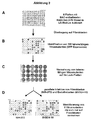
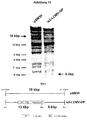
- the transposon plasmid pTsTM16 was obtained by electroporation (Maniatis) in E coli that already carried the MCMV-BAC plasmid pSM3fr (see Fig. 1).
- the transposition (the "jumping") of the transposon into the MCMV -BAC genome anywhere. Then 100 ⁇ l of the culture were used to inoculate 500 ml LB medium. This approach was then incubated at the non-permissive temperature of 43 ° C. At this temperature, the transposon plasmid pTsTM16 can no longer replicate. Selection with chloramphenicol and kanamycin can be used to select for the presence of E.
- coli which carry the MCMV-BAC plasmid (with chloramphenicol resistance) and the transposon inserted into the MCMV-BAC (with kanamycin resistance) (see Fig. 1 ). Since the transposon pTsTM16 has no preferred insertion site for DNA, a heterogeneous collection of mutant MCMV-BAC plasmids was produced.
- the MCMV-BAC plasmids mutated by transposon mutagenesis have, by introducing the plasmid pGB2 ⁇ inv-hly
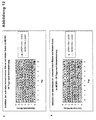
- a total of 6 microtiter plates were used, which corresponds to 576 E. coli colonies. After overnight incubation at 37 ° C for 2 each were ⁇ l of the bacterial cultures to inoculate eukaryotic mouse fibroblasts (NIH-3T3) but which were cultured in a 96-well microtiter plate under standard conditions without antibiotics used (see Fig. 2 B). The quantitative ratio of fibroblast cells to invasive E. coli bacteria is on average about 1 to 300. After two hours of incubation under normal cell culture conditions, the cell culture medium was replaced by new medium which contains ampicillin and gentamicin in a concentration of 100 ⁇ g / ml each.
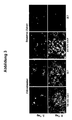
- MCMV mutants By incorporating E. coli into the fibroblast cells and Release of the mutant MCMV-BAC genomes from E. coli and the Inclusion vacuoles using the inv and hly gene products, MCMV mutants multiply and after about 3-6 Days, the first virus plaques develop if they enter the MCMV-BAC inserted mutation not essential for virus replication Has destroyed gene function. Successful propagation of viable Mutants can be identified based on the expression of the GFP gene is present on the mutagenized viral genome, and the resulting fluorescence under a fluorescence microscope be checked optically. Only successfully mutagenized MCMV mutants express the GFP vom in mutagenesis inserted GFP gene. Wild type MCMV has no GFP and cannot be made visible in the fluorescence microscope.
- the cell culture supernatant from the cells infected with these 199 reconstituted virus mutants was transferred to new fibroblast cultures in a 24-well culture plate for further virus propagation (see Fig. 2-C). After a few days, the NIH-3T3 cells were lysed by the virus infection. 200 ⁇ l of cell culture medium supernatants of lysed cells were each added to NIH-3T3 cells and in parallel on SVEC4-10 endothelial cells (see Fig. 2 D). The virus multiplication in these cells was determined 6 days after infection with these virus mutants: optically by looking at the green fluorescent cells (see FIG.
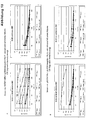
- Fig. 4 shows the virus titers of 2 exemplarily selected virus mutants in the course of infection from day 0 to day 6 after infection on NIH-3T3 and SVEC4-10 cells. Compared to wild-type MCMV, the two mutants show comparable virus titres in NIH-3T3 cells, the titres on the SVEC4-10 cells were below the detection level (dashed line).
- a total of 6 virus mutants were identified on NIH-3T3 cells, but not on endothelial cells can multiply.
- the corresponding one was MCMV-BAC DNA isolated from E. coli (according to standard method, see Maniatis and Messerle et al., Proc. Natl. Acad. Sci. USA (1997), 94, 14759-14763) and with a primer, that binds within the inserted transposon and into the reads in viral sequence, sequenced (method see Brune et al., Nature Biotechnology (1999), 17, 360-364).
- Herpes virus live vaccines are difficult to produce and transport.
- the viruses must be grown on mammalian cells are and can only be stored and transported refrigerated to avoid inactivation. So there is for example, only two effective against herpesviral infections and approved vaccines. This is attenuated varicella zoster viruses or pseudorabies viruses. A new procedure that makes it easy to get a vaccine producing, storing and administering is therefore desirable.
- herpesviral BAC genomes and methods for Changing the DNA contained in it allows simple and rapid production of weakened virus variants. additionally can foreign genes or foreign epitopes in the genome be introduced to simultaneously immunize against to achieve multiple pathogens of different types.
- the herpesvirals BAC plasmids can contain an infectious DNA - i.e. the introduction of the BAC-DNA into host cells leads to production of virus in these cells - can herpesviral with these BAC plasmids are made using a DNA vaccine leads to independent reproduction of the antigens, but none Virus cultivation required.
- the viral DNA must be in the Cells of the organism to be vaccinated are introduced.
- a viral BAC genome by Bacteria is possible as a carrier (see principle in Fig. 6).
- the E. coli bacteria used which the MCMV-HBs BAC Plasmid (it has the entire MCMV genome plus that HBs gene of the hepatitis B virus) and the invasive plasmid pGB2 ⁇ inv-hly can be administered in different ways are: intraperitoneal, subcutaneous, intramuscular or over the mucous membranes (also by simply swallowing per os).
- MCMV (Smith strain, ATCC VR-194, ATCC, Rockville, MD, USA) and the RV MCMV-HBs virus mutant were found on embryonic Balb / c mouse fibroblasts (MEF) and NIH-T3 fibroblasts (ATCC CRL1658) bred according to known standard protocols (Ebeling, A., Keil, G.M., Knust, E., and Koszinowski U.H., J. Virol. (1983) 47, 421-433; Thael, R., Szepan, U., Hengel, H., Geginat, G., Lucin, P., and Koszinowski, U.H., J. Virol. (1995), 69, 6098-6105).
- mice of the strain G129 were used in all experiments (van den Broek MF, Müller U., Huang S., Zinkernagel RM, and Aguet M., Immunol. Rev. (1995), 148, 5-18 ). Infection conditions for all experiments were carried out under established standard conditions which have already been described (Jonjic, S., Pavic, I., Polic, B., Crnkovic, I., Lucin, P., and Koszinowski, UH, J. Exp. Med . (1994), 179, 1713-1717 and Reddehase, MJ, Keil, GM, and Koszinowski, UH, J. Immunol. (1984), 132, 482-489).
- Plasmid cloning was carried out according to known standard protocols (Maniatis). Restriction endonucleases were obtained from New England Biolabs (Bevety MA, USA). DNA was introduced into E. coli (DH10B) by electroporation using the "Gene Pulser" apparatus from BioRad (2.5 kV, 25 ⁇ F, 400 ohms). Transformants were selected on LB plates (with corresponding standard Antibitika concentrations; for BAC plasmids: 12.5 ⁇ g / ml chloramphenicol and 25 ⁇ g / ml kanamycin) was selected (Maniatis; Messerle et al, Proc Natl Acad... Sci.
- High-copy plasmids and BAC plasmids were isolated from E. coli by alkaline lysis according to known standard protocols (Maniatis; Shizuya et al., Proc. Natl. Acad. Sci. USA (1992), 89, 8794-8797; Messerle et al ., Proc. Natl. Acad. Sci. USA (1997), 94, 14759-14763).
- virus was reconstituted by transfecting MEF with the mutagenized MCMV-BAC plasmid (1 ⁇ g ).
- the cells were harvested by treatment with trypsin and centrifugation at 800 g for 5 minutes and lysed with 50 mM Tris-HCl (pH 8), 20 mM EDTA, 0.5% SDS and 0.5 mg / ml Proteinase K. After incubating this mixture for 3 hours at 56 ° C., the DNA was extracted twice with phenol / chloroform (1: 1) and precipitated with two volumes of 100% ethanol (Ebeling, A., Keil, GM, Knust, E., and Koszinowski UH , J. Virol. (1983), 47, 421-433; Mercer, JA, Marks, JR, and Spector, DH, Virology (1983), 129, 94-106).
- the DNA was used with restriction endonucleases digested and the resulting DNA fragments by agarose gel electrophoresis (0.8% gel) separated, as already described in Ebeling et al., 1983 (op. cit.).
- the S gene of the human hepatitis B virus was identified by Restriction endonuclease digestion with XhoI and NsiI from the Plasmid pMH3 / 3091 (Junker et al., Nucleic Acids Res. (1987), 15 (24), 10117-10132) and cut into the plasmid pBluescriptKSII + (Stratagene, La Jolla, CA) cloned. Of this plasmid was HBs by restriction endonuclease digestion cut out again with KpnI and NotI and into that with KpnI and NotI treated plasmid pRep4 (Invitrogen, Carlsbad, CA, USA) cloned.
- the resulting expression cassette (with an RSV promoter, the HBs and the polyadenylation signal of SV40) was made with the restriction endonuclease SalI cut out the plasmid and after treatment with the Klenow polymerase to smooth the DNA ends in the (in which Plasmid pACYC177 cloned) HindIII-L fragment of the MCMV Genome (Ebeling et al., J. Virol. (1983), 47, 421-433) between the two restriction sites HpaI (nucleotide position 184236 and 184315) inserted.
- mice (strain G129, IFN ⁇ R - / -) were given a dose of 10 8 E. coli bacteria (containing the MCMV-HBs BAC and the plasmid pGB2 ⁇ inv-hly own and grown overnight in LB medium supplemented with 50 ⁇ g / ml spectinomycin and 12.5 ⁇ g / ml chloramphenicol were cultivated at 37 ° C.) administered intraperitoneally.
- the LB bacteria solution was diluted 1:10 with PBS and 500 ⁇ l of this solution were injected.
- E. coli bacteria containing the MCMV-HBs BAC and the plasmid pGB2 ⁇ inv-hly own and grown overnight in LB medium supplemented with 50 ⁇ g / ml spectinomycin and 12.5 ⁇ g / ml chloramphenicol were cultivated at 37 ° C.
- the LB bacteria solution was diluted 1:10 with PBS and 500 ⁇ l of this solution were
- mice were used which only have the plasmid pREP4-HBs (HBs expression cassette in the plasmid pREP4 [from Invitrogen]), which contains the same HBs gene but no MCMV-BAC.
- pREP4-HBs HBs expression cassette in the plasmid pREP4 [from Invitrogen]
- the mice were analyzed according to standard protocols (Jonjic, S., Pavic, I., Polic, B., Crnkovic, I., Lucin, P., and Koszinowski, UH, J. Exp. Med.
- mice (1994), 179, 1713 -1717) treated immunosuppressively.
- 100 ⁇ g of antibodies against mouse CD4 and mouse CD8 surface molecules obtained from the rat were administered to the mice on the 6th and 13th day after the primary infection.
- the mice were administered 6.25 ⁇ g of hydrocortisone intramuscularly every day.
- each 100 ⁇ l of serum was taken from the tail vein and determines the HBs antigen titer by ELISA HBs antigen detection (ORTHO).
- ORTHO ELISA HBs antigen detection
- Significant concentrations of HBs antigen could be detected in the serum of all mice, which proves the efficient expression of the HBs gene from the hepatitis B virus inserted in the MCMV-BAC (see FIG. 8).
- mice were killed on the 21st day after the infection and the amount of virus present in different organs Standard plaque assays (Reddehase, M.J., Keil, G.M., and Koszinowski, U.H., J. Immunol. (1984), 132, 482-489 and Reddehase, M.J., Weiland, F., Münch, K., Jonjic, S., Lüske, A., and Koszinowski, U.H., J. Virol. (1985), 55, 264-273) certainly. In all 5 mice after immunosuppression infectious recombinant MCMV can be detected (see Fig. 9).
- mice (strain G129, IFN ⁇ R - / -) were given a dose of 10 8 E. coli bacteria (containing the MCMV-HBs BAC and the plasmid pGB2 ⁇ inv-hly own and grown overnight in LB medium supplemented with 50 ⁇ g / ml spectinomycin and 12.5 ⁇ g / ml chloramphenicol were cultivated at 37 ° C.) injected intraperitoneally.
- the LB bacteria solution was diluted 1:10 with PBS and 500 ⁇ l of this solution were injected. 42 days and 60 days after the administration of the bacteria, 200 .mu.l of serum were taken from each of the 5 mice from the tail vein.
- mice (strain G129, IFN ⁇ R - / -) were E. coli bacteria having the MCMV-HBs BAC and the plasmid pGB2 ⁇ inv-hly and grown overnight in LB medium supplemented with 50 ⁇ g / ml spectinomycin and 12.5 ⁇ g / ml of chloramphenicol cultivated at 37 ° C were administered.
- the bacterial solution was centrifuged at 4 ° C for 8 minutes and diluted with PBS.
- the final concentrations of the bacteria were 2x10 8 bacteria / ml PBS for the intraperitoneal control administration and 2x10 10 bacteria / ml PBS for the administration per os (via the mucous membranes).
- mice were given 350 ⁇ l of the PBS bacterial solution (corresponds to approx. 7x10 9 bacteria) with a micropipette in the throat.
- the plasmids used in b) in the E. coli bacteria served as a negative control.
- Fig. 10-A 3 out of 5 mice formed E. coli with MCMV-HBs-BAC and pGB2 ⁇ inv-hly received significant Antibody titers against MCMV.
- the control ELISA is shown with untreated cells, at where there were no significant signals.
- Fig. 9-B are as Negative control showed the antibody levels of the mice that with bacteria that only the control plasmid pREP4-HBs and that Invasion plasmid pGB2Qinv-hly possessed, were infected.
- Fig. 9-B are as Negative control showed the antibody levels of the mice that with bacteria that only the control plasmid pREP4-HBs and that Invasion plasmid pGB2Qinv-hly possessed, were infected.
- Fig. 11-A shows that all 5 mice have a significant antibody titer have trained against MCMV.
- On the right in Fig. 11-A shows the negative control for the ELISA test.
- Fig. 11-B are the negative amounts of the antibody control Mice were shown to have bacteria that were only the control plasmid had pREP4-HBs and the invasion plasmid pGB2 ⁇ inv-hly, have been infected. There is no formation of MCMV-specific here Antibodies.
- mice described under I were given a lethal dose 28 days after infection of 5x10 4 PFU of the wild-type MCMV passaged in the salivary gland (more virulent than MCMV from the cell culture) infected intravenously.
- Fig. 12-A shows that all mice with bacteria that only carried the control plasmid pREP4-HBs and plasmid pGB2Qinv-hly, were "immunized" subcutaneously, dead after 8 days were. In contrast, 4 out of 5 mice survived with Bacteria were infected subcutaneously by the MCMV-HBs-BAC Plasmid and the plasmid pGB2 ⁇ inv-hly carried.
- invasive bacteria could not only induce antibodies against MCMV mice immunized in this way were actually protected from MCMV infection.
- mice survived the MCMV infection which, via the E. coli bacteria, the MCMV-HBs-BAC Plasmid obtained (with the invasion plasmid pGB2 ⁇ inv-hly) to have. Of those with only the control plasmid pREP4-HBs immunized mice were all dead after 8 days (see Fig. 12-B).
- Double recombination is a fast mutagenesis method for DNA with a linear DNA fragment (which the mutated DNA sequence and flanking homologous sequences of approx. 50 bp carries) mediated through the ET recombination system (PCT / EP98 / 07945).
- PCT / EP98 / 07945 the ET recombination system
- This method involves making a Deletion mutant in just a few days and nucleotide-precise, requires the insertion of foreign DNA (epitopes, genes, etc.) or the introduction of point mutations with this method a second round of mutagenesis.
- the necessary counter selection against a negative marker e.g. SacB
- PCT / EP98 / 07945 is also very inefficient and for some viral genomes that have many internal repeats (such as MCMV), not applicable due to genome instability.
- the invention now enables i.a. also the nucleotide accurate Insertion of short DNA sequences (such as epitopes and recognition sequences like FlagTag or HA tag) in the right one Reading frame ("in-frame") with a single transformation and without sub-cloning of viral DNA sequences (Fig. 13).
- the Method is based on a double recombination step linear DNA fragment (made by PCR) with the virus DNA containing BAC in DH10B bacteria. These bacteria are recA- (increases the stability of the BAC in E. coli) and wear in addition to the desired BAC, the pBAD ⁇ plasmid (Zhang et al., Nat. Genet. (1998), 20 (2), 123-128).
- a primer now also contains the GP33-41 epitope sequence (amino acid sequence: KAVYNFAT) from LCMV.
- MCMV mouse cytomegalovirus
- MCMV Smith strain, ATCC VR-194, ATCC, Rockville, MD, USA
- virus mutants derived therefrom were on NIH-T3 fibroblasts (ATCC CRL1658) and on embryonic Balb / c mouse fibroblasts (MEF) bred according to known standard protocols (Ebeling, A., Keil, G.M., Knust, E., and Koszinowski U.H., J. Virol. (1983), 47, 421-433; Thale, R., Szepan, U., Hengel, H., Geginat, G., Lucin, P., and Koszinowski, U.H., J. Virol. (1995), 69, 6098-6105).
- Plasmid cloning was carried out according to known standard protocols (Maniatis). Restriction endonucleases were obtained from New England Biolabs (Bevety MA, USA). DNA was introduced into E. coli (DH10B) by electroporation using the "Gene Pulser" apparatus from BioRad (2.5 kV, 25 ⁇ F, 400 ohms). Transformants were selected on LB plates (with corresponding standard Antibitika concentrations; for BAC plasmids: 12.5 ⁇ g / ml chloramphenicol and 25 ⁇ g / ml kanamycin) was selected (Maniatis; Messerle et al, Proc Natl Acad... Sci.
- High-copy plasmids and BAC plasmids were isolated from E. coli by alkaline lysis according to known standard protocols (Maniatis; Shizuya et al., Proc. Natl. Acad. Sci. USA (1992), 89, 8794-8797; Messerle et al ., Proc. Natl. Acad. Sci. USA (1997), 94, 14759-14763).
- virus was reconstituted by transfecting MEF with the mutagenized MCMV-BAC plasmid (1 ⁇ g ).
- the cells were harvested by treatment with trypsin and centrifugation at 800 g for 5 minutes and lysed with 50 mM Tris-HCl (pH 8), 20 mM EDTA, 0.5% SDS and 0.5 mg / ml Proteinase K. After incubating this mixture for 3 hours at 56 ° C., the DNA was extracted twice with phenol / chloroform (1: 1) and precipitated with two volumes of 100% ethanol (Ebeling, A., Keil, GM, Knust, E., and Koszinowski UH , J. Virol. (1983), 47, 421-433; Mercer, JA, Marks, JR, and Spector, DH, Virology (1983), 129, 94-106.).
- the DNA was digested with restriction endonucleases for analysis and the resulting DNA fragments by agarose gel electrophoresis (0.8% gel) separated, as already described in Ebeling et al., 1983 (op. cit.).
- PCR was carried out according to standard protocols (Maniatis, Zhang et al., Nat. Genet. (1998), 20 (2), 123-128). For one more efficient yield with the unusually long oligonucleotides touch-down PCR was used. This procedure is the Known specialist.
- the epitope sequence GP 33-42 (nucleotide sequence: aaggctgtctacaattttgccacctgt) and the kanamycin selection marker (see schematic Fig. 14 ) the following primers were used:
- DNA mini-preparations were made according to known standard protocols prepared from 10 of the achieved ie2-LCMV-GP-BAC colonies. Of A DNA maxipreparation was carried out in 4 clones and the DNA analyzed with restriction endonuclease digestion. The analysis A clone is shown as an example in Fig. 15. Successful Insertion of the epitope is caused by the disappearance of the 18 kbp band and the additional appearance of a 13 kbp and a 6 kbp band (the former is only a double band see) is displayed.
- the correct insertion of the epitope in the correct reading frame for the ie2 gene of the MCMV genome was additionally confirmed by sequencing.
- the following primer was used for the sequencing and binds in the kanamycin cassette additionally inserted in addition to the epitope during mutagenesis: The sequence obtained in the sequencing confirmed the correct insertion.
Landscapes
- Health & Medical Sciences (AREA)
- Life Sciences & Earth Sciences (AREA)
- Genetics & Genomics (AREA)
- Engineering & Computer Science (AREA)
- Chemical & Material Sciences (AREA)
- Biotechnology (AREA)
- Wood Science & Technology (AREA)
- Zoology (AREA)
- Organic Chemistry (AREA)
- Molecular Biology (AREA)
- Bioinformatics & Cheminformatics (AREA)
- General Health & Medical Sciences (AREA)
- General Engineering & Computer Science (AREA)
- Biomedical Technology (AREA)
- Microbiology (AREA)
- Pharmacology & Pharmacy (AREA)
- Biophysics (AREA)
- Public Health (AREA)
- Plant Pathology (AREA)
- Animal Behavior & Ethology (AREA)
- Veterinary Medicine (AREA)
- Epidemiology (AREA)
- Physics & Mathematics (AREA)
- Biochemistry (AREA)
- Medicinal Chemistry (AREA)
- Medicines Containing Antibodies Or Antigens For Use As Internal Diagnostic Agents (AREA)
- Medicines That Contain Protein Lipid Enzymes And Other Medicines (AREA)
- Micro-Organisms Or Cultivation Processes Thereof (AREA)
- Medicines Containing Material From Animals Or Micro-Organisms (AREA)
Applications Claiming Priority (2)
| Application Number | Priority Date | Filing Date | Title |
|---|---|---|---|
| DE2000120500 DE10020500A1 (de) | 2000-04-26 | 2000-04-26 | Vektorsystem zum Einbringen von DNA in eukaryonte Zellen |
| DE10020500 | 2000-04-26 |
Publications (2)
| Publication Number | Publication Date |
|---|---|
| EP1167529A2 true EP1167529A2 (fr) | 2002-01-02 |
| EP1167529A3 EP1167529A3 (fr) | 2002-05-08 |
Family
ID=7640022
Family Applications (1)
| Application Number | Title | Priority Date | Filing Date |
|---|---|---|---|
| EP01109460A Withdrawn EP1167529A3 (fr) | 2000-04-26 | 2001-04-24 | Système de vecteurs pour l'introduction d'ADN aux cellules eucaryotes |
Country Status (2)
| Country | Link |
|---|---|
| EP (1) | EP1167529A3 (fr) |
| DE (1) | DE10020500A1 (fr) |
Family Cites Families (1)
| Publication number | Priority date | Publication date | Assignee | Title |
|---|---|---|---|---|
| DE19733364A1 (de) * | 1997-08-01 | 1999-02-04 | Koszinowski Ulrich H Prof | Verfahren zur Klonierung eines großen Virusgenoms |
-
2000
- 2000-04-26 DE DE2000120500 patent/DE10020500A1/de not_active Withdrawn
-
2001
- 2001-04-24 EP EP01109460A patent/EP1167529A3/fr not_active Withdrawn
Also Published As
| Publication number | Publication date |
|---|---|
| DE10020500A1 (de) | 2001-10-31 |
| EP1167529A3 (fr) | 2002-05-08 |
Similar Documents
| Publication | Publication Date | Title |
|---|---|---|
| DE60303218T2 (de) | Intergene regionen als insertionsstellen im genom von modifiziertem vaccinia virus ankara (mva) | |
| DE69518910T2 (de) | Verfahren zur herstellung von viralen vektoren von mindestens 20kb durch intermolekulare homologe rekombination in einer prokaryotischen zelle | |
| DE69820450T2 (de) | Chimäre vektoren, die die verpackungsregion eines phagengenoms und einen teil des genoms eines eukaryontischen virus enthalten | |
| AT405292B (de) | Rekombinante poxviren mit fremd-dna in essentiellen regionen | |
| AU712793B2 (en) | Viral vectors | |
| DE3888086T2 (de) | Rekombinantes Geflügelpockenvirus, Expressionsvektoren für heterologische Proteine und davon derivierte Geflügelvakzine. | |
| DE69636032T2 (de) | Plasmid zur verabreichung von nukleine säuren und verwendungsverfahren | |
| DE69903229T2 (de) | Verwendung der Leserahmen der adenoviralen E4-Region zur Verbesserung der Genexpression | |
| DD158918A5 (de) | Verfahren zur erzeugung eines verbesserten clonierungsverktors | |
| DE3586841T2 (de) | Orale impfstoffe. | |
| DE69839403T2 (de) | Adenovirale vektoren und eine methode zur reduktion von homologer rekombination | |
| TW200924792A (en) | A recombinant koi herpesvirus (KHV) or Cyprinid herpesvirus 3 (CyHV-3) and a vaccine for the prevention of a disease caused by KHV/CyHV-3 in Cyorinus carpio carpio or Cyprinus carpio koi | |
| EP0904394A1 (fr) | Virus celo | |
| DE60117053T2 (de) | Herstellung rekombinanter künstlicher hefe-chromosome, welche das genom des humanen cytomegalovirus enthalten | |
| DE69929530T2 (de) | Attenuierter pferdeherpesvirus | |
| DE60204317T2 (de) | Methode zur plasmidstabilisierung durch in vivo deletion der antibiotikaresistenz und selektion mit einem essentiellen gen | |
| WO2003095656A1 (fr) | Virus de variole aviaire recombinant | |
| DE3813093A1 (de) | Rekombinantes plasmid, verfahren zum herstellen eines rekombinanten avipoxvirus, rekombinantes avipoxvirus und dessen verwendung | |
| DE69635383T2 (de) | Phage verbunden an ein nukleus lokalisierungssignal | |
| DE69332393T2 (de) | Rekombinanter Katzen-Herpesvirus-Impfstoff | |
| WO2013107436A1 (fr) | Vaccination au moyen de levures recombinantes pour induire une réponse immunitaire humorale protectrice contre des antigènes définis | |
| EP1023453B1 (fr) | Procede de conditionnement genetique cible pour l'induction d'une transgenese ciblee somatique | |
| DE60027364T2 (de) | Adenovirus-mutanten mit deletiertem proteasegen, komplementierende zelllinien und entsprechende vektoren für den gentransfer | |
| EP1167529A2 (fr) | Système de vecteurs pour l'introduction d'ADN aux cellules eucaryotes | |
| CN119487197A (zh) | 在工程化细菌中生产基因疗法载体 |
Legal Events
| Date | Code | Title | Description |
|---|---|---|---|
| PUAI | Public reference made under article 153(3) epc to a published international application that has entered the european phase |
Free format text: ORIGINAL CODE: 0009012 |
|
| AK | Designated contracting states |
Kind code of ref document: A2 Designated state(s): AT BE CH CY DE DK ES FI FR GB GR IE IT LI LU MC NL PT SE TR |
|
| AX | Request for extension of the european patent |
Free format text: AL;LT;LV;MK;RO;SI |
|
| PUAL | Search report despatched |
Free format text: ORIGINAL CODE: 0009013 |
|
| AK | Designated contracting states |
Kind code of ref document: A3 Designated state(s): AT BE CH CY DE DK ES FI FR GB GR IE IT LI LU MC NL PT SE TR |
|
| AX | Request for extension of the european patent |
Free format text: AL;LT;LV;MK;RO;SI |
|
| 17P | Request for examination filed |
Effective date: 20021029 |
|
| AKX | Designation fees paid |
Designated state(s): AT BE CH CY DE DK ES FI FR GB GR IE IT LI LU MC NL PT SE TR |
|
| STAA | Information on the status of an ep patent application or granted ep patent |
Free format text: STATUS: THE APPLICATION IS DEEMED TO BE WITHDRAWN |
|
| 18D | Application deemed to be withdrawn |
Effective date: 20041103 |