EP1169816B1 - Verfahren und systeme zur bereitstellung der funktionalität einer datenbasiszugriffskontrolle in einem routingknoten eines kommunikationsnetzes - Google Patents
Verfahren und systeme zur bereitstellung der funktionalität einer datenbasiszugriffskontrolle in einem routingknoten eines kommunikationsnetzes Download PDFInfo
- Publication number
- EP1169816B1 EP1169816B1 EP00919979A EP00919979A EP1169816B1 EP 1169816 B1 EP1169816 B1 EP 1169816B1 EP 00919979 A EP00919979 A EP 00919979A EP 00919979 A EP00919979 A EP 00919979A EP 1169816 B1 EP1169816 B1 EP 1169816B1
- Authority
- EP
- European Patent Office
- Prior art keywords
- database
- network element
- scp
- service
- fep
- Prior art date
- Legal status (The legal status is an assumption and is not a legal conclusion. Google has not performed a legal analysis and makes no representation as to the accuracy of the status listed.)
- Expired - Lifetime
Links
- 238000000034 method Methods 0.000 title claims abstract description 120
- 238000004891 communication Methods 0.000 title claims description 55
- 230000011664 signaling Effects 0.000 claims abstract description 38
- 230000004044 response Effects 0.000 claims abstract description 9
- 238000012545 processing Methods 0.000 claims description 68
- 238000013519 translation Methods 0.000 claims description 33
- 238000012546 transfer Methods 0.000 claims description 6
- 230000003287 optical effect Effects 0.000 claims description 3
- 230000008569 process Effects 0.000 abstract description 89
- 101000597193 Homo sapiens Telethonin Proteins 0.000 description 23
- 102100035155 Telethonin Human genes 0.000 description 23
- 238000010586 diagram Methods 0.000 description 12
- 238000007726 management method Methods 0.000 description 12
- 230000006870 function Effects 0.000 description 8
- 238000012423 maintenance Methods 0.000 description 7
- 230000005540 biological transmission Effects 0.000 description 4
- 102000004528 Mannose-Binding Protein-Associated Serine Proteases Human genes 0.000 description 3
- 108010042484 Mannose-Binding Protein-Associated Serine Proteases Proteins 0.000 description 3
- 238000006243 chemical reaction Methods 0.000 description 3
- 238000012544 monitoring process Methods 0.000 description 3
- 230000001960 triggered effect Effects 0.000 description 3
- 230000008901 benefit Effects 0.000 description 2
- 230000008859 change Effects 0.000 description 2
- 238000012795 verification Methods 0.000 description 2
- 238000013475 authorization Methods 0.000 description 1
- 230000003139 buffering effect Effects 0.000 description 1
- 230000008867 communication pathway Effects 0.000 description 1
- 238000012937 correction Methods 0.000 description 1
- 238000001514 detection method Methods 0.000 description 1
- 238000005538 encapsulation Methods 0.000 description 1
- 239000000284 extract Substances 0.000 description 1
- 230000003993 interaction Effects 0.000 description 1
- 238000013507 mapping Methods 0.000 description 1
- 230000007246 mechanism Effects 0.000 description 1
- 238000012216 screening Methods 0.000 description 1
- 238000010200 validation analysis Methods 0.000 description 1
Images






Classifications
-
- H—ELECTRICITY
- H04—ELECTRIC COMMUNICATION TECHNIQUE
- H04Q—SELECTING
- H04Q3/00—Selecting arrangements
- H04Q3/0016—Arrangements providing connection between exchanges
- H04Q3/0029—Provisions for intelligent networking
- H04Q3/0045—Provisions for intelligent networking involving hybrid, i.e. a mixture of public and private, or multi-vendor systems
-
- H—ELECTRICITY
- H04—ELECTRIC COMMUNICATION TECHNIQUE
- H04L—TRANSMISSION OF DIGITAL INFORMATION, e.g. TELEGRAPHIC COMMUNICATION
- H04L69/00—Network arrangements, protocols or services independent of the application payload and not provided for in the other groups of this subclass
- H04L69/16—Implementation or adaptation of Internet protocol [IP], of transmission control protocol [TCP] or of user datagram protocol [UDP]
- H04L69/161—Implementation details of TCP/IP or UDP/IP stack architecture; Specification of modified or new header fields
-
- H—ELECTRICITY
- H04—ELECTRIC COMMUNICATION TECHNIQUE
- H04L—TRANSMISSION OF DIGITAL INFORMATION, e.g. TELEGRAPHIC COMMUNICATION
- H04L69/00—Network arrangements, protocols or services independent of the application payload and not provided for in the other groups of this subclass
- H04L69/16—Implementation or adaptation of Internet protocol [IP], of transmission control protocol [TCP] or of user datagram protocol [UDP]
- H04L69/169—Special adaptations of TCP, UDP or IP for interworking of IP based networks with other networks
-
- H—ELECTRICITY
- H04—ELECTRIC COMMUNICATION TECHNIQUE
- H04M—TELEPHONIC COMMUNICATION
- H04M7/00—Arrangements for interconnection between switching centres
- H04M7/06—Arrangements for interconnection between switching centres using auxiliary connections for control or supervision, e.g. where the auxiliary connection is a signalling system number 7 link
- H04M7/066—Arrangements for interconnection between switching centres using auxiliary connections for control or supervision, e.g. where the auxiliary connection is a signalling system number 7 link where the auxiliary connection is via an Internet Protocol network
-
- H—ELECTRICITY
- H04—ELECTRIC COMMUNICATION TECHNIQUE
- H04M—TELEPHONIC COMMUNICATION
- H04M7/00—Arrangements for interconnection between switching centres
- H04M7/12—Arrangements for interconnection between switching centres for working between exchanges having different types of switching equipment, e.g. power-driven and step by step or decimal and non-decimal
- H04M7/1205—Arrangements for interconnection between switching centres for working between exchanges having different types of switching equipment, e.g. power-driven and step by step or decimal and non-decimal where the types of switching equipement comprises PSTN/ISDN equipment and switching equipment of networks other than PSTN/ISDN, e.g. Internet Protocol networks
- H04M7/1245—Arrangements for interconnection between switching centres for working between exchanges having different types of switching equipment, e.g. power-driven and step by step or decimal and non-decimal where the types of switching equipement comprises PSTN/ISDN equipment and switching equipment of networks other than PSTN/ISDN, e.g. Internet Protocol networks where a network other than PSTN/ISDN interconnects two PSTN/ISDN networks
-
- H—ELECTRICITY
- H04—ELECTRIC COMMUNICATION TECHNIQUE
- H04Q—SELECTING
- H04Q3/00—Selecting arrangements
- H04Q3/0016—Arrangements providing connection between exchanges
- H04Q3/0025—Provisions for signalling
-
- H—ELECTRICITY
- H04—ELECTRIC COMMUNICATION TECHNIQUE
- H04L—TRANSMISSION OF DIGITAL INFORMATION, e.g. TELEGRAPHIC COMMUNICATION
- H04L69/00—Network arrangements, protocols or services independent of the application payload and not provided for in the other groups of this subclass
- H04L69/16—Implementation or adaptation of Internet protocol [IP], of transmission control protocol [TCP] or of user datagram protocol [UDP]
-
- H—ELECTRICITY
- H04—ELECTRIC COMMUNICATION TECHNIQUE
- H04M—TELEPHONIC COMMUNICATION
- H04M3/00—Automatic or semi-automatic exchanges
- H04M3/22—Arrangements for supervision, monitoring or testing
- H04M3/36—Statistical metering, e.g. recording occasions when traffic exceeds capacity of trunks
- H04M3/367—Traffic or load control
-
- H—ELECTRICITY
- H04—ELECTRIC COMMUNICATION TECHNIQUE
- H04M—TELEPHONIC COMMUNICATION
- H04M7/00—Arrangements for interconnection between switching centres
- H04M7/12—Arrangements for interconnection between switching centres for working between exchanges having different types of switching equipment, e.g. power-driven and step by step or decimal and non-decimal
- H04M7/1205—Arrangements for interconnection between switching centres for working between exchanges having different types of switching equipment, e.g. power-driven and step by step or decimal and non-decimal where the types of switching equipement comprises PSTN/ISDN equipment and switching equipment of networks other than PSTN/ISDN, e.g. Internet Protocol networks
- H04M7/121—Details of network access arrangements or protocols
- H04M7/122—Details of network access arrangements or protocols where the PSTN/ISDN access is used as an access to networks other than PSTN/ISDN
Definitions
- the present invention relates to the routing of signaling messages in a communications network, and more particularly to methods and systems for routing signaling messages destined for database network elements.
- this service allows calls to be forwarded to another location.
- the difference between this feature and current call forwarding functionality is the ability to screen unwanted calls from forwarding. Only authorized callers are forwarded to the new location.
- follow me service allows a number to be forwarded on a time schedule. The subscriber determines the time forwarding is to take place when the feature is invoked. Destinations can include both wired and wireless telephones or handsets.
- an SCP is typically comprised of both a front end computer processor system and a back end database system. That is, the SCP front end processor (FEP) system typically does not store or contain the bulk data or information, but instead is the interface to a mainframe or minicomputer system that holds the actual database. Typically, there is a one-to-one correspondence between each FEP and an associated back end computing platform.
- FEP front end processor
- the front end of an SCP located in an SS7 network can perform protocol conversion from SS7 to TCP/IP (or SS7 to X.25 in the case of legacy systems), or it may provide the capability of communicating with the associated back end database directly through the use of primitives.
- a primitive is an interface that provides access from one level of the protocol to another level.
- each database is considered to be an application entity, and the protocol used to access and interface to each application entity is known as transaction capabilities application part or TCAP.
- SSP 110 is coupled to STP 112 via a dedicated SS7 communication link 114, which is in turn communicatively coupled to each of the three SCP nodes via dedicated SS7 communication links 118, 122, and 126.
- SCP nodes 116, 120, and 124 it will be appreciated from Figure 1 that each overall SCP node is comprised of a number of components or sub-systems. More particularly, SCP 116 generally includes a front end processor (FEP) 128, which is coupled to a back end database (BED) 130 via a communication link or bus 132.
- FEP front end processor
- BED back end database
- CNAM Calling Name
- CNAM query message will either be addressed directly to the PC & SSN of SCP 116 (i.e., PC: 1-1-1, SSN: 20), or the CNAM query message will be addressed so as to request a final destination address translation at the STP 112 (i,e., through global title translation).
- PC & SSN of SCP 116 i.e., PC: 1-1-1, SSN: 20
- CNAM query message will be addressed so as to request a final destination address translation at the STP 112 (i,e., through global title translation).
- global title translation service is not required and, consequently, that the CNAM query message is addressed directly to SCP 116 (i.e., PC: 1-1-1, SSN: 20).
- each complete SCP unit is equipped with a front end processor that is responsible for managing the unit's associated database resources.
- management functions include: protocol conversion, message parsing, administration of inbound queries and outbound responses, load sharing, etc.
- Each front end processor is integral with the SCP unit and consequently, there is a one-to-one relationship that exists between front end processors and SCP units. Front end processors are expensive, and what is needed is a way to reduce the overall cost of SCP units by allowing one front end processor to drive multiple SCP units.
- US-A-5,694,463 describes a service control point SCP for use in a telecommunication network.
- SCP comprises multiple databases which allow routine plans to be stored and implemented.
- the SCP is operable to accept and answer queries from switches for routing information.
- US-A-5, 706,286 describes a telecommunication system which provides validation of authorisation codes input by user for placing a call from a service area of a first telecommunication service provider with a calling card issued by another telecommunication service provider. If the protocol of one telecommunication service provider is indeed different from the other service provider, a gateway residing in an intelligent service network node convert the signalling protocol of the first provide into a signal protocol that is compatible with the other service provider.
- modules or processes The functions for providing database access control are described herein as modules or processes. It is understood that these modules or processes may be implemented as computer-executable instructions embodied in a computer-readable medium. Alternatively, the modules or processes described herein may be implemented entirely in hardware. In yet another alternative embodiment, the modules or processes described herein may be implemented as a combination of hardware and software.
- STP signal transfer point
- a block diagram that generally illustrates the base internal architecture of the IP 7 Secure Gateway tm product is shown in Figure 2.
- a detailed description of the Eagle ® STP may be found in the Eagle ® Feature Guide PN/910-1225-01, Rev.
- IP 7 Secure Gateway tm for transmitting and receiving TCAP messages over an Internet protocol (IP) network are described in above-referenced, co-pending U.S. Patent Application Serial No. 09/205,809.
- an Eagle ® STP 250 includes the following subsystems: a maintenance and administration subsystem (MAS) 252, a communication subsystem 254 and an application subsystem 256.
- the MAS 252 provides maintenance communications, program load, user interface, alarm processing and system disks.
- the communication subsystem 254 includes an interprocessor message transport (IMT) bus that is the main communication bus among all subsystems in the Eagle ® STP 250. This high-speed communications system functions as two 125 Mbps counter-rotating serial buses.
- IMT interprocessor message transport
- the application subsystem 256 includes application cards that are capable of communicating with the other cards through the IMT buses. Numerous types of application cards can be incorporated into STP 250, including but not limited to: al link interface module (LIM) 258 that provides SS7 links and X.25 links, a database communication module (DCM) 260 that provides an IP interface using transmission control protocol (TCP), and an application service module (ASM) 262 that provides global title translation, gateway screening and other services.
- a translation service module (TSM) 264 may also be provided to support triggered local number portability service.
- a database communication module can be employed in a similar manner to provide for the transport of IP encapsulated SS7 messages over an IP network, as described in the above referenced Feature Notice IP 7 Secure Gateway tm Release 1.0 publication.
- DCM database communication module
- TSM triggered LNP services module a detailed description of the Tekelec triggered LNP solution may be found in the Feature Guide LNP LSMS PN/910-1598-01, Rev. A, January 1998, published by Tekelec, the disclosure of which is incorporated herein by reference in its entirety.
- systems and methods for providing triggerless LNP functionality within a network routing node are described in commonly-assigned, co-pending U.S. Patent Application Serial No. 09/503,541, the disclosure of which is incorporated herein by reference in its entirety.
- MASP pair 506 implement the maintenance and administration subsystem functions described above. As the MASP pair 506 are not particularly relevant to a discussion of the flexible routing attributes of the present invention, a detailed discussion of their function is not provided herein. For a comprehensive discussion of additional MASP operations and functionality, the above-referenced Tekelec publications can be consulted.
- LIM 502 is comprised of a number of sub-component processes including, but not limited to; SS7 MTP level 1 and 2 processes 512, an I/O buffer or queue 514, an SS7 MTP level 3 HMDC process 516, and an HMDT process 518.
- MTP level 1 and 2 processes 512 provide the facilities necessary to send and receive digital data over a particular physical media / physical interface, as well as to provide error detection / correction and sequenced delivery of all SS7 message packets.
- I/O queue 514 provides for temporary buffering of incoming and outgoing signaling message packets.
- HMDC process 516 receives signaling messages from the lower processing layers and performs a discrimination function, effectively determining whether an incoming SS7 message packet requires internal processing or is simply to be through switched.
- HMDT process 518 handles internal routing of SS7 message packets that require additional processing prior to final routing.
- DCM 510 shown in Figure 3, generally includes an I/O buffer or queue 540 and an IP level 1 & 2 process 542. It will be appreciated that outgoing message packets routed through the DCM 510 will be transmitted out of the FEP routing node 500 and into IP network 216 via IP communication link 218. As the SS7 and IP communication protocols are not inherently compatible, all SS7 message packets that are to be sent into the IP network 216 are first encapsulated within a TCP/IP routing envelope prior to transmission. This IP encapsulation is performed on the DCM 510 by the IP level 1 & 2 process 542.
- DACM generally includes the database and control processes necessary to achieve the front end processing (FEP) functionality of the present invention.
- the DACM 508 shown in Figure 3 is comprised, in part, of a signaling connection control part (SCCP) subsystem 520, an SCCP controller, known as a signaling connection routing controller (SCRC) process 522, and a database access control (DAC) process 524.
- SCCP subsystem 520 is responsible for receiving and preliminary processing of incoming SCCP protocol message packets.
- the SCRC process 522 is responsible for discrimination of signaling messages at the SCCP level, and for distributing the signaling messages to a higher processing level when appropriate. In the configuration shown in Figure 3, the next highest processing level is represented by the DAC process 524.
- DAC process 524 includes a DAC database 526 and a DAC protocol translation process 528, as indicated in Figure 3.
- DAC process 524 is generally responsible for examining properties or characteristics of an incoming message and determining what, if any, processing is required. Such incoming message properties or characteristics might include, but are not limited to: the origination point code (OPC); destination point code (DPC); subsystem (SSN); and translation type (TT).
- OPC origination point code
- DPC destination point code
- SSN subsystem
- TT translation type
- DAC process 524 is also responsible for monitoring and storing information related to the operating status of network database or SCP nodes which have been provisioned for FEP servicing by the FEP routing node 500.
- Such operating status information is also stored in DAC database 526 and might include, but is not limited to: node In Service / node Out Of Service indicators; overall node congestion indicators; and link specific congestion indicators.
- DAC database 526 can also contain information related to database or SCP node ownership. Consequently, message routing decisions can be based, at least in part, upon database or SCP node ownership.
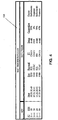
- the DAC database 526 maintains a set of SS7 to IP routing address translation instructions, all of which are generally illustrated in Figure 4.
- DAC protocol translation process 528 is provisioned to translate an incoming database query or response message into any of a variety of provisioned database protocols (e.g., structured query language (SQL), open database connectivity (ODBC), etc.) depending upon the protocol dictated by a particular SCP or database node.
- SQL structured query language
- ODBC open database connectivity
- HMRT process 532 for internal routing to the appropriate outbound LIM or DCM module.
- DACM 508 is in communication with and serviced by an Operations Administration and Maintenance (OAM) system 550.
- OAM Operations Administration and Maintenance
- an OAM system provides a mechanism whereby network routing address information contained within the DAC process 524 can be externally provisioned or dynamically updated.
- FEP routing node 500 and OAM 550 are not particularly relevant to the present invention, a detailed discussion of such OAM system functionality will not be presented herein. It should suffice to state that the OAM 550 maintains the routing database component of the DAC process 524 with the most current network routing address information available at any given time.
- the DAC process 524 resides in one or more blocks of high speed random access memory (RAM) that are located on DACM card 508.
- RAM high speed random access memory
- DACM card 508 the DAC process 524 resides in one or more blocks of high speed random access memory (RAM) that are located on DACM card 508.
- RAM high speed random access memory
- any databases associated therewith could be configured such that some or all of the information is stored on a high density, fast access physical storage media such as magnetic or optical discs.
- the DAC database component 526 is comprised of a series of entries or records, with each record containing a number of data fields including, but not limited to: a point code (PC) field; a subsystem (SSN) field; an IP host name field; an IP port field; a database or SCP node protocol field; a service or translation type (TT) field; a node status field; a node congestion field; and an owner field.
- PC point code
- SSN subsystem
- IP host name field IP host name field
- IP port field IP port
- a database or SCP node protocol field a service or translation type (TT) field
- TT service or translation type
- FEP routing node 600 is identical in overall function to the FEP routing node embodiment illustrated in Figure 3 and described above. In most respects, the form of FEP routing node 600 is identical to the FEP routing node 500 shown in figure 3. That is, FEP packet router node 600 generally includes a high speed interprocessor message transport (IMT) communications bus 504, and a number of distributed processing modules or cards including; a pair of maintenance and administration subsystem processors (MASPs) 506, an SS7 capable link interface module (LIM) 502, an IP capable database communication module (DCM) 510.
- IMT interprocessor message transport
- MASPs maintenance and administration subsystem processors
- LIM SS7 capable link interface module
- DCM IP capable database communication module
- DACM card 610 in combination with an external database access control (DAC) server 620.
- DAC database access control
- DAC digital signaling connection control part
- SCRC signaling connection routing controller
- DACM 610 employs a high-speed Ethernet controller (EC) process 612.
- the SCCP subsystem 520 is responsible for receiving and preliminary processing of incoming SCCP protocol message packets, while the SCRC process 522 is responsible for discrimination and subsequent distribution of signaling messages at the SCCP level.
- messages that satisfy the SCRC discrimination criteria are distributed or directed to the high-speed Ethernet controller process 612.
- EC process 612 is in turn responsible for controlling the process of communicating messages, via an Ethernet connection 630, to and from the associated DAC server 620.
- DAC server 618 includes a corresponding high-speed Ethernet controller process 622 that serves as the communications interface between DACM card 610 and an on-board DAC process 524.
- DAC process 524 generally includes a DAC database process 526 and a DAC protocol translation process 528, and is responsible for determining whether front end processing service is to be provided by the FEP routing node.
- DAC process 524 is also responsible for monitoring and storing information related to the operating status of provisioned network database or SCP nodes. As discussed previously, in addition to operating status type information, DAC process also contains information related to database or SCP node ownership. Consequently, message routing decisions can be based, at least in part, upon database or SCP node ownership.
- DAC database process 526 maintains a set of routing address translation instructions, which are generally illustrated in Figure 4. It will be further appreciated that DAC protocol translation process 528 is provisioned to translate incoming database query and response messages into any of a variety of database query protocols (e.g., SQL, ODBC, etc.) depending upon the database protocol dictated by a particular destination SCP or database node. Once DAC processing is complete, the resulting message is passed to an HMRT process 532 for internal routing to the appropriate outbound LIM or DCM module.
- database query protocols e.g., SQL, ODBC, etc.
- DAC server 620 is in communication with and serviced by an operations administration and maintenance (OAM) system 528, in much the same manner as that described above for DACM 508 in Figure 3.
- OAM operations administration and maintenance
- the DAC process 524 resides in one or more blocks of high speed random access memory (RAM) that are located within the DAC server 620.
- RAM high speed random access memory
- the DAC database component 526 of DAC server 620 is comprised of a series of entries or records, with each record containing a number of data fields including, but not limited to: a point code (PC) field, a subsystem (SSN) field, an IP host name field, an IP port field, a database or SCP node protocol field, a service or translation type (TT) field, a node status field, a node congestion field, and an owner field.
- PC point code
- SSN subsystem
- IP host name field IP host name field
- IP port field IP port
- TT service or translation type
- node status field a node congestion field
- an owner field an owner field.
- an incoming TCAP query message is received at the inbound LIM module 502.
- the incoming TCAP query message is received and processed by the MTP Level 1 and 2 process 512.
- the signaling message packet is temporarily buffered in the I/O queue 514 before being passed up the stack to the MTP Level 3 HMDC process 516, where SCCP type discrimination processing is performed.
- HMDC process 516 examines the message packet and determines that the DPC of the packet is the PC (2-1-1) of the FEP routing node 500 ( ST3 ). Consequently, further processing of the SCCP MSU within the FEP routing node is assumed to be necessary, and the packet is passed to the HMDT process 518.
- FEP routing node 500 is provisioned to respond to query messages that are addressed to the true or capability point code of the FEP routing node 500.
- FEP routing node 500 could easily be provisioned to provide FEP-type processing in response to many point codes other than that of the FEP routing node. While it may prove to be advantageous for service providers to implement an FEP routing node of the present invention in a communications network in a manner such that all query messages requiring FEP-type processing are addressed to the same PC as that of the FEP routing node, it is not essential to the operation of the present invention.
- the HMDT process 518 examines the service indicator (SI) field of the incoming TCAP MSU, which indicates that the message is of an SCCP type. As such, HMDT process 518 places the incoming MSU on high speed IMT bus 504 for transport to DACM 508 and subsequent FEP servicing (ST5).
- SI service indicator
- DAC process 524 examines both returned routing translation records and makes a final routing decision based on a pre-defined set of selection rules or conditions.
- one of the two returned routing translation records contains a status field value which indicates that the SCP or database node with which it is associated is currently out of service (OOS).
- OOS out of service
- DAC process 524 opts to route the incoming TCAP query message to the SCP or database node with an IP address of 10.20.30.40: port 5230 (ST7).
- routing label information within the message packet is modified to reflect this change of destination routing address.
- step ST8 using information returned by the DAC database lookup that identifies the protocol employed by the database residing at IP address 10.20.30.40: port 5230, DAC process 524 next directs the TCAP query to the DAC protocol translation process 528.
- DAC protocol translation process 528 uses the database query information contained within the TCAP message to construct an equivalent SQL query statement. This new SQL query statement is then substituted for the original database query content of the incoming TCAP message.
- the modified query message is next passed to HMRT process 532 for internal routing to the appropriate DCM card (ST9). Consequently, the modified message packet is internally routed across the IMT bus 504 to DCM 510, where it is generally received by the I/O queue process 540. Eventually, the modified message packet is passed from the I/O queue process 540 on to the IP Level 2 and Level 1 process 542 where properly formatted IP routing label information is applied to the packet prior to transmission into the associated IP network 216 (ST10). Following successful IP Level 1 and 2 processing, the message packet is transmitted into the IP network 216 and generally towards the destination SCP or database node as identified by the previous FEP processing (ST11) .
- the FEP processing node of the present invention can easily be provisioned to intercept and process subsequent response messages generated by such SCP or database nodes.
- Such response message processing could include database protocol translation, so as to translate the database response statement into a protocol that is usable by the network element that originated or initiated the query transaction.
- one aspect of FEP processing includes routing address translation that is based, at least in part, on the congestion and overall operational status of potential destination SCP or database nodes. Consequently, the FEP routing node, and more specifically DAC process 524, must be capable of acquiring and maintaining accurate information related to the status of the SCP or database nodes that are provisioned to have FEP service provided by the FEP routing node.
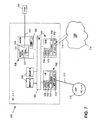
- Figure 7 generally illustrates the receipt and subsequent internal processing of a typical network management message received from an SCP or database node residing in or connected to IP network 216. More particularly, FEP routing node 500 is shown receiving a network management message associated with or sent by an SCP or database node that is provisioned to have FEP service provided by the FEP routing node 500.
- the network management message includes information related to the operational status of the related node or the communication pathway(s) that form the effective communication link between the related node and the FEP routing node 500. Examples of such status information might include, but are limited to; in service / out of service indicators, node congestion indicators, and link congestion indicators.
- the network management message is received by DCM card 510 and subsequently TCP encapsulated and processed by the IP Level 1 & 2 process 542. With IP Level 1 and 2 processing complete, the message is passed to and temporarily buffered in I/O queue process 540 before being directed on to HMDC process 538.
- HMDC process 538 examines the incoming message packet and determines that the message contains information that is required by one or more DACM cards. Consequently, HMDC process 538 passes the message packet to HMDT process 536 for internal routing to the appropriate DACM card(s).
- HMDT process 536 internally routes the message packet via IMT bus 504 to the only provisioned DACM card in the system, DACM 508. It will be appreciated that if multiple DACM cards were simultaneously provisioned in the FEP routing node, HMDT process 536 could direct multiple copies of the network management message packet to each of the provisioned DACM cards connected to IMT bus 504.
- DACM card 508 Once the network management message packet is received by DACM card 508, the message is generally verified and processed by the SCCP and SCRC processes 520 and 522, respectively. The verified and processed network management message is then passed to the DAC process 524. DAC process 524 examines the message packet, extracts the necessary node status information, and updates the appropriate records in the DAC database 526.
- routing translation data utilized by the FEP routing node to make routing decisions can be maintained in an accurate and useful state.
- the FEP routing node configuration shown in Figure 7 includes all DAC related processing modules onboard the DACM card 508. However, processing of network management messages would be similar in the case of FEP routing node 600, that is generally illustrated in Figure 5. In the case of the configuration contemplated in Figure 5, messages arriving at the DACM card 610 are simply passed to an external DAC server 620 via a high-speed Ethernet connection 630 prior to updating of the DAC database 526. In all other respects, processing of an incoming network management message similar to that described above, would be identical in the FEP routing node 500.
- FIGs 8 - 11 Shown in Figures 8 - 11 are several examples of practical network implementations of an FEP routing node of the present invention. It will be appreciated that the particular embodiment of the FEP routing node chosen to illustrate these sample implementations is the same as that shown in figure 3 and described in detail above. However, other embodiments of the FEP routing node of the present invention could just as effectively be employed in these sample implementations, including the embodiment illustrated in Figure 5.
- Telecommunications network 200 includes an end office or SSP 110, an FEP routing node 500, an IP data network 216, and three SCP nodes 220, 224, and 228.
- SSP 110 is communicatively coupled to FEP routing node 500 via an SS7 communication link 212.
- link 212 be an SS7-type communication link.
- Such a link could be an IP link carrying encapsulated SS7 signaling messages.
- FEP routing node is in turn communicatively coupled to IP network 216 via an IP link or connection 218.
- SCP 220 Also connected to IP network 216 via IP connection 222 is SCP 220.
- SCP 224 and SCP 228 are connected to IP network 216 via IP connections 226 and 230, respectively.
- the network configuration shown in Figure 8 is one of the more simple implementations of an FEP routing node of the present invention.
- FEP routing node 500 allows each of the provisioned SCPs 220, 224, and 228 to eliminate dedicated, internal FEP modules. Consequently, SCP 220 simply includes a computing platform 232 that serves a database back end processor.
- SCP 224 and SCP 228 also include back end database computing platforms.
- each SCP 220, 224, and 228 is not required to implement a separate FEP module.
- all of the SCP nodes are identified by a unique SS7 point code, each of which is different from the point code assigned to the FEP routing node (2-1-1). More particularly, SCP 220 is assigned a point code of 1-1-1, while SCP 224 has a point code of 1-1-2, and SCP 228 has a point code of 1-1-3. It will also be appreciated that, as each of these SCP nodes is connected to the FEP routing node 500 via the IP data network 216, each SCP also has a uniquely assigned IP address in the form of a host name and port.
- FEP routing node 500 when FEP routing node 500 receives a TCAP query message from SSP 110 that is destined for the SCP with point code of 1-1-1 and SSN of 20, FEP routing node might simply perform database protocol translation-type processing on the message, encapsulate the modified message in a properly addressed IP packet, and route the modified message on to SCP 220. Any other processing that was previously performed by FEP 128 shown in Figure 1 could also be performed by the FEP routing node 500.
- FIG. 9 Illustrated in Figure 9 is another typical telecommunications network, generally indicated by the numeral 300.
- network 300 also includes an End Office or SSP 110, an FEP routing node 500, an IP data network 216, and three SCP nodes 220, 224, and 228.
- SSP 110 is communicatively coupled to FEP routing node 500 via an SS7 communication link 212.
- FEP routing node 500 is in turn communicatively coupled to IP network 216 via an IP link or connection 218.
- SCP 220 simply includes a computing platform 232 that serves a database back end processor.
- SCP 224 and SCP 228 also include back end database computing platforms.
- the network configuration shown in Figure 9 is a slightly more complex implementation of an FEP routing node than that shown in Figure 8.
- all of the SCP nodes are identified by the same SS7 point code (1-1-1), which is different from the point code assigned to the FEP routing node (2-1-1) and all of the SCPs are provisioned with the same subsystem, SSN 20.
- each of these SCP nodes is connected to the FEP routing node 500 via the IP data network 216, each individual SCP will still have a unique assigned IP address in the form of a Host name and Port.
- FEP routing node 500 when FEP routing node 500 receives a TCAP query message from SSP 110 that is destined for the SCP with point code of 1-1-1 and SSN of 20, FEP routing node might make a decision to route based on the operational status or congestion status of the three SCPs 220, 224 and 228. Such load shedding or load sharing among the three similarly provisioned SCPs will ultimately lead to superior overall network performance.
- the FEP routing node 500 might further perform database protocol translation-type processing on the message, encapsulate the modified message in a properly addressed IP packet, and route the modified message on to the selected SCP. Once again, any additional processing that was previously performed by FEP 128 shown in Figure 1 could also be performed by the FEP routing node 500.
- network 400 also includes an end office or SSP 110, an FEP routing node 500, an IP data network 216, and three SCP nodes 410, 420, and 430.
- SSP 110 is communicatively coupled to FEP routing node 500 via an SS7 communication link 212.
- FEP routing node 500 is in turn communicatively coupled to IP network 216 via an IP link or connection 218.
- SCPs 410, 420, and 430 are also connected to IP network 216 via the plurality of IP connections 414, 424 and 434, respectively.
- each SCP is comprised of multiple back end database processors which effectively form a series of virtual SCP (vSCP) nodes.
- SCP 410 is comprised of a series of back end database processors generally indicated by the numeral 412, all of which are represented by a point code of 1-1-1 and subsystem of 20.
- SSN 20 of SCP 410 provides LIDB-type database information.
- SCP 420 is comprised of a series of back end database processors generally indicated by the numeral 422, all of which are represented by a point code of 1-1-1 and subsystem of 30.
- SSN 30 of SCP 420 provides 800 number-type database information.
Landscapes
- Engineering & Computer Science (AREA)
- Computer Networks & Wireless Communication (AREA)
- Signal Processing (AREA)
- Computer Security & Cryptography (AREA)
- Data Exchanges In Wide-Area Networks (AREA)
- Telephonic Communication Services (AREA)
- Image Processing (AREA)
- Coupling Device And Connection With Printed Circuit (AREA)
- Exchange Systems With Centralized Control (AREA)
Claims (58)
- Netzelement zur Bereitstellung eines Dienstesteuerungspunkt-(service control point - SCP)-Vorverarbeitungs-(front end processing - FEP)-Dienstes und zum Routen von Datenpaketen durch ein Kommunikationsnetz, das Netzelement umfassend:(a) ein Kommunikationsmodul, das eingerichtet ist, Datenpakete an ein Kommunikationsnetz zu übertragen sowie Datenpakete von diesem zu empfangen;(b) Paketunterscheidungsmittel zum Bestimmen, ob ein von dem Kommunikationsnetz empfangenes Datenpaket für einen SCP-Knoten gedacht ist, der für den Empfang des Vorverarbeitungs-(FEP)-Dienstes bereitgestellt ist;(c) eine Datenbankzugriffssteuerungs-(database access control - DAC)-Datenbank enthaltend Informationen über SCP-Knoten, die für den Empfang des FEP-Dienstes bereitgestellt sind;(d) DAC-Mittel zum Abfragen der DAC-Datenbank und Modifizieren des empfangenen Pakets derart, dass dieses eine von der DAC-Datenbank zurückgesendete Information enthält, wobei das Netzelement angepasst ist zur Bereitstellung des FEP-Dienstes für eine Vielzahl von SCP-Knoten, die vom Netzelement getrennt sind, und zum Beseitigen der Notwendigkeit, dass die SCP- oder Datenbankknoten individuelle Vorverarbeitungsprozessoren aufweisen.
- Netzelement nach Anspruch 1, wobei das empfangene Datenpaket eine Zeichengabenachricht des Zeichengabesystems Nr. 7 (SS7) ist.
- Netzelement nach Anspruch 2, wobei die SS7-Zeichengabenachricht eine Nachrichtenzeichengabeeinheit (message signaling unit - MSU) für ein Anwenderteil für Transaktionsabwicklung (transaction capabilities application part - TCAP) ist.
- Netzelement nach Anspruch 3, wobei die TCAP-MSU eine Datenbankabfragenachricht enthält.
- Netzelement nach Anspruch 1, wobei das Kommunikationsnetz ein SS7-Netz ist.
- Netzelement nach Anspruch 1, wobei das Kommunikationsnetz ein Internet-protokoll-(IP)-Netz ist.
- Netzelement nach Anspruch 1, wobei das Kommunikationsnetz ein asynchrones Transfermodus-(ATM)-Netz ist.
- Netzelement nach Anspruch 1, wobei das Kommunikationsmodul ein Zeichengabesystem-7-(SS7)-Link-Schnittstellenmodul (link interface module - LIM) ist.
- Netzelement nach Anspruch 1, wobei das Kommunikationsmodul ein Internetprotokoll-(IP)-Datenbankkommunikationsmodul (database communiation module - DCM) ist.
- Netzelement nach Anspruch 1, wobei die DAC-Datenbank eine Vielzahl von Datensätzen umfasst und jeder DAC-Datenbankdatensatz eine IP-Netzadresse umfasst, die einem der SCP-Knoten zugeordnet ist.
- Netzelement nach Anspruch 1, wobei die DAC-Datenbank eine Vielzahl von Datensätzen umfasst und jeder DAC-Datenbankdatensatz eine Betriebsstatusinformation umfasst, die einem der SCP-Knoten zugeordnet ist.
- Netzelement nach Anspruch 1, wobei die DAC-Datenbank eine Vielzahl von Datensätzen umfasst und jeder DAC-Datenbankdatensatz eine Eigentümerinformation umfasst, die einem der SCP-Knöten zugeordnet ist.
- Netzelement nach Anspruch 1, wobei die DAC-Datenbank eine Vielzahl von Datensätzen umfasst und jeder DAC-Datenbankdatensatz eine Datenbankprotokollinformation umfasst, die einem der SCP-Knoten zugeordnet ist.
- Netzelement nach Anspruch 1, wobei die DAC-Datenbank eine Vielzahl von Datensätzen umfasst und jeder DAC-Datenbankdatensatz eine Diensttypenkennungsinformation umfasst, die einem der SCP-Knoten zugeordnet ist.
- Netzelement nach Anspruch 14, wobei die Diensttypenkennungsinformation einen Dienst des fortgeschrittenen intelligenten Netzes (advanced intelligent network - AIN) umfasst.
- Netzelement nach Anspruch 14, wobei die Diensttypenkennungsinformation ein Übersetzungstyp-(translation type - TT)-Wert ist.
- Netzelement nach Anspruch 14, wobei die Diensttypenkennungsinformation eine Subsystemnummer (SSN) ist.
- Netzelement nach Anspruch 14, wobei die Diensttypenkennungsinformation einen Rufnamen-(calling name - CNAM)-Dienst identifiziert.
- Netzelement nach Anspruch 14, wobei die Diensttypenkennungsinformation einen Leitungsinformationsdatenbank-(line information database - LIDB)-Dienst identifiziert.
- Netzelement nach Anspruch 14, wobei die Diensttypenkennungsinformation einen gebührenfreien Nummerndienst (800) identifiziert.
- Netzelement nach Anspruch 14, wobei die Diensttypenkennungsinformation einen Rufnummernportabilitäts-(local number portability - LNP)-Dienst identifiziert.
- Netzelement nach Anspruch 14, wobei die Diensttypenkennungsinformation einen Anwesenheitsdienst identifiziert.
- Netzelement nach Anspruch 8, wobei sich die Paketunterscheidungsmittel auf dem LIM befinden.
- Netzelement nach Anspruch 1, wobei die DAC-Datenbank in dem Netzelement integriert und in diesem enthalten ist.
- Netzelement nach Anspruch 1, wobei die DAC-Datenbank auf einem externen Datenbankserver angeordnet ist, der kommunikativ mit dem Netzelement verbunden ist.
- Netzelement nach Anspruch 1, wobei Daten, die die DAC-Datenbank umfassen, in einem Hochgeschwindigkeits-RAM-Speicher verwaltet werden.
- Netzelement nach Anspruch 1, wobei Daten, die die DAC-Datenbank umfassen, auf einem optischen Hochgeschwindigkeitsspeicherplattenmedium verwaltet werden.
- Netzelement nach Anspruch 1, umfassend DAC-Protokollübersetzungsmittel zum Modifizieren des empfangenen Datenpakets derart, dass dieses eine vorgegebene Datenbankprotokollinformation enthält.
- Netzelement nach Anspruch 28, wobei die DAC-Protokollübersetzungsmittel eingerichtet sind, eine SCP-Abfrage in ein oder aus einem strukturierten Abfragesprache-(structured query language - SQL)-Datenbankprotokoll zu übersetzen.
- Netzelement nach Anspruch 28, wobei die DAC-Protokollübersetzungsmittel eingerichtet sind, eine SCP-Abfrage in ein oder aus einem ODBC-(open database connectivity)-Datenbankprokoll zu übersetzen.
- Netzelement nach Anspruch 1, wobei die Paketunterscheidungsmittel ausgelegt sind zur Überprüfung einer Zielnetzadresse in dem empfangenen Datenpaket, durch Bestimmen, ob das Datenpaket für einen SCP-Knoten gedacht ist, der für den Empfang eines FEP-Dienstes bereitgestellt ist.
- Netzelement nach Anspruch 31, wobei die Zielnetzadresse einen SS7-Zielpunktcode (destination point code - DPC) und ein Subsystem (SSN) umfasst.
- Netzelement nach Anspruch 32, wobei der SS7-DCP derselbe ist wie ein dem Netzelement zugeordneter SS7-PC.
- Netzelement nach Anspruch 32, wobei die SSN einer SSN entspricht, die für den FEP-Dienst vorgesehen ist.
- Netzelement nach Anspruch 1, wobei die Paketunterscheidungsmittel angepasst sind zur Überprüfung eines Übersetzungstyp-(translation type - TT)-Wertes in dem empfangenen Datenpaket, durch Bestimmen, ob das Datenpaket für einen SCP-Knoten gedacht ist, der für den Empfang eines FEP-Dienstes bereitgestellt ist.
- Netzelement nach Anspruch 1, wobei die Paketunterscheidungsmittel angepasst sind zur Überprüfung eines Subsystemnummern-(SSN)-Wertes in dem empfangenen Datenpaket, durch Bestimmen, ob das Datenpaket für einen SCP-Knoten gedacht ist, der für den Empfang eines FEP-Dienstes bereitgestellt ist.
- Verfahren zur Bereitstellung eines Dienstesteuerungspunkt-(service control point - SCP)-Vorverarbeitungsdienstes sowie zum Routen eines Datenpakets in einem Kommunikationsnetz, das Verfahren umfassend:Bereitstellen, durch ein Netzelement, eines FEP-Dienstes für eine Vielzahl von SCPs, die von dem Netzelement getrennt sind, und Beseitigen der Notwendigkeit von individuellen Vorverarbeitungsprozessoren an den SCPs, wobei die Bereitstellung des FEP-Dienstes umfasst:(a) an dem Netzelement, das einen ersten SS7-Punktcode (PC) aufweist, Empfangen eines Datenpakets mit einem ersten SS7-Zielpunktcode (DPC) von einem Kommunikationsnetz;(b) Bestimmen, ob das empfangene Datenpaket für einen SCP gedacht ist, der vorgesehen ist, einen Vorverarbeitungs-(front-end processing - FEP)-Dienst zu empfangen;(c) als Antwort auf die Bestimmung, dass das empfangene Datenpaket für einen SCP gedacht ist, der für den Empfang eines FEP-Dienstes vorgesehen ist, Durchführen einer Suche in einer Datenbankzugriffssteuerungs-(database access control - DAC)-Datenbank unter Verwendung einer in dem empfangenen Datenpaket enthaltenen Schlüsselinformation;(d) Modifizieren des empfangenen Datenpakets aufgrund einer Information, die von der DAC-Datenbanksuche zurückgesendet wird; und(e) Übertragen des modifizierten Datenpakets an einen der SCPs.
- Verfahren nach Anspruch 37, wobei die Schlüsselinformation einen Subsystemnummern-(SSN)-Wert umfasst.
- 39. Verfahren nach Anspruch 37, wobei das empfangene Datenpaket eine Zeichengabenachricht des Zeichengabesystems Nr. 7 (SS7) ist.
- Verfahren nach Anspruch 39, wobei die SS7-Zeichengabenachricht eine Nachrichtenzeichengabeeinheit (message signaling unit - MSU) für ein Anwenderteil für Transaktionsabwicklung (transaction capabilities application part - TCAP) ist.
- Verfahren nach Anspruch 40, wobei die TCAP-MSU eine SCP- oder Datenbankabfragenachricht enthält.
- Verfahren nach Anspruch 37, wobei das Kommunikationsnetz ein SS7-Netz ist.
- Verfahren nach Anspruch 37, wobei die Übertragung des modifizierten Datenpakets an einen der SCPs die Übertragung des modifizierten Datenpakets über ein Internetprotokoll-(IP)-Netz umfasst.
- Verfahren nach Anspruch 37, wobei die Bestimmung, ob das empfangene Datenpaket für einen SCP bestimmt ist, der für den Empfang eines Vorverarbeitungs-(FEP)-Dienstes vorgesehen ist, die Überprüfung des DPC-Wertes in dem empfangenen Datenpaket umfasst.
- Verfahren nach Anspruch 44, wobei die Bestimmung, ob das empfangene Datenpaket für einen SCP bestimmt ist, der für den Empfang eines Vorverarbeitungs-(FEP)-Dienstes vorgesehen ist, weiterhin die Überprüfung eines Zielsubsystem-(SSN)-Wertes in dem empfangenen Datenpaket umfasst.
- Verfahren nach Anspruch 44, wobei der DPC derselbe ist wie der dem ersten Netzelement zugeordnete PC.
- Verfahren nach Anspruch 45, wobei der Ziel-SSN-Wert einer SSN entspricht, die für den FEP-Dienst vorgesehen ist.
- Verfahren nach Anspruch 37, wobei die Schlüsselinformation den ersten DPC und einen SSN-Wert enthält.
- Verfahren nach Anspruch 37, wobei die Schlüsselinformation einen Übersetzungtyp-(TT)-Wert enthält.
- Verfahren nach Anspruch 37, wobei das Modifizieren des empfangenen Datenpakets das Modifizieren einer Paket-Routing-Adresse in dem empfangenen Datenpaket umfasst.
- Verfahren nach Anspruch 50, wobei das Modifizieren der Routing-Adresse das Modifizieren der Routing-Adresse aufgrund einer in der DAC-Datenbank enthaltenen SCP-Betriebsstatusinformation umfasst.
- Verfahren nach Anspruch 50, wobei das Modifizieren der Routing-Adresse das Modifizieren der Routing-Adresse aufgrund einer in der DAC-Datenbank enthaltenen SCP-Überlastungsstatusinformation umfasst.
- Verfahren nach Anspruch 50, wobei das Modifizieren der Routing-Adresse das Modifizieren der Routing-Adresse aufgrund einer in der DAC-Datenbank enthaltenen SCP-Eigentümerinformation umfasst.
- Verfahren nach Anspruch 50, wobei das Modifizieren der Routing-Adresse das Modifizieren der Routing-Adresse derart umfasst, dass eine Ziel-IP-Netzadresse enthalten ist.
- Verfahren nach Anspruch 37, wobei das Modifizieren des empfangenen Datenpakets die Änderung eines Protokolls einer in dem empfangenen Paket enthaltenen Datenbankabfrageanweisung umfasst.
- Verfahren nach Anspruch 55, wobei die Änderung eines Protokolls die Änderung des Protokolls aufgrund einer in der DAC-Datenbank enthaltenen SCP-Protokollinformation umfasst.
- Netzelement nach Anspruch 1, wobei die Bereitstellung des FEP-Dienstes für eine Vielzahl von SCP- oder Datenbankknoten die Bereitstellung eines Vorverarbeitungsdienstes an einem Signaltransferpunkt (STP) umfasst.
- Verfahren nach Anspruch 37, wobei die Bereitstellung des FEP-Dienstes vom ersten Netzelement die Bereitstellung eines Vorverarbeitungsdienstes von einem Signaltransferpunkt (STP) umfasst.
Applications Claiming Priority (5)
| Application Number | Priority Date | Filing Date | Title |
|---|---|---|---|
| US12788999P | 1999-04-05 | 1999-04-05 | |
| US127889P | 1999-04-05 | ||
| US09/443,712 US7050456B1 (en) | 1998-12-04 | 1999-11-19 | Methods and systems for communicating signaling system 7 (SS7) user part messages among SS7 signaling points (SPs) and internet protocol (IP) nodes using signal transfer points (STPs) |
| US443712 | 1999-11-19 | ||
| PCT/US2000/008614 WO2000060812A1 (en) | 1999-04-05 | 2000-03-29 | Methods and systems for providing database node access control functionality in a communications network routing node |
Publications (3)
| Publication Number | Publication Date |
|---|---|
| EP1169816A1 EP1169816A1 (de) | 2002-01-09 |
| EP1169816A4 EP1169816A4 (de) | 2003-05-14 |
| EP1169816B1 true EP1169816B1 (de) | 2006-11-08 |
Family
ID=26826059
Family Applications (2)
| Application Number | Title | Priority Date | Filing Date |
|---|---|---|---|
| EP00919979A Expired - Lifetime EP1169816B1 (de) | 1999-04-05 | 2000-03-29 | Verfahren und systeme zur bereitstellung der funktionalität einer datenbasiszugriffskontrolle in einem routingknoten eines kommunikationsnetzes |
| EP00920080A Expired - Lifetime EP1169817B1 (de) | 1999-04-05 | 2000-04-03 | Netzperipherie-vorrichtung und verfahren zum verbinden von ss7-zeichengabepunkten unter verwendung dieser vorrichtung |
Family Applications After (1)
| Application Number | Title | Priority Date | Filing Date |
|---|---|---|---|
| EP00920080A Expired - Lifetime EP1169817B1 (de) | 1999-04-05 | 2000-04-03 | Netzperipherie-vorrichtung und verfahren zum verbinden von ss7-zeichengabepunkten unter verwendung dieser vorrichtung |
Country Status (5)
| Country | Link |
|---|---|
| EP (2) | EP1169816B1 (de) |
| AT (2) | ATE344999T1 (de) |
| AU (3) | AU4058300A (de) |
| DE (1) | DE60031770T2 (de) |
| WO (3) | WO2000060812A1 (de) |
Cited By (5)
| Publication number | Priority date | Publication date | Assignee | Title |
|---|---|---|---|---|
| US7522580B2 (en) | 1998-12-04 | 2009-04-21 | Tekelec | Edge device and method for interconnecting SS7 signaling points (SPs) using edge device |
| US7525997B2 (en) | 1998-12-04 | 2009-04-28 | Tekelec | Methods and systems for communicating SS7 messages over packet-based network using transport adapter layer interface |
| US7532647B2 (en) | 2004-07-14 | 2009-05-12 | Tekelec | Methods and systems for auto-correlating message transfer part (MTP) priority and internet protocol (IP) type of service in converged networks |
| US7743131B2 (en) | 2000-06-01 | 2010-06-22 | Tekelec | Methods and systems for managing status audit messages in a gateway routing node |
| US7839889B2 (en) | 1998-12-04 | 2010-11-23 | Tekelec | Methods and systems for communicating signaling system 7 (SS7) user part messages among SS7 signaling points (SPs) and internet protocol (IP) nodes using signal transfer points (STPs) |
Families Citing this family (9)
| Publication number | Priority date | Publication date | Assignee | Title |
|---|---|---|---|---|
| CN1329852C (zh) * | 2003-09-09 | 2007-08-01 | 华为技术有限公司 | 一种实现数据库访问的方法 |
| US7760706B2 (en) | 2003-11-20 | 2010-07-20 | Tekelec | Methods and systems for message transfer part (MTP) load sharing using MTP load sharing groups |
| CN100387032C (zh) * | 2004-04-21 | 2008-05-07 | 华为技术有限公司 | 一个智能呼叫中实现与外部数据系统多次交互的方法 |
| US7633969B2 (en) | 2004-09-10 | 2009-12-15 | Tekelec | Methods, systems, and computer program products for dynamically adjusting load sharing distributions in response to changes in network conditions |
| US9217691B2 (en) * | 2009-08-19 | 2015-12-22 | Frontone Gmbh | System for investigating a test body |
| US9729454B2 (en) | 2015-01-21 | 2017-08-08 | Oracle International Corporation | Methods, systems, and computer readable media for balancing diameter message traffic received over long-lived diameter connections |
| US10027577B2 (en) | 2015-07-29 | 2018-07-17 | Oracle International Corporation | Methods, systems, and computer readable media for peer aware load distribution |
| US10999202B2 (en) | 2018-11-30 | 2021-05-04 | Oracle International Corporation | Methods, systems, and computer readable media for distributing Sigtran connections among signal transfer point (STP) message processors |
| US11576072B2 (en) | 2020-09-21 | 2023-02-07 | Oracle International Corporation | Methods, systems, and computer-readable media for distributing S1 connections to mobility management entities (MMEs) and N2 connections to access and mobility management functions (AMFs) |
Family Cites Families (16)
| Publication number | Priority date | Publication date | Assignee | Title |
|---|---|---|---|---|
| US5701301A (en) * | 1993-06-28 | 1997-12-23 | Bellsouth Corporation | Mediation of open advanced intelligent network in SS7 protocol open access environment |
| US5926482A (en) * | 1994-05-05 | 1999-07-20 | Sprint Communications Co. L.P. | Telecommunications apparatus, system, and method with an enhanced signal transfer point |
| US5920562A (en) * | 1996-11-22 | 1999-07-06 | Sprint Communications Co. L.P. | Systems and methods for providing enhanced services for telecommunication call |
| US5694463A (en) * | 1995-02-15 | 1997-12-02 | Christie; Joseph Michael | System for service control point routing |
| US5706286A (en) * | 1995-04-19 | 1998-01-06 | Mci Communications Corporation | SS7 gateway |
| US5675635A (en) * | 1996-01-24 | 1997-10-07 | Sprint Communications Company L.P. | System and method for conducting poll at a processor associated with the originating switch |
| US5761500A (en) * | 1996-04-18 | 1998-06-02 | Mci Communications Corp. | Multi-site data communications network database partitioned by network elements |
| US5870565A (en) * | 1996-05-06 | 1999-02-09 | Telefonaktiebolaget L M Ericsson (Publ) | Telecommunications management network connected to a common channel signaling network |
| US6021126A (en) * | 1996-06-26 | 2000-02-01 | Bell Atlantic Network Services, Inc. | Telecommunication number portability |
| US6014379A (en) * | 1996-06-26 | 2000-01-11 | Bell Atlantic Network Services, Inc. | Telecommunications custom calling services |
| US5793771A (en) * | 1996-06-27 | 1998-08-11 | Mci Communications Corporation | Communication gateway |
| US6011794A (en) * | 1996-09-09 | 2000-01-04 | Netplus Communications Corp. | Internet based telephone apparatus and method |
| US5923659A (en) * | 1996-09-20 | 1999-07-13 | Bell Atlantic Network Services, Inc. | Telecommunications network |
| US6011803A (en) * | 1997-01-13 | 2000-01-04 | Lucent Technologies Inc. | Distributed-protocol server |
| US5940598A (en) * | 1997-01-28 | 1999-08-17 | Bell Atlantic Network Services, Inc. | Telecommunications network to internetwork universal server |
| US6018515A (en) * | 1997-08-19 | 2000-01-25 | Ericsson Messaging Systems Inc. | Message buffering for prioritized message transmission and congestion management |
-
2000
- 2000-03-29 EP EP00919979A patent/EP1169816B1/de not_active Expired - Lifetime
- 2000-03-29 DE DE60031770T patent/DE60031770T2/de not_active Expired - Lifetime
- 2000-03-29 AT AT00919979T patent/ATE344999T1/de not_active IP Right Cessation
- 2000-03-29 WO PCT/US2000/008614 patent/WO2000060812A1/en not_active Ceased
- 2000-03-29 AU AU40583/00A patent/AU4058300A/en not_active Abandoned
- 2000-04-03 AU AU40670/00A patent/AU4067000A/en not_active Abandoned
- 2000-04-03 EP EP00920080A patent/EP1169817B1/de not_active Expired - Lifetime
- 2000-04-03 WO PCT/US2000/008837 patent/WO2000060814A1/en not_active Ceased
- 2000-04-03 AT AT00920080T patent/ATE512522T1/de not_active IP Right Cessation
- 2000-04-05 AU AU40746/00A patent/AU4074600A/en not_active Abandoned
- 2000-04-05 WO PCT/US2000/009081 patent/WO2000060878A2/en not_active Ceased
Cited By (11)
| Publication number | Priority date | Publication date | Assignee | Title |
|---|---|---|---|---|
| US7564870B2 (en) | 1997-07-02 | 2009-07-21 | Tekelec | Methods and systems for providing database node access control functionality in a communications network routing node |
| US7522580B2 (en) | 1998-12-04 | 2009-04-21 | Tekelec | Edge device and method for interconnecting SS7 signaling points (SPs) using edge device |
| US7525997B2 (en) | 1998-12-04 | 2009-04-28 | Tekelec | Methods and systems for communicating SS7 messages over packet-based network using transport adapter layer interface |
| US7573905B2 (en) | 1998-12-04 | 2009-08-11 | Tekelec | Methods and systems for communicating SS7 messages over packet-based network using transport adapter layer interface (TALI) |
| US7616659B2 (en) | 1998-12-04 | 2009-11-10 | Tekelec | Methods and systems for communicating SS7 messages over packet-based network using transport adapter layer interface |
| US7839889B2 (en) | 1998-12-04 | 2010-11-23 | Tekelec | Methods and systems for communicating signaling system 7 (SS7) user part messages among SS7 signaling points (SPs) and internet protocol (IP) nodes using signal transfer points (STPs) |
| US8213410B2 (en) | 1998-12-04 | 2012-07-03 | Tekelec, Inc. | Methods and systems for communicating SS7 messages over packet-based network using transport adapter layer interface |
| US8750328B2 (en) | 1998-12-04 | 2014-06-10 | Tekelec Global, Inc. | Methods and systems for communicating signaling system 7 (SS7) user part messages among SS7 signaling points (SPs) and internet protocol (IP) nodes using signal transfer points (STPs) |
| US7743131B2 (en) | 2000-06-01 | 2010-06-22 | Tekelec | Methods and systems for managing status audit messages in a gateway routing node |
| US8224928B2 (en) | 2000-06-01 | 2012-07-17 | Tekelec, Inc. | Methods and systems for distributing operating status information within a converged network |
| US7532647B2 (en) | 2004-07-14 | 2009-05-12 | Tekelec | Methods and systems for auto-correlating message transfer part (MTP) priority and internet protocol (IP) type of service in converged networks |
Also Published As
| Publication number | Publication date |
|---|---|
| WO2000060812A1 (en) | 2000-10-12 |
| WO2000060878A2 (en) | 2000-10-12 |
| WO2000060814A1 (en) | 2000-10-12 |
| AU4074600A (en) | 2000-10-23 |
| EP1169817B1 (de) | 2011-06-08 |
| EP1169816A1 (de) | 2002-01-09 |
| AU4067000A (en) | 2000-10-23 |
| EP1169817A1 (de) | 2002-01-09 |
| AU4058300A (en) | 2000-10-23 |
| EP1169816A4 (de) | 2003-05-14 |
| DE60031770T2 (de) | 2007-09-20 |
| ATE344999T1 (de) | 2006-11-15 |
| EP1169817A4 (de) | 2008-03-19 |
| DE60031770D1 (de) | 2006-12-21 |
| WO2000060878A3 (en) | 2012-02-02 |
| ATE512522T1 (de) | 2011-06-15 |
Similar Documents
| Publication | Publication Date | Title |
|---|---|---|
| US6944184B1 (en) | Methods and systems for providing database node access control functionality in a communications network routing node | |
| EP1679848B1 (de) | Verfahren und Systeme zum Lenken von Anfragenachrichten eines Anrufernamensdienstes in einem Kommunikationsnetz | |
| US6954526B1 (en) | Methods and systems for routing calling name service query messages in a communication network | |
| US6647113B2 (en) | Methods and systems for providing universal triggerless number portability | |
| EP1303994B1 (de) | Triggerlose anrufabfangdiensten | |
| EP1738269B1 (de) | Systeme und verfahren zur durchführung von statefulsignalisierungstransaktionen in einer verteilten verarbeitungsumgebung | |
| EP1135905B1 (de) | Nachrichtenaustausch zwischen ss7-zeichengabepunkten | |
| EP1169816B1 (de) | Verfahren und systeme zur bereitstellung der funktionalität einer datenbasiszugriffskontrolle in einem routingknoten eines kommunikationsnetzes | |
| EP2160039A1 (de) | Filtern von Mobile Application Part (MAP) Nachrichten | |
| US7372953B2 (en) | Methods and systems for default routing in a signaling network | |
| US7010114B2 (en) | SS7 signaling server with integrated advanced signaling services | |
| EP1247378A1 (de) | Verfahren und systeme zur nachrichtenlenkung in einen kommunikationsnetz | |
| US20050031094A1 (en) | System and method for message delivery to a busy called party | |
| US20040057561A1 (en) | System and method for message delivery to a busy called party | |
| US7054422B2 (en) | Methods and systems for accessing peg count information generated by signaling gateway or signal transfer point | |
| EP1545138A1 (de) | Verfahren und Vorrichtung zum Übertragen von Signalisierungsnachrichten | |
| EP1585349B1 (de) | Verfahren zur transparenten Handhabung von vorübergehenden, unzugängigen Datenbanken in einem Nummernübertragbarkeitsserver |
Legal Events
| Date | Code | Title | Description |
|---|---|---|---|
| PUAI | Public reference made under article 153(3) epc to a published international application that has entered the european phase |
Free format text: ORIGINAL CODE: 0009012 |
|
| 17P | Request for examination filed |
Effective date: 20011105 |
|
| AK | Designated contracting states |
Kind code of ref document: A1 Designated state(s): AT BE CH CY DE DK ES FI FR GB GR IE IT LI LU MC NL PT SE |
|
| AX | Request for extension of the european patent |
Free format text: AL;LT;LV;MK;RO;SI |
|
| A4 | Supplementary search report drawn up and despatched |
Effective date: 20030401 |
|
| RIC1 | Information provided on ipc code assigned before grant |
Ipc: 7H 04L 29/06 B Ipc: 7H 04M 3/42 B Ipc: 7H 04L 12/66 B Ipc: 7H 04L 12/28 A Ipc: 7H 04L 12/56 B Ipc: 7H 04Q 3/00 B |
|
| 17Q | First examination report despatched |
Effective date: 20031118 |
|
| GRAP | Despatch of communication of intention to grant a patent |
Free format text: ORIGINAL CODE: EPIDOSNIGR1 |
|
| GRAS | Grant fee paid |
Free format text: ORIGINAL CODE: EPIDOSNIGR3 |
|
| GRAA | (expected) grant |
Free format text: ORIGINAL CODE: 0009210 |
|
| AK | Designated contracting states |
Kind code of ref document: B1 Designated state(s): AT BE CH CY DE DK ES FI FR GB GR IE IT LI LU MC NL PT SE |
|
| PG25 | Lapsed in a contracting state [announced via postgrant information from national office to epo] |
Ref country code: IT Free format text: LAPSE BECAUSE OF FAILURE TO SUBMIT A TRANSLATION OF THE DESCRIPTION OR TO PAY THE FEE WITHIN THE PRESCRIBED TIME-LIMIT;WARNING: LAPSES OF ITALIAN PATENTS WITH EFFECTIVE DATE BEFORE 2007 MAY HAVE OCCURRED AT ANY TIME BEFORE 2007. THE CORRECT EFFECTIVE DATE MAY BE DIFFERENT FROM THE ONE RECORDED. Effective date: 20061108 Ref country code: NL Free format text: LAPSE BECAUSE OF FAILURE TO SUBMIT A TRANSLATION OF THE DESCRIPTION OR TO PAY THE FEE WITHIN THE PRESCRIBED TIME-LIMIT Effective date: 20061108 Ref country code: CH Free format text: LAPSE BECAUSE OF FAILURE TO SUBMIT A TRANSLATION OF THE DESCRIPTION OR TO PAY THE FEE WITHIN THE PRESCRIBED TIME-LIMIT Effective date: 20061108 Ref country code: BE Free format text: LAPSE BECAUSE OF FAILURE TO SUBMIT A TRANSLATION OF THE DESCRIPTION OR TO PAY THE FEE WITHIN THE PRESCRIBED TIME-LIMIT Effective date: 20061108 Ref country code: AT Free format text: LAPSE BECAUSE OF FAILURE TO SUBMIT A TRANSLATION OF THE DESCRIPTION OR TO PAY THE FEE WITHIN THE PRESCRIBED TIME-LIMIT Effective date: 20061108 Ref country code: LI Free format text: LAPSE BECAUSE OF FAILURE TO SUBMIT A TRANSLATION OF THE DESCRIPTION OR TO PAY THE FEE WITHIN THE PRESCRIBED TIME-LIMIT Effective date: 20061108 Ref country code: FI Free format text: LAPSE BECAUSE OF FAILURE TO SUBMIT A TRANSLATION OF THE DESCRIPTION OR TO PAY THE FEE WITHIN THE PRESCRIBED TIME-LIMIT Effective date: 20061108 |
|
| REG | Reference to a national code |
Ref country code: GB Ref legal event code: FG4D |
|
| REG | Reference to a national code |
Ref country code: CH Ref legal event code: EP |
|
| REG | Reference to a national code |
Ref country code: IE Ref legal event code: FG4D |
|
| REF | Corresponds to: |
Ref document number: 60031770 Country of ref document: DE Date of ref document: 20061221 Kind code of ref document: P |
|
| PG25 | Lapsed in a contracting state [announced via postgrant information from national office to epo] |
Ref country code: DK Free format text: LAPSE BECAUSE OF FAILURE TO SUBMIT A TRANSLATION OF THE DESCRIPTION OR TO PAY THE FEE WITHIN THE PRESCRIBED TIME-LIMIT Effective date: 20070208 |
|
| PG25 | Lapsed in a contracting state [announced via postgrant information from national office to epo] |
Ref country code: ES Free format text: LAPSE BECAUSE OF FAILURE TO SUBMIT A TRANSLATION OF THE DESCRIPTION OR TO PAY THE FEE WITHIN THE PRESCRIBED TIME-LIMIT Effective date: 20070219 |
|
| REG | Reference to a national code |
Ref country code: SE Ref legal event code: TRGR |
|
| PG25 | Lapsed in a contracting state [announced via postgrant information from national office to epo] |
Ref country code: PT Free format text: LAPSE BECAUSE OF FAILURE TO SUBMIT A TRANSLATION OF THE DESCRIPTION OR TO PAY THE FEE WITHIN THE PRESCRIBED TIME-LIMIT Effective date: 20070409 |
|
| NLV1 | Nl: lapsed or annulled due to failure to fulfill the requirements of art. 29p and 29m of the patents act | ||
| REG | Reference to a national code |
Ref country code: CH Ref legal event code: PL |
|
| ET | Fr: translation filed | ||
| PLBE | No opposition filed within time limit |
Free format text: ORIGINAL CODE: 0009261 |
|
| STAA | Information on the status of an ep patent application or granted ep patent |
Free format text: STATUS: NO OPPOSITION FILED WITHIN TIME LIMIT |
|
| 26N | No opposition filed |
Effective date: 20070809 |
|
| PG25 | Lapsed in a contracting state [announced via postgrant information from national office to epo] |
Ref country code: IE Free format text: LAPSE BECAUSE OF NON-PAYMENT OF DUE FEES Effective date: 20070329 Ref country code: MC Free format text: LAPSE BECAUSE OF NON-PAYMENT OF DUE FEES Effective date: 20070331 |
|
| PG25 | Lapsed in a contracting state [announced via postgrant information from national office to epo] |
Ref country code: GR Free format text: LAPSE BECAUSE OF FAILURE TO SUBMIT A TRANSLATION OF THE DESCRIPTION OR TO PAY THE FEE WITHIN THE PRESCRIBED TIME-LIMIT Effective date: 20070209 |
|
| PG25 | Lapsed in a contracting state [announced via postgrant information from national office to epo] |
Ref country code: CY Free format text: LAPSE BECAUSE OF FAILURE TO SUBMIT A TRANSLATION OF THE DESCRIPTION OR TO PAY THE FEE WITHIN THE PRESCRIBED TIME-LIMIT Effective date: 20061108 Ref country code: LU Free format text: LAPSE BECAUSE OF NON-PAYMENT OF DUE FEES Effective date: 20070329 |
|
| REG | Reference to a national code |
Ref country code: DE Ref legal event code: R082 Ref document number: 60031770 Country of ref document: DE Effective date: 20120906 Representative=s name: ISARPATENT GBR PATENT- UND RECHTSANWAELTE, DE Ref country code: DE Ref legal event code: R081 Ref document number: 60031770 Country of ref document: DE Owner name: TEKELEC, INC.(N.D.GES.D.STAATES DELAWARE), MOR, US Free format text: FORMER OWNER: TEKELEC GLOBAL INC., MORRISVILLE, N.C., US Effective date: 20120906 Ref country code: DE Ref legal event code: R081 Ref document number: 60031770 Country of ref document: DE Owner name: TEKELEC, INC.(N.D.GES.D.STAATES DELAWARE), MOR, US Free format text: FORMER OWNER: TEKELEC, CALABASAS, CALIF., US Effective date: 20120906 Ref country code: DE Ref legal event code: R081 Ref document number: 60031770 Country of ref document: DE Owner name: TEKELEC, INC.(N.D.GES.D.STAATES DELAWARE), US Free format text: FORMER OWNER: TEKELEC, CALABASAS, US Effective date: 20120906 Ref country code: DE Ref legal event code: R081 Ref document number: 60031770 Country of ref document: DE Owner name: TEKELEC, INC.(N.D.GES.D.STAATES DELAWARE), US Free format text: FORMER OWNER: TEKELEC GLOBAL INC., MORRISVILLE, US Effective date: 20120906 |
|
| REG | Reference to a national code |
Ref country code: SE Ref legal event code: EUG |
|
| PG25 | Lapsed in a contracting state [announced via postgrant information from national office to epo] |
Ref country code: SE Free format text: LAPSE BECAUSE OF NON-PAYMENT OF DUE FEES Effective date: 20120330 |
|
| REG | Reference to a national code |
Ref country code: GB Ref legal event code: 732E Free format text: REGISTERED BETWEEN 20121122 AND 20121128 |
|
| REG | Reference to a national code |
Ref country code: FR Ref legal event code: TP Owner name: TEKELEC, INC., US Effective date: 20131003 Ref country code: FR Ref legal event code: CA Effective date: 20131003 Ref country code: FR Ref legal event code: CD Owner name: TEKELEC, INC., US Effective date: 20131003 |
|
| REG | Reference to a national code |
Ref country code: DE Ref legal event code: R082 Ref document number: 60031770 Country of ref document: DE |
|
| REG | Reference to a national code |
Ref country code: FR Ref legal event code: PLFP Year of fee payment: 17 |
|
| REG | Reference to a national code |
Ref country code: FR Ref legal event code: PLFP Year of fee payment: 18 |
|
| PGFP | Annual fee paid to national office [announced via postgrant information from national office to epo] |
Ref country code: SE Payment date: 20170313 Year of fee payment: 18 |
|
| REG | Reference to a national code |
Ref country code: FR Ref legal event code: PLFP Year of fee payment: 19 |
|
| PGFP | Annual fee paid to national office [announced via postgrant information from national office to epo] |
Ref country code: DE Payment date: 20190319 Year of fee payment: 20 Ref country code: GB Payment date: 20190327 Year of fee payment: 20 |
|
| PGFP | Annual fee paid to national office [announced via postgrant information from national office to epo] |
Ref country code: FR Payment date: 20190213 Year of fee payment: 20 |
|
| REG | Reference to a national code |
Ref country code: DE Ref legal event code: R071 Ref document number: 60031770 Country of ref document: DE |
|
| REG | Reference to a national code |
Ref country code: GB Ref legal event code: PE20 Expiry date: 20200328 |
|
| PG25 | Lapsed in a contracting state [announced via postgrant information from national office to epo] |
Ref country code: GB Free format text: LAPSE BECAUSE OF EXPIRATION OF PROTECTION Effective date: 20200328 |