EP1170932B1 - Identification vocal de l'appelant et de l'appelé pour dispositif de communication mobile - Google Patents
Identification vocal de l'appelant et de l'appelé pour dispositif de communication mobile Download PDFInfo
- Publication number
- EP1170932B1 EP1170932B1 EP00401956A EP00401956A EP1170932B1 EP 1170932 B1 EP1170932 B1 EP 1170932B1 EP 00401956 A EP00401956 A EP 00401956A EP 00401956 A EP00401956 A EP 00401956A EP 1170932 B1 EP1170932 B1 EP 1170932B1
- Authority
- EP
- European Patent Office
- Prior art keywords
- mobile communications
- communications device
- telephone
- telephone number
- audio
- Prior art date
- Legal status (The legal status is an assumption and is not a legal conclusion. Google has not performed a legal analysis and makes no representation as to the accuracy of the status listed.)
- Expired - Lifetime
Links
- 238000010295 mobile communication Methods 0.000 title claims description 35
- 238000000034 method Methods 0.000 claims description 7
- 230000004044 response Effects 0.000 claims description 4
- 230000001413 cellular effect Effects 0.000 claims description 2
- 238000012545 processing Methods 0.000 description 9
- 238000004891 communication Methods 0.000 description 8
- 230000006870 function Effects 0.000 description 7
- 238000010586 diagram Methods 0.000 description 6
- 238000012790 confirmation Methods 0.000 description 2
- 238000012986 modification Methods 0.000 description 2
- 230000004048 modification Effects 0.000 description 2
- 230000001419 dependent effect Effects 0.000 description 1
- 230000003993 interaction Effects 0.000 description 1
- 238000012544 monitoring process Methods 0.000 description 1
- 238000012216 screening Methods 0.000 description 1
- 230000002194 synthesizing effect Effects 0.000 description 1
Images

Classifications
-
- H—ELECTRICITY
- H04—ELECTRIC COMMUNICATION TECHNIQUE
- H04M—TELEPHONIC COMMUNICATION
- H04M1/00—Substation equipment, e.g. for use by subscribers
- H04M1/57—Arrangements for indicating or recording the number of the calling subscriber at the called subscriber's set
-
- H—ELECTRICITY
- H04—ELECTRIC COMMUNICATION TECHNIQUE
- H04M—TELEPHONIC COMMUNICATION
- H04M1/00—Substation equipment, e.g. for use by subscribers
- H04M1/26—Devices for calling a subscriber
- H04M1/27—Devices whereby a plurality of signals may be stored simultaneously
- H04M1/271—Devices whereby a plurality of signals may be stored simultaneously controlled by voice recognition
Definitions
- This invention relates in general to telecommunications and, more particularly, to caller identification for mobile communications devices.
- New services such as Caller ID, Call Waiting, and Voice Activated Dialing are examples of functions that have been added to the phone system to improve the quality of communications.
- mobile communication devices have evolved to provide communication resources apart from a wireline connection.
- some mobile phones provide a distinctive ring that can be associated with groups of telephone numbers. For example, a first ring type could be associated with number of co-workers, a second ring type could be associated with family members, and a third ring type could be associated with clients.
- a first ring type could be associated with number of co-workers
- a second ring type could be associated with family members
- a third ring type could be associated with clients.
- it is not practical to provide different type ring types for each caller because it would be impossible to remember the assoaations for more than a few people.
- some mobile communication device such as described in documents GB 2 268 663, US 5,583,919 and DE 198 320 69, comprises a voice synthesizing means producing pre-recorded voice signal corresponding to the telephone number of the call originator.
- none of these devices provides a communication device able to play the associated audio files in response to a match between an audio input from a user and one of templates, the audio file being also played when the communication device receives an incoming telephone call having a telephone number recorded in the database, and which does not require a large memory and additional power consumption.
- the present invention provides a mobile communications device comprising :
- the present invention provides significant advantages over the prior art. First, it allows for an audible indication of the calling party for the most frequently used numbers. Second, the capability for audible indication, in the user's own voice, can be accomplished without additional memory, since the audio files are shared with the voice activated dialing function. Accordingly, the additional power and cost associated with the audible caller identification function is minimal.
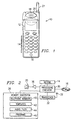
- Figure 1 illustrates a mobile communication device for providing wireless communications.
- the mobile communication device 10 of Figure 1 could be, for example, a cellular phone, smart phone, satellite phone, portable computer or a PDA (personal digital assistant) with wireless communications capabilities.
- the overall look of the device 10 could vary according to its capabilities; however, most mobile communication devices will have similar attributes: a display 12, an input keypad 14 (which may be integrated with the display 12 using a touch screen), a microphone 16, a conversation speaker 18 (for audio when pressed to the user's ear), a loudspeaker/ringer 20, and an antenna 22.
- the mobile communications device 10 has both voice activated dialing capabilities and audible caller identification capabilities.
- the internal circuitry of the mobile communications device 10 stores information used for voice activated dialing in a memory subsystem (see Figure 2).
- the information stored by the mobile communications device 10 includes a telephone number database (storing a plurality of frequently called numbers), a voice template database (storing voice templates used to recognize an utterance by the user indicative of a particular telephone number), and an audio file database (for confirmation of a voice dialed number), typically in the users own voice).
- a user When a user creates a new entry for the voice activated dialing system, he or she speaks the designation for the new number (such as "John", “work”, or “home”) and enters the number, either by speaker independent voice recognition, or by using the telephone keypad.
- the spoken designation is stored as an audio file (such as a *.wav file) and a template is made from the audio file; this template is used later for speech recognition.
- the telephone number, template and audio file are linked.
- the voice dialing circuitry parses the utterance (i.e., separates "call” and "home") and compares the stored templates with the designation portion of the utterance (i.e., "home”). Using techniques well known in the art, the designation portion of the utterance is matched to one of the templates, typically by assigning a score to each comparison. If the comparison with the best score meets a certain threshold, a match occurs, and the phone number and audio file associated with the matching template are retrieved.
- the audio file associated with the matching template Prior to dialing, however, the audio file associated with the matching template is played to the user as a confirmation.
- the user voice dials using “call John” and the mobile communications device 10 responds with “calling Jean” (where “Jean” is the audio file associated with the errantly matched template) the user can cancel the phone call before the connection is made.
- the voice dialing database could be used for other commands as well, such as "page John", depending upon the capabilities of the mobile communications device 10.
- the present invention uses the same audio files created for voice activated dialing for caller identification.
- the mobile communications device 10 receives data indicating the originating telephone number. This information is compared to the telephone numbers stored in the voice activated dialing database. If there is a match, the audio file associated with that number is retrieved and played. Accordingly, the user receives an audible indication of the calling party prior to answering the phone.
- FIG. 2 illustrates a basic block diagram showing the circuitry used in the voice activated dialing and the audible caller identification functions.
- Processing circuitry typically, a digital signal processor, generally referred to as a "DSP" or a multiple microprocessor/DSP system
- DSP digital signal processor
- Output circuitry 36 is coupled to speaker 20.
- Antenna 22 is coupled to transceiver 32.
- Memory subsystem 38 includes locations for telephone numbers 40, templates 42, audio files 44 and programs 46. It should be noted that other data would also be stored in memory subsystem 38.
- Memory subsystem 38 may include memory internal to processing circuitry 30, external to processing circuitry 30, or a combination of internal and external memory.
- Processing circuitry 30 may receive data and commands through keypad 14, microphone 16 (using speaker dependent and/ or speaker independent voice recognition), and from telecommunications signals via transceiver 32.
- the processing circuitry will execute a number of tasks. For example, the processing circuitry will be monitoring inputs from the keypad 14, microphone 16 and transceiver 32. If, for example, a number is dialed using the keypad, the processing circuitry will accumulate numbers from the keypad 14, and initiate a connection via one or more base stations. Similarly, a voice input via the microphone would be monitored via a speech recognition task to determine whether a command, such as "call", was being issued. If so, the designated party would be determined using speech recognition, and the telephone number would be retrieved from memory subsystem 38 using a voice activated dialing task.
- Processing circuitry 30 also monitors transceiver 32 for incoming calls directed to the mobile communications device 10. When such a call is received, the originating number is received using typical caller identification techniques. The originating number is compared to numbers in the telephone number database 40. If there is a match, the associated audio file is played through speaker 20 and the information is presented on display 12.
- Figure 3 illustrates a block diagram showing the interaction between the voice activated dialing task 50 and the audible caller identification task 52. Both the voice activated dialing task 50 and the caller identification task 52 access the audio files database 44 and the telephone numbers database 40.
- Figure 4 illustrates a block diagram of the audible caller identification task 52.
- the task 52 waits for an incoming call directed to the mobile communications device 10.
- the originating number is derived from the data stream in block 62.
- the originating number is compared to numbers in the telephone number database 40 used for voice activated dialing. If there is a match in decision block 64, the audio file associated with the matching telephone number is accessed from the audio file database 44. This audio file is played to the user in block 68, if the feature is enabled (in many circumstances, the user will not want the name to be audibly output, so the feature may be disabled by the user).
- the name and number are visually displayed to the user.
- the processing circuitry 30 may also play an accompanying audio file, such as "you have a call from” or "is calling". Accordingly, the complete audio output from the caller identification task could be "you have a call from home” or "john is calling.” The accompanying recording could synthesized speech or recorded by the user.
- the originating number is not found in the telephone database 40, then the name and number is output on the display 12 without playing the audio file. Additionally, or in the alternative, a distinctive ring could be played, where the distinctive ring indicates a group of one or more telephone number associated with the calling party.
- the present invention provides significant advantages over the prior art. First, it allows for an audible indication of the calling party for the most frequently used numbers. Second, the capability for audible indication, in the user's own voice, can be accomplished without additional memory, since the audio files are shared with the voice activated dialing function. Accordingly, the additional power and cost associated with the audible caller identification function is minimal.
Landscapes
- Engineering & Computer Science (AREA)
- Signal Processing (AREA)
- Human Computer Interaction (AREA)
- Mobile Radio Communication Systems (AREA)
- Telephone Function (AREA)
Claims (14)
- Dispositif de communication mobile (10) comprenant :- une base de données (38) de numéros de téléphone (40), un ou plusieurs des numéros de téléphone (40) associés à des modèles vocaux respectifs (42) ; et- un ensemble de circuits de numérotation à commande vocale (50) pour identifier une concordance entre une entrée audio d'un utilisateur et un des modèles (42),caractérisé en ce que :- la base de données (38) de numéros de téléphone (40) comprend en outre des fichiers audio (44) associés aux numéros de téléphone respectifs (40), et en ce que- le dispositif (10) comprend un ensemble de circuits d'identification de l'appelant (52) pour détecter un numéro de téléphone d'origine (40) associé à un appel téléphonique entrant et, si ledit numéro de téléphone d'origine (40) est associé à un fichier audio (44), lire le fichier audio associé (44), et en ce que- l'ensemble de circuits de numérotation à commande vocale (50) est adapté pour composer un des numéros de téléphone (40) et pour lire le fichier audio associé (44) en réponse à la concordance entre l'entrée audio et un des modèles (42), et en ce que- l'ensemble de circuits de numérotation à commande vocale (50) et l'ensemble de circuits d'identification de l'appelant (52) sont adaptés pour accéder aux fichiers audio (44) et aux numéros de téléphone associés (40) dans ladite base de données (38) de numéros de téléphone (40).
- Dispositif de communication mobile selon la revendication 1 et comprenant en outre un afficheur (12) pour afficher le nom associé à un appelant téléphonique.
- Dispositif de communication mobile selon la revendication 2, dans lequel l'afficheur (12) affiche en outre ledit numéro de téléphone d'origine (40).
- Dispositif de communication mobile selon la revendication 1, dans lequel ledit ensemble de circuits d'identification de l'appelant (52) joue en outre une sonnerie distinctive associée audit numéro de téléphone d'origine (40) si le numéro de téléphone d'origine (40) n'est pas associé à un fichier audio (44).
- Dispositif de communication mobile selon la revendication 1, dans lequel lesdits fichiers audio (44) sont des enregistrements de la voix de l'utilisateur.
- Dispositif de communication mobile selon la revendication 1, dans lequel ledit dispositif de communication mobile (10) est un téléphone cellulaire.
- Dispositif de communication mobile selon la revendication 1, dans lequel ledit dispositif de communication mobile (10) est un téléphone intelligent.
- Dispositif de communication mobile selon la revendication 1, dans lequel ledit dispositif de communication mobile (10) est un assistant numérique personnel.
- Dispositif de communication mobile selon la revendication 1, dans lequel ledit dispositif de communication mobile (10) est un ordinateur portable.
- Procédé d'interfaçage avec un dispositif de communication mobile, comprenant les étapes consistant à :- stocker des numéros fréquemment appelés (40) dans une base de données de numéros de téléphone (38), un ou plusieurs des numéros de téléphone (40) dans ladite base de données de numéros de téléphone (38) associés à des modèles vocaux respectifs (42) ;- recevoir une entrée audio d'un utilisateur pour identifier une concordance entre ladite entrée audio et un des modèles (42),caractérisé en ce qu'il comprend en outre les étapes suivantes :- stocker des fichiers audio (44) associés aux numéros de téléphone respectifs (40) d'une base de données de numéros de téléphone,- détecter (64) un numéro de téléphone d'origine (40) associé à un appel téléphonique entrant, si ledit numéro de téléphone d'origine (40) est associé à un fichier audio (44), lire le fichier audio associé (44),- composer un des numéros de téléphone (40) et lire le fichier audio associé (44) en réponse à la concordance entre l'entrée audio et un des modèles (42),- accéder aux fichiers audio (44) et aux numéros de téléphone associés (40) dans ladite base de données (38) de numéros de téléphone (40) durant les étapes de détection et de composition.
- Procédé selon la revendication 10 et comprenant en outre l'étape consistant à afficher le nom associé à un appelant téléphonique.
- Procédé selon la revendication 11 et comprenant en outre l'étape consistant à afficher ledit numéro de téléphone d'origine (40).
- Procédé selon la revendication 10 et comprenant en outre l'étape consistant à jouer une sonnerie distinctive associée audit numéro de téléphone d'origine (40) si le numéro de téléphone d'origine (40) n'est pas associé à un fichier audio (44).
- Procédé selon la revendication 10, dans lequel lesdits fichiers audio (44) sont des enregistrements de la voix de l'utilisateur.
Priority Applications (4)
| Application Number | Priority Date | Filing Date | Title |
|---|---|---|---|
| EP00401956A EP1170932B1 (fr) | 2000-07-06 | 2000-07-06 | Identification vocal de l'appelant et de l'appelé pour dispositif de communication mobile |
| DE2000626955 DE60026955T2 (de) | 2000-07-06 | 2000-07-06 | Akustische Identifizierung des Anrufers und des Angerufenes für mobiles Kommunikationsgerät |
| AT00401956T ATE322122T1 (de) | 2000-07-06 | 2000-07-06 | Akustische identifizierung des anrufers und des angerufenes für mobiles kommunikationsgerät |
| US09/779,210 US20020107049A1 (en) | 2000-07-06 | 2001-02-08 | Audible caller identification for mobile communication device |
Applications Claiming Priority (2)
| Application Number | Priority Date | Filing Date | Title |
|---|---|---|---|
| EP00401956A EP1170932B1 (fr) | 2000-07-06 | 2000-07-06 | Identification vocal de l'appelant et de l'appelé pour dispositif de communication mobile |
| US09/779,210 US20020107049A1 (en) | 2000-07-06 | 2001-02-08 | Audible caller identification for mobile communication device |
Publications (2)
| Publication Number | Publication Date |
|---|---|
| EP1170932A1 EP1170932A1 (fr) | 2002-01-09 |
| EP1170932B1 true EP1170932B1 (fr) | 2006-03-29 |
Family
ID=26073519
Family Applications (1)
| Application Number | Title | Priority Date | Filing Date |
|---|---|---|---|
| EP00401956A Expired - Lifetime EP1170932B1 (fr) | 2000-07-06 | 2000-07-06 | Identification vocal de l'appelant et de l'appelé pour dispositif de communication mobile |
Country Status (2)
| Country | Link |
|---|---|
| US (1) | US20020107049A1 (fr) |
| EP (1) | EP1170932B1 (fr) |
Families Citing this family (22)
| Publication number | Priority date | Publication date | Assignee | Title |
|---|---|---|---|---|
| US6816481B1 (en) * | 1999-04-09 | 2004-11-09 | Sbc Technology Resources, Inc. | Internet caller identification system and method |
| JP2001167011A (ja) * | 1999-12-07 | 2001-06-22 | Sony Corp | 情報処理装置、情報処理方法及びプログラム格納媒体 |
| JP3386027B2 (ja) * | 1999-12-28 | 2003-03-10 | ヤマハ株式会社 | 携帯電話機 |
| US7539483B2 (en) * | 2001-05-02 | 2009-05-26 | Qualcomm Incorporated | System and method for entering alphanumeric characters in a wireless communication device |
| US7483520B2 (en) * | 2001-08-06 | 2009-01-27 | Qualcomm Incorporated | Method and apparatus for prompting a cellular telephone user with instructions |
| US7127271B1 (en) * | 2001-10-18 | 2006-10-24 | Iwao Fujisaki | Communication device |
| US6718021B2 (en) * | 2002-02-19 | 2004-04-06 | Sbc Properties, L.P. | Method and system for presenting customized call alerts in a service for internet caller identification |
| WO2004084184A1 (fr) * | 2003-03-17 | 2004-09-30 | Siemens Aktiengesellschaft | Reponse vocale lors de la composition par nom independante du locuteur |
| DE10353068A1 (de) * | 2003-11-13 | 2005-06-23 | Voice Trust Ag | Verfahren zur Authentifizierung eines Benutzers anhand dessen Stimmprofils |
| US20050249344A1 (en) * | 2004-05-07 | 2005-11-10 | Sbc Knowledge Ventures, L.P. | Network delivery of personalized caller identification |
| WO2006031685A2 (fr) * | 2004-09-10 | 2006-03-23 | Logitech Europe S.A. | Identification sonore de l'appelant pour casques d'ecoute de telephones mobiles |
| JP2006325057A (ja) * | 2005-05-20 | 2006-11-30 | Sanyo Electric Co Ltd | 携帯電話機 |
| US7636426B2 (en) * | 2005-08-10 | 2009-12-22 | Siemens Communications, Inc. | Method and apparatus for automated voice dialing setup |
| US8295449B2 (en) * | 2005-08-11 | 2012-10-23 | Motorola Mobility Llc | Method and system for creating audio identification messages |
| US20070072594A1 (en) * | 2005-09-21 | 2007-03-29 | Rami Caspi | Method and apparatus for enhanced distributed indication of VoIP telephone calls |
| US9391808B2 (en) * | 2006-10-24 | 2016-07-12 | Matthew Kaufman | Phonecasting systems and methods |
| US8412284B2 (en) * | 2007-05-09 | 2013-04-02 | At&T Intellectual Property I, Lp | System and method for spoken caller identification in a cellular telephone headset |
| TWI360109B (en) * | 2008-02-05 | 2012-03-11 | Htc Corp | Method for setting voice tag |
| WO2009151787A2 (fr) * | 2008-04-17 | 2009-12-17 | Patent Holding, Llc | Fonctions de message pour systèmes de diffusion téléphonique |
| WO2010135691A1 (fr) * | 2009-05-22 | 2010-11-25 | Bandtones Technologies, Llc | Système et procédé pour incorporer un contenu audio dans des communications internet |
| KR20110105625A (ko) * | 2010-03-19 | 2011-09-27 | 삼성전자주식회사 | 휴대 단말기의 향기 분사 방법 및 이를 지원하는 휴대 단말기 |
| EP2717554A1 (fr) | 2012-10-03 | 2014-04-09 | Closed Link B.V. | Administration d'initialisation de pré-appel d'appelant en contexte riche et ID d'appelé sur des dispositifs de communication numérique |
Family Cites Families (9)
| Publication number | Priority date | Publication date | Assignee | Title |
|---|---|---|---|---|
| JPH066428A (ja) * | 1992-06-18 | 1994-01-14 | Nec Corp | 着呼識別機能付電話機 |
| US5481594A (en) * | 1993-08-06 | 1996-01-02 | Aastra Corporation | Audio caller identification unit |
| FR2711872B1 (fr) * | 1993-10-21 | 1996-02-09 | Jean Pierre Talvard | Appareil portatif indépendant formant annuaire et composeur téléphonique. |
| IL108608A (en) * | 1994-02-09 | 1998-01-04 | Dsp Telecomm Ltd | Accessory voice operated unit for a cellular telephone |
| JP2606142B2 (ja) * | 1994-06-15 | 1997-04-30 | 日本電気株式会社 | ディジタル携帯電話機 |
| US5764731A (en) * | 1994-10-13 | 1998-06-09 | Yablon; Jay R. | Enhanced system for transferring, storing and using signaling information in a switched telephone network |
| US5550900A (en) * | 1994-12-29 | 1996-08-27 | Lucent Technologies Inc. | Apparatus and method for routing messages in a telephone message center |
| DE19832069A1 (de) * | 1998-07-16 | 2000-01-20 | Siemens Ag | Verfahren und Einrichtung zum Betreiben eines Telekommunikations-Endgerätes mit akustischer Ausgabe von Kenndaten |
| US20020086711A1 (en) * | 2000-12-29 | 2002-07-04 | Gateway, Inc. | Portable phone with auxiliary display |
-
2000
- 2000-07-06 EP EP00401956A patent/EP1170932B1/fr not_active Expired - Lifetime
-
2001
- 2001-02-08 US US09/779,210 patent/US20020107049A1/en not_active Abandoned
Also Published As
| Publication number | Publication date |
|---|---|
| EP1170932A1 (fr) | 2002-01-09 |
| US20020107049A1 (en) | 2002-08-08 |
Similar Documents
| Publication | Publication Date | Title |
|---|---|---|
| EP1170932A1 (fr) | Identification vocal de l'appelant et de l'appelé pour dispositif de communication mobile | |
| JP4240807B2 (ja) | 移動通信端末装置、音声認識方法、およびそのプログラムを記録した記録媒体 | |
| US8325899B2 (en) | Telephone call screening and routing device and related method | |
| US6970695B1 (en) | Calling party announcement apparatus | |
| US20030026416A1 (en) | Personalized telephone announcement | |
| HK1040874A1 (zh) | 移動通信終端裝置及其所用的識別輸入呼叫的方法 | |
| JPH066428A (ja) | 着呼識別機能付電話機 | |
| CN101129056A (zh) | 用于在车内从无线电话中获取并处理电话簿信息的免提系统和方法 | |
| US20060183513A1 (en) | Audio caller ID for mobile telephone headsets | |
| US20020136378A1 (en) | Telephone memory aid | |
| WO2001010144A1 (fr) | Choix d'un mode de communication dans un dispositif de communication mobile | |
| CA2239743A1 (fr) | Caracteristiques de l'appelant | |
| JP2004503183A (ja) | 電気通信セッションの進行中に電話番号を自動的に記録する方法と装置 | |
| US20080085742A1 (en) | Mobile communication terminal | |
| US7206395B2 (en) | Telephone apparatus | |
| KR100467593B1 (ko) | 음성인식 키 입력 무선 단말장치, 무선 단말장치에서키입력 대신 음성을 이용하는 방법 및 그 기록매체 | |
| CN1777209A (zh) | 通过语音报告来电或消息接收的设备和方法 | |
| KR100641166B1 (ko) | 이동통신단말기의 통화 방법 | |
| JPH10164210A (ja) | 携帯電話機 | |
| JPH11194797A (ja) | 音声認識作動装置 | |
| JP2937968B2 (ja) | 音声応答電話機 | |
| WO2001047225A2 (fr) | Systeme et procede pour ameliorer la fonction de mise en attente d"appel via la reconnaissance vocale | |
| KR20040029810A (ko) | 발신자 정보 음성 출력 장치 및 방법 | |
| JPH11194795A (ja) | 音声認識作動装置 | |
| KR100622212B1 (ko) | 음성인식을 이용한 화자 확인 장치 및 방법 |
Legal Events
| Date | Code | Title | Description |
|---|---|---|---|
| PUAI | Public reference made under article 153(3) epc to a published international application that has entered the european phase |
Free format text: ORIGINAL CODE: 0009012 |
|
| AK | Designated contracting states |
Kind code of ref document: A1 Designated state(s): AT BE CH CY DE DK ES FI FR GB GR IE IT LI LU MC NL PT SE |
|
| AX | Request for extension of the european patent |
Free format text: AL;LT;LV;MK;RO;SI |
|
| 17P | Request for examination filed |
Effective date: 20020121 |
|
| AKX | Designation fees paid |
Free format text: AT BE CH CY DE DK ES FI FR GB GR IE IT LI LU MC NL PT SE |
|
| 17Q | First examination report despatched |
Effective date: 20041008 |
|
| GRAP | Despatch of communication of intention to grant a patent |
Free format text: ORIGINAL CODE: EPIDOSNIGR1 |
|
| GRAS | Grant fee paid |
Free format text: ORIGINAL CODE: EPIDOSNIGR3 |
|
| GRAA | (expected) grant |
Free format text: ORIGINAL CODE: 0009210 |
|
| AK | Designated contracting states |
Kind code of ref document: B1 Designated state(s): AT BE CH CY DE DK ES FI FR GB GR IE IT LI LU MC NL PT SE |
|
| PG25 | Lapsed in a contracting state [announced via postgrant information from national office to epo] |
Ref country code: IT Free format text: LAPSE BECAUSE OF FAILURE TO SUBMIT A TRANSLATION OF THE DESCRIPTION OR TO PAY THE FEE WITHIN THE PRESCRIBED TIME-LIMIT;WARNING: LAPSES OF ITALIAN PATENTS WITH EFFECTIVE DATE BEFORE 2007 MAY HAVE OCCURRED AT ANY TIME BEFORE 2007. THE CORRECT EFFECTIVE DATE MAY BE DIFFERENT FROM THE ONE RECORDED. Effective date: 20060329 Ref country code: AT Free format text: LAPSE BECAUSE OF FAILURE TO SUBMIT A TRANSLATION OF THE DESCRIPTION OR TO PAY THE FEE WITHIN THE PRESCRIBED TIME-LIMIT Effective date: 20060329 Ref country code: CH Free format text: LAPSE BECAUSE OF FAILURE TO SUBMIT A TRANSLATION OF THE DESCRIPTION OR TO PAY THE FEE WITHIN THE PRESCRIBED TIME-LIMIT Effective date: 20060329 Ref country code: BE Free format text: LAPSE BECAUSE OF FAILURE TO SUBMIT A TRANSLATION OF THE DESCRIPTION OR TO PAY THE FEE WITHIN THE PRESCRIBED TIME-LIMIT Effective date: 20060329 Ref country code: LI Free format text: LAPSE BECAUSE OF FAILURE TO SUBMIT A TRANSLATION OF THE DESCRIPTION OR TO PAY THE FEE WITHIN THE PRESCRIBED TIME-LIMIT Effective date: 20060329 Ref country code: NL Free format text: LAPSE BECAUSE OF FAILURE TO SUBMIT A TRANSLATION OF THE DESCRIPTION OR TO PAY THE FEE WITHIN THE PRESCRIBED TIME-LIMIT Effective date: 20060329 |
|
| REG | Reference to a national code |
Ref country code: GB Ref legal event code: FG4D |
|
| REG | Reference to a national code |
Ref country code: CH Ref legal event code: EP |
|
| REG | Reference to a national code |
Ref country code: IE Ref legal event code: FG4D |
|
| REF | Corresponds to: |
Ref document number: 60026955 Country of ref document: DE Date of ref document: 20060518 Kind code of ref document: P |
|
| PG25 | Lapsed in a contracting state [announced via postgrant information from national office to epo] |
Ref country code: SE Free format text: LAPSE BECAUSE OF FAILURE TO SUBMIT A TRANSLATION OF THE DESCRIPTION OR TO PAY THE FEE WITHIN THE PRESCRIBED TIME-LIMIT Effective date: 20060629 Ref country code: DK Free format text: LAPSE BECAUSE OF FAILURE TO SUBMIT A TRANSLATION OF THE DESCRIPTION OR TO PAY THE FEE WITHIN THE PRESCRIBED TIME-LIMIT Effective date: 20060629 |
|
| PG25 | Lapsed in a contracting state [announced via postgrant information from national office to epo] |
Ref country code: IE Free format text: LAPSE BECAUSE OF NON-PAYMENT OF DUE FEES Effective date: 20060706 |
|
| PG25 | Lapsed in a contracting state [announced via postgrant information from national office to epo] |
Ref country code: ES Free format text: LAPSE BECAUSE OF FAILURE TO SUBMIT A TRANSLATION OF THE DESCRIPTION OR TO PAY THE FEE WITHIN THE PRESCRIBED TIME-LIMIT Effective date: 20060710 |
|
| PG25 | Lapsed in a contracting state [announced via postgrant information from national office to epo] |
Ref country code: MC Free format text: LAPSE BECAUSE OF NON-PAYMENT OF DUE FEES Effective date: 20060731 |
|
| PG25 | Lapsed in a contracting state [announced via postgrant information from national office to epo] |
Ref country code: PT Free format text: LAPSE BECAUSE OF FAILURE TO SUBMIT A TRANSLATION OF THE DESCRIPTION OR TO PAY THE FEE WITHIN THE PRESCRIBED TIME-LIMIT Effective date: 20060829 |
|
| REG | Reference to a national code |
Ref country code: CH Ref legal event code: PL |
|
| NLV1 | Nl: lapsed or annulled due to failure to fulfill the requirements of art. 29p and 29m of the patents act | ||
| ET | Fr: translation filed | ||
| PLBE | No opposition filed within time limit |
Free format text: ORIGINAL CODE: 0009261 |
|
| STAA | Information on the status of an ep patent application or granted ep patent |
Free format text: STATUS: NO OPPOSITION FILED WITHIN TIME LIMIT |
|
| 26N | No opposition filed |
Effective date: 20070102 |
|
| PG25 | Lapsed in a contracting state [announced via postgrant information from national office to epo] |
Ref country code: GR Free format text: LAPSE BECAUSE OF FAILURE TO SUBMIT A TRANSLATION OF THE DESCRIPTION OR TO PAY THE FEE WITHIN THE PRESCRIBED TIME-LIMIT Effective date: 20060630 |
|
| PG25 | Lapsed in a contracting state [announced via postgrant information from national office to epo] |
Ref country code: FI Free format text: LAPSE BECAUSE OF FAILURE TO SUBMIT A TRANSLATION OF THE DESCRIPTION OR TO PAY THE FEE WITHIN THE PRESCRIBED TIME-LIMIT Effective date: 20060329 |
|
| PG25 | Lapsed in a contracting state [announced via postgrant information from national office to epo] |
Ref country code: LU Free format text: LAPSE BECAUSE OF NON-PAYMENT OF DUE FEES Effective date: 20060706 |
|
| PG25 | Lapsed in a contracting state [announced via postgrant information from national office to epo] |
Ref country code: CY Free format text: LAPSE BECAUSE OF FAILURE TO SUBMIT A TRANSLATION OF THE DESCRIPTION OR TO PAY THE FEE WITHIN THE PRESCRIBED TIME-LIMIT Effective date: 20060329 |
|
| REG | Reference to a national code |
Ref country code: FR Ref legal event code: PLFP Year of fee payment: 16 |
|
| PGFP | Annual fee paid to national office [announced via postgrant information from national office to epo] |
Ref country code: GB Payment date: 20150624 Year of fee payment: 16 |
|
| PGFP | Annual fee paid to national office [announced via postgrant information from national office to epo] |
Ref country code: FR Payment date: 20150624 Year of fee payment: 16 |
|
| PGFP | Annual fee paid to national office [announced via postgrant information from national office to epo] |
Ref country code: DE Payment date: 20150731 Year of fee payment: 16 |
|
| REG | Reference to a national code |
Ref country code: DE Ref legal event code: R119 Ref document number: 60026955 Country of ref document: DE |
|
| GBPC | Gb: european patent ceased through non-payment of renewal fee |
Effective date: 20160706 |
|
| PG25 | Lapsed in a contracting state [announced via postgrant information from national office to epo] |
Ref country code: FR Free format text: LAPSE BECAUSE OF NON-PAYMENT OF DUE FEES Effective date: 20160801 Ref country code: DE Free format text: LAPSE BECAUSE OF NON-PAYMENT OF DUE FEES Effective date: 20170201 |
|
| REG | Reference to a national code |
Ref country code: FR Ref legal event code: ST Effective date: 20170331 |
|
| PG25 | Lapsed in a contracting state [announced via postgrant information from national office to epo] |
Ref country code: GB Free format text: LAPSE BECAUSE OF NON-PAYMENT OF DUE FEES Effective date: 20160706 |