EP1170973A2 - Verfahren zur Durchführung eines sanften Weiterreichens mit Kombination von Koden - Google Patents
Verfahren zur Durchführung eines sanften Weiterreichens mit Kombination von Koden Download PDFInfo
- Publication number
- EP1170973A2 EP1170973A2 EP01115504A EP01115504A EP1170973A2 EP 1170973 A2 EP1170973 A2 EP 1170973A2 EP 01115504 A EP01115504 A EP 01115504A EP 01115504 A EP01115504 A EP 01115504A EP 1170973 A2 EP1170973 A2 EP 1170973A2
- Authority
- EP
- European Patent Office
- Prior art keywords
- base station
- code pattern
- mobile terminal
- base stations
- handoff
- Prior art date
- Legal status (The legal status is an assumption and is not a legal conclusion. Google has not performed a legal analysis and makes no representation as to the accuracy of the status listed.)
- Granted
Links
- 238000000034 method Methods 0.000 title claims abstract description 67
- 230000008859 change Effects 0.000 claims abstract description 12
- 238000004891 communication Methods 0.000 claims description 19
- 238000010295 mobile communication Methods 0.000 claims description 10
- 238000005259 measurement Methods 0.000 claims description 8
- 238000013459 approach Methods 0.000 description 7
- 230000000153 supplemental effect Effects 0.000 description 3
- 230000005540 biological transmission Effects 0.000 description 1
- 230000000295 complement effect Effects 0.000 description 1
- 230000003247 decreasing effect Effects 0.000 description 1
- 238000010586 diagram Methods 0.000 description 1
- 230000000694 effects Effects 0.000 description 1
- 238000012986 modification Methods 0.000 description 1
- 230000004048 modification Effects 0.000 description 1
- 230000008569 process Effects 0.000 description 1
- 230000009467 reduction Effects 0.000 description 1
Images


Classifications
-
- H—ELECTRICITY
- H04—ELECTRIC COMMUNICATION TECHNIQUE
- H04W—WIRELESS COMMUNICATION NETWORKS
- H04W36/00—Hand-off or reselection arrangements
- H04W36/16—Performing reselection for specific purposes
- H04W36/18—Performing reselection for specific purposes for allowing seamless reselection, e.g. soft reselection
- H04W36/185—Performing reselection for specific purposes for allowing seamless reselection, e.g. soft reselection using make before break
Definitions
- the present invention relates to a mobile communication system, and more particularly to a code combining soft handoff (CCSH) method.
- CCSH code combining soft handoff
- a handoff is an automatic switchover of the current traffic channel that occurs when a mobile terminal moves from one cell to another cell.
- Such a handoff is typically classified into a hard handoff and a soft handoff.
- the hard handoff first breaks the existing communication channel before opening a new traffic channel, and the soft handoff first connects a new channel and then breaks the existing channel.
- a mobile communication terminal i.e., mobile station
- the channel connected to the existing base station is broken, and then a new channel of the new base station is connected.
- the mobile terminal detects and informs the current cell that the signal strength of the pilot signal of a new cell is sufficiently high, and the new cell opens a traffic channel for the mobile terminal with the new base station. At this time, the mobile terminal simultaneously maintains communication through the traffic channels of the two cells.
- the signal of the previous cell becomes weaker. If the strength of this previous signal is lower than a predetermined level, the mobile terminal informs the two cells of this fact, and then the previous cell breaks the communication channel through the mobile station. The mobile terminal thus continues the call through the new cell of a good signal state.
- a softer handoff is a handoff between different sectors of one cell.
- one cell is divided into several sectors, and when the mobile terminal in use moves from one sector to another sector within the same base station, the traffic channel is connected in the same manner as the soft handoff.
- a high-speed data transmitting system uses a CCSH (also known as a code combining and packet combining) handoff method using turbo coding.
- CCSH also known as a code combining and packet combining
- one signal is encoded by different coding methods, and resultant coded signals are transmitted.
- a receiving part decodes and combines the signals encoded by the different coding methods to obtain a gain.
- the CCSH handoff method several base stations transmit the signals encoded by different coding methods from the various base stations and a mobile terminal receives and combines the signals encoded by the different coding methods to obtain the gain. If the mobile terminal receives the signals encoded by the same coding method, however, it obtains no gain.
- data to be transmitted to a base station is outputted from a master switch center 101 of a base station controller.
- the data is then inputted to a turbo encoder 101b, which encodes the data.
- the turbo encoder 101b then outputs two signals encoded with different patterns.
- the two signals are transmitted to the respective base stations with pilot signals from respective pilot channel sections 102a and 102b included therein.
- the transmitted signals are then received by the mobile terminal from each of the respective base stations.
- the mobile terminal decodes and combines the two signals encoded with different patterns to obtain the gain.
- the respective base station is allocated with a PN number for discrimination among base stations and cell regions that transmit/receive signals to/from the mobile terminal.
- the respective base stations are under the control of the base station controller, and have different code patterns.
- the mobile terminal receives the signals with specified code patterns from all the base stations located in the cell region where the mobile terminal itself is included. Since two code patterns can be used in the CCSH handoff method, the more than 3-way handoff method allocates two code patterns with the permission of overlapping of the respective base stations.
- the mobile terminal moves between cells, it moves through a 2-way or 3-way handoff regions where two or three cells of the base stations overlap. Since two code patterns are allocated to the base station, one of the two code patterns is allocated if the signal is received from one base station. If the signal is received from two base stations, the two code patterns are allocated to the two base stations, respectively. Thus, the mobile terminal receives a first code pattern from the first base station and a second code pattern from the second base station.
- one of the two code patterns is allocated twice. That is, two code patterns are allocated with the permission of overlapping of the respective base stations.
- the 2-way or 3-way region indicates the number of base stations from which the mobile terminal simultaneously receives the signal.
- a mobile terminal receives a signal from two base stations in a 2-way region, and receives a signal from three base stations in a 3-way region.
- the number of base stations from which a mobile terminal receives a signal is determined in accordance with the level of the pilot signal received from the respective base station. If the level of the pilot signal received from the base station is higher than a predetermined value, the mobile terminal additionally receives the signal of the corresponding base station, while if the level of the pilot signal is below the predetermined level, the mobile terminal drops the signal of the base station not to be received.
- the 2-way or 3-way region is thus determined.
- a to C base stations 201, 202, and 203 are allocated with PN numbers a, b, and c, respectively, for discrimination among base stations.
- PN numbers a, b, and c respectively, for discrimination among base stations.
- the mobile terminal 205 in the cell region of the A base station 201 receives the signal from the A base station 201, is allocated with a code pattern ⁇ , and thus receives the signal of the A base station 201 with the code pattern ⁇ .
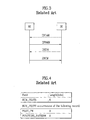
- the mobile terminal 205 receives an extended supplemental channel assignment message (ESCAM) from a new base station, and determines with which code pattern the mobile terminal 205 and the base station initially communicate.
- the ESCAM includes a PILOT_PN field and a PUNCTURE_PATTERN (also called CCSH_TYPE) field.
- the PILOT_PN field includes the PN code allocated to the respective base stations 201, 202, and 203, and discriminates from which base station the ESCAM message is received.
- the PUNCTURE_PATTERN field informs which code pattern the corresponding base station uses.
- the A base station 201 is allocated with the PN number a, the B base station 202 with the PN number b, and the C base station 203 with the PN number c. Also, if information defined in the PUNCTURE_PATTERN is 00, no code pattern is used. If the information is 01, the code pattern ⁇ is allocated as the code pattern of the base station that transmitted the ESCAM, while if the information is 10, a code pattern ⁇ is allocated as the code pattern of the base station that transmitted the ESCAM. It should be understood that the code pattern could be a puncture code pattern, or any other coding scheme.
- the PUNCTURE_PATTERN field requires at least 2 bits.
- the mobile terminal disregards this since the signal is weak.
- the mobile terminal 205 detects whether the pilot signal strength of the signal received from the B base station 202 is higher than a specified value, and if the pilot signal strength of the B base station 202 becomes higher than the specified value, the mobile terminal 205 transmits an extended pilot strength measurement message (EPSMM) to the respective base stations to indicate as such, and allocates the code pattern ⁇ to the B base station 202.
- EPSMM extended pilot strength measurement message
- the respective base stations transmit an universal handoff direction message (UHDM) to the mobile terminal 205 to inform this.
- UHDM universal handoff direction message
- the mobile terminal 205 receives the code pattern ⁇ (or of a default encoder type) from the A base station 201, receives the code pattern ⁇ (or of a complementary encoder type) from the B base station 202, and transmits an extended handoff completion message (EHCM) to the respective base stations to complete the handoff.
- EHCM extended handoff completion message
- the fact that the pilot signal of the B base station 202 becomes higher than the specified value means that the mobile terminal 205 at least enters into the 2-way handoff region 210a where the A base station 201 and the B base station 202 overlap.
- the mobile terminal 205 which is in the 2-way handoff region 210a of the A base station 201 and the B base station 202, gradually approaches the C base station 203, the strength of the signal received from the C base station 203 becomes greater. If the pilot signal strength of the C base station 203 becomes higher than the specified value, the mobile terminal 205 transmits an EPSMM to the respective base stations to inform this, and allocates one of the code patterns, which were allocated to the A base station 201 or to the B base station 202, to the C base station 203. The respective base stations transmit an UHDM to the mobile terminal 205 to inform this. The mobile terminal 205 receives the signal from the C base station 203, and transmits an EHCM to the respective base stations to complete the handoff.
- the fact that the pilot signal of the C base station 203 becomes higher than the specified value means that the mobile terminal 205 enters into the 3-way handoff region 220 where the A base station 201, B base station 202, and C base station 203 overlap.
- the mobile terminal 205 receives the signal of the code pattern ⁇ from the A base station 201 and the C base station 203, and receives the signal of the code pattern ⁇ from the B base station 202.
- the mobile terminal 205 receives, decodes, and combines the signals of different code patterns ⁇ and ⁇ , and thus a signal of a better quality can be produced by the diversity effect to obtain a gain.
- the allocation of the code patterns to the base stations is performed by the base station controller (not illustrated) which receives information from the respective base stations. That is, the base station controller allocates different code patterns in the 2-way handoff region, and allocates two code patterns to three base stations with the permission of overlapping in the 3-way handoff region.
- the mobile terminal 205 in the 3-way handoff region 220 moves to the cell region of the A, B, or C base station 201, 202, or 203, only one code pattern corresponding to the base station remains, and the signals of the remaining two base stations are dropped because the level of the pilot signals of the two base stations becomes lower than the specified value.
- the mobile terminal consequently receives the signal from the corresponding remaining base station only.
- the mobile terminal 205 in the 3-way handoff region 220 moves to the 2-way handoff region 210a of the A and B base stations 201 and 202, or to the 2-way handoff region 210b of the B and C base stations 202 and 203, the respective signal of the C base station 203 or of the A base station 201 is dropped, and thus the mobile terminal 205 receives the signals from the B and C base stations 202 and 203, or from the A and B base stations 201 and 202.
- the mobile terminal 205 in the 3-way handoff region 220 moves to the 2-way handoff region 210c of the A and C base stations 201 and 203, the signal from the B base station 202 is dropped, and the mobile terminal 205 receives the signals from the A and C base stations 201 and 203.
- the code pattern ⁇ since both the A and C base stations 201 and 203 use the code pattern ⁇ , no gain can be obtained by the code combining handoff method.
- An object of the invention is to solve at least the above problems and/or disadvantages and to provide at least the advantages described hereinafter.
- Another object of the present invention to provide a CCSH handoff method in a 3-way handoff region that substantially obviates one or more of the problems due to limitations and disadvantages of the related art.
- Another object of the present invention is to provide a CCSH handoff method in a 3-way handoff region that can obtain a gain of the CCSH handoff method by making a mobile terminal always receive signals encoded by two different code patterns in the handoff region.
- Another object of the present invention is to provide a CCSH handoff method in a 3-way handoff region that can prevent the gain reduction of the CCSH handoff by preventing code patterns from becoming identical when a mobile terminal moves from the 3-way handoff region to a 2-way handoff region.
- a code combining soft handoff method comprising measuring a strength of respective pilot signals received from a plurality of base stations, if the strength of the received pilot signal is higher than a prescribed value, allocating a first code pattern to the corresponding base station to receive a signal from the base station, and if the strength of the received pilot signal is lower than the prescribed value, dropping a signal of the corresponding base station; and changing the first code pattern of a signal from a second of two base stations to a second code pattern different from the first code pattern if the code patterns of signals from the two base stations are the first code pattern when the mobile terminal receives the signals from the two base stations.
- CCSH code combining soft handoff method
- a handoff method comprising measuring a strength of pilot signals received from a plurality of base stations, if the strength of the received pilot signal is higher than a prescribed value, allocating a new code pattern to the corresponding base station to additionally receive a signal from the base station, and if the strength of the received pilot signal is lower than the prescribed value, dropping a signal of the corresponding base station; and if signals are received from three base stations, allocating different code patterns to the signals from two of the three base stations whose pilot signal strengths are high among the signals from the three base stations, and receiving the signals from the two active-state base stations.
- a method of performing a handoff in a mobile communication system comprising transmitting a power strength measurement message to a target base station while maintaining communications with a first base station using a first code pattern; receiving a handoff direction message from the target base station, including an initial code pattern to be used by the target base station; transmitting a handoff complete message to the target base station when communication is established with the target base station; and changing the initial code pattern used with the target base station to a second code pattern at a prescribed time if the initial code pattern is the first code pattern.
- a handoff direction message for use in a mobile communication system comprising a pilot PN code, to identify a target base station; a puncturing pattern, to indicate a first code pattern of a bit stream transmitted by the target base station; a switching indicator, to indicate if the first code pattern of the target base station will be switched to a second code pattern; and a switching tune, to indicate when the first code pattern will be switched if the switching indicator indicates that the first code pattern will be switched.
- a subscriber unit of a mobile communication system comprising means for providing communication with a first base station using a first code pattern; means for receiving a handoff direction message from a target base station, including an initial code pattern to be used by the target base station; means for transmitting a handoff complete message to the target base station when communication is established with the target base station; and means for synchronizing a change of the initial code pattern used with the target base station to a second code pattern at a prescribed time if the initial code pattern is the first code pattern.
- a base station in a communication system comprising means for transmitting a PN code to a mobile station to uniquely identify the base station among a plurality of base stations; means for receiving a power strength measurement message from the mobile station; means for transmitting a handoff direction message to the mobile station, the handoff direction message including an initial code pattern to be used by the base station, a switching indicator, to indicate if the initial code pattern station will be switched to a second code pattern, and a switching time, to indicate when the code pattern will be switched; means for receiving a handoff complete message from the mobile station when communication is established; and means for changing the initial code pattern to the second code pattern at the time indicated in the handoff direction message if it is determined that the code pattern needs to be switched.
- a CCSH handoff method including measuring a strength of respective pilot signals received from a plurality of base stations, if the strength of the received pilot signal is higher than a prescribed value, allocating a new code pattern to the corresponding base station to additionally receive a signal from the base station, and if the strength of the received pilot signal is lower than the prescribed value, allocating a new code pattern to the corresponding base station to additionally receive a signal from the base station, and if the strength of the received pilot signal is lower than the specified value, dropping a signal of the corresponding base station; and changing the code pattern of one of signals from the two base stations into a code pattern different from the code pattern of the other of the signals from the two base stations if the code patterns of the signals from the two base stations are identical when the mobile terminal receives the signals from the two base stations.
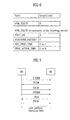
- the change of the code patterns of the signals from the base stations is performed to match a code pattern changing time set for coincidence of operations of the base station and the mobile terminal. It is also preferable that a CCSH_ENC_ACTION_TIME (also called SWAP_ACTION_TIME) field be added to a UHDM sent from the base station to the mobile terminal, and the code pattern changing time be defined in the CCSH_ENC_ACTION_TIME field.
- a CCSH_ENC_ACTION_TIME also called SWAP_ACTION_TIME
- the CCSH_ENC_ACTION_TIME field be composed of 6 bits to define 64 kinds of code pattern changing times, and the code pattern changing time defined in the CCSH_ENC_ACTION_TIME field is defined in the unit of 80ms that is the unit of a system time. It is also preferable that a determination of whether to apply the code pattern changing time be determined and defined in the UHDM sent from the base station to the mobile terminal. It is also preferable that a determination of whether to apply the code pattern changing time be defined in a USE_CCSH_ENC_TIME (also called USE_SWAP_TIME) field by adding the USE_CCSH_ENC_TIME field to the UHDM.
- a USE_CCSH_ENC_TIME also called USE_SWAP_TIME
- a CCSH handoff method including a mobile terminal measuring a strength of pilot signals received from a plurality of base stations, if the strength of the received pilot signal is higher than a specified value, allocating by the BSC a new code pattern to the corresponding base station to additionally receive a signal from the base station, and if the strength of the received pilot signal is lower than the specified value, dropping a signal of the corresponding base station; and if signals are received from the three base stations, the BSC allocating different code patterns to the signals from the two base stations whose pilot signal strength is high among the signals from the three base stations, determining the two base stations as in an active state, and receiving the signals from the two active-state base stations.
- the mobile terminal while receiving the signal from one of the base stations, moves to the 3-way handoff region, and receives signals from two active-state base stations whose pilot signal strength is high, the mobile terminal receives the signals in a manner that it maintains the code pattern allocated to the base station from which the signal is received as it is, and the BSC allocates a code pattern different from that of the base station from which the signal is received to the base station newly determined as in the active state.
- the mobile terminal receives the signals by allocating the different code patterns to the two base stations newly determined as in the active state.
- the mobile terminal moves from the 2-way handoff region where the mobile terminal receives the signals from the two base stations to the 3-way handoff region, and receives the signals from the two active-state base stations whose pilot signal strength is high, the mobile terminal receives the signals in a manner that it maintains the code pattern allocated to the base station which is determined as in the active state and from which the signal is received as it is, and the BSC allocates a code pattern different from that of the base station from which the signal is received to the base station newly determined as in the active state.
- the mobile terminal while receiving the signals from the two active-state base stations whose pilot signal strength is high in the 3-way handoff region, moves to the 2-way handoff region, and receives signals from the base stations corresponding to the 2-way handoff region, the mobile terminal receives the signals in a manner that it maintains the code pattern allocated to the base station which is determined as in the active state and from which the signal is received as it is, and the BSC allocates a code pattern different from that of the base station from which the signal is received to the base station newly determined as in the active state.
- the mobile terminal determines the subject base station as the new active-state base station to receive the signal therefrom, drops the signal from the base station having the pilot signal whose strength is lower than the pilot signal strength of the subject base station, and the BSC allocates the different code patterns to the two active-state base stations by allocating the code pattern allocated to the dropped base station to the subject base station.
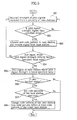
- the mobile terminal first measures the strength of respective pilot signals received from a plurality of base stations (step 301), and determines whether the strength of the pilot signal received from the respective base station is higher than a prescribed value (step 302).
- the Base Station Controller allocates a new code pattern to the base station, and the mobile terminal receives the signal from the base station (step 303).
- the mobile station receives only the signals from the base stations whose pilot signal strength is higher than the prescribed value, and disregards the signals from other base stations.
- the allocation of the code patterns to the base stations is performed by a base station controller (not illustrated) which receives information from the respective base stations. That is, the base station controller allocates different code patterns in the 2-way handoff region, and allocates two code patterns to three base stations with the permission of overlapping.
- the mobile terminal determines if any signal that is decreasing below the prescribed value exists among the received base station signals whose pilot signal strength was previously above the specified value (step 304). The mobile terminal then drops the signal that is below the prescribed value, and no longer receives the signal from the base station (step 305).
- the mobile terminal determines whether it is located in the 2-way handoff region (step 306). If the mobile terminal is determined to be located in the 2-way handoff region after dropping one base station signal, it means that the mobile terminal was in the 3-way handoff region prior to dropping the base station signal.
- the mobile terminal If the mobile terminal is in the 2-way handoff region as a result of judgement at step 306, it receives two base station signals, and the BSC determines whether the code patterns allocated to the two base stations are identical (step 307). If the code patterns are identical, the base station and the mobile terminal change the code pattern of one of the two base stations into a code pattern different from the code pattern of the other of the two base stations (step 308). As a result, the two base stations transmit signals encoded with different code patterns, and the mobile terminal receives, decodes, and combines the signals encoded with two code patterns, resulting in that the gain of the CCSH handoff method can be obtained.
- the mobile terminal is not in the 2-way handoff region as a result of the determination at step 306, it corresponds to the case that the mobile terminal receives a signal from one base station in the 2-way handoff region or the case that the mobile terminal receives no signal from any base station.
- the mobile terminal receives the signals from the two base stations, if the strength of a pilot signal received from a third base station besides the two base stations is higher than the prescribed value, the mobile terminal additionally receives the third signal from the base station by allocating a new code pattern to the base station. The mobile terminal consequently receives signals from the three base stations. If the strength of pilot signals received from the two base stations is lower than the prescribed value, the mobile terminal drops the signals of the base stations, resulting in the mobile terminal receiving the signal from one base station.
- the mobile terminal when the mobile terminal receives the signal from one base station, if the strength of the pilot signal received from another base station is higher than the specified value, the mobile terminal additionally receives the signal from the base station by allocating a new code pattern to the base station. The mobile terminal thus receives the signals from the two or three base stations.
- the mobile terminal changes the code pattern of a base station into a different code pattern, it is required that the code pattern changing time of the mobile terminal coincides with that of the base station. That is because the mobile terminal decodes the signal from the base station with the same code pattern as that of the base station.
- the code pattern changing time is determined so that the operations of the base station and the mobile terminal coincide with each other.
- the base station and the mobile terminal simultaneously change the code pattern in accordance with the code pattern changing time.
- the code pattern changing time is defined in a CCSH_ENC_ACTION_TIME (also called SWAP_ACTION_TIME) field that is added to a UHDM sent from the base station to the mobile terminal. Accordingly, the code pattern is changed without affecting the handoff time, and this prevents the base station from transmitting an unnecessary signal.
- CCSH_ENC_ACTION_TIME also called SWAP_ACTION_TIME
- the CCSH_ENC_ACTION_TIME field is preferably composed of 6 bits to define 64 lands of code pattern changing times, and the code pattern changing time defined in the CCSH_ENC_ACTION_TIME field is defined in the unit of 80ms that is the unit of a system time. For example, if the CCSH_ENC_ACTION_TIME field is 000001, 000010, and 000011, the code pattern changing time is defined as 80ms, 160ms, and 240ms, respectively.
- the UHDM include information indicating whether to apply the code pattern changing time.
- the indication of whether to apply the code pattern changing time is defined in a USE_CCSH_ENC_TIME (also called USE_SWAP_TIME) field by adding the USE_CCSH_ENC_TIME field to the UHDM. For example, if the USE_CCSH_ENC_TIME field is 0, the code pattern changing time is not applied, and if the USE_CCSH_ENC_TIME field is 1, the base station and the mobile terminal simultaneously change the code pattern in accordance with the code pattern changing time defined in the CCSH_ENC_ACTION_TIME field.
- the mobile terminal 205 in the cell region of the A base station 201 if it is in an operation state, it receives the signal from the A base station 201, is allocated with a code pattern ⁇ , and thus receives the signal with the code pattern ⁇ .
- the mobile terminal 205 receives an extended supplemental channel assignment message (ESCAM), and determines with which code pattern the mobile terminal 205 and the base station initially communicate.
- ESCAM extended supplemental channel assignment message
- the mobile terminal 205 receives the signal with the code pattern ⁇ in the cell region of the A base station 201, and approaches the 2-way handoff region 210a of the A base station 201 and the B base station 202, the strength of the signal received from the B base station 202 becomes greater.
- the mobile terminal 205 detects whether the pilot signal strength of the signal received from the B base station 202 is higher than a prescribed value. If the pilot signal strength of the B base station 202 becomes higher than the prescribed value, the mobile terminal 205 transmits an extended pilot strength measurement message (EPSMM) to the respective base stations to indicate this, and the BSC allocates the code pattern allocated to the A base station 201 and another code pattern ⁇ to the B base station 202.
- EPSMM extended pilot strength measurement message
- the respective base stations transmit a universal handoff direction message (UHDM) to the mobile terminal 205 to indicate with which code pattern the signal is transmitted.
- UHDM universal handoff direction message
- the mobile terminal 205 receives the code pattern ⁇ from the A base station 201, receives the code pattern ⁇ from the B base station 202, and transmits an extended handoff completion message (EHCM) to indicate the completion of the handoff to the respective base stations.
- EHCM extended handoff completion message
- the BSC allocates to the C base station 203 either one of the code patterns allocated to the A base station 201 or to the B base station 202 to receive the signal from the C base station 203.
- the mobile terminal 205 transmits the EPSMM to the respective base stations to indicate this, and the BSC allocates either one of the code patterns allocated to the A base station 201 or to the B base station 202, for example, the code pattern ⁇ , to the C base station 203.
- the respective base stations transmit the UHDM to the mobile terminal 205 to indicate with which code pattern the signal is transmitted.
- the mobile terminal 205 receives the signal of the code pattern ⁇ from the A base station 201 and the C base station 203, receives the signal of the code pattern ⁇ from the B base station 202, and transmits the EHCM to indicate the completion of the handoff to the respective base stations.
- the mobile terminal 205 in the 3-way handoff region 220 moves to the 2-way handoff region of the A base station 201 and the C base station 203, the signal of the B base station 202 is dropped, and the mobile terminal 205 receives the signals from the A base station 201 and the C base station 203. Since both the A base station 201 and the C base station 203 use the code pattern ⁇ , the gain of the CCSH handoff method cannot be obtained, and thus one of the code patterns of the base stations should be changed to obtain the gain as described above.
- the mobile terminal 205 moves to the 2-way handoff region 210c of the A and C base stations 201 and 203, the signal of the B base station 202 becomes weak. If the pilot signal of the B base station 202 becomes lower than the prescribed value, the mobile terminal 205 transmits the EPSMM to the respective base stations. According to the EPSMM, the signal of the B base station 202 is dropped, the A base station 201 and the C base station 203 are determined to be in an active state, and the UHDM for receiving the signals from the A base station 201 and the C base station 203 is transmitted to the mobile terminal 205. In accordance with the information of the UHDM, the mobile terminal 205 drops the signal of the B base station 202, and transmits the EHCM for informing the completion of the handoff to the respective active-state base stations to complete the actual handoff.
- the UHDM includes the PUNCTURE_PATTERN field indicating information on which code pattern the C base station 203 uses, and the changed code pattern, and the CCSH_ENC_ACTION_TIME field indicating information on when the C base station 203 changes the code pattern, the C base station 203 and the mobile terminal 205 simultaneously change the code pattern in accordance with the code pattern changing time.
- the code pattern changing time is defined in the CCSH_ENC_ACTION_TIME field that is added to the UHDM.
- the CCSH_ENC_ACTION_TIME field is preferably composed of 6 bits to define 64 kinds of code pattern changing times, and the code pattern changing time defined in the CCSH_ENC_ACTION_TIME field is defined in the unit of 80ms that is the unit of the system time.
- a USE_CCSH_ENC_TIME field in the UHDM is defined in a USE_CCSH_ENC_TIME field in the UHDM. For example, if the USE_CCSH_ENC_TIME field is 0, the CCSH_ENC_ACTION_TIME is not applied. If the USE_CCSH_ENC_TIME field is 1, the CCSH_ENC_ACTION_TIME is applied.
- the handoff is completed by dropping the signal of the B base station 202 and transmitting the EHDM.
- the C base station and the mobile terminal 205 simultaneously change the code pattern in accordance with the code pattern changing time, and the signal of the C base station 203 is transmitted to the mobile terminal.
- the gain of the CCSH handoff method can be obtained in any handoff region.
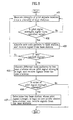
- the mobile terminal first measures the strength of respective pilot signals received from a plurality of base stations (step 401), and determines whether the strength of the pilot signal received from the respective base station is higher than a prescribed value (step 402). If the received pilot signal of the base station is higher than the prescribed value as a result of judgment at step 402, the BSC allocates a new code pattern to the base station, and receives the signal from the base station (step 403).
- the mobile station in receiving the signals from all the neighboring base stations, receives only the signals from the base stations whose pilot signal strength is higher than the prescribed value, and disregards the signals from other base stations.
- the allocation of the code patterns to the base stations is performed by a base station controller (not illustrated) which receives information from the respective base stations. That is, the base station controller allocates different code patterns in the 2-way handoff region, and as described above, which code pattern is allocated to a base station is defined in the PILOT_PN and the PUNCTURE_PATTERN fields of the UHDM from the base station to the mobile terminal.
- the mobile terminal determines if it is in the 3-way handoff region (step 404), and if the mobile terminal is determined to be in the 3-way handoff region, the BSC allocates different code patterns to the two base stations whose pilot signal strength is high among the three base stations to determine the two base stations as in the active state, and then receives the signals from the two active-state base stations (step 405).
- the mobile terminal if the mobile terminal is located in the 3-way handoff region, it means that the mobile terminal has received the three base station signals.
- the determination of the base stations as in the active state at step 405 is performed when the mobile terminal, which is receiving the signal from one base station, moves to the 3-way handoff region, when the mobile terminal moves from the 2-way handoff region to the 3-way handoff region, and when the mobile terminal moves from the 3-way handoff region to the 2-way handoff region, respectively.
- the respective cases will now be explained.
- the mobile terminal which is receiving the signal from one base station, moves to the 3-way handoff region, and receives the signals from the two active-state base stations whose pilot signal strength is high, it maintains the code pattern allocated to the base station from which it receives the signal as it is, and allocates to the base station newly determined as in the active state a code pattern different from that of the base station from which it receives the signal.
- the BSC allocates the different code patterns to the two base stations newly determined as in the active state.
- the BSC allocates the different code patterns to the two base stations whose pilot signal strengths are high among the three base stations in the 3-way handoff region 220 to receive the signals from the two base stations.
- the BSC allocates the same code pattern as that previously received to the A base station 201, and allocates the code pattern different from that of the A base station 201 from which the mobile terminal receives the signal to the B base station 202 newly determined as in the active state.
- the base stations determined as in the active state in the 3-way handoff region are the B base station 202 and the C base station 203.
- the mobile terminal drops the signal of the A base station 201, and the BSC allocates the different code patterns to the B base station 202 and the C base station 203, respectively, to receive the signals of the B base station 202 and the C base station 203.
- the mobile terminal moves from the 2-way handoff region 210a, 210b, or 210c where the mobile terminal receives the signals from the two base stations to the 3-way handoff region 220, and receives the signals from the two active-state base stations whose pilot signal strengths are high, it maintains the code patterns allocated to the active-state base stations from which it receives the signals as they are, and the BSC allocates the code pattern different from those of the active-state base stations to the base station newly determined to be in the active state to receive the signal from the base station.
- the base stations determined to be in the active state in the 3-way handoff region 220 are the B base station 202 and the C base station 203.
- the BSC allocates to the B base station 202 the same code pattern as in the 2-way handoff region 210a where the mobile terminal previously received the signals.
- the mobile station also allocates to the C base station 203 the code pattern different from the B base station 202 to receive the signal from the C base station 203.
- the mobile terminal which receives the signals from the two active-state base stations having the highest pilot signal strength in the 3-way handoff region 220, moves to the 2-way handoff region 210a, 210b, or 210c, the mobile terminal receives the signals from the base stations corresponding to the 2-way handoff region 210a, 210b, or 210c, maintains the code patterns allocated to the active-state base stations from which the mobile terminal receives the signals as they are, and the BSC allocates to the base station newly determined as in the active state the code pattern different from the base stations from which the mobile terminal receives the signals.
- the BSC allocates to the B base station 202 the same code pattern as in the 3-way handoff region 220, and allocates to the A base station 201 the code pattern different from the B base station 202 to receive the signals from the B base station 202 and the A base station 201.
- the mobile terminal determines whether the order of the pilot signal strength of all the base stations in the 3-way handoff region 220 (step 406) has changed. If the pilot signal strength of the base station, which is in the 3-way handoff region 220, but from which no signal is received since its pilot signal strength is weak, becomes higher than the pilot signal strength of the active-state base stations, the mobile terminal determines the subject base station as a new active-state base station to receive the signal therefrom, and drops the signal of the base station whose pilot signal strength is lower than the pilot signal strength of the subject base station.
- the BSC allocate to the subject base station the code pattern allocated to the base station whose signal is dropped, so that the different code patterns are allocated to the two active-state base stations.
- the mobile terminal which receives the signals from the A base station 201 and the B base station 202, drops the signal of the B base station 202, and allocates to the C base station 203 the code pattern previously allocated to the B base station 202. The mobile terminal thus receives the signals from the A base station 201 and the C base station 203.
- the two base stations transmit signals encoded with different code patterns, and the mobile terminal receives, decodes, and combines the signals encoded with the two code patterns.
- the gain of the CCSH handoff method can thus be obtained.
- the mobile terminal 205 in the cell region of the A base station 201 receives the signal from the A base station 201, is allocated with a code pattern ⁇ , and thus receives the signal with the code pattern ⁇ .
- the mobile terminal 205 receives the extended supplemental channel assignment message (ESCAM), and determines with which code pattern the mobile terminal 205 and the base station initially communicate.
- ESCAM extended supplemental channel assignment message
- the mobile terminal 205 receives the signal with the code pattern ⁇ in the cell region of the A base station 201, and approaches the 2-way handoff region 210a of the A base station 201 and the B base station 202, the strength of the signal received from the B base station 202 becomes greater.
- the mobile terminal 205 detects whether the pilot signal strength of the signal received from the B base station 202 is higher than a prescribed value. If the pilot signal strength of the B base station 202 becomes higher than the prescribed value, the mobile terminal 205 transmits the extended pilot strength measurement message (EPSMM) to the respective base stations to so indicate.
- EPSMM extended pilot strength measurement message
- the BSC allocates the code pattern allocated to the A base station 201 and another code pattern ⁇ to the B base station 202, and the respective base stations transmit the universal handoff direction message (UHDM) to the mobile terminal 205 to indicate which code pattern the signal is transmitted with.
- the mobile terminal 205 receives the signal with the code pattern ⁇ from the A base station 201, receives the signal with the code pattern ⁇ from the B base station 202, and transmits the extended handoff completion message (EHCM) to indicate that the completion of the handoff to the respective base stations.
- UHDM universal handoff direction message
- the mobile terminal 205 which is in the 2-way handoff region 210a of the A base station 201 and the B base station 202, approaches the C base station 203, the pilot signal strength of the signal received from the C base station 203 becomes greater. If the pilot signal strength of the C base station 203 becomes higher than the specified value, the mobile terminal 205 transmits the EPSMM to the respective base stations to so indicate.
- the mobile terminal 205 moves to the 3-way handoff region 220, where the mobile terminal receives the signals from the three base stations. If the pilot signals of two base stations whose pilot signal strengths are high, for example, the pilot signals of the A base station 201 and the C base station 203, are higher than the pilot signal of the B base station 202, the base station controller (not illustrated) drops the signal of the B base station 202. The base station controller also determines the A base station 201 and the C base station 203 to be in the active state, allocates the different code patterns to the two base stations, and transmits the UHDM to the mobile terminal 205. The mobile terminal 205 thus receives the signals from the two active-state base stations.
- the code pattern ⁇ which is the same code pattern as in the 2-way handoff region 210a, is allocated to the A base station 201 in the 3-way handoff region 220.
- the code pattern ⁇ which is the code pattern allocated to the B base station 202 whose signal is dropped, is allocated to the C base station 203. Accordingly, the mobile terminal 205 receives the signal of the code pattern ⁇ from the A base station 201, receives the signal of the code pattern ⁇ from the C base station 203, and transmits the EHCM to indicate the completion of the handoff to the respective base stations.
- the mobile terminal 205 in the 3-way handoff region 220 moves to the 2-way handoff region 210c of the A base station 201 and the C base station 203, the signal of the B base station 202 is dropped, and the mobile terminal 205 receives the signals from the A base station 201 and the C base station 203. Since both the A base station 201 and the C base station 203 were in the active state in the 3-way handoff region 220, the BSC allocates the same code patterns to these stations as in the 3-way handoff region 220. Thus, the mobile terminal 205 receives the signal of the code pattern ⁇ from the A base station 201 and the signal of the code pattern ⁇ from the C base station 203.
- the mobile terminal 205 in the 3-way handoff region 220 moves to the 2-way handoff region 210a of the A base station 201 and the B base station 202, the signal of the C base station 203 is dropped, and the mobile terminal 205 receives the signals from the A base station 201 and the B base station 202. Since the A base station 201 was in the active state in the 3-way handoff region 220, the BSC allocates the same code pattern as in the 3-way handoff region 220 to the A base station 201, and the code pattern ⁇ allocated to the C base station 203 whose signal is dropped to the B base station 202. Thus, the mobile terminal 205 receives the signal of the code pattern ⁇ from the A base station 201, and the signal of the code pattern ⁇ from the B base station 202.
- the mobile terminal 205 in the 3-way handoff region 220 moves to the 2-way handoff region 210b of the B base station 202 and the C base station 203, the signal of the A base station 201 is dropped, and the mobile terminal 205 receives the signals from the B base station 202 and the C base station 203. Since the C base station 203 was in the active state in the 3-way handoff region 220, the BSC allocates the same code pattern as in the 3-way handoff region 220 to the C base station 203, and allocates the code pattern ⁇ to the B base station 202. Thus, the mobile terminal 205 receives the signal of the code pattern ⁇ from the C base station 203, and the signal of the code pattern ⁇ from the B base station 202.
- the mobile terminal 205 While the mobile terminal 205 is in the 3-way handoff region 220 where the A base station 201 and the C base station 203 are in the active state, the mobile terminal will check whether the order of the pilot signal strength of all the base stations 201, 202, and 203 corresponding to the 3-way handoff region 220 has changed. If the pilot signal strength of the B base station 202, that is the subject base station from which the mobile terminal does not receive the signal, becomes higher than the pilot signal strength of the C base station 203, the mobile terminal drops the signal of the C base station 203, determines the B base station 202 as a new active-state base station, and the BSC allocates to the B base station 202 the code pattern ⁇ , which was allocated to the C base station 203. Thus, the mobile terminal 205 receives the code pattern ⁇ from the A base station 201, and the code pattern ⁇ from the B base station 202.
- the CCSH handoff method has many advantages. For example, since the mobile terminal 205 receives the signals of the different code patterns from the base stations, the gain of the CCSH handoff method can be obtained in any handoff region.
- the gain of the CCSH handoff method can be obtained by changing the code pattern of either one of two base stations in a 2-way handoff region into a code pattern different from the code pattern of the other base station if the code patterns allocated to the two base stations in the 2-way handoff region are identical when a mobile terminal moves from a 3-way handoff region to the 2-way handoff region.
- the mobile terminal thus always receives signals encoded by the two different code patterns from the base stations.
- the gain of the CCSH handoff method can be obtained by allocating the different code patterns to the two base stations whose pilot signal strength is high among the three base stations so that the mobile terminal always receives the signals encoded by the two different code patterns in the handoff region when the mobile terminal moves to the 3-way handoff region.
Landscapes
- Engineering & Computer Science (AREA)
- Computer Networks & Wireless Communication (AREA)
- Signal Processing (AREA)
- Mobile Radio Communication Systems (AREA)
Applications Claiming Priority (4)
| Application Number | Priority Date | Filing Date | Title |
|---|---|---|---|
| KR1020000039088A KR100652033B1 (ko) | 2000-07-08 | 2000-07-08 | 3-way 핸드오프영역에서의 CCPC 핸드오프방법 |
| KR2000039088 | 2000-07-08 | ||
| KR1020000039384A KR100617233B1 (ko) | 2000-07-10 | 2000-07-10 | 3-way 핸드오프영역에서의 CCPC 핸드오프방법 |
| KR2000039384 | 2000-07-10 |
Publications (3)
| Publication Number | Publication Date |
|---|---|
| EP1170973A2 true EP1170973A2 (de) | 2002-01-09 |
| EP1170973A3 EP1170973A3 (de) | 2002-05-15 |
| EP1170973B1 EP1170973B1 (de) | 2013-03-27 |
Family
ID=26638197
Family Applications (1)
| Application Number | Title | Priority Date | Filing Date |
|---|---|---|---|
| EP01115504A Expired - Lifetime EP1170973B1 (de) | 2000-07-08 | 2001-06-27 | Verfahren zur Durchführung eines sanften Weiterreichens mit Kombination von Kodes |
Country Status (3)
| Country | Link |
|---|---|
| US (2) | US6993338B2 (de) |
| EP (1) | EP1170973B1 (de) |
| CN (2) | CN1681354B (de) |
Families Citing this family (16)
| Publication number | Priority date | Publication date | Assignee | Title |
|---|---|---|---|---|
| US7336952B2 (en) | 2001-10-24 | 2008-02-26 | Qualcomm, Incorporated | Method and system for hard handoff in a broadcast communication system |
| US7289766B2 (en) * | 2002-05-14 | 2007-10-30 | Nortel Networks Limited | System and method to initiate reliable reception on a packet data channel in a wireless communications network |
| US20070047489A1 (en) * | 2005-08-26 | 2007-03-01 | Bachl Rainer W | Handoffs in wireless communications network incorporating voice over IP using shared supplemental spreading codes |
| US8005059B2 (en) * | 2005-08-26 | 2011-08-23 | Alcatel Lucent | Wireless communications network incorporating voice over IP using shared supplemental spreading codes |
| JP2009525670A (ja) * | 2006-02-03 | 2009-07-09 | エルジー エレクトロニクス インコーポレイティド | セルエッジ領域で性能を向上させる方法 |
| US8792945B2 (en) * | 2006-10-31 | 2014-07-29 | Motorola Mobility Llc | Methods and devices for dual mode bidirectional audio communication |
| US8817740B2 (en) * | 2006-10-31 | 2014-08-26 | Motorola Mobility Llc | Methods and devices of a queue controller for dual mode bidirectional audio communication |
| US8842834B2 (en) * | 2007-03-19 | 2014-09-23 | Harris Corporation | Robust delivery of packet based secure voice |
| US8571553B2 (en) | 2007-07-16 | 2013-10-29 | Qualcomm Incorporated | Methods and apparatus for resolving pilot pseudorandom noise code conflicts in a communication system |
| US8169992B2 (en) | 2007-08-08 | 2012-05-01 | Telefonaktiebolaget Lm Ericsson (Publ) | Uplink scrambling during random access |
| US8559952B2 (en) | 2007-08-14 | 2013-10-15 | Telefonaktiebolaget Lm Ericsson (Publ) | Automated and seamless change of reporting cell identity |
| US8261168B2 (en) * | 2007-09-17 | 2012-09-04 | Lg Electronics Inc. | Code combining soft handoff in wireless communication system |
| US8068838B1 (en) * | 2008-08-19 | 2011-11-29 | Clear Wireless Llc | Mobile communication device initiated hand-off based on air interface metrics |
| US20100172274A1 (en) * | 2009-01-07 | 2010-07-08 | Microsoft Corporation | Energy saving using cellular footprint for mobile device Wi-Fi access point discovery |
| US8804670B1 (en) * | 2011-02-17 | 2014-08-12 | Sprint Spectrum L.P. | Method and system for management of inter-frequency handoff |
| CN110017868A (zh) * | 2019-05-08 | 2019-07-16 | 北京汇通天下物联科技有限公司 | 冷库温湿度监控方法及系统 |
Family Cites Families (10)
| Publication number | Priority date | Publication date | Assignee | Title |
|---|---|---|---|---|
| US5267261A (en) * | 1992-03-05 | 1993-11-30 | Qualcomm Incorporated | Mobile station assisted soft handoff in a CDMA cellular communications system |
| FI110043B (fi) * | 1993-09-20 | 2002-11-15 | Nokia Corp | Menetelmä kanavanvaihdon suorittamiseksi CDMA-solukkoradiojärjestelmässä sekä liikkuva asema |
| US5930714A (en) * | 1996-10-24 | 1999-07-27 | Northern Telecom Limited | CDMA inter-mobile switching center soft hand-off |
| JP3622875B2 (ja) * | 1996-11-11 | 2005-02-23 | ソニー株式会社 | パイロツト信号検出装置、パイロツト信号検出方法及び移動通信端末装置 |
| US5907582A (en) | 1997-08-11 | 1999-05-25 | Orbital Sciences Corporation | System for turbo-coded satellite digital audio broadcasting |
| US6542484B1 (en) * | 1998-05-15 | 2003-04-01 | Telefonaktiebolaget Lm Ericsson (Publ) | Code allocation for radiocommunication systems |
| US5978365A (en) | 1998-07-07 | 1999-11-02 | Orbital Sciences Corporation | Communications system handoff operation combining turbo coding and soft handoff techniques |
| US6163524A (en) * | 1998-10-19 | 2000-12-19 | Telefonaktiebolaget Lm Ericsson (Publ) | Code allocation in CDMA |
| US6202189B1 (en) * | 1998-12-17 | 2001-03-13 | Teledesic Llc | Punctured serial concatenated convolutional coding system and method for low-earth-orbit satellite data communication |
| US6542744B1 (en) * | 2000-06-20 | 2003-04-01 | Motorola, Inc. | Handoff in a cellular network |
-
2001
- 2001-06-27 EP EP01115504A patent/EP1170973B1/de not_active Expired - Lifetime
- 2001-07-06 US US09/899,067 patent/US6993338B2/en not_active Expired - Lifetime
- 2001-07-06 CN CN2005100687113A patent/CN1681354B/zh not_active Expired - Lifetime
- 2001-07-06 CN CNB011200324A patent/CN100471325C/zh not_active Expired - Lifetime
-
2005
- 2005-09-21 US US11/230,554 patent/US7274937B2/en not_active Expired - Lifetime
Non-Patent Citations (1)
| Title |
|---|
| None |
Also Published As
| Publication number | Publication date |
|---|---|
| US20020004397A1 (en) | 2002-01-10 |
| US6993338B2 (en) | 2006-01-31 |
| US7274937B2 (en) | 2007-09-25 |
| EP1170973A3 (de) | 2002-05-15 |
| CN1681354A (zh) | 2005-10-12 |
| CN1681354B (zh) | 2010-06-16 |
| CN1332581A (zh) | 2002-01-23 |
| EP1170973B1 (de) | 2013-03-27 |
| CN100471325C (zh) | 2009-03-18 |
| US20060030327A1 (en) | 2006-02-09 |
Similar Documents
| Publication | Publication Date | Title |
|---|---|---|
| US6993338B2 (en) | Code combining soft handoff method | |
| RU2221351C2 (ru) | Передача обслуживания специализированного канала управления в системе связи многостанционного доступа с кодовым разделением каналов | |
| US5594949A (en) | Mobile assisted channel allocation | |
| KR100810247B1 (ko) | 직교 주파수 분할 다중 접속 시스템에서 채널 할당 방법및 장치 | |
| US6535738B1 (en) | Method for optimizing a number of communication links | |
| RU2144263C1 (ru) | Способ переключения каналов связи посредством программируемой перекачки в сотовой системе множественного доступа с кодовым разделением каналов | |
| EP0797367A2 (de) | Verfahren zur Datenübertragung über Drahtleitungen in einem Mobilkommunikationssystem | |
| US5577047A (en) | System and method for providing macrodiversity TDMA radio communications | |
| US20030129982A1 (en) | Soft handoff in a wireless communication system | |
| US6269087B1 (en) | Handover type judgement scheme for CDMA mobile communication system | |
| US6477159B1 (en) | Mobile communication system and a method thereof | |
| KR100460019B1 (ko) | Cdma 방식의 셀룰러 시스템 및 기지국 지정 방법 | |
| EP1075157B1 (de) | Verfahren zur beurteilung der zuteilung einer funkverbindung in einem mobilen kommunikationssytem sowie funkverbindungssteuerung | |
| CA2356883C (en) | Method and device for avoiding interruptions in voice transmissions | |
| KR100345973B1 (ko) | 부호 분할 다원 접속 이동 통신 방법 및 시스템 | |
| KR100652033B1 (ko) | 3-way 핸드오프영역에서의 CCPC 핸드오프방법 | |
| KR101208526B1 (ko) | 제어정보에 따라 통신을 수행하는 방법 | |
| KR100617233B1 (ko) | 3-way 핸드오프영역에서의 CCPC 핸드오프방법 | |
| KR20020076501A (ko) | Nak 비율을 이용한 핸드오프 방법 | |
| CA2050437C (en) | Method and system for uniquely identifying control channel time slots | |
| KR20030077746A (ko) | 이동통신 시스템에서 핸드오프시 부가채널 할당방법 | |
| KR20070050327A (ko) | 이동통신 시스템에서 순방향 전송률 제어 정보 송/수신장치 및 방법 |
Legal Events
| Date | Code | Title | Description |
|---|---|---|---|
| PUAI | Public reference made under article 153(3) epc to a published international application that has entered the european phase |
Free format text: ORIGINAL CODE: 0009012 |
|
| AK | Designated contracting states |
Kind code of ref document: A2 Designated state(s): AT BE CH CY DE DK ES FI FR GB GR IE IT LI LU MC NL PT SE TR |
|
| AX | Request for extension of the european patent |
Free format text: AL;LT;LV;MK;RO;SI |
|
| PUAL | Search report despatched |
Free format text: ORIGINAL CODE: 0009013 |
|
| AK | Designated contracting states |
Kind code of ref document: A3 Designated state(s): AT BE CH CY DE DK ES FI FR GB GR IE IT LI LU MC NL PT SE TR |
|
| AX | Request for extension of the european patent |
Free format text: AL;LT;LV;MK;RO;SI |
|
| 17P | Request for examination filed |
Effective date: 20021114 |
|
| AKX | Designation fees paid |
Designated state(s): AT BE CH CY DE DK ES FI FR GB GR IE IT LI LU MC NL PT SE TR |
|
| 17Q | First examination report despatched |
Effective date: 20030411 |
|
| RIC1 | Information provided on ipc code assigned before grant |
Ipc: H04W 36/18 20090101AFI20100503BHEP |
|
| GRAP | Despatch of communication of intention to grant a patent |
Free format text: ORIGINAL CODE: EPIDOSNIGR1 |
|
| RAP1 | Party data changed (applicant data changed or rights of an application transferred) |
Owner name: LG ELECTRONICS INC. |
|
| GRAS | Grant fee paid |
Free format text: ORIGINAL CODE: EPIDOSNIGR3 |
|
| GRAA | (expected) grant |
Free format text: ORIGINAL CODE: 0009210 |
|
| AK | Designated contracting states |
Kind code of ref document: B1 Designated state(s): AT BE CH CY DE DK ES FI FR GB GR IE IT LI LU MC NL PT SE TR |
|
| REG | Reference to a national code |
Ref country code: GB Ref legal event code: FG4D |
|
| REG | Reference to a national code |
Ref country code: CH Ref legal event code: EP |
|
| REG | Reference to a national code |
Ref country code: AT Ref legal event code: REF Ref document number: 604069 Country of ref document: AT Kind code of ref document: T Effective date: 20130415 |
|
| REG | Reference to a national code |
Ref country code: IE Ref legal event code: FG4D |
|
| REG | Reference to a national code |
Ref country code: DE Ref legal event code: R096 Ref document number: 60147804 Country of ref document: DE Effective date: 20130523 |
|
| PG25 | Lapsed in a contracting state [announced via postgrant information from national office to epo] |
Ref country code: SE Free format text: LAPSE BECAUSE OF FAILURE TO SUBMIT A TRANSLATION OF THE DESCRIPTION OR TO PAY THE FEE WITHIN THE PRESCRIBED TIME-LIMIT Effective date: 20130327 |
|
| REG | Reference to a national code |
Ref country code: AT Ref legal event code: MK05 Ref document number: 604069 Country of ref document: AT Kind code of ref document: T Effective date: 20130327 |
|
| PG25 | Lapsed in a contracting state [announced via postgrant information from national office to epo] |
Ref country code: GR Free format text: LAPSE BECAUSE OF FAILURE TO SUBMIT A TRANSLATION OF THE DESCRIPTION OR TO PAY THE FEE WITHIN THE PRESCRIBED TIME-LIMIT Effective date: 20130628 |
|
| REG | Reference to a national code |
Ref country code: NL Ref legal event code: VDEP Effective date: 20130327 |
|
| PG25 | Lapsed in a contracting state [announced via postgrant information from national office to epo] |
Ref country code: BE Free format text: LAPSE BECAUSE OF FAILURE TO SUBMIT A TRANSLATION OF THE DESCRIPTION OR TO PAY THE FEE WITHIN THE PRESCRIBED TIME-LIMIT Effective date: 20130327 |
|
| PG25 | Lapsed in a contracting state [announced via postgrant information from national office to epo] |
Ref country code: ES Free format text: LAPSE BECAUSE OF FAILURE TO SUBMIT A TRANSLATION OF THE DESCRIPTION OR TO PAY THE FEE WITHIN THE PRESCRIBED TIME-LIMIT Effective date: 20130708 Ref country code: PT Free format text: LAPSE BECAUSE OF FAILURE TO SUBMIT A TRANSLATION OF THE DESCRIPTION OR TO PAY THE FEE WITHIN THE PRESCRIBED TIME-LIMIT Effective date: 20130729 Ref country code: AT Free format text: LAPSE BECAUSE OF FAILURE TO SUBMIT A TRANSLATION OF THE DESCRIPTION OR TO PAY THE FEE WITHIN THE PRESCRIBED TIME-LIMIT Effective date: 20130327 Ref country code: NL Free format text: LAPSE BECAUSE OF FAILURE TO SUBMIT A TRANSLATION OF THE DESCRIPTION OR TO PAY THE FEE WITHIN THE PRESCRIBED TIME-LIMIT Effective date: 20130327 |
|
| PG25 | Lapsed in a contracting state [announced via postgrant information from national office to epo] |
Ref country code: CY Free format text: LAPSE BECAUSE OF FAILURE TO SUBMIT A TRANSLATION OF THE DESCRIPTION OR TO PAY THE FEE WITHIN THE PRESCRIBED TIME-LIMIT Effective date: 20130327 |
|
| PG25 | Lapsed in a contracting state [announced via postgrant information from national office to epo] |
Ref country code: DK Free format text: LAPSE BECAUSE OF FAILURE TO SUBMIT A TRANSLATION OF THE DESCRIPTION OR TO PAY THE FEE WITHIN THE PRESCRIBED TIME-LIMIT Effective date: 20130327 Ref country code: MC Free format text: LAPSE BECAUSE OF FAILURE TO SUBMIT A TRANSLATION OF THE DESCRIPTION OR TO PAY THE FEE WITHIN THE PRESCRIBED TIME-LIMIT Effective date: 20130327 |
|
| PLBE | No opposition filed within time limit |
Free format text: ORIGINAL CODE: 0009261 |
|
| REG | Reference to a national code |
Ref country code: CH Ref legal event code: PL |
|
| STAA | Information on the status of an ep patent application or granted ep patent |
Free format text: STATUS: NO OPPOSITION FILED WITHIN TIME LIMIT |
|
| GBPC | Gb: european patent ceased through non-payment of renewal fee |
Effective date: 20130627 |
|
| PG25 | Lapsed in a contracting state [announced via postgrant information from national office to epo] |
Ref country code: IT Free format text: LAPSE BECAUSE OF FAILURE TO SUBMIT A TRANSLATION OF THE DESCRIPTION OR TO PAY THE FEE WITHIN THE PRESCRIBED TIME-LIMIT Effective date: 20130327 |
|
| 26N | No opposition filed |
Effective date: 20140103 |
|
| REG | Reference to a national code |
Ref country code: IE Ref legal event code: MM4A |
|
| REG | Reference to a national code |
Ref country code: DE Ref legal event code: R119 Ref document number: 60147804 Country of ref document: DE Effective date: 20140101 |
|
| REG | Reference to a national code |
Ref country code: FR Ref legal event code: ST Effective date: 20140228 |
|
| PG25 | Lapsed in a contracting state [announced via postgrant information from national office to epo] |
Ref country code: LI Free format text: LAPSE BECAUSE OF NON-PAYMENT OF DUE FEES Effective date: 20130630 Ref country code: IE Free format text: LAPSE BECAUSE OF NON-PAYMENT OF DUE FEES Effective date: 20130627 Ref country code: GB Free format text: LAPSE BECAUSE OF NON-PAYMENT OF DUE FEES Effective date: 20130627 Ref country code: CH Free format text: LAPSE BECAUSE OF NON-PAYMENT OF DUE FEES Effective date: 20130630 Ref country code: DE Free format text: LAPSE BECAUSE OF NON-PAYMENT OF DUE FEES Effective date: 20140101 |
|
| PG25 | Lapsed in a contracting state [announced via postgrant information from national office to epo] |
Ref country code: FR Free format text: LAPSE BECAUSE OF NON-PAYMENT OF DUE FEES Effective date: 20130701 |
|
| PG25 | Lapsed in a contracting state [announced via postgrant information from national office to epo] |
Ref country code: TR Free format text: LAPSE BECAUSE OF FAILURE TO SUBMIT A TRANSLATION OF THE DESCRIPTION OR TO PAY THE FEE WITHIN THE PRESCRIBED TIME-LIMIT Effective date: 20130327 |
|
| PG25 | Lapsed in a contracting state [announced via postgrant information from national office to epo] |
Ref country code: LU Free format text: LAPSE BECAUSE OF NON-PAYMENT OF DUE FEES Effective date: 20130627 |
|
| PGFP | Annual fee paid to national office [announced via postgrant information from national office to epo] |
Ref country code: FI Payment date: 20190507 Year of fee payment: 19 |
|
| REG | Reference to a national code |
Ref country code: FI Ref legal event code: MAE |
|
| PG25 | Lapsed in a contracting state [announced via postgrant information from national office to epo] |
Ref country code: FI Free format text: LAPSE BECAUSE OF NON-PAYMENT OF DUE FEES Effective date: 20200627 |