EP1173776B1 - Verfahren zur auswertung einer kommunikationsverbindung zwischen einem ersten und einem zweiten ort. - Google Patents
Verfahren zur auswertung einer kommunikationsverbindung zwischen einem ersten und einem zweiten ort. Download PDFInfo
- Publication number
- EP1173776B1 EP1173776B1 EP00910353A EP00910353A EP1173776B1 EP 1173776 B1 EP1173776 B1 EP 1173776B1 EP 00910353 A EP00910353 A EP 00910353A EP 00910353 A EP00910353 A EP 00910353A EP 1173776 B1 EP1173776 B1 EP 1173776B1
- Authority
- EP
- European Patent Office
- Prior art keywords
- site
- communication
- message
- sent
- counter
- Prior art date
- Legal status (The legal status is an assumption and is not a legal conclusion. Google has not performed a legal analysis and makes no representation as to the accuracy of the status listed.)
- Expired - Lifetime
Links
- 238000004891 communication Methods 0.000 title claims abstract description 166
- 238000000034 method Methods 0.000 title claims abstract description 28
- 230000004044 response Effects 0.000 claims description 9
- 230000005055 memory storage Effects 0.000 description 4
- 238000013459 approach Methods 0.000 description 1
- 230000005540 biological transmission Effects 0.000 description 1
- 230000001419 dependent effect Effects 0.000 description 1
- 238000012544 monitoring process Methods 0.000 description 1
- 238000012545 processing Methods 0.000 description 1
Images


Classifications
-
- H—ELECTRICITY
- H04—ELECTRIC COMMUNICATION TECHNIQUE
- H04W—WIRELESS COMMUNICATION NETWORKS
- H04W24/00—Supervisory, monitoring or testing arrangements
-
- H—ELECTRICITY
- H04—ELECTRIC COMMUNICATION TECHNIQUE
- H04L—TRANSMISSION OF DIGITAL INFORMATION, e.g. TELEGRAPHIC COMMUNICATION
- H04L1/00—Arrangements for detecting or preventing errors in the information received
- H04L1/20—Arrangements for detecting or preventing errors in the information received using signal quality detector
Definitions
- the invention relates generally to communication systems, and more particularly to a method for evaluating a communication link between a first communication site and a second communication site.
- IP Voice over Internet Protocol
- VoIP Voice over IP
- EP-A-0 817 417 discloses a radio conference system in which a hub station sends information to a plurality of terminal stations while adding an error checking code thereto.
- the terminal stations each send, on detecting an error out of the information received from the hub station, a resend request signal including an ID code assigned to the terminal station.
- the hub station counts the number of times of receipt of the resend request signal on a terminal station basis. When the number of the resend request signals received from any one of the terminal stations exceeds a preselected value, the hub station displays alarm information indicative of the above terminal station.
- WO 00 60826 which does not constitute prepublished state of the art, discloses a packet mapper that prioritizes streams of data packets in a computer network.
- US 5,463,646 discloses a process that corrects sub-audible data words that have been transmitted over a voice channel.
- the present invention provides a method for evaluating a communication link between a first communication site and a second communication site, as claimed in claim 1.
- the present invention provides a method for evaluating a communication link (117) between a first communication site (103) and a second communication site, as claimed in claim 3.
- the present invention provides a communication system, as claimed in claim 5.
- the present invention provides a method for evaluating a communication link between a first communication site and a second communication site.
- Each communication site increments a sent counter and resets a received counter upon sending a message to the other communication site.
- Each site then compares the sent counter to a local sent threshold to see if the communication site has sent more consecutive messages without receiving a message. If so, this indicates that the communication link is down, because the site is not receiving messages from the other communication site.
- Each communication site also increments a received counter and resets the sent counter when a message is received by the communication site. If the number of consecutively received messages exceeds a predetermined percentage of the other communication site's sent threshold, the communication site will send a message to the other communication site to let the other communication site know that it is still receiving messages and still able to send messages on the communication link.
- Communication system 100 is preferably a Voice over IP (VoIP) network, but could alternately be any communication system that requires transmission of messages across communication links in an unreliable fashion and desires to have the ability of detecting failures on those links.
- VoIP Voice over IP
- FIG. 1 acronyms are used for convenience. The following is a list of the acronyms used in FIG. 1 :
- FIG. 1 depicts a simplified mobile to PSTN communication system 100, in which voice traffic is carried in both directions between a mobile station 101 and a PSTN network 108.
- Mobile station 101 and PSTN network 108 are connected through communication link 102, BTS 103, communication link 117, SDU 112, communication link 111, PSTN gateway 110, and communication link 109.
- Communication link 117 between BTS 103 and SDU 112 is highlighted to illustrate the functioning of the present invention.
- the communication device inside the first communication site i.e., the base transceiver station 103
- the communication device inside the second communication site i.e., the selection and distribution unit 112
- First local threshold 106 and second local threshold 115 hold values that are preferably predetermined and represent, respectively, the number of messages that are sent out by the corresponding communication site without receiving a message from the other communication site and will indicate, when the corresponding threshold is exceeded, that the communication link to the other communication site is no longer operational.
- these local thresholds are preferably set, jointly or separately, to some constant configuration parameters.
- First remote threshold 107 will preferably have a value equal to that of second local threshold 115, and second remote threshold 116 will preferably have a value equal to that of first local threshold 106.
- the values of these remote thresholds will preferably be established by each of the two sites sending to the other site a message that carries the value of its local threshold at the time when the communication link 117 is set up.
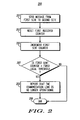
- FIG. 2 depicts a flowchart 200 of a method of evaluating a communication link between a first communication site and a second communication site when sending a message in accordance with the preferred embodiment of the present invention.
- a first communication site sends (201) a message to a second communication site.
- This message can be any datagram that can be delivered to the remote site in a real time manner, such as a voice data frame in a VoIP network.
- One example of such a message is speech or video stream information for real time processing.
- the first communication site Upon sending the message, the first communication site resets (203) a first received counter and increments (205) a first sent counter.
- the first sent counter is a counter that indicates the number of messages sent by the first communication site without having received a message from the second communication site.
- the first communication site determines (207) if the first sent counter is greater than a first sent threshold.
- the first sent threshold is a value that is predetermined and represents the number of messages that are sent by the first communication site without receiving a message from the second communication site.
- the first sent threshold indicates, when the threshold is exceeded, that the communication link between the first communication site and the second communication site is no longer operational.
- the first sent threshold is preferably set to ten, which allows for 200 milliseconds of speech in systems that send a frame every 20 milliseconds.
- the process end (299). If the first sent counter exceeds the first sent threshold, this indicates that the link is most likely not operational.
- the first site reports (209) that the communication link is no longer operational. At this point, the communication system can terminate the communication, can no longer use the communication link, can report the drop in the communication link in an error log or the like, can send an error message to alert an operator that the link is down, or take any other measure to ensure that system resources are functioning properly.
- the process as described in FIG. 2 is being performed at both the first site and the second site.
- the communication link will be reported as no longer operational when either the first site sends a series of messages without receiving a response from the second site, or when the second site sends a series of messages to the first site without receiving a message from the first site.
- FIG. 3 depicts a flowchart of a method of evaluating a communication link between a first communication site and a second communication site when receiving a message in accordance with the preferred embodiment of the present invention.
- the method described in FIG. 3 is preferably performed at both the first site and the second site, but for purposes of illustration, FIG. 3 depicts the process running at the first site.
- the first site receives (301) a message from the second site. Since the first site has received a message, it can assume that the communication link is operational, and consequently the first site resets (303) the first sent counter and increments (305) a first received counter. The first site will increment the number of messages received from the second site so that it can determine whether it needs to send a message to the second site to let the second site know that the communication link is still operational.
- the first site determines (307) if the first received counter is greater than a predetermined percentage of the first remote threshold.
- the first remote threshold will have a value equal to that of the second local threshold. This value is received by the first site, preferably during communication setup, from the second site. In this manner, the first site knows at what point the second site will report that the communication link is down due to not receiving a message from the first site. Consequently, the first site will monitor the number of continuous message received from the second site and will send a message to the second site when this number of received messages exceeds a percentage of the first remote threshold. In the preferred embodiment, the predetermined percentage is 50%. If the first received counter does not exceed the predetermined percentage of the first remote threshold, the process then ends (399).
- the first site sends (309) a message to the second site.
- This message is preferably a short message that simply indicates to the second site that the communication link is still up and that the first site is still receiving messages from the second site.
- This message is preferably different from the user message sent from the second site and received by the first site as indicated in step 301.
- no non-user message such as when no acknowledgment message is available, such as on a T1 system
- a null speech frame can be sent to the second site. It should be understood that the sending of a normal user message obviates the need for an acknowledgment message or a null speech frame. The process then ends (399).
- the present invention therefore provides a method for evaluating a communication link between a first communication site and a second communication site.
- Each communication site increments a sent counter and resets a received counter upon sending a message to the other communication site.
- Each site also increments the received counter and resets the sent counter upon receiving a message from the other communication site.
- each communication site is monitoring the number of messages either sent consecutively or received consecutively from the other communication site.
- a communication site determines that it has sent a number of consecutive messages to the other communication site without receiving a message from the other communication system site, then the communication site reports that the communication link between the communication sites is no longer operational.
- a communication site determines that it has received a number of consecutive messages from the other communication site that exceeds a predetermined percentage of the other communication site's sent threshold, the communication site sends a message to the other communication site.
- This message is typically a short message that alerts the other communication site to the fact that the communication site is able to still send messages on the link.
- the other communication site Upon receiving this message, the other communication site will reset its sent counter, thereby preventing it from sending an alert that the communication link is down when it is actually still operational.
Landscapes
- Engineering & Computer Science (AREA)
- Computer Networks & Wireless Communication (AREA)
- Signal Processing (AREA)
- Quality & Reliability (AREA)
- Data Exchanges In Wide-Area Networks (AREA)
Claims (7)
- Ein Verfahren für das Bewerten einer Kommunikationsverbindung (117) zwischen einem ersten Kommunikationsort (103) und einem zweiten Kommunikationsort (112), wobei das Verfahren die folgenden Schritte umfasst:Heraufsetzen eines gesendeten Zählers (104) an dem ersten Ort (103) bei dem Senden einer Nachricht an den zweiten Ort (112);Zurücksetzen des gesendeten Zählers (104) an dem ersten Ort (103) als Antwort auf das Empfangen einer Nachricht von dem zweiten Ort (112); undBerichten, dass die Kommunikationsverbindung (117) inaktiv ist, wenn der gesendete Zähler (104) einen vorbestimmten Wert überschreitet
- Ein Verfahren für das Bewerten einer Kommunikationsverbindung (117) in Übereinstimmung mit Anspruch 1, das ferner den Schritt des Zurücksetzens eines empfangenen Zählers (105) an dem ersten Kommunikationsort (103) als Antwort auf das Senden der Nachricht von dem ersten Kommunikationsort (103) zu dem zweiten Kommunikationsort (112), umfasst.
- Ein Verfahren für das Bewerten einer Kommunikationsverbindung (117) zwischen einem ersten Kommunikationsort (103) und einem zweiten Kommunikationsort (112), wobei das Verfahren die folgenden Schritte umfasst:Empfangen einer Nachricht von dem zweiten Kommunikationsort (112) an dem ersten Kommunikationsort (103) über die Kommunikationsverbindung (117);als Antwort auf das Empfangen der Nachricht, Heraufsetzen eines empfangenen Zählers (105) an dem ersten Kommunikationsort (103);Zurücksetzen des empfangenen Zählers (105) als Antwort auf das Senden einer Nachricht an den zweiten Ort (112); undSenden einer Nachricht von dem ersten Kommunikationsort (103) zu dem zweiten Kommunikationsort (112), falls der empfangene Zähler (105) einen vorbestimmten Prozentsatz des gesendeten Grenzwerts des anderen Kommunikationsorts überschreitet.
- Ein Verfahren für das Bewerten einer Kommunikationsverbindung (117) in Übereinstimmung mit Anspruch 3, das ferner den Schritt des Zurücksetzens eines gesendeten Zählers (104) an dem ersten Kommunikationsort (103) als Antwort auf das Empfangen der Nachricht von dem zweiten Kommunikationsort (112) umfasst.
- Ein Kommunikationssystem, das folgendes umfasst:einen ersten Kommunikationsort (103), der folgendes einschließt:einen ersten Speicher, der für das Speichern eines ersten gesendeten Zählers, eines ersten empfangenen Zählers und eines ersten Grenzwerts geeignet ist,Mittel für das Heraufsetzen des ersten gesendeten Zählers, wenn eine Nachricht zu einem zweiten Kommunikationsort gesendet wird;Mittel für das Zurücksetzen des ersten gesendeten Zählers an dem ersten Ort als Antwort auf das Empfangen einer Nachricht von dem zweiten Ort; undMittel für das Berichten, dass eine Kommunikationsverbindung inaktiv ist, wenn der erste gesendete Zähler einen ersten vorbestimmten Wert überschreitet; undein zweiter Kommunikationsort (112), der operativ mit dem ersten Kommunikationsort (103) gekoppelt ist und folgendes einschließt:einen zweiten Speicher, der geeignet ist, einen zweiten gesendeten Zähler, einen zweiten empfangenen Zähler und einen zweiten Grenzwert zu speichern, wobei der zweite Grenzwert gleich dem ersten Grenzwert ist;Mittel für das Heraufsetzen des zweiten empfangenen Zählers als Antwort auf das Empfangen einer Nachricht von dem ersten Ort;Mittel für das Zurücksetzen des zweiten empfangenen Zählers als Antwort auf das Senden einer Nachricht an den ersten Ort; undMittel für das Senden einer Nachricht an den ersten Ort, falls der zweite empfangene Zähler einen vorbestimmten Prozentsatz des zweiten Grenzwerts überschreitet.
- Das Kommunikationssystem gemäß Anspruch 5, wobei der erste Kommunikationsort ferner Mittel für das Zurücksetzen des ersten empfangenen Zählers, wenn eine Nachricht an den zweiten Kommunikationsort gesendet wird, einschließt.
- Das Kommunikationssystem gemäß Anspruch 5, wobei der zweite Kommunikationsort ferner Mittel für das Zurücksetzen des zweiten gesendeten Zählers, wenn eine Nachricht an den ersten Kommunikationsort (103) gesendet wird, einschließt.
Applications Claiming Priority (3)
| Application Number | Priority Date | Filing Date | Title |
|---|---|---|---|
| US09/292,733 US6134221A (en) | 1999-04-15 | 1999-04-15 | Method for evaluating a communication link between a first and a second communication site |
| PCT/US2000/004866 WO2000063710A1 (en) | 1999-04-15 | 2000-02-25 | Method for evaluating a communication link between a first and a second communication site |
| US292733 | 2002-11-12 |
Publications (3)
| Publication Number | Publication Date |
|---|---|
| EP1173776A1 EP1173776A1 (de) | 2002-01-23 |
| EP1173776A4 EP1173776A4 (de) | 2002-06-19 |
| EP1173776B1 true EP1173776B1 (de) | 2008-06-18 |
Family
ID=23125965
Family Applications (1)
| Application Number | Title | Priority Date | Filing Date |
|---|---|---|---|
| EP00910353A Expired - Lifetime EP1173776B1 (de) | 1999-04-15 | 2000-02-25 | Verfahren zur auswertung einer kommunikationsverbindung zwischen einem ersten und einem zweiten ort. |
Country Status (4)
| Country | Link |
|---|---|
| US (1) | US6134221A (de) |
| EP (1) | EP1173776B1 (de) |
| DE (1) | DE60039233D1 (de) |
| WO (1) | WO2000063710A1 (de) |
Families Citing this family (7)
| Publication number | Priority date | Publication date | Assignee | Title |
|---|---|---|---|---|
| US7151760B2 (en) * | 1998-12-16 | 2006-12-19 | Samsung Electronics Co., Ltd. | Unified architecture for CDMA network and method of operation |
| US7095828B1 (en) * | 2000-08-11 | 2006-08-22 | Unisys Corporation | Distributed network applications platform architecture |
| JP2002152308A (ja) * | 2000-11-09 | 2002-05-24 | Nec Corp | データ通信システム、その通信方法及びその通信プログラムを記録した記録媒体 |
| US7027389B2 (en) * | 2000-12-11 | 2006-04-11 | Cisco Technology, Inc. | Fast failure detection using RTT time considerations on a non-retransmit medium |
| US20060126706A1 (en) * | 2004-12-10 | 2006-06-15 | Kevin Brand | Auto-reboot modem |
| CA2623805A1 (en) * | 2007-03-02 | 2008-09-02 | Robert A. Hubbs | Quality of service based preemptive routing |
| US9860483B1 (en) * | 2012-05-17 | 2018-01-02 | The Boeing Company | System and method for video processing software |
Family Cites Families (8)
| Publication number | Priority date | Publication date | Assignee | Title |
|---|---|---|---|---|
| US5241548A (en) * | 1991-05-23 | 1993-08-31 | Motorola, Inc. | Method for error correction of a transmitted data word |
| US5757801A (en) * | 1994-04-19 | 1998-05-26 | Multi-Tech Systems, Inc. | Advanced priority statistical multiplexer |
| US5636230A (en) * | 1994-05-31 | 1997-06-03 | Motorola, Inc. | Method for eliminating a receiving data unit as a source of excessive resend requests |
| GB2318030B (en) * | 1996-10-04 | 2001-03-14 | Ibm | Communication system with exchange of capability information |
| JPH1023025A (ja) * | 1996-07-04 | 1998-01-23 | Nec Corp | 無線会議システム |
| US5970064A (en) * | 1997-06-12 | 1999-10-19 | Northern Telecom Limited | Real time control architecture for admission control in communications network |
| US6314101B1 (en) * | 1997-06-17 | 2001-11-06 | Qualcomm Incorporated | Method for detecting delayed data frames in a transport function |
| US6449251B1 (en) * | 1999-04-02 | 2002-09-10 | Nortel Networks Limited | Packet mapper for dynamic data packet prioritization |
-
1999
- 1999-04-15 US US09/292,733 patent/US6134221A/en not_active Expired - Lifetime
-
2000
- 2000-02-25 EP EP00910353A patent/EP1173776B1/de not_active Expired - Lifetime
- 2000-02-25 DE DE60039233T patent/DE60039233D1/de not_active Expired - Lifetime
- 2000-02-25 WO PCT/US2000/004866 patent/WO2000063710A1/en not_active Ceased
Also Published As
| Publication number | Publication date |
|---|---|
| WO2000063710A1 (en) | 2000-10-26 |
| DE60039233D1 (de) | 2008-07-31 |
| EP1173776A1 (de) | 2002-01-23 |
| EP1173776A4 (de) | 2002-06-19 |
| US6134221A (en) | 2000-10-17 |
Similar Documents
| Publication | Publication Date | Title |
|---|---|---|
| US7929430B2 (en) | Congestion control access gateway and congestion control method for the same | |
| US7027389B2 (en) | Fast failure detection using RTT time considerations on a non-retransmit medium | |
| US9961599B2 (en) | Methods to control multiple radio access bearers in a wireless device | |
| EP2509260B1 (de) | Verfahren, Vorrichtung und Kommunikationssystem zum Schutz Signalübertragungsabschnitt | |
| JP3902465B2 (ja) | 移動体通信システム | |
| US20030117974A1 (en) | TCP processing apparatus of base transceiver subsystem in wired/wireless integrated network and method thereof | |
| JP2005102228A (ja) | 無線通信システムにおけるレート・フォールバック方法および装置 | |
| CN101583150A (zh) | 一种无线接入点检测无线终端异常的方法及装置 | |
| US7187666B1 (en) | Employing simulated acknowledgment signals for efficient handoffs in cellular packet networks | |
| US6134221A (en) | Method for evaluating a communication link between a first and a second communication site | |
| CA2401061A1 (en) | Non-invasive remote monitoring and reporting of digital communications systems | |
| US7293215B2 (en) | Radio packet data transmission control system and method | |
| US7197328B2 (en) | Method and apparatus for increasing success rate of push-to-talk access in a mobile communications network | |
| US7239610B2 (en) | Methods and devices for partial upper layer frame loss detection based retransmission | |
| KR100666946B1 (ko) | 단말의 상태를 테스트하기 위한 네트워크시스템 및 그테스트방법 | |
| US20090129346A1 (en) | Method and Apparatus for Monitoring TCP Sessions in a Mobile Data Network and Developing Corresponding Performance Metrics | |
| JP2006352660A (ja) | 無線lanシステム、その通信状態検出方法及びその通信状態検出プログラム | |
| KR100300853B1 (ko) | 통신망시스템의상태정보통지방법 | |
| US20060034203A1 (en) | Mobile communication system and service control device | |
| US7159148B2 (en) | Method for performance and fault management in a telecommunication network | |
| US20240073995A1 (en) | Method and apparatus for managing connection | |
| JP4710719B2 (ja) | 通信異常時の再送装置 | |
| JP3567873B2 (ja) | 無線通信ネットワーク及びそれに用いる障害検出方法 | |
| KR20050001128A (ko) | 원격 관리 장치 및 그 방법 | |
| JPH11177552A (ja) | Snmpのtrap管理方法と装置 |
Legal Events
| Date | Code | Title | Description |
|---|---|---|---|
| PUAI | Public reference made under article 153(3) epc to a published international application that has entered the european phase |
Free format text: ORIGINAL CODE: 0009012 |
|
| 17P | Request for examination filed |
Effective date: 20011115 |
|
| AK | Designated contracting states |
Kind code of ref document: A1 Designated state(s): AT BE CH CY DE DK ES FI FR GB GR IE IT LI LU MC NL PT SE |
|
| A4 | Supplementary search report drawn up and despatched |
Effective date: 20020507 |
|
| AK | Designated contracting states |
Kind code of ref document: A4 Designated state(s): AT BE CH CY DE DK ES FI FR GB GR IE IT LI LU MC NL PT SE |
|
| RIC1 | Information provided on ipc code assigned before grant |
Free format text: 7H 04Q 7/22 A, 7H 04L 1/18 B |
|
| 17Q | First examination report despatched |
Effective date: 20040225 |
|
| RBV | Designated contracting states (corrected) |
Designated state(s): DE FI FR SE |
|
| GRAP | Despatch of communication of intention to grant a patent |
Free format text: ORIGINAL CODE: EPIDOSNIGR1 |
|
| GRAS | Grant fee paid |
Free format text: ORIGINAL CODE: EPIDOSNIGR3 |
|
| GRAA | (expected) grant |
Free format text: ORIGINAL CODE: 0009210 |
|
| AK | Designated contracting states |
Kind code of ref document: B1 Designated state(s): DE FI FR SE |
|
| REF | Corresponds to: |
Ref document number: 60039233 Country of ref document: DE Date of ref document: 20080731 Kind code of ref document: P |
|
| REG | Reference to a national code |
Ref country code: SE Ref legal event code: TRGR |
|
| PG25 | Lapsed in a contracting state [announced via postgrant information from national office to epo] |
Ref country code: FI Free format text: LAPSE BECAUSE OF FAILURE TO SUBMIT A TRANSLATION OF THE DESCRIPTION OR TO PAY THE FEE WITHIN THE PRESCRIBED TIME-LIMIT Effective date: 20080618 |
|
| PLBE | No opposition filed within time limit |
Free format text: ORIGINAL CODE: 0009261 |
|
| STAA | Information on the status of an ep patent application or granted ep patent |
Free format text: STATUS: NO OPPOSITION FILED WITHIN TIME LIMIT |
|
| 26N | No opposition filed |
Effective date: 20090319 |
|
| REG | Reference to a national code |
Ref country code: DE Ref legal event code: R081 Ref document number: 60039233 Country of ref document: DE Owner name: MOTOROLA MOBILITY, INC. ( N.D. GES. D. STAATES, US Free format text: FORMER OWNER: MOTOROLA, INC., SCHAUMBURG, ILL., US Effective date: 20110324 Ref country code: DE Ref legal event code: R081 Ref document number: 60039233 Country of ref document: DE Owner name: MOTOROLA MOBILITY, INC. ( N.D. GES. D. STAATES, US Free format text: FORMER OWNER: MOTOROLA, INC., SCHAUMBURG, US Effective date: 20110324 Ref country code: DE Ref legal event code: R081 Ref document number: 60039233 Country of ref document: DE Owner name: GOOGLE TECHNOLOGY HOLDINGS LLC, MOUNTAIN VIEW, US Free format text: FORMER OWNER: MOTOROLA, INC., SCHAUMBURG, ILL., US Effective date: 20110324 |
|
| REG | Reference to a national code |
Ref country code: FR Ref legal event code: TP Owner name: MOTOROLA MOBILITY, INC., US Effective date: 20110912 |
|
| REG | Reference to a national code |
Ref country code: FR Ref legal event code: PLFP Year of fee payment: 17 |
|
| REG | Reference to a national code |
Ref country code: FR Ref legal event code: PLFP Year of fee payment: 18 |
|
| REG | Reference to a national code |
Ref country code: FR Ref legal event code: CD Owner name: GOOGLE TECHNOLOGY HOLDINGS LLC, US Effective date: 20171214 Ref country code: FR Ref legal event code: TP Owner name: GOOGLE TECHNOLOGY HOLDINGS LLC, US Effective date: 20171214 |
|
| REG | Reference to a national code |
Ref country code: FR Ref legal event code: PLFP Year of fee payment: 19 |
|
| REG | Reference to a national code |
Ref country code: DE Ref legal event code: R082 Ref document number: 60039233 Country of ref document: DE Representative=s name: BETTEN & RESCH PATENT- UND RECHTSANWAELTE PART, DE Ref country code: DE Ref legal event code: R081 Ref document number: 60039233 Country of ref document: DE Owner name: GOOGLE TECHNOLOGY HOLDINGS LLC, MOUNTAIN VIEW, US Free format text: FORMER OWNER: MOTOROLA MOBILITY, INC. ( N.D. GES. D. STAATES DELAWARE ), LIBERTYVILLE, LLL., US |
|
| PGFP | Annual fee paid to national office [announced via postgrant information from national office to epo] |
Ref country code: DE Payment date: 20190227 Year of fee payment: 20 |
|
| PGFP | Annual fee paid to national office [announced via postgrant information from national office to epo] |
Ref country code: FR Payment date: 20190225 Year of fee payment: 20 Ref country code: SE Payment date: 20190227 Year of fee payment: 20 |
|
| REG | Reference to a national code |
Ref country code: DE Ref legal event code: R071 Ref document number: 60039233 Country of ref document: DE |
|
| REG | Reference to a national code |
Ref country code: SE Ref legal event code: EUG |
|
| P01 | Opt-out of the competence of the unified patent court (upc) registered |
Effective date: 20230511 |