EP1174812A2 - Systéme pour la distribution d'information - Google Patents
Systéme pour la distribution d'information Download PDFInfo
- Publication number
- EP1174812A2 EP1174812A2 EP01305139A EP01305139A EP1174812A2 EP 1174812 A2 EP1174812 A2 EP 1174812A2 EP 01305139 A EP01305139 A EP 01305139A EP 01305139 A EP01305139 A EP 01305139A EP 1174812 A2 EP1174812 A2 EP 1174812A2
- Authority
- EP
- European Patent Office
- Prior art keywords
- recording medium
- information
- terminal apparatus
- prepaid
- content data
- Prior art date
- Legal status (The legal status is an assumption and is not a legal conclusion. Google has not performed a legal analysis and makes no representation as to the accuracy of the status listed.)
- Withdrawn
Links
Images








Classifications
-
- G—PHYSICS
- G06—COMPUTING OR CALCULATING; COUNTING
- G06Q—INFORMATION AND COMMUNICATION TECHNOLOGY [ICT] SPECIALLY ADAPTED FOR ADMINISTRATIVE, COMMERCIAL, FINANCIAL, MANAGERIAL OR SUPERVISORY PURPOSES; SYSTEMS OR METHODS SPECIALLY ADAPTED FOR ADMINISTRATIVE, COMMERCIAL, FINANCIAL, MANAGERIAL OR SUPERVISORY PURPOSES, NOT OTHERWISE PROVIDED FOR
- G06Q30/00—Commerce
- G06Q30/06—Buying, selling or leasing transactions
-
- G—PHYSICS
- G06—COMPUTING OR CALCULATING; COUNTING
- G06Q—INFORMATION AND COMMUNICATION TECHNOLOGY [ICT] SPECIALLY ADAPTED FOR ADMINISTRATIVE, COMMERCIAL, FINANCIAL, MANAGERIAL OR SUPERVISORY PURPOSES; SYSTEMS OR METHODS SPECIALLY ADAPTED FOR ADMINISTRATIVE, COMMERCIAL, FINANCIAL, MANAGERIAL OR SUPERVISORY PURPOSES, NOT OTHERWISE PROVIDED FOR
- G06Q20/00—Payment architectures, schemes or protocols
- G06Q20/08—Payment architectures
- G06Q20/10—Payment architectures specially adapted for electronic funds transfer [EFT] systems; specially adapted for home banking systems
- G06Q20/105—Payment architectures specially adapted for electronic funds transfer [EFT] systems; specially adapted for home banking systems involving programming of a portable memory device, e.g. IC cards, "electronic purses"
-
- G—PHYSICS
- G06—COMPUTING OR CALCULATING; COUNTING
- G06Q—INFORMATION AND COMMUNICATION TECHNOLOGY [ICT] SPECIALLY ADAPTED FOR ADMINISTRATIVE, COMMERCIAL, FINANCIAL, MANAGERIAL OR SUPERVISORY PURPOSES; SYSTEMS OR METHODS SPECIALLY ADAPTED FOR ADMINISTRATIVE, COMMERCIAL, FINANCIAL, MANAGERIAL OR SUPERVISORY PURPOSES, NOT OTHERWISE PROVIDED FOR
- G06Q20/00—Payment architectures, schemes or protocols
- G06Q20/08—Payment architectures
- G06Q20/12—Payment architectures specially adapted for electronic shopping systems
-
- G—PHYSICS
- G06—COMPUTING OR CALCULATING; COUNTING
- G06Q—INFORMATION AND COMMUNICATION TECHNOLOGY [ICT] SPECIALLY ADAPTED FOR ADMINISTRATIVE, COMMERCIAL, FINANCIAL, MANAGERIAL OR SUPERVISORY PURPOSES; SYSTEMS OR METHODS SPECIALLY ADAPTED FOR ADMINISTRATIVE, COMMERCIAL, FINANCIAL, MANAGERIAL OR SUPERVISORY PURPOSES, NOT OTHERWISE PROVIDED FOR
- G06Q20/00—Payment architectures, schemes or protocols
- G06Q20/22—Payment schemes or models
- G06Q20/28—Pre-payment schemes, e.g. "pay before"
-
- G—PHYSICS
- G06—COMPUTING OR CALCULATING; COUNTING
- G06Q—INFORMATION AND COMMUNICATION TECHNOLOGY [ICT] SPECIALLY ADAPTED FOR ADMINISTRATIVE, COMMERCIAL, FINANCIAL, MANAGERIAL OR SUPERVISORY PURPOSES; SYSTEMS OR METHODS SPECIALLY ADAPTED FOR ADMINISTRATIVE, COMMERCIAL, FINANCIAL, MANAGERIAL OR SUPERVISORY PURPOSES, NOT OTHERWISE PROVIDED FOR
- G06Q30/00—Commerce
- G06Q30/06—Buying, selling or leasing transactions
- G06Q30/0601—Electronic shopping [e-shopping]
-
- G—PHYSICS
- G06—COMPUTING OR CALCULATING; COUNTING
- G06Q—INFORMATION AND COMMUNICATION TECHNOLOGY [ICT] SPECIALLY ADAPTED FOR ADMINISTRATIVE, COMMERCIAL, FINANCIAL, MANAGERIAL OR SUPERVISORY PURPOSES; SYSTEMS OR METHODS SPECIALLY ADAPTED FOR ADMINISTRATIVE, COMMERCIAL, FINANCIAL, MANAGERIAL OR SUPERVISORY PURPOSES, NOT OTHERWISE PROVIDED FOR
- G06Q30/00—Commerce
- G06Q30/06—Buying, selling or leasing transactions
- G06Q30/0601—Electronic shopping [e-shopping]
- G06Q30/0623—Electronic shopping [e-shopping] by investigating goods or services
- G06Q30/0625—Electronic shopping [e-shopping] by investigating goods or services by formulating product or service queries, e.g. using keywords or predefined options
- G06Q30/0629—Electronic shopping [e-shopping] by investigating goods or services by formulating product or service queries, e.g. using keywords or predefined options by pre-processing results, e.g. ranking or ordering results
Definitions
- the present invention relates generally to an information distribution system, a terminal apparatus, an information center, a recording medium, and an information distribution method for distributing and recording content such as music for example to a recording medium of a user.
- a user connects his terminal device such as a personal computer to a music download site for pay on the Internet. By looking at a distributed music purchase menu displayed on that site, the user selects desired music content and request the site for its downloading. The selected content is downloaded to such a recording medium of the user's terminal device as a hard disk for example.
- a dedicated terminal device installed at a music shop or a convenience store for example.
- a recording medium such as a Mini Disc (trademark) (a magneto-optical disc) on which music content can be recorded and loads it into the dedicated terminal device.
- This dedicated terminal device connected to a music content server, allows users to download music content.
- a user selects desired music titles at the dedicated terminal device and the selected music titles are recorded on a Mini Disc for example loaded by the user.
- the payment for the downloaded music content may be settled by inputting the user's credit card number as described above or by throwing in money as with an automatic vending machine for example.
- the above-mentioned dedicated terminal device allows the settlement by cash, users may feel inconvenience in not only loading a recording medium but also throwing in money every time content is downloaded.
- an information distribution system having a terminal apparatus in which a recording medium recording beforehand an identifier unique to the recording medium and prepaid information and is loadable and an information center which is connectable to the terminal apparatus and transmits content data thereto via a predetermined communication line
- the terminal apparatus including first receiving means for receiving the content data transmitted from the information center, recording and reproducing means for recording the content data received by the first receiving means onto the recording medium loaded in the terminal apparatus and reproducing the identifier unique to the recording medium and the prepaid information, and first transmitting means for transmitting the reproduced identifier unique to the recording medium and the reproduced prepaid information to the information center
- the information center including first storage means for storing a plurality of content data, second transmitting means for transmitting predetermined content data from the first storage means to the terminal apparatus, second receiving means for receiving the identifier unique to the recording medium and the prepaid information transmitted from the terminal apparatus, second storage means for storing a usable remaining amount of money in accordance with the identifier unique to
- a terminal apparatus including loading means capable of loading a recording medium recording beforehand a identifier unique to the recording medium and prepaid information into the terminal apparatus, reproducing means for reproducing the identifier unique to the recording medium and the prepaid information from the recording medium loaded in the loading means, transmitting means for transmitting the identifier unique to the recording medium and the prepaid information reproduced by the reproducing means to an information center via a predetermined communication line, receiving means for receiving a result of a balance inquiry executed in the information center on the basis of the transmitted identifier unique to the recording medium and the transmitted prepaid information and content data transmitted from the information center, recording means for recording the content data received by the receiving means onto the loaded recording medium, and prompting means for prompting, if the balance inquiry received by the receiving indicates a shortage of amount of money for the received content data, the unloading of the currently loaded recording medium and the loading of another recording medium.
- an information center connected to a terminal apparatus via a predetermined communication line, for distributing content data, including first storage means for storing a plurality of content data, transmitting means for transmitting predetermined content data from the first storage means to the terminal apparatus, receiving means for receiving an identifier unique to a recording medium and prepaid information stored therein transmitted from the terminal apparatus, second storage means for storing a usable remaining amount of money in accordance with the identifier unique to the recording medium and the prepaid information received by the receiving means, and charging processing means for updating, when the predetermined content data are transmitted from the first storage means to the terminal apparatus, the usable remaining amount of money stored in the second storage means for a charge of the predetermined content data transmitted from the first storage means to the terminal apparatus.
- a recording medium including an unrewritable area in which an identifier unique to the recording medium and prepaid information are recorded beforehand, and a recording area in which content data are recorded, and a managing area in which recordable capacity of the recording area is managed.
- an information distribution method for distributing content data from an information center to a terminal apparatus in which a recording medium is loadable and recording the distributed content data thereto, the information center and the terminal apparatus being interconnected via a predetermined communication line including the steps of receiving an identifier unique to the recording medium and prepaid information recorded on the recording medium beforehand, transmitted from the terminal apparatus, storing, in a memory, a usable remaining amount of money in accordance with the received identifier unique to the recording medium and the received prepaid information, comparing the usable remaining amount of money stored in the memory with a charge of content data to be distributed from the information center to the terminal apparatus, permitting, if the usable remaining amount of money stored in the memory is greater than the charge of the content data to be distributed from the information center to the terminal apparatus, the transmission of the content data from the information center to the terminal apparatus; and updating, by the charge of the content data, the usable remaining amount of money stored in a second memory when the content data are transmitted from the information center to the
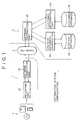
- FIG. 1 there is shown an exemplary configuration of a content distribution system practiced as one embodiment of the invention.
- This content distribution system can provide for pay music content for example from a server 3 to a terminal 1.
- this distribution system can also provide content such as video data and text data.
- the terminal 1 may be an information device such as a personal computer installed in user's home or a dedicated leased line terminal installed at a music store for example. Also, the terminal 1 may be a wireless device such as a PDA (Personal Digital Assistant), a mobile telephone, or a on-vehicle communication device. Namely, the terminal 1 may be anything as long as it is communicable with the server 3 via a network 2. Further, the terminal 1 may be a household audio/video device having a communication capability.
- the server 3 operated by an institution or an individual who performs content provision services, basically has a content holding capability for accumulating various kinds of content, a capability of providing, by communication with the terminal 1, the content held by the content holding capability, and an charging capability for performing charging management for users who accept the content provision by use of the terminal 1.
- These capabilities may be totally operated by one organization or company for example or individually by different organizations, companies, and individuals for example in a cooperative manner.
- each of these capabilities may be managed as different Web pages on the Internet which are linked each other for cooperative operation.
- the network 2 may be a public phone line such as ISDN (Integrated Services Digital Network) line or a leased line. Alternatively, it may be a wireless network such as a wireless telephone line or a satellite communication line.
- ISDN Integrated Services Digital Network
- a wireless network such as a wireless telephone line or a satellite communication line.
- the terminal 1 has at least a recording unit 10 and a network connection unit 20 as shown in FIG. 1.
- the recording unit 10 records and reproduces information to and from a recording medium 4.
- the recording medium 4 is a portable recording medium on which prepaid information to be described later is written in a not rewritable manner.
- the recording medium 4 may be a Mini Disc in which a magneto-optical disc is accommodated in a cartridge, a disc which is generally called as CD-R, CD-RW, DVD-RAM, DVD-RW, or DVD+RW, or a memory card based on flash memory.
- the recording medium 4 may be other than those mentioned above.
- the network connection unit 20 communicates with the server 3 via the network 2 and executes the operation of the terminal 1 as a content distribution operation in the information distribution system according to the invention.
- the terminal 1, if configured as a distribution dedicated terminal, may be constituted by the recording unit 10 and the network connection unit 20 in an integrated manner.
- Many personal computers and PDA devices have a drive for recording and reproducing information to and from recording medium 4.
- the terminal 2 may be constituted by such a drive and a communication capability.
- the terminal 1 may be constituted by connecting a device having the capability of the recording unit 10 such as a Mini Disc recording and reproducing device to a personal computer for example having the capability of the network connection device 20.
- the server 3 is constituted by a network distribution unit 30, a content database controller 40, a customer information unit 50, a content database 60, and a customer database 70.
- the network distribution unit 30 distributes content stored in the server 3 to the terminal 1.
- the content database controller 40 and the content database 60 implement the content holding capability.
- the customer information unit 50 and the customer database 70 implement the charging capability of performing charging management on the user of the terminal 1.
- the content database 60 constituted by a recording medium such as a hard disk or an optical disk for example, stores many pieces of music content to be provided to users in the form of music library.
- the content database controller 40 controls the access to the music content for example stored in the content database 60.
- the content database controller 40 reads the content requested by the network distribution unit 30 from the content database 60 and sends this content to the network distribution unit 30.
- the customer database 70 constituted by a recording medium such as a hard disk or an optical disk, stores charging information in correspondence with the prepaid information recorded on each recording medium 4.
- the customer information unit 50 controls the registration and reading of the charging information for the customer database 70. For example, in response to a request from the network distribution unit 30, the customer information unit 50 newly registers charging information with the customer database 70 and reads a particular piece of charging information to provide it to the network distribution unit 30.
- the components of the server 3 may be operated by one organization, company, or individual or by different organizations for example as described above.
- the content database 60 and the customer database 70 may be installed in different regions or countries.
- the network distribution unit 30 may be operated by a distribution service company, the content database controller 40 and the content database 60 by a record company or a record label company for example, and the customer information unit 50 and the customer database 70 by an charging service company.
- the user loads the recording medium 4 into the terminal 1.
- the terminal 1 then communicates with the server 3 to receive a list (or a menu) of content which can be provided to the user.
- the user selects a desired piece of content from the received list.
- the selected piece of content is supplied from the server 3 to the terminal 1.
- the terminal 1 records the supplied content to the recording medium 4.
- the user can obtain the desired piece of content such as music for example.
- Each recording medium 4 carries a different medium ID and a prepaid amount of money as the prepaid information.
- the terminal 1 sends this prepaid information to the server 3, upon which the network distribution unit 30 executes charging processing on the customer database 70 on the basis of the supplied prepaid information.
- the charging information corresponding to the prepaid information of each recording medium 4 is registered with the customer database 70, the amount of money equivalent to the cost of the provided content being subtracted from the prepaid amount of money in the charging information.
- the charginging is executed by updating the charging information on the customer database 70.
- the prepaid information recorded on the recording medium 4 is not rewritten at all. More details will be described later.
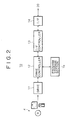
- the recording unit 20 comprises a drive 11, a drive controller 12, an interface controller 13, an interface 14, and a program storage section 15.
- the drive 11 records and reproduces information to and from the recording medium 4. If the recording medium 4 is a Mini Disc, the drive 11 comprises a recording/reproducing head, an encoder/decoder, a data buffer, and a servo, writing or reading information to or from the disc.
- the recording medium 4 is a Mini Disc
- the drive 11 comprises a recording/reproducing head, an encoder/decoder, a data buffer, and a servo, writing or reading information to or from the disc.
- the drive 11 may have one or more slots in which the recording medium 4 is loaded.
- the arrangement of two or more slots facilitates the loading of two or more recording media 4 at a time for the charging processing to be described later.
- the drive 11 may have both a drive construction for Mini Disc and a drive construction for memory card, thereby providing the compatibility with plural different types of recording media.
- the drive controller 12 controls the entire recording unit 10 in the recording and reproducing operations of the drive 11 and the communication with the interface controller 13. Namely, in response to a request from the network connection unit 20, the drive controller 12 controls the other components of the recording unit 10 in writing or reading information to or from the recording medium 4, the reading or transfer of prepaid information, and the reading and transfer of the recordable capacity information of the recording medium 4.
- control operations of the drive controller 12 are executed as instructed by programs stored in the program storage section 15 constituted by a solid-state memory or a hard disk.
- the program storage section 15 stores not only the basic control programs for executing the operations of the recording unit 10 but also the application programs for reading the prepaid information and recordable capacity information from the recording medium 4 in this example.
- the drive controller 12 can read the prepaid information and recordable capacity information from the recording medium 4 and transfer these items of information to the network connection unit 20, thereby supplying the information necessary for the charging processing operation by the information distribution system according to the invention.
- the recording unit 10 may have a prepaid information recognition device as hardware for capturing prepaid information.
- the interface 14 interfaces the recording unit 10 with the network connection unit 20, over which the interface controller 13 transfers various kinds of information.
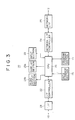
- the network connection unit 20 comprises an interface 21, an interface controller 22, a CPU 23, a network interface controller 24, a network interface 25, a data storage section 26, a program storage section 27, a display section 28a, an audio output section 28b, and an input section 29.
- the interface 21 interfaces the network connection unit 20 with the recording unit 10, over which various kinds of information are transferred under the control of the interface controller 22.
- the CPU 23 controls the network connection unit 20 in its entirety. To be more specific, the CPU 23 controls the transfer/reception of various data with the server 3 for information distribution, the user interface processing, and the transfer/reception of various data with the recording unit 10, for example.
- the control operations by the CPU 23 are executed as instructed by a program stored in the program storage section 27.
- the program storage section 27 is constituted by a solid-state memory or a hard disk for example.
- the program storage section 27 stores not only the basic control programs for executing the control operations of the network connection unit 20 but also the application programs for processing the prepaid information supplied from the recording medium 10.
- the CPU 23 controls the transmission of the prepaid information necessary for the charging processing in the present system to the server 3 as instructed by the prepaid information processing application program.
- the encryption and encoding of the prepaid information to be sent to the server are also controlled by the CPU 23 on the basis of the prepaid information processing application program.
- the data storage section 26 is constituted by a solid-state memory or a hard disk as described above.
- the CPU 23 can also use the data storage section 26 for buffering the content downloaded from the server 3 or the prepaid information received from the recording unit 10 or as an extended work memory for the computational operations by the CPU 23.
- the network interface 25 provides interface with the network 2 and is controlled by the network interface controller 24.
- the network interface 25 may be constituted by a modem for example or may be a Wireless communication unit.
- the display section 28a, the audio output section 28b, and the input section 29 provide a user interface.
- the display section 28a displays the menu screens for distributed content, various operation screens, and a guide screens to the user.
- the audio output section 28b comprises an audio decoder, an A/D converter, a audio processor, an amplifier, and a speaker for example, outputting audio signals.
- the information distribution system according to the invention allows the user to have a trial listening to music content before purchasing, for example.
- the CPU 23 supplies the trial listening content downloaded from the server 3 to the audio output section 28b for the user to have a trial listening.
- the input section 29 is operated by the user.
- the input section 29 may be an operation key, an operation dial, or a pointing device such as a keyboard or a mouse, for example.
- the input section 29 may be a touch panel which is integrated with the display section 28a.
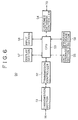
- the network distribution unit 30 comprises a network transmission section 31, a transmission controller 32, a distribution service management system section 33, a customer information link section 34, a content download information reception/storage section 35, and a customer information reception/storage section 36.
- the transmission controller 32 controls the transfer/reception operations to be executed by the network transmission section 31.
- the distribution service management system section 33 controls the distribution operations as the server 3 and is constituted by a controller as the server main. To be more specific, the distribution service management system section 33 controls all distribution service processing including the processing of the prepaid information and purchase information supplied from the terminal 1 via the network transmission section 31, the processing for capturing and transmitting content in response to the prepaid information and purchase information, the charging processing, and the processing for communication and connection with the terminal 1.
- the customer information link section 34 links the prepaid information and purchase information supplied from the terminal 1 to the charging information read from the customer database 70 and the content read from the content database 60 to execute necessary processing.
- the content download information reception/storage section 35 receives and temporarily stores the information read from the content database 60 by the content database controller 40.
- the customer information reception/storage section 36 receives and temporarily stores the information read from the customer database 70 by the customer information unit 50.
- the customer information link section 34 links the prepaid information and purchase information supplied from the terminal 1 to the information stored in the customer information reception/storage section 36 and the content download information reception/storage section 35 to execute the processing necessary for content distribution.
- the content database controller 40 comprises a transmission section 41, a transmission controller 42, a CPU 43, a content database controller 44, a data storage section 45, a program storage section 46, a display section 47, and an input section 48.
- the transmission section 41 connected to the content download information reception/storage section 35 of the network distribution unit 30, transmits information.
- the transmission controller 42 controls the information transfer/reception operation to be executed by the transmission section 41.
- the CPU 43 controls the content database controller 40 in its entirety. Namely, the CPU 43 controls the command and content transfer/reception operations with the network distribution unit 30 and the read/write operations on the content database 60.
- the program storage section 46 is constituted by a solid-state memory or a hard disk for example.
- the program storage section 46 stores the programs for accessing and managing the content database 60 and controlling the communication with the network distribution unit 30 and processing the data to be transmitted.
- the data storage section 45 is also constituted by a solid-state memory or a hard disk for example.
- the CPU 43 can use the data storage section 45 to buffer the content read from the content database 60 or the content to be stored therein or as an extended work memory for computational operations by the CPU 43.
- the content database controller 44 controls the content database 60 as instructed by the CPU 43, thereby executing access operations for writing, reading, and searching for content.
- the display section 47 and the input section 48 provide an interface for the content database manager.
- the display section 47 displays images necessary for managing the content database 60 under the control of the CPU 43.
- the input section 48 is used to perform various input operations for managing the content database 60.
- the customer information unit 50 comprises a transmission section 51, a transmission controller 52, a CPU 53, a customer database controller 54, a data storage section 55, a program storage section 56, a display section 57, and an input section 58.
- the transmission section 51 connected to the customer information reception/storage section 36 of the network distribution unit 30, transmits information.
- the transmission controller 52 controls the transfer operations of the transmission section 51.
- the CPU 53 controls the customer information unit 50 in its entirety. Namely, the CPU 53 controls, in an information distributing operation, the transfer/reception of the charging information and commands with the network distribution unit 30 and the read/write operations on the customer database 70.
- the program storage section 56 is constituted by a solid-state memory or a hard disk for example.
- the program storage section 56 stores the programs for accessing and managing the customer database 70, the communication with the network distribution unit 30, and the processing of data to be transmitted.
- the data storage section 55 is also constituted by a solid-state memory or a hard disk for example.
- the CPU 53 can use the data storage section 55 to buffer the charging information read from the customer database 70 and the charging information to be newly registered on the basis of prepaid information or as an extended work memory for computational operations by the CPU 53.
- the customer database controller 54 controls the customer database 70 as instructed by the CPU 53, thereby executing access operations for charging information writing, reading, and searching.
- the display section 57 and the input section 58 provide an interface for the customer database manager.
- the display section 57 displays the images necessary for managing the customer database 70 under the control of the CPU 53.
- the input section 58 is used to execute various input operations for managing the customer database 70.
- the charging information as shown in FIG. 7 is registered with the customer database 70.
- "Charging information” herein denotes a data group registered for one piece of prepaid information; for example, one piece of charging information consists of medium ID, remaining amount of money, and purchase log for example.
- FIG. 7 shows medium IDs ID1 through ID5 and corresponding charging information K1 through K5.
- the medium ID in the charging information is one contained in the prepaid information to be described later.
- the remaining amount of money denotes the current prepaid remaining amount of money obtained by subtracting the charge of the purchased content from the prepaid principal every time the purchase takes place.
- the purchase log includes information such as date of purchase, content name, content fee, and user terminal; namely the information indicative of the state of every content purchase transaction.
- the charging information may additionally include information such as prepaid principal, medium type, medium vendor, copyright holder of purchased content, and others.
- the charging information may exclude the purchase log.
- at least the information including medium ID and the remaining amount of money may only be included in the charging information.
- the other information may be set in accordance with the convenience of the distribution system or the contents of the services to be provided.
- the user To receive content distributed by the information distribution system according to the invention, the user must first load the recording medium 4 recorded with prepaid information into the system.
- the prepaid information is recorded on the recording medium 4 in a unrewritable manner.
- the prepaid information consists of prepaid amount of money, prepaid service ID, and medium ID.
- the prepaid amount of money is the amount of money paid by the user in advance.
- the recording medium 4 is sold as a virgin Mini Disc or memory card recorded with no content for example, its sale price including the prepaid amount of money.
- the recording medium may be sold at any price; for example, 5,000 yen when the recording medium itself is free of charge or a discount amount of 4,800 yen.
- the user who bought the recording medium 4 recorded with a prepaid amount of 5,000 yen it means that he prepaid 5,000 yen for the content distribution service provided by the information distribution system according to the invention.
- the prepaid service ID represents the address of the server 3 which provides the content distribution service.
- the prepaid service ID is an address for communicating and connecting to the network distribution unit 30 in the network 2. It may be an IP address in the Internet.
- the terminal 1 accesses the server 3 on the basis of the prepaid service ID in the prepaid information to ask for connection.
- the prepaid service ID may not be the address of the network distribution unit 30 but may be the address of the content database controller 40 or the customer information unit 50 for example.
- the network distribution unit 30, the content database controller 40, and the customer information unit 50 be respectively formed as Web pages on the Internet and interconnected. Then, the terminal 1 is adapted to access the content database controller 40 with the prepaid service ID being the address of the content database controller 40. In this configuration, it is possible that the customer information unit 50 be linked as the distribution processing proceeds, which is collectively processed by the network distribution unit 30.
- the terminal 1 may be adapted to access the customer information unit 50 with the prepaid service ID being the address of the customer information unit 50.
- the content database controller 40 may be linked as the distribution processing proceeds, which is collectively processed by the network distribution unit 30.
- the medium ID is an identification number uniquely attached to each recording medium 4. For example, if the user purchased two prepaid recording media 4, these recording media 4 are recorded with different medium IDs.
- 8 bits may be allocated to the prepaid amount of money, about 22 to 32 bits to the prepaid service ID, and 32 to 40 bits to the medium ID for example.
- the number of bits to be allocated may be determined depending on the design of a prepaid system concerned, for example.
- the number of bits necessary for a server address for example to the prepaid service ID, the total number or the potential total number of prepaid media to be sold to the medium ID may be set so that different ID numbers can be sufficiently distinguished from each other.
- the minimum value may be 1 byte (8 bits) for prepaid amount of money, 3 or 4 bytes for prepaid service ID, and 3 or 4 bytes for medium ID, totaling about 8 bytes.
- the charge for that content is subtracted from the remaining amount in the charging information K1. Namely, every time content downloading takes place, the customer database 70 is searched for the corresponding charging information on the basis of the recording medium ID in the prepaid information on the recording medium 4 and the subtraction is made from the remaining amount in the retrieved charging information.
- the prepaid information is not updated at all in the recording medium 4 owned by the user.
- the prepaid information may only be recorded on the recording medium 4 in a unrewritable manner.
- the remaining amount of money is decrementally updated in the prepaid cards themselves, while the prepaid information recorded on the recording medium 4 according to the invention is not rewritten for update.
- the recording medium 4 may be adapted to record the prepaid information in a rewritable manner; however, it is not desirable to make the recording medium 4 rewritable in the view of preventing the prepaid amount of money or the medium ID from being falsified or the prepaid services from being abused by tampering the prepaid service ID.
- the recording medium 4 being a Mini Disc by way of example.
- the data form and management information form on the Mini Disc will be described, followed by an example of prepaid information recording.
- FIGS. 9A and 9B show the format of each cluster providing one unit of this recording operation.
- clusters CL are continuously formed as a recording track as shown in FIG. 9A, one cluster being the minimum recording unit.
- One cluster is equivalent to 2 to 3 rounds of tracks.
- the actual reproduction time as music data is equivalent to a data amount for 2.043 seconds.
- one cluster CL is composed of a linking sector consisting of 3 sectors SCFC through SCFE, a sub-data sector consisting of one sector SCFF, and a main sector consisting of 32 sectors SC00 through SC1F.
- one cluster is composed of 36 sectors.
- One sector provides a data unit which consists of 2,352 bytes.
- the linking sector SCFC-SCFE is used to provide a buffer between recording operations or adjust various operations.
- the sub-data sector SCFF is used to record information set as sub-data.
- TOC Table Of Contents
- data providing management information and audio data providing content as referred to in the present embodiment are recorded on the main sector SC00-SC1F consisting of 32 sectors.
- FIGS. 10A and 10B illustrate a Mini Disc area structure.
- FIG. 10A illustrates an area from the innermost periphery to the outermost periphery of a Mini Disc.
- the innermost periphery side provides a pit area in which reproduction-only data are formed by emboss pits and a P-TOC providing management information is recorded.
- the outer periphery relative to the pit area is referred to as a magneto-optical area providing a recording and reproduction enabled area formed with guide grooves of recording tracks.
- a section of the innermost clusters 0 through 49 provides a control area.
- a piece of music content for example is recorded as one track in a program area consisting of clusters 50 through 2251.
- the outer periphery relative to the program area provides the lead-out area.
- FIG. 10B illustrates the control area in detail.
- the sectors (without the linking sectors) extend horizontally while the clusters extend vertically.
- clusters 0 and 1 provide a buffer area for providing a buffer with the pit area.
- Cluster 2 provides a power calibration area PCA which is used to adjust laser beam output power.
- Clusters 3, 4, and 5 record a U-TOC.
- a data format is specified for each of plural predetermined sectors of the 32 main sectors (SC00 through SC1F) in one cluster, predetermined control information being recorded in each of these predetermined sectors.
- the U-TOC sector is adapted to record the addresses of the tracks recorded in the program area and the addresses of free areas and the information such as the track names and recording dates of these tracks.
- the cluster having the sectors constituting the U-TOC data is recorded repeatedly recorded in clusters 3, 4, and 5.
- the clusters 47, 48, and 49 provide a buffer area with the program area.
- audio data such as music for example are recorded as compressed in ATRAC (Adaptive Transform Acoustic Coding) or ATRAC2 or ATRAC3 algorithm in each of 32 main sectors SC00 through SC1F in one cluster.
- ATRAC Adaptive Transform Acoustic Coding
- ATRAC2 Adaptive Transform Acoustic Coding2
- ATRAC3 ATRAC3 algorithm
- the recorded programs and recordable areas are managed by U-TOC.
- an area in which a U-TOC area for example is formed in the groove area provides the control area.
- the control area may include this control area and the inner periphery lead-in area in which P-TOC is recorded in contrast to the program area in which content is recorded.
- the P-TOC sector For the control information to be recorded in the control area, the P-TOC sector will be described first.
- P-TOC information includes the specification of recordable areas (or program areas) on the Mini Disc and the management of the U-TOC area.
- a control information format is specified for each sector and required control information is recorded in each section.
- the P-TOC sector thus formed is repeatedly formed in the lead-in area.
- P-TOC sector 0 which provides the most basic control information.
- the description of the P-TOC sectors following sector 1 is omitted.
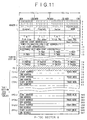
- FIG. 11 illustrates the format of P-TOC sector 0.
- cluster addresses Cluster H and (Cluster L) and sector address (Sector) are recorded over 3 bytes, followed by 1-byte of mode information (MODE), thereby forming a header.
- the 3-byte addresses are addresses of these sectors themselves.
- the header is followed by an identification in ASCII codes representing character "MINI" at predetermined positions.
- This identification is followed by disc type, recording power, first recorded music number (First TNO), last recorded music number (Last TNO), lead-out start address LO A , power calibration area start address PC A , U-TOC start address UST A , and recordable user area start address RST A .
- the lead-out start address LO A indicates the start address of the lead-out area shown in FIG. 10A.
- the power calibration area start address PC A indicates the start address of the power calibration area PCA shown in FIG. 10A.
- the U-TOC start address UST A indicates the start address of the U-TOC area.
- the recordable user area start address RST A indicates the start address of the program area.
- the drive unit In order to execute a content (track) recording or reproducing operation on or from a Mini Disc, the drive unit must read the P-TOC and U-TOC, which are control information of the Mini Disc, from the Mini Disc beforehand and reference these tables as required.
- the U-TOC sector can record various kinds of control information by use of the sectors SC00 through SC1F in the cluster, which is the U-TOC area.
- sector 0 (SC00) is specified as a basic content management sector
- sector 1 (SC01) and sector 4 (SC04) as an area for recording text information
- sector 2 (SC02) as an area for recording a date of recording
- sector 3 (SC03) as an area for recording ISRC (International Standard Recording Code) information.
- the following describes U-TOC sector 0 which is always necessary for Mini Disc recording and reproducing operations.
- U-TOC sector 0 is a data area which records content such as newly recorded music and the control information about free areas to which content can be newly recorded. For example, when a piece of music is to be recorded on a Mini Disc, the drive unit searches U-TOC sector 0 for a free area on the disc and records the music data in the retrieved free area. When a piece of music is to be reproduced, the drive unit searches U-TOC sector 0 for an area in which the desired piece of music is recorded and accesses the retrieved area for reproduction.
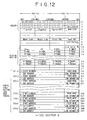
- FIG. 12 illustrates the format of U-TOC sector 0. Like above-mentioned P-TOC sector 0, The 16-byte header records 12-byte synchronous patterns, cluster addresses (Cluster H) and (Cluster L), sector address (Sector), and mode information (MODE).
- the 8 bits of this 1 byte correspond to U-TOC sectors 0 through 7 respectively. When a bit is "1", it indicates that the corresponding sector is in use.
- the pointer section is followed by the table section in which 255 part tables 01h through FFh are provided to be related by the pointers (P-DFA through P-TNO255) to the track areas and free areas.
- Every part table records the start and end addresses of a corresponding part and the mode information (track mode) of that part.
- every part table can record the link information indicative of a part table recording the start and end address of the destination part.
- part used herein denotes a portion of one track in which temporally continuous data are recorded in a physically continuous manner.
- the start and end addresses indicate the address of one or more parts which constitute one piece of music (or one track).
- a piece of music to be recorded by the user may be recorded in plural parts for the purpose of increasing the usage efficiency of the recordable area because there is no problem in reproducing one piece of content data (or one track) physically discontinuously, namely in reproducing one piece of content recorded over plural parts.
- the link information is provided; for example, specifying the part tables to be linked with each other by use of the numbers assigned to these part tables allows to link the part tables to link for reproduction of the above-mentioned piece of content recorded over plural parts.
- one part table represents one part; for example, a piece of music constituted by 3 linked parts is managed in part position by 3 part tables linked each other by the link information.
- Pointer P-DFA indicates a defective area on the Mini Disc, specifying one part table or the first one of plural part tables in which a defective track portion (namely, a defective part) caused by a scratch for example is indicated. Namely, if there exists a defective part, one of 01h through FFh is recorded in pointer P-DFA and the part table pointed by this pointer indicates the defective part by its start and end addresses. If there is another defective part, another part table is specified as the link information of the part table indicating that defective part and the specified table also indicates this defective part. If there is no other defective part, the link information indicates "00h" for example, denoting there is no further link.
- Pointer P-EMPTY indicates one unused part table or the first part table of two or more unused part tables. If there exists an unused part table, one of 01h through FFh is recorded as pointer P-EMPTY.
- the part tables are sequentially specified by the link information from the part table pointed by pointer P-EMPTY, linking all unused part tables in the table section.
- Pointer P-FRA indicates a free area in which data can be written on the Mini Disc, specifying one part table or the first part table of two or more part tables indicating a track portion (namely, a part) which provides a free area. Namely, if there exists a free area, one of 01h through FFh is recorded in pointer P-FRA and the corresponding part table indicates a part, which is a free area, by its start and end addresses. If there are two or more such parts, namely there are two or more part tables, they are sequentially specified by the link information until "00h" is reached.
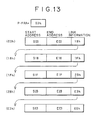
- FIG. 13 schematically illustrates how the parts providing free areas are managed by part tables. This figure shows a state in which, when parts 03h, 18h, 1Fh, 2Bh, and E3h are free areas, these parts are shown by linking them each other following pointer P-FRA. The same control form also applied to the above-mentioned defective areas and unused part tables.
- Pointers P-TNO1 through P-TNO255 indicate the tracks of music for example recorded on the Mini disc.
- pointer P-TNO1 points at a part table indicative of one or the temporally first one of plural parts recorded with the data of the first track.
- the recording area of the first track is recorded in the start and end addresses in the part table pointed by pointer P-TNO1.
- a piece of music recorded in the second track for example is recorded discretely over plural parts on the disc, these parts are specified in a sequence of time in order to indicate the recording positions of the second track. Namely, starting the part table pointed by pointer P-TNO2, other part tables are linked each other by the link information in a sequence of time up to a part table with which the link information becomes "00h" (the same form as shown in FIG. 13).
- the area control on the disc is executed by P-TOC and the music for example recorded in the recordable user area and the free areas are controlled by U-TOC.
- the prepaid information is recorded in a unrewritable manner.
- the prepaid information may be recorded in one of the following manners:
- an unused 8-byte area PD indicated by hatching in P-TOC sector 0 shown in FIG. 11 for example is used for the recording.
- the prepaid information may also be recorded in another unused area in P-TOC or a predetermined area in or subsequent to P-TOC sector 1.
- the prepaid information is recorded in P-TOC
- the prepaid information is recorded by emboss pits; namely, the prepaid information thus recorded becomes unrewritable information, thereby making it suitable for the information distribution system according to the present invention.
- the drive unit 10 is Mini Disc compatible
- P-TOC is first read upon loading of the disc, accompanied by the reading of the prepaid information, which is suitable for the information distribution system according to the present invention.
- the medium ID in the prepaid information must be different from disc to disc to identify a particular recording medium 4 from among mass-produced recording media 4.
- P-TOC formed by emboss pits is formed in a stamping process in Mini Disc fabrication processing. Therefore, it takes a lot of troubles to record the prepaid information which is different from disc to disc. Consequently, the above-mentioned manner of recording the prepaid information in P-TOC has its drawback in view of the mass production of prepaid medium.
- the method in which the prepaid information is recorded in U-TOC or the control area does not involve the above-mentioned drawback in fabrication presents no difficulty in recording the prepaid information having a medium ID which differs from disc to disc. In this case, however, means for making the prepaid information unrewritable is required.
- an unused area in already formatted sector 0, 1, 2, 3 or 4 may be used.
- a sector not yet specified may be used.
- U-TOC sector 5 is specified as shown in FIG. 14. Namely, except for the header, the predetermined 8 bytes are set as a prepaid information recording area PD.
- a general Mini Disc recorder recognizes U-TOC sector 5 as a sector not in use, so that no updating process is executed on U-TOC sector 5. Namely, the prepaid information becomes unrewritable by the user.
- the prepaid information can be read by reading U-TOC sector 5 on the basis of an application program for prepaid information reading.
- sector 5 is used. It will be apparent that sector 6, sector 7 or another sector may be used.
- the prepaid information may be recorded by use of a sector in an unused cluster as indicated by hatching shown in FIG. 10B.
- a power calibration area PCA and a U-TOC area are formed and their positions are indicated by P-TOC as shown above. Referencing P-TOC allows a normal Mini Disc recorder to access the power calibration area PCA and the U-TOC area.
- the hatched portion PD of which position is not indicated by P-TOC cannot be accessed by a normal Mini Disc recorder (an area insignificant if accessed). Therefore, the prepaid information recorded in the hatched portion PD is unrewritable by the user.
- the prepaid information can be read by executing the reading of the hatched portion PD on the basis of an application program for prepaid information reading.
- the prepaid information can be read by the recording unit 10 by setting the start position of the hatched portion PD to a position obtained by giving a predetermined offset to U-TOC start address UST A indicated by P-TOC.
- a position which is U-TOC start address UST A plus 5 clusters may be specified as the start position of the prepaid information recording area.
- a Mini Disc can be used as the prepaid medium 4.
- a Mini Disc is used for example. It will be apparent that a memory card, a CD-R, a CD-RW, a DVD-R, a DVD-RAM, a DVD-RW, or DVD+RW for example may also be used as long as the position of recording the prepaid information of 8 bytes or more wide is set on the basis of the control format of such a recording medium.
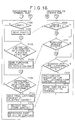
- FIGS. 15, 16, and 17. show the processing of the terminal 1 and the processing of the server 3 in parallel.
- the processing of the terminal 1 is executed mainly on the basis of the control by the CPU 23 of the network connection unit 20.
- the processing of the server 3 is executed mainly on the basis of the control by the distribution service management system 33 and the customer information link section 34 in the network distribution unit 30.
- the user When the user wants to receive a content distribution service, the user loads the recording medium 4 purchased in advance and recorded with the prepaid information into the recording unit 10.
- the procedure goes from step F101 to step F102 shown in FIG. 15 to execute the reading of the prepaid information from the loaded recording medium 4.
- the CPU 23 instructs the recording unit 10 to read and transfer the prepaid information.
- the CPU 23 stores the prepaid information transferred from the recording unit 10 into an internal register of the CPU 23 or the data storage section 26 for example.
- step F103 the terminal 1 requests communication connection on the network 2 on the basis of the prepaid service ID contained in the prepaid information and calls the server 3 to establish the communication connection with the server 3.
- the server 3 When requested for the communication connection based on the prepaid service ID, the server 3 (namely the network distribution unit 30) goes from step F201 to step F202 to execute a communication connection process for the requesting terminal 1.
- step F104 the terminal 1 sends the medium ID and prepaid amount data contained the prepaid information to the server 3.
- the server 3 receives the medium ID and the prepaid amount data, the server 3 stores them in the customer information link section for example in step F203.
- step F204 the server 3 searches the customer database 70 on the basis of the received medium ID.
- the customer information link section 34 instructs the customer information unit 50 connected via the customer information reception/storage section 36 to search the customer database 70 for charging information K(n) which matches the medium ID.
- the recording medium 4 in use by the user is used for the first time for the distribution service, then the charging information corresponding to the medium ID contained in the prepaid information of this medium 4 has not been registered with the customer database 70.
- step F205 if no charging information matching the medium ID is found by the customer information unit 50, then the procedure goes from step F205 to step F206 to newly register the charging information.
- the server 3 by use of the medium ID and prepaid information received from the terminal 1 and stored in the customer information link section as described above, the server 3 generates charging information from the medium ID and the prepaid amount of money. Then, the server 3 sends the generated charging information to the customer information unit 50, which newly registers the received charging information with the customer database 70.
- step F205 the customer information link section 34 instructs the customer information unit 50 to read the corresponding charging information from the customer database 70 and send the charging information to the customer information reception/storage section 36 to store the charging information therein.
- the newly registered charging information is stored in the customer information reception/storage section 36 in step F207.
- step F208 the service management system section 33 of the server 3 sends the purchase menu page data for the content which is stored in the content database 60 and is downloadable to the user to the terminal 1. For example, if the content database controller 40 prepares the content purchase menu page data, they are sent to the terminal 1.
- the distribution service management system section 33 also sends the obtained information of remaining prepaid amount to the terminal 1.
- the terminal 1 Upon reception of the content purchase page data and the remaining prepaid amount, the terminal 1 causes the display section 28a to display the received data in step F105, presenting the purchase menu and the remaining prepaid amount to the user.
- the user performs an input operation through the input section 29.
- the input operation is for cancellation, purchase, or trial listening.
- the CPU 23 of the terminal 1 monitors the operation to be executed in step F106, F108, or F110 shown in FIG. 16.
- step F209 the procedure goes from step F209 to step F218 shown in FIG. 16, in which the distribution management system section 33 of the server 3 ends the communication connection with the terminal 1, thereby ending the above-mentioned sequence of processes.
- step F118 shown in FIG. 17, in which the CPU 23 of the terminal 1 executes a process of ending the communication connection with the server 3 and ejects the recording medium 4 from the recording unit 10, upon which the above-mentioned sequence of processes comes to an end.
- the user can give a trial listening on content (music for example) before buying it by checking the content purchase menu.
- the user can selects that music title for trial listening.
- step F110 the procedure of the CPU 23 goes from step F110 to step F111 shown in FIG. 16, in which the CPU 23 sends the content identifying information selected by the user to the server 3 along with a request for the trial listening of that content.
- the service management system section 33 of the server 3 proceeds from step F211 to F212 shown in FIG. 16 to instruct the content database controller 40 to read the content requested for trial listening from the content database 60.
- step F213 the distribution service management system section 33 sends a part or all of the content data to the terminal 1.
- the CPU 23 of the terminal 1 stores the content data into the data storage section 26.
- the CPU 23 causes the audio output section 28b to reproduce a part or all of the content. Thus, the user can get trial listening on the requested content.
- the content is image data or text data, they can be displayed on the display section 28a.
- the reason why the content for trial listening is reproduced partially or totally is that, for the purpose of trial listening, the content may only be reproduced partially. For example, if the content is a piece of music, its introduction part, first melody part, a bridge, or one chorus part may be reproduced.
- these parts may be provided to the terminal 1.
- parts may be extracted from the content data stored in the content database 60 and the extracted parts may be sent to the terminal 1.
- the CPU 23 may extract only parts of the content data stored in the data storage section 26 and reproduce the extracted parts.
- the user may select it from the displayed purchase menu.
- step F108 the procedure of the CPU 23 goes from step F108 to step F109 shown in FIG. 16, in which the CPU 23 sends the content identifying information selected by the user to the server 3 along with a request for purchasing that content.
- the CPU 23 also sends the remaining storage capacity of the recording medium 4 to the server 3. This is because the charging processing shown in FIG. 19 to be described later must be executed.
- the remaining storage capacity of the recording medium 4 the information about how long music data can be recorded for example, can be determined from the control information of the recording medium 4.
- the recordable capacity can be determined from the information recorded in the free area of U-TOC sector 0.
- the procedure of the distribution service management system section 33 of the server 3 goes from step F210 in FIG. 16 to step F214 shown in FIG. 17 to execute charging processing for the charge of the content requested for purchase.
- the charging information stored in the customer information reception/storage section 36 namely the charging information corresponding to the prepaid information of the recording medium 4 is updated in the remaining amount of money and the updated charging information is updated in the customer database 70. For example, if the fee of the selected content is 200 yen, 200 yen is subtracted from the remaining amount in the charging information registered with the database 70.
- the charging information is updated with respect to the content purchase made this time by adding the log information such as content name (music title for example), purchase date, and amount of money paid for the purchased content for example.
- the distribution service management system section 33 instructs the content database controller 40 in step F215 to read the content requested for purchase from the content database 60.
- step F216 the distribution service management system section 23 sends all or part of the retrieved content data to the terminal 1.
- the CPU 23 of the terminal 1 receives the content data downloaded from the server 3 in step F114 and stored the downloaded content data into the data storage section 26. In step F115, the CPU 23 transfers the content data to the recording unit 10 to record the content data to the recording medium 4. Thus, the user has purchased the requested content.
- the procedure returns to step F106 shown in FIG. 16 and the procedure on the server 3 side also returns to step F209 shown in FIG. 16.
- step F117 If the user has performed an operation for ending the content purchase, the procedure of the CPU 23 goes to step F117 to send an end notification to the server 3.
- step F118 the CPU 23 executes a communication connection end process and, in step F119, ejects the recording medium 4, ending the content purchase processing.
- the procedure of the server 3 goes from step F217 to step F218, upon which the communication connection with the terminal 1 is ended to end the content purchase processing.
- the user can purchase desired content by use of the recording medium 4 recorded with the prepaid information without inputting a credit card number for charge settlement or inputting the card number of a dedicated prepaid card.
- the settlement based on the prepaid information is executed in the form of updating the registered charging information in accordance with the prepaid information on the server 3 side, the prepaid information of the recording medium 4 need not be updated.
- the recording medium 4 can be protected from abuse.
- a simple content accounting process may not be executed depending on the relationship between remaining prepaid amount and content price and the relationship between the remaining storage capacity of the recording medium 4 and the data size of content.
- the following describes the charging processing of the present embodiment by taking the above-mentioned point into consideration.
- the remaining storage capacity of this recording medium 4 is A1 (minutes). Namely, any music content of which play time is less than A1 (minutes) can be recorded in this recording medium 4.
- the remaining storage capacity of the this recording medium 2 is A2 (minutes).
- the first recording medium is referred to as the ID1 recording medium while the second as the ID2 recording medium.
- the user selects a particular piece of content and executes a purchase operation in accordance with the above-mentioned procedure.
- the data size of the content requested for purchase is B (minutes) and the price is Y (yen).
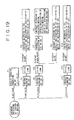
- step F214 shown in FIG. 17 is executed in a procedure shown in FIG. 19.
- the server 3 recognizes that the remaining prepaid amount of this user is X1 (yen) from the registered charging information.
- the server 3 determines in charging processing whether the charge Y of the content requested for purchase can be covered by the prepaid remaining amount X1. As described, because the recordable capacity A1 (minutes) of the ID1 recording medium is notified from the terminal 1, the server 3 compares the recordable capacity A1 (minutes) with the data size B (minutes) of the content requested for purchase to determine whether the content can be recorded to the ID1 recording medium.
- the procedure branches to one of the following four processes.
- a charging process as procedure F1 shown in FIG. 19 is executed.
- the ID1 recording medium can pay the cost of the content purchased this time from the remaining prepaid amount and download the purchased content, a normal charging process takes place.
- the content supplied to the terminal 1 is recorded to the ID1 recording medium.
- procedure F2 requires the terminal 1 to load another recording medium 4.
- the terminal 1 notifies the user that the loaded recording medium 4 has not enough recordable capacity and prompts, through the display section 28a or the audio output section 28b, the user to load the other recording medium 4.
- the user loads the other recording medium 4, namely the ID2 recording medium.
- the terminal 1 reads the prepaid information from the ID2 recording medium, checks the recordable remaining capacity, the terminal 1 sends the prepaid information and the recordable capacity to the server 3.
- procedure F3 the remaining prepaid amount of money X2 (yen) registered for the ID2 recording medium is linked with the remaining prepaid amount of money X1 of the above-mentioned ID1 recording medium (X1 + X2).
- the recordable capacity A2 (minutes) of the ID2 recording medium is checked if it is enough for the content of B (minutes).
- the charging information for the ID1 recording medium is taken out of registration; namely a registration deleting process is executed.
- the registration deleting process as used in the present example does not mean the deletion of the charging information itself; it means that the ID1 recording medium is made unusable thereafter. Actually, the balance in the charging information is set to zero and the registration data are kept undeleted. For example, the ID1 recording medium is put in the state of charging information K5 shown in FIG. 7.
- the prepaid information of the recording medium 4 is unrewritable. Therefore, it is possible for the user to load, erroneously or through malice, the recording medium 4 with its prepaid information deleted into the terminal 1 again for getting content distribution.
- the customer database 70 is searched for on the basis of the medium ID as described before. If no corresponding charging information is found, the recording medium 4 thus loaded is newly registered.
- the charging information itself including the medium ID
- the recording medium 4 with its remaining amount set to zero can be newly registered again. Namely, the user can reuse the recording medium of which prepaid amount of money has been used up, starting with a full amount of money.
- the charging information of that recording medium must be kept undeleted with the balance set to zero. Namely, when any recording medium that has been deleted of registration is loaded in the terminal, the server 3 must determine that the prepaid amount of money of this recording medium has all been consumed. For this purpose, the balance in the charging information may only be set to zero in the registration deleting process, thereby preventing the recording medium of which prepaid amount of money has all been consumed from being reused as a prepaid recording medium.
- a data group as registration deleted IDs is arranged in the customer database 70, the charging information of a recording medium of which prepaid amount of money has all been consumed is deleted, and only its medium ID is put in this data group.
- This configuration allows the server 3 to find that a loaded recording medium 4 of which prepaid information has been deleted from registration is not for new use but deleted from registration and therefore invalid.
- procedure F4 the charging processing is executed on the ID2 recording medium as described above, the content is recording to the ID2 recording medium, and the ID1 recording medium is deleted from registration.
- the user can obtain content by means of the ID2 recording medium.
- the ID1 recording medium can be used by the user for recording or reproduction of music for example but not as a prepaid medium.
- the ID1 recording medium has a remaining recordable capacity enough for the content purchased this time but an insufficient remaining amount of money. Namely, the ID1 recording medium alone cannot be used as a prepaid medium for purchasing the content this time.
- the server 3 requires the terminal 1 to load the other recording medium 4.
- the terminal 1 instructs, through the display section 28a or the audio output section 28b, the user to load the other recording medium 4.
- the user loads the another recording medium 4, namely the ID2 recording medium.
- the terminal 1 When the ID2 recording medium is loaded, the terminal 1 reads the prepaid information from the ID2 recording medium, determines a remaining recordable capacity, and sends these information to the server 3.
- the remaining prepaid amount X2 (yen) registered for the ID2 recording medium is linked with the remaining prepaid amount X1 of the ID1 recording medium (X1 + X2).
- X1 + X2 ⁇ Y indicates that the charging is enabled for content purchase. If X1 + X2 ⁇ Y, then the remaining prepaid amount is still insufficient, so that the server 3 requires the terminal 1 (and the user) to load the another recording medium 4.
- the ID1 recording medium is enough in terms of recording capacity.
- the recordable remaining capacity A2 of the ID2 recording medium there two cases; enough for the data size B of content (A2 ⁇ B) and not enough (A2 ⁇ B).
- the terminal 1 instructs, through the display section 28a or the audio output section 28b, the user to change the recording media.
- the server 3 deletes the registration of the charging information for the ID2 recording medium.
- the remaining amounts of money of the two recording media can be brought together to the ID1 recording medium.
- the user can obtain the content by use of the ID1 recording medium.
- the ID2 recording medium can be used by the user for recording or reproduction of music for example but not as a prepaid medium.
- the server 3 requires the terminal 1 for medium selection and the terminal 1 requires the user to select a recording medium to which content is to be recorded.
- the terminal 1 sends the result of the selection made by the user to the server 3.
- the server 3 instructs the terminal 1 to record the content to be downloaded this time to the selected recording medium. Then, the server 3 updates the charging information registered for the selected medium such that the content charge is subtracted by reflecting the link processing executed in procedure F6. As for the unselected recording medium, its charging information is deleted from registration.
- the user can obtain content by use of the selected recording medium.
- the unselected recording medium can be used by the user for recording or reproduction of music for example but not as a prepaid medium.
- the ID1 recording medium is insufficient in both remaining recordable capacity and remaining amount of money for the purchase of content this time. Namely, the ID1 recording medium alone cannot be use as a prepaid recording medium and cannot record the content requested by the user.
- the server 3 requires the terminal 1 to load the other recording medium 4 in procedure F10.
- the terminal 1 instructs, through the display section 28a or the audio output section 28b, the user to load the other recording medium 4 into the terminal 1.
- the user loads the other recording medium 4, namely the ID2 recording medium.
- the terminal 1 reads the prepaid information from the ID2 recording medium and checks the remaining recordable capacity and sends these information to the server 3.
- prepaid remaining of amount X2 (yen) registered for the ID2 recording medium is linked with remaining prepaid amount X1 of the ID1 recording medium (X1 + X2). Further, the server 3 checks to see if recordable capacity A2 (minutes) of the ID2 recording medium is enough for recording the content of B (minutes).
- X1 + X2 ⁇ Y permits the charging for the purchased content. If X1 + X2 ⁇ Y, it indicates the prepaid remaining amount of money is still insufficient, so that the server 3 requires the terminal 1 to load the other recording medium 4.
- the server 3 also requires the terminal 1 (and the user) to load the other recording medium 4.
- the charging information of the ID1 recording medium is deleted from registration.
- the user can obtain the desired content by use of the ID2 recording medium.
- the ID1 recording medium can be used by the user for recording or reproduction of music for example but not as a prepaid medium.
- the charging processing is executed as described above, so that, if one recording medium is insufficient in the remaining amount of money, the insufficiency can be covered by another prepaid recording medium for purchasing content.
- This novel arrangement enhances user convenience and allows to reuse those prepaid recording media which have only fractional remaining amount insufficient for purchasing content.
- the remaining amount has reached zero as a result of the charging processing in procedure F1, it indicates the same state in which the charging information is deleted from registration described above. If a data group of registration deleted IDs is to be registered, the medium ID of that charging information may only be put in this data group.
- the terminal 1 and the server 3 can be configured in various other manners.
- prepaid information is stored in a recording medium to which distributed content is to be recorded.
- the charge of the distributed content is settled by updating, on the server side, the charging information registered with the server in accordance with the prepaid information read from the recording medium.
- the novel constitution significantly enhances user convenience because the user need not input the number of his credit card or the number of his separately prepared dedicated prepaid card. This means that users who do not have credit cards or prepaid cards can also receive content distribution services.
- the novel constipation does not require a card number input operation, the operation to be executed for content purchase is simplified, thereby allowing users not familiar with personal computers or other electronic devices to purchase content with ease.
- the novel constitution does not present the security problem that takes place in a credit card number input operation.
- the settlement on the basis of prepaid information is executed in the form of updating the charging information registered with the server side in correspondence with the prepaid information. Consequently, the prepaid information of the recording medium need not be updated and therefore reduces the settlement processing load on the terminal side. This also prevents the recording medium from being abused by tampering its prepaid information.
- the prepaid information is stored in the recording medium in an unrewritable manner, thereby further preventing the prepaid recording medium from abuse.
- the charging processing means of the server executes a charging process on the first charging information registered with the charging information registration means in correspondence with the first prepaid information recorded on the first recording medium loaded in the terminal, if the amount of money is not enough for purchasing content, then the charging processing means requires the second prepaid information recorded on the second recording medium and links the second charging information registered with the charging information registration means in correspondence with the second prepaid information with the first charging information to execute a charging processing. Consequently, if the remaining prepaid amount of money is running short on one recording medium owned by the user for purchasing content, the user can use another recording medium to add together the remaining prepaid amounts of money of both prepaid recording media to settle the charge of the purchased content. Namely, if one prepaid recording medium has only a fractional balance which is not enough for purchasing content, it can be added to the remaining prepaid amount of another prepaid recording medium, thereby allowing the user to make the most of his prepaid recording media.
- the charging information corresponding to the prepaid information supplied from the terminal has not yet been registered with the charging information registration means of the server, the charging information corresponding this prepaid information is newly registered with the charging information registration means. Consequently, the charging information is registered for every recording medium to be newly used by the user, thereby systematically allowing the efficient management of additional charging information.
- the charging processing means deletes the registration of the charging information of which prepaid amount of money has all been consumed, thereby invalidating the prepaid capability of the recording medium on which the prepaid information corresponding to this charging information is recorded. Consequently, any recording medium with its prepaid amount of money fully used is no more available as a prepaid recording medium, thereby realizing proper accounting. Obviously, the user can still use such an invalidated recording medium as a simple recording medium having no prepaid capability. Consequently, unlike conventional prepaid cards, the invalidated prepaid recording media according to the invention need not be discarded as a waste, which is an advantage in terms of saving resources.
- the prepaid information contains both prepaid amount of money information and ID information unique to each prepaid recording medium according to the invention, thereby allowing the appropriate management of the amount of money and individual prepaid recording media to provide proper charging processing.
- the prepaid information contains destination identifying information for identifying a server. Therefore, the terminal communicates with the server on the basis of this information, thereby making it unnecessary for the user to search for a server from which to download content, which further facilitates the content purchase operation to be executed by the user.
Landscapes
- Business, Economics & Management (AREA)
- Accounting & Taxation (AREA)
- Finance (AREA)
- Strategic Management (AREA)
- Physics & Mathematics (AREA)
- General Business, Economics & Management (AREA)
- General Physics & Mathematics (AREA)
- Engineering & Computer Science (AREA)
- Theoretical Computer Science (AREA)
- Economics (AREA)
- Development Economics (AREA)
- Marketing (AREA)
- Management, Administration, Business Operations System, And Electronic Commerce (AREA)
- Financial Or Insurance-Related Operations Such As Payment And Settlement (AREA)
- Information Transfer Between Computers (AREA)
- Reverberation, Karaoke And Other Acoustics (AREA)
- Computer And Data Communications (AREA)
- Control Of Vending Devices And Auxiliary Devices For Vending Devices (AREA)
- Two-Way Televisions, Distribution Of Moving Picture Or The Like (AREA)
- Signal Processing For Digital Recording And Reproducing (AREA)
Applications Claiming Priority (2)
| Application Number | Priority Date | Filing Date | Title |
|---|---|---|---|
| JP2000194918A JP2002008115A (ja) | 2000-06-23 | 2000-06-23 | 情報配信システム、端末装置、サーバ装置、記録媒体、情報配信方法 |
| JP2000194918 | 2000-06-23 |
Publications (2)
| Publication Number | Publication Date |
|---|---|
| EP1174812A2 true EP1174812A2 (fr) | 2002-01-23 |
| EP1174812A3 EP1174812A3 (fr) | 2002-10-30 |
Family
ID=18693673
Family Applications (1)
| Application Number | Title | Priority Date | Filing Date |
|---|---|---|---|
| EP01305139A Withdrawn EP1174812A3 (fr) | 2000-06-23 | 2001-06-13 | Systéme pour la distribution d'information |
Country Status (7)
| Country | Link |
|---|---|
| US (2) | US7295994B2 (fr) |
| EP (1) | EP1174812A3 (fr) |
| JP (1) | JP2002008115A (fr) |
| KR (1) | KR100828136B1 (fr) |
| CN (1) | CN1206832C (fr) |
| MY (1) | MY127174A (fr) |
| SG (1) | SG103295A1 (fr) |
Cited By (6)
| Publication number | Priority date | Publication date | Assignee | Title |
|---|---|---|---|---|
| EP1469405A1 (fr) * | 2003-04-15 | 2004-10-20 | Ferraz de Oliveira, Jorge Alberto | Dispositif et procédé pour fournir des unités requises d'information à travers un réseau mobile |
| EP1615218A3 (fr) * | 2004-07-09 | 2006-04-12 | Sony Corporation | Appareil et procédé d'enregistrement et de reproduction de contenu, programme d'ordinateur et système |
| EP1569457A3 (fr) * | 2004-02-26 | 2006-06-07 | Sony Corporation | Système et méthode de traitement de données et programme d'ordinateur |
| EP1700262A4 (fr) * | 2003-12-03 | 2008-05-28 | Samsung Electronics Co Ltd | Support d'enregistrement de donnees du type a carte prepayee et dispositif d'enregistrement correspondant |
| EP2362393A3 (fr) * | 2010-02-17 | 2011-11-30 | Sharp Kabushiki Kaisha | Support de stockage d'informations, appareil d'enregistrement et de reproduction, procédé de contrôle de l'appareil d'enregistrement et de reproduction, programme de contrôle et système de communication |
| CN102833415A (zh) * | 2012-08-28 | 2012-12-19 | 华为技术有限公司 | 通讯终端信息提示方法和便携终端配件、通讯终端及装置 |
Families Citing this family (36)
| Publication number | Priority date | Publication date | Assignee | Title |
|---|---|---|---|---|
| US7379760B2 (en) * | 2000-11-10 | 2008-05-27 | Sony Corporation | Data transmission-reception system and data transmission-reception method |
| CN100494360C (zh) * | 2001-03-22 | 2009-06-03 | 博奥生物有限公司 | 细胞分离方法及其应用 |
| US7196259B2 (en) * | 2002-01-11 | 2007-03-27 | Yamaha Corporation | Performance data transmission controlling apparatus and electronic musical instrument capable of acquiring performance data |
| KR20040022655A (ko) * | 2002-09-09 | 2004-03-16 | 백승현 | 무선 인터넷상의 컨텐츠 제공 방법 |
| JP3945644B2 (ja) * | 2002-11-05 | 2007-07-18 | ソニー株式会社 | コピー回数制御方法、サーバ装置、記録制御方法および記録制御装置 |
| JP4016865B2 (ja) | 2003-03-26 | 2007-12-05 | ソニー株式会社 | コンテンツ再生期限管理システム、コンテンツ再生期限管理方法、端末装置、サーバ装置、プログラム、記録媒体 |
| JP2005025729A (ja) * | 2003-06-09 | 2005-01-27 | Sony Corp | ファイル転送システムおよびファイル転送方法 |
| US20050009514A1 (en) * | 2003-07-08 | 2005-01-13 | Ajit Mathews | Resource efficient content management and delivery without using a file system |
| JP4179093B2 (ja) * | 2003-07-31 | 2008-11-12 | ソニー株式会社 | コンテンツ配信システムおよび方法、コンテンツ配信サーバ |
| JPWO2005015468A1 (ja) * | 2003-08-07 | 2007-09-27 | シャープ株式会社 | 課金システム、コンテンツ再生装置、ライセンス販売機並びにプログラムおよび記録媒体 |
| CN1839609A (zh) * | 2003-08-20 | 2006-09-27 | 松下电器产业株式会社 | 内容再现系统 |
| JP3935459B2 (ja) * | 2003-08-28 | 2007-06-20 | 株式会社東芝 | コンテンツ管理装置、コンテンツ管理システム及びコンテンツ管理プログラム |
| US20060080261A1 (en) * | 2004-10-12 | 2006-04-13 | Christal Dean V | Method and system for controlled play of digital downloads |
| US20060080258A1 (en) * | 2004-10-12 | 2006-04-13 | Christal Dean V | Method and system for distribution of digital downloads |
| US20060080275A1 (en) * | 2004-10-12 | 2006-04-13 | Christal Dean V | Digital file consumer information methods and devices |
| US7822866B2 (en) * | 2005-01-27 | 2010-10-26 | Sony Corporation | Method and system for retrieving content in network system |
| EP1715403A1 (fr) * | 2005-04-22 | 2006-10-25 | Sony DADC Austria AG | Procédé de téléchargement de contenu d'un serveur à un medium de stockage et un medium de stockage adapté et un procédé de backup |
| JP4696810B2 (ja) * | 2005-09-21 | 2011-06-08 | 富士ゼロックス株式会社 | 画像形成システム |
| US20070106521A1 (en) * | 2005-11-04 | 2007-05-10 | Tp Lab | System and method to process media with preset credit |
| US20070150887A1 (en) | 2005-12-22 | 2007-06-28 | Shapiro Alan J | Apparatus and method for selectively dispensing soft assets |
| CN101390050B (zh) * | 2005-12-22 | 2018-04-24 | 艾伦·J·薛比洛 | 通过相减性安装达成选择性分配软件资源的装置与方法 |
| JP2007293380A (ja) * | 2006-04-20 | 2007-11-08 | Sony Corp | 情報配信装置、情報処理装置、情報処理システム、情報処理方法及び制御プログラム |
| US20070299780A1 (en) * | 2006-04-26 | 2007-12-27 | Nokia Corporation | Methods, apparatuses and computer program product for providing a content superdistribution system |
| US20080215725A1 (en) * | 2007-03-02 | 2008-09-04 | Wireless Image Limited | Systems and methods for managing the playing of ring tones and other media files on mobile devices |
| WO2008120377A1 (fr) * | 2007-03-29 | 2008-10-09 | Pioneer Corporation | Système et procédé de distribution de contenu, et dispositif de serveur, et dispositif client |
| JP2010049448A (ja) * | 2008-08-21 | 2010-03-04 | Sony Corp | 情報処理装置、およびデータ処理方法、並びにプログラム |
| KR101805212B1 (ko) | 2009-08-14 | 2017-12-05 | 디티에스 엘엘씨 | 객체-지향 오디오 스트리밍 시스템 |
| JP2011170513A (ja) * | 2010-02-17 | 2011-09-01 | Sharp Corp | 情報記録媒体、記録再生装置 |
| KR101512354B1 (ko) * | 2011-01-07 | 2015-04-16 | 야마하 가부시키가이샤 | 정보 제공 시스템, 휴대용 단말 장치, 서버 및 프로그램 |
| US9165558B2 (en) | 2011-03-09 | 2015-10-20 | Dts Llc | System for dynamically creating and rendering audio objects |
| US20150294539A1 (en) * | 2012-10-31 | 2015-10-15 | Promotie Voor Speciale Evenementen - Belgium | Method for remotely controlling human perceivable output of a plurality of devices, system, transmitter, device, software product and human unperceivable acoustic signal for performing the method |
| CN104769959A (zh) * | 2012-11-02 | 2015-07-08 | Lg电子株式会社 | 用于播放内容的方法和设备 |
| US9558785B2 (en) | 2013-04-05 | 2017-01-31 | Dts, Inc. | Layered audio coding and transmission |
| JP6338909B2 (ja) * | 2014-03-27 | 2018-06-06 | 株式会社電通国際情報サービス | コンテンツ制御システム |
| CN105657004A (zh) * | 2015-12-29 | 2016-06-08 | 大连楼兰科技股份有限公司 | 车联网网络电台正版音乐管理方法及装置 |
| CN105913237B (zh) * | 2016-04-12 | 2021-09-17 | 田中 | 一种计费终端及其工作方法 |
Family Cites Families (17)
| Publication number | Priority date | Publication date | Assignee | Title |
|---|---|---|---|---|
| US5576840A (en) * | 1991-07-18 | 1996-11-19 | Canon Kabushiki Kaisha | Recording apparatus |
| FI945346A7 (fi) * | 1994-11-14 | 1996-05-15 | Sonera Oyj | Menetelmä ja järjestelmä puhelukustannusten perimiseksi |
| JPH10187914A (ja) * | 1996-12-24 | 1998-07-21 | Sony Corp | データ記録媒体、記録再生システムおよび残量表示方法 |
| US6144745A (en) * | 1997-04-07 | 2000-11-07 | Fujitsu Limited | Method of and apparatus for retaining and verifying of data on recording medium |
| JPH1153184A (ja) * | 1997-08-08 | 1999-02-26 | Seta:Kk | データ配信方法および装置 |
| JPH1166824A (ja) * | 1997-08-15 | 1999-03-09 | Sony Corp | オーディオサーバシステム |
| JP3906535B2 (ja) * | 1997-11-07 | 2007-04-18 | ソニー株式会社 | ダウンロードシステム、及び記録媒体 |
| EP0921487A3 (fr) * | 1997-12-08 | 2000-07-26 | Nippon Telegraph and Telephone Corporation | Méthode et système de facturation sur internet |
| JPH11316729A (ja) | 1997-12-08 | 1999-11-16 | Nippon Telegr & Teleph Corp <Ntt> | インターネット課金方法及びシステム及びインターネット課金プログラムを記録した記録媒体 |
| JPH11259764A (ja) | 1998-03-12 | 1999-09-24 | Sony Corp | 記録媒体および情報伝達システム |
| KR100653561B1 (ko) * | 1998-07-15 | 2006-12-05 | 소니 가부시끼 가이샤 | 정보 수신 장치, 다운로드 방법, 다운로드 진행 상황 표시 방법, 및 기기 선택 방법 |
| KR100559688B1 (ko) * | 1998-07-22 | 2006-03-10 | 마츠시타 덴끼 산교 가부시키가이샤 | 저작권을 보호하고 기록매체에 기록된 암호화된디지털데이터를 용이하게 재생하는 디지털데이터기록장치와 그 방법 및 그 프로그램을 기록한 컴퓨터판독가능한 기록매체 |
| JP2000099401A (ja) * | 1998-09-22 | 2000-04-07 | Sony Corp | 記録媒体、記録方法及び記録装置 |
| US6434535B1 (en) * | 1998-11-13 | 2002-08-13 | Iomega Corporation | System for prepayment of electronic content using removable media and for prevention of unauthorized copying of same |
| JP2000209553A (ja) * | 1998-11-13 | 2000-07-28 | Victor Co Of Japan Ltd | 情報信号記録装置及び再生装置 |
| DE69924813T2 (de) * | 1998-12-02 | 2006-01-12 | Matsushita Electric Industrial Co., Ltd., Kadoma | Datenkopiersystem, Datenkopiergerät, Datenkopierverfahren, und Aufzeichnungsmedium |
| JP3327389B2 (ja) * | 1998-12-28 | 2002-09-24 | 松下電器産業株式会社 | 複製システム、複製方法、書き込み装置および記録媒体 |
-
2000
- 2000-06-23 JP JP2000194918A patent/JP2002008115A/ja not_active Abandoned
-
2001
- 2001-06-08 SG SG200103451A patent/SG103295A1/en unknown
- 2001-06-13 EP EP01305139A patent/EP1174812A3/fr not_active Withdrawn
- 2001-06-13 KR KR1020010033298A patent/KR100828136B1/ko not_active Expired - Fee Related
- 2001-06-20 MY MYPI20012894 patent/MY127174A/en unknown
- 2001-06-20 US US09/885,480 patent/US7295994B2/en not_active Expired - Fee Related
- 2001-06-22 CN CNB011219076A patent/CN1206832C/zh not_active Expired - Fee Related
-
2004
- 2004-09-15 US US10/941,710 patent/US20050033661A1/en not_active Abandoned
Cited By (6)
| Publication number | Priority date | Publication date | Assignee | Title |
|---|---|---|---|---|
| EP1469405A1 (fr) * | 2003-04-15 | 2004-10-20 | Ferraz de Oliveira, Jorge Alberto | Dispositif et procédé pour fournir des unités requises d'information à travers un réseau mobile |
| EP1700262A4 (fr) * | 2003-12-03 | 2008-05-28 | Samsung Electronics Co Ltd | Support d'enregistrement de donnees du type a carte prepayee et dispositif d'enregistrement correspondant |
| EP1569457A3 (fr) * | 2004-02-26 | 2006-06-07 | Sony Corporation | Système et méthode de traitement de données et programme d'ordinateur |
| EP1615218A3 (fr) * | 2004-07-09 | 2006-04-12 | Sony Corporation | Appareil et procédé d'enregistrement et de reproduction de contenu, programme d'ordinateur et système |
| EP2362393A3 (fr) * | 2010-02-17 | 2011-11-30 | Sharp Kabushiki Kaisha | Support de stockage d'informations, appareil d'enregistrement et de reproduction, procédé de contrôle de l'appareil d'enregistrement et de reproduction, programme de contrôle et système de communication |
| CN102833415A (zh) * | 2012-08-28 | 2012-12-19 | 华为技术有限公司 | 通讯终端信息提示方法和便携终端配件、通讯终端及装置 |
Also Published As
| Publication number | Publication date |
|---|---|
| KR100828136B1 (ko) | 2008-05-08 |
| US7295994B2 (en) | 2007-11-13 |
| US20020042777A1 (en) | 2002-04-11 |
| CN1330470A (zh) | 2002-01-09 |
| CN1206832C (zh) | 2005-06-15 |
| MY127174A (en) | 2006-11-30 |
| SG103295A1 (en) | 2004-04-29 |
| JP2002008115A (ja) | 2002-01-11 |
| KR20020006575A (ko) | 2002-01-23 |
| EP1174812A3 (fr) | 2002-10-30 |
| US20050033661A1 (en) | 2005-02-10 |
Similar Documents
| Publication | Publication Date | Title |
|---|---|---|
| EP1174812A2 (fr) | Systéme pour la distribution d'information | |
| US6993567B1 (en) | Recording/reproducing apparatus, data reproducing method, and data recording/reproducing method | |
| US6011761A (en) | Downloading compressed audio data from a server and detecting recording inhibiting information | |
| CN100416608C (zh) | 内容供应/获得系统 | |
| US7334051B2 (en) | Data distribution system, terminal apparatus, distribution center apparatus, high-efficiency encoding method, high-efficiency encoding apparatus, encoded data decoding method, encoded data decoding apparatus, data transmission method, data transmission apparatus, sub information attaching method, sub information attaching apparatus, and recording medium | |
| KR100832139B1 (ko) | 단말장치, 부과금 시스템 및 데이터 처리방법 | |
| US20100077065A1 (en) | Communicating system, communicating apparatus, communicating method, record medium, and program | |
| KR100912565B1 (ko) | 통신 장치, 통신 시스템, 통신 방법 및 기록 매체 | |
| JPH11312175A (ja) | 情報配信システム及び方法 | |
| JPWO2002017170A1 (ja) | 通信システム、通信装置、通信方法、記録媒体、プログラム | |
| JPH07319572A (ja) | 再生データ管理システム | |
| JP2005025365A (ja) | 情報提供システム、端末装置、情報提供装置、及び情報提供方法 | |
| JP2003123268A (ja) | 記録媒体、情報記録装置、情報再生装置および情報レンタルシステム | |
| JP4826015B2 (ja) | 情報紹介システム | |
| JP2002341900A (ja) | 高能率符号化方法、高能率符号化装置、符号化データ復号方法、符号化データ復号装置、データ伝送方法、データ伝送装置、付加情報付加方法、付加情報付加装置および記録媒体 | |
| JP2001216380A (ja) | コンテンツ情報配信用課金システム及びその方法 | |
| JP2002006857A (ja) | 音楽配信方法及び仲介方法 | |
| JP3791594B2 (ja) | データ配信システム | |
| JP2001060286A (ja) | プリペイド記録媒体及びそのプリペイド記録媒体を使用するデータ記録システム | |
| JP2002330395A (ja) | デジタル信号処理装置、デジタル信号処理方法、情報センターおよび配信システム | |
| JP2002344324A (ja) | 高能率符号化方法、高能率符号化装置、データ伝送方法、データ伝送装置、および、記録媒体 | |
| JP2003015758A (ja) | ソフトウェア管理装置及びこれを用いたソフトウェア管理システム並びにソフトウェア管理方法 |
Legal Events
| Date | Code | Title | Description |
|---|---|---|---|
| PUAI | Public reference made under article 153(3) epc to a published international application that has entered the european phase |
Free format text: ORIGINAL CODE: 0009012 |
|
| AK | Designated contracting states |
Kind code of ref document: A2 Designated state(s): AT BE CH CY DE DK ES FI FR GB GR IE IT LI LU MC NL PT SE TR |
|
| AX | Request for extension of the european patent |
Free format text: AL;LT;LV;MK;RO;SI |
|
| PUAL | Search report despatched |
Free format text: ORIGINAL CODE: 0009013 |
|
| AK | Designated contracting states |
Kind code of ref document: A3 Designated state(s): AT BE CH CY DE DK ES FI FR GB GR IE IT LI LU MC NL PT SE TR |
|
| AX | Request for extension of the european patent |
Free format text: AL;LT;LV;MK;RO;SI |
|
| RIC1 | Information provided on ipc code assigned before grant |
Free format text: 7G 06F 17/60 A, 7G 07F 17/30 B |
|
| 17P | Request for examination filed |
Effective date: 20030403 |
|
| 17Q | First examination report despatched |
Effective date: 20030502 |
|
| AKX | Designation fees paid |
Designated state(s): DE FR GB |
|
| STAA | Information on the status of an ep patent application or granted ep patent |
Free format text: STATUS: THE APPLICATION IS DEEMED TO BE WITHDRAWN |
|
| 18D | Application deemed to be withdrawn |
Effective date: 20100615 |