EP1176211A1 - Verfahren zum Nachweis von Mutagenen in Pflanzen - Google Patents
Verfahren zum Nachweis von Mutagenen in Pflanzen Download PDFInfo
- Publication number
- EP1176211A1 EP1176211A1 EP00116070A EP00116070A EP1176211A1 EP 1176211 A1 EP1176211 A1 EP 1176211A1 EP 00116070 A EP00116070 A EP 00116070A EP 00116070 A EP00116070 A EP 00116070A EP 1176211 A1 EP1176211 A1 EP 1176211A1
- Authority
- EP
- European Patent Office
- Prior art keywords
- plant
- reporter molecule
- nucleic acid
- point mutation
- reporter
- Prior art date
- Legal status (The legal status is an assumption and is not a legal conclusion. Google has not performed a legal analysis and makes no representation as to the accuracy of the status listed.)
- Withdrawn
Links
- 238000000034 method Methods 0.000 title claims abstract description 43
- 239000003471 mutagenic agent Substances 0.000 title claims abstract description 32
- 231100000707 mutagenic chemical Toxicity 0.000 title claims abstract description 32
- 230000008569 process Effects 0.000 title claims abstract description 27
- 238000012544 monitoring process Methods 0.000 title claims abstract description 13
- 230000035772 mutation Effects 0.000 claims abstract description 86
- 150000007523 nucleic acids Chemical class 0.000 claims abstract description 57
- 108020004707 nucleic acids Proteins 0.000 claims abstract description 56
- 102000039446 nucleic acids Human genes 0.000 claims abstract description 56
- 230000003505 mutagenic effect Effects 0.000 claims abstract description 11
- 241000196324 Embryophyta Species 0.000 claims description 125
- 108090000623 proteins and genes Proteins 0.000 claims description 36
- 210000004027 cell Anatomy 0.000 claims description 35
- 210000001938 protoplast Anatomy 0.000 claims description 34
- 230000006798 recombination Effects 0.000 claims description 26
- 238000005215 recombination Methods 0.000 claims description 26
- 230000014509 gene expression Effects 0.000 claims description 22
- 230000000694 effects Effects 0.000 claims description 21
- 108020004705 Codon Proteins 0.000 claims description 19
- 239000002773 nucleotide Substances 0.000 claims description 19
- 125000003729 nucleotide group Chemical group 0.000 claims description 19
- 239000000463 material Substances 0.000 claims description 17
- 102000004169 proteins and genes Human genes 0.000 claims description 13
- 108010060309 Glucuronidase Proteins 0.000 claims description 12
- 239000003550 marker Substances 0.000 claims description 12
- 102000053187 Glucuronidase Human genes 0.000 claims description 10
- 239000000090 biomarker Substances 0.000 claims description 9
- 238000006467 substitution reaction Methods 0.000 claims description 9
- 125000003275 alpha amino acid group Chemical group 0.000 claims description 8
- 241000208125 Nicotiana Species 0.000 claims description 7
- 108700008625 Reporter Genes Proteins 0.000 claims description 7
- 240000008042 Zea mays Species 0.000 claims description 7
- 235000016383 Zea mays subsp huehuetenangensis Nutrition 0.000 claims description 7
- 235000002017 Zea mays subsp mays Nutrition 0.000 claims description 7
- 235000009973 maize Nutrition 0.000 claims description 7
- 108010043121 Green Fluorescent Proteins Proteins 0.000 claims description 6
- 102000004144 Green Fluorescent Proteins Human genes 0.000 claims description 6
- 230000008859 change Effects 0.000 claims description 6
- 239000005090 green fluorescent protein Substances 0.000 claims description 6
- 230000001744 histochemical effect Effects 0.000 claims description 6
- 241000209140 Triticum Species 0.000 claims description 5
- 235000021307 Triticum Nutrition 0.000 claims description 5
- 230000002363 herbicidal effect Effects 0.000 claims description 5
- 239000004009 herbicide Substances 0.000 claims description 5
- 239000013612 plasmid Substances 0.000 claims description 5
- 230000005855 radiation Effects 0.000 claims description 5
- 239000000758 substrate Substances 0.000 claims description 5
- 240000005979 Hordeum vulgare Species 0.000 claims description 4
- 235000007340 Hordeum vulgare Nutrition 0.000 claims description 4
- 240000007594 Oryza sativa Species 0.000 claims description 4
- 235000007164 Oryza sativa Nutrition 0.000 claims description 4
- 108020005067 RNA Splice Sites Proteins 0.000 claims description 4
- 235000009566 rice Nutrition 0.000 claims description 4
- 102000007469 Actins Human genes 0.000 claims description 3
- 108010085238 Actins Proteins 0.000 claims description 3
- 241000219194 Arabidopsis Species 0.000 claims description 3
- 235000011331 Brassica Nutrition 0.000 claims description 3
- 241000220243 Brassica sp. Species 0.000 claims description 3
- 102000002464 Galactosidases Human genes 0.000 claims description 3
- 108010093031 Galactosidases Proteins 0.000 claims description 3
- 108060001084 Luciferase Proteins 0.000 claims description 3
- 239000005089 Luciferase Substances 0.000 claims description 3
- 235000002637 Nicotiana tabacum Nutrition 0.000 claims description 3
- 108090000848 Ubiquitin Proteins 0.000 claims description 3
- 102000044159 Ubiquitin Human genes 0.000 claims description 3
- 238000003912 environmental pollution Methods 0.000 claims description 3
- 230000000855 fungicidal effect Effects 0.000 claims description 3
- 239000000417 fungicide Substances 0.000 claims description 3
- 108010058731 nopaline synthase Proteins 0.000 claims description 3
- 108700020534 tetracycline resistance-encoding transposon repressor Proteins 0.000 claims description 3
- 230000003612 virological effect Effects 0.000 claims description 3
- 241001149092 Arabidopsis sp. Species 0.000 claims description 2
- 230000004083 survival effect Effects 0.000 claims description 2
- 230000003115 biocidal effect Effects 0.000 claims 2
- 230000002401 inhibitory effect Effects 0.000 claims 2
- 239000000203 mixture Substances 0.000 claims 2
- 241000219198 Brassica Species 0.000 claims 1
- 231100000820 toxicity test Toxicity 0.000 claims 1
- 238000012360 testing method Methods 0.000 abstract description 9
- 150000001875 compounds Chemical class 0.000 abstract description 4
- 101150101900 uidA gene Proteins 0.000 description 19
- 108700019146 Transgenes Proteins 0.000 description 16
- 230000036438 mutation frequency Effects 0.000 description 16
- 108020004414 DNA Proteins 0.000 description 15
- 230000009261 transgenic effect Effects 0.000 description 13
- 108091026890 Coding region Proteins 0.000 description 11
- 241000219195 Arabidopsis thaliana Species 0.000 description 9
- 101100437498 Escherichia coli (strain K12) uidA gene Proteins 0.000 description 9
- 238000003752 polymerase chain reaction Methods 0.000 description 9
- 229910001385 heavy metal Inorganic materials 0.000 description 8
- 230000002269 spontaneous effect Effects 0.000 description 8
- MBABOKRGFJTBAE-UHFFFAOYSA-N methyl methanesulfonate Chemical compound COS(C)(=O)=O MBABOKRGFJTBAE-UHFFFAOYSA-N 0.000 description 7
- 238000010186 staining Methods 0.000 description 7
- 210000001519 tissue Anatomy 0.000 description 7
- 239000013598 vector Substances 0.000 description 7
- 238000003556 assay Methods 0.000 description 6
- 238000002474 experimental method Methods 0.000 description 6
- UYTPUPDQBNUYGX-UHFFFAOYSA-N guanine Chemical compound O=C1NC(N)=NC2=C1N=CN2 UYTPUPDQBNUYGX-UHFFFAOYSA-N 0.000 description 6
- 239000002689 soil Substances 0.000 description 6
- 238000012937 correction Methods 0.000 description 5
- 231100000350 mutagenesis Toxicity 0.000 description 5
- 230000001105 regulatory effect Effects 0.000 description 5
- 238000002741 site-directed mutagenesis Methods 0.000 description 5
- 108020004485 Nonsense Codon Proteins 0.000 description 4
- 108020005038 Terminator Codon Proteins 0.000 description 4
- 150000001413 amino acids Chemical class 0.000 description 4
- 238000011156 evaluation Methods 0.000 description 4
- 239000012634 fragment Substances 0.000 description 4
- GFFGJBXGBJISGV-UHFFFAOYSA-N Adenine Chemical compound NC1=NC=NC2=C1N=CN2 GFFGJBXGBJISGV-UHFFFAOYSA-N 0.000 description 3
- 229930024421 Adenine Natural products 0.000 description 3
- 208000031404 Chromosome Aberrations Diseases 0.000 description 3
- 241000588724 Escherichia coli Species 0.000 description 3
- LFQSCWFLJHTTHZ-UHFFFAOYSA-N Ethanol Chemical compound CCO LFQSCWFLJHTTHZ-UHFFFAOYSA-N 0.000 description 3
- 108091092195 Intron Proteins 0.000 description 3
- 108091028043 Nucleic acid sequence Proteins 0.000 description 3
- 229960000643 adenine Drugs 0.000 description 3
- 238000004458 analytical method Methods 0.000 description 3
- 231100000005 chromosome aberration Toxicity 0.000 description 3
- 230000006378 damage Effects 0.000 description 3
- 238000001514 detection method Methods 0.000 description 3
- 239000003651 drinking water Substances 0.000 description 3
- 235000020188 drinking water Nutrition 0.000 description 3
- -1 for example Proteins 0.000 description 3
- 230000006698 induction Effects 0.000 description 3
- 229920001184 polypeptide Polymers 0.000 description 3
- 102000004196 processed proteins & peptides Human genes 0.000 description 3
- 108090000765 processed proteins & peptides Proteins 0.000 description 3
- 239000000126 substance Substances 0.000 description 3
- 231100000041 toxicology testing Toxicity 0.000 description 3
- 230000009466 transformation Effects 0.000 description 3
- 230000014616 translation Effects 0.000 description 3
- ZBMRKNMTMPPMMK-UHFFFAOYSA-N 2-amino-4-[hydroxy(methyl)phosphoryl]butanoic acid;azane Chemical compound [NH4+].CP(O)(=O)CCC(N)C([O-])=O ZBMRKNMTMPPMMK-UHFFFAOYSA-N 0.000 description 2
- 230000004544 DNA amplification Effects 0.000 description 2
- 238000007399 DNA isolation Methods 0.000 description 2
- TWRXJAOTZQYOKJ-UHFFFAOYSA-L Magnesium chloride Chemical compound [Mg+2].[Cl-].[Cl-] TWRXJAOTZQYOKJ-UHFFFAOYSA-L 0.000 description 2
- 206010028980 Neoplasm Diseases 0.000 description 2
- 241000208133 Nicotiana plumbaginifolia Species 0.000 description 2
- 108700026244 Open Reading Frames Proteins 0.000 description 2
- PXIPVTKHYLBLMZ-UHFFFAOYSA-N Sodium azide Chemical compound [Na+].[N-]=[N+]=[N-] PXIPVTKHYLBLMZ-UHFFFAOYSA-N 0.000 description 2
- FAPWRFPIFSIZLT-UHFFFAOYSA-M Sodium chloride Chemical compound [Na+].[Cl-] FAPWRFPIFSIZLT-UHFFFAOYSA-M 0.000 description 2
- 229920004890 Triton X-100 Polymers 0.000 description 2
- 239000013504 Triton X-100 Substances 0.000 description 2
- 230000001594 aberrant effect Effects 0.000 description 2
- 230000015572 biosynthetic process Effects 0.000 description 2
- 239000000872 buffer Substances 0.000 description 2
- 229910052793 cadmium Inorganic materials 0.000 description 2
- 238000004364 calculation method Methods 0.000 description 2
- 201000011510 cancer Diseases 0.000 description 2
- 238000006243 chemical reaction Methods 0.000 description 2
- 239000002299 complementary DNA Substances 0.000 description 2
- 229910052802 copper Inorganic materials 0.000 description 2
- 238000011161 development Methods 0.000 description 2
- 230000018109 developmental process Effects 0.000 description 2
- 229940079593 drug Drugs 0.000 description 2
- 239000003814 drug Substances 0.000 description 2
- 230000007613 environmental effect Effects 0.000 description 2
- 108091006047 fluorescent proteins Proteins 0.000 description 2
- 102000034287 fluorescent proteins Human genes 0.000 description 2
- 238000002744 homologous recombination Methods 0.000 description 2
- 230000006801 homologous recombination Effects 0.000 description 2
- 238000002372 labelling Methods 0.000 description 2
- 229910052745 lead Inorganic materials 0.000 description 2
- 239000007788 liquid Substances 0.000 description 2
- 238000005259 measurement Methods 0.000 description 2
- 229910052751 metal Inorganic materials 0.000 description 2
- 239000002184 metal Substances 0.000 description 2
- 229910052752 metalloid Inorganic materials 0.000 description 2
- 230000011278 mitosis Effects 0.000 description 2
- 231100000150 mutagenicity / genotoxicity testing Toxicity 0.000 description 2
- 230000002352 nonmutagenic effect Effects 0.000 description 2
- 231100000252 nontoxic Toxicity 0.000 description 2
- 230000003000 nontoxic effect Effects 0.000 description 2
- 239000000941 radioactive substance Substances 0.000 description 2
- 239000000523 sample Substances 0.000 description 2
- 238000012163 sequencing technique Methods 0.000 description 2
- 241000894007 species Species 0.000 description 2
- 239000007858 starting material Substances 0.000 description 2
- 231100000167 toxic agent Toxicity 0.000 description 2
- 238000013519 translation Methods 0.000 description 2
- DHJFFLKPAYHPHU-BYNIDDHOSA-N 5-bromo-4-chloro-3-indolyl beta-D-glucuronide Chemical compound O1[C@H](C(O)=O)[C@@H](O)[C@H](O)[C@@H](O)[C@@H]1OC1=CNC2=CC=C(Br)C(Cl)=C12 DHJFFLKPAYHPHU-BYNIDDHOSA-N 0.000 description 1
- 241000589155 Agrobacterium tumefaciens Species 0.000 description 1
- 206010001557 Albinism Diseases 0.000 description 1
- 244000291564 Allium cepa Species 0.000 description 1
- 235000005255 Allium cepa Nutrition 0.000 description 1
- 238000012935 Averaging Methods 0.000 description 1
- UXVMQQNJUSDDNG-UHFFFAOYSA-L Calcium chloride Chemical compound [Cl-].[Cl-].[Ca+2] UXVMQQNJUSDDNG-UHFFFAOYSA-L 0.000 description 1
- 208000037088 Chromosome Breakage Diseases 0.000 description 1
- 230000005778 DNA damage Effects 0.000 description 1
- 231100000277 DNA damage Toxicity 0.000 description 1
- 238000007400 DNA extraction Methods 0.000 description 1
- 238000001712 DNA sequencing Methods 0.000 description 1
- 108010054576 Deoxyribonuclease EcoRI Proteins 0.000 description 1
- 206010013883 Dwarfism Diseases 0.000 description 1
- KCXVZYZYPLLWCC-UHFFFAOYSA-N EDTA Chemical compound OC(=O)CN(CC(O)=O)CCN(CC(O)=O)CC(O)=O KCXVZYZYPLLWCC-UHFFFAOYSA-N 0.000 description 1
- YQYJSBFKSSDGFO-UHFFFAOYSA-N Epihygromycin Natural products OC1C(O)C(C(=O)C)OC1OC(C(=C1)O)=CC=C1C=C(C)C(=O)NC1C(O)C(O)C2OCOC2C1O YQYJSBFKSSDGFO-UHFFFAOYSA-N 0.000 description 1
- 108010012101 GTMKAC-specific type II deoxyribonucleases Proteins 0.000 description 1
- 108700039691 Genetic Promoter Regions Proteins 0.000 description 1
- WQZGKKKJIJFFOK-GASJEMHNSA-N Glucose Natural products OC[C@H]1OC(O)[C@H](O)[C@@H](O)[C@@H]1O WQZGKKKJIJFFOK-GASJEMHNSA-N 0.000 description 1
- 229920003266 Leaf® Polymers 0.000 description 1
- 241000124008 Mammalia Species 0.000 description 1
- 101710163270 Nuclease Proteins 0.000 description 1
- 239000008118 PEG 6000 Substances 0.000 description 1
- 108020005120 Plant DNA Proteins 0.000 description 1
- 229920002584 Polyethylene Glycol 6000 Polymers 0.000 description 1
- CZPWVGJYEJSRLH-UHFFFAOYSA-N Pyrimidine Chemical compound C1=CN=CN=C1 CZPWVGJYEJSRLH-UHFFFAOYSA-N 0.000 description 1
- 108091093078 Pyrimidine dimer Proteins 0.000 description 1
- 238000002105 Southern blotting Methods 0.000 description 1
- 108010006785 Taq Polymerase Proteins 0.000 description 1
- 239000004098 Tetracycline Substances 0.000 description 1
- 241000233835 Tradescantia Species 0.000 description 1
- 239000007983 Tris buffer Substances 0.000 description 1
- 241001464837 Viridiplantae Species 0.000 description 1
- 231100000987 absorbed dose Toxicity 0.000 description 1
- 239000011543 agarose gel Substances 0.000 description 1
- 230000004075 alteration Effects 0.000 description 1
- 101150103518 bar gene Proteins 0.000 description 1
- 230000008901 benefit Effects 0.000 description 1
- 238000004166 bioassay Methods 0.000 description 1
- 230000004071 biological effect Effects 0.000 description 1
- 239000001110 calcium chloride Substances 0.000 description 1
- 229910001628 calcium chloride Inorganic materials 0.000 description 1
- 239000003795 chemical substances by application Substances 0.000 description 1
- 239000002894 chemical waste Substances 0.000 description 1
- 229930002875 chlorophyll Natural products 0.000 description 1
- 235000019804 chlorophyll Nutrition 0.000 description 1
- ATNHDLDRLWWWCB-AENOIHSZSA-M chlorophyll a Chemical compound C1([C@@H](C(=O)OC)C(=O)C2=C3C)=C2N2C3=CC(C(CC)=C3C)=[N+]4C3=CC3=C(C=C)C(C)=C5N3[Mg-2]42[N+]2=C1[C@@H](CCC(=O)OC\C=C(/C)CCC[C@H](C)CCC[C@H](C)CCCC(C)C)[C@H](C)C2=C5 ATNHDLDRLWWWCB-AENOIHSZSA-M 0.000 description 1
- 231100000244 chromosomal damage Toxicity 0.000 description 1
- 230000002759 chromosomal effect Effects 0.000 description 1
- 210000000349 chromosome Anatomy 0.000 description 1
- 230000005886 chromosome breakage Effects 0.000 description 1
- 230000002559 cytogenic effect Effects 0.000 description 1
- 230000007812 deficiency Effects 0.000 description 1
- 230000001419 dependent effect Effects 0.000 description 1
- 238000013461 design Methods 0.000 description 1
- 239000000539 dimer Substances 0.000 description 1
- 239000003239 environmental mutagen Substances 0.000 description 1
- 239000003344 environmental pollutant Substances 0.000 description 1
- 230000002255 enzymatic effect Effects 0.000 description 1
- 239000000284 extract Substances 0.000 description 1
- 239000011536 extraction buffer Substances 0.000 description 1
- 238000007421 fluorometric assay Methods 0.000 description 1
- 230000005714 functional activity Effects 0.000 description 1
- 230000002068 genetic effect Effects 0.000 description 1
- 230000007674 genetic toxicity Effects 0.000 description 1
- 231100000025 genetic toxicology Toxicity 0.000 description 1
- 230000035784 germination Effects 0.000 description 1
- 239000008103 glucose Substances 0.000 description 1
- 101150054900 gus gene Proteins 0.000 description 1
- 238000003306 harvesting Methods 0.000 description 1
- 231100001261 hazardous Toxicity 0.000 description 1
- 239000003845 household chemical Substances 0.000 description 1
- 238000009396 hybridization Methods 0.000 description 1
- 230000001939 inductive effect Effects 0.000 description 1
- 230000010354 integration Effects 0.000 description 1
- 229930027917 kanamycin Natural products 0.000 description 1
- 229960000318 kanamycin Drugs 0.000 description 1
- SBUJHOSQTJFQJX-NOAMYHISSA-N kanamycin Chemical compound O[C@@H]1[C@@H](O)[C@H](O)[C@@H](CN)O[C@@H]1O[C@H]1[C@H](O)[C@@H](O[C@@H]2[C@@H]([C@@H](N)[C@H](O)[C@@H](CO)O2)O)[C@H](N)C[C@@H]1N SBUJHOSQTJFQJX-NOAMYHISSA-N 0.000 description 1
- 229930182823 kanamycin A Natural products 0.000 description 1
- 101150109249 lacI gene Proteins 0.000 description 1
- 101150066555 lacZ gene Proteins 0.000 description 1
- 229910001629 magnesium chloride Inorganic materials 0.000 description 1
- 238000004519 manufacturing process Methods 0.000 description 1
- 239000012528 membrane Substances 0.000 description 1
- 230000000394 mitotic effect Effects 0.000 description 1
- 238000002156 mixing Methods 0.000 description 1
- 238000012986 modification Methods 0.000 description 1
- 230000004048 modification Effects 0.000 description 1
- 231100000219 mutagenic Toxicity 0.000 description 1
- 231100000376 mutation frequency increase Toxicity 0.000 description 1
- 230000037434 nonsense mutation Effects 0.000 description 1
- 231100001119 organic toxicant Toxicity 0.000 description 1
- 239000012250 organic toxicant Substances 0.000 description 1
- 239000008363 phosphate buffer Substances 0.000 description 1
- 230000002028 premature Effects 0.000 description 1
- 238000002360 preparation method Methods 0.000 description 1
- 230000004853 protein function Effects 0.000 description 1
- 238000001243 protein synthesis Methods 0.000 description 1
- 239000013635 pyrimidine dimer Substances 0.000 description 1
- 238000012207 quantitative assay Methods 0.000 description 1
- 239000002901 radioactive waste Substances 0.000 description 1
- 238000003571 reporter gene assay Methods 0.000 description 1
- 230000001850 reproductive effect Effects 0.000 description 1
- 230000000717 retained effect Effects 0.000 description 1
- 150000003839 salts Chemical class 0.000 description 1
- 238000004062 sedimentation Methods 0.000 description 1
- 230000035945 sensitivity Effects 0.000 description 1
- 239000013605 shuttle vector Substances 0.000 description 1
- 239000011780 sodium chloride Substances 0.000 description 1
- AJPJDKMHJJGVTQ-UHFFFAOYSA-M sodium dihydrogen phosphate Chemical compound [Na+].OP(O)([O-])=O AJPJDKMHJJGVTQ-UHFFFAOYSA-M 0.000 description 1
- 229910000162 sodium phosphate Inorganic materials 0.000 description 1
- 210000001324 spliceosome Anatomy 0.000 description 1
- 210000000130 stem cell Anatomy 0.000 description 1
- 239000000725 suspension Substances 0.000 description 1
- 229960002180 tetracycline Drugs 0.000 description 1
- 229930101283 tetracycline Natural products 0.000 description 1
- 235000019364 tetracycline Nutrition 0.000 description 1
- 150000003522 tetracyclines Chemical class 0.000 description 1
- 231100000331 toxic Toxicity 0.000 description 1
- 230000002588 toxic effect Effects 0.000 description 1
- 239000003440 toxic substance Substances 0.000 description 1
- 238000013518 transcription Methods 0.000 description 1
- 230000035897 transcription Effects 0.000 description 1
- 238000001890 transfection Methods 0.000 description 1
- 238000011426 transformation method Methods 0.000 description 1
- 230000001052 transient effect Effects 0.000 description 1
- LENZDBCJOHFCAS-UHFFFAOYSA-N tris Chemical compound OCC(N)(CO)CO LENZDBCJOHFCAS-UHFFFAOYSA-N 0.000 description 1
- 238000012800 visualization Methods 0.000 description 1
- 238000005406 washing Methods 0.000 description 1
- XLYOFNOQVPJJNP-UHFFFAOYSA-N water Substances O XLYOFNOQVPJJNP-UHFFFAOYSA-N 0.000 description 1
Images




Classifications
-
- C—CHEMISTRY; METALLURGY
- C12—BIOCHEMISTRY; BEER; SPIRITS; WINE; VINEGAR; MICROBIOLOGY; ENZYMOLOGY; MUTATION OR GENETIC ENGINEERING
- C12N—MICROORGANISMS OR ENZYMES; COMPOSITIONS THEREOF; PROPAGATING, PRESERVING, OR MAINTAINING MICROORGANISMS; MUTATION OR GENETIC ENGINEERING; CULTURE MEDIA
- C12N15/00—Mutation or genetic engineering; DNA or RNA concerning genetic engineering, vectors, e.g. plasmids, or their isolation, preparation or purification; Use of hosts therefor
- C12N15/09—Recombinant DNA-technology
- C12N15/63—Introduction of foreign genetic material using vectors; Vectors; Use of hosts therefor; Regulation of expression
- C12N15/79—Vectors or expression systems specially adapted for eukaryotic hosts
- C12N15/82—Vectors or expression systems specially adapted for eukaryotic hosts for plant cells, e.g. plant artificial chromosomes (PACs)
- C12N15/8241—Phenotypically and genetically modified plants via recombinant DNA technology
- C12N15/8242—Phenotypically and genetically modified plants via recombinant DNA technology with non-agronomic quality (output) traits, e.g. for industrial processing; Value added, non-agronomic traits
-
- C—CHEMISTRY; METALLURGY
- C12—BIOCHEMISTRY; BEER; SPIRITS; WINE; VINEGAR; MICROBIOLOGY; ENZYMOLOGY; MUTATION OR GENETIC ENGINEERING
- C12N—MICROORGANISMS OR ENZYMES; COMPOSITIONS THEREOF; PROPAGATING, PRESERVING, OR MAINTAINING MICROORGANISMS; MUTATION OR GENETIC ENGINEERING; CULTURE MEDIA
- C12N15/00—Mutation or genetic engineering; DNA or RNA concerning genetic engineering, vectors, e.g. plasmids, or their isolation, preparation or purification; Use of hosts therefor
- C12N15/09—Recombinant DNA-technology
- C12N15/63—Introduction of foreign genetic material using vectors; Vectors; Use of hosts therefor; Regulation of expression
- C12N15/79—Vectors or expression systems specially adapted for eukaryotic hosts
- C12N15/82—Vectors or expression systems specially adapted for eukaryotic hosts for plant cells, e.g. plant artificial chromosomes (PACs)
- C12N15/8201—Methods for introducing genetic material into plant cells, e.g. DNA, RNA, stable or transient incorporation, tissue culture methods adapted for transformation
- C12N15/8209—Selection, visualisation of transformants, reporter constructs, e.g. antibiotic resistance markers
-
- C—CHEMISTRY; METALLURGY
- C12—BIOCHEMISTRY; BEER; SPIRITS; WINE; VINEGAR; MICROBIOLOGY; ENZYMOLOGY; MUTATION OR GENETIC ENGINEERING
- C12N—MICROORGANISMS OR ENZYMES; COMPOSITIONS THEREOF; PROPAGATING, PRESERVING, OR MAINTAINING MICROORGANISMS; MUTATION OR GENETIC ENGINEERING; CULTURE MEDIA
- C12N15/00—Mutation or genetic engineering; DNA or RNA concerning genetic engineering, vectors, e.g. plasmids, or their isolation, preparation or purification; Use of hosts therefor
- C12N15/09—Recombinant DNA-technology
- C12N15/63—Introduction of foreign genetic material using vectors; Vectors; Use of hosts therefor; Regulation of expression
- C12N15/79—Vectors or expression systems specially adapted for eukaryotic hosts
- C12N15/82—Vectors or expression systems specially adapted for eukaryotic hosts for plant cells, e.g. plant artificial chromosomes (PACs)
- C12N15/8201—Methods for introducing genetic material into plant cells, e.g. DNA, RNA, stable or transient incorporation, tissue culture methods adapted for transformation
- C12N15/8209—Selection, visualisation of transformants, reporter constructs, e.g. antibiotic resistance markers
- C12N15/821—Non-antibiotic resistance markers, e.g. morphogenetic, metabolic markers
- C12N15/8212—Colour markers, e.g. beta-glucoronidase [GUS], green fluorescent protein [GFP], carotenoid
-
- C—CHEMISTRY; METALLURGY
- C12—BIOCHEMISTRY; BEER; SPIRITS; WINE; VINEGAR; MICROBIOLOGY; ENZYMOLOGY; MUTATION OR GENETIC ENGINEERING
- C12Q—MEASURING OR TESTING PROCESSES INVOLVING ENZYMES, NUCLEIC ACIDS OR MICROORGANISMS; COMPOSITIONS OR TEST PAPERS THEREFOR; PROCESSES OF PREPARING SUCH COMPOSITIONS; CONDITION-RESPONSIVE CONTROL IN MICROBIOLOGICAL OR ENZYMOLOGICAL PROCESSES
- C12Q1/00—Measuring or testing processes involving enzymes, nucleic acids or microorganisms; Compositions therefor; Processes of preparing such compositions
- C12Q1/68—Measuring or testing processes involving enzymes, nucleic acids or microorganisms; Compositions therefor; Processes of preparing such compositions involving nucleic acids
- C12Q1/6897—Measuring or testing processes involving enzymes, nucleic acids or microorganisms; Compositions therefor; Processes of preparing such compositions involving nucleic acids involving reporter genes operably linked to promoters
Definitions
- the present invention relates to a process for monitoring mutagens as well as modified cells, and in particular plants, and their use as bioindicators of environmental pollution.
- the available methods using plants as biosensors of genetic toxicity of environmental pollutants are based on the detection of chromosomal aberrations in the plant genome.
- the Allium cepa chromosomes aberration test provides a rapid screen for toxic effects of chemicals.
- the assay is based on the evaluation of the percentage of cells undergoing mitosis, the estimation of the number of aberrant versus normal mitotic events and different fractions of chromosomal aberrations (Kovalchuk et al., 1999).
- transgenic A. thaliana plants and their use as bioindicators of radioactive waste are described.
- the plants carry two overlapping, nonfunctional truncated versions of a chimeric ⁇ -glucuronidase (uidA) marker gene in inverted orientation as a recombination substrate.
- uidA chimeric ⁇ -glucuronidase
- the plant, plant cell or protoplast used in the method of the invention preferably comprises:
- the organism, plant cell or protoplast of the present invention preferably comprises:
- the invention provides a method for monitoring mutagens, in particular at very low concentrations, said method comprising contacting an organism or a cell with a mutagen or a test compound, said organism or cell having a nucleic acid encoding a reporter molecule, said nucleic acid having at least one point mutation resulting in a non-functional reporter molecule.
- Preferred organisms are plants including their reproduction material and preferred cells are plant cells or protoplasts. Plants have the specific advantage that they can be planted on a soil of interest indicating the "quality" of the whole planted area and not only of specific samples. Reproduction materials include stems, tubers, leafs, cells and also calli.
- a reporter molecule-encoding nucleic acid can be any nucleic acid encoding a polypeptide product which is detectable by means of a positive indicator e.g. a colour change, survival, fluorescence or resistance.
- Suitable marker molecules are for example ⁇ -glucuronidase, green fluorescent protein (GFP) or other fluorescent proteins, luciferase, R locus in maize, galactosidase, herbicide resistance, fungicide resistance, kanamycin resistance, hygromycin resistance etc.
- Fluorescent proteins, such as GFP are especially useful for automatisation in toxicity testing as robotics can be used to identify GFP expressing cells, for example, and even to count the number of fluorescent cells, i.e. to quantify.
- any reporter molecule-encoding nucleic acid that can be expressed in a eucaryotic cell, preferably in a plant cell or protoplast, can serve as starting material for the introduction of at least one point mutation leading to a nucleic acid encoding a non functional reporter molecule.
- Nucleic acids suitable as starting material are all nucleic acids encoding a reporter molecule or a fragment thereof having similar biological activity. Such nucleic acids can be naturally occurring genomic DNA or cDNA, for example, or nucleic acids that are identical with such naturally occuring nucleic acids but for the degeneracy of the genetic code as well as nucleic acids encoding fragments and mutations provided that the encoded polypeptides have reporter molecule activity.
- Said encoding nucleic acids after point mutation, in particular after site directed mutagenesis, can either be introduced into a suitable environment of the genome of a cell or a protoplast to be transformed enabling the expression of reporter molecule or they can be introduced into the genome of the cell or the protoplast together with suitable regulatory sequences, such as their natural or adapted regulatory sequences.
- Said reporter molecule-encoding nucleic acid can also be expressed from an extrachromosomal gene construct e.g. from an episomal vector enabeling expression of the reporter gene in a host cell or a protoplast.
- the nucleic acid can be introduced into the cell or a protoplast by any transformation method leading to uptake of the nucleic acid sequence into the cell.
- any point mutation in a nucleic acid encoding a reporter molecule resulting in an inactive form and correctable to a functional activity can be used in the methods of the present invention.
- Point mutations leading to amino acid substitutions which result in an inactive reporter activity are preferred, in particular point mutations leading to nonsense codons causing premature termination of protein synthesis.
- the sequence context of the generated stop codon is optimally taken into consideration to prevent leakage of the generated stop codon.
- a stop codon is followed by adenine or guanine, which have been shown to promote efficient termination of translation.
- the leakage of the stop codon mutations is optimally low in comparison to the expression of reverted nucleic acids to prevent background reporter gene activity.
- the resulting polypeptides have reduced reporter gene activity, but preferably no or background reporter gene activity, and the nucleotide changes preferably comprise C-T, G-T, A-T and G-A nucleotide changes.
- Mutations in naturally occuring genes that result in a change of phenotype can also be used. For example, dwarfism in wheat where correction of mutation results in tall plants compared to short plants; albinism (chlorophyll deficiency) where correction results in green plants instead of white plants.
- the reversion frequency of the introduced mutations are preferably high enough to yield scorable events in reasonably sized plant populations.
- the design of the process and the organism or cells or protoplasts of the present invention allow the identification of specific classes of mutations, nameley T-C, T-A, T-G or A-G mutations.
- the A-G mutation is of particular interest since it is one of the major types of mutation which cause cancer development in mammals. Therefore the present invention provides means for detecting mutagens causing mutations, in particular mutations that are known to lead to cancer development.
- a repressor system for monitoring mutagens.
- a nucleic acid encoding a reporter molecule is under the transcriptonal control of a promoter having a binding site for a repressor.
- At least one point mutation is introduced in the coding or regulatory sequence of the repressor resulting in a non-functional repressor or repressor activity.
- expression of said reporter gene can be detected.
- Any repressor system that is functional in an eucaryotic cell, preferably in a plant cell or a protoplast, is suitable as a repressor system for example the Tet operator (TetR), which binds to tet repressor sequences in the absence of tetracycline and represses gene transcription and the lacI/lacZ system.
- TetR Tet operator
- an alternative splicing system is used for monitoring mutagens.
- a nucleic acid encoding a reporter with at least one intron within the reporter-coding sequence is used for monitoring mutagens.
- One or more point mutations can be introduced at any of the four nucleotides "AG" of the 5' exon boundary or "GT” of 3' exon boundary, thereby abolishing splicing and resulting in a non-functional reporter protein.
- At least one point mutation is introduced into the intron, provided that they do not interfere with the spliceosome binding site, where said at least one point mutation results in aberrant splicing, and whereby, preferably correction of one point mutation would be sufficient to restore correct splicing and production of functional reporter protein.
- the method is not limited to the use of introns naturally occuring in tandem with the coding sequence, as these can be replaced by synthetic or otherwise non-naturally occuring introns (i.e. not naturally occuring in tandem with the coding sequence) to form chimaeric sequences.
- a synthetic or non-naturally occuring intron can be introduced into cDNA or other coding sequence without introns.
- a promoter based system is used for monitoring mutagens.
- a reporter gene can be under control of a promoter harboring at least one point mutation, preferably in an essential promoter element, resulting in negligible expression of the marker gene.
- an elevated expression of marker protein can be detected.
- Any promoter element that can be inactivated by introduction of at least one point mutation can be used for a process in accordance with this embodiment of the present invention.
- Suitable promoters are for example viral promoters e.g. CaMV 35S, 19S), Ti plasmid promoters e.g. nopaline synthase, plant promoters e.g. actin, ubiquitin.
- any eucaryotic cell can be used, preferably plant cells or protoplasts.
- Plant cells, protoplasts or plants of any species can be used e.g. A. thaliana, tobacco, Brassica sp., wheat, maize, rice, Nicotiana, barley. Although whole plants are preferred, especially for environmental testing, protoplasts, plant cells and plant tissues can be used. In particular, for toxicity testing of drugs, a more sterile environment might be envisioned using protoplasts, especially in conjunction with fluorescence measurement and automatisation.
- the detection of restored reporter molecule activity due to reversion of a mutated nucleotide can be done by methods well-known to a person skilled in the art. Said methods comprise for example, spectrophotometric, fluorometric and histochemical methods, and selection for resistance or other phenotype.
- the process of the present invention involving point-mutation based bioindicators is suitable for detecting low levels of mutagens in e.g. polluted soils and water and is therefore e.g. useful to control phytoremediation efforts.
- mutagen as used herein includes all kind of substances and radiation directly or indirectly inducing changes in the DNA of organisms e.g. heavy metals, organic toxicants, radioactive substances, X-rays and UV-light.
- the process of the present invention is also useful e.g. in toxicity testing of drugs and household chemicals.
- Said process as relying on point mutation based bioindicators can be used alone or in combination with other bioindicators such as e.g. recombination based bioindicators as described below, for determining any of the above mutagens including radioactive substances.
- a process for monitoring mutagens such as heavy metals, organic or inorganic toxic compounds and/or chemical waste is provided using recombination-based transgenic plant bioindicators.
- plants harboring a marker gene are used to monitor recombination events resulting from exposure of the plant to a mutagen.
- An increase in intrachromosomal recombination frequency can be observed in the presence of the mutagen by detecting the marker gene, which is not functional prior to recombination.
- the term recombination refers to events where DNA sequences are exchanged between the recombining molecules as well as gene conversion events where DNA sequences are exchanged in a nonreciprocal manner.
- a coding sequence might be interrupted by an excisable stuffer sequence that upon recombination, results in a coding sequence that can be expressed to give a functional protein.
- An excisable stuffer sequence is any sequence that interrupts reporter regulatory or reporter coding sequences resulting in a loss of function of the reporter.
- the excisable stuffer sequence can therefore be a non-encoding (e.g. nonsense) sequence or a coding sequence, such as a duplication of reporter sequences.
- the excisable stuffer sequence merely flanks the reporter sequences.
- the "excisable coding sequence” might be between a promoter operably linked to its coding sequence, or interrupt a promoter. Orientation of the coding sequence to the promoter sequence should be considered as is clear to one of ordinary skill in the art to ensure that upon recombination all sequences are operably linked to result in a functional reporter.
- said nucleic acid or combination of nucleic acids that upon correction lead to a measurable output are part of a extrachromosomal construct e.g. an episomal vector. Suitable marker genes and promoter sequences are described above.
- the present invention provides methods for sensing mutagens either alone or in combination with the point mutation plants described above.
- An example of a transgenic plant, which can be used to detect recombination events is provided in Kovalchuck et al., 1998. The use of such plants for detecting radiation-induced damage is not envisioned within the scope of the present invention.
- Plant cells, protoplasts or plants of any species can be used e.g. Arabidopsis sp., tobacco, Brassica sp., wheat, maize, rice, Nicotiana, barley. Although whole plants are preferred, especially for environmental testing, protoplasts, plant cells and plant tissues can be used.
- a reporter molecule coding sequence such as ⁇ -glucuronidase
- one or more stop codons can be introduced into any site of the uidA gene, preferably in 5 sites in the 5' proximal part of uidA.
- Constructs resulting from such site directed mutagenesis can be inserted into e.g. a binary vector plasmid and introduced into a plant, preferably an Arabidopsis thaliana ecotype Columbia plant ( Figure 1A).
- a stop codon is preferably generated in a triplet followed by adenine or guanine.
- This environment had been shown to be optimal for efficient termination of translation (Atkinson and Martin, 1994; Betzner et al., 1997).
- Reversion to the original nucleotide, or mutation to another amino acid that allows protein function was found to restore the activity of the gene.
- a construct causing an amino-acid substitution such as substitution GGA to AGA in position 166, coding for Gly in place of Arg, can be chosen for plant transformation (Figure 1A). This allows to study the frequency of reversions of A to G in the case of amino acid substitution, in addition to the mutations from T to C, A or G in the case of stop codon mutation.
- triplets with changes of single nucleotides coding for possible amino acid substitutions can be generated in place of stop codons described above ( Figure 3).
- Nicotiana plumbaginifolia protoplasts can be transfected with equal amounts of DNA from different constructs.
- the activity of the selected gene e.g. the uidA gene can be tested using a suitable assay, in the case of uidA gene a fluorometric assay (Rossi et al., 1993).
- a respective experiment with the uidA gene showed that none of the amino acid substitutions gave rise to an activity higher than 2.2% of the respective non-mutated version.
- background levels may be due to a low activity of the protein containing a mutated amino acid.
- the protein is thereby preferably activated via reversion to the original amino acid, and thus the original nucleotide will typically be found in revertants, at least at the 3 analysed positions.
- sub-lines For analysis of mutation frequency several homozygous lines, called sub-lines, can be generated for every mutant, e.g. uidA mutant.
- a preferred gene can easily be monitored e.g. the uidA gene can easily be monitored by histochemical staining of plant tissue (Jefferson, 1987). Staining of whole plants can be used to reveal the presence of blue sectors on white background in uidA expressing tissue ( Figure 1B). To test whether the blue sectors indeed represent reversion events, plant material from blue sectors obtained after staining can be excised from a population of plants such as those of the line 166 G ⁇ T. DNA prepared from this tissue can be used to amplify the uidA gene by Polymerase Chain Reaction (PCR). PCR products can be cloned and sequenced.
- PCR Polymerase Chain Reaction
- Plants from selected transgenic lines can be grown either on sterile medium or on soil under standard conditions (See Example 2). Frequencies of mutations of selected transgenic plant lines can be determined in e.g. 300-1000 histochemically stained plants per line, by relating the number of blue spots to the total number of stained plants and to the number of the transgene copies (f(p/c)-frequency per plant per one uidA gene copy) (see Example 9).
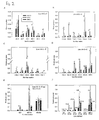
- the f(p/c) between plants harboring different transgenic constructs can vary ( Figure 4, Figures 2A-E). Also different sublines harboring the same transgene at presumably different chromosomal positions can exhibit a wide range of mutation frequencies.
- the f(p/c) was found to vary from 0.0003 to 0.14 in sub-lines 49 C ⁇ T-5 and 166 G ⁇ T-20, respectively.
- the frequency of reversion between sublines, in which identical single copy transgenes are located in different positions in the genome, can vary significantly.
- Reversion frequencies can be increased to different extents by e.g. UVC, MMS and/or X-ray.
- CT and TT dimers at the target nucleotide may influence the mutation frequencies at that site. Indeed, reversion frequencies in lines 112 G ⁇ T, 118 A ⁇ T, 166 G ⁇ T, in which pyrimidine dimer formation (CT or TT) between the first nucleotide in the nonsense codon (T) and the 5' adjacent nucleotide (C or T) is a possibility, are increased by exposure to UV-C to higher extents than in lines 49 C ⁇ T and 166 G ⁇ A ( Figure 1A, Figure 2).
- the highest permitted concentration of Cu 2+ in drinking water is 1.5 mg/l; 0.25 mg/l Cu 2+ increases PM frequency 2-3 times and 1.5 mg/l Cu 2+ 4-6 times.
- the highest permitted concentration of Al 3+ in the drinking water is 1 mg/l, this concentration increases PM frequency 2.5-3.0 times.
- the highest permitted concentration of Ni 2+ in drinking water is 2 mg/l whereby 1 mg/l already increases PM frequency.
- PCR fragments were cut with AccI endonuclease at the promoter region and with BsmI, BclI or SnaBI at the coding region and ligated into the uidA gene replacing the endogenous sequence. Mutations were confirmed by sequencing.
- the mutated genes were excised with EcoRI endonuclease and inserted into the binary vector pJL 513 which was partially digested with EcoRI. This vector contains as a transformation marker the bar gene, the gene coding for resistance to the herbicide "BASTA", under the control of the 1' promoter.
- the resulting plasmids, called pIKGUS1-6 contained six different mutations ( Figure 1A).
- Protoplasts were prepared from leaves of Nicotiana plumbaginifolia. Equal amounts of DNA from 17 different constructs with amino acid substitutions were used for evaluation of the activity of the uidA gene.
- DNA 5 ⁇ g, 0.3 ml of a suspension containing 2x10 6 protoplasts/ml, 0.3 ml 40% PEG 6000. After careful mixing the tubes were allowed to stand at room temperature for 5 min. Then 4 ml of K3 medium (Bilang et al., 1994) was added and the tubes were incubated overnight in horizontal position at 27°C in the dark.
- Total DNA was prepared from whole Arabidopsis thaliana plants using Nucleon PhytoPure total DNA isolation kit (Amersharm Life Science) in accordance with the manufacturer's protocol. 5 ⁇ g of sample DNA was digested either with HindIII (single cutter) or XhoI (non-cutter) restriction nucleases, separated on a 0.7% agarose gel and transferred onto Hybond N membranes (Amersham, Little Chalfont, UK) using manufacturer's protocol. Hybridization and washing of blots was performed according to laboratory manual (Sambrook et al., 1989).
- the full length GUS gene was used as a probe after 32 P-labeling with the random primer DNA labeling kit (GIBCOiBRL, Gaithersburg, MD), according to the manufacturer's instructions. For the lines used in the experiment copy numbers of the transgenes were determined.
- PCR analyses were performed in 50 ⁇ l volume containing 20 mM Tris (pH 8.3), 50mM KCl, 2mM MgCl2, 0.2 mM of each dNTP, 50ng template DNA, 0.25 ⁇ M of each primer, and 5U of Taq DNA polymerase.
- DNA amplifications were performed in a Perkin-Elmer model 9600 thermal cycler with the following profile: (i) 95°C for 5 min for 1 cycle; (ii) 94°C for 1 min, 60°C for 1 min, 72°C for 1 min for 40 cycles; and (iii) 72°C for 10 min for 1 cycle.
- PCR primers for site-directed mutagenesis were designed based on the uidA gene sequence.
- Blue sectors were excised from about 1000 plants of sub-line 166 G ⁇ T -1 and were pooled. Following DNA isolation the uidA gene was amplified with the specific primers. The PCR fragments were cloned into vector pCR 2.1 (Invitrogen Corporation, CA, USA). About 250 independent clones were sequenced.
- DNA sequencing reactions were performed with dRhodamine terminators from PE Applied Biosystems using a Perkin-Elmer GeneAmp PCR system 9600 thermocycler and analysed using an ABI PRISM 377 DNA sequencer.
- Plants of the same age but grown on sterile medium were transferred into liquid medium containing or lacking 50 ⁇ M MMS. Two weeks later the plants were histochemically stained and blue spots were counted.
- Total DNA of the respective transgenic lines was isolated from whole plants at the full rosette stage, using the Nucleon phytopure plant DNA extraction kit from Amersham Life Science. The yield of total DNA (in micrograms per plant) was compared with the mean DNA content (0.28 picograms) of a diploid A. thaliana cell, to give an estimate of 2x10 6 - 8x10 6 (dependent on DNA preparation) genomes per plant (Swoboda et al., 1994).
- f(p/c) r(p)/n(c), whereby f(p/c) is the mutation frequency per plant per copy of the transgene, r(p) is the number of reversion events per plant, as an average of 300-1000 plants, n(c) is the number of transgene copies in the genome.
- f(b) r(p)/n(c)x 2n(g), whereby f(b) is the mutation frequency per bp, r(p), n(c) as described above, n(g) is the number of haploid genomes present in Arabidopsis thaliana plants at the stage of analysis.
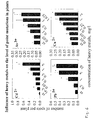
- thaliana plants of lines 166 G-T and 166 G-A were planted on media containing various concentrations of different heavy metals (Cd, Pb, Cu) and metalloid elements (As) in isolated growth chambers at 22°C with 16 h light, 8 h dark regime for 35 days.
- Point mutation frequencies were obtained by counting mutation events (sectors) in each plant, separately summing and relating these data to the number of plants in the population. For each experimental condition 1000 plants were scored. The experiments were repeated 3 times and the mean values of point muatation frequencies for plant populations for each condition were calculated (Figure 6).
- the homozygous transgenic Arabidopsis thaliana plant-line 651 was used to study heavy metal induced recombination frequency (Puchta H et al., 1995). These plants carried one copy per haploid genome of overlapping, non-functional, truncated version of a chimeric ⁇ -glucuronidase (uidA) marker gene as a recombination substrate, with 566 bp overlapping sequences in inverted orientation ( Figure 5). Upon homologous recombination the gene was restored and upon histochemical staining the recombination events were scored as blue sectors on the white plants, enabling conduction of a quantitative assay.
- uidA chimeric ⁇ -glucuronidase
- Seeds of line 651 were planted on media containing various concentrations of different heavy metals (Cd, Pb, Cu) and metalloid elements (As) in isolated growth chambers at 22°C with 16 h light, 8 h dark regime for 35 days.
- Cd, Pb, Cu heavy metals
- As metalloid elements
- Recombination frequencies were obtained by counting recombination events (sectors) in each plant, seperately summing and relating these data to the number of plants in the population.
Landscapes
- Health & Medical Sciences (AREA)
- Life Sciences & Earth Sciences (AREA)
- Genetics & Genomics (AREA)
- Engineering & Computer Science (AREA)
- Chemical & Material Sciences (AREA)
- Biotechnology (AREA)
- Organic Chemistry (AREA)
- Biomedical Technology (AREA)
- Zoology (AREA)
- Wood Science & Technology (AREA)
- Bioinformatics & Cheminformatics (AREA)
- General Engineering & Computer Science (AREA)
- Molecular Biology (AREA)
- Biochemistry (AREA)
- Microbiology (AREA)
- Biophysics (AREA)
- Physics & Mathematics (AREA)
- General Health & Medical Sciences (AREA)
- Plant Pathology (AREA)
- Cell Biology (AREA)
- Proteomics, Peptides & Aminoacids (AREA)
- Analytical Chemistry (AREA)
- Immunology (AREA)
- Breeding Of Plants And Reproduction By Means Of Culturing (AREA)
- Micro-Organisms Or Cultivation Processes Thereof (AREA)
Priority Applications (1)
| Application Number | Priority Date | Filing Date | Title |
|---|---|---|---|
| EP00116070A EP1176211A1 (de) | 2000-07-27 | 2000-07-27 | Verfahren zum Nachweis von Mutagenen in Pflanzen |
Applications Claiming Priority (1)
| Application Number | Priority Date | Filing Date | Title |
|---|---|---|---|
| EP00116070A EP1176211A1 (de) | 2000-07-27 | 2000-07-27 | Verfahren zum Nachweis von Mutagenen in Pflanzen |
Publications (1)
| Publication Number | Publication Date |
|---|---|
| EP1176211A1 true EP1176211A1 (de) | 2002-01-30 |
Family
ID=8169351
Family Applications (1)
| Application Number | Title | Priority Date | Filing Date |
|---|---|---|---|
| EP00116070A Withdrawn EP1176211A1 (de) | 2000-07-27 | 2000-07-27 | Verfahren zum Nachweis von Mutagenen in Pflanzen |
Country Status (1)
| Country | Link |
|---|---|
| EP (1) | EP1176211A1 (de) |
Cited By (1)
| Publication number | Priority date | Publication date | Assignee | Title |
|---|---|---|---|---|
| WO2011053944A3 (en) * | 2009-11-02 | 2011-09-22 | The Regents Of The University Of California | Gfp mutagenesis amplification: use of a flourescence-antibiotic resistance fusion dual reporter construct to provide quantitative and highly sensitive detection of mutations |
Citations (6)
| Publication number | Priority date | Publication date | Assignee | Title |
|---|---|---|---|---|
| US4753874A (en) * | 1985-07-08 | 1988-06-28 | Board Of Trustees Of The Leland Stanford Junior University | Rapid mutation testing system for human cells |
| EP0370813A2 (de) * | 1988-11-25 | 1990-05-30 | Exemplar Corporation | Rascher Überprüfungstest der Mutagenesis und Tetratogenesis |
| WO1992017605A1 (en) * | 1991-04-02 | 1992-10-15 | Ingeny B.V. | Process for detecting mutations, transgenic mammal, transgenic mammalian cell, and process for testing agents or conditions for mutagenic properties |
| WO1993015769A1 (en) * | 1992-02-14 | 1993-08-19 | Stratagene | Mutagenesis testing using transgenic non-human animals carrying test dna sequences |
| WO1993022426A1 (en) * | 1992-04-27 | 1993-11-11 | Indiana University Foundation | Live animal mutagenesis systems for testing mutagenic agents in vivo |
| US5681737A (en) * | 1993-10-15 | 1997-10-28 | The Regents Of The University Of California | Detection system for mutagens that also identifies mutagenic changes |
-
2000
- 2000-07-27 EP EP00116070A patent/EP1176211A1/de not_active Withdrawn
Patent Citations (6)
| Publication number | Priority date | Publication date | Assignee | Title |
|---|---|---|---|---|
| US4753874A (en) * | 1985-07-08 | 1988-06-28 | Board Of Trustees Of The Leland Stanford Junior University | Rapid mutation testing system for human cells |
| EP0370813A2 (de) * | 1988-11-25 | 1990-05-30 | Exemplar Corporation | Rascher Überprüfungstest der Mutagenesis und Tetratogenesis |
| WO1992017605A1 (en) * | 1991-04-02 | 1992-10-15 | Ingeny B.V. | Process for detecting mutations, transgenic mammal, transgenic mammalian cell, and process for testing agents or conditions for mutagenic properties |
| WO1993015769A1 (en) * | 1992-02-14 | 1993-08-19 | Stratagene | Mutagenesis testing using transgenic non-human animals carrying test dna sequences |
| WO1993022426A1 (en) * | 1992-04-27 | 1993-11-11 | Indiana University Foundation | Live animal mutagenesis systems for testing mutagenic agents in vivo |
| US5681737A (en) * | 1993-10-15 | 1997-10-28 | The Regents Of The University Of California | Detection system for mutagens that also identifies mutagenic changes |
Non-Patent Citations (8)
| Title |
|---|
| CARIELLO NEAL F ET AL: "A novel bacterial reversion and forward mutation assay based on green fluorescent protein.", MUTATION RESEARCH, vol. 414, no. 1-3, 11 May 1998 (1998-05-11), pages 95 - 105, XP000978906, ISSN: 0027-5107 * |
| CHIOCCA S M ET AL: "NICKEL MUTAGENESIS ALTERATION OF THE MUSVTS 110 THERMOSENSITIVE SPLICING PHENOTYPE BY A NICKEL-INDUCED DUPLICATION OF THE 3' SPLICE SITE", MOLECULAR CARCINOGENESIS, vol. 4, no. 1, 1991, pages 61 - 71, XP000978895, ISSN: 0899-1987 * |
| KOVALCHUK ET AL.: "New transgenic plant mutation assay reveals genome wide variation of the somatic mutation rate", 18 June 2000, THE INTERNATIONAL SOCIETY OF PLANT MOLECULAR BIOLOGY, XP002158259 * |
| KOVALCHUK IGOR ET AL: "Genome-wide variation of the somatic mutation frequency in transgenic plants.", EMBO (EUROPEAN MOLECULAR BIOLOGY ORGANIZATION) JOURNAL, vol. 19, no. 17, 1 September 2000 (2000-09-01), pages 4431 - 4438, XP002158258, ISSN: 0261-4189 * |
| KOVALCHUK IGOR ET AL: "Transgenic plants are sensitive bioindicators of nuclear pollution caused by the Chernobyl accident.", NATURE BIOTECHNOLOGY, vol. 16, no. 11, November 1998 (1998-11-01), pages 1054 - 1059, XP002158257, ISSN: 1087-0156 * |
| MATSUMOTO S ET AL: "ESCHERICHIA COLI LACZ GENE AS A BIOCHEMICAL AND HISTOCHEMICAL MARKER IN PLANT CELLS", GENE,NL,ELSEVIER BIOMEDICAL PRESS. AMSTERDAM, vol. 66, no. 1, 1988, pages 19 - 29, XP002026204, ISSN: 0378-1119 * |
| PLAUTZ J D ET AL: "Green fluorescent protein and its derivatives as versatile markers for gene expression in living Drosophila melanogaster, plant and mammalian cells", GENE,NL,ELSEVIER BIOMEDICAL PRESS. AMSTERDAM, vol. 173, no. 1, 1996, pages 83 - 87, XP004042857, ISSN: 0378-1119 * |
| VAN SLOUN PETRA P H ET AL: "The design of a new mutation model for active genes: Expression of the Escherichia coli lac operon in mammalian cells.", MUTATION RESEARCH, vol. 382, no. 1-2, 1997, pages 21 - 33, XP000978942, ISSN: 0027-5107 * |
Cited By (2)
| Publication number | Priority date | Publication date | Assignee | Title |
|---|---|---|---|---|
| WO2011053944A3 (en) * | 2009-11-02 | 2011-09-22 | The Regents Of The University Of California | Gfp mutagenesis amplification: use of a flourescence-antibiotic resistance fusion dual reporter construct to provide quantitative and highly sensitive detection of mutations |
| US9068972B2 (en) | 2009-11-02 | 2015-06-30 | The Regents Of The University Of California | GFP mutagenesis amplification: use of a fluorescence-antibiotic resistance fusion dual reporter construct to provide quantitative and highly sensitive detection of mutations |
Similar Documents
| Publication | Publication Date | Title |
|---|---|---|
| Kovalchuk et al. | Genome‐wide variation of the somatic mutation frequency in transgenic plants | |
| KR101268897B1 (ko) | 옥수수 이벤트 mir604 | |
| US7858764B1 (en) | Cotton event MON15985 and compositions and methods for detection thereof | |
| EP2018435B1 (de) | Künstliche Pflanzenminichromosome | |
| WO2018202800A1 (en) | Use of crispr-cas endonucleases for plant genome engineering | |
| Shalev et al. | The maize transposable element Ac induces recombination between the donor site and an homologous ectopic sequence | |
| EP4159848A1 (de) | Neuartige crispr-assoziierte transposasen und verwendungen davon | |
| EP4591704A2 (de) | Verbessertes blaualeuron und andere trennsysteme | |
| AU2002310332A1 (en) | Cotton event MONI5985 and compositions and methods for detection | |
| Rajaee et al. | A new location to split Cre recombinase for protein fragment complementation | |
| AU745867B2 (en) | Method and compositions useful for the activation of silent transgenes | |
| WO2023073383A1 (en) | Error prone dna polymerase for organelle mutation | |
| US20110119795A1 (en) | Artificial plant minichromosomes | |
| US20090100550A1 (en) | Artificial Plant Minichromosomes | |
| Cogan et al. | Identification and characterization of QTL controlling Agrobacterium‐mediated transient and stable transformation of Brassica oleracea | |
| EP2423316B1 (de) | Methode zur Bestimmung der meiotischen Rekombinationsfrequenz in Pflanzen | |
| Wilkinson et al. | Methanol does not specifically inhibit endogenous β-glucuronidase (GUS) activity | |
| Dündar | Multiple GUS expression patterns of a single Arabidopsis gene | |
| Vain et al. | Gene insertion patterns and sites | |
| Bollmann et al. | Reversion-reporter transgenes to analyze all six base-substitution pathways in Arabidopsis | |
| WO2022066647A1 (en) | Use of crispr-cas endonucleases for plant genome engineering | |
| Kerr | T-DNA promoter tagging in Nicotiana tabacum: a thesis presented in fulfilment of the requirements for the degree of Master of Philosophy in Genetics at Massey University, Palmerston North, New Zealand | |
| Roberts | Controlling transpositon in the male gametophyte of transgenic plants | |
| Hadi | Isolation and characterization of a RecA-like gene from soybean (Glycine max L.) | |
| Jia et al. | Characterization of Arabidopsis thaliana NHEJ mutants |
Legal Events
| Date | Code | Title | Description |
|---|---|---|---|
| PUAI | Public reference made under article 153(3) epc to a published international application that has entered the european phase |
Free format text: ORIGINAL CODE: 0009012 |
|
| AK | Designated contracting states |
Kind code of ref document: A1 Designated state(s): AT BE CH CY DE DK ES FI FR GB GR IE IT LI LU MC NL PT SE |
|
| AX | Request for extension of the european patent |
Free format text: AL;LT;LV;MK;RO;SI |
|
| AKX | Designation fees paid | ||
| REG | Reference to a national code |
Ref country code: DE Ref legal event code: 8566 |
|
| STAA | Information on the status of an ep patent application or granted ep patent |
Free format text: STATUS: THE APPLICATION IS DEEMED TO BE WITHDRAWN |
|
| 18D | Application deemed to be withdrawn |
Effective date: 20020731 |