EP1176800A2 - Procédé et dispositif de lecture d'image, procédé pour la commande d'un dispositif de lecture d'image et système de traitement d'image utilisant une correction de crête améliorée - Google Patents
Procédé et dispositif de lecture d'image, procédé pour la commande d'un dispositif de lecture d'image et système de traitement d'image utilisant une correction de crête améliorée Download PDFInfo
- Publication number
- EP1176800A2 EP1176800A2 EP01306343A EP01306343A EP1176800A2 EP 1176800 A2 EP1176800 A2 EP 1176800A2 EP 01306343 A EP01306343 A EP 01306343A EP 01306343 A EP01306343 A EP 01306343A EP 1176800 A2 EP1176800 A2 EP 1176800A2
- Authority
- EP
- European Patent Office
- Prior art keywords
- image
- peak
- level
- correction unit
- image signal
- Prior art date
- Legal status (The legal status is an assumption and is not a legal conclusion. Google has not performed a legal analysis and makes no representation as to the accuracy of the status listed.)
- Withdrawn
Links
- 238000012937 correction Methods 0.000 title claims abstract description 165
- 238000000034 method Methods 0.000 title claims abstract description 62
- 238000012545 processing Methods 0.000 title claims description 39
- 238000001514 detection method Methods 0.000 claims abstract description 41
- 238000003705 background correction Methods 0.000 claims description 56
- 230000008569 process Effects 0.000 claims description 28
- 230000003287 optical effect Effects 0.000 claims description 26
- 230000004044 response Effects 0.000 claims description 18
- 241000282979 Alces alces Species 0.000 claims 1
- 238000010586 diagram Methods 0.000 description 11
- 238000010186 staining Methods 0.000 description 9
- 230000005540 biological transmission Effects 0.000 description 7
- 230000006870 function Effects 0.000 description 7
- 230000035945 sensitivity Effects 0.000 description 5
- 230000001419 dependent effect Effects 0.000 description 4
- 238000002474 experimental method Methods 0.000 description 4
- 230000015556 catabolic process Effects 0.000 description 3
- 238000006731 degradation reaction Methods 0.000 description 3
- 230000008859 change Effects 0.000 description 1
- 230000006835 compression Effects 0.000 description 1
- 238000007906 compression Methods 0.000 description 1
- 230000006837 decompression Effects 0.000 description 1
- 238000012986 modification Methods 0.000 description 1
- 230000004048 modification Effects 0.000 description 1
- 238000012546 transfer Methods 0.000 description 1
Images






Classifications
-
- H—ELECTRICITY
- H04—ELECTRIC COMMUNICATION TECHNIQUE
- H04N—PICTORIAL COMMUNICATION, e.g. TELEVISION
- H04N1/00—Scanning, transmission or reproduction of documents or the like, e.g. facsimile transmission; Details thereof
- H04N1/40—Picture signal circuits
- H04N1/407—Control or modification of tonal gradation or of extreme levels, e.g. background level
- H04N1/4072—Control or modification of tonal gradation or of extreme levels, e.g. background level dependent on the contents of the original
Definitions
- the present invention relates to an image reading method, an image reader, an image reader controlling method which controls the image reader, and an image processing system which processes an image signal output by the image reader.
- an image reader or image scanner
- the image processing system In order to increase the quality of the image read by the image reader, the image processing system generally performs some image correcting computations including a shading correcting computation, a peak correcting computation and an MTF (modulation transfer function) correcting computation.
- the shading correcting computation is performed in order to reduce the influences due to the input sensitivity and characteristics of a reading optical system and an image sensor (e.g., a line image sensor).
- the peak correcting computation is performed in order to ensure the dynamic range of optical intensity of the image read by the image reader.
- the MTF correcting computation is performed in order to eliminate the blurring of the image read by the image reader.
- a white reference level signal is produced by optically scanning a white reference plate. It is assumed that the white reference level signal indicates a maximum level of optical intensity of the image read by the image reader.
- the white reference level signal is latched, and the peak correcting computation is performed such that a peak level of the image signal, obtained by reading the original document, is corrected based on the latched white reference level signal.
- the stains in the background portion are emphasized as the result of the conventional peak correction process, which will degrade the quality of the reproduced image.
- white scattering may occur in the reproduced image, which will also degrade the quality of the reproduced image.
- An object of the present invention is to provide an improved image reading method in which the above-described problems are eliminated.
- Another object of the present invention is to provide an image reading method that provides an adjustable reference level for the peak correction process, which is dependent on the reading mode when reading the original document.
- Another object of the present invention is to provide an image reader that provides an adjustable reference level for the peak correction process, which is dependent on the reading mode when reading the original document.
- Another object of the present invention is to provide an image reader controlling method that provides an adjustable reference level for the peak correction process, which is dependent on the reading mode when reading the original document.
- Another object of the present invention is to provide an image processing system including an image reader that provides an adjustable reference level for the peak correction process, which is dependent on the reading mode when reading the original document.
- an image reading method in which a peak level of an image signal, obtained by scanning an original document, is corrected based on a reference level, the image reading method comprising the steps of: providing a plurality of reading modes; receiving a selected one of the plurality of reading modes; and generating a reference level by computing a sum of a detection peak level and a correction value suited to the selected reading mode, so that the peak level of the image signal is corrected based on the generated reference level.
- an image reader including: an image sensor which reads an image from an original document; a shading correction unit which performs a shading correcting computation for an image signal supplied from the image sensor; a peak correction unit which performs a peak correcting computation for a shading corrected image signal output from the shading correction unit, so that a peak level of an image signal, obtained by scanning the original document, is corrected based on a reference level, wherein the peak correction unit latches a detection peak level, and generates a reference level by computing a sum of the detection peak level and a correction value suited to a selected reading mode, so that the peak level of the image signal is corrected based on the generated reference level.
- an image reader including: an image sensor which reads an image from an original document; an analog-to-digital converter which converts an analog image signal, output by the image sensor, into a digital image signal; a shading correction unit which performs a shading correcting computation for the image signal output by the analog-to-digital converter; and a peak correction unit which performs a peak correcting computation for the shading corrected image signal output by the shading correction unit, wherein the peak correction unit latches a detection peak level, and generates a reference level by computing a sum of the detection peak level and a correction value suited to a selected reading mode, so that the peak level of the image signal is corrected based on the generated reference level.
- a method of controlling an image reader including at least an image sensor and a shading correction unit, the method comprising the steps of: reading an image from an original document by using the image sensor; performing a shading correcting computation for an image signal, supplied from the image sensor, by using the shading correction unit; performing a peak correcting computation for a shading corrected image signal output from the shading correction unit, so that a peak level of an image signal, obtained by scanning the original document, is corrected based on a reference level, wherein a reference white level is latched, and a reference level is generated by computing a sum of the reference white level and a correction value suited to a selected reading mode, so that the peak level of the image signal is corrected based on the generated reference level.
- a method of controlling an image reader including at least an image sensor, an analog-to-digital converter and a shading correction unit, the method comprising the steps of: reading an image from an original document by using the image sensor; converting an analog image signal, output by the image sensor, into a digital image signal by using the analog-to-digital converter; performing a shading correcting computation for the image signal, output by the analog-to-digital converter, by using the chading correction unit; and performing a peak correcting computation for the shading corrected image signal output by the shading correction unit, wherein, in the peak correcting step, a detection peak level is latched, and a reference level is generated by computing a sum of the detection peak level and a correction value suited to a selected reading mode, so that the peak level of the image signal is corrected based on the generated reference level.
- an image processing system which processes an image read by an image reader, the image reader comprising: an image sensor which reads an image from an original document; a shading correction unit which performs a shading correcting computation for an image signal supplied from the image sensor; a peak correction unit which performs a peak correcting computation for a shading corrected image signal output from the shading correction unit, so that a peak level of an image signal, obtained by scanning the original document, is corrected based on a reference level, wherein the peak correction unit latches a detection peak level, and generates a reference level by computing a sum of the detection peak level and a correction value suited to a selected reading mode, so that the peak level of the image signal is corrected based on the generated reference level.
- an image processing system which processes an image read by an image reader, the image reader comprising: an image sensor which reads an image from an original document; an analog-to-digital converter which converts an analog image signal, output by the image sensor, into a digital image signal; a shading correction unit which performs a shading correcting computation for the image signal output by the analog-to-digital converter; and a peak correction unit which performs a peak correcting computation for the shading corrected image signal output by the shading correction unit, wherein the peak correction unit latches a detection peak level, and generates a reference level by computing a sum of the detection peak level and a correction value suited to a selected reading mode, so that the peak level of the image signal is corrected based on the generated reference level.
- a corresponding one of the plurality of reference levels for the selected reading mode is determined, and the peak level of the image signal is corrected based on the determined reference level.
- the image reading method and apparatus of the present invention are effective in preventing the inclusion of stains in the background portion of the reproduced image as well as the degradation of the reproduced image. It is possible for the present invention to provide appropriate quality of the reproduced image, which is suited to the selected reading mode, regardless of whether the read image contains noise components.
- FIG. 1 is a block diagram of a G3 facsimile system to which one embodiment of the present invention is applied.
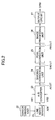
- FIG. 2 is a block diagram of an image signal processing portion of a scanner unit of the facsimile system to which a first preferred embodiment of the image reader of the invention is applied.
- FIG. 3A, FIG. 3B and FIG. 3C are diagrams for explaining a shading correction process and a peak correction process performed by the image signal processing portion of the scanner unit.
- FIG. 4A and FIG. 4B are diagrams for explaining an improved peak correction process performed by the image reader of the present embodiment.
- FIG. 5A and FIG. 5B are diagrams for explaining another improved peak correction process performed by the image reader of the present embodiment.
- FIG. 6 is a block diagram of a peak correction unit in the image reader of the present embodiment which is applied to the scanner unit of the facsimile system of FIG. 1.
- FIG. 7 is a block diagram of another peak correction unit in the image reader of the present embodiment which is applied to the scanner unit of the facsimile system of FIG. 1.
- FIG. 8 is a flowchart for explaining an improved peak correction routine which is executed to control the image reader of the present embodiment.
- FIG. 9 is a flowchart for explaining another improved peak correction routine which is executed to control the image reader of the present embodiment.
- FIG. 10 is a block diagram of an image signal processing portion of the scanner unit of the facsimile system to which a second preferred embodiment of the image reader of the invention is applied.
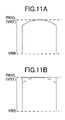
- FIG. 11A and FIG. 11B are diagrams for explaining a shading correction process and a peak correction process performed by the image reader of the present embodiment.
- FIG. 12 is a block diagram of a peak detecting unit in the image reader of the present embodiment which is applied to the scanner unit of the facsimile system of FIG. 1.
- FIG. 13 is a block diagram of another peak detecting unit in the image reader of the present embodiment which is applied to the scanner unit of the facsimile system of FIG. 1.
- FIG. 1 shows a G3 facsimile system to which one preferred embodiment of the image reader of the present invention is applied.
- the G3 facsimile system generally includes a system control unit 1, a system memory 2, a parameter memory 3, a clock circuit 4, a scanner unit 5, a plotter unit 6, an operation/display unit 7, a coder/decoder (CODEC) unit 8, an image memory 9, a G3 fax/modem unit 10, and a network interface unit 11.
- the system control unit 1 controls the entire facsimile system and carries out the G3 facsimile transmission control procedure.
- the system memory 2 stores a control program which the system control unit 1 executes when performing the G3 facsimile transmission control procedure, and stores respective data needed to perform the G3 facsimile transmission control procedure.
- the system memory 2 provides work areas for the system control unit 1 when performing the G3 facsimile transmission control procedure.
- the parameter memory 3 stores respective parameters and control information that are intrinsic to the G3 facsimile system.
- the clock circuit 4 outputs the current date and time information to the system control unit 1.
- the scanner unit 5 reads an image from an original document at a given resolution, and outputs an image signal indicating the read image.
- An image signal processing portion of the scanner unit 5 constitutes the image reader according to the present invention.
- the plotter unit 6 prints a reproduced image on a recording medium at a given resolution.
- the operation/display unit 7 includes respective operating keys, displays and indicators, which are used by the operator to manipulate the facsimile system.
- the coder/decoder unit 8 provides the function of compression of an image signal to create encoded image data, and provides the function of decompression of the encoded image data to generate a reproduced image.
- the image memory 9 stores a plurality of encoded images created by the coder/decoder unit 8 from respective original documents read by the scanner unit 5.
- the G3 fax/modem unit 10 provides modem functions for the G3 facsimile system.
- the G3 fax/modem unit 10 has the low-speed modem function (V.21) needed to send and receive the transmission protocol signals, and has the high-speed modem functions (V.17, V.34, V.29 and V.27ter) needed to primarily send and receive image information.
- the network interface unit 11 connects the G3 facsimile system to an analog public switched telephone network (PSTN) for telecommunications.
- PSTN public switched telephone network
- the network interface unit 11 has the automatic dialing/call receiving functions.
- the above elements 1 through 11 are interconnected by an internal bus 12, and the transmission of data from one of the elements 1 through 11 to another is essentially performed by unit of the internal bus 12. Exceptionally, the transmission of data between the network interface unit 11 and the G3 fax/modem unit 10 is directly performed without using the internal bus 12.
- FIG. 2 shows an image signal processing portion of the scanner unit 5 of the G3 facsimile system to which a first preferred embodiment of the image reader of the invention is applied.
- a line image sensor 21 has a given scanning width (which is suited to, for example, the width of A4-size paper) and a given reading resolution.
- the line image sensor 21 optoelectrically reads one line of an image from an original document and outputs an analog image signal AIN, which indicates the optical intensity of the read image.
- a sensor driving unit 22 drives the line image sensor 21 at intervals of a given drive period.
- the analog image signal AIN, output by the line image sensor 21, is input to an analog-to-digital (A/D) converter 23.
- the A/D converter 23 converts the analog image signal AIN into a digital image signal AOUT.
- a range of reference voltages available to the A/D converter 23 is determined by both a high-level reference voltage VRT and a low-level reference voltage VRB, which are supplied to the A/D converter 23.
- the digital image signal AOUT, output by the A/D converter 23, is input to a shading correction unit 24.
- the analog image signal AIN output by the line image sensor 21 indicates the distribution of optical intensity along the scanning line as shown in FIG. 3A.
- the distribution of optical intensity of the image signal AIN in the uniform intensity case is influenced by the input sensitivity and characteristics of the reading optical system and the line image sensor 21.
- the curve of the light quantity distribution of the image signal AIN in the uniform intensity case is generally convex in the central region due to such influences.
- the shading correction unit 24 performs the shading correcting computation for the image signal AOUT in order to reduce the influences by the input sensitivity of the reading optical system and the line image sensor 21. As shown in FIG. 3B, the curve of the light quantity distribution of the image signal SHOUT output by the shading correction unit 24 is corrected so that the central region of the curve is flattened.
- the shading correcting computation is known, and a description thereof will be omitted.
- the shading corrected image signal SHOUT that is output by the shading correction unit 24 is input to the peak correction unit 25.
- the peak correction unit 25 performs the peak correction computation (or the proportional change) for the image signal SHOUT, so that a peak level of the peak corrected image signal PKOUT at the output of the peak correction unit 25 matches with a detection peak level PKLV which is latched by the peak correction unit 25. As shown in FIG. 3C, the peak of the light quantity distribution of the image signal PKOUT output by the peak correction unit 25 is corrected so that the peak of the image signal PKOUT matches with the detection peak level PKLV.
- the peak corrected image signal PKOUT that is output by the peak correction unit 25 is input to the image processing unit 26.
- the number of bits of the shading corrected image signal SHOUT, which is input to the peak correction unit 25, is 10, while the number of bits of the peak corrected image signal PKOUT, which is output from the peak correction unit 25, is 9. Namely, the number of bits of the shading corrected image signal SHOUT is reduced as the result of performing the peak correction computation.
- the image processing unit 26 performs some image processing computations for the peak corrected image signal PKOUT, and these computations include a gamma correcting computation, an MTF correcting computation and a bit-matched digitization.
- the gamma correcting computation is performed to correct the brightness of the image read by the image reader.
- the MFT correcting computation is performed to correct the blurring of the image read by the image reader.
- the bit-matched digitization is performed so that a resolution of the processed image matches with a resolution of an output image.
- the image processing unit 26 generates an output image signal DPIX having a predetermined number of bits.
- the output image signal DPIX that is output by the image processing unit 26 is supplied to a subsequent-stage unit through an output circuit 27.
- the subsequent-stage unit is the coder/decoder unit 8 and the output image signal DPIX is sent to the coder/decoder unit 8 via the internal bus 12.
- the subsequent-stage unit is the plotter unit 6 and the output image signal DPIX is sent to the plotter unit 6 via the internal bus 12.
- FIG. 4A and FIG. 4B show an improved peak correction process performed by the image reader of the present embodiment.
- the distribution of optical intensity of the peak corrected image signal PKOUT in the case of the white reference waveform is as shown in FIG. 4A.
- the detection peak level PKLV that is latched by the peak correction unit 25 in this case includes the noise components of the image signal AIN or AOUT therein.
- the distribution of optical intensity of the image signal PKOUT includes irregularities due to the noise, some of which are higher than the optical intensity of the background portion of the image read by the image reader. For this reason, the reproduced image of the image signal PKOUT includes stains in the background portion thereof. This problem is called background staining.
- the peak correction unit 25 in the image reader of the present embodiment corrects the detection peak level PKLV by subtracting a correction value "x" from the detection peak level PKLV, and uses the corrected peak level "PKLV-x" when performing the peak correcting computation. By performing such a correction process, the occurrence of the background staining in the reproduced image can be avoided.
- the correction value "x" is in a range from 8/256 to 16/256 of the maximum intensity level of the shading corrected image signal SHOUT at the input of the peak correction unit 25.
- an appropriate correction value "x" is predetermined by experiment depending on the signal-to-noise (S/N) ratio of the line image sensor 21 and the S/N ratio of the A/D converter 23.
- the irregularities of the distribution of optical intensity of the image signal PKOUT, if any, are not higher than the optical intensity of the background portion of the image read by the image reader. Therefore, the reproduced image of the image signal PKOUT includes no stain in the background portion thereof.
- FIG. 5A and FIG. 5B show another improved peak correction process performed by the image reader of the present embodiment.
- the distribution of optical intensity of the peak corrected image signal PKOUT is as shown in FIG. 5A.
- the optical intensity IMGLVL1 of the low intensity image portion in this distribution is comparatively low, and the difference between the low intensity image portion and the noise components of the image signal PKOUT is likely to be negligible. For this reason, the low intensity image portion of the image signal PHOUT may be included in the noise components of the reproduced image. This will degrade the quality of the reproduced image.
- the peak correction unit 25 in the image reader of the present embodiment corrects the detection peak level PKLV by adding a correction value "y" to the detection peak level PKLV, and uses the corrected peak level "PKLV+y" in performing the peak correcting computation. By performing such a peak correction process, the degradation of the quality of the reproduced image can be avoided.
- the correction value "y” is in a range from 8/256 to 16/256 of the maximum intensity level of the shading corrected image signal SHOUT at the input of the peak correction unit 25.
- an appropriate correction value "y” is predetermined by experiment depending on the signal-to-noise (S/N) ratio of the line image sensor 21 and the S/N ratio of the A/D converter 23.
- the improved peak correction process even when a low contrast image is read from the original document, the difference between the low intensity image portion and the noise components of the image signal PKOUT is made more appreciable. Therefore, the degradation of the reconstructed image from the image signal PKOUT can be avoided.
- the G3 facsimile system is configured to allow the operator to select one of a plurality of reading modes, including a normal reading mode, a first reading mode and a second reading mode, before reading the image from the original document.
- a normal reading mode e.g., a normal reading mode
- a first reading mode e.g., a first reading mode
- a second reading mode e.g., a second reading mode
- FIG. 5A and FIG. 5B is performed in the G3 facsimile system so as to eliminate the problem of the low intensity image portion.
- the normal peak correction process described above with reference to FIG. 3C is performed in the G3 facsimile system.
- the image reader of the present embodiment can perform an appropriate one of the peak correction processes according to the selected reading mode, in order to increase the quality of the reproduced image.
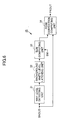
- FIG. 6 shows an example of the peak correction unit 25 in the image reader of the present embodiment which is applied to the scanner unit of the facsimile system of FIG. 1.
- the peak correction unit 25 in this embodiment is adapted for appropriately reading a text image from an original document.
- the peak correction unit 25 in this embodiment generally includes a maximum level detecting unit 31, a background white level latching unit 32, a sum computing unit 33, and a peak correction computing unit 34.
- the maximum level detecting unit 31 detects a peak level of the shading corrected image signal SHOUT which is supplied from the shading correction unit 24 (shown in FIG. 2) when the original document is optically scanned.
- the detected peak level output by the maximum level detecting unit 31 is input to the background white level latching unit 32.
- the background white level latching unit 32 latches the peak level of the image signal SHOUT.
- the system control unit 1 (shown in FIG. 1) supplies a mode selection signal SM to the sum computing unit 33.
- the sum computing unit 33 computes, in response to the selection signal SM, a sum of the latched peak level, received from the latching unit 32, and the correction value (-x), and outputs the sum to the peak correction computing unit 34 as the reference level "PKLV-x" for eliminating the problem of the background staining.
- the sum computing unit 33 computes, in response to the selection signal SM, a sum of the latched peak level and the correction value (+y), and outputs the sum to the peak correction computing unit 34 as the reference level "PKLV+y" for eliminating the problem of the low intensity image portion.
- the sum computing unit 33 computes, in response to the selection signal SM, a sum of the latched peak level and the correction value (which is, in this case, equal to zero), and outputs the sum to the peak correction computing unit 34 as the reference level "PKLV".
- the peak correction computing unit 34 performs the peak correction computation for the image signal SHOUT based on the reference level received from the sum computing unit 33, and outputs the peak corrected image signal PKOUT to the subsequent-stage unit which is described above with reference to FIG. 2.
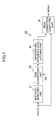
- FIG. 7 shows another example of the peak correction unit 25 in the image reader of the present embodiment which is applied to the scanner unit 5 of the facsimile system of FIG. 1.
- the peak correction unit 25 in this embodiment is adapted for appropriately reading a halftone image from an original document.
- the peak correction unit 25 in this embodiment generally includes a maximum level detecting unit 31, a sum computing unit 35, a background reference level latching unit 36, and a peak correction computing unit 34.
- the maximum level detecting unit 31 detects a peak level of the shading corrected image signal SHOUT which is supplied from the shading correction unit 24 when a white reference plate is optically scanned.
- the detected peak level output by the maximum level detecting unit 31 is input to the sum computing unit 35.
- the system control unit 1 supplies a mode selection signal SM to the sum computing unit 35.
- the sum computing unit 35 computes, in response to the selection signal SM, a sum of the detected peak level, received from the maximum level detecting unit 31, and the correction value (-x), and outputs the sum to the background reference level latching unit 36 as the reference level "PKLV-x" for eliminating the problem of the background staining.
- the sum computing unit 35 computes, in response to the selection signal SM, a sum of the detected peak level and the correction value (+y), and outputs the sum to the background reference level latching unit 36 as the reference level "PKLV+y" for eliminating the problem of the low intensity image portion.
- the sum computing unit 35 computes, in response to the selection signal SM, a sum of the detected peak level and the correction value (which is, in this case, equal to zero), and outputs the sum to the background reference level latching unit 36 as the reference level "PKLV".
- the background reference level latching unit 36 latches the reference level received from the sum computing unit 35.
- the peak correction computing unit 34 performs the peak correction computation for the shading corrected image signal SHOUT, which is supplied from the shading correction unit 24 when reading the original document, based on the latched reference level received from the background reference level latching unit 36, and outputs the peak corrected image signal PKOUT to the subsequent-stage unit which is described above with reference to FIG. 2.
- FIG. 8 shows an improved peak correction routine which is executed to control the image reader of the present embodiment.
- This peak correction routine is adapted for appropriately reading a text image from an original document.
- step 101 reads a white reference level signal by optically scanning a white reference plate (not shown) prior to the reading of the original document.
- step 102 latches a peak level of the white reference level signal as the background white level.
- Step 103 reads one line of an image by optically scanning the original document along a main scanning line outputs an analog image signal indicating the read image.
- step 104 receives the mode selection signal SM from the system control unit 1 and detects a selected one of the plurality of reading modes, which is indicated by the received signal SM.
- step 105 renews the background white level, which is latched in the step 102, by the peak level of the shading corrected image signal SHOUT received from the shading correction unit 24.
- step 106 computes a sum of the renewed background white level (step 105) and the correction value in response to the reading mode indicated by the selection signal SM.
- the sum of the renewed background white level and the correction value (-x) is computed as the reference level "PKLV-x" for eliminating the problem of the background staining.
- the sum of the renewed background white level and the correction value (+y) is computed as the reference level "PKLV+y" for eliminating the problem of the low intensity image portion.
- the normal reading mode is selected, the sum of the renewed background white level and the correction value (which is equal to zero) as the reference level "PKLV".
- step 107 performs the peak correction computation for the image signal SHOUT based on the reference level obtained in the step 106.
- Step 108 outputs one line of the peak corrected image signal PKOUT to the subsequent-stage unit.
- step 109 determines whether all lines of the image of the original document are optically scanned. When the result at the step 109 is negative, the above steps 103 through 108 are repeated. When the result at the step 109 is affirmative, the improved peak correction routine of FIG. 8 ends.
- FIG. 9 shows another improved peak correction routine which is executed to control the image reader of the present embodiment.
- This peak correction routine is adapted for appropriately reading a halftone image from an original document.
- step 201 reads a white reference level signal by optically scanning a white reference plate (not shown) prior to the reading of the original document.
- a peak level of the white reference level signal is detected.
- step 202 receives the mode selection signal SM from the system control unit 1 and detects a selected one of the plurality of reading modes, which is indicated by the received signal SM.
- step 203 computes a sum of the detected peak level (step 201) and the correction value in response to the reading mode indicated by the selection signal SM.
- the sum of the detected peak level and the correction value (-x) is computed as the reference level "PKLV-x" for eliminating the problem of the background staining.
- the sum of the detected peak level and the correction value (+y) is computed as the reference level "PKLV+y" for eliminating the problem of the low intensity image portion.
- the normal reading mode is selected, the sum of the detected peak level and the correction value (which is equal to zero) as the reference level "PKLV".
- step 204 latches the sum of the detected peal level and the correction value as the background reference level.
- Step 205 reads one line of an image by optically scanning the original document along a main scanning line and outputs an analog image signal indicating the read image.
- step 206 performs the peak correction computation for the image signal SHOUT based on the latched background reference level.
- Step 207 outputs one line of the peak corrected image signal PKOUT to the subsequent-stage unit.
- step 208 determines whether all lines of the image of the original document are optically scanned. When the result at the step 208 is negative, the above steps 205 through 207 are repeated. When the result at the step 208 is affirmative, the improved peak correction routine of FIG. 9 ends.
- FIG. 10 shows an image processing portion of the scanner unit 5 of the facsimile system to which a second preferred embodiment of the image reader of the invention is applied.
- FIG. 10 the elements that are essentially the same as corresponding elements in FIG. 2 are designated by the same reference numerals.
- the line image sensor 21 has a given scanning width (which is suited to, for example, the width of A4-size paper) and a given reading resolution.
- the line image sensor 21 optoelectrically reads one line of an image from an original document and outputs an analog image signal AIN, which indicates the optical intensity of the read image.
- the sensor driving unit 22 drives the line image sensor 21 at intervals of a given drive period.
- the analog image signal AIN, output by the line image sensor 21, is input to an analog-to-digital (A/D) converter 41.
- the A/D converter 41 converts the analog image signal AIN into a digital image signal AOUT.
- a range of reference voltages available to the A/D converter 41 is determined by both a high-level reference voltage VRT and a low-level reference voltage VRB, which are supplied to the A/D converter 41.
- the high-level reference voltage VRT is sent from a digital-to-analog (D/A) converter 45 of a peak correction unit 42 to the A/D converter 41, which will be described below.
- the digital image signal AOUT output by the A/D converter 41, is input to a shading correction unit 43.
- the A/D converter 41 detects an overflow of the digital image signal AOUT, the A/D converter 41 outputs an overflow signal OVF to a peak detecting unit 44 of the peak correction unit 42.
- the analog image signal AIN output by the line image sensor 21 indicates the distribution of optical intensity along the scanning line as shown in FIG. 11A.
- the distribution of optical intensity of the image signal AIN in the uniform intensity case is influenced by the input sensitivity and characteristics of the reading optical system and the line image sensor 21.
- the curve of the light quantity distribution of the image signal AIN in the uniform intensity case is generally convex in the central region due to such influences.
- the shading correction unit 43 performs the shading correcting computation for the image signal AOUT in order to reduce the influences by the input sensitivity of the reading optical system and the line image sensor 21. As shown in FIG. 11B, the curve of the light quantity distribution of the image signal SHOUT output by the shading correction unit 43 is corrected so that the central region of the curve is flattened.
- the shading correcting computation is known, and a description thereof will be omitted.
- the shading corrected image signal SHOUT that is output by the shading correction unit 43 is input to the peak detecting unit 44 of the peak correction unit 42.
- the shading corrected image signal SHOUT output by the shading correction unit 43 is already peak corrected because of the feedback loop (which will be described below), and it is supplied to the image processing unit 26 as the peak corrected image signal PKOUT.
- the peak detecting unit 44 detects a peak level of the shading corrected image signal SHOUT, and performs the peak correcting computation with respect to the detected peak level of the image signal SHOUT. As the result of the computation, the peak detecting unit 44 outputs a corrected peak level signal VRLV to the D/A converter 45, the digital signal VRLV indicating the corrected peak level obtained by the peak correcting computation.
- the peak detecting unit 44 renews the detected peak level by incrementing it by a given value.
- the D/A converter 45 converts the digital signal VRLV, received from the peak detecting unit 44, into an analog reference voltage signal VRT that is equivalent to the corrected peak level of the image signal SHOUT obtained at the peak detecting unit 44.
- the reference voltage signal VRT which is output by the D/A converter 45, is input to the A/D converter 41.
- the peak corrected image signal PKOUT that is output by the shading correction unit 43 is input to the image processing unit 26.
- the image processing unit 26 performs some image processing computations for the peak corrected image signal PKOUT, and these computations include a gamma correcting computation, an MTF correcting computation and a bit-matched digitization.
- the gamma correcting computation is performed to correct the brightness of the image read by the image reader.
- the MFT correcting computation is performed to correct the blurring of the image read by the image reader.
- the bit-matched digitization is performed so that a resolution of the processed image matches with a resolution of an output image.
- the image processing unit 26 generates an output image signal DPIX having a predetermined number of bits.
- the output image signal DPIX that is output by the image processing unit 26 is supplied to the subsequent-stage unit through the output circuit 27.
- the subsequent-stage unit is the coder/decoder unit 8 and the output image signal DPIX is sent to the coder/decoder unit 8 via the internal bus 12.
- the subsequent-stage unit is the plotter unit 6 and the output image signal DPIX is sent to the plotter unit 6 via the internal bus 12.
- the reference voltage signal VRT which is output by the peak correction unit 42, is equivalent to the corrected peak level of the image signal SHOUT obtained at the peak detecting unit 44.
- the reference voltage signal VRT is supplied from the peak correction unit 42 to the A/D converter 41. Because of the feedback loop including the peak correction unit 42 and the A/D converter 41, the image signal AOUT output by the A/D converter 41 is already peak corrected in the presence of the received reference voltage signal VRT, and it is supplied to the shading correction unit 43. Hence, the shading corrected image signal SHOUT output by the shading correction unit 43 is already peak corrected as shown in FIG. 11B.
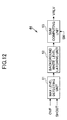
- FIG. 12 shows an example of the peak detecting unit 44 in the image reader of the present embodiment which is applied to the scanner unit of the facsimile system of FIG. 1.
- the peak detecting unit 44 in this embodiment is adapted for appropriately reading a text image from an original document.
- the peak detecting unit 44 in this embodiment generally includes a maximum level detecting unit 51, a background white level latching unit 52, and a sum computing unit 53.
- the maximum level detecting unit 51 detects a peak level of the shading corrected image signal SHOUT which is supplied from the shading correction unit 43 (shown in FIG. 10) when the original document is optically scanned.
- the maximum level detecting unit 51 renews the detected peak level by incrementing it by a given value.
- the detected peak level (or the renewed peak level) output by the maximum level detecting unit 51 is input to the background white level latching unit 52.
- the background white level latching unit 52 latches the detection peak level (PKLV) of the image signal SHOUT.
- the system control unit 1 (shown in FIG. 1) supplies a mode selection signal SM to the sum computing unit 53.
- FIG. 13 shows another example of the peak detecting unit 44 in the image reader of the present embodiment which is applied to the scanner unit 5 of the facsimile system of FIG. 1.
- the peak detecting unit 44 in this embodiment is adapted for appropriately reading a halftone image from an original document.
- the peak detecting unit 44 in this embodiment generally includes a maximum level detecting unit 51, a sum computing unit 54, and a background reference level latching unit 55.
- the maximum level detecting unit 51 detects a peak level of the shading corrected image signal SHOUT which is supplied from the shading correction unit 43 when a white reference plate is optically scanned.
- the maximum level detecting unit 51 renews the detected peak level by incrementing it by a given value.
- the detected peak level (or the renewed peak level) output by the maximum level detecting unit 51 is input to the sum computing unit 54.
- the system control unit 1 supplies a mode selection signal SM to the sum computing unit 54.
- the background reference level latching unit 55 latches the reference level "VRLV” received from the sum computing unit 54.
- the latched reference level "VRLV” is supplied from the background reference level latching unit 55 to the D/A converter 45.
- the background white level is detected only when the white reference plate is optically scanned; and, in the latter situation, the background white level is detected and renewed occasionally during the scanning of the original document. In the latter situation, each time the overflow signal OVF is not received, the latched background white level is decremented.
- the peak level of the image signal which is supplied when the white reference plate is optically scanned is detected, and it is directly used in the peak correcting computation.
- the detected peak level may be changed by a given value and the changed peak level may be used in the peak correcting computation.
- the image reader of the invention is applied to the G3 facsimile system.
- the present invention is not limited to these embodiments. Alternatively, the present invention may be applicable to other image processing systems.
- the number of bits of the shading corrected image signal SHOUT, which is input to the peak correction unit 25, is 10
- the number of bits of the peak corrected image signal PKOUT, which is output from the peak correction unit 25, is 9.
Landscapes
- Engineering & Computer Science (AREA)
- Multimedia (AREA)
- Signal Processing (AREA)
- Facsimile Image Signal Circuits (AREA)
- Image Input (AREA)
Applications Claiming Priority (2)
| Application Number | Priority Date | Filing Date | Title |
|---|---|---|---|
| JP2000228695A JP2002044454A (ja) | 2000-07-28 | 2000-07-28 | 画像読取方法および画像読取装置および画像読取装置の制御方法および画像処理装置 |
| JP2000228695 | 2000-07-28 |
Publications (2)
| Publication Number | Publication Date |
|---|---|
| EP1176800A2 true EP1176800A2 (fr) | 2002-01-30 |
| EP1176800A3 EP1176800A3 (fr) | 2004-08-04 |
Family
ID=18721935
Family Applications (1)
| Application Number | Title | Priority Date | Filing Date |
|---|---|---|---|
| EP01306343A Withdrawn EP1176800A3 (fr) | 2000-07-28 | 2001-07-24 | Procédé et dispositif de lecture d'image, procédé pour la commande d'un dispositif de lecture d'image et système de traitement d'image utilisant une correction de crête améliorée |
Country Status (2)
| Country | Link |
|---|---|
| EP (1) | EP1176800A3 (fr) |
| JP (1) | JP2002044454A (fr) |
Family Cites Families (5)
| Publication number | Priority date | Publication date | Assignee | Title |
|---|---|---|---|---|
| JPS56102853A (en) * | 1980-01-21 | 1981-08-17 | Dainippon Screen Mfg Co Ltd | Metho for pretreating image signal of image copying apparatus |
| JPH0773335B2 (ja) * | 1983-10-24 | 1995-08-02 | 株式会社ニコン | 光電変換装置 |
| DE3778602D1 (de) * | 1986-07-18 | 1992-06-04 | Dainippon Screen Mfg | Bild-datenverarbeitungsverfahren und anordnung dafuer. |
| US5046118A (en) * | 1990-02-06 | 1991-09-03 | Eastman Kodak Company | Tone-scale generation method and apparatus for digital x-ray images |
| JP3165747B2 (ja) * | 1992-09-28 | 2001-05-14 | キヤノン株式会社 | 画像読取装置 |
-
2000
- 2000-07-28 JP JP2000228695A patent/JP2002044454A/ja active Pending
-
2001
- 2001-07-24 EP EP01306343A patent/EP1176800A3/fr not_active Withdrawn
Also Published As
| Publication number | Publication date |
|---|---|
| EP1176800A3 (fr) | 2004-08-04 |
| JP2002044454A (ja) | 2002-02-08 |
Similar Documents
| Publication | Publication Date | Title |
|---|---|---|
| US8687240B2 (en) | Image processing apparatus and control method for performing screen processing | |
| JP3130593B2 (ja) | 原稿読取り装置 | |
| US6301019B1 (en) | Image reading apparatus, image reading method, whiteness level correcting method and whiteness level generating method | |
| EP0920193A2 (fr) | Appareil et procédé de traitement d'image | |
| US5144456A (en) | Image processing apparatus and method | |
| US6175660B1 (en) | Image reading apparatus | |
| US5724444A (en) | Image forming apparatus | |
| US6816623B1 (en) | Image reading apparatus providing shading compensation related to the on-time of the light source | |
| JP2001086341A (ja) | 画像読取装置、複写機およびファクシミリ装置 | |
| US5337162A (en) | Image processing apparatus for preventing occurrence of moire in output image | |
| EP0496599B1 (fr) | Appareil et procédé de traitement d'images pour égaliser des contours | |
| US7583415B2 (en) | Image processing apparatus | |
| EP1176800A2 (fr) | Procédé et dispositif de lecture d'image, procédé pour la commande d'un dispositif de lecture d'image et système de traitement d'image utilisant une correction de crête améliorée | |
| KR100265885B1 (ko) | 스캐너에서 쉐이딩 왜곡을 보정하는 방법 | |
| JP3676439B2 (ja) | 画像形成装置 | |
| JPH01115271A (ja) | 画像処理装置 | |
| US6788831B1 (en) | Image reading apparatus | |
| JP2005277886A (ja) | 画像読取装置 | |
| JP3701094B2 (ja) | 画像読取装置 | |
| JP2749322B2 (ja) | デジタルカラー複写機の画像処理方法 | |
| JPH11355574A (ja) | 画像処理装置と画像処理方法 | |
| KR20000000673A (ko) | 쉐이딩 보정방법 | |
| JP2683031B2 (ja) | デジタルカラー複写機の初期設定モード動作方法 | |
| JPH10336440A (ja) | 画像読取装置 | |
| JP2005167723A (ja) | 画像処理装置 |
Legal Events
| Date | Code | Title | Description |
|---|---|---|---|
| PUAI | Public reference made under article 153(3) epc to a published international application that has entered the european phase |
Free format text: ORIGINAL CODE: 0009012 |
|
| AK | Designated contracting states |
Kind code of ref document: A2 Designated state(s): AT BE CH CY DE DK ES FI FR GB GR IE IT LI LU MC NL PT SE TR |
|
| AX | Request for extension of the european patent |
Free format text: AL;LT;LV;MK;RO;SI |
|
| RAP1 | Party data changed (applicant data changed or rights of an application transferred) |
Owner name: RICOH COMPANY LTD. |
|
| PUAL | Search report despatched |
Free format text: ORIGINAL CODE: 0009013 |
|
| AK | Designated contracting states |
Kind code of ref document: A3 Designated state(s): AT BE CH CY DE DK ES FI FR GB GR IE IT LI LU MC NL PT SE TR |
|
| AX | Request for extension of the european patent |
Extension state: AL LT LV MK RO SI |
|
| 17P | Request for examination filed |
Effective date: 20041129 |
|
| AKX | Designation fees paid |
Designated state(s): DE FR GB |
|
| RBV | Designated contracting states (corrected) |
Designated state(s): DE FR GB |
|
| 17Q | First examination report despatched |
Effective date: 20080128 |
|
| STAA | Information on the status of an ep patent application or granted ep patent |
Free format text: STATUS: THE APPLICATION HAS BEEN WITHDRAWN |
|
| 18W | Application withdrawn |
Effective date: 20090525 |