EP1177006B1 - Appareil d'apport de ventilation spontanee en pression positive continue - Google Patents
Appareil d'apport de ventilation spontanee en pression positive continue Download PDFInfo
- Publication number
- EP1177006B1 EP1177006B1 EP00931974A EP00931974A EP1177006B1 EP 1177006 B1 EP1177006 B1 EP 1177006B1 EP 00931974 A EP00931974 A EP 00931974A EP 00931974 A EP00931974 A EP 00931974A EP 1177006 B1 EP1177006 B1 EP 1177006B1
- Authority
- EP
- European Patent Office
- Prior art keywords
- pressure
- patient
- therapy session
- therapy
- support system
- Prior art date
- Legal status (The legal status is an assumption and is not a legal conclusion. Google has not performed a legal analysis and makes no representation as to the accuracy of the status listed.)
- Expired - Lifetime
Links
- 238000002560 therapeutic procedure Methods 0.000 claims description 130
- 230000029058 respiratory gaseous exchange Effects 0.000 claims description 46
- 238000011461 current therapy Methods 0.000 claims description 3
- 238000012544 monitoring process Methods 0.000 claims description 3
- 239000007789 gas Substances 0.000 description 50
- 230000002354 daily effect Effects 0.000 description 10
- 206010007559 Cardiac failure congestive Diseases 0.000 description 9
- 206010019280 Heart failures Diseases 0.000 description 9
- 238000000034 method Methods 0.000 description 8
- 230000008569 process Effects 0.000 description 5
- 238000011282 treatment Methods 0.000 description 5
- 238000004891 communication Methods 0.000 description 4
- 230000000241 respiratory effect Effects 0.000 description 4
- 238000007796 conventional method Methods 0.000 description 3
- 238000011125 single therapy Methods 0.000 description 3
- 238000011269 treatment regimen Methods 0.000 description 3
- QVGXLLKOCUKJST-UHFFFAOYSA-N atomic oxygen Chemical compound [O] QVGXLLKOCUKJST-UHFFFAOYSA-N 0.000 description 2
- 230000008859 change Effects 0.000 description 2
- 238000011513 continuous positive airway pressure therapy Methods 0.000 description 2
- 238000010586 diagram Methods 0.000 description 2
- 230000000694 effects Effects 0.000 description 2
- 230000000977 initiatory effect Effects 0.000 description 2
- 238000005259 measurement Methods 0.000 description 2
- 229910052760 oxygen Inorganic materials 0.000 description 2
- 239000001301 oxygen Substances 0.000 description 2
- 230000007958 sleep Effects 0.000 description 2
- 241000894006 Bacteria Species 0.000 description 1
- 206010037423 Pulmonary oedema Diseases 0.000 description 1
- 238000013459 approach Methods 0.000 description 1
- 230000001413 cellular effect Effects 0.000 description 1
- 230000007423 decrease Effects 0.000 description 1
- 230000001934 delay Effects 0.000 description 1
- 230000003111 delayed effect Effects 0.000 description 1
- 230000009977 dual effect Effects 0.000 description 1
- 230000003203 everyday effect Effects 0.000 description 1
- 230000002045 lasting effect Effects 0.000 description 1
- 238000004519 manufacturing process Methods 0.000 description 1
- 239000000203 mixture Substances 0.000 description 1
- 238000012986 modification Methods 0.000 description 1
- 230000004048 modification Effects 0.000 description 1
- 208000005333 pulmonary edema Diseases 0.000 description 1
- 230000002441 reversible effect Effects 0.000 description 1
- 238000012552 review Methods 0.000 description 1
- 238000004448 titration Methods 0.000 description 1
- 230000007704 transition Effects 0.000 description 1
- 230000007306 turnover Effects 0.000 description 1
- 230000002618 waking effect Effects 0.000 description 1
Images


Classifications
-
- A—HUMAN NECESSITIES
- A61—MEDICAL OR VETERINARY SCIENCE; HYGIENE
- A61M—DEVICES FOR INTRODUCING MEDIA INTO, OR ONTO, THE BODY; DEVICES FOR TRANSDUCING BODY MEDIA OR FOR TAKING MEDIA FROM THE BODY; DEVICES FOR PRODUCING OR ENDING SLEEP OR STUPOR
- A61M16/00—Devices for influencing the respiratory system of patients by gas treatment, e.g. ventilators; Tracheal tubes
-
- A—HUMAN NECESSITIES
- A61—MEDICAL OR VETERINARY SCIENCE; HYGIENE
- A61M—DEVICES FOR INTRODUCING MEDIA INTO, OR ONTO, THE BODY; DEVICES FOR TRANSDUCING BODY MEDIA OR FOR TAKING MEDIA FROM THE BODY; DEVICES FOR PRODUCING OR ENDING SLEEP OR STUPOR
- A61M16/00—Devices for influencing the respiratory system of patients by gas treatment, e.g. ventilators; Tracheal tubes
- A61M16/0057—Pumps therefor
- A61M16/0066—Blowers or centrifugal pumps
- A61M16/0069—Blowers or centrifugal pumps the speed thereof being controlled by respiratory parameters, e.g. by inhalation
-
- A—HUMAN NECESSITIES
- A61—MEDICAL OR VETERINARY SCIENCE; HYGIENE
- A61M—DEVICES FOR INTRODUCING MEDIA INTO, OR ONTO, THE BODY; DEVICES FOR TRANSDUCING BODY MEDIA OR FOR TAKING MEDIA FROM THE BODY; DEVICES FOR PRODUCING OR ENDING SLEEP OR STUPOR
- A61M16/00—Devices for influencing the respiratory system of patients by gas treatment, e.g. ventilators; Tracheal tubes
- A61M16/021—Devices for influencing the respiratory system of patients by gas treatment, e.g. ventilators; Tracheal tubes operated by electrical means
- A61M16/022—Control means therefor
- A61M16/024—Control means therefor including calculation means, e.g. using a processor
-
- A—HUMAN NECESSITIES
- A61—MEDICAL OR VETERINARY SCIENCE; HYGIENE
- A61M—DEVICES FOR INTRODUCING MEDIA INTO, OR ONTO, THE BODY; DEVICES FOR TRANSDUCING BODY MEDIA OR FOR TAKING MEDIA FROM THE BODY; DEVICES FOR PRODUCING OR ENDING SLEEP OR STUPOR
- A61M16/00—Devices for influencing the respiratory system of patients by gas treatment, e.g. ventilators; Tracheal tubes
- A61M16/10—Preparation of respiratory gases or vapours
- A61M16/14—Preparation of respiratory gases or vapours by mixing different fluids, one of them being in a liquid phase
- A61M16/16—Devices to humidify the respiration air
- A61M16/161—Devices to humidify the respiration air with means for measuring the humidity
-
- A—HUMAN NECESSITIES
- A61—MEDICAL OR VETERINARY SCIENCE; HYGIENE
- A61M—DEVICES FOR INTRODUCING MEDIA INTO, OR ONTO, THE BODY; DEVICES FOR TRANSDUCING BODY MEDIA OR FOR TAKING MEDIA FROM THE BODY; DEVICES FOR PRODUCING OR ENDING SLEEP OR STUPOR
- A61M16/00—Devices for influencing the respiratory system of patients by gas treatment, e.g. ventilators; Tracheal tubes
- A61M16/0003—Accessories therefor, e.g. sensors, vibrators, negative pressure
- A61M2016/0015—Accessories therefor, e.g. sensors, vibrators, negative pressure inhalation detectors
- A61M2016/0018—Accessories therefor, e.g. sensors, vibrators, negative pressure inhalation detectors electrical
- A61M2016/0021—Accessories therefor, e.g. sensors, vibrators, negative pressure inhalation detectors electrical with a proportional output signal, e.g. from a thermistor
-
- A—HUMAN NECESSITIES
- A61—MEDICAL OR VETERINARY SCIENCE; HYGIENE
- A61M—DEVICES FOR INTRODUCING MEDIA INTO, OR ONTO, THE BODY; DEVICES FOR TRANSDUCING BODY MEDIA OR FOR TAKING MEDIA FROM THE BODY; DEVICES FOR PRODUCING OR ENDING SLEEP OR STUPOR
- A61M16/00—Devices for influencing the respiratory system of patients by gas treatment, e.g. ventilators; Tracheal tubes
- A61M16/0003—Accessories therefor, e.g. sensors, vibrators, negative pressure
- A61M2016/003—Accessories therefor, e.g. sensors, vibrators, negative pressure with a flowmeter
- A61M2016/0033—Accessories therefor, e.g. sensors, vibrators, negative pressure with a flowmeter electrical
- A61M2016/0039—Accessories therefor, e.g. sensors, vibrators, negative pressure with a flowmeter electrical in the inspiratory circuit
-
- A—HUMAN NECESSITIES
- A61—MEDICAL OR VETERINARY SCIENCE; HYGIENE
- A61M—DEVICES FOR INTRODUCING MEDIA INTO, OR ONTO, THE BODY; DEVICES FOR TRANSDUCING BODY MEDIA OR FOR TAKING MEDIA FROM THE BODY; DEVICES FOR PRODUCING OR ENDING SLEEP OR STUPOR
- A61M2205/00—General characteristics of the apparatus
- A61M2205/33—Controlling, regulating or measuring
- A61M2205/3368—Temperature
-
- A—HUMAN NECESSITIES
- A61—MEDICAL OR VETERINARY SCIENCE; HYGIENE
- A61M—DEVICES FOR INTRODUCING MEDIA INTO, OR ONTO, THE BODY; DEVICES FOR TRANSDUCING BODY MEDIA OR FOR TAKING MEDIA FROM THE BODY; DEVICES FOR PRODUCING OR ENDING SLEEP OR STUPOR
- A61M2205/00—General characteristics of the apparatus
- A61M2205/35—Communication
- A61M2205/3546—Range
- A61M2205/3561—Range local, e.g. within room or hospital
Definitions
- the present invention pertains to an apparatus for providing continuous positive airway pressure to the airway of a patient suffering from congestive heart failure, and, in particular, to an apparatus for providing positive airway pressure to the patient according to a treatment regimen in which the level of pressure support is automatically and gradually increased over the course of several days from an initial low pressure to a final pressure.
- CPAP continuous positive airway pressure
- CHF congestive heart failure
- the CPAP treatment is generally more effective if the CPAP level is initially set to a relatively low level when the patient first starts the therapy and gradually increases over a period of time, generally between 2-4 weeks, each day the CPAP treatment is provided until the final CPAP level is reached.
- this titration process is relatively simple in that it merely involves increasing the CPAP level provided to the patient each day from a low level to the final CPAP level, this mundane pressure changing process is typically required to be performed by a skilled technician trained in the use of the particular CPAP machine prescribed to the patient.
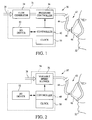
- Fig. 1 schematically illustrates an exemplary embodiment of a pressure support system 30 according to the principles of the present invention.
- Pressure support system 30 includes a gas flow generating system 31 that provides to a patient 32 a continuous flow of breathing gas at selectable pressures.
- continuous means that the pressure provided to the patient does not vary based on the patient's respiratory cycle. However, the pressure can be varied over time or over a number of patient breaths during a therapy session so that the patient is presented with different or variable pressures throughout a single therapy session.
- a conventional CPAP device such as the SOLO ® CPAP System and the Aria ® LX CPAP System, both of which are manufactured by Respironics, Inc.
- any pressure support device that provides a ramp type pressure profile also known as a "soft start", or a delay in providing the pressure, which are typically provided to allow the patient time to fall asleep under a relatively low pressure level are considered to provide a "continuous" flow of breathing gas for purposes of this invention.
- gas flow generating system 31 includes a flow generator 34 and a pressure controller 36.
- Flow generator 34 receives a supply of breathing gas 38, which can be oxygen or an oxygen mixture, including air, from any suitable source, such as a pressurized tank of gas or ambient atmosphere.
- breathing gas 38 can be oxygen or an oxygen mixture, including air
- Flow generator 34 elevates the pressure of the breathing gas to generate a flow of such gas.
- An example of a suitable flow generator is a piston, bellows or a blower. It is to be understood, that flow generator 34 can be eliminated if the supply of breathing gas flow from the gas source is at a sufficient pressure or has a sufficient flow rate so that it does not need an increase in pressure or flow to provide the desired pressure or flow to the patient.
- flow generator 34 outputs a flow of breathing gas at a substantially constant predetermined pressure during normal operation.
- a blower that operates at a constant speed is an example of a device that outputs a flow of breathing gas at a substantially constant predetermined pressure during normal operation.
- the flow generating system includes pressure controller 36 to control the final pressure of gas exiting flow generating system 31 and provided to the patient, so that the flow of breathing gas can be supplied to the patient at selectable pressures or flow rates.
- suitable pressure controllers include a valve, such as a sleeve or poppet valve, that exhausts gas from the patient circuit or a combination of valves associated with the with patient circuit that arranged to control the pressure in the patient circuit.
- U.S. Patent No. 5,694,923 to Hete et al. discloses an example of a dual poppet valve system suitable for use as pressure controller 36.
- Pressure controller 36 operates under the control of a controller 40, which is preferably a processor that is capable of receiving data and/or commands and provides a control signal to pressure controller 36 based thereon to cause the desired pressure or flow of breathing gas to be provided to the patient.
- Controller 40 can be in the same physical housing as flow generator 34 and/or pressure controller 36 or at a location remote therefrom. In the latter case, a suitable communication link and communication protocol must be provided so that the controller can accurately, reliably and securely communicate with the pressure controller.
- Pressure support system 30 also includes a patient interface assembly 42 operatively coupled to gas flow generating system 31 to communicate the flow of breathing gas to an airway of patient 32.
- patient interface assembly 42 a patient circuit that carries the flow of breathing gas from the gas flow generator to a patient interface device 46.
- a typical patient circuit includes a single flexible conduit 44 that couples to the gas flow generating system to carry the flow of breathing gas to the patient interface device.
- Patient interface device 46 is any appliance, such as a nasal mask, nasal/oral mask, total face mask, nasal cannula, endotracheal tube, or tracheal tube, suitable for communicating a supply of breathing gas to the airway of a patient.
- patient interface device 46 and/or conduit 44 also include a suitable exhaust port 48 for exhausting breathing gas from patient interface assembly 42 during expiration.
- Exhaust port 88 is preferably a passive exhaust port in the form of a continuously open port that imposes a flow restriction on the exhaust gas to permit control of the pressure of gas within the patient interface assembly 42, including providing positive end expiratory pressure (PEEP) to the patient.
- PEEP positive end expiratory pressure
- exhaust port 48 can be an active exhaust port that assumes different configurations to control the rate exhaust from the patient interface assembly depending on its configuration.
- a heater such as a heater, humidifier, temperature sensor, pressure sensor, flow sensor, humidity sensor, capnometer, bacteria filter, microphone or other device that measures, monitors, adjusts and/or controls the flow of gas to the patient or that monitors the patient, can be provided in or connected to the flexible conduit.
- controller 40 in gas flow generating system 31 includes a clock 50 that measures at least daily time increments.
- Clock 50 can be built into controller 40 or separate therefrom so that it functions independent of the operation of controller 40.
- clock 50 it is preferable that clock 50 have a dedicated power supply so that the clock will continue to run even when the pressure support system is off to keep an accurate time measurement.
- the timing functions of clock 50 can also be accomplished using a clock source, rather than an actual clock.
- a clock source such as global positioning system (GPS) signals, radio frequency signals, and information provided on computer networks, such as the world wide web, that provide a clocking function.
- GPS global positioning system
- radio frequency signals such as radio frequency signals
- computer networks such as the world wide web
- These signals can be used by the pressure generating system as a clock source to measure the elapse of time or the amount of time of operation of the pressure support system.
- the present invention also contemplates using any of these clock sources to check and/or maintain the accuracy of clock 50.
- Gas flow generating system 31 further includes an input/output device 52 that communicates with controller 40 so that data and or commands can be provided to the controller.
- the controller can provide information to the user. Examples of suitable input/output devices include switches, a keypad, dials, a touchscreen, and LCD or LED displays.
- the present invention also contemplates that information can be communicated between the controller and a remote control device, either wirelessly or via a hardwire to allow for remote operation and/or control of the pressure support system.
- FIG. 2 A slightly different alternative embodiment of a pressure support system 30' according to the principles of the present invention is illustrated in Fig. 2 .
- the primary difference between pressure support system 30' of Fig. 2 and pressure support system 30 of Fig. 1 is in the configuration of the gas flow generating system.
- gas flow generating system 54 does not include a separate flow generator and pressure controller, as is the case with gas flow generating system 31 of Fig. 1 .
- the two functions performed by the flow generator and pressure controller are performed by a single variable speed blower 56, which includes a variable speed motor driving a blower.
- Controller 40 controls the speed of the motor, thereby directly controlling the speed of the blower, and, hence, the pressure of the flow of breathing gas output by the gas flow generating system, i.e., without the need for additional pressure or flow control elements in the patient circuit.
- the present invention contemplates providing one of more feedback elements in patient interface assembly 42, pressure controller 36, flow generator 34 or variable speed blower 54 that provide a feedback signal to controller 40 so that the controller can accurately control the pressure or flow of gas provided to the patient.
- a flow transducer that measures the flow of breathing gas to the patient such as a mass flow sensor, for example, or a pressure transducer that measures the pressure of breathing gas in patient interface assembly 42, such as a pneumatach device, for example, can be used to measure and control the pressure or flow of the gas provided to the patient with great accuracy.
- controller 40 causes gas flow generating system 31 or 54 to output a continuous pressure during each therapy session. Normally, a therapy session takes place at night while the patient sleeps. During the course of the therapy session, the patient is provided with a continuous positive airway pressure at a current pressure level P current .
- controller 40 automatically increases the current pressure level P current to be applied to the patient during each therapy session so that the pressure applied to the patient on one day is slightly higher by a predetermined incremental amount ⁇ p than the pressure applied to the patient on the previous day.
- the controller automatically increases P current by a predetermined amount over a number of daily therapy sessions.
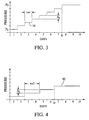
- Fig. 3 illustrates an example of how the controller automatically changes the pressure provided to the patient according to the present invention.
- waveform 58 illustrates the current pressure P current provided to the patient during successive therapy sessions, where a new therapy session takes place each day.
- Fig. 3 appears to show the therapy session taking place throughout the entire day, it is to be understood that in most cases, the therapy session only takes place for at least several hours each night.
- the treatment regimen begins with the patient being provided a continuous positive pressure P 1 in an initial therapy session on day one (1).
- the controller increments the pressure level provided to the patient by an amount ⁇ p, so that in the next therapy session following the elapse of this predetermined number of days, the current pressure level P current is increased by incremental amount ⁇ p.
- n is equal to 1 day, so that the gas flow generating system increases the pressure provided to the patient in each therapy session taking place on subsequent days.
- n is equal to 2 days, so that the gas flow generating system increases the pressure provided to the patient in therapy sessions that take place after two days have elapsed.
- the controller continues to increase the pressure provided to the patient every n days until either a total number of days D pass or until the pressure provided to the patient reaches the final pressure P 2 .
- the present invention contemplates that the values for the initial pressure P 1 , final pressure P 2 , number of days n after which the pressure is increased by an incremental amount, the total number of days D over which the pressure transitions from initial pressure P 1 to the final pressure P 2 , and the incremental amount ⁇ p can be set or altered manually via the input/out device or automatically. Allowing these variables to be set manually provides a great degree of flexibility in setting and controlling the pressure versus days/therapy sessions curve so that relatively large number of different curves can be provided to the patient. Setting one or more, or even all of these parameters in advance, however, greatly simplifies the operation of the pressure support device.
- the pressure curve provided to the patient is as shown in Fig. 3 , which is a generally linear, stair-step curve 58, wherein the pressure provided to the patient increases by an incremental amount ⁇ p each day, i.e., each therapy session if the therapy sessions take place on separate days, and the amount of each incremental increase remains constant during the duration D in which the pressure is increased from the initial pressure P 1 to final pressure P 2 .
- This curve can be set in advance.
- the starting and final pressures and/or duration D can be set in advance or set for each patient. It should be further understood, that the number of days n and the incremental amount ⁇ p need not remain constant over the course of the pressure increasing time period so that other curves, such as an exponential, square root, or sine curve, can be provided.
- Fig. 5 illustrates an example of how the present invention provides the pressure curve 58 of Fig. 3 .
- the manufacturer, user, or caregiver sets the initial pressure P 1 , final pressure P 2 and the number of days D over which to increment the initial pressure level P 1 to the final pressure level P 2 .
- these parameters are entered into the controller via input/output device 52 by the caregiver. Thereafter, the controller and/or input/output device are locked out to prevent unauthorized changing of these parameters.
- controller 40 sets a counter N to zero (0) in step 66.
- N is incremented by 1 in step 72. Thereafter, the controller sets the current pressure level P current to be provided to the patient in step 70. Because N was incremented by one in step 70, the pressure provided to the patient if one day has elapsed, is increased by one incremental amount ⁇ p.
- the controller determines whether N, which is a running count of the number of days since the therapy was initiated, corresponds to D, which is the total number of days over which the pressure was to be increased from the initial pressure to the final pressure. If N does not equal D in step 72, the above-described process repeats beginning at step 68.
- the controller uses actual dates to keep track of the succession of days following initiation of the pressure support therapy.
- controller 40 in step 66 reads the current date from clock 50 and sets this date as day zero.
- step 68 the controllers reads the clock each time the pressure support device is turned on and determines whether the current day is the same as the day set in step 66. If so, the current pressure P current is not incremented from the previous value. If the current date is the next day, assuming n was set to 1 day as shown in step 68 in Fig. 5 , the current pressure P current is determined by incrementing the previous pressure by one incremental amount.
- the controller determines if the current date is one day greater than the previous day, and, if so, increases the current pressure by one incremental amount until the final pressure P 2 or total number of days D is reached.
- n is set to less than one, i.e., 0.5, the controller determines if the current time/date is at least 12 hours later than the previous time a therapy session was initiated.
- Steps 62-66 are preferably performed the first time the pressure support is operated so that the initial pressure P 1 , final pressure P 2 , total number of days D, and incremental amount ⁇ p are established, and to set the incremental count N to zero.
- Steps 68-76 are preferably performed each time the pressure support system is operated, with the clock continually running even if the pressure support system is not activated so that the running count of the number of days since the start of the therapy is not lost. Performing steps 68-76 only at the time the pressure support system is turned on, i.e., at the start of each therapy session, ensures that an incremental increase in the therapy pressure is not provided to the patient while the patient is using the pressure support system, which can arouse the patient if the change in pressure is abrupt.
- the present invention also contemplates that steps 68-76 are continuously performed, so that when the pressure support system is turned on, it immediately determines the current pressure P current to provide to the patient.
- this may result in the controller determining that a pressure increase should be made while the system is being used. For example, if the turn over time elapses while the machine is in use, the machine may try to increase the pressure at that time, which may be disturbing to the patient.
- the present invention takes this scenario into consideration and optimizes patient comfort should this happen by causing the pressure to change gradually over a number of minutes or by delaying the pressure increase until the next time the unit is on.
- the determination of when to increment N i.e., when a day or some other number of hours has elapsed so that the pressure level should be increased (step 68), need not be based on a twenty-four hour cycle from the date of initial start-up as described above with respect to Fig. 5 .
- the running count of the number of days or hours since the initial start up can be incremented at a set time each day, preferably a time when the pressure support device is typically not in use.
- one embodiment of the present invention contemplates incrementing N each day at 12:00 pm (noon) and recalculating the current pressure P current either at that time or when the device is turned on later that night, so that the patient is provided with an incrementing pressure each night the device is used.
- the pressure support system happens to be in use at the time when the a pressure increase is to take place, the pressure increase can be made at that time in a slowly increasing ramp fashion over a number of minutes, or the pressure increase can be delayed until the pressure support unit is off and back on, so that the incremental increase does not take place until the next time the unit is on.
- n can be measuring using any time indicator, e.g., days, hours, minutes, seconds, so long as the automatic ramp function of the current pressure P current takes place over a number of days.
- the pressure provided to the patient can be incremented each time a therapy session take place, regardless of whether the therapy session takes place on the same day or a different day than the previous therapy session.
- the pressure provided to the patient is incremented by a predetermined amount ⁇ p, or is increased continuously as discussed in greater detail below, after a predetermined number n of therapy sessions have elapsed. If the pressure is to be increased after each therapy session, for example, n is set to one. Typically, a therapy session is considered to have taken place if the pressure support system is turned on and back off again after some minimum amount of time has elapsed.
- Yet another embodiment of the present invention contemplates incrementing the therapy pressure P current based on the number of hours that the pressure support system is in use.
- the predetermined number n corresponds to the number of hours the unit has been operating so that once an predetermined number n of hours have elapsed, the pressure to the patient is increased. This increase can take place immediately, preferably by slowing increasing the pressure the predetermined amount, or the pressure increase can take place in the next therapy session.
- Figs. 6A-6C are waveforms illustrating examples of the pressure versus days curves provided by the pressure support system of the present invention in the event that a therapy session is missed. In each of these figures, it is assumed that the patient failed to perform the therapy session that would otherwise take place on day 3.
- the pressure level 78 in the therapy session on the fourth day is the same as the pressure level 80 in the therapy session on the second day, which is the day of the last therapy session.
- the pressure support system resumes the pressure provided to the patient at the level of the last therapy session.
- the pressure level at the end of D days will not equal the set final pressure P 2 , but will be reduced by two incremental amounts due to (1) the missed therapy session (day 3) and (2) the fact that the pressure provided on day 4 is the same as the last pressure level.
- the current pressure will be two pressure level increments below where it would have been had that patient not missed the therapy session.
- the present invention contemplates incrementing the total number of days D by 2 for each day missed in order to reach the final pressure P 2 .
- the present invention contemplates recalculating incremental amount ⁇ p by subtracting a current pressure 78 from the final pressure P 2 and dividing a result by a number of days remaining (D-N) until the first predetermined number of days D is reached.
- the result will be an increase in the incremental amount ⁇ p, but the final pressure P 2 will be reached in the set number of days D.
- the pressure level 82 in the therapy session on the fourth day corresponds to the pressure level 80 in the therapy session on the second day, which is the day of the last therapy session, increased by one incremental amount ⁇ p.
- the pressure support system provides the continuous flow of breathing gas to the patient at the pressure level that the patient would have received on the day missed.
- the pressure level at the end of D days will not equal the set final pressure P 2 , but will be reduced by one incremental amount due to the missed therapy session (day 3).
- the present invention contemplates incrementing the total number of days D by 1 for each day missed in order to reach the final pressure P 2 .
- the present invention contemplates recalculating incremental amount ⁇ p by subtracting a current pressure 82 from said final pressure P 2 and dividing a result by a number of days remaining (D-N) until said first predetermined number of days D is reached.
- the result will be an increase in the incremental amount Ap, but the final pressure P 2 will be reached in the set number of days D.
- the pressure level 84 in the therapy session on the fourth day corresponds to the pressure level 80 in the therapy session on the second day, which is the day of the last therapy session, increased by two incremental amount ⁇ p.
- the pressure support system ignores the fact that the patient did not receive a pressure support therapy on day three and outputs a pressure on day four as if the patient did receive the therapy on day three.
- neither the total number of days D nor the incremental amount ⁇ p need to be readjusted to account for the missed therapy session.
- Fig. 7 illustrates a pressure curve 90 showing the pressure provided to the patient over a number days, where 1) the therapy pressure, i.e., the current pressure P current , to be provided to the patient, increases by an amount ⁇ p each day, and 2) the instantaneous pressure provided to the patient during the course of each therapy session, i.e., each day, is ramped from a low pressure 92 to the therapy pressure 94, P current , for that day.
- the therapy sessions shown in Fig. 7 are considered to begin at 10:00 pm and last until 6:00 am the next morning.
- the present invention contemplates initiating the therapy at a pressure of 2 cmH 2 O at the start of each therapy session with a 20 minute ramp from the initial pressure of 2 cm H 2 O to the therapy pressure for that day. If the therapy pressure, i.e., the current pressure, P current, to be provided to the patient during that session is 2 cmH 2 O no ramp function is performed. This is show by viewing pressure curve 90 for day 1 in Fig. 7 . In later therapy sessions, however, as the daily therapy pressure is increase by the predetermined amount ⁇ p, a ramping of the pressure from initial pressure 92 to the therapy pressure 94 (P current ) takes place.
- the slope of the individual ramp functions will likewise increase, assuming the duration of these ramp functions remain unchanged.
- the present invention contemplates also controlling the duration of the individual ramp functions over the course of the therapy sessions to maximize the comfort of the patient during each therapy session. For example, the duration of the ramp function provided at the outset of each therapy session can be increased as the number of therapy sessions increase to ensure that the patient is not presented with too rapid of an increase in pressure during the period of the ramp.
- the pressure provided to the patient is incremented by a predetermined discrete amount ⁇ p after a certain period of time n or after n therapy sessions.
- the present invention also contemplates continuously, rather than incrementally, increasing the therapy pressure, P current, provided to the patient during a therapy session. As in the previous embodiments, this continuous increase can take place of over a number of days D or until a final therapy pressure P 2 is reached.
- Fig. 8 illustrates an example of such a continuous increase in the current therapy pressure.
- Curve 96 in Fig. 8 represents the pressure provided to the patient over a number of days. More specifically, 5 days are shown in this figure. In each therapy session (days 1-5), the therapy pressure 98 at the start of the therapy session is lower than the therapy pressure 100 at the end with the instantaneous therapy pressure 102, P current , increasing continuously during each therapy session. As shown, the therapy pressure increases over a number of days in a relatively linear fashion. The present invention, contemplates, however, that this increase need not be linear. Instead, as with the previous embodiments, the multiple-day pressure increase can be, for example, exponential, parabolic or sinusoidal shaped.
- Fig. 9 illustrates a pressure curve 104 showing such a combination, which is essentially a combination of the pressure curves from Figs. 7 and 8 .
- the pressure curve provided to the patient has two distinct portions. First portion 108 corresponds to a pressure ramp of Fig.
- Second portion 110 corresponds to the therapy pressure P current , which, in this embodiment, is itself increasing as discussed above with respect to Fig. 8 .
- a further embodiment of the present invention contemplates providing a "reverse" ramp cycle beginning near the end of the therapy session so that the pressure level decreases from the current pressure level to a final low pressure level so that near the time the patient is waking up, he or she is not being provided the relatively higher P current pressure level. It is also known to delay providing the pressure to the patient altogether for some period of time.
- a reset function can be provided, which, when activated, immediately reduces the pressure provided to the patient. After a suitable reset period, the pressure provided to the patient resumes at the level it was at prior to the reset, the operating level P current or another ramp function can be implemented.
- the present invention contemplates that other conventional functions associated with pressure support therapies can be provided in the breathing gas delivery system of the present invention.
- functions include an automatic ON/OFF feature where the system turns on when the patient interface is donned by the patient and turns off when it is removed; minimum system leakage assurance that provides a relative high pressure at the start of the treatment for a short duration (either timed or based on breath count) to allow the user to adjust the patient interface device to reduce leaks; and a therapy delay function that delays operation of the unit for some duration, which can be timed or based on breath count.
- the present invention also contemplated monitoring patient compliance by monitoring and storing information regarding the use of the pressure support system, such as the amount of time that the unit was turned on and/or the amount of time patient respiratory cycles where detected, which can be done using any conventional technique.
- This information can be displayed on the input/output device and/or download for review by the caregiver using any conventional technique, including downloading data via the internet, a modem, satellite communication, telephone communication (cellular and/of landlines), and a physical exchange of a storage medium containing the compliance information.
Landscapes
- Health & Medical Sciences (AREA)
- Emergency Medicine (AREA)
- Pulmonology (AREA)
- Engineering & Computer Science (AREA)
- Anesthesiology (AREA)
- Biomedical Technology (AREA)
- Heart & Thoracic Surgery (AREA)
- Hematology (AREA)
- Life Sciences & Earth Sciences (AREA)
- Animal Behavior & Ethology (AREA)
- General Health & Medical Sciences (AREA)
- Public Health (AREA)
- Veterinary Medicine (AREA)
- Percussion Or Vibration Massage (AREA)
- Accommodation For Nursing Or Treatment Tables (AREA)
Claims (16)
- Système d'assistance par pression comprenant .(a) un moyen de génération d'écoulement de gaz (31) destiné à fournir un écoulement continu de gaz respiratoire à des niveaux de pression pouvant être sélectionnés,(b) un moyen destiné à faire communiquer l'écoulement continu de gaz respiratoire vers une voie aérienne d'un patient (42),(c) une source d'horloge ou une horloge réelle destinée à surveiller l'utilisation par un patient du système d'assistance par pression, et(d) un moyen de commande (40) destiné à déterminer si un tel patient a achevé une session de thérapie et destiné à amener le moyen de génération d'écoulement de gaz à fournir l'écoulement continu de gaz respiratoire à un tel patient, où une session de thérapie est considérée être achevée si la thérapie d'assistance par pression a été délivrée pendant une durée minimum sur la base de la source d'horloge ou de l'horloge réelle, caractérisé en ce que :le moyen de commande amène le moyen de génération d'écoulement de gaz à fournir l'écoulement continu de gaz à une première pression P1 dans une session de thérapie initiale et à augmenter la pression de l'écoulement continu du gaz respiratoire de la première pression P1 à une pression finale P2 sur un premier nombre prédéterminé n d'heures ou de jours de sorte qu'une pression actuelle Pactuelle de l'écoulement continu du gaz respiratoire fourni à un patient dans une session de thérapie en cours suivant la session de thérapie initiale soit supérieure à une pression fournie à ce patient dans une session de thérapie précédente.
- Système d'assistance par pression selon la revendication 1, dans lequel le moyen de commande augmente une pression de l'écoulement continu du gaz respiratoire fourni au patient dans des sessions de thérapie ultérieures jusqu'à ce qu'un niveau de pression finale P2 soit atteint ou qu'un nombre de jours D s'écoule.
- Système d'assistance par pression selon la revendication 1, dans lequel le moyen de commande augmente une pression de l'écoulement continu du gaz respiratoire de la première pression P1 à une pression finale P2 sur le premier nombre prédéterminé n d'heures ou de jours en amenant le moyen de génération d'écoulement de gaz à augmenter la pression de l'écoulement continu du gaz respiratoire d'une quantité incrémentale prédéterminée Δp après une ou plusieurs sessions de thérapie ou sur un premier nombre prédéterminé de jours.
- Système d'assistance par pression selon la revendication 1, dans lequel le moyen de commande augmente une pression de l'écoulement continu de gaz respiratoire de la première pression P1 à la pression finale P2 sur le premier nombre prédéterminé n d'heures ou de jours en amenant le moyen de génération d'écoulement de gaz à augmenter la pression actuelle Pactuelle de l'écoulement continu du gaz respiratoire sur une base continue au cours du fonctionnement du système d'assistance par pression.
- Système d'assistance par pression selon la revendication 1, dans lequel le moyen de commande détermine une date de début de thérapie de la session de thérapie initiale et à chaque session de thérapie ultérieure, le moyen de commande détermine, sur la base de la source d'horloge ou de l'horloge réelle, un nombre de jours qui se sont écoulés depuis la date de début de la thérapie et établit une pression à laquelle l'écoulement continu du gaz respiratoire doit être fourni au patient au cours d'une session de thérapie en cours sur la base du nombre de jours qui se sont écoulés depuis la date de début de la thérapie.
- Système d'assistance par pression selon la revendication 1, dans lequel le moyen de commande augmente une pression de l'écoulement du gaz respiratoire de la première pression P1 à la pression finale P2 sur le premier nombre prédéterminé d'heures ou de jours en amenant le moyen de génération d'écoulement de gaz à augmenter une pression de l'écoulement continu du gaz respiratoire d'une quantité incrémentale prédéterminée Δp après qu'une ou plusieurs sessions de thérapie se sont achevées.
- Système d'assistance par pression selon la revendication 6, dans lequel une augmentation de la pression de l'écoulement continu du gaz respiratoire fourni à un patient de la quantité prédéterminée Δp de la première pression à la pression finale se produit après qu'un tel patient a terminé chaque session de thérapie qui suit la session de thérapie initiale.
- Système d'assistance par pression selon la revendication 6, dans lequel le moyen de commande amène le moyen de génération d'écoulement de gaz à fournir en sortie l'écoulement continu de gaz respiratoire à une pression constante au cours d'une partie principale d'une session de thérapie.
- Système d'assistance par pression selon la revendication 6, comprenant en outre un moyen d'entrée/sortie (52) destiné à appliquer en entrée la première pression P1, la pression finale P2 et un nombre D de jours durant lesquels la pression est augmentée, où le moyen de commande établit la quantité prédéterminée Δp comme suit : Δp = (P2-P1)/D.
- Système d'assistance par pression selon la revendication 6, dans lequel le moyen de commande établit une pression actuelle Pactuelle fournie à un patient dans une session de thérapie consécutive à la session de thérapie initiale comme suit : Pactuelle = Δp * N + P1, où N est un nombre entier correspondant à un nombre de sessions de thérapie qui ont été achevées depuis la session de thérapie initiale.
- Système d'assistance par pression selon la revendication 6, dans lequel le moyen de commande amène le moyen de génération d'écoulement de gaz à fournir en sortie l'écoulement continu de gaz respiratoire à (1) un niveau de pression d'une dernière session de thérapie, ou (2) un niveau de pression d'une dernière session de thérapie augmenté de la quantité incrémentale prédéterminée Δp en réponse au fait que le moyen de commande détermine qu'une session de thérapie n'a pas été achevée lors d'un jour précédent.
- Système d'assistance par pression selon la revendication 1, dans lequel le moyen de commande amène le moyen de génération d'écoulement de gaz à fournir en sortie l'écoulement continu de gaz respiratoire à (1) un niveau de pression d'une dernière session de thérapie, ou (2) un niveau de pression d'une dernière session de thérapie augmenté de la quantité incrémentale prédéterminée Δp en réponse au fait que le moyen de commande détermine qu'une session de thérapie n'a pas été achevée lors d'un jour précédent.
- Système d'assistance par pression selon la revendication 12, dans lequel le moyen de commande augmente également le premier nombre prédéterminé n d'heures ou de jours si une session de thérapie n'a pas été achevée lors d'un jour précédent.
- Système d'assistance par pression selon la revendication 12, dans lequel le moyen de commande recalcule la quantité incrémentale prédéterminée Δp en soustrayant une pression actuelle de la pression finale P2 et en divisant un résultat par un nombre de sessions de thérapie restantes jusqu'à ce qu'un premier nombre prédéterminé de sessions de thérapie soit atteint, si une session de thérapie n'a pas été achevée lors d'un jour précédent.
- Système d'assistance par pression selon la revendication 1, dans lequel, dans une session de thérapie commune, le moyen de commande amène le moyen de génération d'écoulement de gaz à fournir en sortie l'écoulement de gaz respiratoire à une pression initiale basse et augmente la pression jusqu' à la pression actuelle Pactuelle sur un certain intervalle de temps.
- Système d'assistance par pression selon la revendication 1, dans lequel le moyen de génération d'écoulement de gaz comprend :un générateur d'écoulement (34) qui fournit en sortie un écoulement prédéterminé sensiblement constant au cours d'un fonctionnement normal, etun contrôleur de pression de gaz respiratoire (36) couplé fonctionnellement au générateur d'écoulement et au moyen de commande, où le moyen de commande de pression de gaz respiratoire fait varier la pression fournie en sortie du générateur d'écoulement sur la base d'une sortie du moyen de commande pour fournir l'écoulement continu de gaz respiratoire à une pression sélectionnée.
Applications Claiming Priority (5)
| Application Number | Priority Date | Filing Date | Title |
|---|---|---|---|
| US539386 | 1995-10-05 | ||
| US13262699P | 1999-05-05 | 1999-05-05 | |
| US132626P | 1999-05-05 | ||
| US09/539,386 US6401713B1 (en) | 1999-05-05 | 2000-03-31 | Apparatus and method of providing continuous positive airway pressure |
| PCT/US2000/011589 WO2000067827A1 (fr) | 1999-05-05 | 2000-04-28 | Appareil et procede d'apport de ventilation spontanee en pression positive continue |
Publications (3)
| Publication Number | Publication Date |
|---|---|
| EP1177006A1 EP1177006A1 (fr) | 2002-02-06 |
| EP1177006A4 EP1177006A4 (fr) | 2003-03-26 |
| EP1177006B1 true EP1177006B1 (fr) | 2008-06-11 |
Family
ID=26830568
Family Applications (1)
| Application Number | Title | Priority Date | Filing Date |
|---|---|---|---|
| EP00931974A Expired - Lifetime EP1177006B1 (fr) | 1999-05-05 | 2000-04-28 | Appareil d'apport de ventilation spontanee en pression positive continue |
Country Status (8)
| Country | Link |
|---|---|
| US (1) | US6401713B1 (fr) |
| EP (1) | EP1177006B1 (fr) |
| JP (1) | JP2002543892A (fr) |
| AU (1) | AU769636B2 (fr) |
| CA (1) | CA2369305A1 (fr) |
| DE (1) | DE60039165D1 (fr) |
| ES (1) | ES2307514T3 (fr) |
| WO (1) | WO2000067827A1 (fr) |
Families Citing this family (105)
| Publication number | Priority date | Publication date | Assignee | Title |
|---|---|---|---|---|
| US20050062609A9 (en) * | 1992-08-19 | 2005-03-24 | Lynn Lawrence A. | Pulse oximetry relational alarm system for early recognition of instability and catastrophic occurrences |
| US7758503B2 (en) | 1997-01-27 | 2010-07-20 | Lynn Lawrence A | Microprocessor system for the analysis of physiologic and financial datasets |
| US7271704B2 (en) | 1996-01-23 | 2007-09-18 | Mija Industries, Inc. | Transmission of data to emergency response personnel |
| US7188679B2 (en) * | 1996-01-23 | 2007-03-13 | Mija Industries, Inc. | Remote fire extinguisher station inspection |
| US7174783B2 (en) * | 1996-01-23 | 2007-02-13 | Mija Industries, Inc. | Remote monitoring of fluid containers |
| US7450020B2 (en) * | 1996-01-23 | 2008-11-11 | Mija Industries, Inc. | Signaling pressure detection assembly |
| US7174769B2 (en) | 1996-01-23 | 2007-02-13 | Mija Industries, Inc. | Monitoring contents of fluid containers |
| US8210047B2 (en) * | 1996-01-23 | 2012-07-03 | En-Gauge, Inc. | Remote fire extinguisher station inspection |
| US7728715B2 (en) * | 1996-01-23 | 2010-06-01 | En-Gauge, Inc. | Remote monitoring |
| US7891435B2 (en) * | 1996-01-23 | 2011-02-22 | En-Gauge, Inc. | Remote inspection of emergency equipment stations |
| US9042952B2 (en) * | 1997-01-27 | 2015-05-26 | Lawrence A. Lynn | System and method for automatic detection of a plurality of SPO2 time series pattern types |
| US9468378B2 (en) | 1997-01-27 | 2016-10-18 | Lawrence A. Lynn | Airway instability detection system and method |
| US20060155207A1 (en) * | 1997-01-27 | 2006-07-13 | Lynn Lawrence A | System and method for detection of incomplete reciprocation |
| US8932227B2 (en) | 2000-07-28 | 2015-01-13 | Lawrence A. Lynn | System and method for CO2 and oximetry integration |
| US20070191697A1 (en) * | 2006-02-10 | 2007-08-16 | Lynn Lawrence A | System and method for SPO2 instability detection and quantification |
| US6672300B1 (en) * | 1999-06-23 | 2004-01-06 | Graham Cameron Grant | Respiration assistor |
| AUPQ339099A0 (en) * | 1999-10-13 | 1999-11-04 | Resmed Limited | A humidifier |
| SE0000205D0 (sv) * | 2000-01-25 | 2000-01-25 | Siemens Elema Ab | Ventilator |
| DE10007506B4 (de) | 2000-02-18 | 2006-02-02 | Map Medizin-Technologie Gmbh | Atemgasschlauchanordnung zur Zufuhr eines Atemgases |
| US6595212B1 (en) * | 2000-04-17 | 2003-07-22 | Richard J. Arnott | Method and apparatus for maintaining airway patency |
| US6938619B1 (en) * | 2000-06-13 | 2005-09-06 | Scott Laboratories, Inc. | Mask free delivery of oxygen and ventilatory monitoring |
| US6990980B2 (en) | 2000-09-28 | 2006-01-31 | Invacare Corporation | Carbon dioxide-based Bi-level CPAP control |
| US6644310B1 (en) * | 2000-09-29 | 2003-11-11 | Mallinckrodt Inc. | Apparatus and method for providing a breathing gas employing a bi-level flow generator with an AC synchronous motor |
| US6626175B2 (en) * | 2000-10-06 | 2003-09-30 | Respironics, Inc. | Medical ventilator triggering and cycling method and mechanism |
| EP1197244A3 (fr) * | 2000-10-11 | 2002-10-23 | Micronel AG | Appareil de protection respiratoire pour dispositif de sécurité comme masque, cagoule ou vêtement de protection |
| US7574368B2 (en) | 2000-12-15 | 2009-08-11 | Ric Investments, Llc | System and method for upgrading a pressure generating system |
| US9053222B2 (en) | 2002-05-17 | 2015-06-09 | Lawrence A. Lynn | Patient safety processor |
| US6644311B1 (en) * | 2001-02-21 | 2003-11-11 | Respironics, Inc. | Monitoring fluid flow in a pressure support system |
| CA2351217C (fr) * | 2001-06-19 | 2008-12-02 | Teijin Limited | Un appareil de distribution d'oxygene gazeux a usage therapeutique |
| US6834647B2 (en) | 2001-08-07 | 2004-12-28 | Datex-Ohmeda, Inc. | Remote control and tactile feedback system for medical apparatus |
| US20030199945A1 (en) * | 2002-02-11 | 2003-10-23 | James Ciulla | Device and method for treating disordered breathing |
| US7448383B2 (en) * | 2002-03-08 | 2008-11-11 | Kaerys, S.A. | Air assistance apparatus providing fast rise and fall of pressure within one patient's breath |
| US6968842B1 (en) * | 2002-04-03 | 2005-11-29 | Ric Investments, Inc. | Measurement of a fluid parameter in a pressure support system |
| SE0201854D0 (sv) * | 2002-06-18 | 2002-06-18 | Siemens Elema Ab | Medicinsk ventilation |
| US20040226562A1 (en) * | 2002-12-06 | 2004-11-18 | Bordewick Steven S. | Blower assembly for CPAP |
| US20060249149A1 (en) * | 2003-03-17 | 2006-11-09 | Meier Joerg | Method and arrangement for the tiration of physiological measuring signals in conjunction with the observation of a patient in terms of sleep-related respiratory problems |
| EP1477199A1 (fr) * | 2003-05-15 | 2004-11-17 | Azienda Ospedaliera Pisana | Appareil pour ventilation artificielle non invasive |
| US7114497B2 (en) * | 2003-07-18 | 2006-10-03 | Acoba, Llc | Method and system of individually controlling airway pressure of a patient's nares |
| US7044129B1 (en) * | 2003-09-03 | 2006-05-16 | Ric Investments, Llc. | Pressure support system and method |
| WO2005037355A1 (fr) * | 2003-10-17 | 2005-04-28 | Resmed Limited | Procedes et appareil pour traiter une insuffisance cardiaque |
| NZ547857A (en) * | 2004-02-11 | 2010-08-27 | Resmed Ltd | Session-by-session adjustment of a device for treating sleep disordered breathing |
| US20060005834A1 (en) * | 2004-07-07 | 2006-01-12 | Acoba, Llc | Method and system of providing therapeutic gas to a patient to prevent breathing airway collapse |
| AU2012201602B2 (en) * | 2004-09-03 | 2013-08-15 | Resmed Limited | Adjustment of Target Ventilation in a Servoventilator |
| AU2005279717B2 (en) * | 2004-09-03 | 2012-02-02 | Resmed Limited | Adjustment of target ventilation in a servoventilator |
| NZ587821A (en) * | 2004-09-03 | 2012-03-30 | Resmed Ltd | Servoventilator where the ventilation is gradually increased to a target value |
| US20060174885A1 (en) * | 2005-02-08 | 2006-08-10 | Acoba, Llc | Method and related system to control applied pressure in CPAP systems |
| US20060193262A1 (en) * | 2005-02-25 | 2006-08-31 | Mcsheffrey Brendan T | Collecting and managing data at a construction site |
| US9609287B2 (en) | 2005-03-02 | 2017-03-28 | En-Gauge, Inc. | Remote monitoring |
| US8528551B2 (en) | 2005-06-14 | 2013-09-10 | Resmed Limited | Acclimatization therapy for first time users |
| EP1893265B1 (fr) | 2005-06-14 | 2013-12-04 | ResMed Limited | Appareil permettant a un patient de mieux se conformer a un traitement cpap |
| DE102006012727B4 (de) * | 2005-07-19 | 2025-06-18 | Löwenstein Medical Technology S.A. | Beatmungsgerät mit Betriebsdatenspeicher |
| US7495404B2 (en) * | 2005-08-17 | 2009-02-24 | Honeywell International Inc. | Power factor control for floating frame controller for sensorless control of synchronous machines |
| US8025052B2 (en) * | 2005-11-21 | 2011-09-27 | Ric Investments, Llc | System and method of monitoring respiratory events |
| US7706852B2 (en) * | 2006-01-30 | 2010-04-27 | Nellcor Puritan Bennett Llc | System and method for detection of unstable oxygen saturation |
| US7668579B2 (en) * | 2006-02-10 | 2010-02-23 | Lynn Lawrence A | System and method for the detection of physiologic response to stimulation |
| US7997272B2 (en) * | 2006-09-11 | 2011-08-16 | Ric Investments, Llc. | Ventilating apparatus and method enabling a patient to talk with or without a trachostomy tube check valve |
| US20080060647A1 (en) * | 2006-09-12 | 2008-03-13 | Invacare Corporation | System and method for delivering a breathing gas |
| WO2008048950A2 (fr) * | 2006-10-17 | 2008-04-24 | Resmed Limited | Dispositif pour le contrôle étagé du traitement par pression positive continue |
| CA2959267C (fr) * | 2006-11-06 | 2020-06-23 | Fisher & Paykel Healthcare Limited | Chambre et couvercle d'humidificateur integres |
| AU2022287611B2 (en) | 2006-11-06 | 2025-01-02 | Fisher & Paykel Healthcare Limited | Method and apparatus for increasing therapy compliance |
| US8490624B2 (en) * | 2006-11-13 | 2013-07-23 | Ric Investments, Llc | Patient interface with variable footprint |
| WO2009026582A1 (fr) | 2007-08-23 | 2009-02-26 | Invacare Corporation | Procédé et dispositif de réglage de la pression recherchée dans des dispositifs de pression positive pour voies respiratoires |
| US8749373B2 (en) | 2008-02-13 | 2014-06-10 | En-Gauge, Inc. | Emergency equipment power sources |
| US8981927B2 (en) * | 2008-02-13 | 2015-03-17 | En-Gauge, Inc. | Object Tracking with emergency equipment |
| US8275553B2 (en) | 2008-02-19 | 2012-09-25 | Nellcor Puritan Bennett Llc | System and method for evaluating physiological parameter data |
| US8365730B2 (en) | 2008-03-24 | 2013-02-05 | Covidien Lp | Method and system for classification of photo-plethysmographically detected respiratory effort |
| US20090247837A1 (en) * | 2008-03-27 | 2009-10-01 | Nellcor Puritan Bennett Llc | System And Method For Diagnosing Sleep Apnea |
| US8251876B2 (en) | 2008-04-22 | 2012-08-28 | Hill-Rom Services, Inc. | Breathing exercise apparatus |
| US9174016B2 (en) * | 2008-06-27 | 2015-11-03 | Koninklijke Philips N.V. | Humidifier for a breathing system |
| US8844525B2 (en) | 2008-07-25 | 2014-09-30 | Resmed Limited | Method and apparatus for detecting and treating heart failure |
| US8398555B2 (en) * | 2008-09-10 | 2013-03-19 | Covidien Lp | System and method for detecting ventilatory instability |
| AU2010293843B2 (en) | 2009-09-11 | 2014-09-11 | Koninklijke Philips Electronics N.V. | Humidifier with wireless temperature sensing |
| US9041534B2 (en) | 2011-01-26 | 2015-05-26 | En-Gauge, Inc. | Fluid container resource management |
| US8776792B2 (en) | 2011-04-29 | 2014-07-15 | Covidien Lp | Methods and systems for volume-targeted minimum pressure-control ventilation |
| CN103561806B (zh) * | 2011-06-03 | 2017-09-19 | 皇家飞利浦有限公司 | 呼吸治疗设备中的压力调节 |
| US10137264B2 (en) | 2011-07-13 | 2018-11-27 | Fisher & Paykel Healthcare Limited | Respiratory assistance apparatus |
| CA2840594C (fr) | 2011-07-13 | 2020-03-10 | Fisher & Paykel Healthcare Limited | Ensemble rotor et moteur |
| WO2013124755A1 (fr) * | 2012-02-22 | 2013-08-29 | Koninklijke Philips N.V. | Système et procédé de détermination d'une température d'interface de sujet cible sur la base d'une température de ligne de base |
| US9180271B2 (en) | 2012-03-05 | 2015-11-10 | Hill-Rom Services Pte. Ltd. | Respiratory therapy device having standard and oscillatory PEP with nebulizer |
| WO2013144827A1 (fr) * | 2012-03-30 | 2013-10-03 | Koninklijke Philips N.V. | Pression initiale pour dispositifs de traitement respiratoire |
| NZ736250A (en) * | 2012-04-13 | 2019-04-26 | ResMed Pty Ltd | Apparatus and methods for ventilatory treatment |
| US10384023B2 (en) * | 2012-08-03 | 2019-08-20 | Breathe Technologies, Inc. | Selective ramping of therapeutic pressure in a patient breathing apparatus |
| AU2013101734A4 (en) | 2012-12-18 | 2015-09-24 | Fisher & Paykel Healthcare Limited | Impeller and motor assembly |
| WO2015038666A1 (fr) * | 2013-09-10 | 2015-03-19 | Ahmad Samir S | Traitement des voies respiratoires par pression positive continue à démarrage par pression nulle |
| US9669173B2 (en) * | 2013-12-12 | 2017-06-06 | Breathe Technologies, Inc. | Continuous positive airway pressure therapy auto-titration |
| CN103961774B (zh) * | 2014-05-29 | 2016-08-24 | 哈尔滨理工大学 | 具有自动控制功能的家用吸氧器及其自动吸氧控制方法 |
| SG11201610048PA (en) * | 2014-06-04 | 2017-01-27 | Revolutionary Medical Devices Inc | Combined nasal and mouth ventilation mask |
| US20150374940A1 (en) * | 2014-06-26 | 2015-12-31 | Devilbiss Healthcare Llc | System and Method for Acclimating A New User To A Breathing Therapy Machine |
| EP3848077B1 (fr) | 2014-08-20 | 2022-11-09 | Revolutionary Medical Devices, Inc. | Masque de respiration |
| TW201615236A (zh) * | 2014-10-31 | 2016-05-01 | 台達電子工業股份有限公司 | 具有可控制氣囊的呼吸輔助設備及其氣囊控制方法 |
| USD825740S1 (en) | 2014-12-12 | 2018-08-14 | Revolutionary Medical Devices | Surgical mask |
| AU2016243801B2 (en) | 2015-04-02 | 2020-05-21 | Hill-Rom Services Pte. Ltd. | Manifold for respiratory device |
| EP3915622B1 (fr) | 2015-06-11 | 2023-09-13 | SunMed Group Holdings, LLC | Masque de ventilation |
| GB2557475B (en) | 2015-06-24 | 2021-11-03 | Fisher & Paykel Healthcare Ltd | Breathing assistance apparatus |
| US12569632B2 (en) * | 2016-06-16 | 2026-03-10 | Loewenstein Medical Technology S.A. | Respirator for APAP respiration using oscillatory pressure |
| WO2018052673A1 (fr) | 2016-09-14 | 2018-03-22 | Revolutionary Medical Devices, Inc. | Masque de ventilation |
| US11478595B2 (en) | 2016-11-02 | 2022-10-25 | Fisher & Paykel Healthcare Limited | Method of driving a form of respiratory therapy |
| USD848606S1 (en) | 2016-11-07 | 2019-05-14 | Revolutionary Medical Devices, Inc. | Surgical mask |
| US11401974B2 (en) | 2017-04-23 | 2022-08-02 | Fisher & Paykel Healthcare Limited | Breathing assistance apparatus |
| USD898188S1 (en) | 2017-11-17 | 2020-10-06 | Revolutionary Medical Devices, Inc. | Surgical mask |
| SG11202101461VA (en) | 2018-08-13 | 2021-03-30 | Fisher & Paykel Healthcare Ltd | Apparatus for use in a respiratory support system |
| JP7406558B2 (ja) * | 2018-08-24 | 2023-12-27 | アイエムティー メディカル アクチエンゲゼルシャフト | 医療装置内のアクチュエータを動作させるための方法およびそのための装置 |
| WO2020084514A1 (fr) | 2018-10-23 | 2020-04-30 | ResMed Pty Ltd | Systèmes et procédés de réglage de systèmes de cpap |
| USD937411S1 (en) | 2019-08-30 | 2021-11-30 | Fisher & Paykel Healthcare Limited | Unit end connector |
| US20230044168A1 (en) * | 2021-08-04 | 2023-02-09 | Infosys Limited | Air purifier mask and method thereof |
Family Cites Families (7)
| Publication number | Priority date | Publication date | Assignee | Title |
|---|---|---|---|---|
| US5199424A (en) | 1987-06-26 | 1993-04-06 | Sullivan Colin E | Device for monitoring breathing during sleep and control of CPAP treatment that is patient controlled |
| US5522382A (en) | 1987-06-26 | 1996-06-04 | Rescare Limited | Device and method for treating obstructed breathing having a delay/ramp feature |
| US5239995A (en) * | 1989-09-22 | 1993-08-31 | Respironics, Inc. | Sleep apnea treatment apparatus |
| US5117819A (en) * | 1990-09-10 | 1992-06-02 | Healthdyne, Inc. | Nasal positive pressure device |
| US5353788A (en) * | 1992-09-21 | 1994-10-11 | Miles Laughton E | Cardio-respiratory control and monitoring system for determining CPAP pressure for apnea treatment |
| US5682878A (en) | 1995-12-07 | 1997-11-04 | Respironics, Inc. | Start-up ramp system for CPAP system with multiple ramp shape selection |
| US5694923A (en) * | 1996-08-30 | 1997-12-09 | Respironics, Inc. | Pressure control in a blower-based ventilator |
-
2000
- 2000-03-31 US US09/539,386 patent/US6401713B1/en not_active Expired - Lifetime
- 2000-04-28 AU AU49772/00A patent/AU769636B2/en not_active Expired
- 2000-04-28 JP JP2000616851A patent/JP2002543892A/ja active Pending
- 2000-04-28 WO PCT/US2000/011589 patent/WO2000067827A1/fr not_active Ceased
- 2000-04-28 ES ES00931974T patent/ES2307514T3/es not_active Expired - Lifetime
- 2000-04-28 DE DE60039165T patent/DE60039165D1/de not_active Expired - Lifetime
- 2000-04-28 CA CA002369305A patent/CA2369305A1/fr not_active Abandoned
- 2000-04-28 EP EP00931974A patent/EP1177006B1/fr not_active Expired - Lifetime
Also Published As
| Publication number | Publication date |
|---|---|
| WO2000067827A1 (fr) | 2000-11-16 |
| EP1177006A4 (fr) | 2003-03-26 |
| DE60039165D1 (de) | 2008-07-24 |
| AU769636B2 (en) | 2004-01-29 |
| EP1177006A1 (fr) | 2002-02-06 |
| US6401713B1 (en) | 2002-06-11 |
| ES2307514T3 (es) | 2008-12-01 |
| JP2002543892A (ja) | 2002-12-24 |
| CA2369305A1 (fr) | 2000-11-16 |
| AU4977200A (en) | 2000-11-21 |
Similar Documents
| Publication | Publication Date | Title |
|---|---|---|
| EP1177006B1 (fr) | Appareil d'apport de ventilation spontanee en pression positive continue | |
| US6467477B1 (en) | Breath-based control of a therapeutic treatment | |
| US11771856B2 (en) | Acclimatization therapy for first time users | |
| AU750761B2 (en) | Determination of mask fitting pressure and correct mask fit | |
| US6041780A (en) | Pressure control for constant minute volume | |
| US6532956B2 (en) | Parameter variation for proportional assist ventilation or proportional positive airway pressure support devices | |
| US4928684A (en) | Apparatus for assisting the spontaneous respiration of a patient | |
| US6321748B1 (en) | Closed loop control in a piston ventilator | |
| US7367338B2 (en) | Method for compensating a pressure drop in a ventilator tube, ventilator and memory medium | |
| US20050284469A1 (en) | Integrated control of ventilator and nebulizer operation | |
| EP0798005A2 (fr) | Système de contrÔle adaptif pour ventilateur artificiel | |
| EP0560490A1 (fr) | Système et méthode de contrôle d'un appareil de ventilation actionné périodiquement | |
| JPH0838605A (ja) | 麻酔装置 | |
| WO2009123979A1 (fr) | Compensation de fuite de ventilateur | |
| US8789524B2 (en) | Pulse width modulated medical gas concentration control | |
| US20190160242A1 (en) | Respiratory gas supply system | |
| US7798143B1 (en) | Respiratory treatment device with patient reporting | |
| US12083275B2 (en) | Method of pressure control in a mechanical ventilator with non-proportional solenoid valves | |
| Piergeorge | Modification of the Bennett MA-1 ventilator for intermittent mandatory ventilation |
Legal Events
| Date | Code | Title | Description |
|---|---|---|---|
| PUAI | Public reference made under article 153(3) epc to a published international application that has entered the european phase |
Free format text: ORIGINAL CODE: 0009012 |
|
| 17P | Request for examination filed |
Effective date: 20011126 |
|
| AK | Designated contracting states |
Kind code of ref document: A1 Designated state(s): AT BE CH CY DE DK ES FI FR GB GR IE IT LI LU MC NL PT SE Kind code of ref document: A1 Designated state(s): DE ES FR GB IT |
|
| AX | Request for extension of the european patent |
Free format text: AL;LT;LV;MK;RO;SI |
|
| RIN1 | Information on inventor provided before grant (corrected) |
Inventor name: HILL, PETER, D. Inventor name: ESTES, MARK, C., MINI-MED CO. Inventor name: MECHLENBURG, DOUGLAS, M. |
|
| A4 | Supplementary search report drawn up and despatched |
Effective date: 20030212 |
|
| RBV | Designated contracting states (corrected) |
Designated state(s): DE ES FR GB IT |
|
| 17Q | First examination report despatched |
Effective date: 20040709 |
|
| GRAP | Despatch of communication of intention to grant a patent |
Free format text: ORIGINAL CODE: EPIDOSNIGR1 |
|
| RTI1 | Title (correction) |
Free format text: APPARATUS FOR PROVIDING CONTINUOUS POSITIVE AIRWAY PRESSURE |
|
| GRAS | Grant fee paid |
Free format text: ORIGINAL CODE: EPIDOSNIGR3 |
|
| GRAA | (expected) grant |
Free format text: ORIGINAL CODE: 0009210 |
|
| RAP1 | Party data changed (applicant data changed or rights of an application transferred) |
Owner name: RESPIRONICS, INC. |
|
| AK | Designated contracting states |
Kind code of ref document: B1 Designated state(s): DE ES FR GB IT |
|
| REG | Reference to a national code |
Ref country code: GB Ref legal event code: FG4D |
|
| REF | Corresponds to: |
Ref document number: 60039165 Country of ref document: DE Date of ref document: 20080724 Kind code of ref document: P |
|
| REG | Reference to a national code |
Ref country code: ES Ref legal event code: FG2A Ref document number: 2307514 Country of ref document: ES Kind code of ref document: T3 |
|
| PLBE | No opposition filed within time limit |
Free format text: ORIGINAL CODE: 0009261 |
|
| STAA | Information on the status of an ep patent application or granted ep patent |
Free format text: STATUS: NO OPPOSITION FILED WITHIN TIME LIMIT |
|
| 26N | No opposition filed |
Effective date: 20090312 |
|
| REG | Reference to a national code |
Ref country code: FR Ref legal event code: PLFP Year of fee payment: 17 |
|
| REG | Reference to a national code |
Ref country code: FR Ref legal event code: PLFP Year of fee payment: 18 |
|
| REG | Reference to a national code |
Ref country code: FR Ref legal event code: PLFP Year of fee payment: 19 |
|
| PGFP | Annual fee paid to national office [announced via postgrant information from national office to epo] |
Ref country code: IT Payment date: 20190419 Year of fee payment: 20 Ref country code: ES Payment date: 20190524 Year of fee payment: 20 |
|
| PGFP | Annual fee paid to national office [announced via postgrant information from national office to epo] |
Ref country code: FR Payment date: 20190426 Year of fee payment: 20 |
|
| PGFP | Annual fee paid to national office [announced via postgrant information from national office to epo] |
Ref country code: DE Payment date: 20190628 Year of fee payment: 20 Ref country code: GB Payment date: 20190429 Year of fee payment: 20 |
|
| REG | Reference to a national code |
Ref country code: DE Ref legal event code: R071 Ref document number: 60039165 Country of ref document: DE |
|
| REG | Reference to a national code |
Ref country code: GB Ref legal event code: PE20 Expiry date: 20200427 |
|
| REG | Reference to a national code |
Ref country code: ES Ref legal event code: FD2A Effective date: 20200804 |
|
| PG25 | Lapsed in a contracting state [announced via postgrant information from national office to epo] |
Ref country code: GB Free format text: LAPSE BECAUSE OF EXPIRATION OF PROTECTION Effective date: 20200427 |
|
| PG25 | Lapsed in a contracting state [announced via postgrant information from national office to epo] |
Ref country code: ES Free format text: LAPSE BECAUSE OF EXPIRATION OF PROTECTION Effective date: 20200429 |