EP1179190B1 - Traitement de surface de dispositifs medicaux a l'aide de polymere hydrophiles reactifs - Google Patents
Traitement de surface de dispositifs medicaux a l'aide de polymere hydrophiles reactifs Download PDFInfo
- Publication number
- EP1179190B1 EP1179190B1 EP20000928986 EP00928986A EP1179190B1 EP 1179190 B1 EP1179190 B1 EP 1179190B1 EP 20000928986 EP20000928986 EP 20000928986 EP 00928986 A EP00928986 A EP 00928986A EP 1179190 B1 EP1179190 B1 EP 1179190B1
- Authority
- EP
- European Patent Office
- Prior art keywords
- hydrophilic
- reactive
- medical device
- polymer
- monomers
- Prior art date
- Legal status (The legal status is an assumption and is not a legal conclusion. Google has not performed a legal analysis and makes no representation as to the accuracy of the status listed.)
- Expired - Lifetime
Links
- 229920001477 hydrophilic polymer Polymers 0.000 title claims abstract description 28
- 238000004381 surface treatment Methods 0.000 title abstract description 18
- 229920001296 polysiloxane Polymers 0.000 claims abstract description 67
- 238000006243 chemical reaction Methods 0.000 claims abstract description 44
- 238000000034 method Methods 0.000 claims abstract description 28
- 238000000576 coating method Methods 0.000 claims abstract description 24
- 239000011248 coating agent Substances 0.000 claims abstract description 23
- 230000000295 complement effect Effects 0.000 claims abstract description 17
- 239000000178 monomer Substances 0.000 claims description 104
- 229920013730 reactive polymer Polymers 0.000 claims description 84
- -1 poly(alkyleneoxy) Polymers 0.000 claims description 68
- 239000000203 mixture Substances 0.000 claims description 50
- 229920000642 polymer Polymers 0.000 claims description 47
- 239000000463 material Substances 0.000 claims description 37
- WHNPOQXWAMXPTA-UHFFFAOYSA-N 3-methylbut-2-enamide Chemical compound CC(C)=CC(N)=O WHNPOQXWAMXPTA-UHFFFAOYSA-N 0.000 claims description 31
- 125000004432 carbon atom Chemical group C* 0.000 claims description 30
- 229910052757 nitrogen Inorganic materials 0.000 claims description 26
- 239000000017 hydrogel Substances 0.000 claims description 25
- IEJPPSMHUUQABK-UHFFFAOYSA-N 2,4-diphenyl-4h-1,3-oxazol-5-one Chemical group O=C1OC(C=2C=CC=CC=2)=NC1C1=CC=CC=C1 IEJPPSMHUUQABK-UHFFFAOYSA-N 0.000 claims description 23
- 239000004593 Epoxy Chemical group 0.000 claims description 14
- VOZRXNHHFUQHIL-UHFFFAOYSA-N glycidyl methacrylate Chemical compound CC(=C)C(=O)OCC1CO1 VOZRXNHHFUQHIL-UHFFFAOYSA-N 0.000 claims description 12
- 150000003926 acrylamides Chemical class 0.000 claims description 11
- 230000002209 hydrophobic effect Effects 0.000 claims description 11
- 125000000217 alkyl group Chemical group 0.000 claims description 10
- 150000001412 amines Chemical group 0.000 claims description 10
- CERQOIWHTDAKMF-UHFFFAOYSA-N Methacrylic acid Chemical compound CC(=C)C(O)=O CERQOIWHTDAKMF-UHFFFAOYSA-N 0.000 claims description 9
- 239000012948 isocyanate Substances 0.000 claims description 9
- 150000002513 isocyanates Chemical class 0.000 claims description 9
- WHNWPMSKXPGLAX-UHFFFAOYSA-N N-Vinyl-2-pyrrolidone Chemical compound C=CN1CCCC1=O WHNWPMSKXPGLAX-UHFFFAOYSA-N 0.000 claims description 8
- 150000001732 carboxylic acid derivatives Chemical group 0.000 claims description 7
- 125000002887 hydroxy group Chemical group [H]O* 0.000 claims description 7
- 150000002734 metacrylic acid derivatives Chemical class 0.000 claims description 7
- OKTJSMMVPCPJKN-UHFFFAOYSA-N Carbon Chemical compound [C] OKTJSMMVPCPJKN-UHFFFAOYSA-N 0.000 claims description 6
- 125000003118 aryl group Chemical group 0.000 claims description 6
- 229910052799 carbon Inorganic materials 0.000 claims description 6
- 125000006413 ring segment Chemical group 0.000 claims description 6
- 125000000753 cycloalkyl group Chemical group 0.000 claims description 5
- 125000004435 hydrogen atom Chemical group [H]* 0.000 claims description 5
- 239000002253 acid Substances 0.000 claims description 4
- 229920001002 functional polymer Polymers 0.000 claims description 4
- 150000003951 lactams Chemical class 0.000 claims description 4
- 150000003141 primary amines Chemical class 0.000 claims description 4
- 150000008064 anhydrides Chemical class 0.000 claims description 3
- 125000002837 carbocyclic group Chemical group 0.000 claims description 3
- 239000007795 chemical reaction product Substances 0.000 claims description 3
- 125000005842 heteroatom Chemical group 0.000 claims description 3
- 229910052717 sulfur Inorganic materials 0.000 claims description 3
- OFNISBHGPNMTMS-UHFFFAOYSA-N 3-methylideneoxolane-2,5-dione Chemical compound C=C1CC(=O)OC1=O OFNISBHGPNMTMS-UHFFFAOYSA-N 0.000 claims description 2
- MUWZQYSJSCDUDT-UHFFFAOYSA-N 4,4-dimethyl-2-prop-1-en-2-yl-1,3-oxazol-5-one Chemical compound CC(=C)C1=NC(C)(C)C(=O)O1 MUWZQYSJSCDUDT-UHFFFAOYSA-N 0.000 claims description 2
- HRPVXLWXLXDGHG-UHFFFAOYSA-N Acrylamide Chemical compound NC(=O)C=C HRPVXLWXLXDGHG-UHFFFAOYSA-N 0.000 claims description 2
- FPYJFEHAWHCUMM-UHFFFAOYSA-N maleic anhydride Chemical compound O=C1OC(=O)C=C1 FPYJFEHAWHCUMM-UHFFFAOYSA-N 0.000 claims description 2
- 230000000379 polymerizing effect Effects 0.000 claims description 2
- 239000000126 substance Substances 0.000 claims description 2
- 230000000153 supplemental effect Effects 0.000 claims description 2
- 150000008065 acid anhydrides Chemical class 0.000 claims 3
- 150000003335 secondary amines Chemical class 0.000 claims 2
- VWKUYFAVQQIRCU-UHFFFAOYSA-N 3-isocyano-2-methylprop-2-enoic acid Chemical compound OC(=O)C(C)=C[N+]#[C-] VWKUYFAVQQIRCU-UHFFFAOYSA-N 0.000 claims 1
- 125000002947 alkylene group Chemical group 0.000 claims 1
- 238000004040 coloring Methods 0.000 claims 1
- 125000003055 glycidyl group Chemical group C(C1CO1)* 0.000 claims 1
- 230000005660 hydrophilic surface Effects 0.000 claims 1
- 239000007943 implant Substances 0.000 abstract description 4
- IJGRMHOSHXDMSA-UHFFFAOYSA-N Atomic nitrogen Chemical compound N#N IJGRMHOSHXDMSA-UHFFFAOYSA-N 0.000 description 45
- XLYOFNOQVPJJNP-UHFFFAOYSA-N water Substances O XLYOFNOQVPJJNP-UHFFFAOYSA-N 0.000 description 39
- RTZKZFJDLAIYFH-UHFFFAOYSA-N Diethyl ether Chemical compound CCOCC RTZKZFJDLAIYFH-UHFFFAOYSA-N 0.000 description 35
- 239000000243 solution Substances 0.000 description 32
- 239000000758 substrate Substances 0.000 description 31
- YXFVVABEGXRONW-UHFFFAOYSA-N Toluene Chemical compound CC1=CC=CC=C1 YXFVVABEGXRONW-UHFFFAOYSA-N 0.000 description 24
- 238000004630 atomic force microscopy Methods 0.000 description 16
- OKKJLVBELUTLKV-UHFFFAOYSA-N Methanol Chemical compound OC OKKJLVBELUTLKV-UHFFFAOYSA-N 0.000 description 15
- 229920001577 copolymer Polymers 0.000 description 14
- 238000000605 extraction Methods 0.000 description 14
- LFQSCWFLJHTTHZ-UHFFFAOYSA-N Ethanol Chemical compound CCO LFQSCWFLJHTTHZ-UHFFFAOYSA-N 0.000 description 13
- 230000015572 biosynthetic process Effects 0.000 description 13
- XKRFYHLGVUSROY-UHFFFAOYSA-N Argon Chemical compound [Ar] XKRFYHLGVUSROY-UHFFFAOYSA-N 0.000 description 12
- 238000004833 X-ray photoelectron spectroscopy Methods 0.000 description 12
- OZAIFHULBGXAKX-UHFFFAOYSA-N 2-(2-cyanopropan-2-yldiazenyl)-2-methylpropanenitrile Chemical compound N#CC(C)(C)N=NC(C)(C)C#N OZAIFHULBGXAKX-UHFFFAOYSA-N 0.000 description 11
- 150000002632 lipids Chemical class 0.000 description 11
- 239000000523 sample Substances 0.000 description 11
- WYURNTSHIVDZCO-UHFFFAOYSA-N Tetrahydrofuran Chemical compound C1CCOC1 WYURNTSHIVDZCO-UHFFFAOYSA-N 0.000 description 10
- QVGXLLKOCUKJST-UHFFFAOYSA-N atomic oxygen Chemical compound [O] QVGXLLKOCUKJST-UHFFFAOYSA-N 0.000 description 10
- 239000001301 oxygen Substances 0.000 description 10
- 229910052760 oxygen Inorganic materials 0.000 description 10
- 238000003786 synthesis reaction Methods 0.000 description 10
- KFZMGEQAYNKOFK-UHFFFAOYSA-N Isopropanol Chemical compound CC(C)O KFZMGEQAYNKOFK-UHFFFAOYSA-N 0.000 description 9
- 238000000151 deposition Methods 0.000 description 9
- 230000008021 deposition Effects 0.000 description 9
- 239000003085 diluting agent Substances 0.000 description 9
- 238000007142 ring opening reaction Methods 0.000 description 9
- 239000002904 solvent Substances 0.000 description 9
- 229940088644 n,n-dimethylacrylamide Drugs 0.000 description 8
- YLGYACDQVQQZSW-UHFFFAOYSA-N n,n-dimethylprop-2-enamide Chemical compound CN(C)C(=O)C=C YLGYACDQVQQZSW-UHFFFAOYSA-N 0.000 description 8
- KCOPAESEGCGTKM-UHFFFAOYSA-N 1,3-oxazol-4-one Chemical compound O=C1COC=N1 KCOPAESEGCGTKM-UHFFFAOYSA-N 0.000 description 7
- 150000001298 alcohols Chemical class 0.000 description 7
- FQPSGWSUVKBHSU-UHFFFAOYSA-N methacrylamide Chemical compound CC(=C)C(N)=O FQPSGWSUVKBHSU-UHFFFAOYSA-N 0.000 description 7
- ZWEHNKRNPOVVGH-UHFFFAOYSA-N 2-Butanone Chemical compound CCC(C)=O ZWEHNKRNPOVVGH-UHFFFAOYSA-N 0.000 description 6
- 229910052786 argon Inorganic materials 0.000 description 6
- 239000001257 hydrogen Substances 0.000 description 6
- 229910052739 hydrogen Inorganic materials 0.000 description 6
- 239000003999 initiator Substances 0.000 description 6
- 238000003754 machining Methods 0.000 description 6
- ZWRUINPWMLAQRD-UHFFFAOYSA-N nonan-1-ol Chemical compound CCCCCCCCCO ZWRUINPWMLAQRD-UHFFFAOYSA-N 0.000 description 6
- 238000006116 polymerization reaction Methods 0.000 description 6
- 239000011541 reaction mixture Substances 0.000 description 6
- 238000005070 sampling Methods 0.000 description 6
- 239000007787 solid Substances 0.000 description 6
- 238000001228 spectrum Methods 0.000 description 6
- 238000003860 storage Methods 0.000 description 6
- QKPKBBFSFQAMIY-UHFFFAOYSA-N 2-ethenyl-4,4-dimethyl-1,3-oxazol-5-one Chemical compound CC1(C)N=C(C=C)OC1=O QKPKBBFSFQAMIY-UHFFFAOYSA-N 0.000 description 5
- LYCAIKOWRPUZTN-UHFFFAOYSA-N Ethylene glycol Chemical compound OCCO LYCAIKOWRPUZTN-UHFFFAOYSA-N 0.000 description 5
- 238000004458 analytical method Methods 0.000 description 5
- 238000010907 mechanical stirring Methods 0.000 description 5
- 150000003254 radicals Chemical class 0.000 description 5
- 238000003828 vacuum filtration Methods 0.000 description 5
- 125000000391 vinyl group Chemical group [H]C([*])=C([H])[H] 0.000 description 5
- 229920002554 vinyl polymer Polymers 0.000 description 5
- DQRFCVHLNUNVPL-UHFFFAOYSA-N 2h-1,3-oxazol-5-one Chemical compound O=C1OCN=C1 DQRFCVHLNUNVPL-UHFFFAOYSA-N 0.000 description 4
- HEDRZPFGACZZDS-UHFFFAOYSA-N Chloroform Chemical compound ClC(Cl)Cl HEDRZPFGACZZDS-UHFFFAOYSA-N 0.000 description 4
- WOBHKFSMXKNTIM-UHFFFAOYSA-N Hydroxyethyl methacrylate Chemical compound CC(=C)C(=O)OCCO WOBHKFSMXKNTIM-UHFFFAOYSA-N 0.000 description 4
- 229920003171 Poly (ethylene oxide) Polymers 0.000 description 4
- XUIMIQQOPSSXEZ-UHFFFAOYSA-N Silicon Chemical compound [Si] XUIMIQQOPSSXEZ-UHFFFAOYSA-N 0.000 description 4
- NIXOWILDQLNWCW-UHFFFAOYSA-N acrylic acid group Chemical group C(C=C)(=O)O NIXOWILDQLNWCW-UHFFFAOYSA-N 0.000 description 4
- 150000001875 compounds Chemical class 0.000 description 4
- 238000004817 gas chromatography Methods 0.000 description 4
- 125000002496 methyl group Chemical group [H]C([H])([H])* 0.000 description 4
- 230000003287 optical effect Effects 0.000 description 4
- 230000008569 process Effects 0.000 description 4
- 239000000047 product Substances 0.000 description 4
- 239000008213 purified water Substances 0.000 description 4
- 229910052710 silicon Inorganic materials 0.000 description 4
- 239000010703 silicon Substances 0.000 description 4
- 230000001954 sterilising effect Effects 0.000 description 4
- 238000004659 sterilization and disinfection Methods 0.000 description 4
- 229920002818 (Hydroxyethyl)methacrylate Polymers 0.000 description 3
- VAYTZRYEBVHVLE-UHFFFAOYSA-N 1,3-dioxol-2-one Chemical compound O=C1OC=CO1 VAYTZRYEBVHVLE-UHFFFAOYSA-N 0.000 description 3
- ZNJXRXXJPIFFAO-UHFFFAOYSA-N 2,2,3,3,4,4,5,5-octafluoropentyl 2-methylprop-2-enoate Chemical compound CC(=C)C(=O)OCC(F)(F)C(F)(F)C(F)(F)C(F)F ZNJXRXXJPIFFAO-UHFFFAOYSA-N 0.000 description 3
- UURVHRGPGCBHIC-UHFFFAOYSA-N 3-(ethenoxycarbonylamino)propanoic acid 4-[[[[[[[[[[[[[[[[[[[[[[[[[[[4-ethenoxycarbonyloxybutyl(dimethyl)silyl]oxy-dimethylsilyl]oxy-dimethylsilyl]oxy-dimethylsilyl]oxy-dimethylsilyl]oxy-dimethylsilyl]oxy-dimethylsilyl]oxy-dimethylsilyl]oxy-dimethylsilyl]oxy-dimethylsilyl]oxy-dimethylsilyl]oxy-dimethylsilyl]oxy-dimethylsilyl]oxy-dimethylsilyl]oxy-dimethylsilyl]oxy-dimethylsilyl]oxy-dimethylsilyl]oxy-dimethylsilyl]oxy-dimethylsilyl]oxy-dimethylsilyl]oxy-dimethylsilyl]oxy-dimethylsilyl]oxy-dimethylsilyl]oxy-dimethylsilyl]oxy-dimethylsilyl]oxy-dimethylsilyl]oxy-dimethylsilyl]butyl ethenyl carbonate 1-ethenylpyrrolidin-2-one ethenyl N-[3-tris(trimethylsilyloxy)silylpropyl]carbamate Chemical compound C=CN1CCCC1=O.OC(=O)CCNC(=O)OC=C.C[Si](C)(C)O[Si](CCCNC(=O)OC=C)(O[Si](C)(C)C)O[Si](C)(C)C.C[Si](C)(CCCCOC(=O)OC=C)O[Si](C)(C)O[Si](C)(C)O[Si](C)(C)O[Si](C)(C)O[Si](C)(C)O[Si](C)(C)O[Si](C)(C)O[Si](C)(C)O[Si](C)(C)O[Si](C)(C)O[Si](C)(C)O[Si](C)(C)O[Si](C)(C)O[Si](C)(C)O[Si](C)(C)O[Si](C)(C)O[Si](C)(C)O[Si](C)(C)O[Si](C)(C)O[Si](C)(C)O[Si](C)(C)O[Si](C)(C)O[Si](C)(C)O[Si](C)(C)O[Si](C)(C)O[Si](C)(C)CCCCOC(=O)OC=C UURVHRGPGCBHIC-UHFFFAOYSA-N 0.000 description 3
- UPULOMQHYQDNNT-UHFFFAOYSA-N 5h-1,3-oxazol-2-one Chemical group O=C1OCC=N1 UPULOMQHYQDNNT-UHFFFAOYSA-N 0.000 description 3
- CSCPPACGZOOCGX-UHFFFAOYSA-N Acetone Chemical compound CC(C)=O CSCPPACGZOOCGX-UHFFFAOYSA-N 0.000 description 3
- WEVYAHXRMPXWCK-UHFFFAOYSA-N Acetonitrile Chemical compound CC#N WEVYAHXRMPXWCK-UHFFFAOYSA-N 0.000 description 3
- JOYRKODLDBILNP-UHFFFAOYSA-N Ethyl urethane Chemical compound CCOC(N)=O JOYRKODLDBILNP-UHFFFAOYSA-N 0.000 description 3
- PXGOKWXKJXAPGV-UHFFFAOYSA-N Fluorine Chemical compound FF PXGOKWXKJXAPGV-UHFFFAOYSA-N 0.000 description 3
- 238000005033 Fourier transform infrared spectroscopy Methods 0.000 description 3
- UFHFLCQGNIYNRP-UHFFFAOYSA-N Hydrogen Chemical compound [H][H] UFHFLCQGNIYNRP-UHFFFAOYSA-N 0.000 description 3
- CERQOIWHTDAKMF-UHFFFAOYSA-M Methacrylate Chemical compound CC(=C)C([O-])=O CERQOIWHTDAKMF-UHFFFAOYSA-M 0.000 description 3
- ZMXDDKWLCZADIW-UHFFFAOYSA-N N,N-Dimethylformamide Chemical compound CN(C)C=O ZMXDDKWLCZADIW-UHFFFAOYSA-N 0.000 description 3
- 239000002202 Polyethylene glycol Substances 0.000 description 3
- 239000004743 Polypropylene Substances 0.000 description 3
- XSQUKJJJFZCRTK-UHFFFAOYSA-N Urea Chemical compound NC(N)=O XSQUKJJJFZCRTK-UHFFFAOYSA-N 0.000 description 3
- 230000002411 adverse Effects 0.000 description 3
- 125000001931 aliphatic group Chemical group 0.000 description 3
- 230000008901 benefit Effects 0.000 description 3
- 230000005540 biological transmission Effects 0.000 description 3
- 239000003054 catalyst Substances 0.000 description 3
- 238000012512 characterization method Methods 0.000 description 3
- 239000003795 chemical substances by application Substances 0.000 description 3
- 229910052731 fluorine Inorganic materials 0.000 description 3
- 239000011737 fluorine Substances 0.000 description 3
- 238000009472 formulation Methods 0.000 description 3
- 238000004128 high performance liquid chromatography Methods 0.000 description 3
- 229930195733 hydrocarbon Natural products 0.000 description 3
- 150000002430 hydrocarbons Chemical class 0.000 description 3
- 238000007689 inspection Methods 0.000 description 3
- 230000010354 integration Effects 0.000 description 3
- 230000004048 modification Effects 0.000 description 3
- 238000012986 modification Methods 0.000 description 3
- VLKZOEOYAKHREP-UHFFFAOYSA-N n-Hexane Chemical compound CCCCCC VLKZOEOYAKHREP-UHFFFAOYSA-N 0.000 description 3
- 239000003505 polymerization initiator Substances 0.000 description 3
- 229920001155 polypropylene Polymers 0.000 description 3
- 239000002244 precipitate Substances 0.000 description 3
- 238000002360 preparation method Methods 0.000 description 3
- 238000011002 quantification Methods 0.000 description 3
- 230000009257 reactivity Effects 0.000 description 3
- 230000001235 sensitizing effect Effects 0.000 description 3
- 238000001542 size-exclusion chromatography Methods 0.000 description 3
- 238000009736 wetting Methods 0.000 description 3
- LIKMAJRDDDTEIG-UHFFFAOYSA-N 1-hexene Chemical compound CCCCC=C LIKMAJRDDDTEIG-UHFFFAOYSA-N 0.000 description 2
- RYPKRALMXUUNKS-UHFFFAOYSA-N 2-Hexene Natural products CCCC=CC RYPKRALMXUUNKS-UHFFFAOYSA-N 0.000 description 2
- KGIGUEBEKRSTEW-UHFFFAOYSA-N 2-vinylpyridine Chemical compound C=CC1=CC=CC=N1 KGIGUEBEKRSTEW-UHFFFAOYSA-N 0.000 description 2
- BESKSSIEODQWBP-UHFFFAOYSA-N 3-tris(trimethylsilyloxy)silylpropyl 2-methylprop-2-enoate Chemical compound CC(=C)C(=O)OCCC[Si](O[Si](C)(C)C)(O[Si](C)(C)C)O[Si](C)(C)C BESKSSIEODQWBP-UHFFFAOYSA-N 0.000 description 2
- VHYFNPMBLIVWCW-UHFFFAOYSA-N 4-Dimethylaminopyridine Chemical compound CN(C)C1=CC=NC=C1 VHYFNPMBLIVWCW-UHFFFAOYSA-N 0.000 description 2
- KFDVPJUYSDEJTH-UHFFFAOYSA-N 4-ethenylpyridine Chemical compound C=CC1=CC=NC=C1 KFDVPJUYSDEJTH-UHFFFAOYSA-N 0.000 description 2
- NLZUEZXRPGMBCV-UHFFFAOYSA-N Butylhydroxytoluene Chemical compound CC1=CC(C(C)(C)C)=C(O)C(C(C)(C)C)=C1 NLZUEZXRPGMBCV-UHFFFAOYSA-N 0.000 description 2
- 239000004971 Cross linker Substances 0.000 description 2
- IAZDPXIOMUYVGZ-UHFFFAOYSA-N Dimethylsulphoxide Chemical compound CS(C)=O IAZDPXIOMUYVGZ-UHFFFAOYSA-N 0.000 description 2
- IAYPIBMASNFSPL-UHFFFAOYSA-N Ethylene oxide Chemical compound C1CO1 IAYPIBMASNFSPL-UHFFFAOYSA-N 0.000 description 2
- PEDCQBHIVMGVHV-UHFFFAOYSA-N Glycerine Chemical compound OCC(O)CO PEDCQBHIVMGVHV-UHFFFAOYSA-N 0.000 description 2
- FLIACVVOZYBSBS-UHFFFAOYSA-N Methyl palmitate Chemical compound CCCCCCCCCCCCCCCC(=O)OC FLIACVVOZYBSBS-UHFFFAOYSA-N 0.000 description 2
- 239000004793 Polystyrene Substances 0.000 description 2
- PPBRXRYQALVLMV-UHFFFAOYSA-N Styrene Chemical compound C=CC1=CC=CC=C1 PPBRXRYQALVLMV-UHFFFAOYSA-N 0.000 description 2
- GSEJCLTVZPLZKY-UHFFFAOYSA-N Triethanolamine Chemical compound OCCN(CCO)CCO GSEJCLTVZPLZKY-UHFFFAOYSA-N 0.000 description 2
- QYKIQEUNHZKYBP-UHFFFAOYSA-N Vinyl ether Chemical class C=COC=C QYKIQEUNHZKYBP-UHFFFAOYSA-N 0.000 description 2
- CIUQDSCDWFSTQR-UHFFFAOYSA-N [C]1=CC=CC=C1 Chemical compound [C]1=CC=CC=C1 CIUQDSCDWFSTQR-UHFFFAOYSA-N 0.000 description 2
- 150000001252 acrylic acid derivatives Chemical class 0.000 description 2
- 125000002877 alkyl aryl group Chemical group 0.000 description 2
- 125000005119 alkyl cycloalkyl group Chemical group 0.000 description 2
- 235000001014 amino acid Nutrition 0.000 description 2
- 150000001413 amino acids Chemical class 0.000 description 2
- 239000000010 aprotic solvent Substances 0.000 description 2
- 239000011324 bead Substances 0.000 description 2
- 125000000484 butyl group Chemical group [H]C([*])([H])C([H])([H])C([H])([H])C([H])([H])[H] 0.000 description 2
- 235000010354 butylated hydroxytoluene Nutrition 0.000 description 2
- 239000003153 chemical reaction reagent Substances 0.000 description 2
- HVYWMOMLDIMFJA-DPAQBDIFSA-N cholesterol Chemical compound C1C=C2C[C@@H](O)CC[C@]2(C)[C@@H]2[C@@H]1[C@@H]1CC[C@H]([C@H](C)CCCC(C)C)[C@@]1(C)CC2 HVYWMOMLDIMFJA-DPAQBDIFSA-N 0.000 description 2
- 238000007796 conventional method Methods 0.000 description 2
- 239000002537 cosmetic Substances 0.000 description 2
- JHIVVAPYMSGYDF-UHFFFAOYSA-N cyclohexanone Chemical compound O=C1CCCCC1 JHIVVAPYMSGYDF-UHFFFAOYSA-N 0.000 description 2
- ZQMIGQNCOMNODD-UHFFFAOYSA-N diacetyl peroxide Chemical compound CC(=O)OOC(C)=O ZQMIGQNCOMNODD-UHFFFAOYSA-N 0.000 description 2
- PRAKJMSDJKAYCZ-UHFFFAOYSA-N dodecahydrosqualene Natural products CC(C)CCCC(C)CCCC(C)CCCCC(C)CCCC(C)CCCC(C)C PRAKJMSDJKAYCZ-UHFFFAOYSA-N 0.000 description 2
- 230000000694 effects Effects 0.000 description 2
- 150000002170 ethers Chemical class 0.000 description 2
- 238000001704 evaporation Methods 0.000 description 2
- 230000008020 evaporation Effects 0.000 description 2
- VZCYOOQTPOCHFL-OWOJBTEDSA-L fumarate(2-) Chemical class [O-]C(=O)\C=C\C([O-])=O VZCYOOQTPOCHFL-OWOJBTEDSA-L 0.000 description 2
- 238000005227 gel permeation chromatography Methods 0.000 description 2
- 150000004676 glycans Chemical class 0.000 description 2
- KWIUHFFTVRNATP-UHFFFAOYSA-N glycine betaine Chemical compound C[N+](C)(C)CC([O-])=O KWIUHFFTVRNATP-UHFFFAOYSA-N 0.000 description 2
- 238000010438 heat treatment Methods 0.000 description 2
- ZSIAUFGUXNUGDI-UHFFFAOYSA-N hexan-1-ol Chemical compound CCCCCCO ZSIAUFGUXNUGDI-UHFFFAOYSA-N 0.000 description 2
- 230000036571 hydration Effects 0.000 description 2
- 238000006703 hydration reaction Methods 0.000 description 2
- 125000004356 hydroxy functional group Chemical group O* 0.000 description 2
- 238000000338 in vitro Methods 0.000 description 2
- 230000001965 increasing effect Effects 0.000 description 2
- 239000004615 ingredient Substances 0.000 description 2
- 150000002576 ketones Chemical class 0.000 description 2
- 150000002688 maleic acid derivatives Chemical class 0.000 description 2
- 238000004519 manufacturing process Methods 0.000 description 2
- CRVGTESFCCXCTH-UHFFFAOYSA-N methyl diethanolamine Chemical compound OCCN(C)CCO CRVGTESFCCXCTH-UHFFFAOYSA-N 0.000 description 2
- 239000005017 polysaccharide Substances 0.000 description 2
- 229920001282 polysaccharide Polymers 0.000 description 2
- 229920002223 polystyrene Polymers 0.000 description 2
- 238000000926 separation method Methods 0.000 description 2
- 238000004528 spin coating Methods 0.000 description 2
- 238000003756 stirring Methods 0.000 description 2
- YLQBMQCUIZJEEH-UHFFFAOYSA-N tetrahydrofuran Natural products C=1C=COC=1 YLQBMQCUIZJEEH-UHFFFAOYSA-N 0.000 description 2
- 150000003573 thiols Chemical class 0.000 description 2
- UMGDCJDMYOKAJW-UHFFFAOYSA-N thiourea Chemical compound NC(N)=S UMGDCJDMYOKAJW-UHFFFAOYSA-N 0.000 description 2
- VZCYOOQTPOCHFL-UHFFFAOYSA-N trans-butenedioic acid Natural products OC(=O)C=CC(O)=O VZCYOOQTPOCHFL-UHFFFAOYSA-N 0.000 description 2
- LVLANIHJQRZTPY-UHFFFAOYSA-N vinyl carbamate Chemical compound NC(=O)OC=C LVLANIHJQRZTPY-UHFFFAOYSA-N 0.000 description 2
- 125000002348 vinylic group Chemical group 0.000 description 2
- YYGNTYWPHWGJRM-UHFFFAOYSA-N (6E,10E,14E,18E)-2,6,10,15,19,23-hexamethyltetracosa-2,6,10,14,18,22-hexaene Chemical compound CC(C)=CCCC(C)=CCCC(C)=CCCC=C(C)CCC=C(C)CCC=C(C)C YYGNTYWPHWGJRM-UHFFFAOYSA-N 0.000 description 1
- 0 *C(*)(*=C(C(N)=C*)O1)C1=O Chemical compound *C(*)(*=C(C(N)=C*)O1)C1=O 0.000 description 1
- UOCLXMDMGBRAIB-UHFFFAOYSA-N 1,1,1-trichloroethane Chemical compound CC(Cl)(Cl)Cl UOCLXMDMGBRAIB-UHFFFAOYSA-N 0.000 description 1
- RYHBNJHYFVUHQT-UHFFFAOYSA-N 1,4-Dioxane Chemical compound C1COCCO1 RYHBNJHYFVUHQT-UHFFFAOYSA-N 0.000 description 1
- PQUXFUBNSYCQAL-UHFFFAOYSA-N 1-(2,3-difluorophenyl)ethanone Chemical compound CC(=O)C1=CC=CC(F)=C1F PQUXFUBNSYCQAL-UHFFFAOYSA-N 0.000 description 1
- NFTVTXIQFYRSHF-UHFFFAOYSA-N 1-(dimethylamino)ethyl prop-2-enoate Chemical group CN(C)C(C)OC(=O)C=C NFTVTXIQFYRSHF-UHFFFAOYSA-N 0.000 description 1
- HWCLMKDWXUGDKL-UHFFFAOYSA-N 1-ethenoxy-2-ethoxyethane Chemical compound CCOCCOC=C HWCLMKDWXUGDKL-UHFFFAOYSA-N 0.000 description 1
- BDHGFCVQWMDIQX-UHFFFAOYSA-N 1-ethenyl-2-methylimidazole Chemical compound CC1=NC=CN1C=C BDHGFCVQWMDIQX-UHFFFAOYSA-N 0.000 description 1
- PIZHFBODNLEQBL-UHFFFAOYSA-N 2,2-diethoxy-1-phenylethanone Chemical compound CCOC(OCC)C(=O)C1=CC=CC=C1 PIZHFBODNLEQBL-UHFFFAOYSA-N 0.000 description 1
- STMDPCBYJCIZOD-UHFFFAOYSA-N 2-(2,4-dinitroanilino)-4-methylpentanoic acid Chemical compound CC(C)CC(C(O)=O)NC1=CC=C([N+]([O-])=O)C=C1[N+]([O-])=O STMDPCBYJCIZOD-UHFFFAOYSA-N 0.000 description 1
- SMZOUWXMTYCWNB-UHFFFAOYSA-N 2-(2-methoxy-5-methylphenyl)ethanamine Chemical compound COC1=CC=C(C)C=C1CCN SMZOUWXMTYCWNB-UHFFFAOYSA-N 0.000 description 1
- PRAMZQXXPOLCIY-UHFFFAOYSA-N 2-(2-methylprop-2-enoyloxy)ethanesulfonic acid Chemical compound CC(=C)C(=O)OCCS(O)(=O)=O PRAMZQXXPOLCIY-UHFFFAOYSA-N 0.000 description 1
- IEPUABWMJBVAAN-UHFFFAOYSA-N 2-[4-[[4-[4-[2-(2-methylprop-2-enoyloxy)ethyl]anilino]-9,10-dioxoanthracen-1-yl]amino]phenyl]ethyl 2-methylprop-2-enoate Chemical compound C1=CC(CCOC(=O)C(=C)C)=CC=C1NC(C=1C(=O)C2=CC=CC=C2C(=O)C=11)=CC=C1NC1=CC=C(CCOC(=O)C(C)=C)C=C1 IEPUABWMJBVAAN-UHFFFAOYSA-N 0.000 description 1
- NPPNUGUVBUJRAB-UHFFFAOYSA-N 2-[tert-butyl(dimethyl)silyl]oxyethyl ethenyl carbonate Chemical compound CC(C)(C)[Si](C)(C)OCCOC(=O)OC=C NPPNUGUVBUJRAB-UHFFFAOYSA-N 0.000 description 1
- UEMUGSCYFVPXGF-UHFFFAOYSA-N 2-but-3-enyl-4-methyl-4h-1,3-oxazol-5-one Chemical compound CC1N=C(CCC=C)OC1=O UEMUGSCYFVPXGF-UHFFFAOYSA-N 0.000 description 1
- JWCDUUFOAZFFMX-UHFFFAOYSA-N 2-ethenoxy-n,n-dimethylethanamine Chemical compound CN(C)CCOC=C JWCDUUFOAZFFMX-UHFFFAOYSA-N 0.000 description 1
- FPPNONHSLAHRLW-UHFFFAOYSA-N 2-ethenyl-4,4-diethyl-1,3-oxazol-5-one Chemical compound CCC1(CC)N=C(C=C)OC1=O FPPNONHSLAHRLW-UHFFFAOYSA-N 0.000 description 1
- SQZSACNFCGPRRH-UHFFFAOYSA-N 2-ethenyl-4-methyl-4-nonyl-1,3-oxazol-5-one Chemical compound CCCCCCCCCC1(C)N=C(C=C)OC1=O SQZSACNFCGPRRH-UHFFFAOYSA-N 0.000 description 1
- DPODNGMCVCYGFM-UHFFFAOYSA-N 2-ethenyl-4-methyl-4h-1,3-oxazol-5-one Chemical compound CC1N=C(C=C)OC1=O DPODNGMCVCYGFM-UHFFFAOYSA-N 0.000 description 1
- HXVJTLFCFCSHHM-UHFFFAOYSA-N 2-ethenyl-4h-1,3-oxazol-5-one Chemical compound C=CC1=NCC(=O)O1 HXVJTLFCFCSHHM-UHFFFAOYSA-N 0.000 description 1
- WDQMWEYDKDCEHT-UHFFFAOYSA-N 2-ethylhexyl 2-methylprop-2-enoate Chemical compound CCCCC(CC)COC(=O)C(C)=C WDQMWEYDKDCEHT-UHFFFAOYSA-N 0.000 description 1
- 229940095095 2-hydroxyethyl acrylate Drugs 0.000 description 1
- 229940044192 2-hydroxyethyl methacrylate Drugs 0.000 description 1
- OMIGHNLMNHATMP-UHFFFAOYSA-N 2-hydroxyethyl prop-2-enoate Chemical compound OCCOC(=O)C=C OMIGHNLMNHATMP-UHFFFAOYSA-N 0.000 description 1
- RIWRBSMFKVOJMN-UHFFFAOYSA-N 2-methyl-1-phenylpropan-2-ol Chemical compound CC(C)(O)CC1=CC=CC=C1 RIWRBSMFKVOJMN-UHFFFAOYSA-N 0.000 description 1
- IXPWKHNDQICVPZ-UHFFFAOYSA-N 2-methylhex-1-en-3-yne Chemical compound CCC#CC(C)=C IXPWKHNDQICVPZ-UHFFFAOYSA-N 0.000 description 1
- ZKYCLDTVJCJYIB-UHFFFAOYSA-N 2-methylidenedecanamide Chemical compound CCCCCCCCC(=C)C(N)=O ZKYCLDTVJCJYIB-UHFFFAOYSA-N 0.000 description 1
- QKYWQDWJDQHBPI-UHFFFAOYSA-N 2-prop-1-en-2-yl-4h-1,3-oxazol-5-one Chemical compound CC(=C)C1=NCC(=O)O1 QKYWQDWJDQHBPI-UHFFFAOYSA-N 0.000 description 1
- SLJFKNONPLNAPF-UHFFFAOYSA-N 3-Vinyl-7-oxabicyclo[4.1.0]heptane Chemical compound C1C(C=C)CCC2OC21 SLJFKNONPLNAPF-UHFFFAOYSA-N 0.000 description 1
- SNCMCDMEYCLVBO-UHFFFAOYSA-N 3-aminopropyl 2-methylprop-2-enoate Chemical compound CC(=C)C(=O)OCCCN SNCMCDMEYCLVBO-UHFFFAOYSA-N 0.000 description 1
- HQGFOVSJARUBLL-UHFFFAOYSA-N 4,4-dibutyl-2-ethenyl-1,3-oxazol-5-one Chemical compound CCCCC1(CCCC)N=C(C=C)OC1=O HQGFOVSJARUBLL-UHFFFAOYSA-N 0.000 description 1
- FBXDMYKUMYUYHT-UHFFFAOYSA-N 4,4-dimethyl-2-prop-1-enyl-1,3-oxazol-5-one Chemical compound CC=CC1=NC(C)(C)C(=O)O1 FBXDMYKUMYUYHT-UHFFFAOYSA-N 0.000 description 1
- HIPFXTMAGCIYHP-UHFFFAOYSA-N 4,4-diphenyl-2-prop-1-en-2-yl-1,3-oxazol-5-one Chemical compound O=C1OC(C(=C)C)=NC1(C=1C=CC=CC=1)C1=CC=CC=C1 HIPFXTMAGCIYHP-UHFFFAOYSA-N 0.000 description 1
- PAWWCZYDPHQUEE-UHFFFAOYSA-N 4-benzyl-4-methyl-2-prop-1-en-2-yl-1,3-oxazol-5-one Chemical compound O=C1OC(C(=C)C)=NC1(C)CC1=CC=CC=C1 PAWWCZYDPHQUEE-UHFFFAOYSA-N 0.000 description 1
- LEPHQAPDYFHROC-UHFFFAOYSA-N 4-butyl-4-methyl-2-prop-1-en-2-yl-1,3-oxazol-5-one Chemical compound CCCCC1(C)N=C(C(C)=C)OC1=O LEPHQAPDYFHROC-UHFFFAOYSA-N 0.000 description 1
- KNSKADMRFWMSRW-UHFFFAOYSA-N 4-ethenyl-1-methylpiperidine Chemical compound CN1CCC(C=C)CC1 KNSKADMRFWMSRW-UHFFFAOYSA-N 0.000 description 1
- KVDIYEZFYBIHRN-UHFFFAOYSA-N 4-methyl-2-prop-1-en-2-yl-4h-1,3-oxazol-5-one Chemical compound CC1N=C(C(C)=C)OC1=O KVDIYEZFYBIHRN-UHFFFAOYSA-N 0.000 description 1
- URDUKROSCCHPQL-UHFFFAOYSA-N 4-methyl-4-phenyl-2-prop-1-en-2-yl-1,3-oxazol-5-one Chemical compound O=C1OC(C(=C)C)=NC1(C)C1=CC=CC=C1 URDUKROSCCHPQL-UHFFFAOYSA-N 0.000 description 1
- VJOWMORERYNYON-UHFFFAOYSA-N 5-ethenyl-2-methylpyridine Chemical compound CC1=CC=C(C=C)C=N1 VJOWMORERYNYON-UHFFFAOYSA-N 0.000 description 1
- NLHHRLWOUZZQLW-UHFFFAOYSA-N Acrylonitrile Chemical compound C=CC#N NLHHRLWOUZZQLW-UHFFFAOYSA-N 0.000 description 1
- 206010067484 Adverse reaction Diseases 0.000 description 1
- 239000004342 Benzoyl peroxide Substances 0.000 description 1
- OMPJBNCRMGITSC-UHFFFAOYSA-N Benzoylperoxide Chemical group C=1C=CC=CC=1C(=O)OOC(=O)C1=CC=CC=C1 OMPJBNCRMGITSC-UHFFFAOYSA-N 0.000 description 1
- LSNNMFCWUKXFEE-UHFFFAOYSA-M Bisulfite Chemical compound OS([O-])=O LSNNMFCWUKXFEE-UHFFFAOYSA-M 0.000 description 1
- XDTMQSROBMDMFD-UHFFFAOYSA-N Cyclohexane Chemical compound C1CCCCC1 XDTMQSROBMDMFD-UHFFFAOYSA-N 0.000 description 1
- XTHFKEDIFFGKHM-UHFFFAOYSA-N Dimethoxyethane Chemical compound COCCOC XTHFKEDIFFGKHM-UHFFFAOYSA-N 0.000 description 1
- 102000004190 Enzymes Human genes 0.000 description 1
- 108090000790 Enzymes Proteins 0.000 description 1
- VZCYOOQTPOCHFL-OWOJBTEDSA-N Fumaric acid Chemical compound OC(=O)\C=C\C(O)=O VZCYOOQTPOCHFL-OWOJBTEDSA-N 0.000 description 1
- 206010061218 Inflammation Diseases 0.000 description 1
- 239000005058 Isophorone diisocyanate Substances 0.000 description 1
- QNAYBMKLOCPYGJ-REOHCLBHSA-N L-alanine Chemical compound C[C@H](N)C(O)=O QNAYBMKLOCPYGJ-REOHCLBHSA-N 0.000 description 1
- YIVJZNGAASQVEM-UHFFFAOYSA-N Lauroyl peroxide Chemical compound CCCCCCCCCCCC(=O)OOC(=O)CCCCCCCCCCC YIVJZNGAASQVEM-UHFFFAOYSA-N 0.000 description 1
- 239000007993 MOPS buffer Substances 0.000 description 1
- XNCNNDVCAUWAIT-UHFFFAOYSA-N Methyl heptanoate Chemical compound CCCCCCC(=O)OC XNCNNDVCAUWAIT-UHFFFAOYSA-N 0.000 description 1
- 206010030113 Oedema Diseases 0.000 description 1
- 229910019142 PO4 Inorganic materials 0.000 description 1
- 239000004698 Polyethylene Substances 0.000 description 1
- 229920000954 Polyglycolide Polymers 0.000 description 1
- FAPWRFPIFSIZLT-UHFFFAOYSA-M Sodium chloride Chemical compound [Na+].[Cl-] FAPWRFPIFSIZLT-UHFFFAOYSA-M 0.000 description 1
- 229920002125 Sokalan® Polymers 0.000 description 1
- QAOWNCQODCNURD-UHFFFAOYSA-L Sulfate Chemical compound [O-]S([O-])(=O)=O QAOWNCQODCNURD-UHFFFAOYSA-L 0.000 description 1
- LSNNMFCWUKXFEE-UHFFFAOYSA-N Sulfurous acid Chemical compound OS(O)=O LSNNMFCWUKXFEE-UHFFFAOYSA-N 0.000 description 1
- BHEOSNUKNHRBNM-UHFFFAOYSA-N Tetramethylsqualene Natural products CC(=C)C(C)CCC(=C)C(C)CCC(C)=CCCC=C(C)CCC(C)C(=C)CCC(C)C(C)=C BHEOSNUKNHRBNM-UHFFFAOYSA-N 0.000 description 1
- 239000007983 Tris buffer Substances 0.000 description 1
- 229920006311 Urethane elastomer Polymers 0.000 description 1
- XTXRWKRVRITETP-UHFFFAOYSA-N Vinyl acetate Chemical compound CC(=O)OC=C XTXRWKRVRITETP-UHFFFAOYSA-N 0.000 description 1
- BZHJMEDXRYGGRV-UHFFFAOYSA-N Vinyl chloride Chemical compound ClC=C BZHJMEDXRYGGRV-UHFFFAOYSA-N 0.000 description 1
- UKLDJPRMSDWDSL-UHFFFAOYSA-L [dibutyl(dodecanoyloxy)stannyl] dodecanoate Chemical compound CCCCCCCCCCCC(=O)O[Sn](CCCC)(CCCC)OC(=O)CCCCCCCCCCC UKLDJPRMSDWDSL-UHFFFAOYSA-L 0.000 description 1
- 238000009825 accumulation Methods 0.000 description 1
- 230000002378 acidificating effect Effects 0.000 description 1
- 150000007513 acids Chemical class 0.000 description 1
- 150000001253 acrylic acids Chemical class 0.000 description 1
- 125000003647 acryloyl group Chemical group O=C([*])C([H])=C([H])[H] 0.000 description 1
- 239000011149 active material Substances 0.000 description 1
- 230000010933 acylation Effects 0.000 description 1
- 238000005917 acylation reaction Methods 0.000 description 1
- 125000004423 acyloxy group Chemical group 0.000 description 1
- 239000000654 additive Substances 0.000 description 1
- 230000006838 adverse reaction Effects 0.000 description 1
- 235000004279 alanine Nutrition 0.000 description 1
- 125000003545 alkoxy group Chemical group 0.000 description 1
- 125000003282 alkyl amino group Chemical group 0.000 description 1
- XYLMUPLGERFSHI-UHFFFAOYSA-N alpha-Methylstyrene Chemical compound CC(=C)C1=CC=CC=C1 XYLMUPLGERFSHI-UHFFFAOYSA-N 0.000 description 1
- 230000004075 alteration Effects 0.000 description 1
- 238000005576 amination reaction Methods 0.000 description 1
- 125000003277 amino group Chemical group 0.000 description 1
- 238000013459 approach Methods 0.000 description 1
- 239000007864 aqueous solution Substances 0.000 description 1
- 238000000089 atomic force micrograph Methods 0.000 description 1
- 235000019400 benzoyl peroxide Nutrition 0.000 description 1
- 125000001797 benzyl group Chemical group [H]C1=C([H])C([H])=C(C([H])=C1[H])C([H])([H])* 0.000 description 1
- 229920000249 biocompatible polymer Polymers 0.000 description 1
- 229920001400 block copolymer Polymers 0.000 description 1
- 239000007975 buffered saline Substances 0.000 description 1
- DTGWMJJKPLJKQD-UHFFFAOYSA-N butyl 2,2-dimethylpropaneperoxoate Chemical group CCCCOOC(=O)C(C)(C)C DTGWMJJKPLJKQD-UHFFFAOYSA-N 0.000 description 1
- 239000006227 byproduct Substances 0.000 description 1
- 239000004202 carbamide Substances 0.000 description 1
- 125000001951 carbamoylamino group Chemical group C(N)(=O)N* 0.000 description 1
- 239000011203 carbon fibre reinforced carbon Substances 0.000 description 1
- 150000003857 carboxamides Chemical class 0.000 description 1
- 125000005518 carboxamido group Chemical group 0.000 description 1
- 125000003178 carboxy group Chemical group [H]OC(*)=O 0.000 description 1
- 125000002843 carboxylic acid group Chemical group 0.000 description 1
- 150000001735 carboxylic acids Chemical class 0.000 description 1
- 239000012159 carrier gas Substances 0.000 description 1
- 238000005266 casting Methods 0.000 description 1
- 238000006555 catalytic reaction Methods 0.000 description 1
- FZFAMSAMCHXGEF-UHFFFAOYSA-N chloro formate Chemical compound ClOC=O FZFAMSAMCHXGEF-UHFFFAOYSA-N 0.000 description 1
- 125000001309 chloro group Chemical group Cl* 0.000 description 1
- 235000012000 cholesterol Nutrition 0.000 description 1
- 239000013068 control sample Substances 0.000 description 1
- 238000007334 copolymerization reaction Methods 0.000 description 1
- 210000004087 cornea Anatomy 0.000 description 1
- 239000003431 cross linking reagent Substances 0.000 description 1
- 238000005520 cutting process Methods 0.000 description 1
- 125000000113 cyclohexyl group Chemical group [H]C1([H])C([H])([H])C([H])([H])C([H])(*)C([H])([H])C1([H])[H] 0.000 description 1
- XJOBOFWTZOKMOH-UHFFFAOYSA-N decanoyl decaneperoxoate Chemical compound CCCCCCCCCC(=O)OOC(=O)CCCCCCCCC XJOBOFWTZOKMOH-UHFFFAOYSA-N 0.000 description 1
- 230000007547 defect Effects 0.000 description 1
- 230000032798 delamination Effects 0.000 description 1
- 239000012975 dibutyltin dilaurate Substances 0.000 description 1
- 150000005690 diesters Chemical class 0.000 description 1
- IEPRKVQEAMIZSS-AATRIKPKSA-N diethyl fumarate Chemical compound CCOC(=O)\C=C\C(=O)OCC IEPRKVQEAMIZSS-AATRIKPKSA-N 0.000 description 1
- XXJWXESWEXIICW-UHFFFAOYSA-N diethylene glycol monoethyl ether Chemical compound CCOCCOCCO XXJWXESWEXIICW-UHFFFAOYSA-N 0.000 description 1
- 229940075557 diethylene glycol monoethyl ether Drugs 0.000 description 1
- 125000005442 diisocyanate group Chemical group 0.000 description 1
- LDCRTTXIJACKKU-ONEGZZNKSA-N dimethyl fumarate Chemical compound COC(=O)\C=C\C(=O)OC LDCRTTXIJACKKU-ONEGZZNKSA-N 0.000 description 1
- 229960004419 dimethyl fumarate Drugs 0.000 description 1
- LDCRTTXIJACKKU-ARJAWSKDSA-N dimethyl maleate Chemical compound COC(=O)\C=C/C(=O)OC LDCRTTXIJACKKU-ARJAWSKDSA-N 0.000 description 1
- 229910001873 dinitrogen Inorganic materials 0.000 description 1
- 150000002009 diols Chemical class 0.000 description 1
- VTIIJXUACCWYHX-UHFFFAOYSA-L disodium;carboxylatooxy carbonate Chemical group [Na+].[Na+].[O-]C(=O)OOC([O-])=O VTIIJXUACCWYHX-UHFFFAOYSA-L 0.000 description 1
- 238000000921 elemental analysis Methods 0.000 description 1
- 125000003700 epoxy group Chemical group 0.000 description 1
- 150000002148 esters Chemical class 0.000 description 1
- KZJNAICCMJTRKF-UHFFFAOYSA-N ethenyl 2-trimethylsilylethyl carbonate Chemical compound C[Si](C)(C)CCOC(=O)OC=C KZJNAICCMJTRKF-UHFFFAOYSA-N 0.000 description 1
- RWEUKWCZWYHIQA-UHFFFAOYSA-N ethenyl 3-trimethylsilylpropyl carbonate Chemical compound C[Si](C)(C)CCCOC(=O)OC=C RWEUKWCZWYHIQA-UHFFFAOYSA-N 0.000 description 1
- NDXTZJDCEOXFOP-UHFFFAOYSA-N ethenyl 3-tris(trimethylsilyloxy)silylpropyl carbonate Chemical compound C[Si](C)(C)O[Si](O[Si](C)(C)C)(O[Si](C)(C)C)CCCOC(=O)OC=C NDXTZJDCEOXFOP-UHFFFAOYSA-N 0.000 description 1
- BHBDVHVTNOYHLK-UHFFFAOYSA-N ethenyl 3-tris(trimethylsilyloxy)silylpropylsulfanylformate Chemical compound C[Si](C)(C)O[Si](O[Si](C)(C)C)(O[Si](C)(C)C)CCCSC(=O)OC=C BHBDVHVTNOYHLK-UHFFFAOYSA-N 0.000 description 1
- ILHMPZFVDISGNP-UHFFFAOYSA-N ethenyl n-[3-tris(trimethylsilyloxy)silylpropyl]carbamate Chemical compound C[Si](C)(C)O[Si](O[Si](C)(C)C)(O[Si](C)(C)C)CCCNC(=O)OC=C ILHMPZFVDISGNP-UHFFFAOYSA-N 0.000 description 1
- AFSIMBWBBOJPJG-UHFFFAOYSA-N ethenyl octadecanoate Chemical compound CCCCCCCCCCCCCCCCCC(=O)OC=C AFSIMBWBBOJPJG-UHFFFAOYSA-N 0.000 description 1
- UIWXSTHGICQLQT-UHFFFAOYSA-N ethenyl propanoate Chemical compound CCC(=O)OC=C UIWXSTHGICQLQT-UHFFFAOYSA-N 0.000 description 1
- KRAZQXAPJAYYJI-UHFFFAOYSA-N ethenyl trimethylsilylmethyl carbonate Chemical compound C[Si](C)(C)COC(=O)OC=C KRAZQXAPJAYYJI-UHFFFAOYSA-N 0.000 description 1
- 125000006232 ethoxy propyl group Chemical group [H]C([H])([H])C([H])([H])OC([H])([H])C([H])([H])C([H])([H])* 0.000 description 1
- 125000005448 ethoxyethyl group Chemical group [H]C([H])([H])C([H])([H])OC([H])([H])C([H])([H])* 0.000 description 1
- 125000001495 ethyl group Chemical group [H]C([H])([H])C([H])([H])* 0.000 description 1
- DNJIEGIFACGWOD-UHFFFAOYSA-N ethyl mercaptane Natural products CCS DNJIEGIFACGWOD-UHFFFAOYSA-N 0.000 description 1
- 239000000284 extract Substances 0.000 description 1
- 239000012530 fluid Substances 0.000 description 1
- 125000001153 fluoro group Chemical group F* 0.000 description 1
- 150000002238 fumaric acids Chemical class 0.000 description 1
- 125000000524 functional group Chemical group 0.000 description 1
- 239000011521 glass Substances 0.000 description 1
- 230000009477 glass transition Effects 0.000 description 1
- 235000011187 glycerol Nutrition 0.000 description 1
- 150000008282 halocarbons Chemical class 0.000 description 1
- 125000005843 halogen group Chemical group 0.000 description 1
- PBZROIMXDZTJDF-UHFFFAOYSA-N hepta-1,6-dien-4-one Chemical compound C=CCC(=O)CC=C PBZROIMXDZTJDF-UHFFFAOYSA-N 0.000 description 1
- 125000000623 heterocyclic group Chemical group 0.000 description 1
- 229920001519 homopolymer Polymers 0.000 description 1
- 150000002431 hydrogen Chemical class 0.000 description 1
- 230000007062 hydrolysis Effects 0.000 description 1
- 238000006460 hydrolysis reaction Methods 0.000 description 1
- 229920001480 hydrophilic copolymer Polymers 0.000 description 1
- WGCNASOHLSPBMP-UHFFFAOYSA-N hydroxyacetaldehyde Natural products OCC=O WGCNASOHLSPBMP-UHFFFAOYSA-N 0.000 description 1
- 125000002768 hydroxyalkyl group Chemical group 0.000 description 1
- 150000002460 imidazoles Chemical class 0.000 description 1
- 230000001939 inductive effect Effects 0.000 description 1
- 239000011261 inert gas Substances 0.000 description 1
- 230000008595 infiltration Effects 0.000 description 1
- 238000001764 infiltration Methods 0.000 description 1
- 230000004054 inflammatory process Effects 0.000 description 1
- 230000005764 inhibitory process Effects 0.000 description 1
- 230000002452 interceptive effect Effects 0.000 description 1
- IQPQWNKOIGAROB-UHFFFAOYSA-N isocyanate group Chemical group [N-]=C=O IQPQWNKOIGAROB-UHFFFAOYSA-N 0.000 description 1
- NIMLQBUJDJZYEJ-UHFFFAOYSA-N isophorone diisocyanate Chemical compound CC1(C)CC(N=C=O)CC(C)(CN=C=O)C1 NIMLQBUJDJZYEJ-UHFFFAOYSA-N 0.000 description 1
- 125000001449 isopropyl group Chemical group [H]C([H])([H])C([H])(*)C([H])([H])[H] 0.000 description 1
- 229920005684 linear copolymer Polymers 0.000 description 1
- 210000004698 lymphocyte Anatomy 0.000 description 1
- VZCYOOQTPOCHFL-UPHRSURJSA-N maleic acid Chemical compound OC(=O)\C=C/C(O)=O VZCYOOQTPOCHFL-UPHRSURJSA-N 0.000 description 1
- 150000002689 maleic acids Chemical class 0.000 description 1
- 230000001404 mediated effect Effects 0.000 description 1
- 239000012528 membrane Substances 0.000 description 1
- 125000005395 methacrylic acid group Chemical group 0.000 description 1
- VHRYZQNGTZXDNX-UHFFFAOYSA-N methacryloyl chloride Chemical compound CC(=C)C(Cl)=O VHRYZQNGTZXDNX-UHFFFAOYSA-N 0.000 description 1
- RBQRWNWVPQDTJJ-UHFFFAOYSA-N methacryloyloxyethyl isocyanate Chemical compound CC(=C)C(=O)OCCN=C=O RBQRWNWVPQDTJJ-UHFFFAOYSA-N 0.000 description 1
- XJRBAMWJDBPFIM-UHFFFAOYSA-N methyl vinyl ether Chemical compound COC=C XJRBAMWJDBPFIM-UHFFFAOYSA-N 0.000 description 1
- 238000002156 mixing Methods 0.000 description 1
- WFKDPJRCBCBQNT-UHFFFAOYSA-N n,2-dimethylprop-2-enamide Chemical compound CNC(=O)C(C)=C WFKDPJRCBCBQNT-UHFFFAOYSA-N 0.000 description 1
- QRWZCJXEAOZAAW-UHFFFAOYSA-N n,n,2-trimethylprop-2-enamide Chemical compound CN(C)C(=O)C(C)=C QRWZCJXEAOZAAW-UHFFFAOYSA-N 0.000 description 1
- GBCKRQRXNXQQPW-UHFFFAOYSA-N n,n-dimethylprop-2-en-1-amine Chemical compound CN(C)CC=C GBCKRQRXNXQQPW-UHFFFAOYSA-N 0.000 description 1
- 125000004108 n-butyl group Chemical group [H]C([H])([H])C([H])([H])C([H])([H])C([H])([H])* 0.000 description 1
- YPHQUSNPXDGUHL-UHFFFAOYSA-N n-methylprop-2-enamide Chemical compound CNC(=O)C=C YPHQUSNPXDGUHL-UHFFFAOYSA-N 0.000 description 1
- 239000012299 nitrogen atmosphere Substances 0.000 description 1
- 230000000269 nucleophilic effect Effects 0.000 description 1
- JGHZJRVDZXSNKQ-UHFFFAOYSA-N octanoic acid methyl ester Natural products CCCCCCCC(=O)OC JGHZJRVDZXSNKQ-UHFFFAOYSA-N 0.000 description 1
- ANISOHQJBAQUQP-UHFFFAOYSA-N octyl prop-2-enoate Chemical class CCCCCCCCOC(=O)C=C ANISOHQJBAQUQP-UHFFFAOYSA-N 0.000 description 1
- 229920000620 organic polymer Polymers 0.000 description 1
- 238000007254 oxidation reaction Methods 0.000 description 1
- 230000001590 oxidative effect Effects 0.000 description 1
- 125000000466 oxiranyl group Chemical group 0.000 description 1
- 238000004806 packaging method and process Methods 0.000 description 1
- 239000002245 particle Substances 0.000 description 1
- 238000005191 phase separation Methods 0.000 description 1
- 125000001997 phenyl group Chemical group [H]C1=C([H])C([H])=C(*)C([H])=C1[H] 0.000 description 1
- NBIIXXVUZAFLBC-UHFFFAOYSA-K phosphate Chemical compound [O-]P([O-])([O-])=O NBIIXXVUZAFLBC-UHFFFAOYSA-K 0.000 description 1
- 239000010452 phosphate Substances 0.000 description 1
- UEZVMMHDMIWARA-UHFFFAOYSA-M phosphonate Chemical compound [O-]P(=O)=O UEZVMMHDMIWARA-UHFFFAOYSA-M 0.000 description 1
- 230000000704 physical effect Effects 0.000 description 1
- 150000003053 piperidines Chemical class 0.000 description 1
- 229920003023 plastic Polymers 0.000 description 1
- 239000004033 plastic Substances 0.000 description 1
- 238000005498 polishing Methods 0.000 description 1
- 229920001483 poly(ethyl methacrylate) polymer Polymers 0.000 description 1
- 229920002454 poly(glycidyl methacrylate) polymer Polymers 0.000 description 1
- 229920000747 poly(lactic acid) Polymers 0.000 description 1
- 229920003229 poly(methyl methacrylate) Polymers 0.000 description 1
- 229920001467 poly(styrenesulfonates) Polymers 0.000 description 1
- 229920002492 poly(sulfone) Polymers 0.000 description 1
- 229920002401 polyacrylamide Polymers 0.000 description 1
- 229920000573 polyethylene Polymers 0.000 description 1
- 229920001223 polyethylene glycol Polymers 0.000 description 1
- 229920002338 polyhydroxyethylmethacrylate Polymers 0.000 description 1
- 229920000307 polymer substrate Polymers 0.000 description 1
- 239000004926 polymethyl methacrylate Substances 0.000 description 1
- 229920005862 polyol Polymers 0.000 description 1
- 150000003077 polyols Chemical class 0.000 description 1
- 229920001451 polypropylene glycol Polymers 0.000 description 1
- 229920002451 polyvinyl alcohol Polymers 0.000 description 1
- 238000001556 precipitation Methods 0.000 description 1
- UIIIBRHUICCMAI-UHFFFAOYSA-N prop-2-ene-1-sulfonic acid Chemical compound OS(=O)(=O)CC=C UIIIBRHUICCMAI-UHFFFAOYSA-N 0.000 description 1
- 125000001436 propyl group Chemical group [H]C([*])([H])C([H])([H])C([H])([H])[H] 0.000 description 1
- 235000018102 proteins Nutrition 0.000 description 1
- 102000004169 proteins and genes Human genes 0.000 description 1
- 108090000623 proteins and genes Proteins 0.000 description 1
- 230000005855 radiation Effects 0.000 description 1
- 238000010526 radical polymerization reaction Methods 0.000 description 1
- 229920005604 random copolymer Polymers 0.000 description 1
- 238000009877 rendering Methods 0.000 description 1
- 239000013557 residual solvent Substances 0.000 description 1
- 238000006798 ring closing metathesis reaction Methods 0.000 description 1
- 150000003376 silicon Chemical class 0.000 description 1
- 229940047670 sodium acrylate Drugs 0.000 description 1
- 239000011780 sodium chloride Substances 0.000 description 1
- 229940045872 sodium percarbonate Drugs 0.000 description 1
- 159000000000 sodium salts Chemical class 0.000 description 1
- 239000011343 solid material Substances 0.000 description 1
- 230000007928 solubilization Effects 0.000 description 1
- 238000005063 solubilization Methods 0.000 description 1
- 230000003381 solubilizing effect Effects 0.000 description 1
- 229940031439 squalene Drugs 0.000 description 1
- TUHBEKDERLKLEC-UHFFFAOYSA-N squalene Natural products CC(=CCCC(=CCCC(=CCCC=C(/C)CCC=C(/C)CC=C(C)C)C)C)C TUHBEKDERLKLEC-UHFFFAOYSA-N 0.000 description 1
- 239000012086 standard solution Substances 0.000 description 1
- 230000003068 static effect Effects 0.000 description 1
- 125000000446 sulfanediyl group Chemical group *S* 0.000 description 1
- 125000005420 sulfonamido group Chemical group S(=O)(=O)(N*)* 0.000 description 1
- BDHFUVZGWQCTTF-UHFFFAOYSA-M sulfonate Chemical compound [O-]S(=O)=O BDHFUVZGWQCTTF-UHFFFAOYSA-M 0.000 description 1
- DHCDFWKWKRSZHF-UHFFFAOYSA-N sulfurothioic S-acid Chemical compound OS(O)(=O)=S DHCDFWKWKRSZHF-UHFFFAOYSA-N 0.000 description 1
- 239000004094 surface-active agent Substances 0.000 description 1
- 238000012360 testing method Methods 0.000 description 1
- UHUUYVZLXJHWDV-UHFFFAOYSA-N trimethyl(methylsilyloxy)silane Chemical compound C[SiH2]O[Si](C)(C)C UHUUYVZLXJHWDV-UHFFFAOYSA-N 0.000 description 1
- 229930195735 unsaturated hydrocarbon Natural products 0.000 description 1
- 150000003673 urethanes Chemical class 0.000 description 1
- 230000002792 vascular Effects 0.000 description 1
- KOZCZZVUFDCZGG-UHFFFAOYSA-N vinyl benzoate Chemical compound C=COC(=O)C1=CC=CC=C1 KOZCZZVUFDCZGG-UHFFFAOYSA-N 0.000 description 1
- 229920001567 vinyl ester resin Polymers 0.000 description 1
- FUSUHKVFWTUUBE-UHFFFAOYSA-N vinyl methyl ketone Natural products CC(=O)C=C FUSUHKVFWTUUBE-UHFFFAOYSA-N 0.000 description 1
- 239000000080 wetting agent Substances 0.000 description 1
- DGVVWUTYPXICAM-UHFFFAOYSA-N β‐Mercaptoethanol Chemical compound OCCS DGVVWUTYPXICAM-UHFFFAOYSA-N 0.000 description 1
Images


Classifications
-
- A—HUMAN NECESSITIES
- A61—MEDICAL OR VETERINARY SCIENCE; HYGIENE
- A61L—METHODS OR APPARATUS FOR STERILISING MATERIALS OR OBJECTS IN GENERAL; DISINFECTION, STERILISATION OR DEODORISATION OF AIR; CHEMICAL ASPECTS OF BANDAGES, DRESSINGS, ABSORBENT PADS OR SURGICAL ARTICLES; MATERIALS FOR BANDAGES, DRESSINGS, ABSORBENT PADS OR SURGICAL ARTICLES
- A61L27/00—Materials for grafts or prostheses or for coating grafts or prostheses
- A61L27/28—Materials for coating prostheses
- A61L27/34—Macromolecular materials
-
- C—CHEMISTRY; METALLURGY
- C08—ORGANIC MACROMOLECULAR COMPOUNDS; THEIR PREPARATION OR CHEMICAL WORKING-UP; COMPOSITIONS BASED THEREON
- C08J—WORKING-UP; GENERAL PROCESSES OF COMPOUNDING; AFTER-TREATMENT NOT COVERED BY SUBCLASSES C08B, C08C, C08F, C08G or C08H
- C08J7/00—Chemical treatment or coating of shaped articles made of macromolecular substances
- C08J7/04—Coating
- C08J7/0427—Coating with only one layer of a composition containing a polymer binder
-
- C—CHEMISTRY; METALLURGY
- C08—ORGANIC MACROMOLECULAR COMPOUNDS; THEIR PREPARATION OR CHEMICAL WORKING-UP; COMPOSITIONS BASED THEREON
- C08J—WORKING-UP; GENERAL PROCESSES OF COMPOUNDING; AFTER-TREATMENT NOT COVERED BY SUBCLASSES C08B, C08C, C08F, C08G or C08H
- C08J7/00—Chemical treatment or coating of shaped articles made of macromolecular substances
- C08J7/04—Coating
- C08J7/056—Forming hydrophilic coatings
-
- G—PHYSICS
- G02—OPTICS
- G02B—OPTICAL ELEMENTS, SYSTEMS OR APPARATUS
- G02B1/00—Optical elements characterised by the material of which they are made; Optical coatings for optical elements
- G02B1/04—Optical elements characterised by the material of which they are made; Optical coatings for optical elements made of organic materials, e.g. plastics
- G02B1/041—Lenses
- G02B1/043—Contact lenses
-
- C—CHEMISTRY; METALLURGY
- C08—ORGANIC MACROMOLECULAR COMPOUNDS; THEIR PREPARATION OR CHEMICAL WORKING-UP; COMPOSITIONS BASED THEREON
- C08J—WORKING-UP; GENERAL PROCESSES OF COMPOUNDING; AFTER-TREATMENT NOT COVERED BY SUBCLASSES C08B, C08C, C08F, C08G or C08H
- C08J2383/00—Characterised by the use of macromolecular compounds obtained by reactions forming in the main chain of the macromolecule a linkage containing silicon with or without sulfur, nitrogen, oxygen, or carbon only; Derivatives of such polymers
- C08J2383/04—Polysiloxanes
-
- Y—GENERAL TAGGING OF NEW TECHNOLOGICAL DEVELOPMENTS; GENERAL TAGGING OF CROSS-SECTIONAL TECHNOLOGIES SPANNING OVER SEVERAL SECTIONS OF THE IPC; TECHNICAL SUBJECTS COVERED BY FORMER USPC CROSS-REFERENCE ART COLLECTIONS [XRACs] AND DIGESTS
- Y10—TECHNICAL SUBJECTS COVERED BY FORMER USPC
- Y10T—TECHNICAL SUBJECTS COVERED BY FORMER US CLASSIFICATION
- Y10T428/00—Stock material or miscellaneous articles
- Y10T428/31504—Composite [nonstructural laminate]
- Y10T428/31652—Of asbestos
- Y10T428/31663—As siloxane, silicone or silane
Definitions
- the present invention is directed toward the surface treatment of medical devices such as contact lenses and medical implants.
- the present invention is directed to a method of modifying the surface of a medical device to increase its biocompatibility or hydrophilicity by coating the device with a hydrophilic polymer by reaction between reactive functionalities in the contact lens material and complementary reactive functionalities on the hydrophilic polymer.
- the present invention is also directed to a contact lens or other medical device having such a surface coating.
- Non-hydrogels do not absorb appreciable amounts of water, whereas hydrogels can absorb and retain water in an equilibrium state.
- Hydrogels generally have a water content greater than about five weight percent and more commonly between about 10 to about 80 weight percent. Regardless of their water content, both non-hydrogel and hydrogel silicone contact lenses tend to have relatively hydrophobic, non-wettable surfaces.
- the surface of a continuous-wear lens must be designed not only for comfort, but to avoid adverse reactions such as comeal edema, inflammation, or lymphocyte infiltration. Improved methods have accordingly been sought for modifying the surfaces of contact lenses, particularly high-Dk (highly oxygen permeable) lenses designed for continuous (overnight) wear.
- U.S. Patent 5,344,701 discloses the attachment of oxazolinone or azlactone monomers to a substrate by means of plasma.
- the invention has utility in the field of surface-mediated or catalyzed reactions for synthesis or site-specific separations, including affinity separation of biomolecules, diagnostic supports and enzyme membrane reactors.
- the oxazolinone group is attached to a porous substrate apparently by reaction of the ethylenic unsaturation in the oxazolinone monomer with radicals formed by plasma on the substrate surface.
- the substrate can be coated with monomers and reacted with plasma to form a cross-linked coating.
- oxazolinone groups that have been attached to the surface can then be used to attach a biologically active material, for example, proteins, since the oxazolinone is attacked by amines, thiols, and alcohols.
- a biologically active material for example, proteins
- U.S. Patent No. 5,364,918 to Valint et al. and U.S. Patent No. 5,352,714 to Lai et al. disclose the use of oxazolinone monomers as internal wetting agents for contact lenses, which agents may migrate to the surface of the contact lens.
- US Patent No. 4,734,475 to Goldenberg et al. discloses the use of a contact lens fabricated from a polymer comprising oxirane (epoxy) substituted monomeric units in the backbone, such that the outer surfaces of the lens contain a hydrophilic inducing amount of the reaction product of the oxirane monomeric units with a water soluble reactive organic, amine, alcohol, thiol, urea, thiourea, sulfite, bisulfite or thiosulfate.
- the present invention is directed toward surface treatment of silicone contact lenses and other silicone medical devices, including a method of modifying the surface of a contact lens to increase its hydrophilicity or wettability.
- the surface treatment comprises the attachment of hydrophilic polymer chains to the surface of the contact lens substrate, by means of reactive functionalities in the lens substrate material reacting with complementary reactive functionalities in monomeric units along a hydrophilic reactive polymer.
- the present invention is also directed to a medical device, including contact lenses, intraocular lenses, catheters, implants, and the like, comprising a surface made by such a method.
- the present invention is directed toward surface treatment of silicone medical devices, including contact lenses, intraocular lenses and vascular implants, to improve their biocompatibility.
- silicone it is meant that the material being treated is an organic polymer comprising at least five percent by weight silicone (-OSi- linkages), preferably 10 to 100 percent by weight silicone, more preferably 30 to 90 percent by weight silicone.
- -OSi- linkages silicone-OSi- linkages
- the present invention is especially advantageous for application to contact lenses, either silicone hydrogels or silicone rigid-gas-permeable materials.
- the invention is especially advantageous for silicone hydrogel continuous-wear lenses.
- Hydrogels are a well-known class of materials, which comprise hydrated, cross-linked polymeric systems containing water in an equilibrium state.
- Silicone hydrogels generally have a water content greater than about five weight percent and more commonly between about ten to about eighty weight percent. Such materials are usually prepared by polymerizing a mixture containing at least one silicone-containing monomer and at least one hydrophilic monomer. Either the silicone-containing monomer or the hydrophilic monomer may function as a cross-linking agent (a cross-linker being defined as a monomer having multiple polymerizable functionalities) or a separate cross-linker may be employed. Applicable silicone-containing monomeric units for use in the formation of silicone hydrogels are well known in the art and numerous examples are provided in U.S. Patent Nos. 4,136,250; 4,153,641; 4,740,533; 5,034,461; 5,070,215; 5,260,000; 5,310,779; and 5,358,995.
- Examples of applicable silicon-containing monomeric units include bulky polysiloxanylalkyl (meth)acrylic monomers.
- An example of bulky polysiloxanylalkyl (meth)acrylic monomers is represented by the following Formula I: wherein:
- Some preferred bulky monomers are methacryloxypropyl tris(trimethylsiloxy)silane or tris(trimethylsiloxy)silylpropyl methacrylate, sometimes referred to as TRIS and tris(trimethylsiloxy)silylpropyl vinyl carbamate, sometimes referred to as TRIS-VC.
- Such bulky monomers may be copolymerized with a silicone macromonomer, which is a poly(organosiloxane) capped with an unsaturated group at two or more ends of the molecule.
- a silicone macromonomer which is a poly(organosiloxane) capped with an unsaturated group at two or more ends of the molecule.
- U.S. Patent No. 4,153,641 to Deichert et al. discloses, for example, various unsaturated groups, including acryloxy or methacryloxy.
- silicone-containing monomers includes silicone-containing vinyl carbonate or vinyl carbamate monomers such as: 1,3-bis[4-vinyloxycarbonyloxy)but-1-yl]tetramethyl-disiloxane; 3-(trimethylsilyl)propyl vinyl carbonate; 3-(vinyloxycarbonylthio)propyl-[tris(trimethylsiloxy)silane]; 3-[tris(trimethylsiloxy)silyl] propyl vinyl carbamate; 3-[tris(trimethylsiloxy)silyl] propyl allyl carbamate; 3-[tris(trimethylsiloxy)silyl]propyl vinyl carbonate; t-butyldimethylsiloxyethyl vinyl carbonate; trimethylsilylethyl vinyl carbonate; and trimethylsilylmethyl vinyl carbonate.
- silicone-containing vinyl carbonate or vinyl carbamate monomers such as: 1,3-bis[4-vinyloxycarbonyloxy)but-1-yl
- silicon-containing monomers includes polyurethane-polysiloxane macromonomers (also sometimes referred to as prepolymers), which may have hard-soft-hard blocks like traditional urethane elastomers.
- silicone urethanes are disclosed in a variety or publications, including Lai, Yu-Chin, "The Role of Bulky Polysiloxanylalkyl Methacryates in Polyurethane-Polysiloxane Hydrogels, " Journal of Applied Polymer Science, Vol. 60, 1193-1199 (1996).
- PCT Published Application No. WO 96/31792 and US Patents No. 5,451,617 and 5,451,651 disclose examples of such monomers, which disclosure is hereby incorporated by reference in its entirety.
- silicone urethane monomers are represented by Formulae II and III: E(*D*A*D*G) a *D*A*D*E'; (II) or E(*D*G*D*A) a *D*G*D*E'; (III) wherein:
- a preferred silicone-containing urethane monomer is represented by Formula (VII): wherein m is at least 1 and is preferably 3 or 4, a is at least 1 and preferably is 1, p is a number which provides a moiety weight of 400 to 10,000 and is preferably at least 30, R 27 is a diradical of a diisocyanate after removal of the isocyanate group, such as the diradical of isophorone diisocyanate, and each E" is a group represented by:
- silicone-containing monomers includes fluorinated monomers. Such monomers have been used in the formation of fluorosilicone hydrogels to reduce the accumulation of deposits on contact lenses made therefrom, as described in U.S. Patent Nos. 4,954,587, 5,079,319 and 5,010,141.
- silicone-containing monomers having certain fluorinated side groups, i.e. -(CF 2 )-H, have been found to improve compatibility between the hydrophilic and silicone-containing monomeric units, as described in U.S. Patent Nos. 5,387,662 and 5,321,108.
- a silicone hydrogel material comprises (in bulk, that is, in the monomer mixture that is copolymerized) 5 to 50 percent, preferably 10 to 25, by weight of one or more silicone macromonomers, 5 to 75 percent, preferably 30 to 60 percent, by weight of one or more polysiloxanylalkyl (meth)acrylic monomers, and 10 to 50 percent, preferably 20 to 40 percent, by weight of a hydrophilic monomer.
- hydrophilic monomers include, but are not limited to, ethylenically unsaturated lactam-containing monomers such as N-vinyl pyrrolidinone, methacrylic and acrylic acids; acrylic substituted alcohols, such as 2-hydroxyethylmethacrylate and 2-hydroxyethylacrylate and acrylamides, such as methacrylamide and N,N-dimethylacrylamide, vinyl carbonate or vinyl carbamate monomers such as disclosed in U.S. Patent Nos. 5,070,215, and oxazolinone monomers such as disclosed in U.S. Patent No. 4,910,277.
- Other hydrophilic monomers will be apparent to one skilled in the art.
- silicone materials are merely exemplary, and other materials for use as substrates that can benefit by being coated according to the present invention have been disclosed in various publications and are being continuously developed for use in contact lenses and other medical devices.
- the present invention is directed to the modification of the surface of a silicone medical device such as a contact lens by means of attaching to the surface hydrophilic polymer chains.
- the hydrophilic polymer chains are attached to the surface by means of exposing the surface to hydrophilic reactive polymers (inclusive of oligomers) having ring-opening or isocyanate reactive functionalities complementary to reactive groups on the surface of the medical device.
- the hydrophilic polymer chains may be attached to the surface by means of exposing the surface to hydrophilic reactive polymers (inclusive of oligomers) having hydroxy or (primary or secondary) amine groups complementary to azlactone reactive groups in the silicone material or having carboxylic acid complementary groups complementary to epoxy reactive groups in the silicone material.
- chemical functionality at the surface of the medical device is utilized to covalently attach hydrophilic polymers to the object or substrate.
- the hydrophilic reactive polymers may be homopolymers or copolymers comprising reactive monomeric units that contain either an isocyanate or a ring-opening reactive functionality optionally. Although these reactive monomeric units may also be hydrophilic, the hydrophilic reactive polymer may also be a copolymer of reactive monomeric units copolymerized with one or more of various non-reactive hydrophilic monomeric units. Lesser amounts of hydrophobic monomeric units may optionally be present in the hydrophilic polymer.
- the ring-opening monomers include azlactone-functional, epoxy-functional and acid-anhydride-functional monomers.
- hydrophilic reactive polymers may be employed.
- the hydrophilic polymer chains attached to the substrate may be the result of the reaction of a mixture of polymers comprising (a) a first hydrophilic reactive polymer having reactive functionalities in monomeric units along the hydrophilic polymers complementary to reactive functionalities on the substrate surface and, in addition, (b) a second hydrophilic reactive polymer having supplemental reactive functionalities that are reactive with the first hydrophilic reactive polymer.
- a mixture comprising an epoxy-functional polymer with an acid-functional polymer, either simultaneously or sequentially applied to the substrate to be coated, have been found to provide relatively thick coatings.
- the hydrophilic reactive polymers comprise 1 to 100 mole percent of reactive monomeric units, more preferably 5 to 50 mole percent, most preferably 10 to40 mole percent.
- the polymers may comprise 0 to 99 mole percent of non-reactive hydrophilic monomeric units, preferably 50 to 95 mole percent, more preferably 60 to 90 mole percent (the reactive monomers, once reacted may also be hydrophilic, but are by definition mutually exclusive with the monomers referred to as hydrophilic monomers which are non-reactive).
- the weight average molecular weight of the hydrophilic reactive polymer may suitably range from about 200 to 1,000,000, preferably from about 1,000 to 500,000, most preferably from about 5,000 to 100,000.
- Hydrophilic monomers may be aprotic types such as acrylamides (N,N-dimethylacrylamide, DMA), lactams such as N-vinylpyrrolidinone, and poly(alklylene oxides) such as methoxypolyoxyethylene methacrylates or may be protic types such as methacrylic acid or hydroxyalkyl methacrylates such as hydroxyethyl methacrylate.
- DMA acrylamides
- lactams such as N-vinylpyrrolidinone
- poly(alklylene oxides) such as methoxypolyoxyethylene methacrylates
- protic types such as methacrylic acid or hydroxyalkyl methacrylates such as hydroxyethyl methacrylate.
- Hydrophilic monomers may also include zwitterions such as N,N-dimethyl-N-medmicryloxyethyl-N-(3-sulfopropyl)-anunonium betain (SPE) and N,N-dimethyl-N-metbacrylamidopropyl-N-(3-sulfopropyl)-ammonium betain (SPP).
- SPE N,N-dimethyl-N-medmicryloxyethyl-N-(3-sulfopropyl)-anunonium betain
- SPP N,N-dimethyl-N-metbacrylamidopropyl-N-(3-sulfopropyl)-ammonium betain
- Monomeric units which are hydrophobic optionally may be used in amounts up to 35 mole percent, preferably 0 to 20 mole percent, most preferably 0 to 10 mole percent.
- hydrophobic monomers are alkyl methacrylate, fluorinated alkyl methacrylates, long-chain acrylamides such as octyl acrylamide, and the like.
- the hydrophilic reactive polymer may comprise reactive monomeric units derived from azlactone-functional, epoxy-functional and acid-anhydride-functional monomers.
- an epoxy-functional hydrophilic reactive polymer for coating a lens can be a copolymer containing glycidyl methacrylate (GMA) monomeric units, which will react, for example, with a lens substrate comprising carboxylic acid groups.
- GMA glycidyl methacrylate
- Preferred examples of anhydride-functional hydrophilic reactive polymers comprise monomeric units derived from monomers such as maleic anhydride and itaconic anhydride.
- epoxy-functional reactive groups or anhydride-functional reactive groups in the hydrophilic reactive polymer react with carboxylic (-COOH), alcohol (-OH), or primary amine (-NH 2 ) groups in the substrate, for example, substrates made from polymers comprising as monomeric units from methacrylic acid (MAA), hydroxyalkylmethacrylates such as hydroxyethylmethacrylate (HEMA), or aminoalkyl methacrylates such as aminopropylmethacrylate, all common and commercially available monomers.
- a catalyst such as 4-dimethylaminopyridine may be used to speed the reaction at room temperature, as will be understood by the skilled chemist.
- Acidic groups may also be created in the substrate by the use of azlactone monomeric units that are hydrolyzed to the acid. These acid groups can be reacted with an epoxy or anhydride group in the hydrophilic reactive polymer. See, for example, US Patent No. 5,364,918 to Valint and McGee, herein incorporated by reference in its entirety, for examples of such substrates.
- azlactone or isocyanate-functional groups in the hydrophilic reactive polymers may similarly react with amines or alcohols in the polymer substrate, reactions involving an alcohol preferably in the presence of a catalyst.
- carboxylic acids, amines and hydrolyzed azlactones in the hydrophilic reactive polymers may react with epoxy-groups in the substrate, for example, the monomeric units described in US Patent No. 4,734,475 to Goldenberg et al., herein incorporated by reference in its entirety.
- preformed (non-polymerizable) hydrophilic polymers containing repeat units derived from at least one ring-opening monomer, an isocyanate-containing monomer, an amine-containing monomer, a hydroxy-containing monomer, or a carboxylic containing monomer are reacted with reactive groups on the surface of the medical device such as a contact lens substrate.
- the hydrophilic reactive polymers are attached to the substrate at one or more places along the chain of the polymer. After attachment, any unreacted reactive functionalities in the hydrophilic reactive polymer may be hydrolyzed to a non-reactive moiety, in the case of epoxy, isocyanate or ring-opening monomeric units.
- Suitable hydrophilic non-reactive monomers for comprising the hydrophilic reactive polymers include generally water soluble conventional vinyl monomers such as 2-hydroxyethyl-; 2- and 3-hydroxypropyl-; 2,3-dihydroxypropyl-; polyethoxyethyl-; and polyethoxypropylacrylates, methacrylates, acrylamides and methacrylamides; acrylamide, methacrylamide, N-methylacrylamide, N-methylmethacrylamide, N, N-dimethylacrylamide, N, N-dimethylmethacrylamide, N, N- dimethyl- and N, N-diethylaminoethyl acrylate and methacrylate and the corresponding acrylamides and methacrylamides; 2-and 4-vinylpyridine; 4-and 2-methyl-5-vinylpyridine; N-methyl-4-vinylpiperidine; 2-methyl-1-vinylimidazole; N,-N-dimethylallylamine; dimethylaminoethyl vinyl
- Included among the useful non-reactive monomers are generally water soluble conventional vinyl monomers such as acrylates and methacrylates of the general structure where R 2 is hydrogen or methyl and R 3 is hydrogen or is an aliphatic hydrocarbon group of up to 10 carbon atoms substituted by one or more water solubilizing groups such as carboxy, hydroxy, amino, lower alkylamino, lower dialkyamino, a polyethylene oxide group with from 2 to about 100 repeating units, or substituted by one or more sulfate, phosphate sulfonate, phosphonate, carboxamido, sulfonamido or phosphonamido groups, or mixtures thereof;
- water solubilizing groups such as carboxy, hydroxy, amino, lower alkylamino, lower dialkyamino, a polyethylene oxide group with from 2 to about 100 repeating units, or substituted by one or more sulfate, phosphate sulfonate, phosphonate, carboxamido
- water soluble monomers include acrylic and methacrylic acid; itaconic, crotonic, fumaric and maleic acids and the lower hydroxyalkyl mono and diesters thereof, such as the 2-hydroxethyl fumarate and maleate, sodium acrylate and methacrylate; 2-methacryloyloxyethylsulfonic acid and allylsulfonic acid.
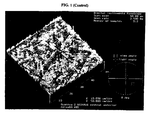
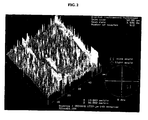
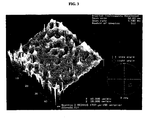
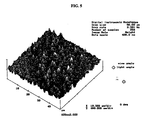
- hydrophobic monomers may provide the benefit of causing the formation of tiny dispersed polymer aggregates in solution, evidenced by a haziness in the solution of the polymer. Such aggregates can also be observed in Atomic Force Microscopy images of the coated medical device.
- Useful or suitable hydrophobic monomers include, for example: methyl, ethyl, propyl, isopropyl, butyl, ethoxyethyl, methoxyethyl, ethoxypropyl, phenyl, benzyl, cyclohexyl, hexafluoroisopropyl, or n-octyl-acrylates and methacrylates as well as the corresponding acrylamides and methacrylamides; dimethyl fumarate, dimethyl maleate, diethyl fumarate, methyl vinyl ether, ethoxyethyl vinyl ether, vinyl acetate, vinyl propionate, vinyl benzoate, acrylonitrile, styrene, alpha-methylstyrene, 1-hexene, vinyl chloride, vinyl methylketone, vinyl stearate, 2-hexene and 2-ethylhexyl methacrylate.
- hydrophilic reactive polymers are synthesized in a manner known per se from the corresponding monomers (the term monomer here also including a macromer) by a polymerization reaction customary to the person skilled in the art.
- the hydrophilic reactive polymers or chains are formed by: (1) mixing the monomers together; (2) adding a polymerization initiator, (3) subjecting the monomer/initiator mixture to a source of ultraviolet or actinic radiation and curing said mixture.
- Typical polymerization initiators include free-radical-generating polymerization initiators of the type illustrated by acetyl peroxide, lauroyl peroxide, decanoyl peroxide, coprylyl peroxide, benzoyl peroxide, tertiary butyl peroxypivalate, sodium percarbonate, tertiary butyl peroctoate, and azobis-isobutymnitrile (AIBN).
- Ultraviolet free-radical initiators illustrated by diethoxyacetophenone can also be used. The curing process will of course depend upon the initiator used and the physical characteristics of the comonomer mixture such as viscosity. In any event, the level of initiator employed will vary within the range of 0.01 to 2 weight percent of the mixture of monomers. Usually, a mixture of the above-mentioned monomers is warmed with addition of a free-radical former.
- a polymerization to form the hydrophilic reactive polymer can be carried out in the presence or absence of a solvent.
- Suitable solvents are in principle all solvents which dissolve the monomer used, for example water; alcohols such as lower alkanols, for example, ethanol and methanol; carboxamides such as dimethylformamide, dipolar aprotic solvents such as dimethyl sulfoxide or methyl ethyl ketone; ketones such as acetone or cyclohexanone; hydrocarbons such as toluene; ethers such as THF, dimethoxyethane or dioxane; halogenated hydrocarbons such as trichloroethane, and also mixtures of suitable solvents, for example mixtures of water and an alcohol, for example a water/ethanol or water/methanol mixture.
- the contact lens or other medical device may be exposed to hydrophilic reactive polymers by immersing the substrate in a solution containing the polymers.
- a contact lens may be placed or dipped for a suitable period of time in a solution of the hydrophilic reactive polymer or copolymer in a suitable medium, for example, an aprotic solvent such as acetonitrile.
- one embodiment of the invention involves the attachment of reactive hydrophilic polymers to a medical device, which polymers comprise isocyanate-containing monomeric units or ring-opening monomeric units.
- the ring-opening reactive monomer has an azlactone group represented by the following formula: wherein R 3 and R 4 independently can be an alkyl group having 1 to 14 carbon atoms, a cycloalkyl group having 3 to 14 carbon atoms, an aryl group having 5 to 12 ring atoms, an arenyl group having 6 to 26 carbon atoms, and 0 to 3 heteroatoms non-peroxidic selected from S, N, and O, or R 3 and R 4 taken together with the carbon to which they are joined can form a carbocyclic ring containing 4 to 12 ring atoms, and n is an integer 0 or 1.
- Such monomeric units are disclosed in U.S. Patent No. 5,177,165 to Valint et al.
- the ring structure of such reactive functionalities is susceptible to nucleophilic ring-opening reactions with complementary reactive functional groups on the surface of the substrate being treated.
- the azlactone functionality can react with primary amines, hydroxyls, or acids in the substrate, as mentioned above, to form a covalent bond between the substrate and the hydrophilic reactive polymer at one or more locations along the polymer.
- a plurality of attachments can form a series of polymer loops on the substrate, wherein each loop comprises a hydrophilic chain attached at both ends to the substrate.
- Azlactone-functional monomers for making the hydrophilic reactive polymer can be any monomer, prepolymer, or oligomer comprising an azlactone functionality of the above formula in combination with a vinylic group on an unsaturated hydrocarbon to which the azlactone is attached.
- azlactone-functionality is provided in the hydrophilic polymer by 2-alkenyl azlactone monomers.
- the 2-alkenyl azlactone monomers are known compounds, their synthesis being described, for example, in U.S. Patent. Nos. 4,304,705; 5,081,197; and 5,091,489 (all Heilmann et al.) the disclosures of which are incorporated herein by reference.
- Suitable 2-alkenyl azlactones include:
- the azlactone monomers are a compound represented by the following general formula: where R 1 and R 2 independently denote a hydrogen atom or a lower alkyl radical with one to six carbon atoms, and R 3 and R 4 independently denote alkyl radicals with one to six carbon atoms or a cycloallcyl radical with five or six carbon atoms.
- IPDMO 2-isopropenyl-4,4-dimethyl-2-oxazolin-5-one
- VDMO 2-vinyl-4,4-dimethyl-2-oxazolin-5-one
- IPCO spiro-4'-(2'-isopropenyl-2'-oxazolin-5-one) cyclohexane
- VCO cyclohexane-spiro-4'-(2'-vinyl-2'-oxazol-5'-one)
- PDMO 2-(-1-propenyl)-4,4-dimethyl-oxazol-5-one
- the first step is a Shotten-Bauman acylation of an amino acid.
- the polymerizable functionality is introduced by using either acryloyl or methacryloyl chloride.
- the second step involves a ring closure with a chloroformate to yield the desired oxazolinone.
- the product is isolated and purified by the usual procedures of organic chemistry.
- the compounds can be copolymerized with hydrophilic and/or hydrophobic comonomers to form hydrophilic reactive polymers.
- any unreacted oxazolinone groups may then be hydrolyzed in order to convert the oxazolinone components into amino acids.
- the hydrolysis step will follow the general reaction of:
- Non-limiting examples of comonomers useful to be copolymerized with azlactone functional moieties to form the hydrophilic reactive polymers used to coat a medical device include those mentioned above, preferably dimethylacrylamide, N-vinyl pyrrolidinone. Further examples of comonomers are disclosed in European Patent Publication 0 392 735, the disclosure of which is incorporated by reference. Preferably, dimethylacrylamide is used as a comonomer in order to impart hydrophilicity to the copolymer.
- Such azlactone-functional monomers can be copolymerized with other monomers in various combinations of weight percentages. Using a monomer of similar reactivity ratio to that of an azlactone monomer will result in a random copolymer. Determination of reactivity ratios for copolymerization are disclosed in Odian, Principles of Polymerization, 2nd Ed., John Wiley & Sons, p. 425-430 (1981), the disclosure of which is incorporated by reference herein. Alternatively, use of a comonomer having a higher reactivity to that of an azlactone will tend to result in a block copolymer chain with a higher concentration of azlactone-functionality near the terminus of the chain.
- azlactone-functional prepolymers or oligomers having at least one free-radically polymerizable site can also be utilized for providing azlactone-functionality in the hydrophilic reactive polymer according to the present invention.
- Azlactone-functional oligomers for example, are prepared by free radical polymerization of azlactone monomers, optionally with comonomers as described in U.S. Patent Nos. 4,378,411 and 4,695,608, incorporated by reference herein.
- Non-limiting examples of azlactone-functional oligomers and prepolymers are disclosed in U.S. Pat. Nos. 4,485,236 and 5,081,197 and European Patent Publication 0 392 735, all incorporated by reference herein.
- the ring-opening reactive group in the hydrophilic reactive polymer is an epoxy functionality.
- the preferred epoxy-functional monomer is an oxirane-containing monomer such as glycidyl methacrylate, allyl glycidyl ether, 4-vinyl-1-cyclohexene-1,2-epoxide and the like, although other epoxy-containing monomers may be used.
- the hydrophilic reactive polymers are attached to silicone medical devices which may be made by conventional manufacturing processes.
- contact lenses for application of the present invention can be manufactured employing various conventional techniques, to yield a shaped article having the desired posterior and anterior lens surfaces.
- Spincasting methods are disclosed in U.S. Patent Nos. 3,408,429 and 3,660,545; preferred static casting methods are disclosed in U.S. Patent Nos. 4,113,224 and 4,197,266. Curing of the monomeric mixture is often followed by a machining operation in order to provide a contact lens having a desired final configuration.
- 4,555,732 discloses a process in which an excess of a monomeric mixture is cured by spincasting in a mold to form a shaped article having an anterior lens surface and a relatively large thickness.
- the posterior surface of the cured spincast article is subsequently lathe cut to provide a contact lens having the desired thickness and posterior lens surface. Further machining operations may follow the lathe cutting of the lens surface, for example, edge-finishing operations.
- Suitable organic diluents include, for example, monohydric alcohols, with C 6 -C 10 straight-chained aliphatic monohydric alcohols such as n-hexanol and n-nonanol being especially preferred; diols such as ethylene glycol; polyols such as glycerin; ethers such as diethylene glycol monoethyl ether, ketones such as methyl ethyl ketone; esters such as methyl enanthate; and hydrocarbons such as toluene.
- the organic diluent is sufficiently volatile to facilitate its removal from a cured article by evaporation at or near ambient pressure.
- the diluent is included at five to sixty percent by weight of the monomeric mixture, with ten to fifty percent by weight being especially preferred.
- the cured lens is then subjected to solvent removal, which can be accomplished by evaporation at or near ambient pressure or under vacuum.
- An elevated temperature can be employed to shorten the time necessary to evaporate the diluent.
- the time, temperature and pressure conditions for the solvent removal step will vary depending on such factors as the volatility of the diluent and the specific monomeric components, as can be readily determined by one skilled in the art.
- the temperature employed in the removal step is preferably at least 50°C, for example, 60 to 80 °C.
- a series of heating cycles in a linear oven under inert gas or vacuum may be used to optimize the efficiency of the solvent removal.
- the cured article after the diluent removal step should contain no more than twenty percent by weight of diluent, preferably no more than five percent by weight or less.
- the lens is next subjected to mold release and optional machining operations.
- the machining step includes, for example, buffing or polishing a lens edge and/or surface.
- machining processes may be performed before or after the article is released from a mold part.
- the lens is dry released from the mold by employing vacuum tweezers to lift the lens from the mold, after which the lens is transferred by means of mechanical tweezers to a second set of vacuum tweezers and placed against a rotating surface to smooth the surface or edges. The lens may then be turned over in order to machine the other side of the lens.
- the lens is subjected to surface treatment according to the present invention, as described above, including the attachment of the hydrophilic reactive polymer chains.
- the lens may be subjected to extraction to remove residuals in the lenses.
- some of the monomer mix is not fully polymerized.
- the incompletely polymerized material from the polymerization process may affect optical clarity or may be harmful to the eye.
- Residual material may include solvents not entirely removed by the previous solvent removal operation, unreacted monomers from the monomeric mixture, oligomers present as by-products from the polymerization process, or even additives that may have migrated from the mold used to form the lens.
- the lens is subjected to hydration in which the lens is fully hydrated with water, buffered saline, or the like.
- the coating remains intact and bound to the lens, providing a durable, hydrophilic coating which has been found to be resistant to delamination.
- the lens may undergo cosmetic inspection wherein trained inspectors inspect the contact lenses for clarity and the absence of defects such as holes, particles, bubbles, nicks, tears. Inspection is preferably at 10X magnification.
- the lens is ready for packaging, whether in a vial, plastic blister package, or other container for maintaining the lens in a sterile condition for the consumer.
- the packaged lens is subjected to sterilization, which sterilization may be accomplished in a conventional autoclave, preferably under an air pressurization sterilization cycle, sometime referred to as an air-steam mixture cycle, as will be appreciated by the skilled artisan.
- the autoclaving is at 100° C to 200° C for a period of 10 to 120 minutes.
- the lens dimension of the sterilized lenses may be checked prior to storage.
- This example discloses a representative silicone hydrogel lens material used as a coating substrate in the following Examples.
- the formulation for the material is provided in Table 1 below.
- TABLE 1 Component Parts by Weight TRIS-VC 55 NVP 30 V 2 D 25 15 VINAL 1 n-nonanol 15 Darocur 0.2 tint agent 0.05
- the following materials are designated above:
- This Example illustrates a process for preparation of a contact lens prior to surface modification of a contact lens according to the present invention.
- Silicone hydrogel lenses made of the formulation of Example 1 above were cast-molded from polypropylene molds. Under an inert nitrogen atmosphere, 45- ⁇ l of the formulation was injected onto a clean polypropylene concave mold half and covered with the complementary polypropylene convex mold half. The mold halves were compressed at a pressure of 70 psi and the mixture was cured for about 15 minutes in the presence of UV light (6-11 mW/cm 2 as measured by a Spectronic UV meter). The mold was exposed to UV light for about 5 additional minutes.
- the top mold half was removed, and the lenses were maintained at 60°C for 3 hours in a forced air oven to remove n-nonanol. Subsequently, the lens edges were ball buffed for 10 seconds at 2300 rpm with a force of 60 g.
- VAZO-64 All ingredients except VAZO-64 were placed in a 500-ml round-bottom flask equipped with a magnetic stirrer, condenser, argon blanket, and thermo-controller. The above was de-aerated with argon for 30 min. After VAZO-64 was added, the solution was heated to 60°C and maintained for 50 hrs. After the reaction was complete as monitored by FTIR (Fourier Transform Infrared spectroscopy), the solution was slowly added to 2500 ml of diethyl ether to precipitate the polymer. The mixture was stirred 10 min, allowed to settle 10 min, and filtered.
- FTIR Fastier Transform Infrared spectroscopy
- This Example illustrates the synthesis of a prepolymer of N, N-dimethylacrylamide that is used in making a macromonomer (or "macromer") for eventual use in a reactive hydrophilic polymer according to the present invention.
- the prepolymer is made according to the following reaction scheme.
- Reagents DMA 200 g, 2.0 moles
- mercaptoethanol 3.2 g, 0.041 moles
- AIBN Vazo-64 in the amount 3.3 g, 0.02 moles
- tetrahydrofuran 1,000 ml
- Nitrogen gas was bubbled through the solution for one half-hour.
- the temperature was increased to 60°C for 72 hours under a passive blanket of nitrogen.
- the polymer was precipitated from the reaction mixture with 20 liters of ethyl ether (171.4 g of polymer was isolated).
- Example 4 illustrates the synthesis of a macromer of DMA using the prepolymer of Example 4 which macromonomer is used to make the hydrophilic reactive polymer of Examples 6 and 8 below, which macromonomer is made according to the following reaction scheme:
- This Example illustrates the preparation of a DMA/DMA-mac/VDMO polymer which may be used to form a coating according to the present invention.
- VAZO-64 0.029 g (0.1 mole%) was added and the reaction heated to 60°C for 50 hrs. After the reaction was complete (monitored by FTIR), the solution was slowly added to 2500 ml of ethyl ether to precipitate the polymer. After the addition was complete, the mixture was stirred 10 min, allowed to settle 10 min, and filtered. The precipitate was dried under house vacuum at 30 to 35°C overnight. The dried polymer was sampled for analysis by gel permeation chromatography, bottled and stored in a desiccator.
- This Example illustrates the preparation of a DMA/PEOMA/VDMO polymer usable to coat a silicone substrate according to the present invention.
- Dimethylacrylamide in the amount of 12 g (0.1211 mole), vinyl-4,4-dimethyl-2-oxazolin-5-one in the amount of 4 g (0.0288 mole), and 4 g (0.0036 mole) PEO methacrylate (PEOMA), which monomer has a MW of 1000, and 200 ml of toluene were placed in a 500 ml round-bottom flask equipped with a magnetic stirrer, condenser, argon blanket, and temperature controller. The solution was de-aerated with argon for 30 min.
- PEOMA PEO methacrylate
- VAZO-64 0.025 g (0.1 mole %) was added, and the reaction heated to 60°C for 50 hrs. After the reaction was complete (monitored by FTTR), the solution was slowly added to 2500 ml of ethyl ether to the polymer. After the addition was complete, the mixture was stirred 10 min, allowed to settle 10 min, and filtered. The precipitate was dried under house vacuum at 30 to 35°C overnight. The dried polymer was sampled for analysis by gel permeation chromatography, bottled and stored in a desiccator.
- This Example illustrates the synthesis of a hydrophilic reactive polymer having a brush or branched structure with DMA chains pendent from the backbone of the polymer.
- the polymer consisted of the combination of the DMA macromonomer, glycidyl methacrylate, and DMA monomer, prepared as follows. To a reaction flask were added distilled N,N-dimethylacrylamide (DMA, 32g, 0.32 moles), DMA macromer from Example 5 in the amount of 4 g (0.0008 moles), distilled glycidyl methacrylate (GM, 4.1 g, 0.029 moles), Vazo-64 (AIBN, 0.06 g, 0.00037 moles) and toluene (500 ml).
- DMA N,N-dimethylacrylamide
- GM distilled glycidyl methacrylate
- Vazo-64 AIBN, 0.06 g, 0.00037 moles
- the reaction vessel was fitted with a magnetic stirrer, condenser, thermal controller, and a nitrogen inlet. Nitrogen was bubbled through the solution for 15 min to remove any dissolved oxygen. The reaction flask was then heated to 60°C under a passive blanket of nitrogen for 20 hours. The reaction mixture was then added slowly to 4 liters of ethyl ether with good mechanical stirring. The reactive polymer precipitated and was collected by vacuum filtration. The solid was placed in a vacuum oven at 30°C overnight to remove the ether, leaving 33.2 g of reactive polymer (83% yield). The reactive polymer was placed in a desicciator for storage until use.
- N-vinylpyrrolidone N-vinylpyrrolidone
- VCHE 4-vinylcyclohexyl-1,2-epoxide
- AIBN 0.05 g, 0.0003 moles
- THF THF
- the reaction vessel was fitted with a magnetic stirrer, condenser, thermal controller, and a nitrogen inlet. Nitrogen was bubbled through the solution for 15 min to remove any dissolved oxygen. The reaction flask was then heated to 60°C under a passive blanket of nitrogen for 20 hrs. The reaction mixture was then added slowly to 6 liters of ethyl ether with good mechanical stirring. The copolymer precipitated and was collected by vacuum filtration. The solid was placed in a vacuum oven at 30°C overnight to remove the ether, leaving 21 g of reactive polymer (32% yield). The hydrophilic reactive polymer was placed in a dessicator for storage until use.
- the reactive polymer precipitated and was collected by vacuum filtration.
- the solid was placed in a vacuum oven at 30°C overnight to remove the ether leaving 50.1 g of reactive polymer (83% yield).
- the reactive polymer was placed in a desicciator for storage until use.
- the reaction flask was then heated to 60° C under a passive blanket of nitrogen for 20 hours.
- the reaction mixture was then added slowly to 3 liters of ethyl ether with good mechanical stirring.
- the reactive polymer precipitated and was collected by vacuum filtration.
- the solid was placed in a vacuum oven at 30°C overnight to remove the ether leaving 19.3 g of reactive polymer (92% yield).
- the reactive polymer was placed in a desicciator for storage until use.
- This Example illustrates the synthesis of a hydrophilic reactive polymer of DMA/MAA, according to the following reaction scheme: To a 500 ml reaction flask were added distilled N,N-dimethylacrylamide (DMA, 16g, 0.16moles), methacrylic acid (MAA, 4 g , 0.05 moles) Vazo-64 (AIBN, 0.033 g, 0.0002 moles) and anhydrous 2-propanol (300 ml). The reaction vessel was fitted with a magnetic stirrer, condenser, thermal controller, and nitrogen inlet. Nitrogen was bubbled through the solution for 15 minutes to remove any dissolved oxygen. The reaction flask was then heated to 60°C under a passive blanket of nitrogen for 72 hours.
- DMA N,N-dimethylacrylamide
- MAA methacrylic acid
- Vazo-64 AIBN, 0.033 g, 0.0002 moles
- 2-propanol 300 ml
- reaction mixture was then added slowly to 3 liters of ethyl ether with good mechanical stirring.
- the reactive polymer precipitated and was collected by vacuum filtration.
- the solid was placed in a vacuum oven at 30°C overnight to remove the ether leaving 9.5 g of reactive polymer (48 % yield).
- the reactive polymer was placed in a desicciator for storage until use.
- This Example illustrates the surface treatment of Balafilcon A contact lenses (Pure Vision® lenses, commercially available from Bausch & Lomb, Inc., Rochester, NY) made from the material of Example 1, which surface treatment employed the hydrophilic reactive polymers made from Example 10 above, according to the following reaction scheme:
- a solution of reactive polymer of Example 10 (10.0 g per 1000 ml of water) was prepared. Lenses were extracted with three changes of 2-propanol over a four-hour period and then with three changes of water at one-hour intervals. Lenses (36 samples) were then placed in the solution of reactive polymer. One drop of methyldiethanolamine was added to catalyze the reaction. The lenses were put through one 30-minute autoclave cycle.
- This Example illustrates the surface treatment of an RGP Lens Surface according to the present invention, as shown below.
- the lens was a Quantum® II RGP contact lens, commercially available from Bausch & Lomb, Inc.
- a solution of reactive polymer of Example 10 (5.0 g per 100 ml of water) was prepared. Lenses (20 samples) were then placed in the solution of reactive polymer with two (2) drops of triethanolamine and heated to 55° C for one (1) hour. The surface-coated lenses were then rinsed off twice with purified water and allowed to dry. A drop of water placed on an untreated lens would bead up and roll off the surface while a drop of water was placed on the treated lens spread completely, wetting the lens surface.
- X-ray Photo Electron Spectroscopy (XPS) data was obtained at the Surface Science lab within Bausch and Lomb.
- a Physical Electronics [PHI] Model 5600 XPS was used for the surface characterization.
- This instrument utilized a monochromated Al anode operated a 300 watts, 15kV and 20 milliamps.
- the base pressure of the instrument was 2.0 x 10 -10 torr and during operation the pressure was 5.0 x 10 -8 torr.
- This instrument made use of a hemispherical analyzer.
- the instrument had an Apollo workstation with PHI 8503A version 4.0A software.
- the practical measure for sampling depth for this instrument at a sampling angle of 45° was 74 ⁇ .
- This Example illustrates another surface treatment of an Quantum® II RGP contact lens, commercially available from Bausch & Lomb, Inc., according to the following reaction sequence:
- a solution of reactive polymers of Example 10 and Example 12 above (2.5 g of each polymer per 100 ml of water) was prepared.
- the mixture of polymers was used in an attempt to build a thicker polymer coating via a layering effect.
- Lenses (20 samples) were then placed in the solution of reactive polymer with two drops of triethanolamine and heated to 55°C for one hour.
- the surface-coated lenses were then rinsed off twice with purified water and allowed to dry.
- a drop of water placed on an untreated lens would bead up and roll off the surface while a drop of water placed on the treated lens spread completely wetting the lens surface.
- Atomic Force Microscopy (AFM) analysis suggests that the combination of polymers gave a thicker polymer coating.
- Comparisons between a Quantum® II lens with no polymer coating (FIG. 1), the polymer coating of Example 14 (FIG. 2), and the coating of this Example 15 (FIG. 3) are shown in FIGS. 1 to 3.
- X-ray Photo Electron Spectroscopy (XPS) data was obtained at the Surface Science lab within Bausch and Lomb.
- a Physical Electronics [PHI] Model 5600 XPS was used for the surface characterization.
- This instrument utilized a monochromated Al anode operated a 300 watts, 15kV and 20 milliamps.
- the base pressure of the instrument was 2.0 x 10 -10 torr and during operation the pressure was 5.0 x 10 -8 torr.
- This instrument made use of a hemispherical analyzer.
- the instrument had an Apollo workstation with PHI 8503A version 4.0A software.
- the practical measure for sampling depth for this instrument at a sampling angle of 45° was 74 ⁇ .
- This Example illustrates the surface treatment of Balafilcon A contact lenses (PureVision® lenses, commercially available from Bausch & Lomb, Inc., Rochester, NY) made from the material of Example 1, which surface treatment employed the hydrophilic reactive polymers made from Example 11 above, according to the following reaction scheme: Two solutions of the reactive polymer of Example 11 were prepared (see Table 4B below). Lenses were extracted in 2-propanol for 4 hours and then placed in purified water for 10 minutes. The water bath was then changed, and the lenses were allowed to soak for an additional 10 minutes. Lenses (30 samples) were then placed in each solution of reactive polymer with one drop of methyldiethanolamine to catalyze the reaction. The lenses were put through one 30-minute autoclave cycle.
- FIG. 4 The atomic force microscopy (AFM) images of the control is shown in FIG. 4.
- FIG. 5 and FIG. 6 show the surface of Samples A and B, respectively.
- the hydrophilic coating is clearly shown in FIGS. 5 and 6 compared to the surface image of the Control Sample.
- Elemental analysis by XPS also indicates that the material surface has been modified.
- the XPS data was obtained at the Surface Science lab within Bausch and Lomb.
- a Physical Electronics [PHI] Model 5600 XPS was used for the surface characterization.
- This instrument utilized a monochromated A1 anode operated a 300 watts, 15kV and 20 milliamps.
- the base pressure of the instrument was 2.0 x 10 -10 torr and during operation the pressure was 5.0 x 10 -8 torr.
- This instrument made use of a hemispherical analyzer.
- the instrument had an Apollo workstation with PHI 8503A version 4.0A software.
- This Example illustrates improved inhibition of lipid deposition for the Balafilcon A lenses (PureVision® lenses) coated by reaction with various hydrophilic reactive polymers according to the present invention.
- Sample E lenses was coated using a 1% solution of the DMA/OFPMA/GM copolymer of Example 11, and Sample EE lenses was coating using a 2 % solution of the same polymer.
- Samples F and FF lenses were respectfully coated using 1% and 2% solutions of the DMA/GM copolymer of Example 10. The lenses were placed in an aqueous solution of the reactive hydrophilic polymer with a catalyst and run through one autoclave cycle. The lenses were then rinsed in HPLC grade water, placed in fresh HPLC water, and autoclaved for a second time.
- control lenses were placed in HPLC water and autoclaved.
- One control lens was the Balafilicon A lens prior to any surface treatment
- a second control lens was the commercial PureVision® lens with a oxidative plasma surface treatment.
- GC Gas Chromatography
- six lenses were subject to deposition for each of the lens types tested, employing a lipid mix of palmitic acid methyl ester, cholesterol, squalene and mucin in MOPS buffer. Mucin was utilized as a surfactant to aid in the solubilization of the lipids.
- lenses coated according to the present invention can exhibit reduced lipid deposition, a particularly advantageous property for continuous-wear hydrogel lenses.
Landscapes
- Health & Medical Sciences (AREA)
- Chemical & Material Sciences (AREA)
- Medicinal Chemistry (AREA)
- Physics & Mathematics (AREA)
- Organic Chemistry (AREA)
- Polymers & Plastics (AREA)
- Chemical Kinetics & Catalysis (AREA)
- Public Health (AREA)
- Veterinary Medicine (AREA)
- Epidemiology (AREA)
- Life Sciences & Earth Sciences (AREA)
- Animal Behavior & Ethology (AREA)
- General Health & Medical Sciences (AREA)
- Oral & Maxillofacial Surgery (AREA)
- Transplantation (AREA)
- Dermatology (AREA)
- General Physics & Mathematics (AREA)
- Optics & Photonics (AREA)
- Materials For Medical Uses (AREA)
- Eyeglasses (AREA)
- Treatments Of Macromolecular Shaped Articles (AREA)
Abstract
Claims (26)
- Procédé de traitement de la surface d'un dispositif médical en silicone, comprenant :(a) une formation d'un dispositif médical à partir d'un matériau de silicone par polymérisation d'un mélange contenant au moins un monomère contenant de la silicone et au moins un monomère présentant des fonctionnalités réactives choisies parmi des fonctionnalités azolactone, acide carboxylique, amine, hydroxy et époxy et leurs combinaisons, et(b) une formation d'un polymère réactif hydrophile présentant des fonctionnalités réactives complémentaires le long de la chaîne de polymère choisies parmi des fonctionnalités azolactone, isocyanate, anhydride d'acide, époxy, hydroxy, amine primaire ou secondaire ou acide carboxylique et leurs combinaisons, le matériau de silicone comprenant, dans le cas des fonctionnalités réactives complémentaires hydroxy ou amine, des fonctionnalités réactives azolactone et, dans le cas d'une fonctionnalité complémentaire acide carboxylique, des fonctionnalités réactives époxy,(c) une réaction du polymère réactif hydrophile de l'étape (b) présentant des fonctionnalités réactives complémentaires le long de la chaîne de polymère avec lesdites fonctionnalités réactives situées sur ou à proximité de la surface du dispositif médical formé dans l'étape (a), en formant ainsi une surface biocompatible sur le dispositif médical.
- Procédé suivant la revendication 1, dans lequel le dispositif médical est une lentille de contact ou lentille intraoculaire en silicone et le revêtement est incolore.
- Procédé suivant la revendication 1 ou 2, dans lequel le dispositif médical est une lentille de contact à usage continu à base d'hydrogel de silicone.
- Procédé suivant l'une quelconque des revendications précédentes, dans lequel le polymère réactif hydrophile comprend 1 à 100 % molaires d'unités monomères présentant lesdites fonctionnalités réactives.
- Procédé suivant la revendication 4, dans lequel le polymère réactif hydrophile comprend 0 à 99 % molaires d'unités monomères qui sont dérivées de monomères hydrophiles non réactifs.
- Procédé suivant l'une quelconque des revendications précédentes, dans lequel le polymère réactif hydrophile comprend 5 à 50 % d'unités monomères dérivées de monomères fonctionnellement réactifs choisis parmi des monomères contenant de l'isocyanate, de l'époxy, de l'azolactone, de l'anhydride et leurs combinaisons, et 0,5 à 20 % d'unités monomères dérivées de monomères hydrophobes.
- Procédé suivant l'une quelconque des revendications précédentes, dans lequel le polymère réactif hydrophile comprend 50 à 95 % molaires d'unités monomères dérivées de monomères hydrophiles non réactifs choisis parmi des acrylamides, des lactames, des poly(alkylèneoxy)méthacrylates, de l'acide méthacrylique ou des méthacrylates d'hydroxyalkyle et 5 à 50 % d'unités monomères dérivées de monomères fonctionnellement réactifs choisis parmi des monomères contenant de l'époxy, de l'azolactone et de l'anhydride, les groupes alkyle ou alkylène comportant 1 à 6 atomes de carbone.
- Procédé suivant la revendication 7, dans lequel les monomères fonctionnellement réactifs sont choisis parmi du méthacrylate de glycidyle, de l'anhydride maléique, de l'anhydride itaconique et de l'isocyanométhacrylate.
- Procédé suivant l'une quelconque des revendications précédentes, dans lequel le polymère réactif hydrophile est dérivé d'un monomère hydrophile choisi parmi du diméthylacrylamide, de l'acrylamide et de la N-vinyl pyrrolidinone.
- Procédé suivant l'une quelconque des revendications précédentes, dans lequel le polymère réactif hydrophile comprend 0 à 35 % molaires d'unités monomères dérivées de monomères hydrophobes.
- Procédé suivant l'une quelconque des revendications précédentes, dans lequel le polymère réactif hydrophile comprend des fragments d'azolactone présentant la formule suivante :

- Procédé suivant la revendication 11, dans lequel le polymère réactif hydrophile comprend le produit réactionnel d'un mélange de monomères comprenant le monomère représenté par la formule générale :

- Procédé suivant la revendication 12, dans lequel le monomère est choisi parmi de la 2-vinyl-4,4-diméthyl-2-oxazolin-5-one, de la 2-isopropényl-4,4-diméthyl-2-oxazolin-5-one et de la 2-vinyl-4,4-diméthyl-2-oxazolin-5-one.
- Procédé suivant l'une quelconque des revendications précédentes, dans lequel le dispositif médical est plongé dans une solution comprenant au moins un polymère réactif hydrophile en l'absence d'une substance colorante.
- Dispositif médical en silicone comportant une surface hydrophile, comprenant :un dispositif médical réalisé à partir d'un matériau en silicone et formé par polymérisation d'un mélange contenant au moins un monomère contenant de la silicone et au moins un monomère présentant des fonctionnalités réactives choisies parmi des fonctionnalités azolactone, acide carboxylique, amine, hydroxy et époxy et leurs combinaisons compatibles, et des polymères hydrophiles reliés au dispositif médical, les points d'attache étant le résultat de la réaction d'azolactone, d'isocyanate, d'anhydride d'acide, d'époxy, d'hydroxy, d'amine primaire ou secondaire, d'acide carboxylique ou de combinaisons compatibles le long de la chaîne de polymères réactifs hydrophiles avec lesdites fonctionnalités réactives situées sur ou à proximité de la surface du dispositif médical, le matériau de silicone comprenant, dans le cas des fonctionnalités réactives complémentaires hydroxy ou amine, des fonctionnalités réactives azolactone et, dans le cas de la fonctionnalité complémentaire acide carboxylique, des fonctionnalités réactives époxy, en produisant ainsi un revêtement biocompatible transparent, clair.
- Dispositif médical suivant la revendication 15, dans lequel le dispositif médical est un dispositif intraoculaire ou une lentille de contact en silicone.
- Dispositif médical suivant la revendication 14 ou 16, dans lequel le dispositif médical est une lentille à usage continu à base d'hydrogel de silicone.
- Dispositif médical suivant l'une quelconque des revendications 15 à 17, dans lequel les polymères hydrophiles comprennent 1 à 100 % molaires d'unités monomères présentant lesdites fonctionnalités réactives et 0 à 99 % molaires d'unités monomères qui sont dérivées de monomères hydrophiles non réactifs.
- Dispositif médical suivant l'une quelconque des revendications 15 à 18, dans lequel les fonctionnalités réactives sont dérivées de monomères contenant un ou plusieurs groupes choisis parmi du glycidyle, de l'azolactone, de l'isocyanate et de l'anhydride d'acide.
- Dispositif médical suivant l'une quelconque des revendications 15 à 19, dans lequel les polymères hydrophiles sont dérivés de monomères choisis parmi des acrylamides, des lactames, des poly(alkylèneoxy)méthacrylates, de l'acide méthacrylique ou des méthacrylates d'hydroxyalkyle.
- Dispositif médical suivant l'une quelconque des revendications 15 à 20, dans lequel le polymère hydrophile comprend des fragments le long de la chaîne qui répondent à la formule suivante :
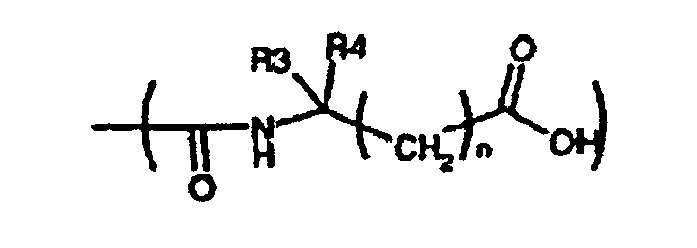
- Dispositif médical suivant l'une quelconque des revendications 15 à 20, dans lequel le polymère hydrophile comprend des fragments le long de la chaîne qui sont représentés par la formule générale :

- Dispositif médical suivant l'une quelconque des revendications 15 à 22, dans lequel les chaînes de polymères hydrophiles reliées à la couche carbonée sont le résultat de la réaction d'un mélange de polymères comprenant (a) un premier polymère réactif hydrophile présentant des fonctionnalités réactives dans des unités monomères le long des polymères hydrophiles qui sont complémentaires aux fonctionnalités réactives situées sur la surface du dispositif médical et, en supplément, (b) un second polymère réactif hydrophile présentant des fonctionnalités réactives supplémentaires qui sont réactives avec le premier polymère réactif hydrophile.
- Dispositif médical suivant la revendication 23, dans lequel le premier polymère réactif hydrophile est un polymère à fonction époxy et le second polymère réactif hydrophile est un polymère à fonction acide, qui sont appliqués soit simultanément, soit séquentiellement au dispositif à revêtir.
- Dispositif médical suivant la revendication 15, dans lequel le polymère hydrophile relié au matériau de silicone comprend le produit réactionnel d'un polymère réactif hydrophile à fonction époxy séparé et d'un polymère hydrophile à fonction acide.
- Dispositif médical suivant l'une quelconque des revendications 15 à 25, dans lequel le matériau de silicone comprend des unités monomères à fonction azolactone qui ont été converties en groupes acide à proximité ou sur la surface.
Applications Claiming Priority (3)
| Application Number | Priority Date | Filing Date | Title |
|---|---|---|---|
| US315620 | 1999-05-20 | ||
| US09/315,620 US6440571B1 (en) | 1999-05-20 | 1999-05-20 | Surface treatment of silicone medical devices with reactive hydrophilic polymers |
| PCT/US2000/013229 WO2000072052A1 (fr) | 1999-05-20 | 2000-05-12 | Traitement de surface de dispositifs medicaux a l'aide de polymere hydrophiles reactifs |
Publications (2)
| Publication Number | Publication Date |
|---|---|
| EP1179190A1 EP1179190A1 (fr) | 2002-02-13 |
| EP1179190B1 true EP1179190B1 (fr) | 2006-04-12 |
Family
ID=23225286
Family Applications (1)
| Application Number | Title | Priority Date | Filing Date |
|---|---|---|---|
| EP20000928986 Expired - Lifetime EP1179190B1 (fr) | 1999-05-20 | 2000-05-12 | Traitement de surface de dispositifs medicaux a l'aide de polymere hydrophiles reactifs |
Country Status (15)
| Country | Link |
|---|---|
| US (2) | US6440571B1 (fr) |
| EP (1) | EP1179190B1 (fr) |
| JP (1) | JP4544753B2 (fr) |
| KR (1) | KR20020013890A (fr) |
| CN (1) | CN1156713C (fr) |
| AU (1) | AU762372B2 (fr) |
| BR (1) | BR0011610A (fr) |
| CA (1) | CA2373541A1 (fr) |
| DE (1) | DE60027289T2 (fr) |
| ES (1) | ES2264665T3 (fr) |
| HK (1) | HK1045375B (fr) |
| MX (1) | MXPA01011853A (fr) |
| TW (1) | TW589465B (fr) |
| WO (1) | WO2000072052A1 (fr) |
| ZA (1) | ZA200109528B (fr) |
Cited By (7)
| Publication number | Priority date | Publication date | Assignee | Title |
|---|---|---|---|---|
| US8480227B2 (en) | 2010-07-30 | 2013-07-09 | Novartis Ag | Silicone hydrogel lenses with water-rich surfaces |
| US9005700B2 (en) | 2011-10-12 | 2015-04-14 | Novartis Ag | Method for making UV-absorbing ophthalmic lenses |
| US9708087B2 (en) | 2013-12-17 | 2017-07-18 | Novartis Ag | Silicone hydrogel lens with a crosslinked hydrophilic coating |
| US10338408B2 (en) | 2012-12-17 | 2019-07-02 | Novartis Ag | Method for making improved UV-absorbing ophthalmic lenses |
| US10449740B2 (en) | 2015-12-15 | 2019-10-22 | Novartis Ag | Method for applying stable coating on silicone hydrogel contact lenses |
| US10830923B2 (en) | 2017-12-13 | 2020-11-10 | Alcon Inc. | Method for producing MPS-compatible water gradient contact lenses |
| US11002884B2 (en) | 2014-08-26 | 2021-05-11 | Alcon Inc. | Method for applying stable coating on silicone hydrogel contact lenses |
Families Citing this family (149)
| Publication number | Priority date | Publication date | Assignee | Title |
|---|---|---|---|---|
| US7052131B2 (en) * | 2001-09-10 | 2006-05-30 | J&J Vision Care, Inc. | Biomedical devices containing internal wetting agents |
| US6822016B2 (en) * | 2001-09-10 | 2004-11-23 | Johnson & Johnson Vision Care, Inc. | Biomedical devices containing internal wetting agents |
| WO2000070388A1 (fr) * | 1999-05-12 | 2000-11-23 | Menicon Co., Ltd. | Materiau pour lentilles oculaires et leur procede de fabrication |
| US6599559B1 (en) | 2000-04-03 | 2003-07-29 | Bausch & Lomb Incorporated | Renewable surface treatment of silicone medical devices with reactive hydrophilic polymers |
| US6428839B1 (en) * | 2000-06-02 | 2002-08-06 | Bausch & Lomb Incorporated | Surface treatment of medical device |
| MXPA03002322A (es) * | 2000-09-19 | 2003-06-24 | Bausch & Lomb | Metodo para aplicar un recubrimiento a lentes polimericas. |
| US7060288B2 (en) * | 2001-02-28 | 2006-06-13 | Timothy Charles Hughes | Biomedical devices |
| US6835410B2 (en) * | 2001-05-21 | 2004-12-28 | Novartis Ag | Bottle-brush type coatings with entangled hydrophilic polymer |
| AU2001278757B2 (en) * | 2001-08-17 | 2008-03-06 | Johnson & Johnson Vision Care, Inc. | Method for producing polymer for ophthalmic lens and ophthalmic lens |
| US6765069B2 (en) * | 2001-09-28 | 2004-07-20 | Biosurface Engineering Technologies, Inc. | Plasma cross-linked hydrophilic coating |
| US20060100408A1 (en) * | 2002-03-11 | 2006-05-11 | Powell P M | Method for forming contact lenses comprising therapeutic agents |
| US7270678B2 (en) * | 2002-06-28 | 2007-09-18 | Bausch & Lomb Incorporated | Surface modification of functional group-containing medical devices with catalyst-containing reactive polymer system |
| US7083646B2 (en) * | 2002-06-28 | 2006-08-01 | Bausch & Lomb Incorporated | Surface modification of functional group-containing intraocular lenses |
| US20070138692A1 (en) * | 2002-09-06 | 2007-06-21 | Ford James D | Process for forming clear, wettable silicone hydrogel articles |
| US20060073185A1 (en) * | 2002-12-13 | 2006-04-06 | Bausch & Lomb Incorporated | Method and composition for contact lenses |
| US6958169B2 (en) * | 2002-12-17 | 2005-10-25 | Bausch & Lomb Incorporated | Surface treatment of medical device |
| US20040120982A1 (en) * | 2002-12-19 | 2004-06-24 | Zanini Diana | Biomedical devices with coatings attached via latent reactive components |
| AU2003297323A1 (en) * | 2002-12-23 | 2004-07-22 | Bausch And Lomb Incorporated | Surface treatment utilizing microwave radiation |
| US7247387B1 (en) | 2003-07-24 | 2007-07-24 | Sepax Technologies Inc. | Material and process for controlled thin polymeric coatings on plastic surface |
| US7084188B2 (en) * | 2003-12-05 | 2006-08-01 | Bausch & Lomb Incorporated | Surface modification of contact lenses |
| HUE044130T2 (hu) * | 2004-08-27 | 2019-09-30 | Coopervision Int Holding Co Lp | Szilikon-hidrogél kontaktlencsék |
| US9322958B2 (en) | 2004-08-27 | 2016-04-26 | Coopervision International Holding Company, Lp | Silicone hydrogel contact lenses |
| US20070087113A1 (en) * | 2005-10-19 | 2007-04-19 | Bausch & Lomb Incorporated | Surface-modified medical devices and method of making |
| US7988988B2 (en) * | 2005-11-21 | 2011-08-02 | Bausch & Lomb Incorporated | Contact lenses with mucin affinity |
| US20070116741A1 (en) * | 2005-11-21 | 2007-05-24 | Bausch & Lomb Incorporated | Contact lenses with mucin affinity |
| WO2007064594A2 (fr) * | 2005-11-29 | 2007-06-07 | Bausch & Lomb Incorporated | Nouveaux revetements sur lentilles ophtalmique |
| US20070264509A1 (en) * | 2006-05-11 | 2007-11-15 | Yu-Chin Lai | Copolymer and Medical Device with the Copolymer |
| EP2035050A2 (fr) * | 2006-06-30 | 2009-03-18 | Bausch & Lomb Incorporated | Modification des surfaces d'articles polymères par réaction d'addition de michael |
| US7625598B2 (en) * | 2006-12-15 | 2009-12-01 | Bausch & Lomb Incorporated | Silicone contact lenses with wrinkled surface |
| US20080142038A1 (en) * | 2006-12-15 | 2008-06-19 | Bausch & Lomb Incorporated | Surface treatment of medical devices |
| US20080143955A1 (en) * | 2006-12-15 | 2008-06-19 | Bausch & Lomb Incorporated | Silicone Contact Lenses with Silicate Coating |
| US7832856B2 (en) * | 2006-12-20 | 2010-11-16 | Bausch & Lomb Incorporated | Coatings and solutions for contact lenses |
| US20080151181A1 (en) * | 2006-12-20 | 2008-06-26 | Bausch & Lomb Incorporated | Coatings and Solutions for Contact Lenses |
| US20080206481A1 (en) * | 2007-02-26 | 2008-08-28 | Bausch & Lomb Incorporated | Silicone contact lenses with wrinkled surface |
| US8119753B2 (en) * | 2007-10-23 | 2012-02-21 | Bausch & Lomb Incorporated | Silicone hydrogels with amino surface groups |
| US20090111942A1 (en) * | 2007-10-25 | 2009-04-30 | Bausch & Lomb Incorporated | Method for Making Surface Modified Biomedical Devices |
| JP2011507563A (ja) * | 2007-12-14 | 2011-03-10 | ボーシュ アンド ローム インコーポレイティド | バイオメディカルデバイス |
| WO2009079223A1 (fr) | 2007-12-14 | 2009-06-25 | Bausch & Lomb Incorporated | Dispositifs biomédicaux modifiés en surface |
| WO2009079224A2 (fr) * | 2007-12-14 | 2009-06-25 | Bausch & Lomb Incorporated | Dispositifs biomédicaux modifiés en surface |
| US20090171049A1 (en) * | 2007-12-27 | 2009-07-02 | Linhardt Jeffrey G | Segmented reactive block copolymers |
| US8534031B2 (en) * | 2008-12-30 | 2013-09-17 | Bausch & Lomb Incorporated | Packaging solutions |
| US20100168851A1 (en) * | 2008-12-30 | 2010-07-01 | David Paul Vanderbilt | Surface Modified Biomedical Devices |
| US8163358B2 (en) * | 2009-02-18 | 2012-04-24 | Synergeyes, Inc. | Surface modification of contact lenses |
| JP5273675B2 (ja) * | 2009-06-09 | 2013-08-28 | 株式会社メニコン | 眼用レンズ用ケア用品及び樹脂基材の親水化方法 |
| US8083348B2 (en) * | 2009-06-16 | 2011-12-27 | Bausch & Lomb Incorporated | Biomedical devices |
| US8043369B2 (en) * | 2009-06-16 | 2011-10-25 | Bausch & Lomb Incorporated | Biomedical devices |
| US8133960B2 (en) | 2009-06-16 | 2012-03-13 | Bausch & Lomb Incorporated | Biomedical devices |
| US20100315588A1 (en) * | 2009-06-16 | 2010-12-16 | Bausch & Lomb Incorporated | Biomedical devices |
| US9388381B2 (en) | 2009-07-09 | 2016-07-12 | Massachusetts Institute Of Technology | Methods and compositions for increased safety of stem cell-derived populations |
| ES2593406T3 (es) * | 2009-10-01 | 2016-12-09 | Coopervision International Holding Company, Lp | Lentes de contacto de hidrogel de silicona y métodos para producir lentes de contacto de hidrogel de silicona |
| HUE049309T2 (hu) * | 2009-11-04 | 2020-09-28 | Alcon Inc | Szilikon hidrogél lencse ojtott hidrofil bevonattal |
| TWI483996B (zh) * | 2009-12-08 | 2015-05-11 | Novartis Ag | 具有共價貼合塗層之聚矽氧水凝膠鏡片 |
| US9522980B2 (en) | 2010-05-06 | 2016-12-20 | Johnson & Johnson Vision Care, Inc. | Non-reactive, hydrophilic polymers having terminal siloxanes and methods for making and using the same |
| AU2016201366B2 (en) * | 2010-07-30 | 2017-05-25 | Alcon Inc. | Silicone hydrogel lenses with water-rich surfaces |
| SG192236A1 (en) | 2011-02-28 | 2013-09-30 | Coopervision Int Holding Co Lp | Wettable silicone hydrogel contact lenses |
| EP2681613B1 (fr) | 2011-02-28 | 2018-10-24 | CooperVision International Holding Company, LP | Lentilles de contact en hydrogel de silicone |
| BR112013021871B1 (pt) | 2011-02-28 | 2021-01-05 | Coopervision International Holding Company, Lp | lente de contato de silicone hidrogel, lote da dita lente e método de fabricação da mesma |
| KR101528997B1 (ko) | 2011-02-28 | 2015-06-15 | 쿠퍼비젼 인터내셔날 홀딩 캄파니, 엘피 | 치수 안정한 실리콘 히드로겔 콘택트 렌즈 |
| HUE042074T2 (hu) | 2011-02-28 | 2019-06-28 | Coopervision Int Holding Co Lp | Szilikon hidrogél kontaktlencsék valamint ezekkel kapcsolatos kompozíciók és eljárások |
| MY170510A (en) | 2011-02-28 | 2019-08-08 | Coopervision Int Ltd | Phosphine-containing hydrogel contact lenses |
| CN103827175B (zh) | 2011-02-28 | 2016-08-10 | 库柏维景国际控股公司 | 硅酮水凝胶隐形眼镜 |
| US9170349B2 (en) * | 2011-05-04 | 2015-10-27 | Johnson & Johnson Vision Care, Inc. | Medical devices having homogeneous charge density and methods for making same |
| JP6072060B2 (ja) * | 2011-11-15 | 2017-02-01 | ノバルティス アーゲー | 架橋親水性コーティングされているシリコーンヒドロゲルレンズ |
| EP2788797B1 (fr) * | 2011-12-08 | 2023-06-07 | Alcon Inc. | Lentilles de contact à revêtements à dégradation enzymatique |
| US9140825B2 (en) * | 2011-12-23 | 2015-09-22 | Johnson & Johnson Vision Care, Inc. | Ionic silicone hydrogels |
| US9447378B2 (en) | 2012-04-27 | 2016-09-20 | Massachusetts Institute Of Technology | Method for differentiating human embryonic stem cells into β-cells for the treatment of type I diabetes |
| US8798332B2 (en) | 2012-05-15 | 2014-08-05 | Google Inc. | Contact lenses |
| US9244196B2 (en) | 2012-05-25 | 2016-01-26 | Johnson & Johnson Vision Care, Inc. | Polymers and nanogel materials and methods for making and using the same |
| US10073192B2 (en) | 2012-05-25 | 2018-09-11 | Johnson & Johnson Vision Care, Inc. | Polymers and nanogel materials and methods for making and using the same |
| EP2861413B1 (fr) | 2012-06-14 | 2019-05-01 | Novartis AG | Copolymères contenant de l'azétidinium et leurs utilisations |
| US9523865B2 (en) | 2012-07-26 | 2016-12-20 | Verily Life Sciences Llc | Contact lenses with hybrid power sources |
| US8857981B2 (en) | 2012-07-26 | 2014-10-14 | Google Inc. | Facilitation of contact lenses with capacitive sensors |
| US9158133B1 (en) | 2012-07-26 | 2015-10-13 | Google Inc. | Contact lens employing optical signals for power and/or communication |
| US9298020B1 (en) | 2012-07-26 | 2016-03-29 | Verily Life Sciences Llc | Input system |
| US8919953B1 (en) | 2012-08-02 | 2014-12-30 | Google Inc. | Actuatable contact lenses |
| US9696564B1 (en) | 2012-08-21 | 2017-07-04 | Verily Life Sciences Llc | Contact lens with metal portion and polymer layer having indentations |
| US9111473B1 (en) | 2012-08-24 | 2015-08-18 | Google Inc. | Input system |
| US9395468B2 (en) | 2012-08-27 | 2016-07-19 | Ocular Dynamics, Llc | Contact lens with a hydrophilic layer |
| US8820934B1 (en) | 2012-09-05 | 2014-09-02 | Google Inc. | Passive surface acoustic wave communication |
| US20140192315A1 (en) | 2012-09-07 | 2014-07-10 | Google Inc. | In-situ tear sample collection and testing using a contact lens |
| US9398868B1 (en) | 2012-09-11 | 2016-07-26 | Verily Life Sciences Llc | Cancellation of a baseline current signal via current subtraction within a linear relaxation oscillator-based current-to-frequency converter circuit |
| US10010270B2 (en) | 2012-09-17 | 2018-07-03 | Verily Life Sciences Llc | Sensing system |
| US9326710B1 (en) | 2012-09-20 | 2016-05-03 | Verily Life Sciences Llc | Contact lenses having sensors with adjustable sensitivity |
| US8960898B1 (en) | 2012-09-24 | 2015-02-24 | Google Inc. | Contact lens that restricts incoming light to the eye |
| US8870370B1 (en) | 2012-09-24 | 2014-10-28 | Google Inc. | Contact lens that facilitates antenna communication via sensor impedance modulation |
| US8989834B2 (en) | 2012-09-25 | 2015-03-24 | Google Inc. | Wearable device |
| US8979271B2 (en) | 2012-09-25 | 2015-03-17 | Google Inc. | Facilitation of temperature compensation for contact lens sensors and temperature sensing |
| US20140088372A1 (en) | 2012-09-25 | 2014-03-27 | Google Inc. | Information processing method |
| US8821811B2 (en) | 2012-09-26 | 2014-09-02 | Google Inc. | In-vitro contact lens testing |
| US8960899B2 (en) | 2012-09-26 | 2015-02-24 | Google Inc. | Assembling thin silicon chips on a contact lens |
| US9884180B1 (en) | 2012-09-26 | 2018-02-06 | Verily Life Sciences Llc | Power transducer for a retinal implant using a contact lens |
| US8985763B1 (en) | 2012-09-26 | 2015-03-24 | Google Inc. | Contact lens having an uneven embedded substrate and method of manufacture |
| US9063351B1 (en) | 2012-09-28 | 2015-06-23 | Google Inc. | Input detection system |
| US8965478B2 (en) | 2012-10-12 | 2015-02-24 | Google Inc. | Microelectrodes in an ophthalmic electrochemical sensor |
| US9176332B1 (en) | 2012-10-24 | 2015-11-03 | Google Inc. | Contact lens and method of manufacture to improve sensor sensitivity |
| US9757056B1 (en) | 2012-10-26 | 2017-09-12 | Verily Life Sciences Llc | Over-molding of sensor apparatus in eye-mountable device |
| SG11201504592YA (en) | 2012-12-11 | 2015-07-30 | Novartis Ag | Method for applying a coating onto a silicone hydrogel lens |
| US8874182B2 (en) | 2013-01-15 | 2014-10-28 | Google Inc. | Encapsulated electronics |
| US9289954B2 (en) | 2013-01-17 | 2016-03-22 | Verily Life Sciences Llc | Method of ring-shaped structure placement in an eye-mountable device |
| US20140209481A1 (en) | 2013-01-25 | 2014-07-31 | Google Inc. | Standby Biasing Of Electrochemical Sensor To Reduce Sensor Stabilization Time During Measurement |
| US9636016B1 (en) | 2013-01-25 | 2017-05-02 | Verily Life Sciences Llc | Eye-mountable devices and methods for accurately placing a flexible ring containing electronics in eye-mountable devices |
| US9161712B2 (en) | 2013-03-26 | 2015-10-20 | Google Inc. | Systems and methods for encapsulating electronics in a mountable device |
| US9113829B2 (en) | 2013-03-27 | 2015-08-25 | Google Inc. | Systems and methods for encapsulating electronics in a mountable device |
| USRE49528E1 (en) * | 2013-04-26 | 2023-05-16 | Biointeractions Ltd. | Bioactive coatings |
| EP3699220B1 (fr) * | 2013-04-26 | 2025-08-27 | Biointeractions Ltd | Revêtements bioactifs |
| US20140371560A1 (en) | 2013-06-14 | 2014-12-18 | Google Inc. | Body-Mountable Devices and Methods for Embedding a Structure in a Body-Mountable Device |
| WO2014201431A1 (fr) * | 2013-06-14 | 2014-12-18 | Massachusetts Institute Of Technology | Articles et procédés pour la différenciation des cellules souches |
| US9084561B2 (en) | 2013-06-17 | 2015-07-21 | Google Inc. | Symmetrically arranged sensor electrodes in an ophthalmic electrochemical sensor |
| US9948895B1 (en) | 2013-06-18 | 2018-04-17 | Verily Life Sciences Llc | Fully integrated pinhole camera for eye-mountable imaging system |
| US9685689B1 (en) | 2013-06-27 | 2017-06-20 | Verily Life Sciences Llc | Fabrication methods for bio-compatible devices |
| US9028772B2 (en) | 2013-06-28 | 2015-05-12 | Google Inc. | Methods for forming a channel through a polymer layer using one or more photoresist layers |
| US9307901B1 (en) | 2013-06-28 | 2016-04-12 | Verily Life Sciences Llc | Methods for leaving a channel in a polymer layer using a cross-linked polymer plug |
| US9492118B1 (en) | 2013-06-28 | 2016-11-15 | Life Sciences Llc | Pre-treatment process for electrochemical amperometric sensor |
| US9814387B2 (en) | 2013-06-28 | 2017-11-14 | Verily Life Sciences, LLC | Device identification |
| CN103405807B (zh) * | 2013-07-05 | 2014-10-08 | 温州医科大学 | 一种表面梳状聚合物亲水改性的人工晶状体及其制备方法 |
| EP3570093B1 (fr) | 2013-11-15 | 2021-09-15 | Tangible Science, Inc. | Lentille de contact dotée d'une couche hydrophile |
| CN103705965B (zh) * | 2013-12-10 | 2015-07-08 | 浙江大学 | 一种超薄抗菌水凝胶薄膜的制备方法 |
| US9654674B1 (en) | 2013-12-20 | 2017-05-16 | Verily Life Sciences Llc | Image sensor with a plurality of light channels |
| US9572522B2 (en) | 2013-12-20 | 2017-02-21 | Verily Life Sciences Llc | Tear fluid conductivity sensor |
| US9366570B1 (en) | 2014-03-10 | 2016-06-14 | Verily Life Sciences Llc | Photodiode operable in photoconductive mode and photovoltaic mode |
| US9184698B1 (en) | 2014-03-11 | 2015-11-10 | Google Inc. | Reference frequency from ambient light signal |
| US9789655B1 (en) | 2014-03-14 | 2017-10-17 | Verily Life Sciences Llc | Methods for mold release of body-mountable devices including microelectronics |
| MX369598B (es) | 2014-08-26 | 2019-11-13 | Alcon Inc | Copolimeros de poli (oxazolina-co-etilenimina)-epiclorhidrina y usos de los mismos. |
| CN107206119B (zh) | 2014-12-09 | 2021-01-29 | 实体科学公司 | 具有生物相容性层的医疗设备涂层 |
| EP3268804B1 (fr) | 2015-03-11 | 2020-11-04 | University of Florida Research Foundation, Inc. | Contrôle de la taille de réseau de la lubrification dans des hydrogels jumeaux |
| RU2705399C2 (ru) * | 2015-03-31 | 2019-11-07 | Торэй Индастриз, Инк. | Сополимер и медицинское устройство, разделительный мембранный модуль медицинского назначения и устройство для очистки крови, включающее этот сополимер |
| EP3344447B1 (fr) | 2015-09-04 | 2019-12-11 | Novartis AG | Procédé de fabrication de lentilles de contact recouvertes de revêtements lubrifiés durables |
| MY186090A (en) | 2015-12-03 | 2021-06-21 | Alcon Inc | Contact lens packaging solutions |
| US10081142B2 (en) | 2015-12-15 | 2018-09-25 | Novartis Ag | Method for producing contact lenses with a lubricious surface |
| EP3845573B1 (fr) * | 2016-09-30 | 2023-08-09 | Toray Industries, Inc. | Copolymère et matériel médical le contenant |
| WO2018078598A1 (fr) | 2016-10-31 | 2018-05-03 | Chnovartis Ag | Procédé de fabrication de lentilles de contact revêtues en surface à confort d'utilisation |
| JP6831020B2 (ja) | 2017-06-07 | 2021-02-17 | アルコン インク. | シリコーンヒドロゲルコンタクトレンズ |
| US10875967B2 (en) | 2017-06-07 | 2020-12-29 | Alcon Inc. | Silicone hydrogel contact lenses |
| TWI640557B (zh) * | 2017-07-05 | 2018-11-11 | 晶碩光學股份有限公司 | 具表面修飾的隱形眼鏡及其製備方法 |
| EP3447475B1 (fr) | 2017-08-24 | 2020-06-17 | Alcon Inc. | Procédé et appareil pour déterminer un coefficient de frottement au niveau d'un site d'essai sur une surface d'une lentille de contact |
| TWI673315B (zh) * | 2018-02-22 | 2019-10-01 | 優你康光學股份有限公司 | 具有釋放活性成分能力的水性組成物及可重複使用之隱形眼鏡產品 |
| US12072556B2 (en) | 2019-11-04 | 2024-08-27 | Alcon Inc. | Contact lenses with surfaces having different softness |
| ES2993009T3 (en) | 2019-12-16 | 2024-12-20 | Alcon Inc | Wettable silicone hydrogel contact lenses |
| CN111777909A (zh) * | 2020-07-14 | 2020-10-16 | 浙江工业大学 | 一种通用的功能性聚合物涂层的制备方法 |
| US12358247B2 (en) | 2020-07-28 | 2025-07-15 | Alcon Inc. | Contact lenses with softer lens surfaces |
| US20220372391A1 (en) | 2021-04-22 | 2022-11-24 | Alcon Inc. | Method for applying a coating onto a non-silicone hydrogel lens |
| CN117716262A (zh) | 2021-09-01 | 2024-03-15 | 爱尔康公司 | 用于生产可润湿硅酮水凝胶接触镜片的方法 |
| TWI849382B (zh) * | 2022-02-21 | 2024-07-21 | 穎利科技股份有限公司 | 基材表面親水處理之方法及具親水改質表面之基材 |
| JP2025525733A (ja) | 2022-08-17 | 2025-08-07 | アルコン インク. | ハイドロゲルコーティングをその上に有するコンタクトレンズ |
| CN115785800B (zh) * | 2022-10-18 | 2023-07-11 | 广州市嵩达新材料科技有限公司 | 一种光固化导热涂层及其制备方法 |
| WO2024161344A1 (fr) | 2023-02-02 | 2024-08-08 | Alcon Inc. | Lentilles de contact en hydrogel de silicone à gradient d'eau |
| TW202441215A (zh) | 2023-02-27 | 2024-10-16 | 瑞士商愛爾康公司 | 用於生產可潤濕矽酮水凝膠接觸鏡片之方法 |
| WO2024241239A1 (fr) | 2023-05-25 | 2024-11-28 | Alcon Inc. | Lentilles de contact en hydrogel de silicone revêtues et leur procédé de fabrication |
| US20260147141A1 (en) * | 2024-11-26 | 2026-05-28 | Bausch + Lomb Ireland Limited | Surface modified silicone ophthalmic devices |
Family Cites Families (16)
| Publication number | Priority date | Publication date | Assignee | Title |
|---|---|---|---|---|
| US4734475A (en) | 1986-12-15 | 1988-03-29 | Ciba-Geigy Corporation | Wettable surface modified contact lens fabricated from an oxirane containing hydrophobic polymer |
| WO1989004330A1 (fr) * | 1987-11-06 | 1989-05-18 | Ioptex Research, Inc. | Lentille optique a surface modifiee et procede de modification de la surface |
| US4910277A (en) * | 1988-02-09 | 1990-03-20 | Bambury Ronald E | Hydrophilic oxygen permeable polymers |
| US4810764A (en) * | 1988-02-09 | 1989-03-07 | Bausch & Lomb Incorporated | Polymeric materials with high oxygen permeability and low protein substantivity |
| US5219965A (en) | 1990-11-27 | 1993-06-15 | Bausch & Lomb Incorporated | Surface modification of polymer objects |
| GB9113875D0 (en) * | 1991-06-27 | 1991-08-14 | Biointeractions Ltd | Polymer coatings |
| DK0601055T3 (da) | 1991-08-16 | 2000-10-02 | Joseph C Salamone | Medikamentovertrukket brydende okulært forkammerimplantat |
| US5352714A (en) | 1991-11-05 | 1994-10-04 | Bausch & Lomb Incorporated | Wettable silicone hydrogel compositions and methods for their manufacture |
| US5310779A (en) * | 1991-11-05 | 1994-05-10 | Bausch & Lomb Incorporated | UV curable crosslinking agents useful in copolymerization |
| DE69211152T2 (de) * | 1991-11-05 | 1997-01-02 | Bausch & Lomb | Zusammensetzungen von benetzbaren siliconhydrogels und verfahren zu deren herstellung |
| US5344701A (en) | 1992-06-09 | 1994-09-06 | Minnesota Mining And Manufacturing Company | Porous supports having azlactone-functional surfaces |
| US5292514A (en) * | 1992-06-24 | 1994-03-08 | Minnesota Mining And Manufacturing Company | Azlactone-functional substrates, corneal prostheses, and manufacture and use thereof |
| AR009439A1 (es) * | 1996-12-23 | 2000-04-12 | Novartis Ag | Un articulo que comprende un sustrato con un recubrimiento polimerico primario que porta grupos reactivos predominantemente en su superficie, unmetodo para preparar dicho articulo, un articulo que posee un recubrimiento de tipo hibrido y una lente de contacto |
| US6087415A (en) * | 1998-06-11 | 2000-07-11 | Johnson & Johnson Vision Care, Inc. | Biomedical devices with hydrophilic coatings |
| US6039913A (en) * | 1998-08-27 | 2000-03-21 | Novartis Ag | Process for the manufacture of an ophthalmic molding |
| US6099852A (en) * | 1998-09-23 | 2000-08-08 | Johnson & Johnson Vision Products, Inc. | Wettable silicone-based lenses |
-
1999
- 1999-05-20 US US09/315,620 patent/US6440571B1/en not_active Expired - Fee Related
-
2000
- 2000-05-12 BR BR0011610A patent/BR0011610A/pt not_active IP Right Cessation
- 2000-05-12 EP EP20000928986 patent/EP1179190B1/fr not_active Expired - Lifetime
- 2000-05-12 CA CA 2373541 patent/CA2373541A1/fr not_active Abandoned
- 2000-05-12 MX MXPA01011853A patent/MXPA01011853A/es not_active Application Discontinuation
- 2000-05-12 HK HK02105310.0A patent/HK1045375B/en not_active IP Right Cessation
- 2000-05-12 KR KR1020017014799A patent/KR20020013890A/ko not_active Ceased
- 2000-05-12 JP JP2000620386A patent/JP4544753B2/ja not_active Expired - Fee Related
- 2000-05-12 CN CNB008078157A patent/CN1156713C/zh not_active Expired - Fee Related
- 2000-05-12 AU AU47138/00A patent/AU762372B2/en not_active Ceased
- 2000-05-12 WO PCT/US2000/013229 patent/WO2000072052A1/fr not_active Ceased
- 2000-05-12 ES ES00928986T patent/ES2264665T3/es not_active Expired - Lifetime
- 2000-05-12 DE DE2000627289 patent/DE60027289T2/de not_active Expired - Fee Related
- 2000-05-19 TW TW89109680A patent/TW589465B/zh not_active IP Right Cessation
-
2001
- 2001-11-08 US US10/005,560 patent/US20020120084A1/en not_active Abandoned
- 2001-11-19 ZA ZA200109528A patent/ZA200109528B/en unknown
Cited By (20)
| Publication number | Priority date | Publication date | Assignee | Title |
|---|---|---|---|---|
| US9738813B2 (en) | 2010-07-30 | 2017-08-22 | Novartis Ag | Silicone hydrogel lens with a crosslinked hydrophilic coating |
| US8529057B2 (en) | 2010-07-30 | 2013-09-10 | Novartis Ag | Silicone hydrogel lens with a crosslinked hydrophilic coating |
| US8939577B2 (en) | 2010-07-30 | 2015-01-27 | Novartis Ag | Silicone hydrogel lenses with water-rich surfaces |
| US8944592B2 (en) | 2010-07-30 | 2015-02-03 | Novartis Ag | Silicone hydrogel lens with a crosslinked hydrophilic coating |
| US10781340B2 (en) | 2010-07-30 | 2020-09-22 | Alcon Inc. | Silicone hydrogel lenses with water-rich surfaces |
| US9239409B2 (en) | 2010-07-30 | 2016-01-19 | Novartis Ag | Silicone hydrogel lens with a crosslinked hydrophilic coating |
| US9244200B2 (en) | 2010-07-30 | 2016-01-26 | Novartis Ag | Silicone hydrogel lenses with water-rich surfaces |
| US9411171B2 (en) | 2010-07-30 | 2016-08-09 | Novartis Ag | Silicone hydrogel lenses with water-rich surfaces |
| US8480227B2 (en) | 2010-07-30 | 2013-07-09 | Novartis Ag | Silicone hydrogel lenses with water-rich surfaces |
| US9507173B2 (en) | 2010-07-30 | 2016-11-29 | Novartis Ag | Silicone hydrogel lens with a crosslinked hydrophilic coating |
| US9816009B2 (en) | 2010-07-30 | 2017-11-14 | Novartis Ag | Silicone hydrogel lenses with water-rich surfaces |
| US9005700B2 (en) | 2011-10-12 | 2015-04-14 | Novartis Ag | Method for making UV-absorbing ophthalmic lenses |
| US10338408B2 (en) | 2012-12-17 | 2019-07-02 | Novartis Ag | Method for making improved UV-absorbing ophthalmic lenses |
| US9708087B2 (en) | 2013-12-17 | 2017-07-18 | Novartis Ag | Silicone hydrogel lens with a crosslinked hydrophilic coating |
| US11002884B2 (en) | 2014-08-26 | 2021-05-11 | Alcon Inc. | Method for applying stable coating on silicone hydrogel contact lenses |
| US10449740B2 (en) | 2015-12-15 | 2019-10-22 | Novartis Ag | Method for applying stable coating on silicone hydrogel contact lenses |
| US10830923B2 (en) | 2017-12-13 | 2020-11-10 | Alcon Inc. | Method for producing MPS-compatible water gradient contact lenses |
| US11029446B2 (en) | 2017-12-13 | 2021-06-08 | Alcon Inc. | Method for producing MPS-compatible water gradient contact lenses |
| US11029447B2 (en) | 2017-12-13 | 2021-06-08 | Alcon Inc. | Method for producing MPS-compatible water gradient contact lenses |
| US11256003B2 (en) | 2017-12-13 | 2022-02-22 | Alcon Inc. | Weekly and monthly disposable water gradient contact lenses |
Also Published As
| Publication number | Publication date |
|---|---|
| WO2000072052A1 (fr) | 2000-11-30 |
| AU762372B2 (en) | 2003-06-26 |
| CN1156713C (zh) | 2004-07-07 |
| US20020120084A1 (en) | 2002-08-29 |
| DE60027289D1 (de) | 2006-05-24 |
| KR20020013890A (ko) | 2002-02-21 |
| US6440571B1 (en) | 2002-08-27 |
| ES2264665T3 (es) | 2007-01-16 |
| JP2003500686A (ja) | 2003-01-07 |
| TW589465B (en) | 2004-06-01 |
| ZA200109528B (en) | 2003-02-19 |
| EP1179190A1 (fr) | 2002-02-13 |
| CA2373541A1 (fr) | 2000-11-30 |
| DE60027289T2 (de) | 2006-08-31 |
| BR0011610A (pt) | 2002-07-23 |
| CN1376270A (zh) | 2002-10-23 |
| AU4713800A (en) | 2000-12-12 |
| JP4544753B2 (ja) | 2010-09-15 |
| MXPA01011853A (es) | 2002-05-06 |
| HK1045375B (en) | 2006-11-24 |
| HK1045375A1 (en) | 2002-11-22 |
Similar Documents
| Publication | Publication Date | Title |
|---|---|---|
| US6440571B1 (en) | Surface treatment of silicone medical devices with reactive hydrophilic polymers | |
| EP1268621B1 (fr) | Traitement de surface de dispositifs medicaux en silicone | |
| US6638563B2 (en) | Method for applying renewable polymeric lens coating | |
| EP1187873B1 (fr) | Traitement de surface de lentilles de contact en hydrogel de silicone comportant des chaines polymeres hydrophiles liees a une couche de carbone intermediaire | |
| HK1052942B (en) | Surface treatment of silicone medical devices |
Legal Events
| Date | Code | Title | Description |
|---|---|---|---|
| PUAI | Public reference made under article 153(3) epc to a published international application that has entered the european phase |
Free format text: ORIGINAL CODE: 0009012 |
|
| 17P | Request for examination filed |
Effective date: 20011119 |
|
| AK | Designated contracting states |
Kind code of ref document: A1 Designated state(s): AT BE CH CY DE DK ES FI FR GB GR IE IT LI LU MC NL PT SE |
|
| AX | Request for extension of the european patent |
Free format text: AL;LT;LV;MK;RO;SI |
|
| RBV | Designated contracting states (corrected) |
Designated state(s): DE ES FR GB IE IT |
|
| 17Q | First examination report despatched |
Effective date: 20041216 |
|
| GRAP | Despatch of communication of intention to grant a patent |
Free format text: ORIGINAL CODE: EPIDOSNIGR1 |
|
| GRAS | Grant fee paid |
Free format text: ORIGINAL CODE: EPIDOSNIGR3 |
|
| GRAA | (expected) grant |
Free format text: ORIGINAL CODE: 0009210 |
|
| AK | Designated contracting states |
Kind code of ref document: B1 Designated state(s): DE ES FR GB IE IT |
|
| REG | Reference to a national code |
Ref country code: GB Ref legal event code: FG4D |
|
| REF | Corresponds to: |
Ref document number: 60027289 Country of ref document: DE Date of ref document: 20060524 Kind code of ref document: P |
|
| REG | Reference to a national code |
Ref country code: IE Ref legal event code: FG4D |
|
| REG | Reference to a national code |
Ref country code: HK Ref legal event code: GR Ref document number: 1045375 Country of ref document: HK |
|
| ET | Fr: translation filed | ||
| REG | Reference to a national code |
Ref country code: ES Ref legal event code: FG2A Ref document number: 2264665 Country of ref document: ES Kind code of ref document: T3 |
|
| PLBE | No opposition filed within time limit |
Free format text: ORIGINAL CODE: 0009261 |
|
| STAA | Information on the status of an ep patent application or granted ep patent |
Free format text: STATUS: NO OPPOSITION FILED WITHIN TIME LIMIT |
|
| 26N | No opposition filed |
Effective date: 20070115 |
|
| PGFP | Annual fee paid to national office [announced via postgrant information from national office to epo] |
Ref country code: DE Payment date: 20080530 Year of fee payment: 9 Ref country code: ES Payment date: 20080513 Year of fee payment: 9 |
|
| PGFP | Annual fee paid to national office [announced via postgrant information from national office to epo] |
Ref country code: IT Payment date: 20080523 Year of fee payment: 9 |
|
| PGFP | Annual fee paid to national office [announced via postgrant information from national office to epo] |
Ref country code: IE Payment date: 20080424 Year of fee payment: 9 |
|
| REG | Reference to a national code |
Ref country code: FR Ref legal event code: ST Effective date: 20100129 |
|
| PG25 | Lapsed in a contracting state [announced via postgrant information from national office to epo] |
Ref country code: IE Free format text: LAPSE BECAUSE OF NON-PAYMENT OF DUE FEES Effective date: 20090512 Ref country code: FR Free format text: LAPSE BECAUSE OF NON-PAYMENT OF DUE FEES Effective date: 20090602 |
|
| PGFP | Annual fee paid to national office [announced via postgrant information from national office to epo] |
Ref country code: FR Payment date: 20080424 Year of fee payment: 9 |
|
| PG25 | Lapsed in a contracting state [announced via postgrant information from national office to epo] |
Ref country code: DE Free format text: LAPSE BECAUSE OF NON-PAYMENT OF DUE FEES Effective date: 20091201 |
|
| REG | Reference to a national code |
Ref country code: ES Ref legal event code: FD2A Effective date: 20090513 |
|
| PG25 | Lapsed in a contracting state [announced via postgrant information from national office to epo] |
Ref country code: ES Free format text: LAPSE BECAUSE OF NON-PAYMENT OF DUE FEES Effective date: 20090513 |
|
| PG25 | Lapsed in a contracting state [announced via postgrant information from national office to epo] |
Ref country code: IT Free format text: LAPSE BECAUSE OF NON-PAYMENT OF DUE FEES Effective date: 20090512 |
|
| PGFP | Annual fee paid to national office [announced via postgrant information from national office to epo] |
Ref country code: GB Payment date: 20130425 Year of fee payment: 14 |
|
| GBPC | Gb: european patent ceased through non-payment of renewal fee |
Effective date: 20140512 |
|
| PG25 | Lapsed in a contracting state [announced via postgrant information from national office to epo] |
Ref country code: GB Free format text: LAPSE BECAUSE OF NON-PAYMENT OF DUE FEES Effective date: 20140512 |