EP1179941A2 - Client d'émulation d'un commutateur - Google Patents
Client d'émulation d'un commutateur Download PDFInfo
- Publication number
- EP1179941A2 EP1179941A2 EP01440256A EP01440256A EP1179941A2 EP 1179941 A2 EP1179941 A2 EP 1179941A2 EP 01440256 A EP01440256 A EP 01440256A EP 01440256 A EP01440256 A EP 01440256A EP 1179941 A2 EP1179941 A2 EP 1179941A2
- Authority
- EP
- European Patent Office
- Prior art keywords
- sip
- unobservant
- call establishment
- establishment message
- format
- Prior art date
- Legal status (The legal status is an assumption and is not a legal conclusion. Google has not performed a legal analysis and makes no representation as to the accuracy of the status listed.)
- Ceased
Links
- 238000004891 communication Methods 0.000 claims abstract description 65
- 230000000977 initiatory effect Effects 0.000 claims abstract description 19
- 238000000034 method Methods 0.000 claims description 30
- 230000011664 signaling Effects 0.000 claims description 26
- 238000012790 confirmation Methods 0.000 claims description 7
- 238000010586 diagram Methods 0.000 description 22
- 102100031237 Cystatin-A Human genes 0.000 description 2
- 101000921786 Homo sapiens Cystatin-A Proteins 0.000 description 2
- 230000008901 benefit Effects 0.000 description 2
- 238000013507 mapping Methods 0.000 description 2
- 238000012545 processing Methods 0.000 description 2
- 230000007781 signaling event Effects 0.000 description 2
- 230000005540 biological transmission Effects 0.000 description 1
- 238000005516 engineering process Methods 0.000 description 1
- 238000013508 migration Methods 0.000 description 1
- 230000005012 migration Effects 0.000 description 1
- 238000013519 translation Methods 0.000 description 1
Images





Classifications
-
- H—ELECTRICITY
- H04—ELECTRIC COMMUNICATION TECHNIQUE
- H04M—TELEPHONIC COMMUNICATION
- H04M3/00—Automatic or semi-automatic exchanges
- H04M3/42—Systems providing special services or facilities to subscribers
- H04M3/54—Arrangements for diverting calls for one subscriber to another predetermined subscriber
-
- H—ELECTRICITY
- H04—ELECTRIC COMMUNICATION TECHNIQUE
- H04L—TRANSMISSION OF DIGITAL INFORMATION, e.g. TELEGRAPHIC COMMUNICATION
- H04L65/00—Network arrangements, protocols or services for supporting real-time applications in data packet communication
- H04L65/1066—Session management
- H04L65/1069—Session establishment or de-establishment
-
- H—ELECTRICITY
- H04—ELECTRIC COMMUNICATION TECHNIQUE
- H04L—TRANSMISSION OF DIGITAL INFORMATION, e.g. TELEGRAPHIC COMMUNICATION
- H04L65/00—Network arrangements, protocols or services for supporting real-time applications in data packet communication
- H04L65/1066—Session management
- H04L65/1101—Session protocols
- H04L65/1104—Session initiation protocol [SIP]
-
- H—ELECTRICITY
- H04—ELECTRIC COMMUNICATION TECHNIQUE
- H04M—TELEPHONIC COMMUNICATION
- H04M7/00—Arrangements for interconnection between switching centres
- H04M7/12—Arrangements for interconnection between switching centres for working between exchanges having different types of switching equipment, e.g. power-driven and step by step or decimal and non-decimal
- H04M7/1205—Arrangements for interconnection between switching centres for working between exchanges having different types of switching equipment, e.g. power-driven and step by step or decimal and non-decimal where the types of switching equipement comprises PSTN/ISDN equipment and switching equipment of networks other than PSTN/ISDN, e.g. Internet Protocol networks
- H04M7/121—Details of network access arrangements or protocols
- H04M7/122—Details of network access arrangements or protocols where the PSTN/ISDN access is used as an access to networks other than PSTN/ISDN
-
- H—ELECTRICITY
- H04—ELECTRIC COMMUNICATION TECHNIQUE
- H04Q—SELECTING
- H04Q3/00—Selecting arrangements
- H04Q3/58—Arrangements providing connection between main exchange and sub-exchange or satellite
- H04Q3/62—Arrangements providing connection between main exchange and sub-exchange or satellite for connecting to private branch exchanges
-
- H—ELECTRICITY
- H04—ELECTRIC COMMUNICATION TECHNIQUE
- H04L—TRANSMISSION OF DIGITAL INFORMATION, e.g. TELEGRAPHIC COMMUNICATION
- H04L65/00—Network arrangements, protocols or services for supporting real-time applications in data packet communication
- H04L65/1066—Session management
- H04L65/1101—Session protocols
-
- H—ELECTRICITY
- H04—ELECTRIC COMMUNICATION TECHNIQUE
- H04M—TELEPHONIC COMMUNICATION
- H04M2203/00—Aspects of automatic or semi-automatic exchanges
- H04M2203/20—Aspects of automatic or semi-automatic exchanges related to features of supplementary services
- H04M2203/2072—Schedules, e.g. personal calendars
-
- H—ELECTRICITY
- H04—ELECTRIC COMMUNICATION TECHNIQUE
- H04M—TELEPHONIC COMMUNICATION
- H04M3/00—Automatic or semi-automatic exchanges
- H04M3/42—Systems providing special services or facilities to subscribers
- H04M3/42314—Systems providing special services or facilities to subscribers in private branch exchanges
-
- H—ELECTRICITY
- H04—ELECTRIC COMMUNICATION TECHNIQUE
- H04M—TELEPHONIC COMMUNICATION
- H04M3/00—Automatic or semi-automatic exchanges
- H04M3/42—Systems providing special services or facilities to subscribers
- H04M3/50—Centralised arrangements for answering calls; Centralised arrangements for recording messages for absent or busy subscribers ; Centralised arrangements for recording messages
- H04M3/51—Centralised call answering arrangements requiring operator intervention, e.g. call or contact centers for telemarketing
- H04M3/5125—Centralised call answering arrangements requiring operator intervention, e.g. call or contact centers for telemarketing with remote located operators
-
- H—ELECTRICITY
- H04—ELECTRIC COMMUNICATION TECHNIQUE
- H04Q—SELECTING
- H04Q2213/00—Indexing scheme relating to selecting arrangements in general and for multiplex systems
- H04Q2213/13034—A/D conversion, code compression/expansion
-
- H—ELECTRICITY
- H04—ELECTRIC COMMUNICATION TECHNIQUE
- H04Q—SELECTING
- H04Q2213/00—Indexing scheme relating to selecting arrangements in general and for multiplex systems
- H04Q2213/13091—CLI, identification of calling line
-
- H—ELECTRICITY
- H04—ELECTRIC COMMUNICATION TECHNIQUE
- H04Q—SELECTING
- H04Q2213/00—Indexing scheme relating to selecting arrangements in general and for multiplex systems
- H04Q2213/13097—Numbering, addressing
-
- H—ELECTRICITY
- H04—ELECTRIC COMMUNICATION TECHNIQUE
- H04Q—SELECTING
- H04Q2213/00—Indexing scheme relating to selecting arrangements in general and for multiplex systems
- H04Q2213/13176—Common channel signaling, CCS7
-
- H—ELECTRICITY
- H04—ELECTRIC COMMUNICATION TECHNIQUE
- H04Q—SELECTING
- H04Q2213/00—Indexing scheme relating to selecting arrangements in general and for multiplex systems
- H04Q2213/13196—Connection circuit/link/trunk/junction, bridge, router, gateway
-
- H—ELECTRICITY
- H04—ELECTRIC COMMUNICATION TECHNIQUE
- H04Q—SELECTING
- H04Q2213/00—Indexing scheme relating to selecting arrangements in general and for multiplex systems
- H04Q2213/13204—Protocols
-
- H—ELECTRICITY
- H04—ELECTRIC COMMUNICATION TECHNIQUE
- H04Q—SELECTING
- H04Q2213/00—Indexing scheme relating to selecting arrangements in general and for multiplex systems
- H04Q2213/13216—Code signals, frame structure
-
- H—ELECTRICITY
- H04—ELECTRIC COMMUNICATION TECHNIQUE
- H04Q—SELECTING
- H04Q2213/00—Indexing scheme relating to selecting arrangements in general and for multiplex systems
- H04Q2213/1322—PBX
-
- H—ELECTRICITY
- H04—ELECTRIC COMMUNICATION TECHNIQUE
- H04Q—SELECTING
- H04Q2213/00—Indexing scheme relating to selecting arrangements in general and for multiplex systems
- H04Q2213/13282—Call forward, follow-me, call diversion
-
- H—ELECTRICITY
- H04—ELECTRIC COMMUNICATION TECHNIQUE
- H04Q—SELECTING
- H04Q2213/00—Indexing scheme relating to selecting arrangements in general and for multiplex systems
- H04Q2213/13332—Broadband, CATV, dynamic bandwidth allocation
-
- H—ELECTRICITY
- H04—ELECTRIC COMMUNICATION TECHNIQUE
- H04Q—SELECTING
- H04Q2213/00—Indexing scheme relating to selecting arrangements in general and for multiplex systems
- H04Q2213/13335—Simulation, emulation
-
- H—ELECTRICITY
- H04—ELECTRIC COMMUNICATION TECHNIQUE
- H04Q—SELECTING
- H04Q2213/00—Indexing scheme relating to selecting arrangements in general and for multiplex systems
- H04Q2213/13339—Ciphering, encryption, security
-
- H—ELECTRICITY
- H04—ELECTRIC COMMUNICATION TECHNIQUE
- H04Q—SELECTING
- H04Q2213/00—Indexing scheme relating to selecting arrangements in general and for multiplex systems
- H04Q2213/1334—Configuration within the switch
-
- H—ELECTRICITY
- H04—ELECTRIC COMMUNICATION TECHNIQUE
- H04Q—SELECTING
- H04Q2213/00—Indexing scheme relating to selecting arrangements in general and for multiplex systems
- H04Q2213/13389—LAN, internet
Definitions
- This invention relates generally to signaling protocols for Internet telephony, and more particularly, to switches providing emulation services for seamless communication of Internet calls utilizing different signaling protocols.
- Session Initiation Protocol is a signaling protocol for creating, modifying, and terminating multimedia sessions, including Internet telephone calls, with one or more participants. Details about the SIP signaling protocol is set forth in Internet Engineering Task Force Request for Comment 2543 entitled “SIP: Session Initiation Protocol,” March 1999 (hereinafter referred to as RFC 2543), which is incorporated herein by reference. SIP provides an alternative to PBX- or H.323-signaled telephony.
- Callers and callees participating in a SIP signaled communication are identified by SIP URLs.
- a caller When making a SIP call, a caller first locates an appropriate SIP server and sends a SIP request to the server via an IP network.
- the SIP server may be a proxy SIP server or a redirect SIP server.
- a common SIP request is an invitation where the caller asks the callee to participate in a session.
- FIG. 1A is a functional block diagram for establishing a SIP call via a proxy SIP server 10.
- the proxy server 10 receives an invitation from a calling device, referred to as a user agent client (UAC) 15, in the form of an INVITE request.
- the INVITE request includes the SIP URL of a user agent server (UAS) 20 that contacts the callee when a SIP request is received, and returns a response on behalf of the callee.
- UAC user agent client
- UAS user agent server
- the proxy server 10 accepts the INVITE request and preferably engages a location server 25 to resolve the UAS URL to a more precise UAS address.
- a call directed to a generic SIP URL such as, for example, "sales@acme.com” may be resolved to a particular person, such as, for example, "bob@ny.acme.com.”
- the proxy server 10 issues a second INVITE request to the more precise UAS address.
- the UAS 20 receives the second INVITE request and alerts the user of the request by, for example, causing the user's telephone to ring. If the call is answered, the UAS 20 returns a success indication to the proxy server 10 via an OK response.
- the proxy server 10 in turn forwards the OK response to the UAC 15. The receipt of the success result is confirmed by the UAC 15 by transmitting an ACK request to the proxy server 10, which then forwards it to the UAS 20.
- FIG. 1B is a functional block diagram of an alternative method for establishing a SIP call using a redirect SIP server 30.
- the redirect server 30 accepts the INVITE request and contacts the location server 25 with the UAS URL as done by the proxy server 10 of FIG. 1A.
- the redirect server 30, instead of directly contacting the newly found address, returns the address to the UAC 15.
- the UAC 15 confirms receipt of the address via an ACK request.
- the UAC 15 issues a new INVITE request to the address returned by the redirect server 30. If the call succeeds, the UAS 20 transmits an OK response and the UAC 15 completes the handshake with an ACK request.
- SIP While SIP holds much promise for future Internet telephony applications, no clear migration path has yet been identified from legacy-based telephony systems to SIP-based telephony systems.
- Proposed SIP-based telephony systems target telephones for UAC and UAS functionality. This generally implies that each telephone must include its own SIP stack and associated processing power. Such a requirement, however, will likely result in telephones in the proposed SIP-based telephony systems to be more costly.
- the existing technology does not allow such SIP-based telephony systems to be backward compatible with legacy telephones.
- Such a system and method should allow legacy telephones to seamlessly make and receive SIP calls with other legacy telephones as well as with telephones with SIP functionality without requiring that such legacy telephones be equipped with their own SIP stack.
- the current invention is directed to a switch with an emulation client located in a data communication network that adheres to a SIP signaling protocol.
- the switch is coupled to a legacy telephone capable of initiating or receiving telephonic communication with a SIP-observant telephone or another legacy telephone over the SIP-observant network.
- the emulation client translates between PBX and SIP messages to allow the legacy telephone to communicate seamlessly over the SIP-observant network.
- the switch is further coupled to a location server that includes redirection information for redirecting calls. The calls are preferably redirected based on the location where the user is scheduled to be at the time of the call.
- the system includes a switch for establishing telephonic communication between a first device and a second device over a communication network adhering to the SIP signaling protocol.
- the switch includes a processing unit with program instructions allowing it to receive a first call establishment message from the first device in a SIP-unobservant format, generate a second call establishment message in a SIP-observant format in response to the first call establishment message, and transmit the second call establishment message to the second device over the communication network.
- the switch receives a first call establishment message from the first device in a SIP-observant format, generates a second call establishment message in a SIP-unobservant format in response to the first call establishment message, and transmits the second call establishment message to the second device over the communication network.
- the call establishment message is a request, response, or confirmation.
- the SIP-unobservant format adheres to a private branch exchange signaling protocol.
- the switch stores redirection information in a location server for redirecting call establishment messages.
- the switch retrieves redirection information associated with the first call establishment message and redirects the second call establishment message in response to the retrieved redirection information.
- the redirection information is associated with a day and a time indicative of when the call establishment messages are to be redirected.
- the SIP-unobservant format is selected from a plurality of available formats.
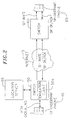
- FIG. 2 is a schematic block diagram of a data communication network supporting an emulation service for a SIP-unobservant phone 40 initiating telephonic communication with a SIP-observant phone 65.
- the SIP-unobservant phone 40 communicates over a SIP-observant network 45 that preferably supports the SIP signaling protocol set forth in RFC 2543.
- the SIP-observant network 45 is preferably a wide area network such as the Internet.
- Switching device 50 is coupled to a location server 55. Switching device 50 is also coupled to switching device 60 over the SIP-observant network 45 via one or more core switches operative on the network. Switching device 60 is in turn coupled to the SIP-observant phone 65.
- the SIP-observant and unobservant phones 40, 65, switching devices 50, 60, and location server 55, are interconnected via cables or other transmission media known in the art.
- the location server 55 preferably contains rules and algorithms for redirecting calls to a location where a user of the SIP-observant phone 65 is scheduled to be.
- the user's location may vary based on a time and/or day of the call.
- the location server 55 contains rules and algorithms for redirecting calls made to a call center, to an appropriate extension or agent. The redirection may be based on, for instance, caller information, agent availability, account information, and the like.
- Switching device 60 is preferably a switch, router, or other like device known in the art.
- Switching device 50 is preferably a private branch exchange (PBX) unit managing incoming and outgoing calls for a particular location.
- Switching device 50 includes an emulation client 50a for converting incoming SIP messages into PBX messages and outgoing PBX messages into SIP messages.
- the emulation client 50a takes the role of a UAC 15 in the data communication network.
- the emulation client 50a is implemented as a software program executing on the internal PBX processor.
- the SIP-observant phone 65 preferably includes a SIP stack for transmitting and receiving call establishment messages in a SIP-observant format.
- the SIP-observant phone preferably takes the role of a UAS 20 as described in detail in RFC 2543.
- the SIP-unobservant phone 40 is a legacy device that does not include a SIP stack.
- the SIP-unobservant phone 40 transmits and receives call establishment messages in a SIP-unobservant format preferably adhering to a PBX signaling protocol.
- the SIP-unobservant phone 40 initiates telephonic communication with the SIP-observant phone 65 by transmitting a PBX dial request with a particular telephone number.
- Switching device 50 receives the dial request and invokes its emulation client 50a to convert the request into a SIP-observant format.
- the emulation client 50a preferably transmits all or a portion of the telephone number to the location server 55 to determine whether the call is to be redirected to a different number or to a particular extension.
- the location server 55 returns the same number or a different number if the call is to be redirected.
- the location server 55 returns a list of all potential numbers for redirecting the call, and each number is tried for a connection until a response is received. In yet another embodiment, the location server is only engaged if the initially dialed number does not result in a successful connection.
- Switching device 50 preferably creates a SIP INVITE request with the identified telephone number and transmits the request over the SIP-observant network 45.
- Switching device 60 receives the INVITE request and transmits the request to the SIP-observant phone 65.
- the SIP-observant phone 65 preferably alerts the callee of the incoming call by emitting, for example, a ringing sound. If the call is answered, switching device 60 indicates a successful connection by returning a SIP OK response to the emulation client 50a.
- the emulation client 50a translates the OK response to a PBX answer event and transmits it to the SIP-unobservant phone.
- the emulation client 50a confirms the receipt of the OK response by transmitting a SIP ACK message to switching device 60.
- the SIP-observant and observant phones 40, 65 may then engage in communication until one of the parties terminate the call.
- FIG. 3 is a schematic block diagram of a data communication network supporting an emulation service for a SIP-unobservant phone 70 receiving a SIP call from a SIP-observant phone 75.
- the data communication network of FIG. 3 includes switching devices 80 and 85 coupled respectively to the SIP-observant and unobservant phones 75 and 70. Switching devices 80 and 85 allow the SIP-observant and unobservant phones 75 and 70 to communicate with each other over a SIP-observant network 90.
- Switching device 80 is preferably a switch, router, or other like device known in the art.
- Switching device 80 is coupled to a location server 95 preferably containing rules and algorithms for redirecting calls to a location where a user of the SIP-unobservant phone 70 is scheduled to be.
- the user's location may vary based on a time and/or day of the call.
- the location server 55 contains rules and algorithms for redirecting calls made to a call center, to an appropriate extension or agent. The redirection may be based on, for instance, caller information, agent availability, account information, and the like.
- Switching device 85 is preferably a PBX unit managing incoming and outgoing calls for a particular location.
- Switching device 85 includes an emulation client 85a for converting incoming SIP messages into PBX messages and outgoing PBX messages into SIP messages.
- the emulation client 85a takes the role of a UAS 20.
- the SIP-observant phone 75 initiates a telephonic communication with the SIP-unobservant phone 70 by transmitting a SIP INVITE request.
- the INVITE request preferably includes a SIP URL of switching device 85.
- the SIP URL preferably takes a form of "sip:user@host," where the user portion indicates a user name or a telephone number associated with the SIP-unobservant phone 70, and the host portion indicates a domain name or network address associated with switching device 85.
- Switching device 80 accepts the INVITE request and preferably transmits all or a portion of the SIP URL to the location server 95 to resolve the SIP URL to a more precise address.
- the location server 95 identifies a particular number to where to route the call.
- the location server 95 returns a list of all potential routing numbers, and each number is tried for a connection until a response is received.
- the location server is engaged to retrieve redirection information if an initially dialed number does not result in a successful connection.
- Switching device 80 preferably creates a new INVITE request with the identified telephone number and transmits the request to switching device 85 over the SIP-observant network 90.
- Switching device 85 receives the INVITE request and invokes its emulation client 85a to convert the INVITE request to a PBX call request.
- the SIP-unobservant phone 70 alerts the callee of the in-coming call by, for example, emitting a ringing sound. If the call is answered, the emulation client 85a transmits a SIP OK response to switching device 80 to indicate a successful connection.
- Switching device 80 confirms receipt of the OK response by transmitting a SIP ACK message.
- the SIP-observant and unobservant phones 75, 70 may then engage in communication until one of the parties terminate the call.
- FIG. 4 is a schematic block diagram of a data communication network supporting an emulation service for a SIP-unobservant phone 100 initiating a call with another SIP-unobservant phone 105.
- the data communication network of FIG. 4 includes switching devices 110 and 115 coupled respectively to SIP-unobservant phones 100 and 105.
- Each switching device 110, 115 is preferably a PBX unit including an emulation client 110a, 115a for translating between SIP and PBX messages.
- emulation client 110a takes the role of a UAC 15
- emulation client 115a takes the role of a UAS 20.
- Switching device 110 is coupled to a location server 125 preferably containing rules and algorithms for redirecting calls to a location where a user of SIP-unobservant phone 105 is scheduled to be.
- the user's location may vary based on a time and/or day of the call.
- the location server 55 contains rules and algorithms for redirecting calls made to a call center, to an appropriate extension or agent. The redirection may be based on, for instance, caller information, agent availability, account information, and the like.
- SIP-unobservant phone 100 initiates telephonic communication with SIP-unobservant phone 105 by transmitting a PBX dial request with the callee's telephone number.
- Switching device 110 receives the dial request and invokes its emulation client 110a to convert the request into a SIP-observant format.
- the emulation client 110a preferably transmits all or a portion of the telephone number to the location server 125 to determine whether the call is to be redirected to a different number.
- the location server 125 returns the same number or a different number if the call is to be redirected.
- the location server 125 returns a list of all potential numbers for redirecting the call, and each number is tried for a connection until a response is received. In yet another embodiment, the location server is only engaged if the initially dialed number does not result in a successful connection.
- Switching device 110 preferably creates a SIP INVITE request with the identified number and transmits the request over the SIP-observant network 120.
- Switching device 115 receives the INVITE request and invokes its emulation client 115a to convert the INVITE request to a PBX call request.
- the SIP-unobservant phone 105 alerts the callee of the in-coming call by, for example, emitting a ringing sound.
- the emulation client 115a transmits a SIP OK response to emulation client 110a to indicate a successful connection.
- Emulation client 110 converts the OK response to a PBX answer event and transmits it to SIP-unobservant phone 100.
- Emulation client 110a confirms receipt of the OK response by transmitting a SIP ACK message.
- the SIP-unobservant phones 110, 115 may then engage in communication until one of the parties terminate the call.
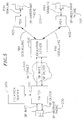
- FIG. 5 is a schematic block diagram of a data communication network including an independent emulation server 500 that does not reside within a data communication switch.
- the data communication network includes a switching device 305 coupled to a SIP-observant phone 200.
- Switching device 305 is also coupled to a location server 505 and a SIP-observant network 510.
- the location server 505 preferably contains rules and algorithms for redirecting calls to a location where a user of SIP-unobservant phone 205 or 300 is scheduled to be.
- the location server 55 contains rules and algorithms for redirecting calls made to a call center, to an appropriate extension or agent. The redirection may be based on, for instance, caller information, agent availability, account information, and the like.
- the SIP-observant network 305 is a wide area network; such as the Internet, preferably supporting the SIP signaling protocol set forth in RFC 2543.
- the data communication network also includes PBX switches 400 and 405 coupled respectively to SIP-unobservant phones 205 and 300.
- PBX switches 400 and 405 may adhere to the same or different types of PBX signaling protocols.
- FIG. 5 illustrates only two PBX switches, a person skilled in the art should recognize that the network may support multiple PBX switches and is not limited to only two.
- the data communication network illustrated in FIG. 5 provides translation between SIP and PBX messages via the separate emulation server 500.
- the emulation server is not limited to translating messages to/from a single PBX unit, but includes logic to translate messages to/from multiple PBX units of different types.
- the SIP-observant phone 200 initiates telephonic communication with SIP-unobservant phone 205 or 300 by transmitting a SIP INVITE request.
- the INVITE request preferably includes a SIP URL of the emulation server 500.
- the switching device 305 accepts the INVITE request and transmits all or a portion of the SIP URL to the location server 505 for resolving the SIP URL to a more precise address.
- the location server 505 identifies a particular number to where to route the call.
- the location server 505 returns a list of all potential routing numbers, and each number is tried for a connection until a response is received.
- the location server is engaged for retrieving redirection information if an initially dialed number does not result in a successful connection.
- Switching device 305 preferably creates a new INVITE request with the identified telephone number and transmits the request to the emulation server 500 over the SIP-observant network 510.
- the emulation server 500 receives the INVITE request and identifies the specific type of PBX to which the request should be routed and translated.
- the emulation server maintains a mapping of addresses to PBX types, and uses the mapping information to select the appropriate PBX signaling- type. For example, if the INVITE request is addressed to "sip:expert1@commerce.com," the emulation server 500 may determine that the call should be routed to PBX unit 400 and thus, translated to the type of signaling used by PBX unit 400.
- the emulation server 500 may determine that the call should be routed to PBX unit 405 and thus, translated to the type of signaling used by PBX unit 405.
- the routing of the call to the appropriate PBX unit is preferably transparent to the SIP-observant phone 200.
- the emulation server 500 translates the INVITE request to the PBX signaling type used by the identified PBX unit. Thus, if the call is addressed to PBX unit 400, the emulation server translates the INVITE request to the signaling type used by PBX unit 400.
- SIP-unobservant phone 205 alerts the callee of the in-coming call by, for example, emitting a ringing sound. If the call is answered, PBX unit 400 transmits an answer response to the emulation server 500. The answer response is translated to a SIP OK response and transmitted to switching device 305 to indicate a successful connection. Switching device 305 confirms receipt of the OK response by transmitting a SIP ACK message.
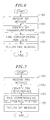
- FIG. 6 is a flow diagram of the process taken by the emulation client/server 50a, 85a, 110a, 115a, 500 for translating SIP messages into PBX messages.
- the emulation client/server receives a call initiation message in a SIP-observant format (160).
- the call initiation message may be an INVITE request, OK response, and the like.
- the emulation client/server identifies the SIP request/response to be translated (165) and finds a corresponding PBX event/service via a database lookup, table lookup, or in-line code (170).
- the PBX event/service is preferably a CSTA, CTI, or other PBX signaling event that does not adhere to the SIP signaling protocol.
- the emulation client/server identifies the appropriate PBX unit and translates the SIP request/response to the identified PBX signaling type. The emulation client/server then returns the translated PBX message (175).
- FIG. 7 is a flow diagram of a process taken by the emulation client/server 50a, 85a, 110a, 115a, 500 for translating PBX messages into SIP messages.
- the emulation client/server receives a call initiation message in a SIP-unobservant format (180).
- the call initiation message may be a dial request, answer response, call request, or the like, transmitted as a CSTA, CTI, or other PBX signaling event that does not adhere to the SIP signaling protocol.
- the emulation client/server identifies the PBX event/service to be translated (185) and finds a corresponding SIP request/response via a database lookup, table lookup, or in-line code (190).
- the emulation client/server then returns the translated SIP message (195).
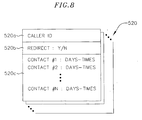
- FIG. 8 is a schematic diagram of a location database stored in the location server 55 of FIG. 2, which is representative of location servers 95, 125, and 505.
- the location database includes a plurality of location records 520, with each record preferably being headed and identified by a unique caller identifier (ID) 520a.
- ID preferably includes all or a portion of the callee's contact information provided by the switching device 50.
- the contact information is preferably an express telephone number if a SIP-unobservant phone initiates the call, or a SIP URL if a SIP-observant phone initiates the call. Alternatively, the contact information may be the caller's name or the caller's customer number.
- Each location record 520 may further indicate whether the call is to be redirected 520b to a particular number or agent, or whether the call is to be transmitted to the originally indicated number.
- a contact field 520c includes one or more contact numbers to which a call may be redirected.
- each contact number is preferably associated with a day and a range of times indicating when a call should be rerouted to the indicated number.
- the contact field indicates a particular extension or available agent information for routing a call placed to a call center.
- the location record may include other information for determining and when and how to redirect a call.
- FIG. 9 is a flow diagram of a process for utilizing the location database of FIG. 8 to redirect calls according to one embodiment of the invention. According to the illustrated embodiment, a call may be redirected if an initially dialed number does not result in a successful connection.
- the process starts, and either a SIP-observant or SIP-unobservant phone initiates a call to a particular number (530).
- a determination is made if the call has been answered (535) preferably based on the receipt of a SIP OK response. If the call has not been answered, the location server is engaged to retrieve an appropriate location record 520 based on either the called number or the calling party's information (538). A determination is then made as to whether the call is to be redirected (540). The location server may examine the redirect field 520c of the location record 520 to make this determination. If the call is to be redirected, the appropriate redirect information is retrieved from the contact field 520d, and a call is initiated to the redirect number (545).
- FIG. 10 is a flow diagram of a process for utilizing the location database of FIG. 8 to redirect calls according to an alternative embodiment of the invention.
- the location database is engaged prior to initiating the call.
- the process starts and either a SIP-observant or SIP-unobservant phone initiates a call to a particular number (530). However, instead of trying the number first for a response, the location server is invoked to retrieve the appropriate location record (560). A determination is then made as to whether to redirect the call to a more precise address, a particular extension number, or an alternate telephone number where the callee is scheduled to be (565). The location server may examine the redirect field 520c of the location record 520 to make this determination. If the call is to be redirected, the appropriate redirect information is retrieved from the contact field 520d, and a call is initiated to the redirect number (570).
- SIP-unobservant phones may utilize any non-SIP signaling methods besides PBX to communicate with the SIP-observant phones.
- the emulation client/server may further be modified without departing from the scope and spirit of the present invention to allow a telephone utilizing any such non-SIP signaling method to communicate via the SIP-observant network.
Landscapes
- Engineering & Computer Science (AREA)
- Computer Networks & Wireless Communication (AREA)
- Signal Processing (AREA)
- Business, Economics & Management (AREA)
- General Business, Economics & Management (AREA)
- Multimedia (AREA)
- Physics & Mathematics (AREA)
- Astronomy & Astrophysics (AREA)
- General Physics & Mathematics (AREA)
- Telephonic Communication Services (AREA)
- Data Exchanges In Wide-Area Networks (AREA)
- Communication Control (AREA)
Applications Claiming Priority (4)
| Application Number | Priority Date | Filing Date | Title |
|---|---|---|---|
| US22456600P | 2000-08-10 | 2000-08-10 | |
| US224566P | 2000-08-10 | ||
| US09/781,851 US7035248B2 (en) | 2000-08-10 | 2001-02-12 | Switch with emulation client |
| US781851 | 2001-02-12 |
Publications (2)
| Publication Number | Publication Date |
|---|---|
| EP1179941A2 true EP1179941A2 (fr) | 2002-02-13 |
| EP1179941A3 EP1179941A3 (fr) | 2004-03-17 |
Family
ID=26918822
Family Applications (1)
| Application Number | Title | Priority Date | Filing Date |
|---|---|---|---|
| EP01440256A Ceased EP1179941A3 (fr) | 2000-08-10 | 2001-08-06 | Client d'émulation d'un commutateur |
Country Status (5)
| Country | Link |
|---|---|
| US (1) | US7035248B2 (fr) |
| EP (1) | EP1179941A3 (fr) |
| JP (1) | JP2002118594A (fr) |
| CN (1) | CN100377539C (fr) |
| AU (1) | AU5781201A (fr) |
Cited By (12)
| Publication number | Priority date | Publication date | Assignee | Title |
|---|---|---|---|---|
| WO2003049490A1 (fr) * | 2001-12-04 | 2003-06-12 | Siemens Aktiengesellschaft | Procede de transmission de donnees d'information et de signalisation dans un systeme de communication a repartition optimisee du plan des donnees de commande et du plan des donnees d'information pour des ordinateurs hotes |
| EP1363444A3 (fr) * | 2002-05-17 | 2004-07-14 | Alcatel | Autocommutateur privé tenant compte de la présence |
| EP1507395A1 (fr) * | 2003-08-14 | 2005-02-16 | Siemens Aktiengesellschaft | Procédé pour l'établissement de renvoi d'appels pour un poste téléphonique SIP par un client SIP dans un réseau mixte à commutation de circuit et un à commutation de paquet |
| WO2005032090A1 (fr) * | 2003-09-29 | 2005-04-07 | Siemens Aktiengesellschaft | Entite de reseau permettant d'interconnecter des points terminaux aux capacites differentes |
| WO2008003711A3 (fr) * | 2006-07-05 | 2008-05-02 | Siemens Ag | PROCÉDÉ ET TERMINAL DE COMMUNICATION VoIP |
| EP1874016A4 (fr) * | 2005-04-21 | 2008-10-01 | Huawei Tech Co Ltd | Procede pour realiser un signal de rappel dans un systeme de communication |
| WO2008086412A3 (fr) * | 2007-01-09 | 2008-12-31 | Iskoot Inc | Procédé et système de transmission de données audio entre des dispositifs informatiques |
| US8351419B2 (en) | 2005-01-19 | 2013-01-08 | Qualcomm Iskoot, Inc. | Local access to a mobile network |
| US8391848B2 (en) | 2007-06-07 | 2013-03-05 | Qualcomm Iskoot, Inc. | Telecommunication call support for mobile devices with presence features |
| US8756328B2 (en) | 2005-01-19 | 2014-06-17 | Qualcomm Connected Experiences, Inc. | Caller-callee association of a plurality of networked devices with direct dial through thin client |
| US8856359B2 (en) | 2005-06-29 | 2014-10-07 | Qualcomm Connected Experiences, Inc. | Caller-callee association of a plurality of networked devices |
| US9479604B2 (en) | 2006-01-30 | 2016-10-25 | Qualcomm Incorporated | System and method for dynamic phone book and network content links in a mobile device |
Families Citing this family (70)
| Publication number | Priority date | Publication date | Assignee | Title |
|---|---|---|---|---|
| US20070121601A1 (en) * | 1998-09-24 | 2007-05-31 | Genesys Telecommunications Laboratories, Inc | Integrating SIP Control Messaging into Existing Communication Center Routing Infrastructure |
| US7120141B2 (en) * | 1998-09-24 | 2006-10-10 | Genesys Telecommunications Laboratories, Inc. | Integrating SIP control messaging into existing communication center routing infrastructure |
| US6958994B2 (en) | 1998-09-24 | 2005-10-25 | Genesys Telecommunications Laboratories, Inc. | Call transfer using session initiation protocol (SIP) |
| US8266266B2 (en) | 1998-12-08 | 2012-09-11 | Nomadix, Inc. | Systems and methods for providing dynamic network authorization, authentication and accounting |
| US7194554B1 (en) | 1998-12-08 | 2007-03-20 | Nomadix, Inc. | Systems and methods for providing dynamic network authorization authentication and accounting |
| US8713641B1 (en) | 1998-12-08 | 2014-04-29 | Nomadix, Inc. | Systems and methods for authorizing, authenticating and accounting users having transparent computer access to a network using a gateway device |
| AU1224101A (en) | 1999-10-22 | 2001-05-08 | Nomadix, Inc. | Gateway device having an xml interface and associated method |
| WO2002052827A2 (fr) * | 2000-12-27 | 2002-07-04 | Citel Technologies Ltd. | Passerelle d'utilisation de combines telephoniques pbx numeriques sans ip avec un unite de commande d'appel ip |
| US20020103850A1 (en) * | 2001-01-31 | 2002-08-01 | Moyer Stanley L. | System and method for out-sourcing the functionality of session initiation protocol (SIP) user agents to proxies |
| US20020131395A1 (en) * | 2001-03-19 | 2002-09-19 | Chenghui Wang | Session initiation protocol (SIP) user agent in a serving GPRS support node (SGSN) |
| US7599351B2 (en) * | 2001-03-20 | 2009-10-06 | Verizon Business Global Llc | Recursive query for communications network data |
| US8811164B2 (en) * | 2001-03-20 | 2014-08-19 | Verizon Patent And Licensing Inc. | Selective feature blocking in a communications network |
| US7242680B2 (en) * | 2001-03-20 | 2007-07-10 | Verizon Business Global Llc | Selective feature blocking in a communications network |
| US7283519B2 (en) * | 2001-04-13 | 2007-10-16 | Esn, Llc | Distributed edge switching system for voice-over-packet multiservice network |
| US7020707B2 (en) * | 2001-05-30 | 2006-03-28 | Tekelec | Scalable, reliable session initiation protocol (SIP) signaling routing node |
| US20040028080A1 (en) * | 2002-08-06 | 2004-02-12 | Harish Samarasinghe | Method of defining a SIP message body for communications between core network elements |
| US7254643B1 (en) * | 2002-08-08 | 2007-08-07 | At&T Corp. | System and method for providing multi-media services to communication devices over a communications network |
| DE10255923A1 (de) * | 2002-11-29 | 2004-06-24 | Siemens Ag | Verfahren zur Intergration eines paketorientierten Netzwerks in ein Kommunikationssystem |
| KR100475186B1 (ko) * | 2002-12-02 | 2005-03-10 | 삼성전자주식회사 | 접속 설정 프로토콜을 이용한 단말 장치의 등록 방법 |
| US7852859B2 (en) * | 2002-12-31 | 2010-12-14 | Alcatel Lucent | System and method for interfacing legacy IP-PBX systems to SIP networks |
| US7180912B1 (en) | 2003-01-06 | 2007-02-20 | At&T Corp. | System and method for providing a plurality of multi-media services using a number of media servers to form a preliminary interactive communication relationship with a calling communication device |
| GB2398458B (en) * | 2003-02-15 | 2005-05-25 | Ericsson Telefon Ab L M | Conversational bearer negotiation |
| US7508923B1 (en) | 2003-02-27 | 2009-03-24 | At&T Corp. | Call control element constructing a session initiation protocol (SIP) message including provisions for incorporating address related information of public switched telephone network (PSTN) based devices |
| US7283516B1 (en) * | 2003-04-07 | 2007-10-16 | At&T Corp. | Session initiation protocol (SIP) messages incorporating address and/or routing information obtained from a contact header of a redirect message |
| US20040235520A1 (en) * | 2003-05-20 | 2004-11-25 | Cadiz Jonathan Jay | Enhanced telephony computer user interface allowing user interaction and control of a telephone using a personal computer |
| US7697506B2 (en) * | 2003-08-29 | 2010-04-13 | Microsoft Corporation | System and method for enhanced computer telephony integration and interaction |
| US7251254B2 (en) | 2003-09-03 | 2007-07-31 | At&T Corp. | Telecommunication network system and method in communication services using session initiation protocol |
| DE10345017A1 (de) * | 2003-09-23 | 2005-04-14 | Deutsche Telekom Ag | Verfahren und Vorrichtung zur Adressierbarkeit von Personen für Sprachkommunikation hinter beliebigen verbindungsorientierten Anschlussarten |
| US7216221B2 (en) * | 2003-09-30 | 2007-05-08 | Microsoft Corporation | Method and system for unified audio control on a personal computer |
| GB0324596D0 (en) * | 2003-10-21 | 2003-11-26 | Nokia Corp | Sessions in a communication system |
| KR100600414B1 (ko) * | 2003-10-28 | 2006-07-13 | (주)씨앤에스 테크놀로지 | 사용자 이동성을 지원하는 멀티미디어 사서함의 서비스제공방법 |
| US7664846B2 (en) * | 2003-11-26 | 2010-02-16 | Siemens Communications, Inc. | System and method for distributed modeling of real time systems |
| CN1898660B (zh) * | 2003-12-01 | 2014-06-25 | 美商内数位科技公司 | 基于会话初始协议的用户发起切换 |
| US7940792B2 (en) * | 2004-02-11 | 2011-05-10 | Microsoft Corporation | System and methods for facilitating third-party call and device control |
| JP4276568B2 (ja) | 2004-03-26 | 2009-06-10 | 株式会社日立コミュニケーションテクノロジー | ルータ及びsipサーバ |
| US8396973B2 (en) * | 2004-10-22 | 2013-03-12 | Microsoft Corporation | Distributed speech service |
| US20060104259A1 (en) * | 2004-11-15 | 2006-05-18 | Cisco Technology, Inc. | System and method for executing a multi-modal transfer in a session initiation protocol (SIP) environment |
| JP2006197187A (ja) * | 2005-01-13 | 2006-07-27 | Hitachi Communication Technologies Ltd | Isdn/ip通信装置 |
| JP4839620B2 (ja) * | 2005-01-18 | 2011-12-21 | 沖電気工業株式会社 | 呼制御システム、呼制御方法、および呼制御プログラム |
| US9036619B2 (en) * | 2005-05-16 | 2015-05-19 | Mist Silicon Limited Liability Company | Systems and methods for a session initiation protocol (SIP) translator |
| EP1821488B1 (fr) * | 2006-02-15 | 2012-08-08 | Alcatel Lucent | Procédé et dispositif mise à disposition la mobilité de session |
| US8351439B2 (en) * | 2006-05-03 | 2013-01-08 | Cisco Technology, Inc. | Techniques for measuring media statistics on forked media using a DSP |
| US7929419B2 (en) * | 2006-08-04 | 2011-04-19 | Tekelec | Methods, systems, and computer program products for inhibiting message traffic to an unavailable terminating SIP server |
| CN101132345B (zh) * | 2006-08-21 | 2010-09-08 | 华为技术有限公司 | 在电路域实现pnm重定向业务的方法及其系统及网元 |
| JP4410236B2 (ja) * | 2006-11-28 | 2010-02-03 | 株式会社東芝 | 電話システムとその呼制御方法 |
| CN101197877B (zh) * | 2006-12-08 | 2011-03-30 | 华为技术有限公司 | 业务处理方法以及应用服务器 |
| WO2008067757A1 (fr) * | 2006-12-08 | 2008-06-12 | Huawei Technologies Co., Ltd. | Procédé, système et serveur d'applications de traitement de service |
| US20080144602A1 (en) * | 2006-12-14 | 2008-06-19 | Nortel Networks Limited | Providing sip interworking in a next generation network |
| CN101330642B (zh) * | 2007-07-25 | 2011-06-22 | 中兴通讯股份有限公司 | 用户设备重定向方法 |
| EP2179541B1 (fr) * | 2007-07-31 | 2018-11-21 | Tekelec, Inc. | Systèmes, procédés et produits de programme informatique pour distribuer une application ou un réseau de communications de couche supérieure signalant des informations d'état de fonctionnement d'entité parmi des entités de protocole d'initiation de session (sip) |
| US20090073960A1 (en) * | 2007-09-18 | 2009-03-19 | Yahoo! Inc. | Bridging phone networks using voip to preserve in-network calling advantages |
| CN101420729A (zh) * | 2007-10-26 | 2009-04-29 | 华为技术有限公司 | 一种实现重定向的方法、系统和设备 |
| RO122887B1 (ro) * | 2008-03-20 | 2010-03-30 | G3 Nova Communications S.R.L. | Metodă de conectare a mai multor clienţi csta la o centrală telefonică şi sistem de telecomunicaţie |
| US8467306B2 (en) * | 2008-12-04 | 2013-06-18 | At&T Intellectual Property I, L. P. | Blending telephony services in an internet protocol multimedia subsystem |
| US8139565B2 (en) * | 2009-02-09 | 2012-03-20 | Zoltes, Inc. | Telecommunications system and method for connecting a CSTA client to several PBXS |
| JP2011029821A (ja) * | 2009-07-23 | 2011-02-10 | Canon Inc | 情報処理装置、情報処理装置の制御方法、及び情報処理装置の制御プログラム |
| US20130147901A1 (en) * | 2011-12-07 | 2013-06-13 | Reginald Weiser | Systems and methods for video enabling pbx systems without a sip stack |
| US9609077B1 (en) * | 2012-05-30 | 2017-03-28 | Crimson Corporation | Forwarding content on a client based on a request |
| US8792633B2 (en) | 2012-09-07 | 2014-07-29 | Genesys Telecommunications Laboratories, Inc. | Method of distributed aggregation in a call center |
| US9900432B2 (en) | 2012-11-08 | 2018-02-20 | Genesys Telecommunications Laboratories, Inc. | Scalable approach to agent-group state maintenance in a contact center |
| US9756184B2 (en) | 2012-11-08 | 2017-09-05 | Genesys Telecommunications Laboratories, Inc. | System and method of distributed maintenance of contact center state |
| US10412121B2 (en) | 2012-11-20 | 2019-09-10 | Genesys Telecommunications Laboratories, Inc. | Distributed aggregation for contact center agent-groups on growing interval |
| US9477464B2 (en) | 2012-11-20 | 2016-10-25 | Genesys Telecommunications Laboratories, Inc. | Distributed aggregation for contact center agent-groups on sliding interval |
| US10181974B2 (en) | 2012-12-04 | 2019-01-15 | Genesys Telecommunications Laboratories, Inc. | Distributed agent reservation in SIP cluster |
| US9485360B2 (en) | 2012-12-11 | 2016-11-01 | Genesys Telecommunications Laboratories, Inc. | Contact center session preservation |
| US9001975B2 (en) | 2012-12-11 | 2015-04-07 | Genesys Telecommunications Laboratories, Inc. | Contact center recording service |
| US9578171B2 (en) | 2013-03-26 | 2017-02-21 | Genesys Telecommunications Laboratories, Inc. | Low latency distributed aggregation for contact center agent-groups on sliding interval |
| US9154627B2 (en) | 2013-05-13 | 2015-10-06 | Genesys Telecommunication Laboratories, Inc. | Activities assignment optimization for multi-skill contact center |
| US11012931B2 (en) | 2019-05-24 | 2021-05-18 | Oracle International Corporation | Methods, systems, and computer readable media for enhanced signaling gateway (SGW) status detection and selection for emergency calls |
| US12156279B1 (en) | 2021-09-13 | 2024-11-26 | T-Mobile Usa, Inc. | Channel quality indication in session initiation protocol signaling |
Family Cites Families (10)
| Publication number | Priority date | Publication date | Assignee | Title |
|---|---|---|---|---|
| US6049820A (en) * | 1996-06-03 | 2000-04-11 | International Business Machines Corporation | Multiplexing of clients and applications among multiple servers |
| US6032043A (en) * | 1996-09-25 | 2000-02-29 | Telefonaktiebolaget L M Ericsson (Publ) | Home location register feature dispatching and arbitration in a wireless intelligent network |
| US6584093B1 (en) * | 1998-08-25 | 2003-06-24 | Cisco Technology, Inc. | Method and apparatus for automatic inter-domain routing of calls |
| NO308019B1 (no) * | 1998-11-27 | 2000-07-03 | Ericsson Telefon Ab L M | FremgangsmÕte for Õ utvide bruken av SIP (Session Initiation Protocol) |
| US6775269B1 (en) * | 1999-03-30 | 2004-08-10 | Telecom Technologies, Inc. | Method and system for routing telephone calls between a public switched telephone network and an internet protocol network |
| US6678246B1 (en) * | 1999-07-07 | 2004-01-13 | Nortel Networks Limited | Processing data packets |
| US6453034B1 (en) * | 1999-07-29 | 2002-09-17 | Mci Worldcom, Inc. | Method of and system for extending internet telephony over virtual private network direct access lines |
| US6636596B1 (en) * | 1999-09-24 | 2003-10-21 | Worldcom, Inc. | Method of and system for providing intelligent network control services in IP telephony |
| US6477150B1 (en) * | 2000-03-03 | 2002-11-05 | Qualcomm, Inc. | System and method for providing group communication services in an existing communication system |
| US6738390B1 (en) * | 2000-04-03 | 2004-05-18 | Siemens Information & Communication Networks, Inc. | SIP-H.323 gateway implementation to integrate SIP agents into the H.323 system |
-
2001
- 2001-02-12 US US09/781,851 patent/US7035248B2/en not_active Expired - Lifetime
- 2001-08-02 JP JP2001234473A patent/JP2002118594A/ja not_active Withdrawn
- 2001-08-06 AU AU57812/01A patent/AU5781201A/en not_active Abandoned
- 2001-08-06 EP EP01440256A patent/EP1179941A3/fr not_active Ceased
- 2001-08-10 CN CNB011245662A patent/CN100377539C/zh not_active Expired - Fee Related
Non-Patent Citations (1)
| Title |
|---|
| None * |
Cited By (21)
| Publication number | Priority date | Publication date | Assignee | Title |
|---|---|---|---|---|
| WO2003049490A1 (fr) * | 2001-12-04 | 2003-06-12 | Siemens Aktiengesellschaft | Procede de transmission de donnees d'information et de signalisation dans un systeme de communication a repartition optimisee du plan des donnees de commande et du plan des donnees d'information pour des ordinateurs hotes |
| EP1363444A3 (fr) * | 2002-05-17 | 2004-07-14 | Alcatel | Autocommutateur privé tenant compte de la présence |
| EP1507395A1 (fr) * | 2003-08-14 | 2005-02-16 | Siemens Aktiengesellschaft | Procédé pour l'établissement de renvoi d'appels pour un poste téléphonique SIP par un client SIP dans un réseau mixte à commutation de circuit et un à commutation de paquet |
| WO2005018210A1 (fr) * | 2003-08-14 | 2005-02-24 | Siemens Aktiengesellschaft | Procede et dispositif de deviation d'appel pour le numero de telephone sip d'un client sip dans un reseau mixte de communication par fils et a commutation de paquets |
| WO2005032090A1 (fr) * | 2003-09-29 | 2005-04-07 | Siemens Aktiengesellschaft | Entite de reseau permettant d'interconnecter des points terminaux aux capacites differentes |
| GB2406464B (en) * | 2003-09-29 | 2006-07-05 | Siemens Ag | Network entity |
| CN1860763B (zh) * | 2003-09-29 | 2013-01-16 | 西门子企业通讯有限责任两合公司 | 用于互连不同容量的sip端点的网络实体 |
| US7554927B2 (en) | 2003-09-29 | 2009-06-30 | Siemes Aktiengesellschaft | Network entity for interconnecting SIP end-points of different capabilities |
| US8756328B2 (en) | 2005-01-19 | 2014-06-17 | Qualcomm Connected Experiences, Inc. | Caller-callee association of a plurality of networked devices with direct dial through thin client |
| US8351419B2 (en) | 2005-01-19 | 2013-01-08 | Qualcomm Iskoot, Inc. | Local access to a mobile network |
| US7986775B2 (en) | 2005-04-21 | 2011-07-26 | Huawei Technologies Co., Ltd. | Method for realizing ring back tone in communication system |
| EP1874016A4 (fr) * | 2005-04-21 | 2008-10-01 | Huawei Tech Co Ltd | Procede pour realiser un signal de rappel dans un systeme de communication |
| US8856359B2 (en) | 2005-06-29 | 2014-10-07 | Qualcomm Connected Experiences, Inc. | Caller-callee association of a plurality of networked devices |
| US9294514B2 (en) | 2005-06-29 | 2016-03-22 | Qualcomm Incorporated | Caller-callee association of a plurality of networked devices |
| US9544439B2 (en) | 2005-06-29 | 2017-01-10 | Qualcomm Incorporated | Caller-callee association of a plurality of networked devices |
| US9479604B2 (en) | 2006-01-30 | 2016-10-25 | Qualcomm Incorporated | System and method for dynamic phone book and network content links in a mobile device |
| WO2008003711A3 (fr) * | 2006-07-05 | 2008-05-02 | Siemens Ag | PROCÉDÉ ET TERMINAL DE COMMUNICATION VoIP |
| US9398160B2 (en) | 2006-07-05 | 2016-07-19 | Unify Gmbh & Co. Kg | Method and communication terminal for providing VoIP |
| WO2008086412A3 (fr) * | 2007-01-09 | 2008-12-31 | Iskoot Inc | Procédé et système de transmission de données audio entre des dispositifs informatiques |
| US8391848B2 (en) | 2007-06-07 | 2013-03-05 | Qualcomm Iskoot, Inc. | Telecommunication call support for mobile devices with presence features |
| US8805356B2 (en) | 2007-06-07 | 2014-08-12 | Qualcomm Connected Experiences, Inc. | Telecommunication call support for mobile devices with presence features |
Also Published As
| Publication number | Publication date |
|---|---|
| JP2002118594A (ja) | 2002-04-19 |
| CN100377539C (zh) | 2008-03-26 |
| EP1179941A3 (fr) | 2004-03-17 |
| AU5781201A (en) | 2002-08-22 |
| CN1339899A (zh) | 2002-03-13 |
| US20020110113A1 (en) | 2002-08-15 |
| US7035248B2 (en) | 2006-04-25 |
Similar Documents
| Publication | Publication Date | Title |
|---|---|---|
| US7035248B2 (en) | Switch with emulation client | |
| US8194838B2 (en) | Systems and methods for implementing call pickup in a SIP environment | |
| US8040873B2 (en) | Distributed integration of legacy PBX system with SIP networks | |
| EP1652359B1 (fr) | Procede et systeme permettant de supprimer les flux multimedia anticipes dans un reseau de communication | |
| AU2007313049C1 (en) | Client controlled dynamic call forwarding | |
| US8670535B2 (en) | Associating a telephone call with a dialog based on a computer protocol such as SIP | |
| US8848693B2 (en) | Automated attendant multimedia session | |
| EP1230767A1 (fr) | Depot et retrait de message vocal/video de telephone internet | |
| WO2004032471A1 (fr) | Service de prise en charge d'appels multimedia | |
| EP1311103B1 (fr) | Méthode pour intégrer un autocommutateur privé dans un réseau SIP |
Legal Events
| Date | Code | Title | Description |
|---|---|---|---|
| PUAI | Public reference made under article 153(3) epc to a published international application that has entered the european phase |
Free format text: ORIGINAL CODE: 0009012 |
|
| AK | Designated contracting states |
Kind code of ref document: A2 Designated state(s): AT BE CH CY DE DK ES FI FR GB GR IE IT LI LU MC NL PT SE TR |
|
| AX | Request for extension of the european patent |
Free format text: AL;LT;LV;MK;RO;SI |
|
| PUAL | Search report despatched |
Free format text: ORIGINAL CODE: 0009013 |
|
| RIC1 | Information provided on ipc code assigned before grant |
Ipc: 7H 04M 7/00 A |
|
| AK | Designated contracting states |
Kind code of ref document: A3 Designated state(s): AT BE CH CY DE DK ES FI FR GB GR IE IT LI LU MC NL PT SE TR |
|
| AX | Request for extension of the european patent |
Extension state: AL LT LV MK RO SI |
|
| 17P | Request for examination filed |
Effective date: 20040916 |
|
| 17Q | First examination report despatched |
Effective date: 20041013 |
|
| AKX | Designation fees paid |
Designated state(s): AT BE CH CY DE DK ES FI FR GB GR IE IT LI LU MC NL PT SE TR |
|
| RAP1 | Party data changed (applicant data changed or rights of an application transferred) |
Owner name: ALCATEL LUCENT |
|
| STAA | Information on the status of an ep patent application or granted ep patent |
Free format text: STATUS: THE APPLICATION HAS BEEN REFUSED |
|
| 18R | Application refused |
Effective date: 20070315 |