EP1180883A2 - Lernendes Verfahren von Quellen für eine Datenübertragungsvermittlungsstelle - Google Patents
Lernendes Verfahren von Quellen für eine Datenübertragungsvermittlungsstelle Download PDFInfo
- Publication number
- EP1180883A2 EP1180883A2 EP01440255A EP01440255A EP1180883A2 EP 1180883 A2 EP1180883 A2 EP 1180883A2 EP 01440255 A EP01440255 A EP 01440255A EP 01440255 A EP01440255 A EP 01440255A EP 1180883 A2 EP1180883 A2 EP 1180883A2
- Authority
- EP
- European Patent Office
- Prior art keywords
- packet
- port
- source
- specified
- lock bit
- Prior art date
- Legal status (The legal status is an assumption and is not a legal conclusion. Google has not performed a legal analysis and makes no representation as to the accuracy of the status listed.)
- Granted
Links
- 238000004891 communication Methods 0.000 title claims description 11
- 238000000034 method Methods 0.000 claims abstract description 73
- 230000004044 response Effects 0.000 claims 10
- 230000001934 delay Effects 0.000 claims 1
- 238000007726 management method Methods 0.000 abstract 1
- 230000007704 transition Effects 0.000 abstract 1
- 230000005540 biological transmission Effects 0.000 description 10
- 238000010586 diagram Methods 0.000 description 8
- 230000006870 function Effects 0.000 description 1
Images



Classifications
-
- H—ELECTRICITY
- H04—ELECTRIC COMMUNICATION TECHNIQUE
- H04L—TRANSMISSION OF DIGITAL INFORMATION, e.g. TELEGRAPHIC COMMUNICATION
- H04L49/00—Packet switching elements
- H04L49/35—Switches specially adapted for specific applications
- H04L49/351—Switches specially adapted for specific applications for local area network [LAN], e.g. Ethernet switches
-
- H—ELECTRICITY
- H04—ELECTRIC COMMUNICATION TECHNIQUE
- H04L—TRANSMISSION OF DIGITAL INFORMATION, e.g. TELEGRAPHIC COMMUNICATION
- H04L12/00—Data switching networks
- H04L12/28—Data switching networks characterised by path configuration, e.g. LAN [Local Area Networks] or WAN [Wide Area Networks]
- H04L12/46—Interconnection of networks
- H04L12/4604—LAN interconnection over a backbone network, e.g. Internet, Frame Relay
- H04L12/462—LAN interconnection over a bridge based backbone
- H04L12/4625—Single bridge functionality, e.g. connection of two networks over a single bridge
-
- H—ELECTRICITY
- H04—ELECTRIC COMMUNICATION TECHNIQUE
- H04L—TRANSMISSION OF DIGITAL INFORMATION, e.g. TELEGRAPHIC COMMUNICATION
- H04L45/00—Routing or path finding of packets in data switching networks
- H04L45/74—Address processing for routing
- H04L45/742—Route cache; Operation thereof
-
- H—ELECTRICITY
- H04—ELECTRIC COMMUNICATION TECHNIQUE
- H04L—TRANSMISSION OF DIGITAL INFORMATION, e.g. TELEGRAPHIC COMMUNICATION
- H04L47/00—Traffic control in data switching networks
- H04L47/10—Flow control; Congestion control
- H04L47/34—Flow control; Congestion control ensuring sequence integrity, e.g. using sequence numbers
-
- H—ELECTRICITY
- H04—ELECTRIC COMMUNICATION TECHNIQUE
- H04L—TRANSMISSION OF DIGITAL INFORMATION, e.g. TELEGRAPHIC COMMUNICATION
- H04L49/00—Packet switching elements
- H04L49/20—Support for services
- H04L49/201—Multicast operation; Broadcast operation
Definitions
- the present invention relates to devices for source learning and, more particularly, to devices for distributed source learning in a data communication switch.
- Data communication switches interconnect network devices residing in different network domains.
- Such switches typically include a plurality of switching modules for switching data traffic between external network devices and a centralized management module for configuring the switching modules.
- Part of the switching module configuration is "source learning.”
- Source learning is the process of dynamically learning associations between ports and the addresses of network devices they support by reviewing source addresses in inbound packets. By making such address-port associations, packets can be advantageously forwarded only on the ports of the switch supporting packet destinations rather than being "flooded" on all ports.
- source addresses in packets are reviewed by a switching module upon ingress and unknown source addresses are submitted to the source learning function resident on a centralized management module for processing.
- the management module configures the address-port association on the switching modules such that future inbound packets destined to that address can be forwarded without unnecessary flooding.
- the invention provides an efficient method and apparatus for accomplishing source learning in a data switch of the type having a plurality of switching modules, each supporting one or more external network devices and a backplane interconnecting the switching modules.
- Each switching module has logic resident thereon for performing distributed source learning, including configuring unknown source addresses "seen” in inbound packets and for making available or notifying the other switching modules that such source addresses were "seen” on a port thereof.
- Address-port associations are thereby configured on the switch using distributed logic, i.e. without intervention by a centralized management entity. Packets having unknown source addresses are replicated at the first switching module to enable packet forwarding across the backplane to proceed in parallel with source learning.
- Exchange of source learning information between switching modules is made "out of band" on a bus interconnecting the switching modules.
- Packets having unknown destination addresses are replicated at the first switching module where one copy is sent to a multicast queue for transmission and another copy is sent to a software module to find the destination address. Once the destination address is found, the multicast flow is interrupted, data is buffered for a period of time to ensure flow integrity (by keeping packets in correct order), and then the data flow is continued to a unicast queue for transmission.
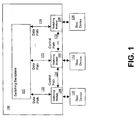
- Switch 100 includes switching backplane 102 driven by switching modules 104, 106, and 108, where switching module 104 is coupled to host device 110, switching module 106 is coupled to host device 112, and switching module 108 is coupled to host device 114. Additionally, switching modules 104 and 106 are coupled to each other by control path 116 and switching modules 106 and 108 are coupled to each other by control path 118. Each module 104, 106, and 108 interfaces with backplane 102 over data path 120, 122, and 124, respectively, to transmit packet data to backplane 102 and receive packet data from the backplane 102.
- host device 110 preferably determines whether a destination device is on the same IP or IPX network by comparing its layer 3 addresses to the destination layer 3 address. If the destination address comparison indicates that the destination device is on the same network, an Address Resolution Protocol (ARP) message is sent from host 110 to retrieve the layer 2 address of the destination, and bridging is used to transmit the packet data. If the destination device is not on the same network, an ARP message is sent to retrieve the layer 2 default Media Access Control (MAC) address of the first router which will lead to the destination device, and routing is used to transmit the packet data. In the latter case, while the layer 2 default MAC address constantly changes to reflect the next router address leading to the destination device, the layer 3 IP destination address preferably stays constant to reflect where the packet is going.
- ARP Address Resolution Protocol
- FIG. 2 is a block diagram of switching module 200, which may be similar to switching module 104 of FIG. 1.
- Switching module 200 preferably has a source learning capability, which will be described in reference to Figure 2.
- Module 200 includes access controller 202 coupled to switching controller 204.
- Access controller 202 receives packets from host devices, operates on them, and transmits them to switching controller 204.
- Access controller 202 also receives packets from switching controller 204, operates on them, and transmits them to host devices.
- Switching controller 204 is not only coupled to access controller 202 but is coupled to queue controller 206 as well.
- Switching controller 204 similar to access controller 202, receives packets from access controller 202, processes them, and transmits them to queue controller 206.
- Switching controller 204 also receives packets from queue controller 206, processes them, and transmits them to access controller 202.
- Queue controller 206 includes unicast packet buffer (UPB) 218, multicast packet buffer (MPB) 220 and lock table 222.
- Queue controller 206 is coupled to many elements, including source address resolution element (SARE) 208, destination address resolution element (DARE) 210, unicast queue 212, multicast queue 214, queue identification (QID) 216, and source learning element 224 (where source learning element 224 is coupled to software table 226 and pseudoCAM (PCAM) 228, which may be implemented in hardware, software, or both).
- SARE source address resolution element
- DARE destination address resolution element
- QID queue identification
- PCAM pseudoCAM
- Queue controller 206 preferably receives a data packet from switching controller 204, SARE 208 determines whether the source address is known for the packet, DARE 210 determines whether the destination address is known for the packet, and QID 216 assigns a port number, priority, and bandwidth to the packet. Then, queue controller 206 stores the packet in unicast queue 212 or multicast queue 214 to be transmitted when its priority for the particular port is reached.
- One embodiment of the present invention is a novel source learning technique using multiple switching modules coupled together on a single backplane.
- the single backplane architecture preferably allows for source learning and transmitting determinations to be made for packets having different source and destination conditions in a single path.
- Packets with a known source address and a known destination address preferably are not sent to a source learning element and are transmitted to a unicast queue for transmission and forwarding.
- Packets with an unknown source address and a known destination address preferably are sent to the source learning element for source learning and concurrently transmitted to a unicast queue for transmission and forwarding.
- Packets with a known source address and an unknown destination address preferably are not sent to the source learning element and are transmitted to a multicast queue for transmission and forwarding.
- Packets with an unknown source and an unknown destination preferably are sent to the source learning element for source learning and concurrently transmitted to a multicast queue for transmission and forwarding.
- the source learning technique in this embodiment preferably processes the following four categories of packets in a single flow path: (1) known source address and known destination address; (2) unknown source address and known destination address; (3) known source address and unknown destination address; and (4) unknown source address and unknown destination address.
- the destination address is known
- flow integrity typically is not an issue since the unicast queue normally is the only queue being used.
- the source learning technique may use more than one flow path to process the four categories of packets.
- a packet is received at queue controller 206 (302) from switching controller 204.
- a lookup operation is performed to determine the source address in SARE 208 (304). If the source address is not found (306), the packet is tagged for source learning in source learning element 224 (308). If the source address is found (306), a lookup operation is performed to determine the destination address in DARE 210 (310). If the destination address is not found (312), the packet is defined for flooding (314) and source learning element 224 is notified (316) so that it can search for the destination address in the switching modules.
- the packet may follow one of the following three paths depending on the state of the destination address: last multicast packet path, first unicast packet path, and neither last multicast nor first unicast packet path. These paths ensure flow integrity for the packets. As a result, all multicast packets preferably are transmitted to this destination address before any unicast packets are transmitted there.
- queue controller 206 preferably performs a check to see if the flow state is marked as the last multicast packet (318). If the flow state is marked as the last multicast packet, thus indicating that the packet is defined for flooding (320), a lock bit is set in multicast packet buffer (MPB) 220 (322) internal to queue controller 206, and the flow state is changed from "last multicast packet" to "first unicast packet” (324). In such state, the packet is still flooded.
- MPB multicast packet buffer
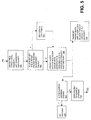
- QID 216 preferably defines the port for flooding and subsequently finds the priority and bandwidth to be applied to the packet (502).
- a lock bit in lock table 222 internal to queue controller 206 is set (504) when the lock bit is set in MPB 220 (506). If the lock bit is not set in MPB 220, the lock bit is not set in lock table 222 (506). In either case, the packet is thereafter stored in multicast queue 214 until the bandwidth is available at the specified priority for the port (508). Once bandwidth is available at the specified priority for the port, the packet is transmitted (510), the lock bit is cleared in lock table 222 (510) and the packet is tested to see if the source address is known (512). In this case, nothing more is done since the source address is known (514). If the source address were unknown, the packet would be sent to source learning element 224 (516).
- a test is performed to see if the flow state is marked as the first unicast packet (326). If, as in this case, the flow state is marked as the first unicast packet, a lock bit is set in a unicast packet buffer (UPB) 218 (328).
- UPB unicast packet buffer
- QID 216 preferably defines the port, priority, and bandwidth for the packet (330) and the packet is stored in unicast queue 212 until bandwidth is available at the specified priority for the port (332). Once bandwidth is available at the specified priority for the port, a check preferably is performed to see if the lock bit in UPB 218 is clear (334). If the lock bit in UPB 218 is clear, the packet is transmitted (336).
- the lock bit in the UPB 218 is set, and consequently, a test is performed to see if the lock bit in lock table 222 is clear (338). If the lock bit in lock table 222 is clear, the packet is transmitted (336). If the lock bit in lock table 222 is not clear, the packet is buffered until it is cleared by the transmission of the last multicast packet (340). Once the last multicast packet has been transmitted, then this packet is transmitted (336).
- the packet is forwarded to QID 216 so that the port, priority, and bandwidth can be defined for the packet (330) and the packet will be stored in unicast queue 212 until bandwidth is available at the specified priority for the port (332).
- a check preferably is performed to see if the lock bit in UPB 218 is clear (334). If the lock bit in UPB 218 is clear, as is the case here, the packet is transmitted (336). If the lock bit in the UPB 218 is set, a test is performed to see if the lock bit in lock table 222 is clear (338).
- the packet is transmitted (336). If the lock bit in lock table 222 is clear, the packet is buffered until the lock bit in lock table 222 is cleared by the transmission of the last multicast packet (340). Once the last multicast packet has been transmitted, then this packet is transmitted (336).
- a packet is received at queue controller 206 (302) from switching controller 204.
- a lookup operation is performed to determine the source address in SARE 208 (304). If the source address is found (306), a lookup operation is performed to find the destination address (310). If the source address is not found (306), as is the case here, the packet is tagged for source learning in source learning element 224 (308).
- a destination lookup (402) can be performed in DARE 210. If the destination address is not found (404), the packet is defined for flooding (406) and source learning 224 is notified so that it can search for the destination address (408).
- the packet may follow one of the following three paths depending on the state of the destination address: last multicast packet path, first unicast packet path, and neither last multicast nor first unicast packet path. These paths ensure flow integrity for the packets. As a result, all multicast packets preferably are transmitted to this destination address before any unicast packets.
- queue controller 206 preferably performs a check to see if the flow state is marked as the last multicast packet (410). If the flow state is marked as the last multicast packet, thus indicating that the packet is defined for flooding (412), a lock bit is set in MPB 220 (414) internal to queue controller 206 and the flow state is changed from last multicast packet to first unicast packet (416). In such state, the packet is still flooded.
- QID 216 preferably defines the port for flooding and subsequently finds the priority and bandwidth to be applied to the packet (502).
- a lock bit in lock table 222 internal to queue controller 206 is set (504) when the lock bit is set in MPB 220 (506). If the lock bit is not set in MPB 220, the lock bit is not set in lock table 222 (506). In either case, the packet is thereafter stored in multicast queue 214 until bandwidth is available at the specified priority for the port (508). Once bandwidth is available at the specified priority for the port, the packet is transmitted (510), the lock bit is cleared in lock table 222 (510) and the packet is tested to see if the source address is known (512).
- the source address is unknown and the packet is sent to source learning 224 (516) so that its source address can be associated with its particular port.
- a request is received by source learning 224 to learn a source address (702).
- a layer 2 source MAC which relates to a port is stored in a software table 226 (704).
- This software table 226 may be used for many things, for example, source learning 224 may use it to inform its own and/or other switching modules of a new source address and/or source learning 224 may use it to allow access for its own and/or other modules to read and/or write to the software table 226.
- source learning software in source learning element 224 will place the source MAC in a hardware table pseudo CAM 228 (706) and then will wait for another request to perform source learning. If the source address were known, the packet would not be sent to source learning element 224 (514) and nothing more would be done.
- a test is performed to see if the flow state is marked as the first unicast packet (418). If, as in this case, the flow state is marked as the first unicast packet, the lock bit is set in UPB 218 (420).
- QID 216 defines the port, priority, and bandwidth for the packet (422) and the packet will be stored in unicast queue 212 until bandwidth is available at the specified priority for the port (424). Once bandwidth is available at the specified priority for the port, a check preferably is performed to see if the lock bit in UPB 218 is clear (426). If the lock bit in UPB 218 is clear, the packet is transmitted (428) and sent to source learning element 224 (430).
- the lock bit in the UPB 218 is set, and consequently, a test is performed to see if the lock bit in lock table 222 is clear (432). If the lock bit in lock table 222 is clear, the packet is transmitted (428) and sent to source learning 224 (430). If the lock bit in lock table 222 is not clear, the packet is buffered until the lock bit in lock table 222 is cleared by the transmission of the last multicast packet (434). Once the last multicast packet has been transmitted, then this packet is transmitted (428) and sent to source learning element 224 (430). The packet is sent to source learning 224 (700) so that its source address can be associated with its particular port.
- a request is received by source learning 224 to learn a source address (702).
- a layer 2 source MAC which relates to a port is stored in a software table 226 (704).
- This software table 226 may be used for many things, for example, source learning 224 may use it to inform its own and/or other switching modules of a new source address and/or source learning 224 may use it to allow access for its own and/or other modules to read and/or write to the software table 226. Thereafter, source learning software in source learning element 224 will place the source MAC in a hardware table pseudo CAM 228 (706) and then will wait for another request to perform source learning.
- the packet if the flow state is not marked as a last multicast packet or first unicast packet, the packet preferably is forwarded to QID 216 so that the port, priority, and bandwidth can be defined for the packet (422) and the packet is stored in unicast queue 212 until bandwidth is available at the specified priority for the port (424).
- a check preferably is performed to see if the lock bit in UPB 218 is clear (426). If the lock bit in UPB 218 is clear, as is the case here, the packet is transmitted (428) and sent to source learning element 224 (430). If the lock bit in the UPB 218 is set, a test is performed to see if the lock bit in lock table 222 is clear (432).
- the packet is transmitted (428) and sent to source learning element 224 (430). If the lock bit in lock table 222 is not clear, the packet is buffered until the lock bit in lock table 222 is cleared by the transmission of the last multicast packet (434). Once the last multicast packet has been transmitted, then this packet is transmitted (428) and sent to source learning element 224 (430). The packet is sent to source learning 224 (700) so that its source address can be associated with its particular port. Referring to Figure 7, a request is received by source learning 224 to learn a source address (702). Upon processing the request, a layer 2 source MAC which relates to a port is stored in a software table 226 (704).
- This software table 226 may be used for many things, for example, source learning 224 may use it to inform its own and/or other switching modules of a new source address and/or source learning 224 may use it to allow access for its own and/or other modules to read and/or write to the software table 226. Thereafter, source learning software in source learning element 224 will place the source MAC in a hardware table pseudo CAM 228 (706) and then will wait for another request to perform source learning.
- a packet is received at queue controller 206 (302).
- a lookup operation is performed to determine the source address 208 (304). If the source address is not found (306), the packet is tagged for source learning in source learning element 224 (308). If the source address is found (306), as is the case here, a lookup operation is performed to determine the destination address in DARE 210 (310). If the destination address is found (312), a check is performed to see if the flow state is marked as a last multicast packet (318). If the destination address is not found (312), as is the case here, the packet is defined for flooding (314) and source learning element 224 is notified so that it can search for the destination address in the switching modules (316).
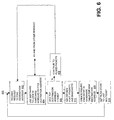
- source learning element 224 receives a request to find the destination address (602). Once the request has been received, source learning element 224 uses its software to look in its own modules and others to find the destination address (604). If the destination address is not found (606), the flood of packets are allowed to continue (608), a request to find the destination is again received (602), the software is used to search for the destination address (604), and a test is performed to see if the destination address was found this time (606). This process preferably continues until the destination address is found.
- QID 216 defines a port, priority, and bandwidth for the packet (610), an entry is created in PCAM 228 for the new destination address (612), and the flow state is set to last multicast (614) so that the last remaining packet is transmitted to this destination over multicast queue 214 before the first unicast packet is transmitted to this destination over unicast queue 2122.
- QID 216 defines the port for flooding and subsequently finds the priority and bandwidth to be applied to the packet (502). Additionally, to ensure that all multicast packets are transmitted to this destination address before any unicast packets are transmitted there, a lock bit in lock table 222 internal to queue controller 206 is set (504) when the lock bit is set in MPB 220 (506). If the lock bit is not set in MPB 220, then the lock bit in lock table 222 is not set (506). In either case, the packet is thereafter stored in a multicast queue 214 until bandwidth is available at the specified priority for the port (508).
- the packet is transmitted (510), the lock bit is cleared in lock table 222 (510), and the packet is tested to see if the source address is known (512). In this case, the source address is known and nothing more is done (514). If the source address is unknown, the packet is sent to source learning element 224 (516) so that the source address can be associated with its particular port.
- a packet is received at queue controller 206 (302).
- a lookup operation is performed to determine the source address 208 (304). If the source address is found (306), a lookup operation is performed to determine the destination address (310). If the source address is not found (306), as is the case here, the packet is tagged for source learning in source learning element 224 (308).
- a destination lookup (402) can be performed in DARE 210. If the destination is found, the packet may follow one of three paths, depending on the state of the destination address.
- source learning element 224 receives a request to find the destination address (602). Once received, source learning element 224 uses its software to look in its own modules and others to find the destination address (604). If the destination address is not found (606), the flooding of packets is allowed to continue (608), a request to find the destination is again received (602), the software is used to search for the destination address (604), and a test is performed to see if the destination address was found this time (606). This process preferably continues until the destination address is found.
- QID 216 defines a port, priority, and bandwidth for the packet (610), an entry is created in PCAM 228 for the new destination address (612), and the flow state is set to last multicast (614) so that the last remaining packet is transmitted over multicast queue 214 before the first unicast packet is transmitted over unicast queue 212.
- QID 216 will define the port for flood and will subsequently find the priority and bandwidth to be applied to the packet (502).
- a lock bit in lock table 222 internal to queue controller 206 is set (504) when the lock bit is set in MPB 220 (506). If the lock bit is not set in MPB 220, then the lock bit in lock table 222 is not set (506). In either case, the packet is thereafter stored in a multicast queue 214 until bandwidth is available at the specified priority for the port (508). Once bandwidth is available at the specified priority for the port, the packet is transmitted (510), the lock bit is cleared in lock table 222 (510), and the packet is tested to see if the source address is known (512).
- the source address is unknown and the packet is sent to source learning 224 (516) so that its source address can be associated with its particular port.
- a request is received by source learning 224 to learn a source address (702).
- a layer 2 source MAC which relates to a port is stored in a software table 226 (704).
- This software table 226 may be used for many things, for example, source learning 224 may use it to inform its own and/or other switching modules of a new source address and/or source learning 224 may use it to allow access for its own and/or other modules to read and/or write to the software table 226.
- source learning software in source learning element 224 will place the source MAC in a hardware table pseudo CAM 228 (706) and then will wait for another request to perform source learning. If the source address were known, the packet would not be sent to source learning element 224 (514) and nothing more would be done.
Landscapes
- Engineering & Computer Science (AREA)
- Computer Networks & Wireless Communication (AREA)
- Signal Processing (AREA)
- Computer Security & Cryptography (AREA)
- Data Exchanges In Wide-Area Networks (AREA)
- Small-Scale Networks (AREA)
- Use Of Switch Circuits For Exchanges And Methods Of Control Of Multiplex Exchanges (AREA)
- Computer And Data Communications (AREA)
- Exchange Systems With Centralized Control (AREA)
Applications Claiming Priority (2)
| Application Number | Priority Date | Filing Date | Title |
|---|---|---|---|
| US639589 | 1991-01-09 | ||
| US09/639,589 US6870840B1 (en) | 2000-08-16 | 2000-08-16 | Distributed source learning for data communication switch |
Publications (3)
| Publication Number | Publication Date |
|---|---|
| EP1180883A2 true EP1180883A2 (de) | 2002-02-20 |
| EP1180883A3 EP1180883A3 (de) | 2004-09-08 |
| EP1180883B1 EP1180883B1 (de) | 2009-03-25 |
Family
ID=24564739
Family Applications (1)
| Application Number | Title | Priority Date | Filing Date |
|---|---|---|---|
| EP01440255A Expired - Lifetime EP1180883B1 (de) | 2000-08-16 | 2001-08-06 | Verteiltes Lernen von Quellen für eine Datenübertragungsvermittlungsstel |
Country Status (5)
| Country | Link |
|---|---|
| US (1) | US6870840B1 (de) |
| EP (1) | EP1180883B1 (de) |
| JP (1) | JP2002111695A (de) |
| AT (1) | ATE426974T1 (de) |
| DE (1) | DE60138075D1 (de) |
Cited By (2)
| Publication number | Priority date | Publication date | Assignee | Title |
|---|---|---|---|---|
| WO2008030151A1 (en) * | 2006-09-04 | 2008-03-13 | Telefonaktiebolaget Lm Ericsson (Publ) | Ethernet switching |
| EP2592789A1 (de) * | 2011-11-08 | 2013-05-15 | Hitachi Ltd. | Verfahren zur Verwaltung eines Netzwerksystems |
Families Citing this family (56)
| Publication number | Priority date | Publication date | Assignee | Title |
|---|---|---|---|---|
| US8619793B2 (en) * | 2000-08-21 | 2013-12-31 | Rockstar Consortium Us Lp | Dynamic assignment of traffic classes to a priority queue in a packet forwarding device |
| US7127524B1 (en) * | 2000-12-29 | 2006-10-24 | Vernier Networks, Inc. | System and method for providing access to a network with selective network address translation |
| DE10147419A1 (de) * | 2001-09-26 | 2003-04-24 | Siemens Ag | Verfahren zur Erstellung einer dynamischen Adresstabelle für einen Koppelknoten in einem Datennetz und Verfahren zur Übertragung eines Datentelegramms |
| CN1232081C (zh) * | 2002-08-06 | 2005-12-14 | 华为技术有限公司 | 网络通信中组播报文的转发方法 |
| US7512136B2 (en) * | 2002-11-15 | 2009-03-31 | The Directv Group, Inc. | Apparatus and method for preserving routable IP addresses using ARP proxy |
| JP4394988B2 (ja) * | 2004-03-19 | 2010-01-06 | 富士通株式会社 | パケット読出し制御方法及び装置 |
| US8009601B2 (en) * | 2004-10-27 | 2011-08-30 | Intel Corporation | Power saving when using aggregated packets |
| JP4682900B2 (ja) * | 2006-03-31 | 2011-05-11 | 日本電気株式会社 | データ転送装置、優先制御方法及び優先制御プログラム |
| JP4834493B2 (ja) | 2006-08-25 | 2011-12-14 | アラクサラネットワークス株式会社 | ネットワーク中継装置、および、ネットワーク中継装置の制御方法 |
| KR100937874B1 (ko) * | 2007-12-17 | 2010-01-21 | 한국전자통신연구원 | 센서 네트워크에서의 라우팅 방법 |
| EP2283619A4 (de) * | 2008-06-05 | 2013-10-30 | Ericsson Telefon Ab L M | Verfahren und vorrichtung zum umgang mit einem switch unter verwendung einer liste bevorzugter ziele |
| US8335879B2 (en) * | 2010-04-29 | 2012-12-18 | Hewlett-Packard Development Company, L.P. | Node differentiation in multi-node electronic systems |
| US9270486B2 (en) | 2010-06-07 | 2016-02-23 | Brocade Communications Systems, Inc. | Name services for virtual cluster switching |
| US8867552B2 (en) | 2010-05-03 | 2014-10-21 | Brocade Communications Systems, Inc. | Virtual cluster switching |
| US9769016B2 (en) | 2010-06-07 | 2017-09-19 | Brocade Communications Systems, Inc. | Advanced link tracking for virtual cluster switching |
| US9716672B2 (en) | 2010-05-28 | 2017-07-25 | Brocade Communications Systems, Inc. | Distributed configuration management for virtual cluster switching |
| US9628293B2 (en) | 2010-06-08 | 2017-04-18 | Brocade Communications Systems, Inc. | Network layer multicasting in trill networks |
| US9806906B2 (en) | 2010-06-08 | 2017-10-31 | Brocade Communications Systems, Inc. | Flooding packets on a per-virtual-network basis |
| US9807031B2 (en) | 2010-07-16 | 2017-10-31 | Brocade Communications Systems, Inc. | System and method for network configuration |
| US9736085B2 (en) | 2011-08-29 | 2017-08-15 | Brocade Communications Systems, Inc. | End-to end lossless Ethernet in Ethernet fabric |
| US9699117B2 (en) | 2011-11-08 | 2017-07-04 | Brocade Communications Systems, Inc. | Integrated fibre channel support in an ethernet fabric switch |
| US9450870B2 (en) | 2011-11-10 | 2016-09-20 | Brocade Communications Systems, Inc. | System and method for flow management in software-defined networks |
| US8995272B2 (en) | 2012-01-26 | 2015-03-31 | Brocade Communication Systems, Inc. | Link aggregation in software-defined networks |
| US9742693B2 (en) | 2012-02-27 | 2017-08-22 | Brocade Communications Systems, Inc. | Dynamic service insertion in a fabric switch |
| US9154416B2 (en) | 2012-03-22 | 2015-10-06 | Brocade Communications Systems, Inc. | Overlay tunnel in a fabric switch |
| US9374301B2 (en) | 2012-05-18 | 2016-06-21 | Brocade Communications Systems, Inc. | Network feedback in software-defined networks |
| US10277464B2 (en) | 2012-05-22 | 2019-04-30 | Arris Enterprises Llc | Client auto-configuration in a multi-switch link aggregation |
| US9401872B2 (en) | 2012-11-16 | 2016-07-26 | Brocade Communications Systems, Inc. | Virtual link aggregations across multiple fabric switches |
| US9350680B2 (en) | 2013-01-11 | 2016-05-24 | Brocade Communications Systems, Inc. | Protection switching over a virtual link aggregation |
| US9548926B2 (en) | 2013-01-11 | 2017-01-17 | Brocade Communications Systems, Inc. | Multicast traffic load balancing over virtual link aggregation |
| US9413691B2 (en) | 2013-01-11 | 2016-08-09 | Brocade Communications Systems, Inc. | MAC address synchronization in a fabric switch |
| US9565099B2 (en) | 2013-03-01 | 2017-02-07 | Brocade Communications Systems, Inc. | Spanning tree in fabric switches |
| WO2014145750A1 (en) | 2013-03-15 | 2014-09-18 | Brocade Communications Systems, Inc. | Scalable gateways for a fabric switch |
| US9699001B2 (en) | 2013-06-10 | 2017-07-04 | Brocade Communications Systems, Inc. | Scalable and segregated network virtualization |
| US9806949B2 (en) | 2013-09-06 | 2017-10-31 | Brocade Communications Systems, Inc. | Transparent interconnection of Ethernet fabric switches |
| US9912612B2 (en) | 2013-10-28 | 2018-03-06 | Brocade Communications Systems LLC | Extended ethernet fabric switches |
| US9548873B2 (en) | 2014-02-10 | 2017-01-17 | Brocade Communications Systems, Inc. | Virtual extensible LAN tunnel keepalives |
| US10581758B2 (en) | 2014-03-19 | 2020-03-03 | Avago Technologies International Sales Pte. Limited | Distributed hot standby links for vLAG |
| US10476698B2 (en) | 2014-03-20 | 2019-11-12 | Avago Technologies International Sales Pte. Limited | Redundent virtual link aggregation group |
| US10063473B2 (en) | 2014-04-30 | 2018-08-28 | Brocade Communications Systems LLC | Method and system for facilitating switch virtualization in a network of interconnected switches |
| US9800471B2 (en) | 2014-05-13 | 2017-10-24 | Brocade Communications Systems, Inc. | Network extension groups of global VLANs in a fabric switch |
| WO2016008934A1 (en) | 2014-07-15 | 2016-01-21 | Nec Europe Ltd. | Method and network device for handling packets in a network by means of forwarding tables |
| US10616108B2 (en) | 2014-07-29 | 2020-04-07 | Avago Technologies International Sales Pte. Limited | Scalable MAC address virtualization |
| US9807007B2 (en) * | 2014-08-11 | 2017-10-31 | Brocade Communications Systems, Inc. | Progressive MAC address learning |
| US9699029B2 (en) | 2014-10-10 | 2017-07-04 | Brocade Communications Systems, Inc. | Distributed configuration management in a switch group |
| US9628407B2 (en) | 2014-12-31 | 2017-04-18 | Brocade Communications Systems, Inc. | Multiple software versions in a switch group |
| US9626255B2 (en) | 2014-12-31 | 2017-04-18 | Brocade Communications Systems, Inc. | Online restoration of a switch snapshot |
| US9942097B2 (en) | 2015-01-05 | 2018-04-10 | Brocade Communications Systems LLC | Power management in a network of interconnected switches |
| US10003552B2 (en) | 2015-01-05 | 2018-06-19 | Brocade Communications Systems, Llc. | Distributed bidirectional forwarding detection protocol (D-BFD) for cluster of interconnected switches |
| US10038592B2 (en) | 2015-03-17 | 2018-07-31 | Brocade Communications Systems LLC | Identifier assignment to a new switch in a switch group |
| US9807005B2 (en) | 2015-03-17 | 2017-10-31 | Brocade Communications Systems, Inc. | Multi-fabric manager |
| US10579406B2 (en) | 2015-04-08 | 2020-03-03 | Avago Technologies International Sales Pte. Limited | Dynamic orchestration of overlay tunnels |
| US10439929B2 (en) | 2015-07-31 | 2019-10-08 | Avago Technologies International Sales Pte. Limited | Graceful recovery of a multicast-enabled switch |
| US10171303B2 (en) | 2015-09-16 | 2019-01-01 | Avago Technologies International Sales Pte. Limited | IP-based interconnection of switches with a logical chassis |
| US9912614B2 (en) | 2015-12-07 | 2018-03-06 | Brocade Communications Systems LLC | Interconnection of switches based on hierarchical overlay tunneling |
| US10237090B2 (en) | 2016-10-28 | 2019-03-19 | Avago Technologies International Sales Pte. Limited | Rule-based network identifier mapping |
Family Cites Families (6)
| Publication number | Priority date | Publication date | Assignee | Title |
|---|---|---|---|---|
| JP2944531B2 (ja) | 1996-09-12 | 1999-09-06 | 日本電気通信システム株式会社 | Lan間接続装置 |
| US6459700B1 (en) | 1997-06-23 | 2002-10-01 | Compaq Computer Corporation | Multiple segment network device configured for a stacked arrangement |
| US6115378A (en) * | 1997-06-30 | 2000-09-05 | Sun Microsystems, Inc. | Multi-layer distributed network element |
| US6195351B1 (en) * | 1998-01-28 | 2001-02-27 | 3Com Corporation | Logical switch set |
| US6310878B1 (en) * | 1998-07-30 | 2001-10-30 | Lucent Technologies Inc. | Large packet switch router |
| JP2000156708A (ja) | 1998-10-05 | 2000-06-06 | Paketto Engines Inc | ネットワ―ク・スイッチング装置 |
-
2000
- 2000-08-16 US US09/639,589 patent/US6870840B1/en not_active Expired - Lifetime
-
2001
- 2001-08-06 AT AT01440255T patent/ATE426974T1/de not_active IP Right Cessation
- 2001-08-06 DE DE60138075T patent/DE60138075D1/de not_active Expired - Lifetime
- 2001-08-06 EP EP01440255A patent/EP1180883B1/de not_active Expired - Lifetime
- 2001-08-10 JP JP2001243417A patent/JP2002111695A/ja not_active Withdrawn
Cited By (4)
| Publication number | Priority date | Publication date | Assignee | Title |
|---|---|---|---|---|
| WO2008030151A1 (en) * | 2006-09-04 | 2008-03-13 | Telefonaktiebolaget Lm Ericsson (Publ) | Ethernet switching |
| US8208483B2 (en) | 2006-09-04 | 2012-06-26 | Telefonaktiebolaget Lm Ericsson (Publ) | Ethernet switching |
| CN101507186B (zh) * | 2006-09-04 | 2012-11-14 | 艾利森电话股份有限公司 | 以太网交换 |
| EP2592789A1 (de) * | 2011-11-08 | 2013-05-15 | Hitachi Ltd. | Verfahren zur Verwaltung eines Netzwerksystems |
Also Published As
| Publication number | Publication date |
|---|---|
| JP2002111695A (ja) | 2002-04-12 |
| US6870840B1 (en) | 2005-03-22 |
| DE60138075D1 (de) | 2009-05-07 |
| EP1180883A3 (de) | 2004-09-08 |
| ATE426974T1 (de) | 2009-04-15 |
| EP1180883B1 (de) | 2009-03-25 |
Similar Documents
| Publication | Publication Date | Title |
|---|---|---|
| US6870840B1 (en) | Distributed source learning for data communication switch | |
| US7072952B2 (en) | Spanning tree bypassing method and apparatus | |
| US6650639B2 (en) | Secure fast packet switch having improved memory utilization | |
| US6115378A (en) | Multi-layer distributed network element | |
| EP1670187B1 (de) | Regeln zur Kennzeichnung von Hybrid-Ports | |
| EP0871309B1 (de) | Wegesuchvorrichtung und Rahmenübertragungsverfahren unter Verwendung von Rahmenvermittlung auf Datenverbindungsschicht | |
| US6980547B1 (en) | Distributed switch/router silicon engine | |
| EP1221789A2 (de) | Verfahren und Vorrichtung zum Ermöglichen von Schicht-3-Vermittlung in einer Netzvermittlungsstapelanordnung | |
| US6990101B1 (en) | System and method for performing layer 3 switching in a network device | |
| US6999418B2 (en) | System and method for reduced frame flooding | |
| US7693169B2 (en) | Transmission apparatus and frame transmission method | |
| US7145911B2 (en) | Method and system for parallel hash transformation for an address input | |
| US7505476B2 (en) | Packet transfer path control apparatus and control program therefor | |
| US7099285B1 (en) | Remote configuration of a subnet configuration table in a network device | |
| JP3880052B2 (ja) | クエリ発信ノードを分類するための方法および装置 | |
| US6944158B1 (en) | Flow integrity for path transitioning data switch | |
| US6944174B1 (en) | Jitter reduction of voice packets in a packet-based network | |
| EP1253765A2 (de) | System und Verfahren zum zeitschlitzbasierten Erlernen und Durchsuchen von ARL Tabellen unter verwendung von Schreib-snoop | |
| JP2023047452A (ja) | アドレス記憶方法およびそれを用いたリング網およびリング網を利用したハンドオーバー | |
| US7969994B2 (en) | Method and apparatus for multiple connections to group of switches | |
| JP3189784B2 (ja) | レイヤ3マルチキャスト送信方式 | |
| EP1126665B1 (de) | Mehrweg-Rückwandsdatenvermittlung mit Lernen der Quelle | |
| KR20020051191A (ko) | 가상 근거리 통신망 간의 패킷 스위칭 방법 | |
| KR100396916B1 (ko) | 고속 라우터를 위한 입출력 포트간의 패킷 연결 방법 | |
| CN111556102B (zh) | 一种数据通道建立方法、以太网交换机及存储介质 |
Legal Events
| Date | Code | Title | Description |
|---|---|---|---|
| PUAI | Public reference made under article 153(3) epc to a published international application that has entered the european phase |
Free format text: ORIGINAL CODE: 0009012 |
|
| AK | Designated contracting states |
Kind code of ref document: A2 Designated state(s): AT BE CH CY DE DK ES FI FR GB GR IE IT LI LU MC NL PT SE TR |
|
| AX | Request for extension of the european patent |
Free format text: AL;LT;LV;MK;RO;SI |
|
| PUAL | Search report despatched |
Free format text: ORIGINAL CODE: 0009013 |
|
| AK | Designated contracting states |
Kind code of ref document: A3 Designated state(s): AT BE CH CY DE DK ES FI FR GB GR IE IT LI LU MC NL PT SE TR |
|
| AX | Request for extension of the european patent |
Extension state: AL LT LV MK RO SI |
|
| 17P | Request for examination filed |
Effective date: 20050307 |
|
| AKX | Designation fees paid |
Designated state(s): AT BE CH CY DE DK ES FI FR GB GR IE IT LI LU MC NL PT SE TR |
|
| RAP1 | Party data changed (applicant data changed or rights of an application transferred) |
Owner name: ALCATEL LUCENT |
|
| GRAP | Despatch of communication of intention to grant a patent |
Free format text: ORIGINAL CODE: EPIDOSNIGR1 |
|
| GRAP | Despatch of communication of intention to grant a patent |
Free format text: ORIGINAL CODE: EPIDOSNIGR1 |
|
| GRAS | Grant fee paid |
Free format text: ORIGINAL CODE: EPIDOSNIGR3 |
|
| GRAA | (expected) grant |
Free format text: ORIGINAL CODE: 0009210 |
|
| AK | Designated contracting states |
Kind code of ref document: B1 Designated state(s): AT BE CH CY DE DK ES FI FR GB GR IE IT LI LU MC NL PT SE TR |
|
| REG | Reference to a national code |
Ref country code: GB Ref legal event code: FG4D |
|
| REG | Reference to a national code |
Ref country code: CH Ref legal event code: EP |
|
| REG | Reference to a national code |
Ref country code: IE Ref legal event code: FG4D |
|
| REF | Corresponds to: |
Ref document number: 60138075 Country of ref document: DE Date of ref document: 20090507 Kind code of ref document: P |
|
| PG25 | Lapsed in a contracting state [announced via postgrant information from national office to epo] |
Ref country code: FI Free format text: LAPSE BECAUSE OF FAILURE TO SUBMIT A TRANSLATION OF THE DESCRIPTION OR TO PAY THE FEE WITHIN THE PRESCRIBED TIME-LIMIT Effective date: 20090325 |
|
| PG25 | Lapsed in a contracting state [announced via postgrant information from national office to epo] |
Ref country code: SE Free format text: LAPSE BECAUSE OF FAILURE TO SUBMIT A TRANSLATION OF THE DESCRIPTION OR TO PAY THE FEE WITHIN THE PRESCRIBED TIME-LIMIT Effective date: 20090625 Ref country code: AT Free format text: LAPSE BECAUSE OF FAILURE TO SUBMIT A TRANSLATION OF THE DESCRIPTION OR TO PAY THE FEE WITHIN THE PRESCRIBED TIME-LIMIT Effective date: 20090325 |
|
| NLV1 | Nl: lapsed or annulled due to failure to fulfill the requirements of art. 29p and 29m of the patents act | ||
| PG25 | Lapsed in a contracting state [announced via postgrant information from national office to epo] |
Ref country code: BE Free format text: LAPSE BECAUSE OF FAILURE TO SUBMIT A TRANSLATION OF THE DESCRIPTION OR TO PAY THE FEE WITHIN THE PRESCRIBED TIME-LIMIT Effective date: 20090325 |
|
| PG25 | Lapsed in a contracting state [announced via postgrant information from national office to epo] |
Ref country code: ES Free format text: LAPSE BECAUSE OF FAILURE TO SUBMIT A TRANSLATION OF THE DESCRIPTION OR TO PAY THE FEE WITHIN THE PRESCRIBED TIME-LIMIT Effective date: 20090706 Ref country code: PT Free format text: LAPSE BECAUSE OF FAILURE TO SUBMIT A TRANSLATION OF THE DESCRIPTION OR TO PAY THE FEE WITHIN THE PRESCRIBED TIME-LIMIT Effective date: 20090831 |
|
| PG25 | Lapsed in a contracting state [announced via postgrant information from national office to epo] |
Ref country code: NL Free format text: LAPSE BECAUSE OF FAILURE TO SUBMIT A TRANSLATION OF THE DESCRIPTION OR TO PAY THE FEE WITHIN THE PRESCRIBED TIME-LIMIT Effective date: 20090325 |
|
| PG25 | Lapsed in a contracting state [announced via postgrant information from national office to epo] |
Ref country code: DK Free format text: LAPSE BECAUSE OF FAILURE TO SUBMIT A TRANSLATION OF THE DESCRIPTION OR TO PAY THE FEE WITHIN THE PRESCRIBED TIME-LIMIT Effective date: 20090325 |
|
| PLBE | No opposition filed within time limit |
Free format text: ORIGINAL CODE: 0009261 |
|
| STAA | Information on the status of an ep patent application or granted ep patent |
Free format text: STATUS: NO OPPOSITION FILED WITHIN TIME LIMIT |
|
| 26N | No opposition filed |
Effective date: 20091229 |
|
| PG25 | Lapsed in a contracting state [announced via postgrant information from national office to epo] |
Ref country code: MC Free format text: LAPSE BECAUSE OF NON-PAYMENT OF DUE FEES Effective date: 20090831 |
|
| REG | Reference to a national code |
Ref country code: CH Ref legal event code: PL |
|
| PG25 | Lapsed in a contracting state [announced via postgrant information from national office to epo] |
Ref country code: LI Free format text: LAPSE BECAUSE OF NON-PAYMENT OF DUE FEES Effective date: 20090831 Ref country code: CH Free format text: LAPSE BECAUSE OF NON-PAYMENT OF DUE FEES Effective date: 20090831 |
|
| PG25 | Lapsed in a contracting state [announced via postgrant information from national office to epo] |
Ref country code: IE Free format text: LAPSE BECAUSE OF NON-PAYMENT OF DUE FEES Effective date: 20090806 |
|
| PG25 | Lapsed in a contracting state [announced via postgrant information from national office to epo] |
Ref country code: GR Free format text: LAPSE BECAUSE OF FAILURE TO SUBMIT A TRANSLATION OF THE DESCRIPTION OR TO PAY THE FEE WITHIN THE PRESCRIBED TIME-LIMIT Effective date: 20090626 |
|
| PG25 | Lapsed in a contracting state [announced via postgrant information from national office to epo] |
Ref country code: IT Free format text: LAPSE BECAUSE OF FAILURE TO SUBMIT A TRANSLATION OF THE DESCRIPTION OR TO PAY THE FEE WITHIN THE PRESCRIBED TIME-LIMIT Effective date: 20090325 |
|
| PG25 | Lapsed in a contracting state [announced via postgrant information from national office to epo] |
Ref country code: LU Free format text: LAPSE BECAUSE OF NON-PAYMENT OF DUE FEES Effective date: 20090806 |
|
| PG25 | Lapsed in a contracting state [announced via postgrant information from national office to epo] |
Ref country code: TR Free format text: LAPSE BECAUSE OF FAILURE TO SUBMIT A TRANSLATION OF THE DESCRIPTION OR TO PAY THE FEE WITHIN THE PRESCRIBED TIME-LIMIT Effective date: 20090325 |
|
| PG25 | Lapsed in a contracting state [announced via postgrant information from national office to epo] |
Ref country code: CY Free format text: LAPSE BECAUSE OF FAILURE TO SUBMIT A TRANSLATION OF THE DESCRIPTION OR TO PAY THE FEE WITHIN THE PRESCRIBED TIME-LIMIT Effective date: 20090325 |
|
| REG | Reference to a national code |
Ref country code: GB Ref legal event code: 732E Free format text: REGISTERED BETWEEN 20130926 AND 20131002 |
|
| REG | Reference to a national code |
Ref country code: FR Ref legal event code: GC Effective date: 20131018 |
|
| REG | Reference to a national code |
Ref country code: FR Ref legal event code: CA Effective date: 20150521 |
|
| REG | Reference to a national code |
Ref country code: FR Ref legal event code: CA Effective date: 20150521 |
|
| REG | Reference to a national code |
Ref country code: FR Ref legal event code: PLFP Year of fee payment: 15 |
|
| REG | Reference to a national code |
Ref country code: FR Ref legal event code: PLFP Year of fee payment: 16 |
|
| PGFP | Annual fee paid to national office [announced via postgrant information from national office to epo] |
Ref country code: GB Payment date: 20160819 Year of fee payment: 16 Ref country code: DE Payment date: 20160822 Year of fee payment: 16 |
|
| PGFP | Annual fee paid to national office [announced via postgrant information from national office to epo] |
Ref country code: FR Payment date: 20160822 Year of fee payment: 16 |
|
| REG | Reference to a national code |
Ref country code: DE Ref legal event code: R119 Ref document number: 60138075 Country of ref document: DE |
|
| GBPC | Gb: european patent ceased through non-payment of renewal fee |
Effective date: 20170806 |
|
| REG | Reference to a national code |
Ref country code: FR Ref legal event code: ST Effective date: 20180430 |
|
| PG25 | Lapsed in a contracting state [announced via postgrant information from national office to epo] |
Ref country code: DE Free format text: LAPSE BECAUSE OF NON-PAYMENT OF DUE FEES Effective date: 20180301 Ref country code: GB Free format text: LAPSE BECAUSE OF NON-PAYMENT OF DUE FEES Effective date: 20170806 |
|
| PG25 | Lapsed in a contracting state [announced via postgrant information from national office to epo] |
Ref country code: FR Free format text: LAPSE BECAUSE OF NON-PAYMENT OF DUE FEES Effective date: 20170831 |