EP1182256A1 - Mit pollinosisassoziiertes gen 513 - Google Patents
Mit pollinosisassoziiertes gen 513 Download PDFInfo
- Publication number
- EP1182256A1 EP1182256A1 EP00922883A EP00922883A EP1182256A1 EP 1182256 A1 EP1182256 A1 EP 1182256A1 EP 00922883 A EP00922883 A EP 00922883A EP 00922883 A EP00922883 A EP 00922883A EP 1182256 A1 EP1182256 A1 EP 1182256A1
- Authority
- EP
- European Patent Office
- Prior art keywords
- dna
- cells
- preparing
- rna
- compound
- Prior art date
- Legal status (The legal status is an assumption and is not a legal conclusion. Google has not performed a legal analysis and makes no representation as to the accuracy of the status listed.)
- Withdrawn
Links
- 208000035285 Allergic Seasonal Rhinitis Diseases 0.000 title claims description 35
- 206010048908 Seasonal allergy Diseases 0.000 title claims description 35
- 108090000623 proteins and genes Proteins 0.000 title abstract description 80
- 150000001875 compounds Chemical class 0.000 claims abstract description 88
- 210000001744 T-lymphocyte Anatomy 0.000 claims abstract description 80
- 208000026935 allergic disease Diseases 0.000 claims abstract description 60
- 238000012360 testing method Methods 0.000 claims abstract description 60
- 241000218645 Cedrus Species 0.000 claims abstract description 32
- 239000000427 antigen Substances 0.000 claims abstract description 32
- 108091007433 antigens Proteins 0.000 claims abstract description 32
- 102000036639 antigens Human genes 0.000 claims abstract description 32
- 229940126585 therapeutic drug Drugs 0.000 claims abstract description 27
- 238000000034 method Methods 0.000 claims description 109
- 108020004414 DNA Proteins 0.000 claims description 69
- 239000013614 RNA sample Substances 0.000 claims description 42
- 239000002299 complementary DNA Substances 0.000 claims description 40
- 239000000523 sample Substances 0.000 claims description 37
- 210000004698 lymphocyte Anatomy 0.000 claims description 35
- 201000004338 pollen allergy Diseases 0.000 claims description 34
- 238000003752 polymerase chain reaction Methods 0.000 claims description 33
- 238000012216 screening Methods 0.000 claims description 29
- 241001465754 Metazoa Species 0.000 claims description 25
- 238000009396 hybridization Methods 0.000 claims description 24
- 230000004936 stimulating effect Effects 0.000 claims description 18
- 125000003729 nucleotide group Chemical group 0.000 claims description 17
- 238000006243 chemical reaction Methods 0.000 claims description 16
- 239000002773 nucleotide Substances 0.000 claims description 16
- 108020004707 nucleic acids Proteins 0.000 claims description 15
- 102000039446 nucleic acids Human genes 0.000 claims description 15
- 150000007523 nucleic acids Chemical class 0.000 claims description 15
- 238000010839 reverse transcription Methods 0.000 claims description 11
- 230000002194 synthesizing effect Effects 0.000 claims description 10
- 238000012408 PCR amplification Methods 0.000 claims description 8
- 238000012544 monitoring process Methods 0.000 claims description 8
- 210000005259 peripheral blood Anatomy 0.000 claims description 8
- 239000011886 peripheral blood Substances 0.000 claims description 8
- 239000000126 substance Substances 0.000 claims description 7
- 108091026890 Coding region Proteins 0.000 claims description 2
- 230000014509 gene expression Effects 0.000 abstract description 39
- 238000004458 analytical method Methods 0.000 abstract description 8
- 108091032973 (ribonucleotides)n+m Proteins 0.000 description 30
- 210000004369 blood Anatomy 0.000 description 20
- 239000008280 blood Substances 0.000 description 20
- 210000004027 cell Anatomy 0.000 description 13
- 201000010099 disease Diseases 0.000 description 12
- 208000037265 diseases, disorders, signs and symptoms Diseases 0.000 description 12
- LFQSCWFLJHTTHZ-UHFFFAOYSA-N Ethanol Chemical compound CCO LFQSCWFLJHTTHZ-UHFFFAOYSA-N 0.000 description 10
- 239000003795 chemical substances by application Substances 0.000 description 10
- 208000010668 atopic eczema Diseases 0.000 description 9
- 230000000172 allergic effect Effects 0.000 description 8
- 239000000203 mixture Substances 0.000 description 8
- 238000000338 in vitro Methods 0.000 description 7
- 239000002244 precipitate Substances 0.000 description 7
- 239000000047 product Substances 0.000 description 7
- 206010003645 Atopy Diseases 0.000 description 6
- 230000004544 DNA amplification Effects 0.000 description 6
- 239000013566 allergen Substances 0.000 description 6
- 238000002360 preparation method Methods 0.000 description 6
- 238000011002 quantification Methods 0.000 description 6
- 239000000243 solution Substances 0.000 description 6
- 239000006228 supernatant Substances 0.000 description 6
- 108010085238 Actins Proteins 0.000 description 5
- 102000016911 Deoxyribonucleases Human genes 0.000 description 5
- 108010053770 Deoxyribonucleases Proteins 0.000 description 5
- 206010020751 Hypersensitivity Diseases 0.000 description 5
- 239000012634 fragment Substances 0.000 description 5
- 239000000499 gel Substances 0.000 description 5
- 238000002372 labelling Methods 0.000 description 5
- 238000005259 measurement Methods 0.000 description 5
- 102000004169 proteins and genes Human genes 0.000 description 5
- 230000000638 stimulation Effects 0.000 description 5
- 238000013518 transcription Methods 0.000 description 5
- 230000035897 transcription Effects 0.000 description 5
- XLYOFNOQVPJJNP-UHFFFAOYSA-N water Chemical compound O XLYOFNOQVPJJNP-UHFFFAOYSA-N 0.000 description 5
- 102000007469 Actins Human genes 0.000 description 4
- 230000007815 allergy Effects 0.000 description 4
- 239000000872 buffer Substances 0.000 description 4
- 239000006166 lysate Substances 0.000 description 4
- 239000011541 reaction mixture Substances 0.000 description 4
- 238000003757 reverse transcription PCR Methods 0.000 description 4
- 239000011534 wash buffer Substances 0.000 description 4
- DGVVWUTYPXICAM-UHFFFAOYSA-N β‐Mercaptoethanol Chemical compound OCCS DGVVWUTYPXICAM-UHFFFAOYSA-N 0.000 description 4
- 108020004635 Complementary DNA Proteins 0.000 description 3
- 230000003321 amplification Effects 0.000 description 3
- 238000000540 analysis of variance Methods 0.000 description 3
- 239000006285 cell suspension Substances 0.000 description 3
- 229940079593 drug Drugs 0.000 description 3
- 239000003814 drug Substances 0.000 description 3
- 230000007613 environmental effect Effects 0.000 description 3
- 239000012139 lysis buffer Substances 0.000 description 3
- 238000002826 magnetic-activated cell sorting Methods 0.000 description 3
- 108020004999 messenger RNA Proteins 0.000 description 3
- 238000003199 nucleic acid amplification method Methods 0.000 description 3
- 239000013612 plasmid Substances 0.000 description 3
- 230000004044 response Effects 0.000 description 3
- 239000000725 suspension Substances 0.000 description 3
- 102000040650 (ribonucleotides)n+m Human genes 0.000 description 2
- 241000218692 Cryptomeria Species 0.000 description 2
- 108010017826 DNA Polymerase I Proteins 0.000 description 2
- 102000004594 DNA Polymerase I Human genes 0.000 description 2
- 238000000018 DNA microarray Methods 0.000 description 2
- 241000238713 Dermatophagoides farinae Species 0.000 description 2
- 241000238740 Dermatophagoides pteronyssinus Species 0.000 description 2
- HTTJABKRGRZYRN-UHFFFAOYSA-N Heparin Chemical compound OC1C(NC(=O)C)C(O)OC(COS(O)(=O)=O)C1OC1C(OS(O)(=O)=O)C(O)C(OC2C(C(OS(O)(=O)=O)C(OC3C(C(O)C(O)C(O3)C(O)=O)OS(O)(=O)=O)C(CO)O2)NS(O)(=O)=O)C(C(O)=O)O1 HTTJABKRGRZYRN-UHFFFAOYSA-N 0.000 description 2
- TWRXJAOTZQYOKJ-UHFFFAOYSA-L Magnesium chloride Chemical compound [Mg+2].[Cl-].[Cl-] TWRXJAOTZQYOKJ-UHFFFAOYSA-L 0.000 description 2
- 241000699670 Mus sp. Species 0.000 description 2
- 108010047620 Phytohemagglutinins Proteins 0.000 description 2
- 239000004743 Polypropylene Substances 0.000 description 2
- 102000007056 Recombinant Fusion Proteins Human genes 0.000 description 2
- 108010008281 Recombinant Fusion Proteins Proteins 0.000 description 2
- 206010039085 Rhinitis allergic Diseases 0.000 description 2
- 230000005867 T cell response Effects 0.000 description 2
- GLNADSQYFUSGOU-GPTZEZBUSA-J Trypan blue Chemical compound [Na+].[Na+].[Na+].[Na+].C1=C(S([O-])(=O)=O)C=C2C=C(S([O-])(=O)=O)C(/N=N/C3=CC=C(C=C3C)C=3C=C(C(=CC=3)\N=N\C=3C(=CC4=CC(=CC(N)=C4C=3O)S([O-])(=O)=O)S([O-])(=O)=O)C)=C(O)C2=C1N GLNADSQYFUSGOU-GPTZEZBUSA-J 0.000 description 2
- 201000010105 allergic rhinitis Diseases 0.000 description 2
- 239000013592 cell lysate Substances 0.000 description 2
- 238000005119 centrifugation Methods 0.000 description 2
- 230000000694 effects Effects 0.000 description 2
- 238000002474 experimental method Methods 0.000 description 2
- 239000007850 fluorescent dye Substances 0.000 description 2
- 229960002897 heparin Drugs 0.000 description 2
- 229920000669 heparin Polymers 0.000 description 2
- 230000007233 immunological mechanism Effects 0.000 description 2
- PHTQWCKDNZKARW-UHFFFAOYSA-N isoamylol Chemical compound CC(C)CCO PHTQWCKDNZKARW-UHFFFAOYSA-N 0.000 description 2
- 238000004519 manufacturing process Methods 0.000 description 2
- 239000011325 microbead Substances 0.000 description 2
- 238000010369 molecular cloning Methods 0.000 description 2
- 230000036285 pathological change Effects 0.000 description 2
- 231100000915 pathological change Toxicity 0.000 description 2
- 210000005105 peripheral blood lymphocyte Anatomy 0.000 description 2
- 239000012071 phase Substances 0.000 description 2
- 230000001885 phytohemagglutinin Effects 0.000 description 2
- 210000004623 platelet-rich plasma Anatomy 0.000 description 2
- -1 polypropylene Polymers 0.000 description 2
- 229920001155 polypropylene Polymers 0.000 description 2
- 238000011160 research Methods 0.000 description 2
- 238000000926 separation method Methods 0.000 description 2
- 238000013519 translation Methods 0.000 description 2
- COCMHKNAGZHBDZ-UHFFFAOYSA-N 4-carboxy-3-[3-(dimethylamino)-6-dimethylazaniumylidenexanthen-9-yl]benzoate Chemical compound C=12C=CC(=[N+](C)C)C=C2OC2=CC(N(C)C)=CC=C2C=1C1=CC(C([O-])=O)=CC=C1C(O)=O COCMHKNAGZHBDZ-UHFFFAOYSA-N 0.000 description 1
- BZTDTCNHAFUJOG-UHFFFAOYSA-N 6-carboxyfluorescein Chemical compound C12=CC=C(O)C=C2OC2=CC(O)=CC=C2C11OC(=O)C2=CC=C(C(=O)O)C=C21 BZTDTCNHAFUJOG-UHFFFAOYSA-N 0.000 description 1
- 208000012657 Atopic disease Diseases 0.000 description 1
- 241000218691 Cupressaceae Species 0.000 description 1
- 102000004163 DNA-directed RNA polymerases Human genes 0.000 description 1
- 108090000626 DNA-directed RNA polymerases Proteins 0.000 description 1
- AHCYMLUZIRLXAA-SHYZEUOFSA-N Deoxyuridine 5'-triphosphate Chemical compound O1[C@H](COP(O)(=O)OP(O)(=O)OP(O)(O)=O)[C@@H](O)C[C@@H]1N1C(=O)NC(=O)C=C1 AHCYMLUZIRLXAA-SHYZEUOFSA-N 0.000 description 1
- 206010012438 Dermatitis atopic Diseases 0.000 description 1
- 229920002307 Dextran Polymers 0.000 description 1
- KCXVZYZYPLLWCC-UHFFFAOYSA-N EDTA Chemical compound OC(=O)CN(CC(O)=O)CCN(CC(O)=O)CC(O)=O KCXVZYZYPLLWCC-UHFFFAOYSA-N 0.000 description 1
- 238000002965 ELISA Methods 0.000 description 1
- 241000196324 Embryophyta Species 0.000 description 1
- 108060002716 Exonuclease Proteins 0.000 description 1
- 229920001917 Ficoll Polymers 0.000 description 1
- 239000012981 Hank's balanced salt solution Substances 0.000 description 1
- 241000238631 Hexapoda Species 0.000 description 1
- 241000699666 Mus <mouse, genus> Species 0.000 description 1
- ISWSIDIOOBJBQZ-UHFFFAOYSA-N Phenol Chemical compound OC1=CC=CC=C1 ISWSIDIOOBJBQZ-UHFFFAOYSA-N 0.000 description 1
- 108010021757 Polynucleotide 5'-Hydroxyl-Kinase Proteins 0.000 description 1
- 102000008422 Polynucleotide 5'-hydroxyl-kinase Human genes 0.000 description 1
- 102000006382 Ribonucleases Human genes 0.000 description 1
- 108010083644 Ribonucleases Proteins 0.000 description 1
- 238000012300 Sequence Analysis Methods 0.000 description 1
- VMHLLURERBWHNL-UHFFFAOYSA-M Sodium acetate Chemical compound [Na+].CC([O-])=O VMHLLURERBWHNL-UHFFFAOYSA-M 0.000 description 1
- FAPWRFPIFSIZLT-UHFFFAOYSA-M Sodium chloride Chemical compound [Na+].[Cl-] FAPWRFPIFSIZLT-UHFFFAOYSA-M 0.000 description 1
- 238000000692 Student's t-test Methods 0.000 description 1
- 108010006785 Taq Polymerase Proteins 0.000 description 1
- 230000001133 acceleration Effects 0.000 description 1
- 229960004784 allergens Drugs 0.000 description 1
- 230000004075 alteration Effects 0.000 description 1
- 238000012197 amplification kit Methods 0.000 description 1
- 238000013459 approach Methods 0.000 description 1
- 208000006673 asthma Diseases 0.000 description 1
- 201000008937 atopic dermatitis Diseases 0.000 description 1
- 210000003719 b-lymphocyte Anatomy 0.000 description 1
- 210000001772 blood platelet Anatomy 0.000 description 1
- 229910052791 calcium Inorganic materials 0.000 description 1
- 239000011575 calcium Substances 0.000 description 1
- 239000003710 calcium ionophore Substances 0.000 description 1
- 238000004364 calculation method Methods 0.000 description 1
- 108010007004 cathelin Proteins 0.000 description 1
- 238000010367 cloning Methods 0.000 description 1
- 238000012937 correction Methods 0.000 description 1
- 239000012228 culture supernatant Substances 0.000 description 1
- 238000012258 culturing Methods 0.000 description 1
- SUYVUBYJARFZHO-RRKCRQDMSA-N dATP Chemical compound C1=NC=2C(N)=NC=NC=2N1[C@H]1C[C@H](O)[C@@H](COP(O)(=O)OP(O)(=O)OP(O)(O)=O)O1 SUYVUBYJARFZHO-RRKCRQDMSA-N 0.000 description 1
- SUYVUBYJARFZHO-UHFFFAOYSA-N dATP Natural products C1=NC=2C(N)=NC=NC=2N1C1CC(O)C(COP(O)(=O)OP(O)(=O)OP(O)(O)=O)O1 SUYVUBYJARFZHO-UHFFFAOYSA-N 0.000 description 1
- RGWHQCVHVJXOKC-SHYZEUOFSA-J dCTP(4-) Chemical compound O=C1N=C(N)C=CN1[C@@H]1O[C@H](COP([O-])(=O)OP([O-])(=O)OP([O-])([O-])=O)[C@@H](O)C1 RGWHQCVHVJXOKC-SHYZEUOFSA-J 0.000 description 1
- HAAZLUGHYHWQIW-KVQBGUIXSA-N dGTP Chemical compound C1=NC=2C(=O)NC(N)=NC=2N1[C@H]1C[C@H](O)[C@@H](COP(O)(=O)OP(O)(=O)OP(O)(O)=O)O1 HAAZLUGHYHWQIW-KVQBGUIXSA-N 0.000 description 1
- 230000002950 deficient Effects 0.000 description 1
- 230000001419 dependent effect Effects 0.000 description 1
- 238000013461 design Methods 0.000 description 1
- 238000011161 development Methods 0.000 description 1
- 230000018109 developmental process Effects 0.000 description 1
- 239000012153 distilled water Substances 0.000 description 1
- 239000003937 drug carrier Substances 0.000 description 1
- 230000009977 dual effect Effects 0.000 description 1
- 239000000975 dye Substances 0.000 description 1
- 238000001962 electrophoresis Methods 0.000 description 1
- 210000003743 erythrocyte Anatomy 0.000 description 1
- CJAONIOAQZUHPN-KKLWWLSJSA-N ethyl 12-[[2-[(2r,3r)-3-[2-[(12-ethoxy-12-oxododecyl)-methylamino]-2-oxoethoxy]butan-2-yl]oxyacetyl]-methylamino]dodecanoate Chemical compound CCOC(=O)CCCCCCCCCCCN(C)C(=O)CO[C@H](C)[C@@H](C)OCC(=O)N(C)CCCCCCCCCCCC(=O)OCC CJAONIOAQZUHPN-KKLWWLSJSA-N 0.000 description 1
- 102000013165 exonuclease Human genes 0.000 description 1
- 238000010195 expression analysis Methods 0.000 description 1
- 239000013604 expression vector Substances 0.000 description 1
- 239000000284 extract Substances 0.000 description 1
- 239000012997 ficoll-paque Substances 0.000 description 1
- 238000000799 fluorescence microscopy Methods 0.000 description 1
- 238000001502 gel electrophoresis Methods 0.000 description 1
- 230000002068 genetic effect Effects 0.000 description 1
- PCHJSUWPFVWCPO-UHFFFAOYSA-N gold Chemical compound [Au] PCHJSUWPFVWCPO-UHFFFAOYSA-N 0.000 description 1
- 239000010931 gold Substances 0.000 description 1
- 229910052737 gold Inorganic materials 0.000 description 1
- 210000003714 granulocyte Anatomy 0.000 description 1
- 238000010438 heat treatment Methods 0.000 description 1
- 230000028993 immune response Effects 0.000 description 1
- 238000001114 immunoprecipitation Methods 0.000 description 1
- 238000001727 in vivo Methods 0.000 description 1
- 238000012750 in vivo screening Methods 0.000 description 1
- 238000011534 incubation Methods 0.000 description 1
- 208000030603 inherited susceptibility to asthma Diseases 0.000 description 1
- 230000003993 interaction Effects 0.000 description 1
- 230000000155 isotopic effect Effects 0.000 description 1
- 229910001629 magnesium chloride Inorganic materials 0.000 description 1
- 239000012528 membrane Substances 0.000 description 1
- 238000009629 microbiological culture Methods 0.000 description 1
- 210000001616 monocyte Anatomy 0.000 description 1
- 230000035772 mutation Effects 0.000 description 1
- 230000002018 overexpression Effects 0.000 description 1
- 239000002504 physiological saline solution Substances 0.000 description 1
- 210000002381 plasma Anatomy 0.000 description 1
- 239000013600 plasmid vector Substances 0.000 description 1
- 229920002401 polyacrylamide Polymers 0.000 description 1
- 108090000765 processed proteins & peptides Proteins 0.000 description 1
- 238000004445 quantitative analysis Methods 0.000 description 1
- 230000009467 reduction Effects 0.000 description 1
- 239000003161 ribonuclease inhibitor Substances 0.000 description 1
- 238000010079 rubber tapping Methods 0.000 description 1
- 238000005070 sampling Methods 0.000 description 1
- 238000013207 serial dilution Methods 0.000 description 1
- 210000002966 serum Anatomy 0.000 description 1
- 235000017281 sodium acetate Nutrition 0.000 description 1
- 239000001632 sodium acetate Substances 0.000 description 1
- 239000007790 solid phase Substances 0.000 description 1
- 239000002594 sorbent Substances 0.000 description 1
- 239000003381 stabilizer Substances 0.000 description 1
- 238000010561 standard procedure Methods 0.000 description 1
- 150000003431 steroids Chemical class 0.000 description 1
- 239000000021 stimulant Substances 0.000 description 1
- 239000004094 surface-active agent Substances 0.000 description 1
- 239000000375 suspending agent Substances 0.000 description 1
- 208000024891 symptom Diseases 0.000 description 1
- 238000012353 t test Methods 0.000 description 1
- ABZLKHKQJHEPAX-UHFFFAOYSA-N tetramethylrhodamine Chemical compound C=12C=CC(N(C)C)=CC2=[O+]C2=CC(N(C)C)=CC=C2C=1C1=CC=CC=C1C([O-])=O ABZLKHKQJHEPAX-UHFFFAOYSA-N 0.000 description 1
- 210000001519 tissue Anatomy 0.000 description 1
- 238000012546 transfer Methods 0.000 description 1
- 235000015112 vegetable and seed oil Nutrition 0.000 description 1
- 239000008158 vegetable oil Substances 0.000 description 1
- 238000001262 western blot Methods 0.000 description 1
Images

Classifications
-
- C—CHEMISTRY; METALLURGY
- C07—ORGANIC CHEMISTRY
- C07K—PEPTIDES
- C07K14/00—Peptides having more than 20 amino acids; Gastrins; Somatostatins; Melanotropins; Derivatives thereof
- C07K14/435—Peptides having more than 20 amino acids; Gastrins; Somatostatins; Melanotropins; Derivatives thereof from animals; from humans
- C07K14/46—Peptides having more than 20 amino acids; Gastrins; Somatostatins; Melanotropins; Derivatives thereof from animals; from humans from vertebrates
- C07K14/47—Peptides having more than 20 amino acids; Gastrins; Somatostatins; Melanotropins; Derivatives thereof from animals; from humans from vertebrates from mammals
-
- A—HUMAN NECESSITIES
- A61—MEDICAL OR VETERINARY SCIENCE; HYGIENE
- A61P—SPECIFIC THERAPEUTIC ACTIVITY OF CHEMICAL COMPOUNDS OR MEDICINAL PREPARATIONS
- A61P37/00—Drugs for immunological or allergic disorders
Definitions
- the present invention relates to a gene involved in allergic disease, in particular, pollen allergy, and a method for testing for an allergic disease and a method for screening for a candidate compound for a therapeutic drug for an allergy using the expression of the gene as an index.
- Allergic diseases including pollen allergy are considered to be multifactorial diseases. These diseases involve the expression of many different genes each of which is influenced by various environmental factors. Thus, it is very difficult to identify a specific gene which causes a specific disease.
- allergic diseases are thought to involve the expression of mutated or defective genes, or overexpression or reduction of the specific gene expression.
- DD differential display
- the differential display method was originally developed by Liang and Pardee in 1992 (Science, 1992, 257:967-971). By using this method, one can screen several tens or more different samples at one time and it is possible to detect altered gene expression among the samples. By revealing alterations in gene expression due to mutation as well as time- and environment-dependent gene expression, it is expected to provide important information about disease-related genes. Such genes include those of which expression is influenced by environmental factors.
- pollen allergy has recently become more common. It is considered that some genes whose expression is affected by pollen, one of the environmental factors, are involved in cause of pollen allergy. Based on this situation, it was hoped that genes involved in pollen allergy could be isolated.
- An objective of the present invention is to provide a gene involved in allergic disease, in particular, pollen allergy. Another objective of the invention is to provide a method for testing for an allergic disease and a method for screening for a candidate compound for a therapeutic drug for an allergy using the expression of the gene as an index.
- the inventors developed a new DD system that can analyze T-cell RNA samples prepared from multiple human blood samples.
- the inventors isolated T cells from blood samples of multiple subjects including pollen allergy patients before and after exposure to pollen dispersal and conducted screening for a gene showing differential expression between subjects showing different cedar pollen-specific IgE titers, or before and after pollen dispersal.
- the inventors thus isolated a novel gene (gene 513).
- the inventors divided the subjects into those with a high IgE titer against cedar pollen (cedar pollen allergy diathesis group) and others (normal group) and measured the expression level of the isolated gene 513 between the two groups. The results showed that the gene expression level was significantly higher in the cedar pollen allergy diathesis group compared to the normal group. Based on these observations, the inventors found that the gene expression level can be used as an index to test for an allergic disease and to screen for candidate compounds for a therapeutic drug for allergic diseases.
- the present invention relates to a gene showing high expression in individuals having the allergy diathesis and a method for testing for an allergic disease and a method for screening for a candidate compound for a therapeutic drug for allergic diseases using the gene expression as an index. More specifically, the present invention relates to:
- allergic disease is a general term for diseases that involve allergic reactions. More specifically, for a disease to be considered allergic, the allergen there must be identified, there exists a strong correlation between exposure to the allergen and the onset of the pathological change, and the pathological change has been proven to have an immunological mechanism.
- An immunological mechanism means that the T cells show an immune response to allergen stimulation.
- Representative allergic diseases are bronchial asthma, allergic rhinitis, atopic dermatitis, pollen allergy, insect allergy, etc.
- Allergic diathesis is a genetic factor which is inherited from allergic parents to children. Familial allergic diseases are also called atopic diseases, and their causative factor which can be inherited is atopic diathesis.
- nucleic acid molecule includes DNA and RNA.
- testing for an allergic disease includes not only testing a patient who has been affected with the disease but also testing a subject who has not affected with the disease for whether the subject has an allergic diathesis or not.
- the present invention relates to a novel gene 513 that correlates with IgE production response against cedar pollen in individuals.
- the nucleotide sequence of gene 513 cDNA which was found by the inventors is shown in SEQ ID NO: 1.
- the nucleotide sequence of gene 513 cDNA which was isolated by the inventors is a partial sequence of 513 cDNA, but one skilled in the art can usually isolate the full length cDNA of gene 513, based on the sequence information of 513 cDNA described in SEQ ID NO: 1.
- methods for isolating the full length cDNA include a method for screening a T-cell cDNA library and such by hybridization using a gene 513-derived sequence as a probe and a method for obtaining the full length of the cDNA by screening libraries with an amplification product to be obtained having a primer-specific size as an index using gene 513-derived sequences as primers and using the T-cell cDNA library and such as a template.
- the examples further include a method for extending the sequence of gene 513 by the RACE method (Frohman, M. A. et al.: Proc. Natl. Acad. Sci. USA, 85: 8992, 1988), in which mRNAs of T cells and such are converted into single stranded cDNAs by using a gene 513-derived sequence as a primer, an oligomer is attached to the end of the cDNA thus obtained, and then PCR is carried out.
- RACE method Frohman, M. A. et al.: Proc. Natl. Acad. Sci. USA, 85: 8992, 1988
- nucleic acid molecule comprising the nucleotide sequence of SEQ ID NO: 1
- nucleic acid molecule includes the full length gene 513 cDNA which can be isolated from information of the 513 cDNA nucleotide sequence according to SEQ ID NO: 1.
- Gene 513 expression was significantly higher in the atopic diathesis group (IgE titer against cedar pollen is 3.5 AU/ml or more) than in the non-atopic diathesis group. Therefore, using gene 513 expression (including transcription to mRNA and translation to protein) as an index, it may be possible to test for an allergic disease and to screen for a candidate compound for a therapeutic drug for allergic diseases.
- cedar pollen allergy is particularly preferable.
- Gene 513 can be detected in testing for an allergic disease in the present invention by using a hybridization technique with nucleic acids which can hybridize with gene 513 as probes or by using a gene amplification technique with DNAs which can hybridize with the gene of the present invention as primers.
- the probe or primer used for testing for a disease in the present invention means nucleic acid molecules which specifically hybridize to gene 513 and are at least 15 nucleotide long.
- specifically hybridize means that under normal hybridization conditions, preferably stringent conditions, there is no significant cross hybridization with DNA and/or RNA encoding other genes.
- Stringent condition means, for example, carrying out hybridization using a probe and transfer membrane at 68°C in Express Hybridization Solution (CLONTECH) and a final wash of 0.1X SSC, 0.05% SDS at 50°C.
- labeled DNA is usually used as the probe for hybridization.
- the labeling methods may be nick translation using DNA polymerase I, end labeling using polynucleotide kinase, fill-in end labeling using Klenow fragment (Berger SL, Kimmel AR. (1987) Guide to Molecular Cloning Techniques, Method in Enzymology, Academic Press; Hames BD, Higgins SJ (1985) Genes Probes: A Practical Approach. IRL Press; Sambrook J, Fritsch EF, Maniatis T. (1989) Molecular Cloning: a Laboratory Manual, 2nd Edn.
- hybridization techniques for example, Northern hybridization, dot blot hybridization, or DNA micro array technique may be used.
- RT-PCR may be used. Using the PCR amplification monitoring method during the gene amplification step in RT-PCR as described in Example 8, one can obtain a more accurate quantification of gene 513 expression.
- the target (DNA or reverse transcribed product of RNA) is hybridized to probes that are dual-labeled at both ends with different fluorescent dyes which, in combination, cancel out their fluorescence each other.
- the two fluorescent dyes become distant from each other and the fluorescence comes to be detected.
- the fluorescence is detected in real time.
- PCR amplification monitoring method for example, ABI PRISM7700 (Perkin Elmer) may be used.
- Testing for an allergic disease in the present invention can be also carried out by detecting a protein encoded by gene 513.
- testing methods for example, Western blotting analysis, immunoprecipitation, or ELISA using antibody against the protein encoded by gene 513 may be used.
- Antibodies against the protein encoded by the gene 513 of the present invention may be produced as polyclonal or monoclonal antibody by techniques known to one skilled in the art (Milstein C, et al., 1983, Nature 305(5934): 537-40). Protein or its partial peptide used as an antigen may be obtained, for example, by inserting gene 513 or its partial sequence into an expression vector, by introducing it into an appropriate host cell to prepare a transformant, by culturing the transformant to express the recombinant protein, and by purifying the expressed recombinant protein from the cultured transformant or the culture supernatant.
- the subject may be determined to have allergic diathesis with high IgE titer against an allergen such as cedar pollen antigen. It is possible to use the expression level of the gene of the invention together with allergen specific antibody titer, symptoms, and such for testing for an allergic disease.
- Gene 513 in T cells is increased in the pollen allergy patient group, which shows high levels of pollen antigen specific IgE. Allergic patients who show response toward antigens except cedar pollen may. also give high expression of gene 513 when the T-cell response is accelerated by the antigens. In such a case, increased expression of gene 513 corresponds to an acceleration of the T-cell response, and thus by monitoring the expression level of gene 513, it is possible to screen for therapeutic drugs for an allergic disease.
- Methods for screening for a candidate compound for the treatment of allergic disease in this invention can be carried out in vivo or in vitro.
- model animals such as mice may be administered with a candidate agent and stimulated with pollen antigen.
- T cells are prepared from peripheral blood to measure the transcript product level of gene 513.
- lymphocytes are separated from peripheral blood and stimulated by cedar pollen antigen and such in vitro.
- T cells are prepared from the lymphocytes, and the transcript product level of gene 513 is measured.
- a compound which can reduce transcription level of gene 513 may be selected.
- the stimulation by pollen antigen is carried out to trigger an antigen-specific allergic response in T cells and to judge the treatment effect of the candidate compound on the response.
- peripheral blood lymphocytes from a pollen-allergic person, mouse are collected and stimulated by cedar pollen antigen in vitro.
- a candidate compound is added.
- T cells are prepared from the stimulated peripheral blood lymphocytes, and the transcript product levels of gene 513 are measured. As a result of this measurement, a compound which can reduce transcription level of gene 513 may be selected.
- a T-cell line For screening for a candidate compound for a therapeutic drug for an allergic disease in this invention, a T-cell line may be used.
- a T-cell line such as the Molt4 or Jurkat T-cell line may be stimulated by a lymphocyte stimulating substance in vitro.
- the lymphocyte stimulating substance for example, calcium ionophore (A23187), PMA, or phytohemagglutinin (PHA) may be used.
- the candidate agent is added. Then the transcript product level of gene 513 is measured in the T-cell line. As a result of this measurement, a compound which can reduce transcription level of gene 513 may be selected.
- gene 513 can be detected in screening for a candidate compound for a therapeutic drug for an allergic disease by using a hybridization technique with nucleic acids which can hybridize with gene 513 as probes or by using a gene amplification technique with DNAs which can hybridize with the gene of the present invention as primers.
- hybridization techniques for example, Northern hybridization, dot blot hybridization, or DNA micro array technique may be used.
- gene amplification techniques for example, RT-PCR may be used. Using the PCR amplification monitoring method as described in Example 8 during the gene amplification step in RT-PCR, one can more accurately quantify the gene 513 expression.
- Test compounds used in such screening include compound preparations synthesized by existing chemical methods such as steroid derivatives, compound preparations synthesized by combinatorial chemistry, extracts from animal or plant tissues, mixtures of multiple compounds such as microbial cultures and their purified preparations.
- the compound isolated by the method for screening for a candidate compound for a therapeutic drug for an allergic disease in this invention can be a candidate agent for improving the condition of individuals having allergic diathesis against allergens such as pollen antigen.
- a compound isolated by the screening method of the present invention when used as a drug, it can be formulated by any known pharmaceutical manufacturing methods.
- the compound is administered to patients with a pharmaceutically acceptable carrier or medium (e.g. physiological saline, vegetable oil, suspending agent, surfactant, stabilizer, etc.).
- a pharmaceutically acceptable carrier or medium e.g. physiological saline, vegetable oil, suspending agent, surfactant, stabilizer, etc.
- the drug can be administered via various routes, for example, percutaneously, intranasally, transbronchially, intramuscularly, intravenously, or orally, depending on the properties of the compound. Dosage may vary depending on some factors, such as age, weight, condition of the patient and the administration method, but those skilled in the art can properly determine the suitable dosage.
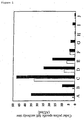
- Figure 1 shows cedar pollen specific IgE antibody titer from a total of 18 blood samples obtained from 10 subjects.
- the cedar pollen specific IgE antibody titer of each blood sample from subjects A to J is indicated in AU/ml.
- the specific IgE antibody titers in blood samples prepared before (white column, left) and after (black column, right) the dispersal of pollen are depicted in paired columns. Blood samples of subjects A and B were collected only after pollen dispersal.
- Figure 2 shows the expression changes of gene 513 between a high IgE group and a normal IgE group that are grouped according to cedar pollen specific IgE titers. Error bars indicate standard deviation.
- Example 1 Blood sample collection from 10 adult volunteers
- the CAP RAST method (Pharmacia) was employed, which is a modified RAST (radio allergo sorbent test, Wide, L. et, al.: Lancet 2: 1105-1107, 1967) method that uses a paper disk as a solid phase.
- Serum from Pharmacia which has standard antibody titer was used as the standard to determine the IgE antibody titer in the samples [unit was shown in either Pharmacia RAST Unit, PRU or AU (arbitrary unit)].
- cedar pollen specific IgE titers from each subject before and after pollen dispersal are shown in Fig. 1. As the figure indicates, the majority of the 10 subjects showed increases in the concentration of cedar pollen specific IgE in sera after pollen exposure. A CAP RAST test value of cedar pollen specific IgE larger than 2 was used in judging whether a subject had or did not have atopic diathesis. Eight subjects, A to G and I, fell into the atopic diathesis group (will also be called "patient"), and subjects H and J were grouped as healthy (will also be called "normal”). Among the eight in the atopic diathesis group, seven showed allergic rhinitis after pollen dispersal.
- T cells were prepared from 10 ml of blood sample as follows. First, 1 ml of heparin (purchased from Novo or other company) was spread over the syringe wall surface, and then 10 ml of blood sample including a final concentration of 50 units/ml heparin was taken. For blood collection, two 22G needles for each person were prepared. After removing the needle from the syringe, the blood sample was transferred to a 50-ml centrifuge tube (polypropylene). The tube was centrifuged at 1500 rpm for 5 min at room temperature and then 1.1 ml was taken from as close to the surface as possible.
- heparin purchased from Novo or other company
- Precipitated cells were resuspended in 5 ml of Ca, Mg free HBSS (GIBCO, etc.).
- the cell suspension was layered on the top of a 5 ml Ficoll Paque (Pharmacia)-containing Falcon tube (2006 or 2059, polypropylene), by use of a capillary pipette. After centrifuging the tube at 1200 rpm for 5 min, it was further centrifuged at 1500 rpm (equivalent to 400x g for the Tomy centrifuge) for 30 min at room temperature. As a result, granulocytes and erythrocytes were precipitated, and lymphocytes, monocytes, and platelets were included in the middle layer, with the Ficoll layer between the precipitate and the middle layer.
- the middle layer was collected by a capillary pipette. Two to three volumes of BSA/PBS (0.5% BSA, 2 mM EDTA in PBS, pH 7.2, degassed just before use) were added thereto, and the mixture was centrifuged at 1200 rpm for 5 min at 4°C. The precipitate was collected and washed twice with a BSA/PBS solution. After the second wash, cells were resuspended in 5 ml BSA/PBS, and a portion of the suspension was diluted two-fold with trypan blue to count the cell number. Total cell numbers were about 1x 10 7 , and the suspension was used as lymphocyte fraction.
- BSA/PBS 0.5% BSA, 2 mM EDTA in PBS, pH 7.2, degassed just before use
- the lymphocyte fraction obtained in Example 2 was centrifuged at 1200 rpm for 5 min at 4°C, and the precipitate was resuspended to 10 8 cells/100 ⁇ l with BSA/PBS. The volume was approximately 20 ⁇ l.
- the cell suspension was transferred to an Eppendorf tube (1.5 ml), and then a CD3 microbead solution was added thereto. This sample was allowed to stand at 4 to 10°C for 30 min (not on ice) and further treated using magnetic cell sorter (MACS, Miltenyi Biotech Inc.) by the following procedure.
- MCS magnetic cell sorter
- An MS + /RS + column was set to Mini MACS or Vario MACS separation unit (without needle). Five hundred ⁇ l of BSA/PBS was gently applied onto the column, and the buffer was run off. Then CD3 microbead-labeled cells were applied onto the column. The column was washed three times using 500 ⁇ l of BSA/PBS (B-cell fraction). The column was removed from the separation unit and set onto a tube to collect the eluate. One ml of BSA/PBS was applied onto the column, and CD3-positive cells were eluted rapidly using plunger attached with the column. This was used as T-cell fraction.
- the obtained T-cell fraction was centrifuged at 1200 rpm at 4°C for 5 min. The precipitate was washed twice with BSA/PBS. After the second wash, the cells were resuspended in 1 ml of BSA/PBS, and a portion of the suspension was diluted two-fold by trypan blue to count the cell number. Total cell numbers were approximately 4x 10 6 .
- Total RNA was prepared from T cells using RNeasy Mini (Qiagen) basically following the manufactures' procedures. All the procedures were carried out at room temperature, wearing gloves. Four-fold volume of ethanol was added to wash buffer RPE. To the lysis buffer RLT, 10 ⁇ l/ml of 2-mercaptoethanol was added. The cell suspension was centrifuged at 1000 to 1200 rpm for 5 min, and the supernatant was removed by aspiration. The precipitate was resuspended in 350 ⁇ l lysis buffer RLT (with 2-mercaptoethanol). At this step, the cell lysate in the lysis buffer could be stored at -70°C.
- the lysate When the cell lysate was stored frozen, the lysate could be thawed by incubation at 37°C for 10 to 15 min and, if insoluble matter was observed, centrifuged for 3 min at maximum speed to collect only the supernatant.
- the lysate was homogenized by syringe with a 20G Cathelin needle, and then 350- ⁇ l lysate was applied onto QIAshredder by Pipetman and centrifuged at 1500 rpm for 2 min to collect eluate. Three hundred fifty ⁇ l of 70% ethanol was added thereto and mixed well with pipetting. An RNeasy spin column was attached to the attached 2-ml tube, and the lysate mixture was applied onto the column.
- the column was centrifuged at 8000x g (11500 rpm) for 1 min, and the flow through was discarded. Then 700 ⁇ l of wash buffer RW1 was applied onto the column, and the column was let to stand for 5 min capped. The column was centrifuged at 11500 rpm for 15 seconds, and the flow through was discarded. The column was set onto a new 2 ml tube, and 500 ⁇ l of wash buffer RPE (containing ethanol) was applied onto the column. The column was then centrifuged at 11500 rpm for 15 sec, and the flow through was discard. Again 500 ⁇ l of wash buffer RPE was applied onto the column and centrifuged at full speed for 2 min.
- the column was transferred to a new tube (1.5 ml), 30 ⁇ l of DEPC treated water was applied, and the column was let to stand for 10 min capped. The column was centrifuged at 11500 rpm for 10 min to obtain total RNA. The concentration of the RNA was measured. If the amount was low, the column was set onto a new 1.5-ml tube again, 30 ⁇ l of DEPC-treated water was applied, and the column was let to stand for 10 min capped and centrifuged at 11500 rpm for 10 min.
- DD Fluorescent Differential Display
- DD-PCR was carried out using the cDNA equivalent to 1 ng of the RNA per reaction.
- the reaction mixture composition was as shown in Table 1.
- cDNA (equivalent to 0.4 ng/ ⁇ l RNA) 2.5 ⁇ l arbitrary primer (2 ⁇ M) 2.5 ⁇ l 10x
- AmpliTaq PCR buffer 1.0 ⁇ l 2.5 mM dNTP 0.8 ⁇ l 50 ⁇ M anchor primer 0.1 ⁇ l (GT15A, GT15C, or GT15G)
- GT15A, GT15C, or GT15G Gene Taq (5U/ ⁇ l) 0.05 ⁇ l
- AmpliTaq (5U/ ⁇ l) 0.05 ⁇ l dH 2 O 3.0 ⁇ l Total volume 10.0 ⁇ l
- the PCR was carried out as follows: 1 cycle of 95°C for 3 min, 40°C for 5 min, and 72°C for 5 min; subsequently 30 cycles of 94°C for 15 sec, 40°C for 2 min, and 72°C for 1 min; after these cycles, 72°C for 5 min; and then continuously at 4°C.
- the anchor primer GT15A (SEQ NO ID: 2), GT15C (SEQ NO ID: 3), or GT15G (SEQ NO ID: 4), was used in combination with the arbitrary primers AG 1 to AG 110, AG 111 to AG 199, or AG 200 to AG 287, respectively, and a total of 287 combinations was tried.
- the arbitrary primers oligomers having 10 nucleotide-long and a GC content of 50% were designed and synthesized.
- a 6% denaturing polyacrylamide gel was prepared, and 2.5 ⁇ l of the sample from the PCR reaction was applied and run by 40 W for 210 min. After the electrophoresis, the gel was scanned by an Hitachi fluorescence imaging analyzer FMBIO II, and the gel image was obtained by detecting fluorescence.
- Example 7 Amplification of a band obtained from DD analysis and its sequence determination
- Band 513 was found by a DD analysis using the anchor primer GT15C (SEQ ID NO: 3) and the arbitrary primer AG136 (TCATGCAGAC/SEQ ID NO: 5).
- the gel containing band 513 was excised, and the DNA was eluted in a TE solution by heating at 60°C for 10 min.
- PCR was conducted with the same condition as the original DD-PCR, and approximately 360 bp DNA fragment was amplified.
- GT15C and AG136 were used as an anchor primer and arbitrary primer, respectively.
- the amplified DNA fragment was cloned into plasmid vector pCR2.1 (Invitrogen) to obtain the about 360 bp fragment harboring plasmid p513-122.
- the nucleotide sequence of the DNA fragment was determined using the plasmid with standard procedures.
- the expression level of 513 was quantified by TaqMan method using ABI-PRISM7700. This method enables quantification of PCR-amplified DNA strands in real-time using fluorescence dyes.
- RNA samples from 22 new volunteers were collected before and after cedar pollen dispersal in the spring of 1998, and total RNAs were extracted from T cells. Forty-four total RNA samples in total were used to quantify the expression of the target gene.
- a DD band sequence determined in Example 7 was used to design and synthesize primers 513-TQ1 (GCAGACAGTTCGATGCTTTTCC/SEQ ID NO: 6), 513-TQ2 (TTTTCTTATGAGGTCCTGCCTTG/SEQ ID NO: 7), and TaqMan probe 513-TQM (AGGGCAGTTTGCATCCTAAAGGTTGTTAAGG/SEQ ID NO: 8) for use in the quantification reaction.
- TaqMan probe 513-TQM was labeled with fluorescence, FAM (6-carboxyfluorescein) and TAMRA (6-carboxy-tetramethyl-rhodamine) at 5'-end and 3'-end, respectively.
- cDNAs were used as templates which were prepared by reverse transcription from total RNAs of 44 samples using poly-T (12 to 18 mer) as primers. To make a standard curve for the calculation of copy numbers, serial dilutions of plasmid p513-122 obtained in Example 7 was utilized as templates. The reaction mix composition for monitoring PCR amplification is shown in Table 3. To correct the difference in the cDNA concentrations between the samples, the same quantitative analysis was carried out for the ⁇ -actin gene, and its copy number was used to correct the copy number of the target gene 513.
- Reaction mix composition for ABI-PRISM 7700 (per well) Sterile distilled water 25.66 ( ⁇ L) 10x TaqMan buffer A 5 25 mM MgCl 2 7 dATP (10 mM) 1.2 dCTP (10 mM) 1.2 dGTP (10 mM) 1.2 dUTP (10 mM) 1.2 Forward Primer (100 ⁇ M) 0.15 Reverse Primer (100 ⁇ M) 0.15 513 TaqMan probe (6.7 ⁇ M) 1.49 AmpliTaq Gold (5U/ ⁇ L) 0.25 AmpErase UNG (1U/ ⁇ L) 0.5 Template solution 5 Total volume 50
- the copy number of gene 513 in each of the samples corrected with ⁇ -actin copy number is shown in Table 4.
- the correction was performed by calculating average copy number of ⁇ -actin from all the samples and by dividing the copy number of gene 513 in each sample by the relative value of the copy number of ⁇ -actin in each sample when the average copy number was set at 1.
- a two-way layout analysis of variance was conducted using these data. The test was carried out according to the two factors: (1) before and after pollen dispersal and (2) the group that showed 3.5 AU/ml or more at least once in two measurements of each specific IgE in the sera (the high IgE group) and the other group (the normal IgE group). The number of subjects in each group was, for example, in the case of cedar pollen, 10 people in the high IgE group and 12 people in the normal IgE group. Another test was carried out for total IgE using the group that showed 200 AU/ml and the other group. A two-way layout analysis of variance was performed using StatView software (Abacuus Concepts, Inc.).
- Gene 513 was cloned using a Marathon cDNA Amplification Kit (CLONTECH). mRNAs of YY-1 cell line were used to synthesize cDNA to be used as templates for the Marathon kit. According to the 513 nucleotide sequence isolated by DD analysis, specific primer 513_154L (GCTTGTCCCTGGGGTTCACACTT/SEQ ID NO: 9) was designed to use with the adapter primer attached to the kit. The PCR was carried out, and up to approximately 1.1-kb amplification products were amplified. The nucleotide sequence of the fragment was found to be 1171 bp and contained the previously determined sequence. This sequence is shown as SEQ ID NO: 1.
- the present invention provided a novel gene that correlates with cedar pollen specific IgE titer. Using the expression of the gene of the present invention as an index, it is possible to test for whether a subject has an allergic diathesis or not, and to screen for a candidate compound for a therapeutic drug for a allergic disease.
Landscapes
- Health & Medical Sciences (AREA)
- Chemical & Material Sciences (AREA)
- Life Sciences & Earth Sciences (AREA)
- Organic Chemistry (AREA)
- General Health & Medical Sciences (AREA)
- Medicinal Chemistry (AREA)
- Proteomics, Peptides & Aminoacids (AREA)
- Biophysics (AREA)
- Biochemistry (AREA)
- Genetics & Genomics (AREA)
- Gastroenterology & Hepatology (AREA)
- Molecular Biology (AREA)
- Zoology (AREA)
- Toxicology (AREA)
- Bioinformatics & Cheminformatics (AREA)
- Engineering & Computer Science (AREA)
- Immunology (AREA)
- Chemical Kinetics & Catalysis (AREA)
- General Chemical & Material Sciences (AREA)
- Nuclear Medicine, Radiotherapy & Molecular Imaging (AREA)
- Pharmacology & Pharmacy (AREA)
- Animal Behavior & Ethology (AREA)
- Public Health (AREA)
- Veterinary Medicine (AREA)
- Measuring Or Testing Involving Enzymes Or Micro-Organisms (AREA)
Applications Claiming Priority (3)
| Application Number | Priority Date | Filing Date | Title |
|---|---|---|---|
| JP12049199 | 1999-04-27 | ||
| JP12049199 | 1999-04-27 | ||
| PCT/JP2000/002733 WO2000065049A1 (fr) | 1999-04-27 | 2000-04-26 | Gene 513 associe a la pollinose |
Publications (2)
| Publication Number | Publication Date |
|---|---|
| EP1182256A1 true EP1182256A1 (de) | 2002-02-27 |
| EP1182256A4 EP1182256A4 (de) | 2003-07-02 |
Family
ID=14787516
Family Applications (1)
| Application Number | Title | Priority Date | Filing Date |
|---|---|---|---|
| EP00922883A Withdrawn EP1182256A4 (de) | 1999-04-27 | 2000-04-26 | Mit pollinosisassoziiertes gen 513 |
Country Status (3)
| Country | Link |
|---|---|
| US (1) | US6986990B1 (de) |
| EP (1) | EP1182256A4 (de) |
| WO (1) | WO2000065049A1 (de) |
Families Citing this family (1)
| Publication number | Priority date | Publication date | Assignee | Title |
|---|---|---|---|---|
| US20040161746A1 (en) * | 2000-12-21 | 2004-08-19 | Yoshiko Matsumoto | Method of testing allergic disease |
Family Cites Families (3)
| Publication number | Priority date | Publication date | Assignee | Title |
|---|---|---|---|---|
| ATE238434T1 (de) * | 1995-12-05 | 2003-05-15 | Jorn Erland Koch | Eine in kaskaden verlaufende vervielfältigungsreaktion von nukleinsäuren |
| US5792850A (en) * | 1996-05-23 | 1998-08-11 | Zymogenetics, Inc. | Hematopoietic cytokine receptor |
| JPH11332567A (ja) * | 1998-05-22 | 1999-12-07 | Dai Ichi Seiyaku Co Ltd | アトピー体質の判定方法 |
-
2000
- 2000-04-26 US US10/019,832 patent/US6986990B1/en not_active Expired - Fee Related
- 2000-04-26 EP EP00922883A patent/EP1182256A4/de not_active Withdrawn
- 2000-04-26 WO PCT/JP2000/002733 patent/WO2000065049A1/ja not_active Ceased
Non-Patent Citations (6)
| Title |
|---|
| DATABASE EMBL [Online] EBI; 16 October 1997 (1997-10-16) Database accession no. AA623116 XP002238625 * |
| DATABASE EMBL [Online] EBI; Database accession no. HS111C05B XP002238715 * |
| DATABASE EMBL [Online] EBI; Database accession no. HSA28892 XP002238716 * |
| LEUNG DONALD Y M: "Molecular basis of allergic diseases." MOLECULAR GENETICS AND METABOLISM, vol. 63, no. 3, March 1998 (1998-03), pages 157-167, XP002238622 ISSN: 1096-7192 * |
| See also references of WO0065049A1 * |
| YANAGIHARA YUKIYOSHI ET AL: "Allergen-specific human IgE helper T cell lines derived from patients allergic to Japanese cedar pollen." INTERNATIONAL ARCHIVES OF ALLERGY AND IMMUNOLOGY, vol. 105, no. 2, 1994, pages 162-170, XP009009511 ISSN: 1018-2438 * |
Also Published As
| Publication number | Publication date |
|---|---|
| US6986990B1 (en) | 2006-01-17 |
| EP1182256A4 (de) | 2003-07-02 |
| WO2000065049A1 (fr) | 2000-11-02 |
Similar Documents
| Publication | Publication Date | Title |
|---|---|---|
| EP1260816A1 (de) | Verfahren zur prüfing von allergiekrankheiten | |
| US7172867B2 (en) | Methods of testing for allergic diseases, and therapeutic agents for treating same | |
| US6986990B1 (en) | Pollen allergy-related gene 513 | |
| US20040197786A1 (en) | Method of examining steroid resnponsiveness | |
| WO2000020575A1 (fr) | Gene associe a la pollinose | |
| US20040161746A1 (en) | Method of testing allergic disease | |
| WO2000065046A1 (fr) | Gene 373 associe a la pollinose | |
| US20040234969A1 (en) | Mehtod for examining steroid-responsiveness | |
| JP2003125776A (ja) | 花粉症関連遺伝子、419 | |
| WO2000073440A1 (en) | Pollinosis-associated gene 787 | |
| US20040058351A1 (en) | Method of examining for allergic disease | |
| WO2000073435A1 (fr) | Gene 441 associe a la pollinose | |
| WO2000065051A1 (fr) | Gene 627 associe a la pollinose | |
| JP2003125777A (ja) | 花粉症関連遺伝子、581 | |
| WO2000065050A1 (fr) | Gene 795 associe a la pollinose | |
| JP2002277456A (ja) | アレルギー性疾患の検査方法 | |
| JPWO2000065048A1 (ja) | 花粉症関連遺伝子、581 | |
| JPWO2001065259A1 (ja) | アレルギー性疾患の検査方法 | |
| JP2002306170A (ja) | アレルギー性疾患の検査方法 | |
| JPWO2000073435A1 (ja) | 花粉症関連遺伝子、441 | |
| JPWO2000073439A1 (ja) | 花粉症関連遺伝子、465 | |
| JPWO2000065051A1 (ja) | 花粉症関連遺伝子、627 | |
| JPWO2000065045A1 (ja) | 花粉症関連遺伝子、419 | |
| WO2000073439A1 (fr) | Gene 465 associe a la pollinose | |
| JP2002238568A (ja) | アレルギー性疾患の検査方法 |
Legal Events
| Date | Code | Title | Description |
|---|---|---|---|
| PUAI | Public reference made under article 153(3) epc to a published international application that has entered the european phase |
Free format text: ORIGINAL CODE: 0009012 |
|
| 17P | Request for examination filed |
Effective date: 20011127 |
|
| AK | Designated contracting states |
Kind code of ref document: A1 Designated state(s): AT BE CH CY DE DK ES FI FR GB GR IE IT LI LU MC NL PT SE |
|
| RIN1 | Information on inventor provided before grant (corrected) |
Inventor name: NAGASU, TAKESHI, EISAI CO., LTD. Inventor name: OBAYASHI, IZUMI Inventor name: IMAI, YUKIHO, GENOX RESEARCH, INC. Inventor name: SUGITA, YUJI, GENOX RESEARCH, INC. Inventor name: OBAYASHI, MASAYA, KYOWA HAKKO KOGYO CO., LTD. Inventor name: OSHIDA, TADAHIRO, GENOX RESEARCH, INC. Inventor name: GUNJI, SHIGEMICHI, SANKYO CO., LTD. Inventor name: FUJISHIMA, TOMOKO, KIRIN BREWERY COMPANY, LTD. |
|
| RIC1 | Information provided on ipc code assigned before grant |
Ipc: 7C 07K 14/47 B Ipc: 7G 01N 33/50 B Ipc: 7C 07K 16/18 B Ipc: 7A 61P 37:00 J Ipc: 7C 12Q 1/68 B Ipc: 7A 61K 31/00 J Ipc: 7A 61K 31/00 B Ipc: 7C 12N 15/12 A |
|
| A4 | Supplementary search report drawn up and despatched |
Effective date: 20030515 |
|
| REG | Reference to a national code |
Ref country code: DE Ref legal event code: 8566 |
|
| 17Q | First examination report despatched |
Effective date: 20030829 |
|
| RBV | Designated contracting states (corrected) |
Designated state(s): GB |
|
| RTI1 | Title (correction) |
Free format text: POLLEN ALLERGY-RELATED GENE 513 |
|
| GRAP | Despatch of communication of intention to grant a patent |
Free format text: ORIGINAL CODE: EPIDOSNIGR1 |
|
| RIC1 | Information provided on ipc code assigned before grant |
Ipc: A61K 31/00 20060101ALI20060502BHEP Ipc: C07K 14/47 20060101ALI20060502BHEP Ipc: C07K 16/18 20060101ALI20060502BHEP Ipc: C12Q 1/68 20060101ALI20060502BHEP Ipc: A61P 37/00 20060101ALN20060502BHEP Ipc: G01N 33/50 20060101ALI20060502BHEP Ipc: C12N 15/12 20060101AFI20060502BHEP |
|
| STAA | Information on the status of an ep patent application or granted ep patent |
Free format text: STATUS: THE APPLICATION IS DEEMED TO BE WITHDRAWN |
|
| 18D | Application deemed to be withdrawn |
Effective date: 20060926 |