EP1183997A2 - Vorrichtung und Verfahren zur Wahrnehmung von physikalischen und gemüts Zuständen einer Person - Google Patents
Vorrichtung und Verfahren zur Wahrnehmung von physikalischen und gemüts Zuständen einer Person Download PDFInfo
- Publication number
- EP1183997A2 EP1183997A2 EP01306989A EP01306989A EP1183997A2 EP 1183997 A2 EP1183997 A2 EP 1183997A2 EP 01306989 A EP01306989 A EP 01306989A EP 01306989 A EP01306989 A EP 01306989A EP 1183997 A2 EP1183997 A2 EP 1183997A2
- Authority
- EP
- European Patent Office
- Prior art keywords
- value
- bio
- threshold value
- signal
- determined
- Prior art date
- Legal status (The legal status is an assumption and is not a legal conclusion. Google has not performed a legal analysis and makes no representation as to the accuracy of the status listed.)
- Withdrawn
Links
Images





Classifications
-
- G—PHYSICS
- G06—COMPUTING OR CALCULATING; COUNTING
- G06F—ELECTRIC DIGITAL DATA PROCESSING
- G06F3/00—Input arrangements for transferring data to be processed into a form capable of being handled by the computer; Output arrangements for transferring data from processing unit to output unit, e.g. interface arrangements
- G06F3/01—Input arrangements or combined input and output arrangements for interaction between user and computer
- G06F3/011—Arrangements for interaction with the human body, e.g. for user immersion in virtual reality
-
- A—HUMAN NECESSITIES
- A61—MEDICAL OR VETERINARY SCIENCE; HYGIENE
- A61B—DIAGNOSIS; SURGERY; IDENTIFICATION
- A61B5/00—Measuring for diagnostic purposes; Identification of persons
- A61B5/0002—Remote monitoring of patients using telemetry, e.g. transmission of vital signals via a communication network
- A61B5/0004—Remote monitoring of patients using telemetry, e.g. transmission of vital signals via a communication network characterised by the type of physiological signal transmitted
- A61B5/0008—Temperature signals
-
- A—HUMAN NECESSITIES
- A61—MEDICAL OR VETERINARY SCIENCE; HYGIENE
- A61B—DIAGNOSIS; SURGERY; IDENTIFICATION
- A61B5/00—Measuring for diagnostic purposes; Identification of persons
- A61B5/02—Detecting, measuring or recording for evaluating the cardiovascular system, e.g. pulse, heart rate, blood pressure or blood flow
- A61B5/0205—Simultaneously evaluating both cardiovascular conditions and different types of body conditions, e.g. heart and respiratory condition
-
- A—HUMAN NECESSITIES
- A61—MEDICAL OR VETERINARY SCIENCE; HYGIENE
- A61B—DIAGNOSIS; SURGERY; IDENTIFICATION
- A61B5/00—Measuring for diagnostic purposes; Identification of persons
- A61B5/16—Devices for psychotechnics; Testing reaction times ; Devices for evaluating the psychological state
-
- A—HUMAN NECESSITIES
- A61—MEDICAL OR VETERINARY SCIENCE; HYGIENE
- A61B—DIAGNOSIS; SURGERY; IDENTIFICATION
- A61B5/00—Measuring for diagnostic purposes; Identification of persons
- A61B5/01—Measuring temperature of body parts ; Diagnostic temperature sensing, e.g. for malignant or inflamed tissue
-
- A—HUMAN NECESSITIES
- A61—MEDICAL OR VETERINARY SCIENCE; HYGIENE
- A61B—DIAGNOSIS; SURGERY; IDENTIFICATION
- A61B5/00—Measuring for diagnostic purposes; Identification of persons
- A61B5/08—Measuring devices for evaluating the respiratory organs
- A61B5/0816—Measuring devices for examining respiratory frequency
-
- A—HUMAN NECESSITIES
- A61—MEDICAL OR VETERINARY SCIENCE; HYGIENE
- A61B—DIAGNOSIS; SURGERY; IDENTIFICATION
- A61B5/00—Measuring for diagnostic purposes; Identification of persons
- A61B5/145—Measuring characteristics of blood in vivo, e.g. gas concentration or pH-value ; Measuring characteristics of body fluids or tissues, e.g. interstitial fluid or cerebral tissue
- A61B5/1455—Measuring characteristics of blood in vivo, e.g. gas concentration or pH-value ; Measuring characteristics of body fluids or tissues, e.g. interstitial fluid or cerebral tissue using optical sensors, e.g. spectral photometrical oximeters
-
- A—HUMAN NECESSITIES
- A61—MEDICAL OR VETERINARY SCIENCE; HYGIENE
- A61B—DIAGNOSIS; SURGERY; IDENTIFICATION
- A61B5/00—Measuring for diagnostic purposes; Identification of persons
- A61B5/44—Detecting, measuring or recording for evaluating the integumentary system, e.g. skin, hair or nails
- A61B5/441—Skin evaluation, e.g. for skin disorder diagnosis
-
- G—PHYSICS
- G06—COMPUTING OR CALCULATING; COUNTING
- G06F—ELECTRIC DIGITAL DATA PROCESSING
- G06F2203/00—Indexing scheme relating to G06F3/00 - G06F3/048
- G06F2203/01—Indexing scheme relating to G06F3/01
- G06F2203/011—Emotion or mood input determined on the basis of sensed human body parameters such as pulse, heart rate or beat, temperature of skin, facial expressions, iris, voice pitch, brain activity patterns
Definitions
- the present invention relates to the use of a bio-signal, and more particularly, to an apparatus and method for perceiving a physical and emotional state using a bio-signal.
- Detecting or measuring a human bio-signal was studied and applied mainly in medicine in the initial stage. That is, in order to check the health condition of a patient or treat patients referring to blood pressure or a pulse rate, a bio-signal detected or measured is used. Recently, bio-signals are applied in the field of man-machine interfacing for understanding a person's emotions, as well as in the medicine. Particularly, it is considered to be essential to be able to perceive a person's emotions using a bio-signal in order to enable more convenient and familiar communication between man and machine. Accordingly, a variety of apparatuses for detecting or measuring a bio-signal (or a physiological signal) and using it have been developed.
- An apparatus for measuring bio-information using an ear-receiver type Photo-electric pulse PlethysmoGraph (PPG) sensor, which is disclosed in Korean Patent Publication No. 1999-63100, and a real time bio-signal monitoring system using wireless communication networks, which is disclosed in Korean Patent Publication No. 1997-14722, are conventional portable bio-signal measuring apparatuses.
- PPG Photo-electric pulse PlethysmoGraph
- Such conventional apparatuses are disadvantageous in that they are not easy to attach to a human body, or in that it is inconvenient for people to move with them attached.
- an apparatus for perceiving a physical and emotional state includes a bio-signal detection part attached to a predetermined portion of a body for performing analog signal processing on at least one bio-signal detected from the body and outputting the processed bio-signal, and a bio-signal recognizing part for performing digital signal processing on the processed bio-signal received from the bio-signal detection part, perceiving the physical and emotional state from the result of the digital signal processing, and reporting the physical and emotional state.
- the present invention accordingly provides an apparatus for perceiving a physical and emotional state, which is easily attached to and detached from a human body and through which a bio-signal is simply detected.
- the invention also provides a method of perceiving a physical and emotional state, including the steps of performing analog signal processing on at least one bio-signal detected from a body, and performing digital signal processing on the analog signal processed bio-signal, perceiving the physical and emotional state from the result of the digital signal processing, and reporting the physical and emotional state.
- the present invention also provides a method for perceiving a physical and emotional state using the above apparatus for perceiving a physical and emotional state.
- the invention further provides a method of perceiving an emotional state, including the steps of extracting at least one bio-parameter representing a characteristic of a body from at least one bio-signal which is detected from the body for a predetermined time, and determining the amount of variation of the extracted bio-parameter and determining a current emotional state using the determined amount of variation.
- the value of the bio-parameter varies with a change in the emotional state.
- the present invention further provides a method for perceiving an emotional state using a bio-parameter or bio-parameters extracted from a bio-signal detected for a short or long time.
- Figures 7 and 8 are presented on two drawing sheets, labelled Figures 7a and 7b and Figures 8a and 8b respectively.
- an apparatus for perceiving a physical and emotional state includes a bio-signal detection part 100 and a bio-signal recognizing part 120.
- the bio-signal detection part 100 includes a sensor 10, an analog signal processor 20, an analog-to-digital converter (ADC) 30, and a wireless signal transmitter 70.
- the bio-signal recognizing part 120 includes a wireless signal receiver 80, a digital signal processor 40, a controller 50 and a data output unit 60.
- a method, performed with the apparatus shown in FIG. 1, of perceiving a physical and emotional state includes steps 200 through 206 of performing analog signal processing on a bio-signal or bio-signals detected from a human body and steps 208 through 214 of performing digital signal processing on the analog signal processed bio signal(s) and perceiving and displaying a physical and emotional state.
- the bio-signal detection part 100 is attached to a predetermined portion of a human body, performs analog signal processing on at least one bio-signal detected from the body, and outputs the processed bio-signal to the bio-signal recognizing part 120.
- the sensor 10 in bio-signal detection part 100 detects a bio-signal from a human body.
- the sensor 10 detects analog bio-signals corresponding to blood pressure, skin temperature, skin resistivity and so on.
- the sensor 10 includes a blood pressure sensor (not shown) for measuring blood pressure, a skin temperature sensor (not shown) for measuring skin temperature, and a skin resistivity sensor (not shown) for measuring skin resistivity to electric current.
- the sensor 10 may further include a respiration sensor (not shown) for measuring a respiration rate.
- the blood pressure sensor may be realized as a pressure sensor such as a Piezo sensor or a strain gauge or as a Photo-electric pulse PlethysmoGraph (PPG) sensor.
- the blood pressure sensor is disclosed on pages 163 through 177 of a book entitled “Introduction to Biomedical Equipment Technology (2nd Edition)” written by Joseph J. Carr and John M. Brown and published by REGENTS/Prentice Hall in 1993.
- the Piezo sensor is disclosed on pages 167 and 168 of "Introduction to Biomedical Equipment Technology (2nd Edition)" written by Joseph J. Carr and John M. Brown, and in a book entitled “Bosch Automotive Electric-Electronic Systems Handbook” written by Robert Bosch and published by Robert Bentley in 1995.
- the strain gauge is disclosed on pages 113 through 122 of a book entitled “Principles of Biomedical Instrumentation and Measurement” written by Richard Aston and published by Maxwell Macmillan International Edition in 1991.
- the PPG sensor is disclosed on pages 207 through 209 of "Introduction to Biomedical Equipment Technology (2nd Edition)" written by Joseph J. Carr and John M. Brown.
- the skin temperature sensor may be realized as a sensor which measures skin temperature using an electrode and a thermocouple.
- the skin temperature sensor is disclosed on pages 100 through 107 of "Principles of Biomedical Instrumentation and Measurement” written by Richard Aston.
- the electrode is disclosed on pages 25 through 37 of "Introduction to Biomedical Equipment Technology (2nd Edition)" written by Joseph J. Carr and John M. Brown.
- the thermocouple is disclosed on pages 100 through 107 of "Principles of Biomedical Instrumentation and Measurement” written by Richard Aston.
- the skin resistivity sensor may be realized as a sensor which measures skin resistivity using an electrode directly or indirectly contacting skin and a comparator connected to the electrode.
- the skin resistivity sensor was introduced by Don C. Fowles, Robert Edelberg and David T. Lykken, in "Publication Recommendation for Electrodermal measurements", Psychophysiology published by the Society for Psychophysiological Research Inc., in 1981, pp. 232-239.
- step 202 the analog signal processor 20 amplifies and filters the analog bio-signal detected by the sensor 10 and outputs the amplified and filtered analog bio-signal to the ADC 30.
- a low-pass filter is usually used to eliminate high frequency noise components, but a band pass filter may be used to obtain a signal of a specific band.
- step 204 the ADC 30 converts the analog bio-signal, which has been amplified and filtered by the analog signal processor 20, to a digital bio-signal and outputs it to the wireless signal transmitter 70 or the digital signal processor 40.
- the bio-signal detection part 100 may communicate the digital bio-signal to the bio-signal recognizing part 120 through a wire.
- the digital bio-signal is transmitted to the digital signal processor 40 through a wire, and the procedure proceeds from step 204 directly to step 210.
- the bio-signal detection part 100 may wirelessly communicate the digital bio-signal to the bio-signal recognizing part 120.
- the bio-signal detection part 100 may be realized as a strap-on type which may be attached to and detached from a predetermined part of a body.
- the bio-signal detection part 100 may be realized as a watch-type which can be attached to a wrist, or realized so that it can be attached to other body parts depending on the purpose of application.
- the bio-signal recognizing part 120 may be realized as attachable to a body and installed outside at a predetermined distance from the bio-signal detection part 100.
- step 206 the wireless signal transmitter 70 converts the digital bio-signal received from the ADC 30 to a wireless signal and transmits it to the bio-signal recognizing part 120.
- the bio-signal recognizing part 120 performs digital signal processing on the bio-signal processed by the bio-signal detection part 100 and perceives and displays a physical and emotional state based on the result of the digital signal processing.
- step 208 the wireless signal receiver 80 in the bio-signal recognizing part 120 receives the wireless signal from the wireless signal transmitter 70 and outputs the received digital bio-signal to the digital signal processor 40.
- the bio-signal detection part 100 transmits the digital bio-signal to the bio-signal recognizing part 120 through a wire, the procedure proceeds from step 204 directly to step 210.
- step 210 the digital signal processor 40 performs data processing on the digital bio-signal received from the ADC 30 or the wireless signal receiver 80 and outputs the result of the data processing to the controller 50 and the data output unit 60.
- the controller 50 perceives a physical and emotional state based on the data received from the digital signal processor 40 and outputs the result of the perception to the data output unit 60 as a control signal. Specifically, the controller 50 receives at least one reference value previously set through its input terminal IN and stores it. The controller 50 compares the stored reference value with the data received from the digital signal processor 40 and perceives a physical and emotional state using the result of the comparison.
- the reference value is an average value of the bio-signals of general persons.
- step 212 performed by the controller 50 of FIG. 2 will be described with reference to the attached drawings.
- the embodiment of step 212 includes steps 240 through 246 of determining whether to use an average value or a reference value in perceiving a physical and emotional state, and steps 248 and 250 of perceiving the physical and emotional state using the average value or the reference value.
- the controller 50 stores at least one reference value previously set. As described above, the controller 50 may receive the reference value through its input terminal IN from the outside and store it. Alternatively, the controller 50 may previously receive and store the reference value. In step 242, the average value of at least one bio-signal detected by the sensor 10 is calculated from the data output from the digital signal processor 40.
- step 242 one of the average value and the reference value is selected in response to the difference between the two values, and the selected average value or reference value is compared with the data currently output from the digital signal processor 40, thereby perceiving a physical and emotional state in steps 244 through 250.
- the difference between the average value and the reference value is calculated.
- the average value corresponds to an average of bio-signals which the sensor 10 previously measures for a user of the apparatus of FIG. 1.
- step 246 it is determined whether the difference between the average value and the reference value is greater than an allowable error. If it is determined that the difference is greater than the allowable error, in step 248, the average value is compared with the data processed in step 210 to perceive a physical and emotional state. However, if it is determined that the difference is not greater than the allowable error, in step 250, the reference value is compared with the data processed in step 210 to perceive a physical and emotional state.
- the controller 50 stores predetermined first, second and third reference values of respective bio-signals corresponding to blood pressure, skin temperature and skin resistivity, respectively, and calculates and stores first, second and third average values of respective previously measured bio-signals corresponding to blood pressure, skin temperature and skin resistivity, respectively.
- the controller 50 compares the X-th reference value with the data received from the digital signal processor 40.
- the controller 50 compares the X-th average value with the data received from the digital signal processor 40. Then, the controller 50 perceives a physical and emotional state through the result of comparison.
- the average value instead of the reference value is used in order to exactly perceive a physical and emotional state taking into account the user's physical characteristics. For example, when blood pressure or body temperature currently measured by the sensor 10 is higher than a predetermined reference value or a calculated average value by at least a predetermined level, the controller 50 perceives excitement or anger.
- the controller 50 perceives strain. This is because a person under strain sweats more than usual, and skin resistivity decreases as the person sweats more. Such physical and emotional states which can be perceived can be modified, or additional states can be added, through tests. In addition, highly reliable data can be obtained by combining perceived states. In other words, the controller 50 may perceive different physical and emotional states depending on first, second and third comparison values which are obtainable as a result of comparing the average or reference values with the data received from the digital signal processor 40, or may perceive physical and emotional states using the result of performing an OR operation or an And operation and a logical combination on the first through third comparison values. A method of perceiving an emotional state using the result of comparing the average values with the data according to the present invention will be described later.
- the data output unit 60 provides the digital data, that is, a bio-signal and a perception signal which is received from the digital signal processor 40, to the user in the form of a voice and/or an image in response to the control signal generated by the controller 50.
- the data output unit 60 may include a speaker and/or a monitor and may provide physical and emotional state perception data and detected bio-signal data to the user in the form of a voice and/or an image in response to the control signal of the controller 50.
- FIG. 4 is a flowchart of a method of perceiving an emotional state according to the present invention.
- steps 300 and 302 an emotional state is determined based on at least one bio-parameter extracted from at least one bio-signal detected for a predetermined period of time.
- step 300 at least one bio-parameter representing a physical characteristic is extracted from at least one bio-signal detected from a user's body for a predetermined period of time.
- bio-parameters representing the frequency of an electrocardiogram, the number of heartbeats and an electrocardiogram attendant upon respiration are extracted from a bio-signal having information as to blood pressure
- bio-parameters representing skin temperature and skin resistivity are extracted from bio-signals having information as to skin temperature and skin resistivity.
- the value of each bio-parameter extracted in step 300 varies with a change in an emotion.
- the predetermined period of time may be a minimum time (referred to as a predetermined short time) taken for a changed emotion to be represented by a bio-signal, or may be a time (referred to as a predetermined long time) longer than the minimum time.
- the predetermined short time may be 10-60 seconds
- the predetermined long time may be a time longer than 60 seconds.
- bio-parameters detected for the predetermined short time and bio-parameters detected for the predetermined long time are used for perceiving a person's emotional state.
- bio-parameters detected for the predetermined short time are used in order to quickly perceive a rapidly changing emotional state
- bio-parameters detected for the predetermined long time are used in order to perceive an emotional state which remains for a long time.
- step 302 the amount of variation of each bio-parameter currently extracted is determined, and a current emotional state is determined based on the determined amount of variation. Specifically, a base bio-parameter is compared with a currently extracted bio-parameter to determine the amount of variation of the currently extracted bio-parameter.
- the base bio-parameter is a bio-parameter measured in a time for which no emotions arise, for example, for about 10 through 20 minutes for which a user's mind is calm.
- the method of perceiving an emotional state shown in FIG. 4 corresponds to step 248 shown in FIG. 3 and can be performed by the controller 50.
- the base bio-parameter corresponds to an average value.
- step 302 of perceiving an emotional state based on bio-parameters detected for the predetermined short time and bio-parameters detected for the predetermined long time will be described with reference to the attached drawings.
- FIG. 5 is a flowchart of a first embodiment 302A of step 302 shown in FIG. 4.
- the embodiment 302A includes steps 310 through 318 of perceiving a person's emotional state based on the amounts of variation of bio-parameters. According to the embodiment shown in FIG. 5, an emotional state is perceived using bio-parameters detected for the predetermined short time.
- step 310 happiness is perceived using bio-parameters representing the number of heartbeats, skin temperature and the frequency of an electrocardiogram.
- step 312 stress is perceived using bio-parameters representing the number of heartbeats and the frequency of an electrocardiogram.
- step 314 sadness is perceived using bio-parameters representing the number of heartbeats and skin temperature.
- step 316 boredom is perceived using bio-parameters representing skin temperature and skin resistivity.
- step 318 anger is perceived using bio-parameters representing skin resistivity and the frequency of an electrocardiogram. Steps 310 through 318 in FIG. 5 can be performed regardless of order.
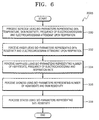
- FIG. 6 is a flowchart of a second embodiment 302B of step 302 shown in FIG. 4.
- the embodiment 302B includes steps 330 through 338 of perceiving a person's emotional state based on the amounts of variation of bio-parameters. According to the embodiment shown in FIG. 6, an emotional state is perceived using bio-parameters detected for the predetermined long time.
- step 330 boredom is perceived using bio-parameters representing skin temperature, skin resistivity, the frequency of an electrocardiogram and an electrocardiogram attendant upon respiration.
- step 332 anger is perceived using bio-parameters representing skin resistivity and an electrocardiogram attendant upon respiration.
- step 334 happiness is perceived using bio-parameters representing the number of heartbeats, the frequency of an electrocardiogram and a respiration rate.
- step 336 sadness is perceived using bio-parameters representing the number of heartbeats and skin resistivity.
- step 338 stress is perceived using bio-parameters representing skin resistivity.
- steps 330 through 338 can be performed regardless of order.
- a bio-parameter representing the frequency of an electrocardiogram may be a low frequency (LF) value obtained by integrating a power spectrum in the range of a low frequency over the result of taking the Fast Fourier Transform (FFT) of a bio-signal which contains information on blood pressure, a high frequency (HF) value obtained by integrating a power spectrum in the range of a high frequency over the result of taking FFT of a bio-signal which contains information on blood pressure, or a LF/HF obtained by dividing the LF by the HF.
- LF low frequency
- FFT Fast Fourier Transform
- HF high frequency
- a LF/HF obtained by dividing the LF by the HF.
- the range of a low frequency may be 0.04-0.15 Hz
- the range of a high frequency may be 0.15-0.5 Hz.
- a bio-parameter representing the number of heartbeats may be an average RR of the intervals between the positive peaks of blood pressure, or a heart rate (HR) indicating the number of heartbeats per unit time.
- the positive peak means a usual R peak and is usually disclosed in the part related to electrocardiograms in physiological textbooks.
- the positive peak is disclosed on pages 171 through 216 of the Korean translation of "Introduction to Biomedical Equipment Technology (2nd Edition)" written by Joseph J. Carr & John M. Brown, and which was translated into Korean by Myung-ho Lee and published by Kyungmoon in 1996.
- the HR can be obtained in a similar way to the RR, for example, calculating the number of heartbeats for 1 minute.
- a bio-parameter representing an electrocardiogram attendant upon respiration may be a respiratory sinus arrhythmia (RSA) indicating a value obtained by dividing the result of subtracting a minimum interval from a maximum interval among the intervals between positive peaks of blood pressure by the minimum interval, that is, (maximum interval-minimum interval)/minimum interval.
- RSA respiratory sinus arrhythmia
- a variety of methods of extracting the RSA are widely known. For example, one of these methods is introduced by A.W. Frey, C. Hagenmiller, J Baumert, F. Grueneis, M. Dambacher, K. Theisen and M. Adt, "The Respiratory Sinus Arrhythmia as a Function of Breathing Frequency Revisited", IEEE Computer in Cardiology, pp. 41-44, 1994.
- a bio-parameter representing skin temperature may be a SKin Temperature (SKT) equal to an average skin temperature.
- a bio-parameter representing skin resistivity may be a skin conductive level (SCL) equal to an average of reciprocals of values of skin resistivity, the number of skin conductive response (N-SCR) equal to the number of negative slope zero crossings measured from a graph expressing reciprocals of values of skin resistivity, or a skin conductive response magnitude (SCRM) equal to the sum of reciprocals of values of skin resistivity between a negative slope zero crossing and a positive slope zero crossing. Taking into account that negative or positive slope zero crossings may occur due to noise, the curve on the graph may be previously low-pass filtered.
- bio-parameters such as a finger pulse volume (FPV) and a PPG can be extracted in step 300. Both FPV and PPG denote the amount of a blood flow.
- the bio-parameters, RR, HR, SKT, SCL, N-SCR, SCRM, LF, HF, LF/HF, RSA, RESP, FPV and PPG, are obtained at different times.
- these bio-parameters are all detected for the predetermined short time.
- these bio-parameters are all detected for the predetermined long time.
- These bio-parameters may be generated by the controller 50 shown in FIG. 1 as follows.
- a bio-signal which corresponds to blood pressure sensed by a blood pressure sensor (not shown) provided in the sensor 10 of FIG. 1, is processed as described before and then input to the digital signal processor 40.
- the controller 50 can extract bio-parameters, i.e., RR, HR, LF, HF, LF/HF, RSA and RESP, using blood pressure data generated by the digital signal processor 40. For example, the controller 50 obtains RR, RSA and HR from the blood pressure data, obtains LF and HF by performing FFT analysis on the blood pressure data, and obtains LF/HF from LF and HF.
- a bio-signal corresponding to respiration sensed by a respiration sensor may be used to obtain RESP.
- the bio-signal corresponding to respiration sensed by the respiration sensor provided in the sensor 10 of FIG. 1 is input to the digital signal processor 40 through the procedure described above.
- the controller 50 extracts RESP from respiration data generated by the digital signal processor 40.
- a variety of methods of extracting RESP are widely known. For example, a general method of extracting RESP is introduced by Pei Z. Zhang, Walter N. Tapp, Stanley S. Reisman and Benjamin H. Natelson, "Respiration Response Curve Analysis of Heart Rate Variability", IEEE Transaction on Biomedical Engineering, Vol. 44, No. 4, pp. 321-325, April 1997.
- bio-signals corresponding to skin temperature and skin resistivity, respectively, which are sensed by a skin temperature sensor (not shown) and a skin resistivity sensor (not shown), respectively, provided in the sensor 10 of FIG. 1, are processed as described before and then input to the digital signal processor 40. Then, the controller 50 can extract bio-parameters, i.e., SKT, SCL, N-SCR and SCRM, from skin temperature data and skin resistivity data generated by the digital signal processor 40.
- bio-parameters i.e., SKT, SCL, N-SCR and SCRM
- the blood sensor provided in the sensor 10 of FIG. 1 may be realized as a PPG sensor (not shown) in order to measure FPV and PPG.
- the PPG sensor senses, for example, information as to a blood flow at the end of a finger.
- a bio-signal which contains the sensed information on blood flow is processed as described before and then input to the digital signal processor 40.
- the controller 50 extracts FPV and PPG from blood flow data generated by the digital signal processor 40.
- the controller 50 determines the amount of variation of each of the currently extracted bio-parameters on the basis of base bio-parameters previously extracted and determines an emotional state.
- step 302 shown in FIG. 4 and its embodiments 302A and 302B shown in FIGS. 5 and 6 can be performed by the controller 50.
- Base bio-parameters are expressed like RR(base), HR(base), SKT(base), SCL(base), N-SCR(base), SCRM(base), LF(base), HF(base), LF/HF(base), RSA(base) and RESP(base).
- FIG. 7 is a flowchart of a preferred embodiment of the embodiment 302A shown in FIG. 5 and includes steps 350 through 360 of determining happiness, steps 362 and 364 of determining stress, steps 366 and 368 of determining sadness, steps 370 through 374 of determining boredom, steps 376 through 382 of determining anger, and a step 384 of determining that a specific emotional state does not exist.
- bio-parameters, RR, HR, SKT, SCL, N-SCR, SCRM, LF and LF/HF which are detected for the predetermined short time, are used to determine an emotional state.
- an emotional state is happiness in an initial state.
- the initial state denotes a state in which any emotion is not dominant, for example, a state in which emotions (or mental states) such as happiness, sadness, stress, anger and boredom are uniform or mixed.
- step 350 it is determined whether a HR value decreases by at least a HR threshold value (referred to as HR_th) in the initial state. More specifically, it is determined whether a value, which is obtained by subtracting the HR_th from the HR(base), is greater than the HR value. If it is determined that the HR value decreases by at least the HR_th, in step 352 it is determined whether a SKT value increases by at least a SKT threshold value (referred to as SKT_th). When the HR value decreases by at least the HR_th, probability that the emotional state is happiness, sadness or stress is, for example, 50%.
- the SKT value increases by at least the SKT_th. More specifically, it is determined whether a value obtained by summing the SKT(base) and the SKT_th is less than the SKT value.
- step 354 it is determined whether a LF value decreases by at least a LF threshold value (referred to as LF_th) or whether a LF/HF value decreases by at least a LF/HF threshold value (referred to as LF/HF_th).
- LF_th a LF threshold value
- LF/HF_th a LF/HF threshold value
- probability that the emotional state is happiness or sadness is, for example, 60%.
- step 356 it is determined that probability that the emotional state is happiness is a first predetermined percentage.
- the first predetermined percentage may be set at 70%.
- step 358 it is determined whether a RR value increases by at least a RR threshold value (referred to as RR_th). More specifically, it is determined whether a value obtained by summing the RR(base) and the RR_th is less than the RR value. If it is determined that the RR value does not increase by at least the RR_th, the procedure goes back to step 356.
- step 360 it is determined that probability that the emotional state is happiness is a second predetermined percentage greater than the first predetermined percentage.
- the second predetermined percentage may be set at 80%.
- step 362 and 364 it is determined whether the emotional state is stress as follows. If it is determined that the SKT value does not increase by at least the SKT_th in step 352, it is determined whether the LF value decreases by at least the LF_th in step 362. When the SKT value does not increase by at least the SKT_th, probability that the emotional state is stress is still, for example, 50%. Accordingly, it is still difficult to determine that the emotional state is stress. Therefore, it is determined whether the LF value decreases by at least the LF_th. More specifically, it is determined whether a value obtained by subtracting the LF_th from the LF(base) is greater than the LF value. If it is determined that the LF value decreases by at least the LF_th, in step 364 it is determined that probability that the emotional state is stress is the second predetermined percentage.
- step 366 it is determined whether the emotional state is sadness as follows. If it is determined that the LF value does not decrease by at least the LF_th and that the LF/HF value does not decrease by at least the LF/HF_th in step 354, it is determined whether the RR value increases by at least the RR_th in step 366.
- the LF value does not decrease by at least the LF_th and the LF/HF value does not decrease by at least the LF/HF_th, probability that the emotional state is sadness is still, for example, 60%. Since it is still difficult to determine that the emotional state is really sadness, it is determined whether the RR value increases by at least the RR_th.
- step 368 it is determined whether a value obtained by summing the RR(base) and the RR_th is less than the RR value. If it is determined that the RR value increases by at least the RR_th, in step 368 it is determined that probability that the emotional state is sadness is the second predetermined percentage.
- step 370 it is determined whether the emotional state is boredom. If it is determined that the HR value does not decrease by at least the HR_th in step 350, in step 370 it is determined whether a N-SCR value increases by at least a N-SCR threshold value (referred to as N-SCR_th) and whether a SCRM value increases by at least a SCRM threshold value (referred to as SCRM_th). When the HR value does not decrease by at least the HR_th, the emotional state is still the initial state. Therefore, step 370 is performed.
- N-SCR_th N-SCR threshold value
- SCRM_th SCRM threshold value
- step 372 it is determined whether the SKT value increases by at least the SKT_th.
- the N-SCR value increases by at least the N-SCR_th and the SCRM value increases by at least the SCRM_th probability that the emotional state is anger or boredom is, for example, 50%. Accordingly, it is difficult to determine that the emotional state is anger or that it is boredom. Therefore, it is determined whether the SKT value increases by at least the SKT_th. More specifically, it is determined whether the sum of the SKT(base) and the SKT_th is less than the SKT value. If it is determined that the SKT value increases by at least the SKT_th, in step 374 it is determined that probability that the emotional state is boredom is the second predetermined percentage.
- step 376 through 382 it is determined whether the emotional state is anger. If it is determined that the SKT value does not increase by at least the SKT_th in step 372, it is determined whether the LF/HF value decreases by at least the LF/HF_th in step 376.
- the SKT value does not increase by at least the SKT_th, probability that the emotional state is anger is still, for example, 50%. Accordingly, it is still uncertain that the emotional state is anger. Therefore, it is determined whether the LF/HF value decreases by at least the LF/HF_th. More specifically, it is determined whether a value obtained by subtracting the LF/HF_th from the LF/HF(base) is greater than the LF/HF value.
- step 378 it is determined that probability that the emotional state is anger is the first predetermined percentage.
- step 380 it is determined whether a SCL value increases by at least a SCL threshold value (referred to as SCL_th). If it is determined that the SCL value does not increase by at least the SCL_th, the procedure goes back to step 378. However, if it is determined that the SCL value increases by at least the SCL_th, in step 382 it is determined that probability that the emotional state is anger is the second predetermined percentage.
- step 362 if it is determined that the LF value does not decrease by at least the LF_th in step 362, if it is determined that the N-SCR value does not increase by at least the N-SCR_th or that the SCRM value does not increase by at least the SCRM_th in step 370, or if it is determined that the RR value does not increase by at least the RR_th in step 366, it may be determined that no dominant emotional state exists in step 384. In other words, it is determined that it is difficult to determine a particular emotional state.
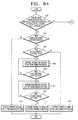
- FIG. 8 is a flowchart of a preferred embodiment of the embodiment 302B shown in FIG. 6 and includes steps 400 through 414 of determining boredom, steps 416 and 418 of determining anger, steps 420 through 432 of determining happiness, steps 434 and 436 of determining sadness, steps 438 and 440 of determining stress, and a step 442 of determining that a specific emotional state does not exist.
- bio-parameters, HR, SKT, SCL, N-SCR, SCRM, LF, HF, LF/HF, RSA and RESP which are detected for the predetermined long time, are used to determine an emotional state.
- step 400 it is determined whether an emotional state is boredom in an initial state as follows.
- step 400 it is determined whether a RSA value decreases by at least a RSA threshold value (referred to as RSA_th), whether a SCL value increases by at least a SCL_th, and whether a SCRM value increases by at least a SCRM_th. More specifically, it is determined whether a value obtained by subtracting the RSA_th from the RSA(base) is greater than the RSA value, whether the sum of the SCL(base) and the SCL_th is less than the SCL value, and whether the sum of the SCRM(base) and the SCRM_th is less than the SCRM value.
- RSA_th a RSA threshold value
- step 402. it is determined whether the sum of the N-SCR(base) and the N-SCR_th is less than the N-SCR value. If it is determined that the N-SCR value increases by at least the N-SCR_th, in step 404 it is determined whether a SKT value increases by at least a SKT_th. More specifically, it is determined whether the sum of the SKT(base) and the SKT_th is less than the SKT value. If it is determined that the SKT value increases by at least the SKT_th, in step 406 it is determined that probability that the emotional state is boredom is a third predetermined percentage.
- the third predetermined percentage may be set at 60%.
- step 406 it is determined whether a HF value decreases by at least a HF threshold value (referred to as HF_th) in step 408. More specifically, it is determined whether a value obtained by subtracting the HF_th from the HF(base) is greater than the HF value. If it is determined that the HF value does not decrease by at least the HF_th, the procedure goes back to step 406. However, if it is determined that the HF value decreases by at least the HF_th, in step 410, it is determined that probability that the emotional state is boredom is a fourth predetermined percentage greater than the third predetermined percentage. Here, the fourth predetermined percentage may be set at 70%.
- step 410 it is determined whether a LF value decreases by at least a LF_th in step 412. More specifically, it is determined whether a value obtained by subtracting the LF_th from the LF(base) is greater than the LF value. If it is determined that the LF value does not decrease by at least the LF_th, the procedure goes back to step 410. However, if it is determined that the LF value decreases by at least the LF_th, in step 414 it is determined that probability that the emotional state is boredom is a fifth predetermined percentage greater than the fourth predetermined percentage.
- the fifth predetermined percentage may be set at 80%.
- step 416 and 418 it is determined whether the emotional state is anger. If it is determined that the N-SCR value does not increase by at least the N-SCR_th in step 402, it is determined that probability that the emotional state is anger is the fifth predetermined percentage in step 416. If it is determined that the SKT does not increase by at least the SKT_th in step 404, it is determined that probability that the emotional state is anger is the third predetermined percentage in step 418.
- step 420 through 432 it is determined whether the emotional state is happiness. If it is determined that the RSA value does not decrease by at least the RSA_th, that the SCL value does not increase by at least the SCL_th, or that the SCRM value does not increase by at least the SCRM_th in step 400, it is determined whether a HR value decreases by at least a HR_th in step 420. More specifically, it is determined whether a value obtained by subtracting the HR_th from the HR (base) is greater than the HR value. If it is determined that the HR value decreases by at least the HR_th, in step 422 it is determined whether a RESP value increases by at least a RESP threshold value (referred to as RESP_th).
- RESP_th a RESP threshold value
- step 424 it is determined whether the sum of the RESP (base) and the RESP_th is less than the RESP value. If it is determined that the RESP value increases by at least the RESP_th, in step 424 it is determined that probability that the emotional state is happiness is the third predetermined percentage.
- step 424 it is determined whether a LF/HF value decreases by at least a LF/HF_th in step 426. More specifically, it is determined whether a value obtained by subtracting the LF/HF_th from the LF/HF (base) is greater than the LF/HF value. If it is determined that the LF/HF value does not decrease by at least the LF/HF_th, the procedure goes back to step 424. However, if it is determined that the LF/HF value decreases by at least the LF/HF_th, in the step 428, it is determined that probability that the emotional state is happiness is the fourth predetermined percentage.
- step 428 it is determined whether the LF value decreases by at least the LF_th in step 430. More specifically, it is determined whether a value obtained by subtracting the LF_th from the LF(base) is greater than the LF value. If it is determined that the LF value does not decrease by at least the LF_th, the procedure goes back to step 428. However, if it is determined that the LF value decreases by at least the LF_th, in step 432 it is determined that probability that the emotional state is happiness is the fifth predetermined percentage.
- step 434 it is determined whether the emotional state is sadness. If it is determined that the RESP value does not increase by at least the RESP_th in step 422, it is determined whether the SCL value decreases by at least the SOL_th in step 434. More specifically, it is determined whether a value obtained by subtracting the SCL_th from the SCL(base) is greater than the SCL value. If it is determined that the SCL value decreases by at least the SOL_th, in step 436 it is determined that probability that the emotional state is sadness is the fifth predetermined percentage.
- step 438 it is determined whether the emotional state is stress. If it is determined that the HR value does not decrease by at least the HR_th in step 420, it is determined whether the N-SCR value increases at least the N-SCR_th in step 438. More specifically, it is determined whether the sum of the N-SCR (base) and the N-SCR_th is less than the N-SCR value. If it is determined that the N-SCR value increases by at least the N-SCR_th, in step 440 it is determined that probability that the emotional state is stress is the fourth predetermined percentage.
- step 434 if it is determined that the SCL value does not decrease by at least the SCL_th in step 434, or if it is determined that the N-SCR value does not increase by at least the N-SCR_th in step 438, it may be determined that no dominant emotional state exists in step 442.
- probability that at least one emotional state exists is a Y-th predetermined percentage (1 ⁇ Y ⁇ 5)
- probability that each of the remaining emotional states exists is obtained by dividing the result of subtracting the Y-th predetermined percentage from 100% by the number of the remaining emotional states. For example, when probability that the emotional state is anger is 70%, probability that the current emotional state is happiness, sadness, boredom or stress is 7.5% for each of these remaining emotional states.
- ⁇ denotes that the value of a detected bio-parameter increased over the value of a base bio-parameter
- ⁇ denotes that the value of a detected bio-parameter decreased below the value of a base bio-parameter
- ? denotes that the value of a detected bio-parameter did not acutely increase over or decrease below the value of a base bio-parameter.
- a blank cell in Table 1 denotes that a slight amount of variation occurred. Accordingly, bio-parameters which did not change significantly or changed only slightly were not used when an emotional state was determined according to the embodiment shown in FIG. 7.
- H denotes that the value of a detected bio-parameter was greater than the value of a base bio-parameter
- L denotes that the value of a detected bio-parameter was less than the value of a base bio-parameter
- ? denotes that the value of a detected bio-parameter did not significantly greater or less (depending on whether H? or L? appears in the table) than the value of a base bio-parameter.
- a blank cell in Table 2 denotes that a slight amount of variation occurred. Accordingly, bio-parameters which did not change significantly or changed only slightly were not used when an emotional state was determined according to the embodiment shown in FIG. 8.
- a method of perceiving an emotional state according to the present invention can determine an emotional state using a particular change in a bio-parameter, as described above.
- emotional states which can be perceived are limited to five kinds, i.e., anger, boredom, happiness, sadness and stress.
- an apparatus and method of perceiving an emotional state according to the present invention are not restricted to these five emotional states and can perceive a variety of emotional states using bio-parameters, i.e., HR, RESP, RSA, PPG, SKT, SCL, N-SCR, SCRM, HF, LF, LF/HF, FPV and RR.
- the apparatus can be conveniently attached to a predetermined portion of a user's body, a bio-signal transmitted wirelessly or through a wire can be easily detected, a physical and emotional state which is perceived based on the detected bio-signal can be reported to the user, and a rapidly changing emotional state or an emotional state which remains for a long time can be perceived in real time.
Landscapes
- Health & Medical Sciences (AREA)
- Engineering & Computer Science (AREA)
- Life Sciences & Earth Sciences (AREA)
- Physics & Mathematics (AREA)
- Physiology (AREA)
- Molecular Biology (AREA)
- Public Health (AREA)
- Veterinary Medicine (AREA)
- General Health & Medical Sciences (AREA)
- Animal Behavior & Ethology (AREA)
- Surgery (AREA)
- Biophysics (AREA)
- Pathology (AREA)
- Biomedical Technology (AREA)
- Heart & Thoracic Surgery (AREA)
- Medical Informatics (AREA)
- General Engineering & Computer Science (AREA)
- Theoretical Computer Science (AREA)
- Cardiology (AREA)
- Human Computer Interaction (AREA)
- Pulmonology (AREA)
- General Physics & Mathematics (AREA)
- Computer Networks & Wireless Communication (AREA)
- Developmental Disabilities (AREA)
- Child & Adolescent Psychology (AREA)
- Educational Technology (AREA)
- Hospice & Palliative Care (AREA)
- Psychiatry (AREA)
- Psychology (AREA)
- Social Psychology (AREA)
- Measuring And Recording Apparatus For Diagnosis (AREA)
- Measuring Pulse, Heart Rate, Blood Pressure Or Blood Flow (AREA)
- Measurement Of The Respiration, Hearing Ability, Form, And Blood Characteristics Of Living Organisms (AREA)
- Measurement And Recording Of Electrical Phenomena And Electrical Characteristics Of The Living Body (AREA)
- Arrangements For Transmission Of Measured Signals (AREA)
Applications Claiming Priority (4)
| Application Number | Priority Date | Filing Date | Title |
|---|---|---|---|
| KR20000051821 | 2000-09-02 | ||
| KR2000051821 | 2000-09-02 | ||
| KR2001005943 | 2001-02-07 | ||
| KR10-2001-0005943A KR100425342B1 (ko) | 2000-09-02 | 2001-02-07 | 신체 및 감정 상태 인식 장치 및 방법 |
Publications (2)
| Publication Number | Publication Date |
|---|---|
| EP1183997A2 true EP1183997A2 (de) | 2002-03-06 |
| EP1183997A3 EP1183997A3 (de) | 2003-06-18 |
Family
ID=26638361
Family Applications (1)
| Application Number | Title | Priority Date | Filing Date |
|---|---|---|---|
| EP01306989A Withdrawn EP1183997A3 (de) | 2000-09-02 | 2001-08-17 | Vorrichtung und Verfahren zur Wahrnehmung von physikalischen und gemüts Zuständen einer Person |
Country Status (3)
| Country | Link |
|---|---|
| US (1) | US6656116B2 (de) |
| EP (1) | EP1183997A3 (de) |
| JP (1) | JP2002112969A (de) |
Cited By (6)
| Publication number | Priority date | Publication date | Assignee | Title |
|---|---|---|---|---|
| EP1407713A1 (de) * | 2002-10-09 | 2004-04-14 | Samsung Electronics Co., Ltd. | Vorrichtung und Verfahren zur mobilen Gesundheitsüberwachung auf der Grundlage biomedizinischer Signale |
| WO2005091114A1 (fr) * | 2004-02-19 | 2005-09-29 | France Telecom | Procede et dispositif d’animation d’une entite virtuelle correspondant a un utilisateur dans un environnement virtuel |
| EP2014225A2 (de) | 2007-07-11 | 2009-01-14 | Deutsche Telekom AG | Verfahren zur Fernüberwachung des medizinischen Zustandes eines Nutzers, System und Vorrichtungen dafür |
| NL2006719C2 (nl) * | 2011-05-04 | 2012-11-06 | Victor Albert Farid Lamme | Werkwijze, systeem en analysesoftware voor cognitieve analyse van stimuli. |
| AT515976A1 (de) * | 2014-06-26 | 2016-01-15 | Forschungsgesellschaft Der Fachhochschule Kärnten Mbh | Vorrichtung zum Erfassen von Tremor |
| CN105982678A (zh) * | 2015-02-12 | 2016-10-05 | 上海宽带技术及应用工程研究中心 | 一种根据心率与呼吸判断情绪的方法 |
Families Citing this family (97)
| Publication number | Priority date | Publication date | Assignee | Title |
|---|---|---|---|---|
| KR100624403B1 (ko) * | 2001-10-06 | 2006-09-15 | 삼성전자주식회사 | 인체의 신경계 기반 정서 합성 장치 및 방법 |
| KR100485906B1 (ko) | 2002-06-26 | 2005-04-29 | 삼성전자주식회사 | 정서유도 장치 및 방법 |
| US20070225614A1 (en) * | 2004-05-26 | 2007-09-27 | Endothelix, Inc. | Method and apparatus for determining vascular health conditions |
| US20060165596A1 (en) * | 2002-08-23 | 2006-07-27 | Nachiket Kharalkar | Method and apparatus for noninvasively evaluating endothelial function |
| US7309315B2 (en) * | 2002-09-06 | 2007-12-18 | Epoch Innovations, Ltd. | Apparatus, method and computer program product to facilitate ordinary visual perception via an early perceptual-motor extraction of relational information from a light stimuli array to trigger an overall visual-sensory motor integration in a subject |
| US7901355B2 (en) * | 2003-01-23 | 2011-03-08 | L'oreal | Skin analysis apparatus including an ultrasound probe |
| KR100457813B1 (ko) * | 2003-02-07 | 2004-11-18 | 삼성전자주식회사 | 커뮤니티 서비스 제공 시스템 및 방법 |
| KR100571811B1 (ko) * | 2003-05-09 | 2006-04-17 | 삼성전자주식회사 | 귀속형 생체 신호 측정 장치 |
| US7278975B2 (en) * | 2003-06-16 | 2007-10-09 | The Boeing Company | Method and apparatus for detecting a tremor induced in a subject |
| JP4384895B2 (ja) * | 2003-11-14 | 2009-12-16 | フィールファイン株式会社 | 年齢アセスメント装置及び年齢アセスメント方法 |
| JP3953024B2 (ja) * | 2003-11-20 | 2007-08-01 | ソニー株式会社 | 感情算出装置及び感情算出方法、並びに携帯型通信装置 |
| JP4633373B2 (ja) * | 2004-03-10 | 2011-02-16 | 公立大学法人会津大学 | 生体情報処理システム |
| AU2005222712A1 (en) | 2004-03-18 | 2005-09-29 | Helicor Inc. | Methods and devices for relieving stress |
| JP4527425B2 (ja) * | 2004-03-19 | 2010-08-18 | 日本赤十字社 | 自律神経活動モニター装置、血液処理装置および採血装置 |
| JP2006006355A (ja) | 2004-06-22 | 2006-01-12 | Sony Corp | 生体情報の処理装置および映像音響再生装置 |
| JP4214481B2 (ja) * | 2004-06-29 | 2009-01-28 | ソニー株式会社 | 動作伝達システム、端末装置、動作伝達方法、及び動作伝達プログラム |
| US7458937B2 (en) * | 2005-01-11 | 2008-12-02 | Coherence Llc | Method and system for assessing breathing effectiveness via assessment of the dynamic arterial pressure wave using the oscillometric measurement technique |
| US8002711B2 (en) | 2005-03-18 | 2011-08-23 | Respironics, Inc. | Methods and devices for relieving stress |
| FR2887425A1 (fr) * | 2005-06-22 | 2006-12-29 | Annick Nicole Lydie Tournefier | Systeme d'analyse electrophysiologique |
| US9351658B2 (en) | 2005-09-02 | 2016-05-31 | The Nielsen Company (Us), Llc | Device and method for sensing electrical activity in tissue |
| CN100466966C (zh) * | 2005-10-08 | 2009-03-11 | 周常安 | 呼吸气流生理信号提取和监测装置及系统 |
| US20070225606A1 (en) * | 2006-03-22 | 2007-09-27 | Endothelix, Inc. | Method and apparatus for comprehensive assessment of vascular health |
| US20080027330A1 (en) * | 2006-05-15 | 2008-01-31 | Endothelix, Inc. | Risk assessment method for acute cardiovascular events |
| US20080077020A1 (en) | 2006-09-22 | 2008-03-27 | Bam Labs, Inc. | Method and apparatus for monitoring vital signs remotely |
| US20080081963A1 (en) * | 2006-09-29 | 2008-04-03 | Endothelix, Inc. | Methods and Apparatus for Profiling Cardiovascular Vulnerability to Mental Stress |
| US8577446B2 (en) * | 2006-11-06 | 2013-11-05 | Bobby Kyle | Stress detection device and methods of use thereof |
| US8157730B2 (en) | 2006-12-19 | 2012-04-17 | Valencell, Inc. | Physiological and environmental monitoring systems and methods |
| US8652040B2 (en) | 2006-12-19 | 2014-02-18 | Valencell, Inc. | Telemetric apparatus for health and environmental monitoring |
| DE102007001709A1 (de) * | 2007-01-11 | 2008-05-15 | Dräger Medical AG & Co. KG | Verfahren und Messgerät zur Bestimmung der Atemfrequenz |
| US9215996B2 (en) | 2007-03-02 | 2015-12-22 | The Nielsen Company (Us), Llc | Apparatus and method for objectively determining human response to media |
| US8230457B2 (en) | 2007-03-07 | 2012-07-24 | The Nielsen Company (Us), Llc. | Method and system for using coherence of biological responses as a measure of performance of a media |
| US8473044B2 (en) | 2007-03-07 | 2013-06-25 | The Nielsen Company (Us), Llc | Method and system for measuring and ranking a positive or negative response to audiovisual or interactive media, products or activities using physiological signals |
| US8764652B2 (en) | 2007-03-08 | 2014-07-01 | The Nielson Company (US), LLC. | Method and system for measuring and ranking an “engagement” response to audiovisual or interactive media, products, or activities using physiological signals |
| US8782681B2 (en) | 2007-03-08 | 2014-07-15 | The Nielsen Company (Us), Llc | Method and system for rating media and events in media based on physiological data |
| TWI324918B (en) * | 2007-04-04 | 2010-05-21 | Ind Tech Res Inst | Monitoring apparatus, system and method |
| US20080255949A1 (en) * | 2007-04-13 | 2008-10-16 | Lucid Systems, Inc. | Method and System for Measuring Non-Verbal and Pre-Conscious Responses to External Stimuli |
| KR20080100658A (ko) * | 2007-05-14 | 2008-11-19 | 한국전자통신연구원 | 건강관리 기능을 가진 혁대 |
| US8376952B2 (en) | 2007-09-07 | 2013-02-19 | The Nielsen Company (Us), Llc. | Method and apparatus for sensing blood oxygen |
| US9191450B2 (en) * | 2007-09-20 | 2015-11-17 | Disney Enterprises, Inc. | Measuring user engagement during presentation of media content |
| US8327395B2 (en) | 2007-10-02 | 2012-12-04 | The Nielsen Company (Us), Llc | System providing actionable insights based on physiological responses from viewers of media |
| US20090113297A1 (en) * | 2007-10-24 | 2009-04-30 | Searete Llc, A Limited Liability Corporation Of The State Of Delaware | Requesting a second content based on a user's reaction to a first content |
| US9582805B2 (en) | 2007-10-24 | 2017-02-28 | Invention Science Fund I, Llc | Returning a personalized advertisement |
| US9513699B2 (en) * | 2007-10-24 | 2016-12-06 | Invention Science Fund I, LL | Method of selecting a second content based on a user's reaction to a first content |
| US8251903B2 (en) | 2007-10-25 | 2012-08-28 | Valencell, Inc. | Noninvasive physiological analysis using excitation-sensor modules and related devices and methods |
| EP2214550A1 (de) | 2007-10-31 | 2010-08-11 | Emsense Corporation | Systeme und verfahren für verteilte sammlung und zentralisierte aufbereitung von physiologischen antworten von beobachtern |
| US8347326B2 (en) | 2007-12-18 | 2013-01-01 | The Nielsen Company (US) | Identifying key media events and modeling causal relationships between key events and reported feelings |
| US8594772B2 (en) * | 2008-06-03 | 2013-11-26 | International Business Machines Corporation | Method for monitoring and communicating biomedical electromagnetic fields |
| US20100009324A1 (en) * | 2008-07-14 | 2010-01-14 | E. Keith Owens | Method and device for post clinical treatment of dependency relapses |
| JP5190954B2 (ja) * | 2008-11-28 | 2013-04-24 | 独立行政法人産業技術総合研究所 | 心臓人工弁音診断装置およびプログラム |
| US8663108B2 (en) * | 2009-01-28 | 2014-03-04 | The United States Of America As Represented By The Secretary Of The Army | Method and system for rapidly and passively identifying changes in number of open pores in the skin of an individual |
| US8788002B2 (en) | 2009-02-25 | 2014-07-22 | Valencell, Inc. | Light-guiding devices and monitoring devices incorporating same |
| EP3357419A1 (de) | 2009-02-25 | 2018-08-08 | Valencell, Inc. | Lichtgeleitete vorrichtungen und überwachungsvorrichtungen damit |
| US9750462B2 (en) | 2009-02-25 | 2017-09-05 | Valencell, Inc. | Monitoring apparatus and methods for measuring physiological and/or environmental conditions |
| US20100311482A1 (en) * | 2009-05-30 | 2010-12-09 | Lange Daniel H | Electro-Biometric Methods and Apparatus |
| EP2473110A4 (de) * | 2009-08-31 | 2013-04-24 | Pps Diagnostic Ltd | Vorrichtung für die aufzeichnung oder den übergang zwischen psychophysiologischen zuständen einer person und ausführungsverfahren dafür |
| WO2011025404A1 (en) * | 2009-08-31 | 2011-03-03 | Alexander Marcovich Levenstein | Apparatus for registration of transitions between psychophysiological states of individual and method for performing the same |
| KR101262922B1 (ko) * | 2009-12-10 | 2013-05-09 | 한국전자통신연구원 | 감성 변화에 따른 감성지수 결정 장치 및 그 방법 |
| WO2011076243A1 (en) | 2009-12-21 | 2011-06-30 | Fundacion Fatronik | Affective well-being supervision system and method |
| US9069067B2 (en) | 2010-09-17 | 2015-06-30 | The Invention Science Fund I, Llc | Control of an electronic apparatus using micro-impulse radar |
| US9019149B2 (en) | 2010-01-05 | 2015-04-28 | The Invention Science Fund I, Llc | Method and apparatus for measuring the motion of a person |
| US9024814B2 (en) | 2010-01-05 | 2015-05-05 | The Invention Science Fund I, Llc | Tracking identities of persons using micro-impulse radar |
| US8884813B2 (en) * | 2010-01-05 | 2014-11-11 | The Invention Science Fund I, Llc | Surveillance of stress conditions of persons using micro-impulse radar |
| US8700009B2 (en) | 2010-06-02 | 2014-04-15 | Q-Tec Systems Llc | Method and apparatus for monitoring emotion in an interactive network |
| CN102485165A (zh) * | 2010-12-02 | 2012-06-06 | 财团法人资讯工业策进会 | 可显示情绪的生理信号侦测系统、装置及显示情绪方法 |
| US8888701B2 (en) | 2011-01-27 | 2014-11-18 | Valencell, Inc. | Apparatus and methods for monitoring physiological data during environmental interference |
| US10445846B2 (en) | 2011-04-14 | 2019-10-15 | Elwha Llc | Cost-effective resource apportionment technologies suitable for facilitating therapies |
| US10853819B2 (en) | 2011-04-14 | 2020-12-01 | Elwha Llc | Cost-effective resource apportionment technologies suitable for facilitating therapies |
| US9380978B2 (en) | 2011-06-29 | 2016-07-05 | Bruce Reiner | Method and apparatus for real-time measurement and analysis of occupational stress and fatigue and performance outcome predictions |
| US9427191B2 (en) | 2011-07-25 | 2016-08-30 | Valencell, Inc. | Apparatus and methods for estimating time-state physiological parameters |
| EP3222210B1 (de) | 2011-08-02 | 2024-09-25 | Yukka Magic LLC | Systeme und verfahren für variable filtereinstellung durch ein herzrhythmus-messungsfeedback |
| FR2982758B1 (fr) | 2011-11-21 | 2013-11-15 | Impeto Medical | Procede d'analyse physiologique de fiabilite accrue |
| US9311825B2 (en) | 2011-12-22 | 2016-04-12 | Senstream, Inc. | Biometric sensing and processing apparatus for mobile gaming, education, and wellness applications |
| US9002768B2 (en) * | 2012-05-12 | 2015-04-07 | Mikhail Fedorov | Human-computer interface system |
| US9060671B2 (en) | 2012-08-17 | 2015-06-23 | The Nielsen Company (Us), Llc | Systems and methods to gather and analyze electroencephalographic data |
| US9301700B2 (en) | 2012-09-27 | 2016-04-05 | Welch Allyn, Inc. | Configurable vital signs system |
| WO2014116942A2 (en) | 2013-01-28 | 2014-07-31 | Valencell, Inc. | Physiological monitoring devices having sensing elements decoupled from body motion |
| US9320450B2 (en) | 2013-03-14 | 2016-04-26 | The Nielsen Company (Us), Llc | Methods and apparatus to gather and analyze electroencephalographic data |
| US11071467B2 (en) | 2013-08-08 | 2021-07-27 | Welch Allyn, Inc. | Hybrid patient monitoring system |
| CN103860170B (zh) * | 2014-03-11 | 2016-06-08 | 天津师范大学 | 电导生物反馈训练仪 |
| US9622702B2 (en) | 2014-04-03 | 2017-04-18 | The Nielsen Company (Us), Llc | Methods and apparatus to gather and analyze electroencephalographic data |
| US20150297140A1 (en) * | 2014-04-21 | 2015-10-22 | Microsoft Corporation | User stress detection and mitigation |
| KR101549908B1 (ko) * | 2014-07-02 | 2015-09-08 | 전우성 | 스트레스 완화 및 집중력 향상을 위한 백색소음 발생 헤드셋 및 그를 이용한 백색소음 발생 방법 |
| US9538921B2 (en) | 2014-07-30 | 2017-01-10 | Valencell, Inc. | Physiological monitoring devices with adjustable signal analysis and interrogation power and monitoring methods using same |
| US10536768B2 (en) | 2014-08-06 | 2020-01-14 | Valencell, Inc. | Optical physiological sensor modules with reduced signal noise |
| US9794653B2 (en) | 2014-09-27 | 2017-10-17 | Valencell, Inc. | Methods and apparatus for improving signal quality in wearable biometric monitoring devices |
| US10849509B2 (en) * | 2014-11-21 | 2020-12-01 | Siemens Healthcare Gmbh | Patient signal filtering |
| AU2015372661B2 (en) * | 2014-12-30 | 2021-04-01 | Nitto Denko Corporation | Method and apparatus for deriving a mental state of a subject |
| US10610158B2 (en) | 2015-10-23 | 2020-04-07 | Valencell, Inc. | Physiological monitoring devices and methods that identify subject activity type |
| US10945618B2 (en) | 2015-10-23 | 2021-03-16 | Valencell, Inc. | Physiological monitoring devices and methods for noise reduction in physiological signals based on subject activity type |
| US10517531B2 (en) | 2016-02-08 | 2019-12-31 | Vardas Solutions LLC | Stress management using biofeedback |
| RU2649519C2 (ru) * | 2016-03-18 | 2018-04-03 | Общество с ограниченной ответственностью "ДАРТА СИСТЕМС" | Способ непрерывного контроля уровня напряженного состояния человека |
| JP6631376B2 (ja) * | 2016-04-15 | 2020-01-15 | オムロンヘルスケア株式会社 | 脈波検出装置、生体情報測定装置、脈波検出装置の制御方法、及び、脈波検出装置の制御プログラム |
| US10966662B2 (en) | 2016-07-08 | 2021-04-06 | Valencell, Inc. | Motion-dependent averaging for physiological metric estimating systems and methods |
| US20180196919A1 (en) * | 2017-01-10 | 2018-07-12 | International Business Machines Corporation | Automated health dialoguing and action enhancement |
| CN109106383A (zh) * | 2017-06-22 | 2019-01-01 | 罗杰谊 | 情绪感测系统及方法 |
| US20200253507A1 (en) | 2019-02-13 | 2020-08-13 | Vardas Solutions LLC | Measuring user respiration at extremities |
| US11553871B2 (en) | 2019-06-04 | 2023-01-17 | Lab NINE, Inc. | System and apparatus for non-invasive measurement of transcranial electrical signals, and method of calibrating and/or using same for various applications |
Citations (4)
| Publication number | Priority date | Publication date | Assignee | Title |
|---|---|---|---|---|
| US5367454A (en) | 1992-06-26 | 1994-11-22 | Fuji Xerox Co., Ltd. | Interactive man-machine interface for simulating human emotions |
| US5507291A (en) | 1994-04-05 | 1996-04-16 | Stirbl; Robert C. | Method and an associated apparatus for remotely determining information as to person's emotional state |
| KR970014722A (ko) | 1995-09-13 | 1997-04-28 | 이민화 | 무선 통신망을 이용한 실시간 휴대용 생체신호모니터링시스템 |
| KR19990063100A (ko) | 1997-12-17 | 1999-07-26 | 모리시타 요이치 | 생체정보 측정장치 |
Family Cites Families (12)
| Publication number | Priority date | Publication date | Assignee | Title |
|---|---|---|---|---|
| US4683891A (en) * | 1982-04-26 | 1987-08-04 | Vincent Cornellier | Biomonitoring stress management method and device |
| US6026322A (en) * | 1991-08-07 | 2000-02-15 | Ultramind International Limited | Biofeedback apparatus for use in therapy |
| DE4329898A1 (de) * | 1993-09-04 | 1995-04-06 | Marcus Dr Besson | Kabelloses medizinisches Diagnose- und Überwachungsgerät |
| US5601090A (en) * | 1994-07-12 | 1997-02-11 | Brain Functions Laboratory, Inc. | Method and apparatus for automatically determining somatic state |
| US5676138A (en) * | 1996-03-15 | 1997-10-14 | Zawilinski; Kenneth Michael | Emotional response analyzer system with multimedia display |
| US5741217A (en) * | 1996-07-30 | 1998-04-21 | Gero; Jeffrey | Biofeedback apparatus |
| US5974262A (en) * | 1997-08-15 | 1999-10-26 | Fuller Research Corporation | System for generating output based on involuntary and voluntary user input without providing output information to induce user to alter involuntary input |
| KR100281650B1 (ko) * | 1997-11-13 | 2001-02-15 | 정선종 | 긍정/부정 감성 상태 판별을 위한 뇌파 분석 방법 |
| US6102846A (en) * | 1998-02-26 | 2000-08-15 | Eastman Kodak Company | System and method of managing a psychological state of an individual using images |
| US6131579A (en) * | 1998-04-21 | 2000-10-17 | Somnus Medical Technologies, Inc. | Wire based temperature sensing electrode |
| US6190314B1 (en) * | 1998-07-15 | 2001-02-20 | International Business Machines Corporation | Computer input device with biosensors for sensing user emotions |
| US6375622B1 (en) * | 2000-07-14 | 2002-04-23 | The University Of Hong Kong | Brush-writing instruments for health and therapy |
-
2001
- 2001-08-16 JP JP2001246952A patent/JP2002112969A/ja not_active Withdrawn
- 2001-08-17 EP EP01306989A patent/EP1183997A3/de not_active Withdrawn
- 2001-08-20 US US09/931,767 patent/US6656116B2/en not_active Expired - Lifetime
Patent Citations (4)
| Publication number | Priority date | Publication date | Assignee | Title |
|---|---|---|---|---|
| US5367454A (en) | 1992-06-26 | 1994-11-22 | Fuji Xerox Co., Ltd. | Interactive man-machine interface for simulating human emotions |
| US5507291A (en) | 1994-04-05 | 1996-04-16 | Stirbl; Robert C. | Method and an associated apparatus for remotely determining information as to person's emotional state |
| KR970014722A (ko) | 1995-09-13 | 1997-04-28 | 이민화 | 무선 통신망을 이용한 실시간 휴대용 생체신호모니터링시스템 |
| KR19990063100A (ko) | 1997-12-17 | 1999-07-26 | 모리시타 요이치 | 생체정보 측정장치 |
Cited By (10)
| Publication number | Priority date | Publication date | Assignee | Title |
|---|---|---|---|---|
| EP1407713A1 (de) * | 2002-10-09 | 2004-04-14 | Samsung Electronics Co., Ltd. | Vorrichtung und Verfahren zur mobilen Gesundheitsüberwachung auf der Grundlage biomedizinischer Signale |
| US8109874B2 (en) | 2002-10-09 | 2012-02-07 | Samsung Electronics Co., Ltd. | Mobile device having health care function based on biomedical signals and health care method using the same |
| WO2005091114A1 (fr) * | 2004-02-19 | 2005-09-29 | France Telecom | Procede et dispositif d’animation d’une entite virtuelle correspondant a un utilisateur dans un environnement virtuel |
| EP2014225A2 (de) | 2007-07-11 | 2009-01-14 | Deutsche Telekom AG | Verfahren zur Fernüberwachung des medizinischen Zustandes eines Nutzers, System und Vorrichtungen dafür |
| DE102007032610A1 (de) * | 2007-07-11 | 2009-01-15 | Deutsche Telekom Ag | Verfahren zur Fernüberwachung des medizinischen Zustandes eines Nutzers, System und Vorrichtung dafür |
| NL2006719C2 (nl) * | 2011-05-04 | 2012-11-06 | Victor Albert Farid Lamme | Werkwijze, systeem en analysesoftware voor cognitieve analyse van stimuli. |
| AT515976A1 (de) * | 2014-06-26 | 2016-01-15 | Forschungsgesellschaft Der Fachhochschule Kärnten Mbh | Vorrichtung zum Erfassen von Tremor |
| AT515976B1 (de) * | 2014-06-26 | 2016-03-15 | Forschungsgesellschaft Der Fachhochschule Kärnten Mbh | Vorrichtung zum Erfassen von Tremor |
| CN105982678A (zh) * | 2015-02-12 | 2016-10-05 | 上海宽带技术及应用工程研究中心 | 一种根据心率与呼吸判断情绪的方法 |
| CN105982678B (zh) * | 2015-02-12 | 2019-04-23 | 上海宽带技术及应用工程研究中心 | 一种根据心率与呼吸判断情绪的方法 |
Also Published As
| Publication number | Publication date |
|---|---|
| US20030078505A1 (en) | 2003-04-24 |
| JP2002112969A (ja) | 2002-04-16 |
| US6656116B2 (en) | 2003-12-02 |
| EP1183997A3 (de) | 2003-06-18 |
Similar Documents
| Publication | Publication Date | Title |
|---|---|---|
| US6656116B2 (en) | Apparatus and method for perceiving physical and emotional state | |
| US20220296176A1 (en) | Processing biological data | |
| CN106999065B (zh) | 使用加速度测量术的可穿戴疼痛监测器 | |
| EP3261526B1 (de) | Vorrichtung und verfahren zur bereitstellung eines steuersignals für eine blutdruckmessungsvorrichtung | |
| KR101308522B1 (ko) | 다중 생체 신호를 이용한 실시간 혈압 모니터링 및 바이오피드백 시스템 및 방법 | |
| EP4154805A1 (de) | Vorrichtung zur überwachung der herzfrequenz und atmung | |
| KR20130010207A (ko) | 무구속 무자각 생체신호 획득을 통한 워치타입 건강상태 분석시스템 | |
| KR102243012B1 (ko) | 피부 영상을 이용한 혈관탄성도와 부정맥 진단 방법 | |
| US20170055858A1 (en) | Method and system for facilitating patient self-measuring and recording | |
| JP2011115188A (ja) | 睡眠状態モニタリング装置、モニタリングシステムおよびコンピュータプログラム | |
| CN114027842A (zh) | 一种抑郁症客观筛查系统、方法及装置 | |
| KR100425342B1 (ko) | 신체 및 감정 상태 인식 장치 및 방법 | |
| US20070225609A1 (en) | Non-Invasive Heart Monitoring Apparatus and Method | |
| CN112971803A (zh) | 心房纤颤检测系统 | |
| TWI768999B (zh) | 生理監測系統和估計生命體徵資料的方法 | |
| KR20190076420A (ko) | 건강지수 표출 방법 | |
| KR101883300B1 (ko) | 사상체질 판별방법 및 사상체질 판별장치 | |
| CN115274114B (zh) | 一种用于心血管的健康状态评估系统 | |
| WO2020090763A1 (ja) | 処理装置、システム、処理方法、およびプログラム | |
| US12478313B2 (en) | System and method for performing assessments based on orthostatic measurements | |
| RU2318432C2 (ru) | Способ определения пульса человека | |
| JP2020069113A (ja) | 処理装置、システム、処理方法、およびプログラム | |
| Beales | How accurate are automated blood pressure monitors? | |
| KR101587989B1 (ko) | 생체음향을 이용한 심박규칙도 수치화 방법과 청진 장비 | |
| Leierseder | Continuous Blood Pressure Measurement During Daily-life Activities Using Pulse Transit Time |
Legal Events
| Date | Code | Title | Description |
|---|---|---|---|
| PUAI | Public reference made under article 153(3) epc to a published international application that has entered the european phase |
Free format text: ORIGINAL CODE: 0009012 |
|
| AK | Designated contracting states |
Kind code of ref document: A2 Designated state(s): AT BE CH CY DE DK ES FI FR GB GR IE IT LI LU MC NL PT SE TR |
|
| AX | Request for extension of the european patent |
Free format text: AL;LT;LV;MK;RO;SI |
|
| RIN1 | Information on inventor provided before grant (corrected) |
Inventor name: LEE, HYOUNG-KI Inventor name: KIM, JEONG-HWAN Inventor name: BANG, SEOK-WON Inventor name: KIM, JAY-WOO |
|
| PUAL | Search report despatched |
Free format text: ORIGINAL CODE: 0009013 |
|
| AK | Designated contracting states |
Designated state(s): AT BE CH CY DE DK ES FI FR GB GR IE IT LI LU MC NL PT SE TR |
|
| AX | Request for extension of the european patent |
Extension state: AL LT LV MK RO SI |
|
| 17P | Request for examination filed |
Effective date: 20030820 |
|
| AKX | Designation fees paid |
Designated state(s): DE FR GB |
|
| 17Q | First examination report despatched |
Effective date: 20060706 |
|
| GRAP | Despatch of communication of intention to grant a patent |
Free format text: ORIGINAL CODE: EPIDOSNIGR1 |
|
| STAA | Information on the status of an ep patent application or granted ep patent |
Free format text: STATUS: THE APPLICATION IS DEEMED TO BE WITHDRAWN |
|
| 18D | Application deemed to be withdrawn |
Effective date: 20120228 |