EP1187007A2 - Dialogsteuerung - Google Patents
Dialogsteuerung Download PDFInfo
- Publication number
- EP1187007A2 EP1187007A2 EP01117597A EP01117597A EP1187007A2 EP 1187007 A2 EP1187007 A2 EP 1187007A2 EP 01117597 A EP01117597 A EP 01117597A EP 01117597 A EP01117597 A EP 01117597A EP 1187007 A2 EP1187007 A2 EP 1187007A2
- Authority
- EP
- European Patent Office
- Prior art keywords
- user
- inquiry
- dialog
- slot
- response
- Prior art date
- Legal status (The legal status is an assumption and is not a legal conclusion. Google has not performed a legal analysis and makes no representation as to the accuracy of the status listed.)
- Withdrawn
Links
Images





Classifications
-
- H—ELECTRICITY
- H04—ELECTRIC COMMUNICATION TECHNIQUE
- H04M—TELEPHONIC COMMUNICATION
- H04M3/00—Automatic or semi-automatic exchanges
- H04M3/42—Systems providing special services or facilities to subscribers
- H04M3/487—Arrangements for providing information services, e.g. recorded voice services or time announcements
- H04M3/493—Interactive information services, e.g. directory enquiries ; Arrangements therefor, e.g. interactive voice response [IVR] systems or voice portals
- H04M3/4936—Speech interaction details
-
- H—ELECTRICITY
- H04—ELECTRIC COMMUNICATION TECHNIQUE
- H04M—TELEPHONIC COMMUNICATION
- H04M2203/00—Aspects of automatic or semi-automatic exchanges
- H04M2203/35—Aspects of automatic or semi-automatic exchanges related to information services provided via a voice call
- H04M2203/355—Interactive dialogue design tools, features or methods
Definitions
- the present invention relates to a method for controlling a dialog and an apparatus of the same used in a system that has a dialog interface for communicating, a plurality of times, conditions for information retrieval through dialogs between a user and the system.
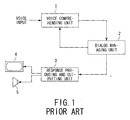
- dialog control technique makes it possible to realize flexible dialog control, which allows the initiative for dialogs to go back and forth between each user and the system.
- which order should be taken to urge a user to fill a plurality of conditions still empty is defined by the frame, which will lead to dialogs of which flexibility is still unsatisfactory.
- An object of the present invention is to provide a dialog control method that is able to make dialogs efficient by using a dialog history and/or user's personal information given in a system.
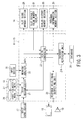
- the first storage 14 includes a slot score memory section 28, personal information memory section 29, dialog history memory section 30, and slot default value memory section 31.
- the slot score memory section 28 memorizes scores of slots used by the dialog controller 23 to decide how to make inquiries.
- the personal information memory section 29 memorizes information about individual users.
- the personal information memory section 29 memorizes information about history of past dialogs.
- the slot default value memory section 31 memorizes default values for slots of a frame adopted to accomplish a desired task.
- the dialog controller 23 uses a frame-driven dialog control technique. That is, a frame for a task to be accomplished is provided. Like a frame used as an expressing technique of knowledge in the field of artificial intelligence, one or more slots necessary for accomplishing a task to be targeted is provided in the frame. In response to a use's input, information obtained from the user's input is then filled into the slot.
- a task is set to retrieval of gym shoes and a frame is also set to accomplish the task. Therefore, in the following procedures, a frame (gym shoes retrieving frame) 41 is used to retrieve gym shoes, through dialogs, that is desired by a user. Retrieval conditions (slots) in the gym shoes retrieving frame 41 are "manufacturer" 42, "size” 43, "color” 44, and "price” 45. Thus, the slots in the gym shoes retrieving frame 41 are formed correspondingly to those conditions.
- a voice inputted into the voice input device 17 is converted therein to an electric signal having acoustic parameters corresponding to the inputted voice.
- the acoustic parameters are subject to an analysis of voice recognition using the acoustic model 26 and linguistic model 27.
- a result of the voice recognition is produced as a string of text characters STR and then outputted from the recognizer 21 to the meaning analyzer 22.
- the string of characters STR are divided into one or more pieces of information DSTR and then outputted to the dialog controller 23.
- the one or more pieces of information DSTR are filled in appropriate slots in the frame 41 after considering the history of dialogs. For example, when a user utters gave utterance to a sentence of "I would like to have shoes manufactures by ⁇ .”, the "manufacturer ⁇ " is filled into the manufacturer slot 42 of the frame 41. Whenever a value is filled into any slot, the dialog controller 23 operates responsively so as to send the condition expressed by the value to the database retrieving unit 24.
- the database retrieving unit 24 retrieves data stored in the database 20 in compliance with the condition, and then sends a resultant retrieved result to the dialog controller 24.
- the dialog controller 23 inquires of the user the next retrieval condition to narrow the retrieved results. To conduct this inquiry, the dialog controller 23 searches an empty slot in the frame 41, selects a given inquiry sentence corresponding to the empty slot, and sends the inquiry sentence to the response voice/image outputting unit 25. Accordingly, this series of processing makes the information retrieval system to urge user's utterance to fill in the empty slot. Responsively to the sending of the sentence, the response voice/image outputting unit 25 responses to the user by providing the retrieved result to the user through the speakers 19 or the screen of the monitor 18.
- a "manufacturer ⁇ " is filled into the manufacturer slot 42 in the frame 41. Then, retrieval is conducted in response to the filling, before the number of retrieved results is counted. If the number is larger than a certain number, the next inquiry is performed toward the user by the system. Specifically, inquiries provided by the remaining slots, such as "What size do you want?,” “What color do you want?,” and/or "What price range do you want?,” are done in sequence as system's responses until the number of retrieved results falls below the limit.
- the user may give utterance to "I want ⁇ -color shoes manufactured by ⁇ .”
- "a manufacturer ⁇ ” and “a ⁇ color” are filled in the maker slot 43 and color slot 44 in the gym shoes retrieving frame 41, respectively. If the number of retrieved results is still over a predetermined limit, an inquiry of "What price range do you want?" will be made from the system to the user.
- each slot is given a predetermined initial value.
- the score for each slot is one parameter changeable from outside the system, which can be decided based on factors, such as user's desires, user's personal information, and/or user's learned degrees of operations toward the system.
- a plurality of scores can be specified, under which a plurality of modes each assigned to each score and can be switched over thereamong, with the result that it is therefore possible to change the orders to inquire. If a plurality of slots have the same score, the dialog controller 23 inquires to simultaneously fill all the slots of which scores are the same.
- the system In cases the slot scores stored in the slot score memory section 28 are initial values, the system always conducts an inquiry of "Which manufacture do you like best?" at first in the dialogs of the gym shoes retrieving task. If the color slot 44 is empty, the next reply from the system is "What color do you like best?.” However, for a user who always start his or her inquires from the "color,” using the input device 16 or the voice input device 17 enables the score of the color slot 44 to be changed, so that the first inquiry from the system to the user is always "What color do you like best?.”
- the personal information memory section 29 Users' desires can be decided by using the personal information memory section 29.
- user's personal information such as a user's favorite manufacture and/or a user's favorite color are registered in the personal information memory section 29, they can be used for deciding an order of inquiries.
- the personal information memory section 29 is not limited to a memory incorporated in the system, but portable memory mediums such as memory cards can be incorporated into the system and can be used.
- the slot scores of the manufacturer slot 42 and the size slot 43 are made to be the same. Thus, those slot scores make the system output an inquiry of "Please input your favorite manufacturer and size.”
- a user is able to change the values of slot scores through a manual operation, so that the order of inquiries and/or the number of times of inquiries, which are performed by the system, can be changed.
- information stored in the dialog history memory section 30 can be used to change the order of inquiries and/or the number of times of inquiries.
- the dialog controller 23 detects from the dialog history memory section 30 the fact that a user always utters information about colors at first. In this case, the dialog controller 23 changes the score of the color slot 44 in the slot score memory section 28, resulting in that the inquiry order responded by the system is changed into a new order in which information about colors are first inquired.
- the dialog controller 23 assigns the same value to the scores of a plurality of slots in the memory section 28. Accordingly, a response sentence including a plurality of inquiries is made in the system.
- the scores of the slots can be given to the slot default value memory section 31 as default values. Therefore, as for a slot into which the same content is always inputted or to which data read from the personal information are assigned, a default value can be given to the slot default value memory section 31 through the input device 16 or voice input device 17. When the default value is specified toward a certain slot as above, the system will no longer inquire about the certain slot from the next dialog.
- a user can set the size of her or his own feet into the size slot 43 as a default value, because the size of user's feet will not change so drastically.
- This setting eliminates the inquiry of "What is the size of your feet?," which is done by the system when a pair of gym shoes is retrieved.
- a user can lessen an amount of operations that the user utters about her or his shoe size.
- the default value can alternatively be set, like the setting of the order of inquires described above. That is, in cases the dialog controller 23 determines that a user has always set a constant value into a certain slot with the help of information read from the dialog history memory section 30, the dialog controller 23 gives the constant value to the slot default value memory section 31 as a default. It is therefore not required for the user to specify the default value, but it is enough that the user utilizes the system several times. The procedures for retrieval is automatically customized to the user, with the number of turns of dialogs decreased.
- the responses from the system can be modified by the dialog controller 23 in accordance with contents of a database stored in the database 20.
- a database stored in the database 20.
- the dialog controller 23 gives the information about the one manufacturer to the manufacture slot 42, so that an inquiry about manufactures to a user will not carried out.
- Such tasks include retrieval of facilities through a car navigation system or an information terminal, information retrieval in transportation, and program retrieval on the TV, and retrieval of music or artists through music delivery service.
- An information retrieval system of the second embodiment is realized as a car navigation system.
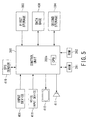
- Fig.5 shows, from a hardware viewpoint, the configuration of the car navigation system according to the second embodiment, to which the dialog control system of the present invention is applied.
- the car navigation system is provided with, like the first embodiment, a control unit 390 in which a central processing unit (CPU) 390a is incorporated and which is responsible for processing of data necessary for dialog control on the basis of a previously given program.
- the control unit 390 is also provided a random access memory (RAM) 391, read-only memory (ROM) 392, first storage 393, second storage 394, input device 401, on-vehicle database 408, display 410, speakers 411, voice input device 418, and GPS (Global Positioning System) sensor 419.
- the program on which the CPU 390a operates is installed in the ROM 392 in advance, and can be read by the control unit 390 when being activated.
- the RAM 391, input device 401, display 410, speakers 411, and voice input device 418 are constructed in the similar manner to those in the first embodiment.
- the first storage 393 is used to memorize, in each memory, section, information about an acoustic model 403, linguistic model 404, frame definition data 412, and sentence-tail expression data 416, which will be described later.
- the second storage 394 is used to memorize, in each memory section, information about dialog history (memory section 417) , user's personal matters (memory section 418), and frame control (memory section 414).
- control unit 390 is able to function as various types of units needed to accomplish data retrieval and dialog control. As shown in Fig.6, such units are composed of a voice recognizer 402, meaning analyzer 405, dialog controller 406, database retrieving unit 407, response voice/image outputting unit 409, frame controller 413, and response sentence connecting unit 415.
- the voice recognizer 402 recognizes an inputted voice and converts it to a string of text characters using the acoustic model 403 and linguistic mode 404.
- the meaning analyzer 405 converts the string of text characters given by the voice recognizer 402 to an expression of meaning.
- the dialog controller 406 controls dialogs on the basis of various pieces of information.
- Such information is consists of an expression of meaning supplied from the meaning analyzer 405, which corresponds to user's input, a slot value requesting sentence supplied from the frame controller 413, pieces of user's personal information supplied from the personal information memory section 418, information about dialog history supplied from the dialog history memory section 417, and a retrieved result supplied through the database retrieving unit 407.
- the database retrieving unit 407 retrieves information from the database 408 in response to conditions given by the dialog controller 406.
- the response voice/image outputting unit 409 can produce a response output of voice as well as an output of image display.
- the monitor 410 and speakers 411 operate in the similar way to the first embodiment.
- the database 408 is a memory medium that stores therein information provided by the car navigation system.
- the frame definition data which are stored the first storage 393, are data by which a frame used for the dialog control is defined.
- a frame control memory section 414 which is stored in the second storage 394, memorizes data of frames given from the frame controller 413.
- Both dialog history memory section 417 and personal information memory section 418 are configured in the same way as to the first embodiment.
- the frame controller 413 which is realized functionally by the control unit 390, operates together with the frame controller 406 and the response sentence connecting unit 415. Practically, the frame controller 413 produces frame information to be stored in the frame control memory section 414 in replay to a request from the dialog controller 406. Further, the controller 413 produces a response sentence when the response sentence connecting unit 415 requests a slot value to be filled in the frame and a value to be filled in each slot.
- the response sentence connecting unit 415 connects slot values requesting phrases receiving from the frame control memory section 414 by using sentence-tail expression data 416, so that a response sentence is produced.
- the GPS sensor 419 detects a current position of the automobile into which the car navigation system is mounded.
- the present car navigation system can be available for retrieval of, for example, a movie theater, information about locations of traffic congestion, and a train schedule through the Internet or FM multiplex broadcasting. Additionally, the system is available for setting a desired destination such as retrieval of accommodations, drinking and eating places, and parking lots.
- the car navigation system will be exemplified in a mode in which a desired accommodation is retrieved.
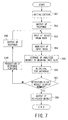
- Fig.7 shows a flowchart for the retrieval.
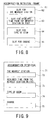
- the monitor 410 displays an accommodation retrieval task 71, as shown in Fig.9. In this task, necessary information will be inputted with a user's voice.
- the accommodation retrieval task 71 there are provided retrieval conditions, such as “the nearest station” 72, "required time from the nearest station on foot” 73, "type of room (single, double, twin, or suit)" 74, and "charge” 75.
- the dialog control is carried out using an accommodation retrieval frame 61 shown in Fig.8.
- the frame 61 has slots assigned to necessary retrieval conditions and dialogs are made to advance in a controlled manner so that the slots are filled with values in an appropriate order dynamically changed.
- defined are a slot 62 for "the nearest station,” a slot 63 for the "required time from the nearest station on foot,” a slot 64 for the "type of room,” and a slot 65 for the "charge.”
- Step S51 initial processing is done (Step S51). Namely, when it is requested by the dialog controller 406 that the frame controller 413 conduct its initial processing, the frame controller 413 will perform its initial processing a task is decide.
- the frame controller 413 reads frame setting file from the frame definition data 412 correspondingly to the decide task, and form a necessary memory area in the frame control memory section 414, before storing an initial value into the section 414.
- the memory area is required for operations in the frame.
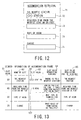
- the slot score is a parameter to express the significance of the slots.
- the slot name 82 is the name of each slot.
- the slot value 83 expresses data stored in each slot.
- the slot value requesting sentence 84 is a response sentence used for obtaining a value for corresponding one slot, while the slot value requesting phrase 85 is a sentence used in requesting a user to fill in a plurality of slots simultaneously.
- the frame controller 413 stores default values of response sentences into the frame control memory section 414 from the frame definition data 412. Such default response sentences are outputted at the time when dialogs are started, information has been retrieved, the dialogs are completed, or some other actions are made.
- each slot value 83 When each slot value 83 is filled by its default value, a dialog will not be performed, because it is not necessary to fill the slot value any more. This permits a user to input information in a faster manner.
- the name of the nearest station most convenient for a user can be filled in the nearest station slot as a default value.
- it is not required to perform an inquiry of "Where is your nearest station?" from the system. This eliminates the necessity of inputting the nearest station most convenient for a user whenever the accommodation retrieval is made, avoiding cumbersome operations involved in such inputs.
- the default values may be set by a user, in person, by operations through the voice input device 401 or the input device 420, or may be acquired from the personal information memory section 418. Alternatively, where it is determined from information in the dialog history memory section 417 that a certain user always inputs the same name of the nearest station, the name of such nearest station may be specified as a default value for the nearest station.
- the personal information memory section 418 is not limited to a memory previously incorporated in the system, but uses a portable memory medium, such as a memory card, which is detachably incorporated in the system.
- a frame setting file is able to have different frame definitions on each of which the foregoing frame is changed in information.
- dialogs can be controlled into different initial values or different response sentences.
- the initialization processing at Step S51 is followed by a request submitted by the dialog controller 406 toward the frame control memory section 414 for obtaining a response sentence to start dialogs for retrieving information.
- the frame controller 413 receives a dialog start response sentence from the frame control memory section 414 and then sends it to the dialog controller 406. Therefore, the dialog controller 406 outputs the dialog start response sentence to the response voice/image outputting unit 409 via the speakers 411 (Step S52).
- a slot value requesting sentence 84 that agrees with a certain slot of which score is the highest is outputted as the dialog start response sentence. For instance, in the case of Fig.10, a response sentence of "Where is your nearest station?" is outputted.
- a user In response to the outputted response sentence, a user utters words of for example "Search a hotel nearest to the ⁇ station.”
- Voices inputted into the voice inputting unit 401 are converted into electric signals, and further converted into acoustic parameters.
- the voice recognizer 402 the acoustic parameters from the voice input device 401 are subjected to voice recognition with both of the acoustic model 403 and the linguistic model 404.
- a result of the voice recognition is outputted from the voice recognizer 402 in a string of text characters STR (Step S53).
- the meaning analyzer 405 divides the string of text characters STR into one or more pieces of information DSTR and outputs them, each of the pieces of information being directed to storage into each slot (Step S54).
- the string of text characters STR is "Search a hotel nearest to the ⁇ station”
- the ⁇ station is outputted as the DSTR in accordance with the slot 62 for the nearest station.
- the DSTR is "the ⁇ station” and “5 minutes,” so that the slot 62 for the nearest station and the slot 63 for the required time from the nearest station on foot in the accommodation retrieval frame 61 are filled in the ⁇ station" and "5 minutes,” respectively.
- information stored in the accommodation retrieval frame 61 is formed in the frame control memory section 414.
- storing values into the slots may be done using history of dialogs memorized in the dialog history memory section 418.
- the dialog history memory section 418 can be configured such that it preserves the number of turns of dialogs. The number is used to determine if or not a desired number of turns has been measured after storing a slot value of " ⁇ .”
- the dialog controller 406 is able to confirm by outputting a message of "Will you change ⁇ to ⁇ ?".
- information indicative of a current position of the car is taken from the GPS sensor 419.
- the current position is applied to search through the database retrieving unit 407, with the nearest station searched. After the search, the searched name of a station nearest to the current car position is stored into the slot for the nearest slot.
- the dialog controller 406 When any value has been stored into a certain slot of the frame control memory section 414, the dialog controller 406 will attempt to acquire, through the frame controller 413, the information indicated by the stored value. The dialog controller 406 then sends a condition indicated by the information to the database retrieving unit 407. The database retrieving unit 407 retrieves the data of the database 408 to extract one or more results in compliance with the condition. As a result of this retrieval, for example, data expressing hotels located around the " ⁇ " station are sent to the dialog controller 406 (Step S56).
- the database retrieving unit 407 is not confined to the search engine placed within the system, but may use a search engine on the Internet.
- the database 408 is not restricted to use of a database incorporated within the system, and for instance, the database 408 may be substituted by a database on the Internet or a database stored in a portable recording medium, such as memory cards and DVDs.
- the dialog controller 406 On receiving the retrieved result from the database retrieving unit 407, the dialog controller 406 examines if or not the number of retrieved results is less than a threshold TH that represents the number of results to be displayed (Step S57).
- Step S58 If the number of retrieved results is below the threshold TH, the retrieved results are outputted through the response voice/image outputting unit 409, before the dialog for retrieval is ended (Step S58). For instance, in cases retrieved hotels located around the " ⁇ " station are five in number and the foregoing threshold TH is ten in number, the names of five hotels selected from the ten retrieved hotels are displayed on the screen. The system then urges a user to select his or her most desired one from the displayed hotels by using the voice input device 401 or the input device 420, before terminating the dialog.
- the dialog controller 406 requests the frame controller 413 to search empty slots in the frame control memory section 414, which have not been filled by values yet. From the searched empty slots, a lot of the highest score is found by the frame controller 413. In order to urge the user to fill a condition into the found empty slot, the frame controller 413 then selects a slot value requesting sentence that corresponds to the found empty slot, and then sends a selected sentence to the dialog controller 406 (Step S59). If a plurality of slots are the same in score in selecting the slot value requesting sentence, the dialog controller 406 makes the sentence so as to fill values in all the slots of the same score at a time.
- the slot for the " ⁇ " station 96 has already been filled and there is left three empty slots expressed by a reference 97.
- the name of the slot with the highest score 81 is the slot for the "required time from the nearest station on foot" 98. Therefore, the slot value requesting sentence 84 directed to this slot is a message 99 that is expressed by "How do you like the time it takes from your nearest station on foot?".
- Each slot score is a changeable parameter from outside the system and can be decided depending on user's desires, user's private information, and/or user's degrees of learning to the system.
- the highest default score in the foregoing example is given to the slot for "the nearest station," this can be changed. If a user wants to be asked at first from the charge any time in retrieving this task, the user is allowed to operate the voice input device 401 or the input device 420 so that the score for the "charge” slot 65 becomes the highest. This is formed into frame definition data and preserved in the memory of the frame definition data 412. This makes it possible that the value 83 of the "charge" slot 65 is first requested from the next dialog.
- a user makes use of the voice input device 401 or the input device 420 to change the score of the slot 63 for "the required time from the nearest station on foot.”
- the score of the slot 63 is made to be equal to that of the slot 62 for "the nearest station” and to be a maximum, together with that of the slot 62, in the slot score memory section 412.
- This change allows the system to utter the first inquiry such that "Tell us your nearest station and the required time from your nearest station on foot.”
- Such response sentence to fill a plurality of empty slots simultaneously is produced by the response sentence connecting unit 415.
- This unit 415 connects specified slot value requesting phrases 85 stored in the frame control memory section 414 with the sentence-tail expression data 416.
- dialog history stored in the dialog history memory section 418 can be used for controlling the slot scores. If the dialog history shows that, to the system's first inquiry of "Where is your nearest station?", a user always replies by inputting "Within ⁇ 5000," the dialog controller 406 commands the frame controller 413 to change the score of the slot 65 for the "charge” up to a highest value in the frame definition data 412.
- dialog history shows that, to the system's first inquiry of "Where is your nearest station?", a user always responds with the input of "Within 5 minutes from my nearest station on foot.”
- the dialog controller 406 commands the frame controller 413 to give the same score to the slots 62 and 63 for "the nearest station” and the "required time from the nearest station” in the frame definition data.
- an inquiry of, for example, "Tell us your nearest station and the required time from your nearest station on foot.” can be done at a time.
- the dialog controller 406 gives the same value to a plurality of slots in the frame control memory section 414, thereby providing a response sentence to inquire a plurality of conditions, like the above.
- the response voice/image outputting unit 409 receives the sentence from the dialog controller 406 and provides it to the speakers 411 or monitor 410 (Step S60). Interactive operations between the user and the system are repeated several times, like shown at Steps S53 to S57 in Fig.7. During the repetition, the number of retrieved results received through the database retrieving unit 407 is repeatedly examined if the number falls into the threshold TH that corresponds to the number of results to be displayed. When the number falls into the threshold TH, the retrieved results are outputted through the response voice/image outputting unit 409, as described above, before the dialogs for retrieval is terminated.
- the present invention is not limited to the information retrieval system mentioned above, and can be carried out in further various modes within the gist of the present invention indicated by the appended claims.
- An information retrieval system using an interactive interface is provided.
- Various factors such as a frequency of user's use of the system and user's desires, are reflected in the progress of dialogs performed through the interface between a user and system.
- the dialogs are performed on a frame-driven technique.
- a task to be retrieved is provided by a frame in which a plurality of conditions are given as slots.
- a score determining significance of each slot is given to the slot. The score for each slot can be used in response to a user's manual operation or automatic search made into dialog control, degrees of user's leaning, contents to be retrieved, and others.
- the order and/or the number of times to make a user fill slots with conditions can be changed dynamically and shortened, thereby dialog control being efficient.
Landscapes
- Engineering & Computer Science (AREA)
- Human Computer Interaction (AREA)
- Signal Processing (AREA)
- Information Retrieval, Db Structures And Fs Structures Therefor (AREA)
- User Interface Of Digital Computer (AREA)
- Digital Computer Display Output (AREA)
Applications Claiming Priority (4)
| Application Number | Priority Date | Filing Date | Title |
|---|---|---|---|
| JP2000220460 | 2000-07-21 | ||
| JP2000220460 | 2000-07-21 | ||
| JP2001164869A JP4686905B2 (ja) | 2000-07-21 | 2001-05-31 | 対話制御方法及びその装置 |
| JP2001164869 | 2001-05-31 |
Publications (2)
| Publication Number | Publication Date |
|---|---|
| EP1187007A2 true EP1187007A2 (de) | 2002-03-13 |
| EP1187007A3 EP1187007A3 (de) | 2004-08-04 |
Family
ID=26596402
Family Applications (1)
| Application Number | Title | Priority Date | Filing Date |
|---|---|---|---|
| EP01117597A Withdrawn EP1187007A3 (de) | 2000-07-21 | 2001-07-20 | Dialogsteuerung |
Country Status (3)
| Country | Link |
|---|---|
| US (1) | US20020013860A1 (de) |
| EP (1) | EP1187007A3 (de) |
| JP (1) | JP4686905B2 (de) |
Cited By (4)
| Publication number | Priority date | Publication date | Assignee | Title |
|---|---|---|---|---|
| EP1701256A3 (de) * | 2005-03-08 | 2008-01-02 | Microsoft Corporation | Entwicklungsrahmenwerk zur Mischung von Semantikgetriebenen und Statusgetriebenen Dialogen |
| FR2991077A1 (fr) * | 2012-05-25 | 2013-11-29 | Ergonotics Sas | Systeme interactif de resolution contextuelle d'informations provenant d'un systeme semantique |
| WO2016093959A1 (en) * | 2014-12-10 | 2016-06-16 | Google Inc. | Using frames for action dialogs |
| JP2019057092A (ja) * | 2017-09-20 | 2019-04-11 | 富士ゼロックス株式会社 | 情報処理装置及びプログラム |
Families Citing this family (21)
| Publication number | Priority date | Publication date | Assignee | Title |
|---|---|---|---|---|
| JP2003302997A (ja) * | 2002-04-11 | 2003-10-24 | Murata Mach Ltd | 音声制御装置 |
| JP2004348658A (ja) * | 2003-05-26 | 2004-12-09 | Nissan Motor Co Ltd | 車両用情報提供方法および車両用情報提供装置 |
| JP2005181386A (ja) * | 2003-12-16 | 2005-07-07 | Mitsubishi Electric Corp | 音声対話処理装置及び音声対話処理方法並びにプログラム |
| DE10360656A1 (de) * | 2003-12-23 | 2005-07-21 | Daimlerchrysler Ag | Bediensystem für ein Fahrzeug |
| JP4491438B2 (ja) * | 2006-06-26 | 2010-06-30 | Necシステムテクノロジー株式会社 | 音声対話装置、音声対話方法、およびプログラム |
| JP2008233678A (ja) * | 2007-03-22 | 2008-10-02 | Honda Motor Co Ltd | 音声対話装置、音声対話方法、及び音声対話用プログラム |
| JP5333131B2 (ja) * | 2009-09-30 | 2013-11-06 | 沖電気工業株式会社 | 情報処理装置及び情報処理方法 |
| CN104301500A (zh) * | 2013-07-16 | 2015-01-21 | 中兴通讯股份有限公司 | 一种终端控制方法、装置和终端 |
| JP2015069101A (ja) * | 2013-09-30 | 2015-04-13 | Necパーソナルコンピュータ株式会社 | 情報処理装置、制御方法、及びプログラム |
| JP6069157B2 (ja) * | 2013-09-30 | 2017-02-01 | Necパーソナルコンピュータ株式会社 | 情報処理装置、制御方法、及びプログラム |
| CN104360897B (zh) * | 2014-10-29 | 2017-09-22 | 百度在线网络技术(北京)有限公司 | 对话处理方法和对话管理系统 |
| JP6604542B2 (ja) * | 2015-04-02 | 2019-11-13 | パナソニックIpマネジメント株式会社 | 対話方法、対話プログラム及び対話システム |
| CN105845137B (zh) * | 2016-03-18 | 2019-08-23 | 中国科学院声学研究所 | 一种语音对话管理系统 |
| US10949748B2 (en) * | 2016-05-13 | 2021-03-16 | Microsoft Technology Licensing, Llc | Deep learning of bots through examples and experience |
| JP6553007B2 (ja) * | 2016-09-13 | 2019-07-31 | 株式会社東芝 | 対話フロー制御装置、対話フロー制御方法およびプログラム |
| JP6610965B2 (ja) * | 2017-03-10 | 2019-11-27 | 日本電信電話株式会社 | 対話方法、対話システム、対話装置、およびプログラム |
| US20200159801A1 (en) * | 2017-06-01 | 2020-05-21 | Interactive Solutions Inc. | Display Device |
| JP6805112B2 (ja) | 2017-11-08 | 2020-12-23 | 株式会社東芝 | 対話システム、対話方法および対話プログラム |
| KR102064207B1 (ko) * | 2018-02-27 | 2020-01-09 | 주식회사 와이즈넛 | 의료문진을 위한 예제기반 목적지향 대화관리 방법 및 그 장치 |
| KR102840364B1 (ko) * | 2018-08-28 | 2025-07-31 | 삼성전자주식회사 | 대화 에이전트의 동작 방법 및 그 장치 |
| JP7555203B2 (ja) * | 2020-06-19 | 2024-09-24 | 株式会社日立製作所 | 対話支援装置、及び対話支援方法 |
Family Cites Families (14)
| Publication number | Priority date | Publication date | Assignee | Title |
|---|---|---|---|---|
| JPS6393034A (ja) * | 1986-10-08 | 1988-04-23 | Nippon Telegr & Teleph Corp <Ntt> | 学習型デ−タ検索システム |
| US5694558A (en) * | 1994-04-22 | 1997-12-02 | U S West Technologies, Inc. | Method and system for interactive object-oriented dialogue management |
| US5685000A (en) * | 1995-01-04 | 1997-11-04 | U S West Technologies, Inc. | Method for providing a linguistically competent dialogue with a computerized service representative |
| US5730603A (en) * | 1996-05-16 | 1998-03-24 | Interactive Drama, Inc. | Audiovisual simulation system and method with dynamic intelligent prompts |
| JPH09326856A (ja) * | 1996-06-03 | 1997-12-16 | Mitsubishi Electric Corp | 音声認識応答装置 |
| US6498921B1 (en) * | 1999-09-01 | 2002-12-24 | Chi Fai Ho | Method and system to answer a natural-language question |
| US5836771A (en) * | 1996-12-02 | 1998-11-17 | Ho; Chi Fai | Learning method and system based on questioning |
| JPH10187846A (ja) * | 1996-12-25 | 1998-07-21 | San Doratsugu:Kk | 薬検索装置およびその方法 |
| US6044347A (en) * | 1997-08-05 | 2000-03-28 | Lucent Technologies Inc. | Methods and apparatus object-oriented rule-based dialogue management |
| JP3235660B2 (ja) * | 1998-12-24 | 2001-12-04 | 日本電気株式会社 | 情報検索装置及びその方法ならびに情報検索プログラムを格納した記憶媒体 |
| JP2000194386A (ja) * | 1998-12-24 | 2000-07-14 | Omron Corp | 音声認識応答装置及び方法 |
| US6539372B1 (en) * | 1999-11-17 | 2003-03-25 | International Business Machines Corporation | Method for providing automated user assistance customized output in the planning, configuration, and management of information systems |
| US6598018B1 (en) * | 1999-12-15 | 2003-07-22 | Matsushita Electric Industrial Co., Ltd. | Method for natural dialog interface to car devices |
| US7006990B2 (en) * | 2000-04-27 | 2006-02-28 | International Business Machines Corporation | Electronic product catalog systems |
-
2001
- 2001-05-31 JP JP2001164869A patent/JP4686905B2/ja not_active Expired - Lifetime
- 2001-07-20 US US09/908,609 patent/US20020013860A1/en not_active Abandoned
- 2001-07-20 EP EP01117597A patent/EP1187007A3/de not_active Withdrawn
Cited By (8)
| Publication number | Priority date | Publication date | Assignee | Title |
|---|---|---|---|---|
| EP1701256A3 (de) * | 2005-03-08 | 2008-01-02 | Microsoft Corporation | Entwicklungsrahmenwerk zur Mischung von Semantikgetriebenen und Statusgetriebenen Dialogen |
| US7805704B2 (en) | 2005-03-08 | 2010-09-28 | Microsoft Corporation | Development framework for mixing semantics-driven and state-driven dialog |
| KR101442825B1 (ko) * | 2005-03-08 | 2014-09-19 | 마이크로소프트 코포레이션 | 시멘틱-주도형 다이얼로그와 상태-주도형 다이얼로그를 혼합하기 위한 개발 프레임워크 |
| FR2991077A1 (fr) * | 2012-05-25 | 2013-11-29 | Ergonotics Sas | Systeme interactif de resolution contextuelle d'informations provenant d'un systeme semantique |
| WO2016093959A1 (en) * | 2014-12-10 | 2016-06-16 | Google Inc. | Using frames for action dialogs |
| US10885129B2 (en) | 2014-12-10 | 2021-01-05 | Google Llc | Using frames for action dialogs |
| US11714870B2 (en) | 2014-12-10 | 2023-08-01 | Google Llc | Using frames for action dialogs |
| JP2019057092A (ja) * | 2017-09-20 | 2019-04-11 | 富士ゼロックス株式会社 | 情報処理装置及びプログラム |
Also Published As
| Publication number | Publication date |
|---|---|
| JP2002099404A (ja) | 2002-04-05 |
| US20020013860A1 (en) | 2002-01-31 |
| JP4686905B2 (ja) | 2011-05-25 |
| EP1187007A3 (de) | 2004-08-04 |
Similar Documents
| Publication | Publication Date | Title |
|---|---|---|
| EP1187007A2 (de) | Dialogsteuerung | |
| KR102562227B1 (ko) | 대화 시스템, 그를 가지는 차량 및 차량의 제어 방법 | |
| US6385582B1 (en) | Man-machine system equipped with speech recognition device | |
| KR102338990B1 (ko) | 대화 시스템, 이를 포함하는 차량 및 대화 처리 방법 | |
| US7328155B2 (en) | Method and system for speech recognition using grammar weighted based upon location information | |
| US5781886A (en) | Voice response apparatus | |
| US20030156689A1 (en) | Method and system for acquiring information with voice input | |
| JP4132962B2 (ja) | 対話型情報提供装置、対話型情報提供プログラム、及びそれを記憶した記憶媒体 | |
| JP2002196773A (ja) | 曲を識別する方法 | |
| US20070073543A1 (en) | Supported method for speech dialogue used to operate vehicle functions | |
| JP2003259459A (ja) | ボイスポータル・サーバを使用したドライバー情報システムのインターフェイスをとるための方法およびデバイス | |
| US7031924B2 (en) | Voice synthesizing apparatus, voice synthesizing system, voice synthesizing method and storage medium | |
| EP1310883B1 (de) | Fahrzeugnavigationssystem und Verfahren dafür | |
| US6879953B1 (en) | Speech recognition with request level determination | |
| JP4137399B2 (ja) | 音声検索装置 | |
| CN116798415A (zh) | 对话管理方法、用户终端和计算机可读记录介质 | |
| KR20060110787A (ko) | 회화 지원 장치 | |
| JP4259054B2 (ja) | 車載装置 | |
| JP2001272991A (ja) | 音声対話方法及び音声対話装置 | |
| KR101754616B1 (ko) | 무선 근거리통신을 이용한 대화형 학습콘텐츠 제공시스템 및 대화형 학습콘텐츠 제공방법 | |
| KR102448719B1 (ko) | 대화 시스템과 이를 포함하는 차량 및 모바일 기기와 대화 처리 방법 | |
| JP2003223462A (ja) | 情報システム、端末、情報取得方法、プログラム | |
| JP3615309B2 (ja) | データ検索装置および方法、情報記憶媒体 | |
| JP4228442B2 (ja) | 音声応答装置 | |
| KR102475038B1 (ko) | 음성 기반 대화 서비스 제공 방법 및 장치 |
Legal Events
| Date | Code | Title | Description |
|---|---|---|---|
| PUAI | Public reference made under article 153(3) epc to a published international application that has entered the european phase |
Free format text: ORIGINAL CODE: 0009012 |
|
| AK | Designated contracting states |
Kind code of ref document: A2 Designated state(s): AT BE CH CY DE DK ES FI FR GB GR IE IT LI LU MC NL PT SE TR |
|
| AX | Request for extension of the european patent |
Free format text: AL;LT;LV;MK;RO;SI |
|
| PUAL | Search report despatched |
Free format text: ORIGINAL CODE: 0009013 |
|
| RIC1 | Information provided on ipc code assigned before grant |
Ipc: 7G 10L 15/22 B Ipc: 7G 06F 9/44 A |
|
| AK | Designated contracting states |
Kind code of ref document: A3 Designated state(s): AT BE CH CY DE DK ES FI FR GB GR IE IT LI LU MC NL PT SE TR |
|
| AX | Request for extension of the european patent |
Extension state: AL LT LV MK RO SI |
|
| 17P | Request for examination filed |
Effective date: 20041004 |
|
| 17Q | First examination report despatched |
Effective date: 20050216 |
|
| AKX | Designation fees paid |
Designated state(s): DE FR |
|
| RBV | Designated contracting states (corrected) |
Designated state(s): DE FR |
|
| STAA | Information on the status of an ep patent application or granted ep patent |
Free format text: STATUS: THE APPLICATION IS DEEMED TO BE WITHDRAWN |
|
| 18D | Application deemed to be withdrawn |
Effective date: 20060314 |