EP1188314B2 - Kommunikationsverfahren und kommunikationsystem zur darstellung von kurznachrichten an tv-geräten - Google Patents
Kommunikationsverfahren und kommunikationsystem zur darstellung von kurznachrichten an tv-geräten Download PDFInfo
- Publication number
- EP1188314B2 EP1188314B2 EP00938482A EP00938482A EP1188314B2 EP 1188314 B2 EP1188314 B2 EP 1188314B2 EP 00938482 A EP00938482 A EP 00938482A EP 00938482 A EP00938482 A EP 00938482A EP 1188314 B2 EP1188314 B2 EP 1188314B2
- Authority
- EP
- European Patent Office
- Prior art keywords
- short message
- message information
- transmission
- mobile
- communications method
- Prior art date
- Legal status (The legal status is an assumption and is not a legal conclusion. Google has not performed a legal analysis and makes no representation as to the accuracy of the status listed.)
- Expired - Lifetime
Links
- 238000004891 communication Methods 0.000 title claims description 34
- 238000000034 method Methods 0.000 title claims description 14
- 230000005540 biological transmission Effects 0.000 claims description 38
- 238000012800 visualization Methods 0.000 claims description 3
- FGUUSXIOTUKUDN-IBGZPJMESA-N C1(=CC=CC=C1)N1C2=C(NC([C@H](C1)NC=1OC(=NN=1)C1=CC=CC=C1)=O)C=CC=C2 Chemical compound C1(=CC=CC=C1)N1C2=C(NC([C@H](C1)NC=1OC(=NN=1)C1=CC=CC=C1)=O)C=CC=C2 FGUUSXIOTUKUDN-IBGZPJMESA-N 0.000 claims 5
- 238000006243 chemical reaction Methods 0.000 claims 2
- 230000001413 cellular effect Effects 0.000 description 1
- 238000010276 construction Methods 0.000 description 1
- 238000004519 manufacturing process Methods 0.000 description 1
- 238000010295 mobile communication Methods 0.000 description 1
Images

Classifications
-
- H—ELECTRICITY
- H04—ELECTRIC COMMUNICATION TECHNIQUE
- H04W—WIRELESS COMMUNICATION NETWORKS
- H04W4/00—Services specially adapted for wireless communication networks; Facilities therefor
- H04W4/12—Messaging; Mailboxes; Announcements
- H04W4/14—Short messaging services, e.g. short message services [SMS] or unstructured supplementary service data [USSD]
-
- H—ELECTRICITY
- H04—ELECTRIC COMMUNICATION TECHNIQUE
- H04N—PICTORIAL COMMUNICATION, e.g. TELEVISION
- H04N7/00—Television systems
- H04N7/08—Systems for the simultaneous or sequential transmission of more than one television signal, e.g. additional information signals, the signals occupying wholly or partially the same frequency band, e.g. by time division
- H04N7/087—Systems for the simultaneous or sequential transmission of more than one television signal, e.g. additional information signals, the signals occupying wholly or partially the same frequency band, e.g. by time division with signal insertion during the vertical blanking interval only
- H04N7/088—Systems for the simultaneous or sequential transmission of more than one television signal, e.g. additional information signals, the signals occupying wholly or partially the same frequency band, e.g. by time division with signal insertion during the vertical blanking interval only the inserted signal being digital
- H04N7/0882—Systems for the simultaneous or sequential transmission of more than one television signal, e.g. additional information signals, the signals occupying wholly or partially the same frequency band, e.g. by time division with signal insertion during the vertical blanking interval only the inserted signal being digital for the transmission of character code signals, e.g. for teletext
-
- H—ELECTRICITY
- H04—ELECTRIC COMMUNICATION TECHNIQUE
- H04W—WIRELESS COMMUNICATION NETWORKS
- H04W88/00—Devices specially adapted for wireless communication networks, e.g. terminals, base stations or access point devices
- H04W88/08—Access point devices
- H04W88/10—Access point devices adapted for operation in multiple networks, e.g. multi-mode access points
Definitions
- the present invention relates to a communication method according to the preamble of claim 1 or a communication system according to the preamble of claim 11.
- communication information in particular voice information
- base stations being provided for transmitting the information, which forward the information coming from a mobile telephone to the desired destination terminal.
- the base stations also serve as an interface to the telephone landline, to which wired subscriber terminals are connected, with which also a communication with the mobile phones is possible.
- GSM mobile radio systems Global System For Mobile Communications
- Teleservices are also offered so-called Teleservices.
- GSM mobile radio systems for example, the so-called short message service (SMS, Short Message Services), which supports the transmission of short messages consisting of up to 160 (7-bit ASCII) alphanumeric characters between the mobile phones of the mobile system.
- SMS Short Message Services
- Each short message is transmitted in the form of a data packet.
- Such a short message is entered via the keyboard of a mobile phone and displayed on the display or the display of the mobile phone selected by the sending mobile subscriber.
- the present invention is therefore based on the object to propose a communication method and a corresponding communication system, which enables the transmission of short messages to a virtually unlimited circle of people with simple means.
- mobile terminals e.g. Mobile telephones
- a mobile radio system of packet-oriented messages such as e.g. SMS short messages or via GPRS (GSM General Packet Radio Services) transmitted data to a TV transmitting unit, which converts these messages into TV broadcasting signals and fed into the TV network, so that the messages on the screens all to the TV network connected TV sets can be visualized and displayed.
- GPRS GSM General Packet Radio Services
- the presentation of these short messages can be done, for example, continuously on a free channel space or in the videotex of a corresponding TV program.
- each mobile subscriber can address a virtually unlimited circle of persons, since the TV transmitting unit selected by him forwards the respective short messages to all TV sets connected to the television network.
- subscribers who do not have a mobile terminal can also be addressed.
- For active participation in the communication of the corresponding participant must have only a TV and a mobile phone.
- Fig. 1 shows the simplified structure of a communication system according to an embodiment of the present invention.
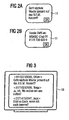
- FIGS. 2A and 2B show illustrations for explaining the input and transmission of short messages in the in Fig. 1 shown communication system.
- Fig. 3 shows a representation for explaining the visualization of the in Fig. 1 shown communication system transmitted short messages on the screen of a TV set.
- the communication system shown in Fig. 1 comprises a mobile radio system, for example a GSM standard mobile radio system, which is represented by two mobile phones 1a, 1b and one base station 2 is.
- the mobile phones 1a, 1b transmit via a so-called uplink 7a, 7b communication information to the base station 2, which in turn transmits communication information via a downlink 8a, 8b to the mobile phones 1a, 1b.
- the base station 2 serves as an interface, on the one hand, between all mobile telephones of the corresponding mobile radio system and, on the other hand, between the mobile radio system and a telephone landline, not shown, so that calls can be made or communicated via the mobile phones 1a, 1b with fixed network subscribers.
- the mobile radio network is generally of cellular construction, each radio cell being assigned a base station 2, which is responsible for the mobile telephones 1a, 1b located in the corresponding radio cell.
- packet-oriented messages i. in the form of data packets transmitted information to be sent.
- packet-oriented messages may be, for example, short message services (SMS) or data transmitted via GPRS (GSM General Packet Radio Services).
- SMS short message services
- GPRS GSM General Packet Radio Services
- These short messages are entered via the keyboard 12a, 12b of the mobile phone or by voice input (speech recognition on the mobile phone itself or via a voice server of the mobile network) and transmitted via a mobile channel to the desired and identified via a corresponding phone number mobile subscriber, then to there the display or the display 11a, 11b to be displayed.
- a television or TV system which comprises a TV transmitting unit 3 with a terrestrial or cable television network connected thereto.
- a telephone number which is assigned to a particular television program or the corresponding TV transmitter unit 3
- each mobile subscriber can transmit short messages not only to another mobile subscriber, but also to all connected to the television network of the selected TV transmitter unit 3 TV sets 10a, 10b.
- the TV transmission unit 3 has a high-frequency interface 4, via which short information from a mobile radio subscriber 1a, 1b can be received, demodulated and decoded.
- a unit 5 for processing the received short messages and for converting the short messages into a television-compatible format is coupled to the high-frequency interface 4.
- the thus processed information is then fed via a TV interface 6 in the television network and transmitted in the form of TV signals via TV signal paths 9a, 9b wirelessly or wired to the TV network connected to the television equipment 10a, 10b.
- the TV transmission unit 3 does not have to be a complete TV broadcaster, but the function of the TV transmission unit 3 can also be realized only by a suitably configured server, which is dialed via a corresponding telephone number from each mobile telephone 1a, 1b and can feed the converted received short messages into the television network.
- the short messages transmitted to the TV sets 10a, 10b can be visualized in different ways on the respective screens. For example, it is conceivable to always transmit the brief information from the TV transmitting unit 2 to the TV sets 10a, 10b via a dedicated TV broadcasting channel, where a separate channel slot is provided there for the display of the instantaneous brief information.
- the brief information can also be incorporated in the TV sets 10a, 10b in the teletext service offered by various TV programs or TV channels. It is also possible to transmit the short information to the TV sets 10a, 10b together with the TV broadcasting programs associated with a particular TV program or TV station and then to display the short information in the normal TV program.
- the presentation of the short messages on the screens of the TV network connected to the television equipment 10a, 10b may be continuous or in the form of a locally fixed on the corresponding screen display.
- the short messages may also be supplemented by the TV broadcasting station 2 with additional information, e.g. the name and / or the telephone number of the mobile subscriber transmitting the short messages.
- Fig. 1 shown communication system according to the invention, it is possible, for example, for each mobile subscriber to intervene interactively and spontaneously in an ongoing television broadcast and send messages to the television audience.
- a virtual TV chat room can be created, which is described in more detail below with reference to the representations of FIGS. 2A, 2B and 3 should be explained.
- a mobile subscriber via the keyboard of his mobile phone first gives the short message "Anyone going to the REM concert next week?" and sends this by entering the phone number "0179 700 800 9", which is assigned to the application "MSNBC Chat TV", via the mobile network to a base station 2 (see the illustration of Fig. 2B ).
- the base station 2 then forwards the short message to a TV transmission unit 3 corresponding to the selected application.
- this short message is converted into a TV broadcast signal, fed into the appropriate television network and connected to the connected Transmit TV sets.
- Fig. 3 is shown on the screen content of a corresponding TV 10, for example, under a free channel space all transmitted to the TV set 10 short messages of all mobile subscribers in the form of a bottom-up display is displayed, so that similar to an Internet chat Presentation of the news results.
- Fig. 3 shown example in addition to the actual short messages and the name and phone number of the short message each sending mobile subscriber are shown.
Landscapes
- Engineering & Computer Science (AREA)
- Signal Processing (AREA)
- Multimedia (AREA)
- Computer Networks & Wireless Communication (AREA)
- Mobile Radio Communication Systems (AREA)
- Telephonic Communication Services (AREA)
Description
- Die vorliegende Erfindung betrifft ein Kommunikationsverfahren nach dem Oberbegriff des Anspruches 1 bzw. ein Kommunikationssystem nach dem Oberbegriff des Anspruches 11.
- In herkömmlichen Mobilfunksystemen werden Kommunikationsinformationen, insbesondere Sprachinformationen, zwischen mobilen Endgeräten oder Mobiltelefonen übertragen, wobei zur Übertragung der Informationen Basisstationen vorgesehen sind, welche die von einem Mobiltelefon kommenden Informationen an das gewünschte Ziel-Endgerät weiterleiten. Die Basisstationen dienen auch als Schnittstelle zum Telefon-Festnetz, an welches verdrahtete Teilnehmer-Endgeräte angeschlossen sind, mit denen ebenfalls eine Kommunikation mit den Mobiltelefonen möglich ist.
- In modernen Mobilfunksystemen, wie z.B. GSM-Mobilfunksystemen (Global System For Mobile Communications), werden darüber hinaus sogenannte Teleservices angeboten. Ein derartiger Teleservice ist in GSM-Mobilfunksystemen beispielsweise der sogenannte Kurznachrichtendienst (SMS, Short Message Services), der die Übertragung von Kurznachrichten, bestehend aus bis zu 160 (7-Bit ASCII) alphanumerischen Zeichen, zwischen den Mobiltelefonen des Mobilfunksystems unterstützt. Jede Kurznachricht wird dabei in Form eines Datenpakets übertragen. Eine derartige Kurznachricht wird über die Tastatur des einen Mobiltelefons eingegeben und auf dem Display oder der Anzeige des von dem sendenden Mobilfunkteilnehmer angewählten Mobiltelefons dargestellt.
- Bei diesen bekannten Kruznachrichtendiensten, welche in herkömmlichen Mobilfunksystemen angeboten werden, kann jedoch eine Kurznachricht in der Regel lediglich an einen Ziel-Teilnehmer gesendet werden. Sollen mehrere Ziel-Teilnehmer angesprochen werden, muß die Übertragung der Kurznachricht mehrmals mit unterschiedlichen Rufnummern wiederholt werden, welche den einzelnen gewünschten Ziel-Teilnehmern zugeordnet sind. Darüber hinaus ist die Übertragung von Kurznachrichten nur zwischen Personen möglich, die ein Mobiltelefon oder ein anderes zum Empfang von derartigen Kurzinformationen fähiges mobiles Endgerät besitzen. Aus der
EP-A-0 880 293 ist ein system bekannt, in dem kurzinformationen über einen TV-kanal übertragen werden. - Der vorliegenden Erfindung liegt daher die Aufgabe zugrunde, ein Kommunikationsverfahren und ein entsprechendes Kommunikationssystem vorzuschlagen, welches mit einfachen Mitteln die Übertragung von Kürznachrichten an einen nahezu unbegrenzten Personenkreis ermöglicht.
- Diese Aufgabe wird gemäß der vorliegenden Erfindung durch ein Kommunikationsverfahren mit den Merkmalen des Anspruches 1 bzw. ein Kommunikationssystem mit den Merkmalen des Anspruches 11 gelöst. Die Unteransprüche definieren jeweils bevorzugte und vorteilhafte Ausführungsformen der vorliegenden Erfindung.
- Erfindungsgemäß wird vorgeschlagen, von mobilen Endgeräten, z.B. Mobiltelefonen, eines Mobilfunksystems aus paketorientierte Nachrichten, wie z.B. SMS-Kurznachrichten oder mittels GPRS (GSM General Packet Radio Services) übertragene Daten, an eine TV-Sendeeinheit zu senden, welche diese Nachrichten in TV-Sendesignale umwandelt und in das TV-Netz einspeist, so daß die Nachrichten auf den Bildschirmen aller an das TV-Netz angeschlossenen TV-Geräte sichtbar gemacht und dargestellt werden können.
- Die Darstellung dieser Kurznachrichten kann beispielsweise fortlaufend auf einem freien Kanalplatz oder auch in den Videotext eines entsprechende TV-Programms eingebunden erfolgen.
- Auf diese Weise können die Teilnehmer spontan und interaktiv an Fernsehproduktionen oder Fernsehsendungen teilnehmen. Bisher war diesbezüglich lediglich bekannt, sich an der jeweiligen Fernsehesendung über eine Telefon-Sprachverbindung, über MFV-fähige Telefone (Mehrfrequenz-Wahlverfahren) oder auch über eine kabelgebundene Datenübertragung (insbesondere über das Internet), die entsprechende Hardware voraussetzt und demzufolge kostenaufwendig ist, zu beteiligen.
- Des weiteren besteht aufgrund der vorliegenden Erfindung auch die Möglichkeit, virtuelle TV-Chatplätze zum Chatten zwischen einer Vielzahl von Teilnehmern oder TV-Marktplätze zum Aufgeben von Verkaufs-/Kaufsanzeigen etc. zu schaffen.
- Mit Hilfe der vorliegenden Erfindung kann jeder Mobilfunkteilnehmer einen nahezu unbegrenzten Personenkreis ansprechen, da die von ihm angewählte TV-Sendeeinheit die jeweiligen Kurznachrichten an sämtliche an das Fernsehnetz angeschlossenen TV-Geräte weiterleitet. Insbesondere können auch Teilnehmer angesprochen werden, die kein mobiles Endgerät besitzen. Zur aktiven Teilnahme an der Kommunikation muß der entsprechende Teilnehmer lediglich ein TV-Gerät und ein Mobiltelefon besitzen.
- Die Erfindung wird nachfolgend näher anhand der beigefügten Zeichnung erläutert.
-
Fig. 1 zeigt den vereinfachten Aufbau eines Kommunikationssystems gemäß einem Ausführungsbeispiel der vorliegenden Erfindung. -
Fig. 2A und 2B zeigen Darstellungen zur Erläuterung der Eingabe und Übertragung von Kurznachrichten in dem inFig. 1 gezeigten Kommunikationssystem. -
Fig. 3 zeigt eine Darstellung zur Erläuterung der Visualisierung von über das inFig. 1 gezeigte Kommunikationssystem übertragenen Kurznachrichten auf dem Bildschirm eines TV-Geräts. - Das in
Fig. 1 gezeigte Kommunikationssystem umfaßt ein Mobilfunksystem, beispielsweise ein Mobilfunksystem gemäß dem GSM-Standard, welches durch zwei Mobiltelefone 1a, 1b und eine Basisstation 2 repräsentiert ist. Die Mobiltelefone 1a, 1b senden über einen sogenannten Uplink 7a, 7b Kommunikationsinformationen an die Basisstation 2, welche wiederum Kommunikationsinformationen über einen Downlink 8a, 8b an die Mobiltelefone 1a, 1b überträgt. Die Basisstation 2 dient als Schnittstelle einerseits zwischen allen Mobiltelefonen des entsprechenden Mobilfunksystems und andererseits zwischen dem Mobilfunksystem und einem nicht gezeigten Telefon-Festnetz, so daß über die Mobiltelefone 1a, 1b auch mit Festnetz-Teilnehmern telefoniert oder kommuniziert werden kann. Das Mobilfunknetz ist in der Regel zellular aufgebaut, wobei jeder Funkzelle eine Basisstätion 2 zugeordnet ist, welche für die in der entsprechenden Funkzelle befindlichen Mobiltelefone 1a, 1b zuständig ist. - Von den Mobiltelefonen 1a, 1b können paketorientierte Nachrichten, d.h. in Form von Datenpaketen übertragene Informationen, gesendet werden. Bei diesen paketorientierten Nachrichten kann es sich beispielsweise um SMS-Kurznachrichten (Short Message Services) oder um mittels GPRS (GSM General Packet Radio Services) übertragene Daten handeln. Diese Kurznachrichten werden über die Tastatur 12a, 12b des Mobiltelefons oder mittels Spracheingabe (durch Spracherkennung am Mobiltelefon selbst oder über einen Sprach-Server des Mobilfunknetzes) eingegeben und über einen Mobilfunkkanal an den gewünschten und über eine entsprechende Rufnummer identifizierten Mobilfunkteilnehmer übertragen, um dann dort auf dem Display oder der Anzeige 11a, 11b dargestellt zu werden.
- Darüber hinaus ist ein Fernseh- oder TV-System vorgesehen, welches eine TV-Sendeeinheit 3 mit einem daran angeschlossenen terrestrischen oder kabelgebundenen Fernsehnetz umfaßt. Durch die Wahl einer Telefonnummer, welche einer bestimmten Fernsehsendung bzw. der entsprechenden TV-Sendeeinheit 3 zugeordnet ist, kann jeder Mobilfunkteilnehmer Kurznachrichten nicht nur an einen anderen Mobilfunkteilnehmer übertragen, sondern auch an sämtliche an das Fernsehnetz der angewählten TV-Sendeeinheit 3 angeschlossenen TV-Geräte 10a, 10b.
- Die TV-Sendeeinheit 3 weist eine Hochfrequenz-Schnittstelle 4 auf, über die Kurzinformationen von einem Mobilfunkteilnehmer 1a, 1b empfangen, demoduliert und decodiert werden können. Mit der Hochfrequenz-Schnittstelle 4 ist eine Einheit 5 zum Aufbereiten der empfangenen Kurznachrichten und zum Konvertieren der Kurznachrichten in ein fernsehkompatibles Format gekoppelt. Die somit verarbeiteten Informationen werden anschließend über eine TV-Schnittstelle 6 in das Fernsehnetz eingespeist und in Form von TV-Signalen über TV-Signalpfade 9a, 9b kabellos oder kabelgebunden an die an das Fernsehnetz angeschlossenen TV-Geräte 10a, 10b übertragen.
- Bei der TV-Sendeeinheit 3 muß es sich nicht um eine komplette TV-Sendeanstalt handeln, sondern die Funktion der TV-Sendeeinheit 3 kann auch lediglich durch einen entsprechend ausgestalteten Server realisiert sein, der über eine entsprechende Telefonnummer von jedem Mobiltelefon 1a, 1b angewählt werden kann und die konvertierten empfangenen Kurznachrichten in das Fernsehnetz einspeisen kann.
- Die an die TV-Geräte 10a, 10b übertragenen Kurznachrichten können auf unterschiedliche Art und Weise auf den entsprechenden Bildschirmen visualisiert werden. So ist beispielsweise denkbar, die Kurzinformationen von der TV-Sendeeinheit 2 stets über einen eigens hierfür reservierten TV-Sendekanal an die TV-Geräte 10a, 10b zu übertragen, wobei dort für die Anzeige der augenblicklich vorliegenden Kurzinformationen ein eigener Kanalplatz vorgesehen ist. Die Kurzinformationen können in den TV-Geräten 10a, 10b auch in den von verschiedenen TV-Programmen oder TV-Sendern angebotenen Videotext-Dienst eingebunden werden. Ebenso ist möglich, die Kurzinformationen an die TV-Geräte 10a, 10b zusammen mit den einem bestimmten TV-Programm oder TV-Sender zugeordneten TV-Sendesignalen zu übertragen und die Kurznformationen dann in das normalen TV-Programm einzublenden. Die Darstellung der Kurznachrichten auf den Bildschirmen der an das Fernsehnetz angeschlossenen TV-Geräte 10a, 10b kann fortlaufend oder aber auch in Form einer örtlich auf dem entsprechenden Bildschirm feststehenden Anzeige erfolgen.
- Den Kurznachrichten können auch von der TV-Sendestation 2 zusätzliche Informationen hinzugefügt werden, wie z.B. der Name und/oder die Telefonnummer des die Kurznachrichten sendenden Mobilfunk-Teilnehmers.
- Mit Hilfe des in
Fig. 1 gezeigten erfindungsgemäßen Kommunikationssystems ist es beispielsweise für jeden Mobilfunk-Teilnehmer möglich, interaktiv und spontan in eine laufende Fernsehsendung einzugreifen und Mitteilungen an das Fernsehpublikum zu senden. - Ebenso ist es somit möglich, virtuelle TV-Marktplätze zu schaffen, wo Mobilfunkteilnehmer Verkaufs- oder Kaufsanzeigen aufgeben können.
- Darüber hinaus kann beispielsweise auch ein virtueller TV-Chatraum geschaffen werden, was nachfolgend näher anhand der Darstellungen von
Fig. 2A, 2B und 3 erläutert werden soll. - Wie in
Fig. 2A anhand des Inhalts des Displays 11 eines Mobiltelefons gezeigt ist, gibt ein Mobilfunkteilnehmer über die Tastatur seines Mobiltelefons zunächst die Kurznachricht "Anyone going to the R.E.M. concert next week?" ein und sendet diese durch Eingabe der Telefonnummer "0179 700 800 9", welche der Anwendung "MSNBC-Chat TV" zugewiesen ist, über das Mobilfunknetz an eine Basisstation 2 (vgl. die Darstellung vonFig. 2B ). Die Basisstation 2 leitet die Kurznachricht daraufhin an eine der angewählten Anwendung entsprechende TV-Sendeeinheit 3 weiter. - In der TV-Sendeeinheit 3 wird diese Kurznachricht in ein TV-Sendesignal konvertiert, in das entsprechende Fernsehnetz eingespeist und an die daran angeschlossenen TV-Geräte übertragen. Wie in
Fig. 3 anhand des Bildschirminhalts eines entsprechenden TV-Geräts 10 gezeigt ist, werden beispielsweise unter einem freien Kanalplatz alle an das TV-Gerät 10 übertragenen Kurznachrichten sämtlicher Mobilfunkteilnehmer in Form einer von unten nach oben durchlaufenden Anzeige dargestellt, so daß sich eine zu einem Internet-Chat ähnliche Darstellung der Nachrichten ergibt. Bei dem inFig 3 gezeigten Beispiel werden neben den eigentlichen Kurznachrichten auch der Name und die Telefonnummer des die Kurznachricht jeweils sendenden Mobilfunkteilnehmers dargestellt.
Claims (16)
- Kommunikationsverfahren, umfassend die Schrittea) Eingeben von Kurznachrichteninformationen an einem mobilen Endgerät (1a), undb) Senden der Kurznachrichteninformationen von dem mobilen Endgerät (1a) über einen Mobilfunkkanal (7) an eine entsprechende Basisstation (2),
dadurch gekennzeichnet
dass das Verfahren ermöglicht, ausgehend von der Basisstation (2) die Kurznachrichteninformationen sowohl wahlweise
durch die Schrittec) Übertragen der Kurznachrichteninformationen von der Basisstation (2) an eine TV-Sendeeinheit (3),d) Umwandeln der Kurznachrichteninformationen in entsprechende TV-Sendesignale,e) Übertragen der den Kurznachrichteninformationen entsprechenden TV-Sendesignale an ein TV-Gerät (10), undf) Visualisieren der TV-Sendesignale zur Darstellung der Kurznachrichteninformationen auf dem TV-Gerät (10), wobei auf dem TV-Gerät Kurznachrichteninformationen verschiedener mobiler Endgeräte (1a,b) gleichzeitig dargestellt werden, weiterzuverarbeiten,als auch direkt an ein weiteres mobiles Endgerät (1b) zur Ausgabe zu übertragen. - Kommunikationsverfahren nach Anspruch 1,
dadurch gekennzeichnet,
dass im Schritt a) zusammen mit den Kurznachrichteninformationen eine Telefonnummer eingegeben wird, und
dass im Schritt c) die Kurznachrichteninformationen an eine der Telefonnummer entsprechende TV-Sendeeinheit (3) übertragen werden. - Kommunikationsverfahren nach Anspruch 1 oder 2,
dadurch gekennzeichnet,
dass im Schritt e) die den Kurznachrichteninformationen entsprechenden TV-Sendesignale über einen für die Übertragung von Kurznachrichteninformationen reservierten Sendekanal an das TV-Gerät (10) übertragen werden. - Kömmunikationsverfahren nach Anspruch 1 oder 2,
dadurch gekennzeichnet,
dass im Schritt e) die den Kurznachrichteninformationen entsprechenden TV-Sendesignale über einen für ein TV-Programm reservierten Sendekanal an das TV-Gerät übertragen werden. - Kommunikationsverfahren nach Anspruch 4,
dadurch gekennzeichnet,
dass im Schritt f) die Kurznachrichteninformationen im Videotext des entsprechenden TV-Programms dargestellt werden. - Kommunikationsverfahren nach Anspruch 4,
dadurch gekennzeichnet,
dass im Schritt f) die Kurznachrichteninformationen in das TV-Programm eingeblendet werden. - Kommunikationsverfahren nach einem der vorhergehenden Ansprüche,
dadurch gekennzeichnet,
dass im Schritt f) die Kurznachrichteninformationen auf dem TV-Gerät (10) in Form einer örtlich feststehenden Anzeige dargestellt werden. - Kommunikationsverfahren nach einem der Ansprüche 1-6,
dadurch gekennzeichnet,
dass im Schritt f) die Kurznachrichteninformationen auf dem TV-Gerät (10) in Form einer durchlaufenden Anzeige dargestellt werden. - Kommunikationsverfahren nach einem der vorhergehenden Ansprüche,
dadurch gekennzeichnet,
dass die Kurznachrichteninformationen im Schritt f) auf dem TV-Gerät (10) zusammen mit einer Telefonnummer dargestellt werden, welche dem in den Schritten a) und b) zum Eingeben und Senden der Kurznachrichteninformationen verwendeten mobilen Endgerät (1a) zugeordnet ist. - Kommunikationsverfahren nach einem der vorhergehenden Ansprüche,
dadurch gekennzeichnet,
dass die Kurznachrichteninformationen im Schritt a) über eine Tastatur (12) des mobilen Endgeräts (1a) eingegeben werden. - Kommunikationssystem,
mit mehreren mobilen Endgeräten (1a, b), welche über einen Mobilfunkkanal (7, 8) miteinander kommunizieren,
wobei die mobilen Endgeräte (1a, b) zur übertragen von Kurznachrichteninformationen ausgelegt sind, wobei weiter das Kommunikationssystem mindestens eine TV-Sendeeinheit (3) umfaßt, welche Empfangsmittel (4) zum Empfangen der Kurznachrichteninformationen, die von einem der mobilen Endgeräte (1a) übermittelt worden sind, Umwandlungsmittel (5) zum Umwandeln der empfangenen Kurznachrichteninformationen in TV-Sendesignale und Sendemittel (6) zum Senden der den empfangenen Kurznachrichteninformationen entsprechenden TV-Sendesignale über einen TV-Sendekanal (9) aufweist, und
wobei
die mobilen Endgeräte (1a, b) über mindestens eine Basisstation (2) miteinander kommunizieren,
dadurch gekennzeichnet,
dass die Basisstation (2) derart ausgestaltet ist, daß sie von einem der mobilen Endgeräte (1a) empfangene Kurznachrichteninformationen wahlweise
entweder an die durch einen entsprechende Telefonnummer identifizierte TV-Sendeeinheit (3) weiterleitet
oder direkt an ein weiteres mobiles Endgerät (1b) zur Ausgabe überträgt,
wobei Mittel zum Visualisieren der TV-Sendesignale zur Darstellung der Kurznachrichteinformationen auf einen TV-Gerät vorgesehen sind und die es ermöglichen Kurznachrichteinformationen verschiedener mobiler Endgeräte (1a,b) gleichzeitig darzustellen. - Kommunikationssystem nach Anspruch 11,
dadurch gekennzeichnet,
dass die Sendemittel (6) der TV-Sendeeinheit (3) derart ausgestaltet sind, daß sie die den Kurznachrichteninformationen entsprechenden TV-Sendesignale über einen für die Übertragung von Kurznachrichteninformationen reservierten TV-Sendekanal (9) senden. - Kommunikationssystem nach Anspruch 12,
dadurch gekennzeichnet,
dass die Sendemittel (6) der TV-Sendeeinheit (3) derart ausgestaltet sind, daß sie die den Kurznachrichteninformationen entsprechenden TV-Sendesignale über einen für ein TV-Programm reservierten TV-Sendekanal (9) senden. - Kommunikationssystem nach Anspruch 13,
dadurch gekennzeichnet,
dass die Sendemittel (6) der TV-Sendeeinheit (3) derart ausgestaltet sind, daß sie die Kurznachrichteninformationen in die Videotextinformationen des entsprechenden TV-Programms eingebettet über den TV-Sendekanal (9) senden. - Kommunikationssystem nach einem der Ansprüche 11-14,
dadurch gekennzeichnet,
dass die Kurznachrichteninformationen über den TV-Sendekanal an mehrere TV-Geräte (10) übertragen werden,
wobei die TV-Geräte (10) die Kurznachrichteninformationen in Form einer örtlich feststehenden Anzeige darstellen. - Kommunikationssystem nach einem der Ansprüche 11-14
dadurch gekennzeichnet,
dass die Kurznachrichteninformationen über den TV-Sendekanal an mehrere TV-Geräte (10) übertragen werden,
wobei die TV-Geräte (10) die Kurznachrichteninformationen in Form einer durchlaufenden Anzeige darstellen.
Applications Claiming Priority (3)
| Application Number | Priority Date | Filing Date | Title |
|---|---|---|---|
| DE19929001 | 1999-06-24 | ||
| DE19929001 | 1999-06-24 | ||
| PCT/DE2000/001111 WO2001001684A1 (de) | 1999-06-24 | 2000-04-11 | Kommunikationsverfahren und kommunikationsystem zur darstellung von kurznachrichten an tv-geräten |
Publications (3)
| Publication Number | Publication Date |
|---|---|
| EP1188314A1 EP1188314A1 (de) | 2002-03-20 |
| EP1188314B1 EP1188314B1 (de) | 2002-11-27 |
| EP1188314B2 true EP1188314B2 (de) | 2010-03-24 |
Family
ID=7912411
Family Applications (1)
| Application Number | Title | Priority Date | Filing Date |
|---|---|---|---|
| EP00938482A Expired - Lifetime EP1188314B2 (de) | 1999-06-24 | 2000-04-11 | Kommunikationsverfahren und kommunikationsystem zur darstellung von kurznachrichten an tv-geräten |
Country Status (6)
| Country | Link |
|---|---|
| US (1) | US7010312B1 (de) |
| EP (1) | EP1188314B2 (de) |
| CN (1) | CN1161992C (de) |
| DE (1) | DE50000846D1 (de) |
| HU (1) | HUP0201847A2 (de) |
| WO (1) | WO2001001684A1 (de) |
Families Citing this family (52)
| Publication number | Priority date | Publication date | Assignee | Title |
|---|---|---|---|---|
| US7624172B1 (en) | 2000-03-17 | 2009-11-24 | Aol Llc | State change alerts mechanism |
| US9736209B2 (en) | 2000-03-17 | 2017-08-15 | Facebook, Inc. | State change alerts mechanism |
| US7496502B2 (en) * | 2000-06-16 | 2009-02-24 | Semiconductor Energy Laboratory Co., Ltd. | Information providing system and method therefor |
| FI115187B (fi) * | 2000-10-10 | 2005-03-15 | Alma Media Oyj | Menetelmä ja järjestelmä interaktiivisen televisio-ohjelman tuottamiseksi |
| FR2825558B1 (fr) * | 2001-06-05 | 2004-09-24 | Freever | Procede et systeme de communication interactive permettant d'echanger des messages pendant le deroulement d'un spectacle |
| WO2003030547A1 (en) * | 2001-09-12 | 2003-04-10 | Opentv, Inc. | A method and apparatus for disconnected chat room lurking in an interactive television environment |
| US20040032486A1 (en) | 2002-08-16 | 2004-02-19 | Shusman Chad W. | Method and apparatus for interactive programming using captioning |
| US20030196206A1 (en) | 2002-04-15 | 2003-10-16 | Shusman Chad W. | Method and apparatus for internet-based interactive programming |
| US20040210947A1 (en) | 2003-04-15 | 2004-10-21 | Shusman Chad W. | Method and apparatus for interactive video on demand |
| US8201196B2 (en) * | 2002-05-31 | 2012-06-12 | Comverse, Ltd. | Method and system for conveying SMS messages via a TV communication infrastructure for receipt by a TV set-top box |
| WO2004023805A1 (en) * | 2002-09-06 | 2004-03-18 | Koninklijke Philips Electronics N.V. | Television receiver, method of providing a message to such a receiver, and system arranged to execute such a method |
| US7590696B1 (en) | 2002-11-18 | 2009-09-15 | Aol Llc | Enhanced buddy list using mobile device identifiers |
| US8005919B2 (en) | 2002-11-18 | 2011-08-23 | Aol Inc. | Host-based intelligent results related to a character stream |
| US7899862B2 (en) | 2002-11-18 | 2011-03-01 | Aol Inc. | Dynamic identification of other users to an online user |
| US7640306B2 (en) | 2002-11-18 | 2009-12-29 | Aol Llc | Reconfiguring an electronic message to effect an enhanced notification |
| WO2004046867A2 (en) | 2002-11-18 | 2004-06-03 | America Online, Inc. | People lists |
| US8965964B1 (en) | 2002-11-18 | 2015-02-24 | Facebook, Inc. | Managing forwarded electronic messages |
| US8701014B1 (en) | 2002-11-18 | 2014-04-15 | Facebook, Inc. | Account linking |
| US8122137B2 (en) | 2002-11-18 | 2012-02-21 | Aol Inc. | Dynamic location of a subordinate user |
| US7428580B2 (en) | 2003-11-26 | 2008-09-23 | Aol Llc | Electronic message forwarding |
| US20040210639A1 (en) | 2003-03-26 | 2004-10-21 | Roy Ben-Yoseph | Identifying and using identities deemed to be known to a user |
| GB2403116A (en) * | 2003-06-19 | 2004-12-22 | Amplefuture Ltd | Generating video signals from SMS data |
| US7653693B2 (en) | 2003-09-05 | 2010-01-26 | Aol Llc | Method and system for capturing instant messages |
| US20050289622A1 (en) * | 2004-05-14 | 2005-12-29 | Marc Vanlerberghe | Method for providing interactive television programming |
| US20140071818A1 (en) * | 2004-07-16 | 2014-03-13 | Virginia Innovation Sciences, Inc. | Method and system for efficient communication |
| DE102004047246A1 (de) * | 2004-09-22 | 2006-03-23 | Deutsche Telekom Ag | Verfahren zur Übertragung von Informationen an ein digitales Fernsehsystem |
| ATE381194T1 (de) * | 2004-09-30 | 2007-12-15 | Alcatel Lucent | Multimedianachrichtenübertragung zu einem fernsehgerät |
| US20070169143A1 (en) * | 2006-01-17 | 2007-07-19 | Li Kam W | Method and system for increasing viewership and viewer interaction with public events and broadcast presentation |
| US7865924B2 (en) * | 2006-07-27 | 2011-01-04 | Microsoft Corporation | Providing input and output for a mobile device |
| US8185139B1 (en) * | 2007-10-11 | 2012-05-22 | Sprint Communications Company L.P. | Presenting mobile-device message information on a television |
| CN101159707B (zh) * | 2007-10-30 | 2012-04-25 | 华为技术有限公司 | 短消息的传输方法、流媒体服务器以及终端 |
| GB2459534A (en) * | 2008-04-30 | 2009-11-04 | Inview Interactive Ltd | Television-enabled messaging system |
| GB2461271B (en) * | 2008-06-24 | 2013-02-13 | Inview Interactive Ltd | A method and means for introducing a system user to one or more other system users |
| TWI449400B (zh) * | 2008-07-15 | 2014-08-11 | Alpha Imaging Technology Corp | 手持式電子通訊裝置及其影像處理方法 |
| US20120221962A1 (en) | 2008-08-05 | 2012-08-30 | Eugene Lee Lew | Social messaging hub system |
| US8918085B2 (en) * | 2008-08-05 | 2014-12-23 | Mediafriends, Inc. | Social messaging hub |
| US9356907B2 (en) | 2008-08-05 | 2016-05-31 | HeyWire, Inc. | Messaging system having multiple number, dual mode phone support |
| US9271129B2 (en) | 2008-08-05 | 2016-02-23 | HeyWire, Inc. | Mobile messaging hub enabling enterprise office telephone numbers |
| US12238246B2 (en) | 2008-08-05 | 2025-02-25 | Salesforce, Inc. | Call center mobile messaging |
| KR20110081935A (ko) * | 2008-08-05 | 2011-07-15 | 미디어프렌즈 인크 | 컴퓨터 디바이스를 위한 sms 기술 |
| US11172067B1 (en) | 2008-08-05 | 2021-11-09 | HeyWire, Inc. | Call center mobile messaging |
| US20100169933A1 (en) * | 2008-12-31 | 2010-07-01 | Motorola, Inc. | Accessing an event-based media bundle |
| EP2226785A1 (de) * | 2009-03-06 | 2010-09-08 | Alexander Neufeld | Verfahren zum Aufschalten einer visuellen Information auf zumindest eine Informationen wiedergebende Fläche und Vorrichtung zur Durchführung des Verfahrens |
| US9532197B1 (en) | 2009-03-30 | 2016-12-27 | Salesforce.Com, Inc. | DID line type provisioning verification |
| KR101664430B1 (ko) | 2009-11-13 | 2016-10-10 | 삼성전자주식회사 | 리모트 ui 서비스 제공 방법 및 장치 |
| US10064024B2 (en) | 2014-02-14 | 2018-08-28 | HeyWire, Inc. | Cloud hosted multimedia file handling on mobile devices |
| US10469423B2 (en) | 2014-02-14 | 2019-11-05 | Salesforce.Com, Inc. | Cloud hosted multimedia file handling on mobile devices |
| US9456317B2 (en) | 2014-03-04 | 2016-09-27 | HeyWire, Inc. | Intelligent presence detection messaging |
| US9936362B2 (en) | 2014-03-04 | 2018-04-03 | HeyWire, Inc. | Intelligent presence detection messaging |
| US10360309B2 (en) | 2015-04-30 | 2019-07-23 | Salesforce.Com, Inc. | Call center SMS-MMS language router |
| US9854415B2 (en) | 2015-04-30 | 2017-12-26 | HeyWire, Inc. | Call center A2P-to-P2P message routing conversion |
| US10348671B2 (en) | 2016-07-11 | 2019-07-09 | Salesforce.Com, Inc. | System and method to use a mobile number in conjunction with a non-telephony internet connected device |
Citations (6)
| Publication number | Priority date | Publication date | Assignee | Title |
|---|---|---|---|---|
| WO1994013101A1 (en) † | 1992-11-30 | 1994-06-09 | Scientific-Atlanta, Inc. | Picture-in-picture tv with insertion of a mean only frame into a full size frame |
| EP0723369A1 (de) † | 1995-01-23 | 1996-07-24 | NTEX datacommunications bv | Zugriffsverfahren zum Wiederauffinden von Internet Information durch Teletext/Videotex und umgekehrt |
| WO1998028920A2 (en) † | 1996-12-20 | 1998-07-02 | Telefonaktiebolaget Lm Ericsson (Publ) | Transporting short message service (sms) messages within a telecommunications network |
| US5818935A (en) † | 1997-03-10 | 1998-10-06 | Maa; Chia-Yiu | Internet enhanced video system |
| JPH1127643A (ja) † | 1997-06-10 | 1999-01-29 | Lg Electron Inc | Htmlデータの送受信装置 |
| EP0914741B1 (de) † | 1997-04-01 | 2001-10-31 | Koninklijke Philips Electronics N.V. | Übertragungssystem für interaktives fernsehen |
Family Cites Families (7)
| Publication number | Priority date | Publication date | Assignee | Title |
|---|---|---|---|---|
| US5706334A (en) * | 1994-08-18 | 1998-01-06 | Lucent Technologies Inc. | Apparatus for providing a graphical control interface |
| FI102869B (fi) * | 1996-02-26 | 1999-02-26 | Nokia Mobile Phones Ltd | Laite, menetelmä ja järjestelmä eri sovelluksiin liittyvien tietojen l ähettämiseksi ja vastaanottamiseksi |
| DE69736889T2 (de) | 1997-05-23 | 2007-04-12 | Koninklijke Kpn N.V. | Elektronisches Mitteilungssystem |
| ES2248829T3 (es) | 1997-05-23 | 2006-03-16 | Koninklijke Kpn N.V. | Sistema de comunicacion movil, dispositivo de comunicacion movil y procedimiento para la transmision de llamadas y de mensajes mas largos. |
| KR100232874B1 (ko) * | 1997-10-18 | 1999-12-01 | 윤종용 | 이동 무선 단말기의 전송 실패 단축메시지 재전송 방법 |
| NO982495D0 (no) * | 1998-06-02 | 1998-06-02 | Net 2 Interaktiv As | SMS-basert pratelinje pÕ tekst-TV |
| HUP9802519A1 (hu) | 1998-11-03 | 2000-06-28 | Győző Drozdy | Eljárás interaktív televíziózás megvalósítására mobil telefonkészülékekről küldött szöveges üzenetek televíziótársaságok teletextoldalain történő megjelenítésével |
-
2000
- 2000-04-11 EP EP00938482A patent/EP1188314B2/de not_active Expired - Lifetime
- 2000-04-11 HU HU0201847A patent/HUP0201847A2/hu unknown
- 2000-04-11 WO PCT/DE2000/001111 patent/WO2001001684A1/de not_active Ceased
- 2000-04-11 US US10/018,844 patent/US7010312B1/en not_active Expired - Fee Related
- 2000-04-11 DE DE50000846T patent/DE50000846D1/de not_active Expired - Lifetime
- 2000-04-11 CN CNB008093989A patent/CN1161992C/zh not_active Expired - Fee Related
Patent Citations (6)
| Publication number | Priority date | Publication date | Assignee | Title |
|---|---|---|---|---|
| WO1994013101A1 (en) † | 1992-11-30 | 1994-06-09 | Scientific-Atlanta, Inc. | Picture-in-picture tv with insertion of a mean only frame into a full size frame |
| EP0723369A1 (de) † | 1995-01-23 | 1996-07-24 | NTEX datacommunications bv | Zugriffsverfahren zum Wiederauffinden von Internet Information durch Teletext/Videotex und umgekehrt |
| WO1998028920A2 (en) † | 1996-12-20 | 1998-07-02 | Telefonaktiebolaget Lm Ericsson (Publ) | Transporting short message service (sms) messages within a telecommunications network |
| US5818935A (en) † | 1997-03-10 | 1998-10-06 | Maa; Chia-Yiu | Internet enhanced video system |
| EP0914741B1 (de) † | 1997-04-01 | 2001-10-31 | Koninklijke Philips Electronics N.V. | Übertragungssystem für interaktives fernsehen |
| JPH1127643A (ja) † | 1997-06-10 | 1999-01-29 | Lg Electron Inc | Htmlデータの送受信装置 |
Also Published As
| Publication number | Publication date |
|---|---|
| EP1188314B1 (de) | 2002-11-27 |
| CN1161992C (zh) | 2004-08-11 |
| DE50000846D1 (de) | 2003-01-09 |
| EP1188314A1 (de) | 2002-03-20 |
| WO2001001684A1 (de) | 2001-01-04 |
| HUP0201847A2 (en) | 2002-09-28 |
| US7010312B1 (en) | 2006-03-07 |
| CN1358390A (zh) | 2002-07-10 |
Similar Documents
| Publication | Publication Date | Title |
|---|---|---|
| EP1188314B1 (de) | Kommunikationsverfahren und kommunikationsystem zur darstellung von kurznachrichten an tv-geräten | |
| DE19524704C2 (de) | Bildtelefon | |
| EP0941609B1 (de) | Verfahren und telekommunikationssystem zur unterstützung multimedialer dienste über eine schnittstelle sowie ein entsprechend ausgestattetes teilnehmerendgerät | |
| DE2421002C3 (de) | Nachrichtenvermittlungssystem | |
| EP0461572B1 (de) | Multifunktionales, in verschiedene Betriebsarten umsteuerbares Funkgerät | |
| EP2769594A1 (de) | Car-2-x-kommunikationssystem, teilnehmer in einem solchen system und verfahren zum empfangen von funksignalen in einem solchen system | |
| EP1273138B1 (de) | Verfahren zum übertragen breitbandiger ip-basierter datenströme in einem punkt-zu-mehrpunkt-kommunikationsnetz | |
| DE10208094A1 (de) | Verfahren zum Übertragen von Daten | |
| EP0444479B1 (de) | Verfahren für einen Mehrwertdienst für ein Nachrichtenübertragungssystem mit drahtgebundenen Kanälen und/oder Funkkanälen | |
| DE112005002557T5 (de) | Teilnehmerverwaltungssystem und -verfahren im digitalen Multimediafunk | |
| DE19506807A1 (de) | Zellulares Mobilfunksystem mit einer in einer Funkfeststation enthaltenen Aufkläreinrichtung | |
| DE60037179T2 (de) | Rundfunkeinrichtung | |
| EP0862347B1 (de) | Verfahren und Vorrichtung zur Übertragung von alphanumerischen Zeichen zwischen wenigstens zwei Telekommunikations-Endeinrichtungen | |
| EP1736022B1 (de) | Mobiles Endgerät zum Empfang paketorientierter Rundfunksignale | |
| DE4221439A1 (de) | Telekommunikationseinrichtung mit einer Anordnung zur Speicherung und Wiedergabe einer hinterlegten Nachricht | |
| EP1072146B1 (de) | Verfahren zur nutzung digitaler datennetze bei der übertragung von daten über sprachverbindungswege | |
| DE60024510T2 (de) | Mobiltelefon mit Zugriff zu einem zellularen Netz und das Internet | |
| DE3142019A1 (de) | Einrichtung und verfahren zum betreiben eines schnurlosen telefons | |
| EP0798886A2 (de) | Funkruf- und elektronischen Briefkastensystem mit Verwendung von terrestrischen und satelliten Rundfunkanlagen | |
| WO2002007457A2 (de) | Übermittlung einer nachricht an eine gruppe teilnehmer in einem telekommunikationsnetz | |
| EP0989763A2 (de) | Verfahren und Mobil-Kommunikationssystem zur Steuerung eines Kurznachrichtendienstes | |
| EP1480480A1 (de) | Verfahren und Vorrichtung zum Gruppenruf mit mehr als einem Sprachkanal | |
| AT407813B (de) | Telephonsystem | |
| DE19600961A1 (de) | Kabel-Fernseh-Verteilnetz mit wenigstens einem Koaxialkabelabschnitt und wenigstens einem Glasfaserkabelabschnitt und zusätzlichem Anschluß von Endgeräten eines Fernmeldenetzes | |
| DE20000850U1 (de) | SMS Kurznachrichtensystem |
Legal Events
| Date | Code | Title | Description |
|---|---|---|---|
| PUAI | Public reference made under article 153(3) epc to a published international application that has entered the european phase |
Free format text: ORIGINAL CODE: 0009012 |
|
| 17P | Request for examination filed |
Effective date: 20011108 |
|
| AK | Designated contracting states |
Kind code of ref document: A1 Designated state(s): AT BE CH CY DE DK ES FI FR GB GR IE IT LI LU MC NL PT SE |
|
| GRAG | Despatch of communication of intention to grant |
Free format text: ORIGINAL CODE: EPIDOS AGRA |
|
| GRAG | Despatch of communication of intention to grant |
Free format text: ORIGINAL CODE: EPIDOS AGRA |
|
| GRAH | Despatch of communication of intention to grant a patent |
Free format text: ORIGINAL CODE: EPIDOS IGRA |
|
| 17Q | First examination report despatched |
Effective date: 20020528 |
|
| GRAH | Despatch of communication of intention to grant a patent |
Free format text: ORIGINAL CODE: EPIDOS IGRA |
|
| GRAA | (expected) grant |
Free format text: ORIGINAL CODE: 0009210 |
|
| AK | Designated contracting states |
Kind code of ref document: B1 Designated state(s): DE FR GB |
|
| REG | Reference to a national code |
Ref country code: GB Ref legal event code: FG4D Free format text: NOT ENGLISH |
|
| REF | Corresponds to: |
Ref document number: 50000846 Country of ref document: DE Date of ref document: 20030109 |
|
| GBT | Gb: translation of ep patent filed (gb section 77(6)(a)/1977) |
Effective date: 20030319 |
|
| ET | Fr: translation filed | ||
| PLBQ | Unpublished change to opponent data |
Free format text: ORIGINAL CODE: EPIDOS OPPO |
|
| PLBI | Opposition filed |
Free format text: ORIGINAL CODE: 0009260 |
|
| PLAB | Opposition data, opponent's data or that of the opponent's representative modified |
Free format text: ORIGINAL CODE: 0009299OPPO |
|
| PLAX | Notice of opposition and request to file observation + time limit sent |
Free format text: ORIGINAL CODE: EPIDOSNOBS2 |
|
| 26 | Opposition filed |
Opponent name: NPTV Effective date: 20030827 |
|
| R26 | Opposition filed (corrected) |
Opponent name: NPTV Effective date: 20030826 |
|
| PLBB | Reply of patent proprietor to notice(s) of opposition received |
Free format text: ORIGINAL CODE: EPIDOSNOBS3 |
|
| APBP | Date of receipt of notice of appeal recorded |
Free format text: ORIGINAL CODE: EPIDOSNNOA2O |
|
| APAY | Date of receipt of notice of appeal deleted |
Free format text: ORIGINAL CODE: EPIDOSDNOA2O |
|
| APBP | Date of receipt of notice of appeal recorded |
Free format text: ORIGINAL CODE: EPIDOSNNOA2O |
|
| APAH | Appeal reference modified |
Free format text: ORIGINAL CODE: EPIDOSCREFNO |
|
| APAH | Appeal reference modified |
Free format text: ORIGINAL CODE: EPIDOSCREFNO |
|
| APBQ | Date of receipt of statement of grounds of appeal recorded |
Free format text: ORIGINAL CODE: EPIDOSNNOA3O |
|
| APBQ | Date of receipt of statement of grounds of appeal recorded |
Free format text: ORIGINAL CODE: EPIDOSNNOA3O |
|
| APAH | Appeal reference modified |
Free format text: ORIGINAL CODE: EPIDOSCREFNO |
|
| PLAB | Opposition data, opponent's data or that of the opponent's representative modified |
Free format text: ORIGINAL CODE: 0009299OPPO |
|
| APBU | Appeal procedure closed |
Free format text: ORIGINAL CODE: EPIDOSNNOA9O |
|
| PUAH | Patent maintained in amended form |
Free format text: ORIGINAL CODE: 0009272 |
|
| STAA | Information on the status of an ep patent application or granted ep patent |
Free format text: STATUS: PATENT MAINTAINED AS AMENDED |
|
| 27A | Patent maintained in amended form |
Effective date: 20100324 |
|
| AK | Designated contracting states |
Kind code of ref document: B2 Designated state(s): DE FR GB |
|
| REG | Reference to a national code |
Ref country code: FR Ref legal event code: PLFP Year of fee payment: 17 |
|
| REG | Reference to a national code |
Ref country code: FR Ref legal event code: PLFP Year of fee payment: 18 |
|
| PGFP | Annual fee paid to national office [announced via postgrant information from national office to epo] |
Ref country code: FR Payment date: 20170425 Year of fee payment: 18 Ref country code: GB Payment date: 20170410 Year of fee payment: 18 Ref country code: DE Payment date: 20170619 Year of fee payment: 18 |
|
| REG | Reference to a national code |
Ref country code: DE Ref legal event code: R119 Ref document number: 50000846 Country of ref document: DE |
|
| GBPC | Gb: european patent ceased through non-payment of renewal fee |
Effective date: 20180411 |
|
| PG25 | Lapsed in a contracting state [announced via postgrant information from national office to epo] |
Ref country code: DE Free format text: LAPSE BECAUSE OF NON-PAYMENT OF DUE FEES Effective date: 20181101 |
|
| PG25 | Lapsed in a contracting state [announced via postgrant information from national office to epo] |
Ref country code: GB Free format text: LAPSE BECAUSE OF NON-PAYMENT OF DUE FEES Effective date: 20180411 |
|
| PG25 | Lapsed in a contracting state [announced via postgrant information from national office to epo] |
Ref country code: FR Free format text: LAPSE BECAUSE OF NON-PAYMENT OF DUE FEES Effective date: 20180430 |