EP1191451A2 - Appareil radio pour stocker et gérer des données à traiter par des appareils de traitement de données - Google Patents
Appareil radio pour stocker et gérer des données à traiter par des appareils de traitement de données Download PDFInfo
- Publication number
- EP1191451A2 EP1191451A2 EP01120807A EP01120807A EP1191451A2 EP 1191451 A2 EP1191451 A2 EP 1191451A2 EP 01120807 A EP01120807 A EP 01120807A EP 01120807 A EP01120807 A EP 01120807A EP 1191451 A2 EP1191451 A2 EP 1191451A2
- Authority
- EP
- European Patent Office
- Prior art keywords
- data
- peripheral
- processing apparatus
- radio
- data items
- Prior art date
- Legal status (The legal status is an assumption and is not a legal conclusion. Google has not performed a legal analysis and makes no representation as to the accuracy of the status listed.)
- Withdrawn
Links
Images





Classifications
-
- G—PHYSICS
- G06—COMPUTING OR CALCULATING; COUNTING
- G06F—ELECTRIC DIGITAL DATA PROCESSING
- G06F13/00—Interconnection of, or transfer of information or other signals between, memories, input/output devices or central processing units
- G06F13/14—Handling requests for interconnection or transfer
- G06F13/16—Handling requests for interconnection or transfer for access to memory bus
Definitions
- the present invention relates to a radio apparatus for use in data-processing apparatuses such as mobile telephones.
- the invention also relates to a data management method that uses the radio apparatus.
- these data-processing apparatus do not incorporate a large memory device that can store a great amount of data.
- the apparatus has a slot into which a memory card can be inserted into the apparatus and from which the memory card can be removed.
- the apparatus has a connector for connecting the data-processing apparatus to an external memory device having a large storage capacity.
- the user may first stores the data, which the data-processing apparatus has acquired, into the memory card, and then transfers the data from the memory card to the external memory device.
- the user may first connect the small data-processing apparatus to the external memory device, by using a cable, and then transfers the data from the apparatus to the external memory device through the cable.
- An object of the present invention is to provide a radio apparatus, a data management system, and a data management method, with and in which a user can save data in any appropriate memory, without the necessity of remembering in which memory the data is stored.
- a radio apparatus being connectable to a data-processing apparatus.
- the radio apparatus comprises: an apparatus-detecting device configured to detect a peripheral apparatuses; a control device configured to transfer by radio communication data items acquired by the data-processing apparatus to the peripheral apparatus detected by the apparatus-detecting device; and a data management device configured to manage places at which the data items are transferred to the peripheral apparatus.
- the radio apparatus transfers by radio communication the data items acquired by the data-processing apparatus to a peripheral apparatuses.
- the data items are stored into the peripheral apparatus.
- the radio apparatus manages the places at which the data items are transferred to the peripheral apparatus. Therefore, the user need not remember the places at which the data items are stored in the peripheral apparatus.
- FIG. 1 shows a data management system that is an embodiment of the present invention.
- the data management system comprises various data-processing apparatuses 10, a radio apparatus 20 incorporating a memory, and various peripheral apparatuses 30.
- the data-processing apparatuses 10 are a mobile telephone and an MP3 player (MPEG-1 Audio Layer-III).
- the peripheral apparatuses 30 are a computer, a digital camera and a server.
- Each of the data-processing apparatuses 10 has a slot, into which the radio apparatus 20 can be inserted and from which the apparatus 20 can be removed. Once inserted in the apparatus 10, the radio apparatus 20 can receive data transferred from the data-processing apparatus 10. The owner of the apparatus 10 therefore uses the apparatus 20 as a medium for storing the data the data-processing apparatus 10 has processed.
- the radio apparatus 20 is shaped like a card. It has a radio communication function of transmitting and receiving data to and from the peripheral apparatuses 30 through radio communication paths.
- the radio communication function is, for example, Bluetooth(TM).
- Bluetooth is a short-distance communication standard that uses the 2.4GHz-ISM (Industrial Science Medical) band to achieve radio communications within a radius of 10 m or 100 m.
- Each of the peripheral apparatuses 30 has a radio communication function, too. That is, each peripheral apparatus 30 can transmit and receive data to and from any one of the data-processing apparatuses 10 once the radio apparatus 20 is inserted in the data-processing apparatus 10.
- the radio apparatus 20 can transmit the data transferred from any one of the data-processing apparatus 10 to any one of the peripheral apparatus 30 and can make the apparatus 30 to store the data. Further, the apparatus 20 has a data management function. More specifically, it determines where in the apparatus 30 the data should be stored and manages the data stored in the apparatus 30. It is therefore unnecessary for the user to remember which data item is stored in the peripheral apparatus 30 or where the data item is stored in the apparatus 30. The data management function will be described below in detail.
- FIG. 2 is a block diagram illustrating one of the data-processing apparatuses 10, the radio apparatus 20 and one of the peripheral apparatuses 30, all incorporated in the data management system.
- the data-processing apparatus 10 shown in FIG. 2 comprises a communication section 11, a ROM 12, a RAM 13, an interface section 14, an input section 15, an output section 16, and a control section 17.
- the transmitting section 11 is designed to transmit and receive data to and from the other data-processing apparatuses 10.
- the section 11 corresponds to the radio section of, for example, a mobile telephone.
- the ROM 12 is a memory device holding the program that controls the data-processing apparatus 10.
- the RAM 13 is a memory device for temporarily storing the data acquired from the other data-processing apparatuses 10 through the communication section 11 and the data the program is using to control the apparatus 10.
- the interface section 14 controls the connection between the radio apparatus 20 inserted into the slot of the apparatus 10. Via the section 14 the data-processing apparatus 10 transmits and receives data to and from the radio apparatus 20.
- the input section 15 is incorporated in the user interface of the data-processing apparatus 10 and corresponds to the keys, dial and microphone of, for example, a mobile telephone.
- the output section 16 is incorporated in the user interface, too, and corresponds to the display player and speaker of the mobile telephone.
- the control section 17 controls and drives the other components of the data-processing apparatus 10 in accordance with the program held in the ROM 12.
- the radio apparatus 20 comprises an interface section 21, a RAM 22, a radio section 23, a ROM 24, and a control section 25.
- the interface section 21 controls the connection between the apparatus 20 and any one of the data-processing apparatuses 10 after the apparatus 20 has been inserted into the slot of the apparatus 10. Through the interface section 21 data is transferred between the radio apparatus 20 and the data-processing apparatus 10.
- the RAM 22 is a memory device for temporarily storing the data that is to be transmitted from the apparatus 10 and the data that program (held in the ROM 24) is using.
- the radio section 23 accomplishes radio communication between the radio apparatus 20 and the peripheral apparatus 30.
- the ROM 24 is a memory device holding the program that is used to drive and control some of the other components of the radio apparatus 20.
- the control section 25 drives and controls some of the other components of the radio apparatus 20, in accordance with the program held in the ROM 24.
- the peripheral apparatus 30 shown in FIG. 2 has a radio section 31, a RAM 32, and a control section 33.
- the radio section 31 is designed to achieve radio communication with the radio apparatus 20.
- the RAM 32 is a memory device for storing data transmitted to the radio section 31 from the radio apparatus 20.
- the control section 33 controls the radio section 31 and the RAM 32.
- a mobile telephone i.e., a data-processing apparatus 10
- acquires data disclosed on the Internet by a server computer and stores the data thus acquired.
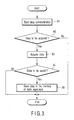
- FIG. 3 is a flowchart showing the sequence of operations the data-processing apparatuses provided in the system performs to store data.
- the communication section 11 starts data communication with the server computer (Step). It is then determined whether apparatus 10 should acquire data the server computer discloses on the Internet (Step A2). If YES in Step A2, the communication section 11 transmits a request for the data. In response to the request, the server computer transmits the data. The data-processing apparatus 10 receives the data, which is written into the RAM 13 and temporarily stored therein (Step A3).
- Step A4 it is determined whether the data thus acquired should be saved or not (Step A4). If YES in Step A4, the data is transferred from the RAM 13 via the interface section 14 to the radio apparatus 20 (Step A5).
- the radio apparatus 20 operates to determine where the data should be stored and to perform data management.
- FIG. 4 is a flowchart showing the first sequence of operations the radio apparatus 20 performs to store data.
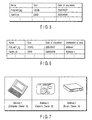
- the radio apparatus 20 Upon receiving the data from the data-processing apparatus 10, the radio apparatus 20 determines whether the RAM 22 has a vacant area large enough to store the data received at the interface section 21 (Step B1). If YES in Step B1, the data is stored into the RAM 22 (Step B2). Further, information about this data is stored into the RAM 22, too (Step B3). The information contains, for example, the name of the data, the size thereof and the acquisition date thereof, as is illustrated in FIG. 5.
- Step B1 If NO in Step B1, that is, if the RAM 22 has no vacant area large enough to store the data received, it is determined whether any peripheral apparatus 30 of the owner of the radio apparatus 20 is located near the data-processing apparatus 10 (Step B4). If NO in Step B4, the radio apparatus 20 generates the data representing this fact. This data is supplied from the interface section 21 to the data-processing apparatus 10, causing the apparatus 10 to generate an error message (Step B5).
- Step B4 it is determined whether the RAM 32 of the apparatus 30 has a vacant area large enough to store the data (Step B6). This decision is made by means of radio communication via the radio section 23. If NO in Step B6, the operation returns to Step B4. In Step B4 it is determined again whether any peripheral apparatus 30 of the owner is located near the data-processing apparatus 10.
- Step B6 the data is transmitted from the radio apparatus 20 to the peripheral apparatus 30 as the radio section 23 operates (Step B7).
- the data is stored into the RAM 32 (Step B8).
- the information about this data is stored into the RAM 22 of the radio apparatus 20 (Step B9).
- the information stored in the RAM 22 contains the various data items shown in FIG. 6. More correctly, the information contains the addresses to which the data has been transferred, in addition to the data items shown in FIG. 5.
- Step B4 it is determined in Step B4 whether any peripheral apparatus 30 of the owner of the radio apparatus 20 is located near the data-processing apparatus 10. It will be explained how to make this decision.
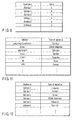
- the RAM 22 of the radio apparatus 20 stores the table of FIG. 8, which shows the relation between these addresses and the owners of the peripheral apparatuses 30.
- the table of FIG. 8 is referred to, thereby to identify the owner of the apparatus 30 with the address assigned to the peripheral apparatus 30. If the owner is identified to be one registered in the RAM 22, he or she is determined to be the owner of the radio apparatus 20, too.
- the user utilizes, for example, a dedicated utility program.
- the user first inserts the radio apparatus 20 into the slot of the computer in which the utility program is executed and then operates the computer, thus writing the contents into the RAM 22 via the user interface provided by the utility program.
- Other data tables to be held in the RAM 22 are input in similar methods.
- the peripheral apparatuses 30 include not only the owner's apparatus, but also other persons' apparatuses, the data transferred from the data-processing apparatus 10 is reliably stored in the RAM 22 of the radio apparatus 20 or in the RAM 32 of the owner's peripheral apparatus 30.
- the user need not remember which data item is stored in the peripheral apparatus 30 or where it is stored in the apparatus 30. This makes it easy for the user to use the data management system.
- each data-processing apparatus 10 or each peripheral apparatus 30 may comprise a unit for registering the owner of the apparatus 30 and the address assigned to the owner.
- the unit may be one that displays instructions, showing the user how to register the owner and the address assigned to the owner.
- the name of the owner and the address of the owner, both input by the user may be stored into the RAM 22 of the radio apparatus 20 via the interface section 21 or radio section 23.
- the data about the owner of the ratio apparatus 20 can be used to determine whether the peripheral apparatus 30 owned by the owner can be used to store the data acquired by the data-processing apparatus 10.
- the data about the owner of the ratio apparatus 20, i.e., the name and address of the owner, may be transferred from the data-processing apparatus 10 to the radio apparatus 20, not stored in the RAM 22 of the radio apparatus 20. If this is the case, the peripheral apparatus 30 owned by the owner of the apparatus 10, into which the radio apparatus 20 is inserted, can be identified as one in which the data should be saved.
- data about the owner of the ratio apparatus 20 is stored into the RAM 22 of the radio apparatus 20, data can be stored into the peripheral apparatus 30 owned by the owner A of the radio apparatus 20 even if the apparatus 20 is inserted in the data-processing apparatus 10 of the other person B or C. If the data about the owner of the ratio apparatus 20 is transferred from the data-processing apparatus 10 to the radio apparatus 20, data can be stored into the peripheral apparatus 30 of the owner A if the radio apparatus 20 is inserted in the data-processing apparatus 10 of the owner A; and data can be stored into the peripheral apparatus 30 of the owner B if the radio apparatus 20 is inserted in the data-processing apparatus 10 of the owner B.
- the second sequence of operations differs from the first sequence, in that any peripheral apparatus 30 that can store data is searched for, not storing the data transferred from the data-processing apparatus 10 into the RAM 22.
- the radio apparatus 20 can operate in two modes. In the first mode, the data transferred from the apparatus 10 is stored into the RAM 22. In the second mode, the data is stored into the RAM 32 of the peripheral apparatus 30. (The second mode is the second sequence of operations.)
- the radio apparatus 20 would not operate in both the first mode and the second mode. Hence, the user can select the RAM 22 of the radio apparatus 20 or the RAM 32 of the peripheral apparatus 30, to store the data transferred from the data-processing apparatus 10.
- the interface section 21 receives the data from the data-processing apparatus 10.
- the radio section 23 effects radio communication with the peripheral apparatuses 30, determining whether any peripheral apparatus 30 is located near the radio apparatus 20 (Step C1). If NO in Step C1, the data indicating this fact is supplied via the interface section 21 to the data-processing apparatus 10, which generates an error message (C2).
- Step C1 If YES in Step C1, or if any peripheral apparatus 30 is located near the radio apparatus 20, the radio section 23 performs radio communication with the apparatus 30, thereby the radio apparatus 20 determines whether the RAM 32 of the apparatus 30 has a vacant area large enough to store the data transferred from the data-processing apparatus 10 (Step C3). If NO in Step C3, the operation returns to Step C1, in which any other peripheral apparatus 30 located near the radio apparatus 20 is searched for.
- Step C3 If YES in Step C3, or if the RAM 32 has a vacant area large enough to store the data, the radio section 23 transmits the data to the peripheral apparatus 30 (Step C4). In the apparatus 30, the data is stored into the RAM 32 (Step C5). Further, the information about this data is saved in the RAM 22 of the radio apparatus 20 (Step C6).
- the third sequence of operations differs from the second in that a peripheral apparatus 30 that should save the data transferred from the data-processing apparatus 10 is determined in accordance with the attribute of the data.
- the radio apparatus 20 receives the data from the data-processing apparatus 10, at its interface section 21.
- the apparatus 20 acquires the attribute of the data (Step D1).
- the radio section 23 of the apparatus 20 achieves radio communication with the peripheral apparatuses 30, thereby determining whether any apparatus 30 exists near the data-processing apparatus 10 (Step D2). If NO in Step D2, the radio apparatus 20 generates the data representing this fact.
- This data is supplied from the interface section 21 to the data-processing apparatus 10, which generates an error message (Step D3).
- Step D4 the radio apparatus 20 determines whether the data can be saved in the peripheral apparatus 30 (Step D4).
- the RAM 22 of the radio apparatus 20 stores the tables shown in FIGS. 11 and 12, respectively.
- the table 11 of FIG. 11 is referred to, determining which type of a peripheral apparatus can save the data whose attribute has been acquired in Step D1.
- the table of FIG. 12 is referred to, determining whether the peripheral apparatus 30 is of such a type.
- Step D4 If NO in Step D4, that is, if the data cannot be saved in the peripheral apparatus 30, the operation returns to Step D2, in which other peripheral apparatus 30 located near the radio apparatus 20 is searched for. If YES in Step D4, the radio section 23 performs radio communication with the peripheral apparatuses 30, thereby the radio apparatus 20 determines whether the RAM 32 of the apparatus 30 has an area large enough to store the data (Step D5). If NO in Step D5, the operation returns to Step D2, in which another peripheral apparatus 30 located near the apparatus 20 is search for.
- Step D5 If YES in Step D5, or if the RAM 32 has an area large enough to store the data, the radio section 23 transfers the data by radio to the peripheral apparatus 30 (Step D6). In the apparatus 30, the data is saved in the RAM 32 (Step D7). Moreover, the information about this data is stored into the RAM 23 (Step D8).
- the data items transferred from the data-processing apparatus 10 can be stored into specific storage areas of the RAM 32 of the peripheral apparatus 30, in accordance with the attributes of the data items, such as document, music, image or the like. This makes it easy for the user to use the data management system.
- the fourth sequence of operations differs from the second in that the radio apparatus 20 transmits the data transferred it has received from the data-processing apparatus 10, to any peripheral apparatus 30 that can the data.
- the radio apparatus 20 receives, at its interface section 21, the data transferred from the data-processing apparatus 10.
- the radio section 23 effects radio communication with the peripheral apparatuses 30, determining whether any peripheral apparatus 30 of the owner of the apparatus 20 exists near the radio apparatus 20 (Step E1). If YES in Step E1, the radio section 23 performs radio communication with the peripheral apparatus 30,thereby the radio apparatus 20 determines whether the RAM 32 has an area large enough to store the data (Step E2). If YES in Step E2, the radio apparatus 20 is connected to the peripheral apparatus 30 by a radio network (Step E3). The operation then returns to Step E1. In Step E1, the radio apparatus 20 determines whether any other peripheral apparatus 30 of the owner of the apparatus 20 exists near the radio apparatus 20.
- Step E3 The sequence of Steps E1 to E3 is repeated until peripheral apparatuses 30 are not detected near the radio apparatus 20. In other words, these steps are repeated until it is determined in Step E1 that peripheral apparatus 30 of the owner of the apparatus 20 does not exist near the radio apparatus 20. Thereafter, it is determined whether at least one peripheral apparatus 30 exists that constitutes a radio network, jointly with the radio apparatus 20 (Step E4). If NO in Step E4, the apparatus 20 generates the data representing this fact. This data is supplied from the interface section 21 to the data-processing apparatus 10, which generates an error message (Step E5).
- Step E4 If YES in Step E4, or if at least one peripheral apparatus 30 exists, constituting a radio network, jointly with the radio apparatus 20, the radio section 23 transmits the data to the peripheral apparatus 30 (Step E6).
- the data is stored into the RAM 32 (Step E7). Then, the information about the data is saved in the RAM 32 (Step E8).
- the same data can therefore be stored in two or more peripheral apparatuses 30.
- the data can be acquired from any one of the peripheral apparatuses 30 that happens to exist near the radio apparatus 20.
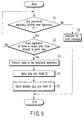
- the interface section 14 acquires the information stored in the RAM 22 of the radio apparatus 20, and the output section 16 displays the information (Step F1). Seeing the information displayed, the user selects any desired item of the information (Step F2). The data item selected is transferred via the interface section 14 to the radio apparatus 20. In the radio apparatus 20, the information stored in the RAM 22 is referred to. It is thereby determined where the data item selected is stored, in the radio apparatus 20 or any one of the peripheral apparatuses 30 (Step F3).
- Step F4 If the data item is stored in the apparatus 20, it is transferred via the interface section 21 to the data-processing apparatus 10 (Step F4). If the data item is stored in any one of the peripheral apparatuses 30, the radio section 23 of the apparatus 30 acquires the data item from the RAM 32 and transfers it via the interface section 21 to the data-processing apparatus 10 (Step F5).
- the output section 16 outputs the data that has been transferred from the radio apparatus 20 via the interface section 14 (Step F6).
- the radio apparatus 20 with a memory device automatically stores and controls the data the data-processing apparatus 10 has acquired.
- the apparatus 20 can store data in an appropriate memory device. The user need not designate a memory device into which the data should be stored.
Landscapes
- Engineering & Computer Science (AREA)
- Theoretical Computer Science (AREA)
- Physics & Mathematics (AREA)
- General Engineering & Computer Science (AREA)
- General Physics & Mathematics (AREA)
- Mobile Radio Communication Systems (AREA)
- Information Transfer Between Computers (AREA)
- Information Retrieval, Db Structures And Fs Structures Therefor (AREA)
- Telephonic Communication Services (AREA)
Applications Claiming Priority (2)
| Application Number | Priority Date | Filing Date | Title |
|---|---|---|---|
| JP2000291292 | 2000-09-25 | ||
| JP2000291292A JP2002099475A (ja) | 2000-09-25 | 2000-09-25 | 無線装置、データ管理システム及びデータ管理方法 |
Publications (1)
| Publication Number | Publication Date |
|---|---|
| EP1191451A2 true EP1191451A2 (fr) | 2002-03-27 |
Family
ID=18774384
Family Applications (1)
| Application Number | Title | Priority Date | Filing Date |
|---|---|---|---|
| EP01120807A Withdrawn EP1191451A2 (fr) | 2000-09-25 | 2001-08-29 | Appareil radio pour stocker et gérer des données à traiter par des appareils de traitement de données |
Country Status (3)
| Country | Link |
|---|---|
| US (1) | US20020037745A1 (fr) |
| EP (1) | EP1191451A2 (fr) |
| JP (1) | JP2002099475A (fr) |
Cited By (2)
| Publication number | Priority date | Publication date | Assignee | Title |
|---|---|---|---|---|
| US7376757B2 (en) | 2003-03-31 | 2008-05-20 | Matsushita Electric Industrial Co., Ltd. | Driverless interfacing of a removable device with a digital product |
| US8265695B2 (en) | 2005-04-29 | 2012-09-11 | Telecom Italia S.P.A. | Method for the management of a peripheral unit by a sim card in wireless communication terminals, and peripheral unit for implementing the method |
Families Citing this family (16)
| Publication number | Priority date | Publication date | Assignee | Title |
|---|---|---|---|---|
| CN1204722C (zh) * | 2002-01-26 | 2005-06-01 | 深圳市朗科科技有限公司 | 一种用于数据处理系统的无线数据通信方法及装置 |
| US7003316B1 (en) * | 2002-02-22 | 2006-02-21 | Virtual Fonlink, Inc. | System and method for wireless transactions |
| JP3937905B2 (ja) | 2002-04-26 | 2007-06-27 | キヤノン株式会社 | 仮想メモリ無線通信システムおよびデータ蓄積サービスの管理方法 |
| GB2393078B (en) * | 2002-09-16 | 2005-12-21 | Samsung Electronics Co Ltd | A wireless communication device and a method for controlling the same |
| EP1450297A1 (fr) * | 2002-10-04 | 2004-08-25 | Sony Corporation | Systeme et procede de gestion de donnees, dispositif de memoire virtuelle, procede de commande de la memoire virtuelle, dispositif de lecture/ecriture, dispositif d'acces a un module a circuit integre et procede de commande de l'acces a un module a circuit integre |
| US20040192380A1 (en) * | 2003-03-28 | 2004-09-30 | Institute For Information Industry | Multi-interface wireless storage device |
| JPWO2005048111A1 (ja) * | 2003-11-13 | 2007-11-29 | 松下電器産業株式会社 | 半導体メモリカード |
| EP1533772A3 (fr) | 2003-11-20 | 2006-07-26 | Canon Kabushiki Kaisha | Processeur d'information et méthode de commande associée |
| US7240836B2 (en) * | 2004-04-23 | 2007-07-10 | Virtual Fonlink, Inc. | Enhanced system and method for wireless transactions |
| TWM263695U (en) * | 2004-06-11 | 2005-05-01 | Uniwill Comp Corp | Separation radio info transmission system |
| TWI280770B (en) * | 2004-07-09 | 2007-05-01 | Inventec Appliances Corp | System against illegal use of mobile phone |
| KR101048432B1 (ko) * | 2004-10-05 | 2011-07-11 | 엘지전자 주식회사 | 이동통신 단말기의 파일을 이용한 메시지 전송 방법 |
| US7464213B2 (en) * | 2004-12-24 | 2008-12-09 | Sony Corporation | Memory adapter and unit including independent radio circuit and removable memory store |
| US20060264237A1 (en) * | 2005-05-20 | 2006-11-23 | Research In Motion Limited | Wireless accessory requesting information from a handheld device |
| WO2008041315A1 (fr) * | 2006-10-02 | 2008-04-10 | Pioneer Corporation | Dispositif d'affichage d'images |
| USD905059S1 (en) | 2018-07-25 | 2020-12-15 | Square, Inc. | Card reader device |
Family Cites Families (7)
| Publication number | Priority date | Publication date | Assignee | Title |
|---|---|---|---|---|
| US6108534A (en) * | 1996-09-30 | 2000-08-22 | Ericsson Inc. | Data and message retrieval communications system including remote receive-only communication unit |
| EP0867844A3 (fr) * | 1997-03-26 | 1999-12-08 | Nec Corporation | Appareil de communication ayant différentes annonces d'appel selon l'identité de l'appelant |
| JP4564601B2 (ja) * | 1998-03-20 | 2010-10-20 | キヤノン株式会社 | 画像データ記憶装置及び制御方法 |
| JP3185766B2 (ja) * | 1998-07-29 | 2001-07-11 | 日本電気株式会社 | 送受信カード |
| JP3617930B2 (ja) * | 1998-09-30 | 2005-02-09 | 株式会社東芝 | 無線携帯端末装置、ゲートウェイ装置及び通信処理制御方法 |
| JP3580710B2 (ja) * | 1998-10-15 | 2004-10-27 | 松下電器産業株式会社 | 分散型インターネットブラウザシステムとその表示方法 |
| US6466804B1 (en) * | 2000-08-25 | 2002-10-15 | Motorola, Inc. | Method and apparatus for remote multiple access to subscriber identity module |
-
2000
- 2000-09-25 JP JP2000291292A patent/JP2002099475A/ja active Pending
-
2001
- 2001-08-29 EP EP01120807A patent/EP1191451A2/fr not_active Withdrawn
- 2001-09-07 US US09/947,538 patent/US20020037745A1/en not_active Abandoned
Cited By (2)
| Publication number | Priority date | Publication date | Assignee | Title |
|---|---|---|---|---|
| US7376757B2 (en) | 2003-03-31 | 2008-05-20 | Matsushita Electric Industrial Co., Ltd. | Driverless interfacing of a removable device with a digital product |
| US8265695B2 (en) | 2005-04-29 | 2012-09-11 | Telecom Italia S.P.A. | Method for the management of a peripheral unit by a sim card in wireless communication terminals, and peripheral unit for implementing the method |
Also Published As
| Publication number | Publication date |
|---|---|
| US20020037745A1 (en) | 2002-03-28 |
| JP2002099475A (ja) | 2002-04-05 |
Similar Documents
| Publication | Publication Date | Title |
|---|---|---|
| EP1191451A2 (fr) | Appareil radio pour stocker et gérer des données à traiter par des appareils de traitement de données | |
| US20020010868A1 (en) | Data accumulation system | |
| EP2160915B1 (fr) | Entrée automatique d'informations de contact par détection de position | |
| US20070129959A1 (en) | Virtual business card and method for sharing contact information electronically | |
| CN108616446B (zh) | 一种消息显示方法、移动终端 | |
| US8364793B2 (en) | Communication terminal, user data transferring system and user data transferring method | |
| US6412689B1 (en) | Communication equipment and method for business card information interchange | |
| KR20050017316A (ko) | 카메라를 구비한 휴대용 단말기에서의 주소록 관리 장치및 방법 | |
| KR20060083102A (ko) | 위치정보를 가지는 이미지파일 관리시스템 및 그 방법,휴대용 단말기 | |
| JP2002197431A (ja) | 通信装置、データ転送方法、及びデータ転送プログラムが記録された記録媒体 | |
| KR100408751B1 (ko) | 사진을 포함하는 전자 명함 생성 시스템 및 방법 | |
| US8856418B2 (en) | Receiving station for mobile host equipment, and method of sharing resources using the station | |
| JP2003163736A (ja) | カメラ付き携帯端末 | |
| JP5035201B2 (ja) | 携帯端末情報管理システム、携帯端末情報管理機能付き携帯端末装置、携帯端末情報管理機能付き接続装置、携帯端末情報管理方法、及び携帯端末情報管理プログラム | |
| KR100456616B1 (ko) | 통신 단말기와 이를 이용한 개인 정보 송수신 시스템 및정보 송수신 방법 | |
| EP1405465B1 (fr) | Identification de participants multilingues dans des communications de reseau | |
| US20060288310A1 (en) | System and method of dynamically displaying a function icon set in a handheld data processing device | |
| US20030210238A1 (en) | Digital image display stand, digital image display system, and use method of digital image display stand | |
| JP2001358753A (ja) | 通信端末装置のデータ保存方法 | |
| JPH08317038A (ja) | 電話機システム | |
| KR20020084665A (ko) | 휴대형 이동 전화단말기에 저장된 연락처 자료 백업서비스 방법 | |
| JPH1174962A (ja) | 携帯電話機 | |
| KR20030083138A (ko) | 이동 학습 시스템 | |
| JP2002368902A (ja) | 情報トランクシステム | |
| SE513613C2 (fr) |
Legal Events
| Date | Code | Title | Description |
|---|---|---|---|
| PUAI | Public reference made under article 153(3) epc to a published international application that has entered the european phase |
Free format text: ORIGINAL CODE: 0009012 |
|
| 17P | Request for examination filed |
Effective date: 20010829 |
|
| AK | Designated contracting states |
Kind code of ref document: A2 Designated state(s): AT BE CH CY DE DK ES FI FR GB GR IE IT LI LU MC NL PT SE TR |
|
| AX | Request for extension of the european patent |
Free format text: AL;LT;LV;MK;RO;SI |
|
| STAA | Information on the status of an ep patent application or granted ep patent |
Free format text: STATUS: THE APPLICATION HAS BEEN WITHDRAWN |
|
| 18W | Application withdrawn |
Effective date: 20041007 |