EP1202168A2 - Vorrichtung und Verfahren zur dynamischen Verifikation des Kompatibilität eines Benutzerschnittstelleresources - Google Patents
Vorrichtung und Verfahren zur dynamischen Verifikation des Kompatibilität eines Benutzerschnittstelleresources Download PDFInfo
- Publication number
- EP1202168A2 EP1202168A2 EP01125653A EP01125653A EP1202168A2 EP 1202168 A2 EP1202168 A2 EP 1202168A2 EP 01125653 A EP01125653 A EP 01125653A EP 01125653 A EP01125653 A EP 01125653A EP 1202168 A2 EP1202168 A2 EP 1202168A2
- Authority
- EP
- European Patent Office
- Prior art keywords
- resource
- resource module
- module
- alternate
- default
- Prior art date
- Legal status (The legal status is an assumption and is not a legal conclusion. Google has not performed a legal analysis and makes no representation as to the accuracy of the status listed.)
- Withdrawn
Links
Images


Classifications
-
- G—PHYSICS
- G06—COMPUTING OR CALCULATING; COUNTING
- G06F—ELECTRIC DIGITAL DATA PROCESSING
- G06F9/00—Arrangements for program control, e.g. control units
- G06F9/06—Arrangements for program control, e.g. control units using stored programs, i.e. using an internal store of processing equipment to receive or retain programs
- G06F9/44—Arrangements for executing specific programs
- G06F9/445—Program loading or initiating
-
- G—PHYSICS
- G06—COMPUTING OR CALCULATING; COUNTING
- G06F—ELECTRIC DIGITAL DATA PROCESSING
- G06F9/00—Arrangements for program control, e.g. control units
- G06F9/06—Arrangements for program control, e.g. control units using stored programs, i.e. using an internal store of processing equipment to receive or retain programs
- G06F9/44—Arrangements for executing specific programs
- G06F9/451—Execution arrangements for user interfaces
- G06F9/454—Multi-language systems; Localisation; Internationalisation
Definitions
- the present invention relates to computer software and, in particular, to a system and method for dynamically verifying the compatibility of resource modules within an operating system.
- an interface is the point at which a connection is made between two elements so that they can work with each other or exchange information.
- an interface is typically software that enables a program to work with the user, another program including an operating system, and the computer's hardware.
- An interface that enables a program to work with a user is called a user interface and can be a command-line interface, menu-driven, or a graphical user interface.
- the user interface should support multiple languages.
- a software provider can provide multiple-language user interfaces by manually customizing the user interface software code to satisfy the specific language requirements of each supported language. This approach is generally inefficient, however, in that the software provider must maintain separate software code bases for each of the supported languages. Accordingly, the software provider must independently support each separate software code base, such as providing technical support, providing updates, and/or providing patches.
- Another approach for facilitating the use of a common user interface in different countries/regions involves providing an operating system with a common user interface software code base in conjunction with various language-specific resource libraries.
- One such system is Microsoft Corporation's multilingual user interface ("MUI").
- MUI multilingual user interface
- the operating system maintains a common user interface code base, a default language resource module, and a number of alternate language-specific resource modules for displaying some or all of the user interface objects in an alternate language. For example, if the user selects Spanish as a desired language, the operating system loads the system resources from a Spanish-specific resource module.
- Computer operating systems typically provide a variety of functions to software applications running within the operating system by referring to various resource library files.
- An operating system often maintains a number of resource modules, with each resource module consisting of resources that are used by the operating system to perform particular tasks.
- a resource is an item of data or code that is shared by multiple programs or in more than one place in a program, such as a dialog box, a sound effect, or a font in a windowed environment.
- Resource data usually consists of the data structures, templates, definition procedures, management routines, icon maps, and so forth associated with a particular resource, such as a menu, window, or dialog box.
- the operating system includes a resource loader that obtains and loads resources from the desired language-specific resource module.
- the resource loader selects between loading resources from a default resource module, typically encoded in English, or from a designated language-specific alternate resource module. Typically, if a desired alternate resource module is unavailable, the resource loader selects the default resource module.
- operating system resource modules may be periodically updated.
- the operating system updates are identified by version number that allows for the determination of which updates have been applied.
- an original operating system resource module may be identified by a version number, such as "version 5.0".
- version 5.0 As the operating system resource modules are updated, the updated resource module (which includes resource information) would be labeled "version 5.2.”
- a resource module update may not necessarily modify the resources contained within the resource. Additionally, because an operating system may utilize a large number of resource modules, most operating system updates are at least initially limited to updating only the version of the default resource modules and not each alternate resource module.
- the resource loader In the above-described example of an MUI-based operating system having a resource loader, the resource loader generally must verify whether a resource to be loaded from an alternate resource module is compatible with the most current version of the operating system. In a conventional MUI-based operating system, this is accomplished by comparing the version information of the alternate resource module with the current version of the operating system. For example, if a resource loader receives a request to load a resource from an alternate resource module having a version label of "3.0", while the default operating system resource modules have been updated to a version label of "3.3", the resource loader will not load the resource from the alternate resource module because it assumes that the alternate resource module is not compatible with the current version of the operating system. Thus, the resource loader defaults to loading resources from the updated default resource module. Consequently, the MUI functionality is reduced because the operating system returns to the default language after the upgrade, even though the alternate resource module resources may still be valid.
- a method for dynamically verifying whether the resource content of a resource module is compatible with the most current version of the operating system.
- the resource loader verifies that the resource modules remain compatible with the operating system prior to loading a resource from an alternate resource module.
- the operating system has a multilingual user interface and utilizes resource modules that are language specific.
- a resource loader obtains a request to load a resource from an alternate resource module, where the alternate resource module corresponds to a specific interface.
- the resource loader obtains the resource content of the default resource module from which the alternate resource module was localized.
- the resource loader obtains the resource content of the current default resource module.
- the resource loader compares the resource content of the default resource module from which the alternate resource module was localized with the resource content of the current default resource module. If the resource content of the default resource module from which the alternate resource module was localized is the same as the resource content of the current default resource module, the resource loader loads the alternate resource module.
- a computer system for dynamically verifying that a resource module is compatible with a current version of an operating system.
- the computer system includes a resource loader for loading a resource from a resource module, a default resource module containing at least one resource, an alternate resource module containing one or more resources localized from a default resource module, and a unique number that represents the resource content of the default resource module from which the alternate resource module was localized. This unique number can include can include a checksum.
- the resource loader loads a resource from the alternate resource module when the resource content from which the alternate resource module was localized is the same as the resource content of the current default resource module.
- a computer-readable medium having a computer-executable module for dynamically verifying that a resource is compatible with a current version of an operating system is provided.
- the invention provides a system and method for dynamically verifying resource compatibility with an operating system.
- the operating system has a multilingual user interface and the resource modules are language specific.
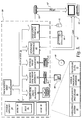
- FIGURE 3 illustrates an example of a suitable computing system environment in which the invention may be implemented.
- the computing system environment is only one example of a suitable computing environment and is not intended to suggest any limitation as to the scope of use or functionality of the invention. Neither should the computing environment be interpreted as having any dependency requirement relating to any one or combination of components illustrated in the exemplary operating environment.
- the invention is operational in numerous other general-purpose or special computing system environments or configurations.
- Examples of well known computing systems, environments, and/or configurations that may be suitable for implementing the invention include, but are not limited to, personal computers, server computers, laptop devices, multiprocessor systems, microprocessor-based systems, network PCs, minicomputers, mainframe computers, distributed computing environments that include any of the above systems, or the like.
- the invention may be described in the general context of computer-executable instructions, such as program modules, being executed by a computer.
- program modules include routines, programs, objects, components, data structures, etc. that perform a particular task or implement particular abstract data types.
- the invention may also be practiced in distributed computing environments where tasks are performed by remote processing devices that are linked through a communications network.
- program modules may be located in both local and remote computer storage media, including memory storage devices.
- an exemplary system for implementing the invention includes a general-purpose computing device in the form of a computer 20.
- Components of a computer 20 include, but are not limited to, a processing unit 22, a system memory 24, and a system bus 26 that couples various system components, including the system memory, to the processor.
- the system bus may be any of several types of bus structures including a memory bus or memory controller, peripheral bus, and a local bus using any of a variety of bus architectures.
- such architectures include Industry Standard Architecture (ISA) normal capitalization bus, Micro Channel Architecture (MCA) bus, Enhanced ISA (EISA) bus, Video Electronics Standards Association (VESA) local bus, and Peripheral Component Interconnect (PCI) bus, also known as a Mezzanine bus.
- ISA Industry Standard Architecture
- MCA Micro Channel Architecture
- EISA Enhanced ISA
- VESA Video Electronics Standards Association
- PCI Peripheral Component Interconnect
- the computer 20 typically includes a variety of computer-readable media.
- Computer-readable media can be any available media that can be accessed by the computer 20 and include both volatile and nonvolatile media, removable and nonremovable media.
- Computer-readable media may comprise computer storage media and communication media.
- Computer storage media include, but are not limited to, RAM, ROM, EEPROM, flash memory or other memory technology, CD-ROM, Digital Versatile Disk (DVD) or other optical disk storage, magnetic cassettes, magnetic tape, magnetic disk storage or other magnetic storage devices, or any other medium that can be used to store the desired information and which can be accessed by the computer 20.
- the communication media typically embody computer-readable instructions, data structures, program modules, or other data in a modulated data signal, such as a carrier wave or other transport mechanism, and include any information delivery media.
- modulated data signal means a signal that has one or more of its characteristics set or changed in such a manner to encode information in the signal.
- communication media include wired media, such as a wired network or direct wired connection, and wireless media, such as acoustic, RF, infrared, and other wireless media. Combinations of any of the above should also be included within the scope of computer-readable media.
- the system memory 24 includes computer storage media in the form of volatile and/or nonvolatile memory, such as read-only memory (ROM) 28 and random-access memory (RAM) 30.
- ROM read-only memory
- RAM random-access memory
- BIOS basic input/output system
- RAM 30 typically contains data and/or program modules that are immediately accessible to and/or presently being operated on by the processing unit 22.
- FIGURE 3 illustrates an operating system 46, application programs 48, other program modules 50, and program data 52.
- the computer 20 may also include removable/nonremovable, volatile/nonvolatile computer storage media.
- FIGURE 3 illustrates a hard disk drive 36 that reads from or writes to nonremovable, nonvolatile magnetic media 34, a magnetic drive 38 that reads from or writes to a removable, nonvolatile magnetic disk 40, and an optical disk drive 42 that reads from or writes to a removable, nonvolatile optical disk 44, such as CD-ROM or other optical media.
- the hard disk drive 36, magnetic disk drive 38, and optical disk drive 42 may be connected to the system bus 26 by a hard disk drive interface 54, a magnetic disk drive interface 56, and an optical drive interface 60, respectively.
- the hard disk drive 34, magnetic disk drive 38, and optical disk drive 42 are typically connected to the system bus 26 by a Small Computer System Interface (SCSI).
- SCSI Small Computer System Interface
- the drives and their associated computer storage media provide storage of computer-readable instructions, data structures, program modules and other data for the computer 20.
- the hard disk drive 36 is illustrated as storing the operating system 46, application programs 48, other programs 50, and program data 52. Note that these components can either be the same as or different from the operating system 46, the other program modules 50, and the program data 52.
- a user may enter commands and information into the computer 20 through input devices such as a keyboard 60 and a pointing device 62, commonly referred to as a mouse, trackball, or touchpad.
- Other input devices may include a microphone, a joystick, a game pad, a satellite dish, a scanner, or the like.
- These and other input devices are often connected to the processing unit 22 through user input interface 64 and may be connected by other interface and bus structures, such as a parallel port, game port, or other universal serial bus (USB).
- USB universal serial bus
- the computer 20 may operate in a network environment using logical connections to one or more remote computers.
- the remote computer 65 may be a personal computer, a server, a router, a network PC, a peer device or other common network node, and typically includes many or all of the elements described above relative to the computer 20, although only a memory storage device has been illustrated in FIGURE 3.
- the logical connections depicted in FIGURE 3 include a local area network (LAN) 66 and a wide area network (WAN) 67, but also include other networks.
- LAN local area network
- WAN wide area network
- Such network environments are commonplace in office, enterprise-wide computer networks, intranets, and the Internet.
- the computer 20 may be configured such that at least one network connection is noncontinuous. Accordingly, the computer 20 would be unable to communicate with the remote computer 65 throughout a period of time that the network connection is disabled. Such a configuration is described generally as an "off-line" configuration.
- the computer 20 When used in a LAN network environment, the computer 20 is connected to the LAN 77 through a network interface adapter 68. When used in a WAN network environment, the computer typically includes a modem or other means for establishing communications over the WAN 67, such as the Internet.
- the modem which may be internal or external, may be connected to the system bus 26 via the serial port interface or other appropriate mechanism.
- program modules depicted relative to the computer 20, or portions thereof may be stored in the remote memory storage device.
- FIGURE 3 illustrates remote application programs 48 as residing on memory device 24. It will be appreciated that the network connections shown are exemplary and other means of establishing communication between the computers may be used.
- many other internal components of the computer 20 are not shown, those of ordinary skill will appreciate that such components and their interconnection are well known. Accordingly, additional details concerning the internal construction of the computer 20 need not be disclosed in connection with the present invention.
- program modules such as the operating system 46, the application programs 48, and data 52 are provided to the computer 20 via one of its memory storage devices, which may include ROM 28, RAM 30, hard disk drive 36, magnetic disk drive 38, or optical disk device 42.
- the hard disk drive 36 is used to store data 52 and the programs, including the operating system 46 and application programs 48.
- the BIOS 32 which is stored in ROM 28, instructs the processing unit 22 to load the operating system from the hard disk drive 36 into the RAM 30.
- the processing unit executes the operating system code and causes the visual elements associated with the user interface of the operating system to be displayed on the monitor.
- the program code and relevant data are read from the hard disk drive and stored in RAM 30.
- the present application is directed toward a method and system for implementing a resource loader capable of dynamically verifying resource module compatibility with an operating system.
- a resource loader capable of dynamically verifying resource module compatibility with an operating system.
- the present invention will be described in relation to a system and method for loading language-specific MUI resource sets of files, also called resource modules.
- the present invention is not limited in its application to a dynamic MUI resource module loader.
- the disclosed embodiment is only by way of example and should not be construed as limiting.
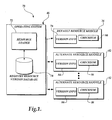
- FIGURE 1 is a block diagram illustrative of a resource loading system 70 capable of dynamically verifying the compatibility of resources being loaded from a resource module, in accordance with the present invention.
- the system 70 generally includes a resource loader 72, which is generally included as part of the operating system 46.
- the resource loader 72 has access to a registry resource version database 74 for tracking the version and location of the various operating system resources available.
- the registry resource version database 74 tracks the version information for a default resource module and one or more alternate resource modules.
- the registry resource version database 74 also tracks the version information of the default resource module with which the alternate resource module will work.
- the version information in the resource module is used to determine which resource module should be loaded.
- While one embodiment of the present invention uses the registry resource version database 74 for tracking and determining resource compatibility, those skilled in the relevant art will appreciate that many different methods for tracking resource compatibility may be utilized without departing from the scope of the present invention. Again, the present invention is not limited to any particular manner of tracking resource compatibility. For example, the present invention may be practiced by tracking resource compatibility utilizing different types of databases, such as hierarchical and relational databases, as well as different formats for database records. Additionally, the present invention may be practiced by tracking resource compatibility in a manner that does not use a database, such as storing compatibility information in the resource modules themselves.
- the registry resource version database 74 includes a record containing an application name field, an alternate resource module version field, a default resource module version field, and a resource compatibility field that can be searched utilizing indices on key fields.
- Other embodiments of the present invention may utilize different formats for records in the registry resource version database 74.
- the present invention may be practiced using a record format having a different number of fields, different types of data stored in each field, and different names for the fields.
- a default resource module 76 generally includes default resource content code and a variety of resources including data structures, templates, definition procedures, management routines, icon maps, and so forth associated with a particular resource, such as a menu, window, or dialog box, and is typically in English.
- the resource content of the default resource module may consist of data only or code only.
- the default resource module 76 also includes an identifier including the version information 78 of the operating system version with which the default resource module 76 is compatible.
- the default resource module 76 includes a unique number that represents and identifies the resource content contained within the default resource module 76.
- the unique numerical identifier is a checksum 80 of the resource contents within the module.
- the checksum is based only on the resource content of a resource module. During the generation of the checksum, code and version information are excluded in the generation process, because a resource module may be updated with changes to its code or version number without any change to the resource content.
- a hashing routine is utilized to provide a unique numerical identifier of the contents of the resource files.
- Hashing is the process of mapping information to a numerical value by a transformation known as a hashing function.
- a hash total can be used as an error-checking value derived from the addition of a set of numbers taken from data (not necessarily numeric data) that is to be processed or manipulated in some way. After processing, the hash total is recalculated and compared with the original total. If the two do not match, the original data has been changed in some way.
- the values returned from a hashing routine are generally described as checksums.
- an MD5-message digest hashing algorithm is utilized to generate checksums.
- the MD5-message digest algorithm takes as input a message of arbitrary length and produces as output a 128-bit fingerprint or message digest of the input.
- the MD5-message digest algorithm is well known to those of ordinary skill in the art and will not be described in further detail. It will be readily understood by one skilled in the relevant art that any one of a variety of hashing routines for representing and comparing different resources may be practiced with the present invention. It will also be understood by one skilled in the art that different ways of representing and comparing different resources may be practiced with the present invention.
- the resource loader 72 additionally communicates with one or more alternate resource modules 82.
- An alternate resource module contains resource content that has been localized from a default resource module 76.
- localization is the process of altering a program so that it is appropriate for the area in which it is used.
- developers of a program must localize the program for different countries or languages because the characters in one language might be incorrect in another.
- the alternate resource modules 82 also include version information 84 and information representing the resource content of the default resource module 76 from which the alternate resource modules 82 were localized.
- the alternate resource modules 82 include a checksum 86 of the default resource module 76.
- the alternate resource modules 82 do not contain binary executable code and contain only localized resource information, version information 84, and the resource content of the default resource module from which they were localized.
- alternative system configurations are considered to be within the scope of the present invention.
- the resource loader 72 obtains a call for a resource. Prior to loading the resource, resource loader 72 verifies that the resource in the alternate resource module is compatible with the operating system 46. If the version information 78 of the default language-specific resource module 76 matches the version information 84 of the alternate language-specific resource modules 82, the resource loader 72 loads the resource from the alternate language-specific modules 82. However, if the version information does not match, the resource loader dynamically determines whether the default resource content from which the desired alternate resource module was localized is the same as the most current default resource content. Specifically, the resource loader 72 compares the checksum of the resource content of the current default resource module with the checksum of the default resource module that the alternate resource module was localized from.
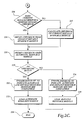
- FIGURES 2A, 2B, and 2C are flow diagrams of a dynamic resource compatibility verification and loading routine 200 in accordance with the present invention.
- the routine 200 verifies resource compatibility in two ways.
- both the default resource module 76 and the alternate resource modules 82 contain checksum information that quantifies the contents of the resources contained within each module.
- the checksum 86 quantifies the resource contents of the default resource module from which they were localized.
- additional processing should occur at block 225.
- the resource loader 72 obtains a request for an alternate resource.
- the alternate resource corresponds to a user-selected interface language and the alternate resources are language-specific.
- the resource loader 72 obtains version information 78 from the default resource module 76.
- the resource loader obtains version information 84 from the corresponding alternate resource modules 82.
- a test is performed to determine whether the default resource module version information matches the alternate resource module version information. If the version information does match, the resources included in the alternate resource module are considered to be compatible with the current operating system's user interface.
- the resource loader 72 loads the requested alternate resource module at block 210 and routine 200 terminates at block 212. Because no changes in the version numbers of the default and alternate resource modules were found, no updates were applied and no further processing is necessary to verify that the resources are compatible.
- routine 200 proceeds to decision block 213 (FIGURE 2B), which will be explained below.
- decision block 213 FIGURE 2B illustrates one embodiment of the present invention where the resource loader 72 dynamically verifies the resource compatibility utilizing the registry resource database 74 when the version information of the resources does not match.
- decision block 213 a determination is made as to whether or not the alternate resource modules 82 have been updated since the last time routine 200 was completed.
- an update of the alternate resource modules 82 is detected by determining whether or not the registry resource version database 74 contains a record for the version of the alternate resource modules 82.
- the resource loader 72 can use an index on the registry resource version database 74 where the version number of the alternate resource module is a key field. If the registry resource version database 74 contains a record for the version of the alternate resource modules 82, then no update has occurred since the last time routine 200 was completed. Otherwise, if the registry resource version database 74 does not contain a record for the version of the alternate resource modules 82, then the alternate resource modules 82 were updated since the last time routine 200 was completed.
- routine 200 proceeds to block 215.
- the resource loader 72 detects an update of the default resource module by determining whether or not the registry resource version database 74 contains a record for the version of the default resource module 76. To facilitate searching, the resource loader 72 can use an index on the registry resource version database 74 where the version of the default resource module is a key field. If the registry resource version database 74 contains a record for the version of the default resource module 76, then the default resource module has not been updated since the last time routine 200 was completed.
- routine 200 proceeds to block 214, where a new record is created for the version of the alternate resource modules 82 and the version of the default resource module 76 in the registry resource version database 74.
- the registry resource version database 74 contains compatibility information for the version of the alternate resource modules 82 and the current default resource module 76, then no resources were updated and routine 200 proceeds to decision block 216.
- the resource loader 72 uses the compatibility information stored in the registry resource version database 74 to determine whether or not the version of the alternate resource modules 82 is compatible with the version of the default resource module 76.
- the resource compatibility information field in the registry resource version database 74 is a Boolean data type that can store true and false values.
- the compatibility information field is used to store a true value if the resource content of the current default resource module is compatible with the resource content of the default resource module from which the alternate resource module was localized. Similarly, the compatibility information field is used to store a false value if the resource content of the current default resource module is not compatible with the resource content of the default resource module from which the alternate resource module was localized.
- the resource loader 72 retrieves the compatibility information stored as a true or false value in the registry resource version database 74 for the version of the alternate resource modules 82 and the version of the default resource module 76.
- routine 200 proceeds to block 218 and the resource loader 72 loads the resource from the alternate resource modules 82. If at decision block 216, the compatibility information retrieved from the registry resource version database 74 is evaluated as being false, then the current default resource module is not compatible with the version of the alternate resource modules 82. In this case where the resources are not compatible, routine 200 proceeds to block 220 and the resource loader 72 loads the resource from the default resource module 76. After loading the resource from the appropriate resource module, routine 200 terminates at block 222.
- routine 200 proceeds to FIGURE 2C.
- FIGURE 2C illustrates two ways to verify resource compatibility, according to one embodiment of the present invention. The process illustrated at block 226 is performed when the content verification information is contained within the current default resource module. Specifically, in one embodiment of the present invention, the content verification information is checksum 80 information.
- Block 225 illustrates the second of two ways to verify resource compatibility, in accordance with an embodiment of the present invention. The process illustrated in block 225 is performed when content verification information is not contained within the current default resource module. In this case, additional processing should occur to determine the resource content of the current default resource module 76, which is used for dynamic resource compatibility verification.
- the resource loader 72 calculates the checksum of the resource content of the most current default resource module 76.
- routine 200 proceeds to block 226, and the resource loader 72 obtains the default resource module checksum information 80.
- the resource loader obtains the alternate resource module checksum 84 information.
- decision block 230 a test is conducted to determine whether the checksums match. If the checksums match, routine 200 proceeds to block 232, where the registry resource version database 74 is updated to indicate that the resource content of the current default resource module is compatible with the resource content of the default resource module from which alternate resource modules 82 were localized.
- the compatibility information for the version of the alternate resource modules 82 and the version of the default resource module 76 is stored as a true value in the registry resource version database 74.
- routine 200 can use the compatibility information for the version of the alternate resource modules 82 and the version of the default resource module 76 stored in the registry resource version database 74 whenever the same versions of default resource module 76 and alternate resource modules 82 are thereafter loaded. After updating the compatibility information in the registry resource database 74 at block 232, routine 200 proceeds to block 233, where the resource loader 72 loads the resource from the alternate resource modules 82.
- routine 200 proceeds to block 234. Because the checksum values did not match, the resources have been modified in the default resource module 76. Accordingly, the alternate resource modules 82 are no longer compatible with the operating system 46.
- the registry resource version database 74 is updated to indicate that the version of the alternate resource modules 82 is not compatible with the version of the default resource module 76.
- the compatibility information for the version of the alternate resource modules 82 and the version of the default resource module 76 is stored as a false value in the registry resource version database 74.
- routine 200 can use the compatibility information stored in the registry resource database 74 to determine the resource compatibility whenever the same versions of default resource module 76 and alternate resource modules 82 are thereafter loaded. After updating the compatibility information in the registry resource version database 74 at block 234, routine 200 proceeds to block 235, where the resource loader 72 loads the resource from the default resource module 76. At this point, the routine 200 terminates at block 236.
- the resource loader 72 utilizes the compatibility information in the registry resource version database 74 to dynamically verify compatibility of the alternate resource modules 82 with the current default resource module 76.
- the resource loader 72 performs the additional processing steps shown in FIGURE 2C only when an update has occurred and version information has changed, in which case it becomes necessary to determine whether the contents of the default and alternate resource modules remain compatible.
- the present invention facilitates the utilization of MUI resource modules by dynamically verifying the compatibility of resources within the alternate resource modules 82 with the most current version of the operating system 70.
- the resource loader 72 of the present invention will continue to load and utilize resources from alternate resource modules 82, thereby continuing to provide MUI functionality even though the version information of the resource modules may differ from that of the operating system.
Landscapes
- Engineering & Computer Science (AREA)
- Software Systems (AREA)
- Theoretical Computer Science (AREA)
- Physics & Mathematics (AREA)
- General Engineering & Computer Science (AREA)
- General Physics & Mathematics (AREA)
- Human Computer Interaction (AREA)
- Stored Programmes (AREA)
- Detection And Correction Of Errors (AREA)
Applications Claiming Priority (2)
| Application Number | Priority Date | Filing Date | Title |
|---|---|---|---|
| US24433800P | 2000-10-30 | 2000-10-30 | |
| US244338P | 2000-10-30 |
Publications (2)
| Publication Number | Publication Date |
|---|---|
| EP1202168A2 true EP1202168A2 (de) | 2002-05-02 |
| EP1202168A3 EP1202168A3 (de) | 2006-08-23 |
Family
ID=22922318
Family Applications (1)
| Application Number | Title | Priority Date | Filing Date |
|---|---|---|---|
| EP01125653A Withdrawn EP1202168A3 (de) | 2000-10-30 | 2001-10-26 | Vorrichtung und Verfahren zur dynamischen Verifikation des Kompatibilität eines Benutzerschnittstelleresources |
Country Status (3)
| Country | Link |
|---|---|
| US (2) | US7178142B2 (de) |
| EP (1) | EP1202168A3 (de) |
| JP (2) | JP4510345B2 (de) |
Cited By (3)
| Publication number | Priority date | Publication date | Assignee | Title |
|---|---|---|---|---|
| WO2003096154A3 (en) * | 2002-05-07 | 2004-10-28 | Medtronic Physio Control Corp | Customization of medical device |
| KR101104035B1 (ko) | 2003-10-23 | 2012-01-09 | 마이크로소프트 코포레이션 | 자원 매니페스트 |
| WO2016053920A1 (en) * | 2014-09-30 | 2016-04-07 | Microsoft Technology Licensing, Llc | Visually differentiating strings for testing |
Families Citing this family (58)
| Publication number | Priority date | Publication date | Assignee | Title |
|---|---|---|---|---|
| US6620573B2 (en) * | 2000-11-21 | 2003-09-16 | Agfa-Gavaert | Processless lithographic printing plate |
| US7191439B2 (en) * | 2001-02-28 | 2007-03-13 | Palmsource, Inc. | Verification of software application attributes for optimal compatibility with a software system |
| US7275244B1 (en) * | 2003-03-18 | 2007-09-25 | Microsoft Corporation | System and method for incrementally saving web files to a web server using file hash values |
| EP1475611B1 (de) * | 2003-05-07 | 2007-07-11 | Harman/Becker Automotive Systems GmbH | Verfahren und Vorrichtung zur Sprachausgabe, Datenträger mit Sprachdaten |
| US7730476B2 (en) * | 2003-07-01 | 2010-06-01 | Hewlett-Packard Development Company, L.P. | Field-replaceable unit revision compatibility |
| US7725892B2 (en) * | 2003-07-01 | 2010-05-25 | Hewlett-Packard Development Company, L.P. | Field-replaceable unit revision compatibility |
| US20050257093A1 (en) * | 2004-04-21 | 2005-11-17 | Johnson Stephen L | Dynamic update of pluggable modules using a reference manager |
| US7424719B2 (en) * | 2004-08-02 | 2008-09-09 | Hewlett-Packard Development Company, L.P. | Application with multiple embedded drivers |
| US20060080082A1 (en) * | 2004-08-23 | 2006-04-13 | Geneva Software Technologies Limited | System and method for product migration in multiple languages |
| US20060136907A1 (en) * | 2004-12-20 | 2006-06-22 | Microsoft Corporation | Language-neutral and language-specific installation packages for software setup |
| US20060161910A1 (en) * | 2005-01-14 | 2006-07-20 | International Business Machines Corporation | Method, system and program product for automatically ensuring compatability of a code module loaded into a program-code environment |
| US7774195B2 (en) * | 2005-03-08 | 2010-08-10 | Microsoft Corporation | Method and system for creating, storing, managing and consuming culture specific data |
| US7653528B2 (en) * | 2005-03-08 | 2010-01-26 | Microsoft Corporation | Resource authoring incorporating ontology |
| US20060206797A1 (en) * | 2005-03-08 | 2006-09-14 | Microsoft Corporation | Authorizing implementing application localization rules |
| US7698126B2 (en) * | 2005-03-08 | 2010-04-13 | Microsoft Corporation | Localization matching component |
| US8219907B2 (en) * | 2005-03-08 | 2012-07-10 | Microsoft Corporation | Resource authoring with re-usability score and suggested re-usable data |
| US7869367B2 (en) * | 2005-11-30 | 2011-01-11 | Hewlett-Packard Development Company, L.P. | Methods and systems for checking expected network traffic |
| US7739663B2 (en) * | 2006-05-16 | 2010-06-15 | International Business Machines Corporation | Method, system and program product for validating a runtime environment |
| US8255790B2 (en) * | 2006-09-08 | 2012-08-28 | Microsoft Corporation | XML based form modification with import/export capability |
| US20080127161A1 (en) * | 2006-10-16 | 2008-05-29 | Microsoft Corporation | Environment state changes to alter functionality |
| GB0623933D0 (en) * | 2006-11-29 | 2007-01-10 | Ibm | Apparatus and method for synchronizing controller firmware download |
| US7974993B2 (en) * | 2006-12-04 | 2011-07-05 | Microsoft Corporation | Application loader for support of version management |
| WO2008081801A1 (ja) * | 2006-12-27 | 2008-07-10 | Panasonic Corporation | 情報端末、セキュリティデバイス、データ保護方法及びデータ保護プログラム |
| JP2008191786A (ja) * | 2007-02-01 | 2008-08-21 | Canon Inc | プログラム管理装置、プログラム管理方法及びプログラム |
| KR20080114510A (ko) | 2007-06-25 | 2008-12-31 | 가부시키가이샤 다까라토미 | 자동차 완구 |
| US8055496B2 (en) * | 2007-11-01 | 2011-11-08 | Microsoft Corporation | Ensuring product correctness in a multilingual environment |
| US8359599B2 (en) * | 2007-11-20 | 2013-01-22 | Ricoh Production Print Solutions LLC | Methods and systems for efficient use and mapping of distributed shared resources |
| US8156477B2 (en) * | 2007-11-21 | 2012-04-10 | Oracle America, Inc. | Method and system for assessing virtualization capability of a software application |
| US8595710B2 (en) * | 2008-03-03 | 2013-11-26 | Microsoft Corporation | Repositories and related services for managing localization of resources |
| US10755287B2 (en) * | 2008-11-25 | 2020-08-25 | Microsoft Technology Licensing, Llc | Selecting between client-side and server-side market detection |
| US20100179980A1 (en) * | 2009-01-14 | 2010-07-15 | Movidilo S.L. | Cache system for mobile communications devices |
| US8677329B2 (en) | 2009-06-03 | 2014-03-18 | Apple Inc. | Methods and apparatuses for a compiler server |
| US9117071B2 (en) | 2009-06-03 | 2015-08-25 | Apple Inc. | Methods and apparatuses for secure compilation |
| US9047103B2 (en) | 2010-12-21 | 2015-06-02 | Microsoft Technology Licensing, Llc | Resource index identifying multiple resource instances and selecting most appropriate UI resource instance based on weighted resource request conditions |
| US8495570B2 (en) * | 2010-12-23 | 2013-07-23 | Microsoft Corporation | Resource deployment based on conditions |
| US9495371B2 (en) | 2010-12-28 | 2016-11-15 | Microsoft Technology Licensing, Llc | Unified access to resources |
| US20120198436A1 (en) * | 2011-01-27 | 2012-08-02 | Preimesberger Lee A | Compatible Operating System |
| US8438532B2 (en) | 2011-04-19 | 2013-05-07 | Sonatype, Inc. | Method and system for scoring a software artifact for a user |
| US8627270B2 (en) | 2011-09-13 | 2014-01-07 | Sonatype, Inc. | Method and system for monitoring a software artifact |
| US9141378B2 (en) | 2011-09-15 | 2015-09-22 | Sonatype, Inc. | Method and system for evaluating a software artifact based on issue tracking and source control information |
| US10452620B2 (en) * | 2011-09-30 | 2019-10-22 | International Business Machines Corporation | Automatic file version verification within electronic mail |
| US8656343B2 (en) | 2012-02-09 | 2014-02-18 | Sonatype, Inc. | System and method of providing real-time updates related to in-use artifacts in a software development environment |
| JP5949904B2 (ja) * | 2012-03-29 | 2016-07-13 | ソニー株式会社 | 情報処理装置、情報処理方法、サーバ装置、検索方法および情報処理システム |
| US8825689B2 (en) | 2012-05-21 | 2014-09-02 | Sonatype, Inc. | Method and system for matching unknown software component to known software component |
| US9183012B2 (en) * | 2012-06-22 | 2015-11-10 | Microsoft Technology Licensing, Llc | Adaptive rendering based on runtime capability check |
| US9141408B2 (en) * | 2012-07-20 | 2015-09-22 | Sonatype, Inc. | Method and system for correcting portion of software application |
| US8984487B2 (en) * | 2012-09-14 | 2015-03-17 | Microsoft Technology Licensing, Llc | Resource tracker |
| US9135263B2 (en) | 2013-01-18 | 2015-09-15 | Sonatype, Inc. | Method and system that routes requests for electronic files |
| US9323514B2 (en) * | 2013-05-30 | 2016-04-26 | Microsoft Technology Licensing, Llc | Resource package indexing |
| US9971594B2 (en) | 2016-08-16 | 2018-05-15 | Sonatype, Inc. | Method and system for authoritative name analysis of true origin of a file |
| US10235156B2 (en) * | 2016-12-01 | 2019-03-19 | Entit Software Llc | Versioned extension points of graphical user interfaces |
| US10691428B2 (en) * | 2018-10-24 | 2020-06-23 | Sap Se | Digital compliance platform |
| JP7512671B2 (ja) * | 2020-05-19 | 2024-07-09 | 富士フイルムビジネスイノベーション株式会社 | ファイル管理装置およびプログラム |
| US11720550B2 (en) * | 2021-05-28 | 2023-08-08 | Microsoft Technology Licensing, Llc | Transaction log validation in a database transaction log service |
| US12393616B2 (en) | 2022-02-23 | 2025-08-19 | Adobe Inc. | Recommender for responsive visualization transformations |
| US11934442B2 (en) * | 2022-05-17 | 2024-03-19 | Xerox Corporation | Methods and systems for managing different versions of a document in a document management system |
| CN115253305B (zh) * | 2022-07-25 | 2025-03-14 | 杭州摩西科技发展有限公司 | 图片加载方法、装置、系统、电子装置和存储介质 |
| US12443621B1 (en) | 2024-05-20 | 2025-10-14 | Adobe Inc. | Using reinforcement learning to recommend data visualizations |
Family Cites Families (9)
| Publication number | Priority date | Publication date | Assignee | Title |
|---|---|---|---|---|
| US4558413A (en) * | 1983-11-21 | 1985-12-10 | Xerox Corporation | Software version management system |
| JPS6437621A (en) * | 1987-07-20 | 1989-02-08 | Ibm | Updating of program |
| EP0559221B1 (de) * | 1992-03-06 | 1999-05-12 | Microsoft Corporation | Verfahren zum Speichern von Programmen |
| CA2162033A1 (en) * | 1993-05-05 | 1994-11-10 | Alan W. Lillich | Method and apparatus for verifying compatibility between modular components in a computer system |
| US5634114A (en) * | 1993-11-18 | 1997-05-27 | Intel Corporation | Dynamic link library version negotiation |
| US6807558B1 (en) * | 1995-06-12 | 2004-10-19 | Pointcast, Inc. | Utilization of information “push” technology |
| US6717588B1 (en) * | 1998-08-14 | 2004-04-06 | Microsoft Corporation | Multilingual user interface for an operating system |
| US6252589B1 (en) * | 1998-08-14 | 2001-06-26 | Microsoft Corporation | Multilingual user interface for an operating system |
| US6591417B1 (en) * | 1999-12-30 | 2003-07-08 | International Business Machines Corporation | Method of and system for testing compatibility with an external API upgrade |
-
2001
- 2001-10-26 EP EP01125653A patent/EP1202168A3/de not_active Withdrawn
- 2001-10-29 US US10/020,341 patent/US7178142B2/en not_active Expired - Fee Related
- 2001-10-30 JP JP2001332263A patent/JP4510345B2/ja not_active Expired - Fee Related
-
2006
- 2006-05-31 US US11/444,800 patent/US7673299B2/en not_active Expired - Fee Related
-
2007
- 2007-05-23 JP JP2007136806A patent/JP4150060B2/ja not_active Expired - Fee Related
Cited By (5)
| Publication number | Priority date | Publication date | Assignee | Title |
|---|---|---|---|---|
| WO2003096154A3 (en) * | 2002-05-07 | 2004-10-28 | Medtronic Physio Control Corp | Customization of medical device |
| KR101104035B1 (ko) | 2003-10-23 | 2012-01-09 | 마이크로소프트 코포레이션 | 자원 매니페스트 |
| WO2016053920A1 (en) * | 2014-09-30 | 2016-04-07 | Microsoft Technology Licensing, Llc | Visually differentiating strings for testing |
| US9594749B2 (en) | 2014-09-30 | 2017-03-14 | Microsoft Technology Licensing, Llc | Visually differentiating strings for testing |
| US10216727B2 (en) | 2014-09-30 | 2019-02-26 | Microsoft Technology Licensing, Llc | Visually differentiating strings for testing |
Also Published As
| Publication number | Publication date |
|---|---|
| JP4510345B2 (ja) | 2010-07-21 |
| JP4150060B2 (ja) | 2008-09-17 |
| JP2007250003A (ja) | 2007-09-27 |
| US7178142B2 (en) | 2007-02-13 |
| US20020052910A1 (en) | 2002-05-02 |
| JP2002163114A (ja) | 2002-06-07 |
| EP1202168A3 (de) | 2006-08-23 |
| US20060225068A1 (en) | 2006-10-05 |
| US7673299B2 (en) | 2010-03-02 |
Similar Documents
| Publication | Publication Date | Title |
|---|---|---|
| US7673299B2 (en) | System and method for dynamically verifying the compatibility of a user interface resource | |
| US6237144B1 (en) | Use of relational databases for software installation | |
| US6125369A (en) | Continuous object sychronization between object stores on different computers | |
| US6415435B1 (en) | Method and apparatus for determining compatibility of parent classes in an object oriented environment using versioning | |
| US7934209B2 (en) | Method for firmware variable storage with eager compression, fail-safe extraction and restart time compression scan | |
| JP4972082B2 (ja) | 開発者がシステム上の周知のロケーションを容易に発見し、または拡張するための能力 | |
| US7243346B1 (en) | Customized library management system | |
| US6732267B1 (en) | System and method for performing remote BIOS updates | |
| US6907610B2 (en) | System and method for building a target operating system from a source operating system | |
| CN1794171B (zh) | 用于软件设置的语言中立和语言专用安装包 | |
| EP0938050A2 (de) | Modulares Speicherverfahren und modularer Apparat für Softwareanwendungen | |
| US20060155674A1 (en) | Image server | |
| AU2006200694B2 (en) | Method and system for creating, storing, managing and consuming culture specific data | |
| US9116770B2 (en) | Recipe-based application conversion | |
| US7493314B2 (en) | System and method for providing access to computer files across computer operating systems | |
| US20100313180A1 (en) | Systems and methods for varying software build properties using primary and supplemental build files | |
| CN1326062C (zh) | 计算机系统和方法 | |
| US7340719B1 (en) | Methods and apparatus to preserve software modifications | |
| US6592628B1 (en) | Modular storage method and apparatus for use with software applications | |
| US20060136906A1 (en) | Software product installation facilitation | |
| US6922735B2 (en) | Management of co-processor information by integrating non-program information with program information | |
| US6915512B1 (en) | Software editing with indication of format and processing state of each process of the software | |
| US7171550B1 (en) | Data structure and method for managing modules associated with a kernel | |
| US20070033190A1 (en) | Unified storage security model | |
| US7389515B1 (en) | Application deflation system and method |
Legal Events
| Date | Code | Title | Description |
|---|---|---|---|
| PUAI | Public reference made under article 153(3) epc to a published international application that has entered the european phase |
Free format text: ORIGINAL CODE: 0009012 |
|
| AK | Designated contracting states |
Kind code of ref document: A2 Designated state(s): AT BE CH CY DE DK ES FI FR GB GR IE IT LI LU MC NL PT SE TR |
|
| AX | Request for extension of the european patent |
Free format text: AL;LT;LV;MK;RO;SI |
|
| PUAL | Search report despatched |
Free format text: ORIGINAL CODE: 0009013 |
|
| AK | Designated contracting states |
Kind code of ref document: A3 Designated state(s): AT BE CH CY DE DK ES FI FR GB GR IE IT LI LU MC NL PT SE TR |
|
| AX | Request for extension of the european patent |
Extension state: AL LT LV MK RO SI |
|
| 17P | Request for examination filed |
Effective date: 20061103 |
|
| AKX | Designation fees paid |
Designated state(s): AT BE CH CY DE DK ES FI FR GB GR IE IT LI LU MC NL PT SE TR |
|
| 17Q | First examination report despatched |
Effective date: 20080407 |
|
| STAA | Information on the status of an ep patent application or granted ep patent |
Free format text: STATUS: THE APPLICATION HAS BEEN WITHDRAWN |
|
| 18W | Application withdrawn |
Effective date: 20120925 |