EP1202521B1 - Procédé de traitement des messages dans un Gatekeeper d'un réseau IP - Google Patents
Procédé de traitement des messages dans un Gatekeeper d'un réseau IP Download PDFInfo
- Publication number
- EP1202521B1 EP1202521B1 EP00410132A EP00410132A EP1202521B1 EP 1202521 B1 EP1202521 B1 EP 1202521B1 EP 00410132 A EP00410132 A EP 00410132A EP 00410132 A EP00410132 A EP 00410132A EP 1202521 B1 EP1202521 B1 EP 1202521B1
- Authority
- EP
- European Patent Office
- Prior art keywords
- message
- sub
- messages
- call
- gatekeeper
- Prior art date
- Legal status (The legal status is an assumption and is not a legal conclusion. Google has not performed a legal analysis and makes no representation as to the accuracy of the status listed.)
- Expired - Lifetime
Links
- 238000000034 method Methods 0.000 title claims description 53
- 238000012545 processing Methods 0.000 title claims description 8
- 230000011664 signaling Effects 0.000 description 5
- 238000004891 communication Methods 0.000 description 4
- 230000014509 gene expression Effects 0.000 description 3
- 238000004458 analytical method Methods 0.000 description 2
- 238000010586 diagram Methods 0.000 description 2
- 101150069304 ASN1 gene Proteins 0.000 description 1
- 238000003491 array Methods 0.000 description 1
- 238000012790 confirmation Methods 0.000 description 1
- 231100001261 hazardous Toxicity 0.000 description 1
- 210000003128 head Anatomy 0.000 description 1
- 239000003550 marker Substances 0.000 description 1
- 238000012986 modification Methods 0.000 description 1
- 230000004048 modification Effects 0.000 description 1
- 238000003672 processing method Methods 0.000 description 1
Images


Classifications
-
- H—ELECTRICITY
- H04—ELECTRIC COMMUNICATION TECHNIQUE
- H04L—TRANSMISSION OF DIGITAL INFORMATION, e.g. TELEGRAPHIC COMMUNICATION
- H04L65/00—Network arrangements, protocols or services for supporting real-time applications in data packet communication
- H04L65/40—Support for services or applications
- H04L65/403—Arrangements for multi-party communication, e.g. for conferences
-
- H—ELECTRICITY
- H04—ELECTRIC COMMUNICATION TECHNIQUE
- H04L—TRANSMISSION OF DIGITAL INFORMATION, e.g. TELEGRAPHIC COMMUNICATION
- H04L65/00—Network arrangements, protocols or services for supporting real-time applications in data packet communication
- H04L65/1066—Session management
- H04L65/1101—Session protocols
-
- H—ELECTRICITY
- H04—ELECTRIC COMMUNICATION TECHNIQUE
- H04L—TRANSMISSION OF DIGITAL INFORMATION, e.g. TELEGRAPHIC COMMUNICATION
- H04L65/00—Network arrangements, protocols or services for supporting real-time applications in data packet communication
- H04L65/1066—Session management
- H04L65/1101—Session protocols
- H04L65/1106—Call signalling protocols; H.323 and related
-
- H—ELECTRICITY
- H04—ELECTRIC COMMUNICATION TECHNIQUE
- H04L—TRANSMISSION OF DIGITAL INFORMATION, e.g. TELEGRAPHIC COMMUNICATION
- H04L9/00—Cryptographic mechanisms or cryptographic arrangements for secret or secure communications; Network security protocols
- H04L9/40—Network security protocols
-
- H—ELECTRICITY
- H04—ELECTRIC COMMUNICATION TECHNIQUE
- H04M—TELEPHONIC COMMUNICATION
- H04M7/00—Arrangements for interconnection between switching centres
- H04M7/006—Networks other than PSTN/ISDN providing telephone service, e.g. Voice over Internet Protocol (VoIP), including next generation networks with a packet-switched transport layer
-
- H—ELECTRICITY
- H04—ELECTRIC COMMUNICATION TECHNIQUE
- H04M—TELEPHONIC COMMUNICATION
- H04M7/00—Arrangements for interconnection between switching centres
- H04M7/12—Arrangements for interconnection between switching centres for working between exchanges having different types of switching equipment, e.g. power-driven and step by step or decimal and non-decimal
- H04M7/1205—Arrangements for interconnection between switching centres for working between exchanges having different types of switching equipment, e.g. power-driven and step by step or decimal and non-decimal where the types of switching equipement comprises PSTN/ISDN equipment and switching equipment of networks other than PSTN/ISDN, e.g. Internet Protocol networks
- H04M7/126—Interworking of session control protocols
Definitions
- IP networks Internet Protocol networks
- voice conferencing over such networks.
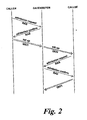
- the gatekeeper 300 is the network infrastrusture component which allows the two end-points 100 and 200 to establish a call.
- an end-point 100 In a routed mode, when an end-point 100 requires the establishment of the call, it sends a first admission request to the gatekeeper 300.
- This request includes for instance a conference identifier that identifies uniquely the call, and identifiers of the caller and the callee.
- the invention proposes a method of processing messages in a gatekeeper system, which tends to ameliorate the capacities of said gatekeeper system.
- a method for processing messages incoming on a gatekeeper system of an Internet Protocol network the system including a plurality of sub processes operable for processing such messages, the method comprising:
- a gatekeeper system of an Internet Protocol network hosting a plurality of sub-processes each able to process a series of messages, the gatekeeper system being arranged to dispatch the messages onto those different sub-processes, characterised in that the gatekeeper system is arranged to identify whether a message belongs to a same call as a previous message, and, in that case, is arranged to send this message to the sub-process that processed said previous message.
- a RAS message can also be a registration message, which appears when an IP end-point is first connected to the network, i.e. when the existence of a new end-point is declared to the gatekeeper.
- the present gatekeeper system 300 includes a series of gatekeeper instances 310a, 310b, ..., 310n, which are each able to process different incoming messages.
- Such a gatekeeper 300 has a scalable architecture. It allows to add new instances if the load on the gatekeeper 300 becomes too heavy.
- Demux 320 first determines whether a message is a registration or an admission.
- demux 320 sends it to any gatekeeper instance 310a, 310b, ..., 310n according to a load balancing policy.
- This load balancing policy can be any load balancing policy used in other computer systems.
- the load balancing policy can be completely unrelated to the rest of the dispatching algorithm.
- the load balancing policy is simply an enabler for load balancing for registrations and new calls.
- the demux If the message is the first one of a call, i.e. a RAS initial admission, the demux also sends it to any gatekeeper instance 310a, 310b, ..., 310n according to the load balancing policy.
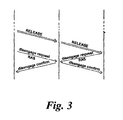
- the receiving instance 310a, 310b, ..., 310n is then responsible to identify itself as the gatekeeper instance to hold Q931 traffic.
- the demux 320 If the incoming message belongs to a call for which at least one admission message has already been received by the demux 320, the demux then sends the message to the gatekeeper instance that had received this previous message.
- an instance which has received a first admission message of a call then owns the call. It receives all the subsequent RAS messages of this call.
- H323 standard does make provision for a gatekeeper to give at admission-on-stage its Q931 address (or even possibly the Q931 address of the callee end-point if Q931 is direct).
- This feature is very advantageous in the case of messages coming from a signalling gateway.
- RAS messages are specified by ASN.1 standard and are encoded according to a model named PER (Packed Encoding Rules).
- ASN.1 allows to describe any kind of data structure.
- a data structure may contain scalar types (integer,...) bound or unbound arrays, alternatives, some other data structure. Fields within a data structure may be optional.
- This partial decoding relies on the fact that the ASN.1 structures have a tree structure and on the fact that the interesting informations are not far from the first root fields of this tree structure.
- the demux deduces that the conference ID field is after three fields which each represent character chains.
- the demux here needs to know all the fields that may preceed the conference ID in the ASN.1 data structure.
- the partial decoding method examinates the fields appearing consequently in the tree structure and jumps the fields that appear to be other than that searched.
- the size of each field is either known a-priori, for fixed encoded-lenght fields, or, is indicated in the message for variable encoded-lenght fields. That's why it is possible for the partial decoding method to jump a field without having to read it.
- the present lightweight-decoding algorithm runs here in two steps.
- the first step consists in extracting the type of the RAS message.
- a second step if according to its type the message does belong to a call, then conference identifier is extracted.
- the message payload has the following structure:
- the present method is compatible with all H323 end-points, and all types of terminals.
- IP network can be any IP network, local or not, such as the internet or an intranet network.
Landscapes
- Engineering & Computer Science (AREA)
- Computer Networks & Wireless Communication (AREA)
- Signal Processing (AREA)
- Multimedia (AREA)
- Business, Economics & Management (AREA)
- General Business, Economics & Management (AREA)
- Computer Security & Cryptography (AREA)
- Data Exchanges In Wide-Area Networks (AREA)
- Telephonic Communication Services (AREA)
Claims (14)
- Procédé pour traiter des messages arrivant sur un système de contrôle d'accès (300) d'un réseau IP (400), le système comportant une pluralité de processus secondaires (310a, 310b, ..., 310n) pouvant être activés pour traiter de tels messages, le procédé comprenant :l'expédition (320) des messages arrivant sur le système de contrôle d'accès (300) sur ces différents processus secondaires (310a, 310b, ..., 310n), caractérisé en ce que l'étape d'expédition comporte l'identification du fait qu'un message appartient à un même appel qu'un message précédent et dans ce cas, l'envoi de ce message au même processus secondaire (310a, 310b, ..., 310n) que ledit message précédent.
- Procédé selon la revendication 1, caractérisé en ce que l'étape d'identification du fait qu'un message appartient à un même appel qu'un message précédent comporte l'étape consistant à identifier si le message a le même identifiant de conférence que ledit message précédent.
- Procédé selon la revendication 1 ou 2, caractérisé en ce qu'il est appliqué dans un réseau H323 (400).
- Procédé selon la revendication 3, caractérisé en ce que les messages à distribuer sont des messages de service d'enregistrement et d'admission.
- Procédé selon l'une quelconque des revendications 1 à 4, caractérisé en ce que l'étape d'expédition comporte l'identification du fait que le message est un message d'enregistrement ou d'admission et, si le message est un message d'enregistrement, la détermination du processus secondaire (310a, 310b, ..., 310n) auquel le message va être distribué, en se basant sur la charge courante des différents processus secondaires (310a, 310b, ..., 310n) pour équilibrer la charge des différents processus secondaires (310a, 310b, ..., 310n).
- Procédé selon l'une quelconque des revendications précédentes, caractérisé en ce que l'étape d'expédition (320) comporte l'identification du fait que le message est un message d'enregistrement ou d'admission et, si le message est un message d'admission, la détermination du fait que le message est le premier message d'admission d'un appel et dans ce cas, la détermination du processus secondaire (310a, 310b, ..., 310n) auquel le message va être distribué en se basant sur la charge courante des différents processus secondaires (310a, 310b, ..., 310n) pour équilibrer la charge des différents processus secondaires (310a, 310b, ..., 310n).
- Procédé selon l'une quelconque des revendications précédentes, caractérisé en ce que les messages à distribuer entrent dans le système de contrôle d'accès (300) sous une forme codée et comprennent plusieurs champs, un ou plusieurs de ces champs contenant des données qui identifient un appel et en ce que l'étape d'expédition (320) comporte le décodage du message seulement partiellement, la partie décodée comportant lesdits un ou plusieurs champs qui contiennent ces données.
- Procédé selon la revendication 7, caractérisé en ce qu'il comporte l'étape consistant à examiner les champs du message en séquence jusqu'à trouver lesdits un ou plusieurs champs qui contiennent les données qui identifient l'appel.
- Procédé selon la revendication 7 ou la revendication 8, caractérisé en ce qu'il comporte l'étape supplémentaire consistant à lire un ou plusieurs champs du message qui indiquent le type du message et en déduire, en se basant sur le type du message, une séquence de types de champs concernant les champs qui sont placés avant lesdits un ou plusieurs champs qui contiennent les données d'identification d'appel.
- Procédé selon la revendication 9, caractérisé en ce qu'il comporte l'étape supplémentaire consistant à examiner un champ qui indique si certains champs optionnels sont présents ou non avant lesdits un ou plusieurs champs qui contiennent les données identifiant l'appel, pour déterminer si ces champs optionnels doivent être recherchés ou non en examinant les champs en séquence.
- Système de contrôle d'accès (300) d'un réseau IP (400), le système recevant une pluralité de processus secondaires (310a, 310b, ..., 310n) capables chacun de traiter une série de messages, le système de contrôle d'accès (300) étant agencé pour afficher les messages sur ces différents processus secondaires (310a, 310b, ..., 310n), caractérisé en ce que le système de contrôle d'accès (300) est agencé pour identifier si un message appartient à un même appel qu'un message précédent et dans ce cas, est agencé pour envoyer ce message au processus secondaire (310a, 310b, ..., 310n) qui a traité ledit message précédent.
- Système de contrôle d'accès (300) selon la revendication 11, caractérisé en ce qu'il comporte des moyens pour identifier si un message possède le même identifiant de conférence qu'un message précédent et dans ce cas, pour envoyer ce message au processus secondaire (310a, 310b, ..., 310n) qui a traité ledit message précédent.
- Composant (320) pour un système de contrôle d'accès (300) d'un réseau IP (400), comprenant des moyens pour distribuer des messages arrivant sur ce composant (320) sur une pluralité de processus secondaires (310a, 310b, ..., 310n), caractérisé en ce que le composant (320) est agencé pour identifier si un message appartient à un même appel qu'un message précédent et dans ce cas, pouvant être actionné pour envoyer ce message au processus secondaire (310a, 310b, ..., 310n) qui a traité ledit message précédent.
- Composant (320) selon la revendication 13, caractérisé en ce qu'il comporte des moyens pour identifier si un message possède le même identifiant de conférence qu'un message précédent et dans ce cas, pour envoyer ce message au processus secondaire (310a, 310b, ..., 310n) qui a traité ledit message précédent.
Priority Applications (4)
| Application Number | Priority Date | Filing Date | Title |
|---|---|---|---|
| EP00410132A EP1202521B1 (fr) | 2000-10-31 | 2000-10-31 | Procédé de traitement des messages dans un Gatekeeper d'un réseau IP |
| DE60021082T DE60021082T2 (de) | 2000-10-31 | 2000-10-31 | Verfahren zur Nachrichtenverarbeitung in einem Gatekeeper eines IP-netzes |
| JP2001326187A JP3888615B2 (ja) | 2000-10-31 | 2001-10-24 | インターネットプロトコール・ネットワークのゲートキーパにおけるメッセージ処理方法 |
| US10/032,882 US20020097729A1 (en) | 2000-10-31 | 2001-10-29 | Processing messages in a gatekeeper of an internet protocol network |
Applications Claiming Priority (1)
| Application Number | Priority Date | Filing Date | Title |
|---|---|---|---|
| EP00410132A EP1202521B1 (fr) | 2000-10-31 | 2000-10-31 | Procédé de traitement des messages dans un Gatekeeper d'un réseau IP |
Publications (2)
| Publication Number | Publication Date |
|---|---|
| EP1202521A1 EP1202521A1 (fr) | 2002-05-02 |
| EP1202521B1 true EP1202521B1 (fr) | 2005-06-29 |
Family
ID=8174048
Family Applications (1)
| Application Number | Title | Priority Date | Filing Date |
|---|---|---|---|
| EP00410132A Expired - Lifetime EP1202521B1 (fr) | 2000-10-31 | 2000-10-31 | Procédé de traitement des messages dans un Gatekeeper d'un réseau IP |
Country Status (4)
| Country | Link |
|---|---|
| US (1) | US20020097729A1 (fr) |
| EP (1) | EP1202521B1 (fr) |
| JP (1) | JP3888615B2 (fr) |
| DE (1) | DE60021082T2 (fr) |
Families Citing this family (3)
| Publication number | Priority date | Publication date | Assignee | Title |
|---|---|---|---|---|
| US7668100B2 (en) | 2005-06-28 | 2010-02-23 | Avaya Inc. | Efficient load balancing and heartbeat mechanism for telecommunication endpoints |
| JP5831320B2 (ja) * | 2012-03-21 | 2015-12-09 | 株式会社リコー | 伝送管理システム、伝送システム、及び伝送管理システム用プログラム |
| CN110333916B (zh) * | 2019-06-18 | 2024-03-19 | 平安银行股份有限公司 | 请求消息处理方法、装置、计算机系统及可读存储介质 |
Family Cites Families (10)
| Publication number | Priority date | Publication date | Assignee | Title |
|---|---|---|---|---|
| KR910008760B1 (ko) * | 1989-03-11 | 1991-10-19 | 한국전기통신공사 | 공통선 신호장치의 개선된 내부망 트래픽 루팅방법 |
| US6373857B1 (en) * | 1998-11-13 | 2002-04-16 | Nortel Networks Ltd. | Gatekeeper transport address determination in an internet telephony system using a domain alias |
| US6614781B1 (en) * | 1998-11-20 | 2003-09-02 | Level 3 Communications, Inc. | Voice over data telecommunications network architecture |
| US6519249B1 (en) * | 1998-12-23 | 2003-02-11 | Nortel Networks Ltd | Scalable gatekeepers in an internet telephony system and a method of operation |
| WO2000048368A1 (fr) * | 1999-02-09 | 2000-08-17 | Telefonaktiebolaget Lm Ericsson | Dispositif de distribution et repartition du trafic dans un reseau, et specifiquement du trafic genere par h.323 |
| NO310800B1 (no) * | 1999-02-09 | 2001-08-27 | Ericsson Telefon Ab L M | Anordning for distribusjon og befordring av trafikk i et nett, spesielt H.323 generert trafikk |
| US6742045B1 (en) * | 1999-07-02 | 2004-05-25 | Cisco Technology, Inc. | Handling packet fragments in a distributed network service environment |
| US6772333B1 (en) * | 1999-09-01 | 2004-08-03 | Dickens Coal Llc | Atomic session-start operation combining clear-text and encrypted sessions to provide id visibility to middleware such as load-balancers |
| US6701367B1 (en) * | 1999-09-24 | 2004-03-02 | Sun Microsystems, Inc. | Mechanism for enabling customized session managers to interact with a network server |
| US6363065B1 (en) * | 1999-11-10 | 2002-03-26 | Quintum Technologies, Inc. | okApparatus for a voice over IP (voIP) telephony gateway and methods for use therein |
-
2000
- 2000-10-31 DE DE60021082T patent/DE60021082T2/de not_active Expired - Lifetime
- 2000-10-31 EP EP00410132A patent/EP1202521B1/fr not_active Expired - Lifetime
-
2001
- 2001-10-24 JP JP2001326187A patent/JP3888615B2/ja not_active Expired - Fee Related
- 2001-10-29 US US10/032,882 patent/US20020097729A1/en not_active Abandoned
Also Published As
| Publication number | Publication date |
|---|---|
| JP2002185541A (ja) | 2002-06-28 |
| DE60021082T2 (de) | 2006-07-27 |
| DE60021082D1 (de) | 2005-08-04 |
| US20020097729A1 (en) | 2002-07-25 |
| JP3888615B2 (ja) | 2007-03-07 |
| EP1202521A1 (fr) | 2002-05-02 |
Similar Documents
| Publication | Publication Date | Title |
|---|---|---|
| US6173044B1 (en) | Multipoint simultaneous voice and data services using a media splitter gateway architecture | |
| US6411705B2 (en) | Signaling state management system for packet network gateways | |
| US7860095B2 (en) | Method and apparatus for load-balancing | |
| US7269658B2 (en) | Method and system for connecting calls through virtual media gateways | |
| US20020136182A1 (en) | Method and device for call diversion via an agent in a communications system | |
| JP4048122B2 (ja) | パケット交換電話ネットワークにおけるコンピュータ制御式呼処理アプリケーションのための装置および方法 | |
| US20050047423A1 (en) | Protocol interworking framework | |
| US20140059241A1 (en) | Multiple Core Session Initiation Protocol (SIP) | |
| US7443834B1 (en) | Combining multimedia services with traditional telephony | |
| EP1528745B1 (fr) | Procédé et dispostif de communication | |
| KR20050001931A (ko) | 호 설정을 위한 미디어게이트웨이 제어장치 및 방법 | |
| CN101395891A (zh) | 表征化异构通信节点的方法与系统 | |
| US7453891B2 (en) | Clusters of devices, softwares and methods for improved handling of a gatekeeper load in VoIP communication | |
| EP1436963B1 (fr) | Procédé, dispositif et logiciel d'ordinateur permettant la selection d'une fonction de commande de passerelle de média à base de la surveillance de ressources de fonctions de la passerelle de média | |
| EP1706978B1 (fr) | Procede et appareil permettant d'equilibrer une charge | |
| US20050018652A1 (en) | System and method for proxy gatekeeper in H.323 based IP telephony systems | |
| CN1547843A (zh) | 实现计算机电话接口的自动呼叫分配 | |
| US7408922B2 (en) | Communication between switched-circuit communication network and VoIP network domains | |
| EP1202521A1 (fr) | Procédé de traitement des messages dans un Gatekeeper d'un réseau IP | |
| US7822013B2 (en) | System and method to redirect calls in a telecommunications network | |
| US20050135339A1 (en) | System architecture for internet telephone | |
| US8223746B2 (en) | More economical resource application on the user interaction within a speech dialogue system in a packet network by means of a simplifying processing of signalling information | |
| US6951023B2 (en) | Message-based software system | |
| US6975625B1 (en) | Distributed call control processing | |
| KR101128912B1 (ko) | 인터넷 망을 이용하여 음성을 전송하는 시스템에서의 메세지 데이터 구조 |
Legal Events
| Date | Code | Title | Description |
|---|---|---|---|
| PUAI | Public reference made under article 153(3) epc to a published international application that has entered the european phase |
Free format text: ORIGINAL CODE: 0009012 |
|
| AK | Designated contracting states |
Kind code of ref document: A1 Designated state(s): AT BE CH CY DE DK ES FI FR GB GR IE IT LI LU MC NL PT SE Kind code of ref document: A1 Designated state(s): DE FR GB |
|
| AX | Request for extension of the european patent |
Free format text: AL;LT;LV;MK;RO;SI |
|
| 17P | Request for examination filed |
Effective date: 20021025 |
|
| AKX | Designation fees paid |
Free format text: DE FR GB |
|
| 17Q | First examination report despatched |
Effective date: 20040329 |
|
| GRAP | Despatch of communication of intention to grant a patent |
Free format text: ORIGINAL CODE: EPIDOSNIGR1 |
|
| GRAS | Grant fee paid |
Free format text: ORIGINAL CODE: EPIDOSNIGR3 |
|
| GRAA | (expected) grant |
Free format text: ORIGINAL CODE: 0009210 |
|
| AK | Designated contracting states |
Kind code of ref document: B1 Designated state(s): DE FR GB |
|
| REG | Reference to a national code |
Ref country code: GB Ref legal event code: FG4D |
|
| REF | Corresponds to: |
Ref document number: 60021082 Country of ref document: DE Date of ref document: 20050804 Kind code of ref document: P |
|
| ET | Fr: translation filed | ||
| PLBE | No opposition filed within time limit |
Free format text: ORIGINAL CODE: 0009261 |
|
| STAA | Information on the status of an ep patent application or granted ep patent |
Free format text: STATUS: NO OPPOSITION FILED WITHIN TIME LIMIT |
|
| 26N | No opposition filed |
Effective date: 20060330 |
|
| REG | Reference to a national code |
Ref country code: GB Ref legal event code: 732E Free format text: REGISTERED BETWEEN 20120329 AND 20120404 |
|
| PGFP | Annual fee paid to national office [announced via postgrant information from national office to epo] |
Ref country code: FR Payment date: 20121107 Year of fee payment: 13 Ref country code: DE Payment date: 20121029 Year of fee payment: 13 |
|
| PGFP | Annual fee paid to national office [announced via postgrant information from national office to epo] |
Ref country code: GB Payment date: 20121025 Year of fee payment: 13 |
|
| GBPC | Gb: european patent ceased through non-payment of renewal fee |
Effective date: 20131031 |
|
| REG | Reference to a national code |
Ref country code: DE Ref legal event code: R119 Ref document number: 60021082 Country of ref document: DE Effective date: 20140501 |
|
| PG25 | Lapsed in a contracting state [announced via postgrant information from national office to epo] |
Ref country code: GB Free format text: LAPSE BECAUSE OF NON-PAYMENT OF DUE FEES Effective date: 20131031 |
|
| REG | Reference to a national code |
Ref country code: FR Ref legal event code: ST Effective date: 20140630 |
|
| PG25 | Lapsed in a contracting state [announced via postgrant information from national office to epo] |
Ref country code: FR Free format text: LAPSE BECAUSE OF NON-PAYMENT OF DUE FEES Effective date: 20131031 Ref country code: DE Free format text: LAPSE BECAUSE OF NON-PAYMENT OF DUE FEES Effective date: 20140501 |