EP1205146A2 - Appareil pour tester la démence ainsi que serveur, client et système à cet effet - Google Patents
Appareil pour tester la démence ainsi que serveur, client et système à cet effet Download PDFInfo
- Publication number
- EP1205146A2 EP1205146A2 EP01309569A EP01309569A EP1205146A2 EP 1205146 A2 EP1205146 A2 EP 1205146A2 EP 01309569 A EP01309569 A EP 01309569A EP 01309569 A EP01309569 A EP 01309569A EP 1205146 A2 EP1205146 A2 EP 1205146A2
- Authority
- EP
- European Patent Office
- Prior art keywords
- dementia
- test
- section
- degree
- chart
- Prior art date
- Legal status (The legal status is an assumption and is not a legal conclusion. Google has not performed a legal analysis and makes no representation as to the accuracy of the status listed.)
- Ceased
Links
Images









Classifications
-
- A—HUMAN NECESSITIES
- A61—MEDICAL OR VETERINARY SCIENCE; HYGIENE
- A61B—DIAGNOSIS; SURGERY; IDENTIFICATION
- A61B5/00—Measuring for diagnostic purposes; Identification of persons
- A61B5/16—Devices for psychotechnics; Testing reaction times ; Devices for evaluating the psychological state
- A61B5/165—Evaluating the state of mind, e.g. depression, anxiety
-
- A—HUMAN NECESSITIES
- A61—MEDICAL OR VETERINARY SCIENCE; HYGIENE
- A61B—DIAGNOSIS; SURGERY; IDENTIFICATION
- A61B5/00—Measuring for diagnostic purposes; Identification of persons
- A61B5/16—Devices for psychotechnics; Testing reaction times ; Devices for evaluating the psychological state
-
- A—HUMAN NECESSITIES
- A61—MEDICAL OR VETERINARY SCIENCE; HYGIENE
- A61B—DIAGNOSIS; SURGERY; IDENTIFICATION
- A61B5/00—Measuring for diagnostic purposes; Identification of persons
- A61B5/40—Detecting, measuring or recording for evaluating the nervous system
- A61B5/4076—Diagnosing or monitoring particular conditions of the nervous system
- A61B5/4088—Diagnosing of monitoring cognitive diseases, e.g. Alzheimer, prion diseases or dementia
Definitions
- the present invention relates to a dementia test apparatus for testing the degree of dementia of a subject (hereinafter also termed "dementia degree”) a dementia test system, a dementia test server comprising the dementia test system, and a dementia test client system.
- senile dementia is a difficult problem to solve because if the degree and frequency of dementia increases, it becomes impossible to maintain to its maximum, the labour force required the support the grey population.
- the Ministry of Health and Welfare in Japan has shown the transition to dementia to be 7.2% (11,560,000) of senior citizens of 65 years old or olde in 2000, and likely to rise to 8.1% or more (2,260,000) in 2010.
- the present invention has been accomplished in view of the above circumstances, and the main object of the invention is to provide a dementia test apparatus for testing the degree of dementia of a subject, a dementia test system, a dementia test server comprising the dementia test system, and a dementia test terminal which are effective for ready detection of the first sign of the senile dementia (initial dementia).
- a first dementia test system of the present invention achieving the above object comprises: an answer obtaining section for obtaining an answer of a subject to a dementia degree test chart which requires the subject to exercise a plurality of judgements at the same time and yield an answer in such a form that correction of judgement is objectively determined; and a dementia degree test section for testing dementia degree indicative of a degree of dementia of the subject based on the answer obtained by the answer obtaining section.
- the judgment function of a human is controlled by the frontal lobe of the brain. Dementia is classified depending upon its cause. It is said that the most common senile dementia (or obsolete dementia) is caused by hypofunction of the frontal lobe. To check judgement by the frontal lobe function, it is preferred to use a test which requires the subject to undergo a plurality of judging functions at the same time. For example, in a "character pick-up" test which will be explained later, two operations, i.e., an operation to pick up characters such as "a", "b", “c”, “d”, "e”, and an operation to understand the contents of sentences made up therewith, are carried out at the same time.
- the dementia degree test chart which requires a plurality of types of judgements to be exercised at the same time and an answer to be obtained in such a form that correction of judgement is objectively determined. An answer of the subject to the dementia degree test chart is obtained, and the dementia degree is assessed based on the answer.
- the apparatus further comprises a chart storing section for storing the dementia degree test chart, and a chart display section for displaying the dementia degree test chart.
- the subject's answer may be read in using an OCR (Optical Card Reader) or an operator may input the answer using a keyboard, but if the dementia degree test chart is stored and it is displayed as described above, the answer obtaining section can be constituted such that the subject himself or herself answers directly while receiving the test, and the apparatus can conveniently be handled.
- OCR Optical Card Reader
- the first dementia test apparatus of the present invention when a plurality of subjects are divided into groups based on a predetermined criterion, may comprise a statistical storing section for storing a statistic processing result of answers of the subjects in each of the groups, wherein the dementia degree test section compares the position in the statistical processing result of the answer to the dementia degree test chart of a current subject obtained by the answer obtaining section.
- examples of the "predetermined criterion” are “age-specific criterion” in which subjects are separated based on age or “gender-specific and age-specific criterion”, or such criterion may simply be “gender-specific criterion”. Furthermore, the subjects may be classified according to circumstances or climate, or disease. Thus the invention is not limited to a specific criterion.
- the statistic processing result is stored, and a position with respect to the statistic result of the current subject is analysed, and the dementia degree of the subject may be tested.
- the first dementia test apparatus of the present invention may further comprise a dementia degree storing section for storing a relationship between the answer to the dementia degree test chart and a dementia degree, wherein the dementia degree test section refers to the dementia degree storing section, and test the degree of dementia of the current subject from the answer given to the dementia degree test chart obtained by the answer obtaining section.
- the dementia degree of the subject may be tested.
- the first dementia test apparatus of the present invention further comprises a result display section for displaying a dementia degree test result obtained by the dementia degree test section.
- the first dementia test apparatus of the present invention further comprises a test-allowability judging section for allowing a person to take a test or prohibiting a person from taking a further test if a predetermined time has elapsed since a previous test.
- a second dementia test apparatus of the present invention comprises:
- a dementia factor degree test chart is further employed.
- the dementia factor degree test chart is related to the sensibility, and judges how much the right side of the brain is used in daily life.
- the main cause of dementia is hypofunctioning of the frontal lobe. If the frontal lobe is always used in daily life, functioning of the frontal lobe is activated correspondingly, the likelihood of the development of dementia.
- the frontal lobe can be activated by either the right side of the brain or by the left side of the brain. In general, the left side of the brain is used less with ageing, and after the age of about fifty years, the right side of the brain is mainly used.
- the dementia factor degree test chart tests how the right-brain controls how the sensibility function is used (is not used) during daily life.
- the second dementia test apparatus of the present invention obtains the answers to the dementia degree test chart and the dementia factor degree test chart, and, based on the obtain answers, the current degree of dementia of the subject is analysed and a future degree of dementia is estimated, and this can be used for finding the initial dementia of the subject and for preventing the development of dementia.
- the second dementia test apparatus further comprises a chart storing section for storing the dementia degree test chart and a dementia factor degree test chart, and a chart display section for displaying the dementia degree test chart and the dementia factor degree test chart.
- the subject's answer may be read in using an OCR (Optical Card Reader) or an operator may input the answer using a keyboard, but if the dementia degree test cart is stored and it is displayed, the answer obtaining section can be constituted such that the subject himself or herself may answer directly while receiving the test, and the apparatus can conveniently be handled.
- OCR Optical Card Reader
- the second dementia test apparatus further comprises a statistic storing section, wherein a plurality of subjects is divided into a number of groups based on a predetermined criterion, the statistic storing section stores a statistical processing result of answers of the subjects in each group to both the dementia degree test chart and the dementia factor degree test chart, and the dementia degree test section calculates the current position of the statistical processing result of the answer obtained by the answer obtaining section, and estimates a variation of a future position.
- examples of the "predetermined criteria” are “age-specific criteria” in which subjects are separated based on age or “general-specific and age-specific criterion”, or may be “gender-specific criterion”. Furthermore, the subjects may be classified according to circumstances or climate, or disease, and the transition to dementia according to development of disease may be estimated.
- the second dementia test apparatus further comprises a result display section for displaying a dementia degree test result obtained by the dementia degree test section and an estimate of the future degree of dementia.
- the second dementia test apparatus further comprises a test-allowability judging section for allowing a person to take a test or prohibiting a person from taking a further test unless a predetermined time has elapsed since a previous test. A subject becomes used to the test but the above feature prevents incorrect results.
- the basic idea of the present invention can be constituted as a server client system utilizing the Internet or the like. If the invention is implemented in this matter, the opportunity to test the degree of dementia of more people is available, which is preferable.
- the server and subject of the server client system are called the dementia test server and the dementia test client, respectively hereinafter.
- the idea of the first dementia test apparatus is applied to the server client system. That is, the first dementia test system of the invention comprises a dementia test sever to be connected to a dementia test client through a communication line, wherein
- the dementia test client system will comprise:
- the subject uses, for example, his or her personal computer as the dementia test client, and the subject can receive the test result of his or her own degree of dementia.
- the idea of the second dementia test apparatus mentioned above is applied to the server client system. That is, the second dementia test system comprises a dementia test server and a dementia test client connected to each other through a communication line, wherein
- the corresponding dementia test client will comprise:
- the subject uses his or her personal computer as the dementia test client, and the subject can receive the test result of his or her current degree of dementia together with estimation of a future level of dementia.
- the first dementia test server of the invention is preferable as a dementia test server in the first dementia test system.
- the first dementia test server may further comprise a statistic storing section, wherein subjects are divided into groups based on a predetermined criterion, the statistic storing section stores a statistical result of the answers given in the dementia degree test chart for each group, the dementia degree test section tests the position of the statistical result of an answer or a current subject received by the answer receiving section.
- the first dementia test service may further comprise a dementia degree storing section for storing a relationship between a dementia degree and answer to the dementia degree test chart, wherein the dementia degree test section refers to the dementia degree storing section, and tests a dementia degree of the current subject from the answer received by the answer receiving section.
- the first dementia test server further comprises a result sending section for sending a dementia degree test result obtained by the dementia degree test section to the dementia test client.
- the first dementia test service further comprises a test-allowability judging section for allowing a person to take a test or prohibiting a person from taking a further test if a predetermined time has elapsed since a previous test.
- the first dementia test client further comprises a result receiving section for receiving a dementia degree test result obtained at and sent from the dementia test server by sending said answer to said dementia test server, and a result display section for displaying a dementia degree test result received by said result receiving section.
- a second dementia test service of the invention is preferable as a dementia test server in the second dementia test system of the invention.
- the second dementia test server further comprises a statistical storing section, when the subjects are divided into a number of groups based on a predetermined criterion, for storing result of answers of the subjects to both the dementia degree test chart and the dementia factor degree test chart in each group, wherein the dementia degree test section tests a current position of the statistical result of the answer of the current subject received by the answer receiving section, and estimates a future position.
- the second dementia test server further comprises a result sending section for sending a dementia degree test result obtained by the dementia degree test section and an estimation of a future dementia degree to the dementia test client.
- the second dementia test server further comprises a test-allowability judging section for allowing a person to take a test or prohibiting a person from taking a further test if a predetermined time has elapsed since a previous test.
- a second dementia test client of the invention is preferable as a dementia test client in the second dementia test system, and the second dementia test client comprising a dementia test server and a dementia test client connected to each other through a communication line, comprises:
- the second dementia test client comprises a result receiving section for receiving an estimation result of a future dementia and a dementia degree test result obtained from the dementia test server by sending the answer sent from the dementia test server to the dementia test server and a result display section for displaying a dementia degree test result and estimation result of a future dementia received by the result receiving section.
- Fig. 1 is a perspective view of an outer appearance of a computer system operating as a dementia test apparatus according to an embodiment of the present invention.
- a dementia test apparatus in an embodiment of the present invention is realized by a combination of hardware of the computer system 100 and software executed therein.
- the computer system 100 comprises a body 101 having a CPU, a RAM memory, a magnetic disc, a communication board and the like therein, a CRT display 102 for displaying on a display screen 102a according to instructions from the body, a keyboard 103 for inputting instructions or character information by a testee or other operator, and a mouse 104 for inputting instructions according to an icon displayed on the display screen by designating an optional position thereon.
- a CD-ROM drive for driving a CD-ROM 105 (see Fig. 2) is incorporated.
- the CD-ROM 105 can removably put in the drive.
- the CD-ROM 105 a dementia test program is stored, the CD-ROM 105 is inserted into the body 101, the dementia test program stored in the CD-ROM 105 is installed in the magnetic disc of the computer system 100 by the CD-ROM drive. If the dementia test program installed in the magnetic disc of the computer system 100 is started, the computer system 100 operates as an embodiment of the dementia test apparatus of the invention.
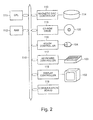
- Fig. 2 shows a hardware structure of the computer system 100 shown in Fig. 1.
- a central processing unit (CPU) 111 a central processing unit (CPU) 111, a RAM 112, a magnetic disc controller 113, a CD-ROM drive 115, a mouse controller 116, a keyboard controller 117, a display controller 118 and a communication board 119 are shown. These are connected to each other through a bus 110.
- the CD-ROM 105 is put into the CD-ROM drive 115, and the CD-ROM drive 115 accesses the CD-ROM 105.
- the communication board 119 is connected to a communication line.
- a test result of a testee carried out using the computer system is sent to a server (not shown) which accumulates data through the communication board 119, and the result is utilized for a progress observation of the testee and statistic processing concerning many testees.
- Fig. 2 also shows a magnetic disc 114 accessed by the magnetic disc controller 113, a mouse 104 controlled by the mouse controller 116, a keyboard 103controlled by the keyboard controller 117, and the CRT display 102 controlled by the display controller 118.
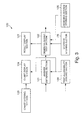
- Fig. 3 is a functional block diagram of an embodiment of the dementia test apparatus of the invention realized when the dementia test program is executed in the computer system shown in Figs. 1 and 2.
- An answer obtaining section 121 shown in Fig. 3 constituting a dementia test apparatus 120 obtains an answer of a testee to a dementia degree test chart which requires a plurality kinds of judgements at the same time and obtains the answer in such a form that correction of judgement is objectively judged.
- the keyboard 103 and the mouse 104 shown in Figs. 1 and 2 correspond to the answer obtaining section 121.
- a dementia degree test section 122 tests a dementia degree indicative of a degree of dementia of a testee based on the answer obtained by the answer obtaining section 121.
- the magnetic disc 114 storing a program carrying out the test and the CPU 111 executing the program carrying out the test correspond to the dementia degree test section 122 and the like.
- a chart storing section 123 stores a dementia degree test chart, and as hardware, the magnetic disc 114 and the like shown in Fig. 2 correspond to this.
- the dementia degree test chart stored in the chart storing section 123 is read out for testing the dementia degree, and is displayed on a chart display section 124.
- the CRT display 102 shown in Figs. 1 and 2 functions as the chart display section 124 as hardware.
- a plurality of testees are divided into a plurality of groups based on a predetermined criterion (in this embodiment, the criterion is age, and ages of the testees are divided into twenties, thirties, forties, ..., on ten year base).
- a statistic storing section 125 stores a statistic processing result of answers (average value and distribution in this embodiment) of each the groups.
- the magnetic disc 114 functions as the statistic storing section 125 as hardware.
- the dementia degree test section 122 utilizes the statistic processing result (average value and distribution on age-specific base in this embodiment) stored in the statistic storing section 125, and detects a position of an answer to the dementia degree test chart of the current testee obtained by the answer obtaining section 121 with respect to the statistic processing result.
- the statistic processing result average value and distribution on age-specific base in this embodiment
- a dementia degree storing section 126 stores a relationship between answer to the dementia degree test chart and the dementia degree, and the dementia degree test section 122 refers to the dementia degree storing section 126 to test the dementia degree of the current testee based on the answer of the testee to the dementia degree test chart obtained by the answer obtaining section 121.
- the magnetic disc 114 functions as the dementia degree storing section 126 as hardware.
- a result display section 127 displays a dementia degree test result obtained by referring to the statistic storing section 125 or the dementia degree storing section 126 by the dementia degree test section 122.
- the CRT display 102 functions as the result display section 127 as hardware.
- a test-allowability judging section 128 allows or prohibits test of a test-requiring person depending on whether a predetermined period(for example, three months) has been elapsed after the person received the last test.
- the dementia test apparatus 120 shown in Fig. 3 is constituted in the above-described manner.
- the dementia test apparatus 120 functions as follows.
- the test-requiring person inputs individual information such as name, age, sex and job. Once the person takes the test, an ID number may be informed to the testee so that if the testee inputs the ID number, other individual information is not required.
- the test-allowability judging section 128 searches whether the test-requiring person did not take the test for a predetermined time, for example, last three months. If the person took the test, the test-allowability judging section 128 controls so that a dementia degree test chart is not displayed on the chart display section 124 and an answer is not received by the answer obtaining section 121. This is because if a person took the test many times in a short time, there is no effect, besides the person becomes used to the test, erroneous result may come out.
- test-requiring person takes the test for the first time, or when a predetermined period(for example, three months) has elapsed since the testee took the test, the person is allowed to take the test.
- the dementia degree test chart is read out from the chart storing section 123 and is displayed on the chart display section 124. Before that, explanation of test method using the dementia degree test chart is displayed, and if start of the test is instructed by click of the mouse or the like, the dementia degree test chart is displayed. If a predetermined test time (for example, two minutes) elapses, the dementia degree test chart is erased from the screen.
- a predetermined test time for example, two minutes
- the testee inputs answer to the dementia degree test chart by using the keyboard 103 or the mouse 104 constituting the answer obtaining section 121.
- the answer obtaining section 121 receives the input answer and sends the same to the dementia degree test section 122.
- the dementia degree test section 122 refers to the statistic storing section 125 and the dementia degree storing section 126 to test the dementia degree based on the answer, and sends the test result to a result display section 127.
- the result display section 127 displays the dementia degree test result.
- the dementia degree test section 122 sends the dementia degree test result together with the individual information to a server (not shown) which accumulate data through the communication board 119 shown in Fig. 2.
- the data accumulation server utilizes the sent data, the progress observation of the testee and statistic processing concerning many testees as described above.
- the server periodically carries out statistic processing (average value and distribution on age-specific base) , the statistic processing result is sent to the dementia test apparatus 120 shown in Fig. 3 from the server, and the contents of the statistic storing section 125 are renewed.
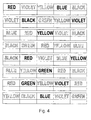
- Fig. 4 shows an example of a dementia degree test chart stored in the chart storing section 123.
- the dementia degree test chart shown in Fig. 4 is stored in the chart storing section 123.
- the dementia degree test chart is read out from the chart storing section 123 and displayed on the chart display section 124.
- the test is carried out in such a manner that a testee checks whether color expressed by a character coincides with color of the character using the mouse 104 or the like.
- the idea of the dementia degree test chart shown in Fig. 4 can be applied to other languages such as Japanese. For example, characters meaning Red, Green and Yellow, and color of the characters are combined to make the dementia degree test chart of English version.
- Fig. 5 is a test chart of "character pick-up" test.
- a testee picks up characters “a”, “b” , “c” , “d”, “e” while understanding the contents of the sentences.
- two kinds of judgements of the testee i.e., understanding of the contents and judgement of an appearance of specific character are required.
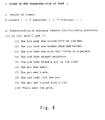
- Fig. 6 shows an example of question concerning the "character pick-up" test in Fig. 5.
- the questions shown in Fig. 6 is a screen displayed on the chart display section 124 after the completion of "character pick-up" test.
- the questions constitute the dementia degree test chart of the present invention together with the "character pick-up” test shown in Fig. 5.
- Fig. 6 shows not only the questions, but also a grade result of the "character pick-up" test carried out immediately before the questions.
- scores are calculated on the basis that when an answer is correct, 1 point is added, and incorrect, for example, -1 point is added, and when no answer, 0 point is added and also scores of the questions is added up.
- the questions shown in Fig. 6 can be answered with ⁇ or ⁇ , and understanding degree of content can be objectively grasped. Scores to the questions are calculated on the bases, for example, 2 points are added per one correct answer.
- the dementia degree test chart shown in Fig. 4 or 5 and 6 is displayed on the chart display section 124 of the dementia test apparatus 120. If an answer of a testee to the chart is input in the answer obtaining section 121, the input answer is input to the dementia degree test section 122. In the dementia degree test section 122, the statistic storing section 125 or the dementia degree storing section 126 is referred to based on the answer as described above, and the dementia degree of the testee is tested. A test result is displayed on the result display section 127.
- Fig. 7 shows an example of display of a dementia degree test section result displayed on a result display section 127.
- a lateral axis shows a score, and a vertical axis shows a degree.
- averages and distributions of last many testees are stored in an age-specific manner. From averages and distributions of each age, those of age of a current testee are read out, a histogram A shown in Fig. 7 indicative of score of the age of the testee is formed, and it is checked where a score B of the testee is located in the age.
- the testee looks the test result shown in Fig. 7 displayed on the result display section 127, and the testee can objectively know his or her own dementia degree. A testee can access last test results and compare with the current test result.
- Fig. 7 only shows the histogram A and the score B of the testee, a numeric value or explanation may be shown for indicating a dementia degree of the score B of the testee.
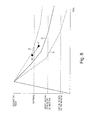
- Fig. 8 shows another example of display of the dementia degree test result displayed on the result display section 127.
- a lateral axis shows age of a testee
- a vertical axis shows a score of a test.
- a relationship between a score to the dementia degree test chart and a dementia degree as shown in Fig. 8 is stored in the dementia degree storing section 126.
- an average value C in each age, and upper and lower limit values D and E which can be regarded as being normal on that age are stored.
- the dementia degree test section 122 it is tested which dementia degree a testee is and whether the testee is normal as that age based on data stored in the dementia degree storing section 126 and age and score F of the testee.
- the testee looks a screen indicating the test result shown in Fig. 8, displayed on the result display section 127, and can easily know a level of his or her own.
- the testee can access last test results G and compare with the current test result.
- Fig. 9 is a functional block diagram of another embodiment of the dementia test apparatus of the invention realized when a dementia test program is executed in the computer system shown in Figs. 1 and 2.
- an answer obtaining section 131 constituting a dementia test apparatus 130
- answers of a testee to both a dementia degree test chart which is the same as that employed by the dementia test apparatus 120 and a dementia factor degree test chart comprising a combination of a plurality of questions concerning sensibility and a plurality of answers alternatively selected from questions prepared for each of the former questions are obtained.
- the keyboard 103 and the mouse 104 shown in Figs. 1 and 2 correspond to the answer obtaining section 131 as hardware.
- a dementia degree test section 132 tests a current dementia degree of a testee and estimate transition of a future dementia degree based on the answers obtained by the answer obtaining section.
- the magnetic disc 114 storing a program for carrying out the test and transition estimation and the CPU 111 or the like executing the program correspond to the dementia degree test section as hardware.
- a chart storing section 133 stores the dementia degree test chart and the dementia factor degree test chart, and the magnetic disc 114 and the like shown in Fig. 2 corresponds to the chart storing section 133 as hardware.
- the dementia degree test chart and the dementia factor degree test chart stored in the chart storing section 133 are read out for testing the dementia degree and displayed on a chart display section 134.
- the CRT display 102 shown in Figs. 1 and 2 functions as the chart display section 134 as hardware.
- a plurality of testees are divided into a plurality of groups based on a predetermined criterion (in this embodiment, the criterion is age, and ages of the testees are divided into twenties, thirties, forties, ..., on ten year base).
- a statistic storing section 135 stores a statistic processing result (least square approximation straight line in this embodiment as described later) of answers to the dementia degree test chart and the dementia factor degree test chart in each the groups.
- the magnetic disc 114 functions as the statistic storing section 135 as hardware.
- a dementia degree test section 132 utilizes the statistic processing result (least square approximation straight line in this embodiment) stored in the statistic storing section 135, and tests a current position in the statistic processing result and estimates a variation of a future position of the current testee based on the answer to the dementia degree test chart and the dementia factor degree test chart of the current testee obtained by the answer obtaining section 131.
- the statistic processing result (least square approximation straight line in this embodiment) stored in the statistic storing section 135, and tests a current position in the statistic processing result and estimates a variation of a future position of the current testee based on the answer to the dementia degree test chart and the dementia factor degree test chart of the current testee obtained by the answer obtaining section 131.
- a result display section 136 displays the dementia degree test result and a future dementia degree transition estimation result obtained by referring to the statistic storing section 135 by the dementia degree test section 132.
- the CRT display 102 functions as the result display section 136 as hardware.
- a test-allowability judging section 137 allows or prohibit a test of a test-requiring person depending on whether a predetermined time (for example, three months) has elapsed since the test-requiring person took the test last time.
- the dementia test apparatus 130 shown in Fig. 9 is constituted as described above, and for the test of a dementia degree of a testee, the dementia test apparatus 130 functions as follows.
- the test-requiring person inputs individual information such as name, age, sex and job. Once the person takes the test, an ID number may be informed to the testee so that if the testee inputs the ID number, other individual information is not required.
- the test-allowability judging section 128 searches whether the test-requiring person did not take the test for a predetermined time, for example, last three months. If the person took the test, the test-allowability judging section 137 controls so that a dementia degree test chart is not displayed on the chart display section 134 and an answer is not received by the answer obtaining section 131. This is because if a person took the test many times in a short time, there is no effect, besides the person becomes used to the test, erroneous result may come out.
- test-requiring person takes the test for the first time, or when a predetermined period, for example, three months have elapsed since the testee took the last test, the person is allowed to take the test.
- the dementia degree test chart is read out from the chart storing section 133 and is displayed on the chart display section 134. Before that, explanation of test method using the dementia degree test chart is displayed, and if start of the test is instructed by click of the mouse, the dementia degree test chart is displayed. If a predetermined test time (for example, two minutes) is elapsed, the dementia degree test chart is erased from the screen.
- a predetermined test time for example, two minutes
- the testee inputs answer to the dementia degree test chart using the keyboard 103 or the mouse 104 constituting the answer obtaining section 131.
- the answer obtaining section 131 receives the input answer and sends the same to the dementia degree test section 132.
- the dementia factor degree test chart is displayed by click of the mouse or the like.
- a testee sees the displayed dementia factor degree test chart and answers using the mouse or the like.
- the answer obtaining section 131 transfers the input answer to the dementia degree test section 132.
- the dementia degree test section 132 refers to the statistic storing section 135, tests a current dementia degree of the testee and estimates transition of a future dementia degree of the testee based on the answers.
- the dementia degree test result and the transition estimation result of the dementia degree are sent to the result display section 136, and the result display section 136 displays these results.
- the dementia degree test section 132 sends the result together with the individual information of the testee to a server (not shown) which accumulate data through the communication board 119 shown in Fig. 2.
- the data accumulation server utilizes the sent data, the progress observation of the testee and statistic processing concerning many testees.
- the server periodically carries out statistic processing, the statistic processing result is sent to the dementia test apparatus 130 shown in Fig. 9 from the server, and the contents of the statistic storing section 135 are renewed.
- Both the dementia degree test chart and the dementia factor degree test chart are stored in the chart storing section 133.
- the concrete example and handling of the dementia degree test chart are described above and thus, the explanation thereof is omitted here.
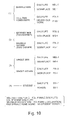
- Fig. 10 shows classification of the dementia factor degree test chart.
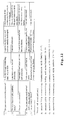
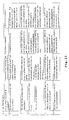
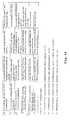
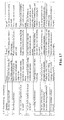
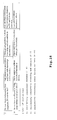
- Figs. 11 to 18 show examples of the dementia factor degree test chart.
- a total seven groups including “married man”, “full-time homemaker”, “married man (two-earner)”, “married woman (two-earner)”, “single man”, “single women” and “student”.
- Two kinds of dementia factor degree test charts i.e., “daily life” and “workplace” (or "housework", “school) are prepared for each group.
- Figs. 11 and 12 show one example of a dementia factor degree test chart concerning "daily life” of the "married man”.
- Figs. 13 and 14 show one example of a dementia factor degree test chart concerning "workplace” of the “married man”.
- Figs. 15 and 16 show one example of a dementia factor degree test chart concerning "daily life” of the "full-time homemaker”.
- Figs. 17 and 18 show one example of a dementia factor degree test chart concerning "housework" of the "full-time homemaker”. Dementia factor degree test charts for other groups are similarly formed, but they are not illustrated in the drawings.
- dementia factor degree test charts are for objectively estimating the degree of the activation of the right-brain and sensitivity in a daily life or in workplace.
- 1 group is +1 point
- 2 group is 0 point
- 3 group is -1 point, and these are added to make a score of a testee.
- Dementia factor degree test charts of the dementia degree test charts shown in Figs. 4, 5 and 6, and the dementia factor degree test charts shown in Figs. 11 to 18 which are suited to the testee are sequentially displayed on the chart display section 134 of the dementia test apparatus 130 shown in Fig. 9, and the testee inputs answers to the charts by means of the answer obtaining section 131.
- the input answers is input in the dementia degree test section 132, as described above, this dementia degree test section 132 tests a current dementia degree of the testee and estimates transition of a future dementia degree of the testee.
- the current dementia degree test result and the transition estimation result of the dementia degree are sent to the result display section 136.
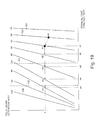
- Fig.19 shows an example of display on the result display section 136.
- a lateral axis of Fig.19 shows a score of the frontal lobe function test using the dementia degree test chart, and a vertical axis shows a score of the right-brain activation test using the dementia factor degree test chart.
- the straight lines G1, G2, ..., G9 respectively show minimum square approximate straight lines in each age of score distribution of many last testees in each age (twenties, thirties, ..., centuries).
- Two broken lines H1 and H2 extending vertically in Fig.19 respectively show a dementia degree called “initial stage of dementia” and a dementia degree called “dementia”.
- These straight lines G1, G2, ..., G9 show one example of statistic processing result of the invention, and are stored in the statistic storing section 135 shown in Fig.9. These straight lines are read out by the dementia degree test section 132 to specify a position of the current testee in the result of the statistic procedure.
- testee is in the position A1. It is estimated that if the testee's living habit, i.e., the activity level of the right-brain is not changed, his or her position will be A2 after ten years, A3 after twenty years which means initial stage of dementia, A4 after thirty years, and An after forty years and the testee will be demented. Furthermore, changes of the positions can be shown by indicating the past position A0 of the testee.
- Fig. 20 shows a structure of a server client system operating as an embodiment of a dementia test system of the invention.
- three computer systems 200, 300, and 400 operating as a dementia test client and one computer system 500 operating as a dementia test server are shown. These systems are connected to each other through a communication line 600.
- the computer systems 200, 300, 400 and 500 respectively include bodies 201, 301, 401 and 501 each having a CPU, a RAM, a magnetic disc, a communication board and the like therein, CRT displays 202, 302, 402 and 502 for displaying on display screens 202a, 302a, 402a and 502a according to instructions from the bodies, keyboards 203, 303, 403 and 503 for inputting instructions or character information by a testee or other operator, and mice 202, 302, 402 and 502 for inputting instructions according to icon displayed on a display screen by designating the mouse at an arbitrary position on the screen.
- Hardware of each of the computer systems 200, 300, 400 and 500 is the same as that of the computer system 100 (see Fig. 2) shown in Fig. 1, and detailed explanation thereof is omitted.
- Fig. 21 is a functional block diagram of an embodiment of the dementia test system of the invention realized by the server client system shown in Fig. 20. Here, only one dementia test client is indicated as representative.
- a dementia test system 700 comprises a dementia test server 710 and a dementia test client 720.
- the dementia test server 710 constituting the dementia test system 700 comprises a chart storing section 711, a chart sending section 712, an answer receiving section 713, a dementia degree test section 714, a statistic storing section 715, a dementia degree storing section 716, a result sending section 717 and a test-allowability judging section 718.
- the chart storing section 711, the dementia degree test section 714, the statistic storing section 715, the dementia degree storing section 716 and the test-allowability judging section 718 respectively function in the same manner as the chart storing section 123, the dementia degree test section 122, the statistic storing section 125, the dementia degree storing section 126, and the test-allowability judging section 128 constituting the above described dementia degree test apparatus 120 shown in Fig. 3. Therefore, explanation thereof is omitted.
- the test-allowability judging section 718 judges whether a test is allowed or prohibited based on individual information sent from the dementia test client 720. If the test was prohibited, sending of a dementia degree test chart from the chart sending section 712 is prohibited.
- the chart sending section 712 reads out a dementia degree test chart from the chart storing section 711, and sends the same to the dementia test client 720.
- the answer receiving section 713 receives an answer to the dementia degree test chart sent from the dementia test client 720.
- the result sending section 717 sends the dementia degree test result obtained by the dementia degree test section 714 to the dementia test client 720.
- the communication board (see Fig. 2) of the computer system functioning mainly as the dementia test server 710 corresponds to these as hardware.
- the dementia test client 720 constituting the dementia test system 700 comprises a chart receiving section 721, a chart display section 722, an answer obtaining section 723, an answer sending section 724, a result receiving section 725 and a result display section 726.
- the chart display section 722, the answer obtaining section 723, and the result display section 726 function in the same manner as the chart display section 124, the answer obtaining section 121 and the result display section 127 in the dementia test apparatus 120 shown in Fig. 3 and thus, explanation thereof is omitted.
- the chart receiving section 721 receives a dementia degree test chart sent from the dementia test server 710 through the communication line 600.
- the answer sending section 724 sends an answer obtained by the answer obtaining section 723 to the dementia test server 710.
- the result receiving section 725 receives the dementia degree test result sent from the dementia test server 710.
- the communication board (see Fig. 2) of the computer system constituted as the dementia test client 720 is a main part of the above sections.
- Procedure of the test of dementia degree is the same as that of the dementia test apparatus shown in Fig. 3 except that communication is established through the communication line 600, and explanation thereof is omitted.
- Fig. 22 is a functional block diagram of another embodiment of the dementia test system of the invention realized by the server client system shown in Fig. 20. Here, only one dementia test client is shown as representative.
- a dementia test system 800 shown in Fig. 22 comprises a dementia test server 810 and a dementia test client 820.
- a dementia test server 810 constituting a dementia test system 800 comprises a chart storing section 811, a chart sending section 812, an answer receiving section 813, a dementia degree test section 814, a statistic storing section 815, a result sending section 816, and a test-allowability judging section 817.
- the chart storing section 811, the dementia degree test section 814, the statistic storing section 815, and the test-allowability judging section 817 function in the same manner as the chart storing section 133, the dementia degree test section 132, the statistic storing section 135, the and the test-allowability judging section 137 constituting the dementia degree test apparatus 130 shown in Fig. 9, and explanation thereof is omitted.
- the test-allowability judging section 817 allows or prohibits a test based on the individual information sent from the dementia test client 820, and when the test was prohibited, sending of a dementia degree test chart and the dementia factor degree test chart from the chart sending section 812 is prohibited.
- the chart sending section 812 reads out a dementia degree test chart and the dementia factor degree test chart from the chart storing section 811, and sends the same to the dementia test client 820.
- the answer receiving section 813 receives an answer to the dementia degree test chart and the dementia factor degree test chart sent from the dementia test client 820.
- the result sending section 816 sends the dementia degree test result or the future dementia degree transition estimation result obtained by the dementia degree test section 814 to the dementia test client 820.
- the communication board (see Fig. 2) of the computer system functioning mainly as the dementia test server 810 corresponds to these as hardware.
- the dementia test client 820 constituting the dementia test system 800 comprises a chart receiving section 821, a chart display section 822, an answer obtaining section 823, an answer sending section 824, a result receiving section 825 and a result display section 826.
- the chart display section 822, the answer obtaining section 823, and the result display section 826 function in the same manner as the chart display section 134, the answer obtaining section 131 and the result display section 137 in the dementia test apparatus 130 shown in Fig. 9 and thus, explanation thereof is omitted.
- the chart receiving section 821 receives the dementia degree test chart and the dementia factor degree test chart sent from the dementia test server 810 through the communication line 600.
- the answer sending section 824 sends an answer obtained by the answer obtaining section 823 to the dementia test server 810.
- the result receiving section 825 receives the dementia degree test result and the future dementia degree transition estimation result sent from the dementia test server 810.
- the communication board (see Fig. 2) of the computer system operating as the dementia test client 820 is a main part of the above sections.
- Procedure of the test of dementia degree is the same as that of the dementia test apparatus 130 shown in Fig. 9 except that communication is established through the communication line 600, and explanation thereof is omitted.
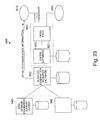
- Fig. 23 shows the entire image of early-dementia finding and preventing system including an embodiment of the dementia test system of the invention.
- the early-dementia finding and preventing system 900 comprises a personal computer 910 of a testee, a web server 920 comprising a home page 921 and entire database 922, a detailed examination required database 930 and a detailed examination support system 940 of each region.
- the personal computer 910 of the testee is a terminal used by a person taking a test.
- a portable terminal may be utilized if the terminal can be connected to the Internet.
- the home page 921 is constructed in the web server 920.
- the home page 921 collects basic data, test result and the like of a testee, executes a test, display device which was fed back from the database, and functions as a window connecting the database and a client.
- the entire database 922 stores and manages the data of all testees, and performs statistical analysis of the data.
- the detailed examination required database 930 is a server which receives data of a testee who was judged that a detailed examination was necessary from the entire database 922, for example, a testee having a test result lower than H1 "initial dementia" described in Fig. 19, sends a notice of precise test to that testee, and sends information to an area detailed examination support center.
- the detailed examination required database 930 serves such that nationwide detailed examination support centers and medical institutions can access the detailed examination required database 930 using common format, and they can be supported from anywhere.
- a series of stream of the system is as follows. First, a testee inputs basic data on the home page and receives a test. A result of the test is processed by the entire database 922, and the test result is fed back to the testee. The data at that time is stored and managed in the entire database 922. Here, if the entire database 922 judges that a detailed examination is necessary, the data is sent to the detailed examination required database 930, and contact is made with the detailed examination support center 940 and the testee. Then, the detailed examination and rehabilitation if necessary are recommended.
- the dementia can be tested in early stage and easily.
Landscapes
- Health & Medical Sciences (AREA)
- Life Sciences & Earth Sciences (AREA)
- Engineering & Computer Science (AREA)
- Neurology (AREA)
- Psychiatry (AREA)
- Heart & Thoracic Surgery (AREA)
- Molecular Biology (AREA)
- Psychology (AREA)
- Child & Adolescent Psychology (AREA)
- Physics & Mathematics (AREA)
- Veterinary Medicine (AREA)
- Biophysics (AREA)
- Pathology (AREA)
- Biomedical Technology (AREA)
- Developmental Disabilities (AREA)
- Medical Informatics (AREA)
- Hospice & Palliative Care (AREA)
- Surgery (AREA)
- Animal Behavior & Ethology (AREA)
- General Health & Medical Sciences (AREA)
- Public Health (AREA)
- Educational Technology (AREA)
- Social Psychology (AREA)
- Neurosurgery (AREA)
- Physiology (AREA)
- Electrically Operated Instructional Devices (AREA)
- Measurement Of The Respiration, Hearing Ability, Form, And Blood Characteristics Of Living Organisms (AREA)
- Measuring And Recording Apparatus For Diagnosis (AREA)
Applications Claiming Priority (2)
| Application Number | Priority Date | Filing Date | Title |
|---|---|---|---|
| JP2000345315A JP2002143096A (ja) | 2000-11-13 | 2000-11-13 | 痴呆検査装置、痴呆検査サーバ、痴呆検査クライアント、および痴呆検査システム |
| JP2000345315 | 2000-11-13 |
Publications (2)
| Publication Number | Publication Date |
|---|---|
| EP1205146A2 true EP1205146A2 (fr) | 2002-05-15 |
| EP1205146A3 EP1205146A3 (fr) | 2004-01-02 |
Family
ID=18819367
Family Applications (1)
| Application Number | Title | Priority Date | Filing Date |
|---|---|---|---|
| EP01309569A Ceased EP1205146A3 (fr) | 2000-11-13 | 2001-11-13 | Appareil pour tester la démence ainsi que serveur, client et système à cet effet |
Country Status (4)
| Country | Link |
|---|---|
| US (1) | US6654695B2 (fr) |
| EP (1) | EP1205146A3 (fr) |
| JP (1) | JP2002143096A (fr) |
| CA (1) | CA2361823A1 (fr) |
Cited By (2)
| Publication number | Priority date | Publication date | Assignee | Title |
|---|---|---|---|---|
| EP2438863A1 (fr) | 2010-10-05 | 2012-04-11 | Phibio Science AB | Système et procédés pour analyser les durées des temps de pause dans la parole |
| KR20210155335A (ko) * | 2020-06-15 | 2021-12-22 | 한국과학기술정보연구원 | 일상생활 능력정보 기반 치매 예측 방법 및 그 장치 |
Families Citing this family (17)
| Publication number | Priority date | Publication date | Assignee | Title |
|---|---|---|---|---|
| JP4898015B2 (ja) * | 2001-04-26 | 2012-03-14 | 東芝テック株式会社 | 通信教育システム、このシステムに使用される保管用サーバ及びこの保管用サーバに使用されるプログラムを記録したコンピュータ読み取り可能な記録媒体 |
| CN1317668C (zh) * | 2003-01-27 | 2007-05-23 | 汤一平 | 一种防止老年性痴呆的系统 |
| JP4387720B2 (ja) * | 2003-07-28 | 2009-12-24 | 株式会社浜松早期認知症研究所 | 痴呆検査装置、痴呆検査サーバ、痴呆検査クライアント、および痴呆検査システム |
| US20080070207A1 (en) * | 2006-09-05 | 2008-03-20 | Lawrence H Avidan | System and Method for Testing Memory |
| US20080057483A1 (en) * | 2006-09-05 | 2008-03-06 | Lawrence H Avidan | Apparatus and System for Testing Memory |
| US20090287064A1 (en) * | 2008-05-15 | 2009-11-19 | Medical Interactive Education, Llc | Computer implemented cognitive self test |
| US8468377B2 (en) | 2008-10-22 | 2013-06-18 | Microsoft Corporation | Conserving power using predictive modelling and signaling |
| WO2010052731A1 (fr) | 2008-11-07 | 2010-05-14 | Department Of Biotechnology | Technique automatisée immédiate de criblage, de diagnostic et de classification pour la maladie d'alzheimer utilisant un signal d'imagerie par résonance magnétique provenant d'un contour de la zone ventriculaire du cerveau |
| JP4967009B2 (ja) * | 2009-10-07 | 2012-07-04 | 惠子 中島 | 認知度把握システム |
| JP4662509B1 (ja) * | 2010-11-17 | 2011-03-30 | 日本テクト株式会社 | 認知機能予測システム |
| JP5476350B2 (ja) * | 2011-09-21 | 2014-04-23 | シャープ株式会社 | 認知症ケア支援システム |
| JP5404750B2 (ja) * | 2011-11-22 | 2014-02-05 | シャープ株式会社 | 認知症ケア支援方法、認知症情報出力装置、認知症ケア支援システム、及びコンピュータプログラム |
| WO2016037003A1 (fr) | 2014-09-03 | 2016-03-10 | Kla-Tencor Corporation | Optimisation de l'utilisation d'outils de métrologie |
| JP6644335B2 (ja) * | 2018-07-31 | 2020-02-12 | 株式会社Splink | 認知症リスク提示システム、及び、認知症リスク提示方法 |
| KR102513155B1 (ko) * | 2020-08-20 | 2023-03-22 | 서울대학교산학협력단 | 어플리케이션을 이용한 건강-웰니스 정보의 자가 관리를 위한 장치 및 방법 |
| JP7664581B2 (ja) * | 2021-03-10 | 2025-04-18 | 株式会社Nttドコモ | 直感的操作を誘発するユーザインタフェース(ui)を伴うタスクに基づいたタスク実行抑制機能の推定システム |
| CN114758624B (zh) * | 2022-03-31 | 2023-07-04 | 武汉天马微电子有限公司 | 像素电路及其驱动方法、阵列基板、显示面板和显示装置 |
Family Cites Families (5)
| Publication number | Priority date | Publication date | Assignee | Title |
|---|---|---|---|---|
| US4770636A (en) * | 1987-04-10 | 1988-09-13 | Albert Einstein College Of Medicine Of Yeshiva University | Cognometer |
| US4895518A (en) * | 1987-11-02 | 1990-01-23 | The University Of Michigan | Computerized diagnostic reasoning evaluation system |
| JPH04114639A (ja) * | 1990-09-03 | 1992-04-15 | Kyoto Densoku Kk | 痴呆症検査装置 |
| US6053866A (en) * | 1998-10-29 | 2000-04-25 | Mcleod; Malcolm N. | Method for facilitating diagnosis of a psychiatric disorder |
| US6565359B2 (en) * | 1999-01-29 | 2003-05-20 | Scientific Learning Corporation | Remote computer-implemented methods for cognitive and perceptual testing |
-
2000
- 2000-11-13 JP JP2000345315A patent/JP2002143096A/ja not_active Withdrawn
-
2001
- 2001-11-13 EP EP01309569A patent/EP1205146A3/fr not_active Ceased
- 2001-11-13 CA CA002361823A patent/CA2361823A1/fr not_active Abandoned
- 2001-11-13 US US09/987,055 patent/US6654695B2/en not_active Expired - Fee Related
Non-Patent Citations (1)
| Title |
|---|
| None * |
Cited By (3)
| Publication number | Priority date | Publication date | Assignee | Title |
|---|---|---|---|---|
| EP2438863A1 (fr) | 2010-10-05 | 2012-04-11 | Phibio Science AB | Système et procédés pour analyser les durées des temps de pause dans la parole |
| WO2012045774A1 (fr) | 2010-10-05 | 2012-04-12 | Phibio Science Ab | Système et procédés permettant une analyse des durées de temps de pause dans un discours |
| KR20210155335A (ko) * | 2020-06-15 | 2021-12-22 | 한국과학기술정보연구원 | 일상생활 능력정보 기반 치매 예측 방법 및 그 장치 |
Also Published As
| Publication number | Publication date |
|---|---|
| US20020059031A1 (en) | 2002-05-16 |
| EP1205146A3 (fr) | 2004-01-02 |
| US6654695B2 (en) | 2003-11-25 |
| CA2361823A1 (fr) | 2002-05-13 |
| JP2002143096A (ja) | 2002-05-21 |
Similar Documents
| Publication | Publication Date | Title |
|---|---|---|
| US6654695B2 (en) | Dementia test apparatus, dementia test server, dementia test client and dementia test system | |
| Petrie et al. | Sense of coherence, self‐esteem, depression and hopelessness as correlates of reattempting suicide | |
| Gill-Thwaites | The Sensory Modality Assessment Rehabilitation Technique-a tool for assessment and treatment of patients with severe brain injury in a vegetative state | |
| Neblett et al. | Quantifying the lumbar flexion–relaxation phenomenon: theory, normative data, and clinical applications | |
| US6090044A (en) | System for diagnosing medical conditions using a neural network | |
| US6547727B1 (en) | Method of supporting health checkup, an apparatus for implementing the same and a medium recording their processing programs | |
| Gibson et al. | The reliability and validity of a measure of perceived functional capacity for work in chronic back pain | |
| US20040059249A1 (en) | Mentation test method and mentation test apparatus | |
| Klenerman et al. | Screening for patients at risk of diabetic foot ulceration in a general diabetic outpatient clinic | |
| US20100128223A1 (en) | Method, algorithm and device for testing visual acuity | |
| JP2003038443A (ja) | 脳機能検査方法とその装置、脳機能検査システム、脳機能検査サービス方法及びそのプログラムと装置 | |
| EP1649813A1 (fr) | Dispositif, serveur, client et systeme de verification de la demence | |
| KR20240127917A (ko) | 맞춤형 디지털 헬스 케어 시스템 및 그 방법 | |
| Loisel et al. | Is work status of low back pain patients best described by an automated device or by a questionnaire? | |
| Grenville et al. | Patient‐centred evaluation and rehabilitative care | |
| Brand et al. | MINDS: Toward a computerized test battery for use in health psychological and neuropsychological assessment | |
| KR20090027027A (ko) | 인지적 자극 하에서 측정된 생체신호를 이용한 정신적질환분석방법 | |
| Price et al. | Perceived causes of change in function and quality of life for people with long duration spinal cord injury | |
| KR102522172B1 (ko) | 사전 문진용 음성 분석을 통한 주관적 통증의 임상 연계성 분석 시스템 | |
| Reuben et al. | Functional status assessment of older persons: concepts and implications | |
| Lader et al. | The rating of clinical anxiety | |
| EP0404904A1 (fr) | Systeme et procede de collecte et d'analyse de donnees emanant d'un expert, et de reponse | |
| EP2645273A1 (fr) | Système de différentiation et d'analyse de données cliniques enregistrées | |
| JP7437825B1 (ja) | スクリーンインタラクションを利用する認知症早期検診システム{Dementia early examination system using screen interaction} | |
| JP2006163932A (ja) | 医療情報処理装置、および、プログラム |
Legal Events
| Date | Code | Title | Description |
|---|---|---|---|
| PUAI | Public reference made under article 153(3) epc to a published international application that has entered the european phase |
Free format text: ORIGINAL CODE: 0009012 |
|
| AK | Designated contracting states |
Kind code of ref document: A2 Designated state(s): AT BE CH CY DE DK ES FI FR GB GR IE IT LI LU MC NL PT SE TR |
|
| AX | Request for extension of the european patent |
Free format text: AL;LT;LV;MK;RO;SI |
|
| PUAL | Search report despatched |
Free format text: ORIGINAL CODE: 0009013 |
|
| AK | Designated contracting states |
Kind code of ref document: A3 Designated state(s): AT BE CH CY DE DK ES FI FR GB GR IE IT LI LU MC NL PT SE TR |
|
| AX | Request for extension of the european patent |
Extension state: AL LT LV MK RO SI |
|
| 17P | Request for examination filed |
Effective date: 20040630 |
|
| AKX | Designation fees paid |
Designated state(s): DE ES FR GB IT SE |
|
| 17Q | First examination report despatched |
Effective date: 20040831 |
|
| STAA | Information on the status of an ep patent application or granted ep patent |
Free format text: STATUS: THE APPLICATION HAS BEEN REFUSED |
|
| 18R | Application refused |
Effective date: 20061117 |