EP1205182A2 - Adenosine als Antithrombosemittel - Google Patents
Adenosine als Antithrombosemittel Download PDFInfo
- Publication number
- EP1205182A2 EP1205182A2 EP01112092A EP01112092A EP1205182A2 EP 1205182 A2 EP1205182 A2 EP 1205182A2 EP 01112092 A EP01112092 A EP 01112092A EP 01112092 A EP01112092 A EP 01112092A EP 1205182 A2 EP1205182 A2 EP 1205182A2
- Authority
- EP
- European Patent Office
- Prior art keywords
- adenosine
- including human
- mammal including
- antithrombotic
- iiia
- Prior art date
- Legal status (The legal status is an assumption and is not a legal conclusion. Google has not performed a legal analysis and makes no representation as to the accuracy of the status listed.)
- Granted
Links
Images






Classifications
-
- G—PHYSICS
- G01—MEASURING; TESTING
- G01N—INVESTIGATING OR ANALYSING MATERIALS BY DETERMINING THEIR CHEMICAL OR PHYSICAL PROPERTIES
- G01N33/00—Investigating or analysing materials by specific methods not covered by groups G01N1/00 - G01N31/00
- G01N33/48—Biological material, e.g. blood, urine; Haemocytometers
- G01N33/50—Chemical analysis of biological material, e.g. blood, urine; Testing involving biospecific ligand binding methods; Immunological testing
- G01N33/68—Chemical analysis of biological material, e.g. blood, urine; Testing involving biospecific ligand binding methods; Immunological testing involving proteins, peptides or amino acids
-
- A—HUMAN NECESSITIES
- A61—MEDICAL OR VETERINARY SCIENCE; HYGIENE
- A61K—PREPARATIONS FOR MEDICAL, DENTAL OR TOILETRY PURPOSES
- A61K31/00—Medicinal preparations containing organic active ingredients
- A61K31/70—Carbohydrates; Sugars; Derivatives thereof
- A61K31/7042—Compounds having saccharide radicals and heterocyclic rings
- A61K31/7052—Compounds having saccharide radicals and heterocyclic rings having nitrogen as a ring hetero atom, e.g. nucleosides, nucleotides
- A61K31/706—Compounds having saccharide radicals and heterocyclic rings having nitrogen as a ring hetero atom, e.g. nucleosides, nucleotides containing six-membered rings with nitrogen as a ring hetero atom
- A61K31/7064—Compounds having saccharide radicals and heterocyclic rings having nitrogen as a ring hetero atom, e.g. nucleosides, nucleotides containing six-membered rings with nitrogen as a ring hetero atom containing condensed or non-condensed pyrimidines
- A61K31/7076—Compounds having saccharide radicals and heterocyclic rings having nitrogen as a ring hetero atom, e.g. nucleosides, nucleotides containing six-membered rings with nitrogen as a ring hetero atom containing condensed or non-condensed pyrimidines containing purines, e.g. adenosine, adenylic acid
-
- A—HUMAN NECESSITIES
- A61—MEDICAL OR VETERINARY SCIENCE; HYGIENE
- A61K—PREPARATIONS FOR MEDICAL, DENTAL OR TOILETRY PURPOSES
- A61K31/00—Medicinal preparations containing organic active ingredients
- A61K31/70—Carbohydrates; Sugars; Derivatives thereof
- A61K31/715—Polysaccharides, i.e. having more than five saccharide radicals attached to each other by glycosidic linkages; Derivatives thereof, e.g. ethers, esters
- A61K31/726—Glycosaminoglycans, i.e. mucopolysaccharides
- A61K31/727—Heparin; Heparan
-
- A—HUMAN NECESSITIES
- A61—MEDICAL OR VETERINARY SCIENCE; HYGIENE
- A61K—PREPARATIONS FOR MEDICAL, DENTAL OR TOILETRY PURPOSES
- A61K45/00—Medicinal preparations containing active ingredients not provided for in groups A61K31/00 - A61K41/00
- A61K45/06—Mixtures of active ingredients without chemical characterisation, e.g. antiphlogistics and cardiaca
-
- A—HUMAN NECESSITIES
- A61—MEDICAL OR VETERINARY SCIENCE; HYGIENE
- A61P—SPECIFIC THERAPEUTIC ACTIVITY OF CHEMICAL COMPOUNDS OR MEDICINAL PREPARATIONS
- A61P7/00—Drugs for disorders of the blood or the extracellular fluid
- A61P7/02—Antithrombotic agents; Anticoagulants; Platelet aggregation inhibitors
-
- A—HUMAN NECESSITIES
- A61—MEDICAL OR VETERINARY SCIENCE; HYGIENE
- A61P—SPECIFIC THERAPEUTIC ACTIVITY OF CHEMICAL COMPOUNDS OR MEDICINAL PREPARATIONS
- A61P9/00—Drugs for disorders of the cardiovascular system
- A61P9/10—Drugs for disorders of the cardiovascular system for treating ischaemic or atherosclerotic diseases, e.g. antianginal drugs, coronary vasodilators, drugs for myocardial infarction, retinopathy, cerebrovascula insufficiency, renal arteriosclerosis
-
- G—PHYSICS
- G01—MEASURING; TESTING
- G01N—INVESTIGATING OR ANALYSING MATERIALS BY DETERMINING THEIR CHEMICAL OR PHYSICAL PROPERTIES
- G01N2333/00—Assays involving biological materials from specific organisms or of a specific nature
- G01N2333/435—Assays involving biological materials from specific organisms or of a specific nature from animals; from humans
- G01N2333/705—Assays involving receptors, cell surface antigens or cell surface determinants
- G01N2333/70546—Integrin superfamily, e.g. VLAs, leuCAM, GPIIb/GPIIIa, LPAM
-
- G—PHYSICS
- G01—MEASURING; TESTING
- G01N—INVESTIGATING OR ANALYSING MATERIALS BY DETERMINING THEIR CHEMICAL OR PHYSICAL PROPERTIES
- G01N2500/00—Screening for compounds of potential therapeutic value
Definitions
- the present invention relates to the novel use of adenosine as an antagonist against a platelet membrane receptor protein gpIIb/IIIa for inhibiting platelet aggregation and thrombosis.
- thromboembolic disorders including atherosclerosis and arteriosclerosis, acute myocardial infarction, angina, transient ischemic attacks and strokes, peripheral vascular diseases, arterial thrombosis, preeclampsia, embolism and carotid endarterectomy, are related to the formation of blood clot or thrombus in blood vessel.
- Platelet aggregation plays an important role in the thrombus formation. It was found that platelet aggregation is dependent upon the binding of fibrinogen and other serum proteins to a platelet membrane receptor protein gpIIb/IIIa located on the platelet plasma membrane.
- the gpIIb/IIIa binding site becomes available to fibrinogen and other serum proteins for binding, thereby resulting in the platelet aggregation and thrombus formation.
- inhibition of the binding of fibrinogen and other serum proteins to gpIIb/IIIa is a requisite for the prevention of thrombus formation.
- gpIIb/IIIa antagonist represents a promising approach to inhibiting platelet aggregation and thrombosis.
- a gpIIb/IIIa-specific antiplatelet agent which can inhibit the activation and aggregation of platelets in response to any agonist is therefore required.
- USP 6,137,002, USP 6,020,362, USP 5,731,324 and USP 5,618,843 disclosed certain bicyclic compounds having a nucleus formed of two fused six membered rings, which were useful as gpIIb/IIIa antagonists for the inhibition of platelet aggregation.
- USP 6,017,877, USP 6,013,625, USP 5,858,972, USP 5,780,303, USP 5,672,585 and USP 5,612,311 disclosed certain cyclic peptides having a high affinity for gpIIb/IIIa, which were useful in the inhibition of platelet aggregation and thus in the treatment of thrombosis.
- USP 5,849,693, USP 5,773,411, USP 5,817,749, USP 5,668,159 and USP 5,635,477 disclosed certain cyclic compounds linked by a heterocyclic ring system, which were useful as gpIIb/IIIa antagonists for the treatment of thrombosis.
- USP 5,053,393 disclosed N-[8-[(aminoiminomethyl)amino]-1-oxooctyl]-N-L- ⁇ -aspartyl-L-phenylalanine as a potent compound for the inhibition of platelet aggregation.
- USP 4,879,313 disclosed certain peptide mimetic compounds, which were useful in the inhibition of platelet aggregation and in the treatment of thrombosis.
- USP 5,951,981 disclosed certain chemically crosslinked conjugates of fibrolase and a specific binding peptide, which exhibited a thrombolytic activity.
- USP 5,780,590 disclosed a compound N-[N-[N-[(4-piperdin-4-yl)butanoyl]-N-ethylglycyl]-(L)-aspartyl]-(L)- ⁇ -cyclohexyl-alanine amide as an antithrombotic.
- USP 5,681,823 disclosed a compound P 1 , P 4 -dithio-P 2 , P 3 -monochloromethylene 5', 5"'-diadenosine P 1 , P 4 -tetraphosphate as an antithrombotic.
- the inventors of the present invention applied the high-density gridding technology for the screening of fractions of an extract of Carthamus tinctorius L for active ingredients that can specifically bind to gpIIb/IIIA, and surprisingly found that a small compound, identified as adenosine, can strongly bind to gpIIb/IIIa and thus can inhibit platelet aggregation and thrombosis, especially in view of the fact that ADP was well known in the art as an endogenous agonist for activating platelets. Accordingly, the inventors of the present invention found that adenosine is a potent antithrombotic.
- Adenosine a compound well known in the art, was used as an antiarrhythmic, and its derivatives were used as anti-tumor agents.
- the therapeutic use of adenosine for specifically binding to gpIIb/IIIa and treating thromboembolic disorders was never disclosed or suggested in any prior art reference.
- the inventors of the present invention found a new therapeutic use or indication of adenosine in the inhibition of platelet aggregation and thrombus formation.
- the present invention relates to the application of high-density gridding technology for the screening of fractions of an extract of Carthamus tinctorius L for active ingredients that can specifically bind to a platelet membrane receptor protein gpIIb/IIIA.
- the present invention also relates to the novel use of adenosine as an antagonist against gpIIb/IIIa for inhibiting platelet aggregation and thrombosis.
- One aspect of the present invention relates to a method for inhibiting platelet aggregation and thrombosis by administering to a mammal an effective amount of adenosine.
- Another aspect of the present invention relates to a method for preventing and treating thromboembolic disorders including atherosclerosis and arteriosclerosis, acute myocardial infarction, angina, transient ischemic attacks and strokes, peripheral vascular diseases, arterial thrombosis, preeclampsia, embolism and carotid endarterectomy by administering to a mammal an effective amount of adenosine.
- Another aspect of the present invention relates to an in vitro method for detecting the presence of gpIIb/IIIa in a suspected sample by contacting gpIIb/IIIa with adenosine.
- Another further aspect of the present invention relates to a pharmaceutical composition for inhibiting platelet aggregation and thrombosis in a mammal, comprising an effective amount of adenosine and a pharmaceutically acceptable carrier or diluent.
- Another further aspect of the present invention relates to a pharmaceutical composition for preventing and treating thromboembolic disorders including atherosclerosis and arteriosclerosis, acute myocardial infarction, angina, transient ischemic attacks and strokes, peripheral vascular diseases, arterial thrombosis, preeclampsia, embolism and carotid endarterectomy in a mammal, comprising an effective amount of adenosine and a pharmaceutically acceptable carrier or diluent.
- kits for inhibiting platelet aggregation and thrombosis in a mammal comprising a first container containing adenosine and a second container containing a pharmaceutically acceptable carrier or diluent.
- Figure 1A shows the HPLC elution profile of an extract of Carthamus tinctorius L in 120 minutes.
- Figure 1B shows the binding profile of the eluted samples shown in Figure 1A to the protein gpIIb/IIIa that was detected by the absorption at a wavelength of 405 nm.
- Figure 2A shows the HPLC elution profile of a sample pool collected from the fractions No. 25 to 40 shown in Figure 1A in 20 minutes.
- Figure 2B shows the binding profile of the eluted samples shown in Figure 2A to the protein gpIIb/IIIa that was detected by the absorption at a wavelength of 405 nm.
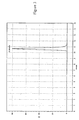
- Figure 3 shows the HPLC elution profile of a sample pool collected from the fractions No. 5 and 6 shown in Figure 2A in 15 minutes, indicating that there is a single peak with a retention time of 10.7 minutes which shows the strongest binding activity to the protein gpIIb/IIIa.
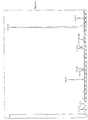
- Figure 4A shows the molecular weight 268 gm/mole of the compound obtained from the profile of Figure 3 that was detected by the electrospray ionization mass spectrometry.
- Figure 4B shows the presence of sodium salt and oligomers (2-mer to 7-mer) of the compound obtained from the profile of Figure 3.
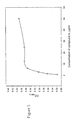
- Figure 5 shows the binding curve of the compound obtained from Example 4 with the protein gpIIb/IIIa, indicating that the binding dramatically increased up to 80 % of the maximum binding when the concentration of the compound is below 10 ⁇ g/ml.
- Figure 6A shows a dose response of the compound obtained from Example 4 in the inhibition of platelet aggregation, indicating that the maximum inhibition activity is about 85 % when the concentration of the compound is from 10 to 15 ⁇ g/ml blood.
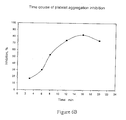
- Figure 6B shows the inhibition activity on platelet aggregation in a time course manner when the concentration of the compound obtained from Example 4 is 17.4 ⁇ g/ml, indicating that about 85 % of the maximum inhibition activity occurs at a period from 14 th to 16 th minutes.
- Figure 7A shows the inhibition of thrombus formation in vivo in mesenteric vein of rats by administering the compound (400 ⁇ g/100 ⁇ l/rat) obtained from Example 4 in a time course manner.
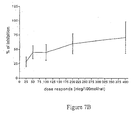
- Figure 7B shows a dose response of the compound obtained from Example 4 in the inhibition of thrombus formation in vivo in mesenteric vein of rats by intravenous injection.
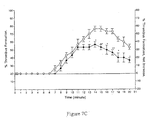
- Figure 7C shows a dose response of the compound obtained from Example 4 in the inhibition of thrombus formation in vivo in mesenteric vein of rats by oral administration.
- Figure 8 shows a result of a competitive ELISA assay using each of the compound obtained from Example 4, commercial adenosine and ReoPro® (abciximab) for inhibiting the binding of fibrinogen to gpIIb/IIIa.
- the present invention relates to the novel use of adenosine as an antagonist against a platelet membrane receptor protein gpIIb/IIIa for inhibiting platelet aggregation and thrombosis.
- adenosine is useful for the inhibition of platelet aggregation and thrombosis.
- the high-density gridding technology has been used in the art for qualitatively or quantitatively detecting the presence of a target material in biological samples.
- the high-density gridding technology immobilizes arrays of biological samples in a small or even tiny volume on a gridding surface of a solid support.
- the biological samples suspected of containing target material are fixed or immobilized on a solid support, a labeled probe that can hybridize with or conjugate to the target material is added onto the solid support, the hybridized or conjugated solid support is then processed, imaged and analyzed, and the candidate target material that specifically interacts with the labeled probe can be quickly selected through screening.
- an extract of Carthamus tinctorius L was fractionated by HPLC. Individual fractions were allocated on a plastic plate. A labeled platelet membrane receptor protein gpIIb/IIIa, an important factor involved in the platelet aggregation and thrombus formation, was added to the plastic plate for binding. The unbound gpIIb/IIIa was then stripped off. The candidate fractions showing a signal of binding to the labeled gpIIb/IIIa were selected, and the previous steps were repeated until a single ingredient interacting with the labeled gpIIb/IIIa was obtained. In the present invention, the single ingredient that can specifically bind to gpIIb/IIIa was identified as adenosine.
- Adenosine was a compound well known in the art for use as an antiarrhythmic, and its derivatives were used as anti-tumor agents.
- the therapeutic use of adenosine for specifically binding to gpIIb/IIIa and treating thromboembolic disorders was never disclosed or suggested in any prior art reference.
- the present invention discloses that adenosine is useful as an antithrombotic for treating thromboembolic disorders.
- the thromboembolic disorders includes, for examples, atherosclerosis and arteriosclerosis, acute myocardial infarction, angina, transient ischemic attacks and strokes, peripheral vascular diseases, arterial thrombosis, preeclampsia, embolism and carotid endarterectomy.
- the present invention provides a method for inhibiting platelet aggregation and thrombosis by administering to a mammal including human an effective amount of adenosine.
- the present invention also provides a method for treating thromboembolic disorders by administering to a mammal including human an effective amount of adenosine.
- the present invention provides a pharmaceutical composition for inhibiting platelet aggregation and thrombosis in a mammal including human, comprising an effective amount of adenosine and a pharmaceutically acceptable carrier or diluent.
- the present invention also provides a pharmaceutical composition for preventing and treating thromboembolic disorders in a mammal including human, comprising an effective amount of adenosine and a pharmaceutically acceptable carrier or diluent.
- the present invention provides a kit for inhibiting platelet aggregation and thrombosis in a mammal including human, comprising a first container containing adenosine and a second container containing a pharmaceutically acceptable carrier or diluent.
- the present invention provides an in vitro method for detecting the presence of gpIIb/IIIa in a sample suspected thereof by contacting gpIIb/IIIa with adenosine.
- the pharmaceutical composition of the present invention can be administered orally or by intravenous injection (i.v.).
- the suitable dosage form of the pharmaceutical composition of the present invention includes, for example, tablets, capsules, pills, powders, granules, solution, elixirs, tinctures, suspensions, syrups, emulsions, and the likes.
- the dosage of the pharmaceutical composition of the present invention will vary in consideration of the route of administration, the age, health, physical conditions and body weight of the recipients, the nature and extent of symptoms, and the effect desired.
- the daily oral dosage of adenosine will range between about 15 to 150 mg/kg of body weight
- the daily i.v. dosage of adenosine will range between about 1.5 to 15 mg/kg of body weight.
- the pharmaceutical composition of the present invention can be administered in combination with other well known antithrombotics for achieving a synergetic effect in therapy.
- the well known antithrombotics are, for example, coumarin, aspirin, heparin, LMW heparin, ticlopidine, hirudin, and thromboxane A 2 synthase inhibitors or receptor antagonists.
- the pharmaceutical composition of the present invention showed no acute toxicity to the recipients in view of the data obtained from animal (rat) model where a single dosage amount of adenosine of approximately up to 70 mg/kg was administered intravenously.
- the concentration of ethanol in the eluant was increased to 100 % (v/v).
- the eluted samples were detected at a wavelength of 254 nm and were collected every 0.5 ml.
- the elution profile was shown in Figure 1A.
- platelet membrane receptor protein gpIIb/IIIa was purified from platelets, and its purity was determined by SDS-PAGE and silver staining.
- the purified protein gpIIb/IIIa was labeled with biotin as described in the conventional protocol.
- the 120 collected samples were individually coated onto a 384-well plastic plate.
- the biotin-labeled protein gpIIb/IIIa was added to the sample-coated plastic plate and was incubated with the coated samples at room temperature for 30 minutes. Each well was then washed with TBST buffer for 3 times, to which the extravidin-conjugated alkaline phosphatase was added, and each well was further incubated for 30 minutes.
- the target protein gpIIb/IIIa-binding assay was performed in the same way as described in Example 1. The result indicating the capacity of gpIIb/IIIa binding for each fraction was shown in Figure 2B.
- the compound collected from the profile of Figure 3 was dried, and then its molecular weight (MW) was determined by the electrospray ionization mass spectrometry.
- MW molecular weight
- the major peak was determined to be an m/z of 268.04 with a standard deviation of 0.11.
- Another 289.9 m/z paired peak was also determined by approximately 21.9 m/z apart. It was proposed to be a sodium salt of the major peak.
- a number of related, multiply-charged and paired peaks (535.6; 802.1; 1069.7; 1357.9; 1604.4; and 1871.1 m/z) were also determined (Figure 4B).
- Multiply-charged electrospray was often determined for biopolymers, and those peaks shown in Figure 4B were exactly correspondent to dimmer to 7-mer, respectively, indicating that the isolated compound exhibits a polymer-forming capacity.
- a paired signal by approximately 22 m/z apart associated with each multiplied peak was proposed to be its conjugated sodium salt.
- Example 3 The compound collected from the profile of Figure 3 that was dried in Example 3 was characterized. Its melting point was determined to be 230-232 °C. The elemental analysis yielded the following result: 44.94% C, 4.90% H, 26.21% N and 23.95% O. Its molecular weight was determined by mass spectrometry to be 267.24 g/mole. Form the preliminary data, its molecular formula was calculated to be C 10 H 13 N 5 O 4 .
- the techniques of 1-D 1 H and 13 C NMR, 2-D 1 H- 1 H correlation, 1 H-detected 13 C- 1 H, and 15 N- 1 H correlation NMR were used to analyze the structure of the compound.
- the data were collected by using a Varian 600 MHz NMR spectrum.
- the 1-D 1 H NMR and 2-D 1 H- 1 H COSY and TOCSY spectra established the proton connectivity pattern, which revealed that there was a ⁇ -ribofuranosyl residue, three exchangeable protons (from OH groups), and a purine ring system.
- the integration of the fragmentation patterns was consistent with the number of protons from the elemental analysis.
- the 13 C NMR analysis data confirmed the number of carbons in the compound.
- the 1 H-detected 13 C- 1 H NMR was used in the determination of the connection of the carbon atoms with hydrogen atoms with respect to their location. The result was consistent for purine and ribose ring systems.
- the 15 N- 1 H correlation NMR analysis data showed that there were four nitrogen atoms with the pattern consistent with that of a purine ring system. The result obtained was also consistent with that of the elemental analysis.
- the final experiment that was performed was 1-D 1 H NMR on adenosine, which showed that the spectrum between adenosine and the compound was virtually indistinguishable.
- the UV maximum absorbance of the compound was the same as that of adenosine.
- the IR spectrum of the compound was the same as that of adenosine.
- the compound is authentic adenosine.
- the compound "adenosine" obtained from Example 4 was used as a standard for the characterization of each batch preparation of the compound.
- the compound when purified, was collected, dried and used to verify its gpIIb/IIIa binding capacity.
- the compound was formulated into an aqueous solution, and a serial dilution for forming a final concentration of 0 to 50 ⁇ g/ml was made.
- Each tested solution contained a different amount of the compound, and was spotted on a flat well of a plastic 96-well plate. Labeled protein gpIIb/IIIa was then added into each tested well, and the coloring process was performed in a way as described in Example 1.
- the binding curve was shown in Figure 5. It was observed that the binding dramatically increased to as high as 80 % of the maximal binding with the concentration of the compound below 10 ⁇ g/ml.
- the thrombus formation in vivo in mesenteric vein of rats was used for evaluating an effect of the compound on the inhibition of venous thrombosis.
- groups of 3 male Wistar-derived rats, each weighing 60 ⁇ 10 gm, were used for each dosage test.
- the rats were anesthetized with phenobarbital sodium (50 mg/kg, i.p.), and paralyzed with succinylcholine chloride (2 mg/rat, i.p.).
- a mesenteric loop and vein was then exposed and mounted on a constructed platform. The exposed area was superfused with a normal saline at 37 °C except during electrode placement and stimulation.
- Thrombus formation was initiated by the application of a single square wave electrical pulse (1000 PPS, 100 V, 300 ms) supplied from a grass S-44 stimulator. The formation of thrombus was then observed through the microscope-calibrated ocular lens. The relative venous occlusion (a measured degree of thrombus formation) was determined as a percentage of venous diameter (0.36 to 0.38 mm) and was recorded at 10 seconds (baseline control score) and at 1 minute interval for 20 minutes. The compound or vehicle was administered i.v. for 5 minutes before conducting the electrical stimulation of mesenteric vein.
- the 20-minute interval recorded values were averaged, which attains a value ranging from 45 to 55% of the interval vein diameter. Consequently, the antithrombic activity of the compound was calculated as % of inhibition relative to the vehicle-treated control animals. If a significant inhibition (>30%) was observed in 3 animals, an ED 30 ⁇ SEM was determined by linear regression using 3 animals per dose level. At each time point, a paired Student's t test was applied for the statistical analysis for comparison of the vehicle treatment group with the compound group with a significance referred to as *P ⁇ 0.05 and **P ⁇ 0.01.
- a competitive ELISA assay for analyzing that the binding of fibrinogen to gpIIb/IIIa is inhibited was performed for comparative analysis, where the compound, commercial adenosine (a product from Sigma, Cat. A-9251, Lot. 18H0295) and ReoPro® (abciximab) (10 mg/ml; produced by Eli Lilly for laboratory use only, Lot. 97F03, which is a monoclonal antibody and an antagonist against gpIIb/IIIa) were tested.
- the gpIIb/IIIa purified from platelet was coated on flat wells of a plastic 96-well plate. Samples of each of the test compounds were prepared in a concentration in a range of 5-60 ⁇ g/ml.
- a solution of biotin-labeled fibrinogen was prepared in a concentration of 1.5 ⁇ g/ml. Prior to addition to the wells, each of the samples were individually mixed with an equal volume of the biotinylated fibrinogen. The competitive binding reaction in the plate was performed at 37 °C for 2 hours. After another 2 hours for incubation, strepavidin-conjugated alkaline phosphatase was added to each well of the plate. A substrate solution containing p-nitrophenyl phosphate was then added to each well for coloring by a conventional way. The capability of each tested compound in the inhibition of the binding of fibrinogen to gpIIb/IIIa was measured and recorded as OD value.
- the potential acute toxicity of the compound in adult rats when administered intravenously as a single dose was examined. Twenty animals were divided into five treatment groups of two males and two females each as follows: Group 1: vehicle control; Group 2: 1 mg of the compound/kg body weight of animal; Group 3: 10 mg of the compound/kg body weight of animal; Group 4: 50 mg of the compound/kg body weight of animal; and Group 5: 100 mg of the compound/kg body weight of animal.
- the tested article was reconstituted with 0.9% sodium chloride injection to provide 0.64 ⁇ 0.05 mg/kg (Group 2), 6.89 ⁇ 1.13 mg/kg (Group 3), 35.02 ⁇ 5.02 mg/kg (Group 4) and 69.55 ⁇ 5.65 mg/kg (Group 5).
Landscapes
- Health & Medical Sciences (AREA)
- Life Sciences & Earth Sciences (AREA)
- Chemical & Material Sciences (AREA)
- Medicinal Chemistry (AREA)
- General Health & Medical Sciences (AREA)
- Engineering & Computer Science (AREA)
- Pharmacology & Pharmacy (AREA)
- Animal Behavior & Ethology (AREA)
- Public Health (AREA)
- Veterinary Medicine (AREA)
- Molecular Biology (AREA)
- Epidemiology (AREA)
- Urology & Nephrology (AREA)
- Hematology (AREA)
- Immunology (AREA)
- Biomedical Technology (AREA)
- Bioinformatics & Cheminformatics (AREA)
- Organic Chemistry (AREA)
- Physics & Mathematics (AREA)
- Nuclear Medicine, Radiotherapy & Molecular Imaging (AREA)
- Chemical Kinetics & Catalysis (AREA)
- Dermatology (AREA)
- Proteomics, Peptides & Aminoacids (AREA)
- Pathology (AREA)
- Biotechnology (AREA)
- Cell Biology (AREA)
- General Physics & Mathematics (AREA)
- Biochemistry (AREA)
- Microbiology (AREA)
- Food Science & Technology (AREA)
- General Chemical & Material Sciences (AREA)
- Analytical Chemistry (AREA)
- Vascular Medicine (AREA)
- Cardiology (AREA)
- Heart & Thoracic Surgery (AREA)
- Diabetes (AREA)
- Pharmaceuticals Containing Other Organic And Inorganic Compounds (AREA)
- Investigating Or Analysing Biological Materials (AREA)
- Medicines That Contain Protein Lipid Enzymes And Other Medicines (AREA)
- Peptides Or Proteins (AREA)
Applications Claiming Priority (2)
| Application Number | Priority Date | Filing Date | Title |
|---|---|---|---|
| US70830600A | 2000-11-07 | 2000-11-07 | |
| US708306 | 2000-11-07 |
Publications (3)
| Publication Number | Publication Date |
|---|---|
| EP1205182A2 true EP1205182A2 (de) | 2002-05-15 |
| EP1205182A3 EP1205182A3 (de) | 2002-09-04 |
| EP1205182B1 EP1205182B1 (de) | 2005-07-13 |
Family
ID=24845266
Family Applications (2)
| Application Number | Title | Priority Date | Filing Date |
|---|---|---|---|
| EP01110765A Expired - Lifetime EP1205754B1 (de) | 2000-11-07 | 2001-05-03 | Verfahren zum Screenen von Pflanzenextrakten nach Wirkstoffen |
| EP01112092A Expired - Lifetime EP1205182B1 (de) | 2000-11-07 | 2001-05-29 | Adenosine als Antithrombosemittel |
Family Applications Before (1)
| Application Number | Title | Priority Date | Filing Date |
|---|---|---|---|
| EP01110765A Expired - Lifetime EP1205754B1 (de) | 2000-11-07 | 2001-05-03 | Verfahren zum Screenen von Pflanzenextrakten nach Wirkstoffen |
Country Status (7)
| Country | Link |
|---|---|
| US (1) | US20020082241A1 (de) |
| EP (2) | EP1205754B1 (de) |
| CN (2) | CN1352945A (de) |
| AT (2) | ATE299593T1 (de) |
| AU (1) | AU5178801A (de) |
| CA (1) | CA2348845A1 (de) |
| DE (2) | DE60111906D1 (de) |
Families Citing this family (2)
| Publication number | Priority date | Publication date | Assignee | Title |
|---|---|---|---|---|
| US6855343B2 (en) * | 2002-05-21 | 2005-02-15 | Advanced Gene Technology, Corp | Method to ascertain the quality of herbs |
| CN106501415A (zh) * | 2016-12-02 | 2017-03-15 | 丽珠集团丽珠制药厂 | 一种阿魏酸钠、阿司匹林、桂利嗪和维生素b1的含量测定方法 |
Family Cites Families (8)
| Publication number | Priority date | Publication date | Assignee | Title |
|---|---|---|---|---|
| US5770198A (en) * | 1988-05-18 | 1998-06-23 | The Research Foundation Of The State Of New York | Platelet-specific chimeric 7E3 immunoglobulin |
| WO1991011458A1 (en) * | 1990-02-02 | 1991-08-08 | Genentech, Inc. | CYCLIC PEPTIDES CONTAINING Arg-Gly-Asp FLANKED BY PROLINE |
| US5677290A (en) * | 1990-05-10 | 1997-10-14 | Fukunaga; Atsuo F. | Therapeutic use of adenosine compounds as surgical anesthetics |
| JP3002903B2 (ja) * | 1991-04-09 | 2000-01-24 | 第一化学薬品株式会社 | 血管外血液の抗凝固・抗血小板剤組成物及びこれを用いる血小板活性化の分子マーカーの測定法 |
| US6137002A (en) * | 1993-07-22 | 2000-10-24 | Eli Lilly And Company | Glycoprotein IIb/IIIa antagonists |
| IL121272A (en) * | 1997-07-10 | 2000-06-01 | Can Fite Technologies Ltd | Pharmaceutical compositions comprising adenosine and their use for treating or preventing leukopenia |
| DE19802576B4 (de) * | 1998-01-23 | 2004-10-28 | Xerion Pharmaceuticals Ag | Verfahren zur gleichzeitigen Identifizierung von Proteinen und ihren Bindungspartnern |
| US6713309B1 (en) * | 1999-07-30 | 2004-03-30 | Large Scale Proteomics Corporation | Microarrays and their manufacture |
-
2001
- 2001-05-03 DE DE60111906T patent/DE60111906D1/de not_active Expired - Lifetime
- 2001-05-03 EP EP01110765A patent/EP1205754B1/de not_active Expired - Lifetime
- 2001-05-03 AT AT01110765T patent/ATE299593T1/de not_active IP Right Cessation
- 2001-05-10 US US09/853,524 patent/US20020082241A1/en not_active Abandoned
- 2001-05-25 CA CA002348845A patent/CA2348845A1/en not_active Abandoned
- 2001-05-28 CN CN01120742A patent/CN1352945A/zh active Pending
- 2001-05-29 EP EP01112092A patent/EP1205182B1/de not_active Expired - Lifetime
- 2001-05-29 DE DE60111905T patent/DE60111905D1/de not_active Expired - Lifetime
- 2001-05-29 AT AT01112092T patent/ATE299374T1/de not_active IP Right Cessation
- 2001-06-06 AU AU51788/01A patent/AU5178801A/en not_active Abandoned
- 2001-09-04 CN CNB011326913A patent/CN1220060C/zh not_active Expired - Fee Related
Also Published As
| Publication number | Publication date |
|---|---|
| EP1205182B1 (de) | 2005-07-13 |
| ATE299593T1 (de) | 2005-07-15 |
| CN1353003A (zh) | 2002-06-12 |
| EP1205754A2 (de) | 2002-05-15 |
| EP1205754B1 (de) | 2005-07-13 |
| CA2348845A1 (en) | 2002-05-07 |
| AU5178801A (en) | 2002-05-09 |
| DE60111906D1 (de) | 2005-08-18 |
| EP1205182A3 (de) | 2002-09-04 |
| DE60111905D1 (de) | 2005-08-18 |
| CN1352945A (zh) | 2002-06-12 |
| CN1220060C (zh) | 2005-09-21 |
| US20020082241A1 (en) | 2002-06-27 |
| EP1205754A3 (de) | 2002-07-17 |
| ATE299374T1 (de) | 2005-07-15 |
Similar Documents
| Publication | Publication Date | Title |
|---|---|---|
| Ford et al. | Cellular and biochemical characterization of thioxanthenes for reversal of multidrug resistance in human and murine cell lines | |
| Piwnica-Worms et al. | Characterization of multidrug resistance P-glycoprotein transport function with an organotechnetium cation | |
| US7285275B2 (en) | Smooth muscle growth inhibitory composition, diagnostic method for arteriosclerosis, and kit therefor | |
| US5436243A (en) | Aminoanthraquinone derivatives to combat multidrug resistance | |
| Wright et al. | Inhibition of macrophage activation by calcium channel blockers and calmodulin antagonists | |
| US7741445B2 (en) | Breast cancer resistance protein (BCRP) antibodies | |
| Baurand et al. | The P2Y1 receptor as a target for new antithrombotic drugs: a review of the P2Y1 antagonist MRS‐2179 | |
| WO1999001118A2 (en) | Antioxidant enhancement of therapy for hyperproliferative conditions | |
| JPWO1999021577A1 (ja) | 平滑筋増殖抑制組成物、動脈硬化症診断方法及びそのキット | |
| Kawasaki et al. | Pharmacological properties of YM-254890, a specific Gαq/11 inhibitor, on thrombosis and neointima formation in mice | |
| US20020082241A1 (en) | Adenosine as antithrombotic | |
| WO2007040522A1 (en) | Antitumor agents | |
| Eliason et al. | Human multi‐drug‐resistant cancer cells exhibit a high degree of selectivity for stereoisomers of verapamil and quinidine | |
| Gillooly et al. | Periodic, partial inhibition of IκB kinase β-mediated signaling yields therapeutic benefit in preclinical models of rheumatoid arthritis | |
| Koek et al. | Excitatory amino acid antagonists induce a phencyclidine-like catalepsy in pigeons: structure-activity studies | |
| WO2001064913A2 (en) | Cell cycle proteins associated with rad9, compositions and methods of use | |
| JP2002212080A (ja) | 抗血栓形成剤としてのアデノシン | |
| US20100004186A1 (en) | Antithrombotic Dual Inhibitors Comprising A Biotin Residue | |
| CA2335397C (en) | A method for screening compounds for their potential to inhibit neoplasia and pharmaceutical compositions containing such compounds | |
| CA2388332A1 (en) | Tankyrase h, compositions involved in the cell cycle and methods of use | |
| Goto et al. | Suppressive effects of cyclosporin A and FK-506 on superoxide generation in human polymorphonuclear leukocytes primed by tumor necrosis factor α | |
| Adam-Vizi | Compartmentalization and Release from Neurons in the CNS | |
| WO2020114418A1 (zh) | 抗凝血的五糖类化合物、组合物及其制备方法和医药用途 | |
| Nordberg et al. | Chronic barbital treatment and cholinergic mechanisms in brain | |
| KR100307069B1 (ko) | 엔지오제닌및플라즈민의저해제 |
Legal Events
| Date | Code | Title | Description |
|---|---|---|---|
| PUAI | Public reference made under article 153(3) epc to a published international application that has entered the european phase |
Free format text: ORIGINAL CODE: 0009012 |
|
| AK | Designated contracting states |
Kind code of ref document: A2 Designated state(s): AT BE CH CY DE DK ES FI FR GB GR IE IT LI LU MC NL PT SE TR |
|
| AX | Request for extension of the european patent |
Free format text: AL;LT;LV;MK;RO;SI |
|
| PUAL | Search report despatched |
Free format text: ORIGINAL CODE: 0009013 |
|
| AK | Designated contracting states |
Kind code of ref document: A3 Designated state(s): AT BE CH CY DE DK ES FI FR GB GR IE IT LI LU MC NL PT SE TR |
|
| AX | Request for extension of the european patent |
Free format text: AL;LT;LV;MK;RO;SI |
|
| 17P | Request for examination filed |
Effective date: 20021105 |
|
| AKX | Designation fees paid |
Designated state(s): AT BE CH CY DE DK ES FI FR GB GR IE IT LI LU MC NL PT SE TR |
|
| 17Q | First examination report despatched |
Effective date: 20030724 |
|
| GRAP | Despatch of communication of intention to grant a patent |
Free format text: ORIGINAL CODE: EPIDOSNIGR1 |
|
| GRAS | Grant fee paid |
Free format text: ORIGINAL CODE: EPIDOSNIGR3 |
|
| GRAA | (expected) grant |
Free format text: ORIGINAL CODE: 0009210 |
|
| AK | Designated contracting states |
Kind code of ref document: B1 Designated state(s): AT BE CH CY DE DK ES FI FR GB GR IE IT LI LU MC NL PT SE TR |
|
| PG25 | Lapsed in a contracting state [announced via postgrant information from national office to epo] |
Ref country code: IT Free format text: LAPSE BECAUSE OF FAILURE TO SUBMIT A TRANSLATION OF THE DESCRIPTION OR TO PAY THE FEE WITHIN THE PRESCRIBED TIME-LIMIT;WARNING: LAPSES OF ITALIAN PATENTS WITH EFFECTIVE DATE BEFORE 2007 MAY HAVE OCCURRED AT ANY TIME BEFORE 2007. THE CORRECT EFFECTIVE DATE MAY BE DIFFERENT FROM THE ONE RECORDED. Effective date: 20050713 Ref country code: CH Free format text: LAPSE BECAUSE OF FAILURE TO SUBMIT A TRANSLATION OF THE DESCRIPTION OR TO PAY THE FEE WITHIN THE PRESCRIBED TIME-LIMIT Effective date: 20050713 Ref country code: LI Free format text: LAPSE BECAUSE OF FAILURE TO SUBMIT A TRANSLATION OF THE DESCRIPTION OR TO PAY THE FEE WITHIN THE PRESCRIBED TIME-LIMIT Effective date: 20050713 Ref country code: NL Free format text: LAPSE BECAUSE OF FAILURE TO SUBMIT A TRANSLATION OF THE DESCRIPTION OR TO PAY THE FEE WITHIN THE PRESCRIBED TIME-LIMIT Effective date: 20050713 Ref country code: FI Free format text: LAPSE BECAUSE OF FAILURE TO SUBMIT A TRANSLATION OF THE DESCRIPTION OR TO PAY THE FEE WITHIN THE PRESCRIBED TIME-LIMIT Effective date: 20050713 Ref country code: AT Free format text: LAPSE BECAUSE OF FAILURE TO SUBMIT A TRANSLATION OF THE DESCRIPTION OR TO PAY THE FEE WITHIN THE PRESCRIBED TIME-LIMIT Effective date: 20050713 Ref country code: BE Free format text: LAPSE BECAUSE OF FAILURE TO SUBMIT A TRANSLATION OF THE DESCRIPTION OR TO PAY THE FEE WITHIN THE PRESCRIBED TIME-LIMIT Effective date: 20050713 Ref country code: TR Free format text: LAPSE BECAUSE OF FAILURE TO SUBMIT A TRANSLATION OF THE DESCRIPTION OR TO PAY THE FEE WITHIN THE PRESCRIBED TIME-LIMIT Effective date: 20050713 |
|
| REG | Reference to a national code |
Ref country code: GB Ref legal event code: FG4D |
|
| REG | Reference to a national code |
Ref country code: CH Ref legal event code: EP |
|
| REG | Reference to a national code |
Ref country code: IE Ref legal event code: FG4D |
|
| REF | Corresponds to: |
Ref document number: 60111905 Country of ref document: DE Date of ref document: 20050818 Kind code of ref document: P |
|
| PG25 | Lapsed in a contracting state [announced via postgrant information from national office to epo] |
Ref country code: SE Free format text: LAPSE BECAUSE OF FAILURE TO SUBMIT A TRANSLATION OF THE DESCRIPTION OR TO PAY THE FEE WITHIN THE PRESCRIBED TIME-LIMIT Effective date: 20051013 Ref country code: DK Free format text: LAPSE BECAUSE OF FAILURE TO SUBMIT A TRANSLATION OF THE DESCRIPTION OR TO PAY THE FEE WITHIN THE PRESCRIBED TIME-LIMIT Effective date: 20051013 |
|
| PG25 | Lapsed in a contracting state [announced via postgrant information from national office to epo] |
Ref country code: DE Free format text: LAPSE BECAUSE OF FAILURE TO SUBMIT A TRANSLATION OF THE DESCRIPTION OR TO PAY THE FEE WITHIN THE PRESCRIBED TIME-LIMIT Effective date: 20051014 |
|
| PG25 | Lapsed in a contracting state [announced via postgrant information from national office to epo] |
Ref country code: ES Free format text: LAPSE BECAUSE OF FAILURE TO SUBMIT A TRANSLATION OF THE DESCRIPTION OR TO PAY THE FEE WITHIN THE PRESCRIBED TIME-LIMIT Effective date: 20051024 |
|
| PG25 | Lapsed in a contracting state [announced via postgrant information from national office to epo] |
Ref country code: PT Free format text: LAPSE BECAUSE OF FAILURE TO SUBMIT A TRANSLATION OF THE DESCRIPTION OR TO PAY THE FEE WITHIN THE PRESCRIBED TIME-LIMIT Effective date: 20051219 |
|
| NLV1 | Nl: lapsed or annulled due to failure to fulfill the requirements of art. 29p and 29m of the patents act | ||
| REG | Reference to a national code |
Ref country code: CH Ref legal event code: PL |
|
| PLBE | No opposition filed within time limit |
Free format text: ORIGINAL CODE: 0009261 |
|
| STAA | Information on the status of an ep patent application or granted ep patent |
Free format text: STATUS: NO OPPOSITION FILED WITHIN TIME LIMIT |
|
| PG25 | Lapsed in a contracting state [announced via postgrant information from national office to epo] |
Ref country code: GB Free format text: LAPSE BECAUSE OF NON-PAYMENT OF DUE FEES Effective date: 20060529 Ref country code: IE Free format text: LAPSE BECAUSE OF NON-PAYMENT OF DUE FEES Effective date: 20060529 |
|
| PG25 | Lapsed in a contracting state [announced via postgrant information from national office to epo] |
Ref country code: MC Free format text: LAPSE BECAUSE OF NON-PAYMENT OF DUE FEES Effective date: 20060531 |
|
| 26N | No opposition filed |
Effective date: 20060418 |
|
| EN | Fr: translation not filed | ||
| PG25 | Lapsed in a contracting state [announced via postgrant information from national office to epo] |
Ref country code: FR Free format text: LAPSE BECAUSE OF FAILURE TO SUBMIT A TRANSLATION OF THE DESCRIPTION OR TO PAY THE FEE WITHIN THE PRESCRIBED TIME-LIMIT Effective date: 20060908 |
|
| GBPC | Gb: european patent ceased through non-payment of renewal fee |
Effective date: 20060529 |
|
| REG | Reference to a national code |
Ref country code: IE Ref legal event code: MM4A |
|
| PG25 | Lapsed in a contracting state [announced via postgrant information from national office to epo] |
Ref country code: LU Free format text: LAPSE BECAUSE OF NON-PAYMENT OF DUE FEES Effective date: 20060529 |
|
| PG25 | Lapsed in a contracting state [announced via postgrant information from national office to epo] |
Ref country code: FR Free format text: LAPSE BECAUSE OF FAILURE TO SUBMIT A TRANSLATION OF THE DESCRIPTION OR TO PAY THE FEE WITHIN THE PRESCRIBED TIME-LIMIT Effective date: 20050713 Ref country code: CY Free format text: LAPSE BECAUSE OF FAILURE TO SUBMIT A TRANSLATION OF THE DESCRIPTION OR TO PAY THE FEE WITHIN THE PRESCRIBED TIME-LIMIT Effective date: 20050713 |
|
| PGFP | Annual fee paid to national office [announced via postgrant information from national office to epo] |
Ref country code: GR Payment date: 20060531 Year of fee payment: 6 |
|
| PG25 | Lapsed in a contracting state [announced via postgrant information from national office to epo] |
Ref country code: GR Free format text: LAPSE BECAUSE OF NON-PAYMENT OF DUE FEES Effective date: 20070531 |